Neighbors, like so many aspects of life, can be an unpredictable business.
The people who land next door, across the hall, a few houses down, at the neighboring campsite can become acquaintances, support systems, minor annoyances, close friends, and even enemies. Lest you think this is a story about problematic neighbors…it is not. Quite the opposite. This is a tale about how fortuitous proximity can lead to a meaningful friendship.
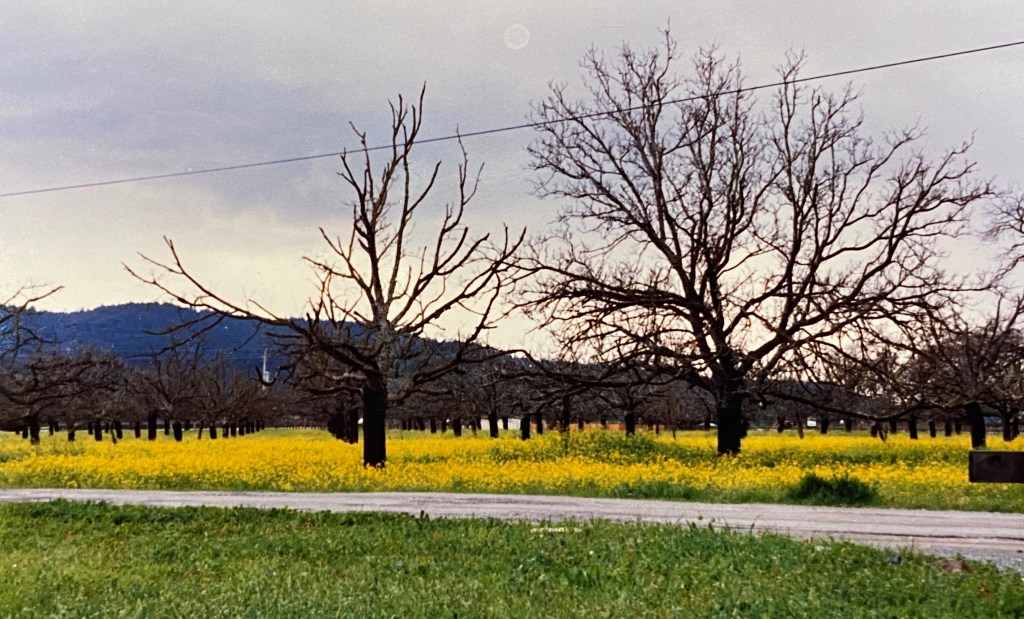
During my formative years, our next-door neighbors were original back-to-the-landers, Bob and Evelyn. To enter our rural Northern California neighborhood, you had to turn off a busy two-lane highway and follow a dust-producing lengthy gravel road. To the left of the road was a mature walnut tree orchard under which a blanket of golden mustard grass spread in the springtime. On the right low ranch-style houses lined up sporadically, each claiming the middle spot on an acre, more or less.
Bob and Evelyn’s plot was adjacent to ours and over the years our young family of three became close to their older twosome. Originally from the East Coast (with the accents to prove it) Bob and Evelyn had owned and operated a music shop in San Francisco for decades. Now they were a happily retired childless couple living an almost entirely self-sufficient life in the country. Raising goats, keeping chickens (and much to my chagrin–especially in my teen years–a series of roosters), and growing what seemed like every conceivable fruit and vegetable (including okra) kept them bustling around their abundantly overgrown yet organized property.
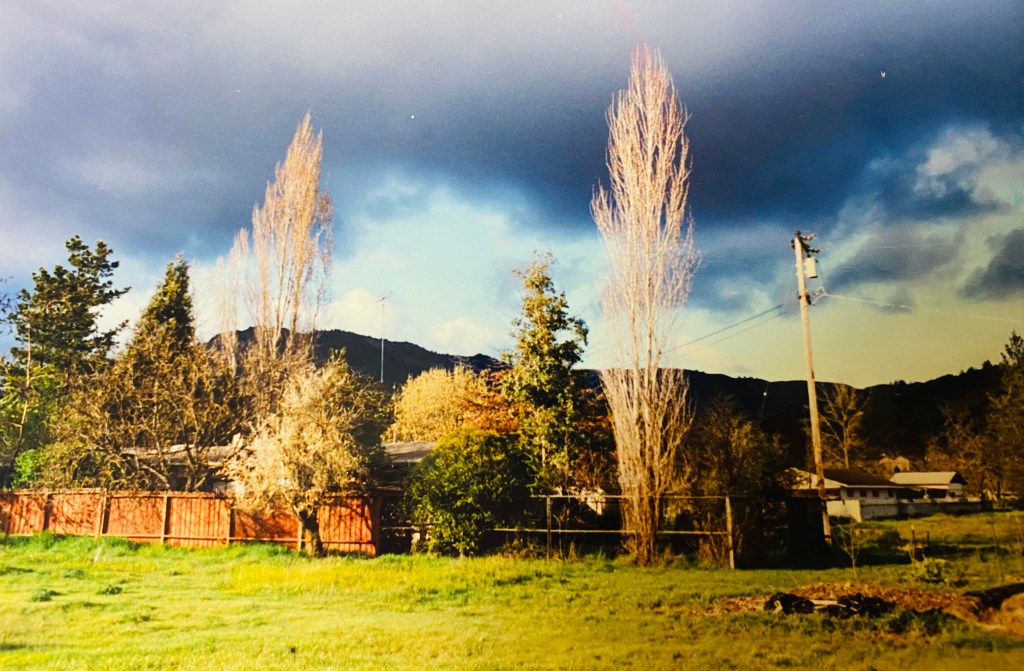
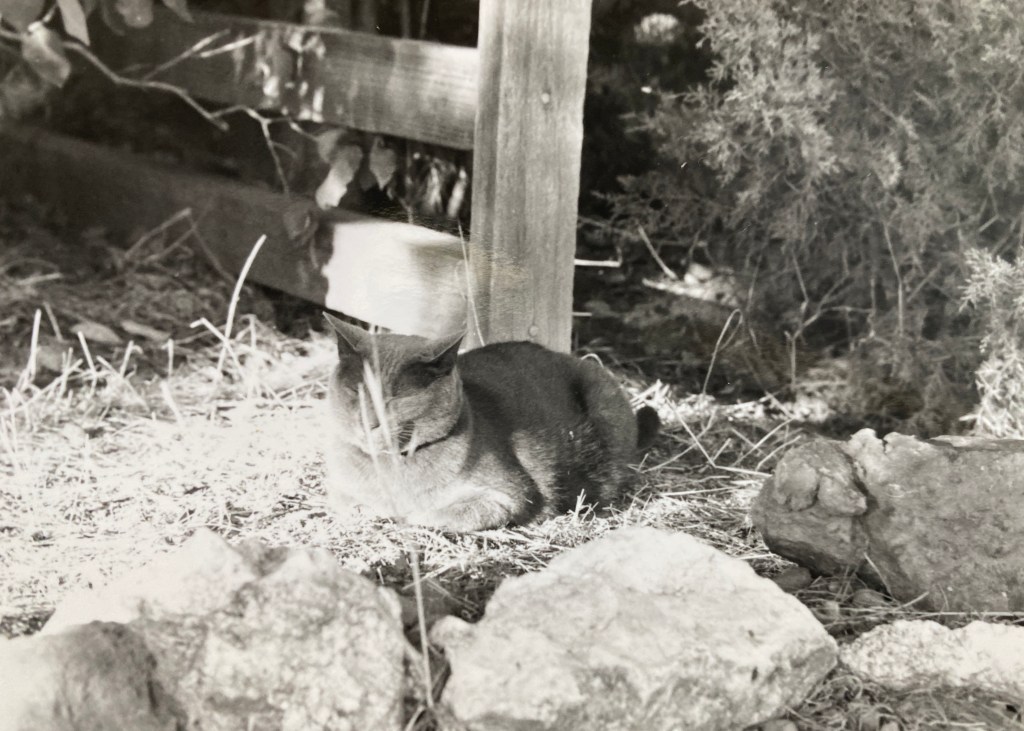
Bob was generous with land-tending advice for my citified father and Evelyn and my mother traded gardening tips, seeds and starts, and recipes. Sometimes, when I was tired of climbing my favorite trees, trailing the cat, or hunting green beans and cherry tomatoes in my mother’s extensive organic garden I would glance over at Bob and Evelyn’s house. Perched on the edge of a lot about half the size of ours, their modest abode featured a grape vine trellis that covered the entire Eastern-facing side and shielded their house from the blazing summer sun.
One summer day, as I gazed in their direction, a question burned in my mind. Was today a jam-making day for Evelyn? The only way to know was to ask, so I heaved myself up off our garden’s straw-covered dirt path (leaving green bean tops and cherry tomato stems strewn in my wake) and walked the 100 yards or so to the three creaky steps that led up to their front door.
Evelyn answered my knock right away, her thin frame and capable arms topped off by a welcoming red-lipstick traced smile and softly coiffed silver hair. “Hello, dear heart! You have good timing, the jam is setting, Bob just came in from feeding the girls (their prized goats) and we’re going to watch a show, would you like to come in?”
This was music to my nine-year-old ears and I gladly stepped into their cozy dark living room.
The house smelled sweetly of raspberry jam, and while Evelyn was in the kitchen, I made myself comfortable on one of their low-slung easy chairs and gazed around the room. Bob and Evelyn’s penchant for Western-style art (and clocks) was on full display and I still to this day sometimes conjure up the image of the free-standing lamp that stood to the left of their couch. This nearly miraculous fixture would, with the flip of a switch, slowly rotate in a circular motion while the horses artfully painted on its tanned-hide shade bucked and jumped against the interior bulb’s glow.
Who knew lighting fixtures could spark core memories… one person’s lamp-related childhood remembrance (“A Christmas Story” fans, I’m looking at you) includes a mannequin leg with a fringed shade on top while another features equines brought to life by electricity. What will upcoming generations recall from their childhoods? Recessed overhead lighting doesn’t hold quite the same mystery.
Once Evelyn had served up the still-warm jam, scooped into my very own child-sized lidded glass jar, she and Bob (a stout man of few words with calloused hands, a hearty laugh, and a work ethic I haven’t seen since) settled into their well-established spots on the couch and turned on the hulking TV in the corner. The Lawrence Welk Show was starting, and we were there for it. From the frothy opening segment in which large bubbles featuring the faces of the show’s singers float across the screen, to the individual skits (square-dancing, romantic ballads, boot-stomping country jingles) to the concluding strains of the orchestra fronted by the entire cast of singers and dancers from that evening’s show, we were transfixed. Bob and Evelyn knew the lyrics to an impressive number of songs and my favorite act was the Lennon Sisters, four young gals with ethereal voices who practically floated across the stage and lulled me into imagining a possible future as a lounge singer.
Too soon the show was over and it was time for Bob and Evelyn to eat supper. I carried my empty jam jar into Evelyn’s spotless kitchen and placed it on the counter, admiring her hand-knitted tea cozy in the shape of a giant strawberry. I was eternally curious about these two, so perfectly equipped to be grandparents yet operating unencumbered by kids, or any other family that I could see. Did they wish they’d had children? And why did that matter in the first place?
Our sprawling eclectic neighborhood was full of fascinating characters; a kind, hard-working Japanese couple who were survivors of United States-run Japanese internment camps in the 1940s and now owned a thriving egg farm, another couple who happened to be little people and were rumored to have been related to Munchkin actors in “The Wizard of Oz,” a reclusive family that lived in a house resembling one in “Gone With the Wind” complete with massive oak trees lining the driveway…but even among that crowd Bob and Evelyn stood out. Theirs was a life of hard work and frugality, respect for the land, and generosity toward neighbors.
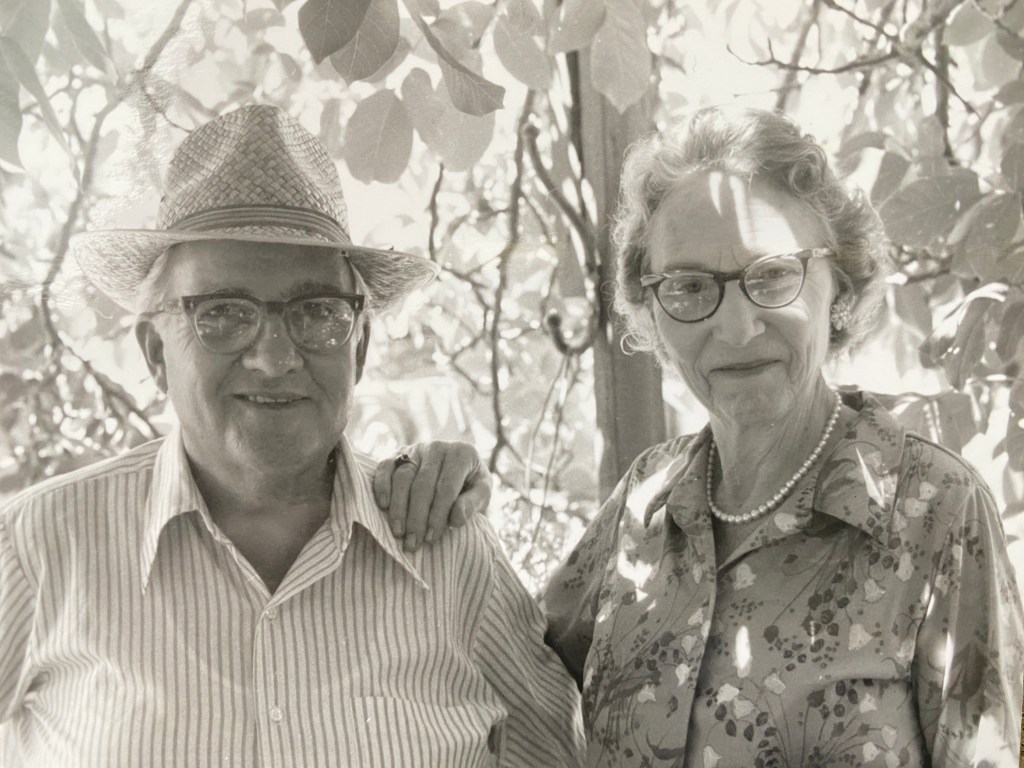
Once, on a return visit to my hometown, I walked down the gravel side road that ran beside our land and Bob and Evelyn’s. More than three decades had passed since I sat in their small living room and watched Mr. Welk conducting his orchestra. The goats, the gardens, and Bob and Evelyn were long gone. In their place was an overgrown mansion someone had erected—it took up almost the entire plot of land. A gleaming red Porsche was parked in front of the grand entrance. Gazing at the elegant yet soul-less landscaping around the mansion I thought of the plants and animals that once covered every inch of this same land. Entirely wiped away. I cringed to think of how quickly it must have happened.
As I stood there looking at the mansion I reminded myself that time marches on and progress (and development) usually cannot be stopped. Especially in California, some might say. There is also much to be considered about who inhabited and tended this land even before we claimed it. Still, it saddens me to think that individuals like Bob and Evelyn won’t come around again anytime soon, that other nine-year-olds won’t have the chance to sit with their elders in cramped dark living rooms softly lit by a rotating horse lamp, eating still-warm homemade raspberry jam while watching TV and singing along to the Lennon sisters.
 Still...however...maybe...
You must be logged in to post a comment.