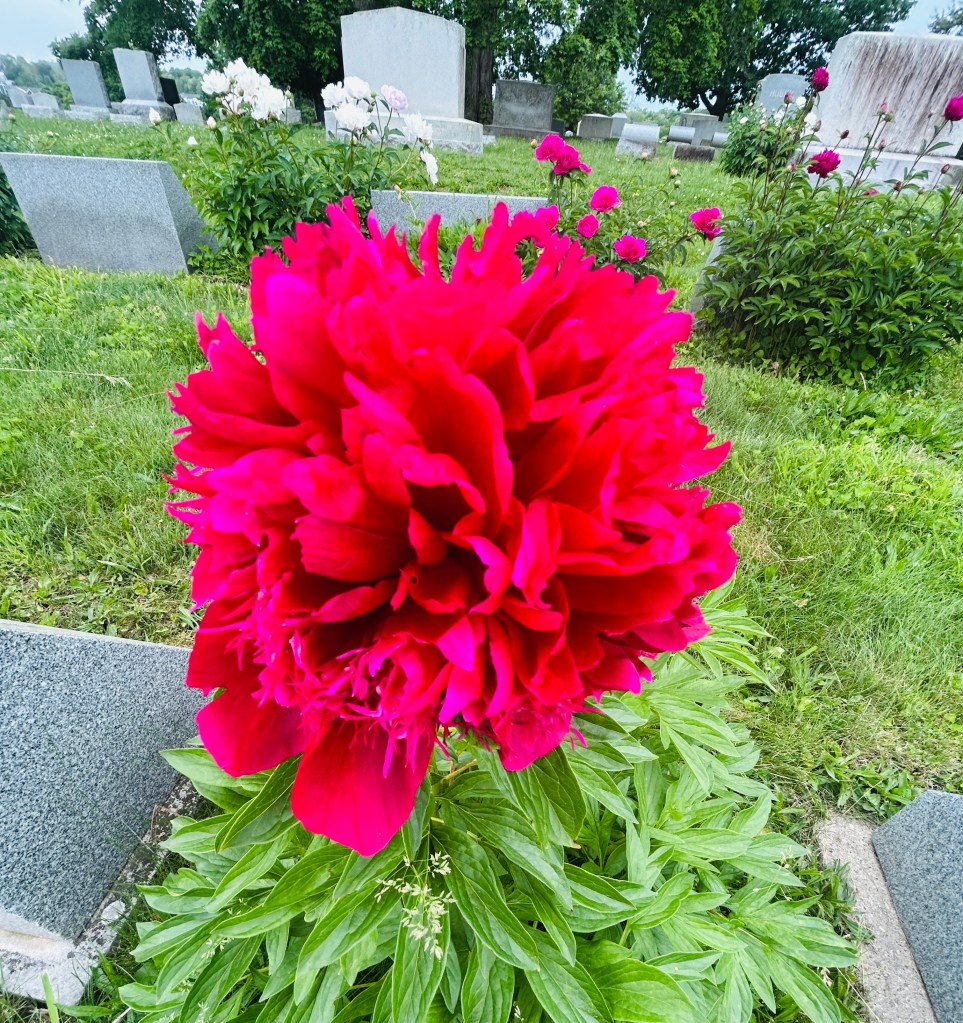
Can there be beauty in death?
The other day, as I drove around town, I was in a rush. One kid had been dropped off at gymnastics, the other needed a pickup from soccer later. There were errands to run, some calls to make. Familiar demands and busy end of the school-year times.
Then, as I sped through the West side of town, rounding a corner near the old hospital grounds, I saw it.
A dark green peony bush in someone’s front yard, stem ends bursting with deep pink blooms the color of a brilliant sunset. Somehow, in the busyness of life, I’d forgotten all about the peonies.
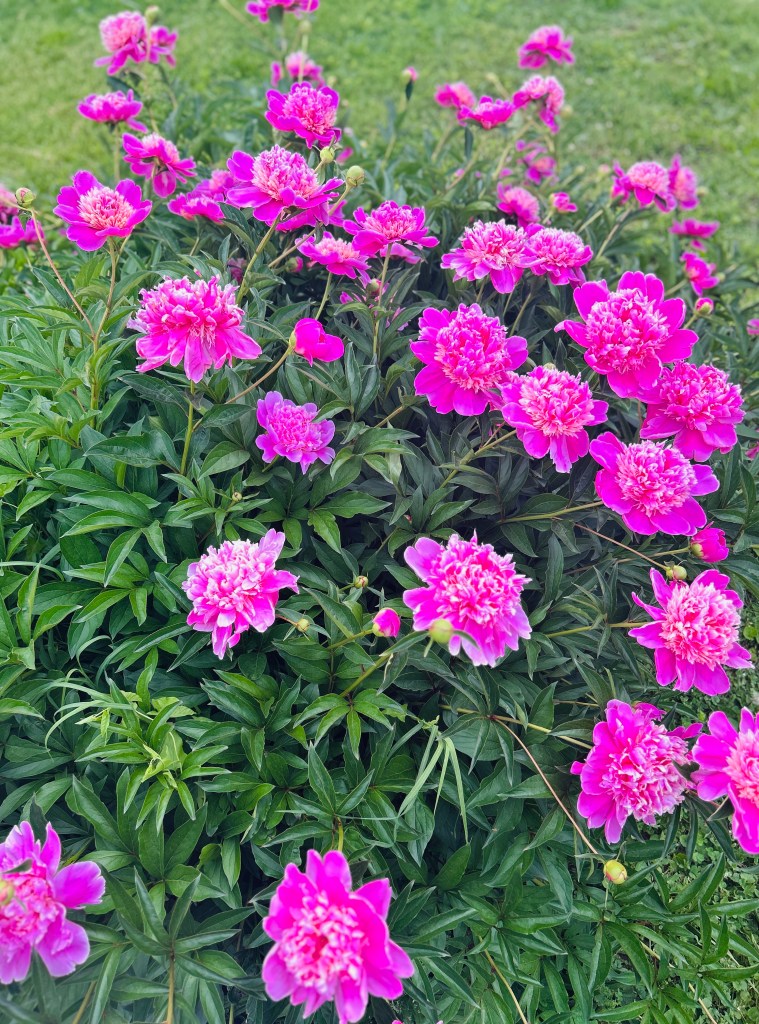
“Yes! It’s that time again,” I thought. And then, “Rose Hill must be going OFF!”
I told myself to forget the calls, put the to-dos and the worries aside for a bit—the cemetery was calling.
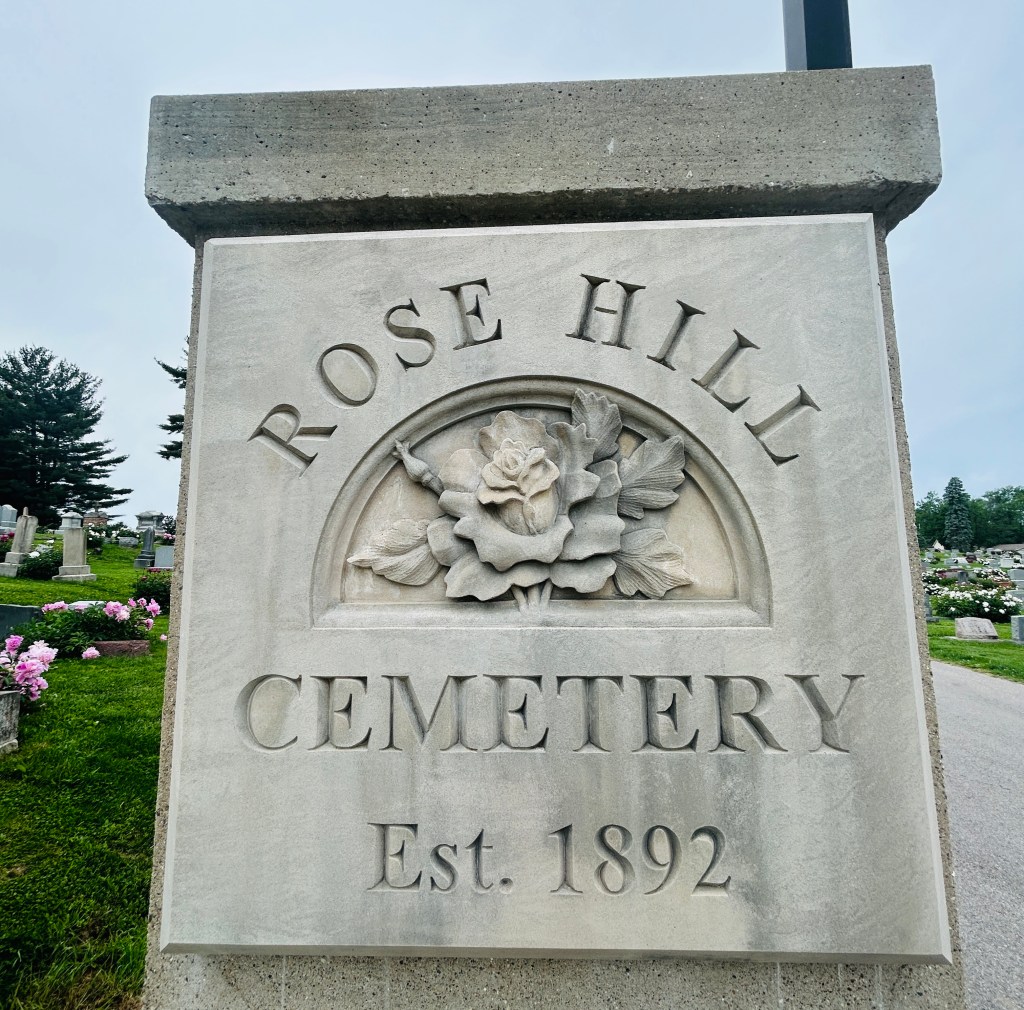
The first few years after my husband and I moved from California to Bloomington, Indiana (his Midwest hometown), we lived in a 90-year-old bungalow one block from the sprawling Rose Hill Cemetery. Initially unsure, I grew to adore the acres of rolling green grasses dotted with the spreading shade of centuries-old trees—maple, oak, sycamore. Meandering among the granite, limestone, and marble headstones became one of my favorite pastimes, a unique way to root myself in an unfamiliar landscape.
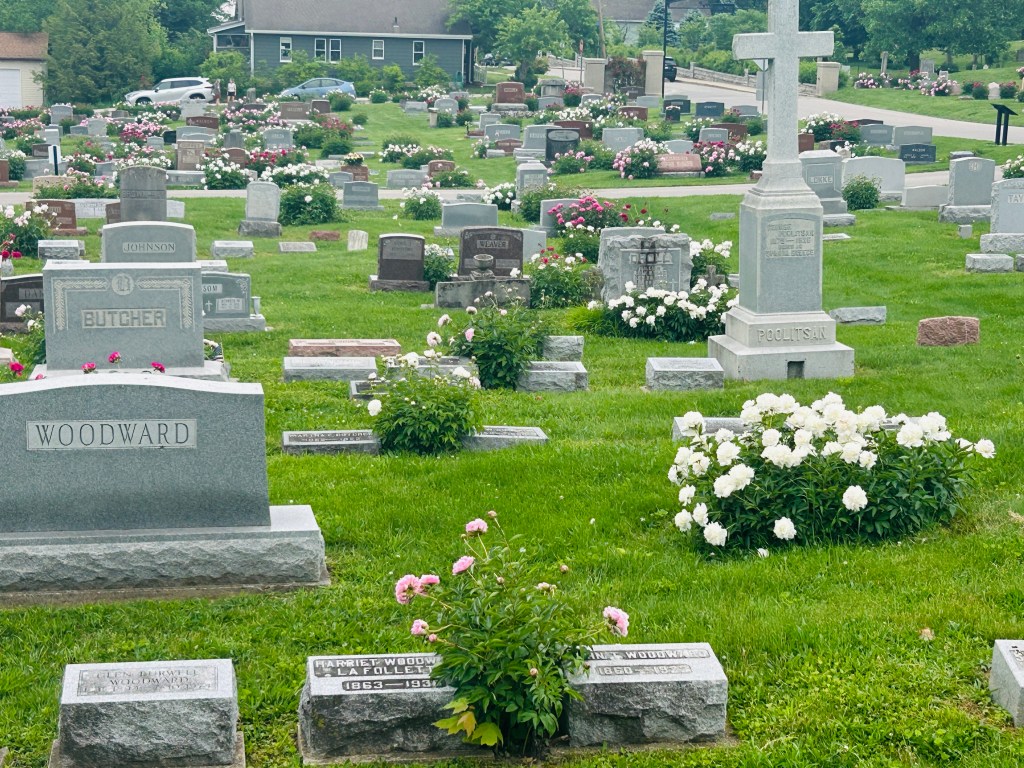
The first year, when May rolled around, my appreciation of the cemetery was taken to new heights when suddenly peonies (the flower I’d used to create my bridal bouquet, primarily because that’s what remained in the San Francisco flower shop the night before our elopement to City Hall), began blooming everywhere. And I mean everywhere.
Two years later, when I faced a devastating loss, wandering through Rose Hill and reading the gravestones became a kind of grief meditation, maybe an attempt to assure myself that there was a certain cyclical beauty waiting within death, if I could accept it.
At the time, I could not. But I still loved Rose Hill.
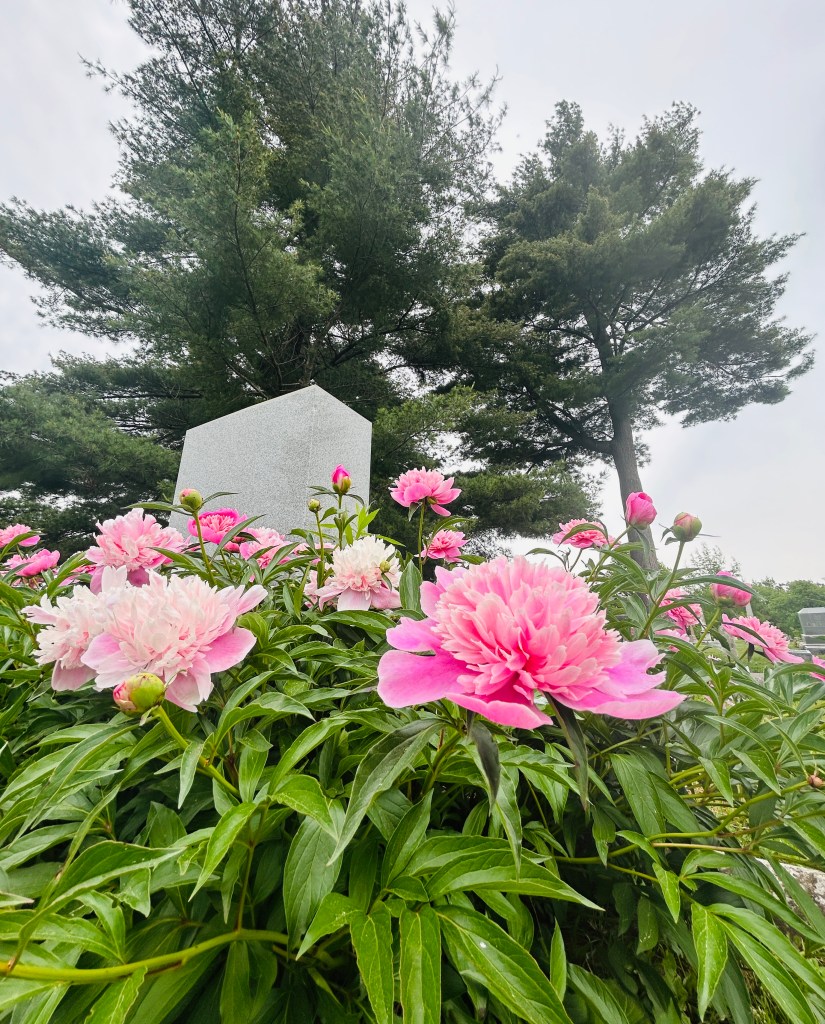
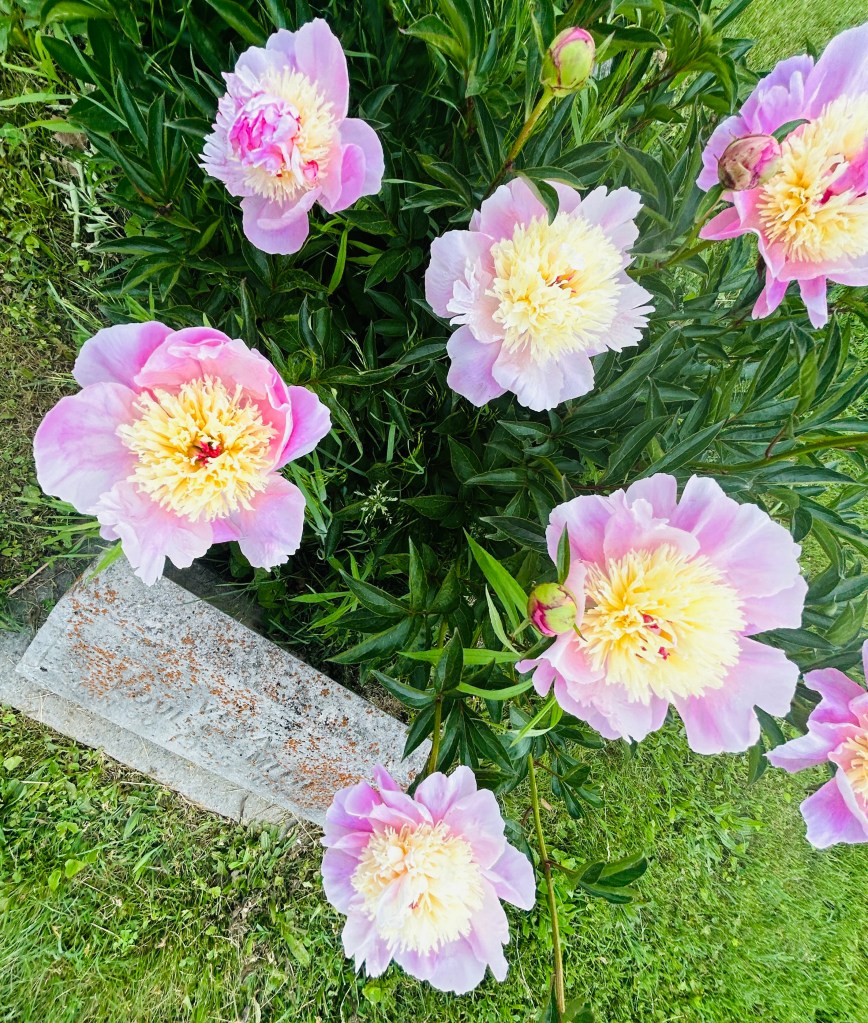
In mid-May each year Rose Hill Cemetery becomes so jam-packed with blooming peony bushes that if you stand at the highest point in the cemetery, clumps of color stretch as far as the eye can see. The honey-sweet smell of the blooms wafts through the air, and a plant nestles next to nearly every headstone.
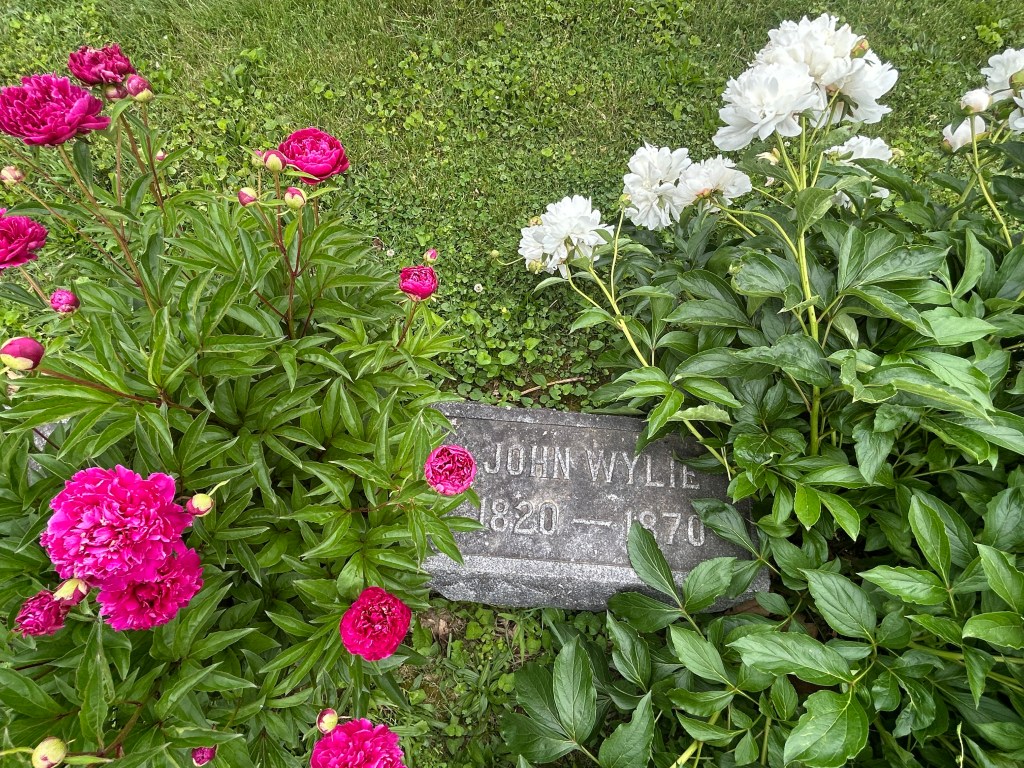
This was the case the other day, and I inhaled deeply as I walked along the road that runs through Rose Hill. A storm was brewing in the distance, and above me, a flock of smaller birds noisily chased a hawk into a tall pine. Winding my way through headstones both recent and centuries old, I thought about the losses that have circled my orbit lately—the death of my father-in-law only a week earlier, the looming May birth/death date of my first son, my best friend’s recent loss of her soul-mate doggie companion. Pensive and prayerful, I realized that without even trying, I had again landed in the perfect place to consider the loss of these close-to-my-heart souls, no longer here physically.
In truth, I think about death a lot. Over time, I have moved from abject terror and bitterness at the subject to a place of consideration, curiosity, even awe. Much has contributed to my death evolution, including prayer, cultivating humility, writing about my experiences, reading as much as I can on the subject, watching interviews about NDEs (Near Death Experiences), and simply getting older. I have learned to gather my death-related feelings and experiences like a bouquet and place them carefully on the vast table of my life.
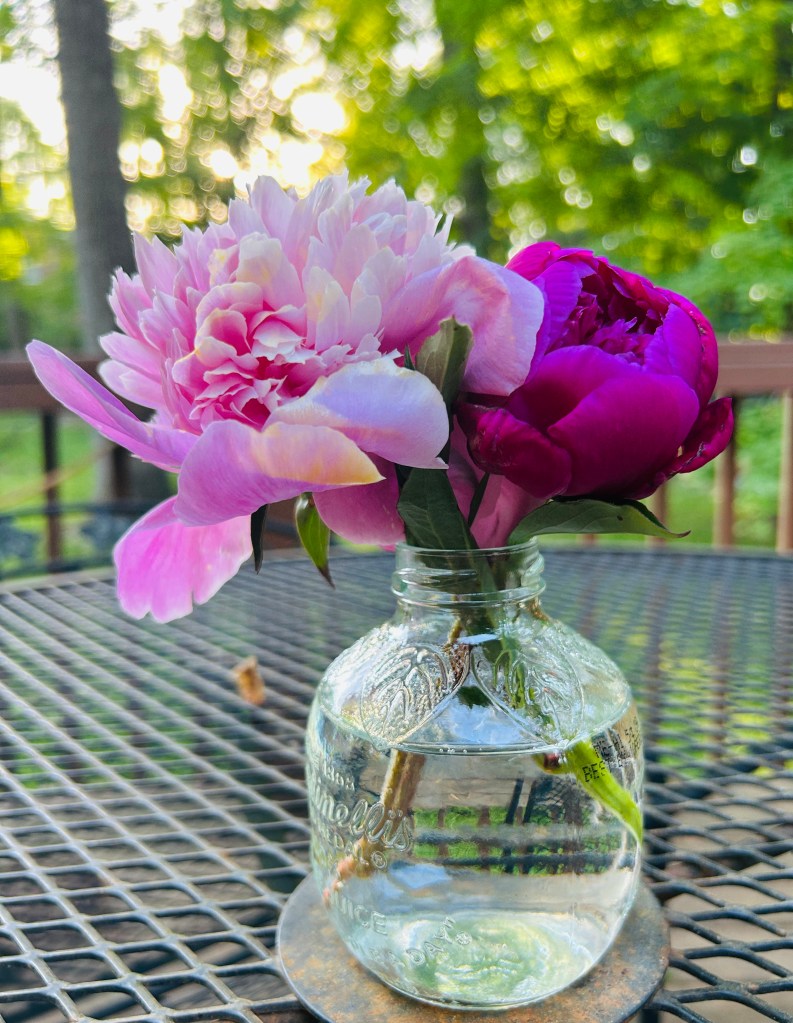
I also noticed that the surrounding rainbow of cemetery peonies mirrors a shift in my attitude toward death: amongst the gravestones, and the devastating losses, beauty blooms. Instead of hope and joy trailing behind me, dragging their feet, we are now companions, partners in my journey. I believe there is a sacred purpose around death in our lives, and that we can approach it as a path to celebrate the love and respect that we feel for those who have died. By facing the death of those we love, or the death of anyone, really, we open the door to navigating the hopes and fears around our own deaths. We cannot avoid death, but we can open our hearts to learn from it, to understand its true purpose.

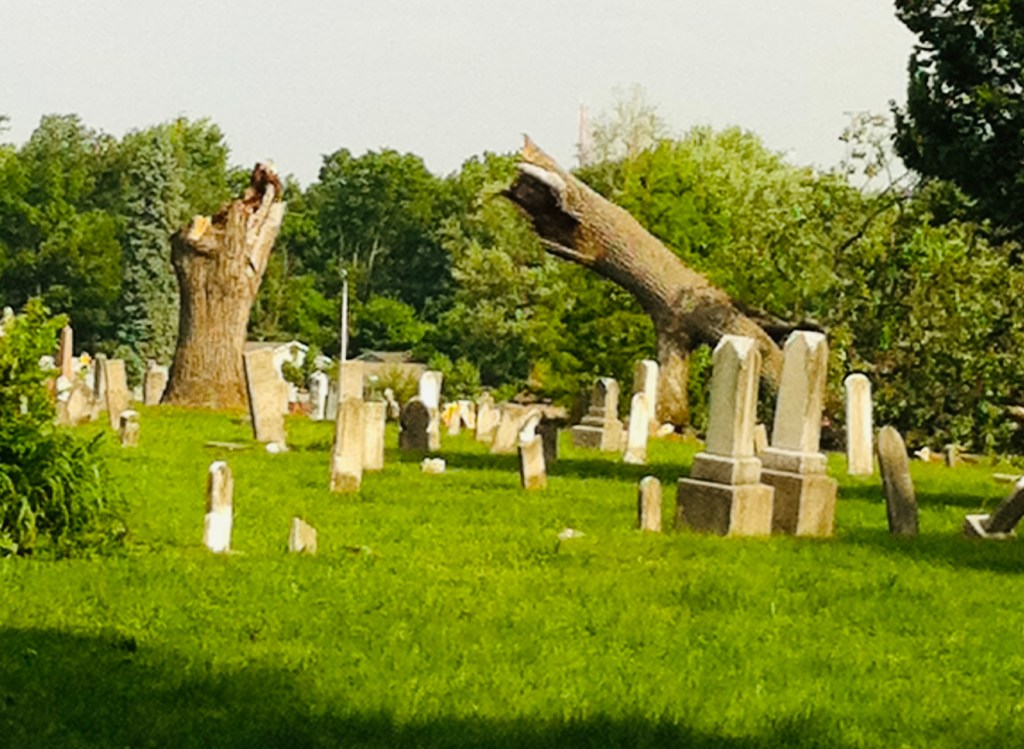
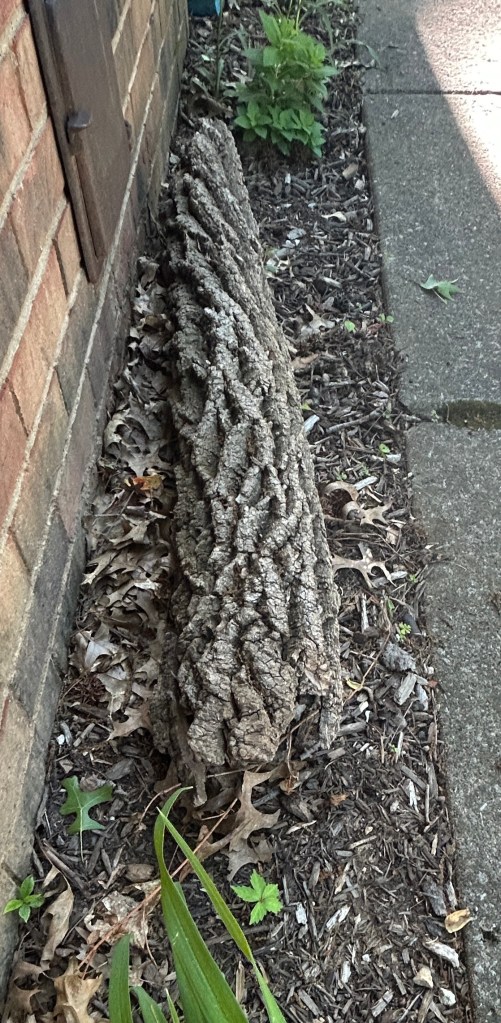
As I stroll the cemetery grounds, I am awed by the vast array of peony bloom colors and shades: white, pink, scarlet, and even a red variety that I’ve never noticed before. Passing by the “New Spencer Addition” section of the cemetery, I think of the powerful storm that passed through in 2011, in which an ancient maple was felled by a wind and lightning storm. The morning after the storm, while shedding a few tears for the grand tree, I carried off a large piece of bark from the thick trunk. The bark still survives today, lining the side of a garden bed. Holding on to a piece of the former giant makes me happy.
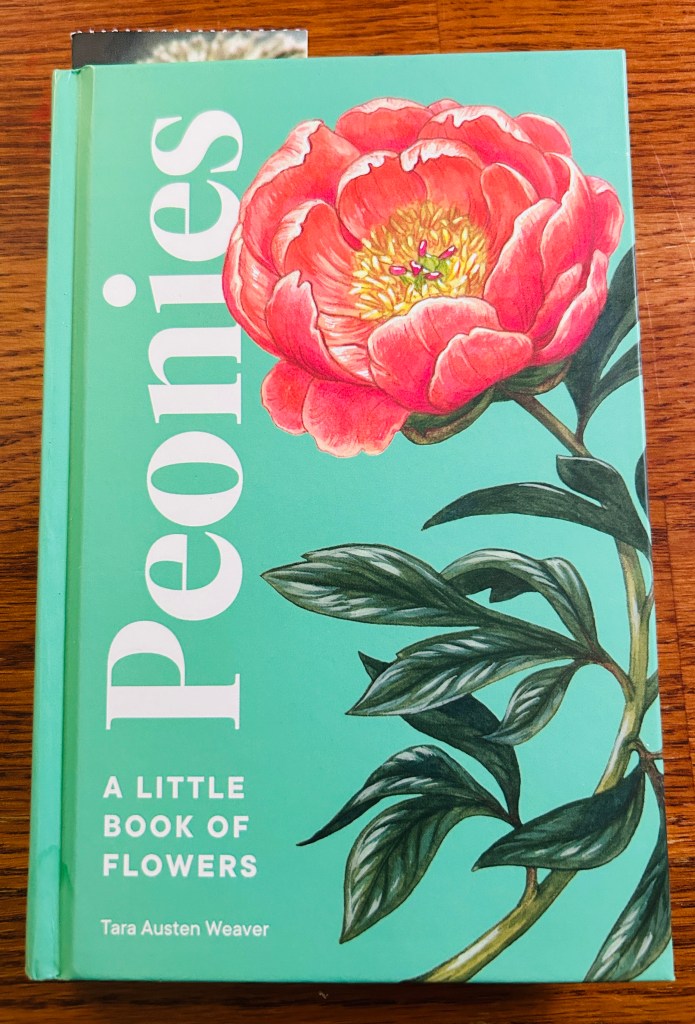
Peonies, which happen to be the official Indiana state flower, are sometimes associated with the memories of loved ones. They are also hearty plants and require little ongoing maintenance. Unlike my writer/gardener friend Tara Austin Weaver, who authored a beautiful, useful book titled Peonies, A Little Book of Flowers, I know very little about the many varieties in the genus Paeonia. From Tara’s book, I learned that peonies are “thought to confer good fortune, prosperity, and a happy peaceful marriage,” so apparently, I should be glad that the shop where I purchased my bridal blooms had been cleaned out of every other flower option that evening.
Under Rose Hill Cemetery soil lie many fascinating, important souls whose lives show diversity and accomplishment. Among them are George (Anner) Shively a musician/poet/baseball player who played with the Negro Baseball League, Margaret Hemphill McCalla, the first female superintendent of schools in Indiana, Alfred Kinsey, the infamous founder of The Institute for Sex Research at Indiana University, Hoagland (Hoagy) Carmichael, the legendary Hollywood performer and musician who recorded “Stardust,” and won an Oscar and John B. Crafton, a successful Bloomington businessman who made the unfortunate decision to voyage across the Atlantic on the Titanic and lost his life when it sank. (Information taken from “A Walk Through the Rose Hill Cemetery Historic Tour Guide No. 12”).
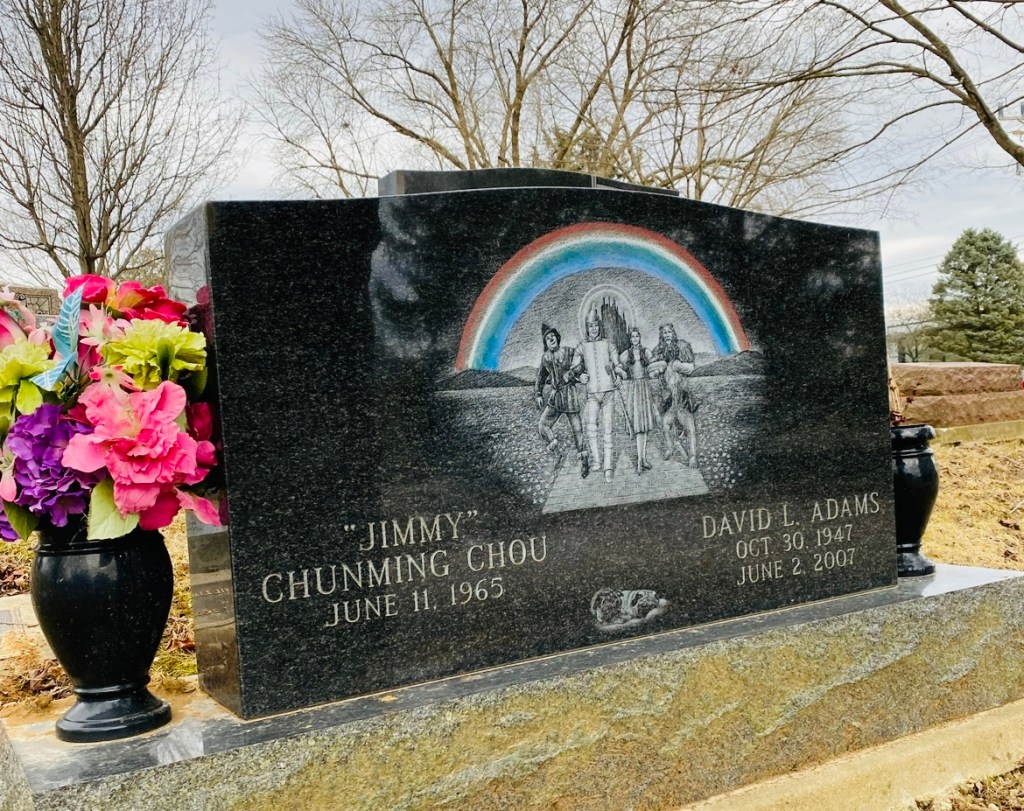
My personal favorite, tucked far into the Southwest corner of Rose Hill, is a fascinating headstone marking two life partners who shared a passion for The Wizard of Oz.
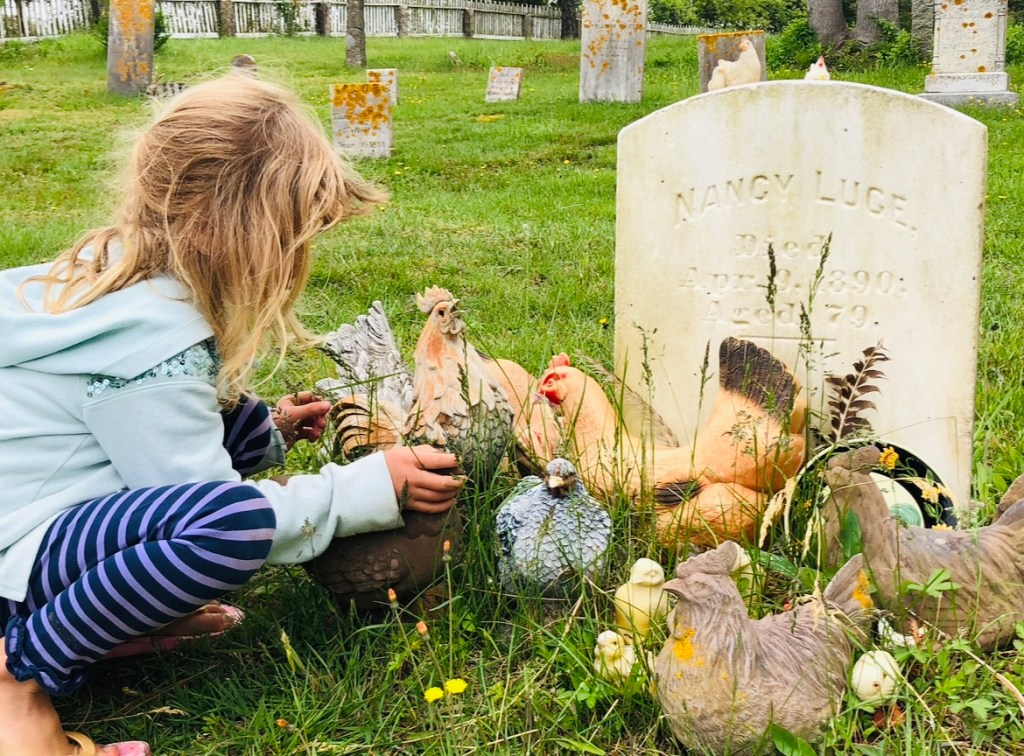
Besides providing a vital service to us humans, cemeteries offer a chance to learn about the lives of individuals who may otherwise have slipped into history. From lost infants (so many lambs on grave stones) to centenarians, to everyone in between. While walking, I remember the grave of a woman my daughter and I once visited on Martha’s Vineyard Island. The lady had devoted her life to chickens, evidenced by the carved stone birds gathered around her grave. Each grave tells a story. Every person lost was grieved for by someone (or some bird).
I walked for an hour that stormy Friday, soaking in the color and assessing my losses and gains. I bumped into two friends who expressed their condolences regarding the loss of my father-in-law, one offering a warm hug in sympathy.
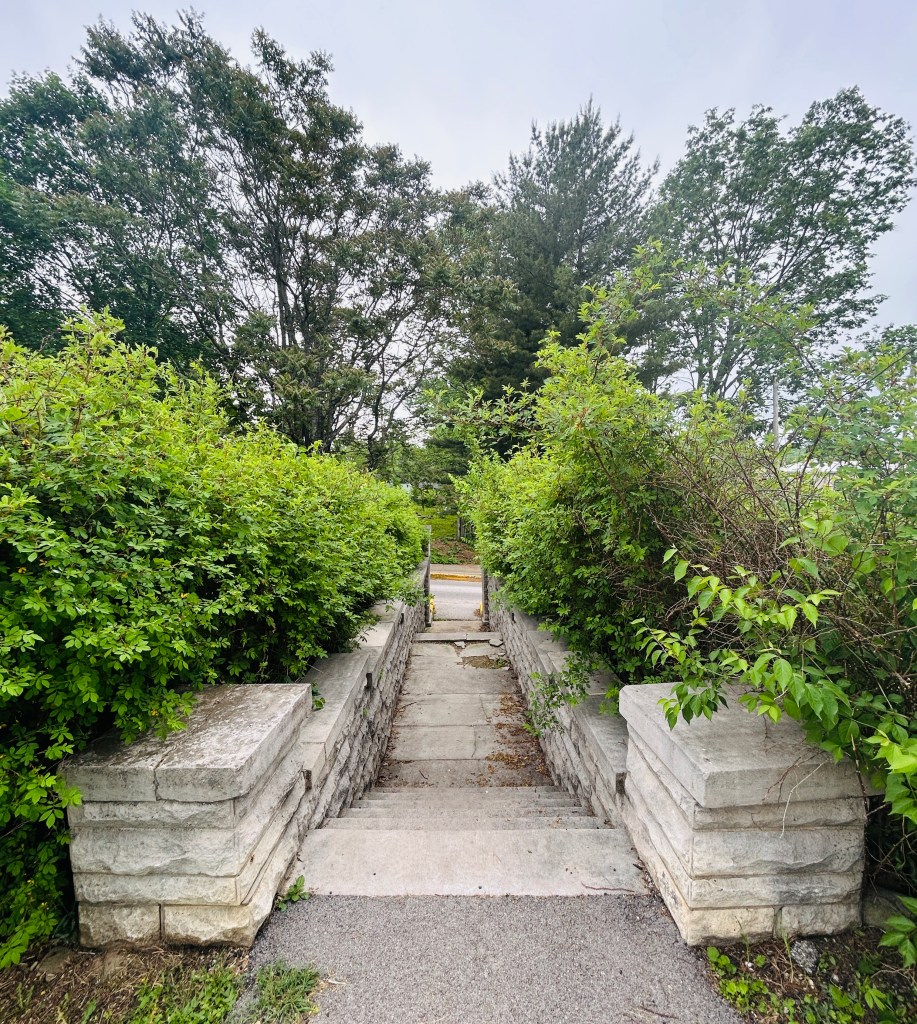
It was time to leave the grounds and return to daily life. Slipping out of a cemetery side entrance, I felt inspired. By nature, by life, and even by death.
“Death is not the end of everything, but a new beginning.”
–Pope Francis

Credits and Links
Buy Peonies: A Little Book of Flowers here:
https://www.powells.com/book/peonies-a-little-book-of-flowers-9781632173621
A link to more about the meaning of lambs on gravestones from the blog gravelyspeaking.com:
About Rose Hill Cemetery:
 Still...however...maybe...
You must be logged in to post a comment.