Many posters in my dad’s collection are begging to be framed.
Through the years I’ve wondered about my tendency to gather books, magazines, flyers, and brochures. Why do I feel drawn to them?
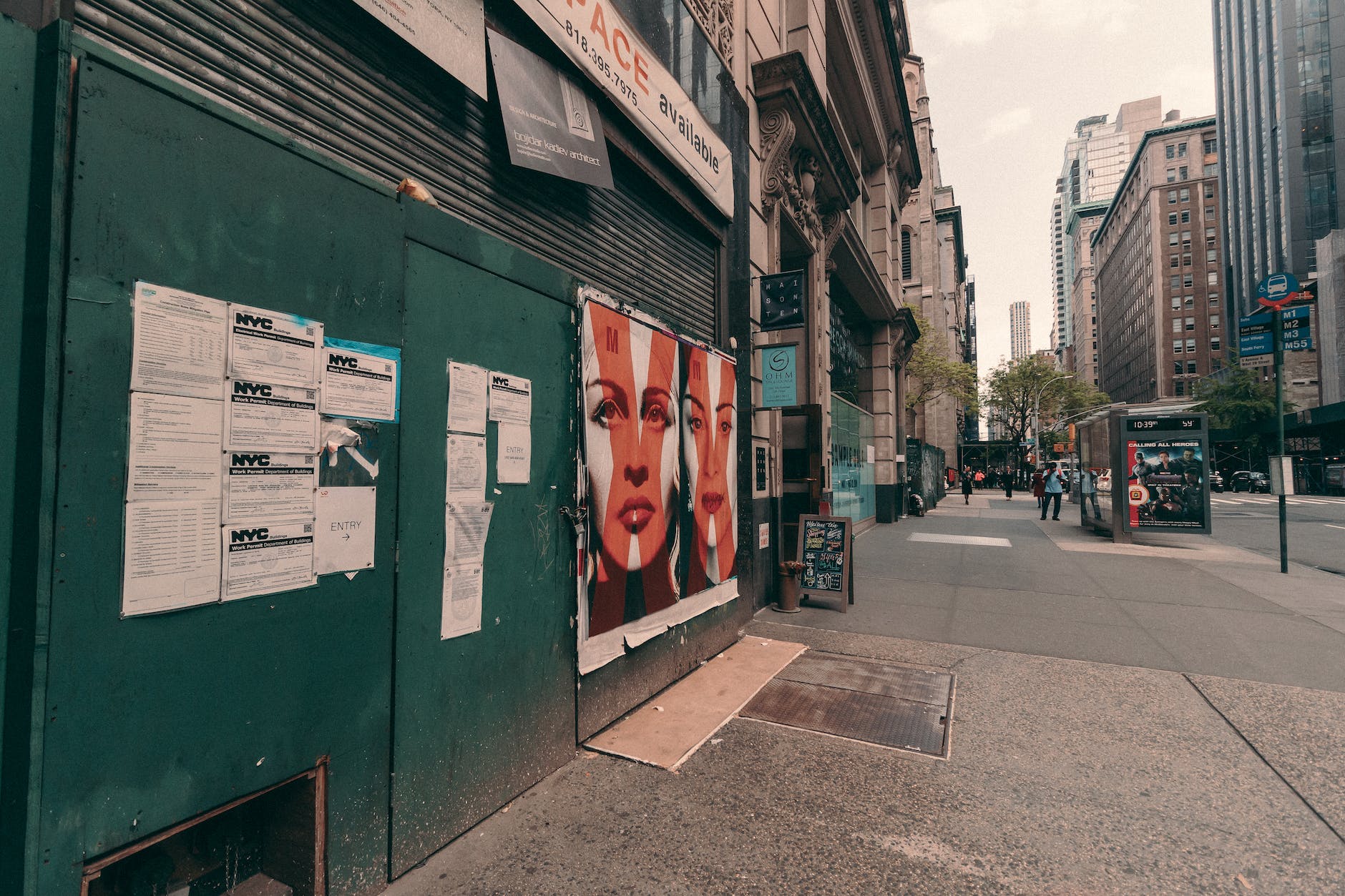
During the decades I lived in two big cities (Boston and San Francisco) my daily routine often included an end-of-the-day emptying out of my bag (never a purse—too small—always a bag). This usually meant stacking 2-3 books on the kitchen table and sorting through a cache of papers. I could generally trace the source of the books to my day jobs in publishing. As for the papers, they were an eclectic assortment of postcards and handouts gathered in restaurants and bars, newspapers and flyers that found their way into my hands, or small posters carefully removed from the sides of buildings, telephone poles, and bathroom walls.
Some see a city street, some see a poster collection waiting to happen. Photo by Itzyphoto on Pexels.com
Sometimes it was the words and ideas that caused me to stuff the paper into my bag, other times it was the visual impact of the item. Dreams of creating art out of these found objects flickered in my mind, but really what I enjoyed most was reading the ideas and words of others, often unfiltered and full of meaning.
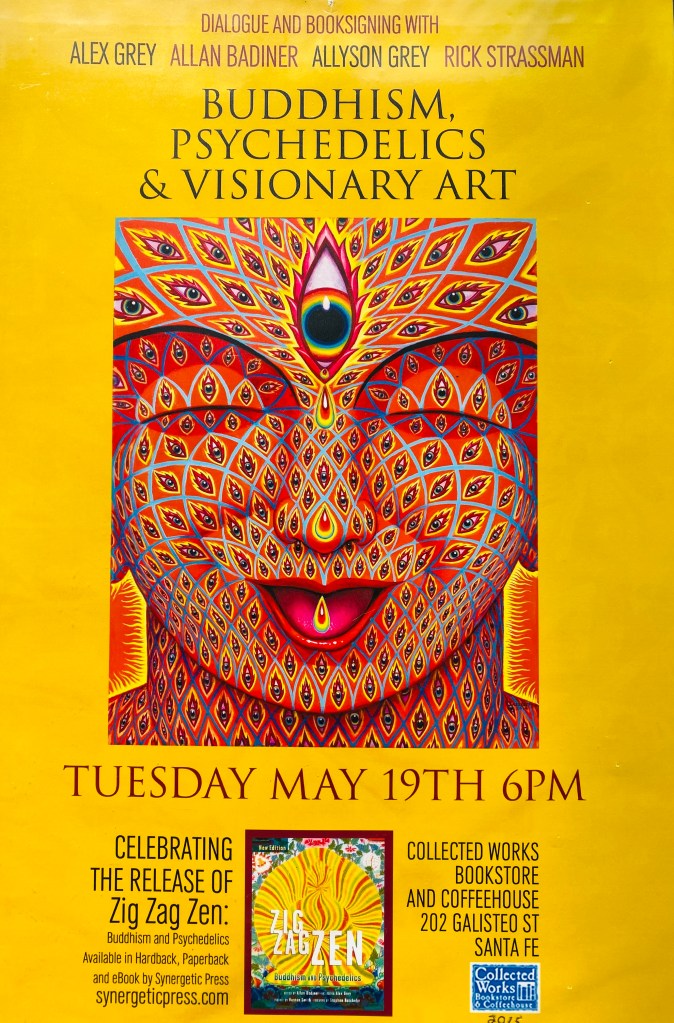
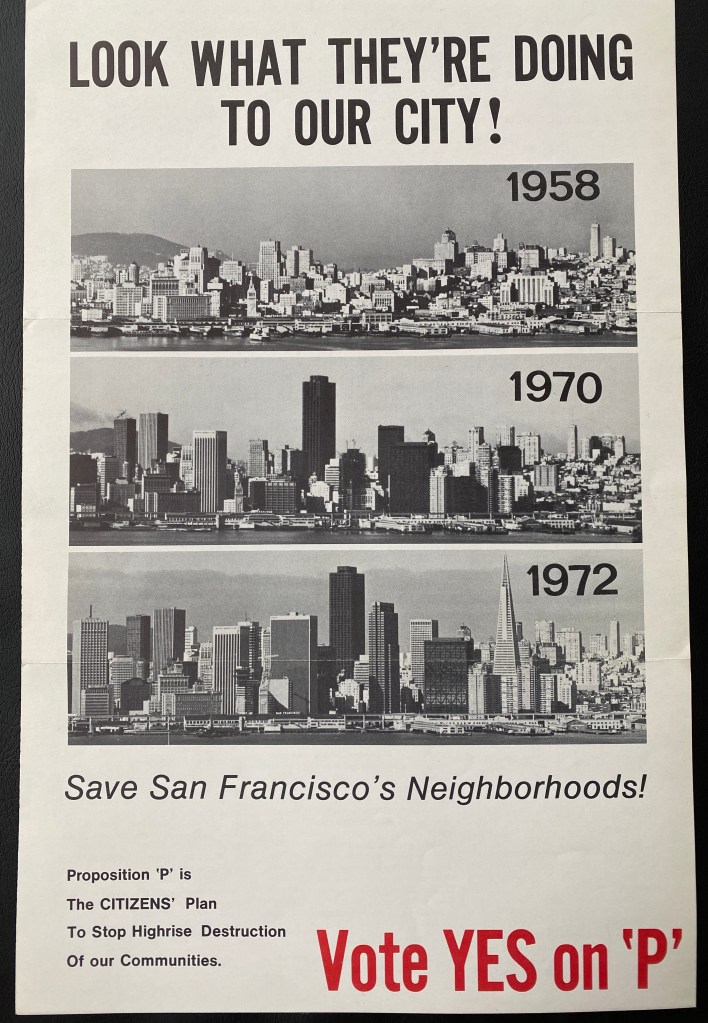
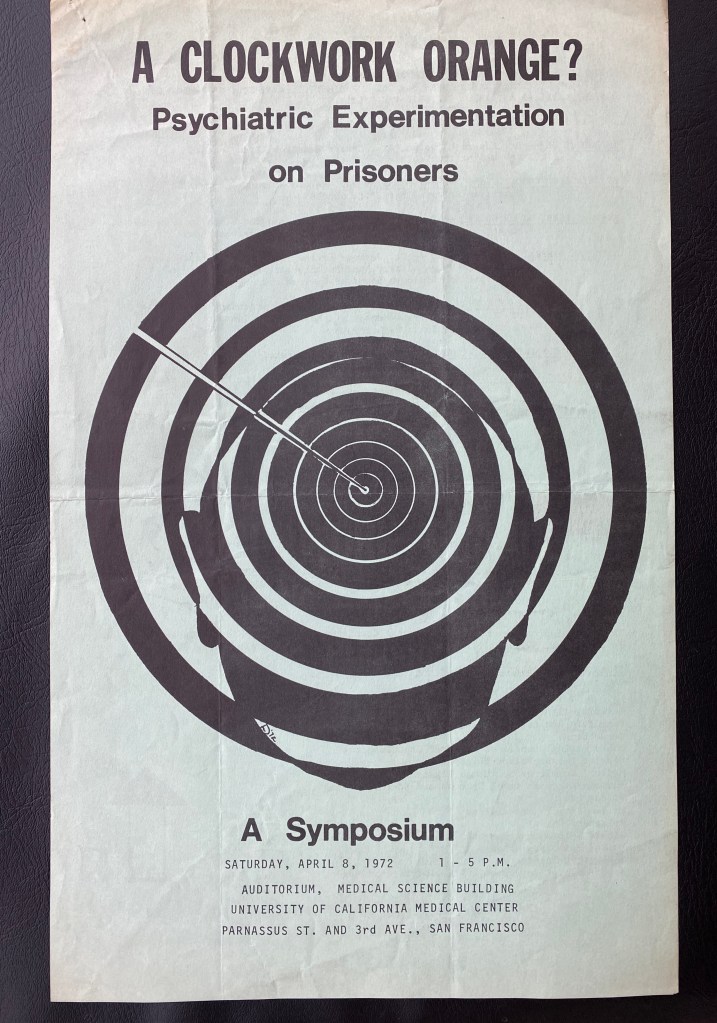
After a thorough review of my father’s extensive poster and handbill collection (fourteen folios worth), I can definitively say that I now understand where I inherited this tendency to collect all manner of words printed on the fiber of trees. My father began collecting posters on the streets of New York City in 1968 and continued for the next fifty years. An equal-opportunity compiler, the posters he gathered cross ideological and political lines and the subject matter ranges from political protests to movie posters to meditation retreats to flyers for lost pets. If it caught his eye, he picked it up (or rolled it up).
It’s a good thing that I no longer live in a big city where I am tempted all day long to stuff anything interesting I come across into my bag (nowadays that bag is full of Kleenex for my preschool students, water to keep hydrated and snacks for my kids). Neither is there any physical room left for expanding anyone’s paper collection, either my father’s or my own–the time has come to appreciate what has already been gathered.
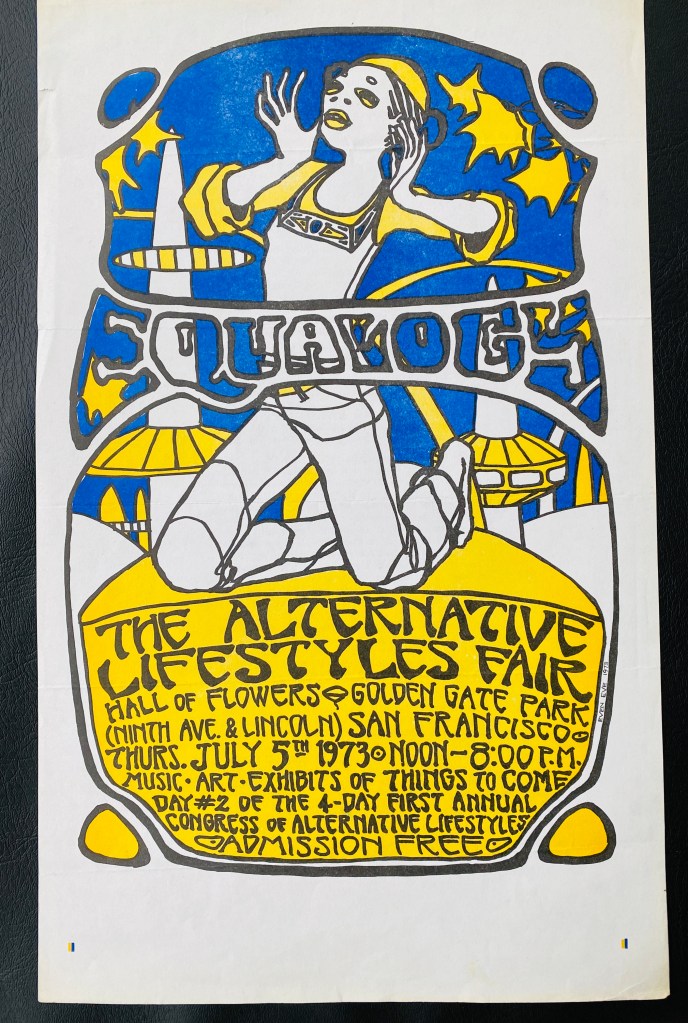
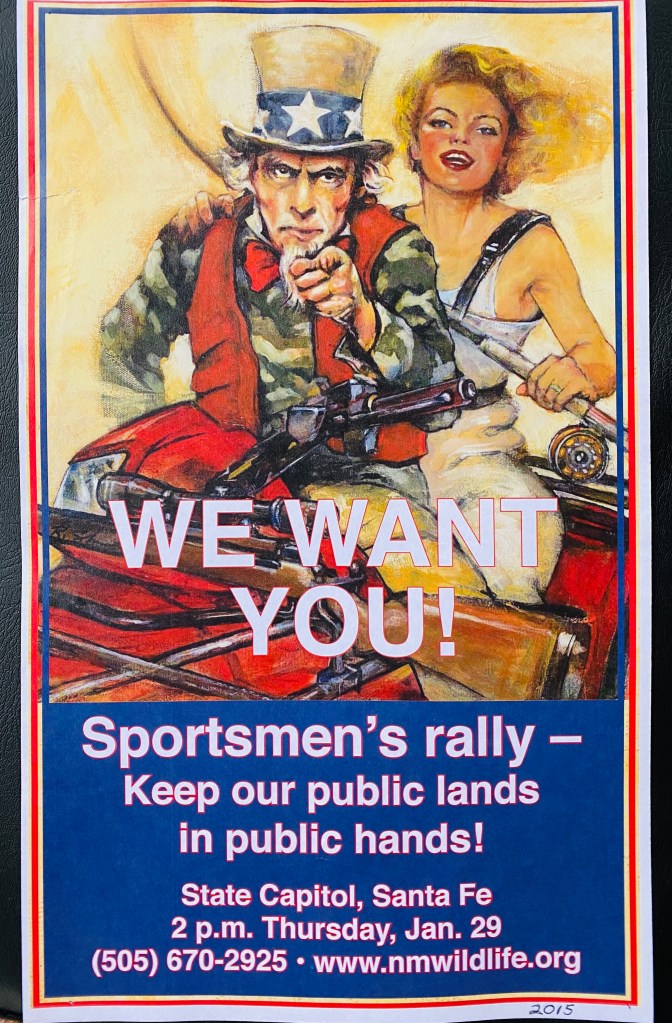
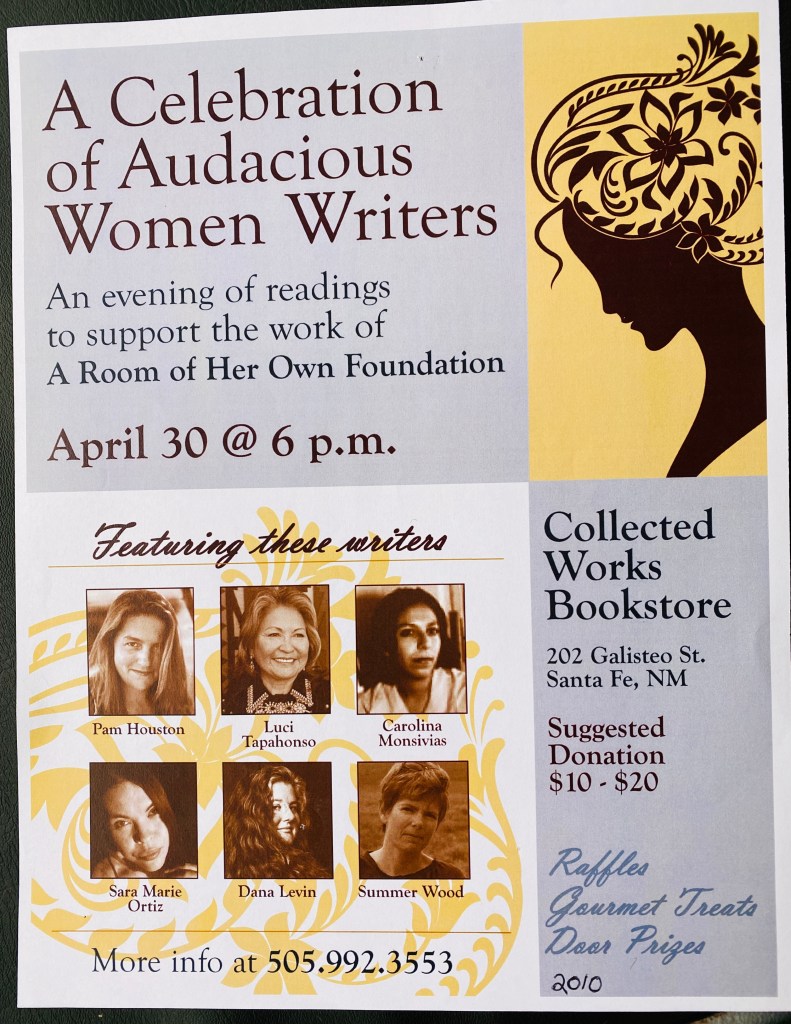
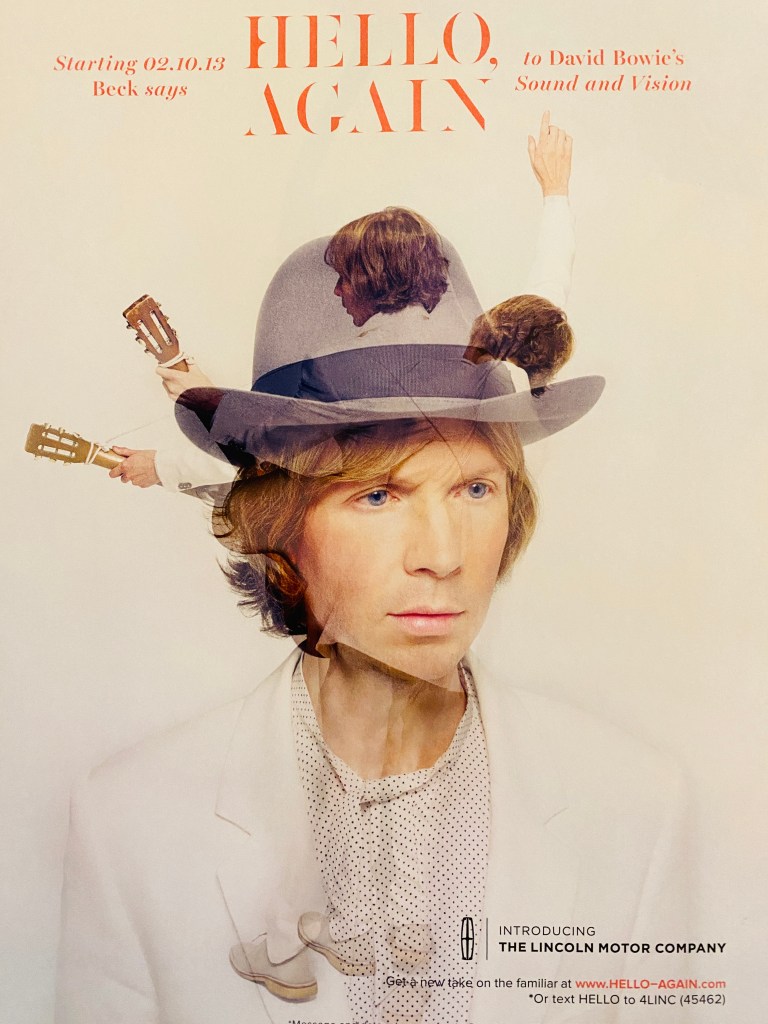
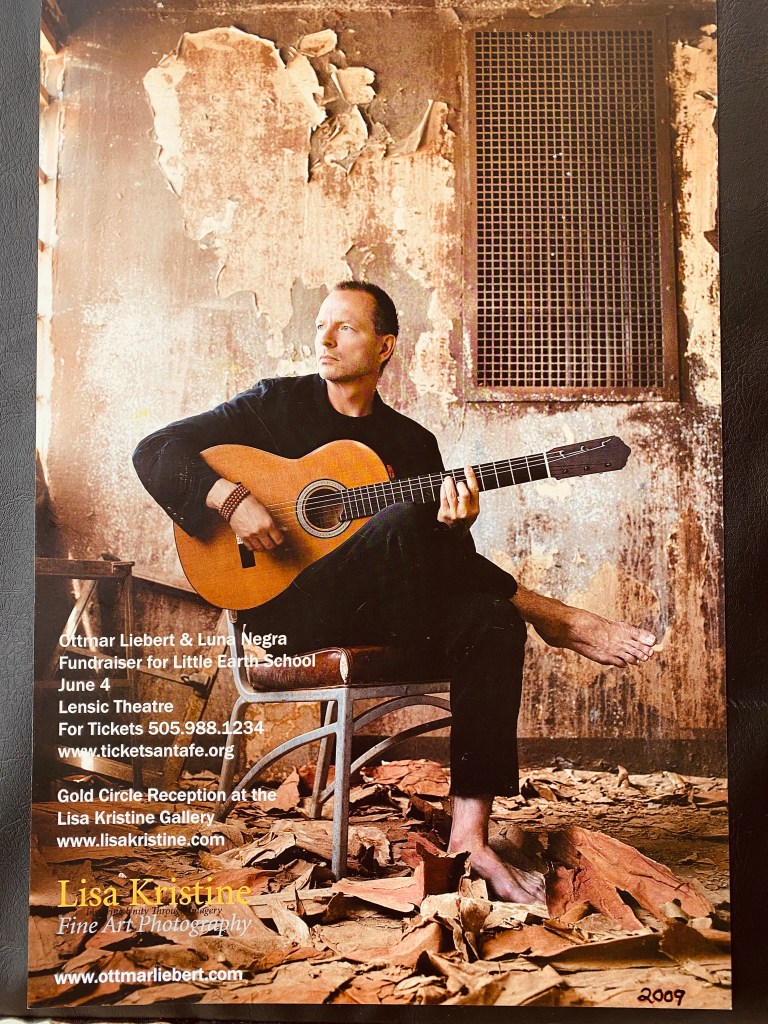
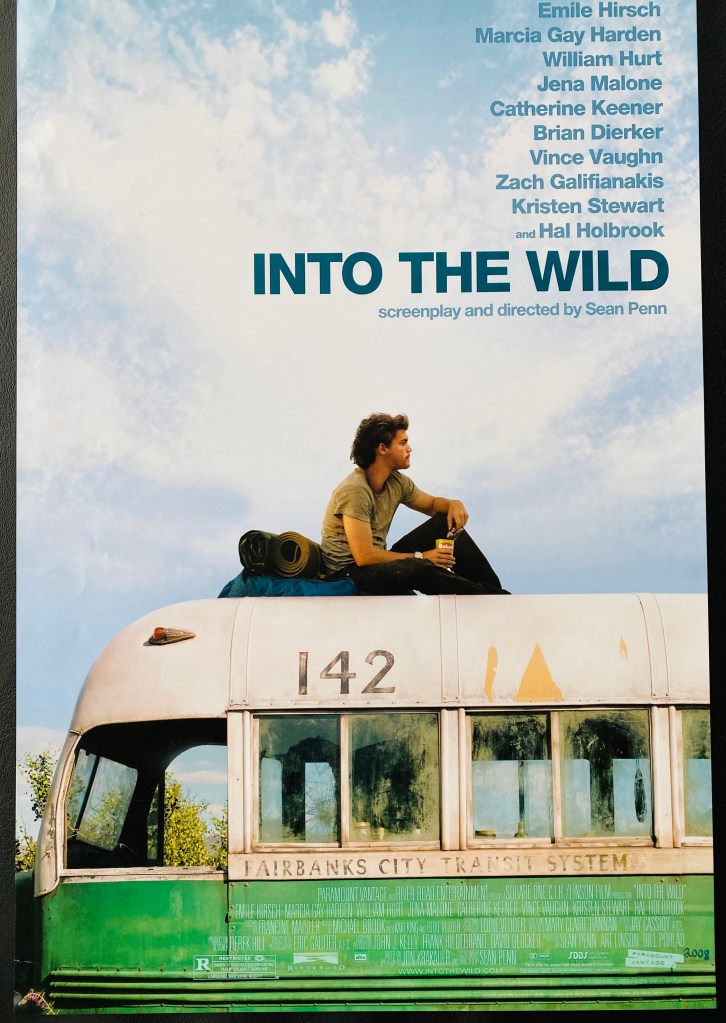
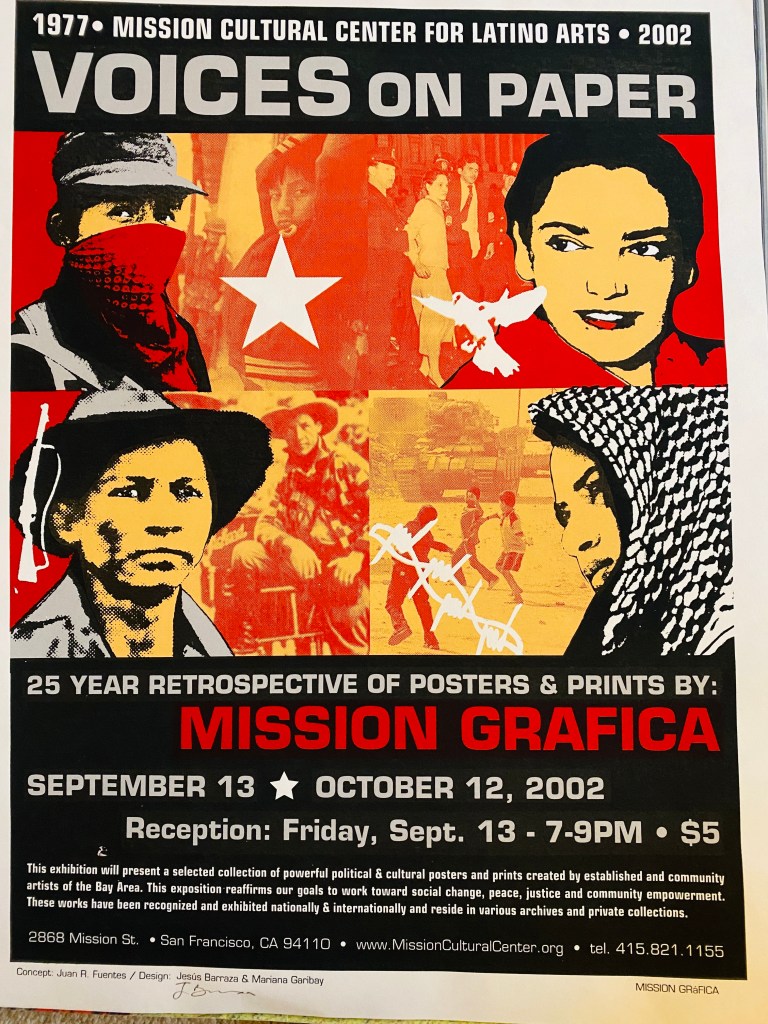
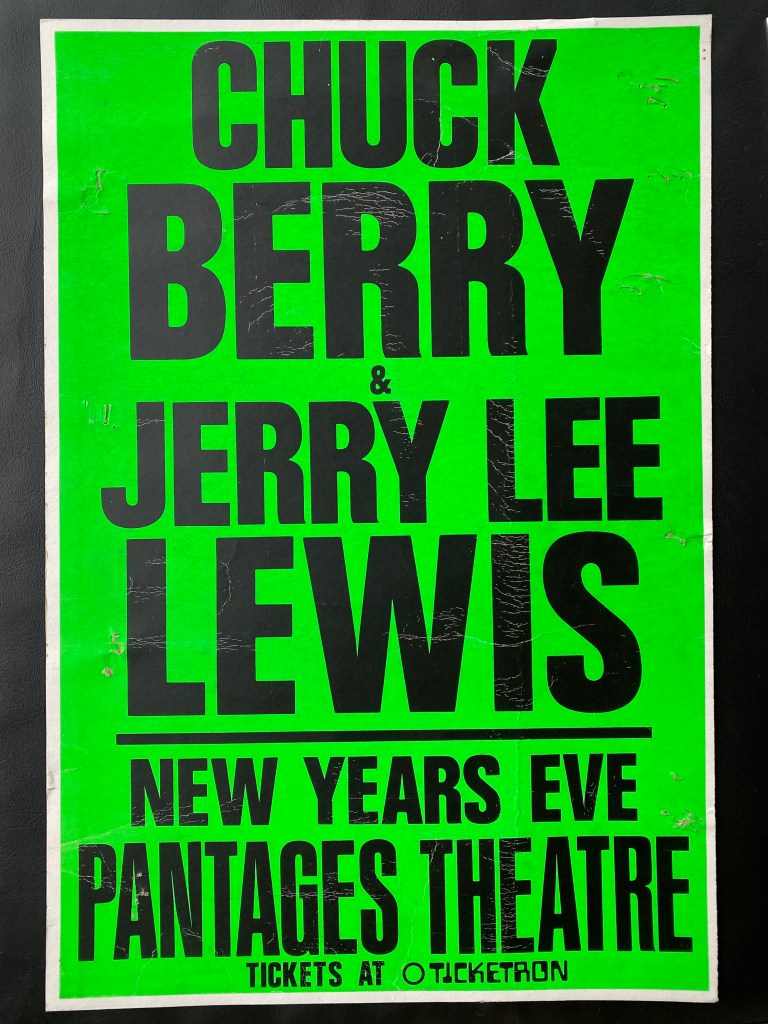
In that spirit, here are some highlights from my father’s collection. I’ll continue to share images here periodically. Please let me know in the comments if you would like me to feature any subject in particular (art, music, writers, politics, Native American issues, prison issues, spiritual events);
Did the creators of this 1973 protest poster considered the Transamerica Pyramid to be one of the offensive buildings? My dad was particularly interested in prison reform-related handbills since he frequently covered that subject as a journalist.Oh, to be a fly on the wall at the “Alternative Lifestyles Fair” in San Francisco in Golden Gate Park July 5, 1973A San Francisco handbill from 2013. Some of the posters hail from Santa Fe, New Mexico where my dad lived for fifteen years. This one is dated 2016. I wonder how successful this rally was. Many posters feature authors and writing-related events. Sorry to have missed this one in 2010. One of the music-related posters in the collection. Ottmar Lierbert & Luna Negra fundraiser at the Lensic Theatre in Santa Fe. There are quite a few movie posters. I read that this is not the actual bus where Christopher McCandless lived but an exact replica. Some posters are compelling due to their design and graphic impact.Poster from a 1988 New Years show at the Pantages Theatre in Los Angeles. A reviewer wrote that Berry was on stage that night for only thirty minutes.
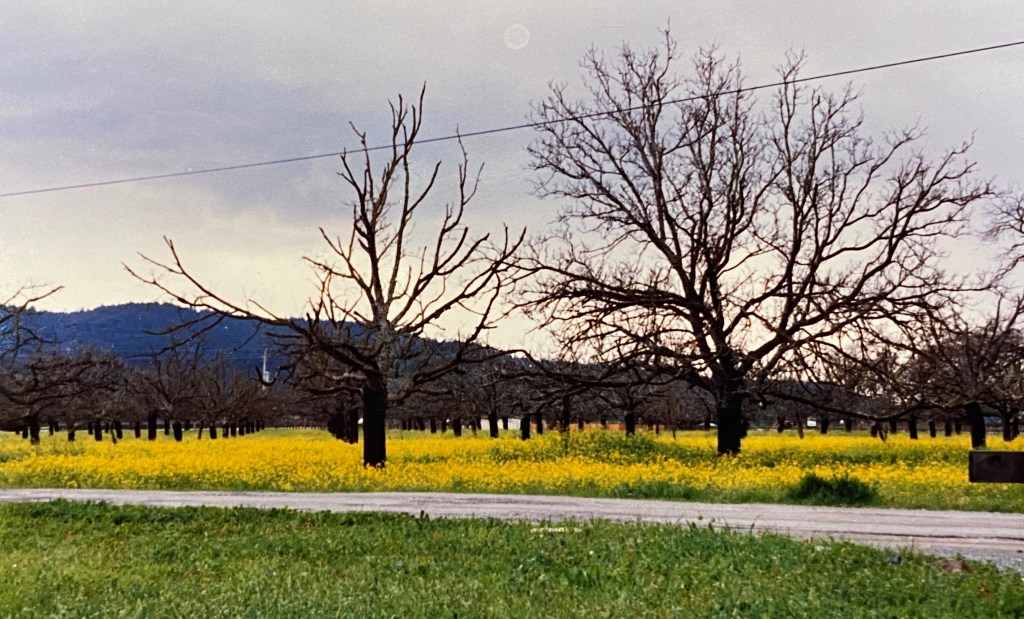
Walnut trees and mustard grass. This field is now a vineyard.
Neighbors, like so many aspects of life, can be an unpredictable business.
The people who land next door, across the hall, a few houses down, at the neighboring campsite can become acquaintances, support systems, minor annoyances, close friends, and even enemies. Lest you think this is a story about problematic neighbors…it is not. Quite the opposite. This is a tale about how fortuitous proximity can lead to a meaningful friendship.
During my formative years, our next-door neighbors were original back-to-the-landers, Bob and Evelyn. To enter our rural Northern California neighborhood, you had to turn off a busy two-lane highway and follow a dust-producing lengthy gravel road. To the left of the road was a mature walnut tree orchard under which a blanket of golden mustard grass spread in the springtime. On the right low ranch-style houses lined up sporadically, each claiming the middle spot on an acre, more or less.
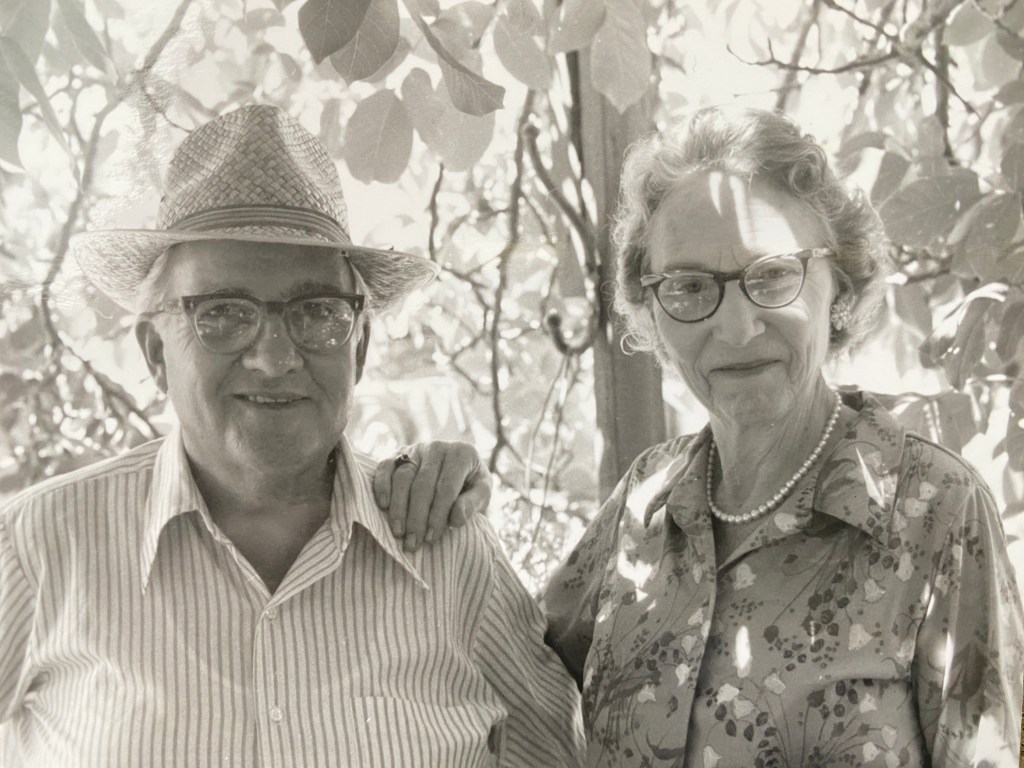
Bob and Evelyn’s plot was adjacent to ours and over the years our young family of three became close to their older twosome. Originally from the East Coast (with the accents to prove it) Bob and Evelyn had owned and operated a music shop in San Francisco for decades. Now they were a happily retired childless couple living an almost entirely self-sufficient life in the country. Raising goats, keeping chickens (and much to my chagrin–especially in my teen years–a series of roosters), and growing what seemed like every conceivable fruit and vegetable (including okra) kept them bustling around their abundantly overgrown yet organized property.
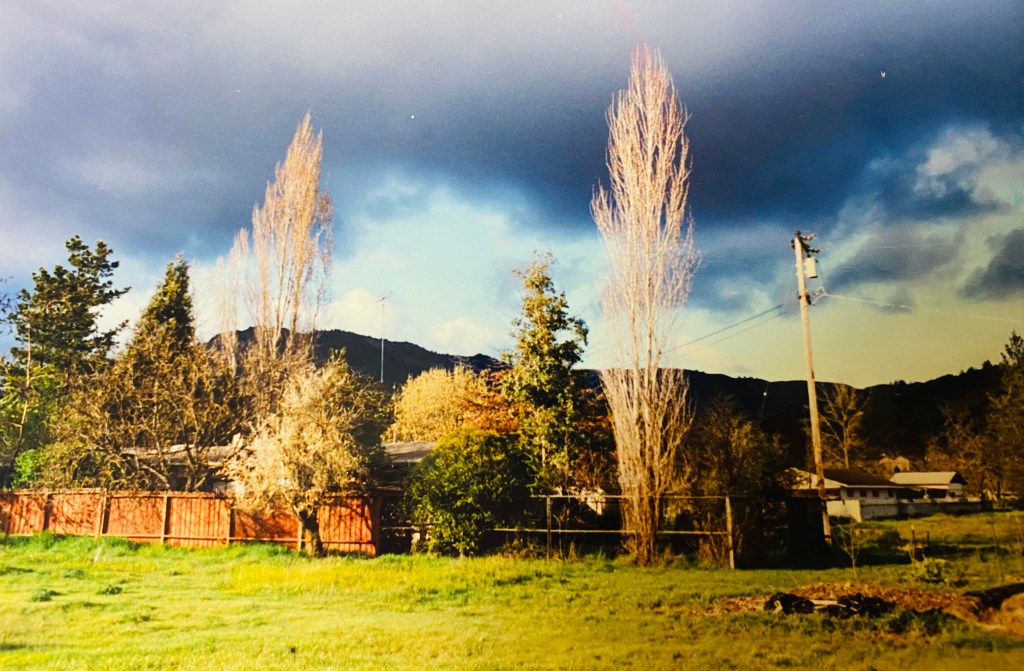
The spot where our plot of land met Bob and Evelyn’s.
Bob was generous with land-tending advice for my citified father and Evelyn and my mother traded gardening tips, seeds and starts, and recipes. Sometimes, when I was tired of climbing my favorite trees, trailing the cat, or hunting green beans and cherry tomatoes in my mother’s extensive organic garden I would glance over at Bob and Evelyn’s house. Perched on the edge of a lot about half the size of ours, their modest abode featured a grape vine trellis that covered the entire Eastern-facing side and shielded their house from the blazing summer sun.
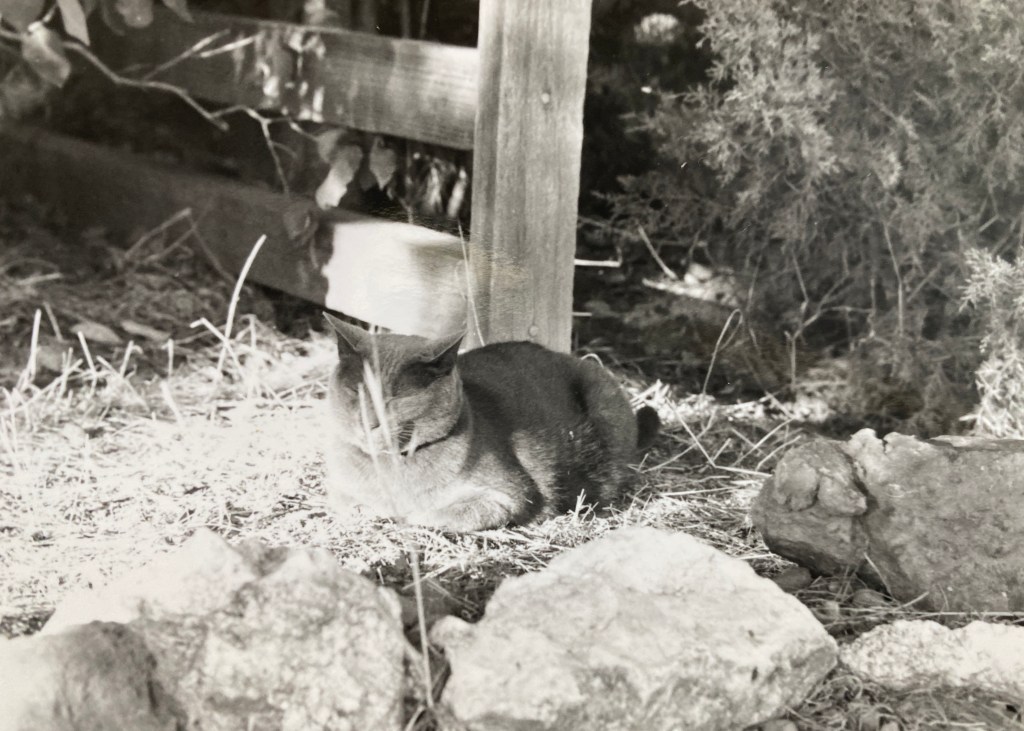
Ahh, to be a free-range country cat, napping in the mid-summer heat.
One summer day, as I gazed in their direction, a question burned in my mind. Was today a jam-making day for Evelyn? The only way to know was to ask, so I heaved myself up off our garden’s straw-covered dirt path (leaving green bean tops and cherry tomato stems strewn in my wake) and walked the 100 yards or so to the three creaky steps that led up to their front door.
Evelyn answered my knock right away, her thin frame and capable arms topped off by a welcoming red-lipstick traced smile and softly coiffed silver hair. “Hello, dear heart! You have good timing, the jam is setting, Bob just came in from feeding the girls (their prized goats) and we’re going to watch a show, would you like to come in?”
This was music to my nine-year-old ears and I gladly stepped into their cozy dark living room.
The house smelled sweetly of raspberry jam, and while Evelyn was in the kitchen, I made myself comfortable on one of their low-slung easy chairs and gazed around the room. Bob and Evelyn’s penchant for Western-style art (and clocks) was on full display and I still to this day sometimes conjure up the image of the free-standing lamp that stood to the left of their couch. This nearly miraculous fixture would, with the flip of a switch, slowly rotate in a circular motion while the horses artfully painted on its tanned-hide shade bucked and jumped against the interior bulb’s glow.
Who knew lighting fixtures could spark core memories… one person’s lamp-related childhood remembrance (“A Christmas Story” fans, I’m looking at you) includes a mannequin leg with a fringed shade on top while another features equines brought to life by electricity. What will upcoming generations recall from their childhoods? Recessed overhead lighting doesn’t hold quite the same mystery.
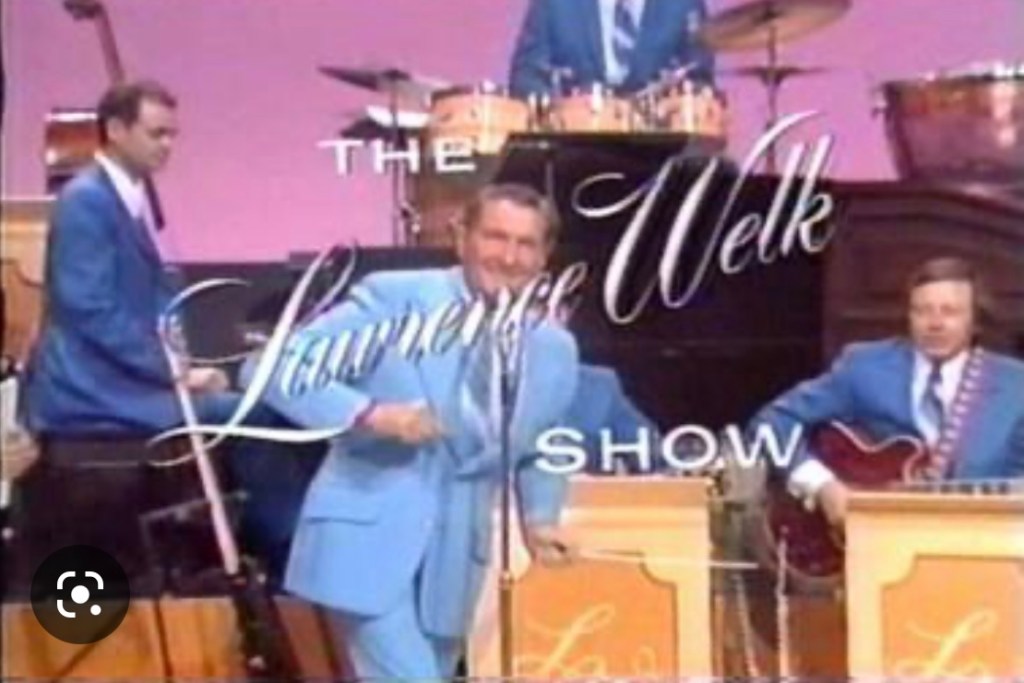
Once Evelyn had served up the still-warm jam, scooped into my very own child-sized lidded glass jar, she and Bob (a stout man of few words with calloused hands, a hearty laugh, and a work ethic I haven’t seen since) settled into their well-established spots on the couch and turned on the hulking TV in the corner. The Lawrence Welk Show was starting, and we were there for it. From the frothy opening segment in which large bubbles featuring the faces of the show’s singers float across the screen, to the individual skits (square-dancing, romantic ballads, boot-stomping country jingles) to the concluding strains of the orchestra fronted by the entire cast of singers and dancers from that evening’s show, we were transfixed. Bob and Evelyn knew the lyrics to an impressive number of songs and my favorite act was the Lennon Sisters, four young gals with ethereal voices who practically floated across the stage and lulled me into imagining a possible future as a lounge singer.
The Lawrence Welk Show ran from 1951 to 1982.
Too soon the show was over and it was time for Bob and Evelyn to eat supper. I carried my empty jam jar into Evelyn’s spotless kitchen and placed it on the counter, admiring her hand-knitted tea cozy in the shape of a giant strawberry. I was eternally curious about these two, so perfectly equipped to be grandparents yet operating unencumbered by kids, or any other family that I could see. Did they wish they’d had children? And why did that matter in the first place?
Our sprawling eclectic neighborhood was full of fascinating characters; a kind, hard-working Japanese couple who were survivors of United States-run Japanese internment camps in the 1940s and now owned a thriving egg farm, another couple who happened to be little people and were rumored to have been related to Munchkin actors in “The Wizard of Oz,” a reclusive family that lived in a house resembling one in “Gone With the Wind” complete with massive oak trees lining the driveway…but even among that crowd Bob and Evelyn stood out. Theirs was a life of hard work and frugality, respect for the land, and generosity toward neighbors.
Bob and Evelyn, 1981. Photo by David Holmstrom.
Once, on a return visit to my hometown, I walked down the gravel side road that ran beside our land and Bob and Evelyn’s. More than three decades had passed since I sat in their small living room and watched Mr. Welk conducting his orchestra. The goats, the gardens, and Bob and Evelyn were long gone. In their place was an overgrown mansion someone had erected—it took up almost the entire plot of land. A gleaming red Porsche was parked in front of the grand entrance. Gazing at the elegant yet soul-less landscaping around the mansion I thought of the plants and animals that once covered every inch of this same land. Entirely wiped away. I cringed to think of how quickly it must have happened.
As I stood there looking at the mansion I reminded myself that time marches on and progress (and development) usually cannot be stopped. Especially in California, some might say. There is also much to be considered about who inhabited and tended this land even before we claimed it. Still, it saddens me to think that individuals like Bob and Evelyn won’t come around again anytime soon, that other nine-year-olds won’t have the chance to sit with their elders in cramped dark living rooms softly lit by a rotating horse lamp, eating still-warm homemade raspberry jam while watching TV and singing along to the Lennon sisters.
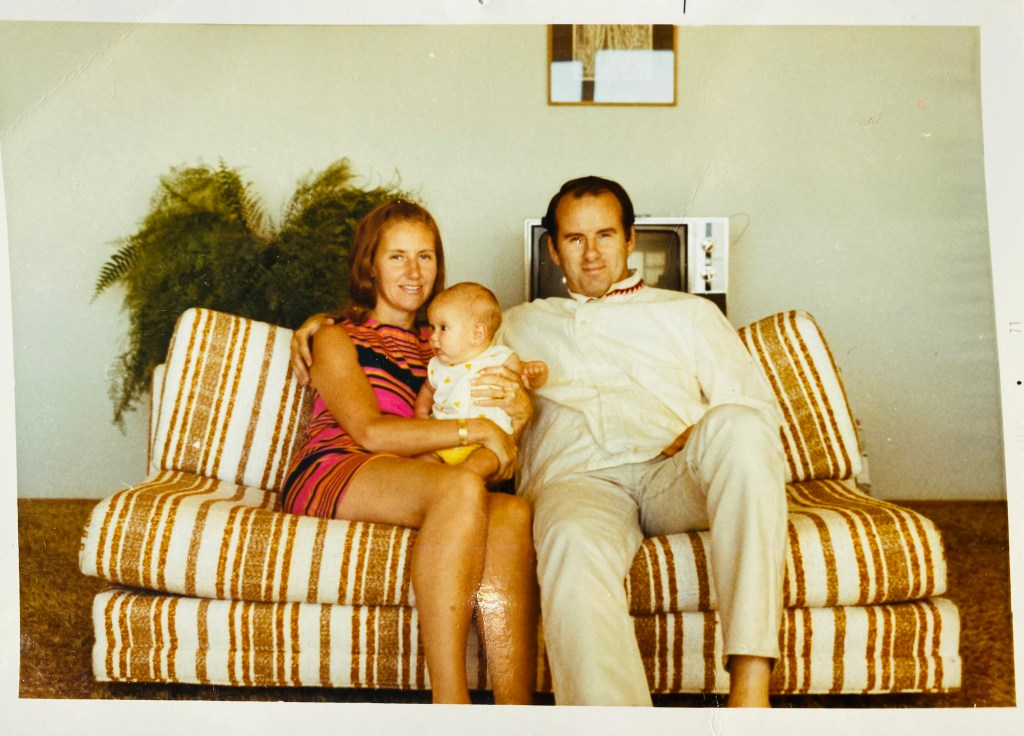
The family Nathalie helped create 1971 Tiburon, California.
As we enter a new year, and a season of new chapters, I’m going to share the story of someone who played an auspicious role in my own beginnings.
Nathalie Dupree once told me she was responsible for my existence, and she makes a valid point.
In the late summer of 1969, Nathalie was working as a newly hired secretary for the New York City bureau of The Christian Science Monitor newspaper. Far from the three times James Beard-award-winning chef, author, and cooking-show host that she is today, Nathalie’s primary tasks at the Monitor bureau included typing up correspondence and opening copious amounts of mail.
My father, David Holmstrom, was a reporter in the same small news bureau, covering politics and the widespread political upheaval that had overtaken New York during those tumultuous times. David and Nathalie soon struck up a friendship “We would sit while I sorted and opened the huge piles of mail, and talk, just the two of us” says Nathalie. “We became instant friends.”
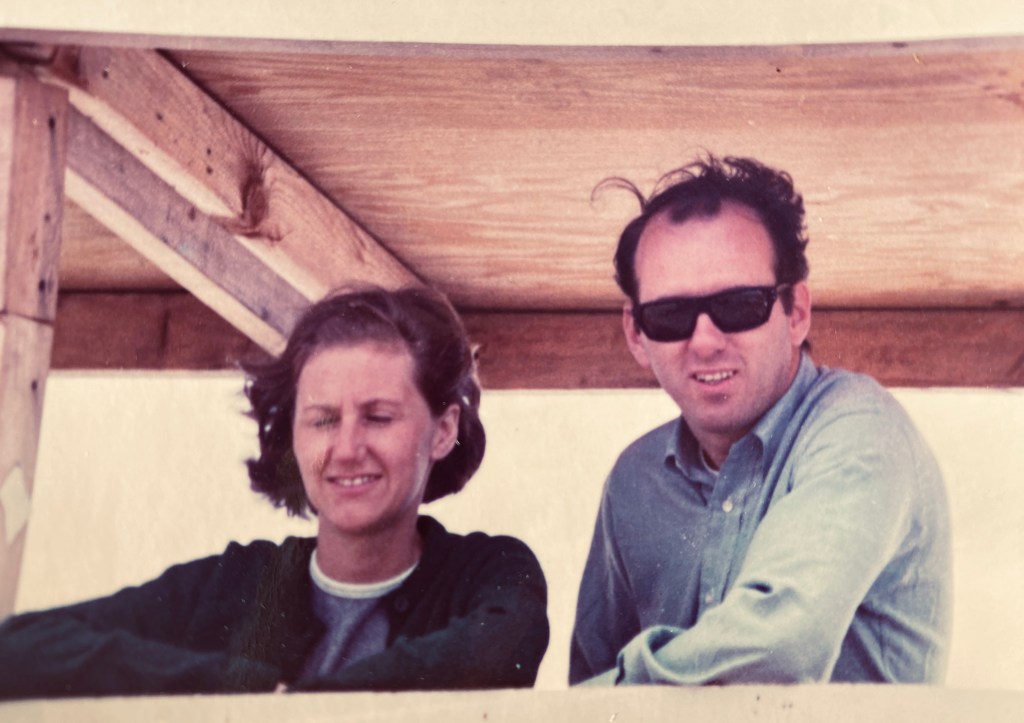
Pat and Dave (aka my parents) around the time Nathalie introduced them.
As the two colleagues and confidants discussed all aspects of life and love and spirituality it began to occur to Nathalie that David might enjoy her friend, Patricia, also living in New York City. Nathalie felt so certain that David and Patricia would get along that she told David she “knew the woman he was going to marry.”
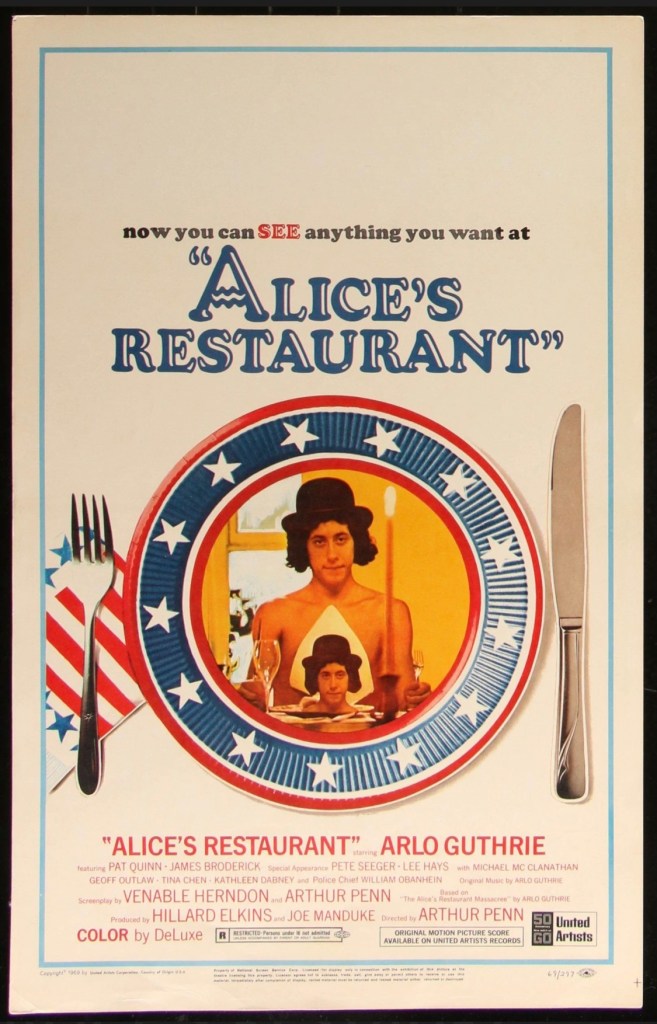
Movie poster for Alice’s Restaurant, a 1969 American comedy film based on a song written and sung by Arlo Guthrie
My parents had their first (blind) date that September, orchestrated by the prescient Nathalie. They saw the film Alice’s Restaurant in a movie theatre on the Lower East Side and, in David’s words;
“I was intrigued right away. Mini skirt and short blonde hair. And she had a great smile. Throughout the movie, Pat’s laugh was the best one in the theatre. When the credits rolled at the end, and the lights went up, we went outside and simply started talking and walking, not idle, first-date chit chat, but a kind of frank easy testing and sharing of attitudes, spiritual convictions, and impossible cosmic questions, all sprinkled with laughter and humor.”
I’d like to say the rest is history, but really, the rest is the start of a thirty-four-year partnership, and as a by-product, my own life.
Incredibly, orchestrating my parent’s meeting was not the only role Nathalie played in my family’s formations…my aunt (my mother’s sister) and uncle celebrated their marriage at her apartment in London, and Nathalie and my uncle John Holmstrom (my father’s brother) were also good friends who supported each other’s careers in the media and publishing worlds.
Nathalie’s style in the early 1970s was on point. Nathalie and my uncle John at a party in London, 1971. That must have been quite a party.
Soon after their Boston wedding in June 1970 my parents succumbed to the call of the West and moved to Northern California. Throughout subsequent decades Nathalie and my folks maintained their friendship, despite her home base in the Southern U.S. and theirs in the West. Nathalie and my mother shared the closest of long-distance friendships–when they were on the phone together my mother’s hearty laugh reverberated around the house.
I relished Nathalie’s visits to our abode in rural Sonoma County as she swept in with her glamorous scarves and tales of television appearances, humorous celebrity encounters, and delectable dishes savored in Paris and London. Entertaining stories of the trials and triumphs of writing her cookbooks and dealing with agents offered me insight into the literary world and showed me how a highly successful woman operated. I wouldn’t be surprised if she helped plant one of the seeds that sprouted years later when I embarked on a career in publishing.
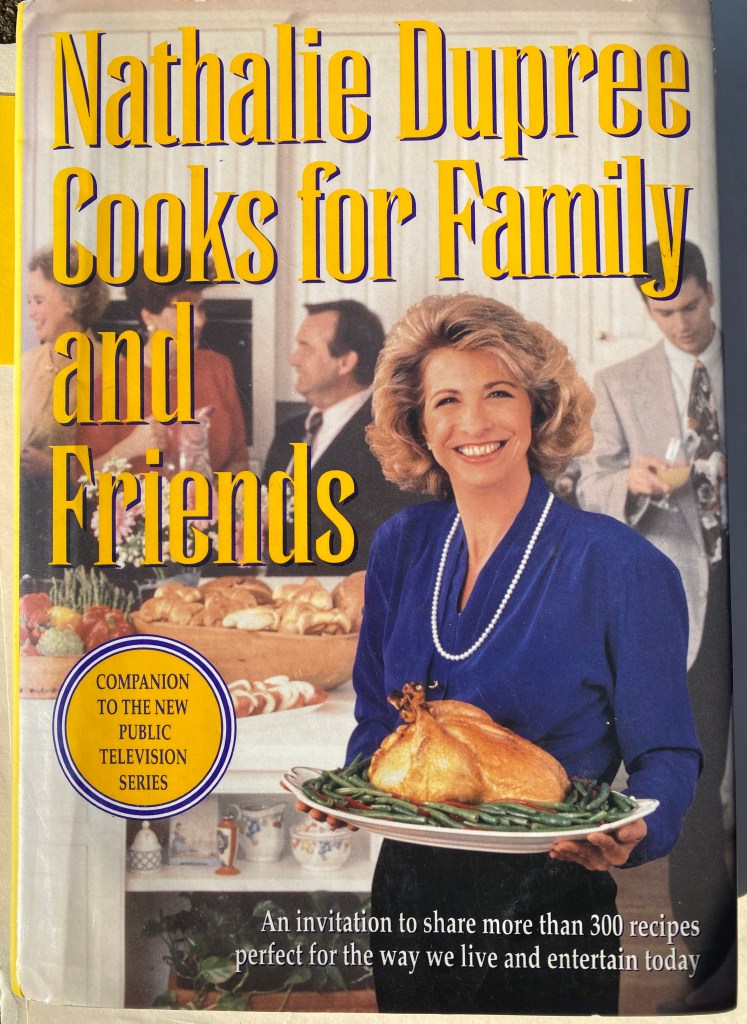
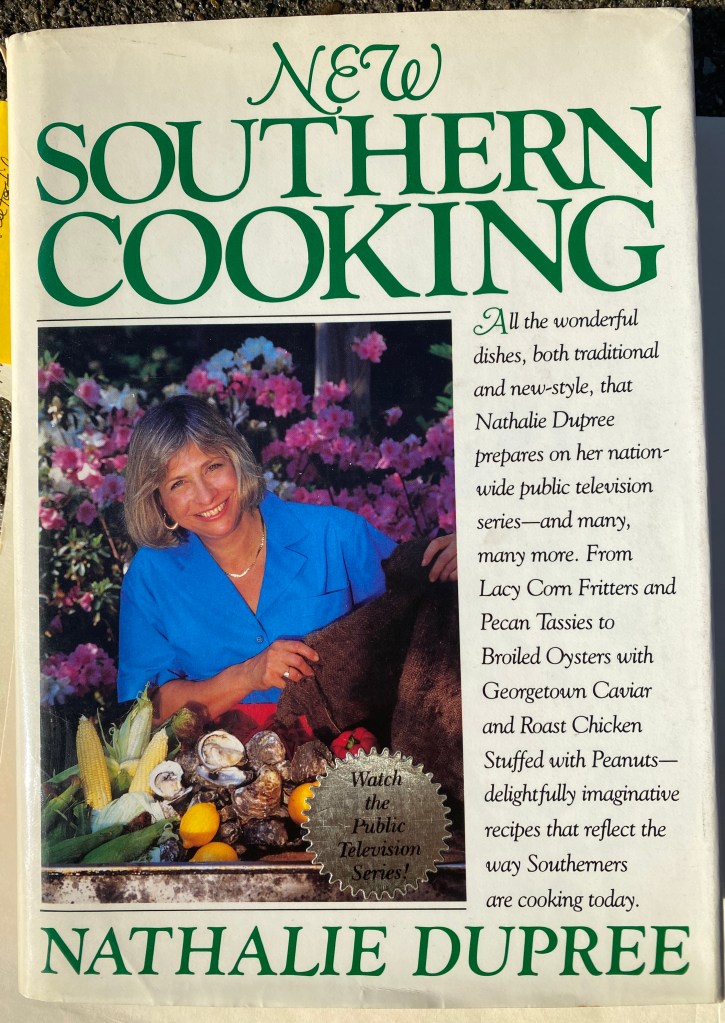
Nathalie’s many cookbooks graced our shelves year after year.
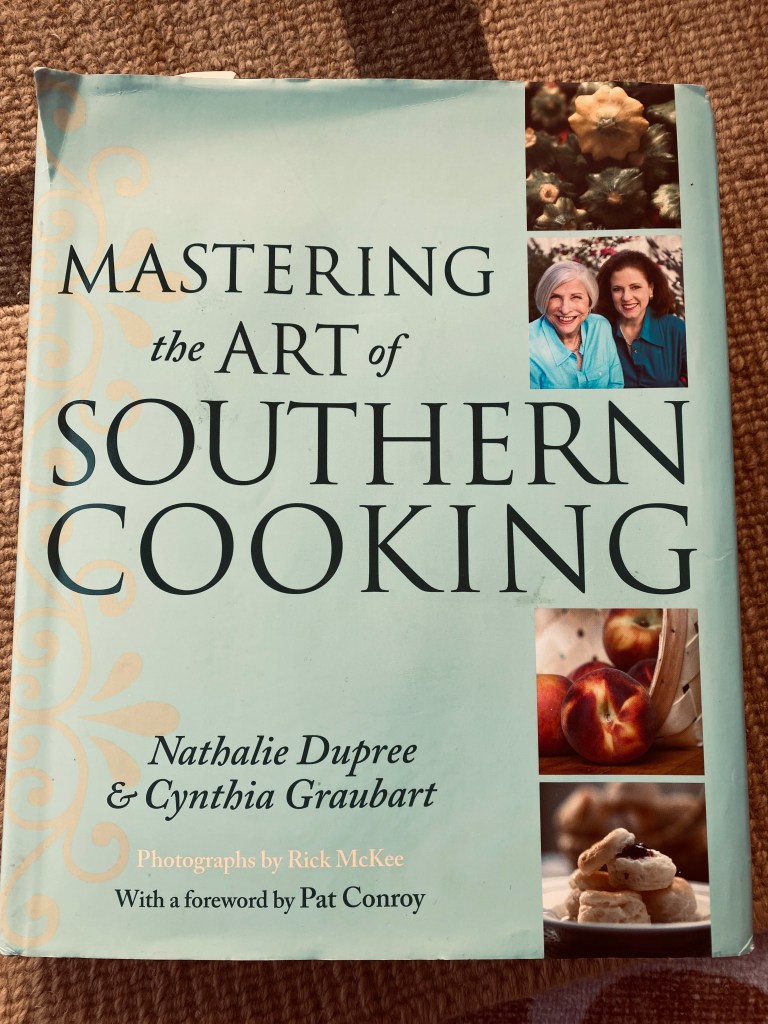
On one of her visits (I must have been around eleven years old), Nathalie handed me a sleek grey box which I opened only to find a delicate strand of freshwater pearls nestled expectantly inside. I still have the pearls, a cherished possession that always recalls her historical importance to my family. A few years ago, as my young daughter and I made the “Home-Style Peach Cake” (Pg. 553 in Mastering the Art of Southern Cooking) together I told her the story of Nathalie’s significance in my life and American life. “Can we make a cake with her sometime?” my daughter asked.
Nathalie’s James Beard Book award-winning cookbook. Pat Conroy wrote the Foreword.
Through the years when I have, say, read a profile in People Magazine about Nathalie, learned of her award of “Grande Dame” for Les Dames d’Escoffier (which she considers her highest honor as it comes from women who have excelled in the food industry), or watched her gracefully sharing her expertise while making an appearance on Top Chef (Season 3 Episode 2) I feel a tinge of pride. Not only because Nathalie’s vast achievements as a renowned chef were being celebrated but because the larger world was recognizing something my family had known for years–that Nathalie has a rare talent for marrying ingredients together and cooking up delicious love and acceptance for all of us.
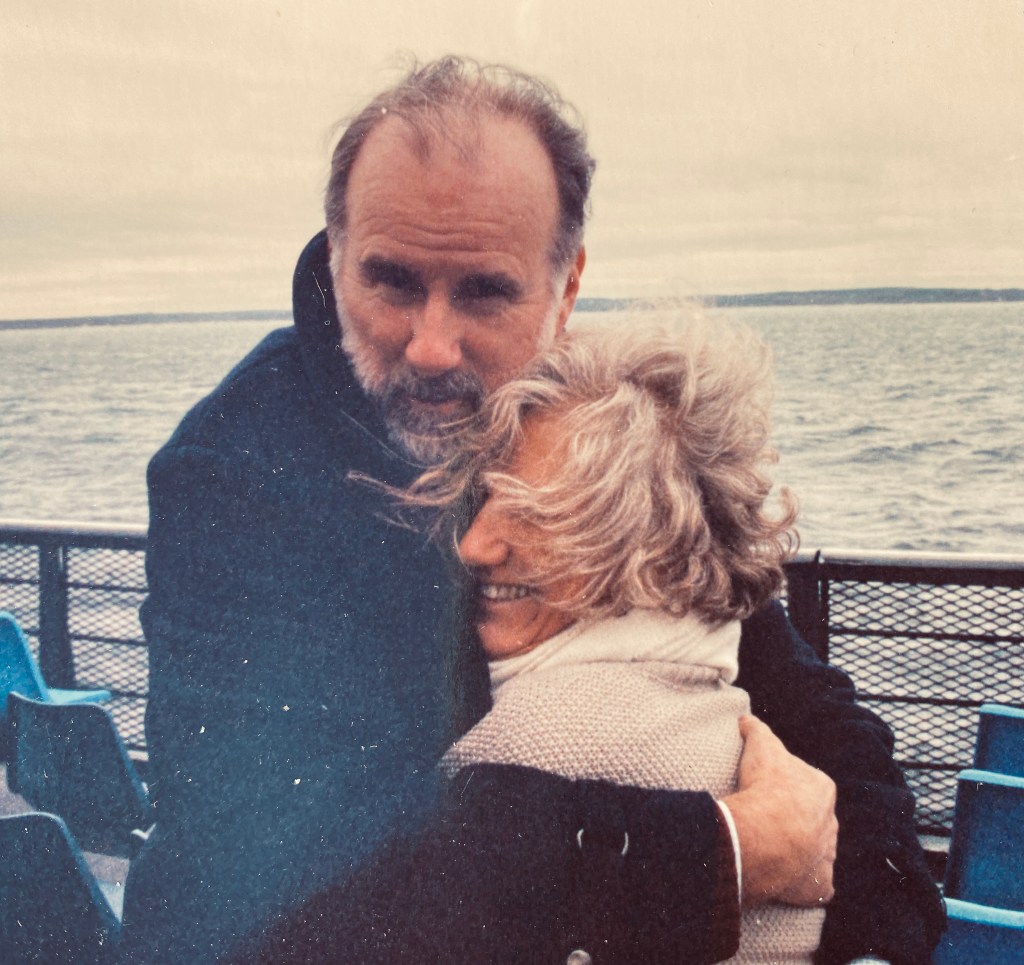
My parents in 1999…decades of love shared.
I hope that Nathalie and my daughter and myself make that cake together someday and that she knows how grateful I am to her, for noticing and responding to the spark of true love.
Projects and ideas tracked my dad like rainbows following the ideal combination of light and showers. Sometimes he was introduced through his work as a journalist, other times he welcomed friendships that led to serendipitous adventures, or to his visions of art installations, manuscripts, photo series, or performances. He gathered information and objects into his life and unwittingly grew collections…there was no end to the number of interesting items that attracted his attention.
My father also cultivated adventure and possibility. It was not unusual to hear him say something like the following at my childhood dinner table:
“Would you like to stay overnight at a lighthouse in San Francisco Bay this weekend? I’m going to write about some people who are lighthouse keepers and they invited me to sleep on their island.”
Now that I’ve had some time to consider the trajectory of his life, I have a feeling I know where my dad’s original drive toward putting big ideas into motion as well as his collecting tendencies might have sprouted from.
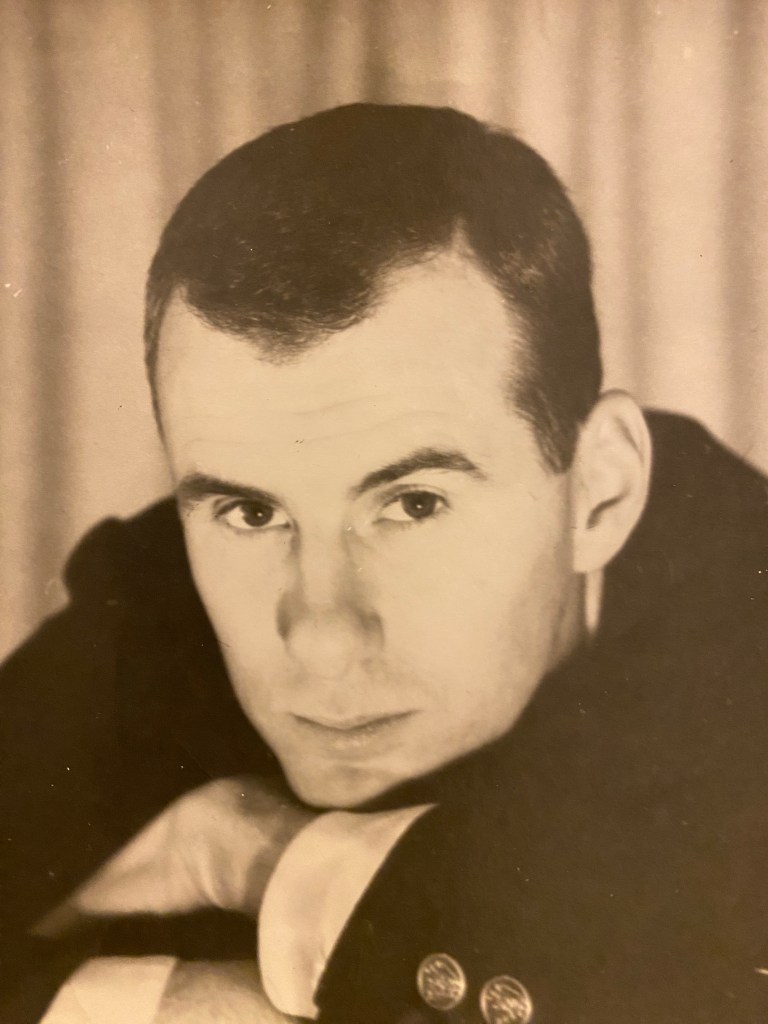
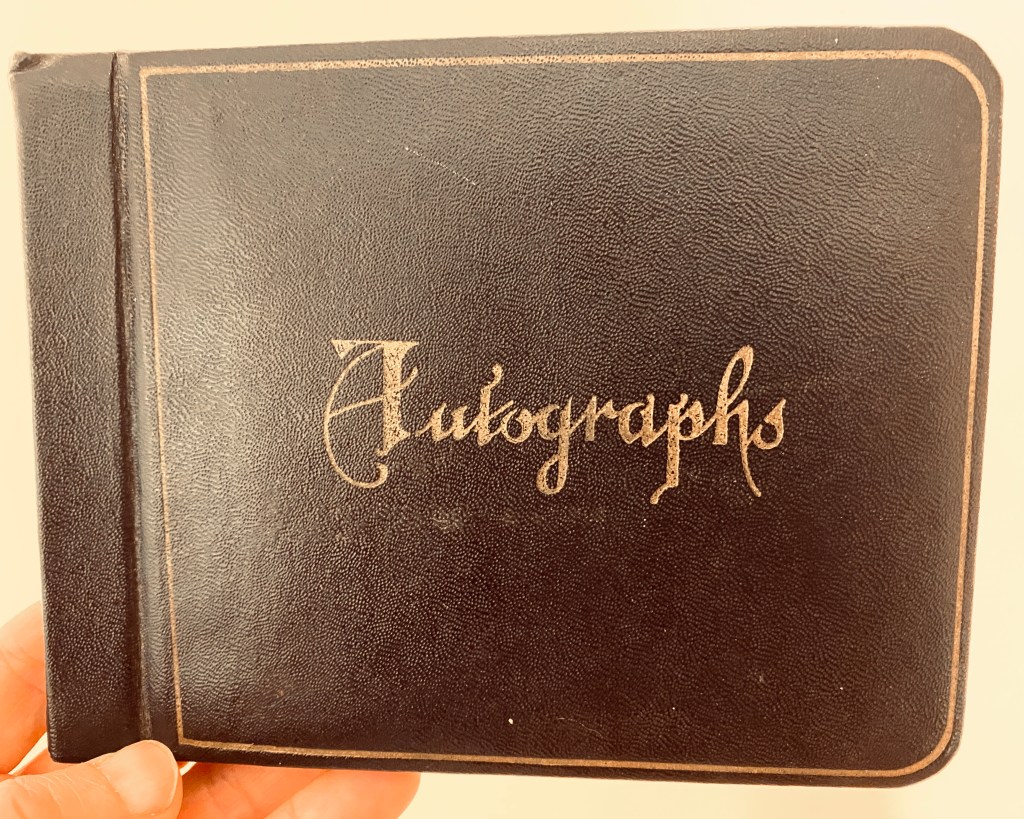
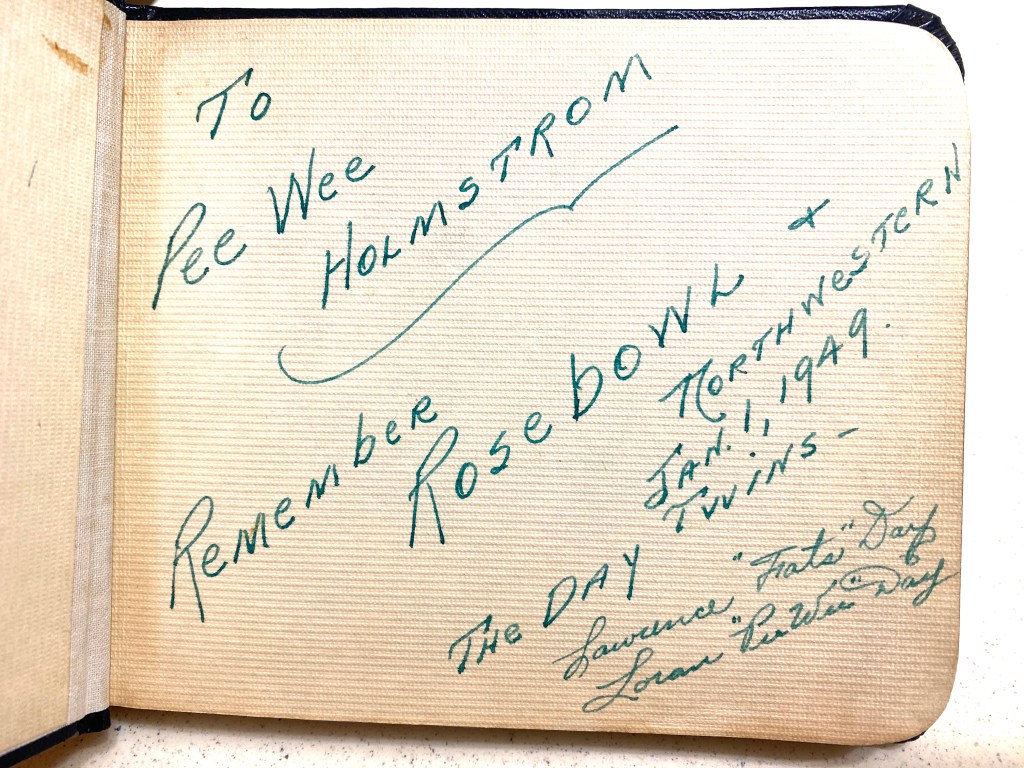
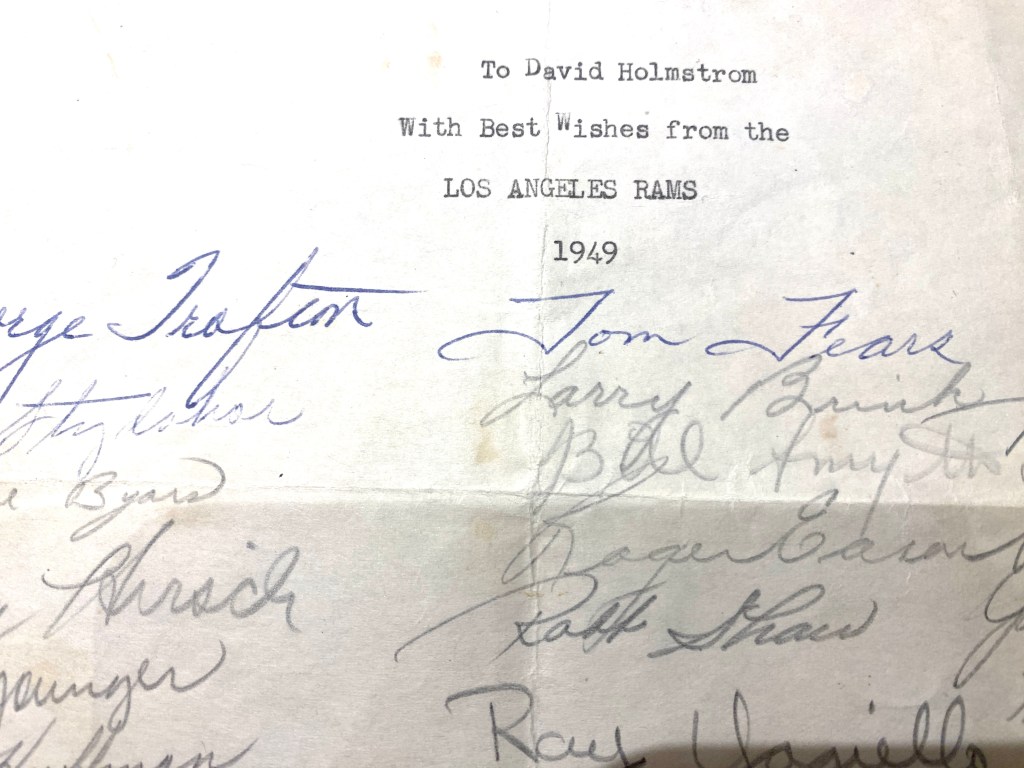
Winning the Autograph Lottery: As a sports-loving boy growing up in Los Angeles, California David’s nickname was Pee Wee. One bright day in 1949 found David writing two letters: one to an idol who shared the same nickname, Loren “Pee Wee” Day, the star halfback on the Northwestern University football team, and the other to the head coach of the (then) Los Angeles Rams. Both letters were a twelve-year-old’s best attempt at thoughtful and persuasive requests for autographs.
Weeks passed and he felt hope slowly ebbing away. Then, to quote David:
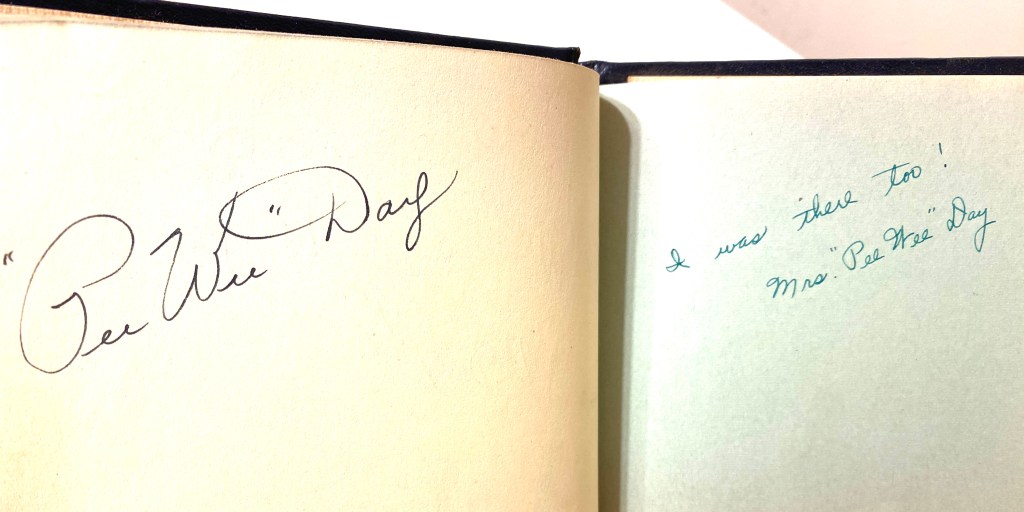
“A small package arrived from Pee Wee Day. I tore it open. To my utter, wordless, gossamer astonishment I unwrapped a blue, leatherbound autograph book filled with signatures from the entire Northwestern football team, plus all the coaches. Even Pee Wee’s mother and father had signed it. Then, a week or so later a letter arrived from the Los Angeles Rams. On a single sheet of paper addressed to me with their best wishes, all the players and coaches of the Rams had signed their names. I was absolutely delirious.”
Front page of David’s treasured Autograph book“I was there too!” wrote Pee Wee’s mother.The entire Los Angeles Rams team signed their autographs on a singe page, just for David.
I couldn’t possibly begin to describe every project or collection of my dad’s as that would take up all the real estate on this blog. For now, I will share a few of my favorites.
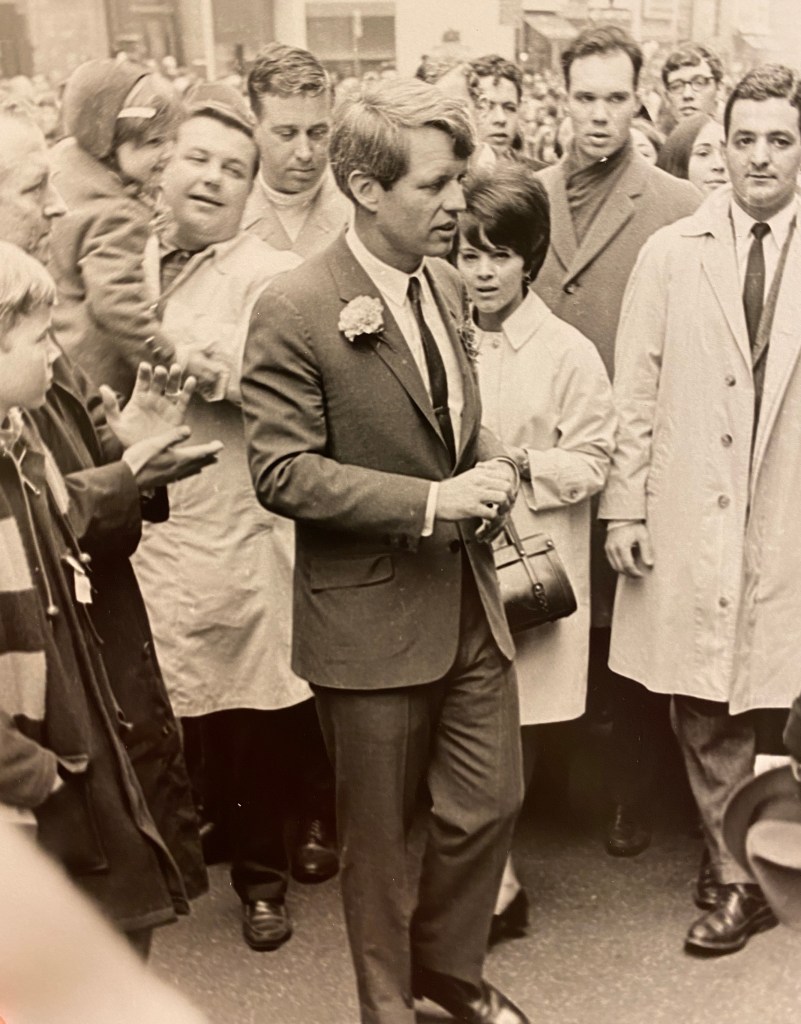
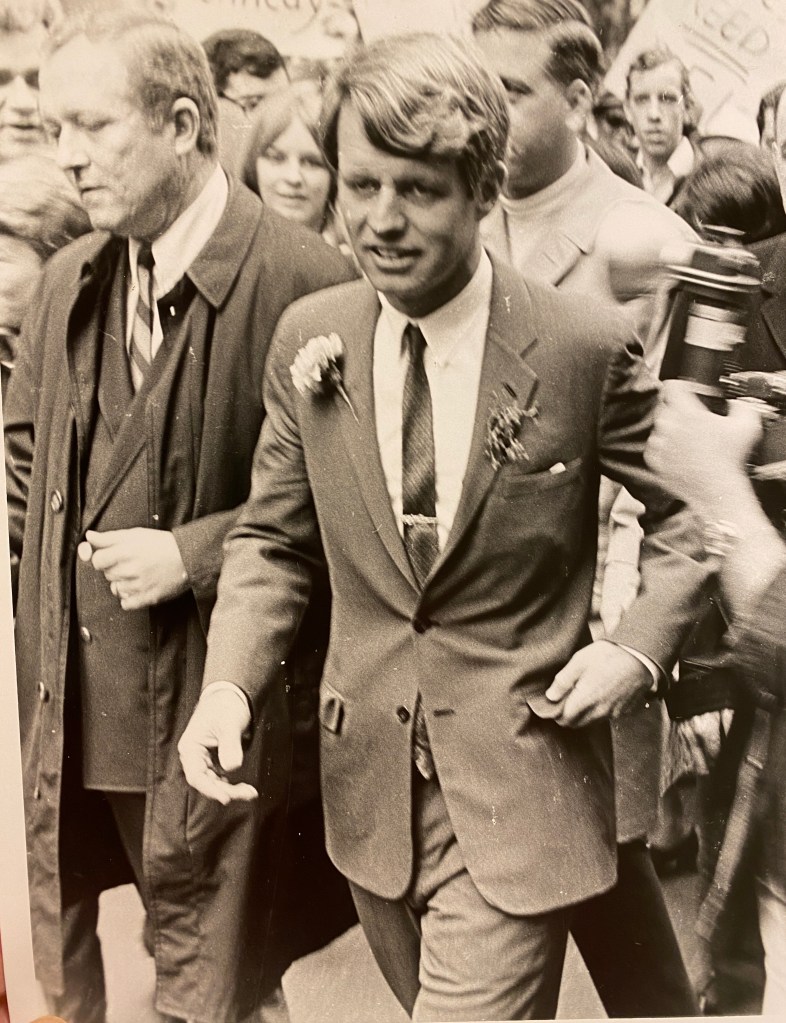
Capturing Bobby: One day in March 1968 my father, who was a reporter at the time, took candid photographs of Bobby Kennedy campaigning on the streets of New York City. Bobby was killed in Los Angeles three months later. I was astounded when I found these images in my father’s boxes.
Bobby Kennedy, New York City, March 16, 1968What would be different today if this man had become President?
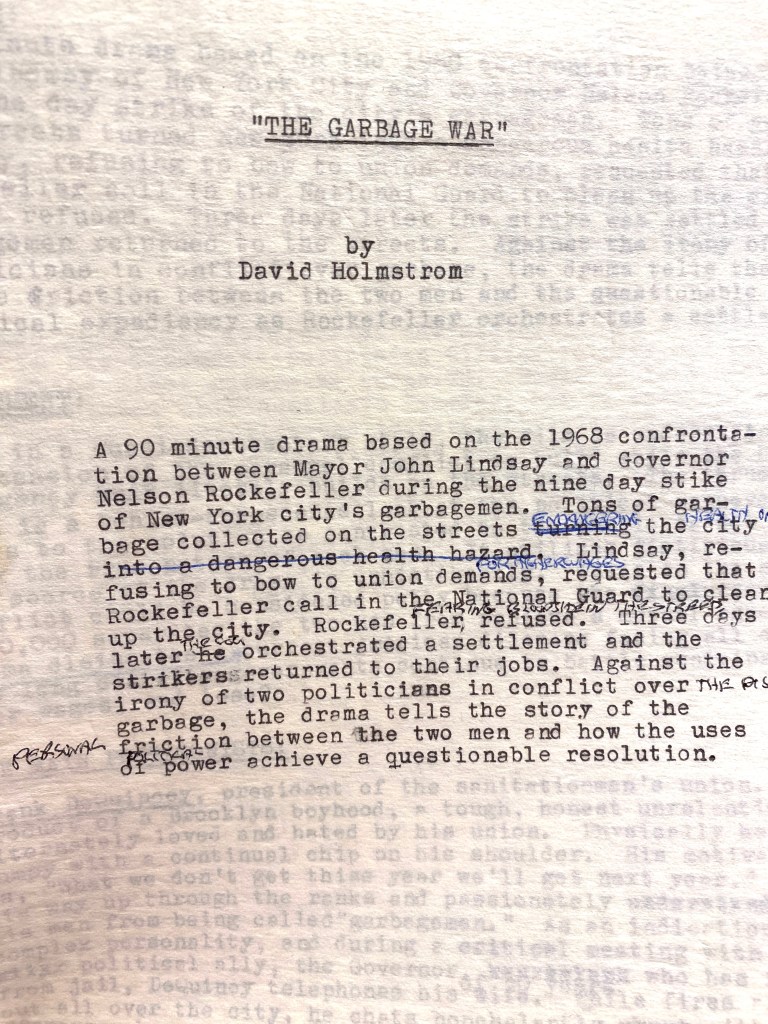
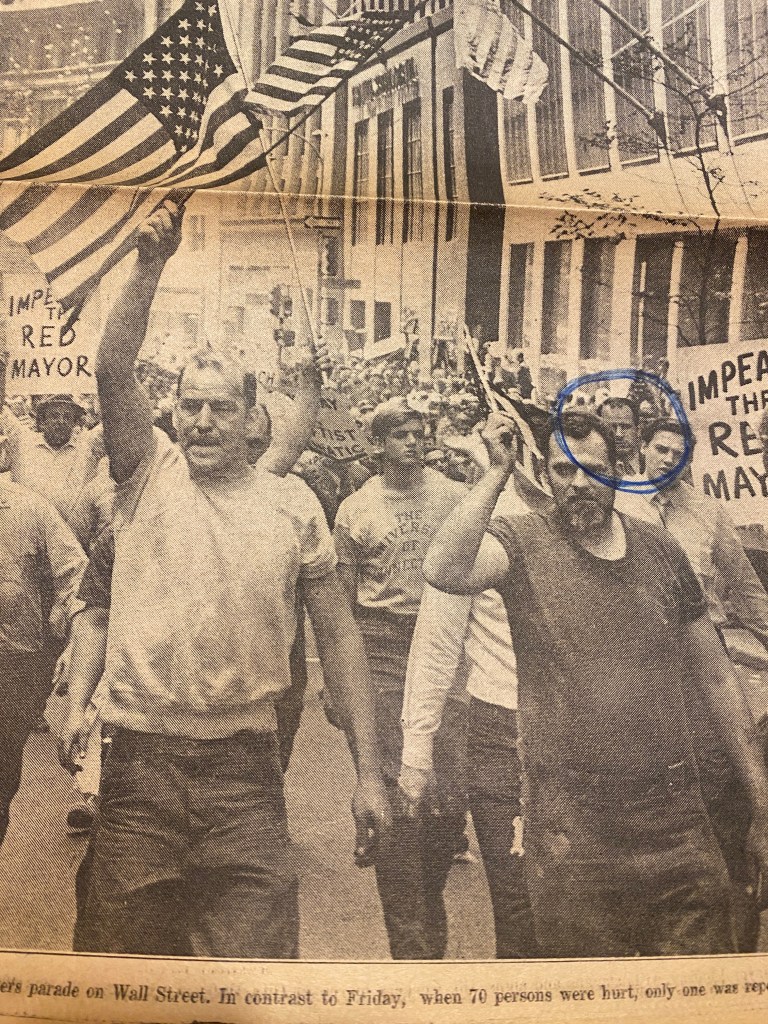
The Garbage War: It is a little-known fact that in May of 1970 there was a nine-day-long strike held by the garbagemen of New York City, (ignited by a conflict between the Mayor at that time, John Lindsay, and the Governor of New York, Nelson Rockefeller). Refuse began to accumulate in great piles on the streets. My dad had the idea to turn this fetid event into a play…” imagine the action and dialog happening on stage while piles of garbage slowly surround the actors and grow in size” he would say.
Front page of David’s “The Garbage War” script. Garbage War coverage from the New York Daily News, May 12, 1970. Look closely and you may recognize the person circled.
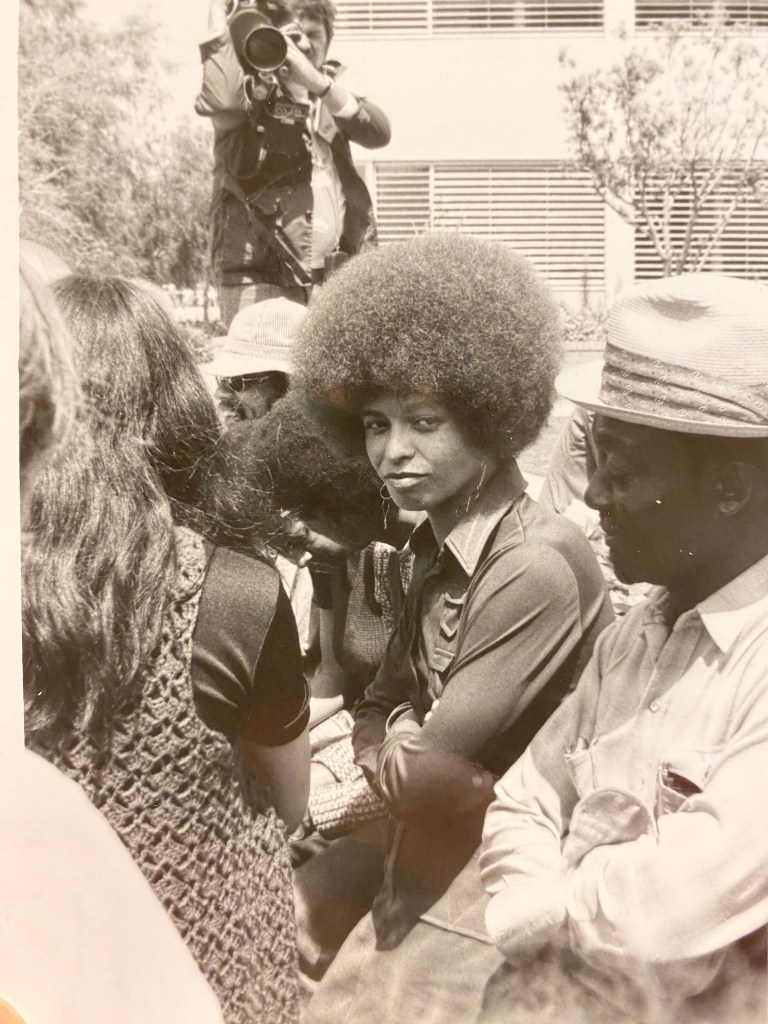
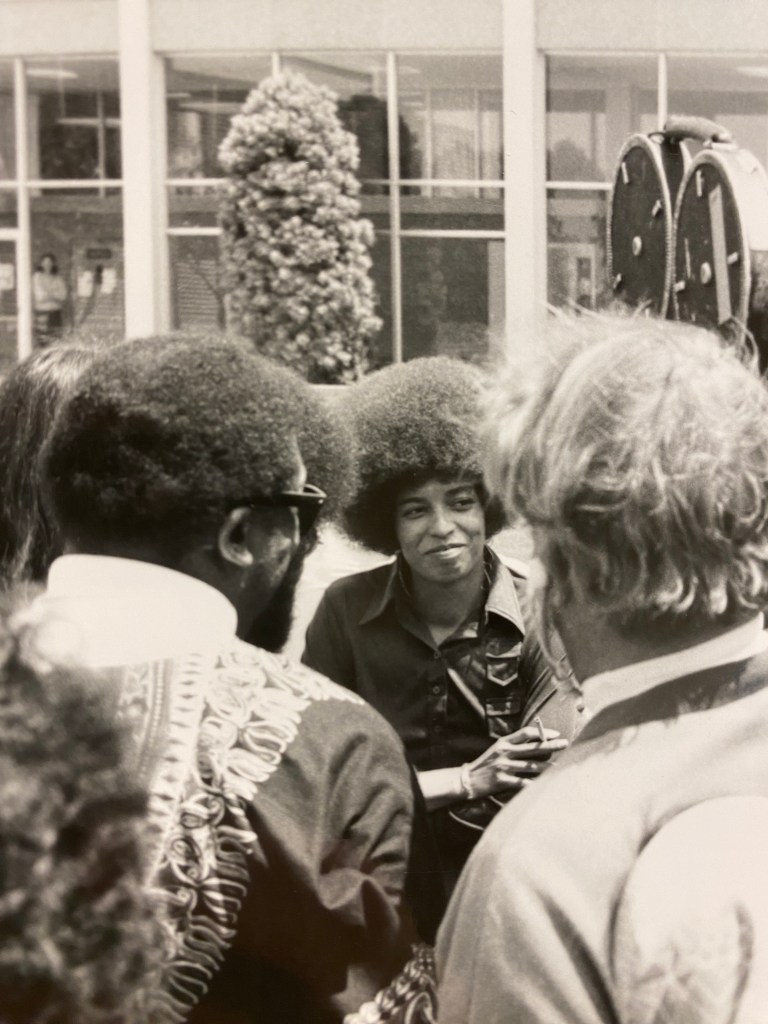
Angela Davis Outside: In 1972 African American author, civil rights activist, and scholar Angela Davis was accused of supplying weapons that were used in a San Rafael, California courtroom shoot-out that resulted in the death of three people including a Superior Court Judge. Davis’s accusal, as well as the entire case in general, was dripping with racism and misogyny. In June 1972 Davis was acquitted of all charges and my dad was there as she exited the courtroom and spoke to people outside. In my opinion, there is much to admire about Angela Davis, including her hair.
Many would say Davis deserved that cigarette.
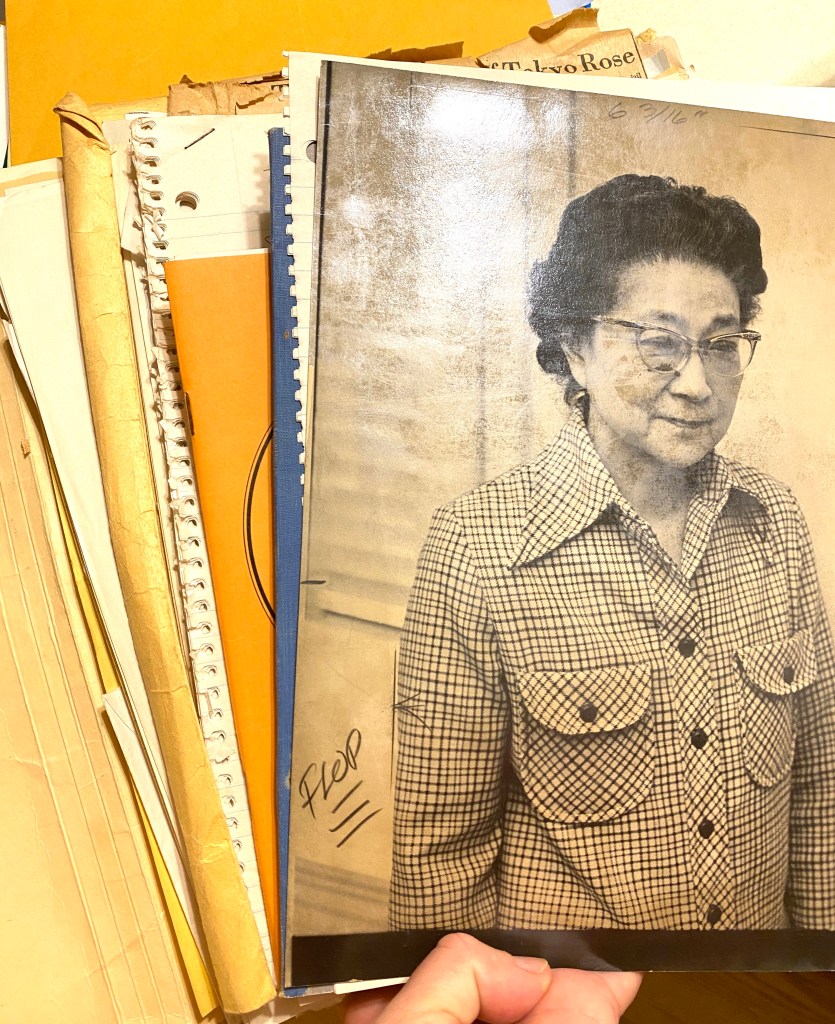
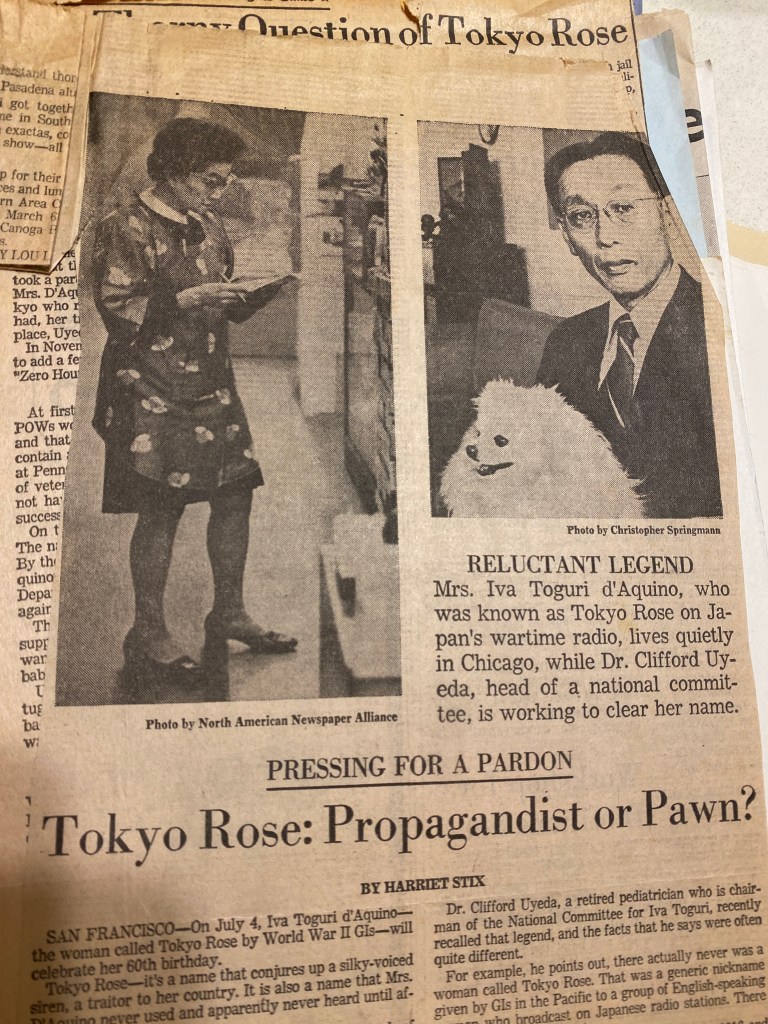
The Saga of Tokyo Rose: As a journalist, my father covered quite a few trials but there was one in particular that he followed for decades. Iva Toguri (aka Tokyo Rose) was a U.S. citizen (born in Los Angeles in 1914) who was stranded in Japan during the attack on Pearl Harbor. Iva was forced to renounce her U.S. citizenship and found herself stuck in Japan. She got a job as a radio announcer, broadcasting to U.S. troops stationed in Japan. She was returned to the U.S. after the war and was convicted of treason and spent six years in jail. You, like me, might be thinking WTAF? So did my father which is exactly why he wanted to write a film script about Iva’s story. President Gerald Ford finally pardoned her in 1976.
Iva Toguri. Two folders full of clippings, court transcripts, letters and information about Tokyo Rose.
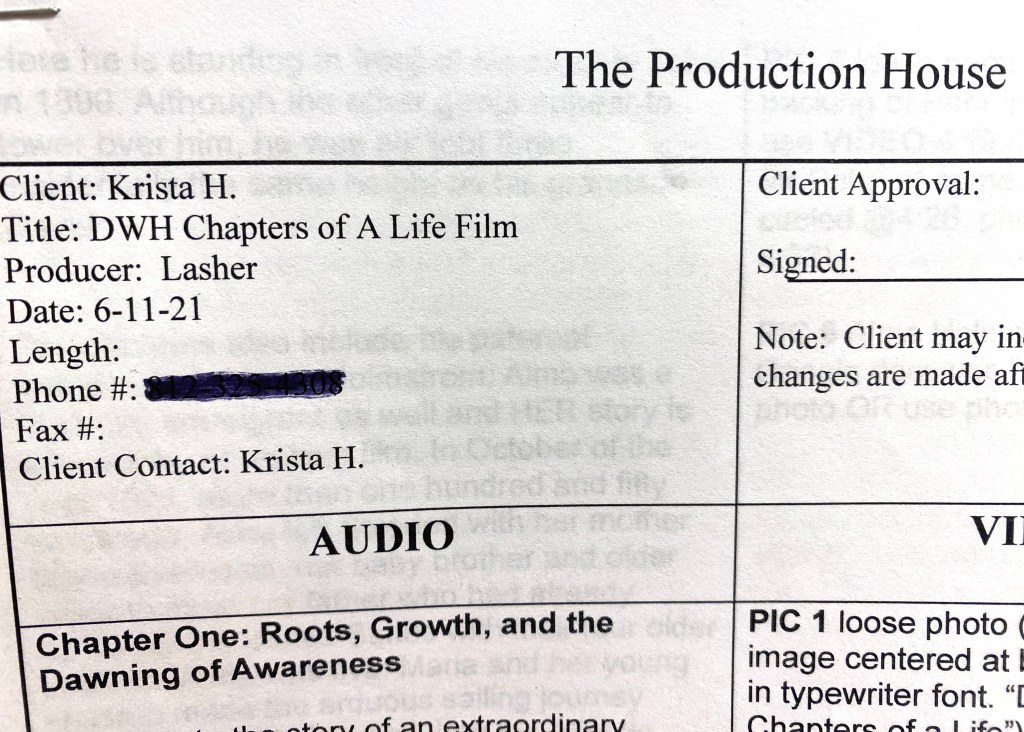
Perhaps you are getting a sense of why I am making a film about my dad. What was initially a slideshow for his memorial service has evolved into a five-chapter film about his life. One of the chapters focuses on…you guessed it…his projects (including his art, collections, and photography).
Script from the film I am working on about my dad and his life.
I will share more about the film as it comes together. Bringing my dad’s story to life on a screen feels like the best way to do justice to what was an endlessly fascinating career and life.
All of this documentation is indeed compelling, but at the end of the day, two truths remain:
His creativity knew no bounds and he was simply the best father a girl could have.


 Still...however...maybe...
You must be logged in to post a comment.