• Home

Still…however…maybe…

  • 27 Hours and 42 Minutes in the Life of a Total Solar Eclipse

    April 9th, 2024
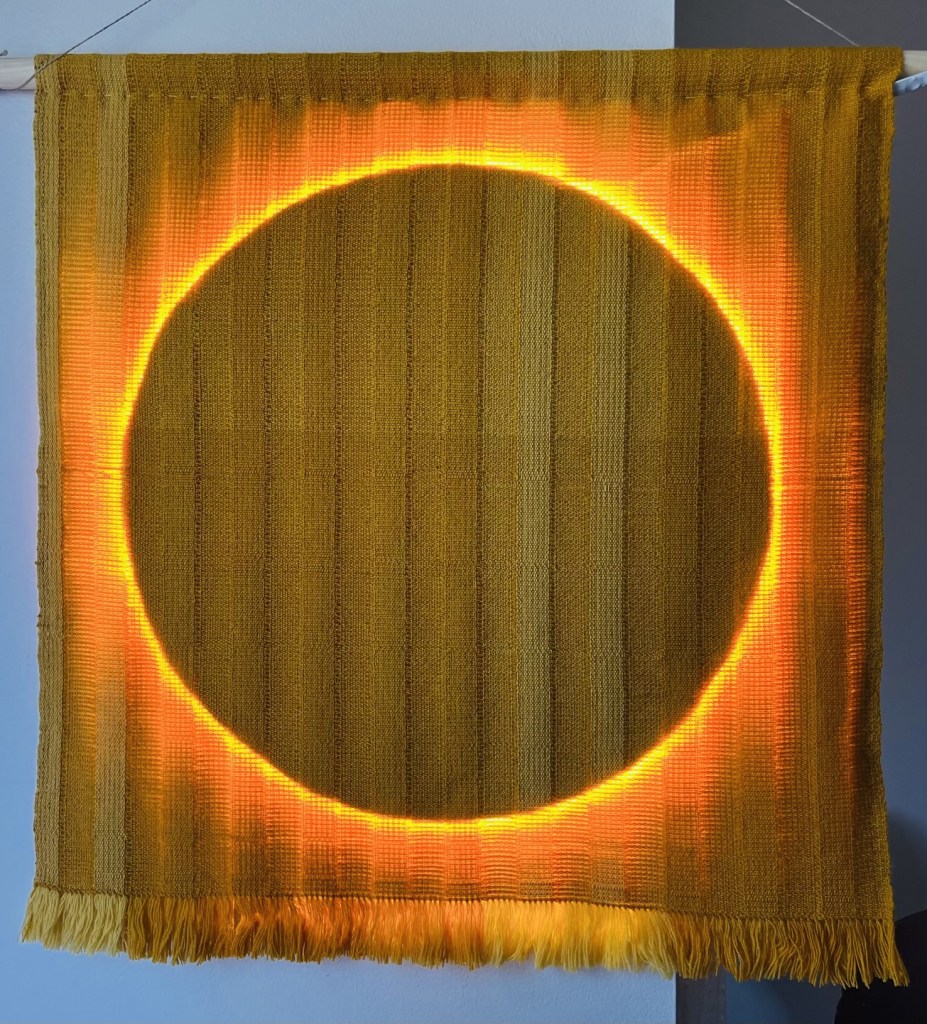
    “She Swallowed the Sun” by Chelsea Holden Gurney,
    currently on exhibition at I Fell Bloomington
    in Bloomington, Indiana, USA

    April 7, 2024

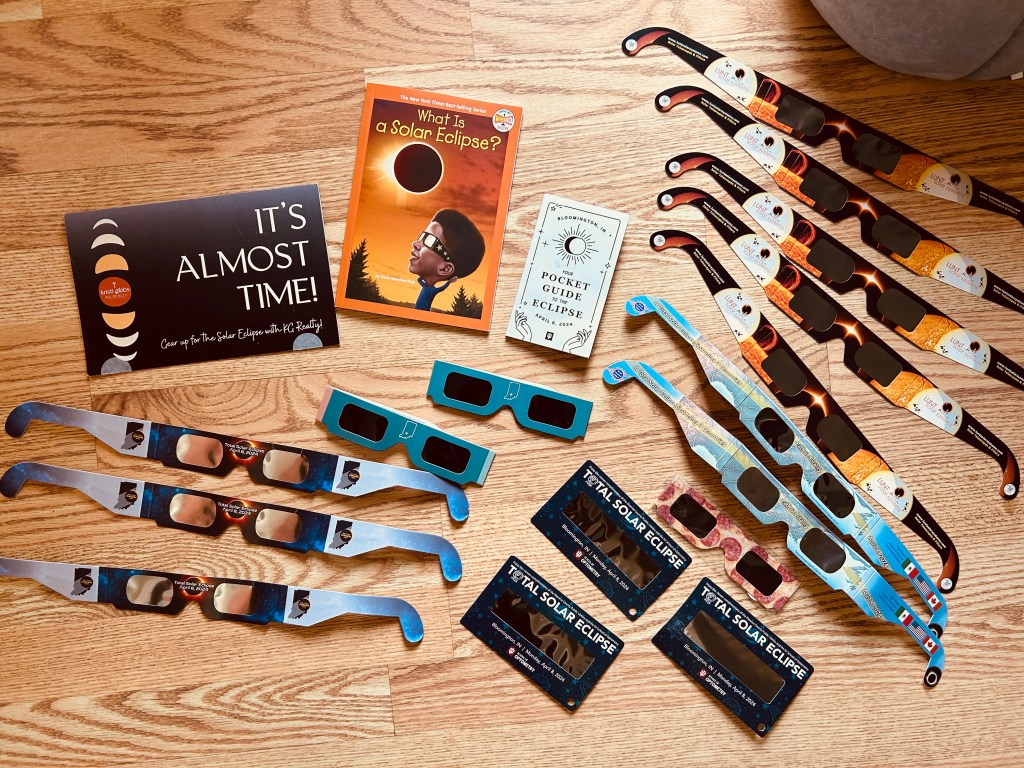
    1:49 PM: With a start, I realize tomorrow is THE DAY and that we live in the ZONE OF TOTALITY. What’s going to happen, am I ready? I scramble around, pulling out hoarded eclipse paraphernalia. Counting 3 eclipse guides and 13 pairs of glasses gathered over the past year. Will we have enough?

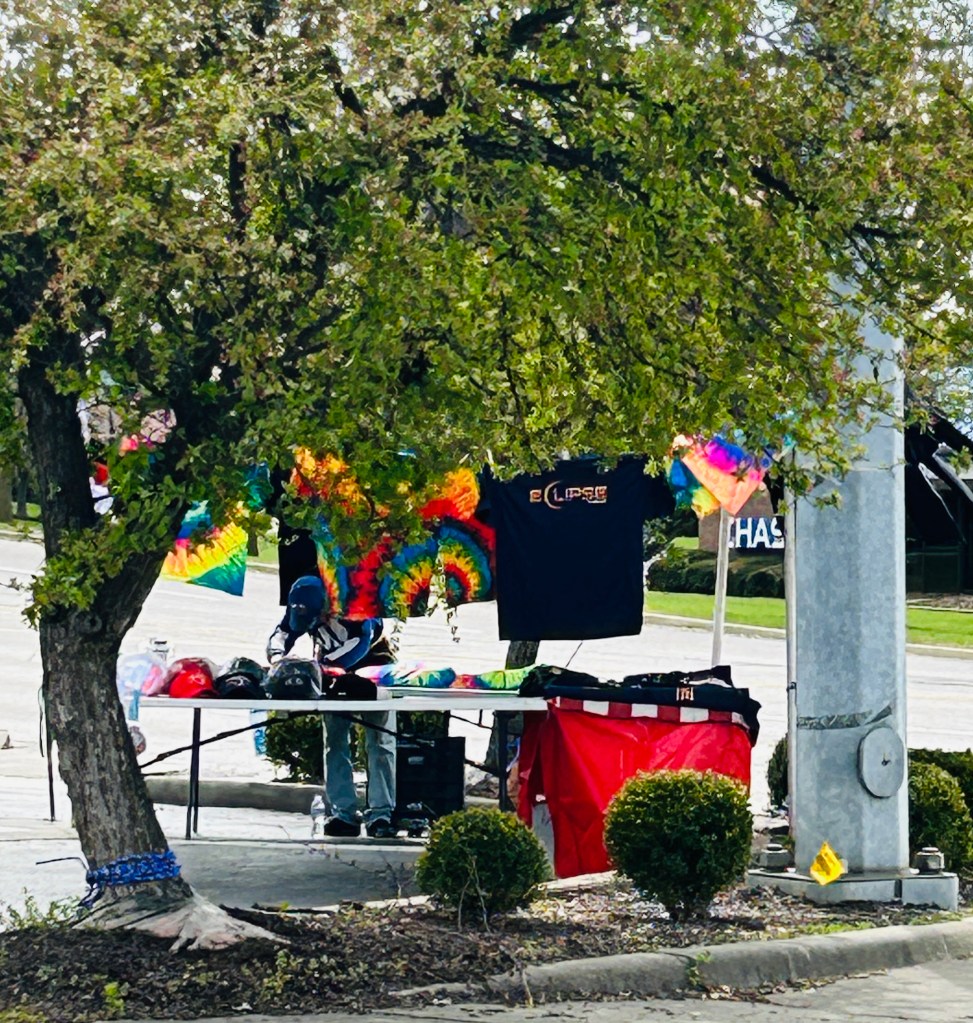
    2:42 PM: My daughter and I drive to the “There Goes the Sun” celebration at our local Bloomington, Indiana Switchyard city park and amphitheater. Traffic is light and I consider whether we have worried unnecessarily about eclipse crowds – some reports have suggested that 300 thousand people may descend on our town. A pop-up vendor is selling tie-dyes and eclipse t-shirts on the street corner. Why the tie-dyes?

    Are there vendors that follow in the path of eclipses?

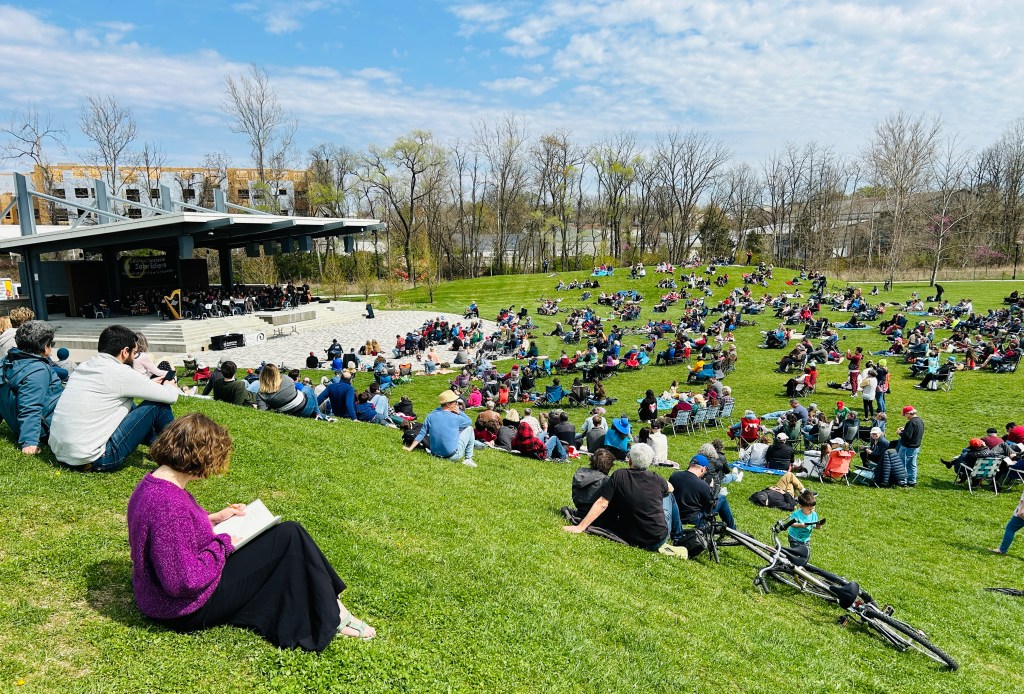
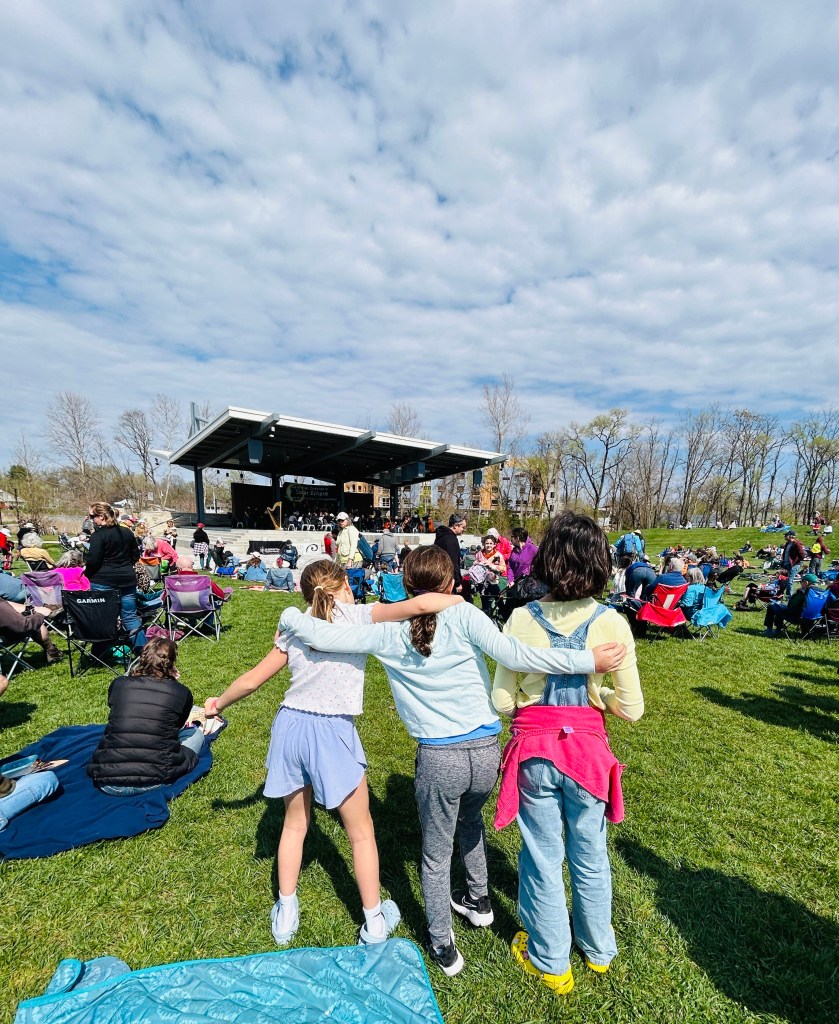
    3:04 PM: We enjoy the first strains of local son Hoagy Carmichael’s “Stardust” played by the talented Bloomington, Indiana Symphony Orchestra, and accompanied by the Voices Novae choir. Catching the contagious feeling of camaraderie and expectation floating around the crowd, we sit on blankets, snack on dried fruit and watch children dance.

    Listening to music at Switchyard Park.

    3:50 PM: Audience sing-along to “Total Eclipse of the Heart” by Bonnie Tyler. The classic song was released in 1983 so most people born in the 1970’s or before appear to know the words by heart (personally, I am transported back to the fraught days of middle school dances). My daughter and her friends read the lyrics on a cell phone and the entire crowd sways in unison singing; 

    “Your love is like a shadow on me all of the time (All of the time)

    I don’t know what to do and I’m always in the dark…forever’s gonna start tonight.”

    Cross-generational pop music.

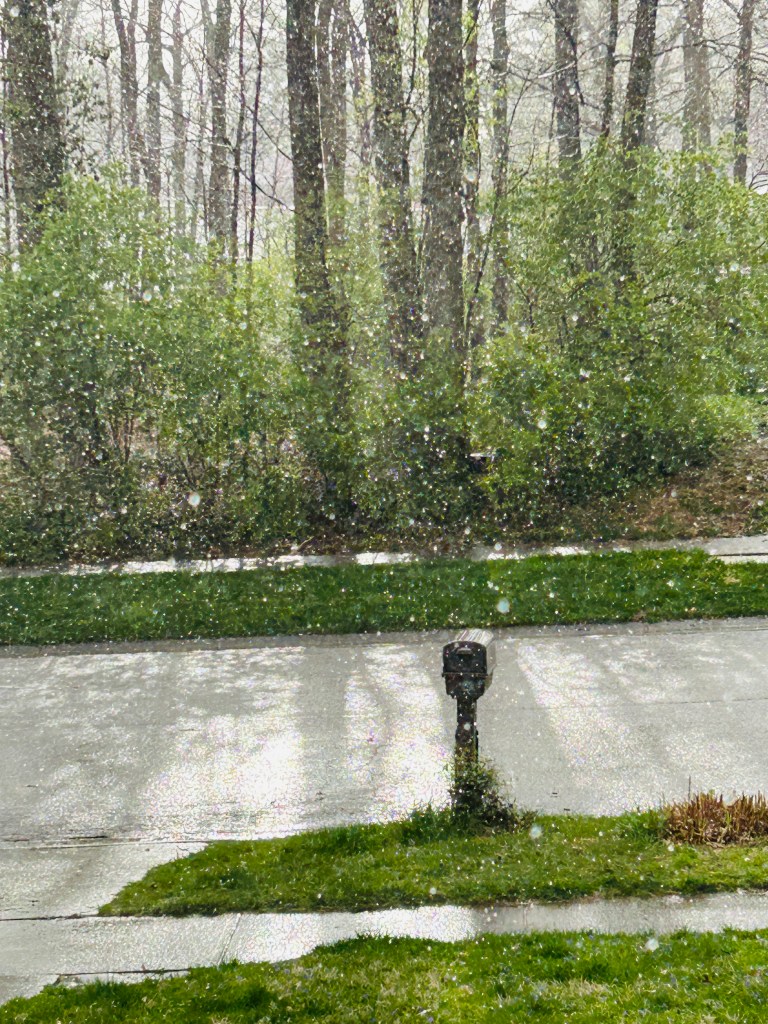
    6:41 PM: Odd weather. Rain and sunshine in the front yard. Rain and dark clouds in the backyard. Reports of rainbows in the vicinity.

    Sunshine through the raindrops.

    8:00 PM: We cancel plans to attend a friend’s neighborhood eclipse glow party at a park shelter due to approaching thunderstorms and return glow stick supplies to the garage. 

    April 8, 2024

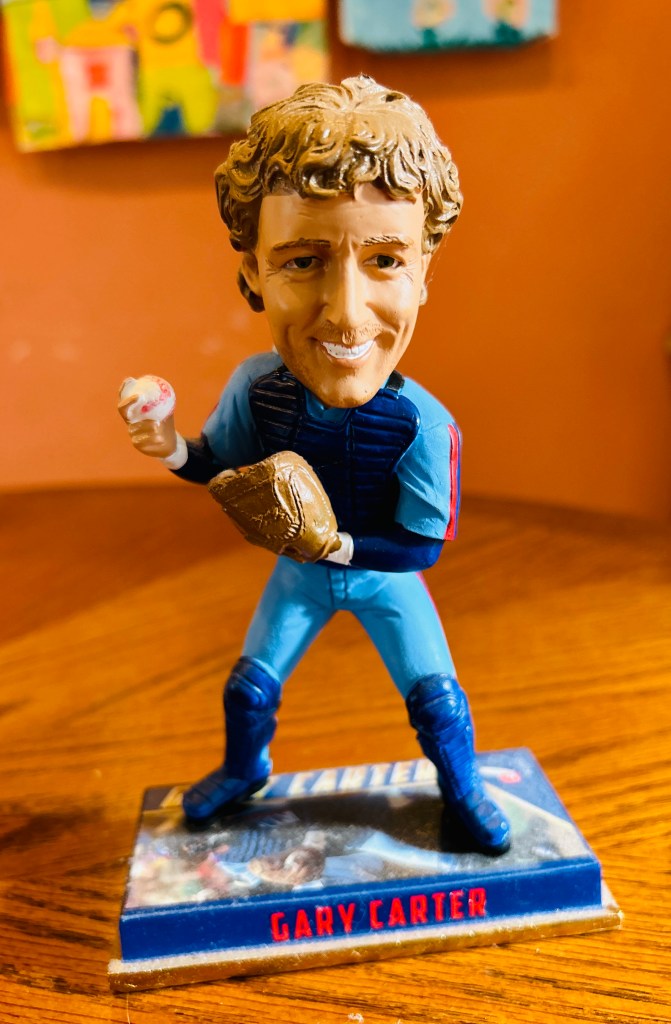
    9:19 AM: We wake up with a feeling of anticipation, much like a birthday. My husband (infamous for retaining birthdays) informs me that today is Gary Carter (his all-time favorite baseball player)’s birthday. April 8 is also the birthday of a friend’s son, along with the birthday of the pastor of the church that houses the preschool where I work. Good signs all around.

    Happy Birthday to Gary Carter.

    10:21 AM: Pack eclipse picnic lunch: Peanut butter & jelly sandwiches for the kids and their friends who will be joining us, leftover Chinese noodles for the grown-ups, chips and salsa, orange slices, Newman’s O’s, sparkling water, and juice. 

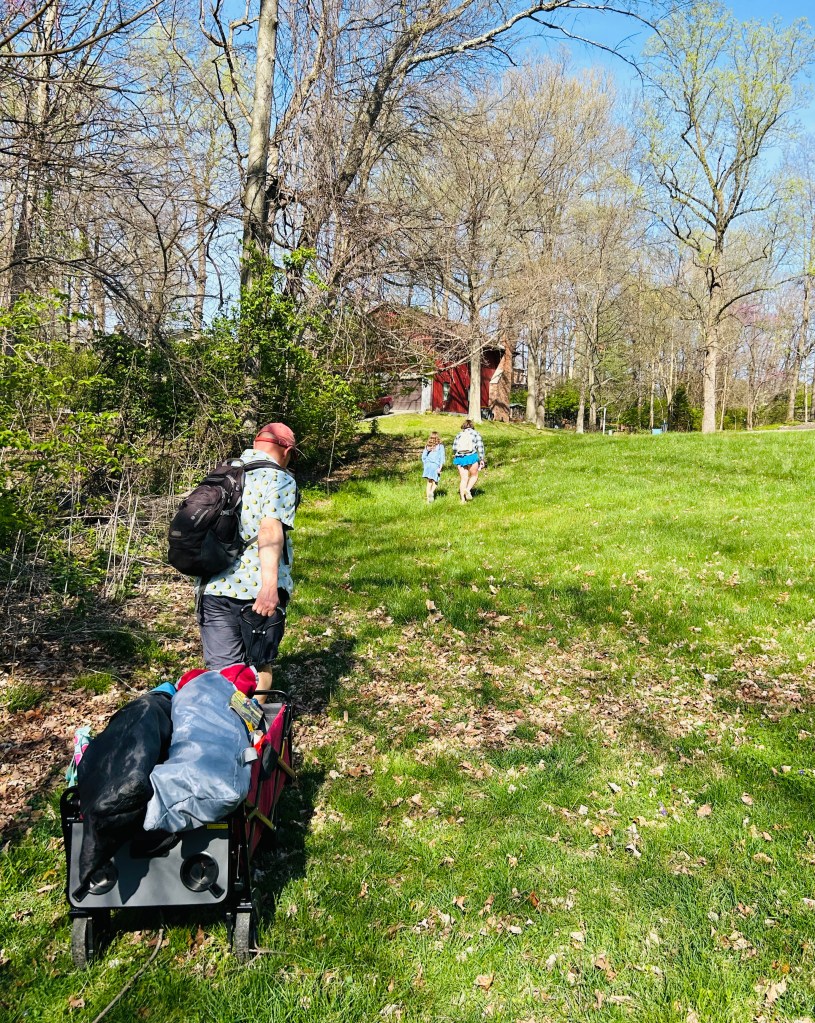
    11:34 AM: Pack wagon for the journey to the eclipse viewing party. 

    12:10 PM: Depart for a ten-minute walk to a friend’s back garden patio, adjacent to a wide-open green space behind a mega-church (three services each Sunday). Here is where we plan to view the eclipse, on a gently sloping green lawn practically designed for the occasion. Pulling our packed wagon behind us we see people streaming into the church entrances and stopping at welcome tables. Is the church charging people to use their lawns, we wonder, or are they just giving out water? 

    We never used the folding chairs once.

    1: 22 PM: Our group of ten is assembling – my husband and our host (a close friend) our two children and their three friends. Two more friends arrive on their bikes—one is a scientist (a biologist). She knows stuff about nature! We eat lunch and excitedly chat with neighbors. The three 11-year-old boys run off to play basketball, promising to return in a half hour. The light already appears diffused, almost cinematic.

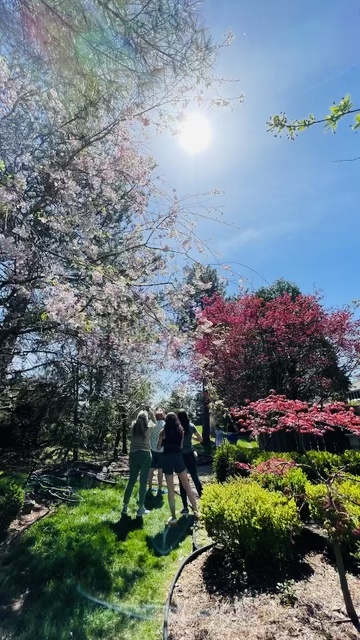
    Total Solar Eclipse: Garden party style.
    Photo credit: Hether Bearinger

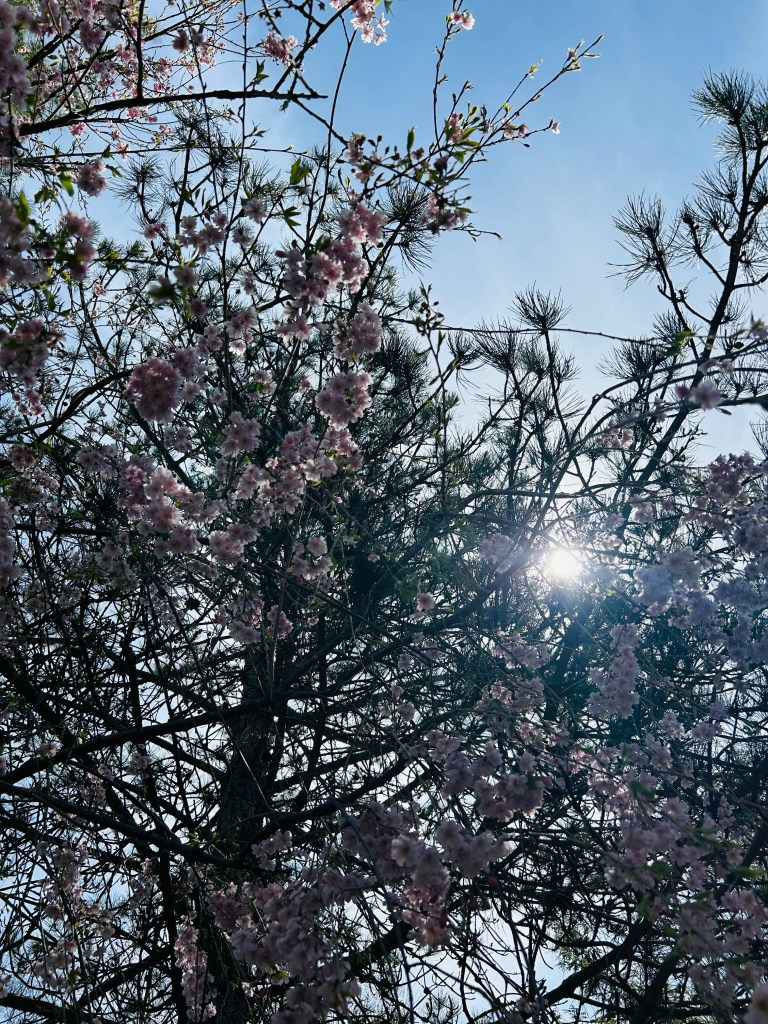
    1:49 PM EST Partial Eclipse Begins. Anticipation is rising, crackling in the shiny air surrounding us. Everyone chooses glasses, noticing that some tear or bend easily, and others are uncomfortable and too large, especially for smaller heads. The type with one solid strip that looks like a viewfinder is surprisingly effective. We have more than enough glasses. Vaporous filmy clouds drift in front of the dimming sun, best viewed through a pink veil of weeping cherry blossoms.

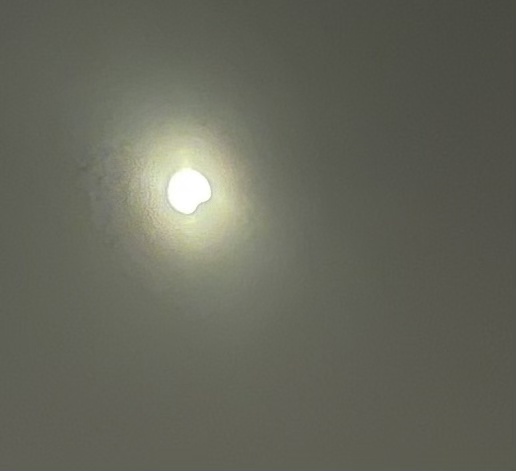
    2:22 PM: “USE YOUR GLASSES WHEN YOU LOOK AT THE SUN” we remind the kids, and occasionally the adults. The sun looks like a blob of egg whites with a small bite taken out of the lower right-hand corner. Where are the boys? 

    Egg white sun with bite.
    Photo Credit: Hether Bearinger

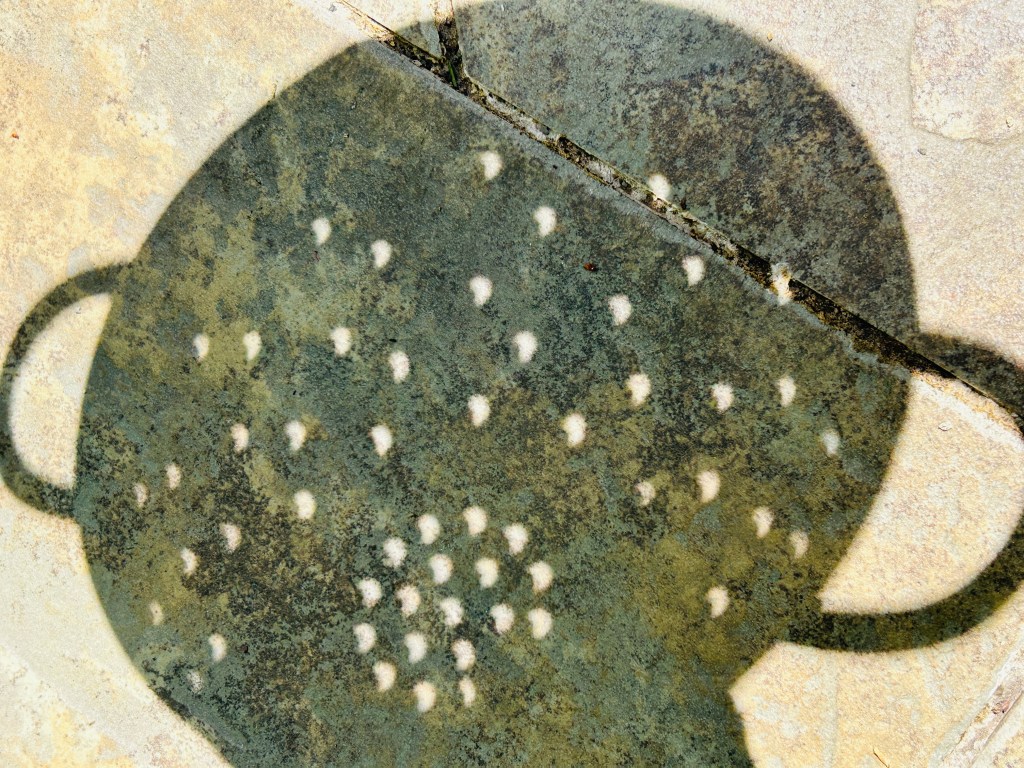
    2:44 PM: Someone gets out a strainer and we try various surfaces, finally landing on the adjoining neighbor’s smooth patio flagstones. Numerous tiny crescent moons appear on the sandstone below. The kind and friendly neighbor, who recently turned 80 and is recovering from major back surgery, gasps in amazement.

    When a common kitchen strainer takes on a heroic role.

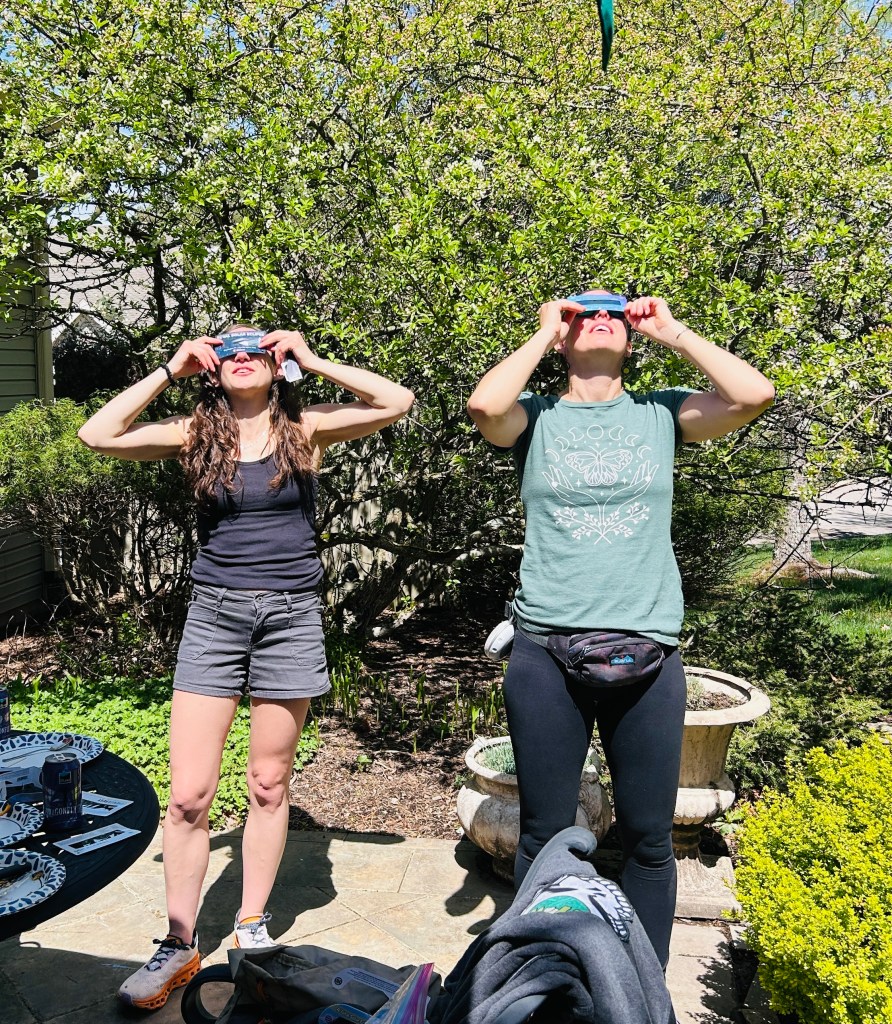
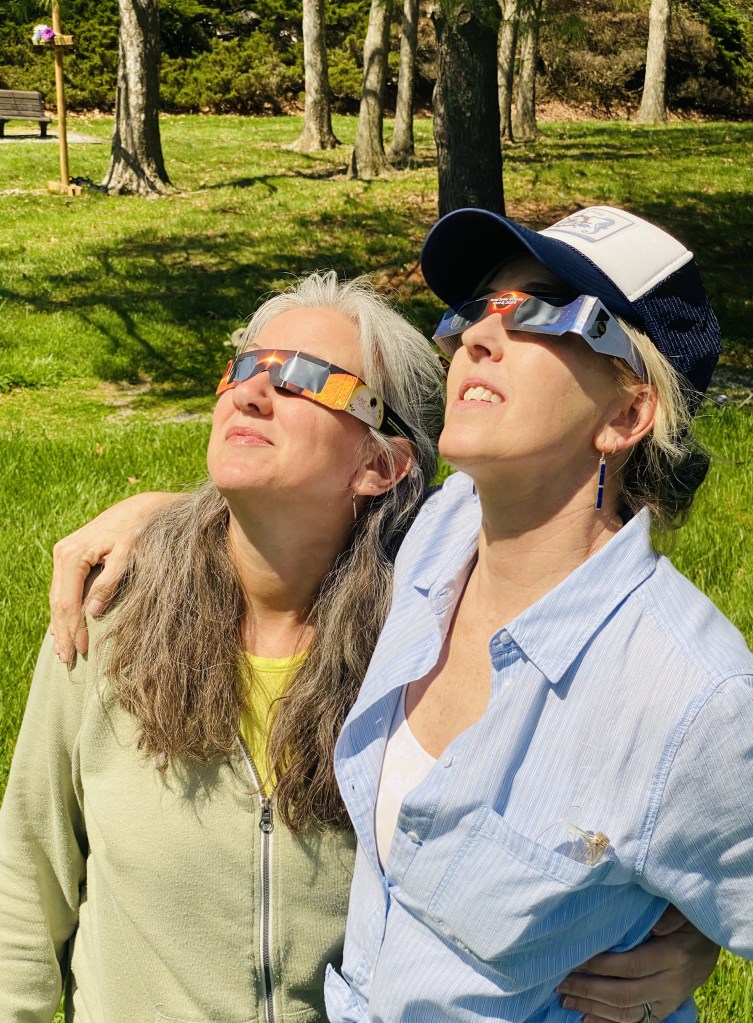
    2:51 PM: We have left the patio and are now gathered on the wide-open lawn area, taking pictures, gazing at our changing surroundings, and talking in small groups. We are glued to the sun, our faces tilted up expectantly. The temperature has dropped, and the wind has picked up. It appears to be twilight and the birds are beginning to sing like they do at dusk. Energy seems to swirl around us, as palpable as electricity. Suddenly the boys run up, sweaty from basketball. “Did we miss it?” they ask breathlessly.

    The reason our necks are sore.

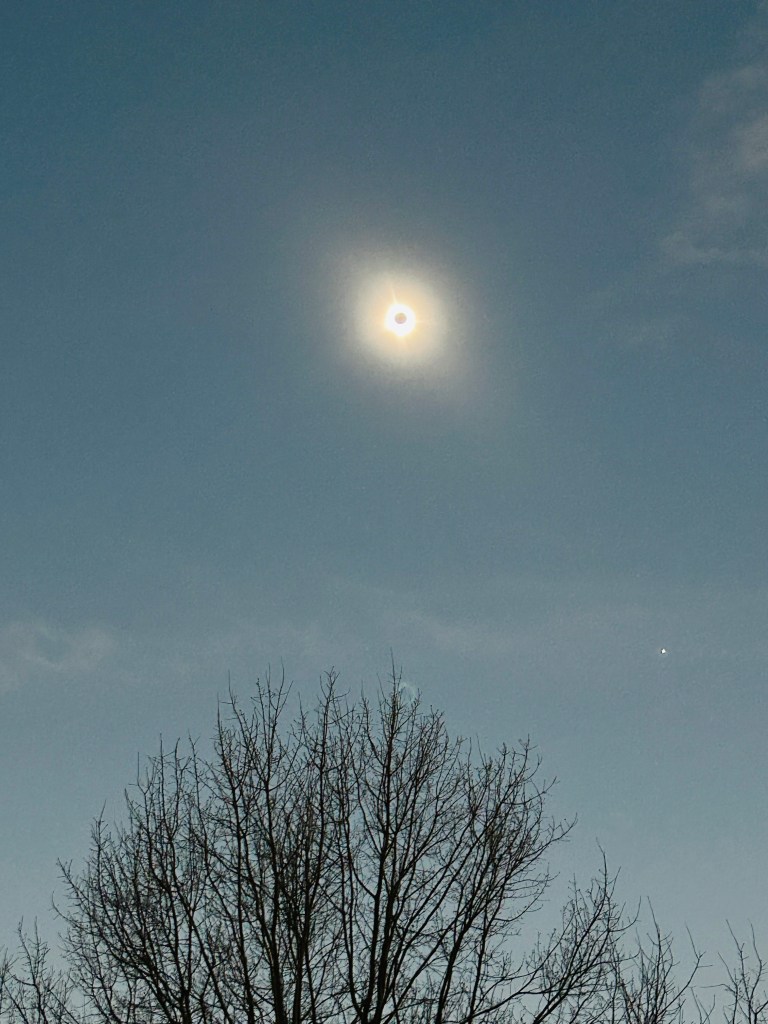
    3:04 PM: Totality Begins. We have watched the bite in the sun grow bigger and bigger and suddenly, like a cap fitting neatly on top of a bottle, the sun is gone. We tear our glasses off our faces and gaze directly at the sun. Nighttime has descended and it is becoming as dark as when you stumble to the bathroom at 3 AM. The horizon glows in every direction as if a sunset is encircling the earth.

    What totality looked like to the naked eye, except darker.
    Notice Venus at lower right.

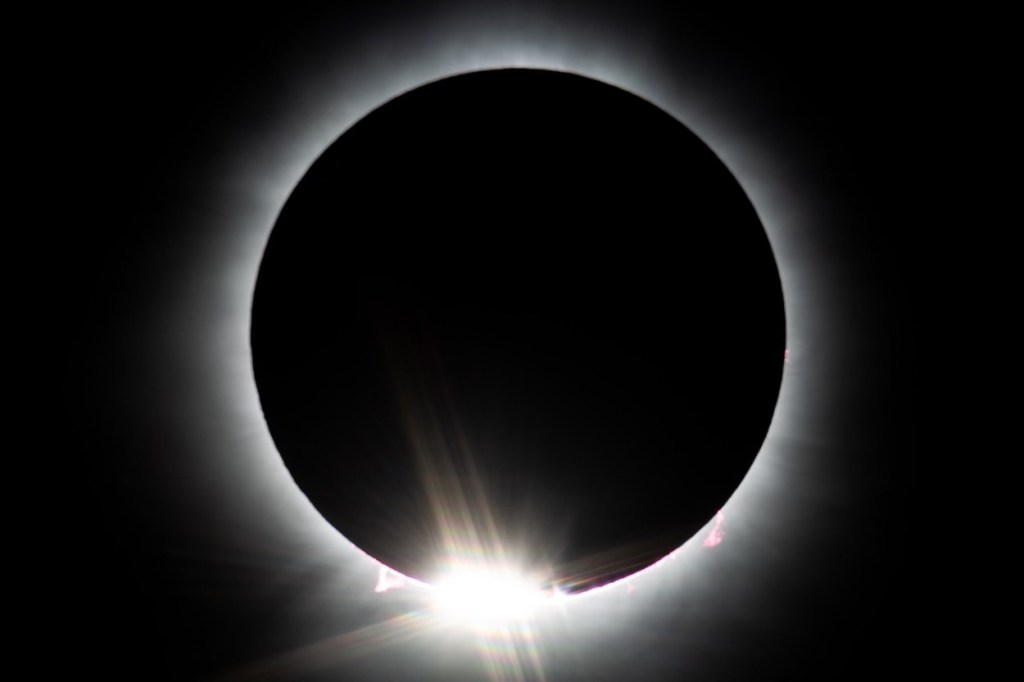
    3:06 PM: Midpoint of Maximum Totality. Awe ripples across the lawn, embracing all of us with its fierce insistence. Gasps, screeches, and exclamations reverberate in all directions. Things that take me by surprise: complete darkness, tears streaming down my cheeks, the feeling of vulnerability in the face of a vast cosmos. All this in tandem with a sense of swelling love for my fellow exquisite humans. Below the eclipse, to the lower right Venus catches my eye, winking in the black dome of sky. Reaching out, I kiss my children and my husband and hug my friends, who are also crying. In my excitement, I attempt to take a video, which later turns out to be a shaky scene of dim grass at my feet. 
    Glorious “diamond ring” totality, taken in Bloomington.
    © Jason Brown http://www.jbcreative.photo

    3:08 PM: Totality Ends. Marveling, we gasp as the warmth of the first uncovered sun rays begins to touch our arms and faces. The immense power of the sun has never been clearer to me. Without it, life as we know it is no more. Without the sun, without light, we exist in darkness. Beautiful darkness, but darkness, nonetheless. A knot of people mumbles in the distance, stooped over searching for dandelions that have closed in the darkness. “It’s like we’re in a movie,” remarks my son. 

    4:22 PM: Partial Eclipse Ends. “We can use these glasses even when there’s no eclipse,” the kids remind us. Our necks are sore from stretching skyward. We are wrung out from the afternoon’s experience. Everything around us feels slightly different, transformed in some way. Humans, plants, and animals included (later my daughter coaxes a raccoon out of a tree in our neighbor’s yard — the animals were equally as discombobulated).

    Absorbing the wonder of totality.

    4:30 PM: Walking back to the patio, I try to articulate to myself the message embedded in the grand cosmic display we have just witnessed. This total eclipse occured in the middle of my life, but my children are still forming! I know they will remember this forever. How desperately this planet needed this experience at this moment in time. It is as if the universe was saying “Stick together humans, love each other in the face of the vastness of space. There are many forces you can’t control, but your survival IS within your reach. Love yourselves, love the past and the present and the NOW. Stand in awe of the universe.” 

    At least that’s what I got.

  • Taking Time to Talk, and Trust

    April 5th, 2024

    When someone deeply listens to you 

    It is like holding out a dented cup 

    You’ve had since childhood

    And watching it fill up with 

    Cold, fresh water.

    -John Fox, Finding What You Didn’t Lose

    I’ve had some unusually deep conversations lately, ones that touched on topics we humans are pretty adept at keeping to ourselves. Abuse, pain, addiction, failure. So often we bundle and wrap our sorrows, issues, and dreams like hoarded and expensive presents, presented infrequently and with trepidation. 

    A friend once described to me what her Chinese grandfather would do when she banged or bumped herself to avoid bruising: he would press his fingers into the afflicted area and knead it with great force. She loathed this and learned to run in the other direction and hide in a closet when she hurt herself around him. 

    My friend’s childhood solution reminds me of the impulse so many of us have – don’t delve too deeply into the pain because you might expose yourself, and it’s going to hurt. Don’t reach out or share what happened with anyone. Instead, run away quickly and shut the door quietly. 

    Why do we avoid talking about difficult things, when sharing, supporting, and loving each other is perhaps the most meaningful thing we can do as humans? I see it as a two-fold issue: the first is trust and the second is time. 

    Establishing trust with another person is fraught with minefields. From our very beginnings, the muscle of trust is exercised. We require food and shelter, love, and learning. Sometimes, those who are tasked with our well-being fall short and we can live our lives carrying that knowledge like the heavy baggage it is. If I couldn’t trust then, why should I trust now? The tender, fragile petals that make up our seemingly impenetrable armor are easily trampled on. And even if you are fortunate enough to avoid childhood trauma, at some point in our collective lives, betrayal is a given, whether the source is family, friends, romantic partners, employers, society, or otherwise. 
    Heck, I’m currently writing an entire book on how I worked through feeling betrayed by God. 

    And then there’s the issue of time. Carving out the opportunity and space to share deeply can feel like the least important thing on one’s list. The conversations I referred to earlier happened in the following places: a coffee shop, a friend’s living room, and an art supply closet. Two planned, one not. All three offered me deep solace, information, and inspiration I didn’t consciously know I needed. 

    Our lives, packed with work, survival, and to-do lists, do not often allow room for the unfolding of leisurely, unstructured, open conversation. But when the stars align, when people reach across the table and hold a friend’s hand, or share their deepest thoughts, fears, and hopes a rare, healing alchemy bubbles up. We feel connection, relief, understanding. The tattered fabric of our hearts stitches back together. Walking forward with a lighter load, even a few solutions, is possible because we have been heard and understood, and we know someone else has laid down some baggage too. 
    Back to my friend’s grandfather’s folk remedy: if the whole point of massaging the hurt area was to avoid bruising, that must be what we do for each other when we connect, when we listen without judgement. We help each other heal the deep bruising. 

    That is, as long as we make time for it and don’t hide. 

  • Nepal Part One: From College to Kathmandu

    February 2nd, 2024

    It’s hard to imagine a clash of cultures more extreme. 

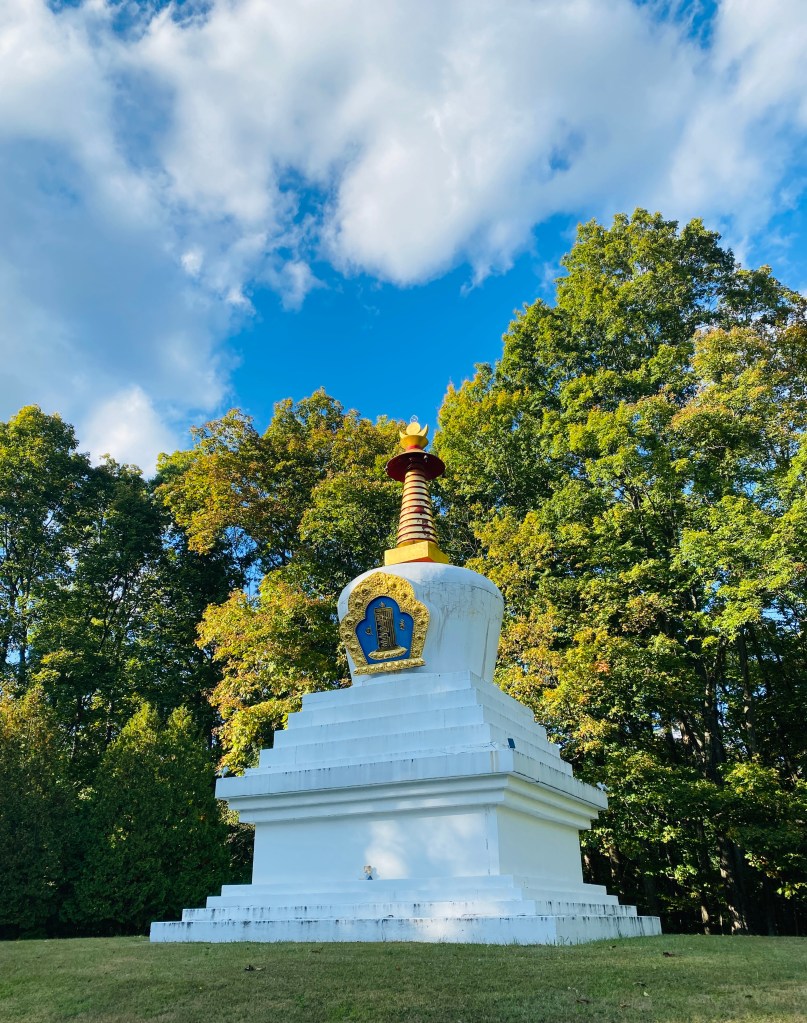
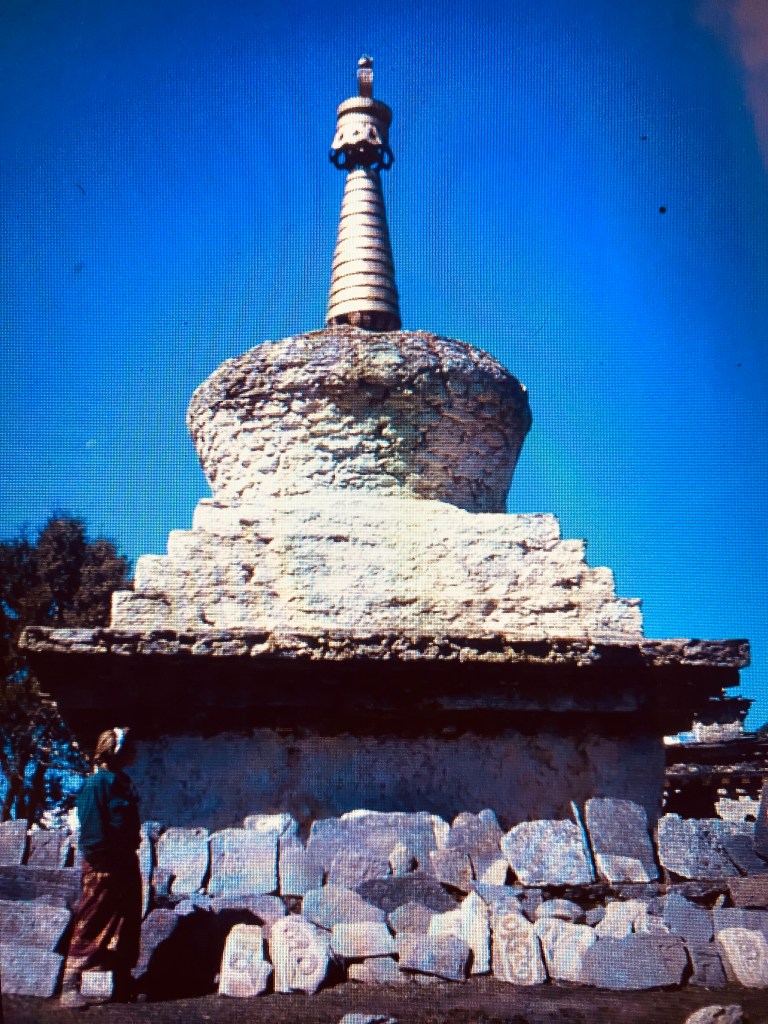
    Standing in awe of a stupa, and the country of Nepal.

    In the final year of the 1980’s my eighteenth birthday is spent illicitly drinking beer at a Christian boarding school in St. Louis, Missouri in the flat middle of the United States. 

    Twelve months later I celebrate my nineteenth in complete silence at a Tibetan Buddhist monastery nestled in the steep foothills of the Himalayan Mountains in Kathmandu, Nepal. 

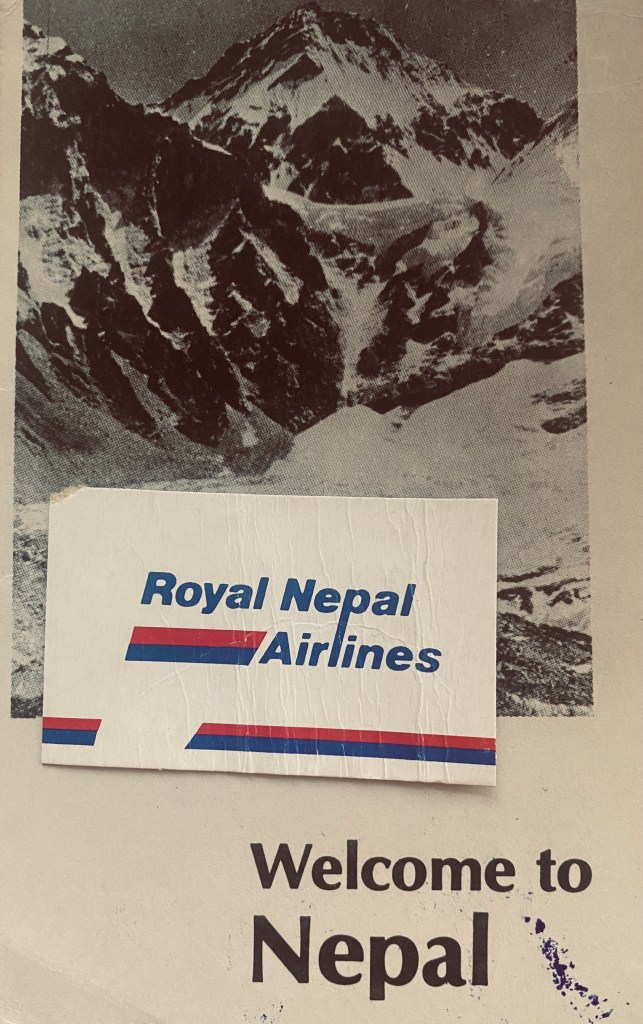
    The Royal Nepal Airlines flight touches down on the Kathmandu tarmac with a sudden, jarring bounce. My head is still spinning from the awe-inducing Himalayan landscape I’ve just seen out the window. Standing unsteadily, I move so that the mostly Indian, Pakistani, and Nepali passengers can disembark around me. I’ve been to the Sierra Nevadas, climbed a few 13ers in the Rockies, and explored quaint villages in the Swiss Alps. But now I understand that those ranges are mere foothills compared to the jagged snowy peaks streaked with dark grey that stretched for hours beneath and beyond the airplane. These mountains appear to have no end—they ripple out in every direction, nearly swallowing up the sky itself. 

    My first sip of the Himalayan Mountain range brew tells me all I need to know—over here, on the other side of the earth, nothing is the same.  

    Six months earlier I started my freshman year of college, mostly because I had no idea what else to do. After a single semester, it was clear that I wasn’t going to find the answers or direction I was looking for within the walls of an institution, so I dropped out. After twelve consecutive years of school and an ill-advised college enrollment, I found myself limply dragging my mediocre grades and minor accomplishments behind me.

    Exactly when had I lost the soaring confidence I’d had when I was younger? Despite my privileged, white, upper-middle-class first-world life I was a confused, timid, mildly depressed version of myself. Entirely unclear about what I was good at in life, what I believed, and what lay ahead of me, I was sick of STUDYING the world. Instead, I wanted to EXPERIENCE it. Although everyone kept asking me what I wanted to major in (I mistakenly thought the answer to that question would determine my entire future), I could barely decide on which of my circle of friends were trustworthy and what music I actually enjoyed listening to. 

    My mostly sympathetic parents offered a solution: they would front the funds they would have spent on my education that spring semester provided I did some sort of program, ideally one that would offer me college credits. When I learned about a months-long “Experiential Learning” program in Nepal I knew it was for me (I also acknowledge that I was the beneficiary of unusual privilege in that I was able to both attend college and visit Asia in the first place). 

    A couple of months later I find myself on that Royal Nepal Airlines flight, embarking on the adventure of a lifetime. 

    I am eighteen years old. 

    On paper, the details of our Spring 1990 Nepal program are straightforward: the group of approximately fifteen of us will live together in Kathmandu while studying the Nepali culture and language. The itinerary includes a month-long homestay with a Nepalese family, an optional ten-day retreat at a Tibetan Monastery, volunteer time with a local organization, a forty-day trek to Mount Everest Base camp at 17,598 feet in the Himalayas, and a final foray into the rhinoceros-infested jungle in the flatlands of Nepal. 

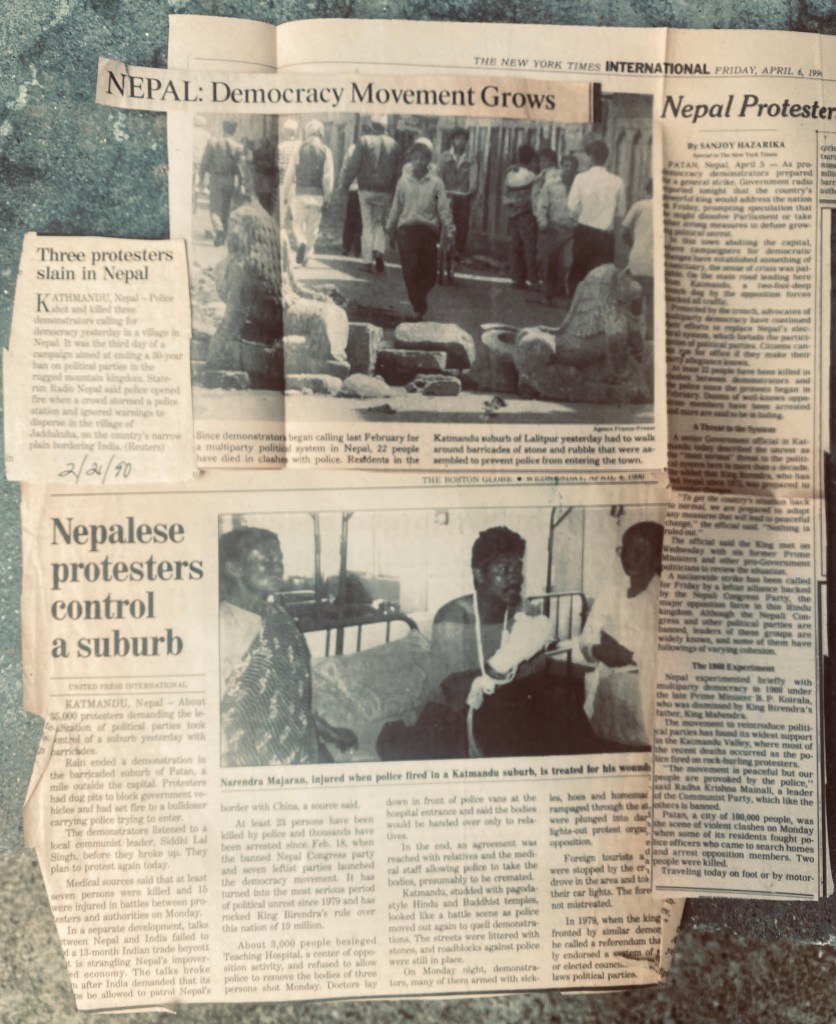
    As if that list isn’t enough, something else is going on in Nepal that wasn’t exactly factored into the itinerary: a political revolution. A primarily student-led movement is rising in resistance to the royal monarchy that has exclusively ruled Nepal for centuries. The protesters want a constitutional monarchy (essentially a system of government that limits a King or Queen’s absolute power and includes…wait for it…a constitution). The number of Nepali demonstrators is growing by the day, and protestors are willing to stand up, be shot at, and fight for their independence. Parts of Kathmandu are in turmoil and there are rumblings that our program may be cut short. 

    When I return from Nepal my father hands me six months of
    press clippings he has carefully saved.

    Our bunch of students is a hodgepodge of mostly East Coast characters from the US ranging in age from eighteen to thirty-one. Many of the group are students at Ivy League universities and I quickly learn a valuable life lesson: admission into Harvard or Yale does not necessarily mean one has more street smarts, empathy, or knowledge about day-to-day survival (on the road or otherwise) than anyone NOT attending a top-tier university (or than those not attending college at all). 

    Because it is 1990 and the Internet is a mere twinkle in a few eyes, my journalist father is back in Boston, Massachusetts closely following the newswires and outlets covering the Nepali revolution. When I return home months later he hands me a collection of carefully cut-out press clippings tracking the progress of the contentious uprising raging along while I am on the other side of the world.

    The city of Kathmandu is one of the oldest continuously inhabited places in the world, and it shows. Unlike countless other countries, Nepal has also never been colonized, so it maintains a sense of ancient identity. My first days are of a dizzying blur of speeding rickshaws, ancient temples on street corners adorned with fresh marigold flowers, unrefrigerated and unidentifiable meat displayed for sale on hooks, zero traffic lights, and bright-eyed children giggling behind their hands as they stare at our Western-style clothing and bumbling sidewalk map-checking (many Kathmandu roads, especially side ones, are nameless which makes navigating especially tricky). 

    There are also congregating children in rags so dirty I can’t differentiate between their clothes and skin. Small hands outstretched and shaking with hunger or disease, they plead for coins while I empty my wallet and experience multiple existential crises. I’m overwhelmed with disgust at how selfishly I’ve lived my entire life. Me, who knows the deep and unconditional love of my rare family, who was gifted a safe birth in a free country with every advantage. Who am I to complain about receiving an education, in fact to complain about ANYTHING at all? 

    And there’s something else: for the first time in my life, my white skin puts me decidedly in the minority. Experiencing this shift feels important and humbling. 

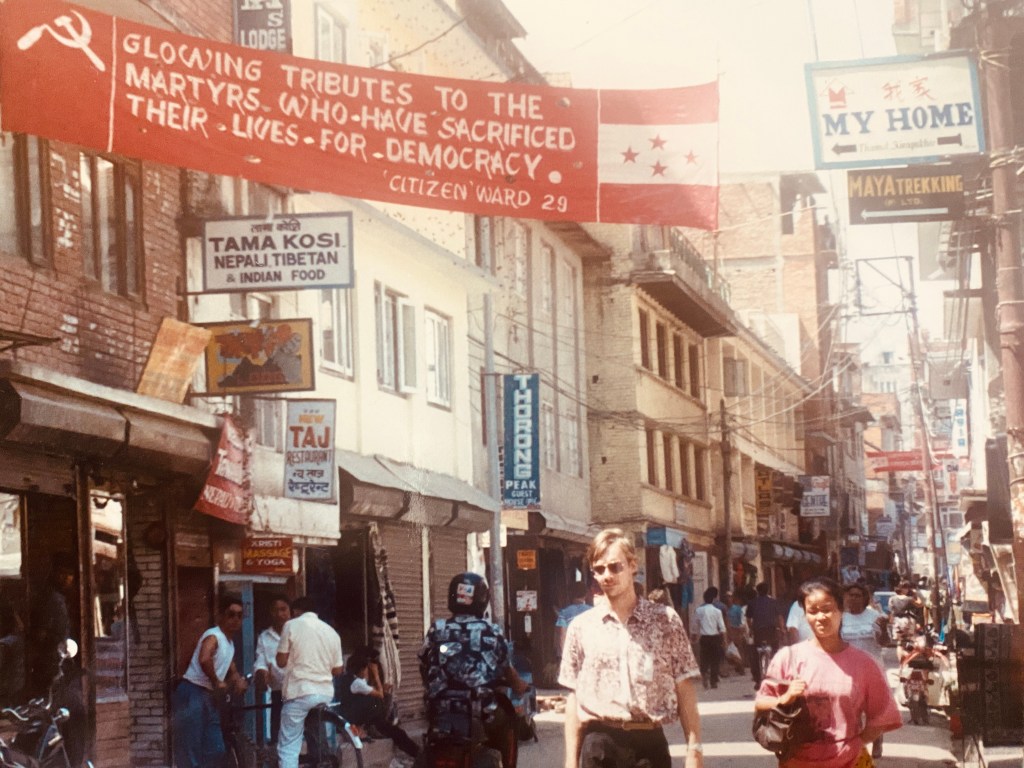
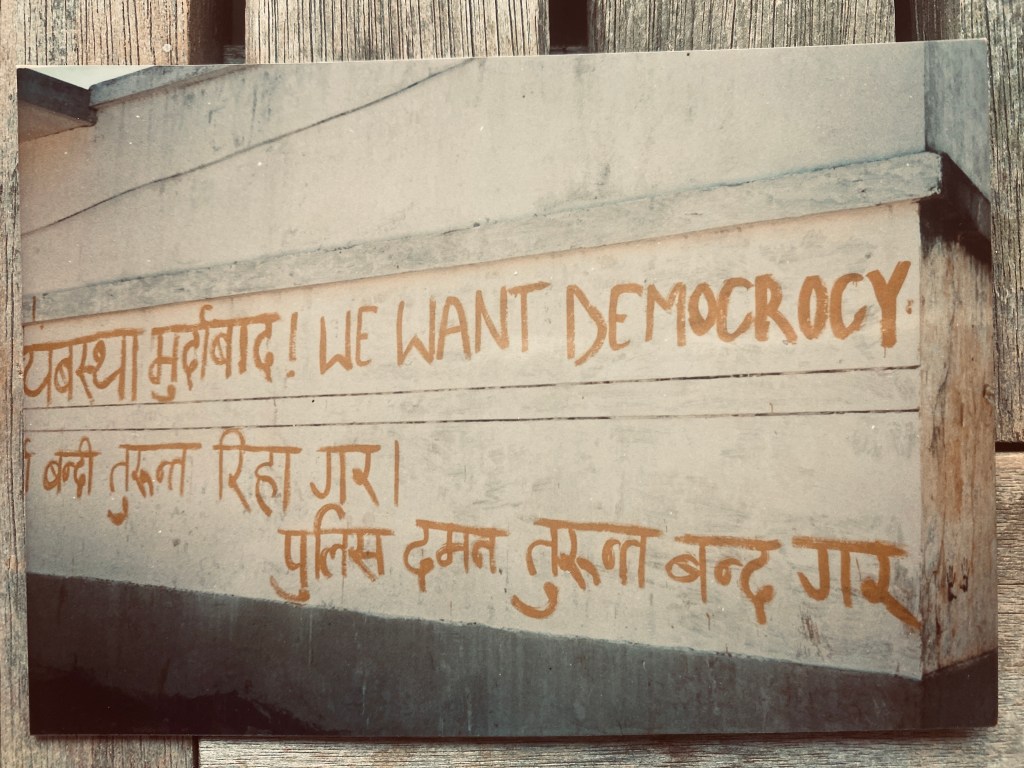
    There are hints of the revolution everywhere—khaki-clad rifle-wielding police on street corners, scrawled graffiti pleading for freedom, whispers by our Nepali language teachers about friends and family who have been arrested, and later, city-wide shoot-on-sight curfews enforced after dark. Still, the (American) leaders of our group work hard behind the scenes to keep us safe. We have all come this far and aren’t about to step out early. We meet with foreign journalists in Nepal who are covering the revolution, and they explain to us the history at play and the dangerous realities faced by the Nepali protestors. I begin to see the freedoms I enjoy in the United States in a new light—could I be taking my country’s freedom of thought and action for granted? 

    “Glowing tributes to the martyrs who have sacrificed their lives for democracy.
    -Citizen Ward 29″
    “WE WANT DEMOCROCY”

    The surprises keep coming: Wooden storefronts and squat concrete buildings lined dusty unpaved streets teeming with sari-wearing Nepalis, Indians, and European and Australian tourists (American tourists are less common). Dusty, radiant, smiling kids offer us gum, tug at our shirts, and ask us to play with them. Occasionally, cows so skinny their bones protrude lumber unbothered down the street. I learn that Nepal is 80% Hindu, most Hindus are vegetarians, and cows are considered sacred in the Hindu faith. Everyone leaves the cows alone. But where are those cows headed, I wonder, and how do they know how to get home? 

    Another unusual sight: young men around my age strolling as they clasp hands with other men. When I ask about this during my Nepali language and culture classes I am told “These men hold hands with each other as a sign of affectionate friendship.” This singular example of a common Nepali custom is a revelation to me. I try to imagine young (straight) American men strolling down the sidewalk on a sunny day holding hands with their best bro… and fail. 

    An important aside: Nepal has a complex history with LGBTQ+ rights. A landmark 2007 case identified the “third gender” as a legal category on their country’s census (Nepal was the FIRST COUNTRY IN THE WORLD to do this), as well as inclusion on voter rolls, and even passports. Despite this, discrimination and intimidation toward LGBTQ+ citizens in Nepal remain rampant into the present day. 

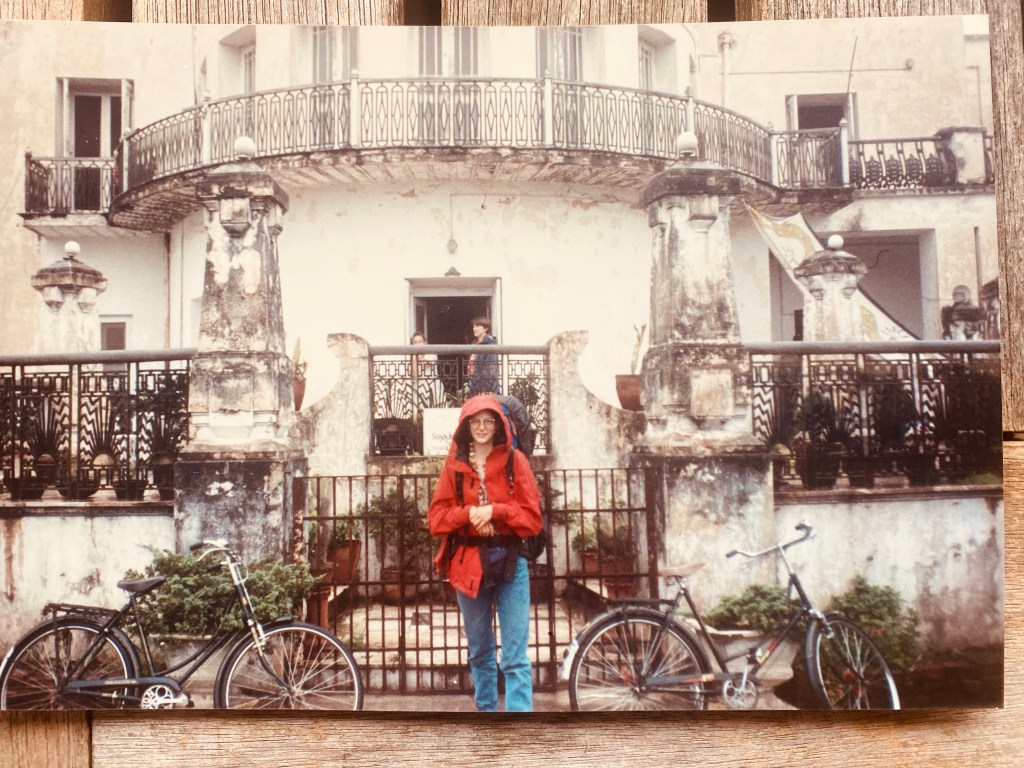
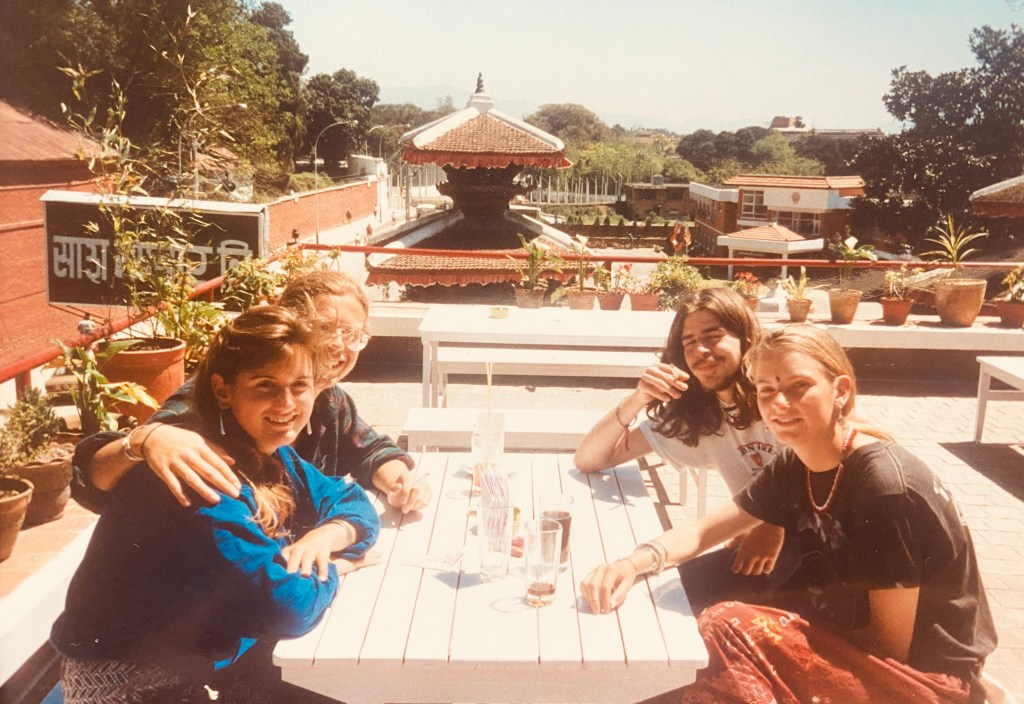
    Our motley group lives in Durga Bhawn, an aging palace that formerly belonged to a Nepali honorary. Nicknamed “the Durg,” we attend daily language classes there and learn useful words and phrases (although a surprising number of Nepalis know English) beginning with the ubiquitous “Namaste” greeting (meaning “I salute the God in you”) and ranging from apaal=hair to thik chaa=okay. The group slowly gets acquainted with each other and forms friendships and alliances with the Nepalis who teach and care for us. I gravitate toward another student on the program—a vibrant, independent, funny long-haired girl who walks on the balls of her feet, studies in Oregon, and is always up for adventure. Jess and I become close friends, never imagining that our friendship would still be going strong decades later. 

    A fellow student in front of the “Durg.”

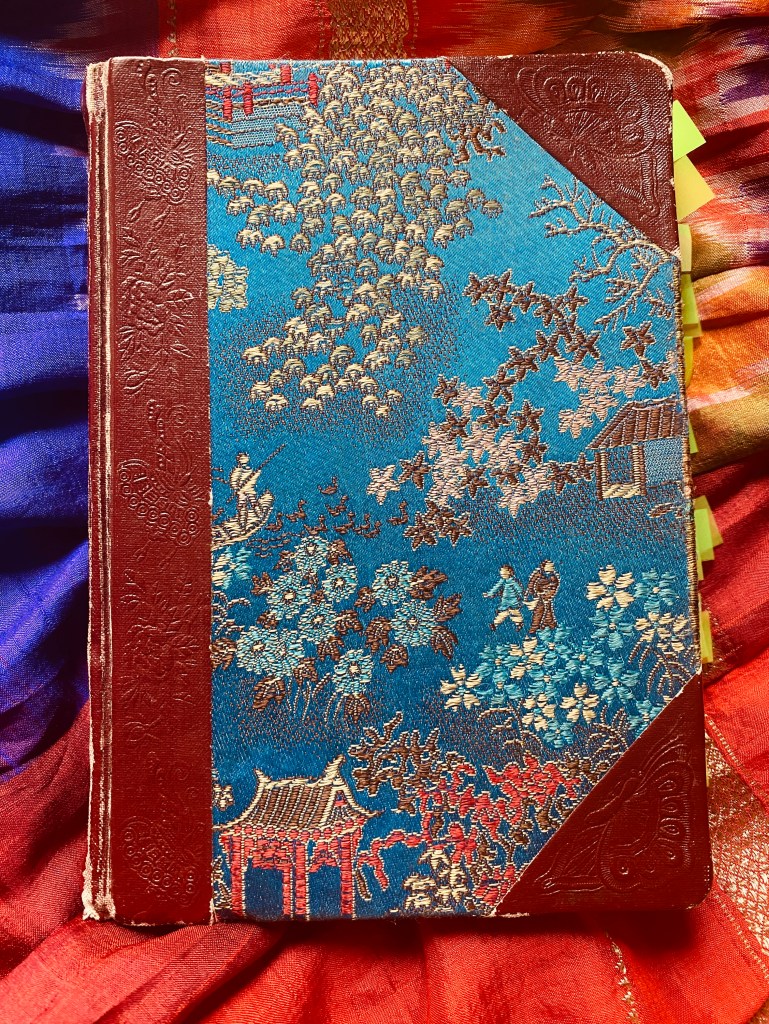
    Slowly, as we get to know our surroundings, the complex history Mother Nepal holds close to her heart unfolds. A Feb 16, 1990, entry in my journal records an encounter with a Tibetan woman who cleans the guesthouse where I sleep the first few nights: 

    “I was sitting on my bed this afternoon catching up on some letters and cleaning/organizing. I took my first warm shower today since arriving, and it was heaven. Suddenly, in came a woman. I had semi-met her before although I still don’t know her name. She cleans our room each day, and many of the other rooms, I think. She sat down on my bed. We said hello to each other and smiled. She asked my age and couldn’t believe I wasn’t married. Then she told me she has a 19-year-old son and wants me to be his sister (I hope she didn’t mean wife!). She invited me for tea at their house. I said okay. She said okay. I finally understood she was trying to tell me she was Tibetan. She showed me a necklace which I think signifies her nationality. Then she said “No husband, no father, killed, bam bam.” She made a sharp noise like a shot and a gun with her fingers. I felt awful. She must have left Tibet with her son and fled to Nepal.” 

    The journal that made me a writer.

    One Sunday a few of us decide to take an ambling walk to the Bagmati River, the central, holy river flowing through the heart of Kathmandu. We are headed toward the famous Pashupatinath temple, but l have little idea of the impact the visit will have on me. 

    As we set off the smattering of pedestrians surrounding us on the streets quickly swell into crowds more pressing than any I’ve experienced. By crowds, I mean thousands of humans crammed so closely together that I can feel the dampness of their clothing, smell their most recent meals, and note the fine details on women’s jewelry. An unknown scent wafts through the air, smelling of woodsmoke and something else sweetly pungent. 

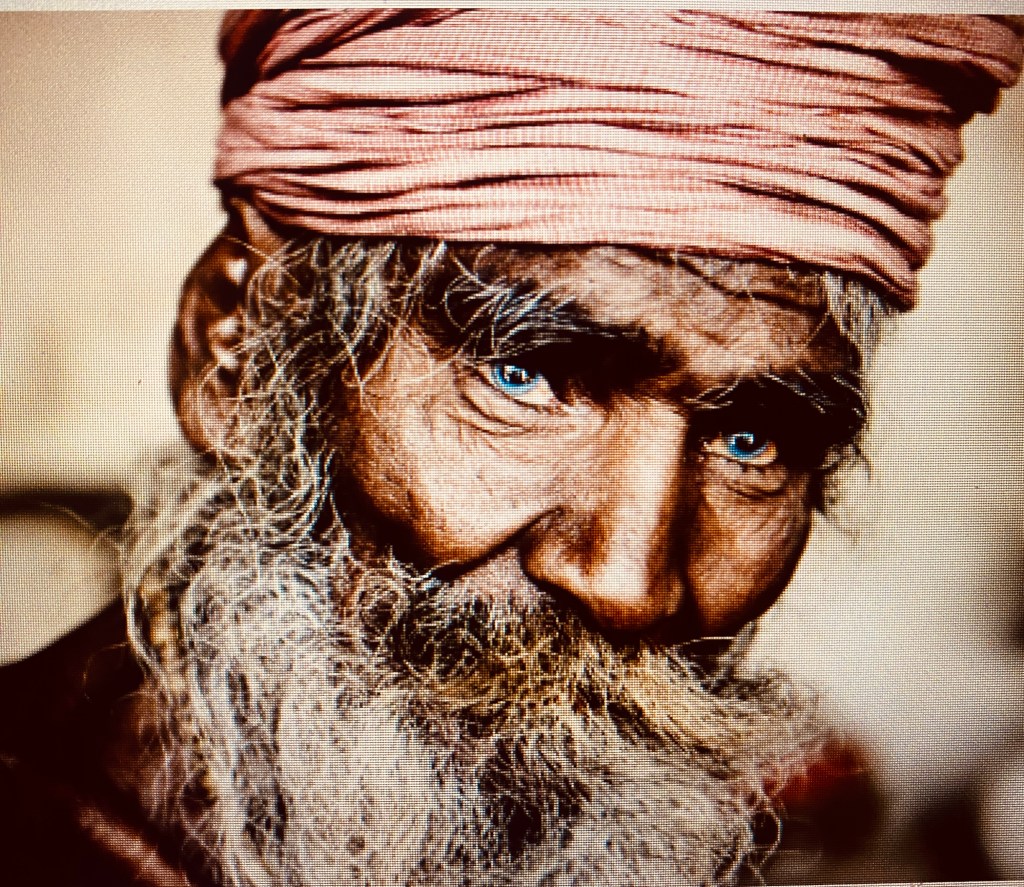
    The crush swallows us as we walk, carrying us forward and depositing us on a wide bridge over the expansive Bagmati. Up ahead I notice people adeptly parting around a man sitting on a box in the middle of the span. Stopping short in front of him, I find myself staring at a human unlike any I’ve seen before. Wrapped in vibrant orange fabric, his skin the color of burnt copper, piercing blue eyes peer out from his painted white face. Long dreadlocks hang at his sides, extending well beyond his sweeping white beard. “He’s a Sadhu,” my friend whispers over my shoulder. “He’s renounced all worldly possessions and took a vow of poverty—they do it so others can practice their good karma.” The expression in the man’s eyes makes me shiver—it’s as if he is peering through layers of my soul. 

    Sadhu.
    Credit: Getty Images

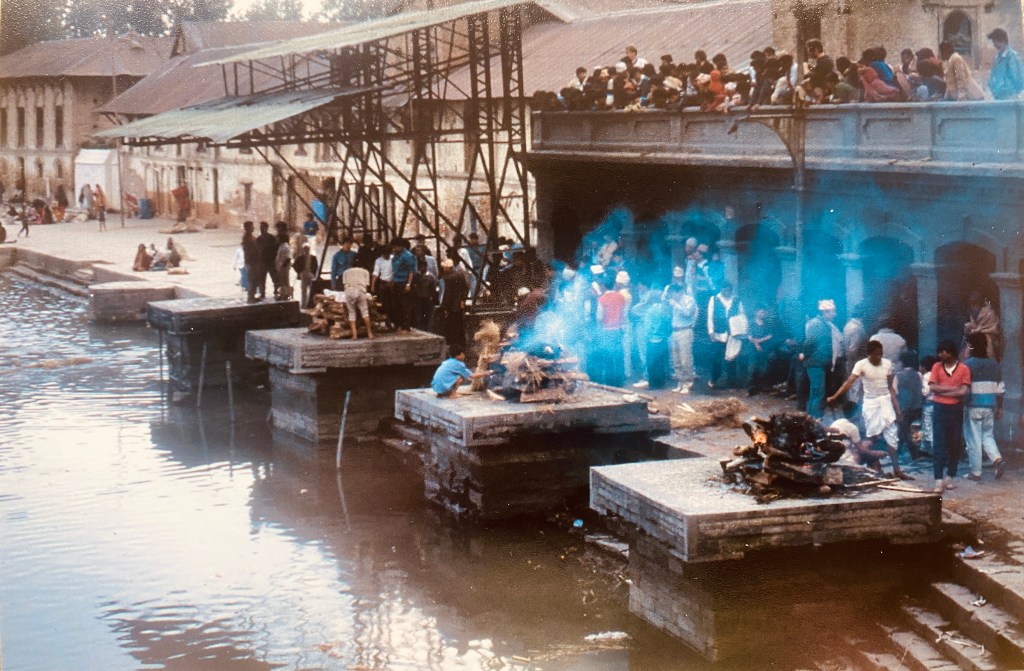
    I hardly have time to register this marvel before the mysterious smell I’d noticed earlier becomes too strong to ignore any longer. Turning to my right, my gaze follows the coffee-doused-with-creamer-colored river water as it flows out from underneath the bridge. Rows of temple towers cluster along the banks on either side and in front of them are what appear to be a series of large bonfires, flames licking insistently at the wood. Wizened men are stooped over tossing sticks onto the piles, creating ever higher stacks. Suddenly, it is clear to me that these are not bonfires, they are funeral pyres. At the top of each stack, a charred human body stretches out, burning in tandem with the black wood. The mysterious smell filling my nostrils is seared human flesh.

    Funeral pyres at Pashupatinath.

    Later, I learn that the very spot where we stand is most sacred to both Hindus and Buddhists. Hindus carry their dead to this holy place, dipping the bodies three times into the Bagmati, and then carry out cremations on these pyres lining the river. Reincarnation is a tenant of Hinduism and all around people are ushering their loved ones into their next chapter in the most respectful and holy way they know. 

    Staggering out from the other end of the bridge I separate myself from the throngs and slump beneath a tree with my spinning head held in my hands. Witnessing this holy tradition and level of devotion leaves me feeling stunned, deeply honored, and questioning everything I know about Western faith and end-of-life practices.

    And somehow, despite the smell of death and the press of humanity surrounding me, I feel perhaps more alive and inspired than ever before. 

    Nepal is quickly becoming my greatest teacher. 

    Ahh, to be young in Kathmandu in the midst of a revolution.
  • A 45-Year-Old Neighborhood Tradition, Still Lighting the Way

    December 30th, 2023

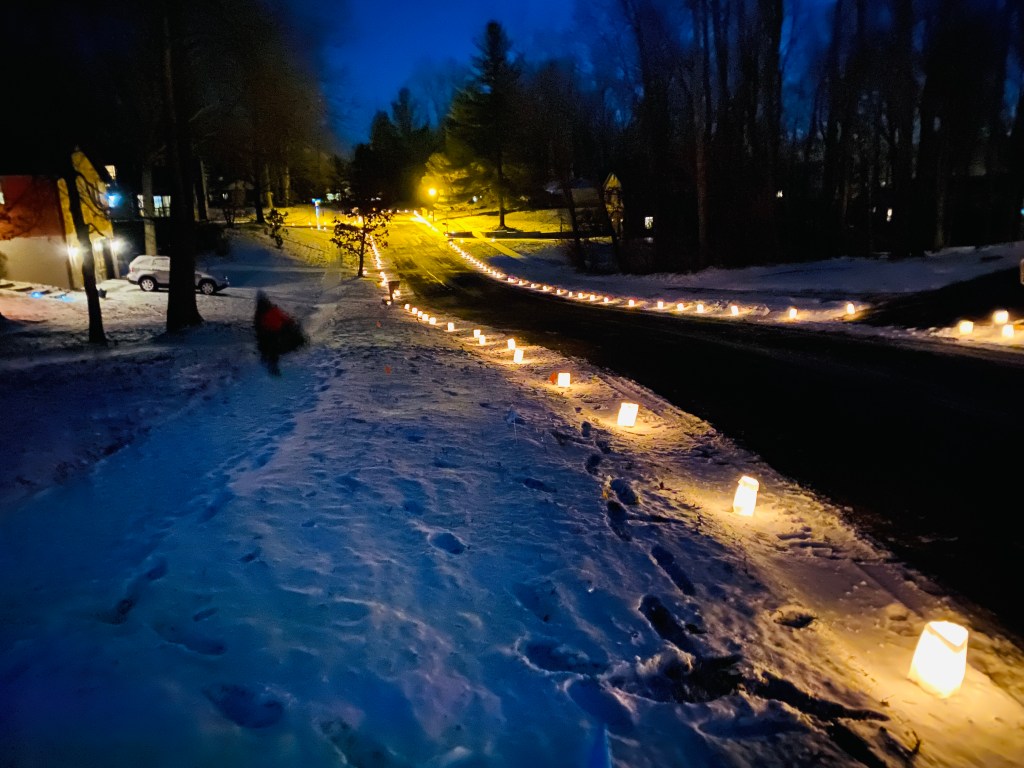
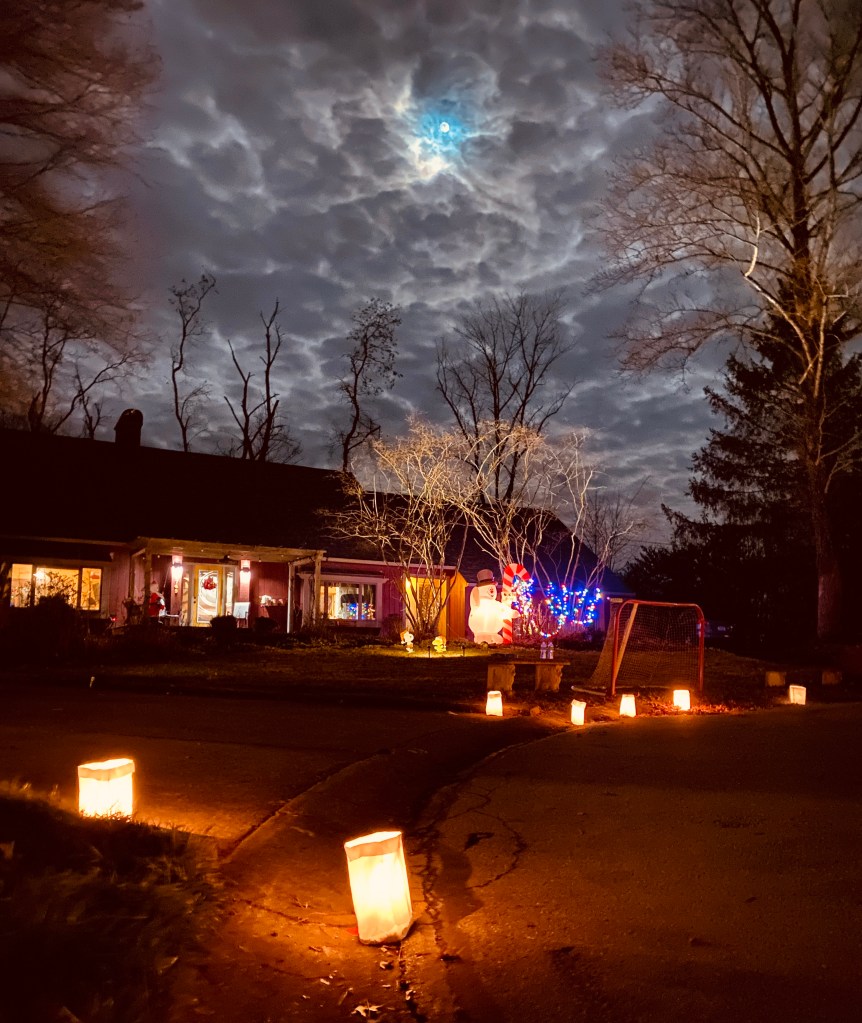
    Imagine a cold, dark Christmas Eve in a hilly suburban Southern Indiana neighborhood. Bare tree branches and stout bristly pines reach toward the sky while silent snowflakes float gently down from the heavens, coming to rest in a soft pile on the curb next to the candle-lit glow of a white paper bag.

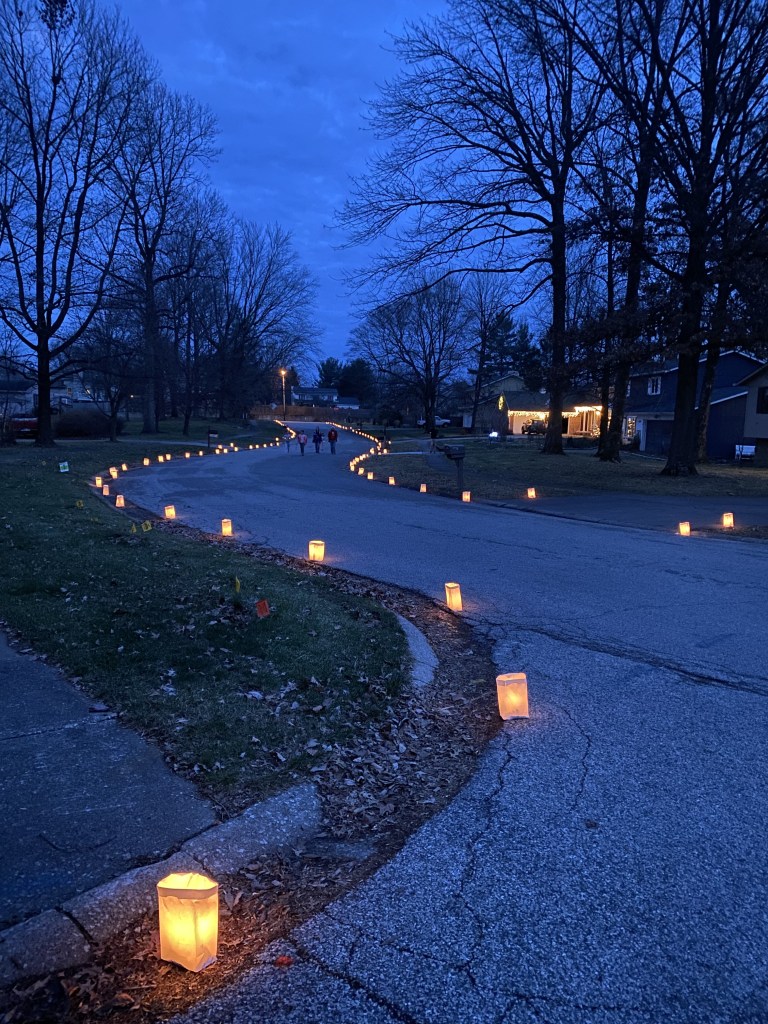
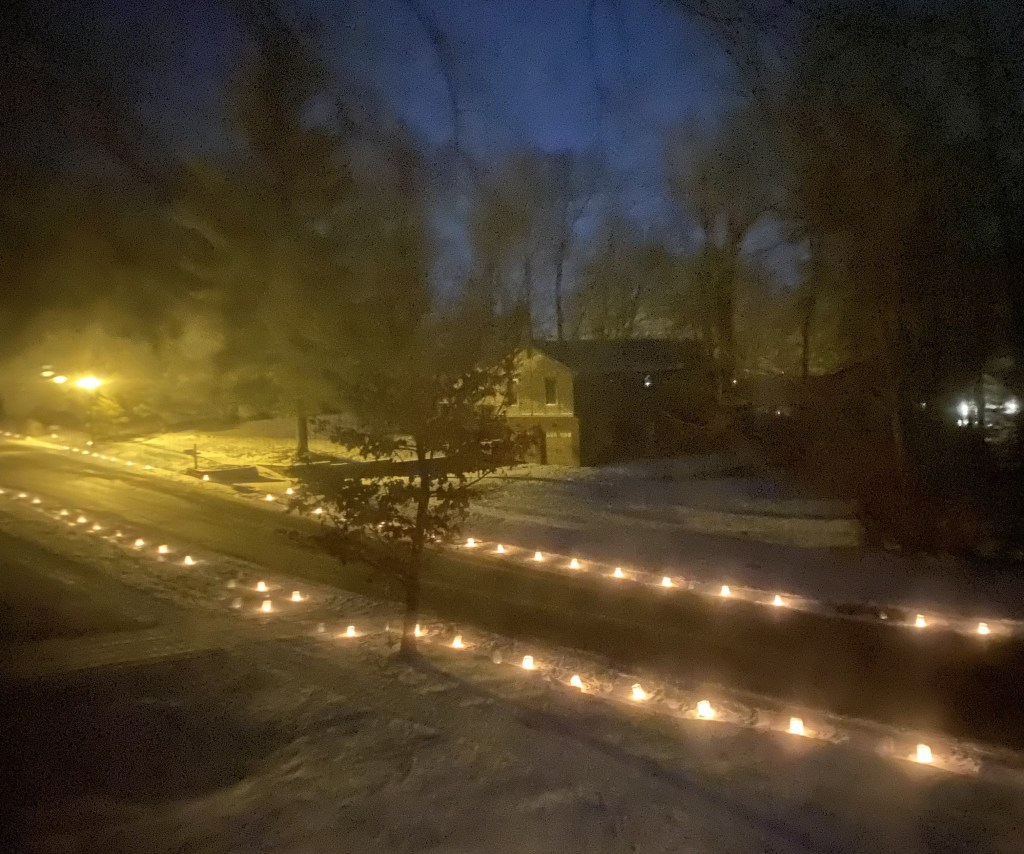
    If you slow at the crest of the highest hill in the neighborhood, right at the spot where the street makes a satisfying downhill curve, your gaze will be rewarded with two parallel lines of those illuminated paper bags, appearing as widely spaced train tracks leading downhill toward something…promising. Perhaps they lead to Christmas Day, or simply a peace-filled, snowy, sacred night.

    But this isn’t an imagined holiday tale, it’s a true story, one with a 45-year-long history behind it. The story of our humble neighborhood luminaria display highlights something missing from modern life, an aspect most of us hardly realize has crumbled away in the face of our perpetually busy and forward-propelled lives: shared, meaningful traditions.

    When my husband and I moved to this neighborhood we weren’t looking for tradition, or even friendship necessarily. Our children were only one and two and mostly we were looking for increased living space, room for our kids to roam safely, and fewer screaming sirens.

    Ours is an unpretentious gathering of about 30 houses sitting on wide streets with sprawling yards that feature some landscaping and other sections left wild. Mature oak, maple, and ash trees tower above. Two cul de sacs and a clear “No Outlet” sign keep people from using the three main streets as a cut-through and maintain a cozy, private quality. 

    Once we arrived in our new house it didn’t take long for us to learn about the luminarias. An envelope appeared in our mailbox soliciting a donation toward the “Neighborhood Christmas Eve Luminaries” and the frosty became crystal clear—our new landing spot took this new-to-us display seriously. 

    Drivers and walkers are lured in by the snaking glow.
    Photo Credit: Tom Stryker

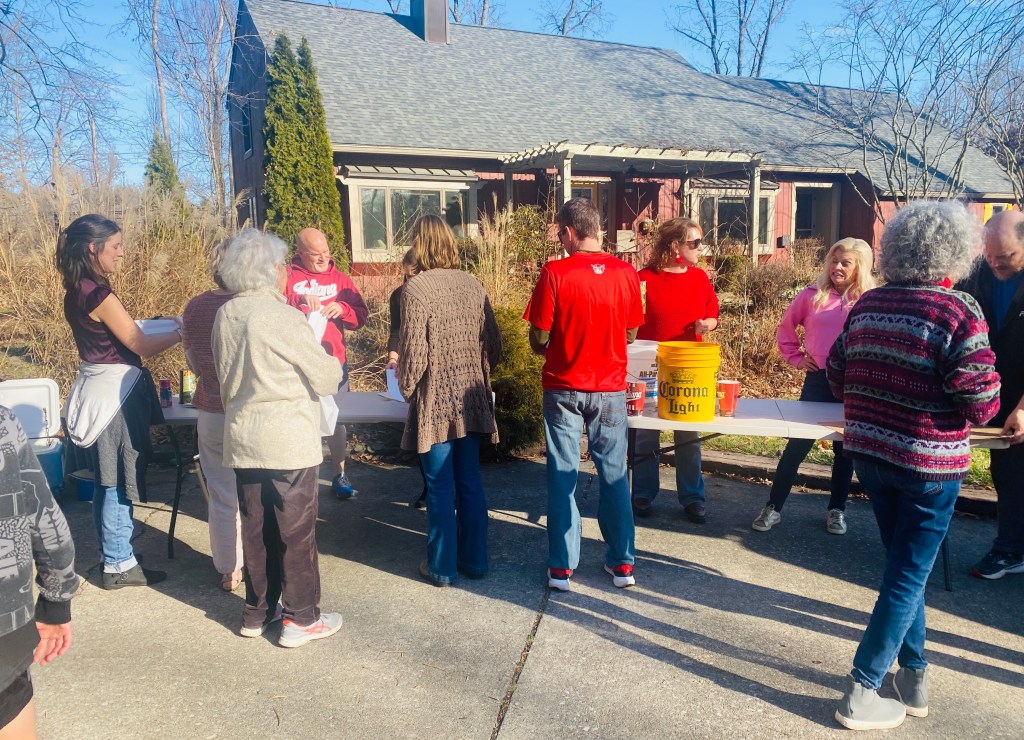
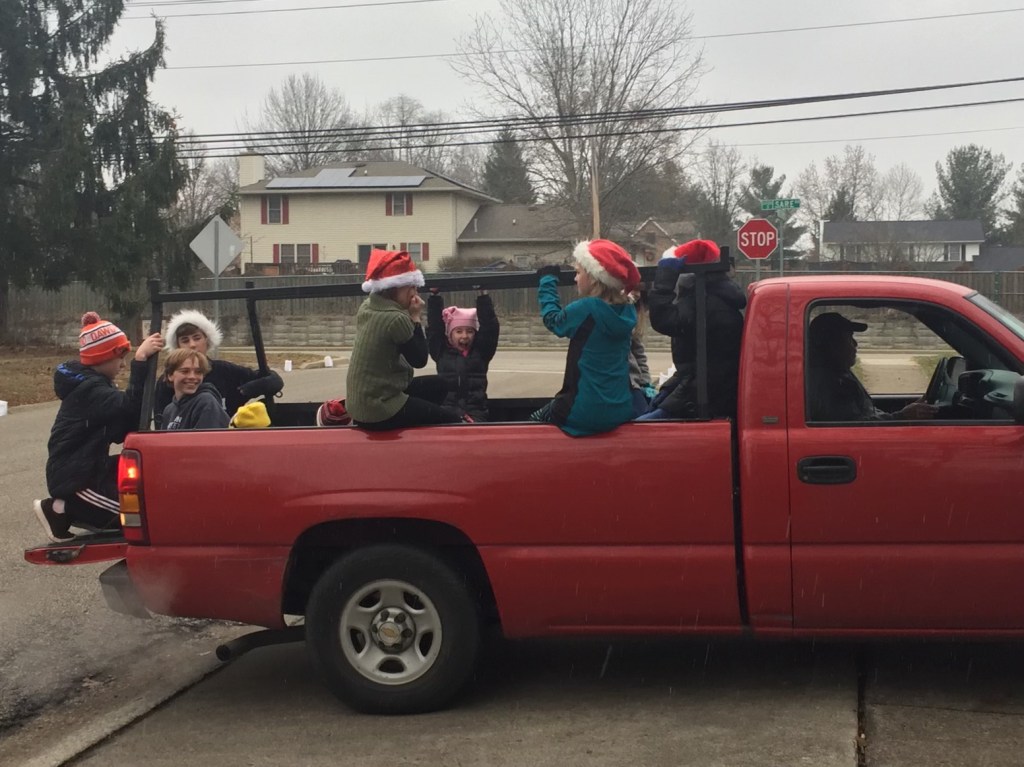
    The annual tradition, once featured in our town’s local newspaper, requires many hands to accomplish. Here’s the inside scoop: at around 2 pm on Christmas Eve, volunteers begin gathering in the appointed cul de sac driveway (or inside the host’s garage if temps are low enough which has been known to happen). People graze at a side table displaying a variety of treats carried carefully over in gloved hands…homemade cookies, crock pots of chili, mulled cider, and cocoa. Kids of all ages thread excitedly through clusters of chatting grown-ups.

    Let the luminaria assembly begin!

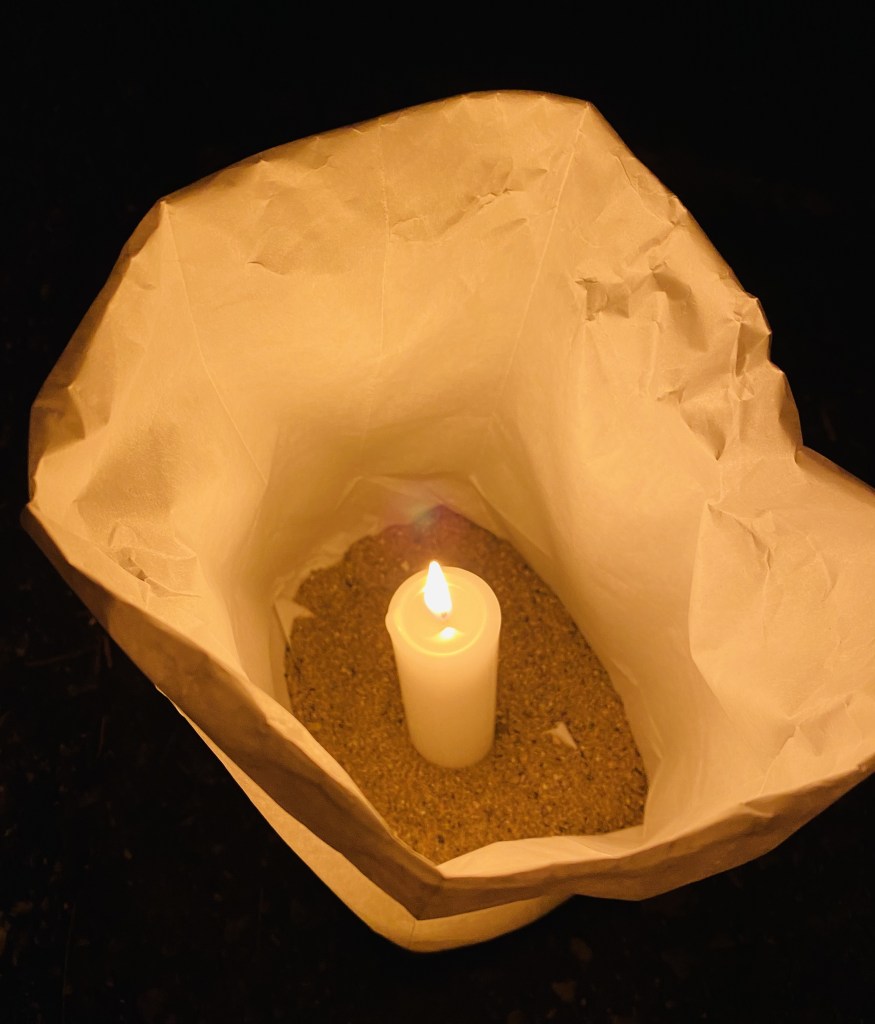
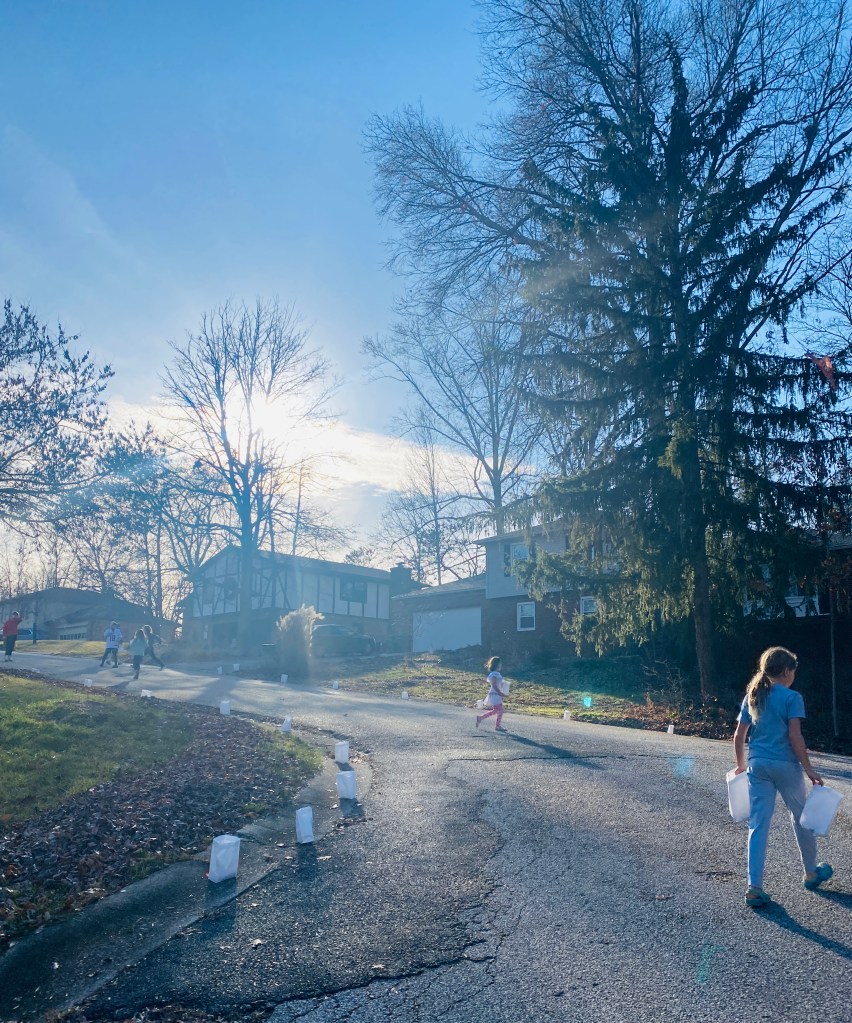
    Other long tables hold a variety of supplies, white paper bags, buckets of sand, and boxes of sturdy white candles. People line up eagerly and begin the process: open the paper bag, fold back the top, pass the bag to the left, add sand, pass to the left again, add candle. Next, the filled bag (hold it by the bottom!!) is handed to someone who shuffles it over to the back of a truck bed. Once the truck bed is chock-full of bags the loaded vehicle slowly moves throughout the neighborhood while a few hearty souls (often the kids) deposit the bags on top of pre-marked spots along each street.

    Young elves enjoying their work.
    Photo credit: Shirley Megnin

    But what isn’t obvious at those assembly tables is the backstory behind this tradition or the preparation and planning that goes on all year to pull off a seamless appearance on one special night. Over 400 candles are ordered! Over time lessons have been learned: the cheaper the bag the more likely the bottom will tear, open the bags of sand early so wetness doesn’t ruin the container. Avoid piling bags on top of each other.

    Many (small) hands make light work of setting up the bags.

    I recently discovered that the first neighborhood display happened in 1978 (or 1979, no one is exactly sure). Early luminaria display pioneers deserve full credit for building interest in and respect for the still-thriving tradition. Responsibility for the supplies and location of the luminaria assembly has bounced around over the decades with different individuals, landing most recently with some particularly generous and fun-loving folks (entirely in character for one of the families who regularly provide the social glue for a variety of neighborhood happenings).

    My own family has participated in the luminarias for nine consecutive years but this year, as I stood at the table shoulder-to-shoulder with my neighbors/friends, filling paper bags with scoops of sand and quickly passing so that a candle could be added, I finally grasped that something beyond mere neighborliness was going on. I listened to people talk, laugh, and reminisce and watched kids, including my own, climb up onto the back of the tailgate and clutch each other with glee as the truck lurched off to make holiday magic. Could it be that adults crave shared traditions as much as children do?

    It takes a village to bring the display to life and light.

    It’s not as if our neighborhood is perfect, or that we haven’t collectively faced the difficulties of life: we have our human disagreements and misunderstandings, former keepers of the luminaria tradition have passed away, or moved. A fair amount of folks who live in our neighborhood pass on participating entirely (no one judges).

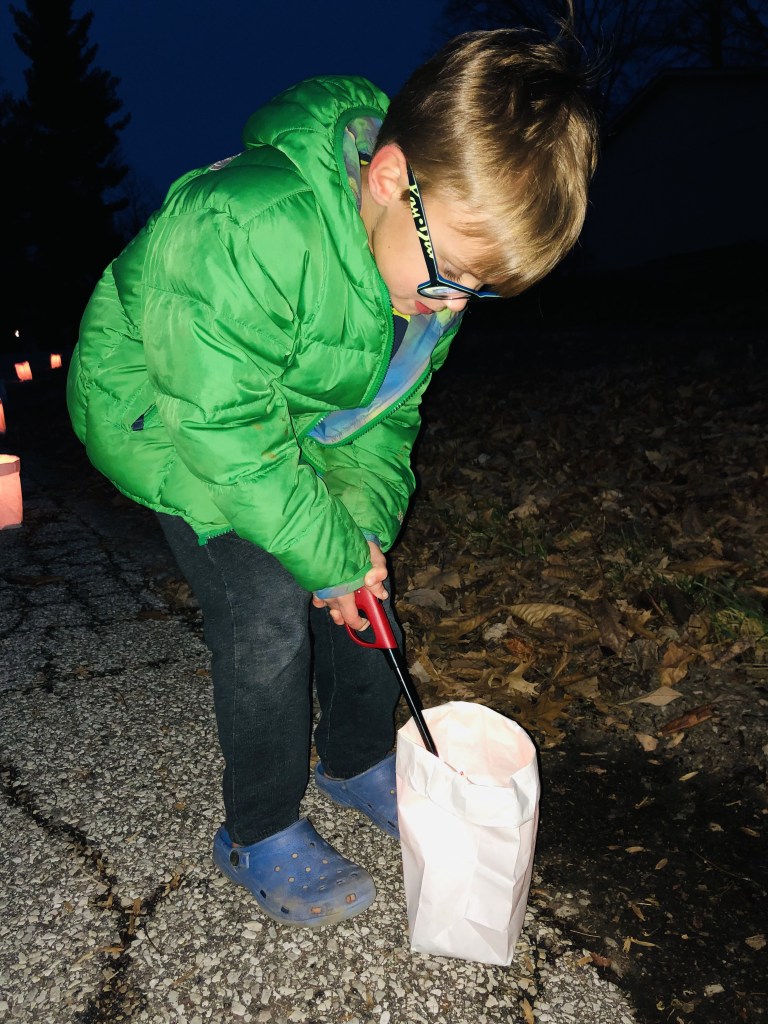
    Around sundown on Christmas Eve residents begin to step out of their houses wielding long electric lighters, calling out to each other and visiting each bag to bring individual candles to vibrant life (last year the wind was so frigid I abandoned my responsibilities entirely and fled inside leaving others to pick up my lighting slack). A couple of hours later cars slowly begin to file into our neighborhood, some gliding by with headlights turned off, others blaring Christmas music with the windows rolled down. The drive-bys continue throughout Christmas Eve, even into the wee hours. Someone once said they counted two hundred cars, each passing through to bask in the glow of our simple yet magical neighborhood offering.

    The years without snow possess their own beauty.

    My favorite part of the whole affair comes late on Christmas Eve, sometimes so late that it has become Christmas Day. The presents are wrapped, stockings are hung, cookies carrots and milk are appealingly arranged on the hearth. I’m the last one awake, everyone else is nestled all snug in their beds. Illuminated only by the lights of the Christmas tree I stand and peer through the front window.

    Outside the line of burning candles stretches off into the darkness, each offering their light and hope to the quiet and peaceful night. It’s time for the neighborhood to rest.

  • It All Changes So Swiftly

    December 15th, 2023

    It’s a mid-week birthday celebration. Three hyped-up ten-year-old girls are sprawled across my dark blue living room sectional, matching white Stanley water bottles lined up on the coffee table, multi-colored lights flashing on the Christmas tree in the corner. Popcorn pours into their open mouths while they expertly jam thin red straws into chilled pouches of fruit-punch-flavored Capri Sun.

    Their pattering conversation drifts upstairs to my listening ears “Name each album and your favorite songs from each one…I love her outfit, it’s so Taylor…I wish I could be a dancer for Taylor…if you come in here and you like Kanye, you’re OUT…when Taylor dies, I die.” 

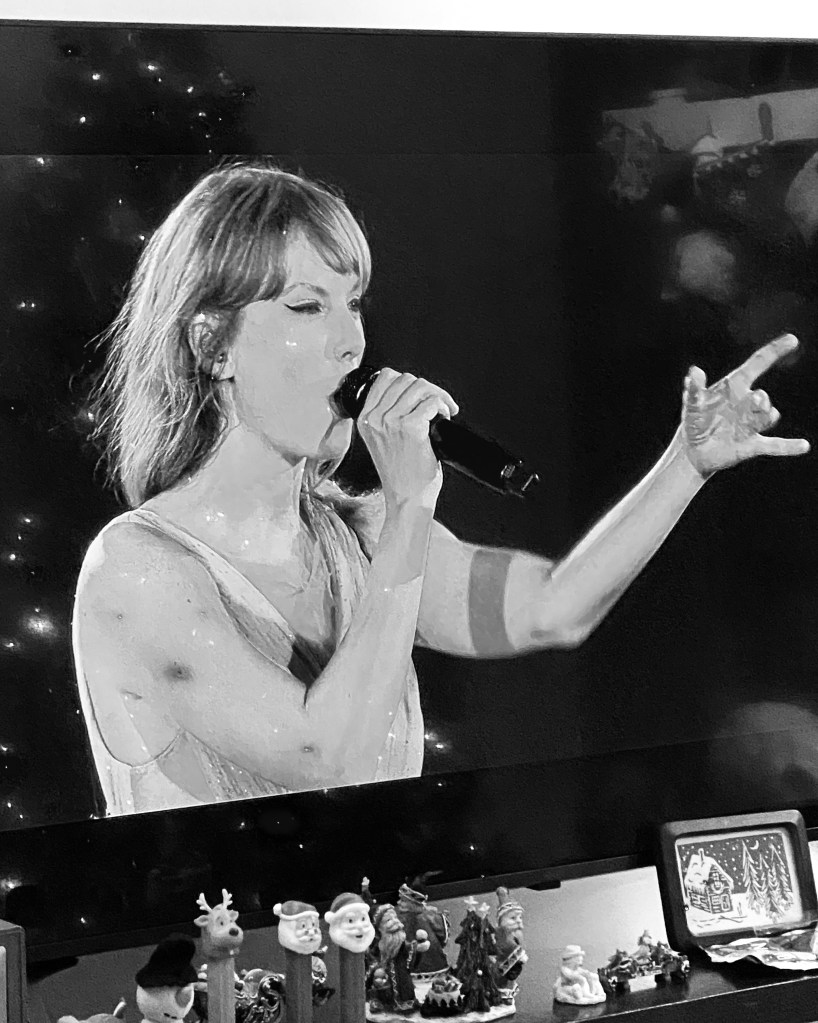
    One of the three girls is my daughter and she’s begged to have her two most enthusiastic “Swiftie” (the term for serious Taylor Swift fans) girlfriends over tonight to watch Taylor Swift’s The Eras Tour (Extended Version) on television. 

    If the news somehow passed you by, I’m here to tell you that December 13th is Taylor’s 34th birthday. To mark the occasion Time Magazine’s 2023 Person of the Year has decided to release (to television) the film version of her 1.04 BILLION-dollar-generating tour.

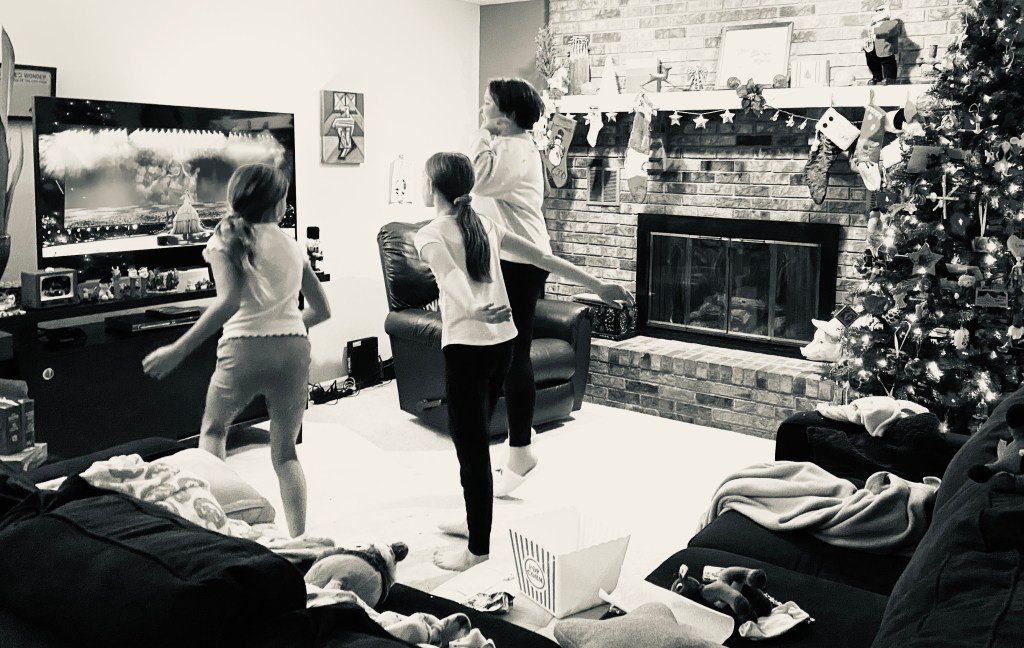
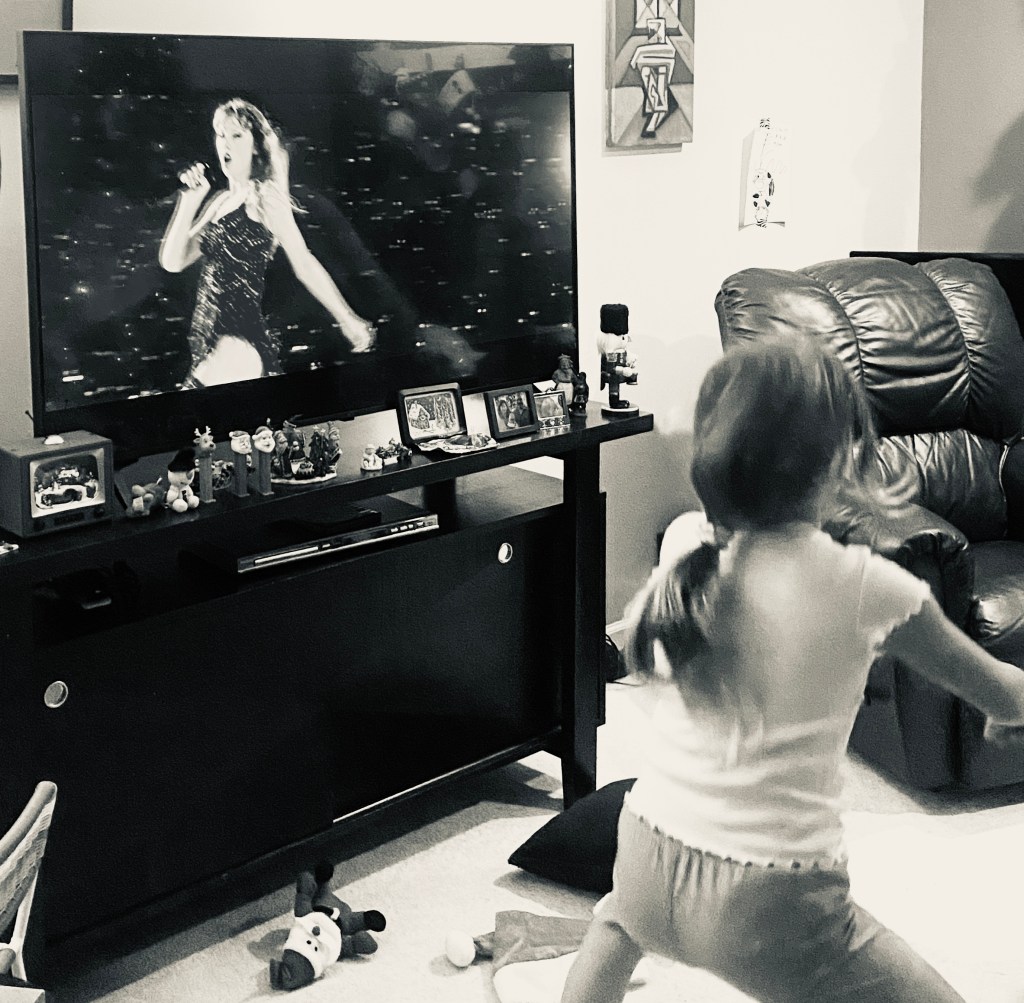
    I join the three downstairs to watch as the concert opens with a sweeping overhead view of the twinkling lights of the SoFi Stadium in Los Angeles. My girl and her friends are already on their feet, facing the television with their arms raised. They are ready to move, to scream, and feel the music wash over them.

    The Swifties take over the living room.
    Miraculously, no glass shattered.

    Because I am an “older” mom (I was in my early forties when I had my kids) I am well aware of the vast chasm between how the world was during my youth and how it is now, for my daughter. The internet didn’t pick up speed until my college years, for example. For Swifties, 1989 is the year of Taylor’s birth as well as the title of her best-selling album.

    For me, 1989 is the year I graduated high school.

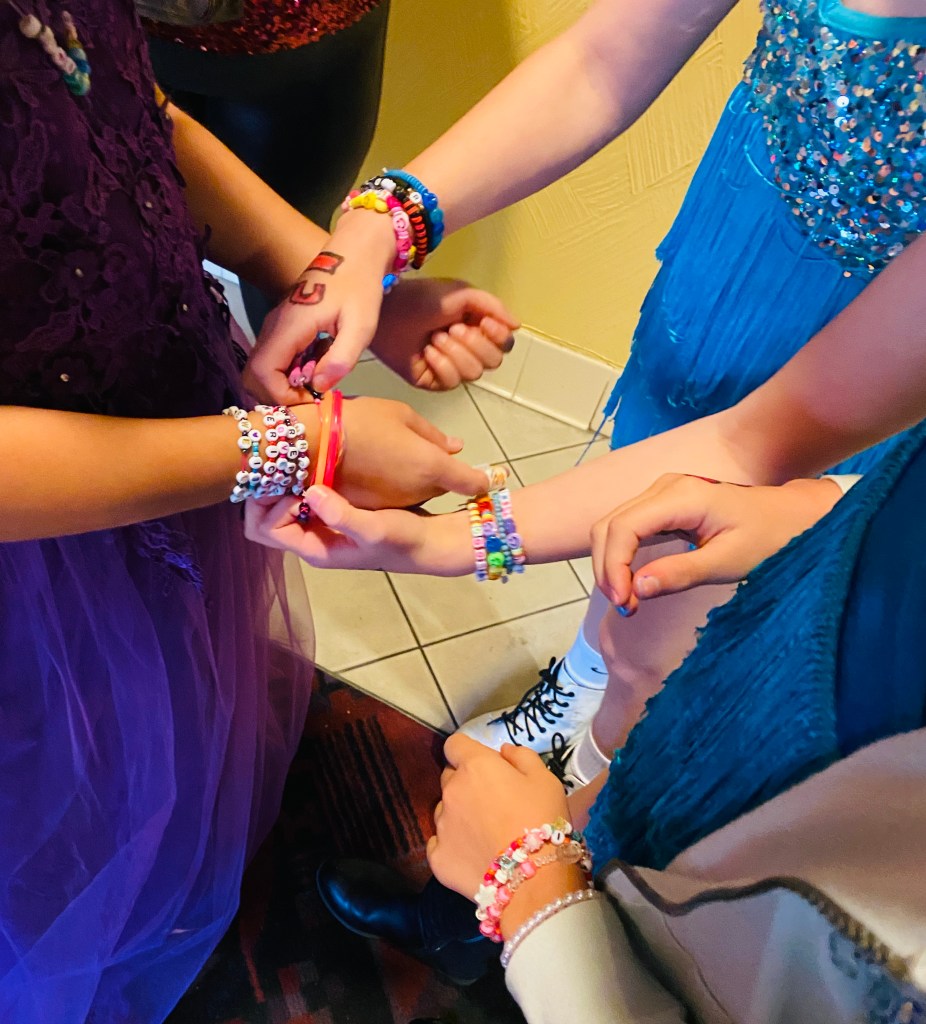
    While the girls continue their excited chatter I flashback to a couple of months ago, when I sat in the last row of a movie theatre watching the same Eras Tour film on the big screen, next to my daughter and her friend. It was a Sunday and we arrived 45 minutes early. Parts of the evening went as expected: the girls exchanged beaded Swiftie bracelets with others in line and excitedly discussed their favorite songs, then rushed into the theatre and settled into their seats clutching bags of candy and slushies as big as their heads.

    The bracelet exchange (during which, in the name of fandom, my daughter traded away her favorite bracelet of all-time.)

    Other parts of the show caught me by surprise: from the moment Swift stepped out onto the stage to sing the first notes of “Miss Americana & the Heartbreak Prince” her lilting yet commanding voice pulled all attention her way, and it pretty much remained on her for the rest of the concert. Swift’s uncanny ability to tell a relatable story through her lyrics, her mesmerizing yet accessible booty-shaking, her diverse backup singers, and her immense talent as a musician and entertainer were all on display…for three full hours.

    I, for one, couldn’t look away.

    Another revelation: While sitting there in the movie theatre singing along with my daughter, I found myself reliving not only the rocky terrain of my teenage years but my 20s and early 30s as well. As a writer currently mining her own life for stories that play into universal themes I was pulled right in—things I hadn’t thought about in years flashed through my mind, synapsis connecting, my heart beating in time to the lyrics:

    “Give me back my girlhood

    It was mine first” 

    —Would’ve, Could’ve, Should’ve

    “Back when we were still changin’ for the better

    Wanting was enough

    For me, it was enough

    To live for the hope of it all”

    —August 

    …and a newly discovered gem (look it up…this is the one that got me up out of my seat): 

    “I’m so sick of running as fast as I can

    Wondering if I’d get there quicker if I was a man

    And I’m so sick of them coming at me again

    ‘Cause if I was a man

    Then I’d be the man”

    —The Man 

    There in the darkened theatre I didn’t just think about those epic times, I FELT the emotions of those eras in my life. Glancing over at my joy-filled daughter and her friend, this reggae-loving Phish-head realized that even though we were singing the same lyrics their interpretation was probably entirely different. They have only ten years of experience under their belts, puberty looms on the horizon, and the world embraces them differently than it did me. Yet isn’t that the way with every generation, rolling forward together? Our situation just happens to be padded with an extra fifteen years (or more). 

    Amazingly, our ages cease to matter in the face of Taylor’s gift—she seems to embody the parts of us that are unabashedly female, and powerful, and entirely unapologetic. And the thing is, we are ALL made of complex parts yearning to connect…no matter our gender, our number of days on the planet, or our skin color. 

    As we walked out of the theatre I looked over at my glowing girl and said “Okay, I get it, I’m officially a Swiftie now.” 

    Why sit when you can dance?

    Back in our living room my 11-year-old son (who earlier jammed his hulking headphones over his ears and fled upstairs to escape the echoing shrieks) has now come back downstairs to see the show. With wide eyes he watches the girls watching Taylor before joining them to sing along to a song he recognizes. For a moment I can’t differentiate between his high-pitched vocals and theirs.

    Later, despite the Midwest darkness outside and the 33 degree temps the three girls step out onto the deck and yell into the night, their strong voices rising in unison “HAPPY BIRTHDAY TAYLOR, WE LOVE YOU!!”

    Their congratulations are so heartfelt that I think Taylor, wherever she is tonight, just might have heard them.

  • Caregiving: A Reality Check

    November 14th, 2023

    “Hi Kiddo…remember how I told you about those little people streaming up the walls, the ones getting into the light fixtures and whispering? They’re back today, I’m going to call the front desk and see if they can put in new lights. Hoping that helps.”

    —Excerpt from a voicemail my father left me in late November 2020

    Reading the message above, you might imagine that the person behind those words was out of their mind, paranoid, even dangerous.

    What you are probably not imagining is that the person who left that message for his (horrified) daughter was also an accomplished writer, a loving, devoted, and encouraging father. Or that this hallucinating man was once serenaded by the great Maya Angelou because she so adored his interview questions. Well, it’s true.

    It’s also true that even after two years of me caring for my father it took that particularly alarming voicemail for me to finally accept a hard truth: my dad and I had entered unknown territory, and we would likely never return to normal (whatever that is).

    Everything that had come before, the father/daughter relationship I’d relied upon and frequently taken for granted every day of my forty-nine years, had been undergoing a seismic shift—but I’d been in thick denial for a long time. Despite taking over almost every aspect of my father’s care I had to hear his irrational call for help to truly understand how much had changed, and how screwed we both were.

    The familiar, healthy reciprocal relationship between father and his daughter was no longer. In its place was a perpetually ill-fitting dynamic that neither of us was prepared for.

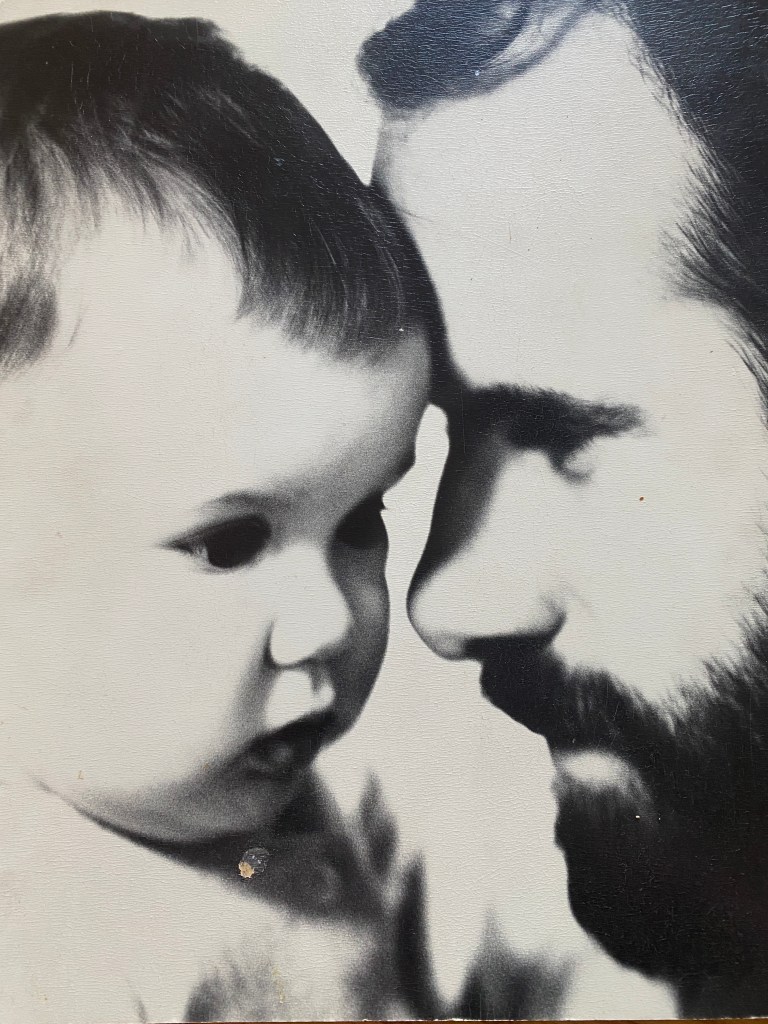
    Mine was a forever loving, attentive, respectful, forgiving, encouraging father.

    “For a son or daughter to assume autonomy over a parent’s life and say, “I’m making the decisions now,” is a role reversal for which there is no preparation.”

    -Patti Davis in the New York Times Sep 1, 2023

    Many around my generation (I’m in my early fifties) are facing the decline of their parents, and the beginning of their careers as caregivers, and it isn’t pretty. Yesterday I spoke with a close friend who recently moved her mother across nine states to live with her. Her mother’s memory is in steady decline and my friend’s life changed overnight—she is now providing 24/7 care, in her own home, for her mother. When we spoke, my friend had just spent an entire hour trying to convince her mom to go for a walk with a new hourly caregiver. My friend was hoping to get a two-hour break, her first in weeks.

    As we were talking my friend was watching her mom sit in the passenger seat of the caregiver’s car across the street. My friend knew her mom was uncomfortable, searching for any way to get out of the situation and away from the unknown driver and the unfamiliar car she found herself sitting in. This mother had no idea her daughter was watching her from a few yards away, the daughter’s voice trembling as she wondered how she was going to make this all work, how she could possibly keep her mother safe, run her business, maintain her sanity.

    “Call me anytime to talk,” I told my friend. She thanked me and then said, “But if you haven’t heard from me could you call and check in on me?” I knew what she meant, caregivers need real, on the ground help. My friend doesn’t need people inquiring if she’s okay, she needs someone to come over, make her mom laugh, make them both nourishing soup, and relieve her for an hour so she can walk down a trail and listen to birdsong and cry.

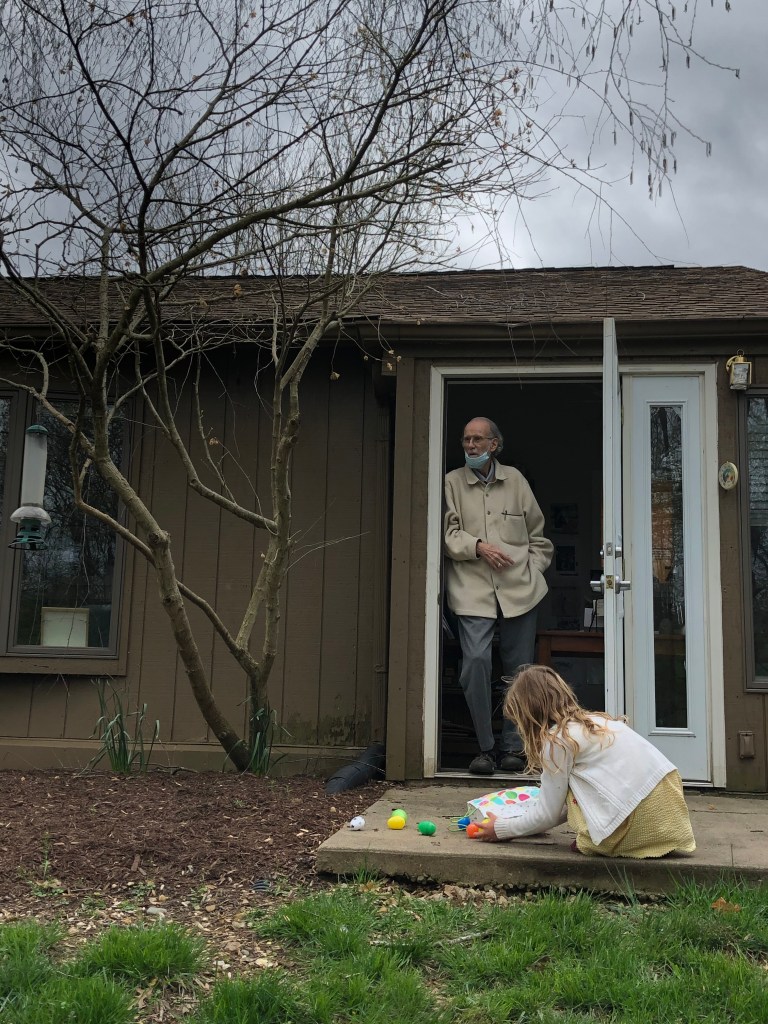
    My Dad’s final Easter, mid-pandemic.

    Over the past two weeks I’ve connected with three friends who are embarking on the caretaking of a parent with memory issues. Three different friends, three levels of memory loss, one painfully familiar story. There are common threads: all our parents were accomplished, active people, and NONE of them are losing their memory gracefully or following along any sort of expected memory-loss timeline (spoiler—there isn’t one, every memory loss diagnosis and journey is unique).

    Not only that, but here is a little-known fact: memory loss does not follow a linear timeline, it shifts and dips and peaks. One day your loved one might recall their favorite high school class and how they felt before their wedding, and another day your ailing dad might buy the New York Times at a bookstore and then return to the register to try and purchase it again two minutes later.

    For many, the term “caregiver” suggests a simple scenario in which a person REQUIRING care RECEIVES that care from someone qualified to provide it. For many of us, the reality of caregiving is something else entirely. Take my father, for example. This fiercely independent world traveler and investigative journalist was LOATH to accept the help of a caregiver, or, as he insisted on calling anyone who came into his apartment, a “nurse.” “Why do I need a nurse?” he asked me repeatedly. “Why is she going to watch me shower…I don’t need her to spoon food into my mouth…why on earth do I need any of that. It’s a waste of money.”

    “Okay Dad,” I’d say from the kitchen as I finished washing his dishes, or from the hallway as I stuffed his clothes into the dryer, or from the front walkway as I swept slick leaves away from the entryway.

    Slowly, without either of us fully grasping what was happening, I became my father’s full-time caregiver. Fetching prescriptions, filling the pillbox, setting up medical appointments, attending medical appointments, corresponding with doctors and insurance, paying his bills, checking his voicemails, doing his grocery shopping, taking him to church, to the bookstore, to the library, on walks. I devised a system of leaving daily notes in prominent places around his apartment every morning (taped to his bathroom mirror, on the seat of his reading chair) and evening with daily reminders about what to eat and what medication to take, what was going to happen that day. It was a highly imperfect and flawed system.

    I finally landed on the phrase “You know how you’re always saying you wish you could help make my life less busy, Dad? Well, YOU accepting help helps ME.”

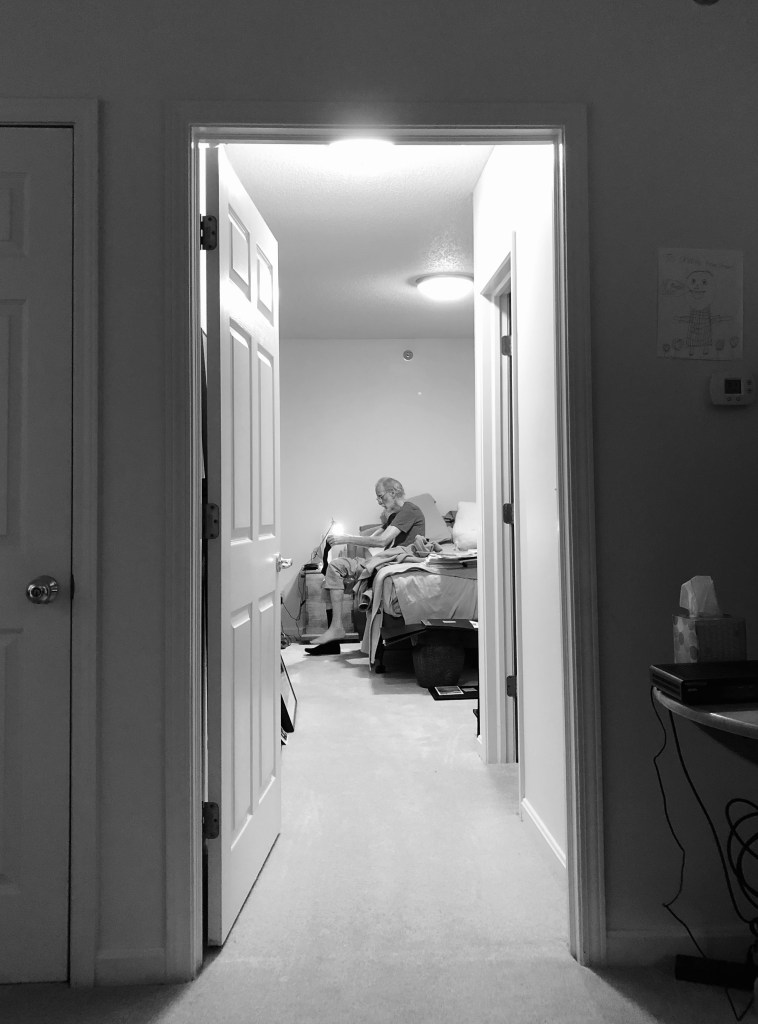
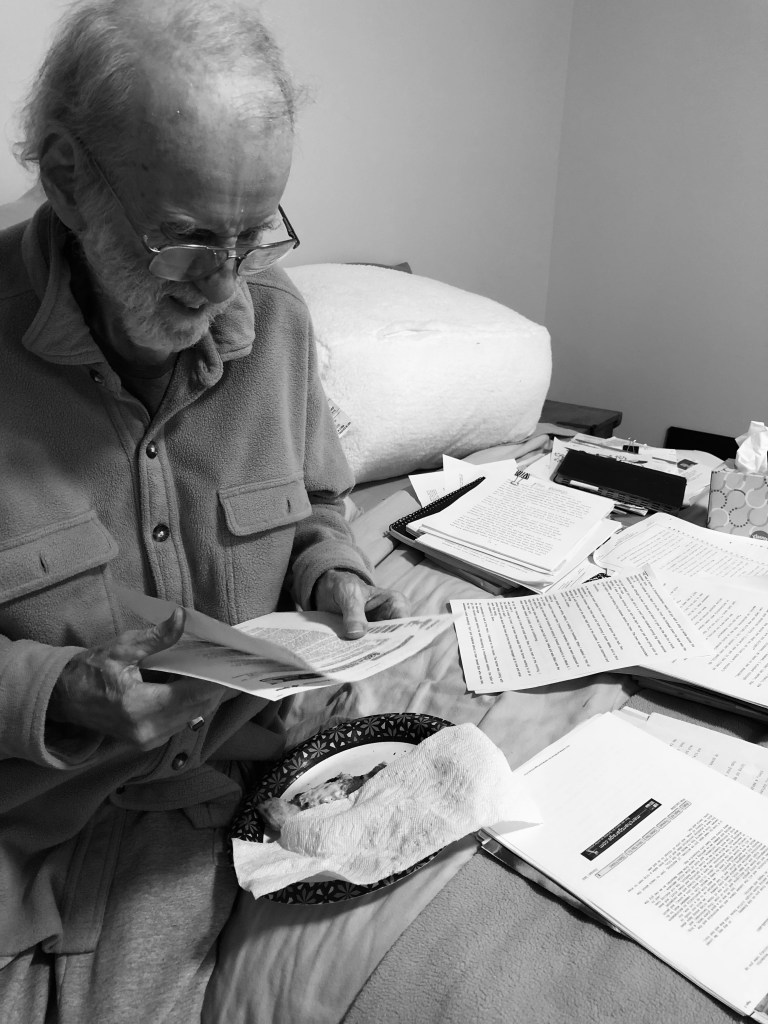
    My dad spent hours reading through his decades of published writing.
    “Some of this is pretty good!” he’d say, chuckling.

    After those words left my mouth, he’d look at me quizzically, then nod and say “Okay Kiddo, I’ll accept help, just for a few hours.”

    Inevitably, the next day when the hourly caregiver showed up, he’d tell them he was all set, and send them on their way.

    Somehow, my dad and I made it work, day in and day out. And we were fortunate: my father had the means to live independently, had access to good medical care, and had a caregiver (me) who was able to devote most of her time to his care (at the expense of many, many things in my life but that’s another story). Plus, we were banking off a lifetime of good feelings between us.

    What I haven’t mentioned is that I’d act as my Dad’s primary caregiver all over again in a heartbeat. I loved (and love) my dad completely and with a fierceness that overwhelms me. Every single thing I did for him was done out of love. He had cared for, protected, and celebrated me throughout my entire life. He named my childhood cats after feminists! Taking my turn to care for him was a privilege. No one else could have cared for him as well as I did (maybe my mother, but honestly, I’m glad she never had to).

    I wish I had hope that the landscape of caregiving in my country will change, that resources will get easier to access, that Alzheimer’s and Dementia will loosen its grip on us, but I think we all know the reality.

    It’s not going to get any easier, and as I listened to my friend’s story yesterday, I felt the heavy weight of all she is facing, and will face in the coming months and years.

    We can rely on one thing, though. The steady love our parents shared with us continues to flow forward, lifting us up in ways we don’t expect, and allowing us to achieve what often feels impossible. Because we caregivers have no other choice.

    We are all going to need help and care in the sunset of our lives, whether we like it or not.
  • Letter to Mama On Her Birthday

    September 26th, 2023
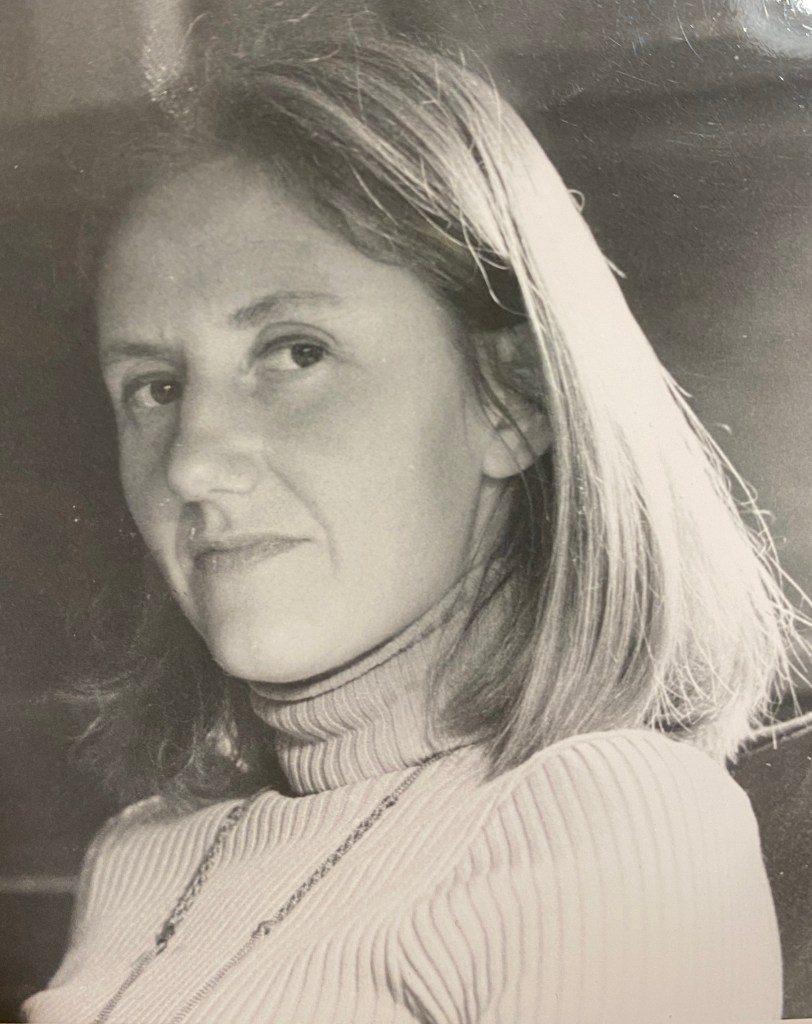
    1974, Ross, California

    Oh Mama,

    You never cared much for birthdays but today is yours. I imagine that you would rock your 85th year like no one’s business, continuing your lifelong practice and talent for helping people heal and get closer to divine Love. Your unabashedly hearty, crinkled-eyed, open mouthed laugh would still fill my ears.

    As for me, I lie awake trying to grasp how it is that I haven’t spoken to you, heard your laugh, or felt your touch in TWENTY YEARS.

    When you first left, I didn’t think I’d make it through a single day without you. Things got brutal toward the end, didn’t they? That horrid disease crept up and took over your insides and turned your vibrancy into dullness. Your beautiful thick hair turned thin, your healthy body skeletal and swollen.

    You hardly spoke a word during the month before your death and I believe it was because you wondered if you had been betrayed by God—I think we all wondered.

    I really thought we were going to save you—me, Dad, Pam, and God. That our little team would pray the right prayers, find the best doctor, take the most effective approach to fighting stage four cancer. Afterward, and for a long time, I thought we had failed. All of us.

    You must have worried that because of what was happening I’d lose my own faith in Love. To be honest, for a while, I did. I doubted almost everything. Was our God truly a loving God, or had we deceived ourselves? For years after we lost you I limped along, tightly gripping a stale faith that no longer brought me peace and inspiration. Then, I lost my first child, and all bets were off. I spent an entire year without any faith at all.

    Somehow, I don’t think all of this is news to you. I believe you were riding alongside me the whole time. You stayed close, you answered when I called, and you sent all manner of angels to nudge and protect me.

    Well, Mama, twenty years later the world has changed, people you cherished have left, and people you would adore have arrived. Besides your two grandkids, I think the thing you would be most proud of is how I’ve evolved. I’m still the person you taught me to be but nowadays I’m so much better. I’m a writer who can’t stop writing, a present preschool teacher, and a mom who loves her children the way you loved me. I’m sober, clear, and hopeful.

    I understand now that none of us failed. Cancer didn’t win. We succeeded because we knew your love, and you knew ours. The love you were, the love you are, has no end—it remains vital, effective, and alive. It was through your earthly death that I learned the single greatest lesson of my own life: love never dies. It is by its very nature, eternal.

    Happy Birthday, Mama. I am celebrating you.

    2001, Nepal

  • Appreciating Where You Land

    June 9th, 2023
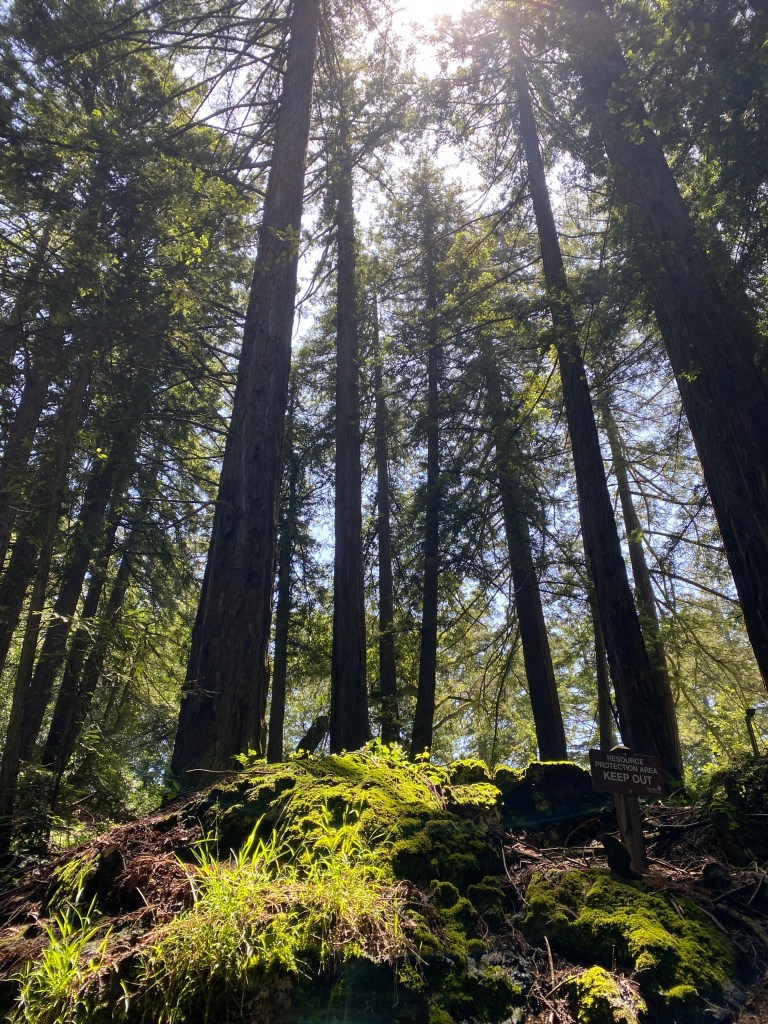
    Timeless Northern California redwood grove

    A recent trip to California got me thinking; there is a problem with growing up in the Golden State. For the remainder of your life, no other place will compare. This is partly because no other place is like California, (at least in the US). Where else offers such grandiosity, diversity, a vast range of plants and animals, fresh produce, and glorious redwoods? 

    Only in California can you enjoy breakfast at the coast, lunch in the desert, and dinner in the mountains. True, legendary traffic might throw a wrench in your between-meals driving time, but the possibility still exists. In California, possibility itself somehow feels endless. 

    When I was sixteen my parents moved the three of us from our one-acre plot in a lush rural Northern California valley to an apartment in a twenty-two-story high-rise building in downtown Boston, Massachusetts. Brick was substituted for skylights, neatly trimmed hedges for fields of mustard and poppies.

    My mom and dad had good intentions and valid reasons—my father had been offered an editor position at a Pulitzer Prize-winning newspaper, and my mother had grown up in the Boston area and welcomed the chance to live close to her aging mother and younger sister who remained there.

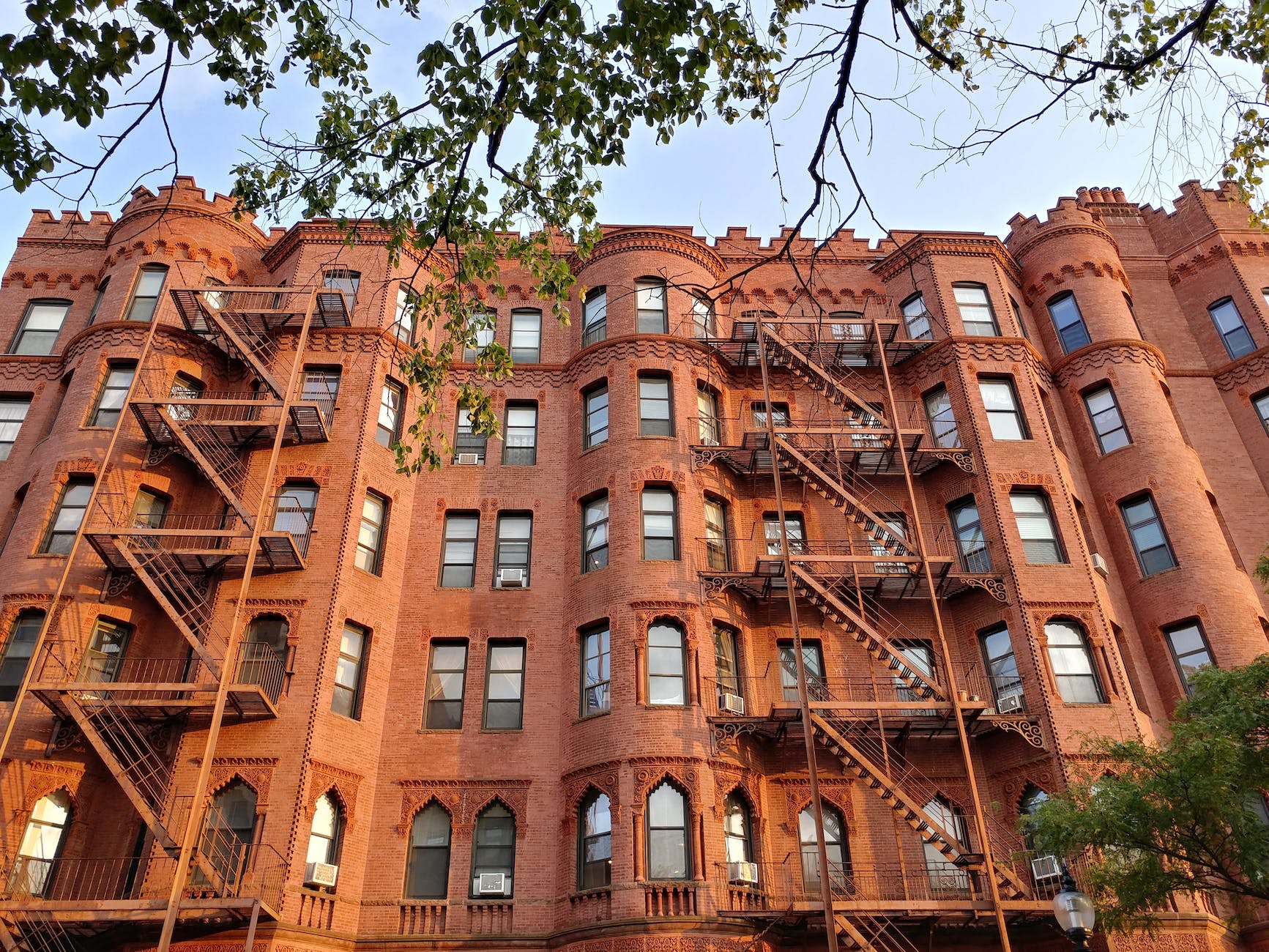
    Timeless Boston brownstone
    Photo credit: bau015faran on Pexels.com

    The rationale behind our move was understandable, but the cross-country shift hit me hard. Once there, I often had the sensation that I’d landed in a foreign country—the flat landscape, humidity, unfamiliar food and smells, obsession with sports, prickly attitudes, and sometimes undecipherable accents/slang all combined to made me feel like an outsider who might never crack the code required to live comfortably in my adopted state. 

    Over time, things improved. I made friends, recognized the freedom the subway offered to non-drivers, got to know my mother’s family, found the bookstores, and took up rollerblading on the paths that lined the Charles River. Briny clam chowder and thin-crust pizza became diet staples.
    Yet part of me never stopped missing the state that formed me. In fact, for a long while it felt as if I was pining for a lover, one that I’d been forced to leave behind and to whom subsequent lovers paled in comparison. When can I move back? I’d ask myself, sometimes daily. When can I settle back into the arms of my first love?

    No bridge looks the same after you’ve crossed this one

    You might wonder how I broke the spell, cracked the code, and found happiness again. The answer is simple: I stopped comparing and started appreciating. The Charles River is not the Pacific Ocean, and it doesn’t have to be. The Boston Commons is not Golden Gate Park, nor should it be. I began to grasp that everything has its place and purpose and that I wasn’t fully living the good life I’d been given. Instead, I was keeping a foot in another world, one far away from the present. That way of living, halfway invested and forever dissatisfied, was making me miserable. 

    Learning to appreciate right now and right here and ceasing to compare has served me well over the years. Nowadays, instead of living on one of the coasts I live in the beautiful middle of the US, and I call often on the conclusions I came to all those years ago. 

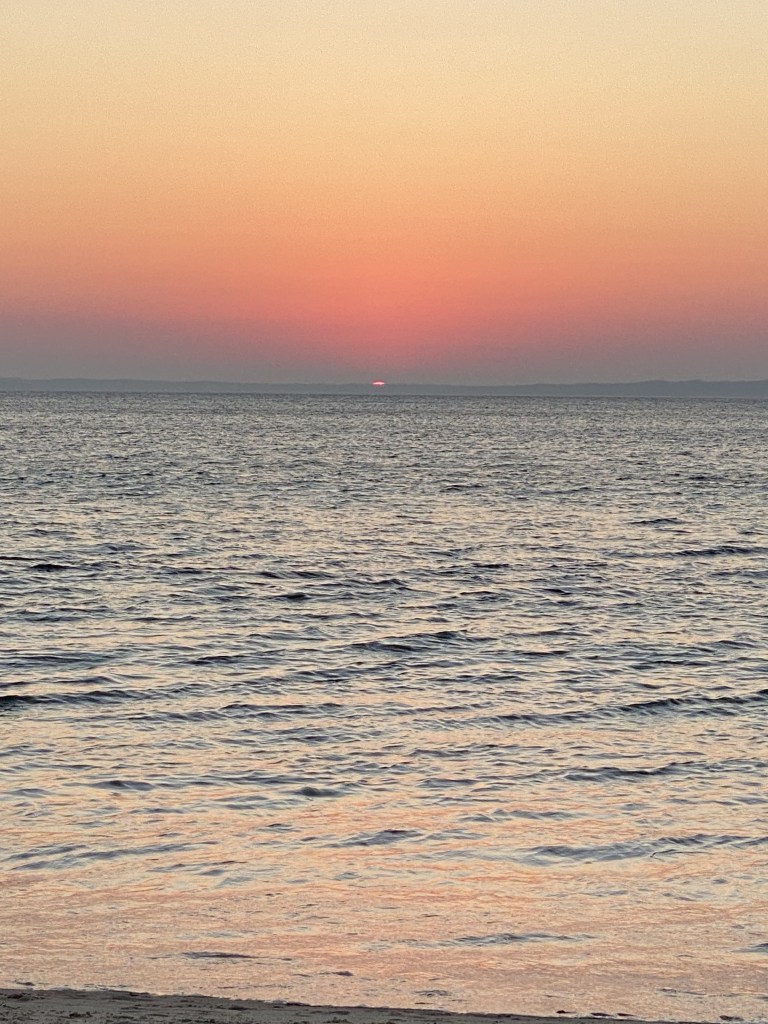
    The same sun sets over the Atlantic and the Pacific oceans.
    Guess which one this is?

    California will forever remain my first love, and rightfully so, but I’ve developed a muscle that helps me find beauty and purpose wherever I land.

    If I hadn’t traded one coast for the other so many years ago I wouldn’t have that understanding—I gave myself the gift of a lifetime.

  • Anniversaries and Innocence

    May 26th, 2023
    Amusement parks=ticket to unreality

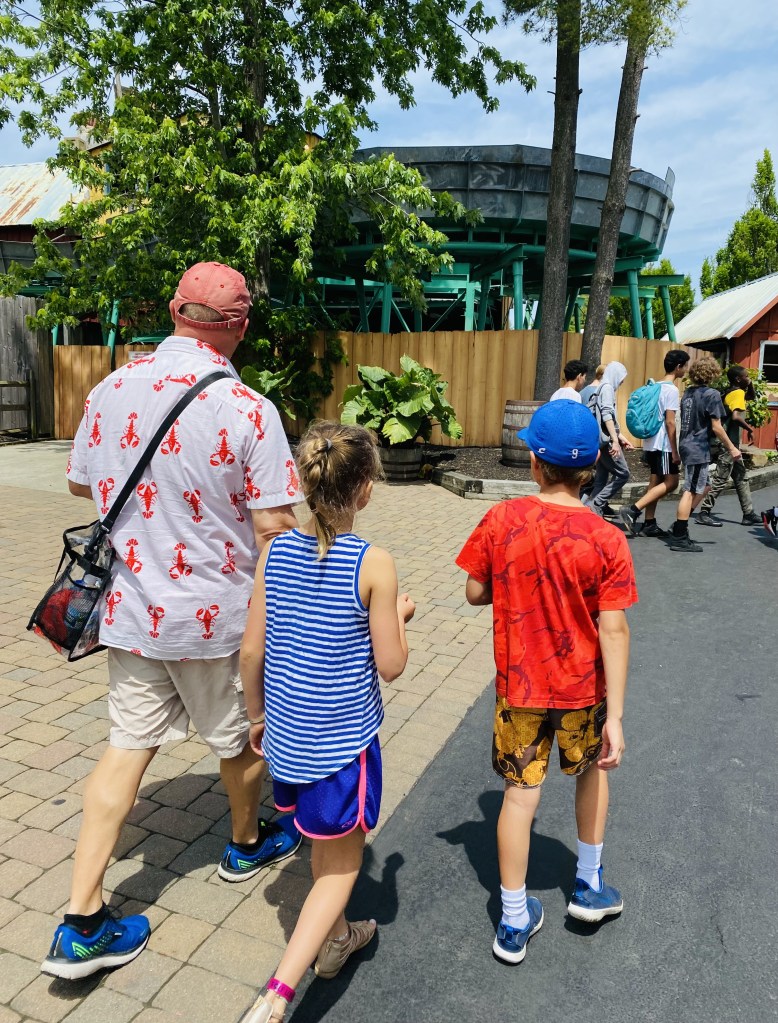
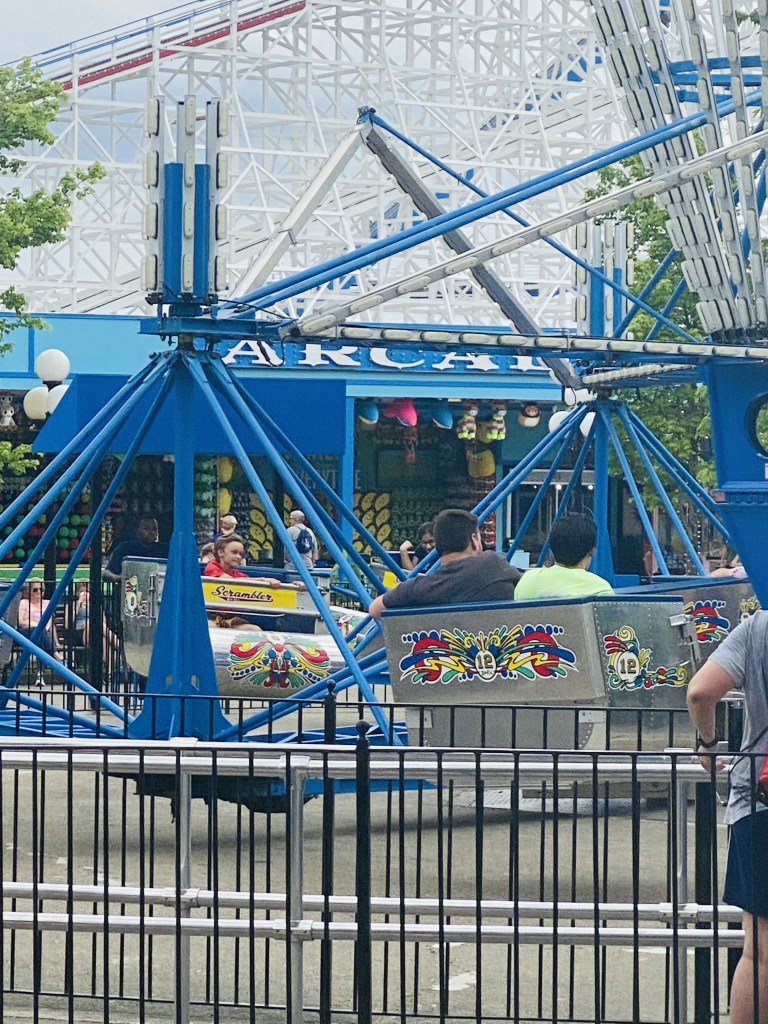
    Our family of four is spending a spring afternoon at a Midwest amusement park, dashing from ride to ride and learning how to be in crowds post-pandemic (“Don’t touch that…or that…please use this hand sanitizer for the fifth time“). 

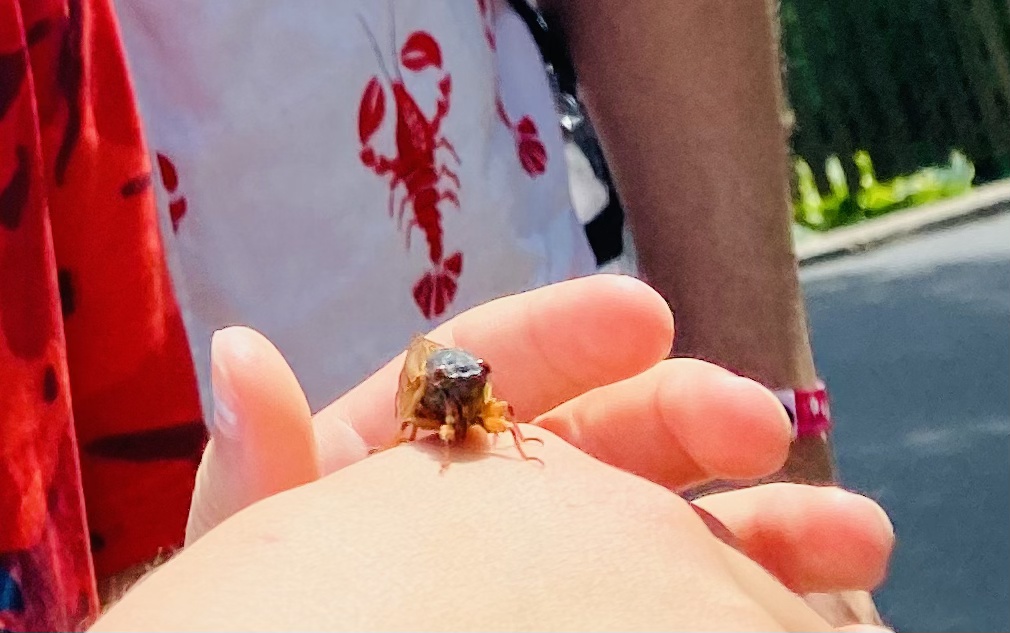
    Moments after we disembark the roller coaster, our two “older-parent” bodies staggering while our eight-and-nine-year-olds yelp with delight, a late-season cicada lands on my daughter’s sleeve. Delighted, she gives it a ride for the next two hours. 

    In an attempt to head off some gathering-force meltdowns and enjoy a celebratory lunch for my husband’s birthday, we find a brewery in a far corner of the park. Once inside the cavernous, darkened restaurant, we are offered a booth near three TVs mounted in a row overhead. We find out no beer is brewed in the brewery, and learn that no one knows what fish is in the sushi until the manager concludes that it is not fish at all. 

    My nine-year-old son plops down next to me on the booth’s bench, across from his dad and sister. The kids decide to share chicken wings, their first time trying the dish, and two faces are soon dripping with bar-b-que sauce. Bright-orange grease covers my daughter’s hands and spreads across her pink cheeks. She asks her dad to take a picture and laughs with delight when she sees it, enjoying her new look. None of us realize this is the first and last time she will eat chicken wings, as she declares herself a confirmed vegetarian days later. 

    My son and I are facing the three TVs hanging above my husband and daughter’s heads. I glance up to see sports on the second two TVs and a news conference on the first one. My son’s eyes are on the Celtics players as they leap and shoot. 

    I know immediately what the news conference is about–the happenings in Ulvade, TX the day before. A man is talking at a podium flanked by officers and his stark words unfurl clearly on the ticker below. As we continue eating our meal I announce, over my family’s protests, that I am no longer going to be joining in on the super fast jerky roller coaster rides–my coaster career is officially over. How can I coax my son to the other side of the table so that he doesn’t see the news conference facing us on the screen?

    My daughter and husband head to the bathroom to wash their hands, cicada still firmly gripping her upper sleeve. I watch my son follow the basketball game. Beginning to gaze off into the distance, I consider the remainder of our day. Thanks to the distractions of today’s birthday celebration and amusement park entertainment I’ve been able to temporarily push away the headlines about yesterday’s shooting in Texas, although fleeting fears have snuck in at moments like the panic-inducing crest of the rollercoaster or imagined gunshots as we pass through a crowded thoroughfare at the park. 

    Flying, if only for a moment.

    My son is still watching basketball and they are almost back from the bathroom. I’ve requested the bill and plan to hustle us directly toward the exit before anyone notices the press conference–I can’t suggest we switch to the other side of the booth because my highly sensitive and inquisitive son would demand a reason why. Then I see his gaze shift squarely to the first TV. 

    Of course, he sees it. The TV is directly in front of him after all. I curse myself, why didn’t I move tables when we first came in? Because it was the only available booth and given a choice my kids always pick the booth. 

    I follow along as his eyes skim the ticker, then his mouth forms the words while he reads out loud “Eighteen-year-old man shoots seventeen 9-year-olds and their teacher.” 

    Am I watching the moment my son loses his innocence, his faith that his parents and his teachers are infallible and the world around him is mostly good? He blinks his eyes and I know his brain can barely register such horror. And their teacher….? He looks at me his eyes wide as quarters. I know what he is going to ask next. I better start forming an answer. 

    “Why, mom? Why would he do that?”

    I will myself to form words with my mouth…but what words? What words can make order out of chaos, hope out of despair, and life out of death?

    I say that the man wasn’t well in his head, that he needed help and love that he didn’t get. It’s up to us to change this world, up to us to create more love and less of this (I point to the screen), I tell my son. Less guns, less hate. More love. My boy is still processing the headline, mouth open in disbelief. Is he trying to imagine it might not be true? Daughter and husband return to the table.  

    Once they are seated back on their side my son leans slowly across the table toward his sister…drawing out her name in a mischievous tone. I know he wants to share the forbidden information, to tell her about what he just saw announced on TV. I say his name sharply and he gets quiet. “Which roller coaster we should hunt down next? I ask everyone…“It’s still Dad’s birthday!” I announce loudly.

    The check is resolved and I shuffle us toward the exit–my son half runs half skips out and settles into step next to his dad. They walk up the path ahead, their moving figures silhouetted in the afternoon sun.  

    Walking next to me, my daughter calls out softly, “Mom, look.” I watch as the cicada hesitates, then steps off her hand and onto a leaf, both plant and insect glowing emerald green in the light. After making sure the cicada is safe, my daughter leaves it tucked into a curled sleeping bag of a leaf; unbothered, hidden, and protected. 

    We walk into the waning afternoon light. 

  • No Endings, Only the Present

    May 19th, 2023
    Three individual expressions of life and growth.

    This week of the year holds a complicated mixture of markers in our household. The last day of school happens for my two elementary school-age children, along with the many clear and poignant indicators of their growth, evolution, and hopes for the future. 

    And then May 20th arrives, which is the birthday of my stillborn son, born thirteen years ago at full-term, on his due date. 

    Over the years I’ve realized that all kinds of meaning can mesh together, that celebration can live next to tragedy, that growth can coexist with decay, that addiction can give release to freedom, that life can cohabitate with death. The interplay of all of this is what makes up our meaningful lives. We can cultivate an appreciation of the difficult as deeply as we can appreciate the joyous. In fact, one might require the other.

    Focus on the journey, the destination will take care of itself.

    I used to think I was odd for seeing things this way, that my ability to bridge worlds was a detriment. Now, I realize it is a unique gift and I’ve embraced it as my superpower.

    I’ve made great strides in opening my heart to mothering my first-born son—it has become clear to me that he still needs his mama and with each passing year I become more acquainted with his innocent yet knowing presence. All-encompassing searing grief has made room for a quiet and loving connection. I believe this practice of communication makes me a better, more conscious mother and human. 

    Mostly, I’m grateful to sit peacefully under a tree in a park. The same park I walked in sorrow after my son’s passing. I feel the wind around me gently moving branches above and consider the roots of the Cypress tree I sit beneath. 

    I know that later I can hug my living kids and I am grateful. Grateful to have an abundance of meaning in our lives and no absence of love. 

    I wish this for everyone.

←Previous Page
1 2 3 4 5
Next Page→

Blog at WordPress.com.


Loading Comments...
 

You must be logged in to post a comment.

    • Subscribe Subscribed
      • Still...however...maybe...
      • Join 30 other subscribers
      • Already have a WordPress.com account? Log in now.
      • Still...however...maybe...
      • Subscribe Subscribed
      • Sign up
      • Log in
      • Report this content
      • View site in Reader
      • Manage subscriptions
      • Collapse this bar