I will admit that a family trip to Disney was not at the top of my bucket list. I imagined taking the (by no means insignificant) amount of money spent on a Disney vacation and putting that toward airplane tickets. How about a European destination, or somewhere in Central America where we could experience a different culture and show our young kids unique parts of the world?
I was outvoted.
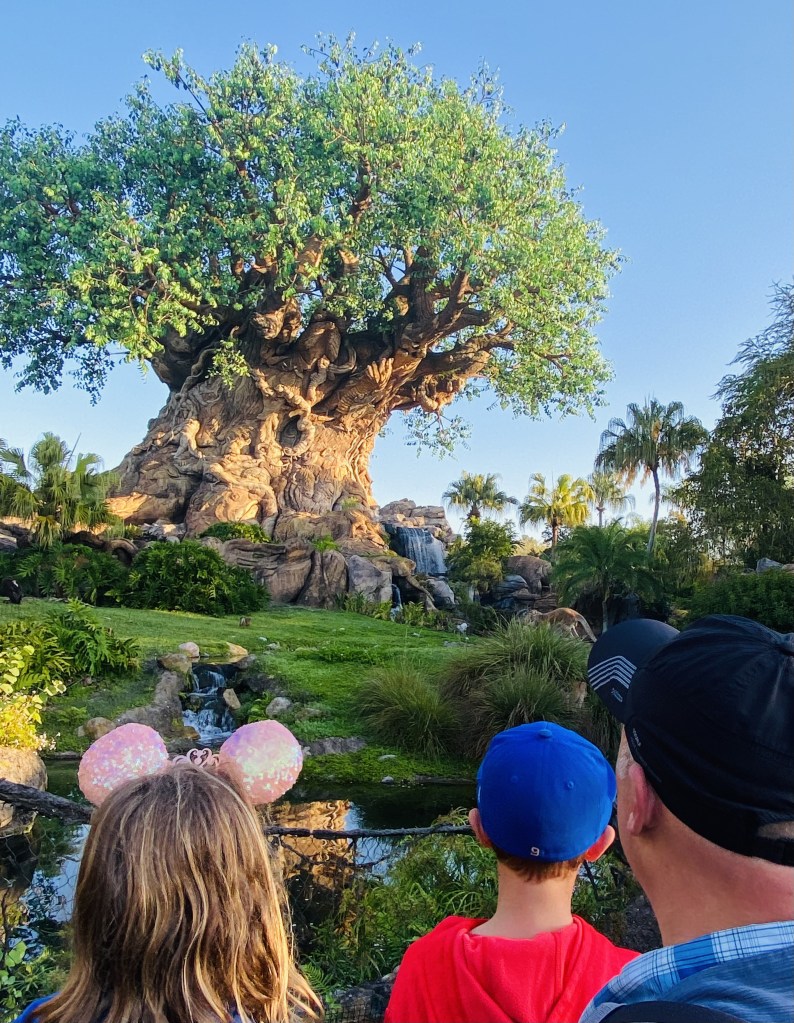
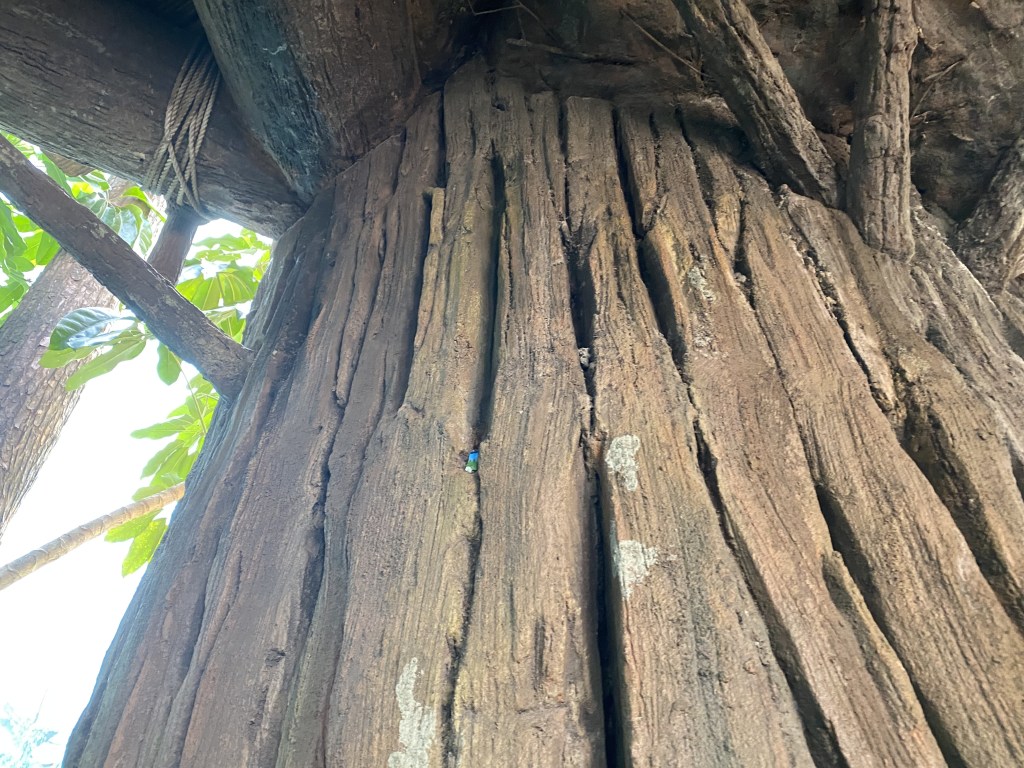
Gazing at the (artificial, yet impressive) Tree of Life in Disney’s Animal Kingdom park.
This is how, last spring I found myself trudging around Florida’s Magic Kingdom, zipping from park to park on the Skyliner, waiting in the longest lines I’ve experienced since traveling in India, and having a surprising amount of fun.
And as my family focused on reservations for rides, Star Wars and Buzz Lightyear, sweet snacks, and roller coaster speed estimations I hunted for…trees. Other flora and fauna caught my eye, as did some artificial trees. It’s Disney, after all.
I’m fascinated by how certain trees (and wildlife) survive in the middle of human traffic and chaos, and there are few places with as much human traffic and chaos as Disney.
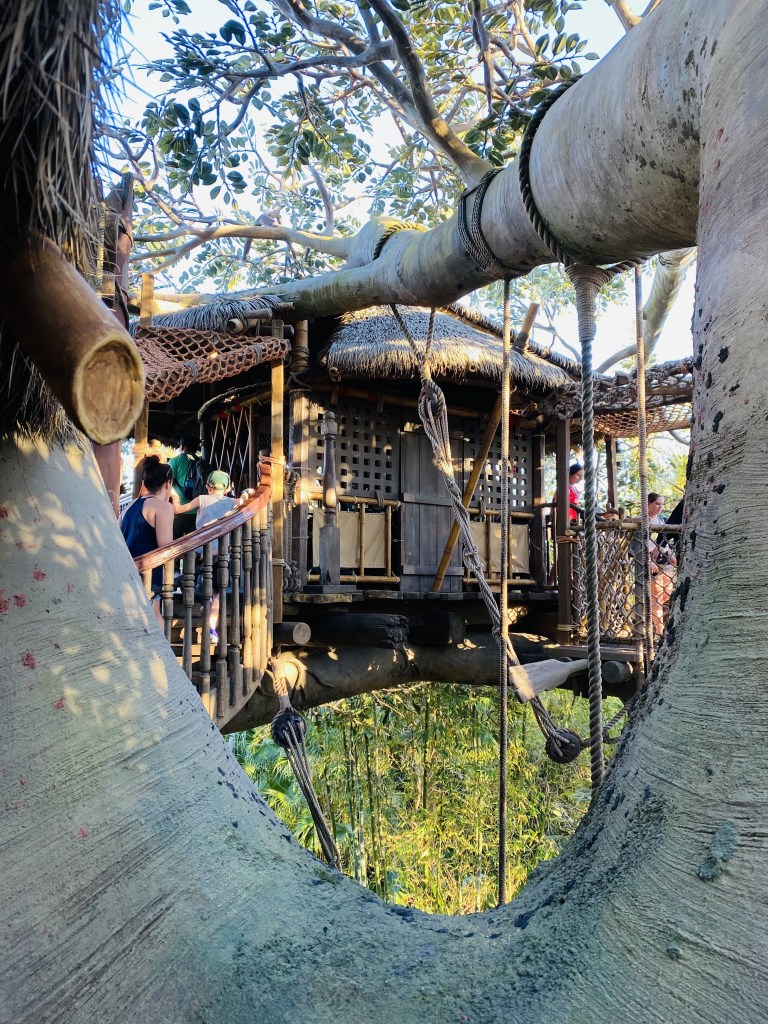
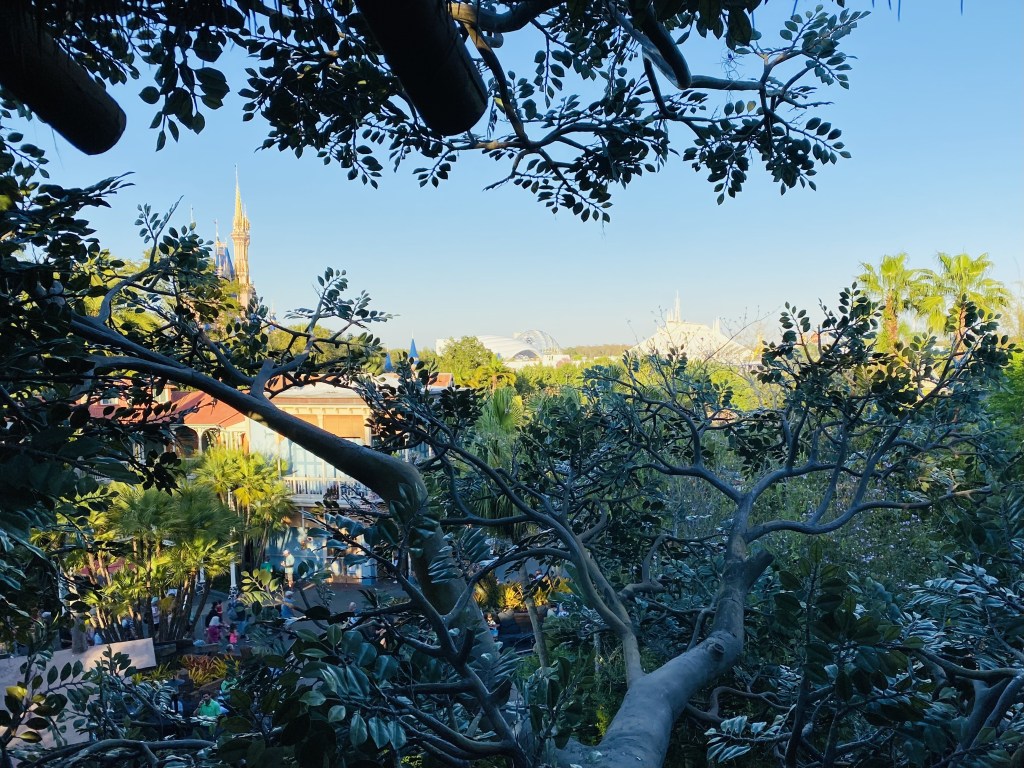
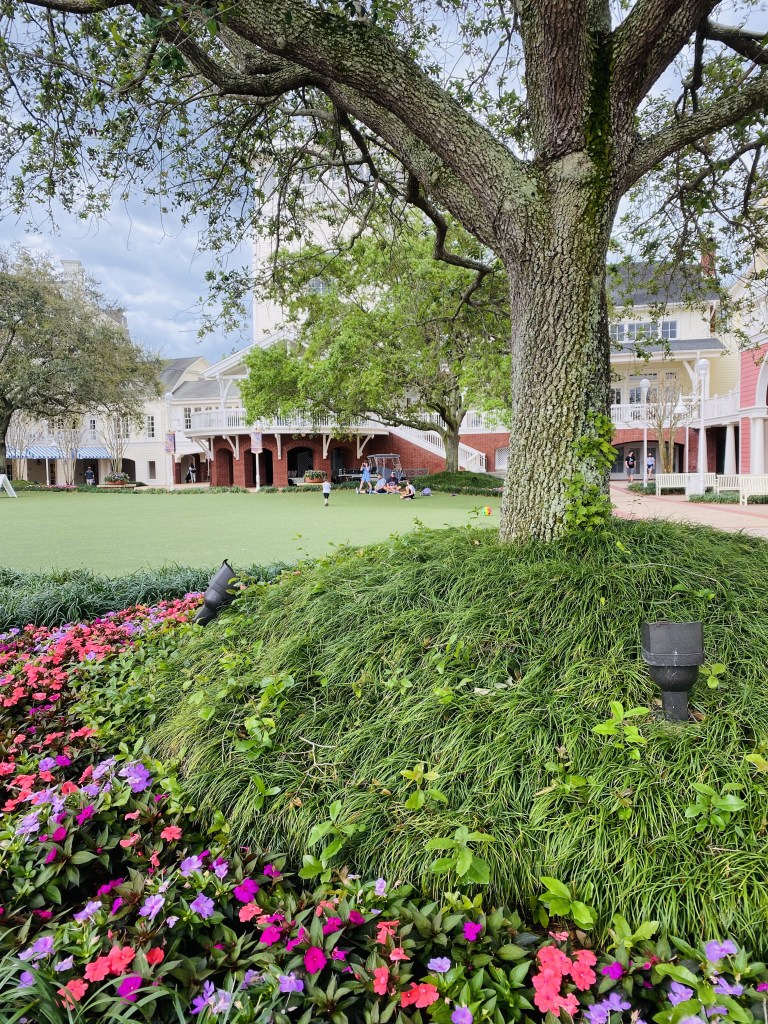
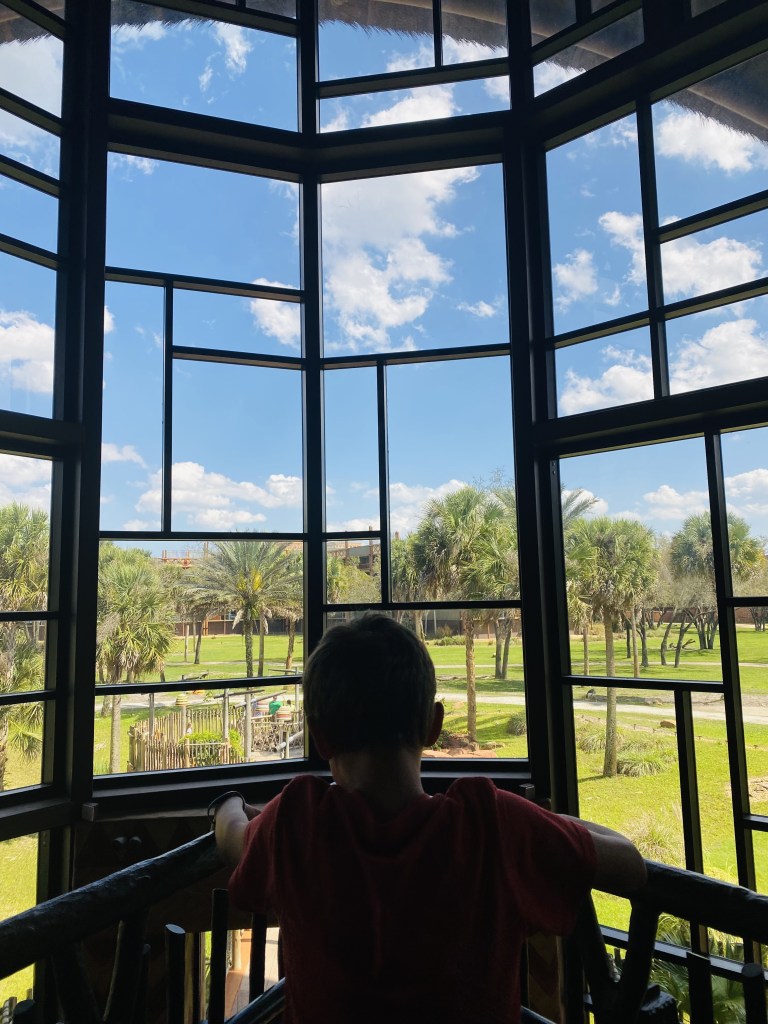
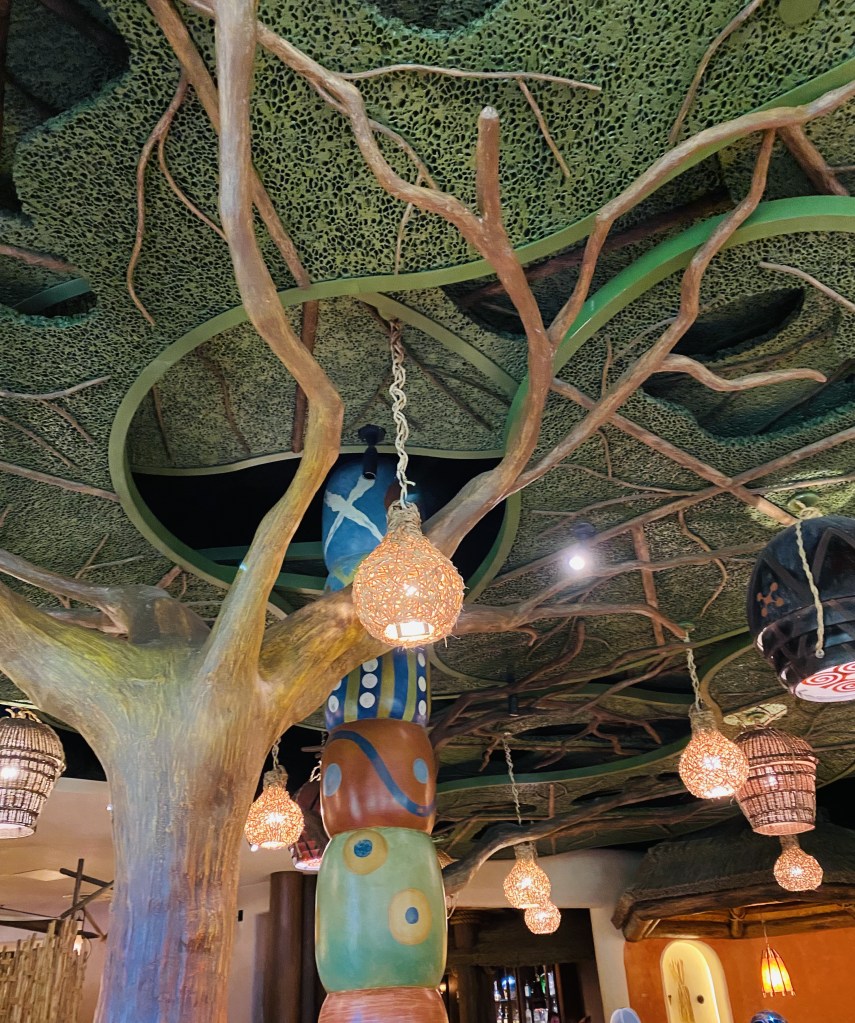
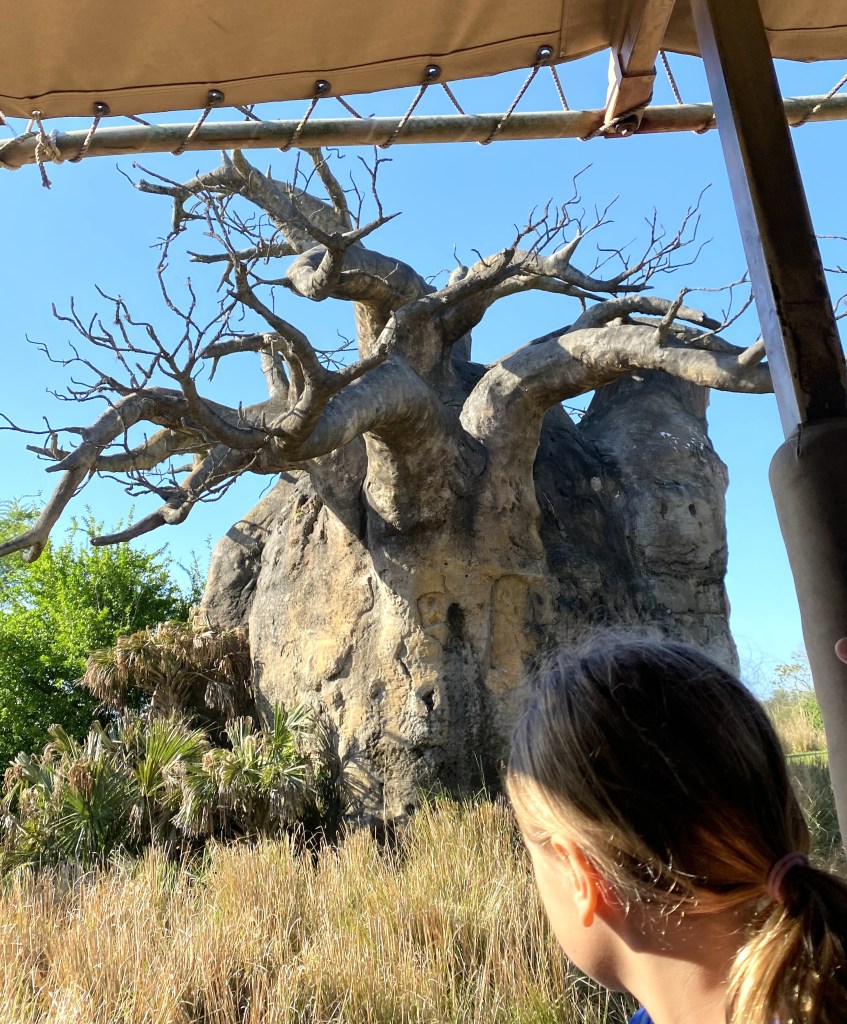
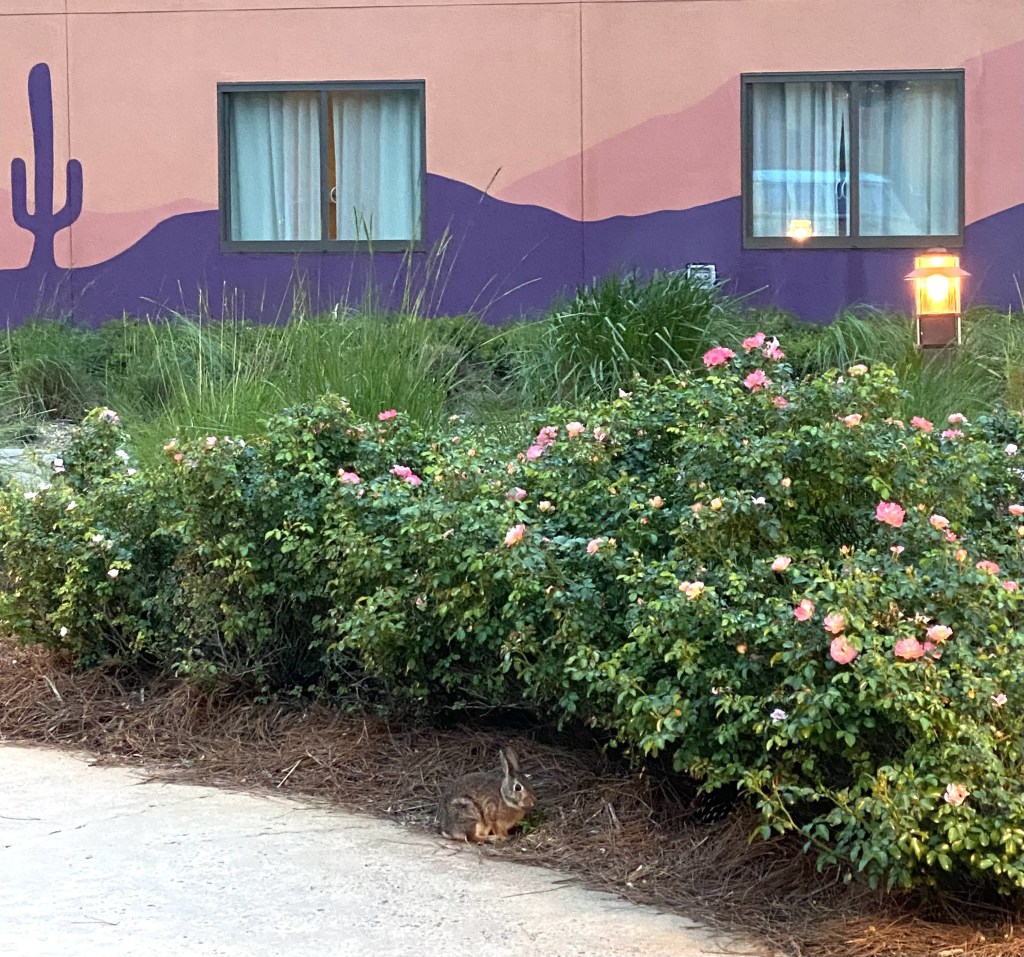
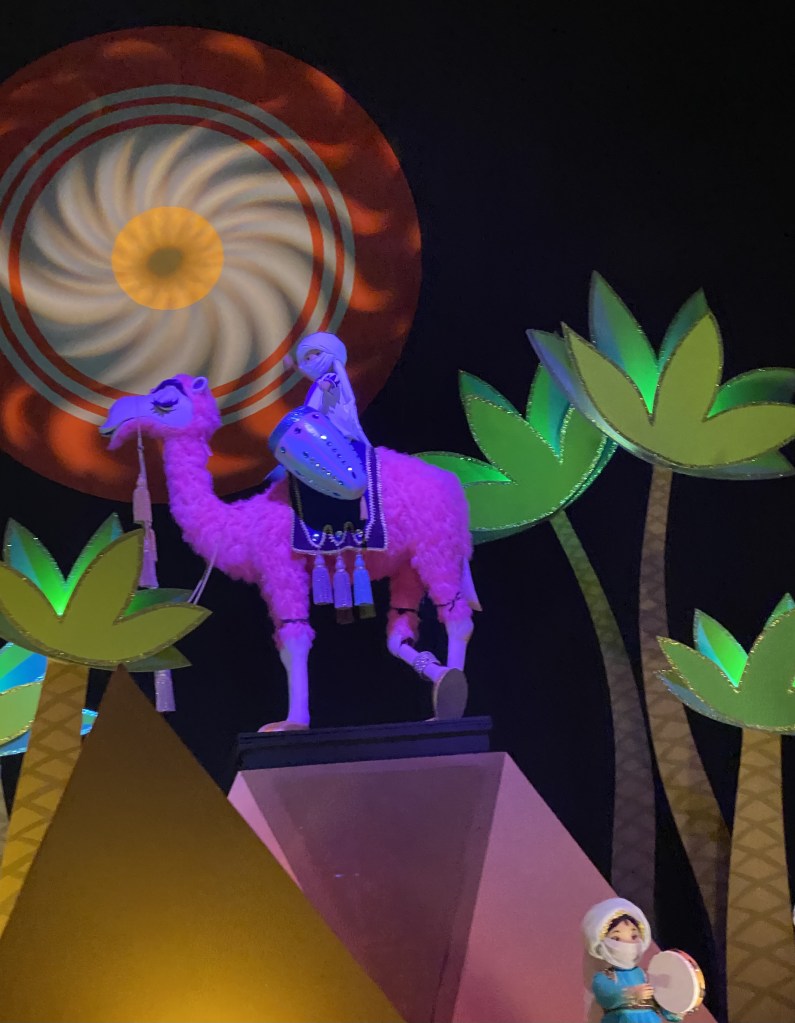
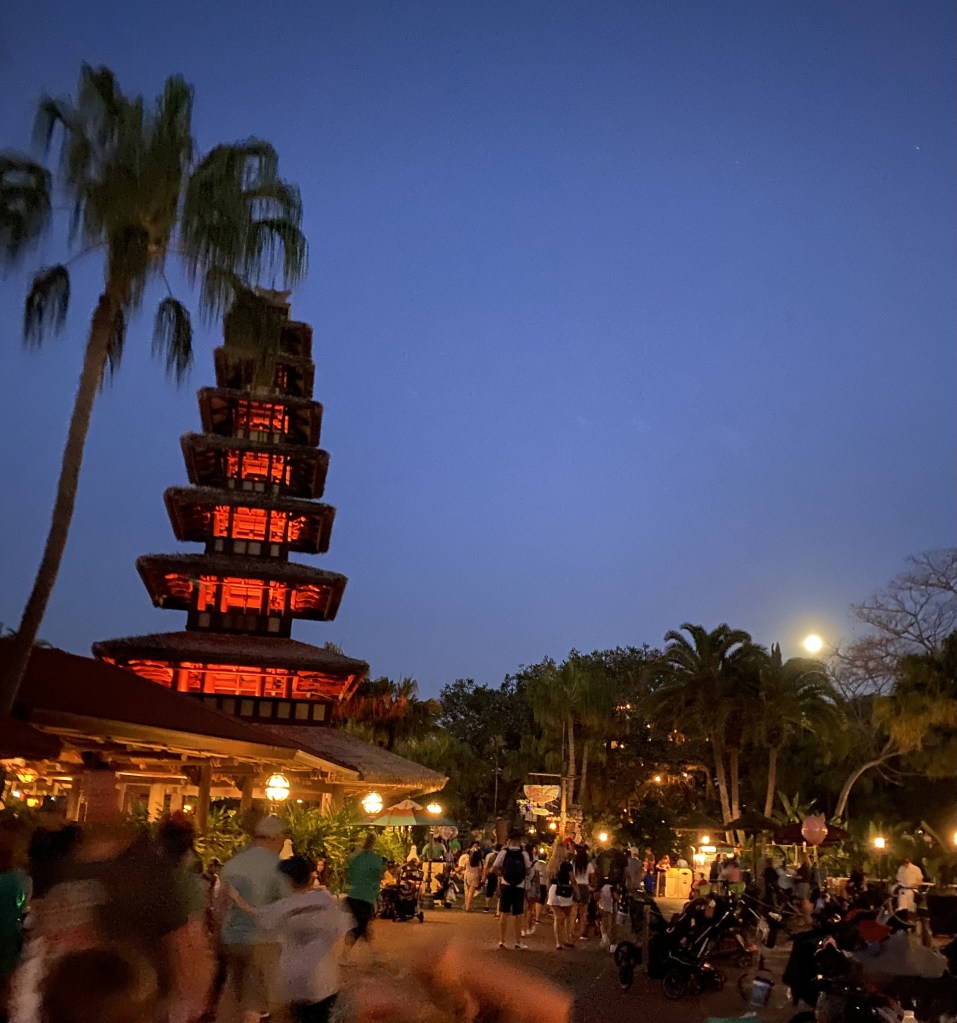
The Liberty Tree Elm in The Magic Kingdom. The original Elm growing in this spot played a real part in history, shading pre-Revolutionary activities under its branches. The Swiss Family Treehouse “ride” was built in 1971 and still entertains today, concrete trunk and all. Late afternoon view of Tomorrowland, as seen through plastic foliage. Keeping watch over the croquet lawn near Disney’s Boardwalk area. Viewing the trees and wildlife at Disney’s Animal Kingdom Lodge. Tree installations at Sanaa restaurant in the Animal Kingdom Lodge. A fake Baobab tree is better than no Baobab tree. Is a fake redwood better than a real one? Not so much. Can you spot the wildlife in “Cars” village? The “It’s A Small World (After All)” ride even offers trees. Night falls on trees, pagodas, and tired park visitors.
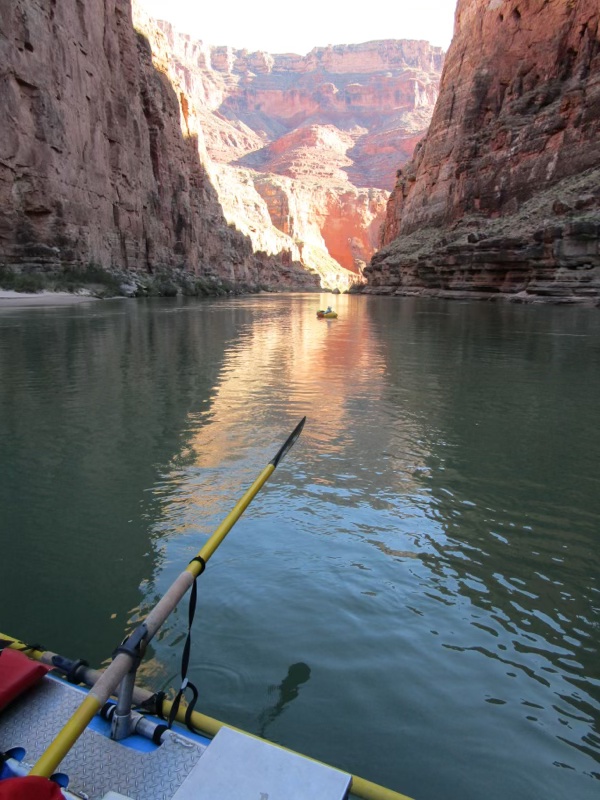
View from the boat, Grand Canyon, AZ. Photo credit Hether Bearinger
If you ask me to do something on Friday, June 4, 2027, I can’t. I’m busy.
And you’ll never imagine what I’m going to be doing.
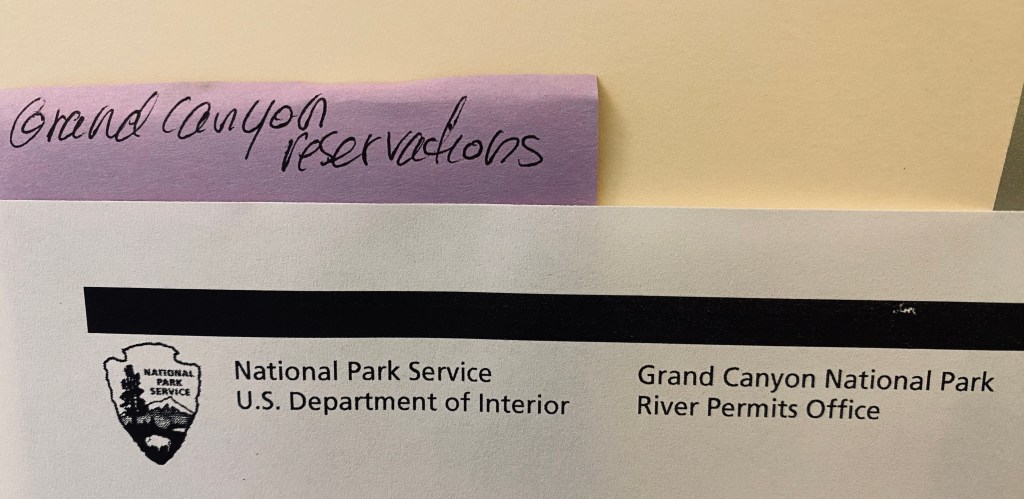
Unless you are a highly sought after meeting or wedding planner, your 2027 calendar is likely wiiide open. Mine sure was, until just the other day when I added some dates to a post-it note and then created a manila file for said post-it note because let’s be honest, there is zero chance I’m going to keep track of a small purple post-it for four entire years.
I named the file “Grand Canyon Reservations.”
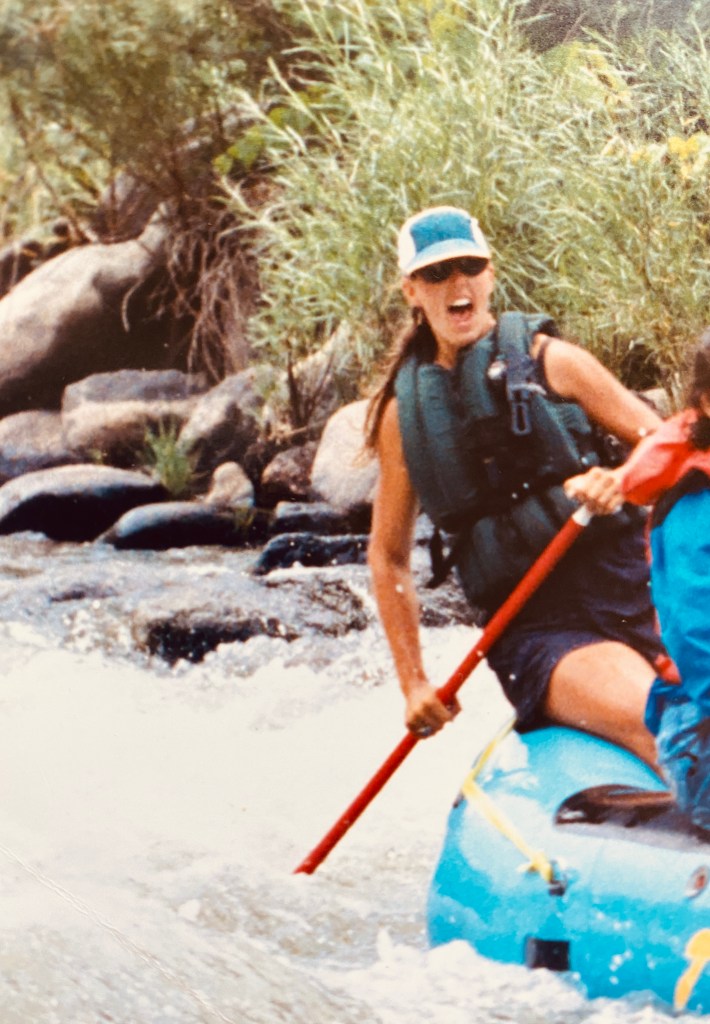
As incredible as it is to have plans four years hence it is almost equally incredible that twenty-two years ago I walked into a post office in San Francisco’s South of Market neighborhood and mailed a check to the National Park Service. That $100 check earned me a spot on an exclusive waitlist, a list of people who hope to travel down the Colorado River via boat as it winds its way through the 277-mile-long ancient geological formation that is Arizona’s Grand Canyon.
I first saw the Grand Canyon at age five in the 1970s as my mom and I drove across the US in our red VW Beetle but somehow, I hardly remember it. The next time I visited the Canyon I was in my early twenties and the experience was unforgettable. After a long day of driving my friend Hether pulled our 1984 white Jetta up to a rest stop on the South Rim. Stepping out, I couldn’t see much other than a few people congregating at a low stone wall and a vast expanse of concrete for parking. Suddenly, I had the impulse to be alone, so I walked toward one end of the rest area. Approaching slowly, I realized the barrier was positioned exactly on the rim of the Canyon.
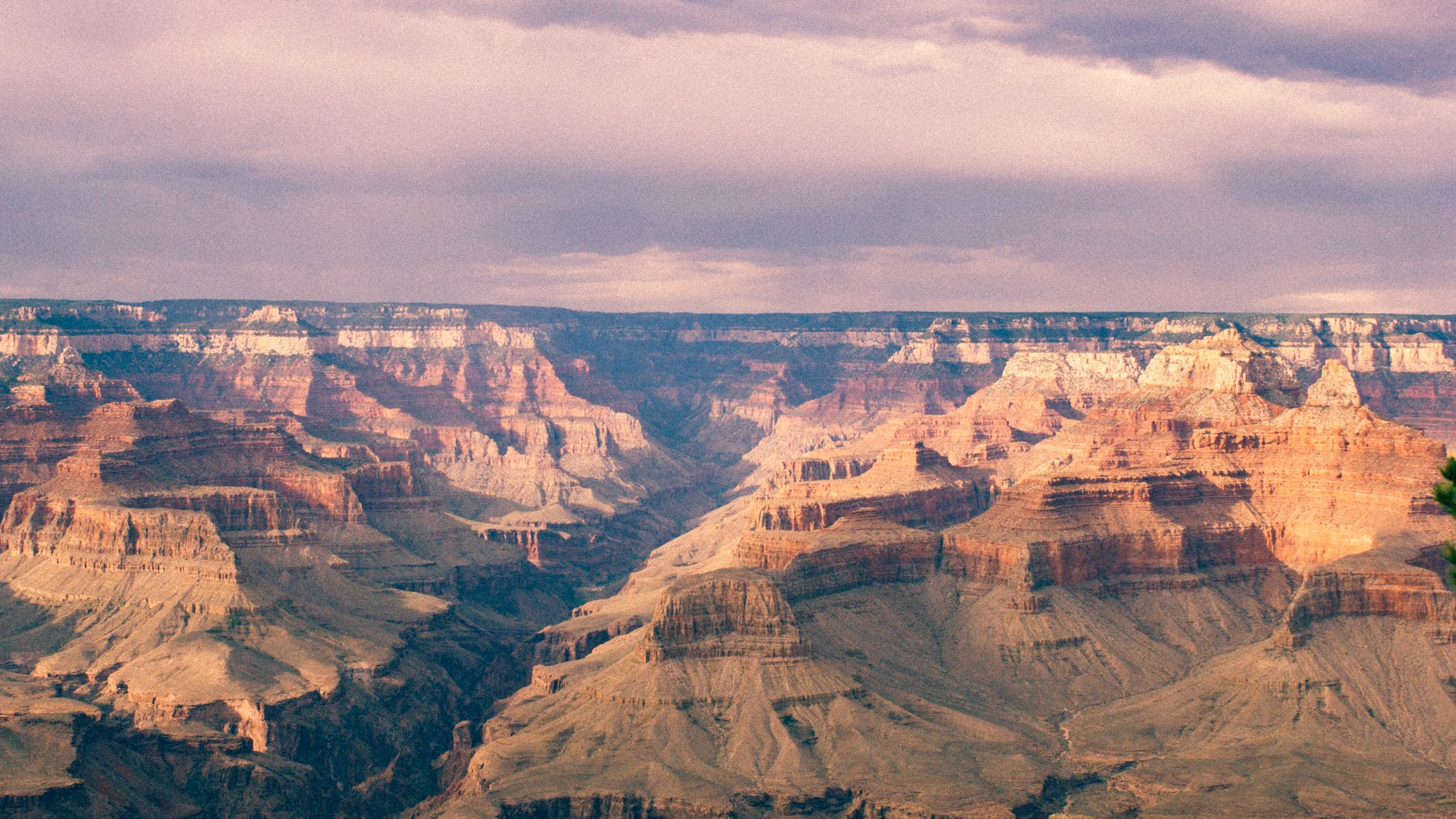
I waited until reaching the wall to lift my eyes, and there it was. A vast, shimmering painting in reds and pinks and browns and blues unfurled before me, a space so great my brain had trouble registering the size at first. What to take in, the rim across from me, so far away I wasn’t sure I could make it out, or the immense curvature of the canyon, cutting to my left and right, wisps of clouds visible at the far ends? Or were those even ends at all? And waaay down, difficult to make out, a glint of what looked like a thin strip of silver, ahh, the Colorado River. In those first few seconds, I began to understand the power of water, able to carve a canyon so deep, so beautiful, so mind-blowingly gigantic. Overcome, I allowed the tears to stream down my cheeks.
There’s a reason they call it Grand. Photo credit Hether Bearinger.
Remembering that sacred moment helped me maintain my spot on the Grand Canyon waitlist for the next twenty or so years, informing the Park Service of address changes, dutifully responding to their periodic inquiries…did I still want a river trip, did I want to keep my spot? Yes, I did. Always keeping in mind a space on my nebulous future trip for that same friend, Hether, now an experienced river guide with multiple trips through the Grand Canyon under her belt.
And then, this January I received an email from the Park Service offering me, as one who has been on the list for a predetermined amount of time, a chance to enter a one-time lottery for a launch date. They asked for my top twenty launch dates, and $400. I complied.
A few days later, an email. “You WON!” Incredibly, I got my first requested launch date (probably helped that it was four years from now), and a guaranteed life-changing river trip.
Will it be worth the twenty-six-year wait? There’s no doubt in my mind.
A friend who was facing cancer once spoke of her gratitude for a dirty gas station toilet to throw up in. I’ve never forgotten that image because it is a stark reminder of how easy it is to focus on what is not going right in your life rather than the simple gifts hiding in plain sight. Incredibly, needs are being met, even in the middle of chaos and challenge. A chair to sit in, the roof over your head, a pen between your fingers, a tree providing shade, the soothing purr of a cat.
A few years ago, as I was in the throes of parenting young kids through a pandemic and caregiving for my ailing father, I began to wonder if I was running out of love. My patience had grown razor-thin, and I felt like I was failing at parenting AND caregiving. Oh, and I was also thrashing through early sobriety. Panic attacks and hot flashes became daily occurrences, yet I hardly recognized the symptoms. I thought I was somehow immune to those lows, too strong to fail at such deceptively simple life demands. Every morning I would tell myself I wasn’t going to raise my voice at my kids that day, get frustrated with my father’s memory loss, or become short with my husband.
Mostly, I failed. Day after day after day.
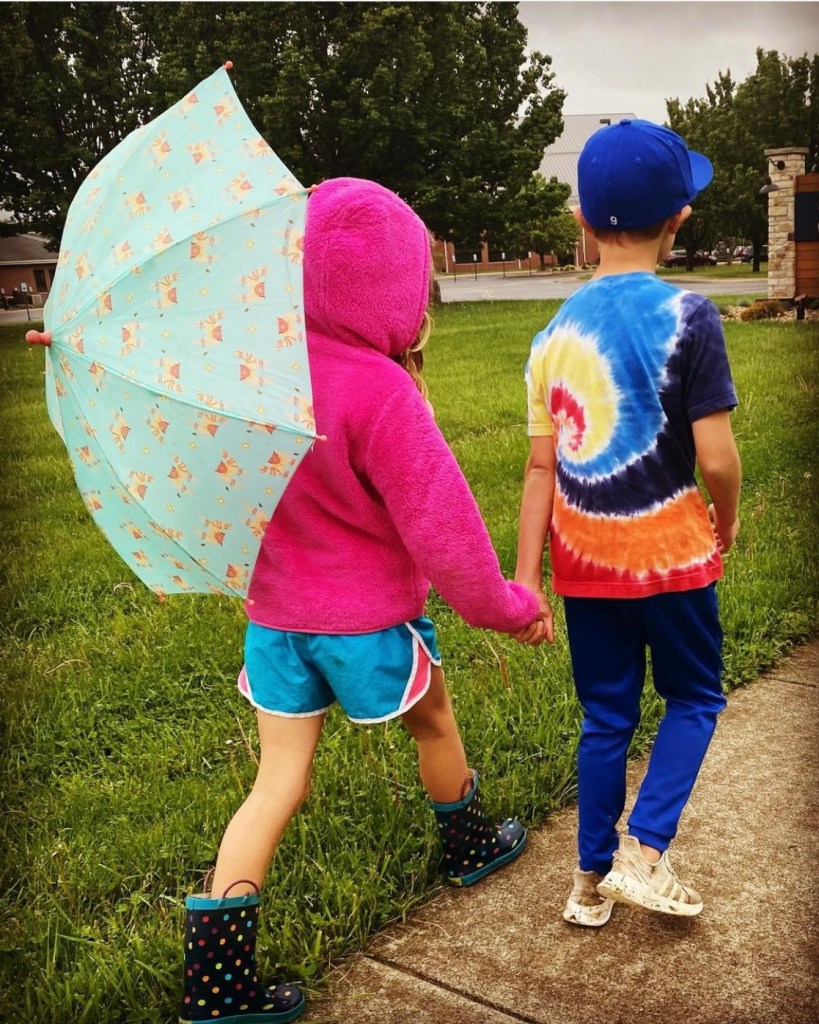
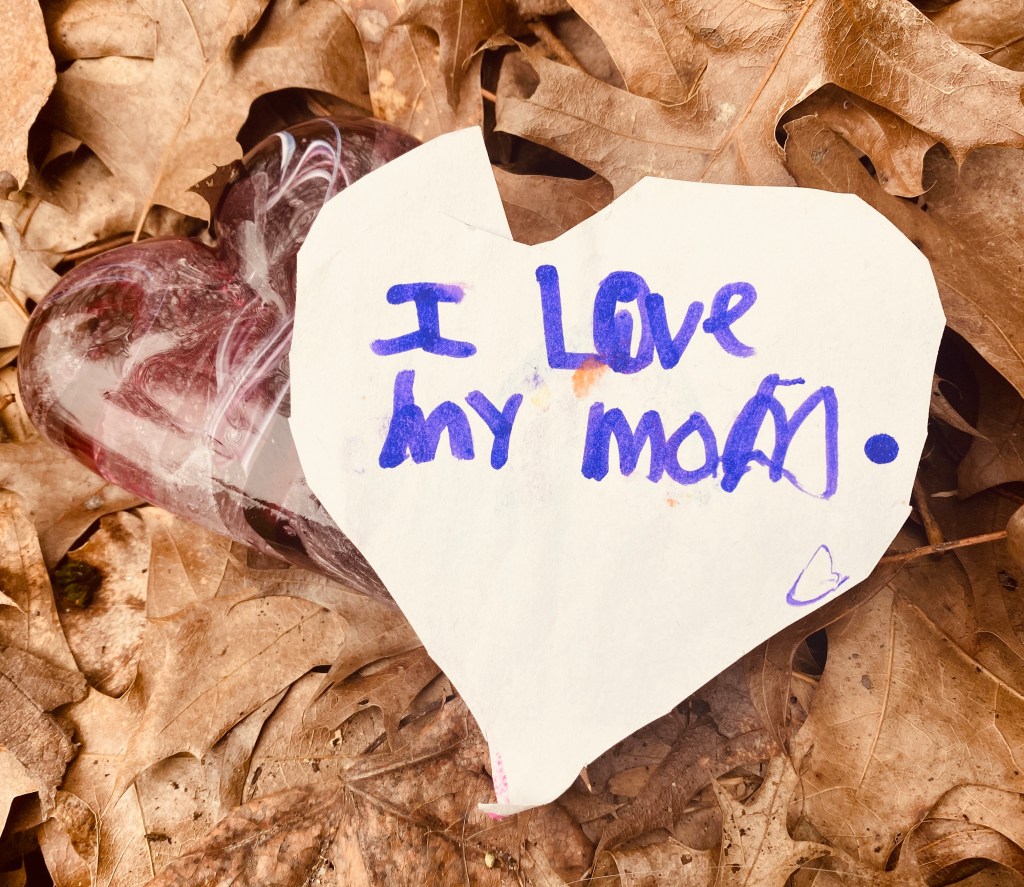
Love comes naturally and easily to kids.
Out of desperation, I started pondering love, my favorite subject. Love has been a constant in my life, showered unconditionally on me since I was a child. Keenly aware of the rare gift I’ve been given, I have long practiced conscious gratitude. But love itself was beginning to feel less tangible, and I wondered if my capacity to love had been capped since it had gotten harder to give and receive.
Also, the larger world and many around me seemed to be in a constant state of panic, fear, and anger. Was the world’s love somehow running out? Could there be an end to love?
It’s not as if there is a central LOVE checking account, I reasoned, out of which we all draw funds, the balance getting lower and lower until, nope…sorry, all gone, the account is overdrawn and no more love available to you, over spender.
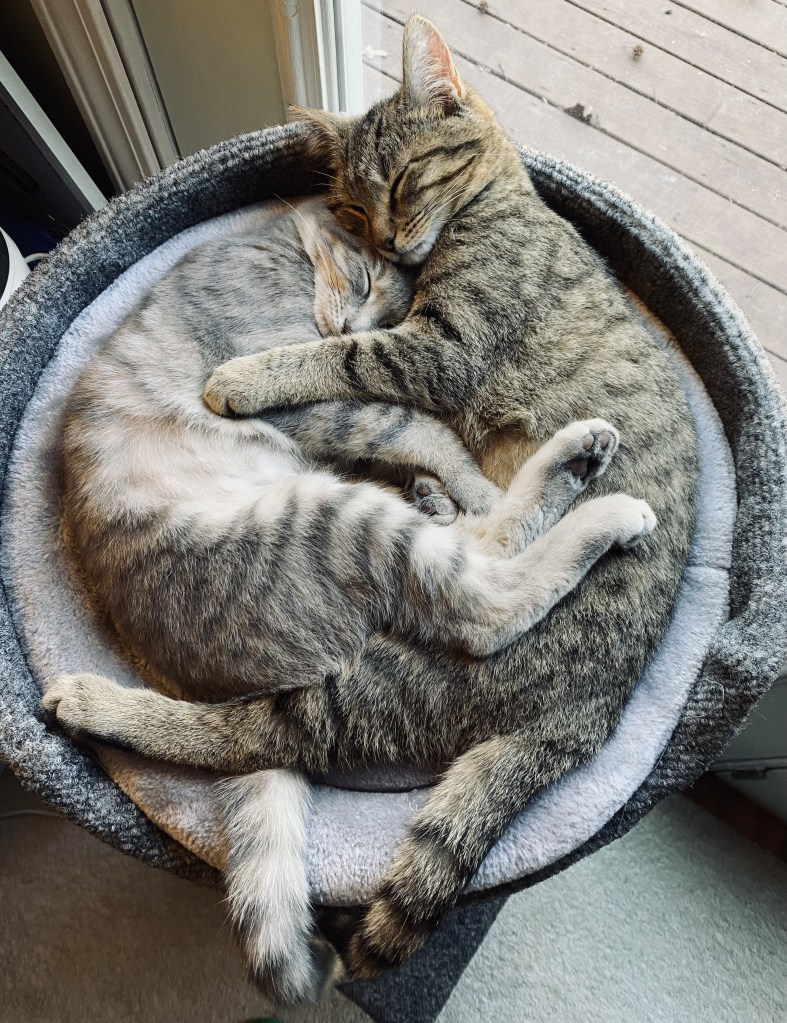
Love also comes easily to most animals.
If love is without end, eternal (and I believe it is), and life-giving, I didn’t need to manufacture it, to force my will on it. Instead, I needed to stop turning away from a source of goodness and holding fiercely to what was clearly not working. I softened my expectations, my reactions, and most of all my judgment of myself and my loved ones. Instead of trying to prove that I was capable! I could handle this! I tested love and allowed it to seep into the broken places, the cracks I was trying so hard to fill with plans, answers, discipline, daily caretaking, and schedules. Trusting that love was true and powerful, I handed over the controls.
My new approach didn’t work immediately (and in all honesty, I continue to be a work in progress), but gradually I stopped feeling panicked and judgmental, and alone. I began to reach out to friends and the sober community, to take more walks and hikes, and to allow my children to be themselves instead of constantly directing them. My sense of humor returned, even to the point of gently joking with my dad about the hallucinations he was having because of a reaction to medication. Holy cow, I can elevate the dialog with my family rather than drag it into the mud of conflict! There was no getting out of bed in the morning unless I’d thought of five things to be grateful for, even as simple as having a bed in the first place (I highly recommend this practice; it sets a great tone for the coming day).
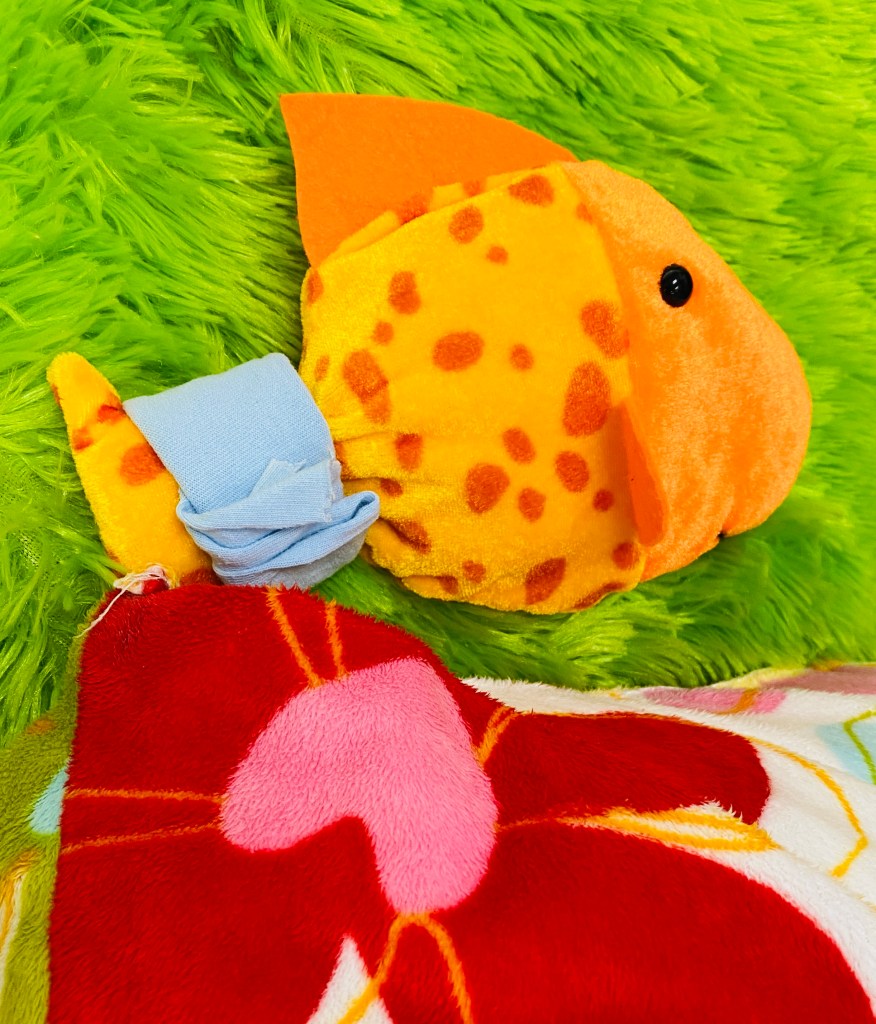
Goldfish’s hurt tail bandaged by preschool nursing team.
Perhaps it comes down to simply realizing you are worthy of love, even with all your imperfections and failures and daily yelling (OK, I’ll admit it was daily screaming for a little while there). And if you are worthy, isn’t everyone else? Loving yourself does not have to be tied to ego, or forced, it’s more of a willingness, an opening. Allowing love takes strength, but so do rejection and judgment, and which of those two paths is more fun, anyway?
Nine years ago, I was touring a local preschool when the Director told me something I’d heard before: “Kids learn through play.”
Standing in a bright hallway wallpapered with swaths of white construction paper dancing with small purple and blue handprints, I thought of my sixteen-month-old at home and another baby growing in my belly.
The words were no longer hollow, heard in passing, academic. This time, I listened.
I wanted my child to learn, and I also wanted him to play. Could one really lead to the other? Or should I seek out a school that would offer a “leg up” and ready my offspring for an imaginary future, a foundation that would ensure they avoided the pitfalls and difficulties I faced in my own (at times not-so-illustrious) academic career?
Welcome to parenting, mama.
Yesterday, I assisted in a Kindergarten classroom at that very same preschool I toured all those years ago. The preschool both my children attended and thrived in. The same preschool where I now teach.
It’s pretty simple, kids DO learn through play, they just need an environment that ENCOURAGES and makes space for play. Oh, and children also need to be listened to, respected, and slathered in unconditional love and acceptance.
Around the world, children are having their childhoods and their right to play ripped from them due to all manner of conflicts, natural disasters, and economic hardships. Adults are failing those kids. We, the adults in charge, should be doing everything we can to protect every child and their sacred right to something so simple and so easily taken for granted.
With a few brief years of teaching under my belt I’ve concluded that if we can get our adult selves, full of our own burdens and shortcomings and dashed expectations out of the way, the children themselves will guide us and show us how we can best help them grow, learn and play.
The teachers at the elementary school my kids attend now have told me they can spot the students who came from our preschool. “They know how to navigate conflict, they have life skills, and they truly listen to their friends and teachers.”
Did the kids learn all that because they were simply given the space and encouragement to play? It appears to be true.
…and can you really call it “work” when you get to hang on a playground with kiddos while they splash in puddles and listen to the strums of an acoustic guitar?
In the six or so years before my children were in school full-time, we visited local parks on a daily basis. My active kids needed to move their little bodies and yell their little (and big) yells and I needed sanity-saving space and fresh air.
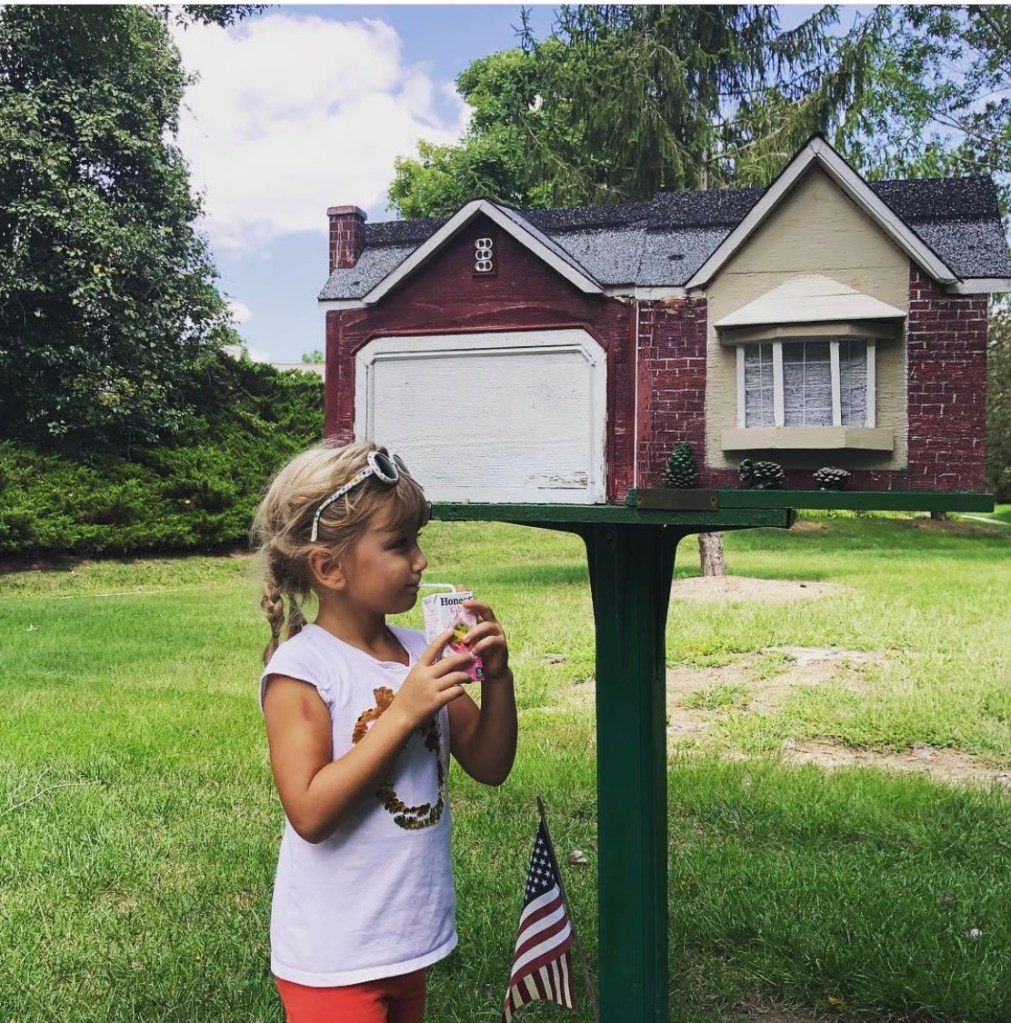
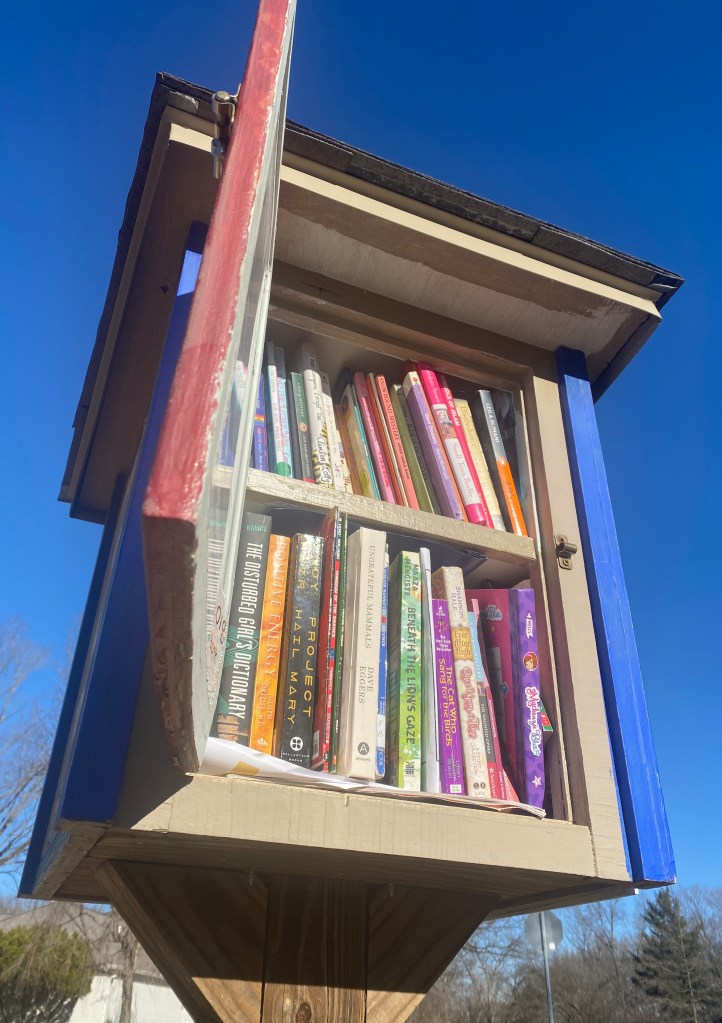
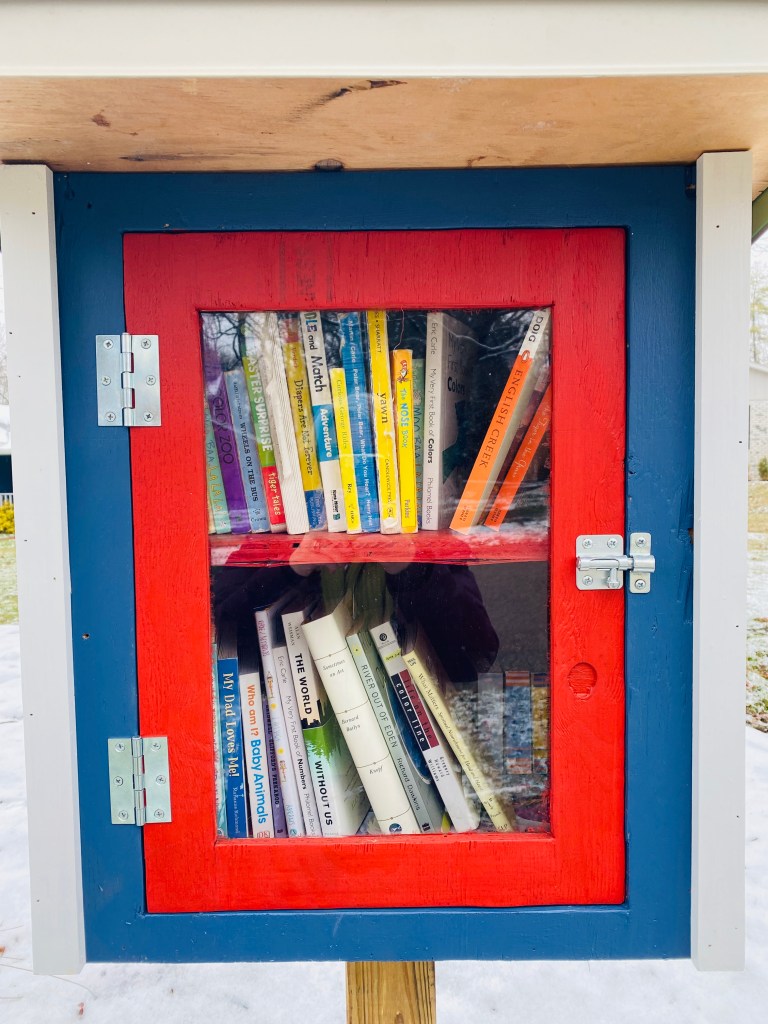
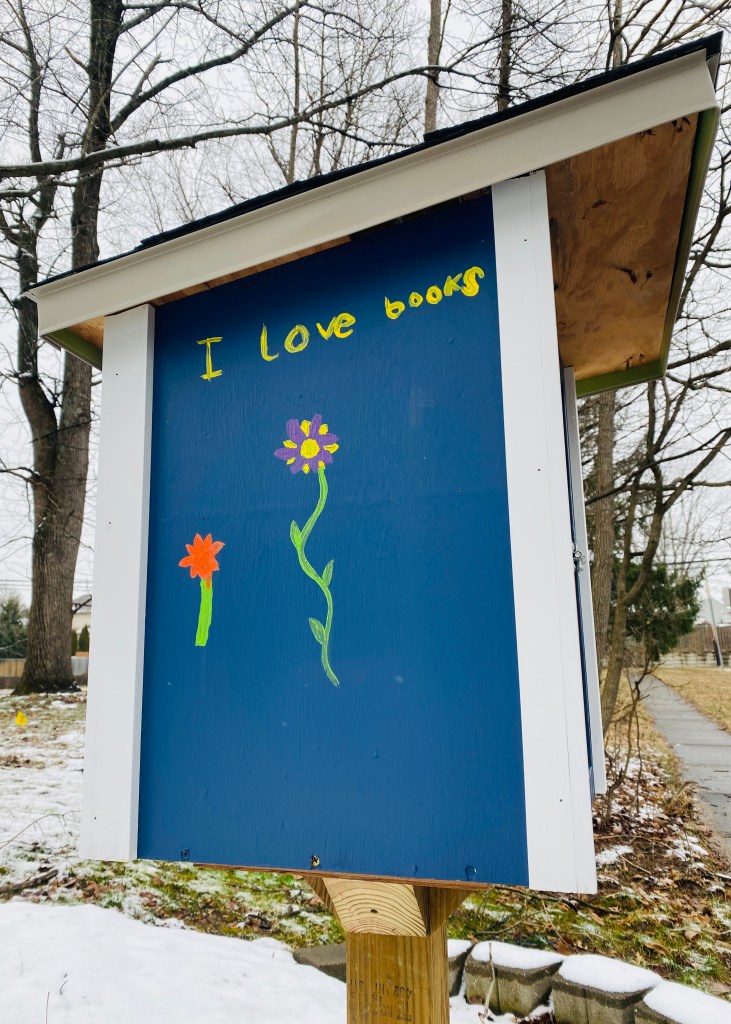
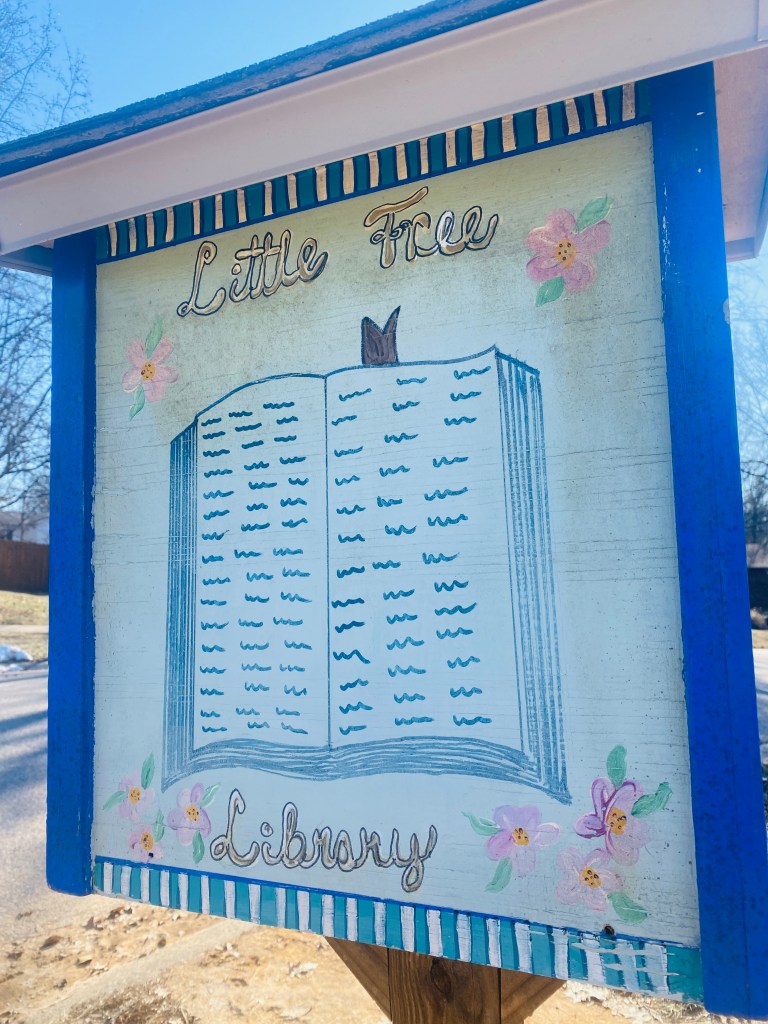
One of our favorite spots featured a well-stocked Little Free Library (LFL) that housed books for kids and adults and everyone in between. Because of that LFL I rediscovered Ramona Quimby and Judy Blume and my children learned about talking chickens and Fly Guy and added even more Dr. Seuss to their already overflowing collection. Fresh discoveries awaited us every time we unhooked the pleasing latch on the library’s little front door.
If you’ve never seen a LFL before you might stop short–at first glance it appears to be a small house balanced on a pole. And in some respects, it is a house, except that no tiny people are living tiny lives inside. Instead, there are books. Free books, nestled on a shelf or two. Patiently waiting for a future reader to stroll by, open the door, and make a new friend (or a new reader…and aren’t they almost the same thing?).
A few years ago, it seemed as if a new LFL was cropping up on practically every street corner in my midsized Midwest city. Local LFL builders were part of a national (and now global) movement that began in Wisconsin when the son of a teacher built a small house in his front yard, mounted it on a post, and filled it with books as a tribute to his late and much admired book-loving mother. I would argue that the mere sight of a LFL can cause a surge of happiness and a decrease in blood pressure.
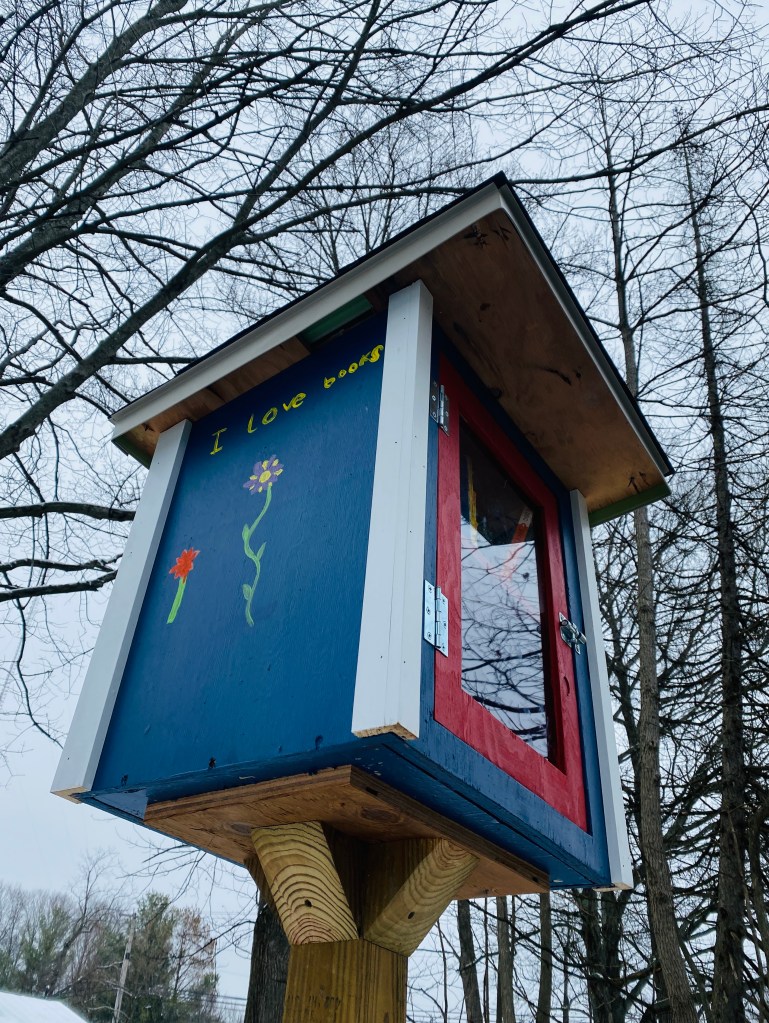
Recently, an exciting development! A LFL appeared in our very own neighborhood, close to the main entrance, easily spotted by anyone driving or walking by.
It turns out the structure was built by a neighbor friend who saw a LFL in another neighborhood close by and decided ours needed one too.
In his words:
“We thought it might help bring a stronger sense of community…and would be seen by everyone driving through. It was a family project [my kids] helped with a tape measure, clipboard, paper and pencil and made a diagram of another LFL, taking measurements and writing them down, with emphasis on measure twice, write once. After that, I did the building, but my kids both helped paint and chose the outside artwork. [In the future] I would like to see a mix of adult and children’s books, but then also announcements of neighborhood events and/or maybe even a celebrations page of achievements in the neighborhood, birthdays coming up, lemonade stands, flyers for lawn mowing. It would also be fun to re-paint the sides of the library every year and have different families add their own artwork.”
-Chaz Sinn, LFL Builder and Owner of Guys and Dollies and Stir Cold Brew Coffee (sold at Bloomingfoods & Bloomington Bagel Company)
Construction (and artwork) by Chaz Sinn and family.
Recently, I asked my kids to gather up some books they have outgrown so that we can stock our new hyper-local LFL with titles. I promised I’d add some of my own (a minor solution to major book-hoarding tendencies, bonus!). After all, donating books is the least we can do after years of benefiting from the literary generosity of others.
Who would expect that behind such a small front door would live the big power of new ideas, industrious neighbors, and books?
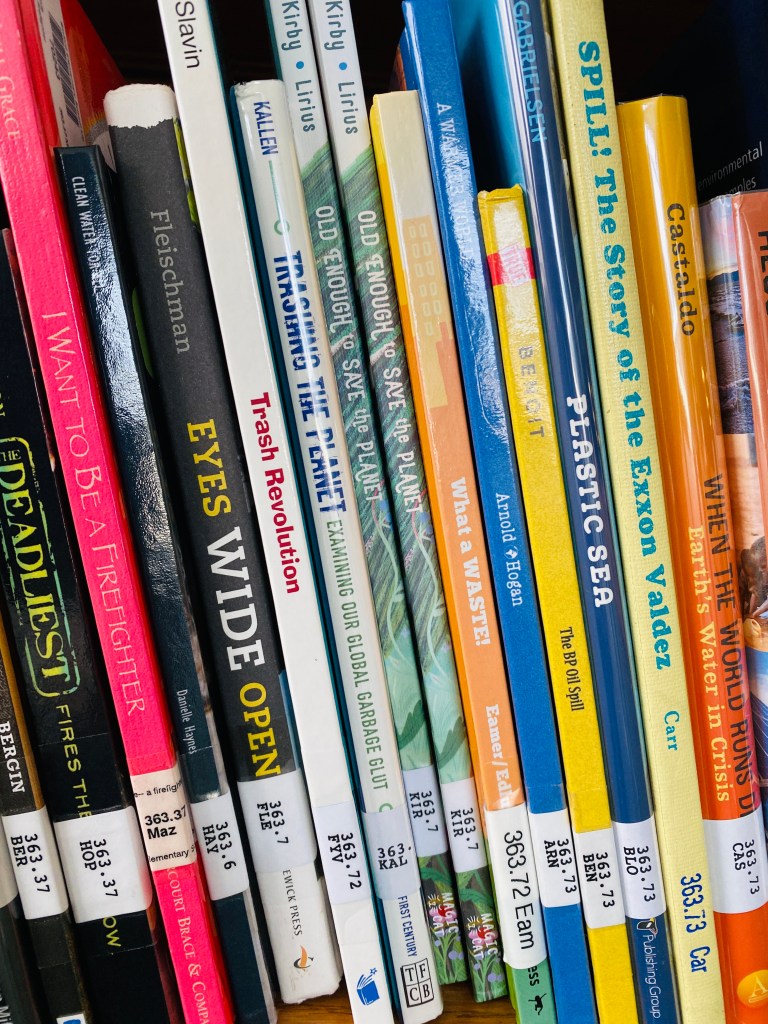
Elementary school library books about the climate crisis.
The Library at My Kid’s Elementary School
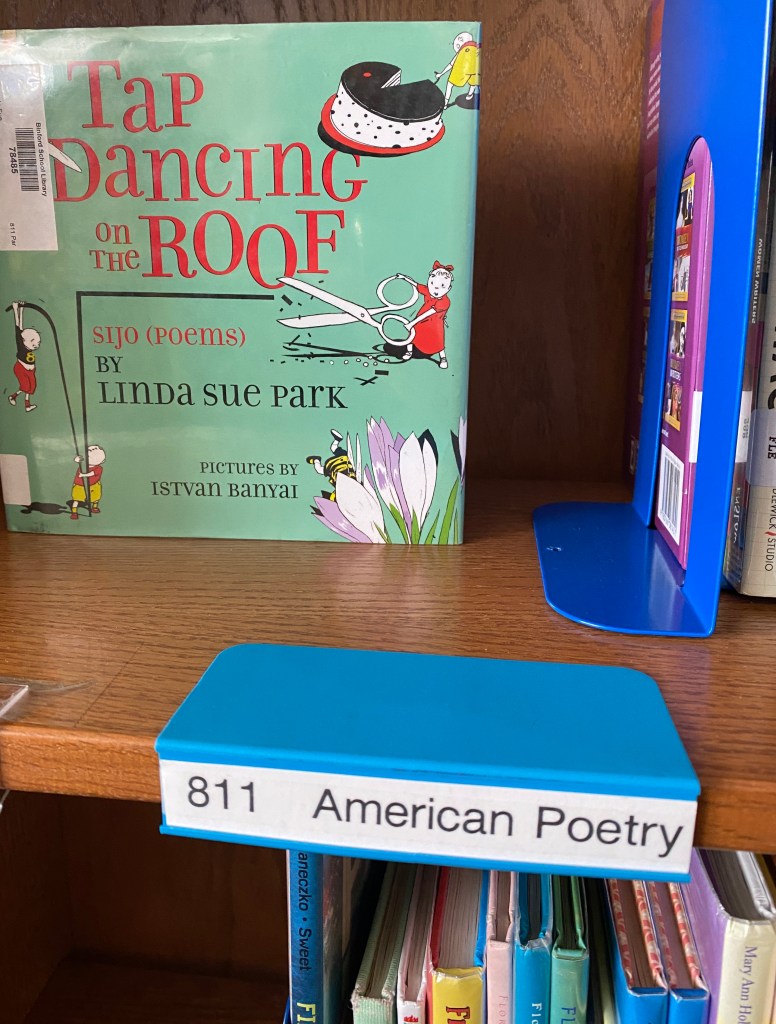
I volunteer here most weeks when my two children’s classes are visiting during their library times. Sure, the groups can be loud and boisterous (they’re KIDS after all), and listening skills are ever-developing… but oh the joy of watching them discovering books, reading on benches, searching for titles on the computer, and bemoaning the fact that the graphic novel they so desperately want has already been checked out.
There is also an entire shelf devoted to books on climate change and how to cope with it which is alternately hopeful and heartbreaking. My volunteer time allows me to hug my kids during their school day, listen to their classmate’s entertaining and enlightening chatter, shelve books, and admire the librarian’s patience.
The Graphic Novel section is a hotbed of activity.
Tea and a Healthy Breakfast
Full disclosure: there were times, especially during my citified corporate days, when TWO Venti-sized coffees would fuel my sunrise to sunset. This approach worked for a long time, but that excess of caffeine also fueled anxiety, a racing heart rate, digestive issues, and a restless sleep cycle. The food complement to this ill-advised start to my day was usually a croissant or pastry.
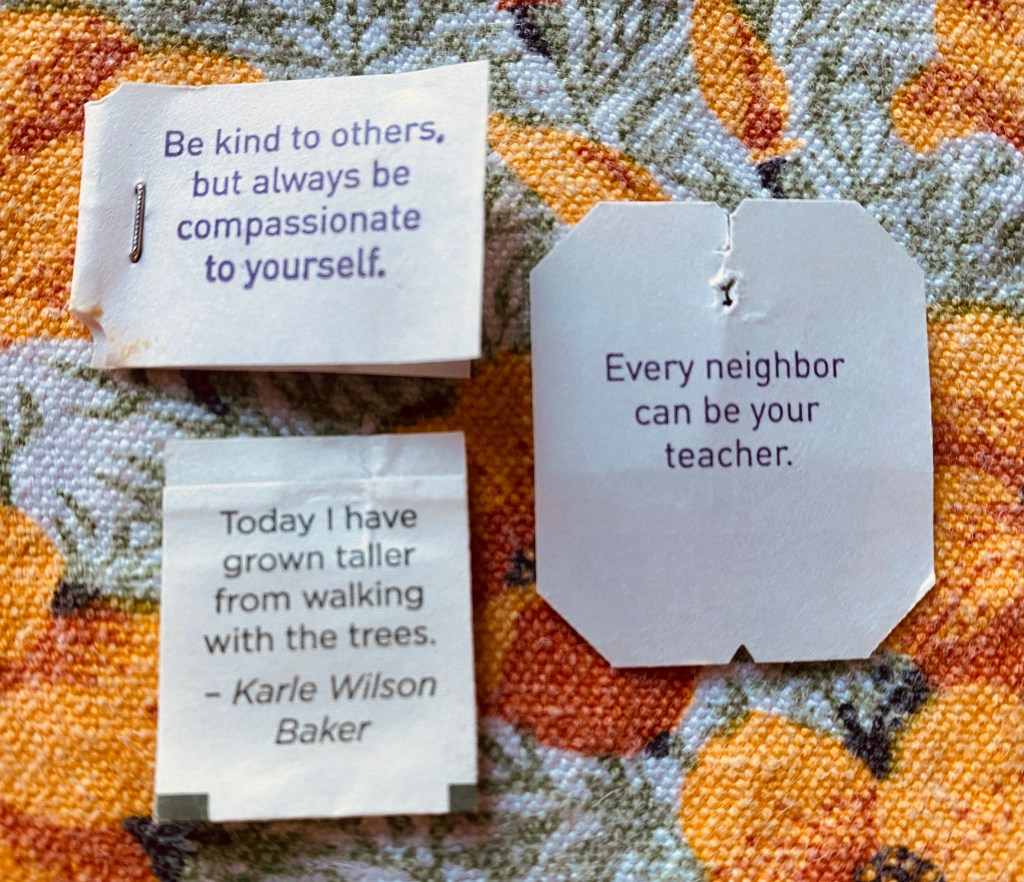
These days, my mornings begin with tea. Specifically, a Chai variety or, more recently, a lavender tea. The soothing yet invigorating liquid invites contemplation and encourages vigor, and the tea tags are usually surprisingly prescient.
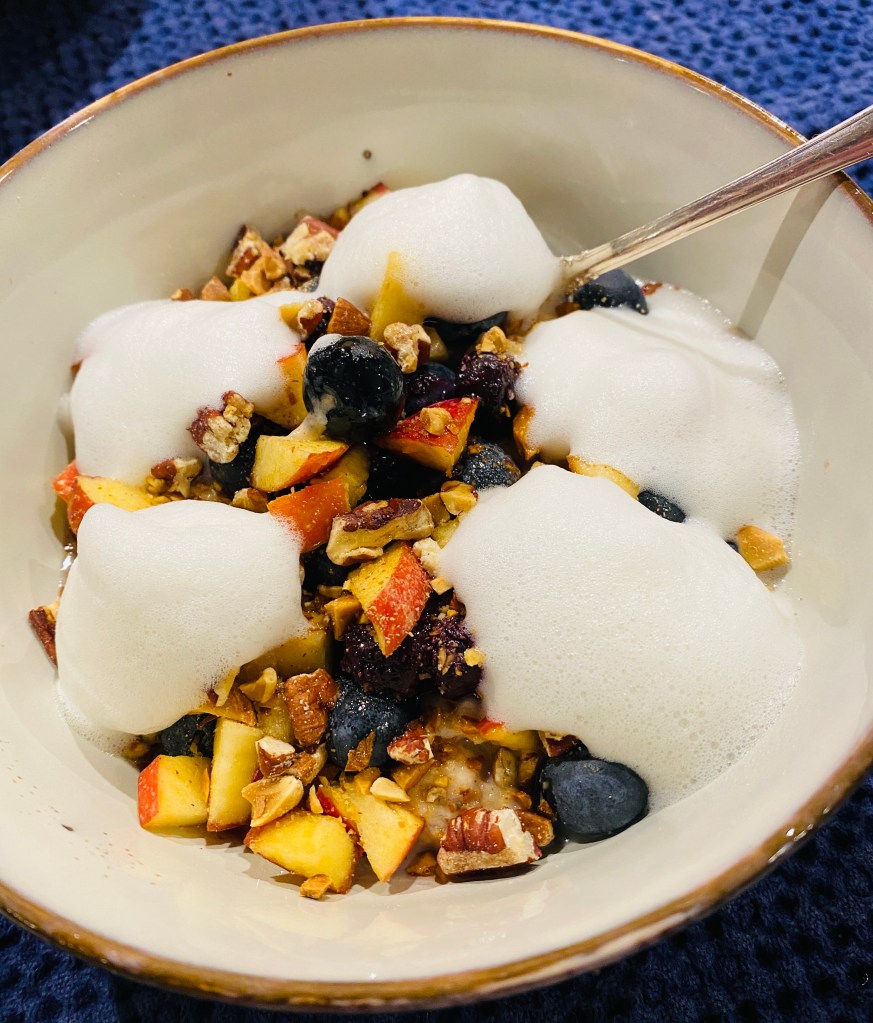
Food-wise, a bowl with oatmeal or yogurt is piled with berries and other fruit, chopped nuts, and granola, and topped off by foamed oat milk.
What starts well tends to end well and a day is no exception.
A handful of blueberries a day helps keep memory loss at bay. Tea tags of note.
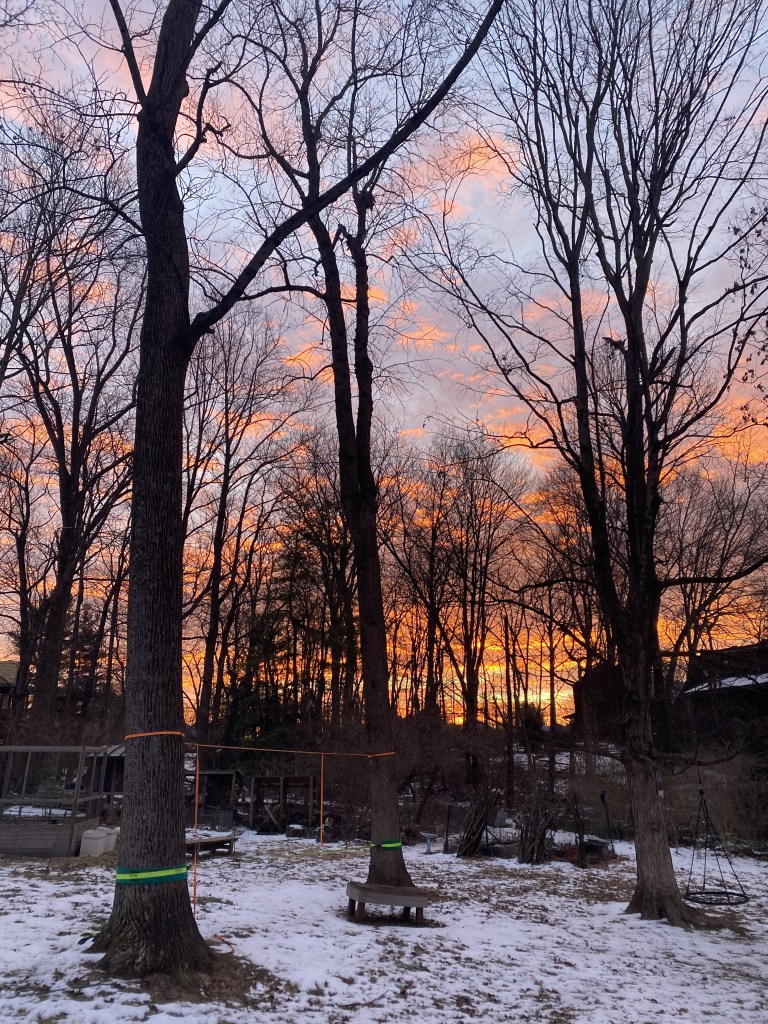
Sunsets and Sunrises
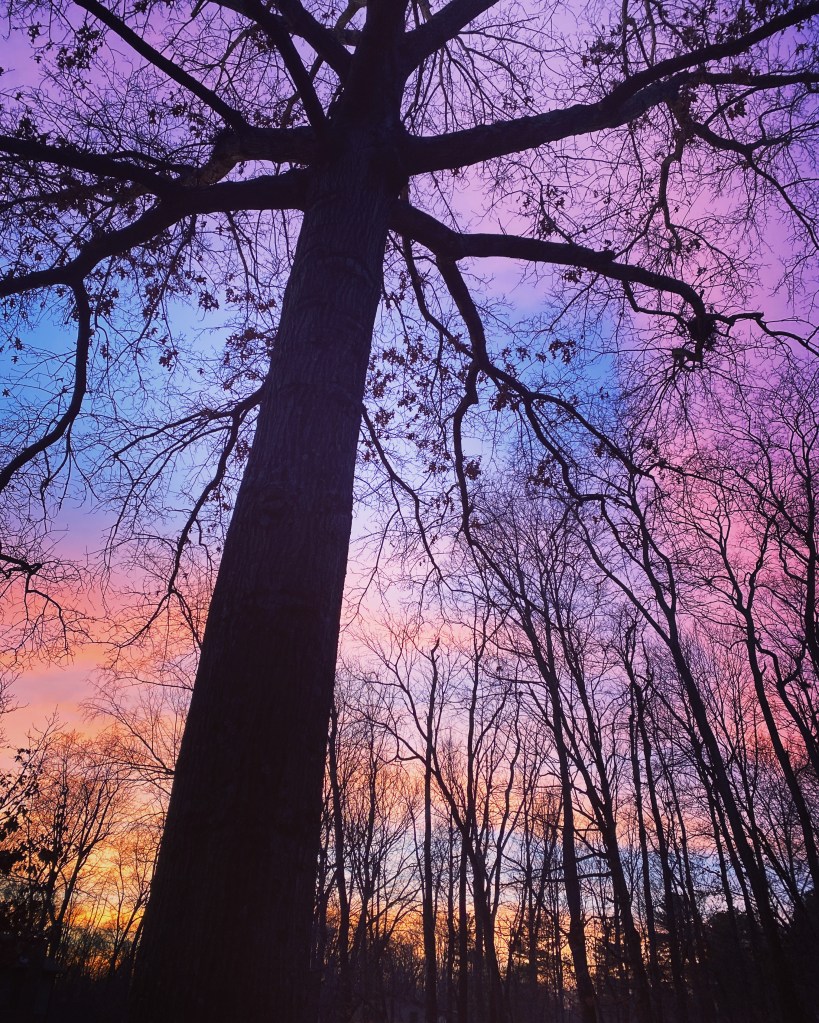
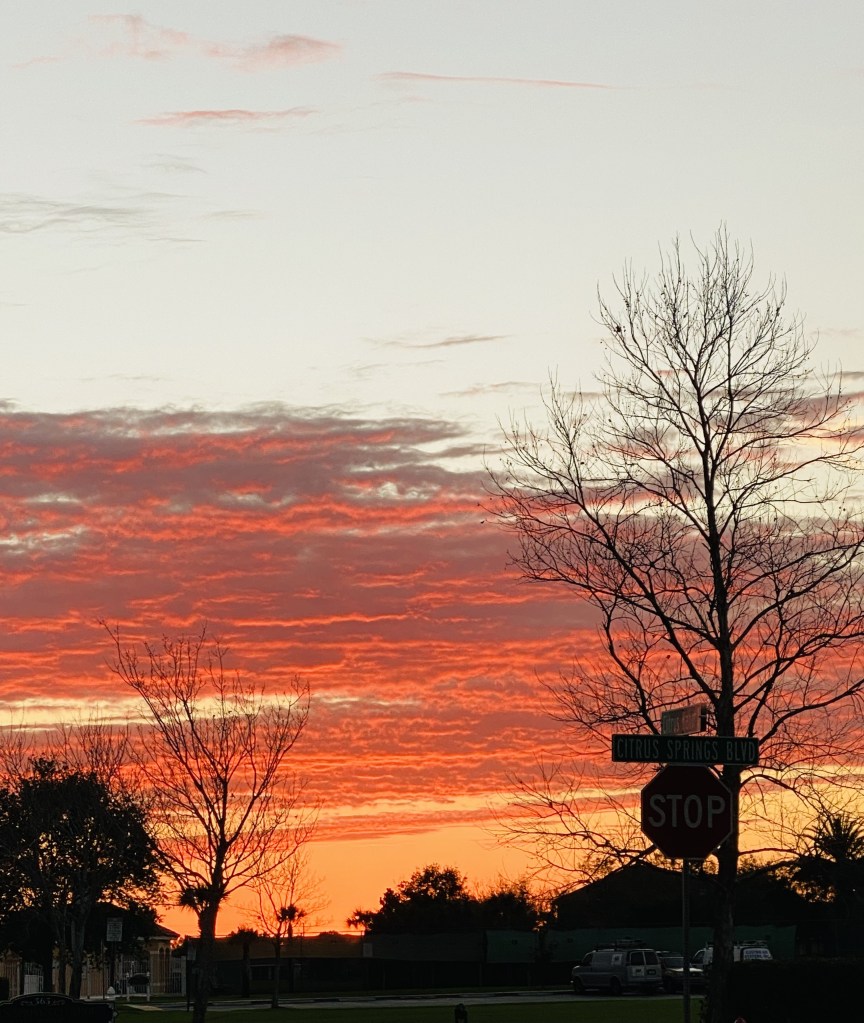
In all honesty, I catch sunsets more frequently than sunrises. Our house faces West and often, as the day comes to a close, I’ll notice a faint pink glow lighting up the walls opposite the front bay window. That’s when I know the sunset is particularly brilliant and that it’s time to drop everything and savor the view. It’s tempting to talk oneself out of going outside (oh just a few more dishes and you’ll be done…it’s so hot/cold out there..but I can see it from the couch!).
This is when I remind myself of three close friends my age who died far too young (Shubana Zwicker, Amy Wagner, and Chris Van Bebber). I consider how each of these friends lived and embraced every moment of their lives and how (I assume) they are no longer able to see the sun offering its glory each day, but I sure am.
I walk outside to accept the artistry in the sky.
Trees and sky, collaborating on the sunset. A stop sign with a view. Backyard sunrise.
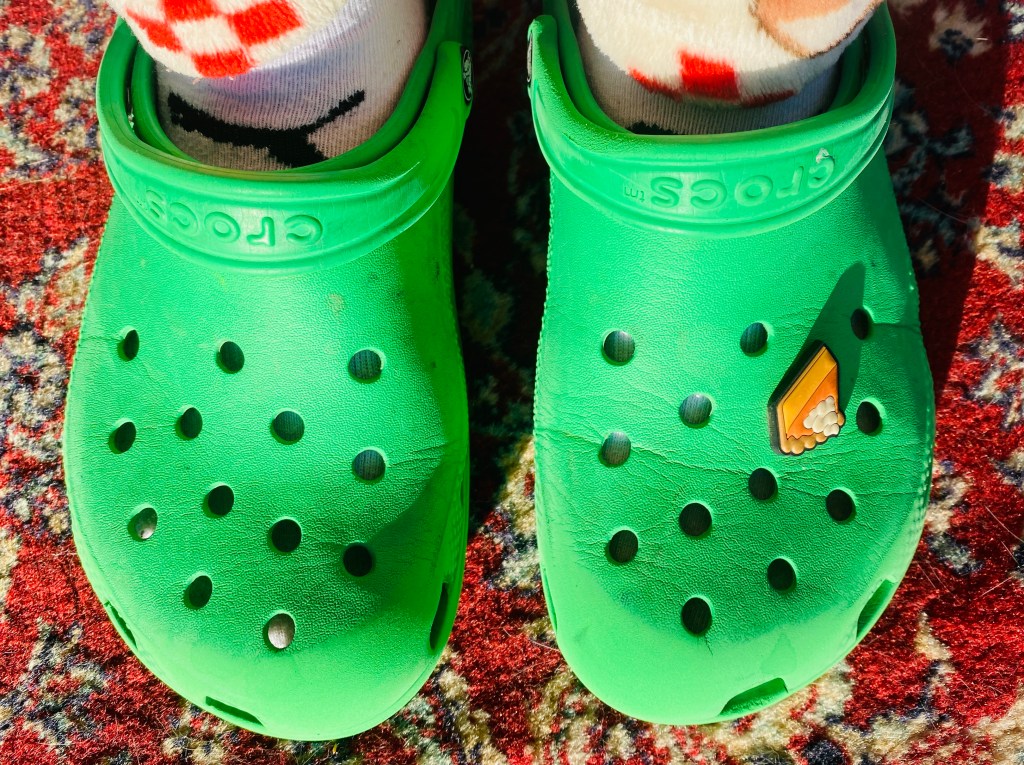
A Pair of Green Crocs
Sometimes, it’s as simple as a good pair of shoes. I’ve endured some teasing about them through the years, but my indoor shoes are nothing but comfortable. I adore their bright green shade and the pie charm is an homage to my pie-making grandmother.
What’s on your list of things that offer hope and joy?
It was in March 2022 that I realized how much the United States had changed.
Our family of four is taking our first airplane flight in three and a half years. The pandemic and financial considerations have conspired to keep us close to home. Oh, who am I kidding, we weren’t just “close” to home, we wereat home, for an entire year.
Online school, work, life, and three daily meals, all conducted under the same roof with the same four people, day in and day out. We have stayed healthy (a different story for many, including other family members and friends). We are grateful for our solid, safe house but it has been a long, trying stretch. Now that spring has arrived, we are more than ready for a change of scenery.
The pandemic, however, cares not that we are going stir-crazy and continues to rage. Traveling by air feels unfamiliar and somewhat dangerous. From the vantage point of my insulated daily life in a mid-sized midwestern city, it is hard to imagine the transformations the United States has undergone in the approximately two years since I last crossed state lines.
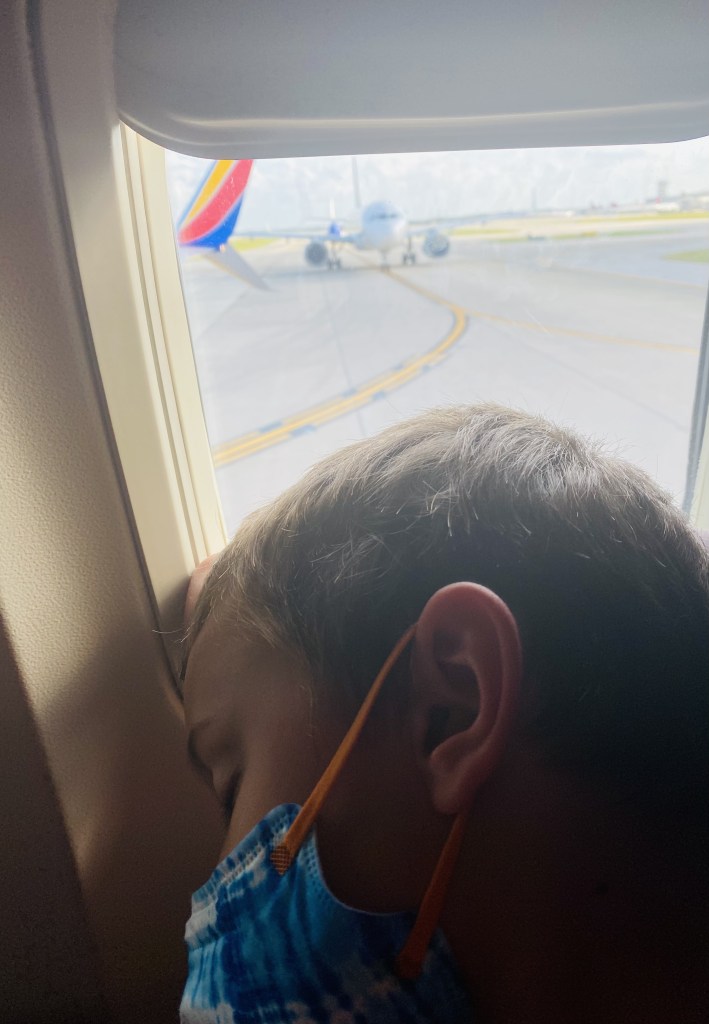
Any moment a child rests on an airplane is a win.
My eight and nine-year-olds are giddy with excitement as we board the plane, chattering throughout the process, asking frequent questions, and pointing in every direction “Is that the pilot? How many helpers (stewards and stewardesses) are there? “It’s cold in here! (the jetway). “Can I have my snack yet? (umm, we just sat down). Son and husband sit together, and my daughter and I settle in across the aisle.
Despite decades of flying under my belt I too feel excitement about take-off, as well as a renewed appreciation for the ability to travel at all. The months spent at home have helped me realize how much I took for granted the familiarity of airports, the invigorating bustle of humanity, and the thrill of jetting off to new places.
As we get comfortable, I become aware of a commotion a few rows ahead. Glancing over the seat backs I spot a man in his forties gesturing in a frustrated way. The attendants have asked him to put his oversized bag into an overhead compartment and he does not agree with their request. He feels inconvenienced and lets everyone around him know “Those son-of-a bitches in Washington” he says, loud enough for all of us in surrounding rows to hear, “They were supposed to lift the mask mandate but now they aren’t.” He thumps down out of view, but his mutterings are still audible.
A stewardess happens by on her way down the aisle and requests politely “Please put your mask on, sir.” A few minutes pass and another flight attendant delivers the same appeal. Both pleas go unheeded.
By now we have pushed off from the jetway and passengers all around are intent on their screens, books, phones, and laps. My daughter and I investigate seat-back screens and unpack water bottles and treats. I notice that no one offers opinions or gets involved with the uppity passenger in the way they might have three years ago. More time passes and we are now sitting on the runway. Didn’t the pilot just say we were about to get in line for take-off? Cabin lights dim and my daughter asks for the eighth time if we are in the air yet. She was so young when the pandemic began that she doesn’t remember the sequence of events involved in flying or what a full-body experience it can be when a flight takes off.
The voice of the man three rows ahead rises again, and I feel a tightening in my chest. It sounds as if his voice is being forced out of his throat, the stream of discontented words floating above our seats. I know man, I want to say. We’re all tired of this. This destruction, this frustration, this upending of our lives. Why not wear an uncomfortable mask for a few hours to offer help to your fellow humans–to avoid someone carrying something home to their kids/elders, into their weak immune system, or worse?
I check myself and decide to refuse anger. I take the example of the patient flight attendants tending to this man. They treat him with firm respect. The first was a tall willowy Black stewardess with a kind, direct gaze. Minutes tick forward, the plane continues to idle in place. My daughter doesn’t mind, she realizes the screen in the seat back is hers and hers alone! She can choose a movie for herself!
Suddenly, the pilot’s disembodied voice rings out through the cabin “Ladies and gentlemen, to let you know the reason for our delay, we had a passenger who was unwilling to comply with our mask rule, and we were planning to return to the runway. The passenger has now decided to comply. We want you to know that we don’t necessarily enjoy these rules either but we have them in place for our passenger’s safety.”
Mid-flight, somewhere over the state of Tennessee, I wonder at the foundations of our democracy and whether the current political climate in the United States will ever allow for a thoughtful discussion of the roots of inequality and true injustice. My daughter watches “Encanto” (the fifth time she has seen it).
Outside our tin capsule, the sun has risen. My daughter points out a constellation of tiny reflections glinting off the pink ruby in my wedding ring. “The sun did it just for us!” she says.
A small marvel at 35,000 feet.
“We apologize for being late but we are making up as much time as we can” announces the pilot as we begin to descend to the Atlanta airport. A few passengers will miss their connections due to our late take-off, an entirely avoidable inconvenience. Is it too late for my country, I wonder, can we make up for all the time we spend judging, disagreeing, and complaining?
Maybe the fact that no one got outwardly angry at this man, that he eventually complied with the airline’s request, that the flight took off at all, is a win. Life (and flights) move forward whether or not we agree with the messy details.
A week later, on the plane ride home, one of my preschool students happens to be in the seat one row in front of me. The excited four-year-old is in awe that his teacher is there, on the same plane as him! He can see me through the crack between the two seats ahead of my son and me. “I want to tell you a secret,” he says, and I lean my head forward so that his voice is funneled directly into my waiting ear “Do you know…do you know” he splutters sweetly “this plane is going to fly in the air!”
His pure excitement is a reminder that astonishment can exist next door to cynicism. One human leans toward bitterness and contempt and another is innocent and enchanted. Wonder can be a seatmate to dissolution and they are both here, crammed into one cabin and one country, together.
Many posters in my dad’s collection are begging to be framed.
Through the years I’ve wondered about my tendency to gather books, magazines, flyers, and brochures. Why do I feel drawn to them?
During the decades I lived in two big cities (Boston and San Francisco) my daily routine often included an end-of-the-day emptying out of my bag (never a purse—too small—always a bag). This usually meant stacking 2-3 books on the kitchen table and sorting through a cache of papers. I could generally trace the source of the books to my day jobs in publishing. As for the papers, they were an eclectic assortment of postcards and handouts gathered in restaurants and bars, newspapers and flyers that found their way into my hands, or small posters carefully removed from the sides of buildings, telephone poles, and bathroom walls.
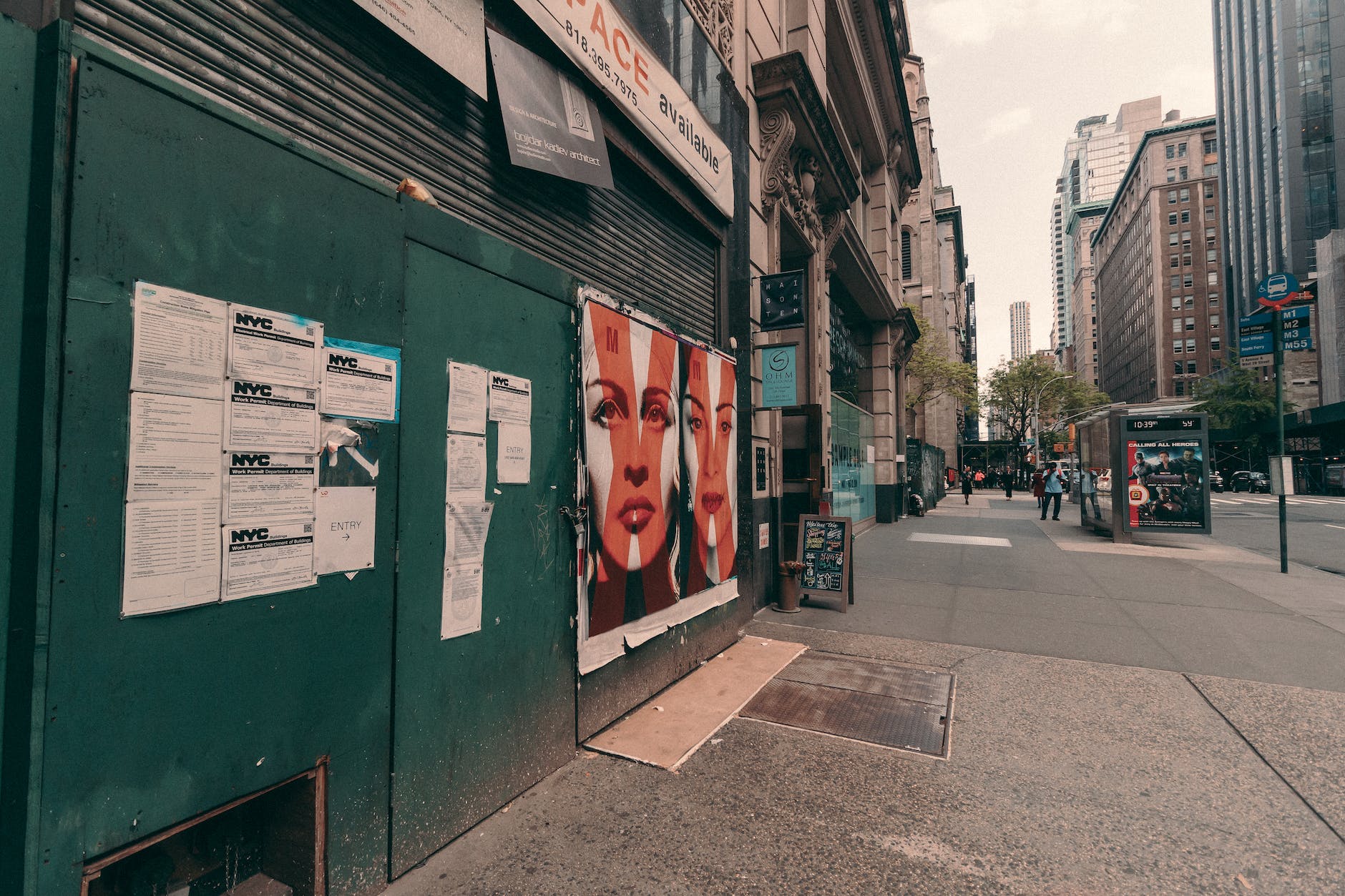
Some see a city street, some see a poster collection waiting to happen. Photo by Itzyphoto on Pexels.com
Sometimes it was the words and ideas that caused me to stuff the paper into my bag, other times it was the visual impact of the item. Dreams of creating art out of these found objects flickered in my mind, but really what I enjoyed most was reading the ideas and words of others, often unfiltered and full of meaning.
After a thorough review of my father’s extensive poster and handbill collection (fourteen folios worth), I can definitively say that I now understand where I inherited this tendency to collect all manner of words printed on the fiber of trees. My father began collecting posters on the streets of New York City in 1968 and continued for the next fifty years. An equal-opportunity compiler, the posters he gathered cross ideological and political lines and the subject matter ranges from political protests to movie posters to meditation retreats to flyers for lost pets. If it caught his eye, he picked it up (or rolled it up).
It’s a good thing that I no longer live in a big city where I am tempted all day long to stuff anything interesting I come across into my bag (nowadays that bag is full of Kleenex for my preschool students, water to keep hydrated and snacks for my kids). Neither is there any physical room left for expanding anyone’s paper collection, either my father’s or my own–the time has come to appreciate what has already been gathered.
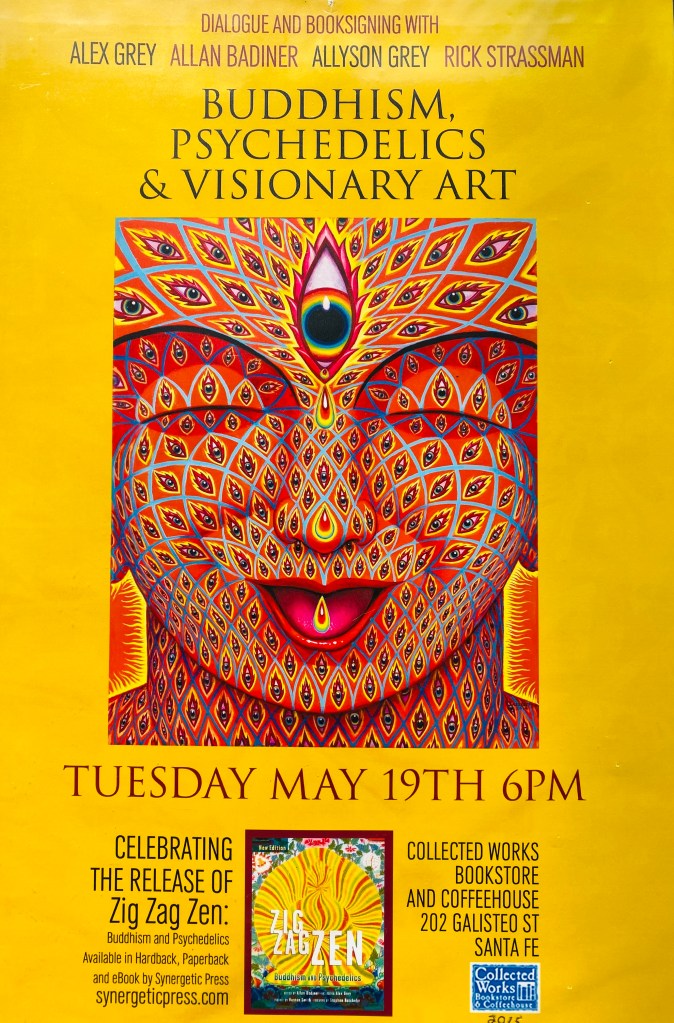
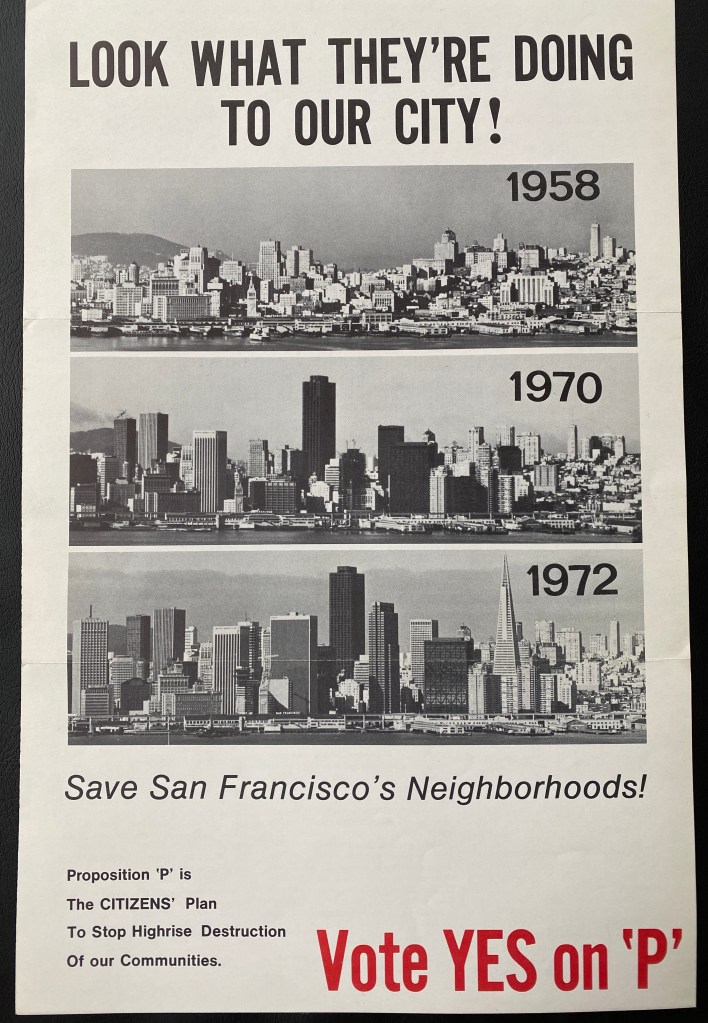
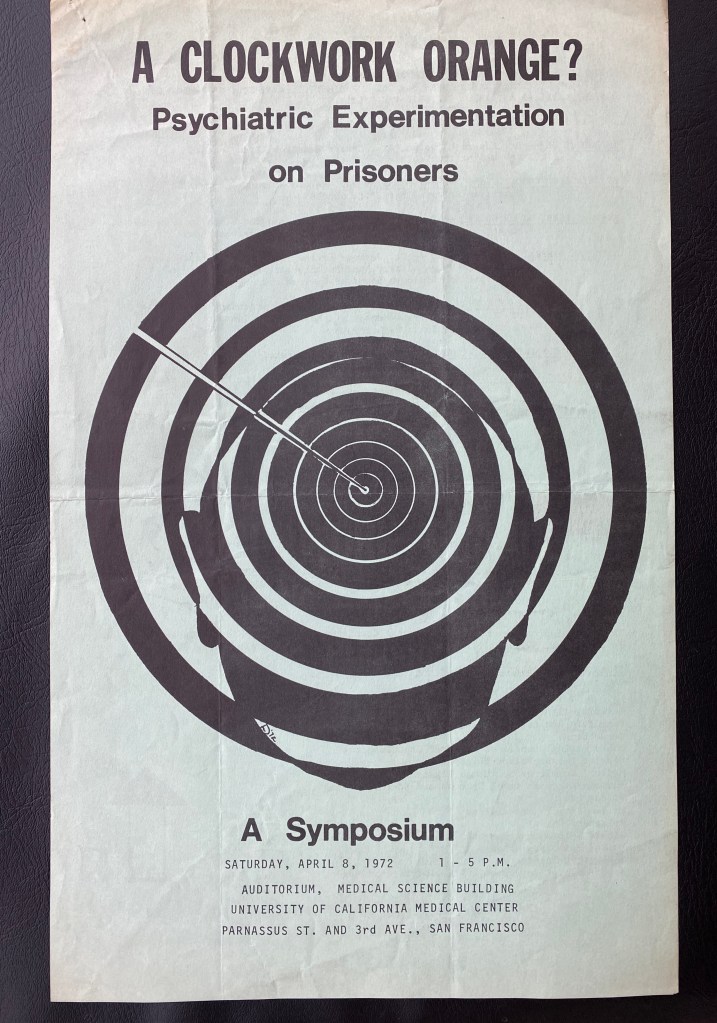
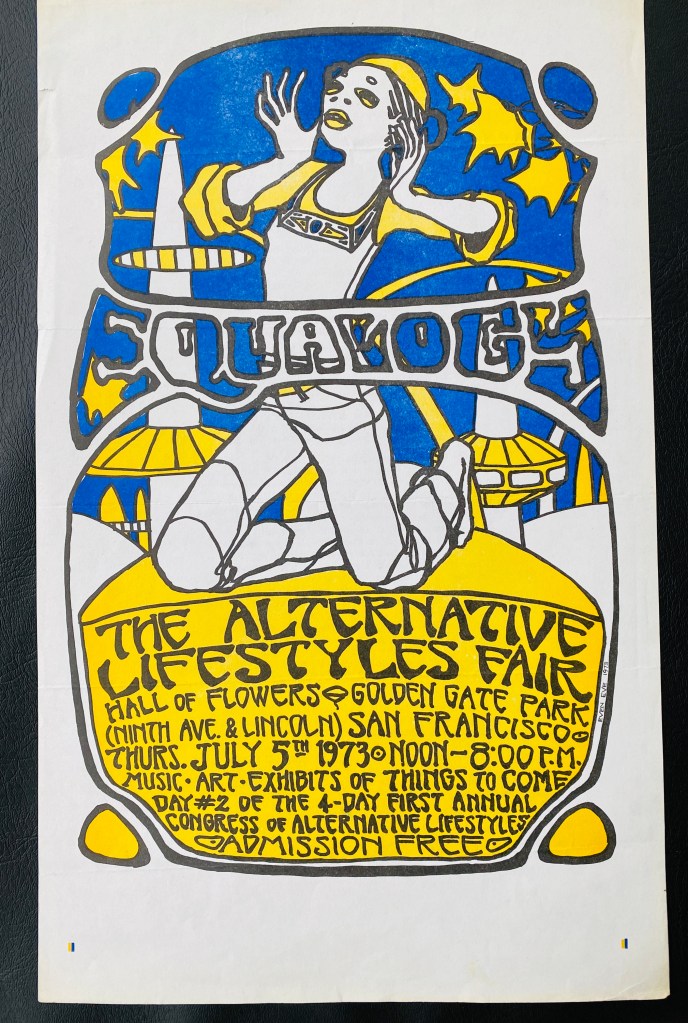
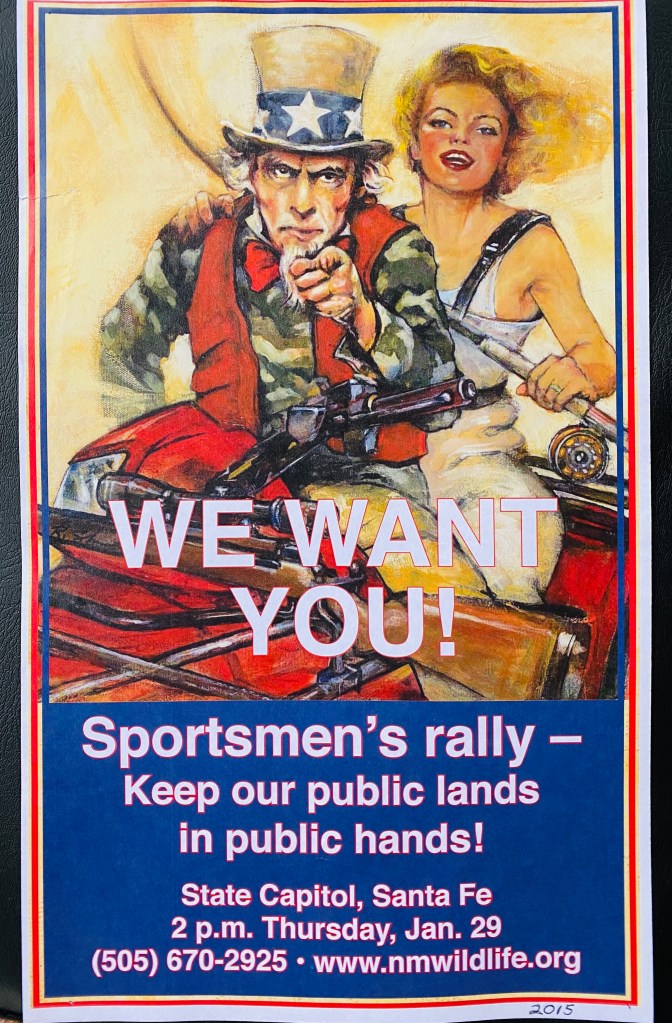
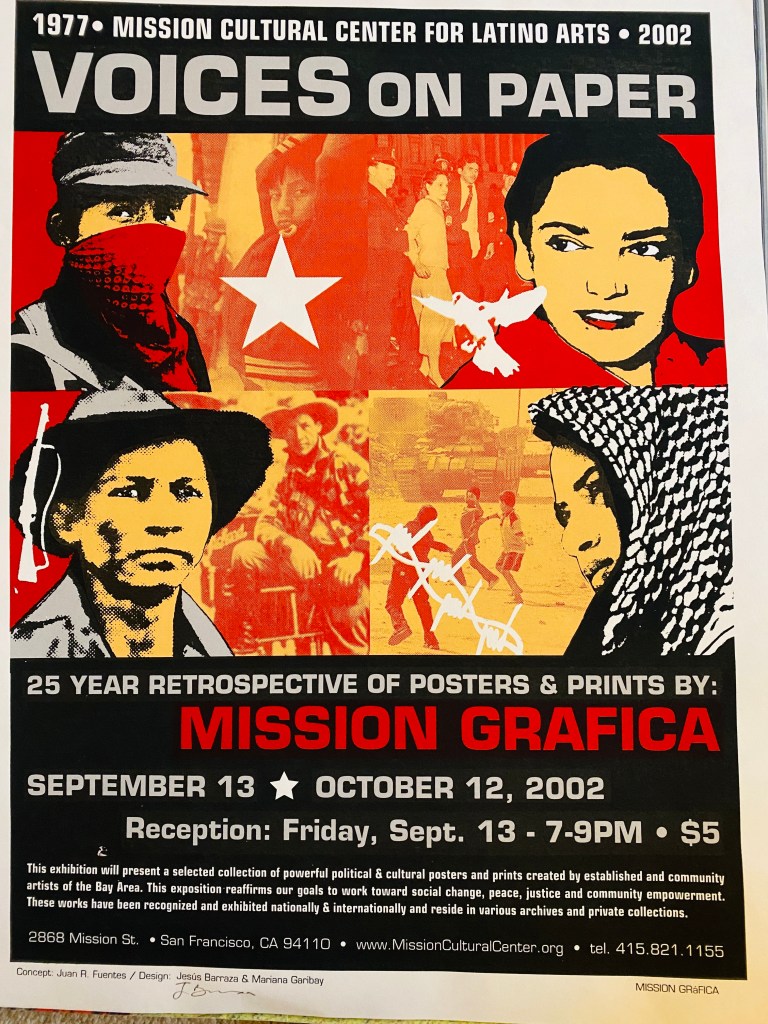
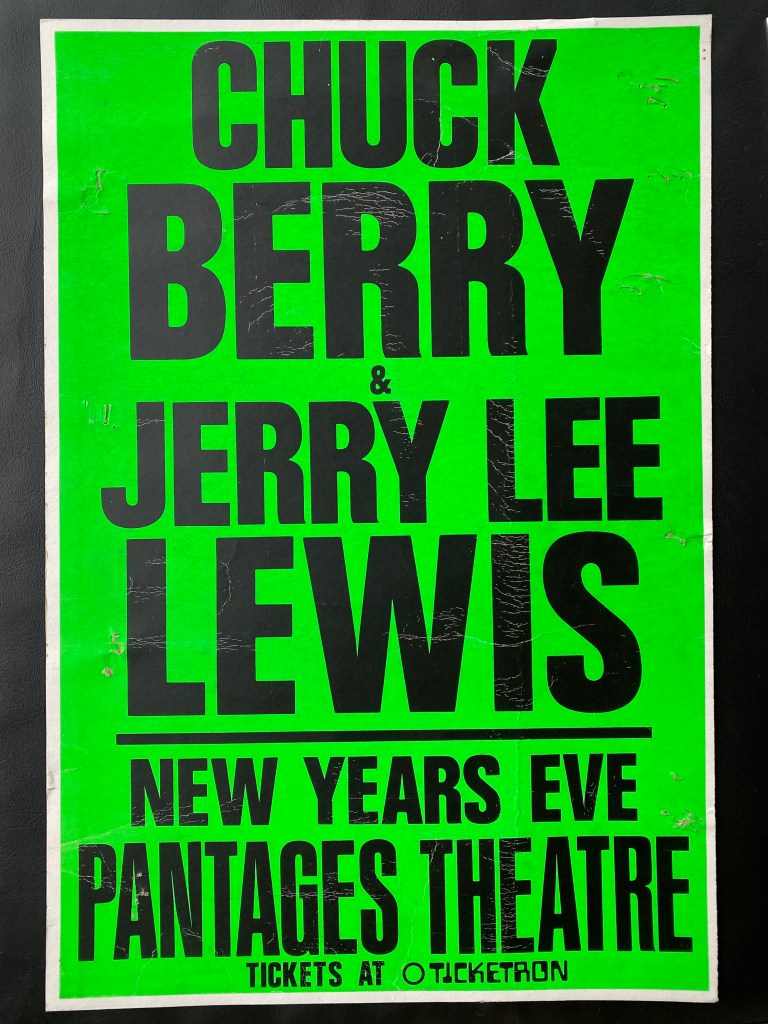
In that spirit, here are some highlights from my father’s collection. I’ll continue to share images here periodically. Please let me know in the comments if you would like me to feature any subject in particular (art, music, writers, politics, Native American issues, prison issues, spiritual events);
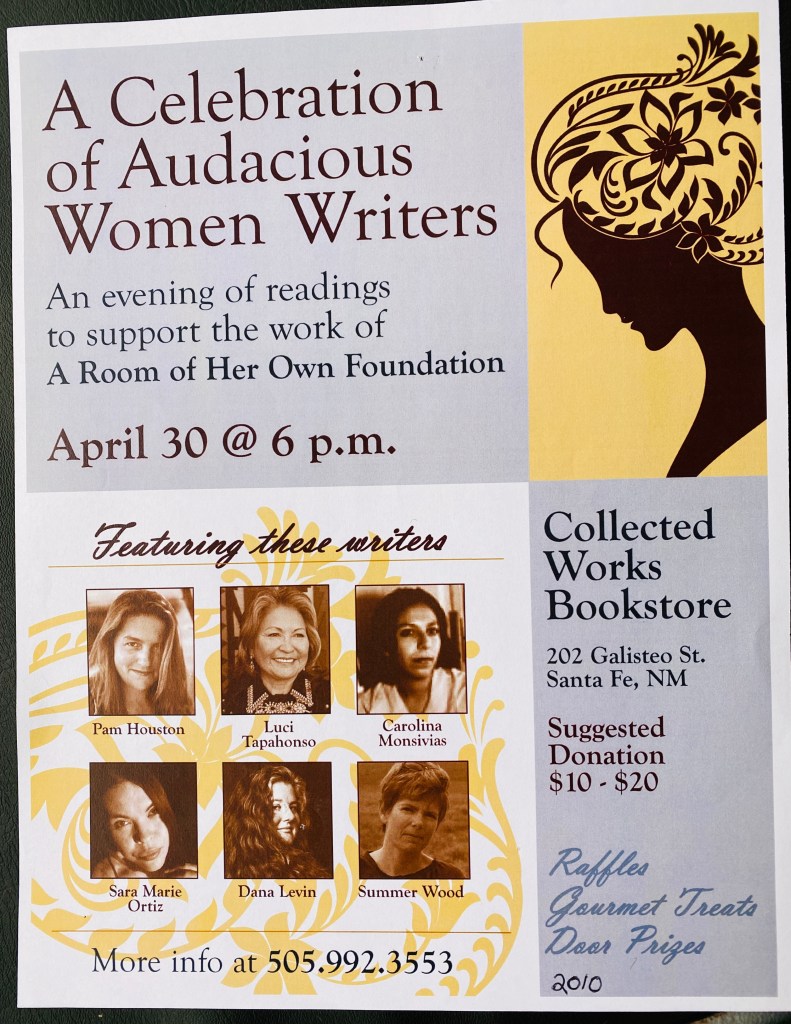
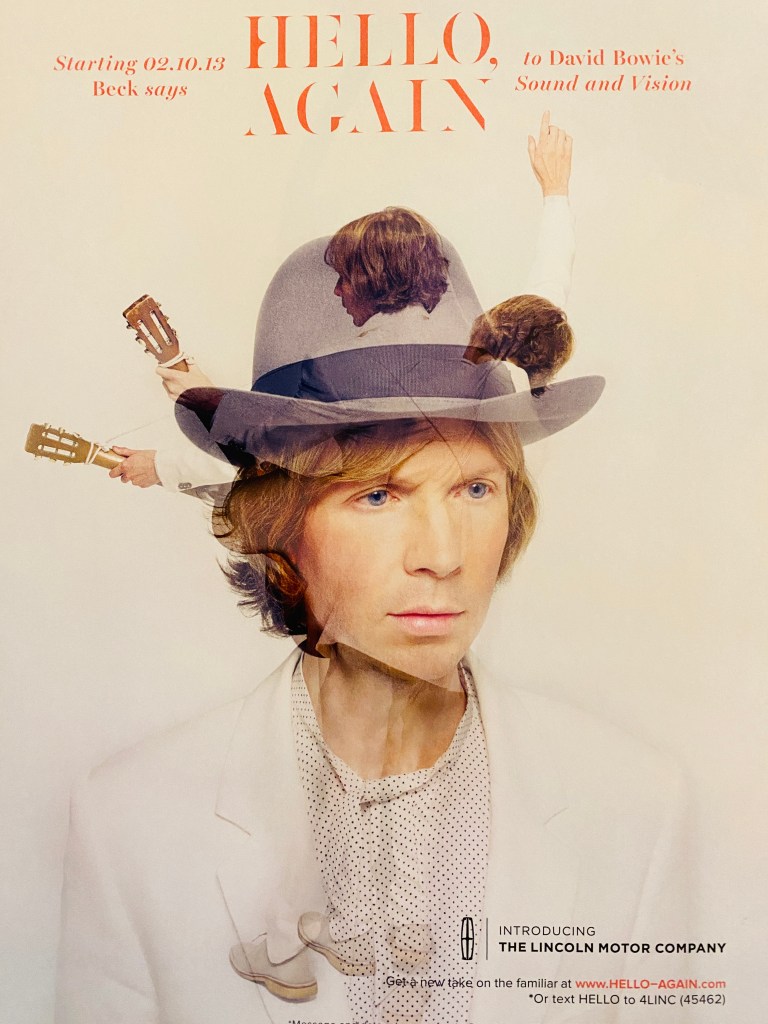
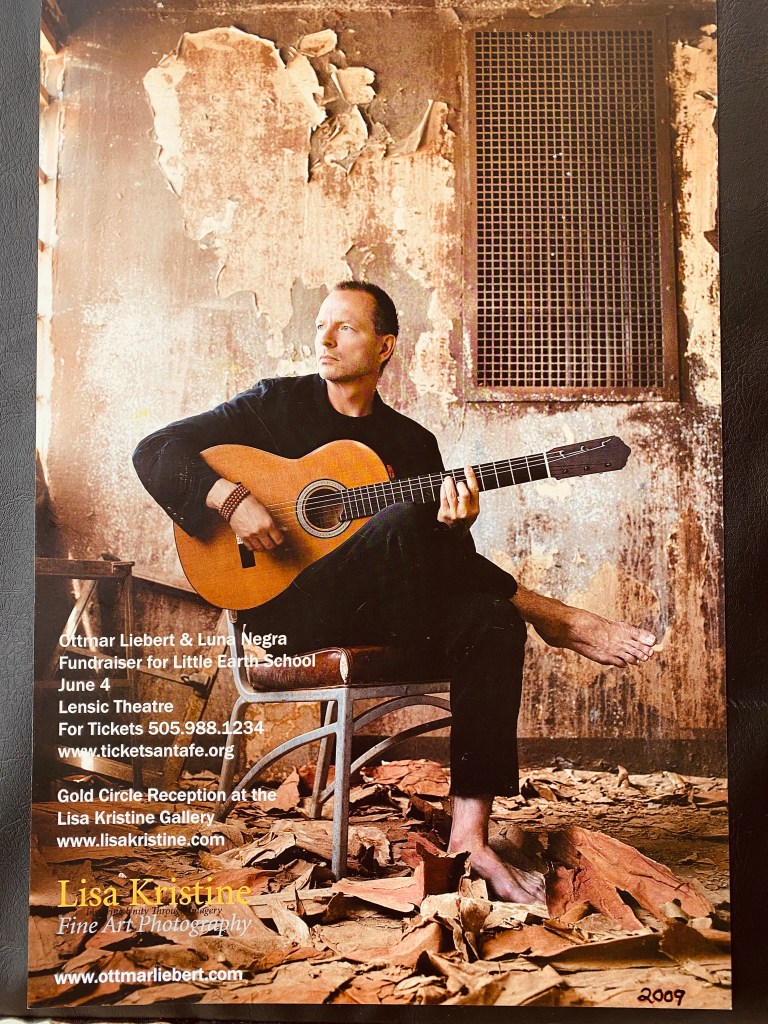
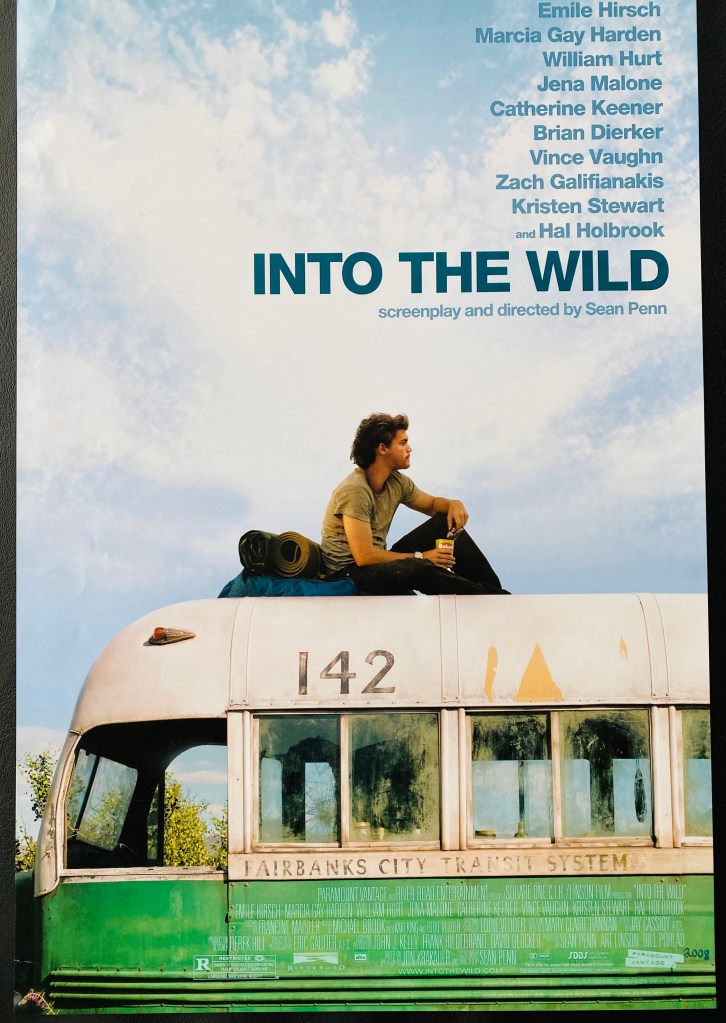
Did the creators of this 1973 protest poster considered the Transamerica Pyramid to be one of the offensive buildings? My dad was particularly interested in prison reform-related handbills since he frequently covered that subject as a journalist.Oh, to be a fly on the wall at the “Alternative Lifestyles Fair” in San Francisco in Golden Gate Park July 5, 1973A San Francisco handbill from 2013. Some of the posters hail from Santa Fe, New Mexico where my dad lived for fifteen years. This one is dated 2016. I wonder how successful this rally was. Many posters feature authors and writing-related events. Sorry to have missed this one in 2010. One of the music-related posters in the collection. Ottmar Lierbert & Luna Negra fundraiser at the Lensic Theatre in Santa Fe. There are quite a few movie posters. I read that this is not the actual bus where Christopher McCandless lived but an exact replica. Some posters are compelling due to their design and graphic impact.Poster from a 1988 New Years show at the Pantages Theatre in Los Angeles. A reviewer wrote that Berry was on stage that night for only thirty minutes.
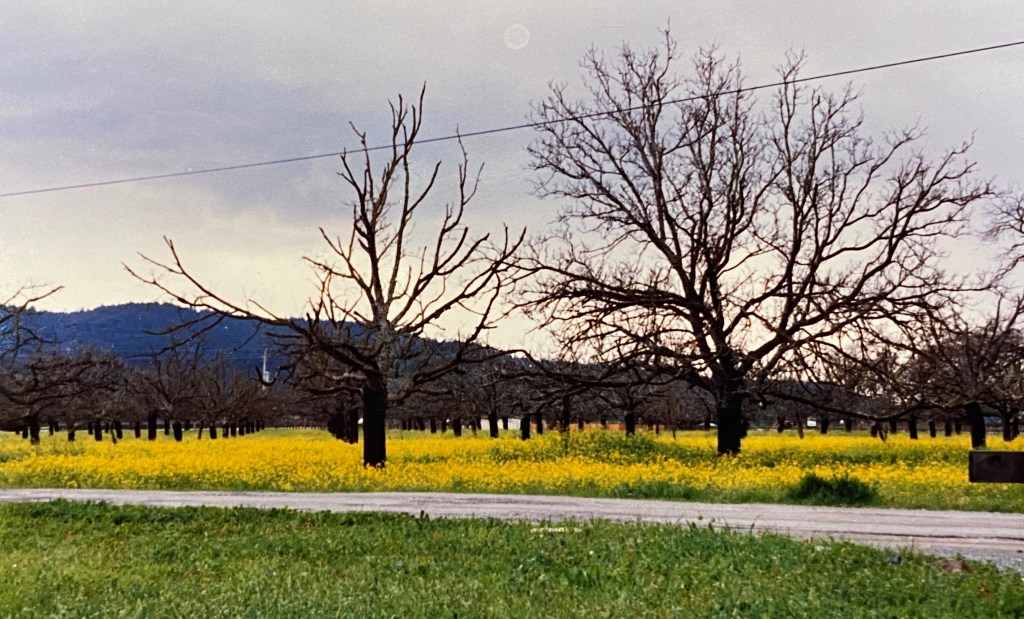
Walnut trees and mustard grass. This field is now a vineyard.
Neighbors, like so many aspects of life, can be an unpredictable business.
The people who land next door, across the hall, a few houses down, at the neighboring campsite can become acquaintances, support systems, minor annoyances, close friends, and even enemies. Lest you think this is a story about problematic neighbors…it is not. Quite the opposite. This is a tale about how fortuitous proximity can lead to a meaningful friendship.
During my formative years, our next-door neighbors were original back-to-the-landers, Bob and Evelyn. To enter our rural Northern California neighborhood, you had to turn off a busy two-lane highway and follow a dust-producing lengthy gravel road. To the left of the road was a mature walnut tree orchard under which a blanket of golden mustard grass spread in the springtime. On the right low ranch-style houses lined up sporadically, each claiming the middle spot on an acre, more or less.
Bob and Evelyn’s plot was adjacent to ours and over the years our young family of three became close to their older twosome. Originally from the East Coast (with the accents to prove it) Bob and Evelyn had owned and operated a music shop in San Francisco for decades. Now they were a happily retired childless couple living an almost entirely self-sufficient life in the country. Raising goats, keeping chickens (and much to my chagrin–especially in my teen years–a series of roosters), and growing what seemed like every conceivable fruit and vegetable (including okra) kept them bustling around their abundantly overgrown yet organized property.
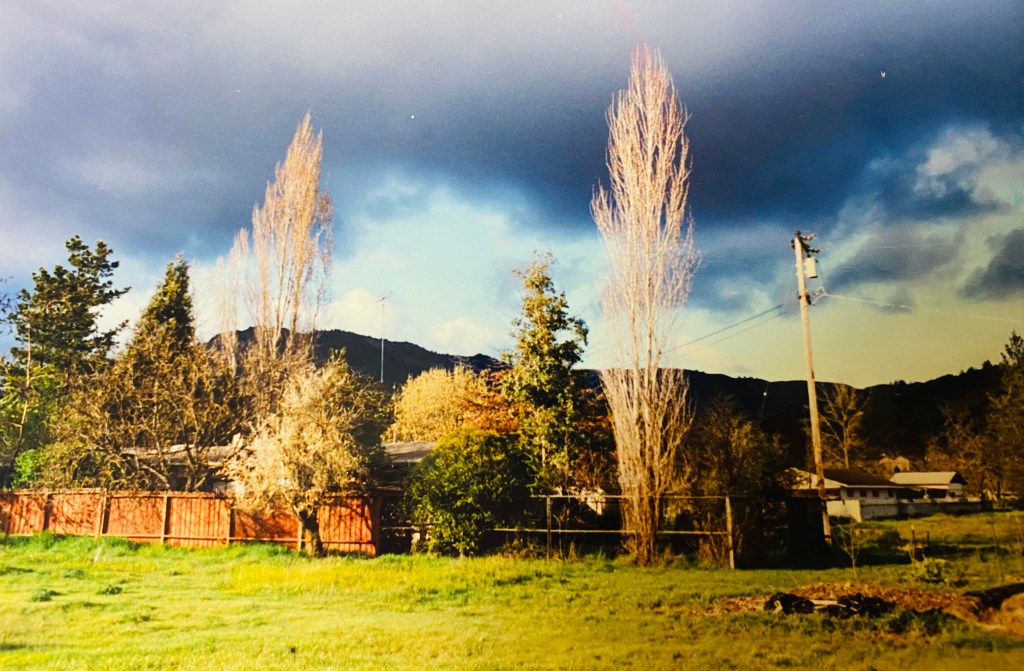
The spot where our plot of land met Bob and Evelyn’s.
Bob was generous with land-tending advice for my citified father and Evelyn and my mother traded gardening tips, seeds and starts, and recipes. Sometimes, when I was tired of climbing my favorite trees, trailing the cat, or hunting green beans and cherry tomatoes in my mother’s extensive organic garden I would glance over at Bob and Evelyn’s house. Perched on the edge of a lot about half the size of ours, their modest abode featured a grape vine trellis that covered the entire Eastern-facing side and shielded their house from the blazing summer sun.
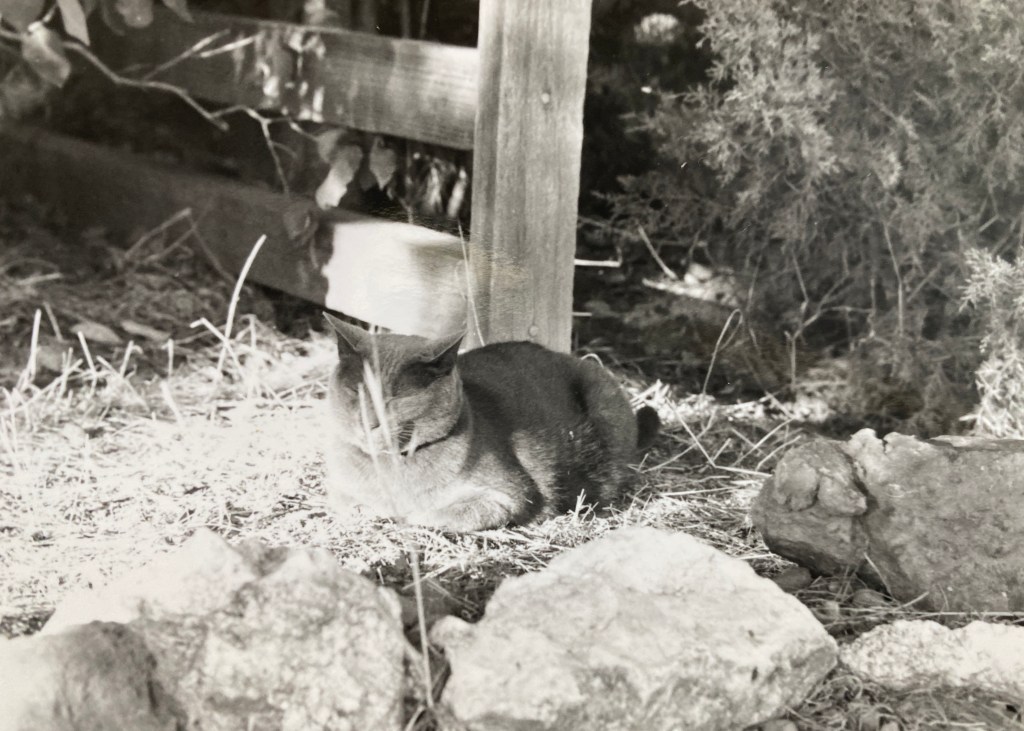
Ahh, to be a free-range country cat, napping in the mid-summer heat.
One summer day, as I gazed in their direction, a question burned in my mind. Was today a jam-making day for Evelyn? The only way to know was to ask, so I heaved myself up off our garden’s straw-covered dirt path (leaving green bean tops and cherry tomato stems strewn in my wake) and walked the 100 yards or so to the three creaky steps that led up to their front door.
Evelyn answered my knock right away, her thin frame and capable arms topped off by a welcoming red-lipstick traced smile and softly coiffed silver hair. “Hello, dear heart! You have good timing, the jam is setting, Bob just came in from feeding the girls (their prized goats) and we’re going to watch a show, would you like to come in?”
This was music to my nine-year-old ears and I gladly stepped into their cozy dark living room.
The house smelled sweetly of raspberry jam, and while Evelyn was in the kitchen, I made myself comfortable on one of their low-slung easy chairs and gazed around the room. Bob and Evelyn’s penchant for Western-style art (and clocks) was on full display and I still to this day sometimes conjure up the image of the free-standing lamp that stood to the left of their couch. This nearly miraculous fixture would, with the flip of a switch, slowly rotate in a circular motion while the horses artfully painted on its tanned-hide shade bucked and jumped against the interior bulb’s glow.
Who knew lighting fixtures could spark core memories… one person’s lamp-related childhood remembrance (“A Christmas Story” fans, I’m looking at you) includes a mannequin leg with a fringed shade on top while another features equines brought to life by electricity. What will upcoming generations recall from their childhoods? Recessed overhead lighting doesn’t hold quite the same mystery.
Once Evelyn had served up the still-warm jam, scooped into my very own child-sized lidded glass jar, she and Bob (a stout man of few words with calloused hands, a hearty laugh, and a work ethic I haven’t seen since) settled into their well-established spots on the couch and turned on the hulking TV in the corner. The Lawrence Welk Show was starting, and we were there for it. From the frothy opening segment in which large bubbles featuring the faces of the show’s singers float across the screen, to the individual skits (square-dancing, romantic ballads, boot-stomping country jingles) to the concluding strains of the orchestra fronted by the entire cast of singers and dancers from that evening’s show, we were transfixed. Bob and Evelyn knew the lyrics to an impressive number of songs and my favorite act was the Lennon Sisters, four young gals with ethereal voices who practically floated across the stage and lulled me into imagining a possible future as a lounge singer.
The Lawrence Welk Show ran from 1951 to 1982.
Too soon the show was over and it was time for Bob and Evelyn to eat supper. I carried my empty jam jar into Evelyn’s spotless kitchen and placed it on the counter, admiring her hand-knitted tea cozy in the shape of a giant strawberry. I was eternally curious about these two, so perfectly equipped to be grandparents yet operating unencumbered by kids, or any other family that I could see. Did they wish they’d had children? And why did that matter in the first place?
Our sprawling eclectic neighborhood was full of fascinating characters; a kind, hard-working Japanese couple who were survivors of United States-run Japanese internment camps in the 1940s and now owned a thriving egg farm, another couple who happened to be little people and were rumored to have been related to Munchkin actors in “The Wizard of Oz,” a reclusive family that lived in a house resembling one in “Gone With the Wind” complete with massive oak trees lining the driveway…but even among that crowd Bob and Evelyn stood out. Theirs was a life of hard work and frugality, respect for the land, and generosity toward neighbors.
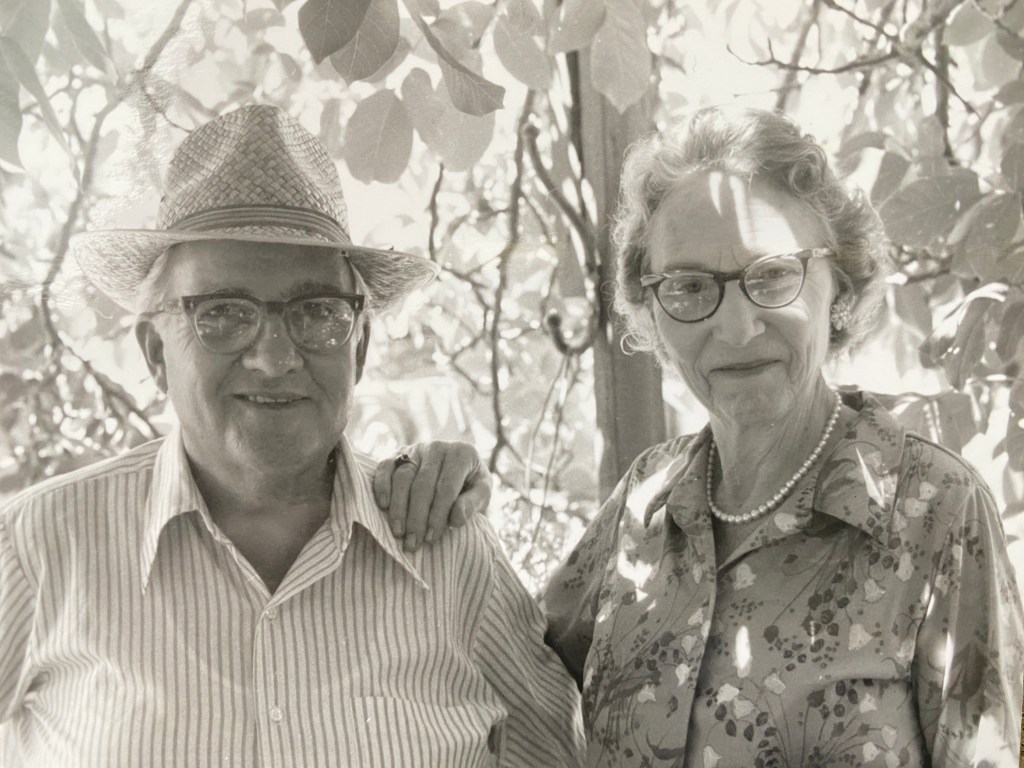
Bob and Evelyn, 1981. Photo by David Holmstrom.
Once, on a return visit to my hometown, I walked down the gravel side road that ran beside our land and Bob and Evelyn’s. More than three decades had passed since I sat in their small living room and watched Mr. Welk conducting his orchestra. The goats, the gardens, and Bob and Evelyn were long gone. In their place was an overgrown mansion someone had erected—it took up almost the entire plot of land. A gleaming red Porsche was parked in front of the grand entrance. Gazing at the elegant yet soul-less landscaping around the mansion I thought of the plants and animals that once covered every inch of this same land. Entirely wiped away. I cringed to think of how quickly it must have happened.
As I stood there looking at the mansion I reminded myself that time marches on and progress (and development) usually cannot be stopped. Especially in California, some might say. There is also much to be considered about who inhabited and tended this land even before we claimed it. Still, it saddens me to think that individuals like Bob and Evelyn won’t come around again anytime soon, that other nine-year-olds won’t have the chance to sit with their elders in cramped dark living rooms softly lit by a rotating horse lamp, eating still-warm homemade raspberry jam while watching TV and singing along to the Lennon sisters.
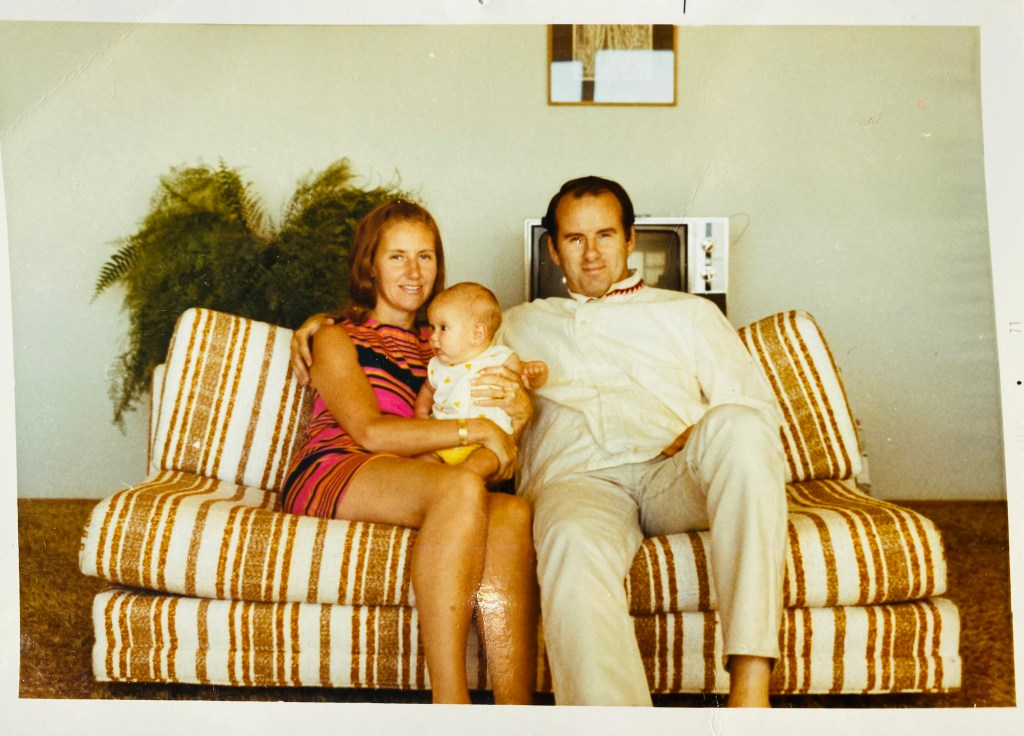
The family Nathalie helped create 1971 Tiburon, California.
As we enter a new year, and a season of new chapters, I’m going to share the story of someone who played an auspicious role in my own beginnings.
Nathalie Dupree once told me she was responsible for my existence, and she makes a valid point.
In the late summer of 1969, Nathalie was working as a newly hired secretary for the New York City bureau of The Christian Science Monitor newspaper. Far from the three times James Beard-award-winning chef, author, and cooking-show host that she is today, Nathalie’s primary tasks at the Monitor bureau included typing up correspondence and opening copious amounts of mail.
My father, David Holmstrom, was a reporter in the same small news bureau, covering politics and the widespread political upheaval that had overtaken New York during those tumultuous times. David and Nathalie soon struck up a friendship “We would sit while I sorted and opened the huge piles of mail, and talk, just the two of us” says Nathalie. “We became instant friends.”
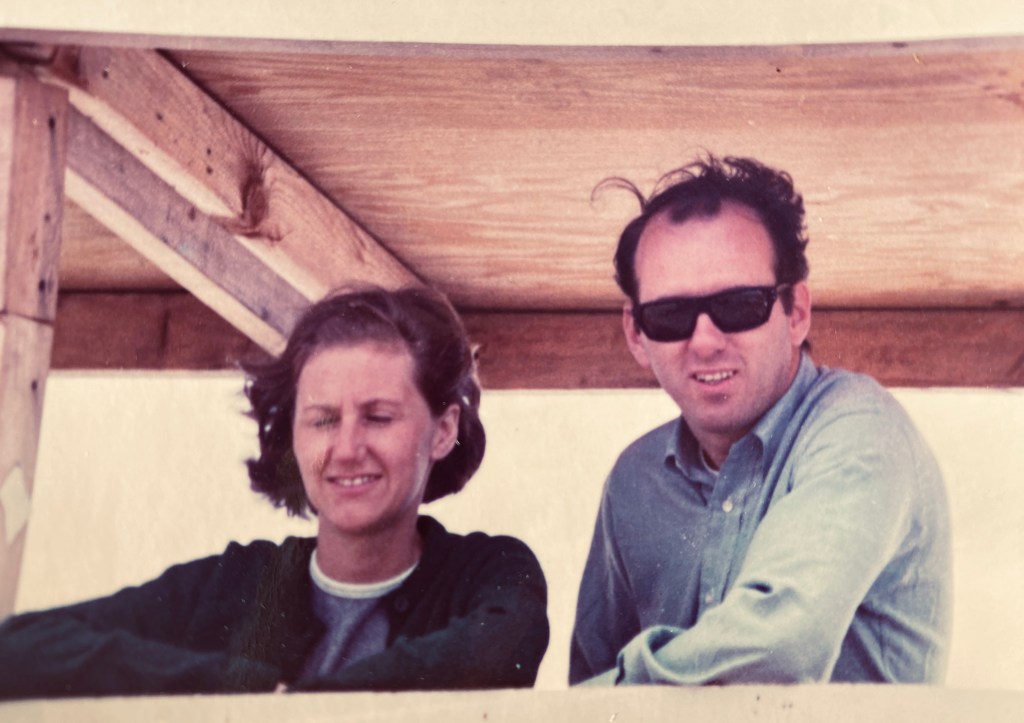
Pat and Dave (aka my parents) around the time Nathalie introduced them.
As the two colleagues and confidants discussed all aspects of life and love and spirituality it began to occur to Nathalie that David might enjoy her friend, Patricia, also living in New York City. Nathalie felt so certain that David and Patricia would get along that she told David she “knew the woman he was going to marry.”
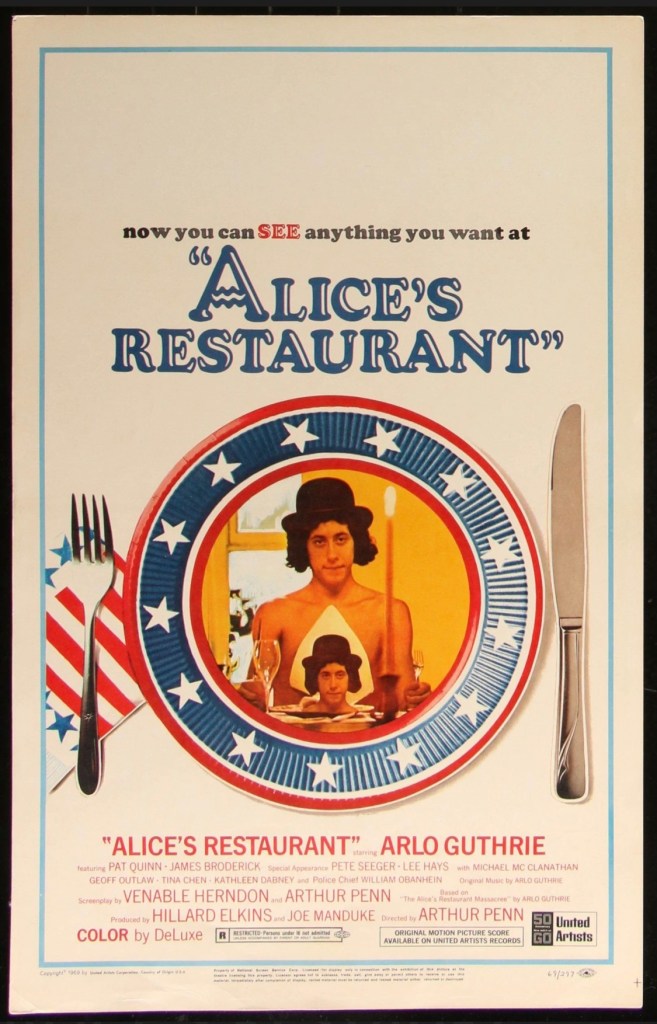
Movie poster for Alice’s Restaurant, a 1969 American comedy film based on a song written and sung by Arlo Guthrie
My parents had their first (blind) date that September, orchestrated by the prescient Nathalie. They saw the film Alice’s Restaurant in a movie theatre on the Lower East Side and, in David’s words;
“I was intrigued right away. Mini skirt and short blonde hair. And she had a great smile. Throughout the movie, Pat’s laugh was the best one in the theatre. When the credits rolled at the end, and the lights went up, we went outside and simply started talking and walking, not idle, first-date chit chat, but a kind of frank easy testing and sharing of attitudes, spiritual convictions, and impossible cosmic questions, all sprinkled with laughter and humor.”
I’d like to say the rest is history, but really, the rest is the start of a thirty-four-year partnership, and as a by-product, my own life.
Incredibly, orchestrating my parent’s meeting was not the only role Nathalie played in my family’s formations…my aunt (my mother’s sister) and uncle celebrated their marriage at her apartment in London, and Nathalie and my uncle John Holmstrom (my father’s brother) were also good friends who supported each other’s careers in the media and publishing worlds.
Nathalie’s style in the early 1970s was on point. Nathalie and my uncle John at a party in London, 1971. That must have been quite a party.
Soon after their Boston wedding in June 1970 my parents succumbed to the call of the West and moved to Northern California. Throughout subsequent decades Nathalie and my folks maintained their friendship, despite her home base in the Southern U.S. and theirs in the West. Nathalie and my mother shared the closest of long-distance friendships–when they were on the phone together my mother’s hearty laugh reverberated around the house.
I relished Nathalie’s visits to our abode in rural Sonoma County as she swept in with her glamorous scarves and tales of television appearances, humorous celebrity encounters, and delectable dishes savored in Paris and London. Entertaining stories of the trials and triumphs of writing her cookbooks and dealing with agents offered me insight into the literary world and showed me how a highly successful woman operated. I wouldn’t be surprised if she helped plant one of the seeds that sprouted years later when I embarked on a career in publishing.
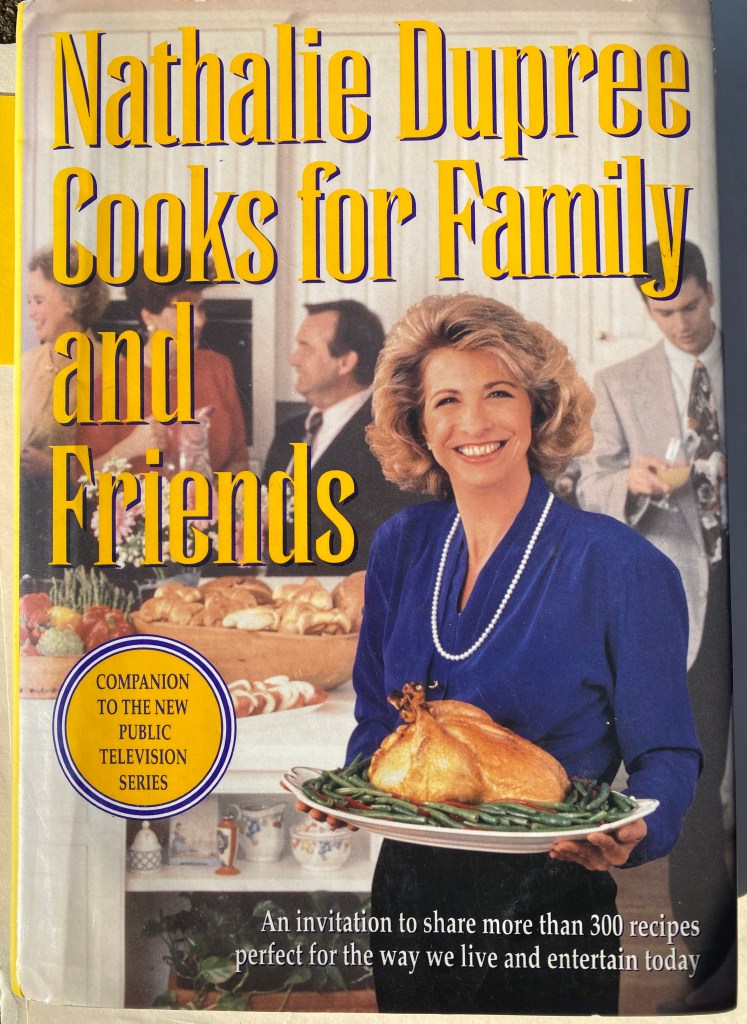
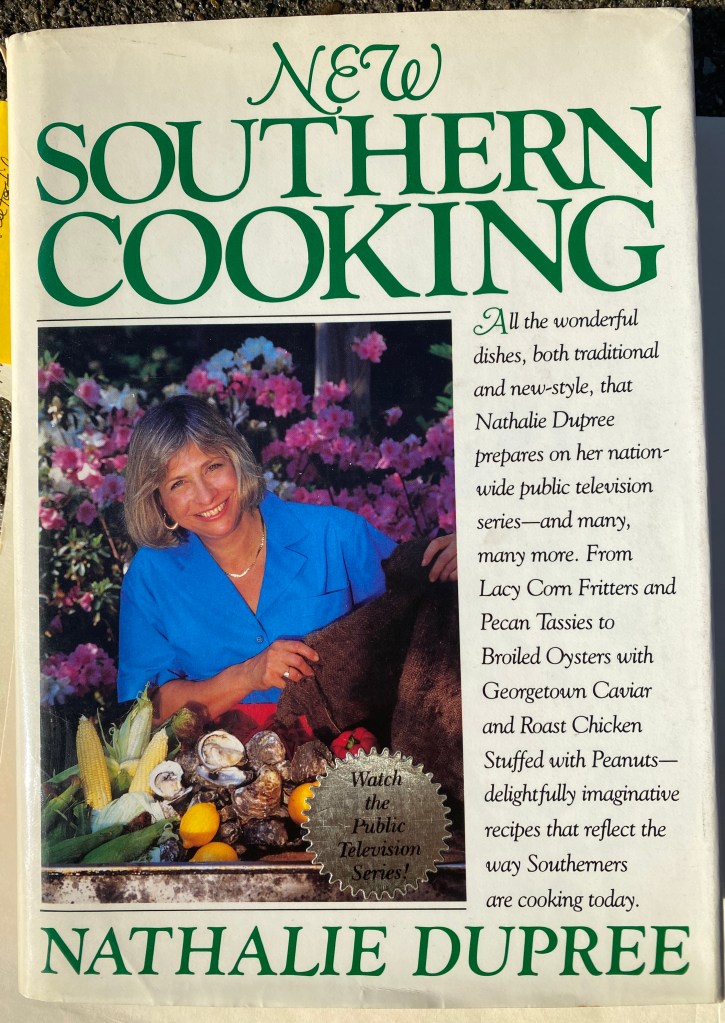
Nathalie’s many cookbooks graced our shelves year after year.
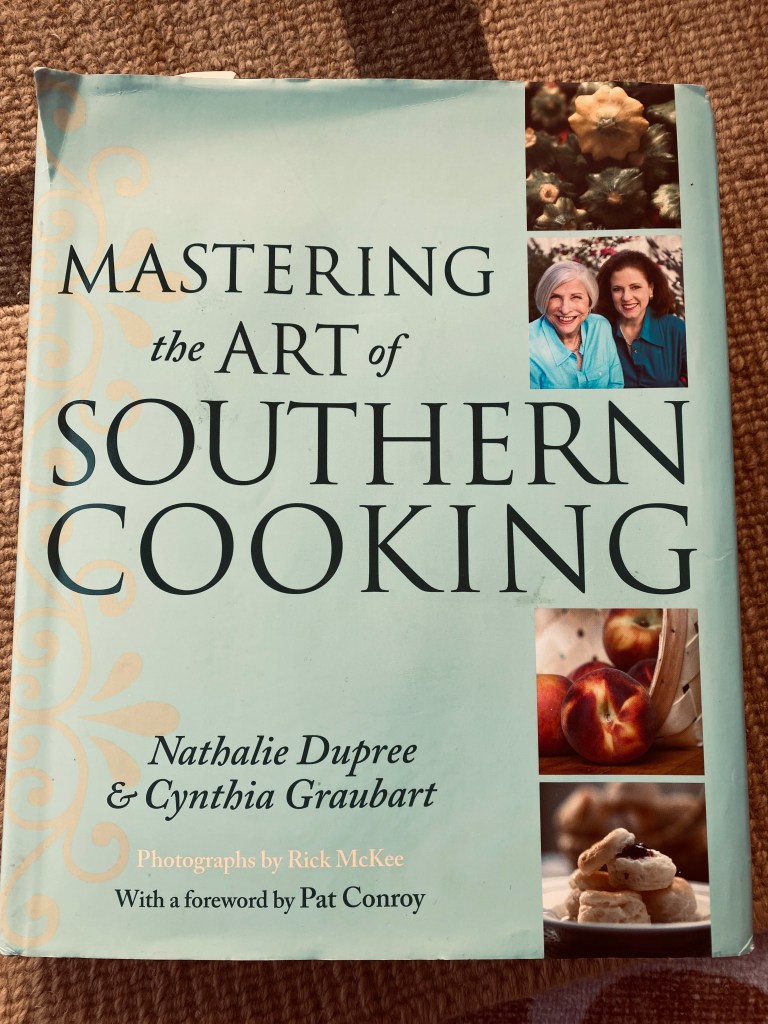
On one of her visits (I must have been around eleven years old), Nathalie handed me a sleek grey box which I opened only to find a delicate strand of freshwater pearls nestled expectantly inside. I still have the pearls, a cherished possession that always recalls her historical importance to my family. A few years ago, as my young daughter and I made the “Home-Style Peach Cake” (Pg. 553 in Mastering the Art of Southern Cooking) together I told her the story of Nathalie’s significance in my life and American life. “Can we make a cake with her sometime?” my daughter asked.
Nathalie’s James Beard Book award-winning cookbook. Pat Conroy wrote the Foreword.
Through the years when I have, say, read a profile in People Magazine about Nathalie, learned of her award of “Grande Dame” for Les Dames d’Escoffier (which she considers her highest honor as it comes from women who have excelled in the food industry), or watched her gracefully sharing her expertise while making an appearance on Top Chef (Season 3 Episode 2) I feel a tinge of pride. Not only because Nathalie’s vast achievements as a renowned chef were being celebrated but because the larger world was recognizing something my family had known for years–that Nathalie has a rare talent for marrying ingredients together and cooking up delicious love and acceptance for all of us.
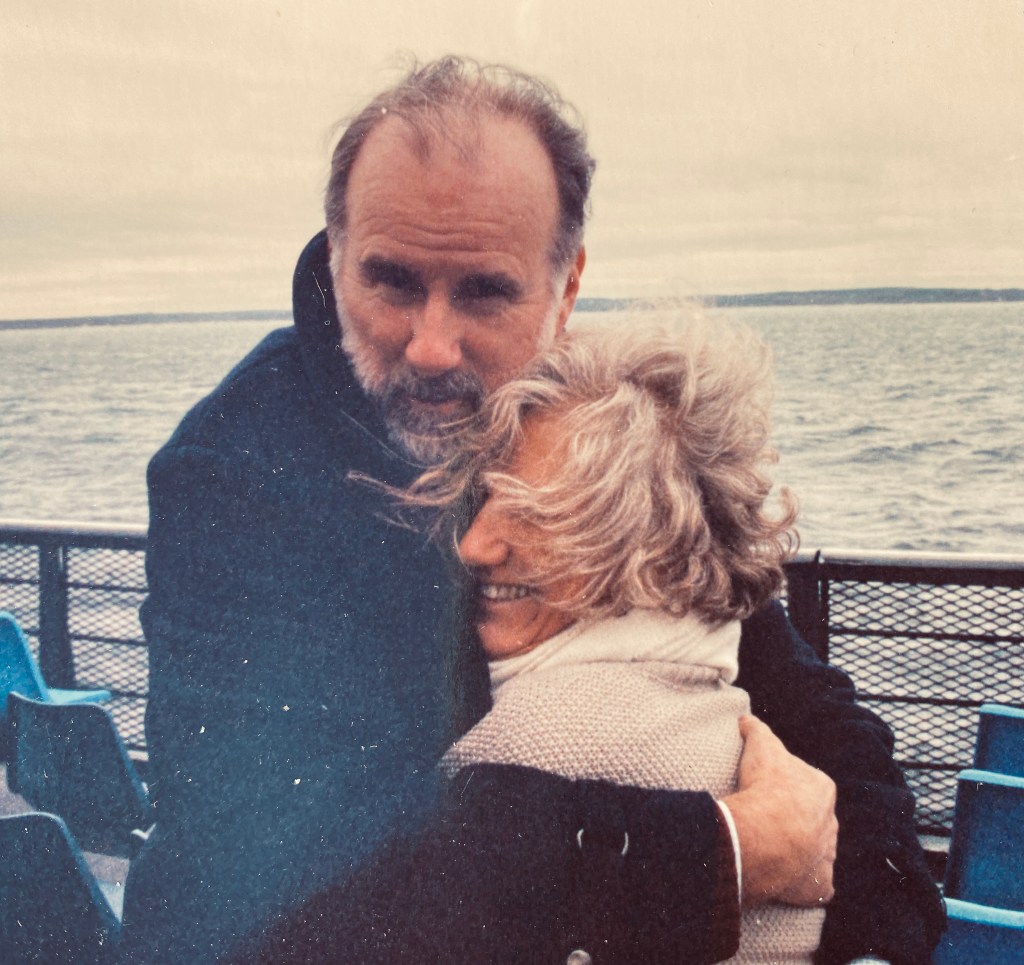
My parents in 1999…decades of love shared.
I hope that Nathalie and my daughter and myself make that cake together someday and that she knows how grateful I am to her, for noticing and responding to the spark of true love.





 Still...however...maybe...
You must be logged in to post a comment.