Recently, I saw true love. Love intertwined with my own personal history, sheltered in a place rich with meaning.
This love was not romantic, but held longevity and fierce loyalty.
A mother and a daughter, Jennifer and Nancy, are living together on their land in California. A place I know intimately, inhabited by two humans I adore. Women tenderly trading love back and forth like cherished heirloom jewelry.
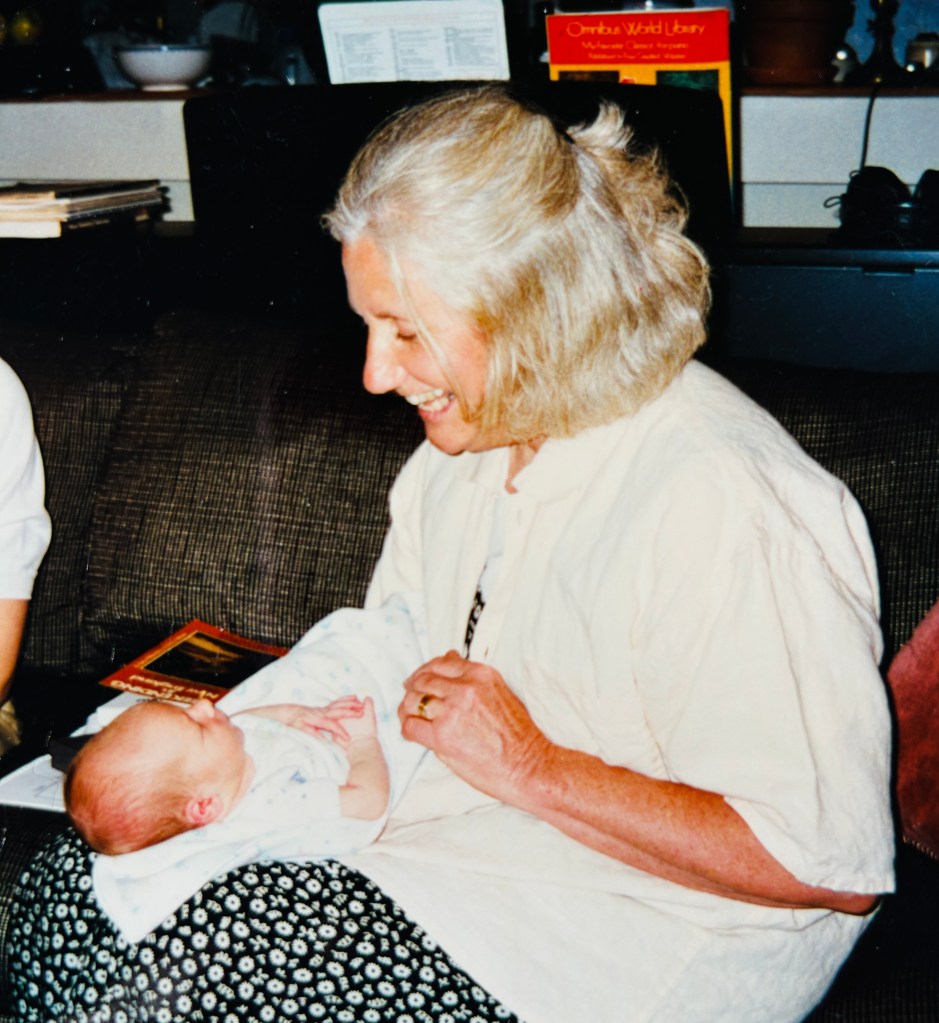
We are not blood-related, but I have known Nancy and Jennifer since I was seven. Nancy and her husband Bob were my parents’ closest friends. Over the years, we have spent countless days together, shared many holidays, and taken family trips. Nancy was like a second mother to me, especially during my formative years. Children need people who believe in them, and Nancy believed in me. She recognized my hidden academic potential. She drew out my true creative self, and gently prodded me when I got too serious or withdrawn.
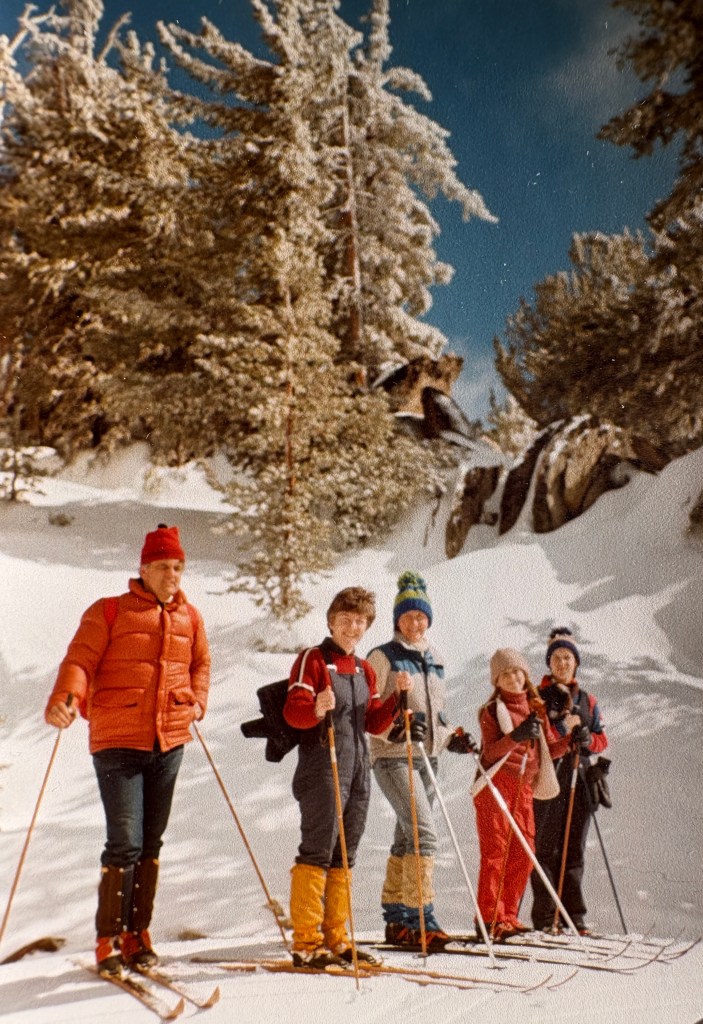
Tahoe, 1980. My family joined Nancy, Bob and Jennifer for a cross-country ski trip.
Recently, her daughter Jennifer shared with me that Nancy was having some health difficulties. If I were going to visit, this was the time. Jumping on a plane and flying across the country, I imagined my visit. I would spend time helping around the house, explore the garden and sit with Nancy.
What I did not expect was to be so moved by the depth of love and devotion between two people. Viewing my own history through fresh eyes, I gained a deeper appreciation of the role that beloved elders have played in my life.
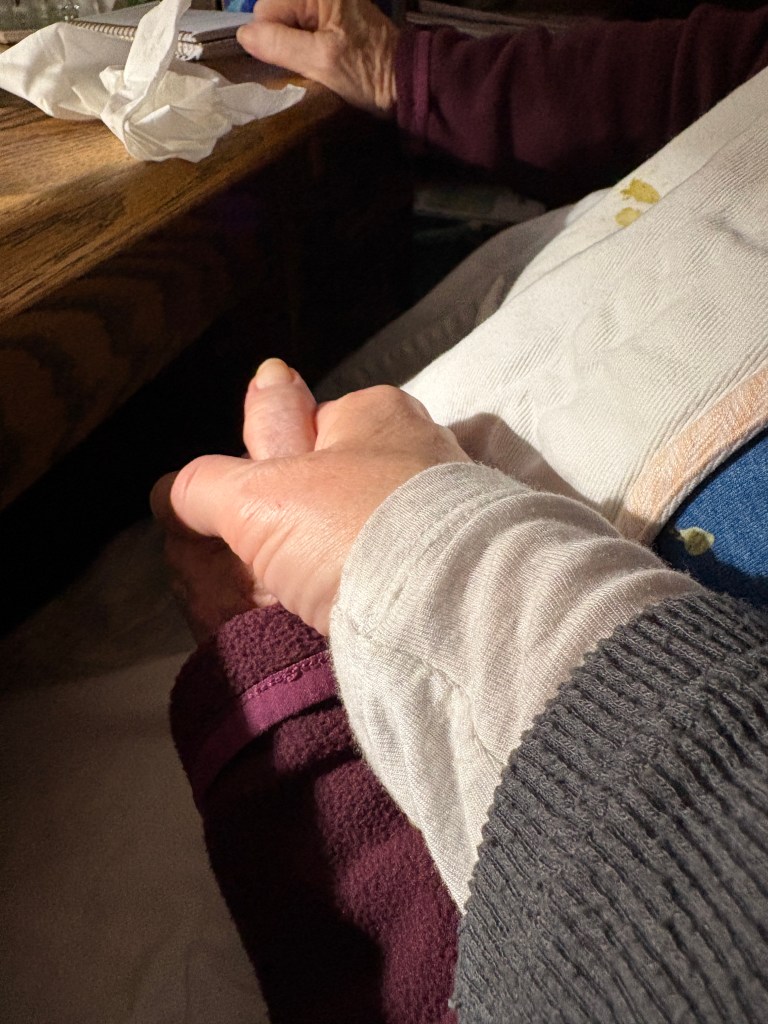
Holding Nancy’s hand.
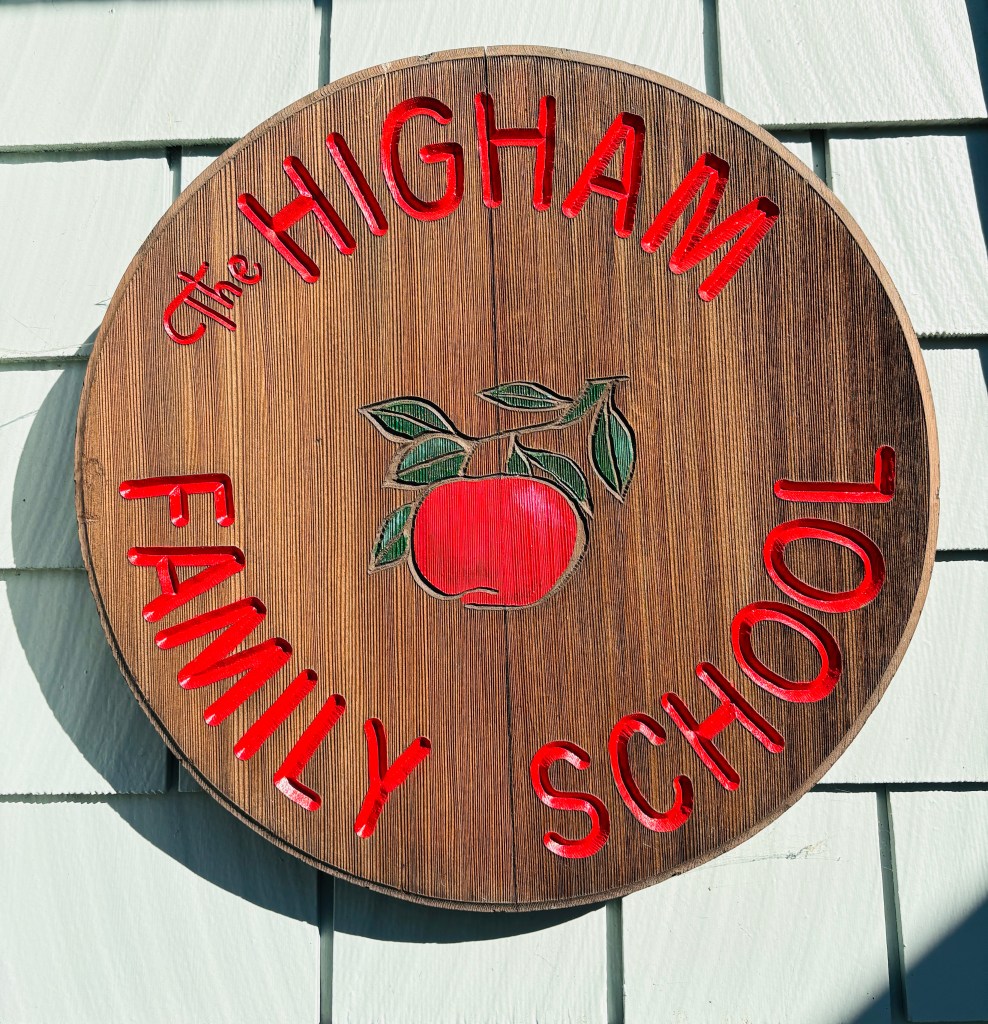
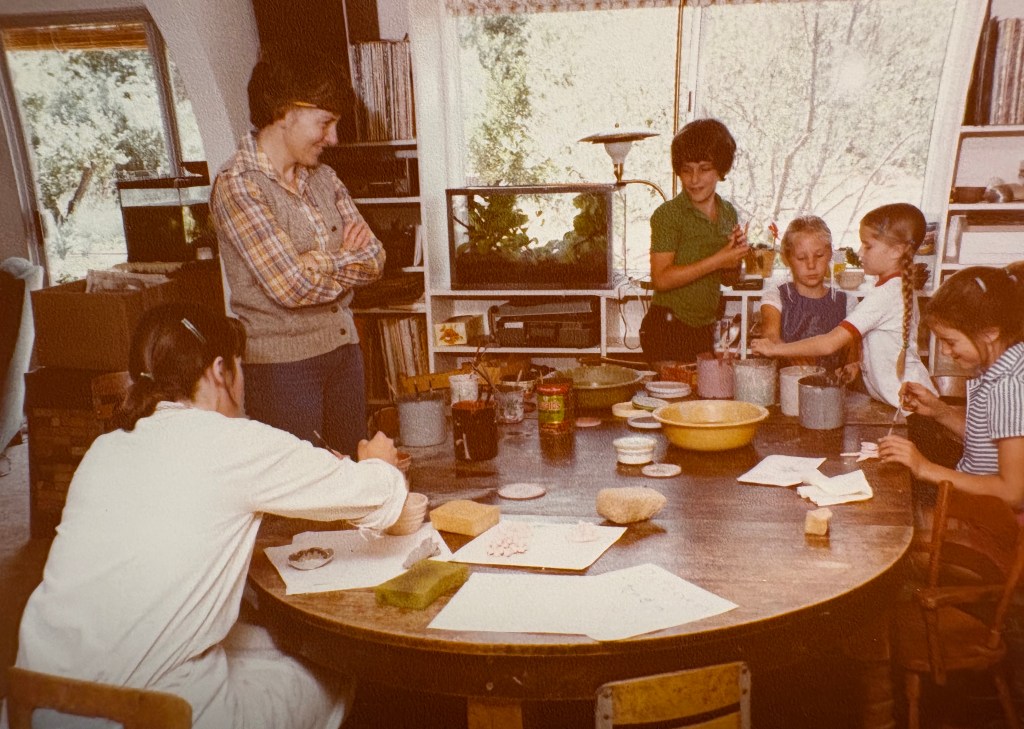
In my 5th grade year, I attended The Higham School, a private garden and arts school Nancy and her husband Bob ran out of their Santa Rosa home, the same home she remains in today. The school was a creative haven for children who gathered every morning to sing songs from The American Songbook and beyond. We learned (alongside reading and writing), pottery, art, puppetry, and mask making by a variety of Sonoma County artists.
We took field trips to the redwoods and the Pacific Coast and made apple cider in an old-fashioned press. Bob decreed that you would not be excused from lunch unless you had eaten the apple you picked off a tree that morning, down to the core. Only the stem and bitter seeds in their casings should remain. In my mind, Bob still looks over my shoulder when I bite into an apple, ensuring nothing goes to waste.
Nancy oversees a class art project, 1982. I am on the right in the striped shirt.
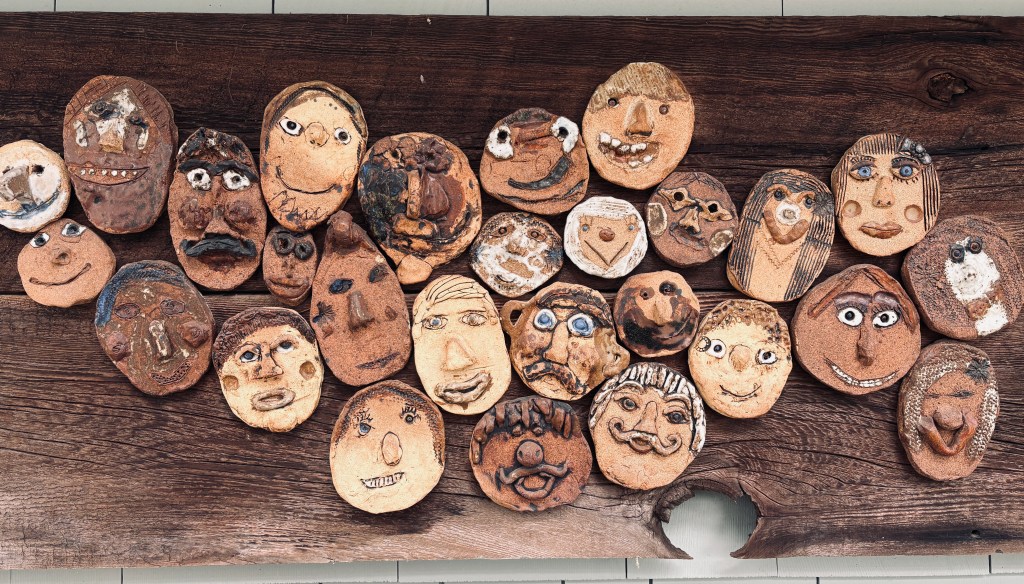
Memories of The Higham Family School can still be found in Nancy’s house today. Clay faces created by students peer out from a wall and Nancy’s library still holds the Beverly Cleary and Shel Silverstein books I once savored. The ancient apple press sits unused in the garage.
Through the years, Nancy’s sharp educator’s mind (she’s a UC Berkeley graduate), sense of humor, and practical nature have provided a steady stream of wisdom and unfussy guidance to me and many other young people. She still participates in a book group with women she has known since college (they call themselves the “Bookies”). Now that I am a teacher (a profession I fell into willingly but unexpectedly), I often find myself thinking “What would Nancy and Bob do?”
It wasn’t just in my childhood that Nancy played an important role. When I was a young professional in San Francisco, Nancy often hosted my fiancé and me for Easter and Thanksgiving. Later, knowing that I was an eight-month pregnant soon- to-be mother missing her own mother, Nancy flew to Indiana and designed and implemented an entire landscaping and garden project for my now husband and myself. My two children only met Nancy and Bob a few times, but loved them and and didn’t want to let go.
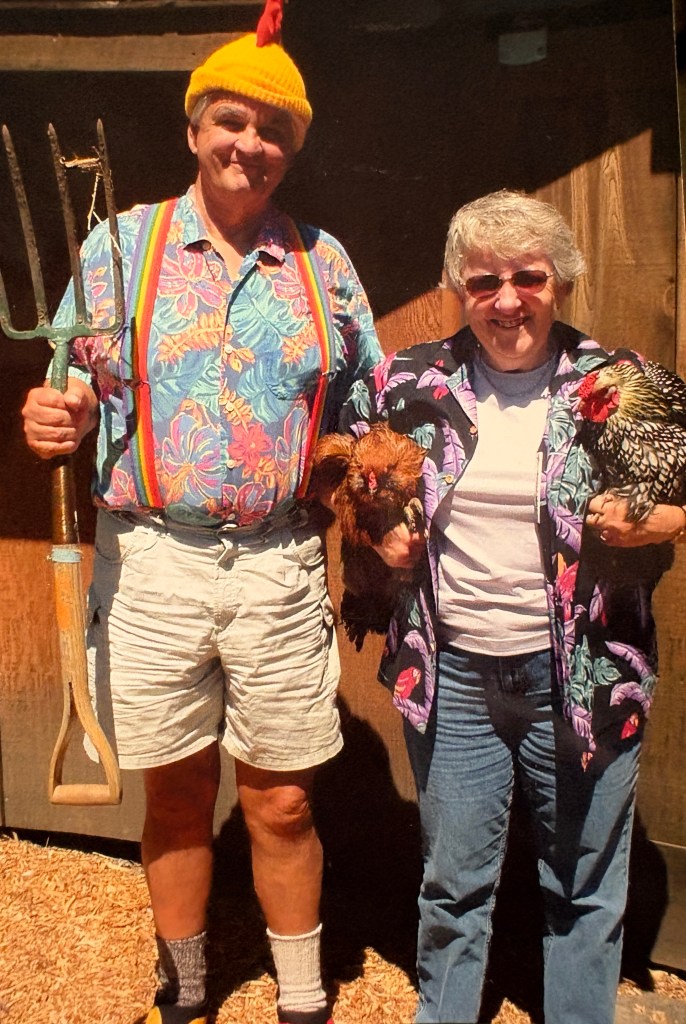
Nancy and Bob Higham, 2004.
The last few years have been difficult for Nancy and Jennifer. Nancy’s beloved husband (and Jennifer’s father), Bob, passed away, joining their son who had died far too young. Bob’s absence leaves a gaping and very quiet hole in the house, and Nancy misses Bob terribly. Health issues have piled on top of both ladies like the manure heap in the back corner of the garden.
Still, I know no other human who is more fiercely connected to and defined by her home, garden, and surrounding land than Nancy is, and Jennifer has given Nancy the gift of staying in her home, of “aging in place” with exquisite 24-hour caregiving. And even though two terrifyingly destructive fires in recent years have burned many surrounding houses to the ground, Nancy’s still stands. Despite exhaustion and an unknown future, so do mother and daughter.
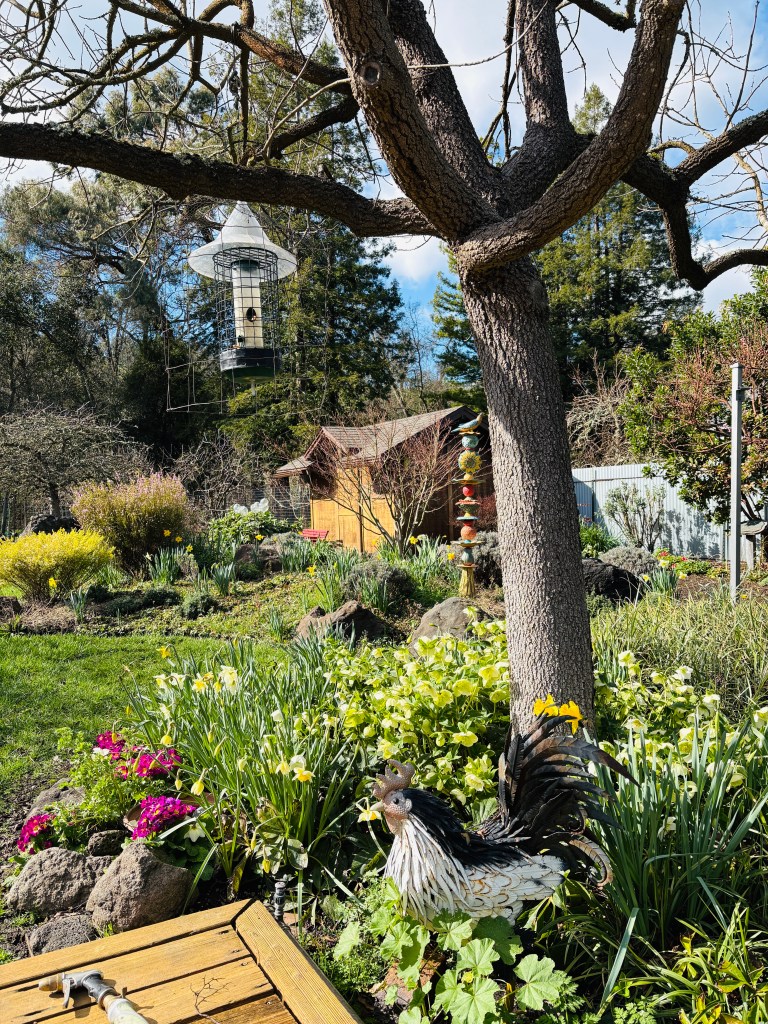
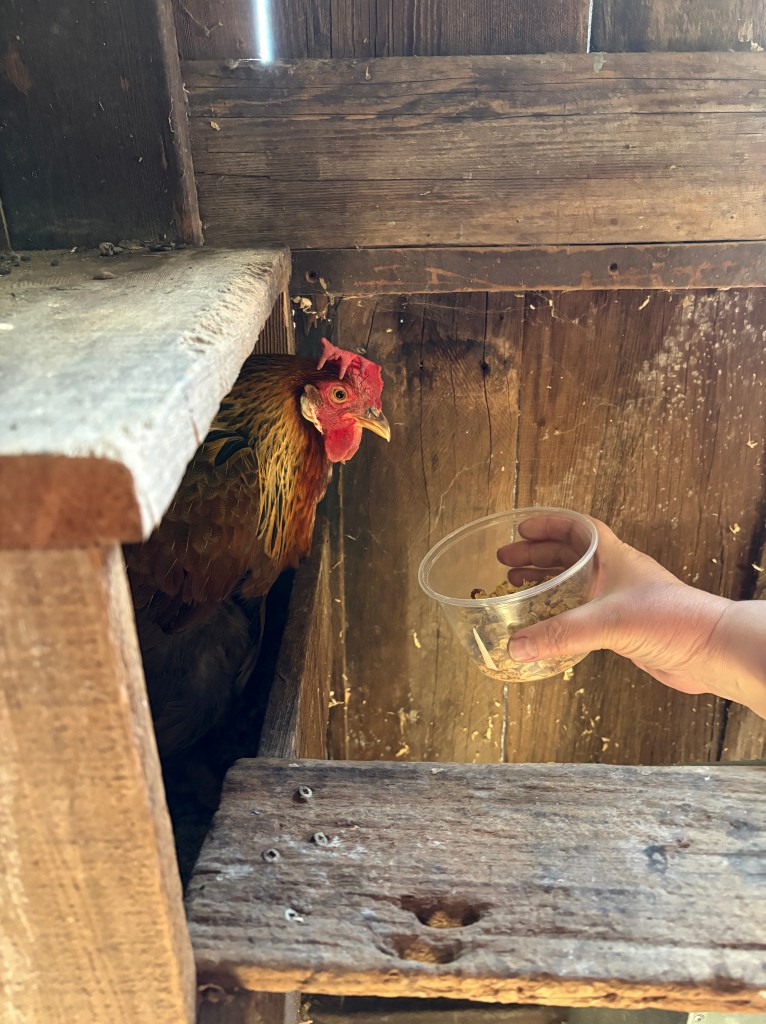
Nancy and Jennifer have learned to cultivate small joys – enjoying fresh and preserved food from the garden, arranging flowers from the beds outside, savoring ice cream and fresh bread from a local bakery, watching home improvement shows, reading out loud, and tending to their pet (the only remaining chicken from the once robust flock in the garden), an 11-year-old miracle chicken named Sweet Pea who prefers her granola handfed. This year, Nancy and Jen decided that they enjoyed the lights of the Christmas tree so much it would stay up into February.
Sweet Pea enjoys lunch.
True love can be hard to find in our world today. We wonder whether love is genuine, if there is an agenda, and if it will disappear tomorrow. Spending those days in Nancy’s house, sitting quietly and holding her hand, watching Jennifer’s patient caregiving, I was shown how Nancy’s love and guidance have impacted my life.
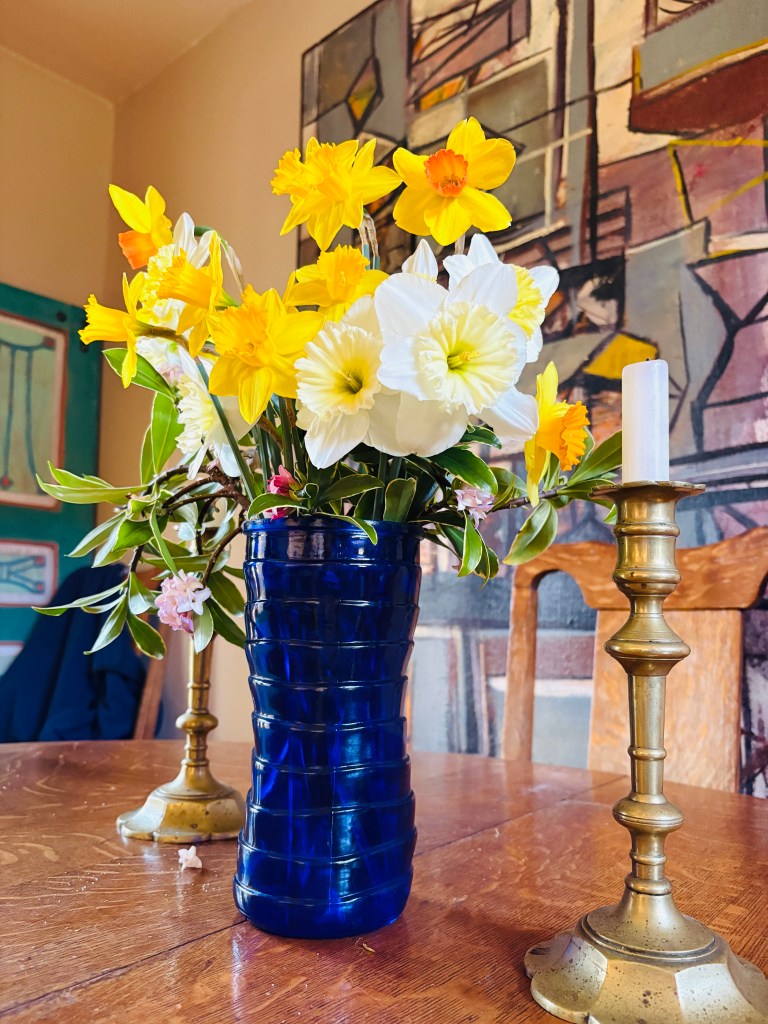
Arrangement of daffodils picked from Nancy’s garden.
I saw that no health challenge, no passing of time, no fire or painful loss can cancel the knowledge and devotion shared by family, or family of choice.
Inside a home that housed a school, the place that helped shape so many young hearts and minds, a woman shares her final chapter with her daughter. What I experienced during my four-day visit refreshed my belief in the power of presence and devotion.
May we all know such an enduring impact, such true love.
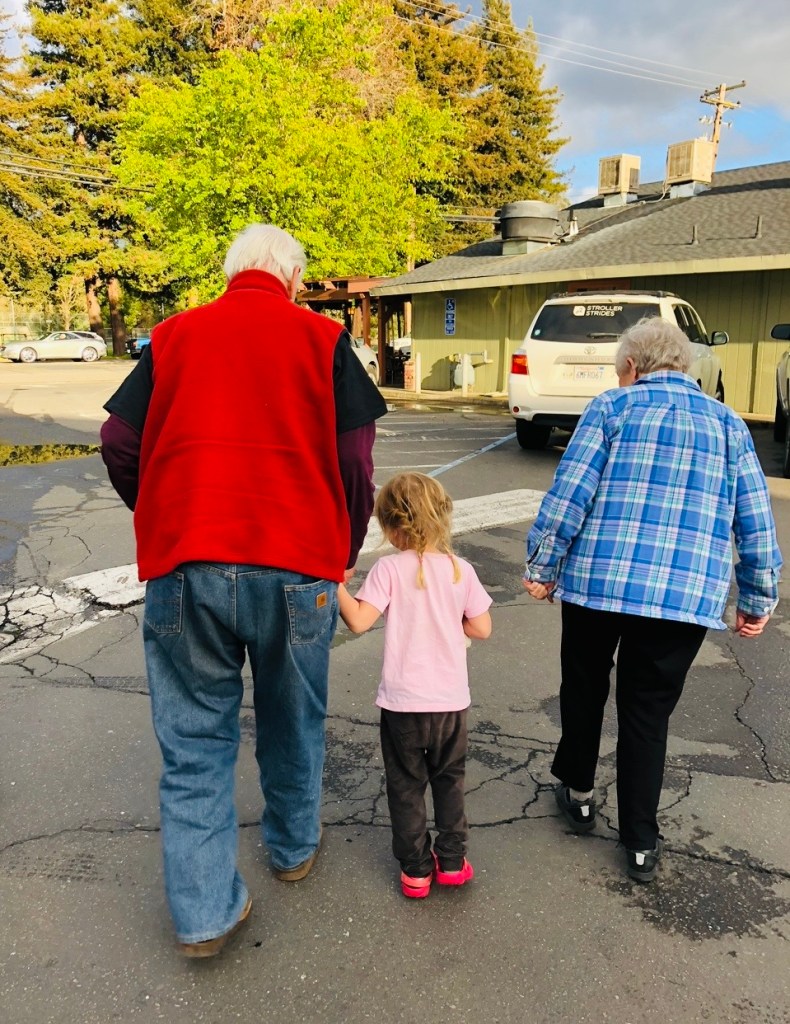
Bob and Nancy, walking into the future with my daughter.
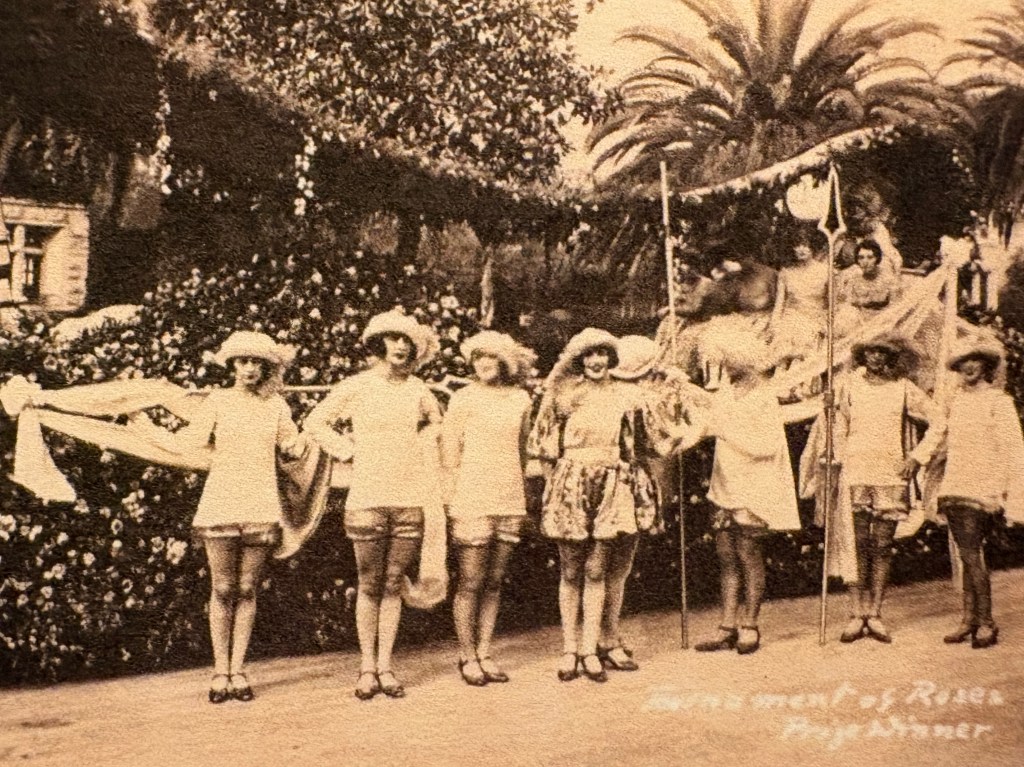
1926 Tournament of Roses “Prizewinners” pose, 50 and 100 years before our story takes place
Pasadena, California, January 1, 1986, 5:15 AM:
I wake to the sound of my dad’s voice—hushed and gravely. “Kiddo, time to get up. We’ve got to get out there early so we can get seats. Melba has some cereal for you in the kitchen.”
Sleeping on the polished wood floor of my grandparents’ tidy Pasadena bungalow hasn’t exactly made for a restful night. Slowly, I roll over and open my eyes to the darkness of the living room. As I wiggle out of my sleeping bag, I remind myself that there’s a lot to look forward to. Today is the first day of 1986! I’m turning 15 in a few months! I get to watch the Rose Parade in person! And unlike my chilly, often rainy-in-the-winter hometown in Northern California, today will be sunny and warm. This is LA, after all. I head to the kitchen to eat Wheaties with my dynamic, turquoise-collecting, organ-playing step-grandmother, Melba.
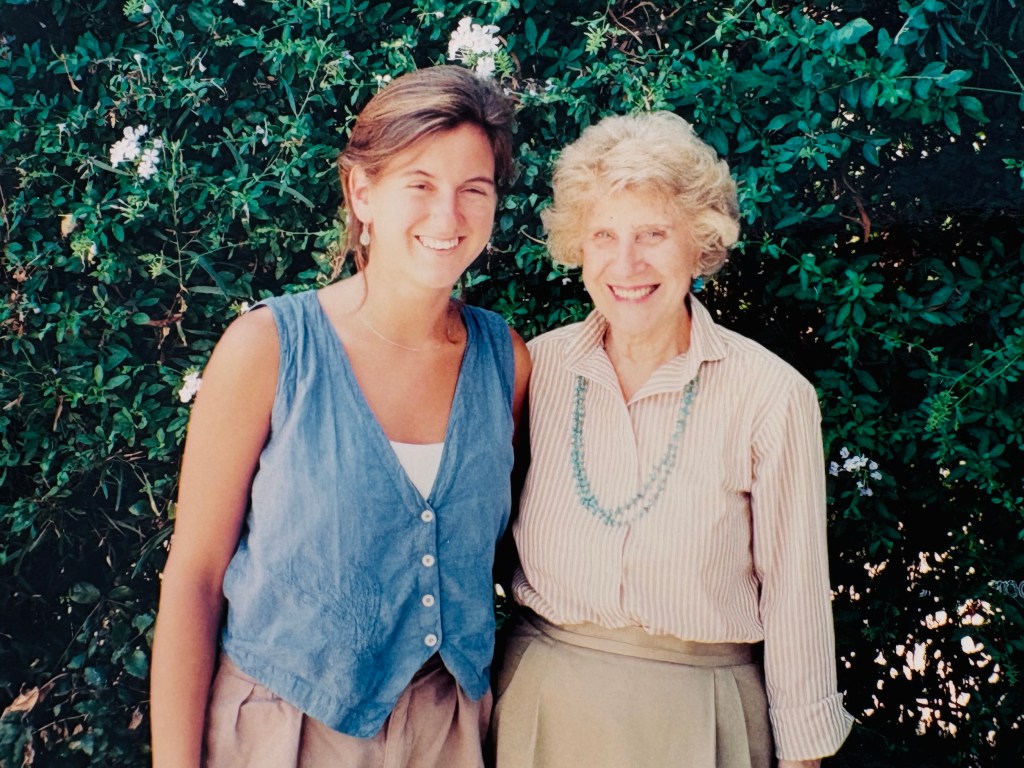
Me and Melba (a few years later, in 1995)
Pasadena, California, January 1, 2026, 5:15 AM:
A few seconds after swiping the bar to silence my cell phone alarm, I roll over and gently nudge my 12-year-old daughter’s shoulder. “Time to wake up, Bunny…it’s the first day of 2026! Dad’s got a blueberry muffin for you in the kitchen.” Groaning, she shakes off my hand. She’s not easy to wake up on the best of days, but this morning I fear that the combination of the 3-hour change from our Midwest home, plus an ungodly wake-up time, might make it impossible. The driving rain outside doesn’t help either. Not fair, we’re in LA!
To claim our prepaid parking spot for the Rose Parade, we must arrive by 6 AM. The sun won’t rise for hours over the spacious modern house we are staying in—a house belonging to good friends who are out of town. And thanks to the unusually heavy rain sweeping across the Los Angeles basin, we won’t feel the sun on our skin for almost the entire day. With the promise of an early visit to Starbucks, our daughter finally rises. Blurry-eyed, mostly silent, yet eager to experience the parade. She refuses the muffin.
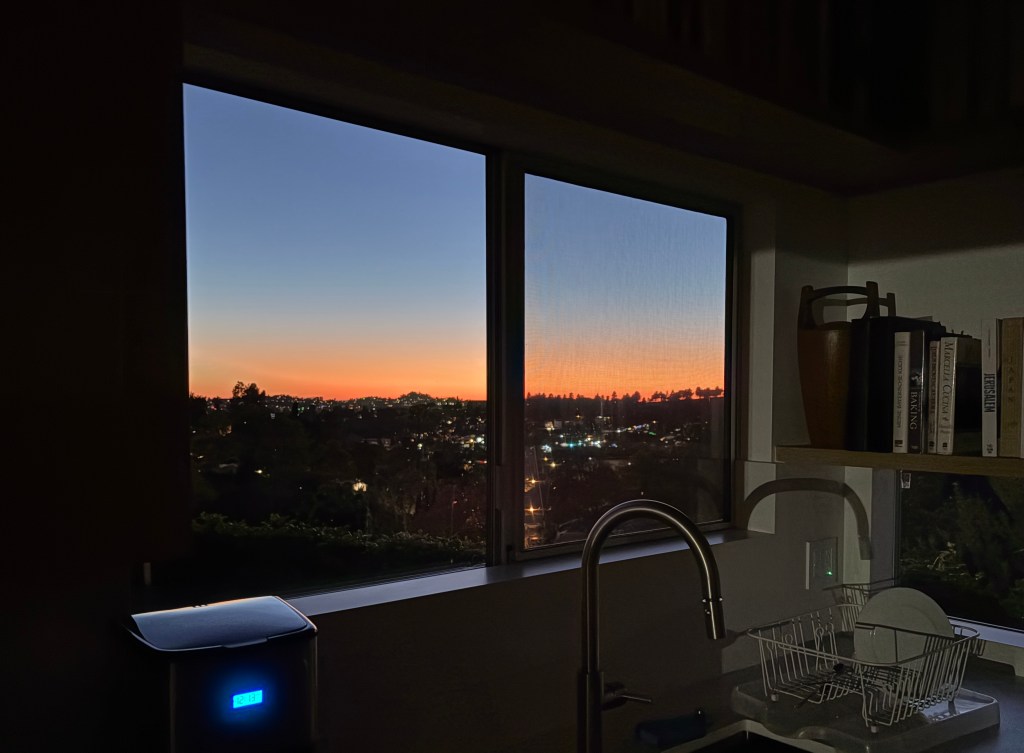
Los Angeles sunset as seen from the modern house’s kitchen
1986, 6:30 AM:
After piling into our blue Honda Accord, my dad steers the three of us (Mom, Dad, and me) the few miles from my grandparents’ house on Arden Drive to Colorado Street in downtown Pasadena. We are meeting our family friends, Kathy and Phil, at the parade. I am particularly fond of Kathy and Phil. The two of them live (child-free) in a house on a steep hillside above the Russian River, where banana slugs leave thin gossamer trails. However, they also once lived out of a school bus full of intricately handmade wooden cabinetry stocked with Mexican beads that was parked in our driveway for a month.
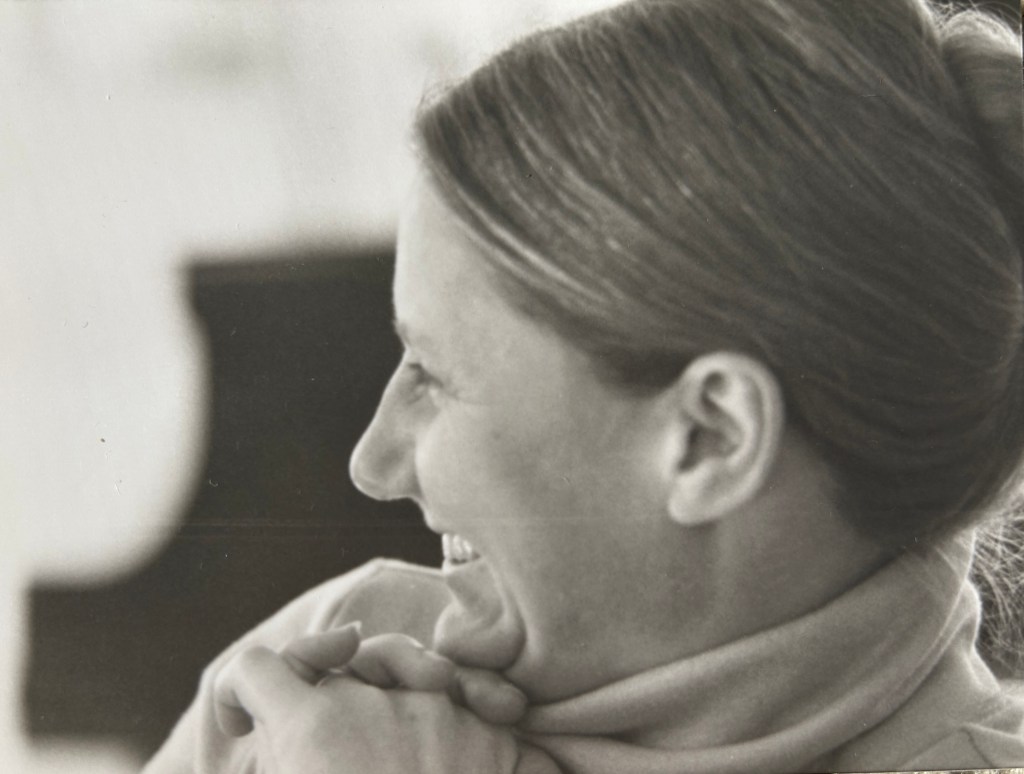
Kathy Toomire, 1982
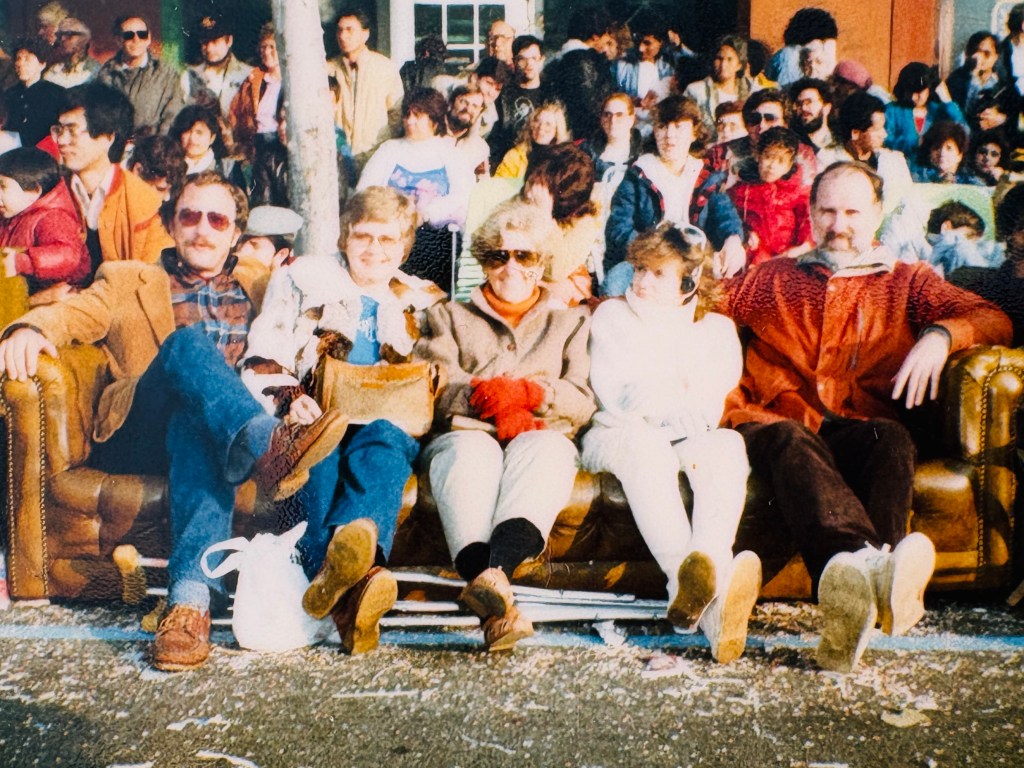
It’s early enough that we easily find a parking space, but incredibly, many of the prime viewing spots along the parade route have already been claimed. My parents good-naturedly refuse to pay for “overpriced bleacher seats.” As our group stands on the curb discussing what to do, a truck suddenly pulls up next to us, and a burly guy leans out of the driver’s side window. “Hey, we got couches for rent,” he yells. “We’ll drop it off on the street right here and pick it up at the end of the parade. Thirty bucks!” The grownups look at each other, unsure about the offer. I quickly pipe up, “Oh please please please, that’ll be so fun!” Everyone agrees, and the five of us soon find ourselves sitting thigh-to-thigh on a fake leather couch, unexpectedly granted a rather cushy front-row seat to the 1986 Tournament of Roses Parade.
Seated on our parade-viewing couch, from left: Phil, Kathy, Mom Patricia, me, Dad David
2026, 6:30 AM:
“Two hot chai lattes with oat milk, one hot cocoa, and a croissant, please.” As one of the few cars in line, we quickly move along the Starbucks drive-through and are soon pulling into our assigned parking space, right on time. Our (uncovered) bleacher seats are only two blocks away, and the parade starts at 8. There’s only one hiccup—it’s raining. Hard.
We are prepared. The day prior, after trying four separate stores, we were finally able to purchase plastic rain ponchos (never mind that we now appear to be huge LA Rams fans). We are also equipped with plastic garbage bags to sit on, snacks, and a change of clothes. My husband, who is attending the Rose Bowl football game after the parade, has his own see-through bag packed complete with regulation-sized water bottles and a towel. We waive off the friendly lady weaving through the nearly flooded parking lot, offering Rose Parade seat cushions for $20 each.
Sitting in the dark, we listen to the rain drum on the car windows and sip our warm drinks. Our breath builds steam as we stretch out with the ease of the early hour. I’m grateful to share this cozy time with my daughter and husband. These quiet moments with our girl are fleeting—she’ll turn into a teenager this year. I can feel her consciously shaping her own identity apart from us, no longer attached to my hip or sharing every detail of her life with me the way she once did. She got her first phone for Christmas this year. Turning to ask her something, I see that she’s stretched out across the backseat, her head resting on a rolled-up sweatshirt, sleeping soundly.
1986, 8:00 AM:
The Pasadena City College band marches by, mere inches from our crossed ankles, the blaring horns and drums making my head throb. “Did I ever tell you I went to Pasadena City College before I went to Principia?” asks my Dad. I roll my eyes (a common occurrence), “Yes, Dad, many times. I know you played baseball for them, too.”
He clears his throat, then his thoughtful gaze shifts to mine. “What would you think about taking the Honda over to the Rose Bowl parking lot tomorrow? If it’s not too crowded, you could practice the stick shift a bit.” My eyes grow wide. “Really?” I ask incredulously, even though I know he wouldn’t ask if he didn’t mean it. My dad never goes back on his word.
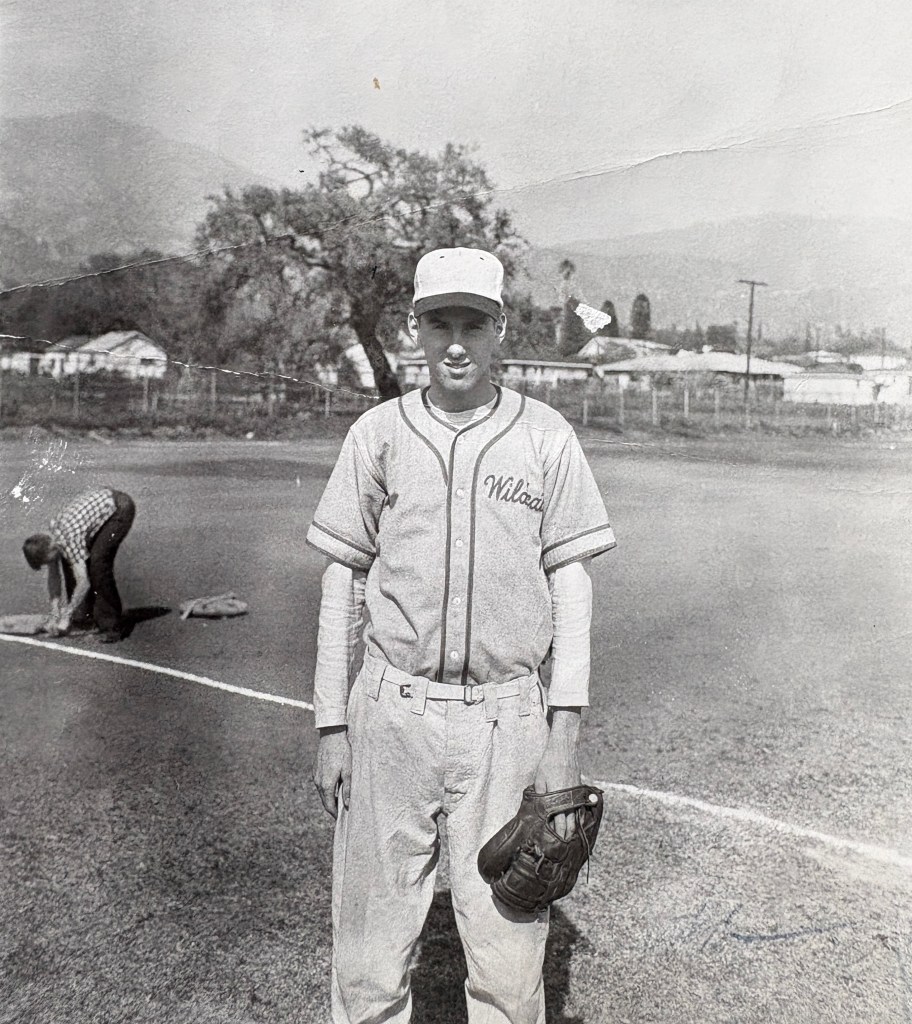
My father the pitcher, Monrovia, CA 1956. His greatest claim to fame was not his sucessful career as a journalist, it was the time he once pitched a no-hitter.
This Grand Marshal of this year’s 133rd Rose Parade is Mickey Mouse, tying in perfectly with the theme: A Celebration of Laughter. I’ve been to Disneyland once, when I was three, but not since. My dad is a freelance writer, and our vacations are almost always centered around visiting family or camping. I know better than to ask for a trip to Disney—there isn’t a budget for that.
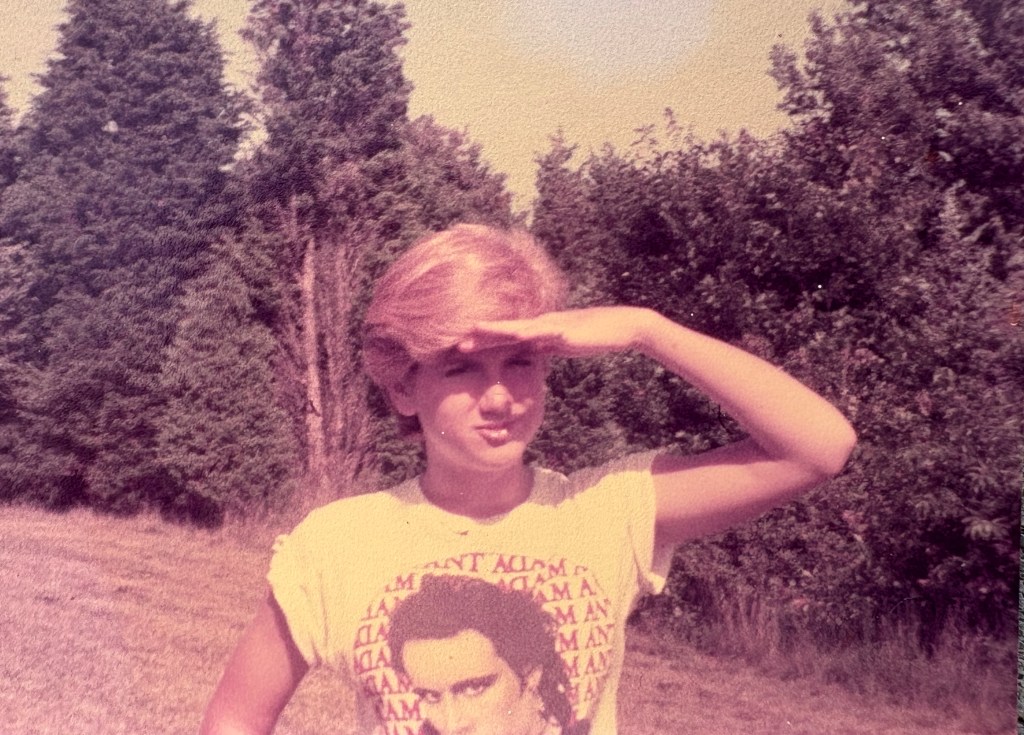
Mom, Dad, Kathy, and Phil point out the flower-covered floats, plentiful prancing horses, and celebrities. The sun is out and beginning to warm the excited parade crowd. After a while, I lean against my mom, close my eyes, and turn up the volume on my Walkman. The parade is entertaining, but I’m tired. I’ve never been much of a morning person. Right now, I’d rather be at home, calling my friends on the phone and listening to Adam Ant.
Adam Ant fan, 1984
2026, 8:00 AM:
Still in the car, we’ve been waiting for a break in the rain, but it hasn’t arrived yet. Parade start-time is approaching, so we pull on our ponchos, ready our bags, and step out into the downpour. At least it’s daylight now. Suddenly the festive atmosphere surrounds us. I get the sense that this is about as friendly a scene as you’ll find in Southern California.
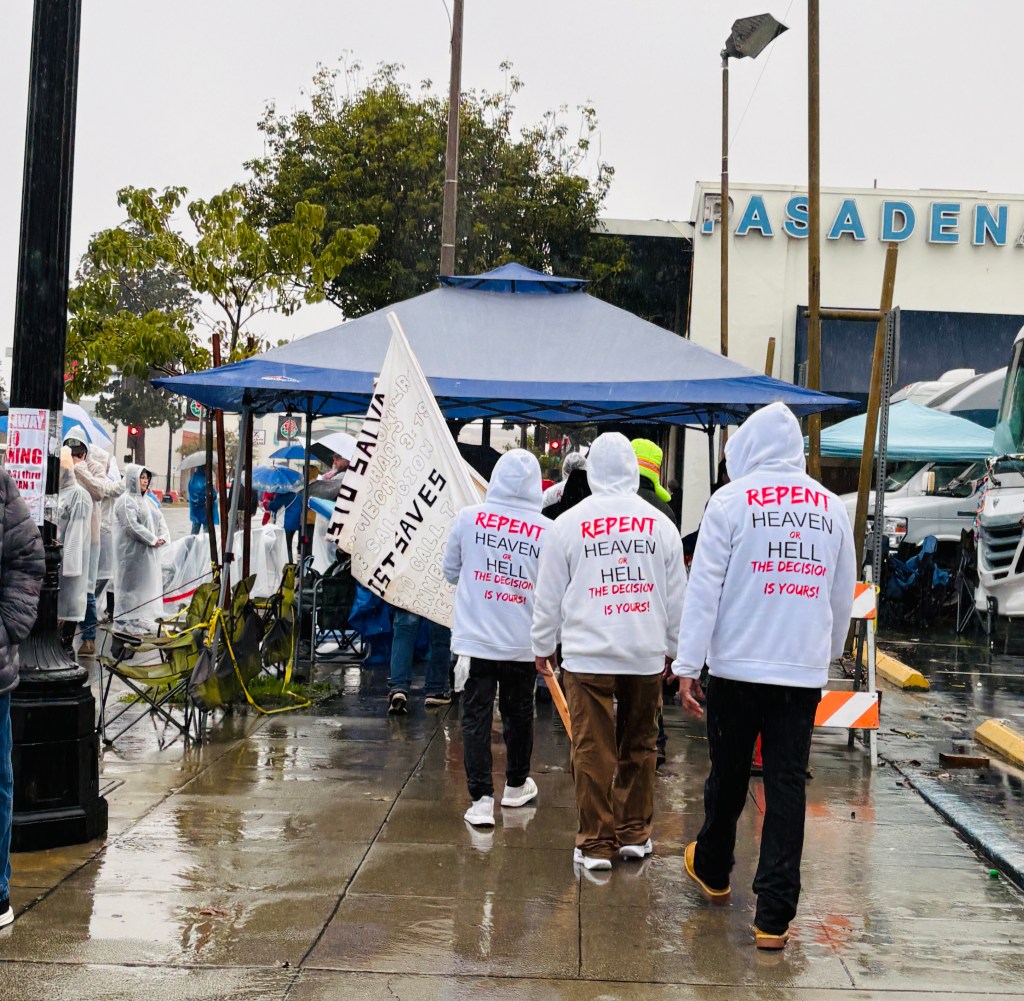
We walk the two blocks to our assigned bleacher seats, avoiding puddles and trailing behind a group of young Latino men yelling into a microphone about the importance of fearing Jesus (what would the all-loving Jesus say about that advice, I can’t help but wonder).
Above us, a large squawking flock of Pasadena parrots flies by, a welcome distraction from the rain. This flock is much higher in number than the flock that used to fly above our San Francisco cottage.
Look closely to see the parrott fly-by
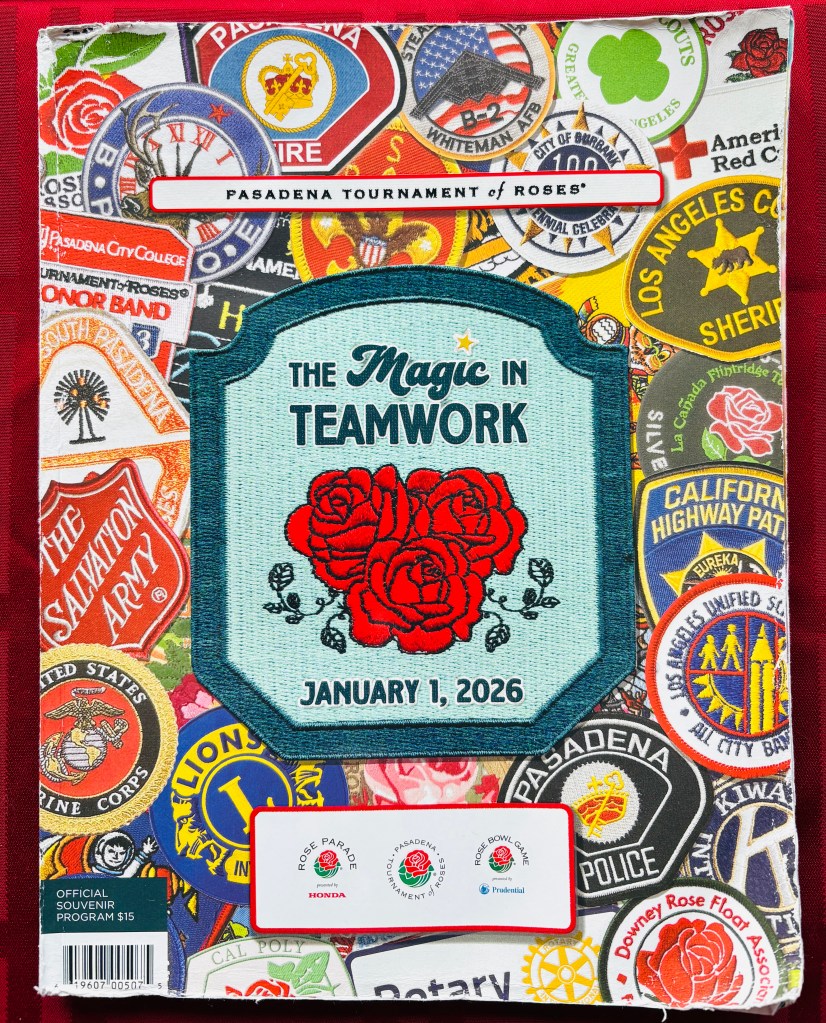
We’re up in the 20th row of metal bleachers ($336 for three seats, parking, and one program). The garbage bags we brought have come in handy, and we place them across the soaked seat. Behind us, a young girl is on the lookout for her dad, who plays the clarinet in one of the marching bands. Directly in front of us is a couple sharing our love for the Indiana Hoosiers, playing in the Rose Bowl football game in just a few hours for the first time since 1968. How wonderfully strange it is to travel across the country only to be surrounded by people connected to our own Midwest hometown and team.
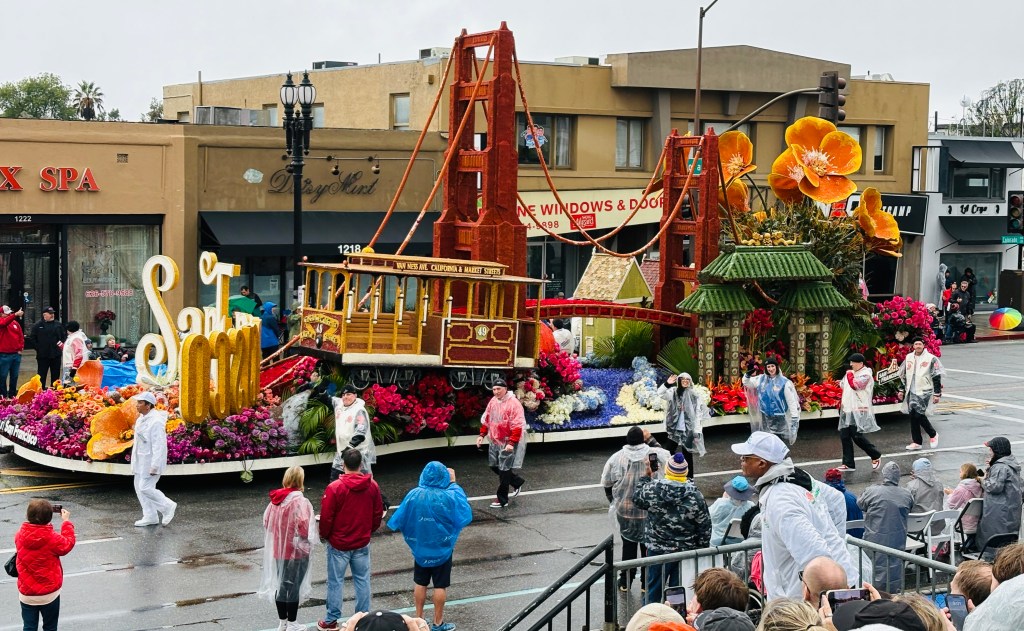
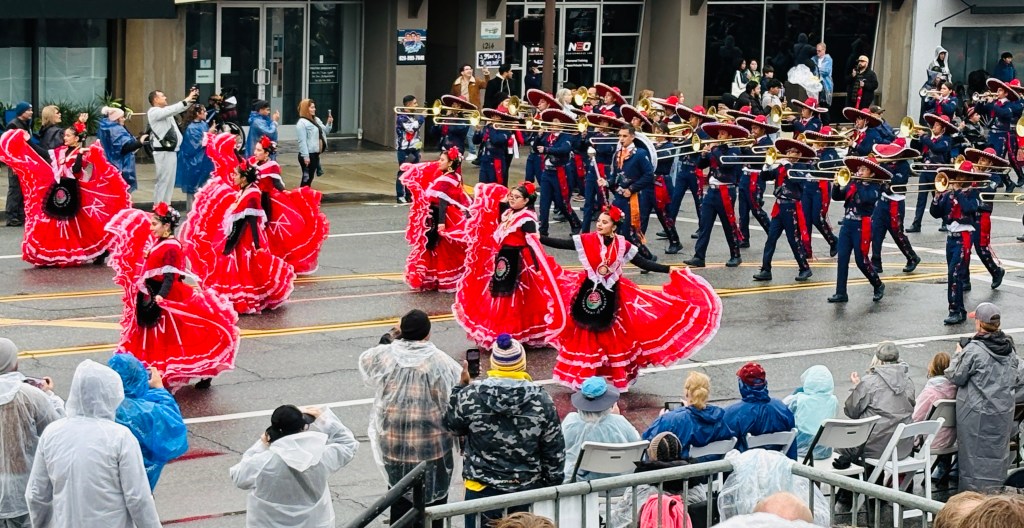
Around us, the damp crowd stirs as the first rose-bedecked motorcycles cruise by. The 137th Rose Parade is starting! One clever, vibrant float after another sails by, horses of every breed and color (from the Budweiser Clydesdales to mini therapy horses from Calabasas) and the most impressive, inspiring marching bands we’ve ever seen in a parade.
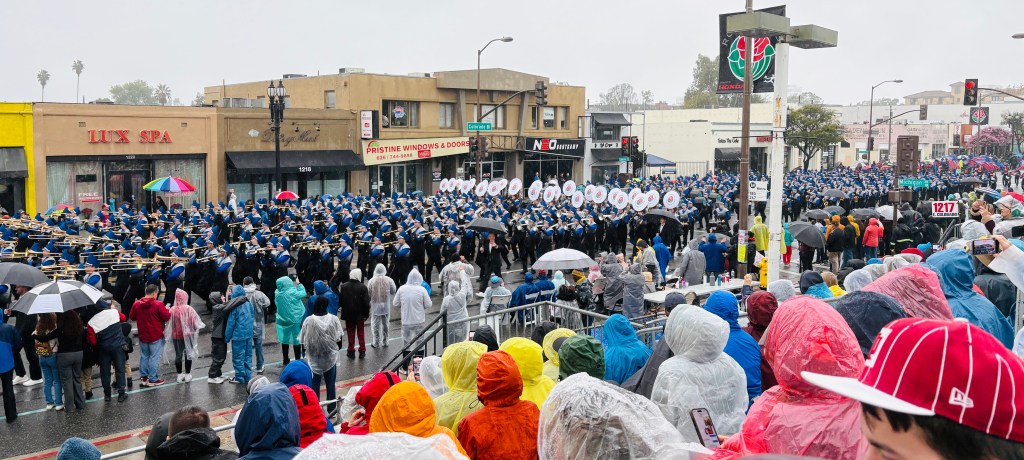
One band, the Allen Eagle Escadrilles from Allen, TX, includes so many members (600) that they create a royal blue sea stretching down the road as far as the eye can see.
The Allan Eagle Escadrilles from Allen, TX take over Colorado Street
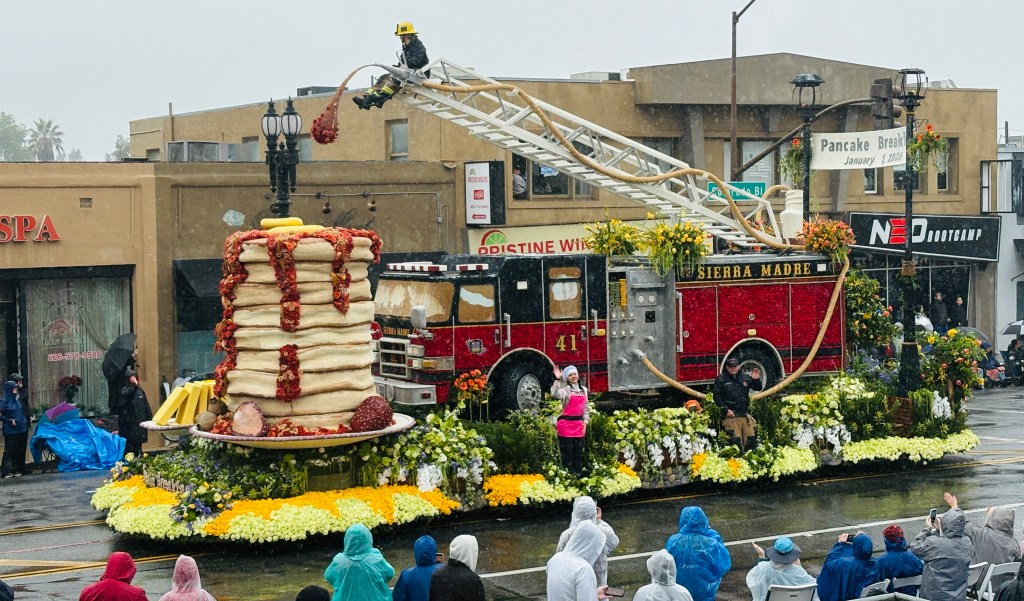
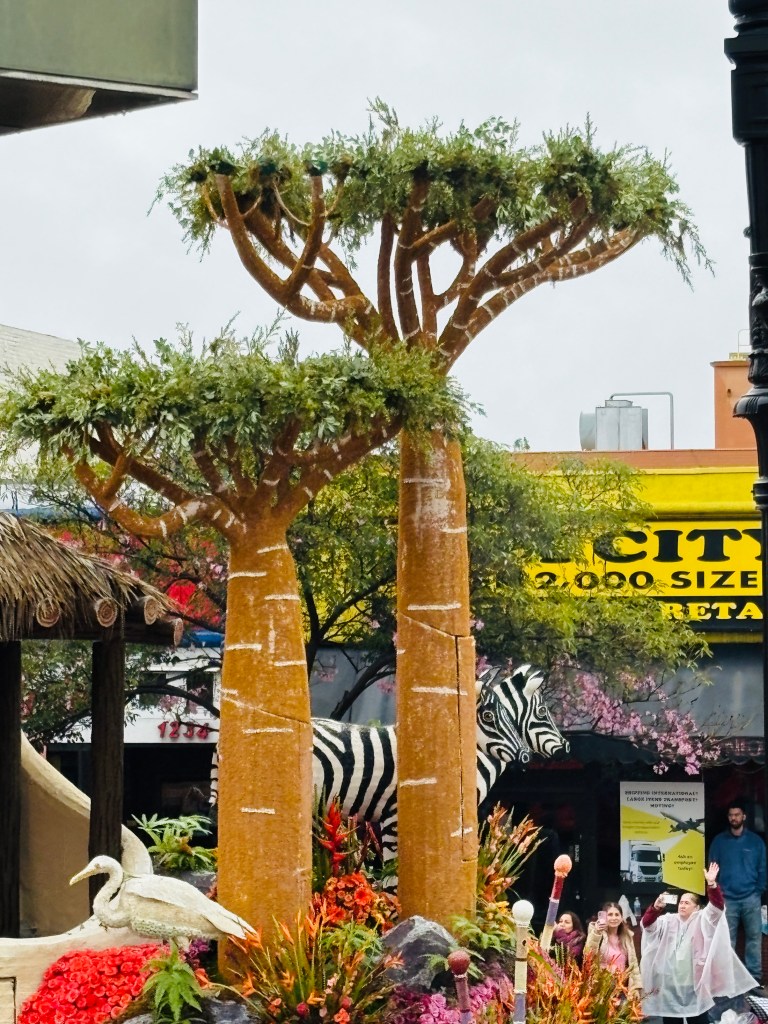
My daughter is particularly impressed by the perpetually waving lovely 2026 Rose Court, the elephants on the San Diego Zoo Safari Park (announcing the park’s new Elephant Valley attraction), and the stack of hot syrupy pancakes featured on the City of Sierra Madre float.
City of Sierra Madre float
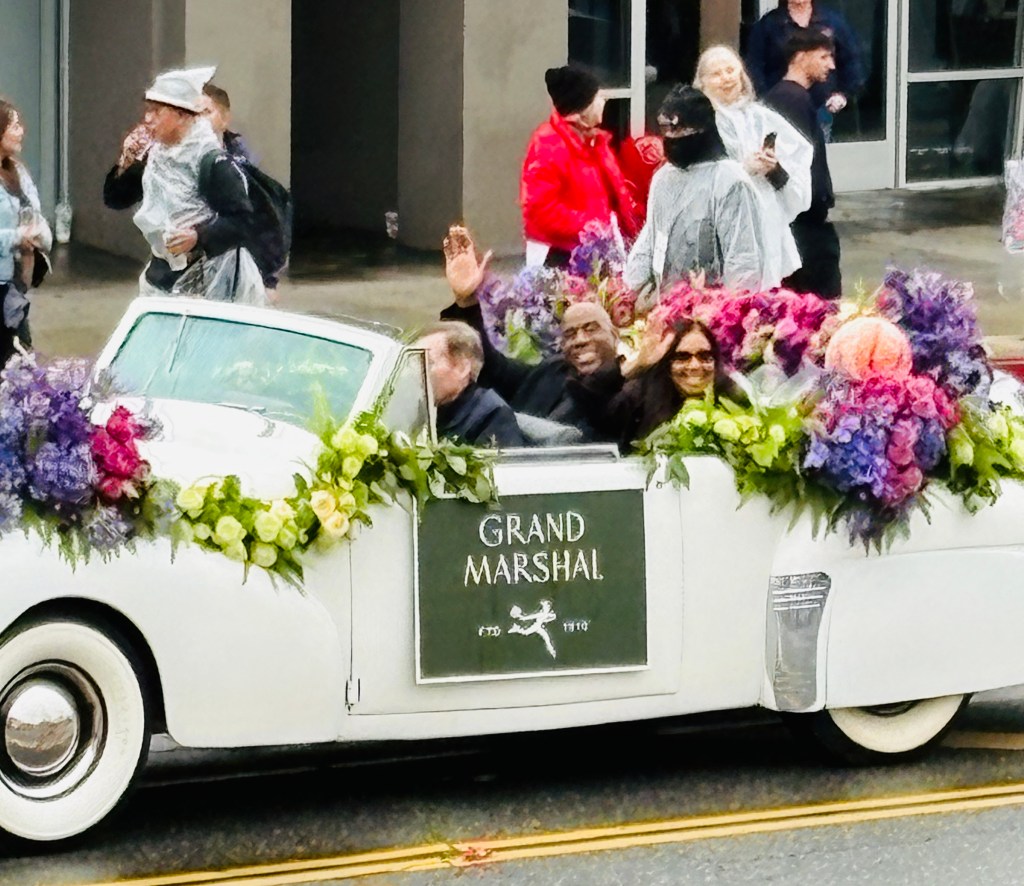
My husband and I enjoy the gorgeous City of San Francisco float (our former hometown), the Star Trek 60 “Space for Everybody” float featuring a grinning George Takei and Tig Notaro, Apple TV+’s Shrinking float (one of our favorite shows, shot in Pasadena—where are Harrison Ford and Jason Segal and Jessica Williams??), and a glimpse of the great Earvin “Magic” Johnson, the 2026 Pasadena Tournament of Roses Grand Marshal, still going strong at 66 years old.
City of San Francisco float Impressive Baobab trees on the San Diego Zoo Wildlife Alliance float Delfines Marching Band from Xalapa, Veracruz, MexicoParade Marshal Earvin “Magic” Johnson, basketball legend. His hand is the right size for effective waving.
Through the rain, the brave parade participants wave, drive, clop, and march. Under her poncho, my daughter texts her friend, “Can’t talk now, I’m at the Rose Parade.”
1986, Noon:
Walking up the low concrete steps leading into my grandparents’ home, the five of us feel hungry, tired, and overstimulated. My step-grandmother Melba has made us soup and sandwiches, and we eat together in her immaculate kitchen, bright Los Angeles sunshine reflecting off the yellow walls. Phil regales us with stories of his wayward youth in San Diego. Across the room, my towering Swedish Grandfather winks at me, his kind blue eyes crinkling at the corners.
Afterward, collapsing on yet another couch, I lean heavily against my mom. I might be fourteen, but in many ways I’m still her little girl.
2026, Noon:
The parade has ended, and for the most part, so has the rain. Walking carefully down the bleachers, we make our way to the street, where we part ways with my husband. Father and daughter hug tightly, and we tell him to enjoy an experience he has been dreaming about since he was a child, his Indiana University team playing in the Rose Bowl. (Not exactly a) spoiler alert—they won.
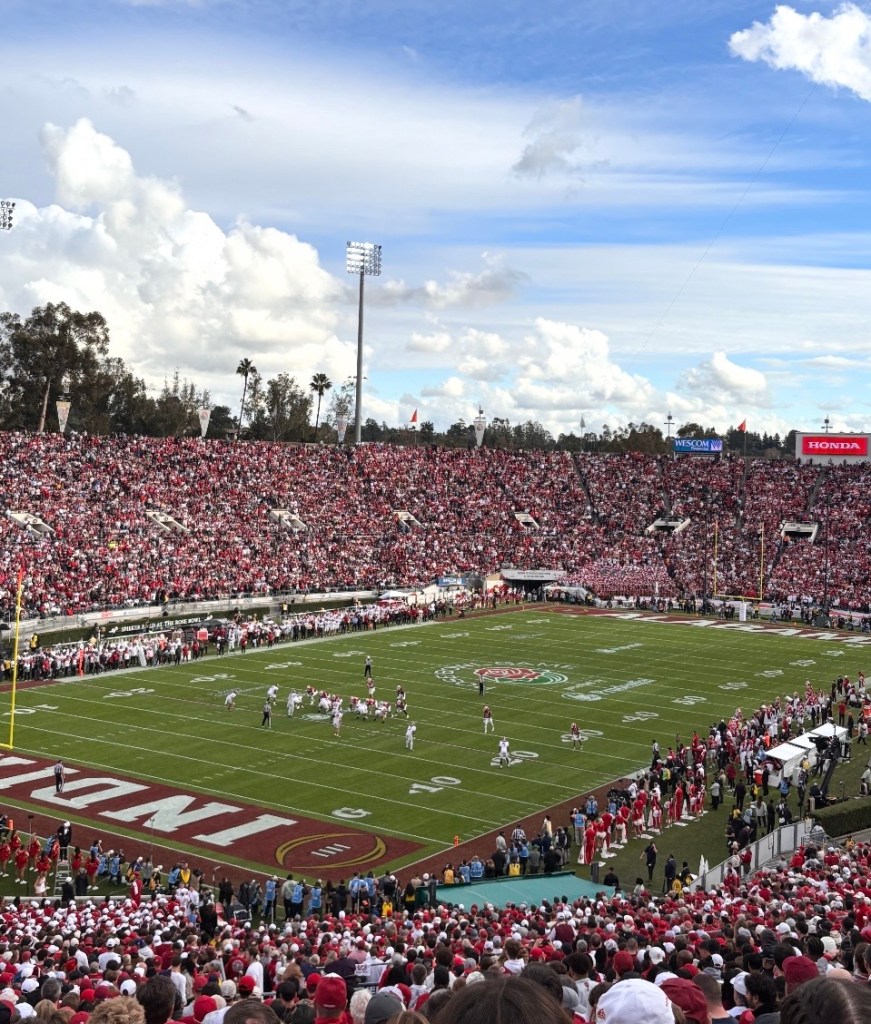
The Indiana Hoosiers’s second appearance at the Rose Bowl since 1967 Photo Credit: Tom Stryker
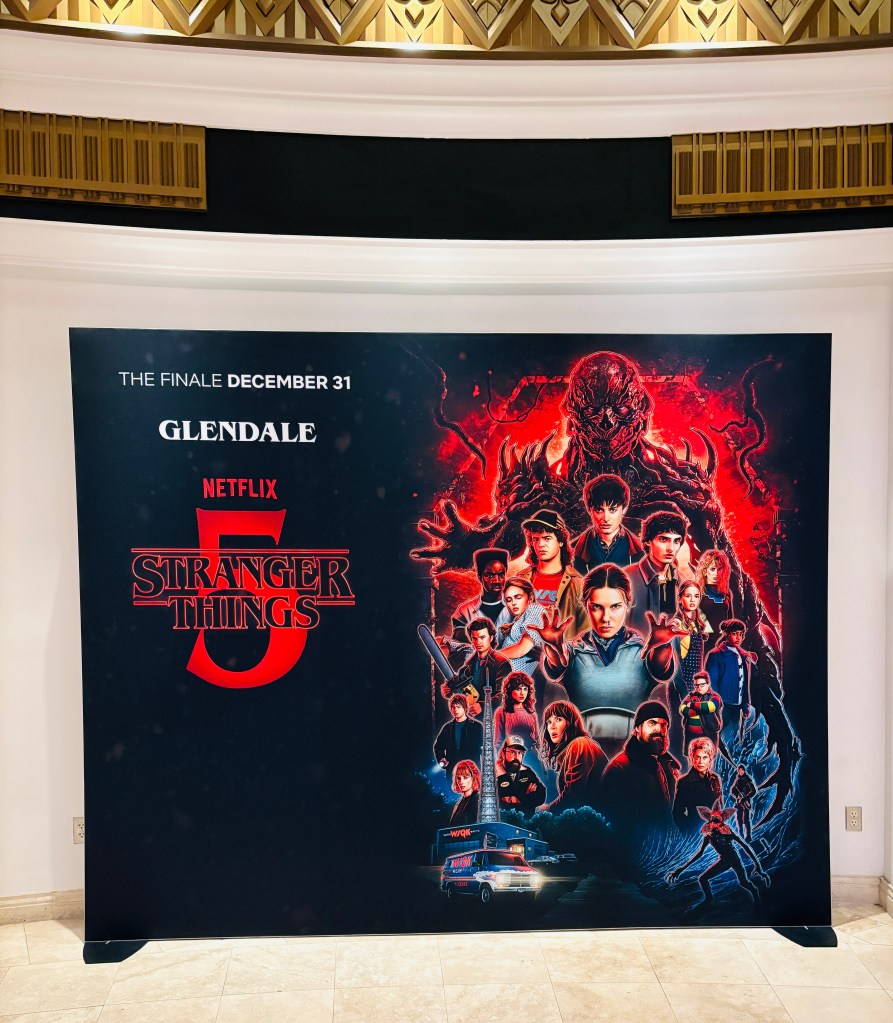
Weaving through the parade stragglers, we head in the direction of our car. The two of us are hungry, tired, and overstimulated. While her dad walks down Colorado to catch the shuttle to the Alabama vs Indiana Rose Bowl Football game, my daughter and I head to Glendale where we have tickets to see the final episode of Stranger Things on the big screen.
A few hours later, reacting with emotion to her favorite character’s shocking demise, my daughter leans heavily against me in the dark theatre. She might be twelve, but in many ways she’s still my little girl.
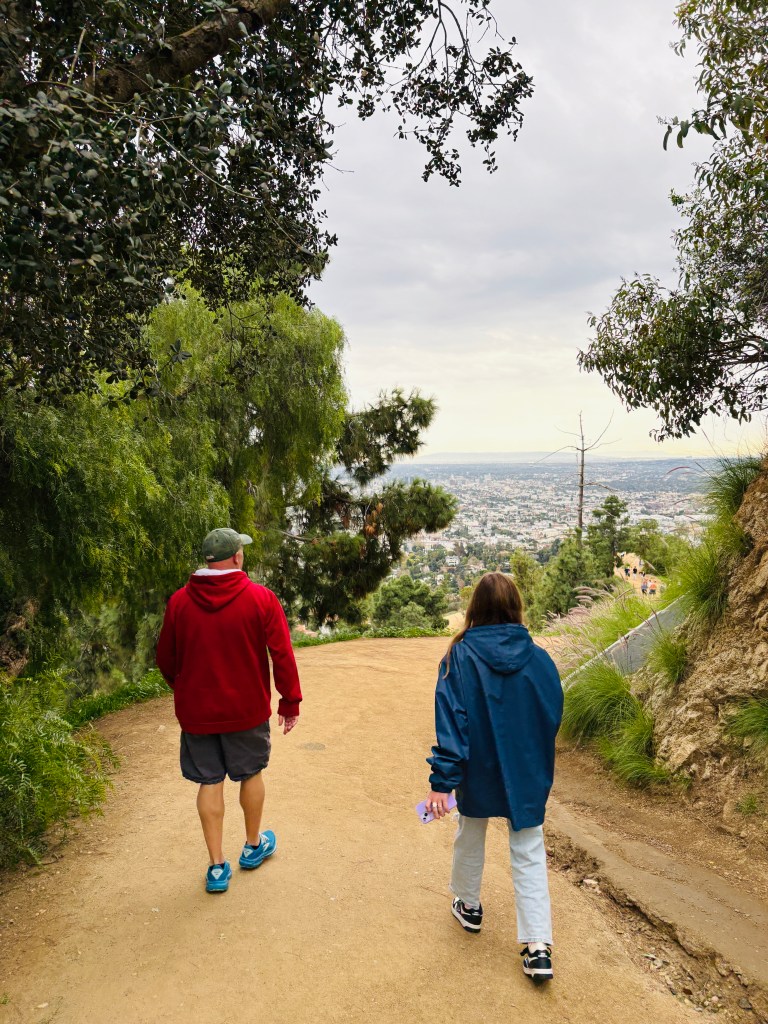
Daughter and Dad explore Griffith Park, December 30, 2025
Thanks for the memories California, you know how to throw a parade, no matter what year it is. We’ll be back soon. Hopefully the sun will be out.
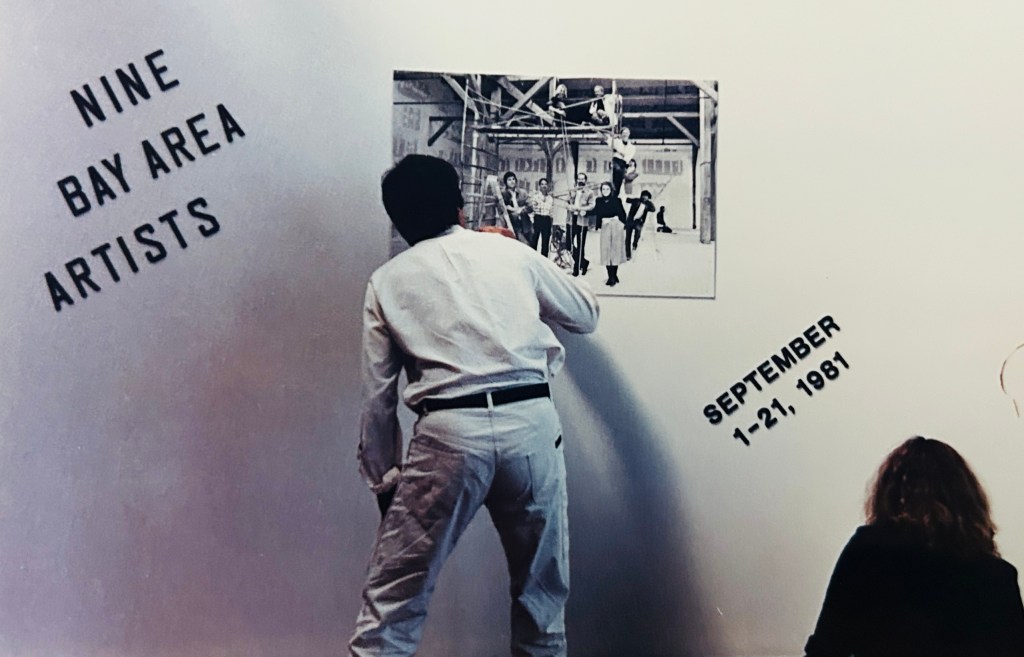
The time: Tuesday, September 1, 1981. Late afternoon.
The place: An art gallery in the South of Market neighborhood, San Francisco, California.
Some of the artists, dressed mostly in black, are huddled together, looking out a window. I can tell something is wrong. Wandering a little closer, I try to listen to their conversation while pretending I’m looking at a large blurry painting of a blue car (at least I think it’s a car).
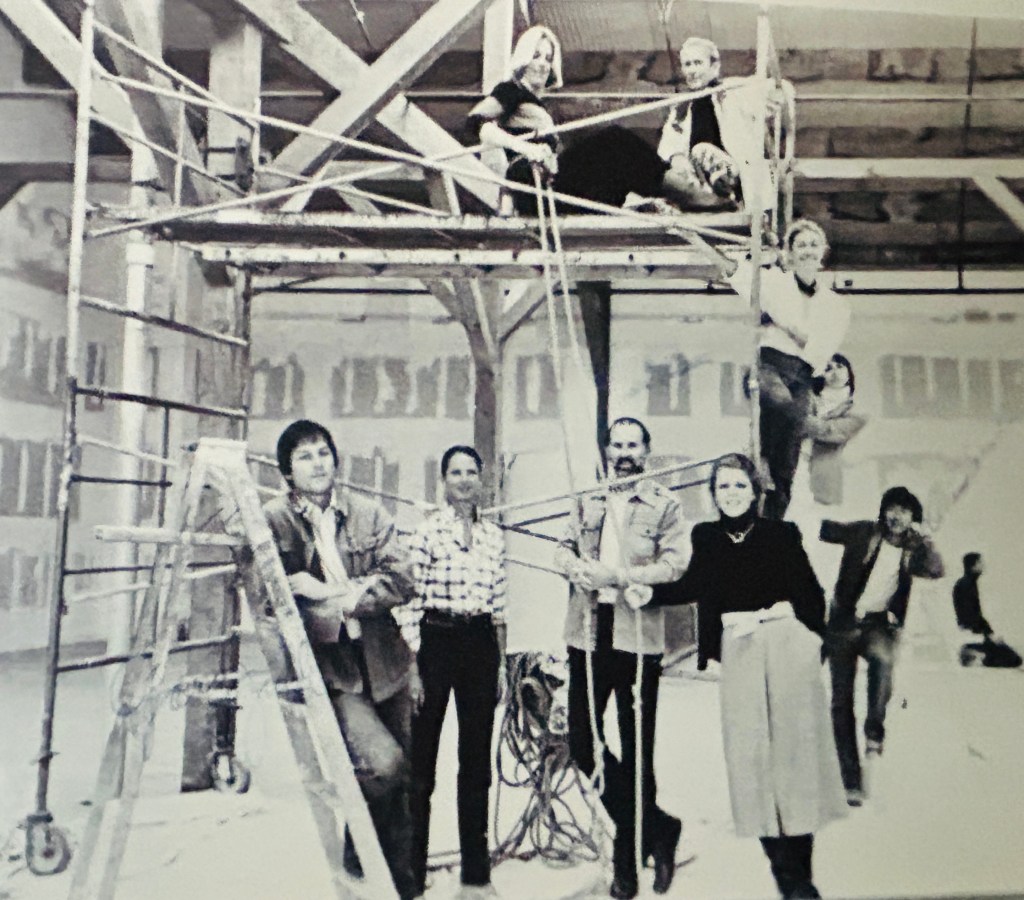
The nine artists featured in the show.
“Look at him smoking pot out there on the street corner … he won’t come up here,” I hear Jill Coldiron say. “I mean, he doesn’t like his placement, but I don’t know why he’d sabotage himself this way during the reception.”
I head over to the food table to grab some more grapes and that yummy, crusty sourdough bread. I have no idea what Jill is talking about, but I do know that if anyone can solve a problem, she can.
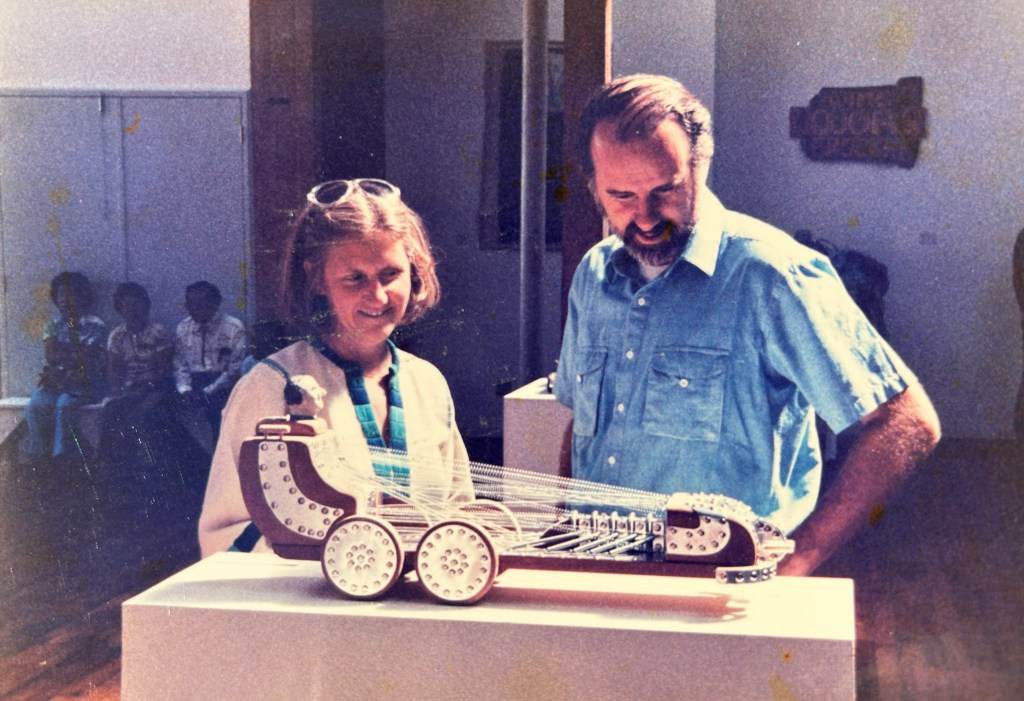
Jill is the organizer of this art opening and a good friend of my parents. I like being around her because she’s smart, loud, and funny. Sometimes my mom and I drive south across the Golden Gate Bridge and into San Francisco to have lunch downtown with Jill—I love doing that. She and my mom laugh so hard when they’re together it makes my ears ring. When Jill invited my dad to be in this group art show he yelled to my mom from the other room “Good news Patrish … Jill wants my cars in the San Francisco show!”
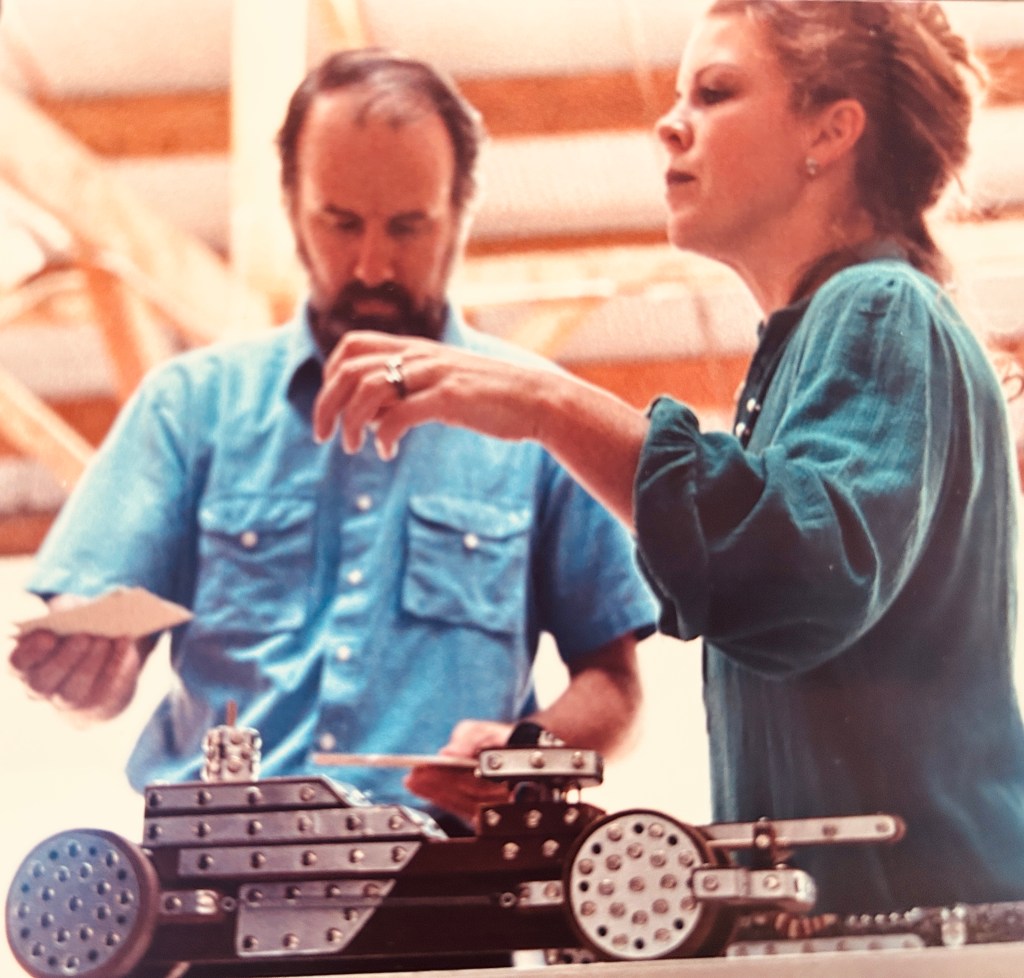
Curator Jill and my artist father discuss arrangement of his cars in the show.
The warehouse gallery is full of bright light, and the high ceiling is echoey with the sounds of clinking glass, people talking, and live music played by some nice musicians in the corner.
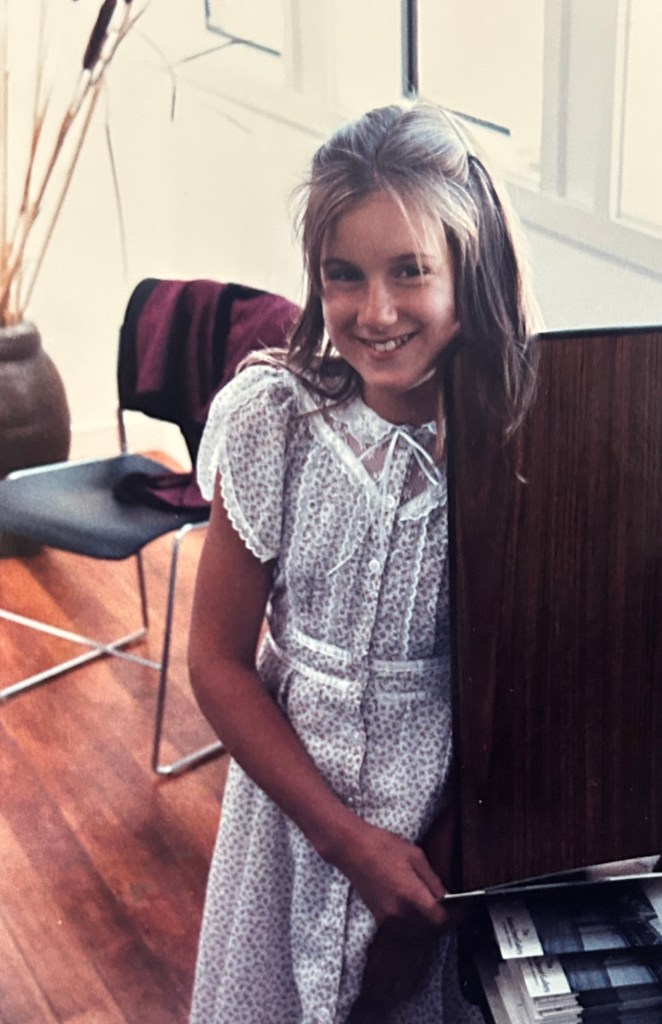
I’m the only ten-year-old here, something I’m pretty used to since I’m an only child. I don’t mind because I’m good at secretly spying on adults, just like Harriet the Spy.
Ten year-old art critic and part-time spy.
Slightly wobbly in my wavy-soled high-heeled hand-me-down Famolare shoes and flowered Gunne Sax dress, I walk around looking for my parents. Spotting them across the gallery, I see that they’re standing next to one of my dad’s art cars. They look happy. That’s how they usually look.
Mom and dad, artists and appreciators.
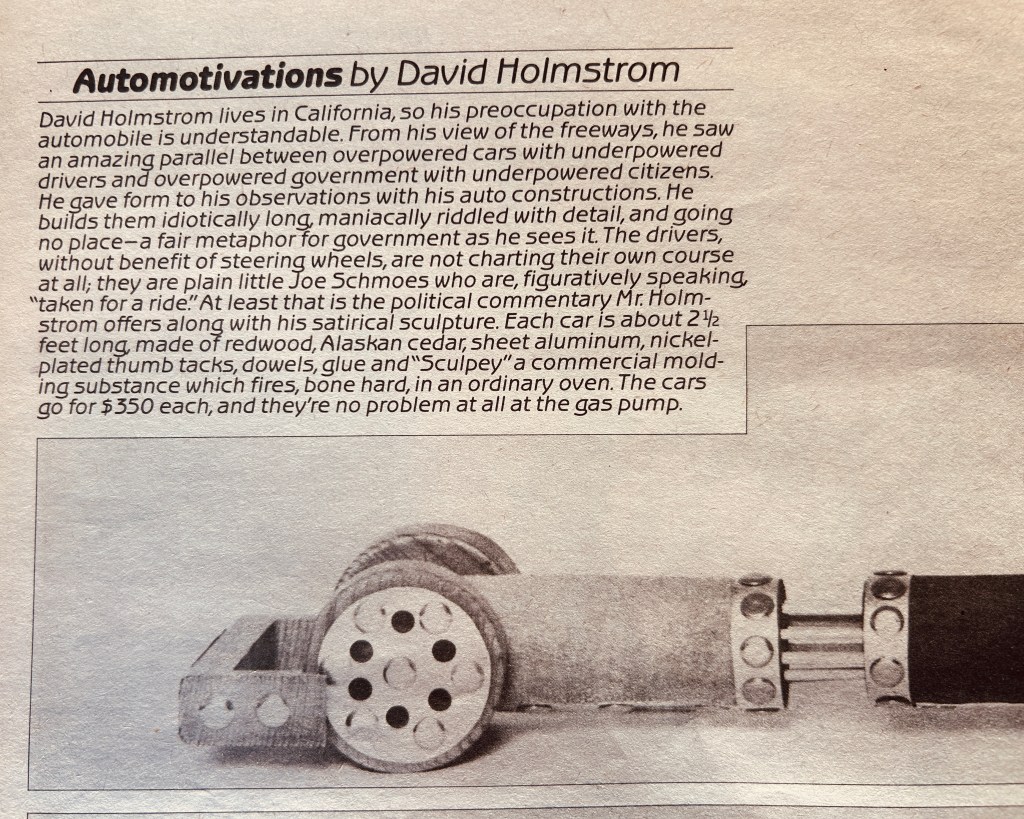
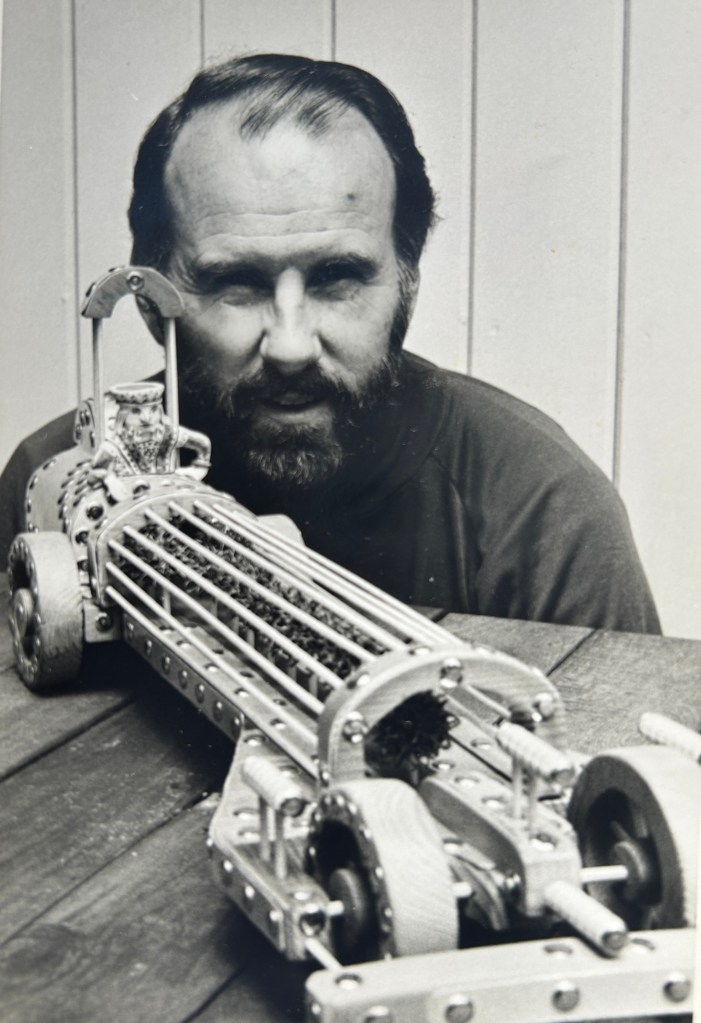
Lately, when he’s not writing, my dad works on his cars. Most of his art, both the large wooden constructions, and the cars, make some sort of point about politics. I don’t understand the messages, but I like what he makes. A lot of other people seem to like his art too since there have been articles about him and his art in magazines and newspapers.
Excerpt from an article about my father’s art cars.
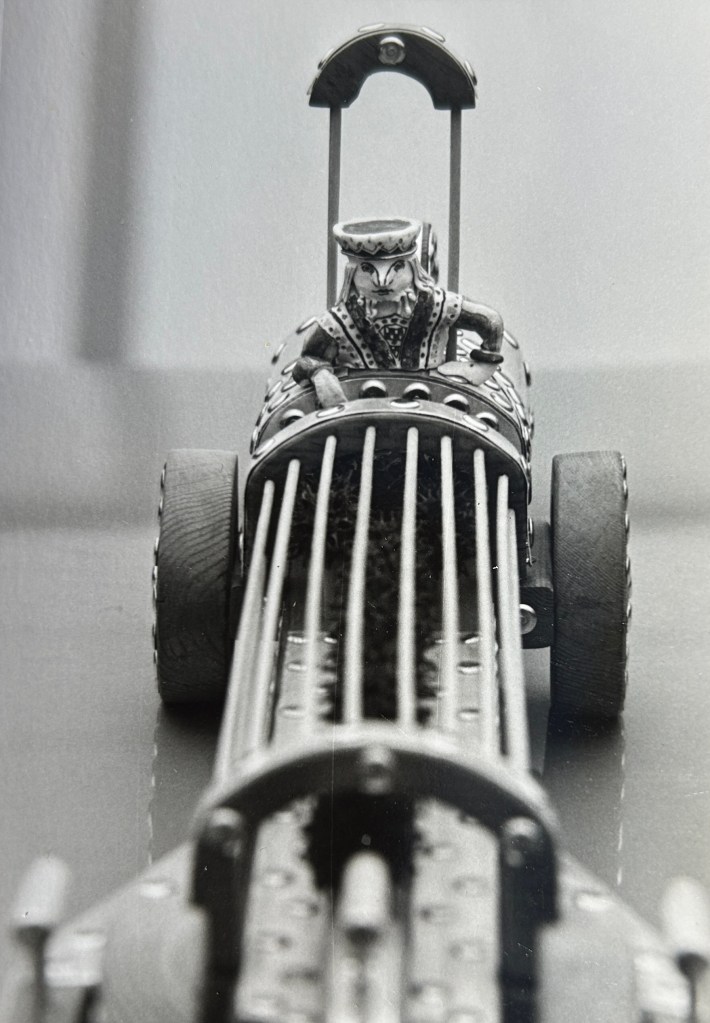
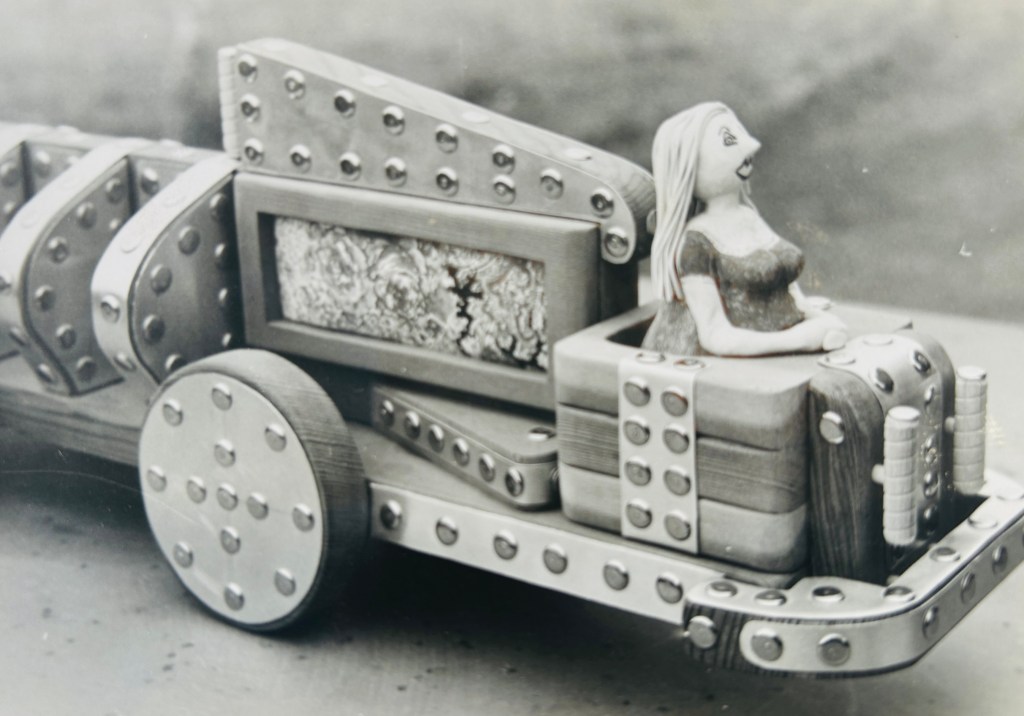
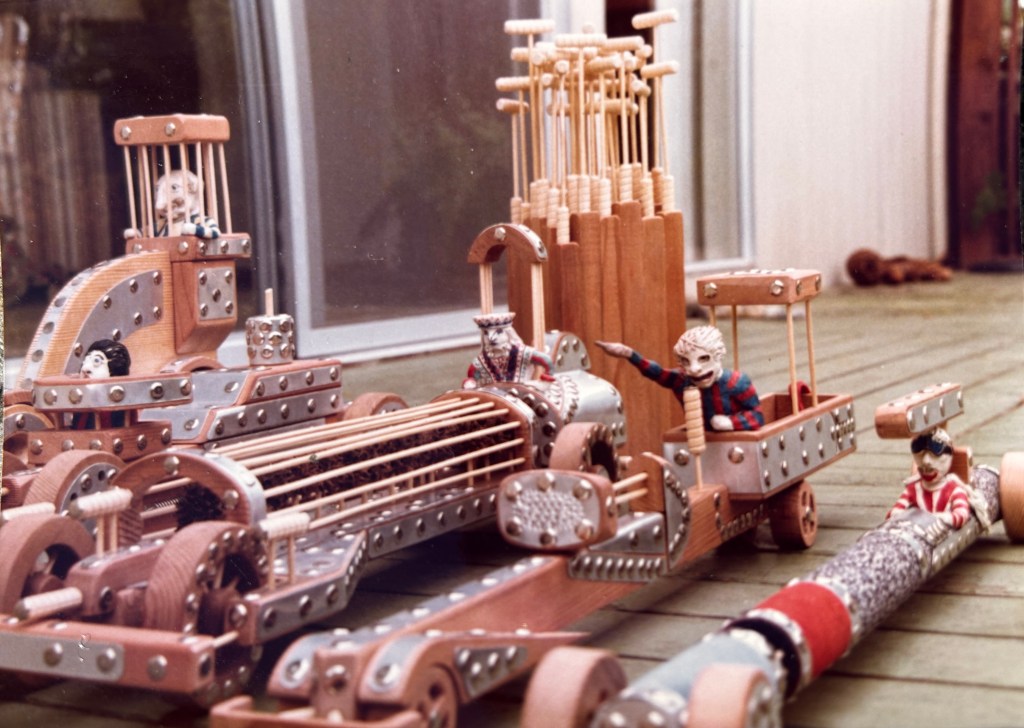
The cars are shaped out of wood and have shiny parts made of sheets of aluminum that he hammers thumbtacks into. There are funny looking characters in the driver’s seat that he shapes out of clay. The cars have names I can’t pronounce, like Senator Kincade’s Private Secretary, Compulsory Arbitration, and The Subcommittee Investigator.
“The I.R.S.”“Senator Kinkaid’s Private Secretary” A selection of my father’s wooden art cars, circa 1983.
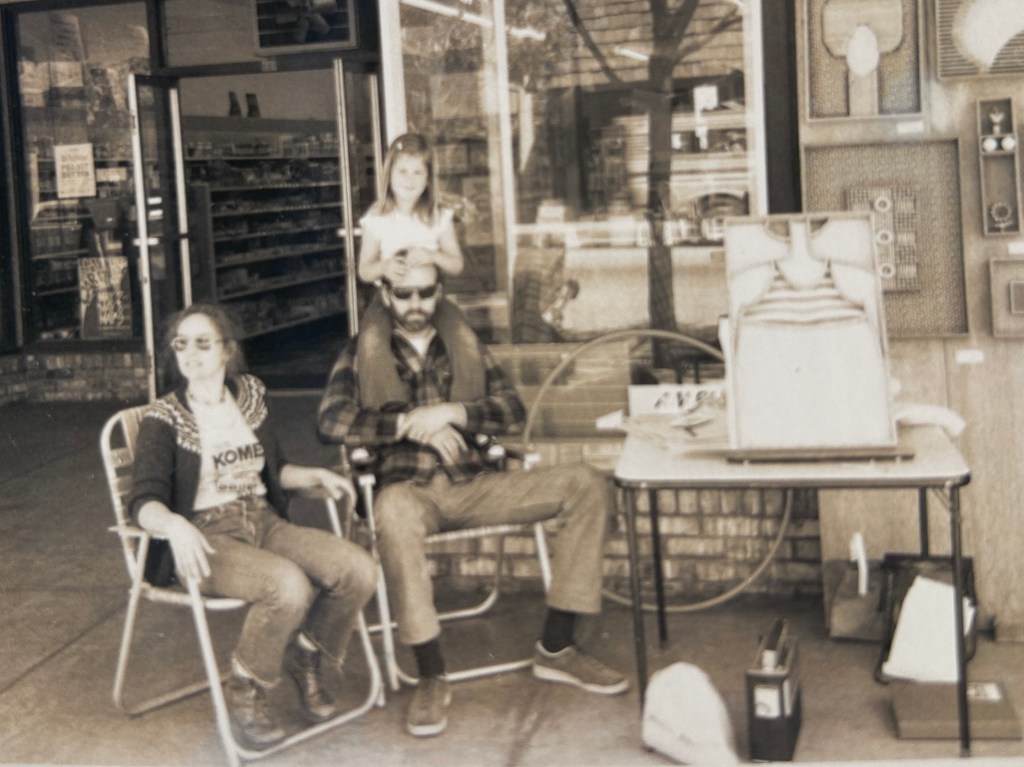
I like it when my dad’s art is in shows, mostly because I get to spend extra time with him. Once he had his art in a street fair in Palo Alto and my cousin Laurel and I helped him set everything up. People stopped by and talked to us and bought some of his work. Normally, I’m not allowed to have sugar, but that day I got to have some cotton candy.
Supervising the Palo Alto street fair art booth with dad and cousin Laurel, 1978
We know a lot of artists. I like to make art too, but I don’t think I’m very good at it. My mom makes pottery on a big wheel that I can spin, and my best friend Portia’s parents are both silkscreen artists—when I sleep over at her house we sneak into their studios. We’ve seen stars through the skylights. We shake the brightly colored paint bottles and run soft paintbrushes across our cheeks. Sometimes Portia’s mom drives us to the art supply store in Santa Rosa in her tan VW bus. She lets us pick out pastels in colors we like.
When is this art opening going to end? My feet are getting tired, and my stomach hurts from eating all that fruit. The artist who was outside earlier is back inside the gallery now, talking to Jill in front of his sculpture that looks like huge melted Tinkertoys. His eyes are red and he still looks mad.
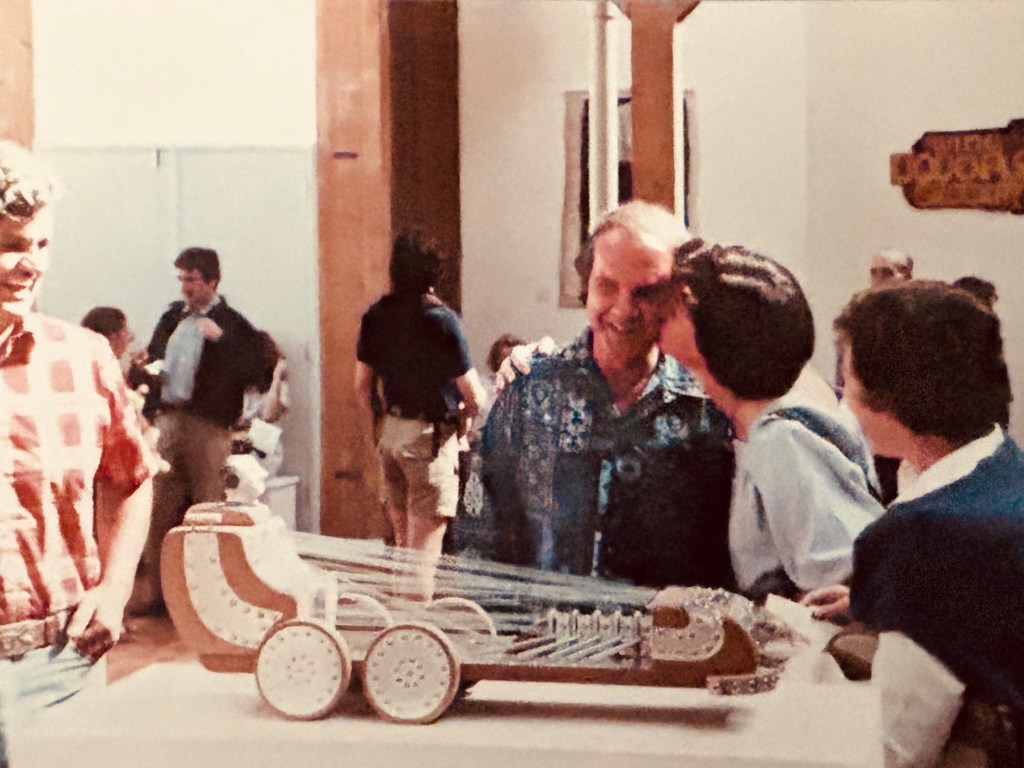
Now lots of people are gathered around my dad’s cars. A lady who is a friend of my parents commissioned (that’s a fancy word for “bought”) one of my dad’s cars for her husband. She’s giving it to him as a surprise. The musicians play a happy song while my dad announces that he made the car especially for the lady’s husband. There’s even a head that looks like his head driving the car. Everyone claps loudly. The man looks surprised and smiley, and his wife gives him a big kiss.
Unveiling of the art car commission.
Time to ask mom and dad if we’re leaving soon. I’m too full of art and fruit.
I’m thinking about how art seems to make adults happy—when they’re making it and when they’re looking at art that other people made.
Except for that one artist, I guess.
Artist David Holmstrom (aka my dad) poses with one of his art cars.
When your mom has been gone for 23 years, you develop a muscle. This missing mom muscle strengthens each time you use it, keeping you afloat when you might otherwise drown in her absence.
You flex the muscle when you want to call her, but she’s not even in your contacts—she died before the first iPhone. When you see her favorite Constant Comment tea at the grocery store. When you find the wrinkled brown paper bag holding her gold-rimmed China plates. When you smell the bittersweet scent of marigolds, or her soft lavender-colored wool sweater you keep on the top shelf of your closet. When you hear Robert Redford died—she adored him, especially in The Way We Were.
The safest place on earth (backseat of a Volkswagon Beetle), 1971
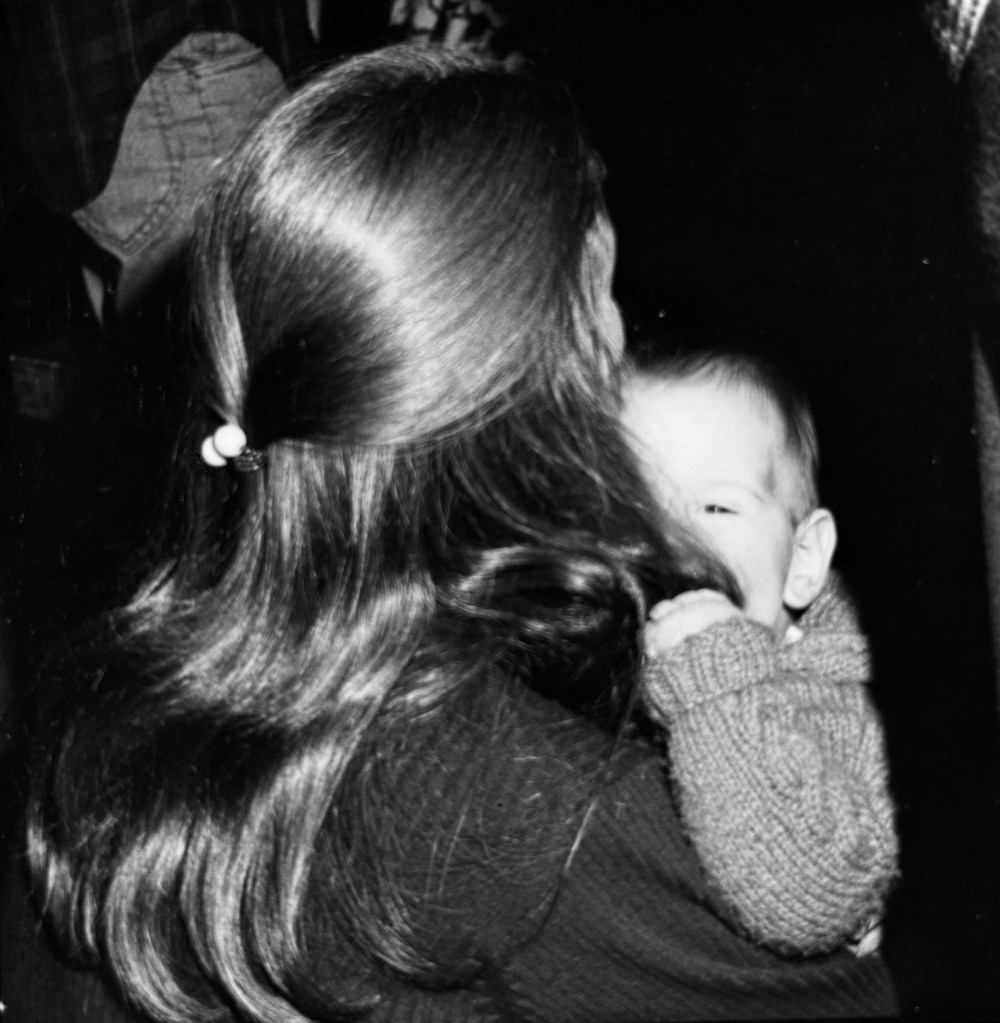
Watching your Kindergarten students love their mothers, your missing mom muscle twinges. Every morning, a little girl tells you her crayon picture is for her mama. Rainbows, crooked flowers, lopsided smileys, and dark caves—each one for mama. A lump forms in your throat, but you flex the missing mom muscle and push it down. You want to tell her you understand, that all you do is for your mom too, but you don’t think that would make sense to a five-year-old (although you might be wrong). Instead, you smile, praise her picture, and say you know her mom will love it.
Kindergarten masterpiece, for her Mama
The times that are the hardest, the times when the missing mom muscle gets a serious workout, are when you feel mistreated or misunderstood. Even, maybe especially, by your own family. Those are the times when you want to collapse into her arms, to feel her cool hand on your forehead, to hear her softly singing hymns to you like she did when you were a child. Mostly, you want to be understood the way she understood you, to be known and loved the way she knew and loved you. You hate the devastating truth lurking behind your yearning—no one will ever understand, know, or love you that way again.
In those times, the missing mom muscle feels like it’s tearing.
Other times, you want her to swim in your puddle of pride. The change in careers, the longevity of your marriage, your spiritual evolution, the birth of your children, your writing, and your sobriety. Your triumphs would be that much sweeter if she knew, if she could celebrate alongside you.
Enjoying Mexico with Mom, 1998
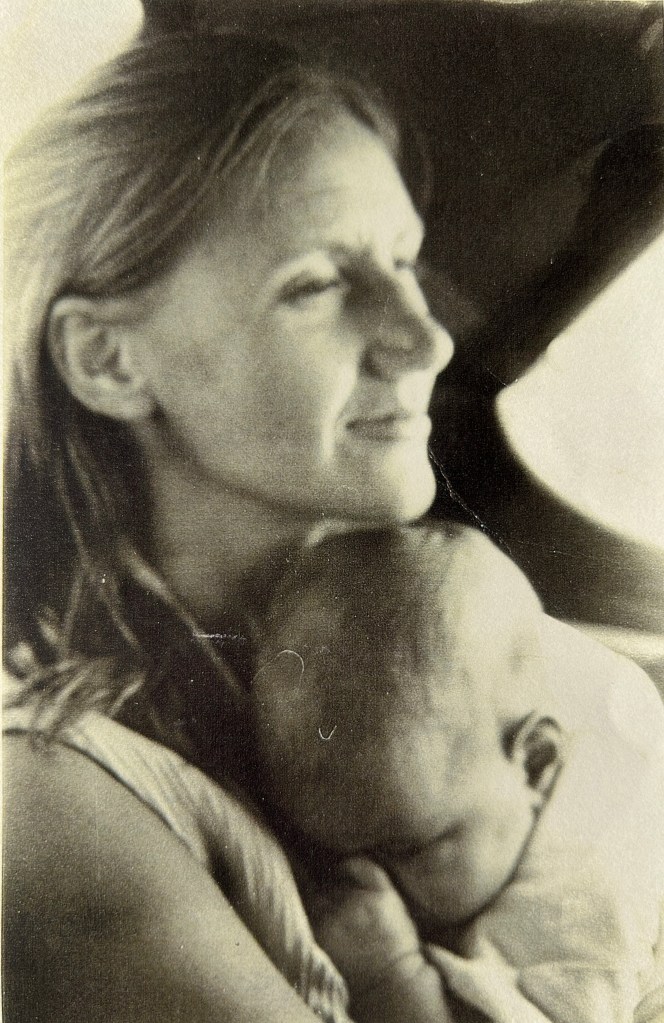
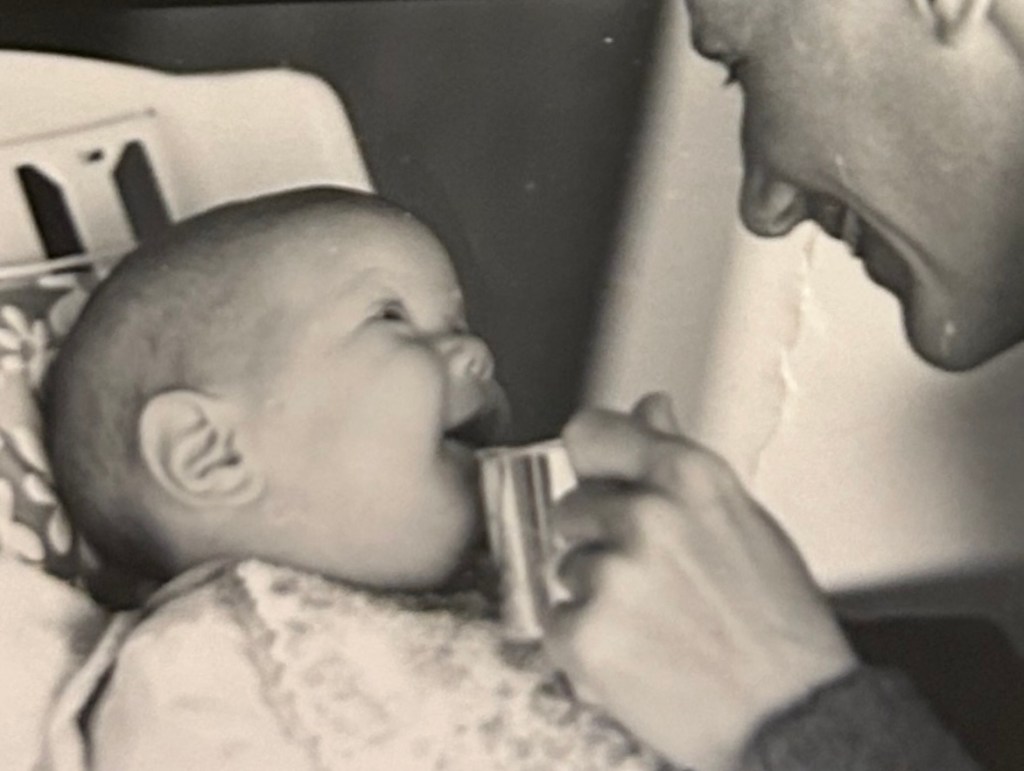
You sort through pictures, and you find some of her gazing at babies.
One of the babies is you.
You know she would have looked at your children, her grandchildren, the same way, and that they would have adored her. You know she would have loved them the way she loved you. You feel as if there is a gaping hole in your children’s lives, and you wonder if they feel it too.
You close your eyes and call on all she taught you about the power and the infinitude of Love. You flex the muscle harder than ever. These 23 years have taught you that you won’t, you can’t, let yourself drown without her.
The other day, as I drove around town, I was in a rush. One kid had been dropped off at gymnastics, the other needed a pickup from soccer later. There were errands to run, some calls to make. Familiar demands and busy end of the school-year times.
Then, as I sped through the West side of town, rounding a corner near the old hospital grounds, I saw it.
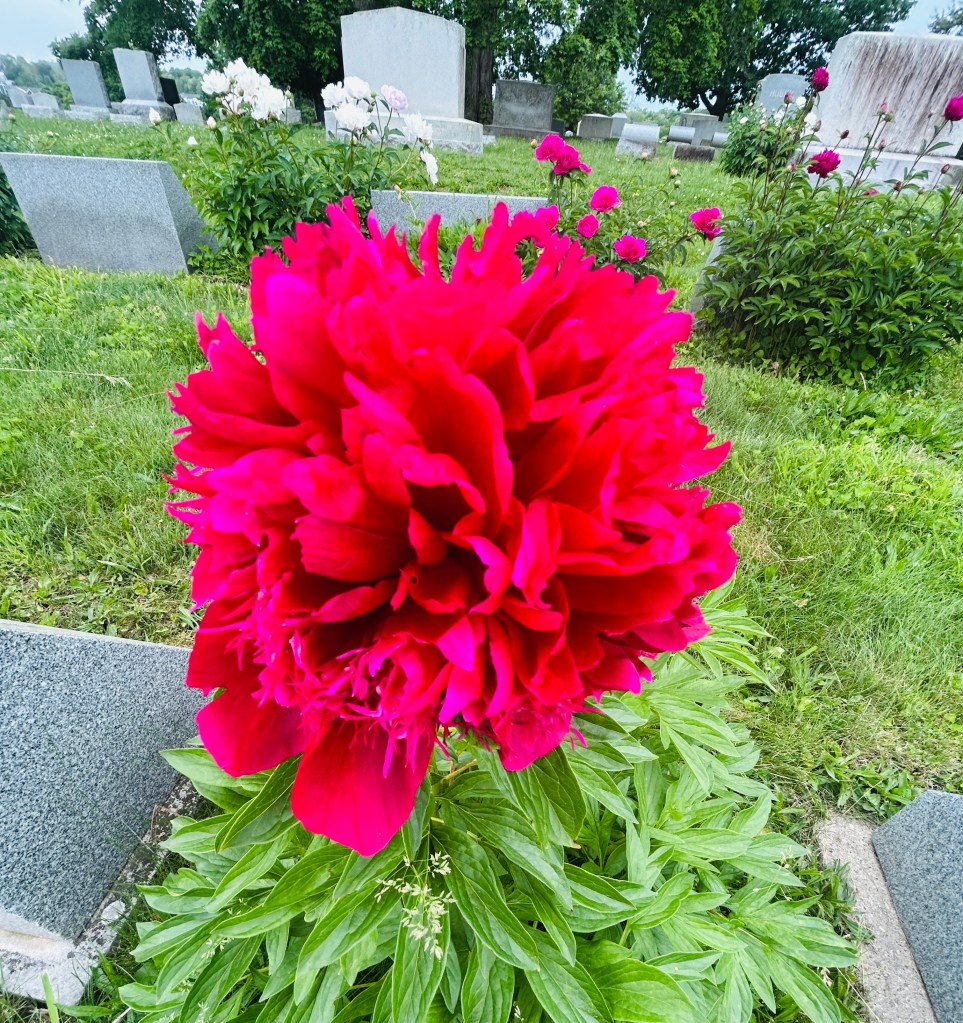
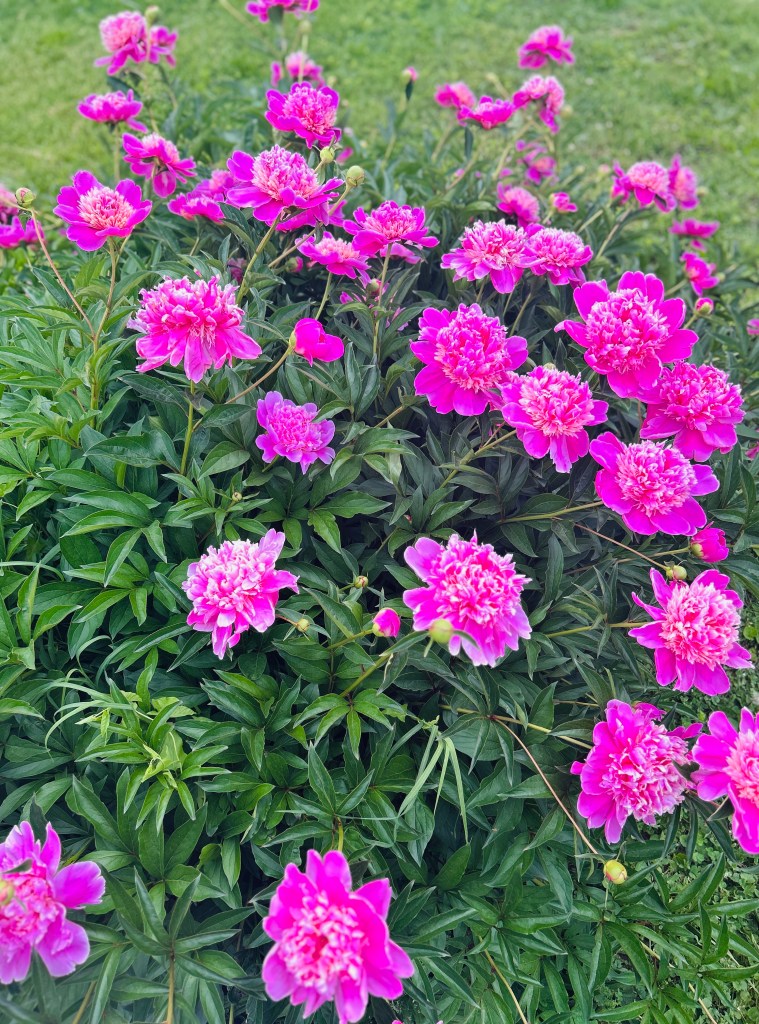
A dark green peony bush in someone’s front yard, stem ends bursting with deep pink blooms the color of a brilliant sunset. Somehow, in the busyness of life, I’d forgotten all about the peonies.
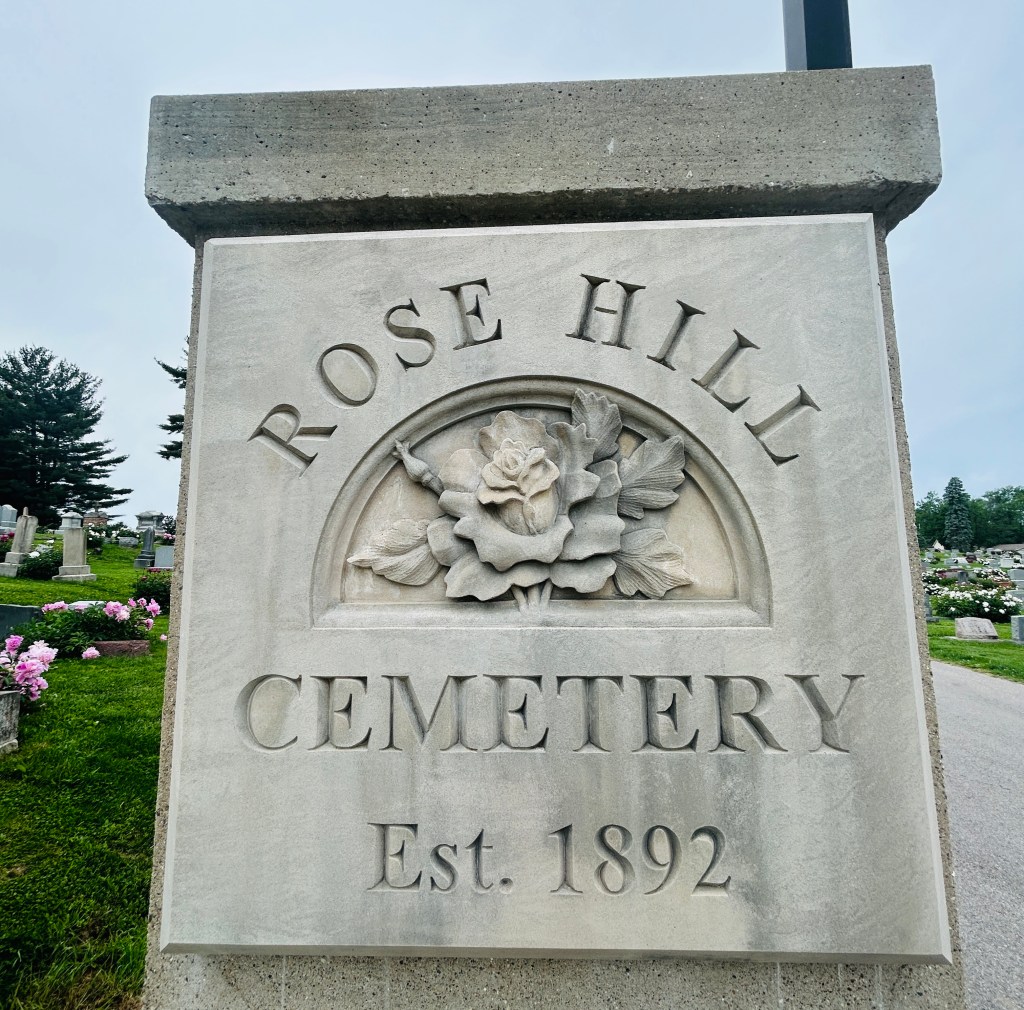
“Yes! It’s that time again,” I thought. And then, “Rose Hill must be going OFF!”
I told myself to forget the calls, put the to-dos and the worries aside for a bit—the cemetery was calling.
The first few years after my husband and I moved from California to Bloomington, Indiana (his Midwest hometown), we lived in a 90-year-old bungalow one block from the sprawling Rose Hill Cemetery. Initially unsure, I grew to adore the acres of rolling green grasses dotted with the spreading shade of centuries-old trees—maple, oak, sycamore. Meandering among the granite, limestone, and marble headstones became one of my favorite pastimes, a unique way to root myself in an unfamiliar landscape.
The first year, when May rolled around, my appreciation of the cemetery was taken to new heights when suddenly peonies (the flower I’d used to create my bridal bouquet, primarily because that’s what remained in the San Francisco flower shop the night before our elopement to City Hall), began blooming everywhere. And I mean everywhere.
Two years later, when I faced a devastating loss, wandering through Rose Hill and reading the gravestones became a kind of grief meditation, maybe an attempt to assure myself that there was a certain cyclical beauty waiting within death, if I could accept it.
At the time, I could not. But I still loved Rose Hill.
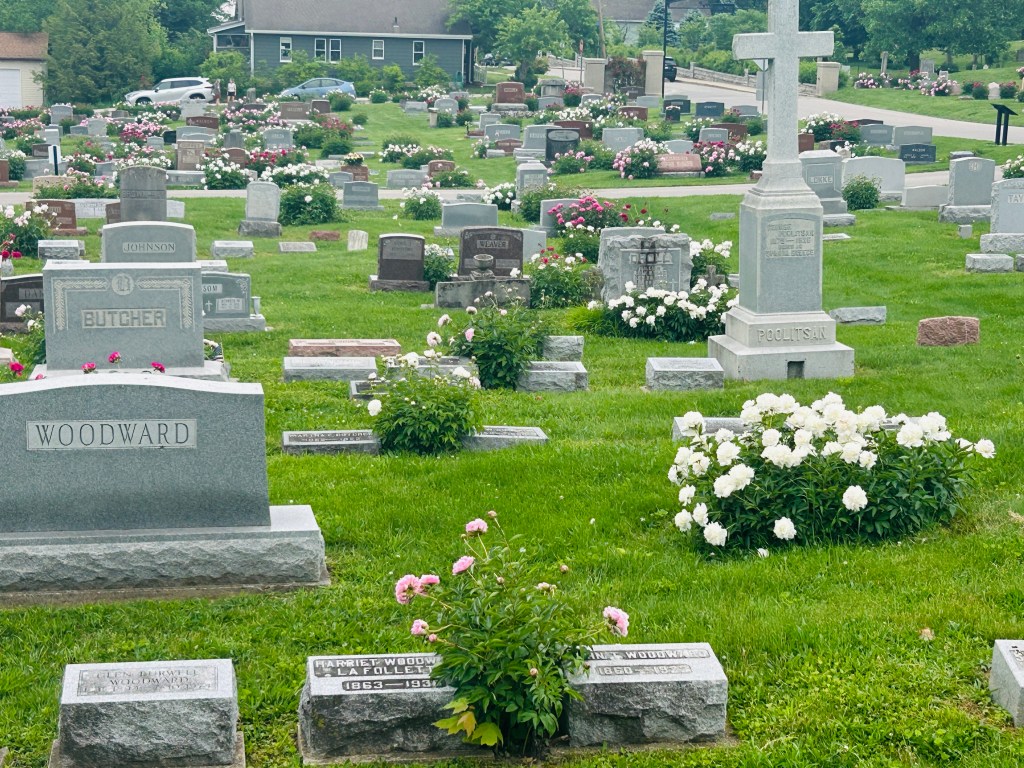
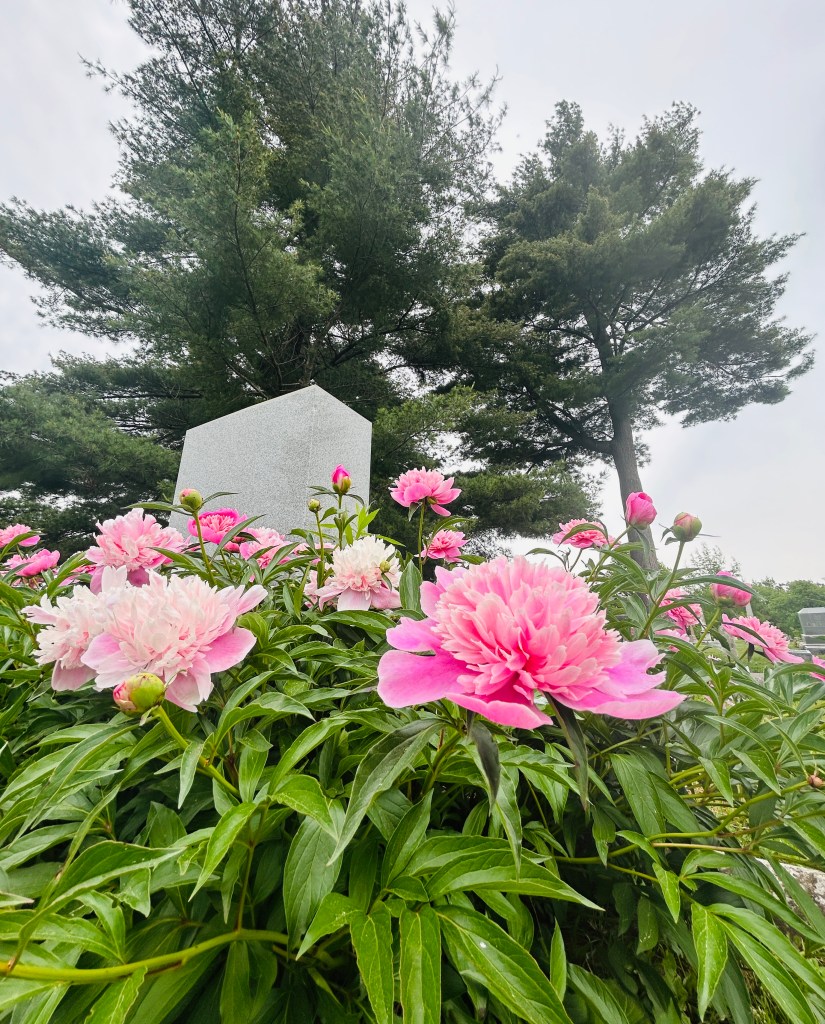
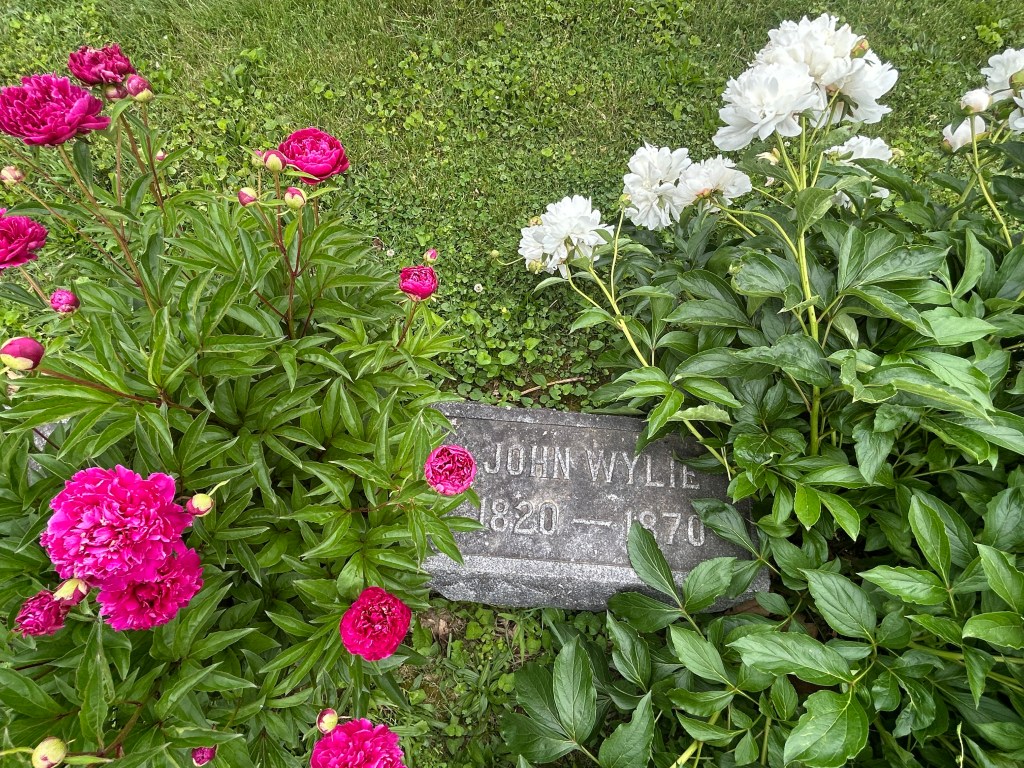
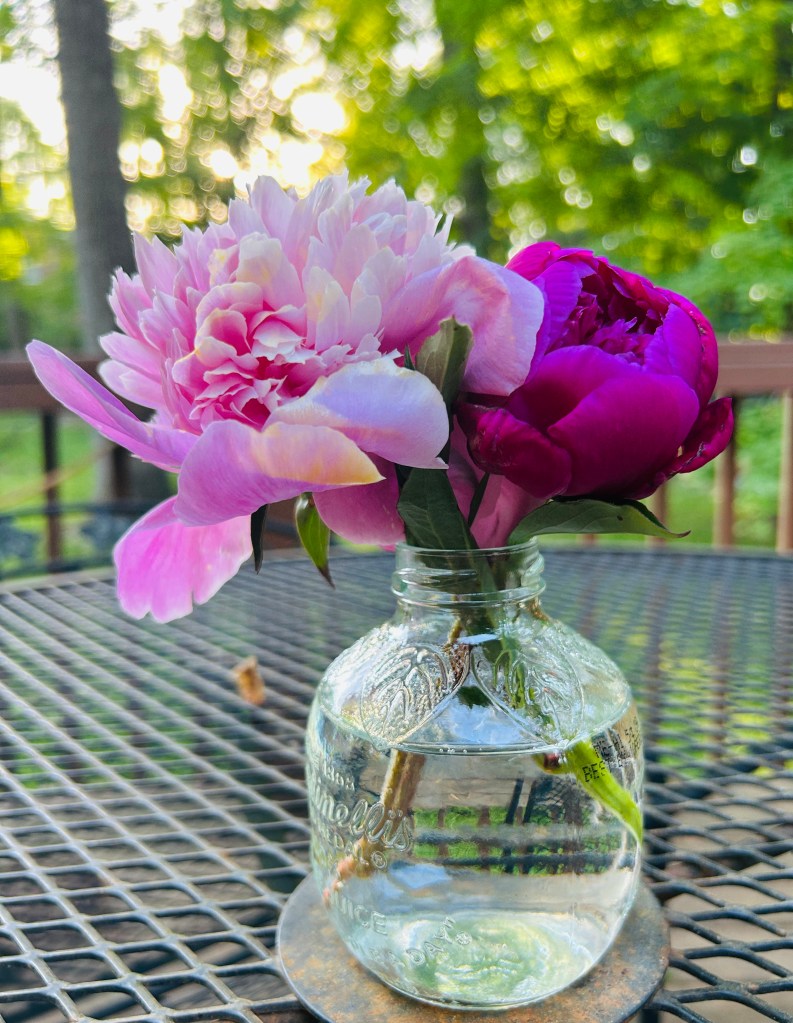
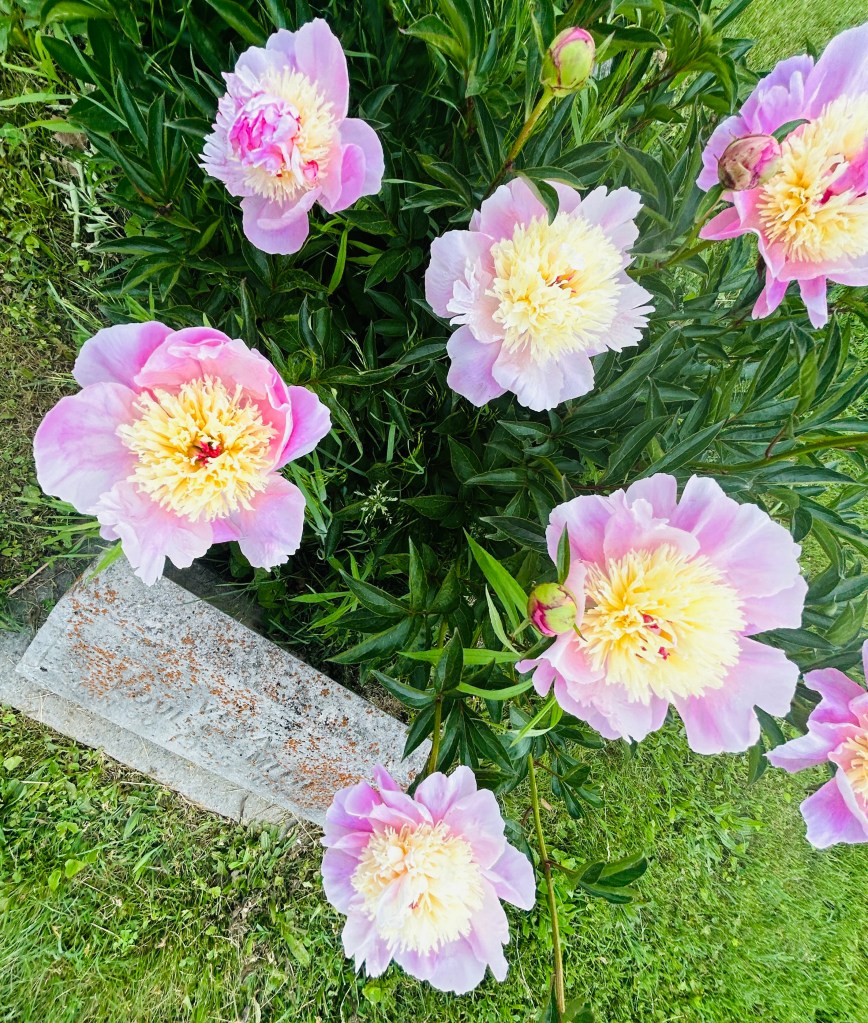
In mid-May each year Rose Hill Cemetery becomes so jam-packed with blooming peony bushes that if you stand at the highest point in the cemetery, clumps of color stretch as far as the eye can see. The honey-sweet smell of the blooms wafts through the air, and a plant nestles next to nearly every headstone.
This was the case the other day, and I inhaled deeply as I walked along the road that runs through Rose Hill. A storm was brewing in the distance, and above me, a flock of smaller birds noisily chased a hawk into a tall pine. Winding my way through headstones both recent and centuries old, I thought about the losses that have circled my orbit lately—the death of my father-in-law only a week earlier, the looming May birth/death date of my first son, my best friend’s recent loss of her soul-mate doggie companion. Pensive and prayerful, I realized that without even trying, I had again landed in the perfect place to consider the loss of these close-to-my-heart souls, no longer here physically.
In truth, I think about death a lot. Over time, I have moved from abject terror and bitterness at the subject to a place of consideration, curiosity, even awe. Much has contributed to my death evolution, including prayer, cultivating humility, writing about my experiences, reading as much as I can on the subject, watching interviews about NDEs (Near Death Experiences), and simply getting older. I have learned to gather my death-related feelings and experiences like a bouquet and place them carefully on the vast table of my life.
I also noticed that the surrounding rainbow of cemetery peonies mirrors a shift in my attitude toward death: amongst the gravestones, and the devastating losses, beauty blooms. Instead of hope and joy trailing behind me, dragging their feet, we are now companions, partners in my journey. I believe there is a sacred purpose around death in our lives, and that we can approach it as a path to celebrate the love and respect that we feel for those who have died. By facing the death of those we love, or the death of anyone, really, we open the door to navigating the hopes and fears around our own deaths. We cannot avoid death, but we can open our hearts to learn from it, to understand its true purpose.
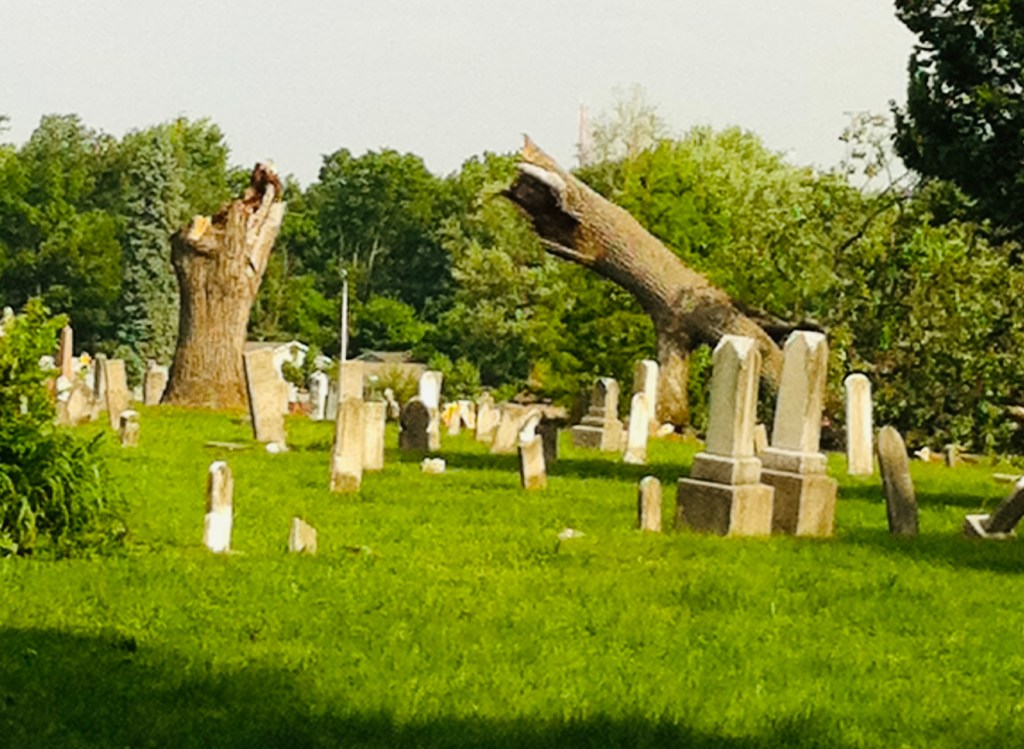
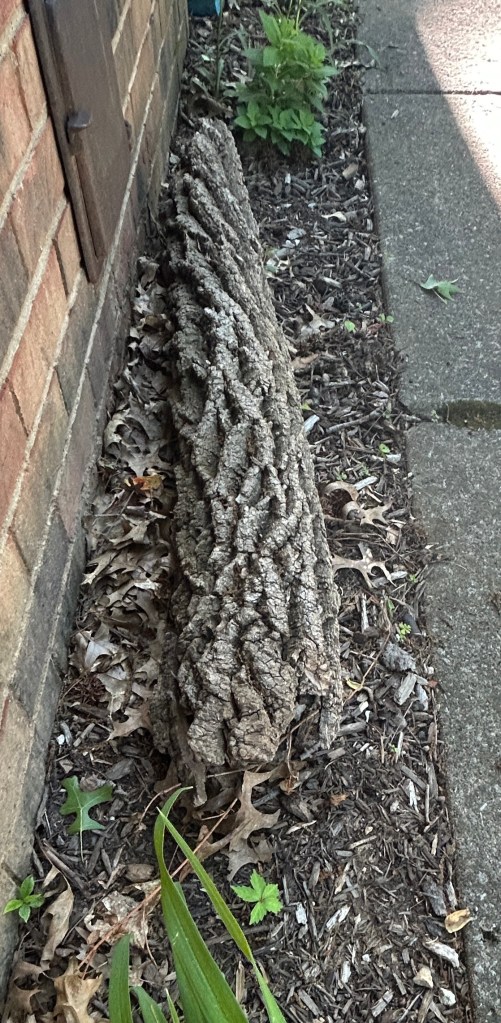
As I stroll the cemetery grounds, I am awed by the vast array of peony bloom colors and shades: white, pink, scarlet, and even a red variety that I’ve never noticed before. Passing by the “New Spencer Addition” section of the cemetery, I think of the powerful storm that passed through in 2011, in which an ancient maple was felled by a wind and lightning storm. The morning after the storm, while shedding a few tears for the grand tree, I carried off a large piece of bark from the thick trunk. The bark still survives today, lining the side of a garden bed. Holding on to a piece of the former giant makes me happy.
The split maple in the aftermath of the May 25, 2011 storm.Shrunken and dried, the bark endures.
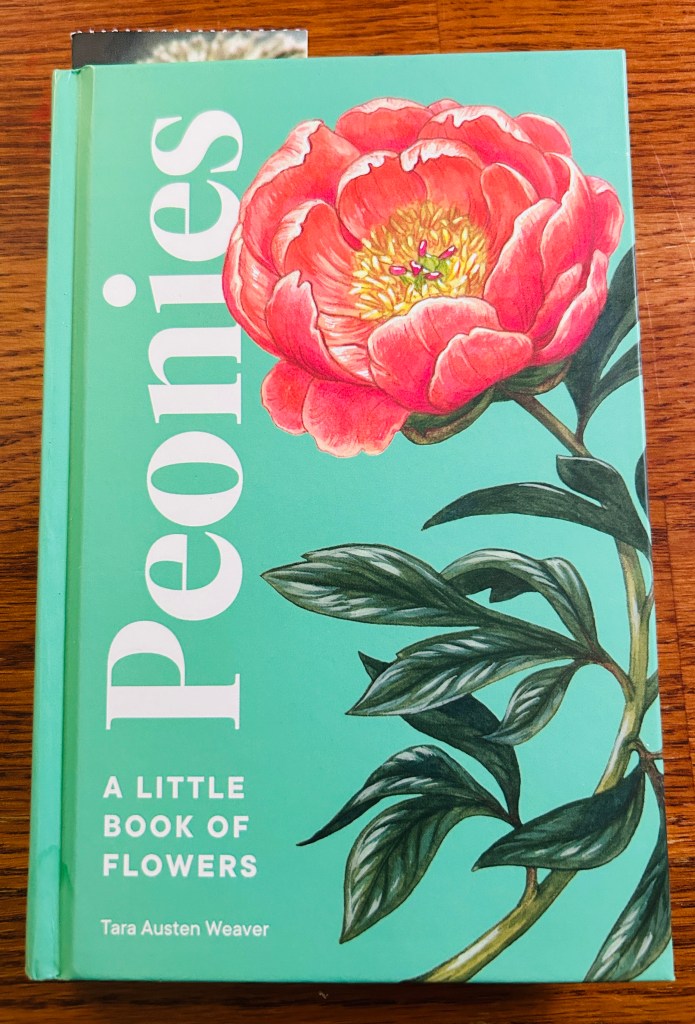
Peonies, which happen to be the official Indiana state flower, are sometimes associated with the memories of loved ones. They are also hearty plants and require little ongoing maintenance. Unlike my writer/gardener friend Tara Austin Weaver, who authored a beautiful, useful book titled Peonies, A Little Book of Flowers, I know very little about the many varieties in the genus Paeonia. From Tara’s book, I learned that peonies are “thought to confer good fortune, prosperity, and a happy peaceful marriage,” so apparently, I should be glad that the shop where I purchased my bridal blooms had been cleaned out of every other flower option that evening.
Under Rose Hill Cemetery soil lie many fascinating, important souls whose lives show diversity and accomplishment. Among them are George (Anner) Shively a musician/poet/baseball player who played with the Negro Baseball League, Margaret Hemphill McCalla, the first female superintendent of schools in Indiana, Alfred Kinsey, the infamous founder of The Institute for Sex Research at Indiana University, Hoagland (Hoagy) Carmichael, the legendary Hollywood performer and musician who recorded “Stardust,” and won an Oscar and John B. Crafton, a successful Bloomington businessman who made the unfortunate decision to voyage across the Atlantic on the Titanic and lost his life when it sank. (Information taken from “A Walk Through the Rose Hill Cemetery Historic Tour Guide No. 12”).
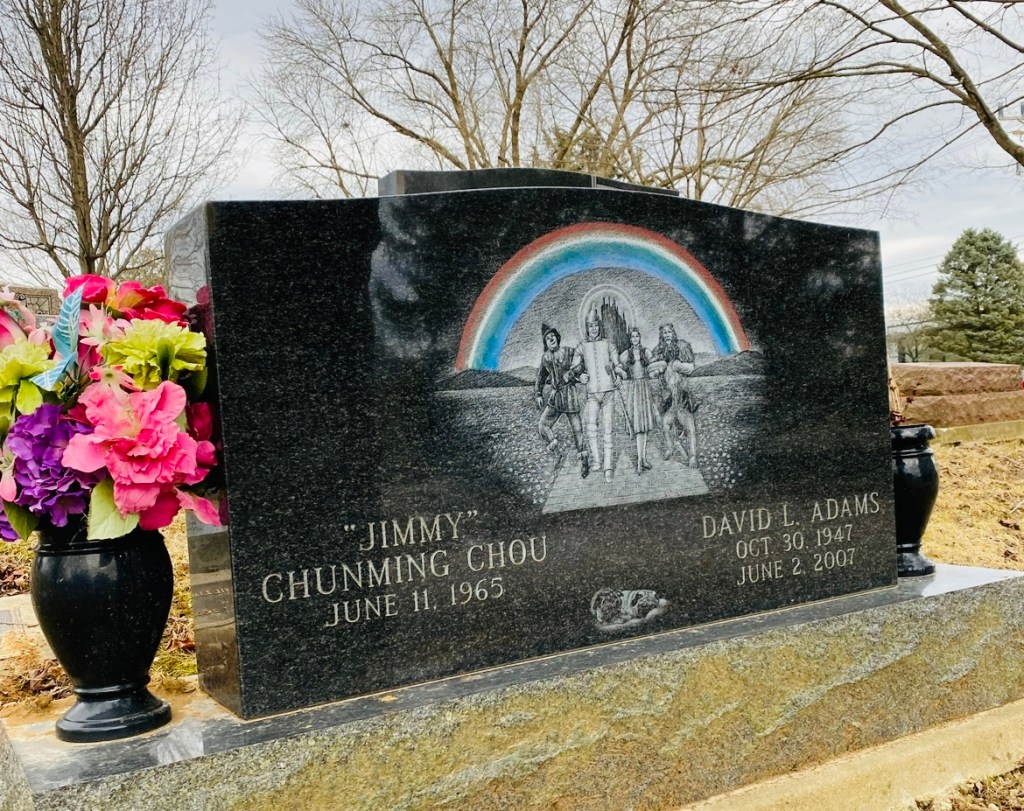
My personal favorite, tucked far into the Southwest corner of Rose Hill, is a fascinating headstone marking two life partners who shared a passion for The Wizard of Oz.
I imagine these two men had some stories to tell.
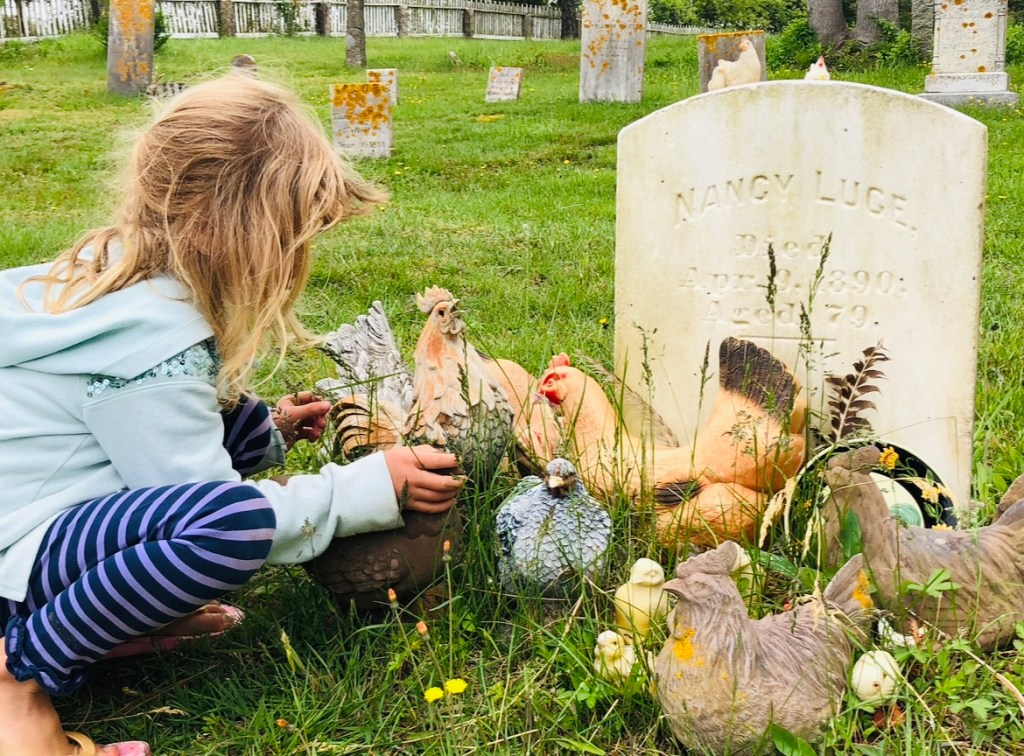
Besides providing a vital service to us humans, cemeteries offer a chance to learn about the lives of individuals who may otherwise have slipped into history. From lost infants (so many lambs on grave stones) to centenarians, to everyone in between. While walking, I remember the grave of a woman my daughter and I once visited on Martha’s Vineyard Island. The lady had devoted her life to chickens, evidenced by the carved stone birds gathered around her grave. Each grave tells a story. Every person lost was grieved for by someone (or some bird).
Nancy Luce loved and cared for chickens.
I walked for an hour that stormy Friday, soaking in the color and assessing my losses and gains. I bumped into two friends who expressed their condolences regarding the loss of my father-in-law, one offering a warm hug in sympathy.
It was time to leave the grounds and return to daily life. Slipping out of a cemetery side entrance, I felt inspired. By nature, by life, and even by death.
“Death is not the end of everything, but a new beginning.”




 Still...however...maybe...
You must be logged in to post a comment.