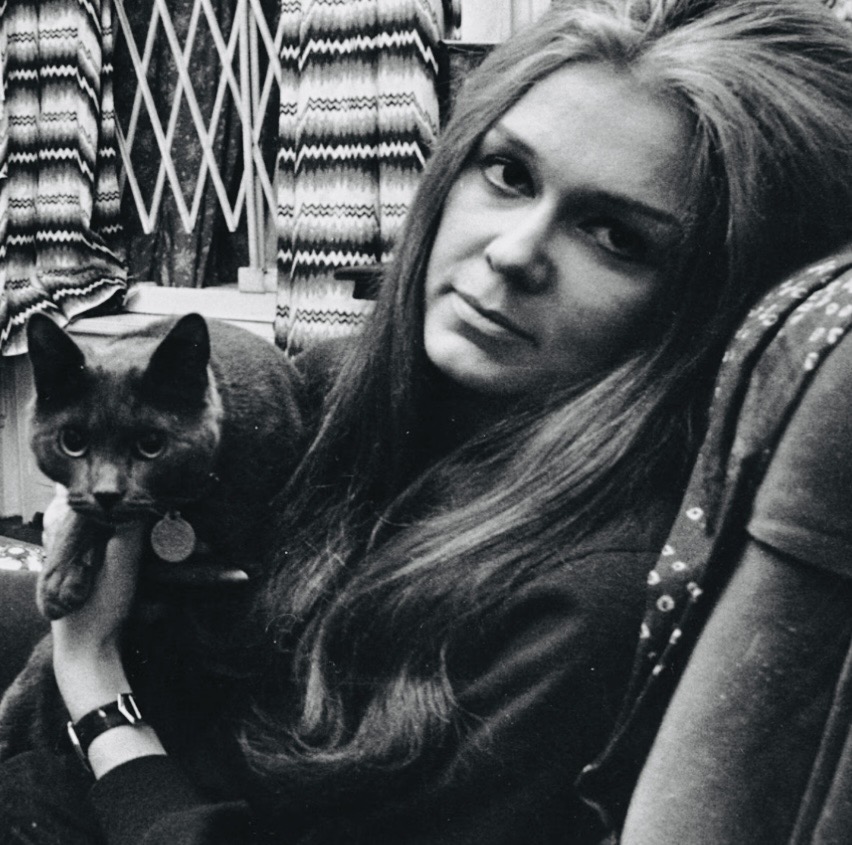
In 1977, when I was six years old, my parents brought home two Siamese kittens to our acre in Northern California. One kitten was grey, the other mottled white. I fell into their purring softness immediately and claimed the grey one as my own. Potential names were tossed around. “Skipper” was one of my suggestions, a name shared by the only Barbie I owned—beloved due to her brown hair, the same color as mine.
My dad, however, had other ideas. He announced that he had come up with the perfect cat names: Gloria and Germaine. After brief consideration, my mom and I agreed. Somehow, the two names fit perfectly.
My father must have explained the inspiration behind the kitty’s names to me. “Well, kiddo,” I imagine him saying in what was his thoughtful, uplifting way, while patting my hand gently. “Those names come from two ladies who are writers and are also in the news a lot for doing things that help women and girls. They’re called feminists—Gloria is named after Gloria Steinem and Germaine after Germaine Greer.”
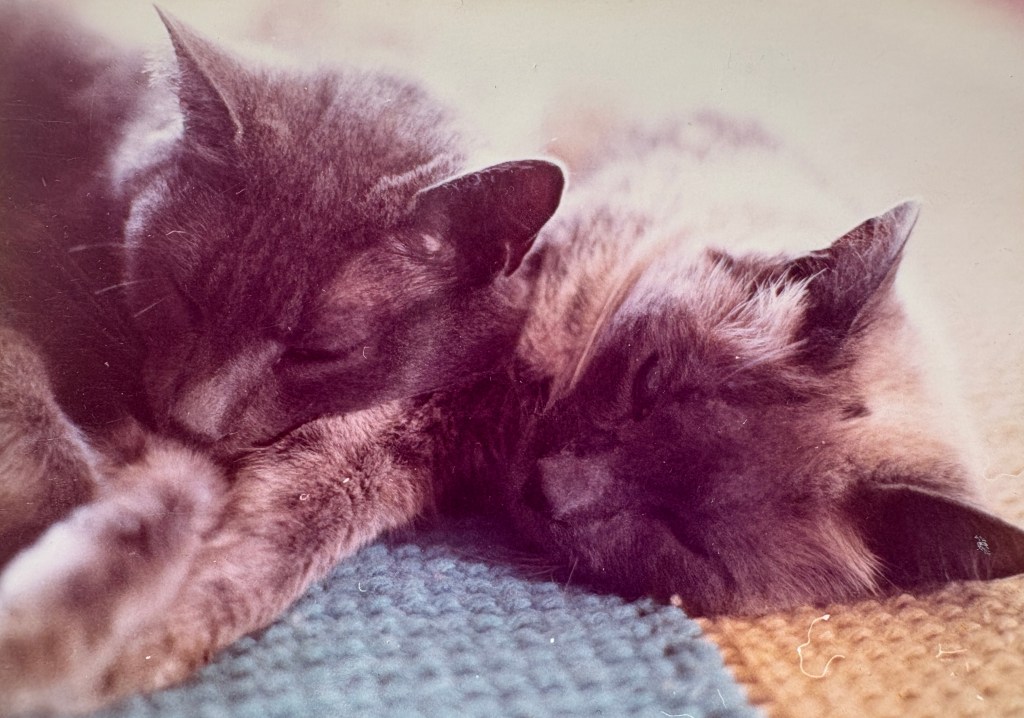
Of course, the term “feminist” meant little to me at the time, and back then I could never have imagined the meaning and impact the feminist movement as a whole would have on my life. Nor could I have fully appreciated the fact that it was my own father who had named our cats after feminist icons. All I wanted to do was play with Germaine. She became my constant companion, bounding through fields next to me, hunting for mice in my mom’s garden and curling up on my legs while I read. The other cat, Gloria, gravitated to my mom and could almost always be found snuggled up next to her on the couch or in my mother’s office. Each morning after finishing her cereal and prayer, my mom placed her bowl on the floor so that Gloria could lap up the last of the Raisin Bran-infused milk.
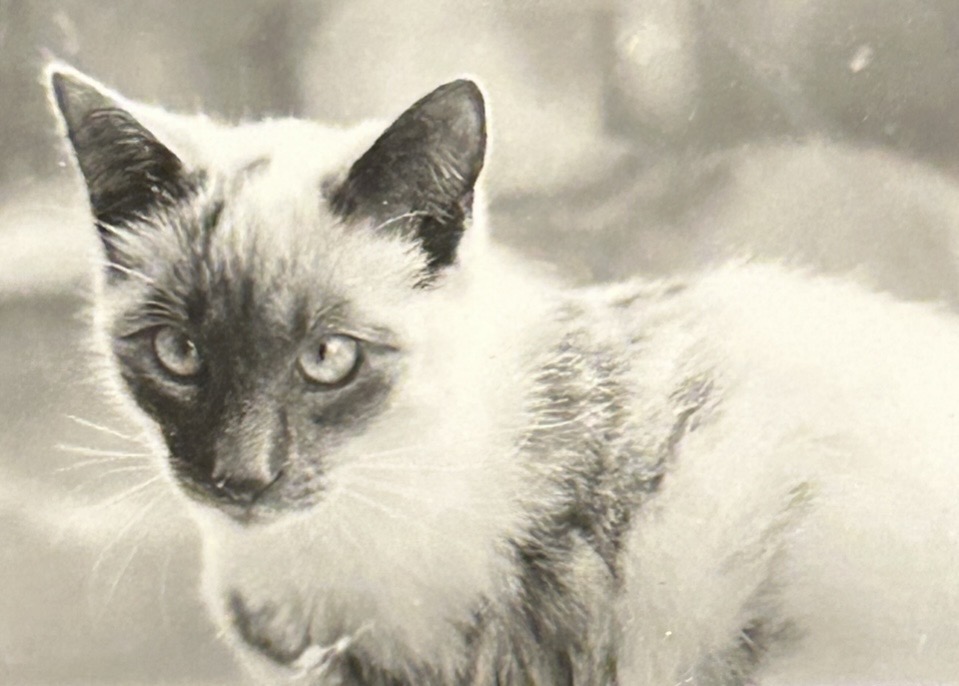
My dad taught her to meow “hellooooo.”
Our kitties showed us appreciation in their own ways, frequently leaving tiny bloody mouse hearts on our front steps as a symbol of their devotion.
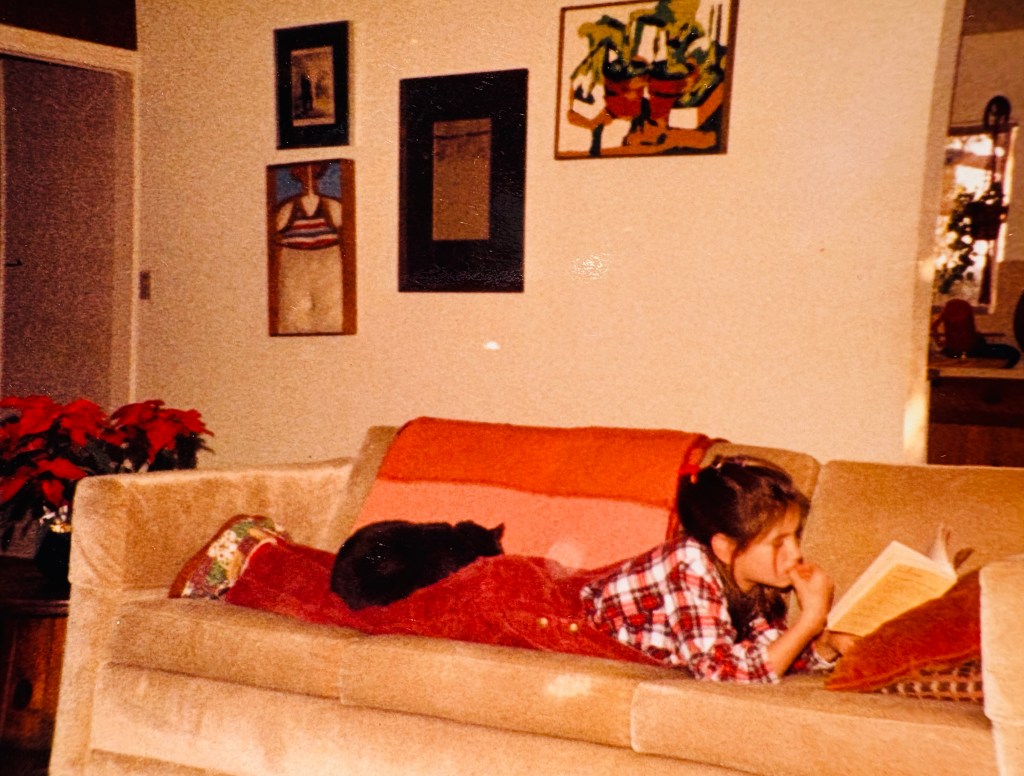
While feminist causes seemed far away, championed by Gloria Steinem and others, the fact that I was a girl affected me, my fierce pack of girlfriends, and our mothers in every aspect of our lives. In California (frequently at the forefront of social movements), being a girl in the 1970s and a teenager in the 1980s came with its own complications. My formative years were a strange brew of possibility and encouragement mixed with societal and media influences pushing a twisted agenda regarding the role of girls in America.
Outdated ideas about the abilities and worth of females still permeated our lives. Society falsely told us 70s babies that these ideas had been left behind in the 50s, but a (male) teacher once called me a “stupid girl” because I struggled with math. A similar thing happened later on in high-school when a (male) teacher called me an “air-head” in front of the entire science class. Many (not all) of the boys we grew up with teased us about our athletic abilities, and later painfully snapped our bras. They often used crude words towards us and bullied the darker-skinned girl in our group. We accepted this behavior as “normal.” It seemed like this was just how boys were and would always be.
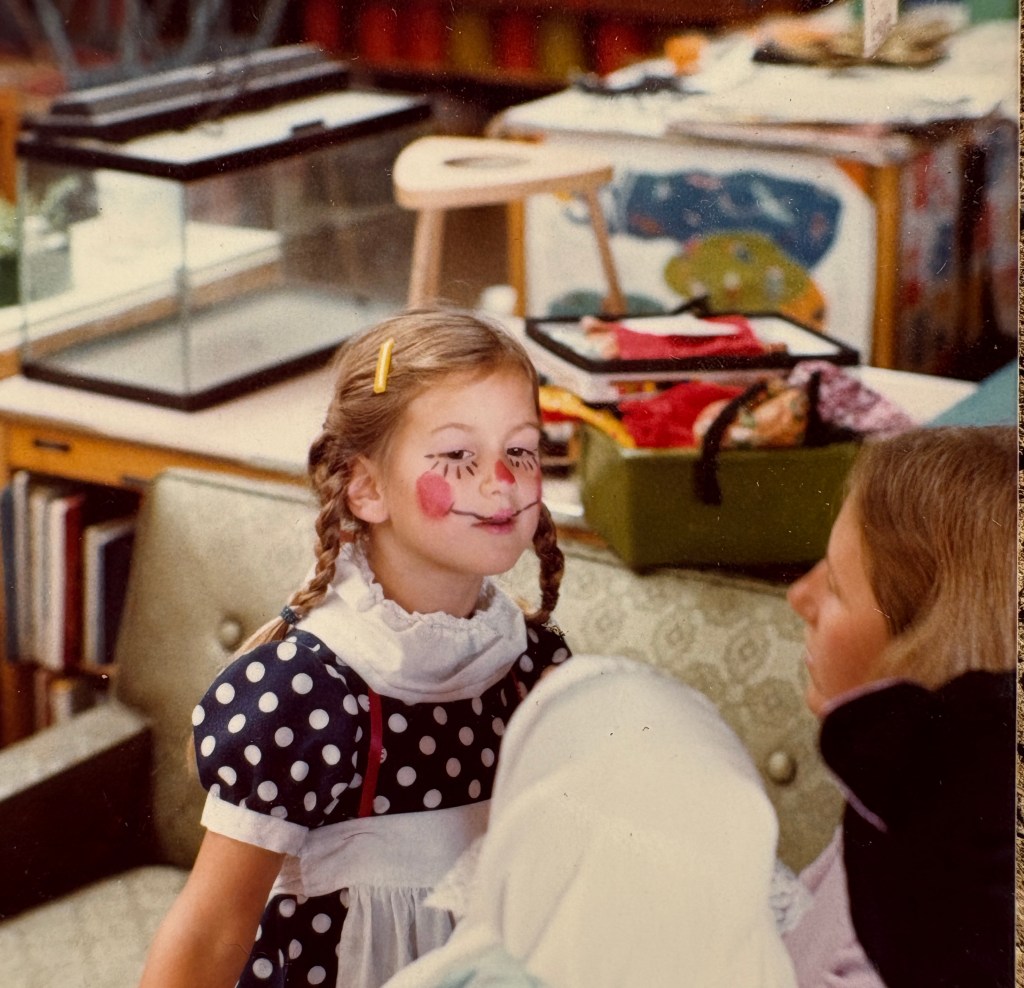
At the same time, my friends and I were being raised by conscious, feminist mothers working as businesswomen, nurses, teachers, and artists. These mothers also formed natural foods co-ops and planted organic gardens that kept us healthy and growing. Some of our fathers were absent, but many were highly engaged and supportive of their daughters and their friends. By “feminist,” I mean that our mothers (and many fathers) taught us that we were equal to boys in every way, that there was nothing “less” about us because we happened to be female. Our futures felt wide open. We had so much opportunity that we didn’t realize how limited life had been for our own mothers (not to mention our grandmothers) only a decade or so earlier.
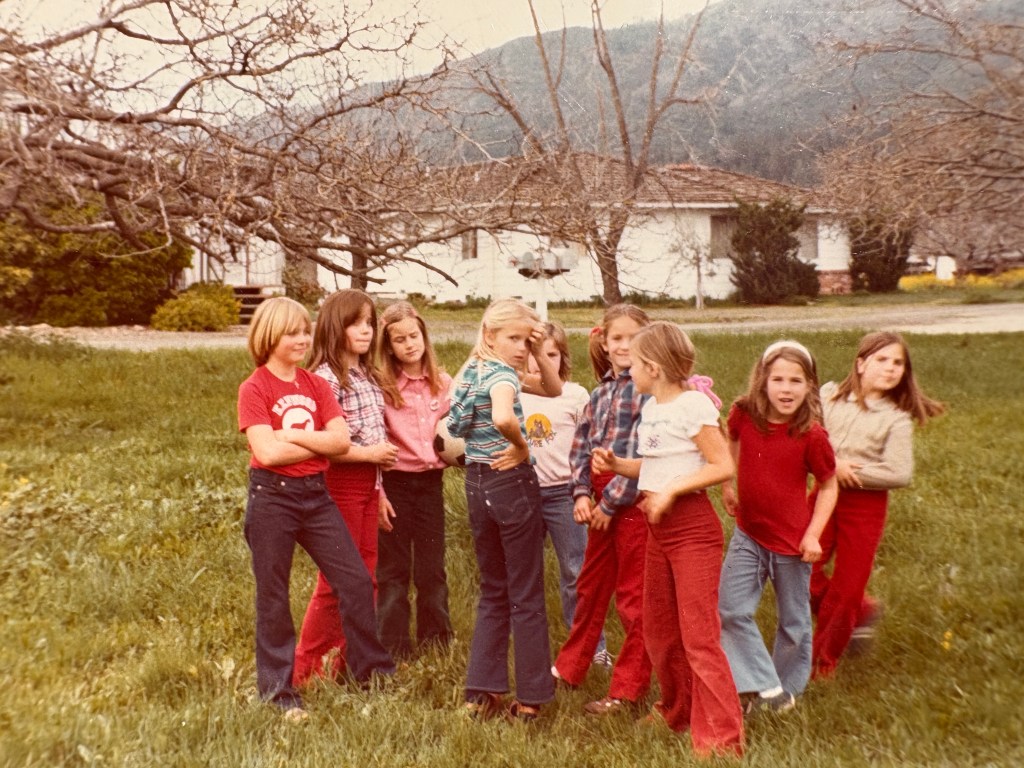
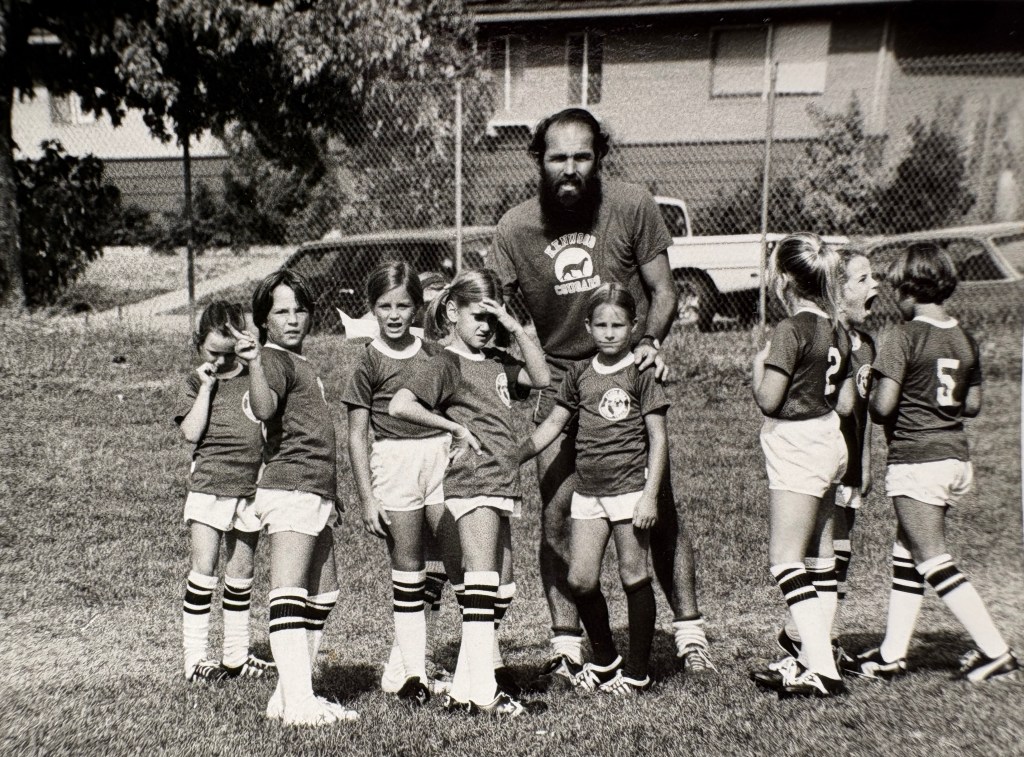
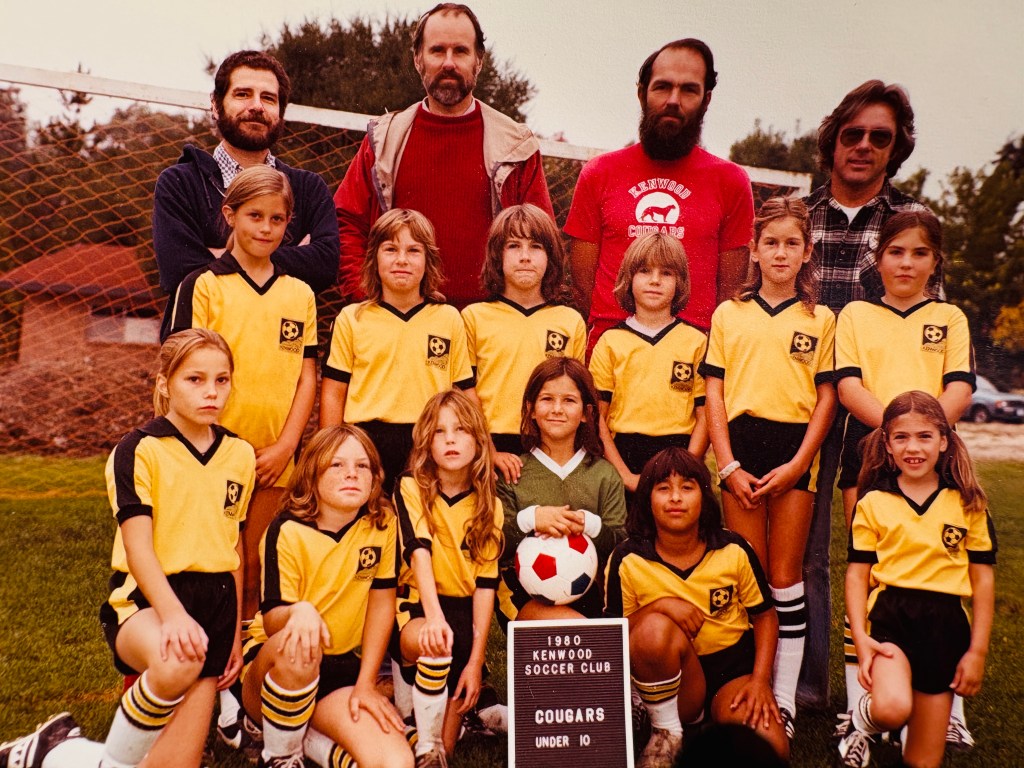
While some of our mothers marched and literally burned their bras, most of them led quietly independent lives, working and supporting our own life experience and dreams. In school, we girls were offered modern dance classes, and after school we played on some of the nation’s first youth girls’ soccer teams while being coached by our fathers (our mothers had missed the chance to play soccer themselves). After all, Title IX, the federal civil rights law banning sex-based discrimination in sports and education, had passed relatively recently, in 1972. I’ve thought about how my life would have been different had that law never passed. Instead of my eleven straight seasons of formative soccer (all the way to Varsity in high school), there would have been none.
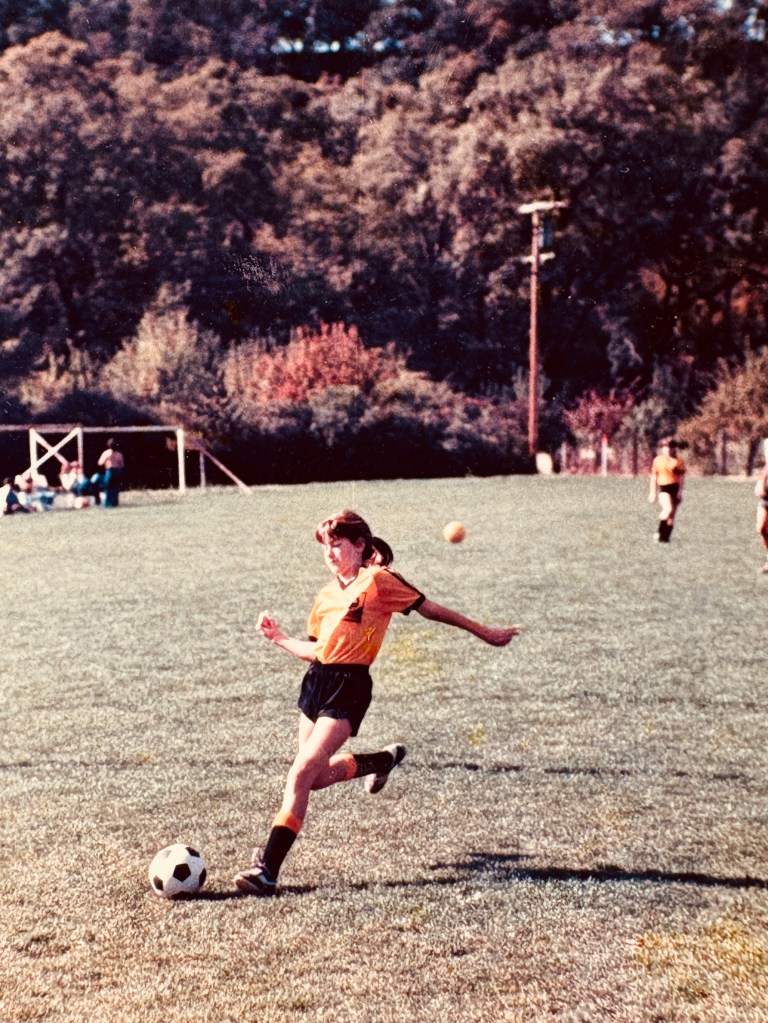
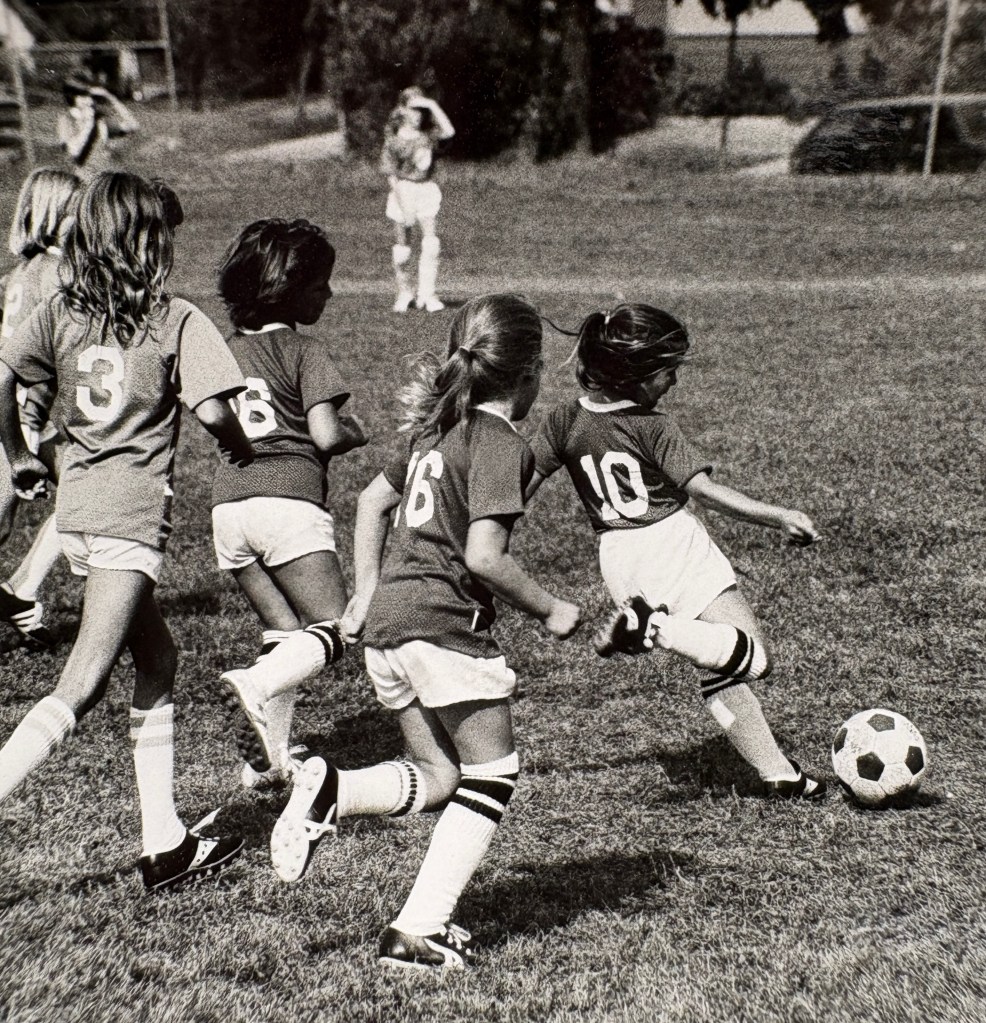
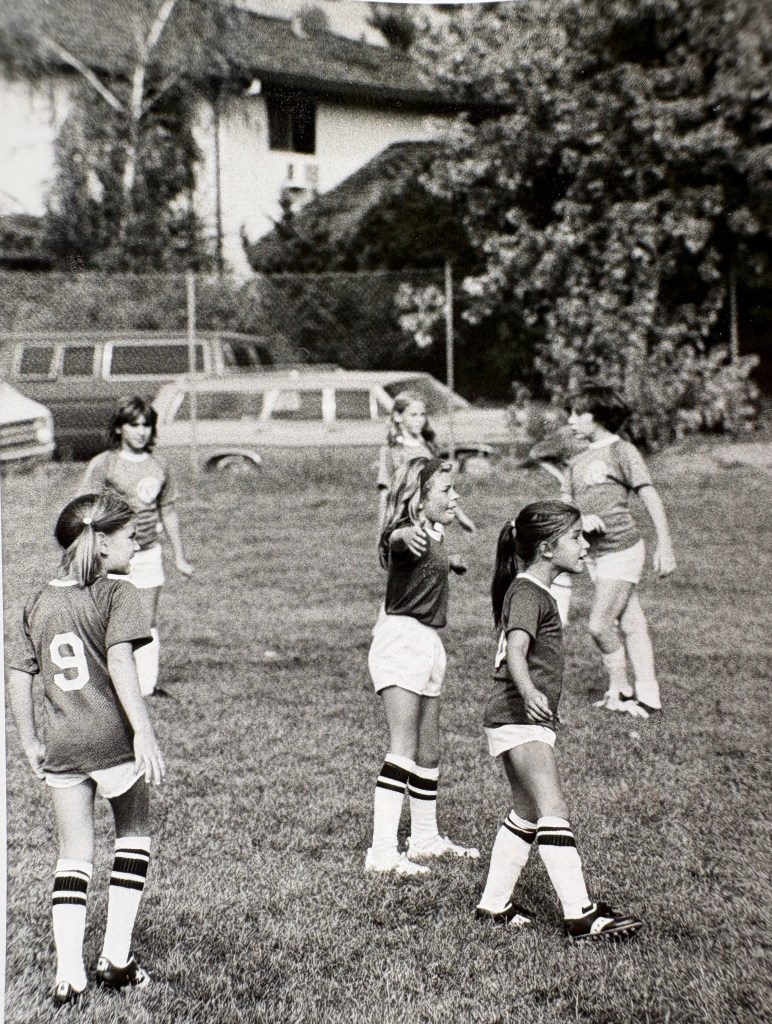
Note the classic 70s cars in the background..
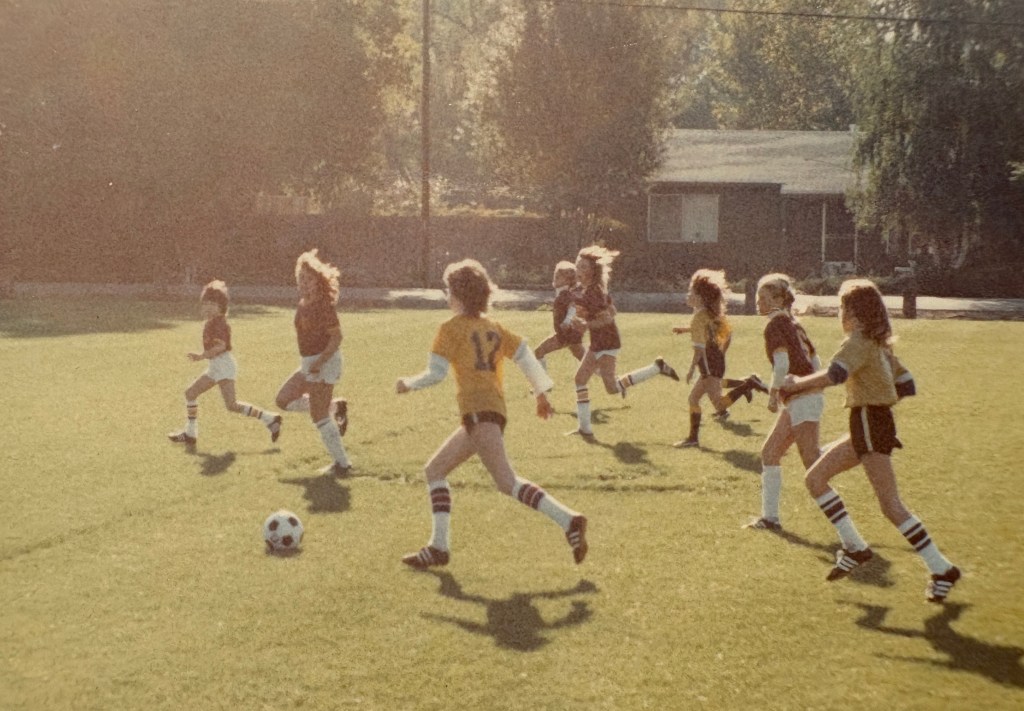
Most of these photographs are his.
Knowing who my cat was named after helped spark a lifelong interest in Gloria Steinem and her work. To me, it seemed like Gloria made it cool to be a feminist. She didn’t apologise for her casual glamour (or anything, really), and she had no requirements about appearance—she embraced miniskirts and long hair while linking arms with shaven-headed dykes on bikes. She made men uncomfortable, accountable, and speechless. And wow, could she write. My long-standing subscription to Ms. Magazine (of which she was a cofounder) taught me, inspired me, and also enraged me. Once, as a promotion, the magazine sent me a roll of “THIS OFFENDS WOMEN” stickers, which I enjoyed slapping on particularly ridiculous public advertisements.
In college, as part of my Women’s Studies minor, I read Gloria’s essay about posing as a Playboy Bunny. Through it, I saw that one way to effectively bring about change and communicate the unfair realities of women’s oppression was through serving the oppressor a drink. Imagine that! You could expose their operating secrets and beat them at their own game. Gloria herself did not enjoy that particular experience. “Being a Playboy Bunny was like being hung on a meat hook,” Steinem told Interview Magazine in 2020. “I had to work very hard in 3-inch heels and a costume so tight that I could hardly breathe. The most surprising thing about [Hugh Hefner] was that he was pathetic. He was like an 8-year-old boy pretending to be a grown-up man.”
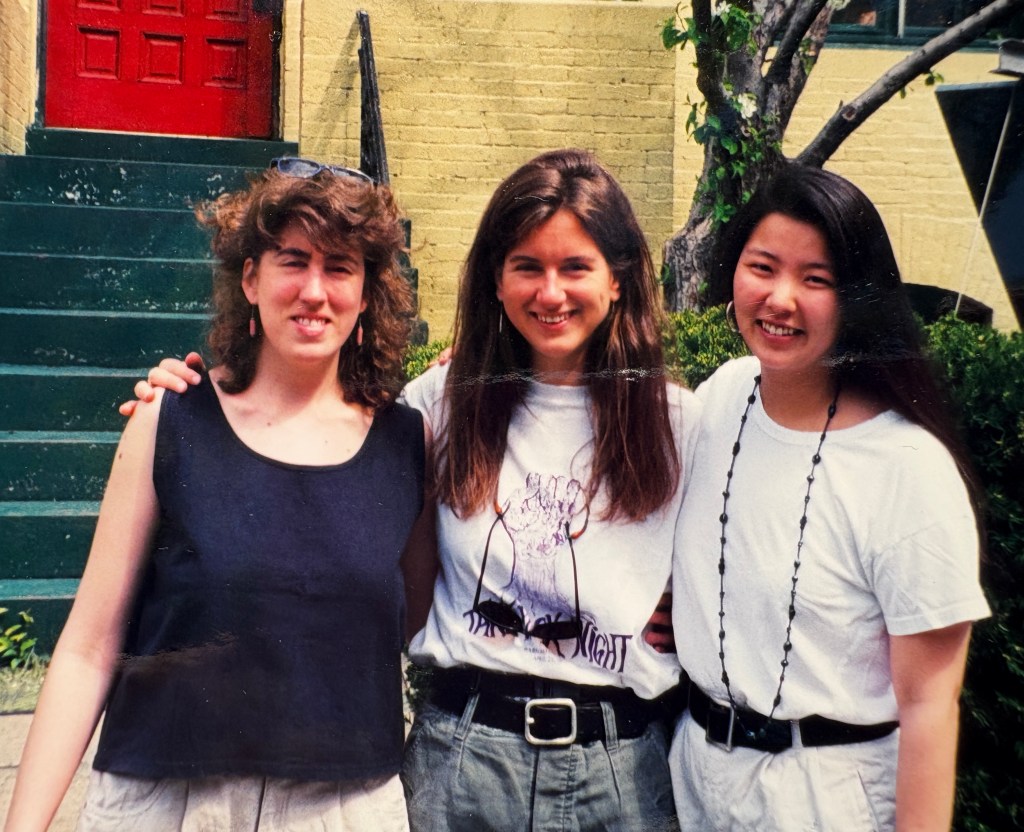
I once met Steinem at one of her book signings at Copley Plaza in Boston in the early 90s. While shaking her hand, I shared my cat naming story with her. She looked taken aback, perhaps even a little offended. I wanted to reassure her that my father naming our cat after her in 1977 was the highest compliment, one that had helped influence my own feminist path, but I didn’t know how to fit that into our brief exchange. Instead, I offered my book to be signed and awkwardly voiced my gratitude.
Gloria Steinem left us two days ago, but her legacy lives on in every woman and girl, whether they know it or not. She made the world a better place for women. Her wit, her intellect, her talent, her inventiveness—all of these qualities made a difference in our lives, then and now. She knew that women come in all varieties, and she was patient. Gloria recognized that some of us could be exposed to feminism our whole lives and still have a long way to go.
I wonder if Gloria knew how far her work reached—far enough that she helped shape the life of a little girl in the 70s, and strong enough that she still helps shape that woman (and that woman’s daughter and son), decades later.
These words are my best attempt at thanking Gloria—the equivalent of leaving a bloody mouse heart on her heavenly doorstep.


You must be logged in to post a comment.