“When I jumped off, I had a bucket full of thoughts
When I first jumped off, I held that bucket in my hand
Ideas that would take me all around the world”
-Phish, Back on the Train, Farmhouse
August 3, 2024, Noblesville, Indiana. A quizzical anticipation washes over the restless amphitheater crowd as the short, bespeckled man strides across the stage, dragging a vintage vacuum behind him. The man’s light cotton dress ruffles as the familiar red (or yellow this time?) circles dotting the fabric glow in the oppressively humid evening air.
My eyes remain glued to the giant hanging screen to my left as I watch the band’s namesake, Fishman, carefully place his lips to the end of the vacuum’s hose and … blow.
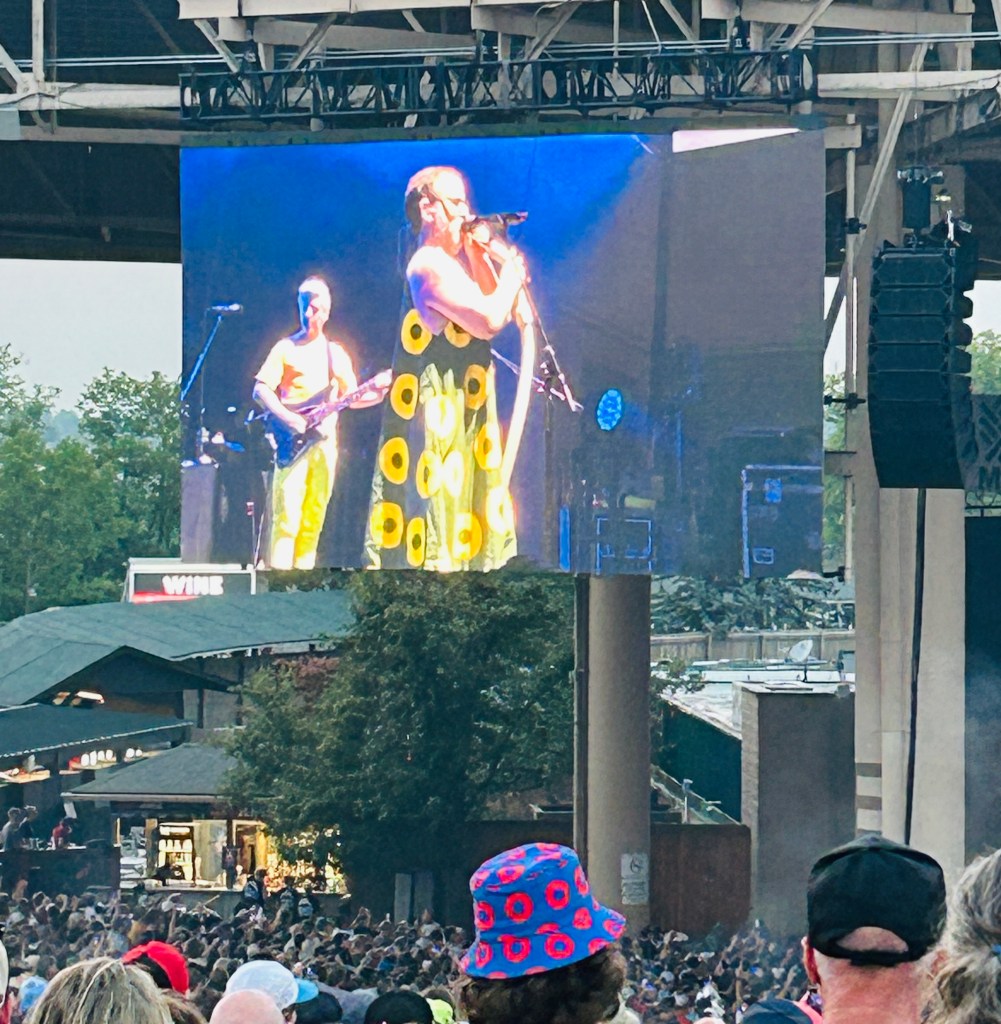
Imagine a cross between a flatulent Kermit the Frog and a beached seal’s whistling lamentation and you might come close to the sounds that emit from the microphone. As the crowd roars in appreciation, I stand on a narrowly folded picnic blanket, stagnant air trapping me, my husband, and our two friends in a sea of drifting marijuana smoke and patchouli-scented, undulating, frequently tie-dye adorned Phish fans.
Suddenly, the darkening sky above me appears to divide between the present and the past. I’m traveling back in time. Waaay back. Thirty-five years in fact.
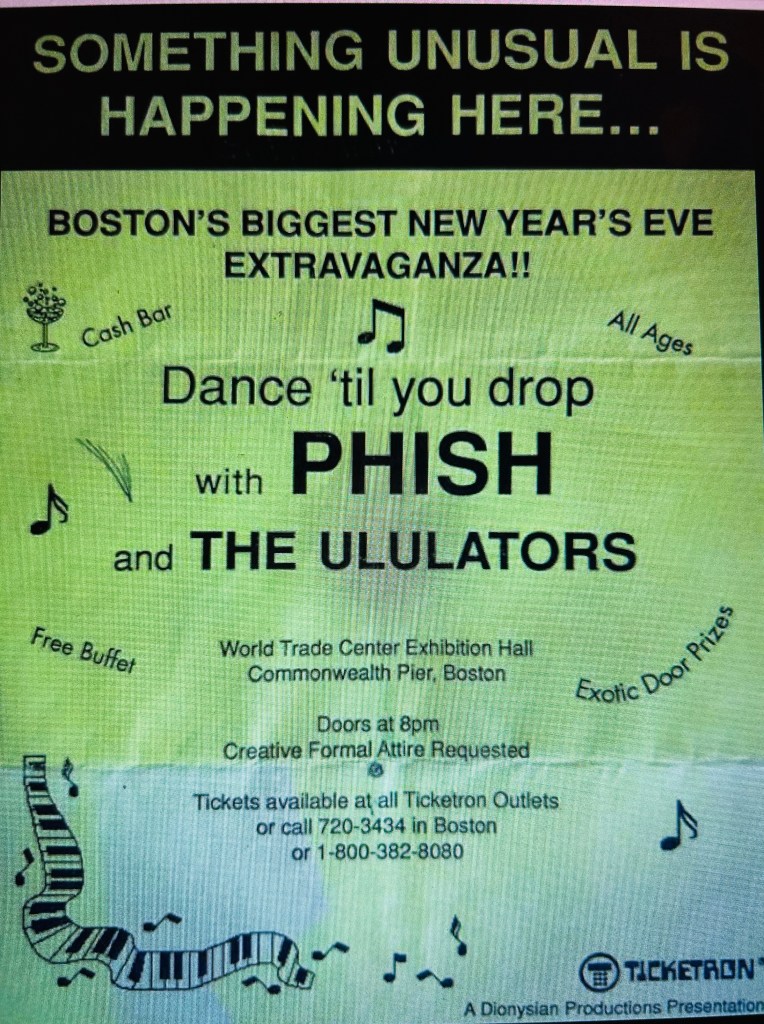
January 31, 1989, Boston, Massachusetts. I am nineteen years old, a recent college dropout sitting on the arm of a floral couch talking to my cousin on the phone, the receiver heavy in my hand. “We’re seeing Phish tonight,” she announces excitedly, “with a P, not an F … they’re hard to describe but I think you’d love them … this is their first New Year’s Eve show ever.” Impulsively (how else does a nineteen-year-old make a decision other than impulsively?) my high-school boyfriend and I decide to see the mysterious, aquatically-monikered band play in Boston that evening.
At that point, the future stadium-fillers only had a handful of fans. Jenny, my older by six months cousin, was first exposed to Phish’s music while attending a very alternative boarding school in Vermont (so alternative that her “roommates” at the institution consisted of her boyfriend and their pet rat—or was it a ferret—and their “dorm” a dilapidated cabin on a wooded Vermont hillside).
That final, frigid night of the 1980s found a group of us stomping along city streets, cold air winding its way under my velvet scarf and straight through my silvery tights as we searched for Boston’s World Trade Center Exhibition Hall, tucked away at the end of a pier. Once inside the wide, dark space we gripped our drinks and watched as the opening band, the popular Ululators, warmed up the festive, eclectic crowd.
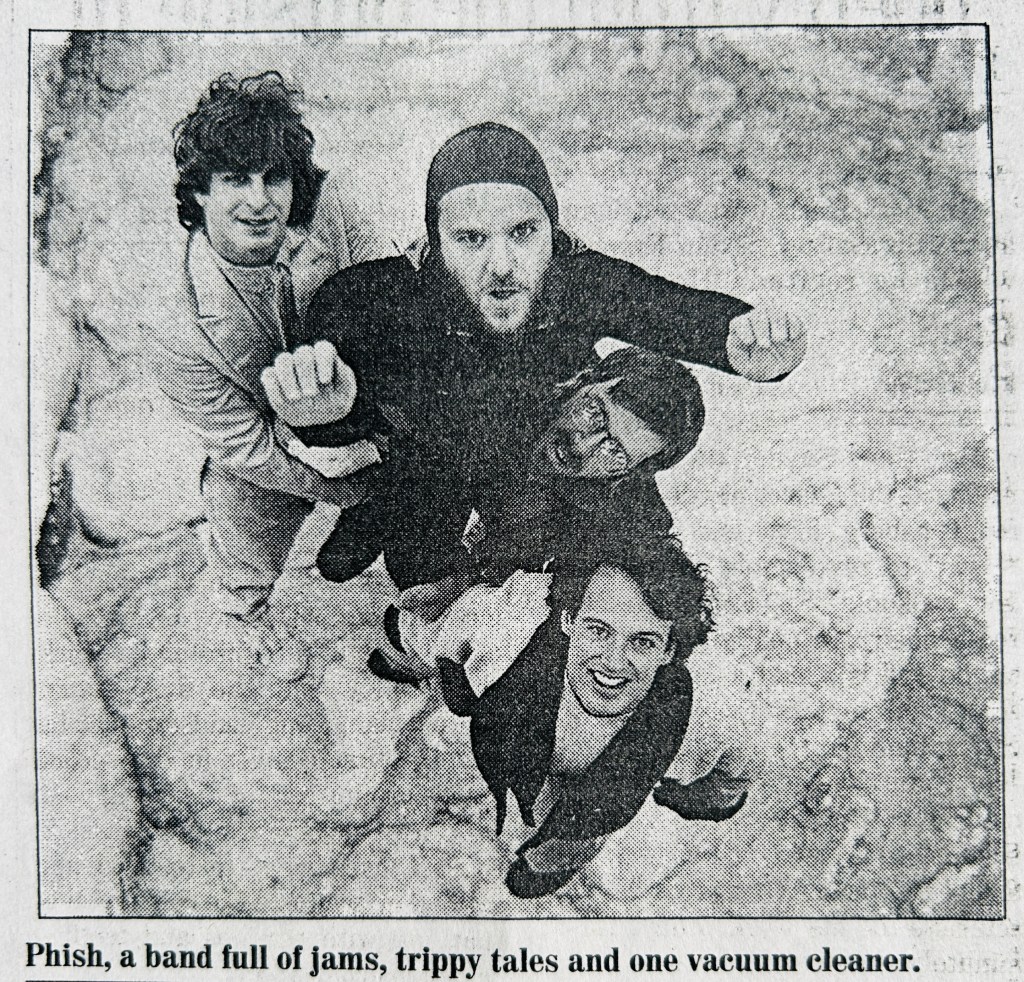
Soon it was time for the main attraction to take the stage. A group of four grinning young guys walked out, not much older than us. The two guitar players wore tuxedos and top hats, and the drummer sported nothing but a G-string with tuxedo tails streaming out behind his bare rear.
As soon as the four launched into “I Didn’t Know,” I knew.
While it was clear that these guys were gifted musicians, but something else was also going on, fresh and wholly different. Lyrics were whimsical, clever, and funny. Guitar riffs melodic and transporting, with piano and drums providing both a classic and fresh accompaniment, rousing and soothing the crowd. This was rock music, but it was also a kind of entertainment, a university of the musically absurd.
I’d never seen a band enjoying themselves as much as the crowd facing them. Audience participation was encouraged, as important to the life show’s life as the performers on stage. As the four burned their way through instant classics like “Bathtub Gin,” “Split Open and Melt,” and “Fee” the energy created was reciprocal, as evidenced by the ecstatic grin splashed across the face of the man I later learned was Trey, the enthusiastic, head-bobbing red-haired guy who appeared to be leading the charge.
The notes built and crested and shattered as they rolled around in my head, sometimes all at once. But the highlight, the episode we talked about for days after, was when the red-circle-on-grey-fabric-dress-wearing Fishman (who in my opinion should receive more national credit for normalizing men wearing dresses) rolled a cylindrical vintage vacuum out on stage.
“Maybe he’s going to do a little cleaning,” I thought, “Hoover up the confetti?” Instead, he raised the hose to his willing lips and began to enjoy himself playing the vacuum like an instrument. Our mouths opened in wonderment, the crowd laughingly danced around the room and shook our heads in disbelief. That was it – I’d wager that everyone at that show became a Phish fan for life.
After that first magical night, Phish and their musical movement became a part of my world. Despite an obsession with David Bowie and New Wave music in High School I easily made the shift to devoted Phish fan. I was fortunate to live in Boston throughout the 1990s (which also happened to coincide with my 20s), the same decade the band was rising and growing exponentially in popularity. While Phish launched their brand and collected a gigantic fan base I launched my adulthood, experienced my first broken heart with that first Phish-loving boyfriend, and attempted to discover my place in the world. I never followed the band nationally from venue to venue like a truly dedicated Phishhead, but during those days I saw enough shows in Boston and other Northeast venues to know the words to every song and start a half-inch-thick prized collection of ticket stubs.
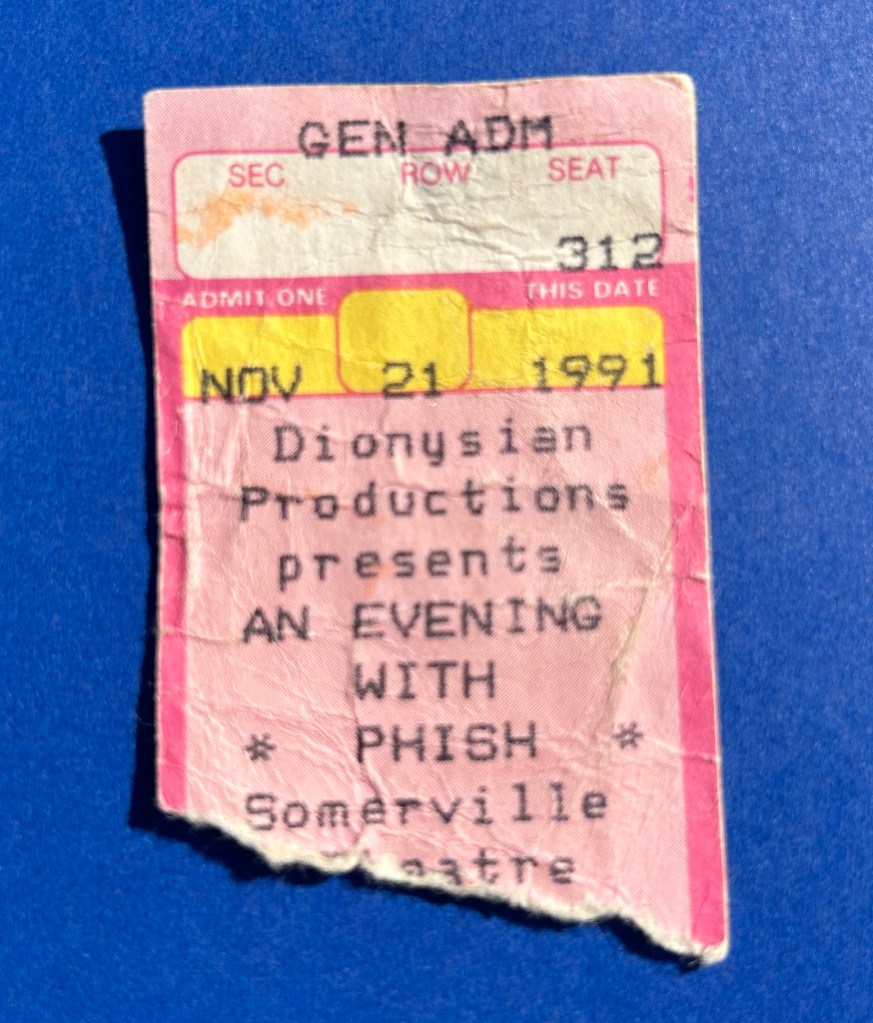
August 3, 1991, Auburn Maine. I had added my name to Phish’s mailing list early on and one day in June 1991 a postcard arrived. It was an invitation to a concert dubbed “Amy’s Farm” because the show was held at the Maine-based farm of Phish’s first fan and friend, Amy. Given that Phish signed with Elektra Records that same year the band was offering thanks in the form of a free show to the fans that had stood by and supported the foursome from their very beginnings in Burlington, Vermont in the early 80s.
This explains how I found myself camping in a dusty field in Northern Maine one hot August day, listening to Phish play under the stars and pines pondering how I got to be so completely free and fortunate. A vague, filmy memory of the band riding out of the thick forest behind the stage, naked, atop horses bounces around my mind, however to this day I’m not certain if this image is a dream, the truth, or a mirage. The sole bummer of the day: we forgot the tent.
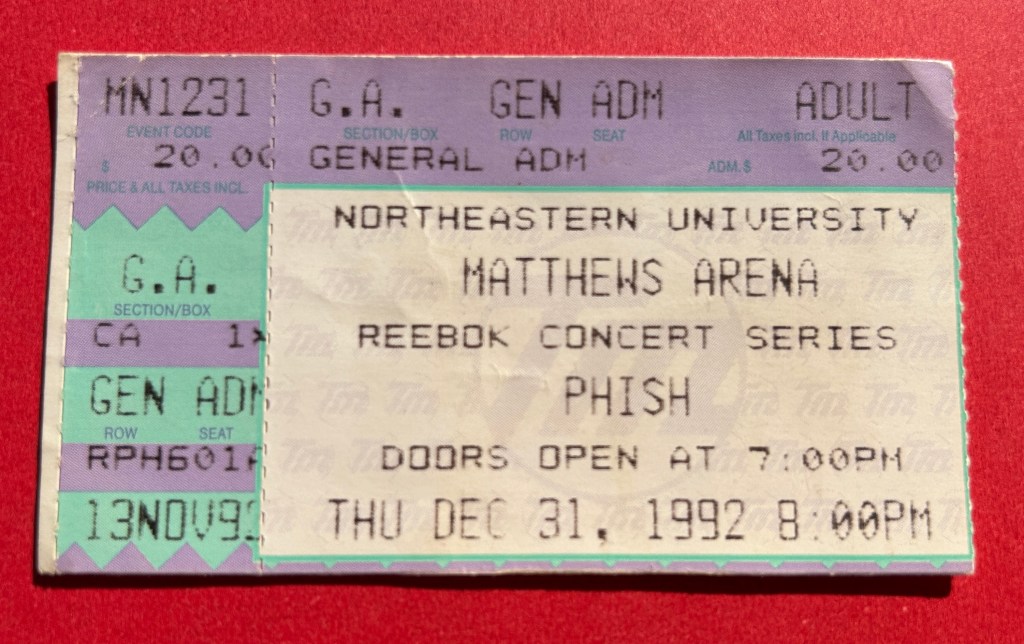
December 31, 1992, Boston, Massachusetts. Another New Year’s show, this one at Northeastern University’s Matthews Arena. Unbelievably, the venue was walkable from the apartment I shared with my best friend in Boston’s South End –no need for tires to make contact with the road. Standouts at the show included the person suspended over the audience in a chicken costume and the mass hysteria signal Trey gave the audience (that I believe was responsible for the “mysterious tremors” mentioned in the Boston Globe the next day). This was also the night I lost track of my group entirely, only to look down from a balcony and immediately spot my friend Nat, his thick bouncing ponytail silhouetted in the immense gyrating crowd like a furry creature signaling his location.
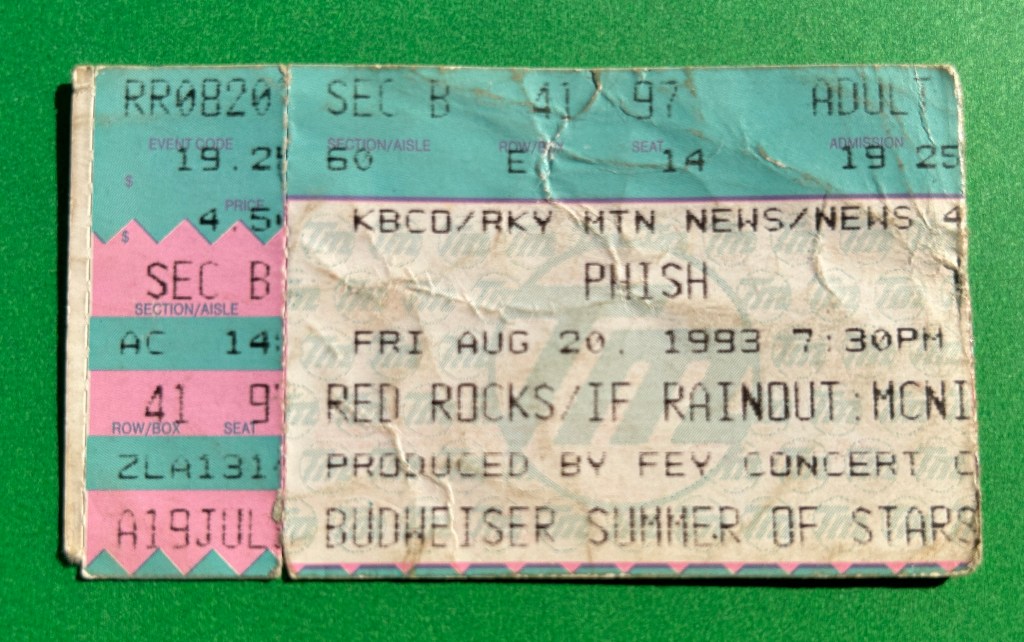
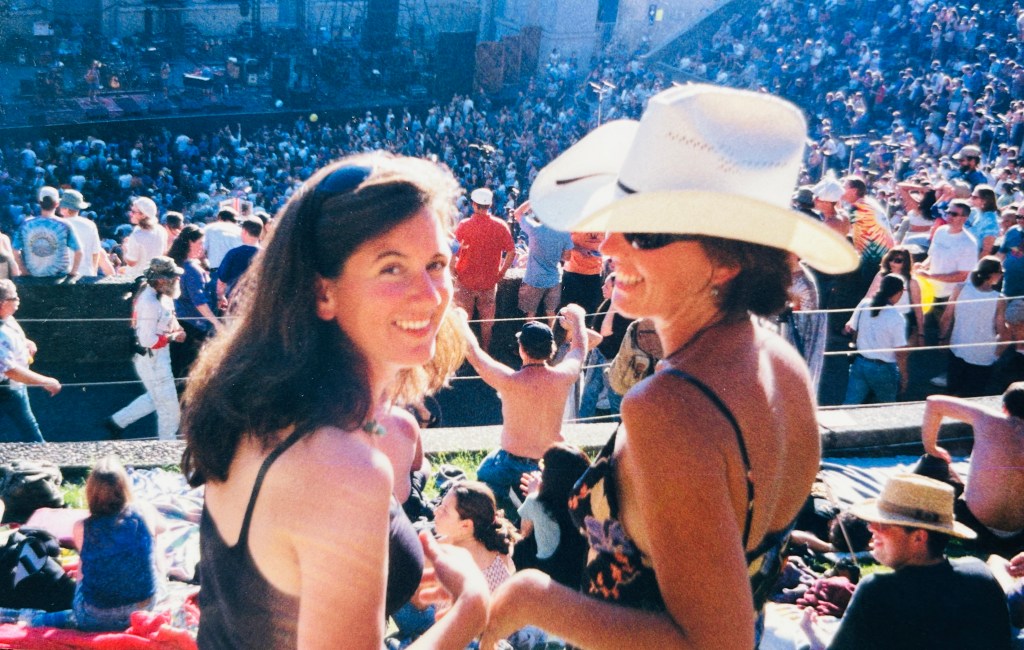
August 20, 1993, Denver, Colorado. That summer I worked at the Colorado-based camp I’d attended since age six. Phish was playing at Red Rocks and some friends and I managed to get tickets. That evening, I watched the lithe bodies of multiple fans leaping over three benches at a time as the band played “Run Like An Antelope” and the setting sun turned the natural rock walls of the amphitheater a red so brilliant I had to look away.
Alas, all was not perfect in Phishland. As much as I enjoyed the concerts, the traditions, and the fan culture I sometimes felt excluded by the masculine energy created by the four men on stage. I got tired of the same jams played by the same dudes with the same expressions and longed to see a woman up there, blending her voice with theirs, or theirs with hers. Where are the female jam bands, I wondered?
The amount of wasted, stumbling, blank-eyed fans who don’t know they are that far gone could be off-putting, even if I was sometimes one of them. Undercurrents of negativity surround certain Phish songs, and I didn’t enjoy the screeching, off-key vocals that sometimes took over. My least favorite song is “Wilson,” which invariably turns into a yell-along for the audience. I do realize, however, that music (especially Phish’s) reflects all aspects of the maze that is the human condition and neither band members, nor fans, are immune to life’s peaks, valleys, and temptations.
July 10, 2003, Shoreline Amphitheater, Mountain View California. In 1998, after ten years in Boston, I moved back to my native Northern California. Soon after, I met my Midwest-raised future husband when our work cubicles were situated next to each other. One of the first things we connected about? Our mutual love for Phish. During the early years of our relationship, right about the time Farmhouse was on permanent rotation in our car’s CD player, we caught a few Phish shows at Shoreline. The most memorable of these was the final show before the band went on a six-year hiatus. Sitting on the lawn at Shoreline, my shoulders sunburned from a day in the California sun, I gazed around at the massive, dancing crowd while the band launched into an encore of “Rift.” It was hard for me to grasp that this wacky little band I had once stood five feet from was now selling out four nights at a 22K-person capacity amphitheater.
Speaking of valleys, Phish’s founder and lead singer, Trey Anastasio struggled with a variety of addictions and was arrested in December 2006. I followed his story closely, perhaps recognizing some of my creative path, as well as addictive behaviors in his, and acknowledging that our idols can be as fallible as ourselves.
In a January 25, 2019 interview with GQ magazine about his embrace of sobriety Anastasio remarked “You know, I look to my heroes to be reminded that really good, really smart, really talented people can fall into this trap pretty easily, far down the road, if they’re not careful. The important thing is to know that there is a way out. And the life at the other end of that is a beautiful life. Everything bad turns into an incredible gift. If people can find the way out.”
Mistakenly, I thought a sober, creative life would be about as exciting as a bleached sample in a jar, but I assure you, just as Trey has, that it is even more beautiful and exciting than anything that has come before.
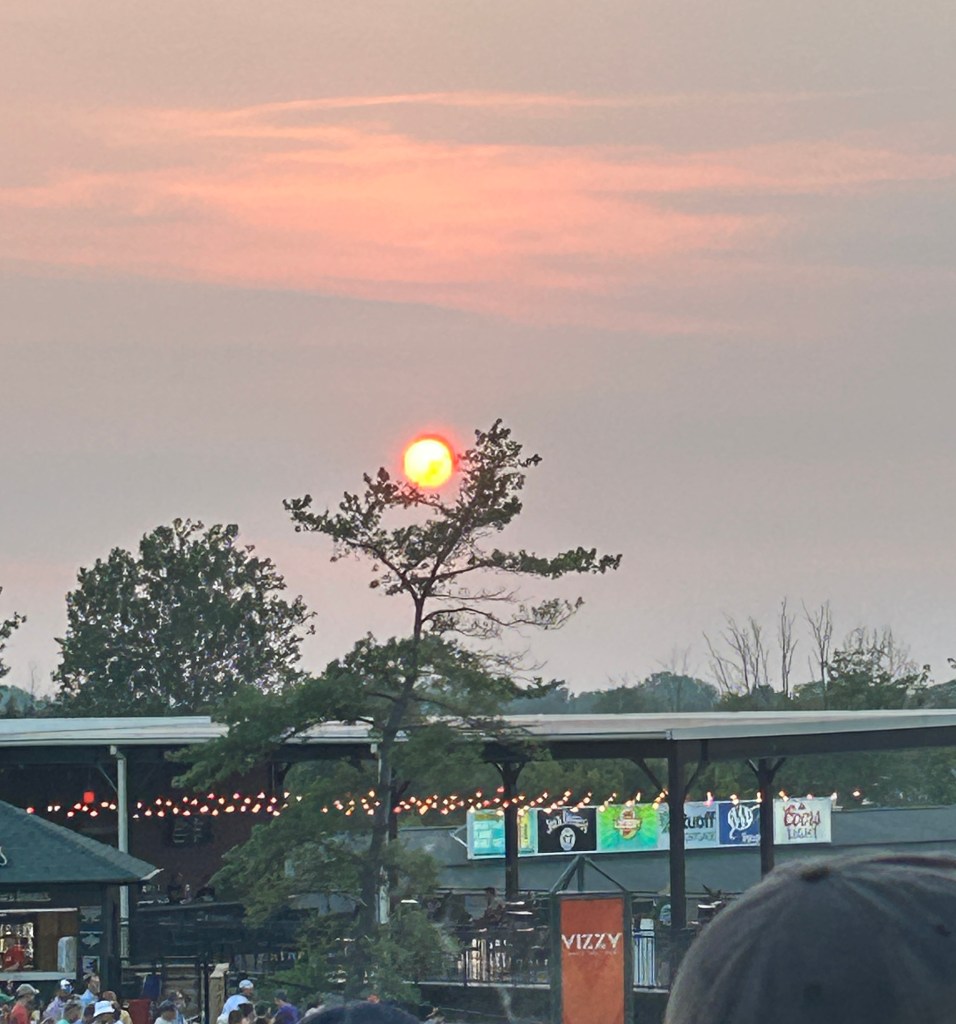
August 3, 2024, Noblesville, Indiana. Back on the lawn at Deer Creek (as Hoosiers will forever insist on calling it), the glowing orb of a setting sun is held by the branches of a lone tree. I am content, the kids are safe at home and my grooving, grinning husband of eighteen years dances alongside. I have been held by Phish’s music for so long that it has become a part of me, the branches of my life growing around the always-evolving but forever-burning core.
And miraculously, thirty-five years after first hearing the tortured sounds emitting from Fishman’s vacuum hose, I am listening to them once more.
Note: Special thanks to Phish.net which provided many clarifying details to my sometimes (okay, often) hazy show recollections.



 Still...however...maybe...
You must be logged in to post a comment.