This is a story of dreams and reality colliding, in the best kind of way.
It is 7:30 AM Pacific and my husband and I are walking up a steep island road at a steady pace, breathing in the grassy scent of hillsides warming in the sun, the tropical foliage spilling into the road, and the sharply pungent Eucalyptus pods crushing beneath our feet. No one else seems to be around.
A few minutes earlier, we were tiptoeing around our dark hotel room searching for walking shoes and quietly moving stacks of clothing, damp bathing suits, and multiple pairs of Crocs. Our 11 and 12-year-old kids are still sound asleep, iPads and heads thrown to the side. Thanks to our wonky vacation schedule and a hefty time change, we have been granted an early morning reprieve from their boundless energies.
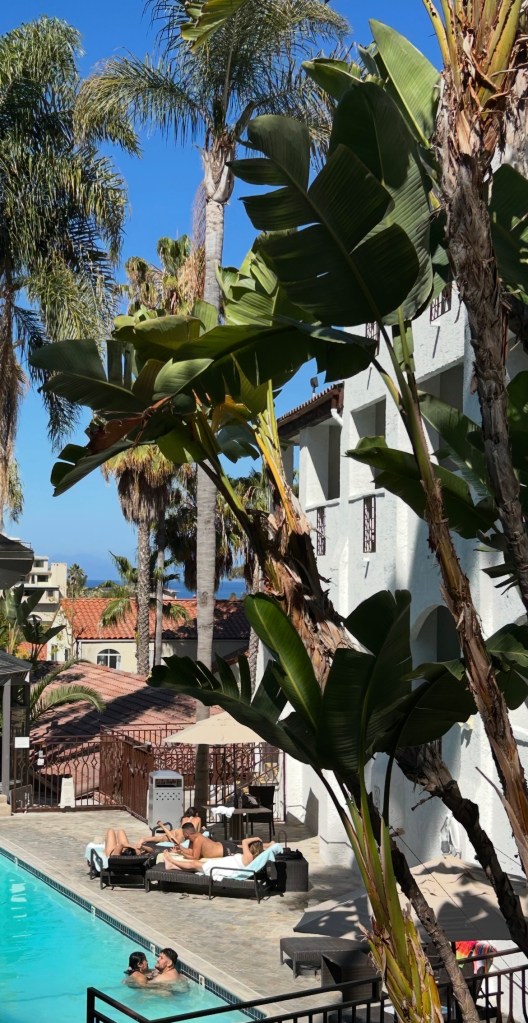
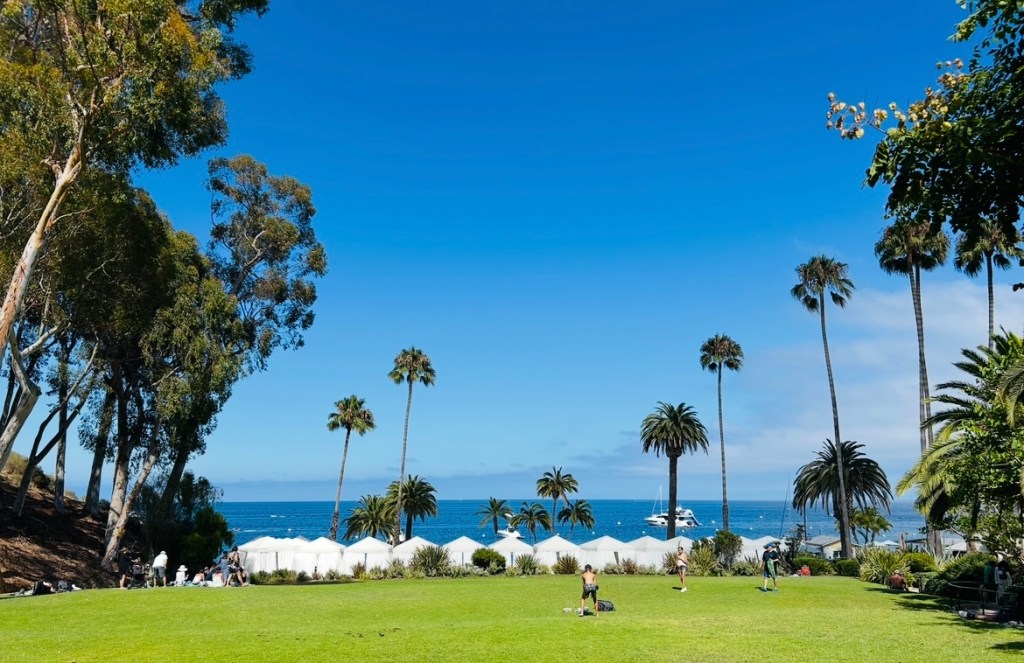
View from our Catalina hotel room patio, Pacific Ocean in the distance.
“How about walking up the road instead of down?” I suggest to Tom as we lock the hotel door behind us. He agrees, so we head right. Over the past two days of our visit to Southern California’s Santa Catalina Island, we have only exited our Spanish-style inn (on foot) and taken an immediate left. This move brings us down the steep road for the pleasing fifteen-minute walk leading to Avalon, the island’s main (and pretty much only) town. There are approximately 4,000 permanent residents on the 75-square-mile island, and almost all of them live in Avalon.
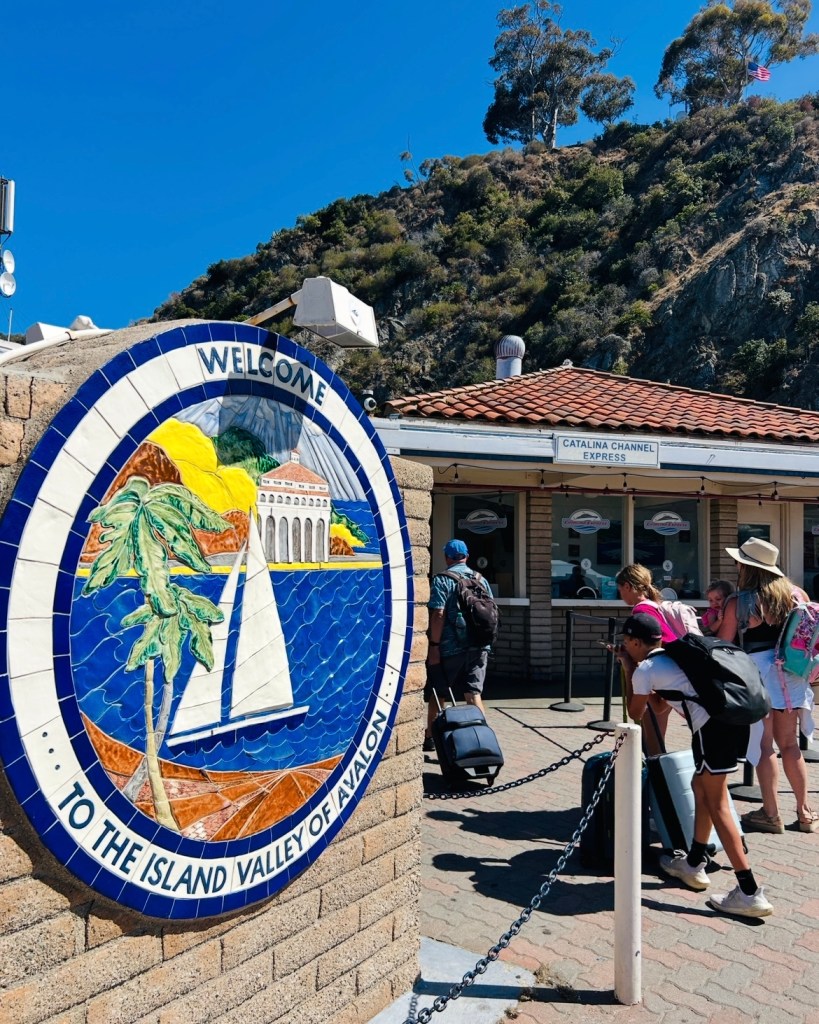
Welcome to the Island Valley of Avalon.
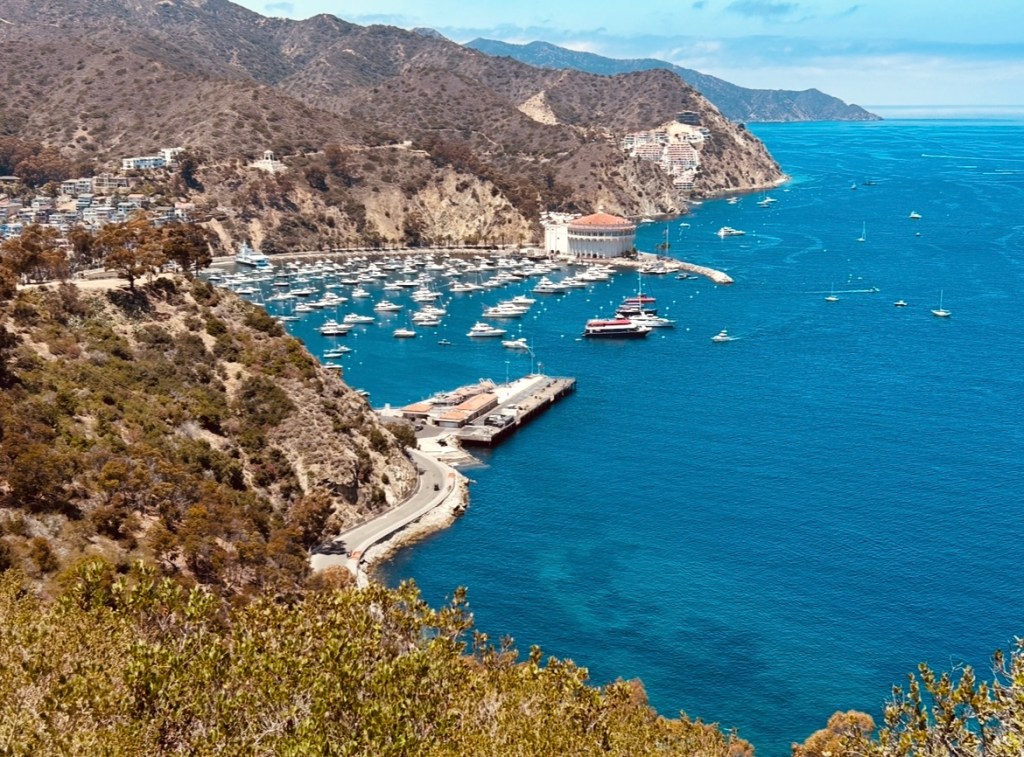
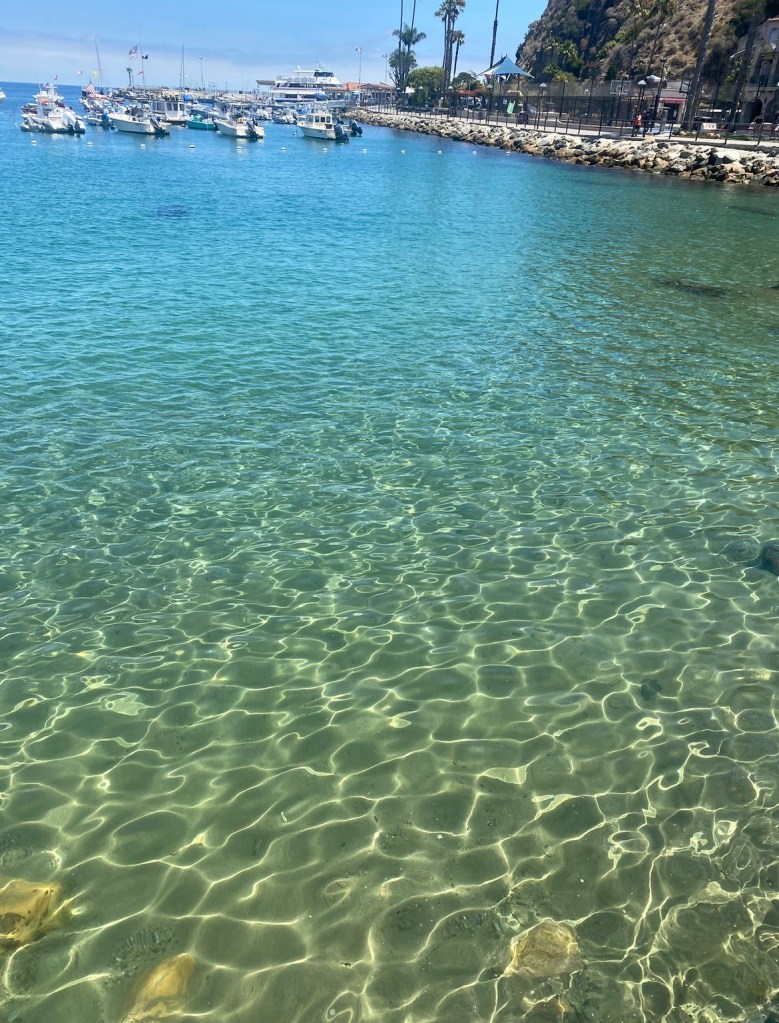
“This place is like the best of California all rolled into one,” I marveled out loud as our ferry sailed smoothly into the Avalon harbor two days prior. The ravined mountainsides loomed in the distance, stunningly clear ocean water sparkled, and palm trees swayed. Was that the vanilla-like scent of plumeria blossoms in the air?
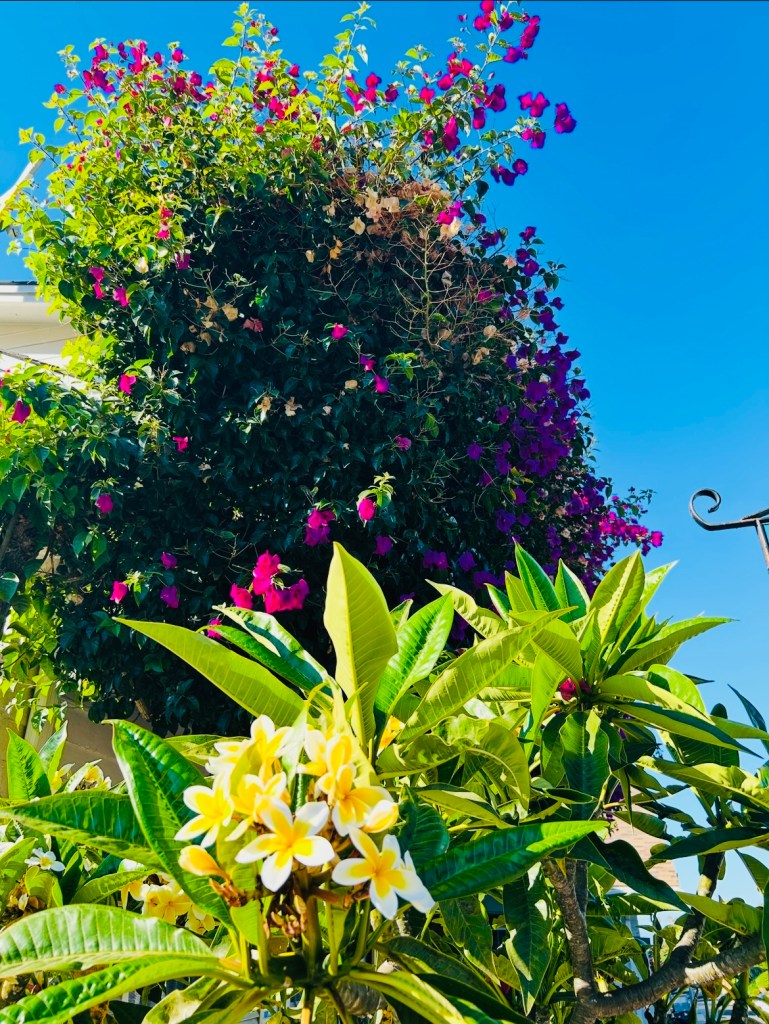
Bougainvillea and plumeria abound in Avalon.As does water so clear you can see the bottom, along with California’s state fish, the bright orange garibaldi.
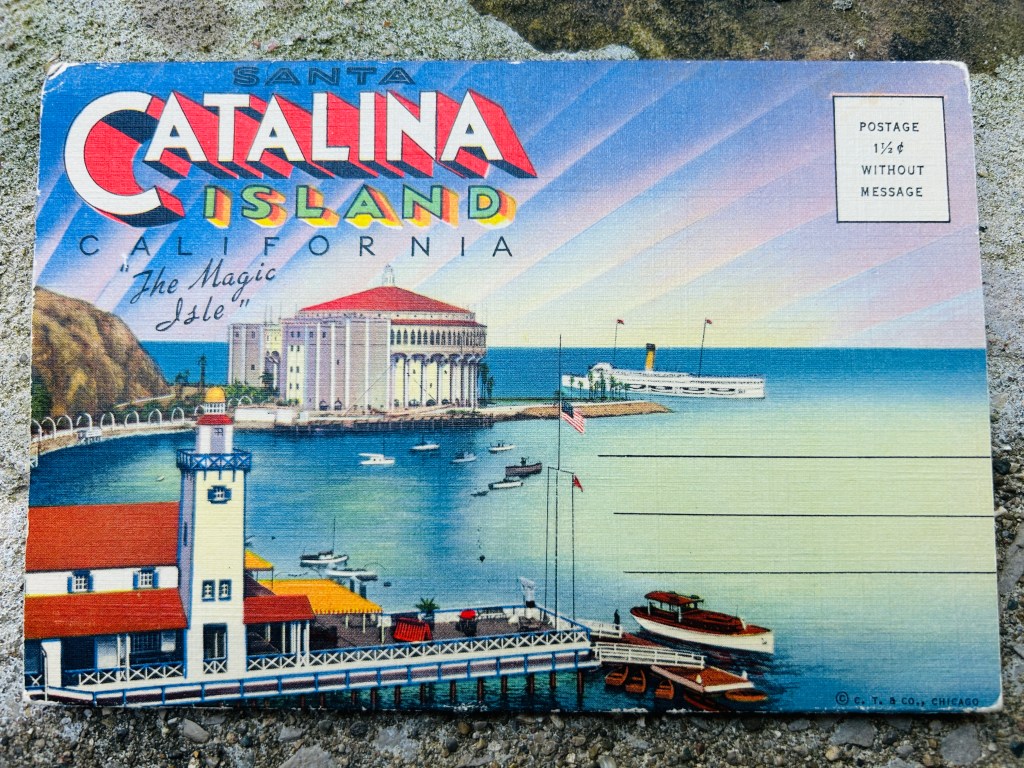
My father grew up in Los Angeles, and my paternal grandparents enjoyed their honeymoon on Catalina in 1929. I’ve been hearing about the island all my life. This, however, is my first visit.
Postcard packet purchased by my paternal grandparents on Catalina Island (never sent).
So far, our family of four has investigated Catalina via golf cart, paddleboard, and foot, but we have yet to see what lies above our Spanish-style Catalina Canyon Inn, perched at the top of a steep canyon and topped off with a view of the deep blue Pacific beyond. I’ve been eyeing the Eucalyptus-lined curving road above the inn, hoping for a glimpse into the less touristy side of Catalina. As far as I can tell, there are zero hotels up there, only some quaint and funky-looking houses that I imagine are inhabited by locals.
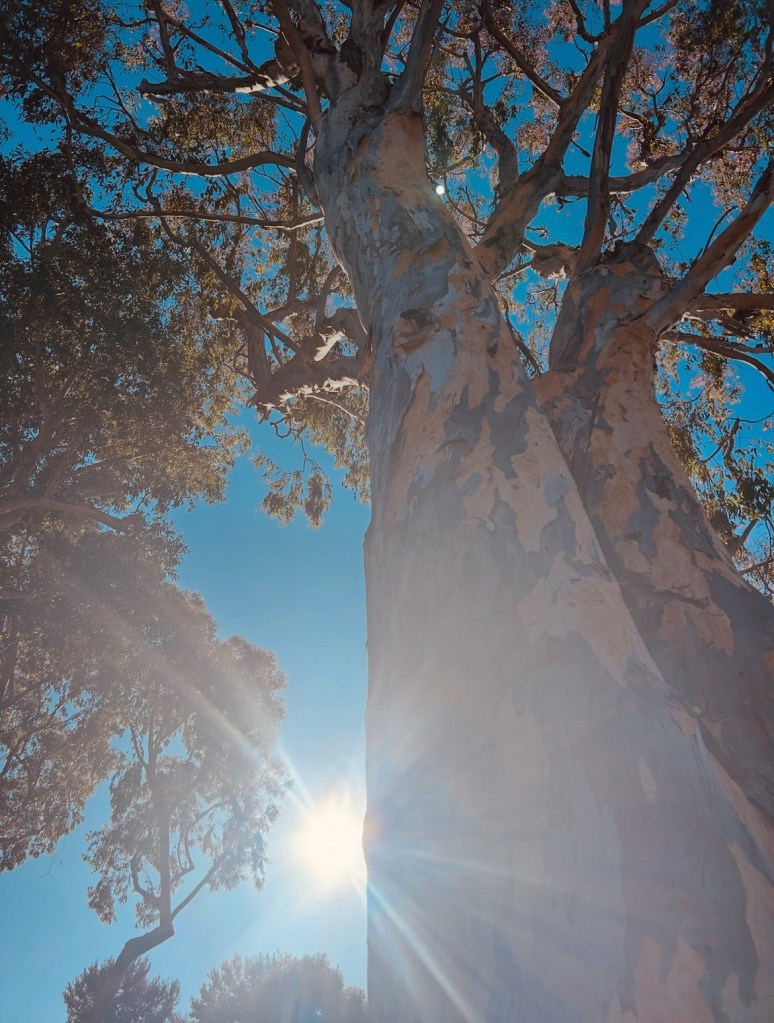
Eucalyptus trees, a favorite since childhood. Catalina has some especially gigantic specimens.
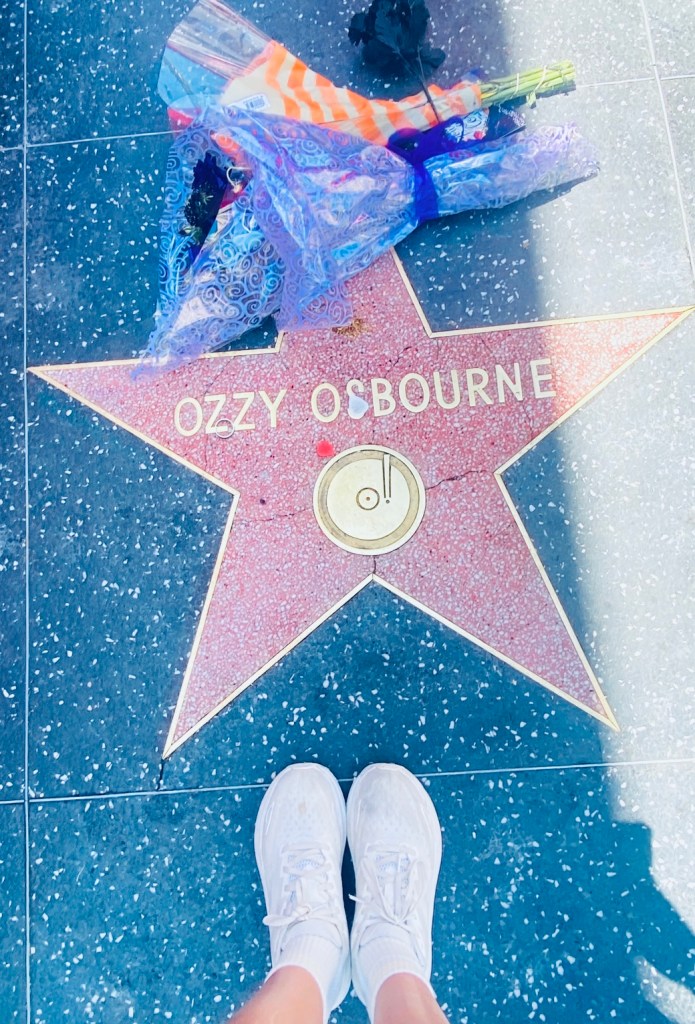
For me, this morning stroll is a slice of heaven. We had already been in California for a few days before journeying to Catalina. Experiencing Los Angeles with two preteens meant the itinerary looked a lot like their TikTok feeds: strolling the Santa Monica Pier, ogling the Hollywood Walk of Fame (featuring a flower-strewn star honoring the recently deceased Ozzy Osbourne), stops at Funko and Nike and LuLulemon, and an inaugural (for the kids) meal at the Eagle Rock In-N-Out.
But while we walked the crowded LA sidewalks, I found myself thinking about what was missing from this family adventure. As a native Californian who reluctantly left for the Midwest nearly 15 years ago, I am yearning for the California of my heart. The creative, kind, eccentric Californians that peopled my upbringing. The infinite, golden possibilities that lie around every corner. The bright orange of California poppies lining dusty roadsides, the sight of a graceful lone oak perched on the top of an emerald mountain in the springtime. This California lives on in my dreams, but these days, news stories paint lurid pictures. And as I lead an entirely different life 2,250 miles away, I wonder if the soul of that California still exists.
Idyllic Catalina view.
Reaching the top of what I am now calling “Eucalyptus Road,” we follow a hairpin curve and find ourselves on an upper stretch lined by houses on each side. The structures remind me of parts of Northern California towns Berkeley or Mill Valley, narrow wooden constructions, close together and very, very steep.
Suddenly, a man and his dog appear in front of us. Smiling broadly, the man greets us, as does his friendly, tail-wagging pup. “Nice morning, isn’t it? Have you had your coffee yet … just put a pot on … can I offer you some … my house is just up here.”
It might have been the perceived safety of an island, or the idyllic early morning atmosphere, but there are times when you sense that a human being you are meeting for the first time is a good one. This is one of those times. Nodding in unison, we accept the stranger’s offer without hesitation.
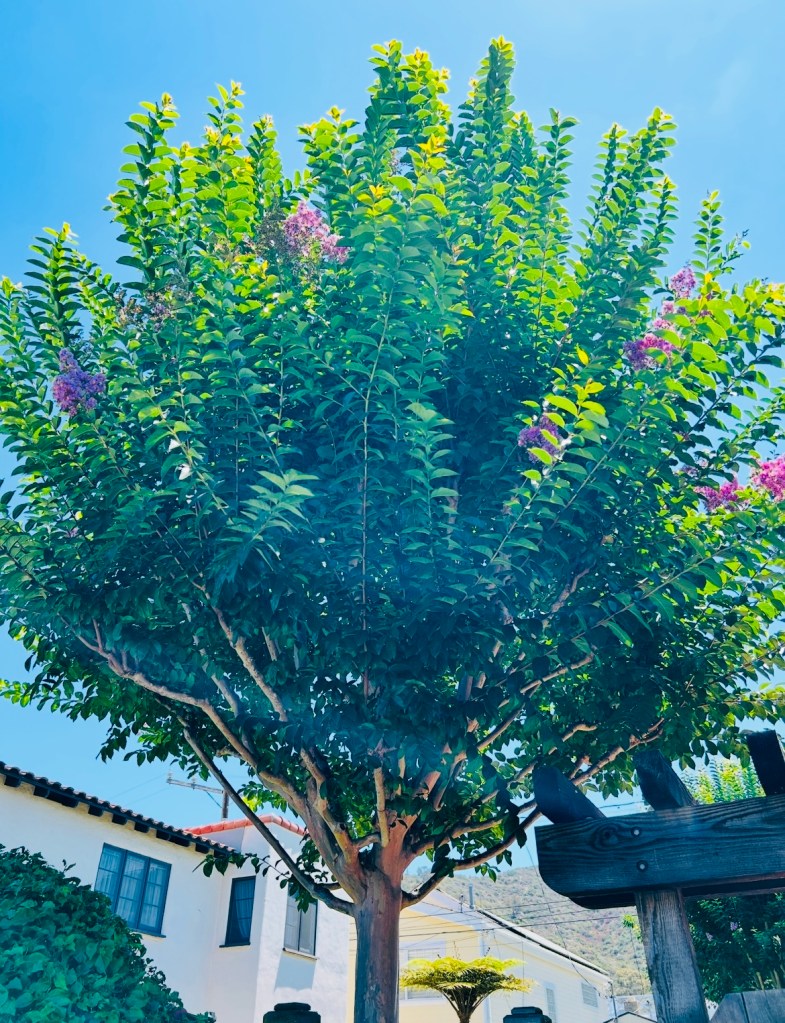
Some have maples in their front yard, others have this glorious flowering marvel.
Minutes later, we are trudging up the steep wooden stairs to the main floor of our new friend Bob’s house. There, in his elegant, sun-splashed kitchen/dining room, which smells of cinnamon and flowers, he hands us each a mug of strong coffee. We sip, admiring our surroundings, chatting about the artwork adorning the walls. Bob then proceeds to give us a tour of his lovely home, combined with a fascinating people’s history-style lesson about the island (for example, many islanders apparently believe actress Natalie Wood’s 1981 drowning in the Catalina harbor was an accident afterall, thanks to copious amounts of alcohol consumed that night).
At one point in the tour, I stand on Bob’s third-floor open-air pillow-strewn sleeping porch, looking down at the crescent moon town of Avalon, which is exquisitely framed by the blue expanse of the Pacific Ocean.
A shiver goes through me. “It’s still here,” I think to myself. The California of my dreams.
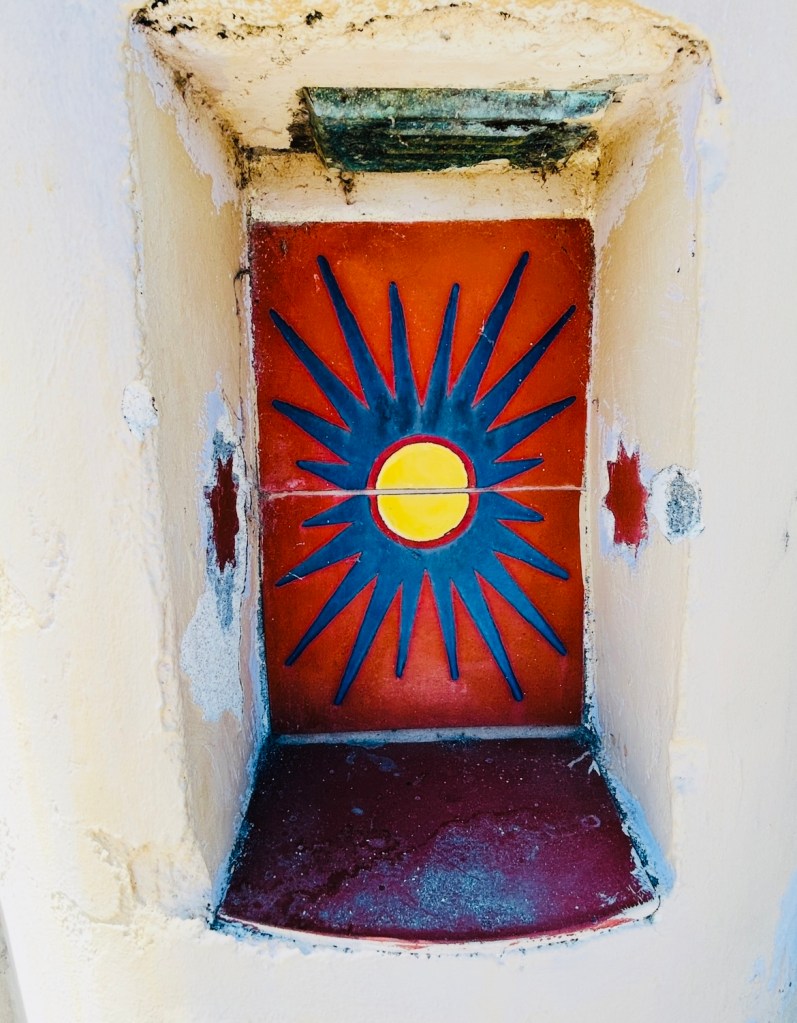
Hidden sunburst along a Catalina sidewalk.
Turns out, Bob is a retired bond trader turned poet. Of course he is.
And in his creaky wood-floored, weathered office, sailing ships adorning the walls, he reads us a poem. Closing my eyes, I allow his words to wind their way through me.
To change one’s mind/To open one’s heart—/One leaves the known behind
To take a different path/Than the one well-worn,/Opens the world /And opens the soul
Excerpt from “Pilgrims,” Songs of Redemption Poems by Bob Baggott www.offtheDesk.com
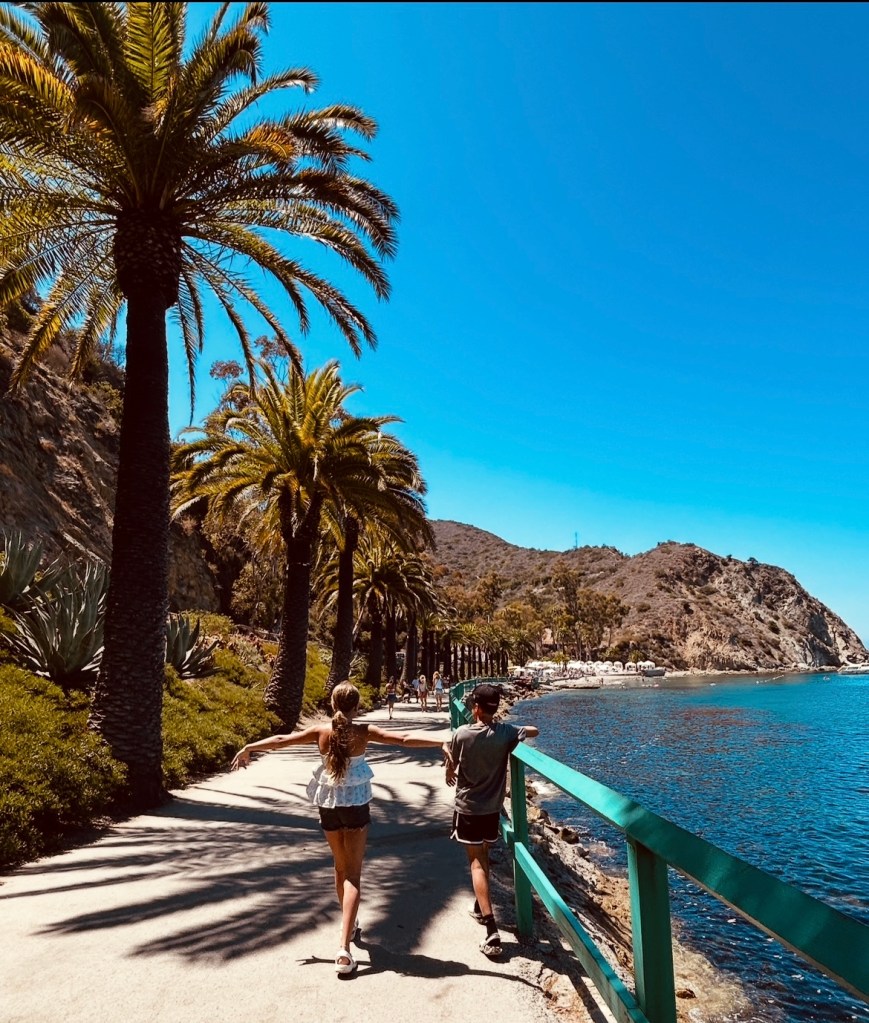
Walking California’s paths … into the future.
The soul of California hasn’t gone anywhere.
And sometimes, when you least expect it, you are reminded that infinite possibilities still exist.
The other day, as I drove around town, I was in a rush. One kid had been dropped off at gymnastics, the other needed a pickup from soccer later. There were errands to run, some calls to make. Familiar demands and busy end of the school-year times.
Then, as I sped through the West side of town, rounding a corner near the old hospital grounds, I saw it.
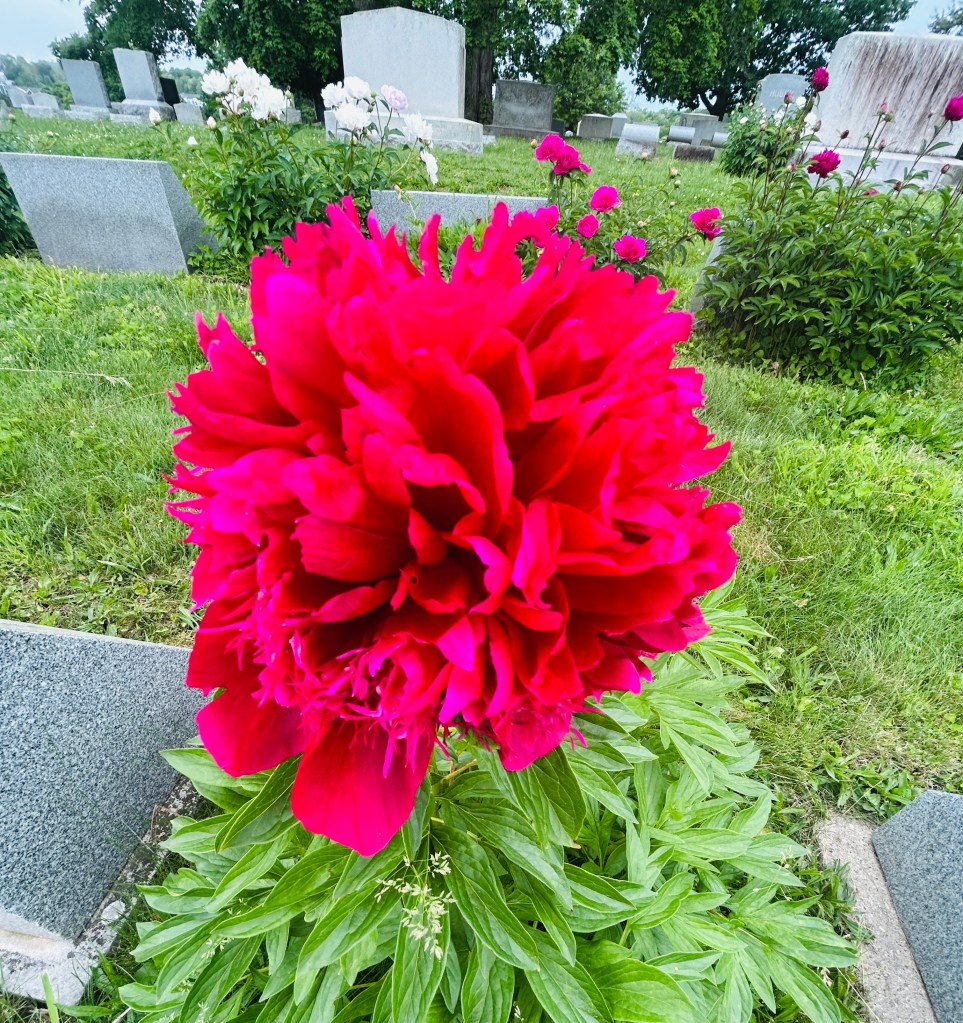
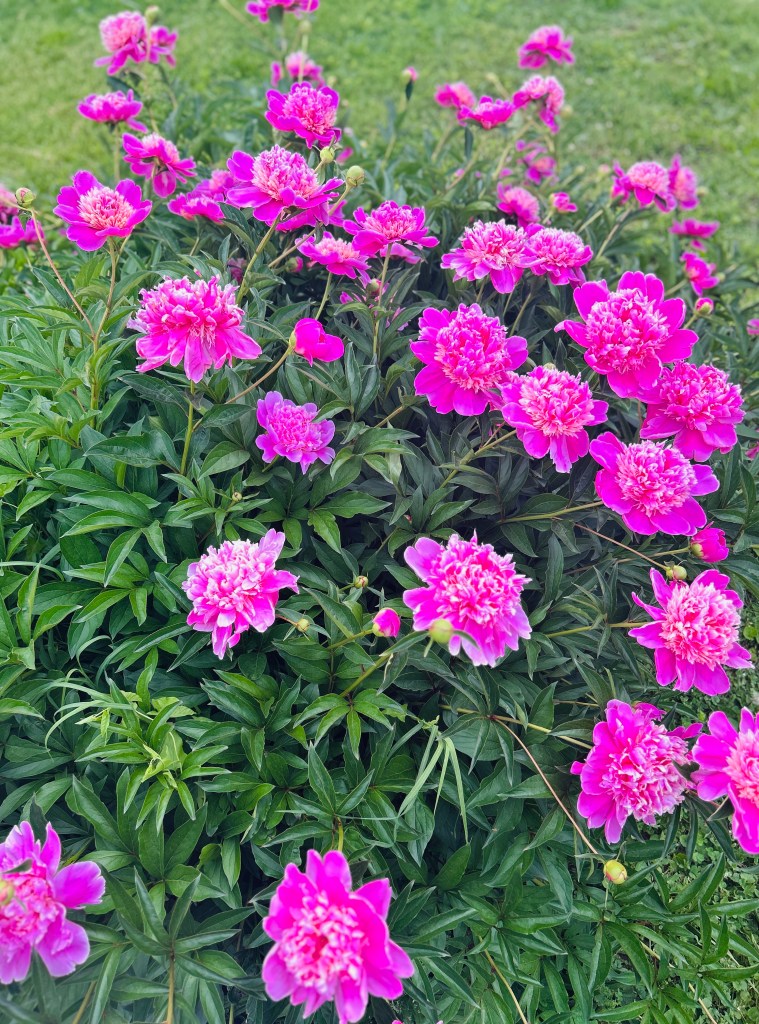
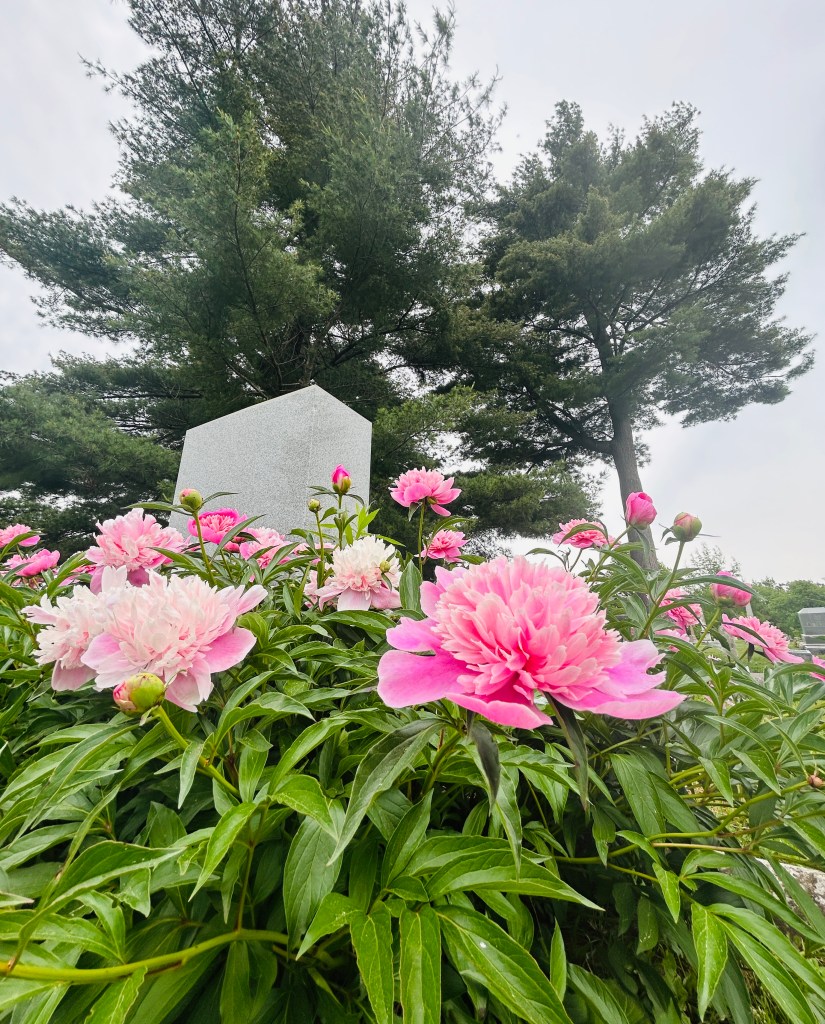
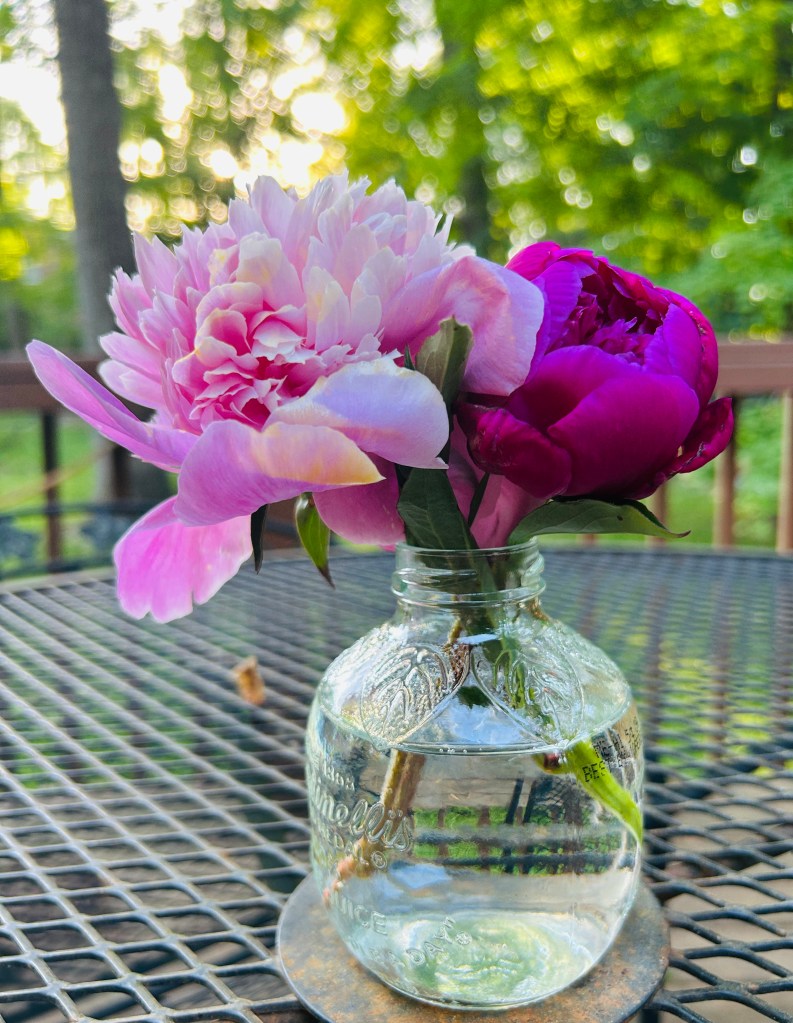
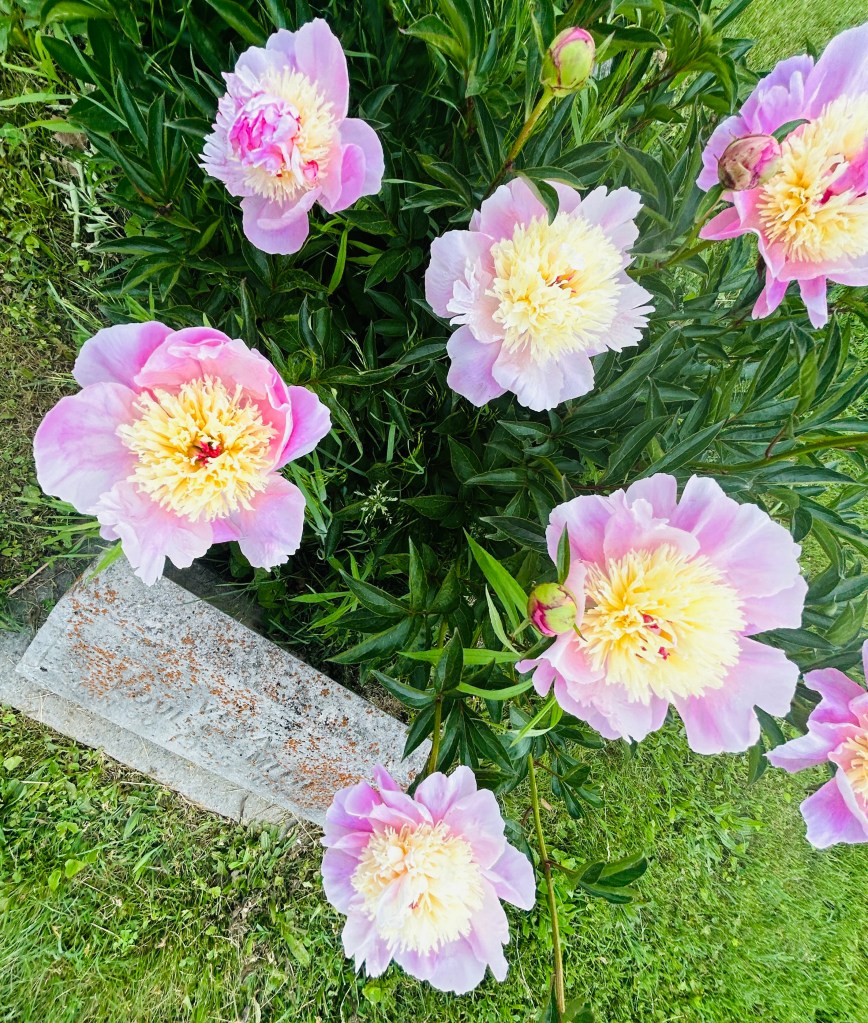
A dark green peony bush in someone’s front yard, stem ends bursting with deep pink blooms the color of a brilliant sunset. Somehow, in the busyness of life, I’d forgotten all about the peonies.
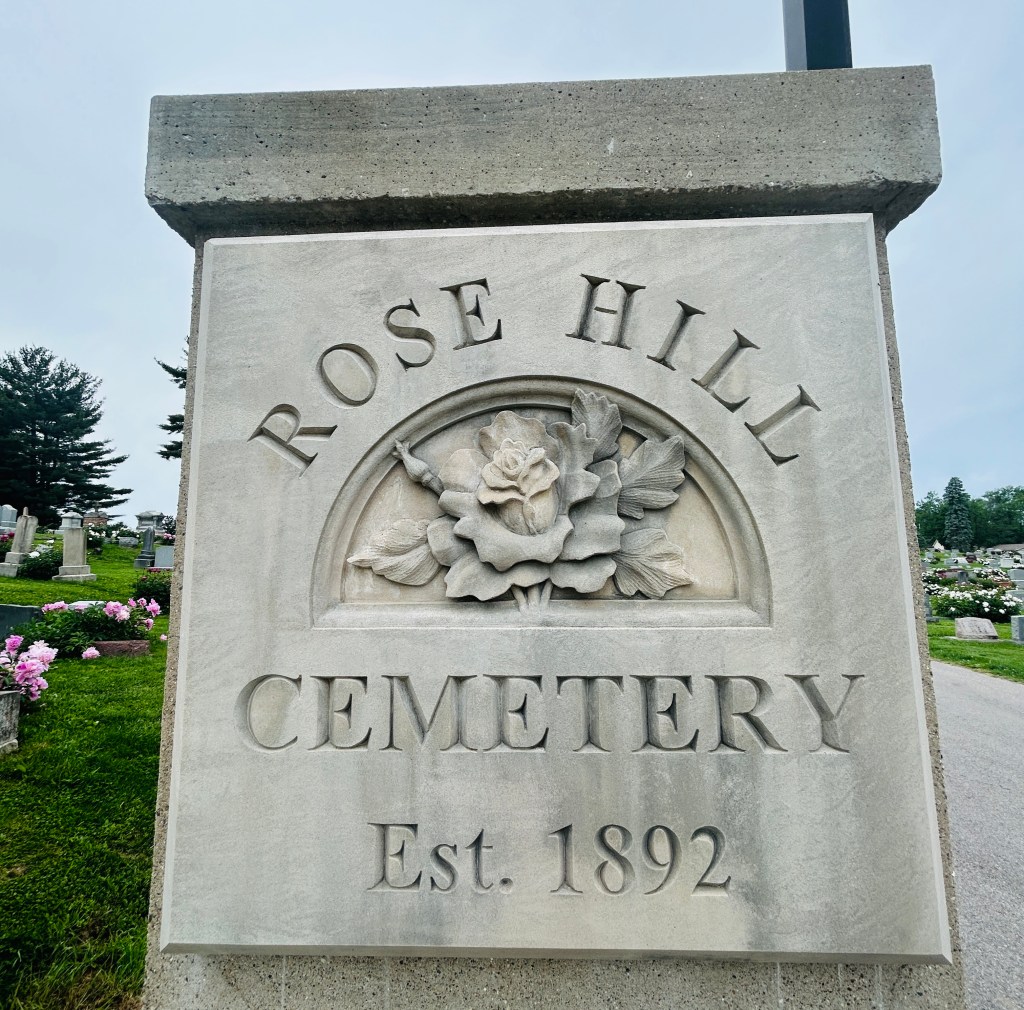
“Yes! It’s that time again,” I thought. And then, “Rose Hill must be going OFF!”
I told myself to forget the calls, put the to-dos and the worries aside for a bit—the cemetery was calling.
The first few years after my husband and I moved from California to Bloomington, Indiana (his Midwest hometown), we lived in a 90-year-old bungalow one block from the sprawling Rose Hill Cemetery. Initially unsure, I grew to adore the acres of rolling green grasses dotted with the spreading shade of centuries-old trees—maple, oak, sycamore. Meandering among the granite, limestone, and marble headstones became one of my favorite pastimes, a unique way to root myself in an unfamiliar landscape.
The first year, when May rolled around, my appreciation of the cemetery was taken to new heights when suddenly peonies (the flower I’d used to create my bridal bouquet, primarily because that’s what remained in the San Francisco flower shop the night before our elopement to City Hall), began blooming everywhere. And I mean everywhere.
Two years later, when I faced a devastating loss, wandering through Rose Hill and reading the gravestones became a kind of grief meditation, maybe an attempt to assure myself that there was a certain cyclical beauty waiting within death, if I could accept it.
At the time, I could not. But I still loved Rose Hill.
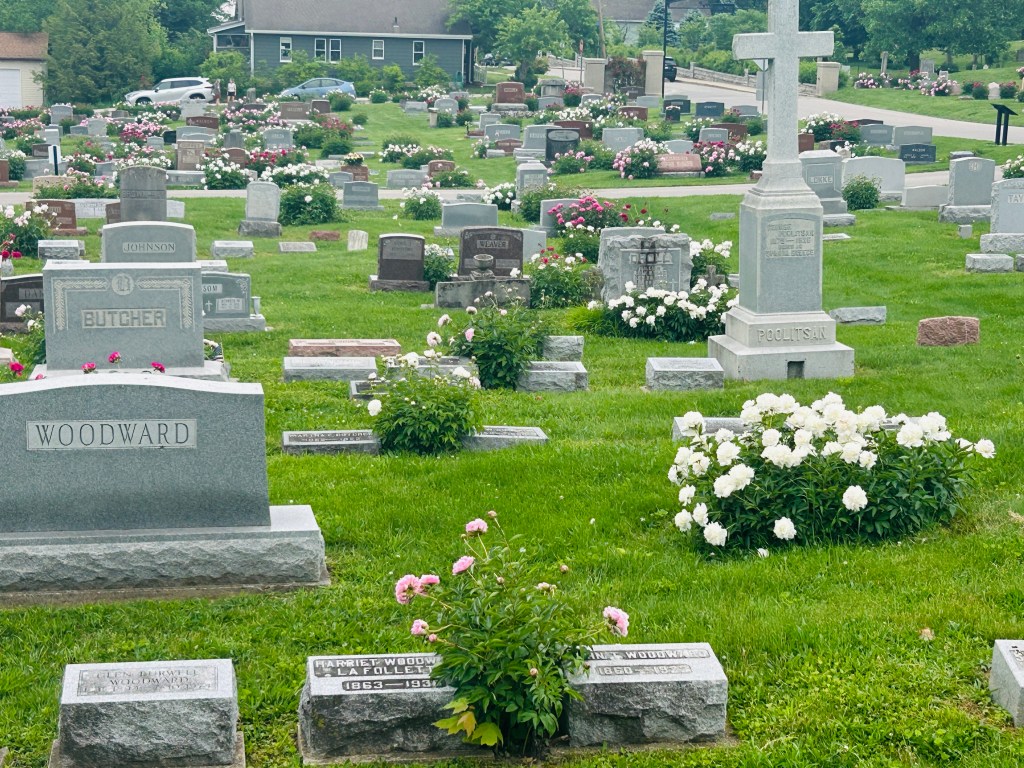
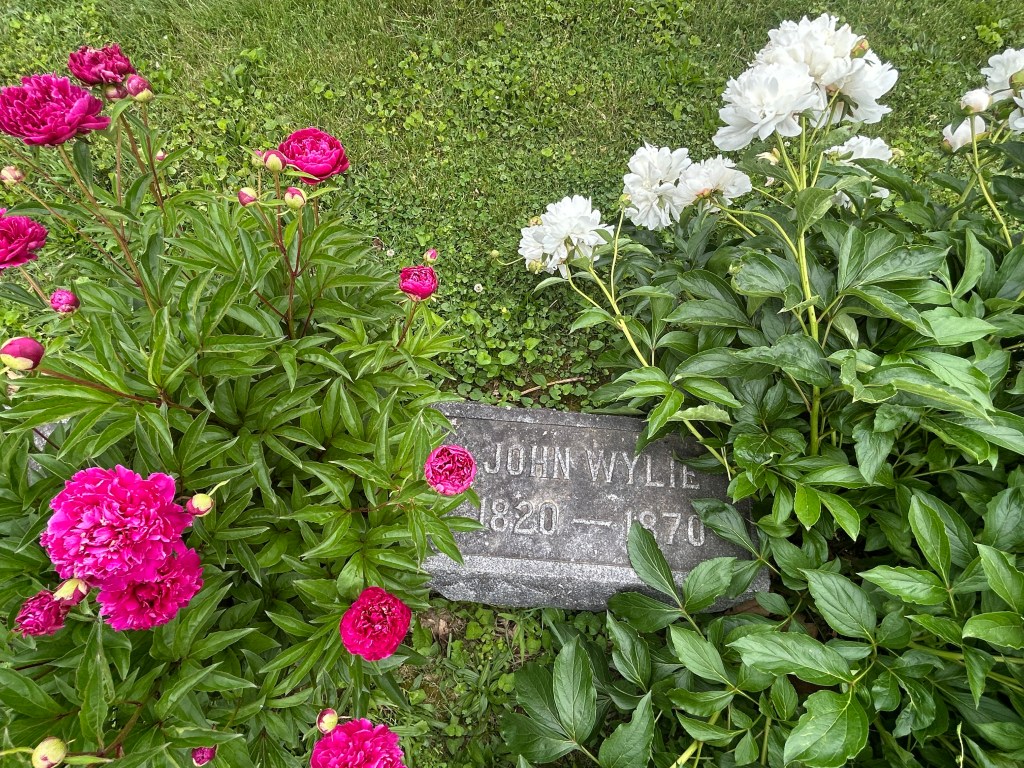
In mid-May each year Rose Hill Cemetery becomes so jam-packed with blooming peony bushes that if you stand at the highest point in the cemetery, clumps of color stretch as far as the eye can see. The honey-sweet smell of the blooms wafts through the air, and a plant nestles next to nearly every headstone.
This was the case the other day, and I inhaled deeply as I walked along the road that runs through Rose Hill. A storm was brewing in the distance, and above me, a flock of smaller birds noisily chased a hawk into a tall pine. Winding my way through headstones both recent and centuries old, I thought about the losses that have circled my orbit lately—the death of my father-in-law only a week earlier, the looming May birth/death date of my first son, my best friend’s recent loss of her soul-mate doggie companion. Pensive and prayerful, I realized that without even trying, I had again landed in the perfect place to consider the loss of these close-to-my-heart souls, no longer here physically.
In truth, I think about death a lot. Over time, I have moved from abject terror and bitterness at the subject to a place of consideration, curiosity, even awe. Much has contributed to my death evolution, including prayer, cultivating humility, writing about my experiences, reading as much as I can on the subject, watching interviews about NDEs (Near Death Experiences), and simply getting older. I have learned to gather my death-related feelings and experiences like a bouquet and place them carefully on the vast table of my life.
I also noticed that the surrounding rainbow of cemetery peonies mirrors a shift in my attitude toward death: amongst the gravestones, and the devastating losses, beauty blooms. Instead of hope and joy trailing behind me, dragging their feet, we are now companions, partners in my journey. I believe there is a sacred purpose around death in our lives, and that we can approach it as a path to celebrate the love and respect that we feel for those who have died. By facing the death of those we love, or the death of anyone, really, we open the door to navigating the hopes and fears around our own deaths. We cannot avoid death, but we can open our hearts to learn from it, to understand its true purpose.
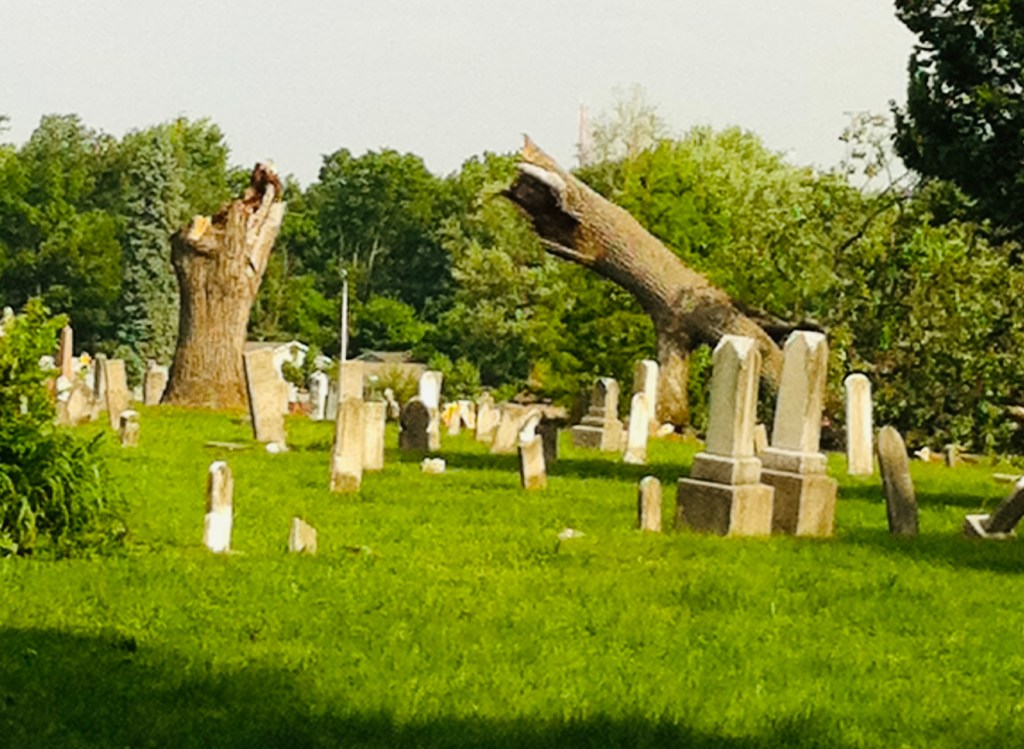
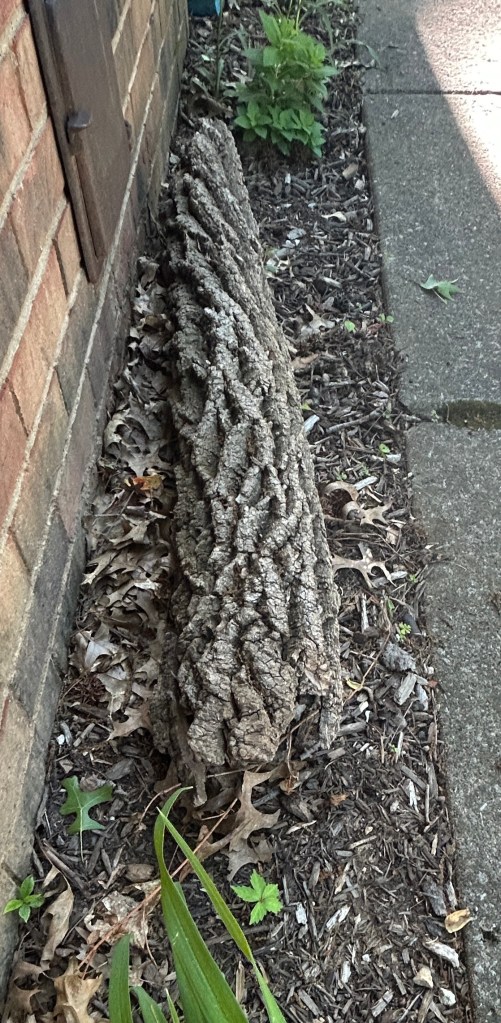
As I stroll the cemetery grounds, I am awed by the vast array of peony bloom colors and shades: white, pink, scarlet, and even a red variety that I’ve never noticed before. Passing by the “New Spencer Addition” section of the cemetery, I think of the powerful storm that passed through in 2011, in which an ancient maple was felled by a wind and lightning storm. The morning after the storm, while shedding a few tears for the grand tree, I carried off a large piece of bark from the thick trunk. The bark still survives today, lining the side of a garden bed. Holding on to a piece of the former giant makes me happy.
The split maple in the aftermath of the May 25, 2011 storm.Shrunken and dried, the bark endures.
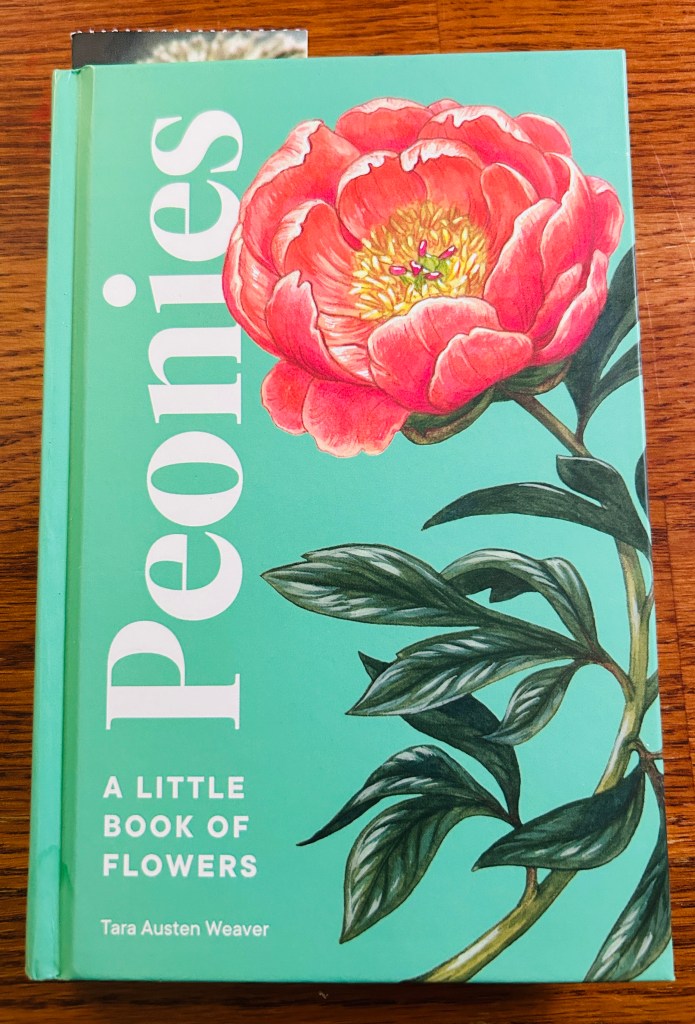
Peonies, which happen to be the official Indiana state flower, are sometimes associated with the memories of loved ones. They are also hearty plants and require little ongoing maintenance. Unlike my writer/gardener friend Tara Austin Weaver, who authored a beautiful, useful book titled Peonies, A Little Book of Flowers, I know very little about the many varieties in the genus Paeonia. From Tara’s book, I learned that peonies are “thought to confer good fortune, prosperity, and a happy peaceful marriage,” so apparently, I should be glad that the shop where I purchased my bridal blooms had been cleaned out of every other flower option that evening.
Under Rose Hill Cemetery soil lie many fascinating, important souls whose lives show diversity and accomplishment. Among them are George (Anner) Shively a musician/poet/baseball player who played with the Negro Baseball League, Margaret Hemphill McCalla, the first female superintendent of schools in Indiana, Alfred Kinsey, the infamous founder of The Institute for Sex Research at Indiana University, Hoagland (Hoagy) Carmichael, the legendary Hollywood performer and musician who recorded “Stardust,” and won an Oscar and John B. Crafton, a successful Bloomington businessman who made the unfortunate decision to voyage across the Atlantic on the Titanic and lost his life when it sank. (Information taken from “A Walk Through the Rose Hill Cemetery Historic Tour Guide No. 12”).
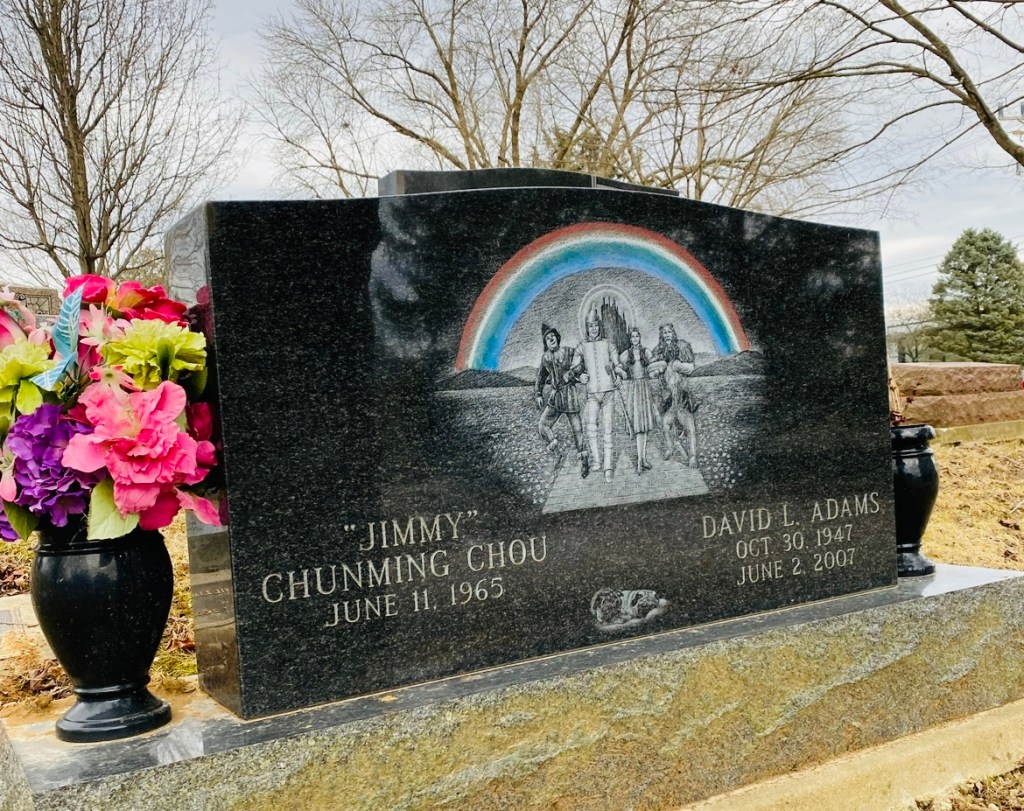
My personal favorite, tucked far into the Southwest corner of Rose Hill, is a fascinating headstone marking two life partners who shared a passion for The Wizard of Oz.
I imagine these two men had some stories to tell.
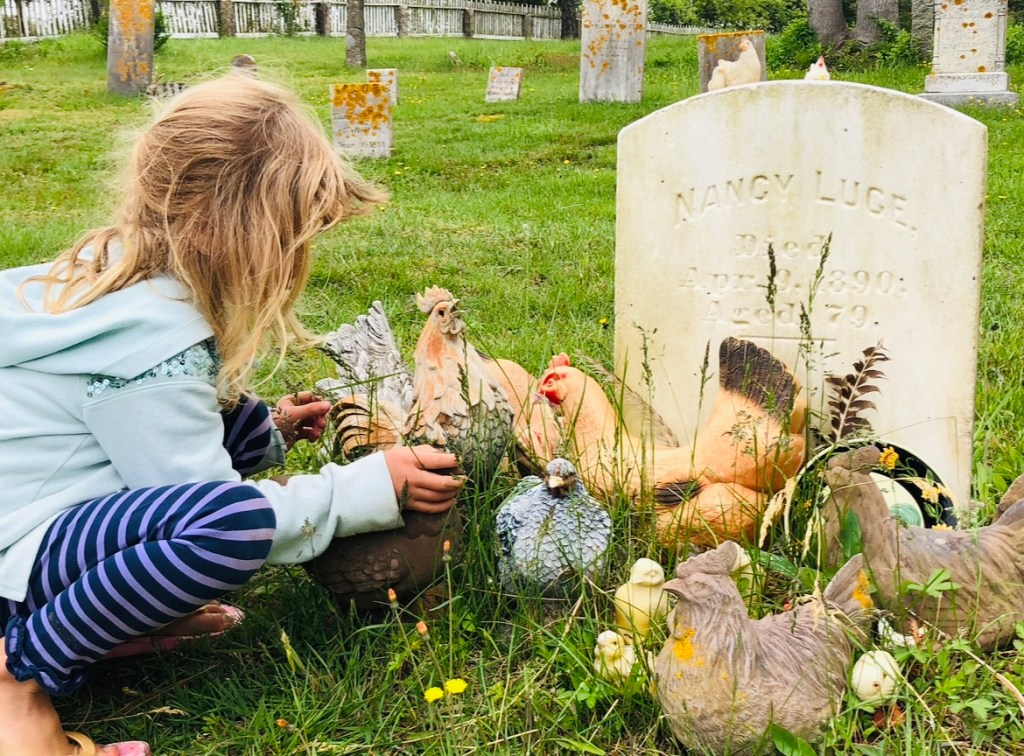
Besides providing a vital service to us humans, cemeteries offer a chance to learn about the lives of individuals who may otherwise have slipped into history. From lost infants (so many lambs on grave stones) to centenarians, to everyone in between. While walking, I remember the grave of a woman my daughter and I once visited on Martha’s Vineyard Island. The lady had devoted her life to chickens, evidenced by the carved stone birds gathered around her grave. Each grave tells a story. Every person lost was grieved for by someone (or some bird).
Nancy Luce loved and cared for chickens.
I walked for an hour that stormy Friday, soaking in the color and assessing my losses and gains. I bumped into two friends who expressed their condolences regarding the loss of my father-in-law, one offering a warm hug in sympathy.
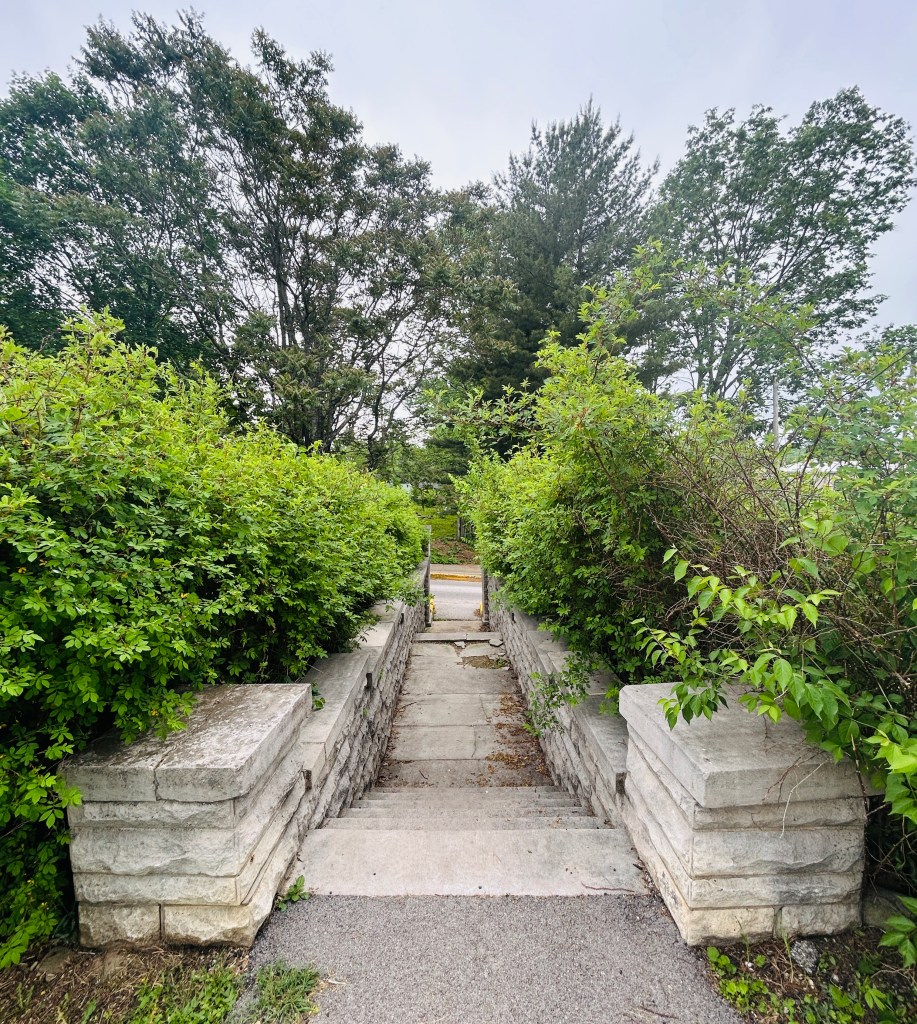
It was time to leave the grounds and return to daily life. Slipping out of a cemetery side entrance, I felt inspired. By nature, by life, and even by death.
“Death is not the end of everything, but a new beginning.”
It’s hard to imagine a clash of cultures more extreme.
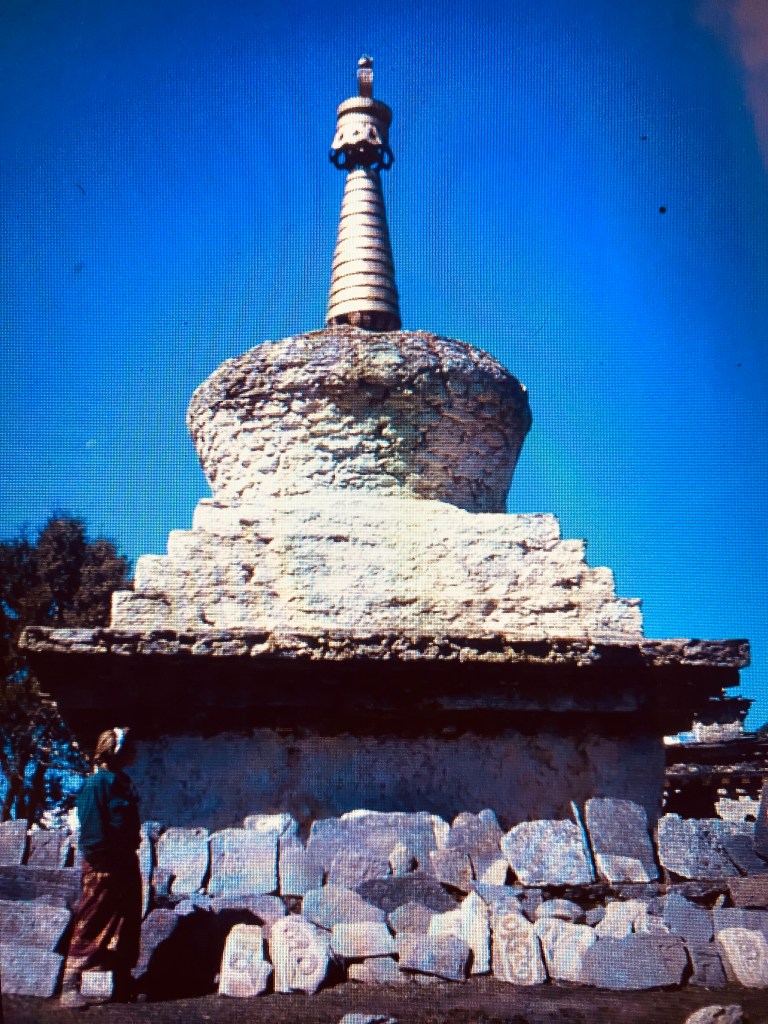
Standing in awe of a stupa, and the country of Nepal.
In the final year of the 1980’s my eighteenth birthday is spent illicitly drinking beer at a Christian boarding school in St. Louis, Missouri in the flat middle of the United States.
Twelve months later I celebrate my nineteenth in complete silence at a Tibetan Buddhist monastery nestled in the steep foothills of the Himalayan Mountains in Kathmandu, Nepal.
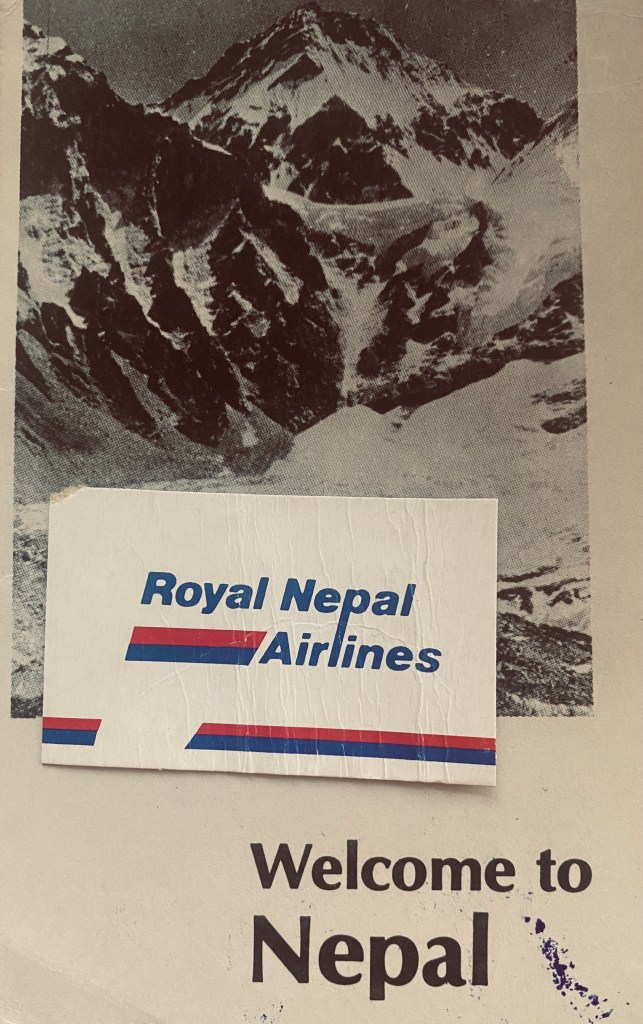
The Royal Nepal Airlines flight touches down on the Kathmandu tarmac with a sudden, jarring bounce. My head is still spinning from the awe-inducing Himalayan landscape I’ve just seen out the window. Standing unsteadily, I move so that the mostly Indian, Pakistani, and Nepali passengers can disembark around me. I’ve been to the Sierra Nevadas, climbed a few 13ers in the Rockies, and explored quaint villages in the Swiss Alps. But now I understand that those ranges are mere foothills compared to the jagged snowy peaks streaked with dark grey that stretched for hours beneath and beyond the airplane. These mountains appear to have no end—they ripple out in every direction, nearly swallowing up the sky itself.
My first sip of the Himalayan Mountain range brew tells me all I need to know—over here, on the other side of the earth, nothing is the same.
Six months earlier I started my freshman year of college, mostly because I had no idea what else to do. After a single semester, it was clear that I wasn’t going to find the answers or direction I was looking for within the walls of an institution, so I dropped out. After twelve consecutive years of school and an ill-advised college enrollment, I found myself limply dragging my mediocre grades and minor accomplishments behind me.
Exactly when had I lost the soaring confidence I’d had when I was younger? Despite my privileged, white, upper-middle-class first-world life I was a confused, timid, mildly depressed version of myself. Entirely unclear about what I was good at in life, what I believed, and what lay ahead of me, I was sick of STUDYING the world. Instead, I wanted to EXPERIENCE it. Although everyone kept asking me what I wanted to major in (I mistakenly thought the answer to that question would determine my entire future), I could barely decide on which of my circle of friends were trustworthy and what music I actually enjoyed listening to.
My mostly sympathetic parents offered a solution: they would front the funds they would have spent on my education that spring semester provided I did some sort of program, ideally one that would offer me college credits. When I learned about a months-long “Experiential Learning” program in Nepal I knew it was for me (I also acknowledge that I was the beneficiary of unusual privilege in that I was able to both attend college and visit Asia in the first place).
A couple of months later I find myself on that Royal Nepal Airlines flight, embarking on the adventure of a lifetime.
I am eighteen years old.
On paper, the details of our Spring 1990 Nepal program are straightforward: the group of approximately fifteen of us will live together in Kathmandu while studying the Nepali culture and language. The itinerary includes a month-long homestay with a Nepalese family, an optional ten-day retreat at a Tibetan Monastery, volunteer time with a local organization, a forty-day trek to Mount Everest Base camp at 17,598 feet in the Himalayas, and a final foray into the rhinoceros-infested jungle in the flatlands of Nepal.
As if that list isn’t enough, something else is going on in Nepal that wasn’t exactly factored into the itinerary: a political revolution. A primarily student-led movement is rising in resistance to the royal monarchy that has exclusively ruled Nepal for centuries. The protesters want a constitutional monarchy (essentially a system of government that limits a King or Queen’s absolute power and includes…wait for it…a constitution). The number of Nepali demonstrators is growing by the day, and protestors are willing to stand up, be shot at, and fight for their independence. Parts of Kathmandu are in turmoil and there are rumblings that our program may be cut short.
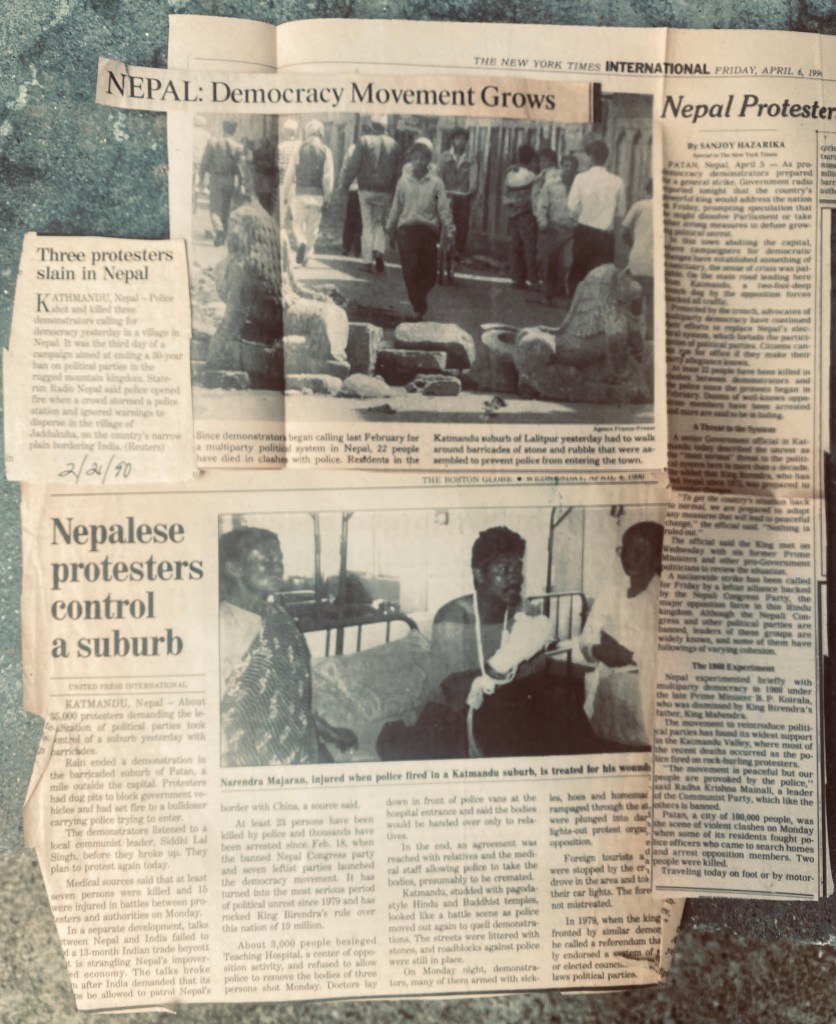
When I return from Nepal my father hands me six months of press clippings he has carefully saved.
Our bunch of students is a hodgepodge of mostly East Coast characters from the US ranging in age from eighteen to thirty-one. Many of the group are students at Ivy League universities and I quickly learn a valuable life lesson: admission into Harvard or Yale does not necessarily mean one has more street smarts, empathy, or knowledge about day-to-day survival (on the road or otherwise) than anyone NOT attending a top-tier university (or than those not attending college at all).
Because it is 1990 and the Internet is a mere twinkle in a few eyes, my journalist father is back in Boston, Massachusetts closely following the newswires and outlets covering the Nepali revolution. When I return home months later he hands me a collection of carefully cut-out press clippings tracking the progress of the contentious uprising raging along while I am on the other side of the world.
The city of Kathmandu is one of the oldest continuously inhabited places in the world, and it shows. Unlike countless other countries, Nepal has also never been colonized, so it maintains a sense of ancient identity. My first days are of a dizzying blur of speeding rickshaws, ancient temples on street corners adorned with fresh marigold flowers, unrefrigerated and unidentifiable meat displayed for sale on hooks, zero traffic lights, and bright-eyed children giggling behind their hands as they stare at our Western-style clothing and bumbling sidewalk map-checking (many Kathmandu roads, especially side ones, are nameless which makes navigating especially tricky).
There are also congregating children in rags so dirty I can’t differentiate between their clothes and skin. Small hands outstretched and shaking with hunger or disease, they plead for coins while I empty my wallet and experience multiple existential crises. I’m overwhelmed with disgust at how selfishly I’ve lived my entire life. Me, who knows the deep and unconditional love of my rare family, who was gifted a safe birth in a free country with every advantage. Who am I to complain about receiving an education, in fact to complain about ANYTHING at all?
And there’s something else: for the first time in my life, my white skin puts me decidedly in the minority. Experiencing this shift feels important and humbling.
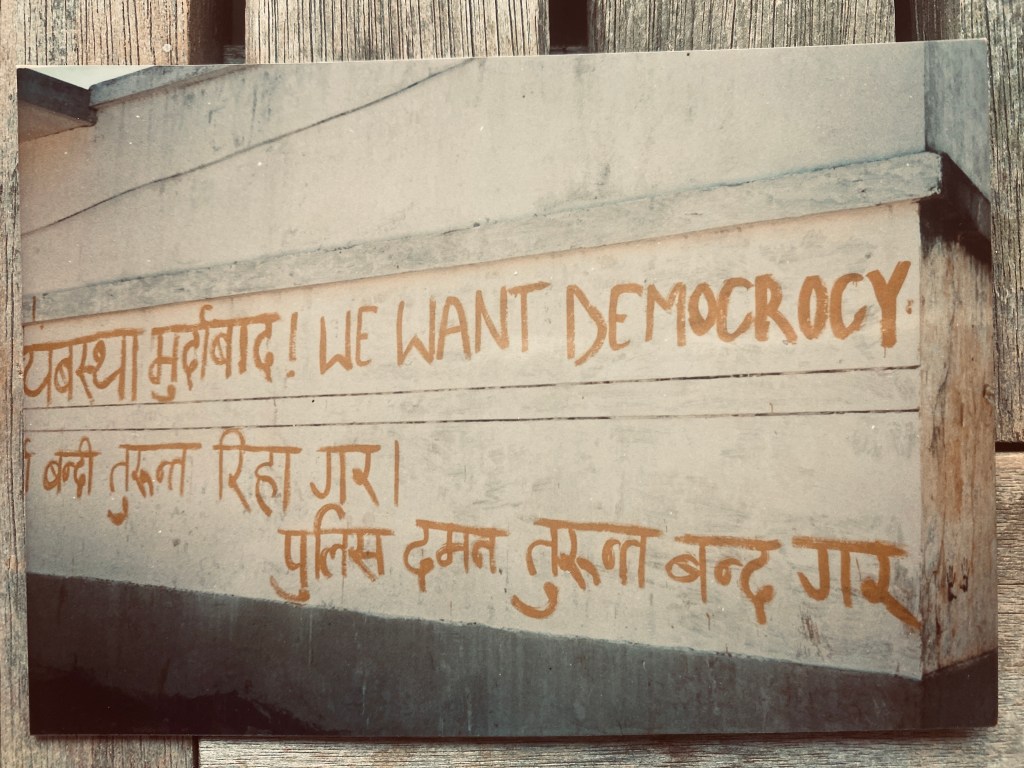
There are hints of the revolution everywhere—khaki-clad rifle-wielding police on street corners, scrawled graffiti pleading for freedom, whispers by our Nepali language teachers about friends and family who have been arrested, and later, city-wide shoot-on-sight curfews enforced after dark. Still, the (American) leaders of our group work hard behind the scenes to keep us safe. We have all come this far and aren’t about to step out early. We meet with foreign journalists in Nepal who are covering the revolution, and they explain to us the history at play and the dangerous realities faced by the Nepali protestors. I begin to see the freedoms I enjoy in the United States in a new light—could I be taking my country’s freedom of thought and action for granted?
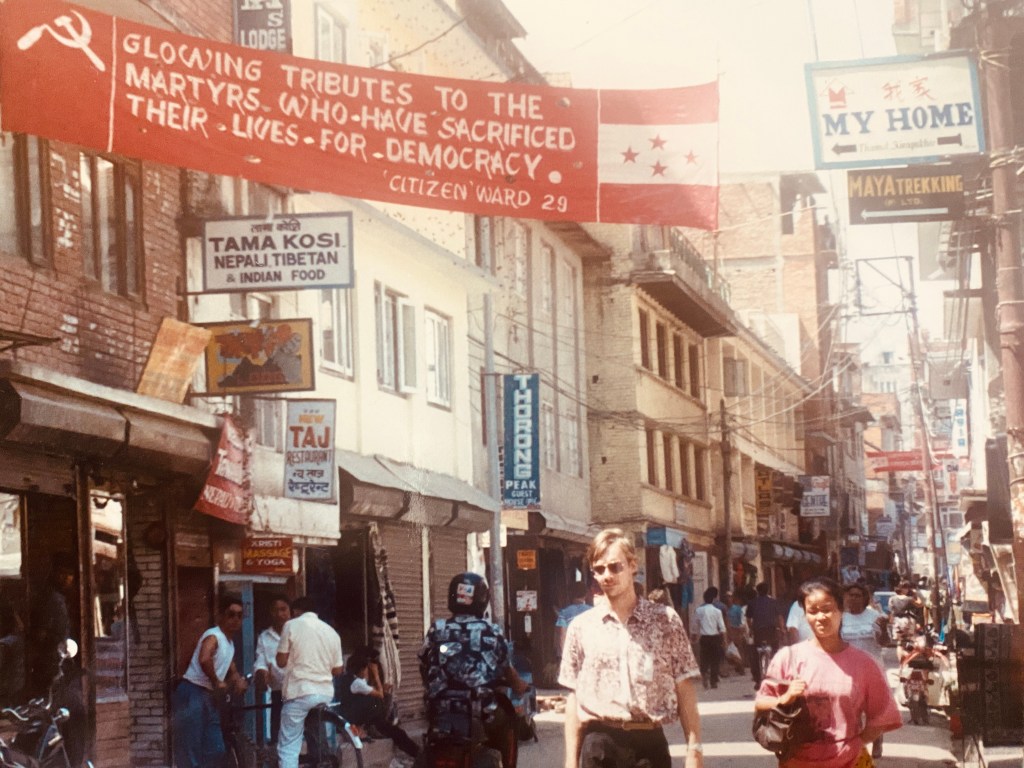
“Glowing tributes to the martyrs who have sacrificed their lives for democracy. -Citizen Ward 29″“WE WANT DEMOCROCY”
The surprises keep coming: Wooden storefronts and squat concrete buildings lined dusty unpaved streets teeming with sari-wearing Nepalis, Indians, and European and Australian tourists (American tourists are less common). Dusty, radiant, smiling kids offer us gum, tug at our shirts, and ask us to play with them. Occasionally, cows so skinny their bones protrude lumber unbothered down the street. I learn that Nepal is 80% Hindu, most Hindus are vegetarians, and cows are considered sacred in the Hindu faith. Everyone leaves the cows alone. But where are those cows headed, I wonder, and how do they know how to get home?
Another unusual sight: young men around my age strolling as they clasp hands with other men. When I ask about this during my Nepali language and culture classes I am told “These men hold hands with each other as a sign of affectionate friendship.” This singular example of a common Nepali custom is a revelation to me. I try to imagine young (straight) American men strolling down the sidewalk on a sunny day holding hands with their best bro… and fail.
An important aside: Nepal has a complex history with LGBTQ+ rights. A landmark 2007 case identified the “third gender” as a legal category on their country’s census (Nepal was the FIRST COUNTRY IN THE WORLD to do this), as well as inclusion on voter rolls, and even passports. Despite this, discrimination and intimidation toward LGBTQ+ citizens in Nepal remain rampant into the present day.
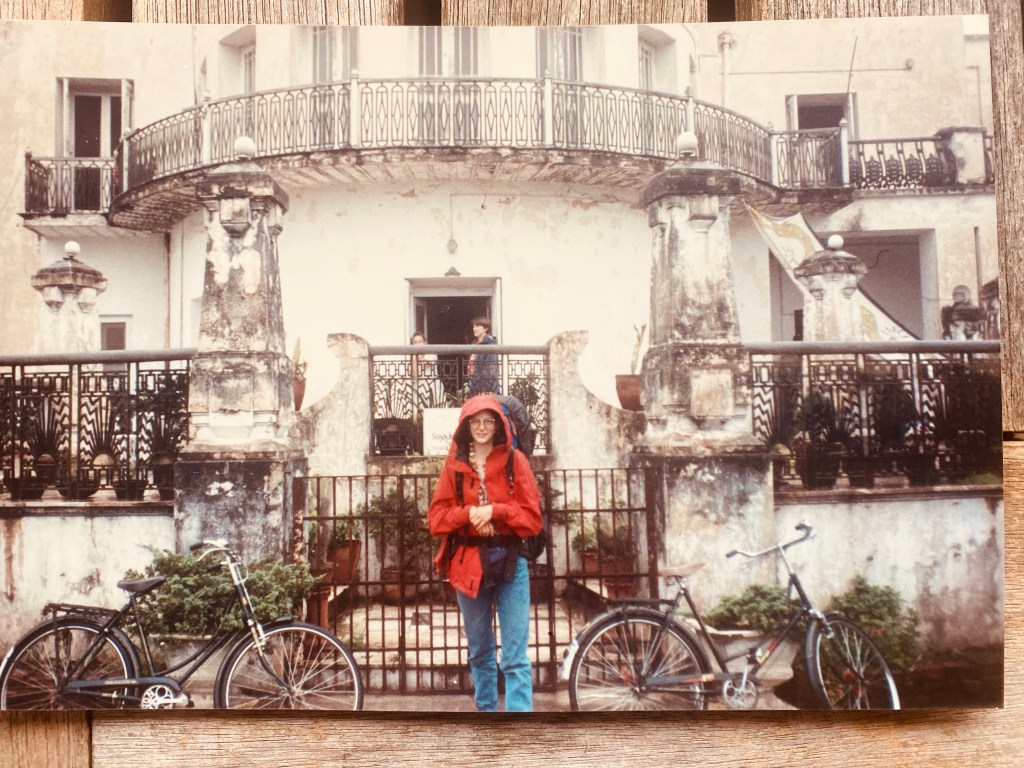
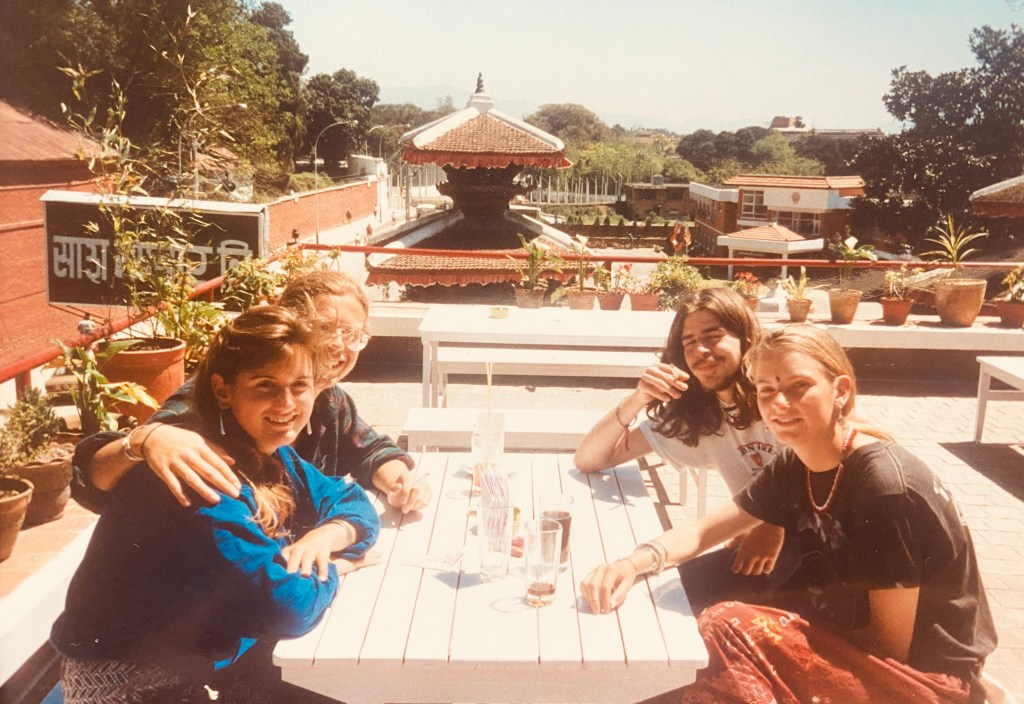
Our motley group lives in Durga Bhawn, an aging palace that formerly belonged to a Nepali honorary. Nicknamed “the Durg,” we attend daily language classes there and learn useful words and phrases (although a surprising number of Nepalis know English) beginning with the ubiquitous “Namaste” greeting (meaning “I salute the God in you”) and ranging from apaal=hair to thik chaa=okay. The group slowly gets acquainted with each other and forms friendships and alliances with the Nepalis who teach and care for us. I gravitate toward another student on the program—a vibrant, independent, funny long-haired girl who walks on the balls of her feet, studies in Oregon, and is always up for adventure. Jess and I become close friends, never imagining that our friendship would still be going strong decades later.
A fellow student in front of the “Durg.”
Slowly, as we get to know our surroundings, the complex history Mother Nepal holds close to her heart unfolds. A Feb 16, 1990, entry in my journal records an encounter with a Tibetan woman who cleans the guesthouse where I sleep the first few nights:
“I was sitting on my bed this afternoon catching up on some letters and cleaning/organizing. I took my first warm shower today since arriving, and it was heaven. Suddenly, in came a woman. I had semi-met her before although I still don’t know her name. She cleans our room each day, and many of the other rooms, I think. She sat down on my bed. We said hello to each other and smiled. She asked my age and couldn’t believe I wasn’t married. Then she told me she has a 19-year-old son and wants me to be his sister (I hope she didn’t mean wife!). She invited me for tea at their house. I said okay. She said okay. I finally understood she was trying to tell me she was Tibetan. She showed me a necklace which I think signifies her nationality. Then she said “No husband, no father, killed, bam bam.” She made a sharp noise like a shot and a gun with her fingers. I felt awful. She must have left Tibet with her son and fled to Nepal.”
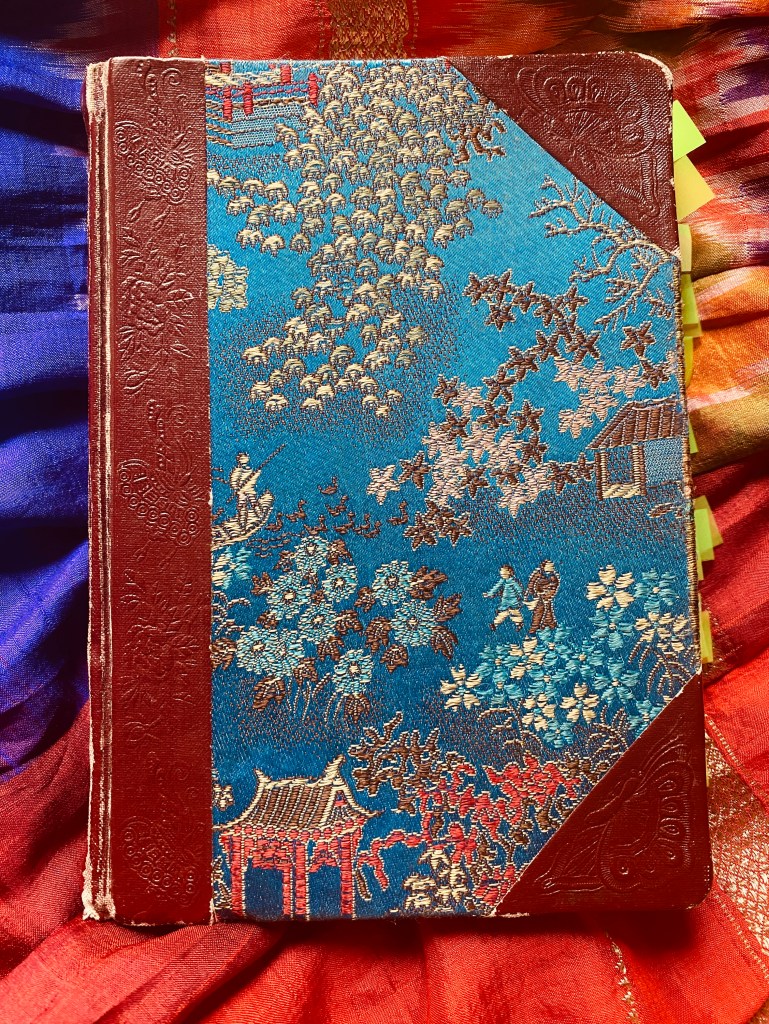
The journal that made me a writer.
One Sunday a few of us decide to take an ambling walk to the Bagmati River, the central, holy river flowing through the heart of Kathmandu. We are headed toward the famous Pashupatinath temple, but l have little idea of the impact the visit will have on me.
As we set off the smattering of pedestrians surrounding us on the streets quickly swell into crowds more pressing than any I’ve experienced. By crowds, I mean thousands of humans crammed so closely together that I can feel the dampness of their clothing, smell their most recent meals, and note the fine details on women’s jewelry. An unknown scent wafts through the air, smelling of woodsmoke and something else sweetly pungent.
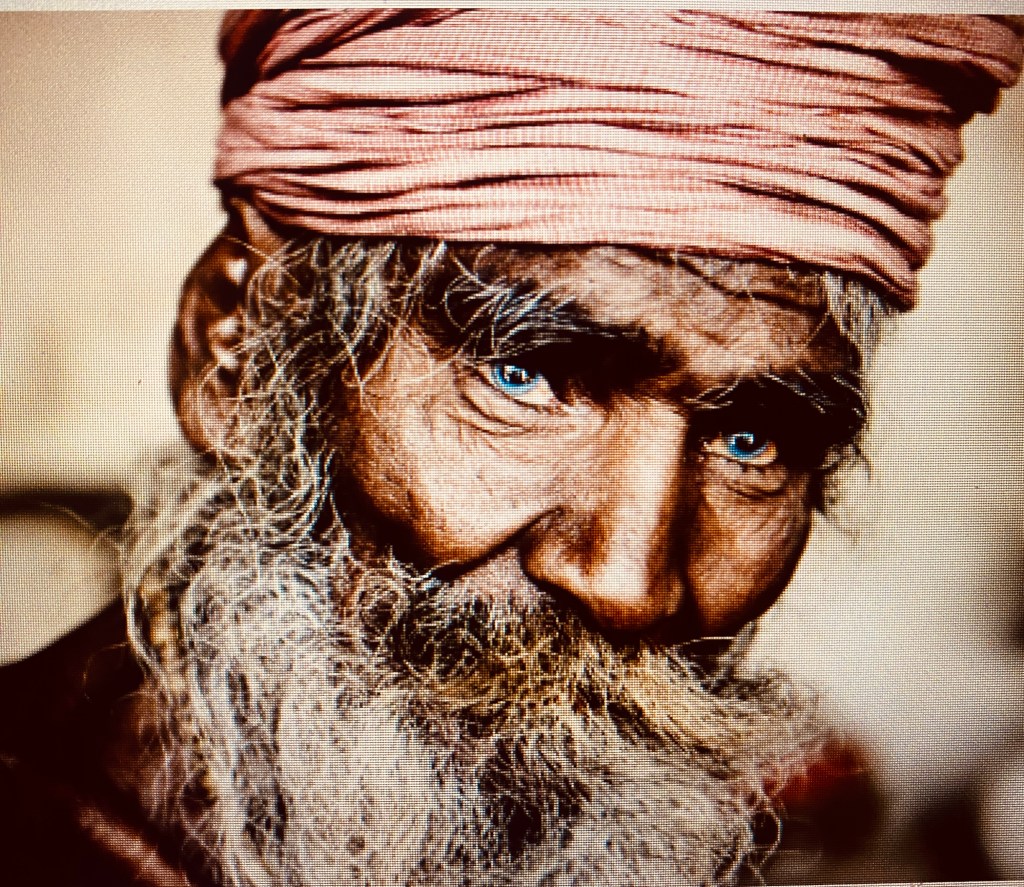
The crush swallows us as we walk, carrying us forward and depositing us on a wide bridge over the expansive Bagmati. Up ahead I notice people adeptly parting around a man sitting on a box in the middle of the span. Stopping short in front of him, I find myself staring at a human unlike any I’ve seen before. Wrapped in vibrant orange fabric, his skin the color of burnt copper, piercing blue eyes peer out from his painted white face. Long dreadlocks hang at his sides, extending well beyond his sweeping white beard. “He’s a Sadhu,” my friend whispers over my shoulder. “He’s renounced all worldly possessions and took a vow of poverty—they do it so others can practice their good karma.” The expression in the man’s eyes makes me shiver—it’s as if he is peering through layers of my soul.
Sadhu. Credit: Getty Images
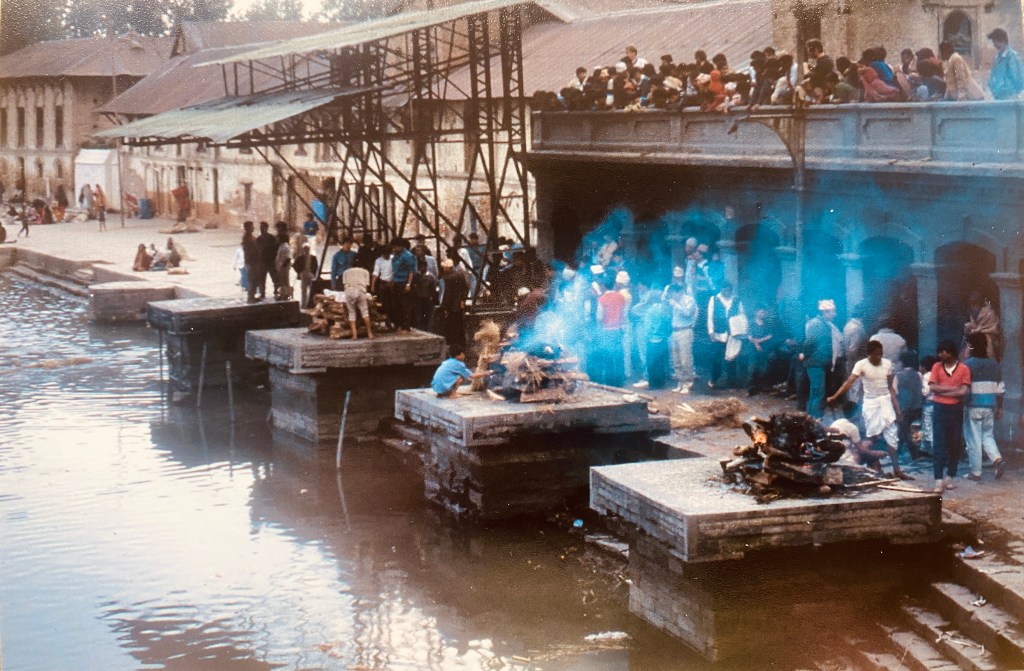
I hardly have time to register this marvel before the mysterious smell I’d noticed earlier becomes too strong to ignore any longer. Turning to my right, my gaze follows the coffee-doused-with-creamer-colored river water as it flows out from underneath the bridge. Rows of temple towers cluster along the banks on either side and in front of them are what appear to be a series of large bonfires, flames licking insistently at the wood. Wizened men are stooped over tossing sticks onto the piles, creating ever higher stacks. Suddenly, it is clear to me that these are not bonfires, they are funeral pyres. At the top of each stack, a charred human body stretches out, burning in tandem with the black wood. The mysterious smell filling my nostrils is seared human flesh.
Funeral pyres at Pashupatinath.
Later, I learn that the very spot where we stand is most sacred to both Hindus and Buddhists. Hindus carry their dead to this holy place, dipping the bodies three times into the Bagmati, and then carry out cremations on these pyres lining the river. Reincarnation is a tenant of Hinduism and all around people are ushering their loved ones into their next chapter in the most respectful and holy way they know.
Staggering out from the other end of the bridge I separate myself from the throngs and slump beneath a tree with my spinning head held in my hands. Witnessing this holy tradition and level of devotion leaves me feeling stunned, deeply honored, and questioning everything I know about Western faith and end-of-life practices.
And somehow, despite the smell of death and the press of humanity surrounding me, I feel perhaps more alive and inspired than ever before.
Nepal is quickly becoming my greatest teacher.
Ahh, to be young in Kathmandu in the midst of a revolution.


 Still...however...maybe...
You must be logged in to post a comment.