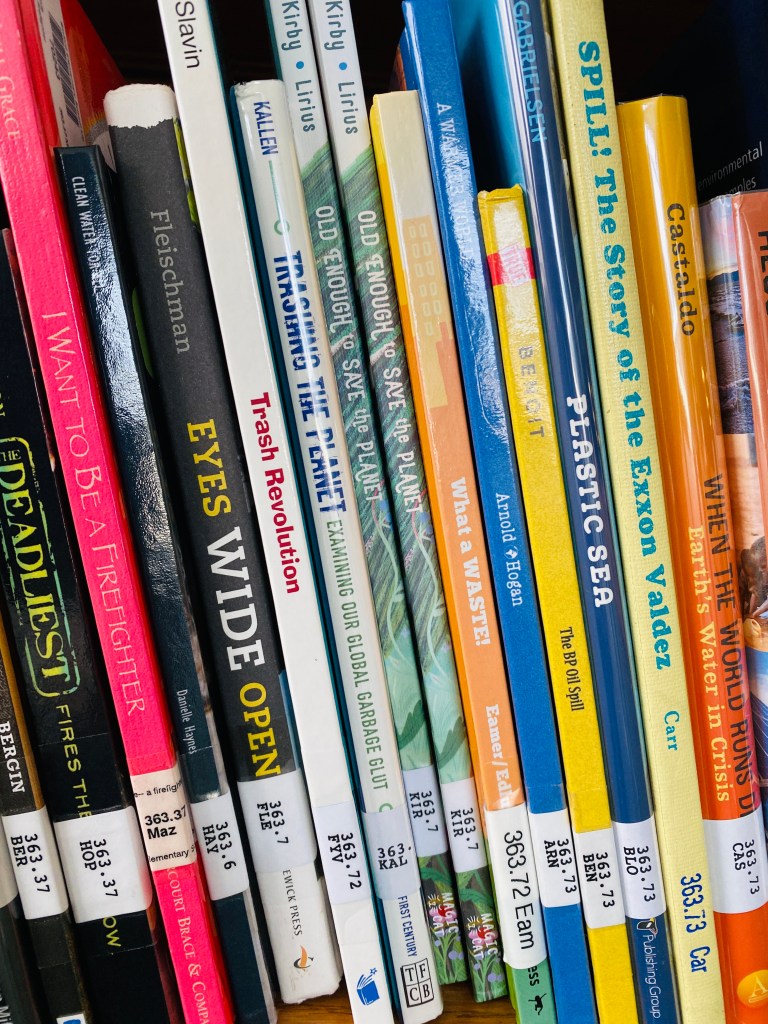
Elementary school library books about the climate crisis.
The Library at My Kid’s Elementary School
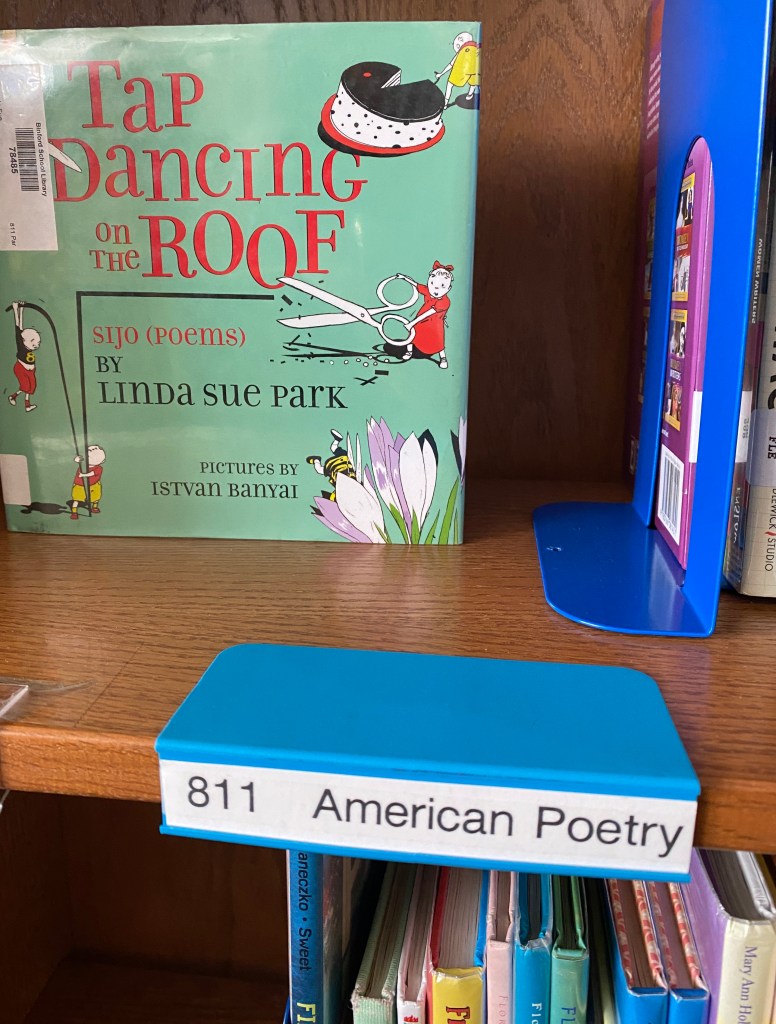
I volunteer here most weeks when my two children’s classes are visiting during their library times. Sure, the groups can be loud and boisterous (they’re KIDS after all), and listening skills are ever-developing… but oh the joy of watching them discovering books, reading on benches, searching for titles on the computer, and bemoaning the fact that the graphic novel they so desperately want has already been checked out.
There is also an entire shelf devoted to books on climate change and how to cope with it which is alternately hopeful and heartbreaking. My volunteer time allows me to hug my kids during their school day, listen to their classmate’s entertaining and enlightening chatter, shelve books, and admire the librarian’s patience.
The Graphic Novel section is a hotbed of activity.
Tea and a Healthy Breakfast
Full disclosure: there were times, especially during my citified corporate days, when TWO Venti-sized coffees would fuel my sunrise to sunset. This approach worked for a long time, but that excess of caffeine also fueled anxiety, a racing heart rate, digestive issues, and a restless sleep cycle. The food complement to this ill-advised start to my day was usually a croissant or pastry.
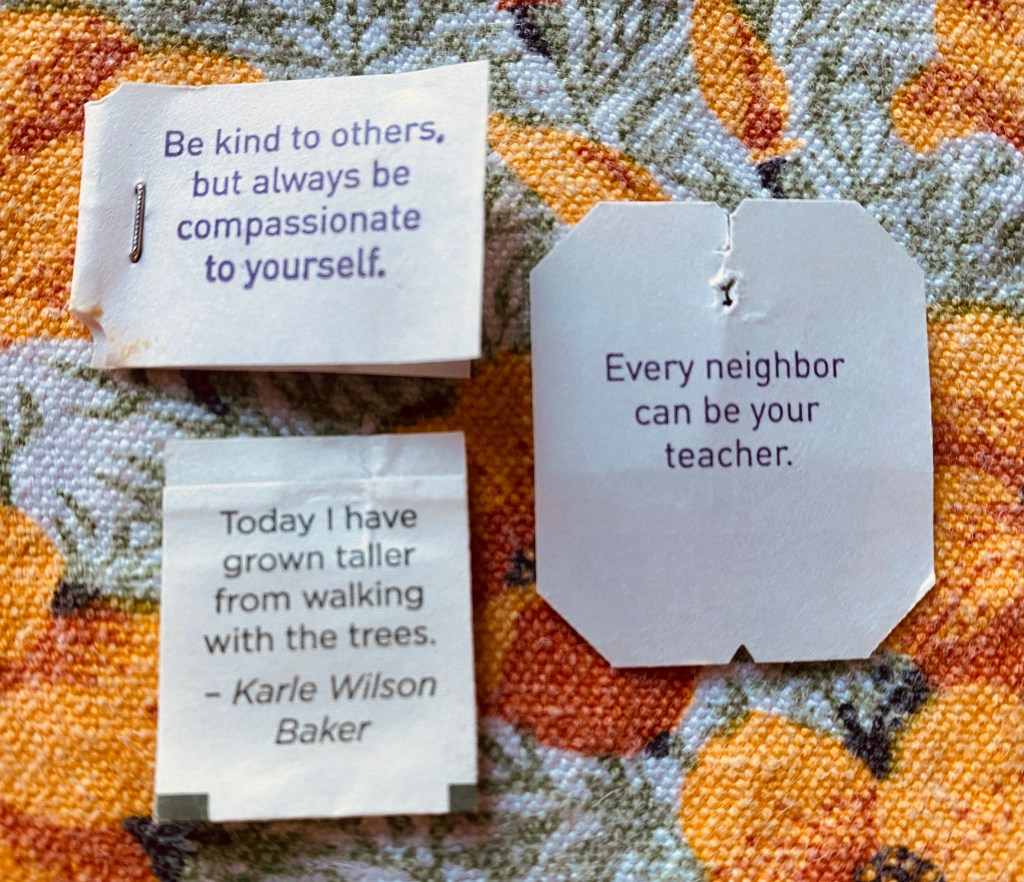
These days, my mornings begin with tea. Specifically, a Chai variety or, more recently, a lavender tea. The soothing yet invigorating liquid invites contemplation and encourages vigor, and the tea tags are usually surprisingly prescient.
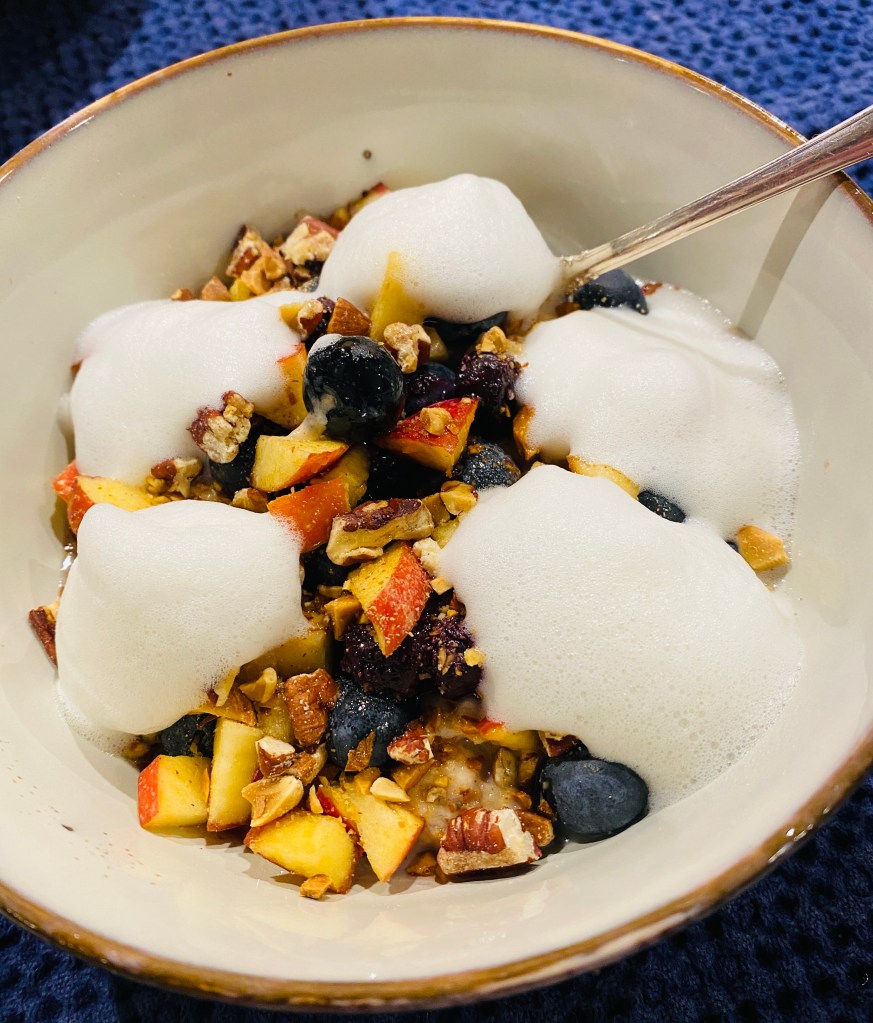
Food-wise, a bowl with oatmeal or yogurt is piled with berries and other fruit, chopped nuts, and granola, and topped off by foamed oat milk.
What starts well tends to end well and a day is no exception.
A handful of blueberries a day helps keep memory loss at bay. Tea tags of note.
Sunsets and Sunrises
In all honesty, I catch sunsets more frequently than sunrises. Our house faces West and often, as the day comes to a close, I’ll notice a faint pink glow lighting up the walls opposite the front bay window. That’s when I know the sunset is particularly brilliant and that it’s time to drop everything and savor the view. It’s tempting to talk oneself out of going outside (oh just a few more dishes and you’ll be done…it’s so hot/cold out there..but I can see it from the couch!).
This is when I remind myself of three close friends my age who died far too young (Shubana Zwicker, Amy Wagner, and Chris Van Bebber). I consider how each of these friends lived and embraced every moment of their lives and how (I assume) they are no longer able to see the sun offering its glory each day, but I sure am.
I walk outside to accept the artistry in the sky.
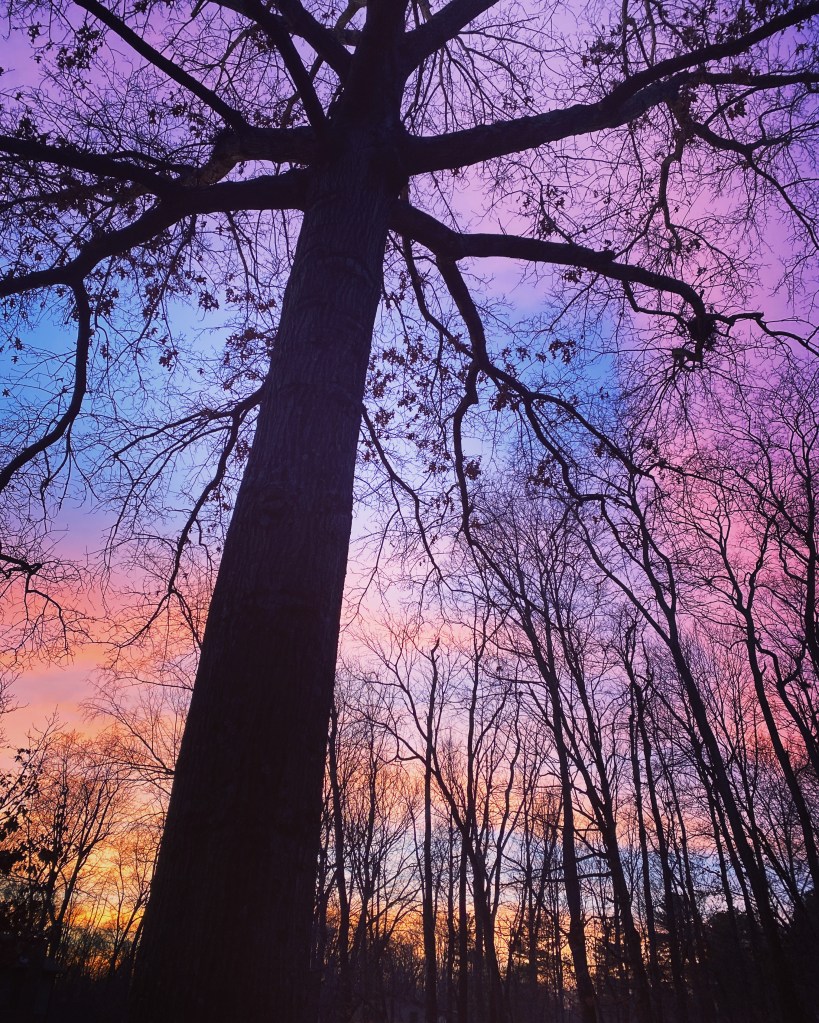
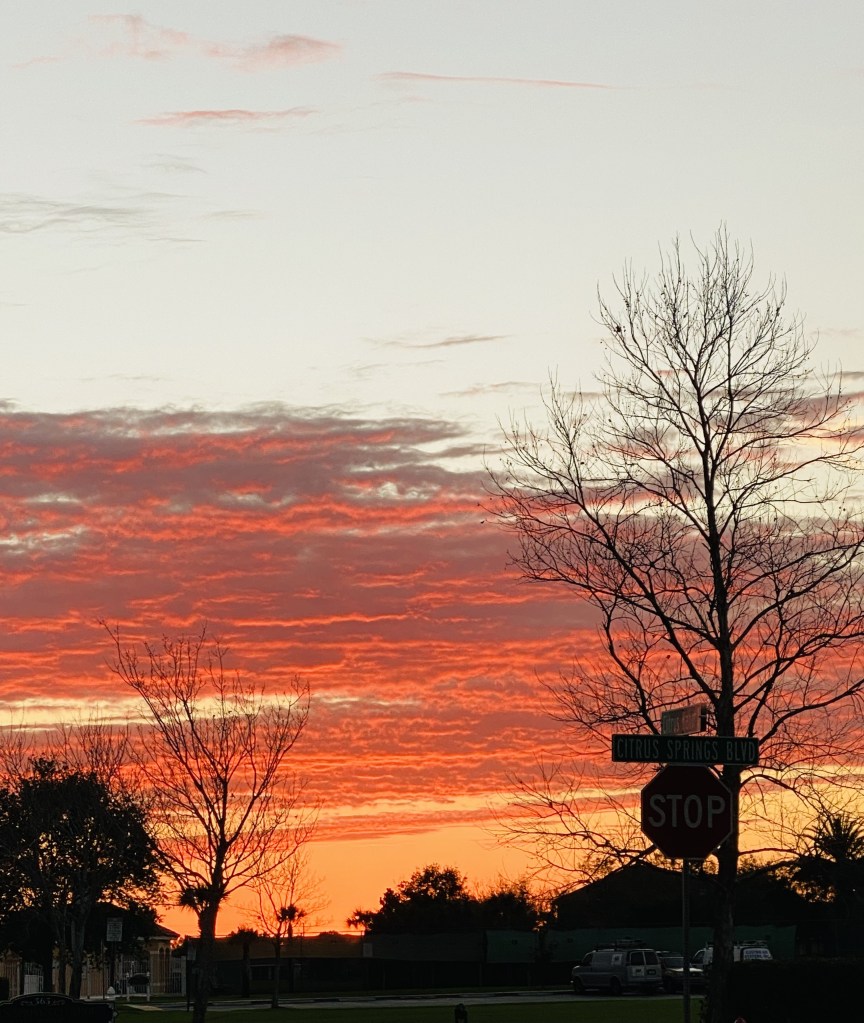
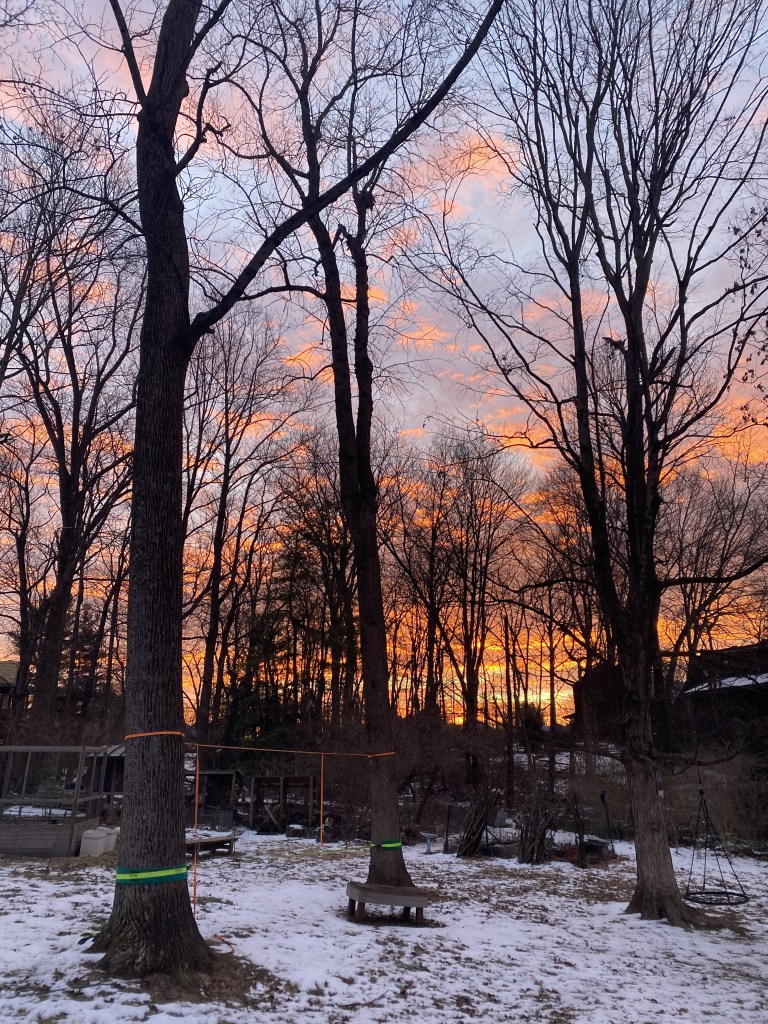
Trees and sky, collaborating on the sunset. A stop sign with a view. Backyard sunrise.
A Pair of Green Crocs
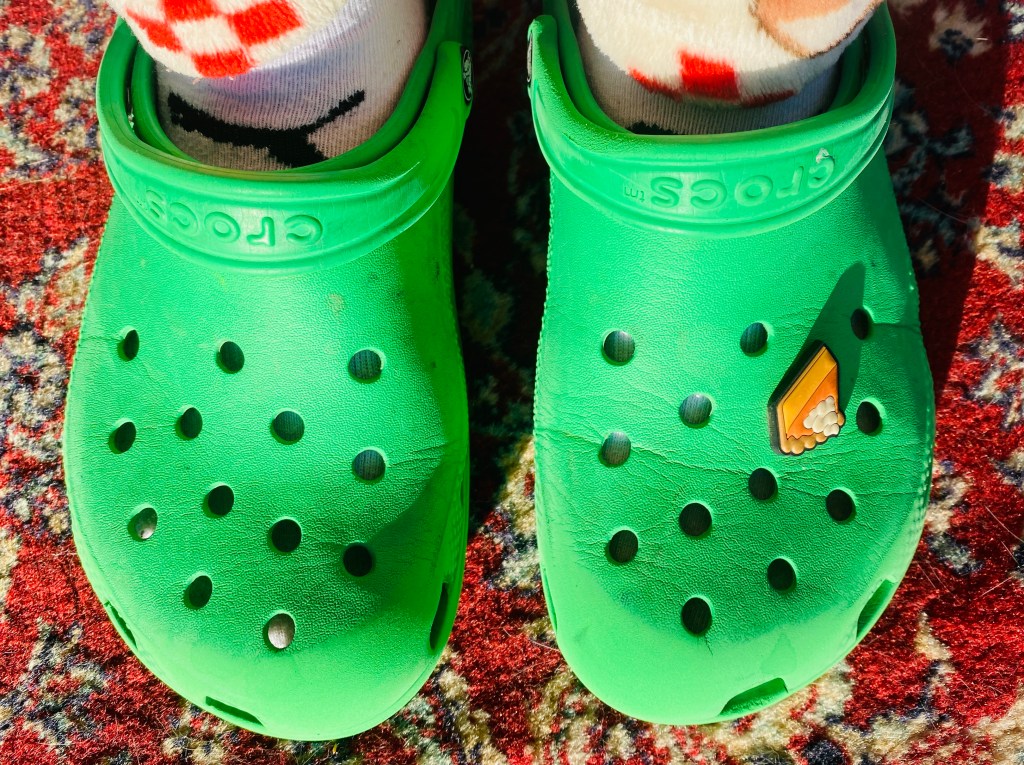
Sometimes, it’s as simple as a good pair of shoes. I’ve endured some teasing about them through the years, but my indoor shoes are nothing but comfortable. I adore their bright green shade and the pie charm is an homage to my pie-making grandmother.
What’s on your list of things that offer hope and joy?
It was in March 2022 that I realized how much the United States had changed.
Our family of four is taking our first airplane flight in three and a half years. The pandemic and financial considerations have conspired to keep us close to home. Oh, who am I kidding, we weren’t just “close” to home, we wereat home, for an entire year.
Online school, work, life, and three daily meals, all conducted under the same roof with the same four people, day in and day out. We have stayed healthy (a different story for many, including other family members and friends). We are grateful for our solid, safe house but it has been a long, trying stretch. Now that spring has arrived, we are more than ready for a change of scenery.
The pandemic, however, cares not that we are going stir-crazy and continues to rage. Traveling by air feels unfamiliar and somewhat dangerous. From the vantage point of my insulated daily life in a mid-sized midwestern city, it is hard to imagine the transformations the United States has undergone in the approximately two years since I last crossed state lines.
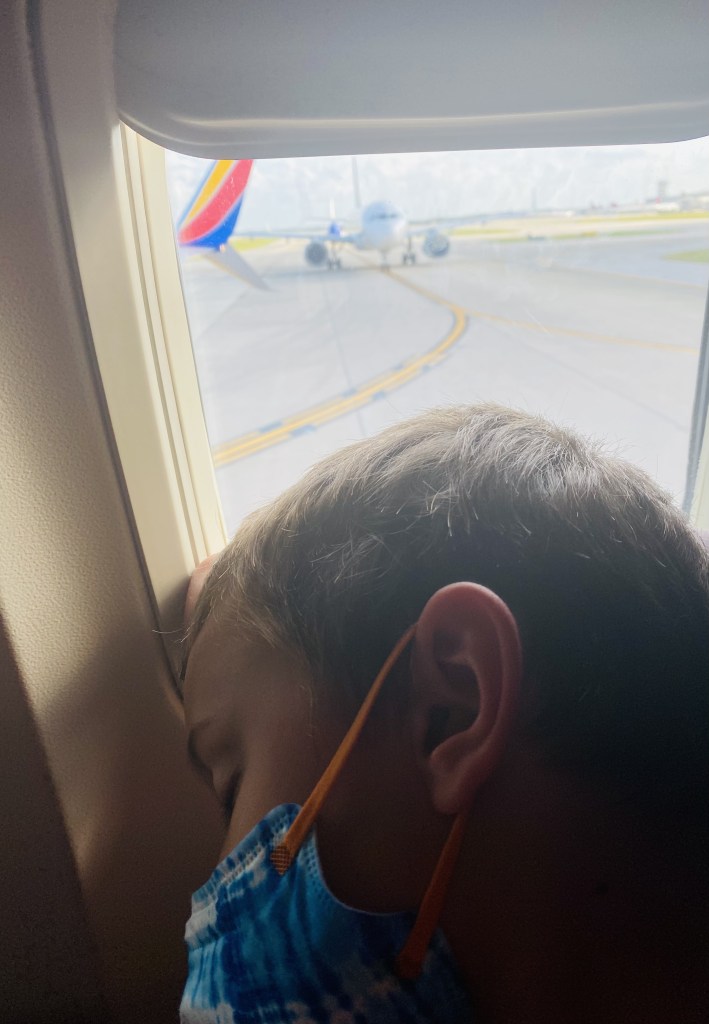
Any moment a child rests on an airplane is a win.
My eight and nine-year-olds are giddy with excitement as we board the plane, chattering throughout the process, asking frequent questions, and pointing in every direction “Is that the pilot? How many helpers (stewards and stewardesses) are there? “It’s cold in here! (the jetway). “Can I have my snack yet? (umm, we just sat down). Son and husband sit together, and my daughter and I settle in across the aisle.
Despite decades of flying under my belt I too feel excitement about take-off, as well as a renewed appreciation for the ability to travel at all. The months spent at home have helped me realize how much I took for granted the familiarity of airports, the invigorating bustle of humanity, and the thrill of jetting off to new places.
As we get comfortable, I become aware of a commotion a few rows ahead. Glancing over the seat backs I spot a man in his forties gesturing in a frustrated way. The attendants have asked him to put his oversized bag into an overhead compartment and he does not agree with their request. He feels inconvenienced and lets everyone around him know “Those son-of-a bitches in Washington” he says, loud enough for all of us in surrounding rows to hear, “They were supposed to lift the mask mandate but now they aren’t.” He thumps down out of view, but his mutterings are still audible.
A stewardess happens by on her way down the aisle and requests politely “Please put your mask on, sir.” A few minutes pass and another flight attendant delivers the same appeal. Both pleas go unheeded.
By now we have pushed off from the jetway and passengers all around are intent on their screens, books, phones, and laps. My daughter and I investigate seat-back screens and unpack water bottles and treats. I notice that no one offers opinions or gets involved with the uppity passenger in the way they might have three years ago. More time passes and we are now sitting on the runway. Didn’t the pilot just say we were about to get in line for take-off? Cabin lights dim and my daughter asks for the eighth time if we are in the air yet. She was so young when the pandemic began that she doesn’t remember the sequence of events involved in flying or what a full-body experience it can be when a flight takes off.
The voice of the man three rows ahead rises again, and I feel a tightening in my chest. It sounds as if his voice is being forced out of his throat, the stream of discontented words floating above our seats. I know man, I want to say. We’re all tired of this. This destruction, this frustration, this upending of our lives. Why not wear an uncomfortable mask for a few hours to offer help to your fellow humans–to avoid someone carrying something home to their kids/elders, into their weak immune system, or worse?
I check myself and decide to refuse anger. I take the example of the patient flight attendants tending to this man. They treat him with firm respect. The first was a tall willowy Black stewardess with a kind, direct gaze. Minutes tick forward, the plane continues to idle in place. My daughter doesn’t mind, she realizes the screen in the seat back is hers and hers alone! She can choose a movie for herself!
Suddenly, the pilot’s disembodied voice rings out through the cabin “Ladies and gentlemen, to let you know the reason for our delay, we had a passenger who was unwilling to comply with our mask rule, and we were planning to return to the runway. The passenger has now decided to comply. We want you to know that we don’t necessarily enjoy these rules either but we have them in place for our passenger’s safety.”
Mid-flight, somewhere over the state of Tennessee, I wonder at the foundations of our democracy and whether the current political climate in the United States will ever allow for a thoughtful discussion of the roots of inequality and true injustice. My daughter watches “Encanto” (the fifth time she has seen it).
Outside our tin capsule, the sun has risen. My daughter points out a constellation of tiny reflections glinting off the pink ruby in my wedding ring. “The sun did it just for us!” she says.
A small marvel at 35,000 feet.
“We apologize for being late but we are making up as much time as we can” announces the pilot as we begin to descend to the Atlanta airport. A few passengers will miss their connections due to our late take-off, an entirely avoidable inconvenience. Is it too late for my country, I wonder, can we make up for all the time we spend judging, disagreeing, and complaining?
Maybe the fact that no one got outwardly angry at this man, that he eventually complied with the airline’s request, that the flight took off at all, is a win. Life (and flights) move forward whether or not we agree with the messy details.
A week later, on the plane ride home, one of my preschool students happens to be in the seat one row in front of me. The excited four-year-old is in awe that his teacher is there, on the same plane as him! He can see me through the crack between the two seats ahead of my son and me. “I want to tell you a secret,” he says, and I lean my head forward so that his voice is funneled directly into my waiting ear “Do you know…do you know” he splutters sweetly “this plane is going to fly in the air!”
His pure excitement is a reminder that astonishment can exist next door to cynicism. One human leans toward bitterness and contempt and another is innocent and enchanted. Wonder can be a seatmate to dissolution and they are both here, crammed into one cabin and one country, together.
Many posters in my dad’s collection are begging to be framed.
Through the years I’ve wondered about my tendency to gather books, magazines, flyers, and brochures. Why do I feel drawn to them?
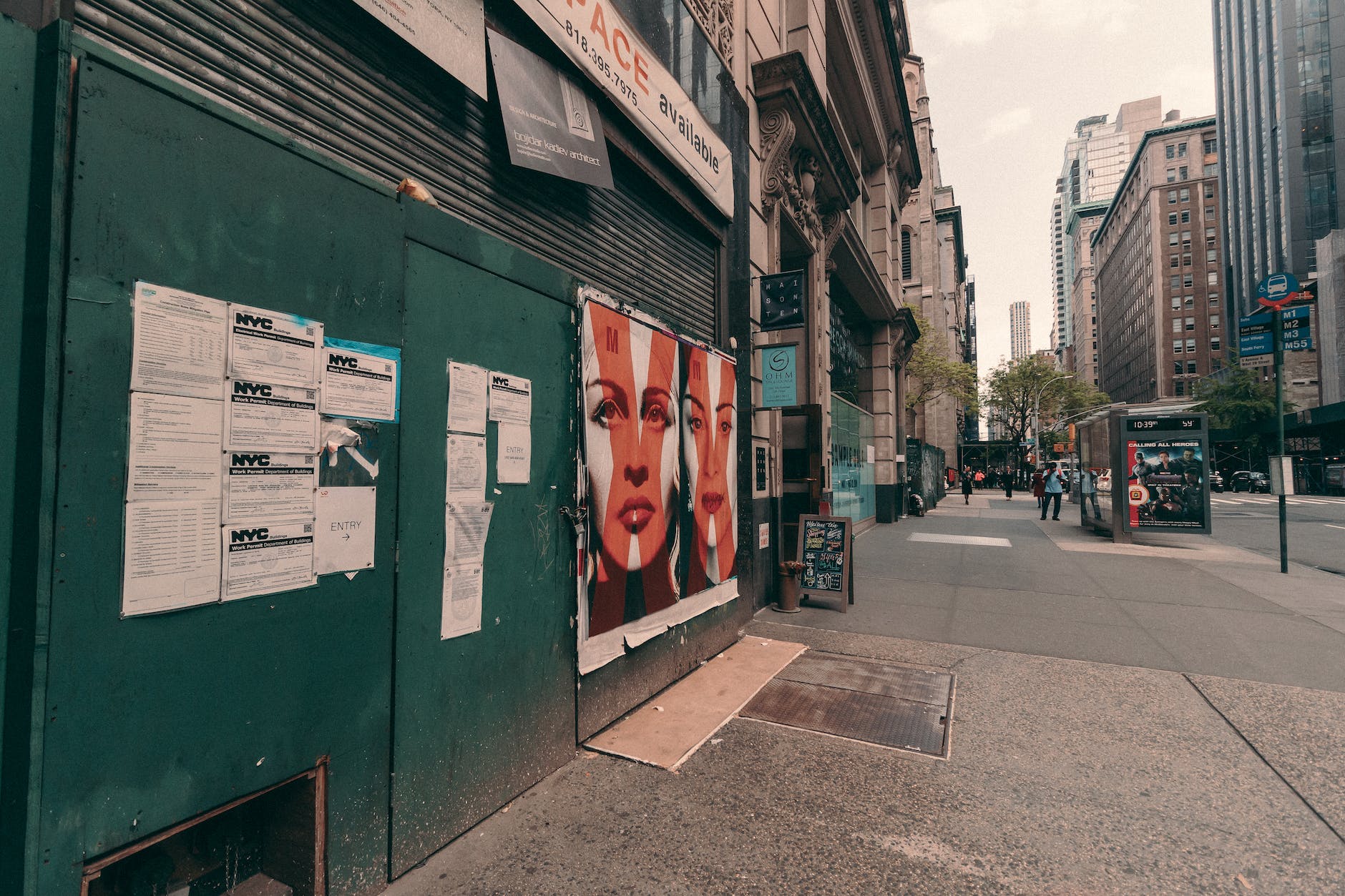
During the decades I lived in two big cities (Boston and San Francisco) my daily routine often included an end-of-the-day emptying out of my bag (never a purse—too small—always a bag). This usually meant stacking 2-3 books on the kitchen table and sorting through a cache of papers. I could generally trace the source of the books to my day jobs in publishing. As for the papers, they were an eclectic assortment of postcards and handouts gathered in restaurants and bars, newspapers and flyers that found their way into my hands, or small posters carefully removed from the sides of buildings, telephone poles, and bathroom walls.
Some see a city street, some see a poster collection waiting to happen. Photo by Itzyphoto on Pexels.com
Sometimes it was the words and ideas that caused me to stuff the paper into my bag, other times it was the visual impact of the item. Dreams of creating art out of these found objects flickered in my mind, but really what I enjoyed most was reading the ideas and words of others, often unfiltered and full of meaning.
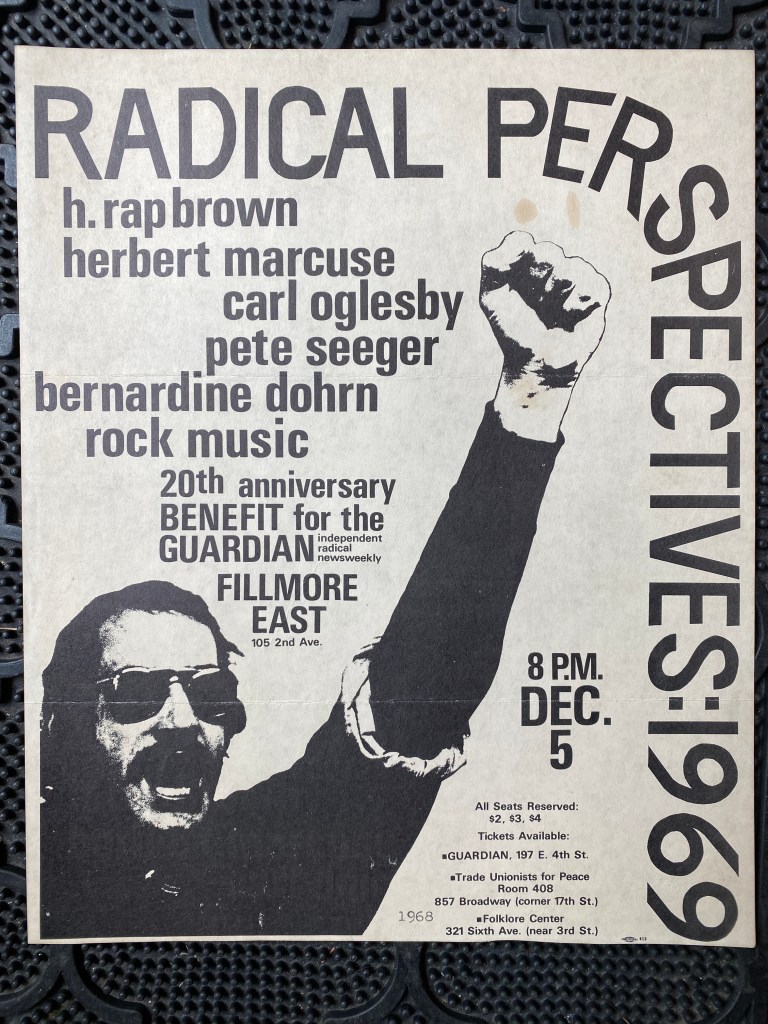
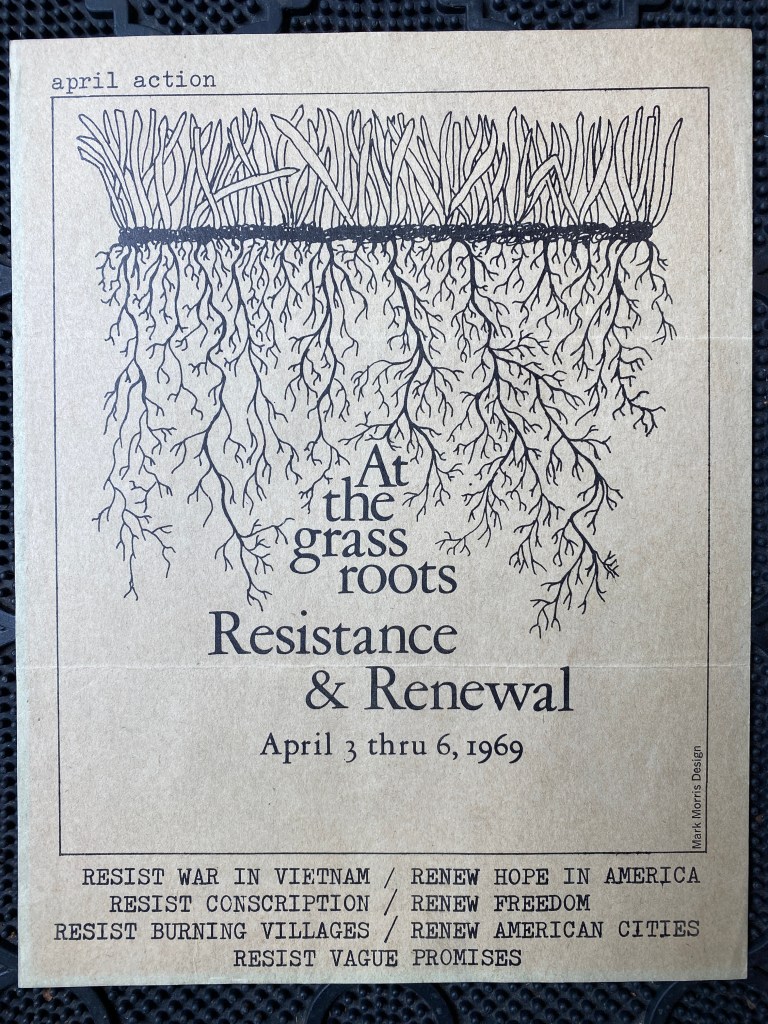
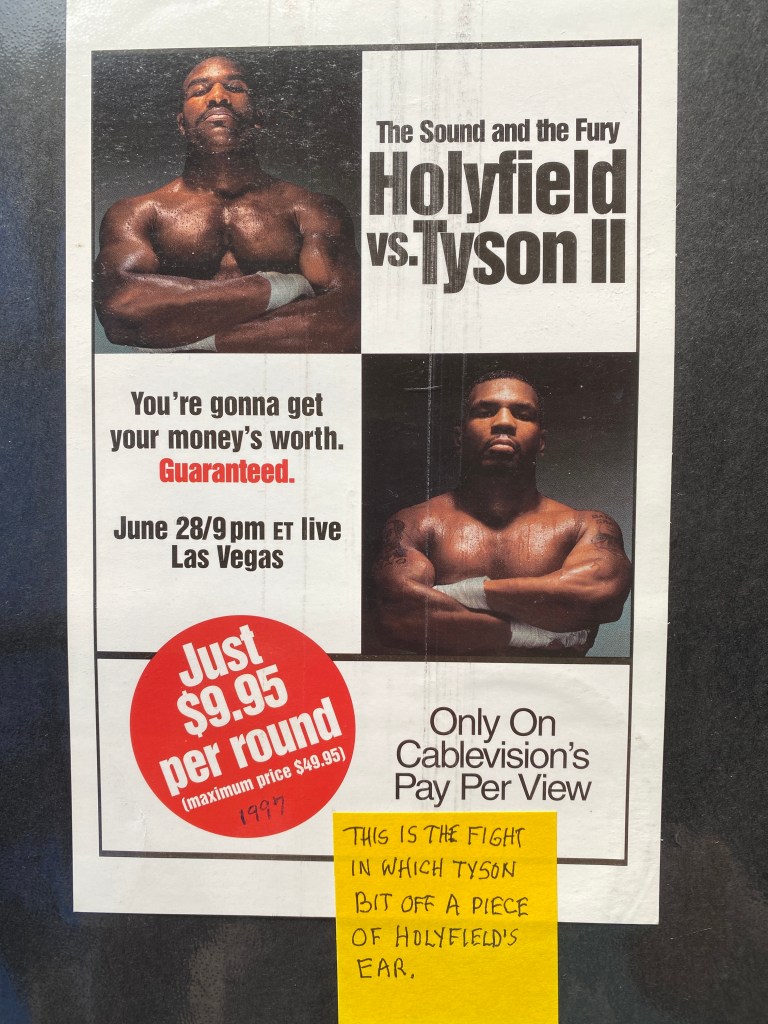
After a thorough review of my father’s extensive poster and handbill collection (fourteen folios worth), I can definitively say that I now understand where I inherited this tendency to collect all manner of words printed on the fiber of trees. My father began collecting posters on the streets of New York City in 1968 and continued for the next fifty years. An equal-opportunity compiler, the posters he gathered cross ideological and political lines and the subject matter ranges from political protests to movie posters to meditation retreats to flyers for lost pets. If it caught his eye, he picked it up (or rolled it up).
It’s a good thing that I no longer live in a big city where I am tempted all day long to stuff anything interesting I come across into my bag (nowadays that bag is full of Kleenex for my preschool students, water to keep hydrated and snacks for my kids). Neither is there any physical room left for expanding anyone’s paper collection, either my father’s or my own–the time has come to appreciate what has already been gathered.
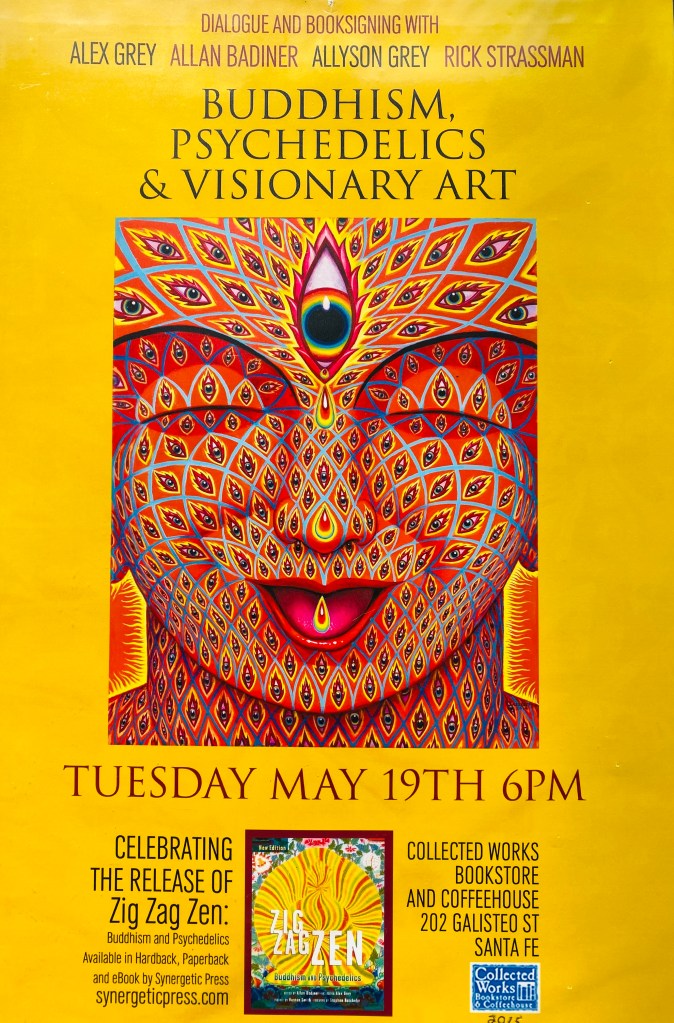
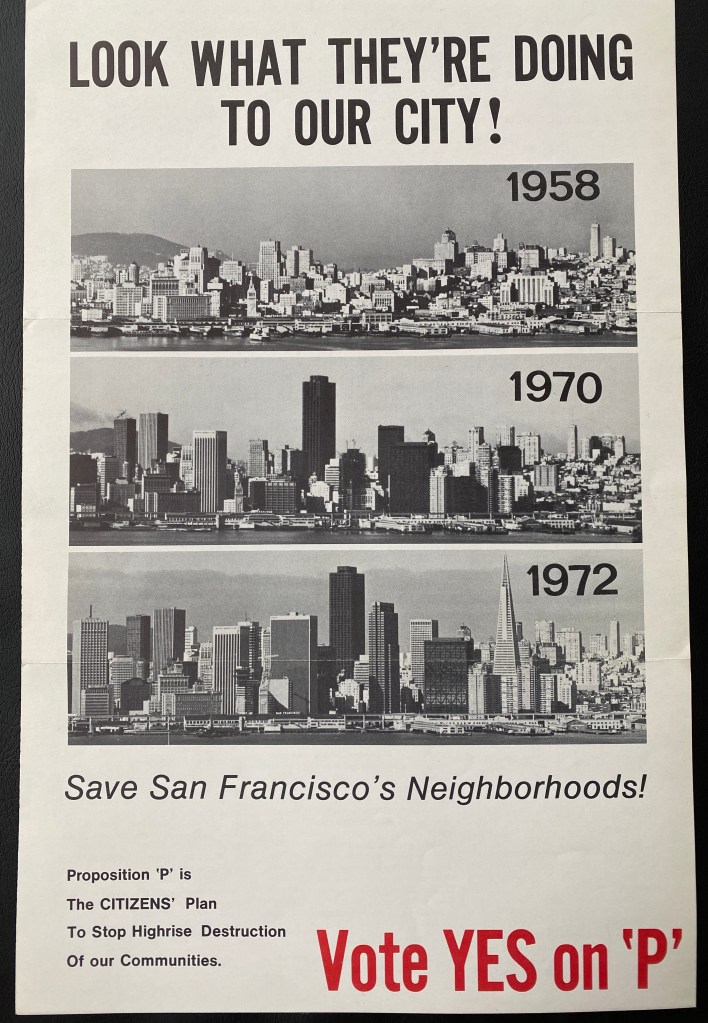
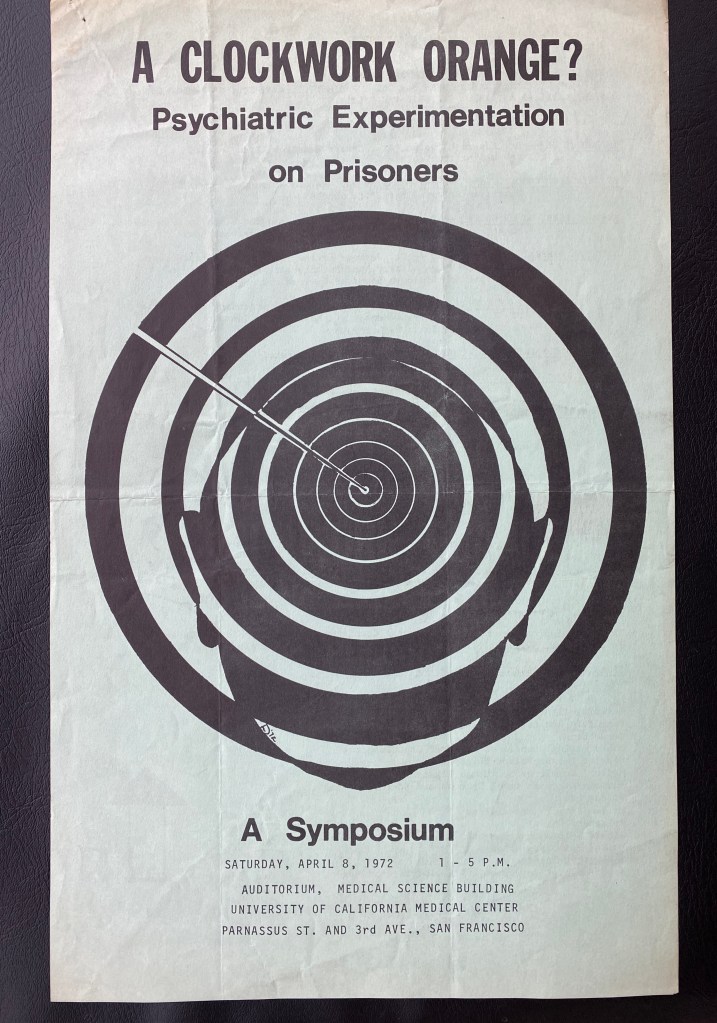
In that spirit, here are some highlights from my father’s collection. I’ll continue to share images here periodically. Please let me know in the comments if you would like me to feature any subject in particular (art, music, writers, politics, Native American issues, prison issues, spiritual events);
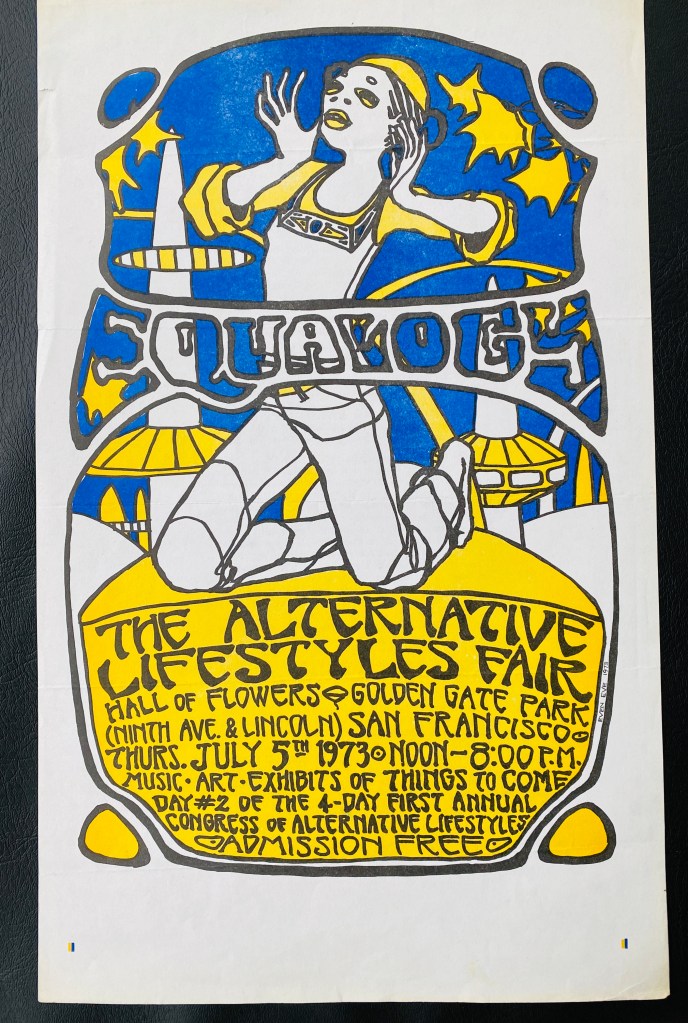
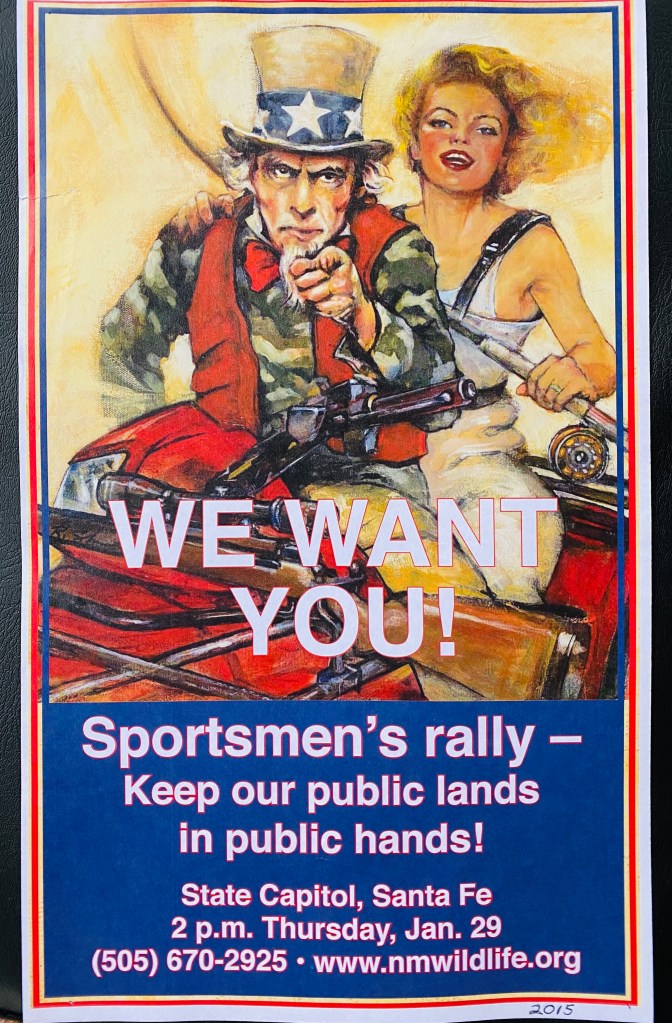
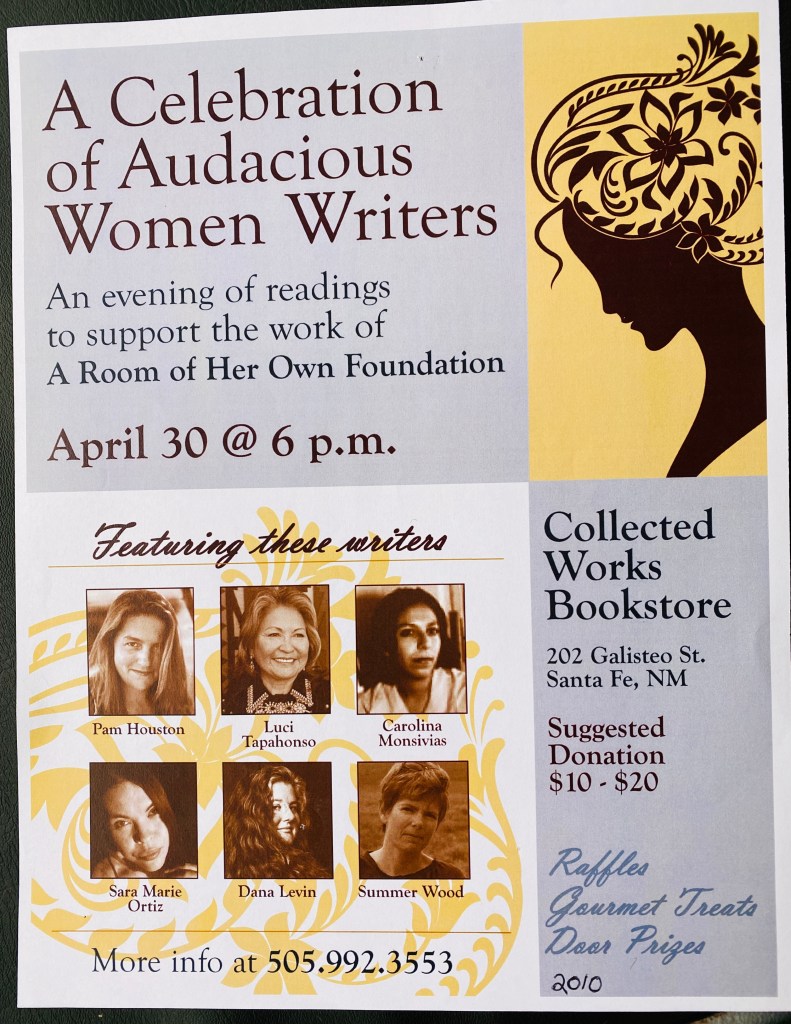
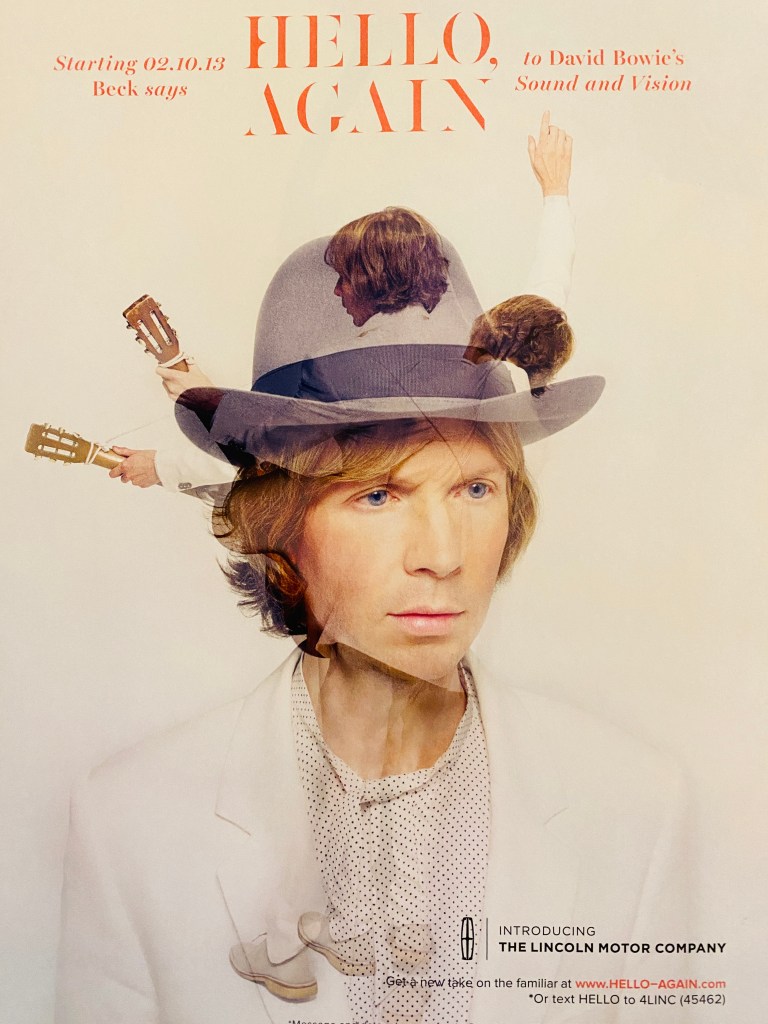
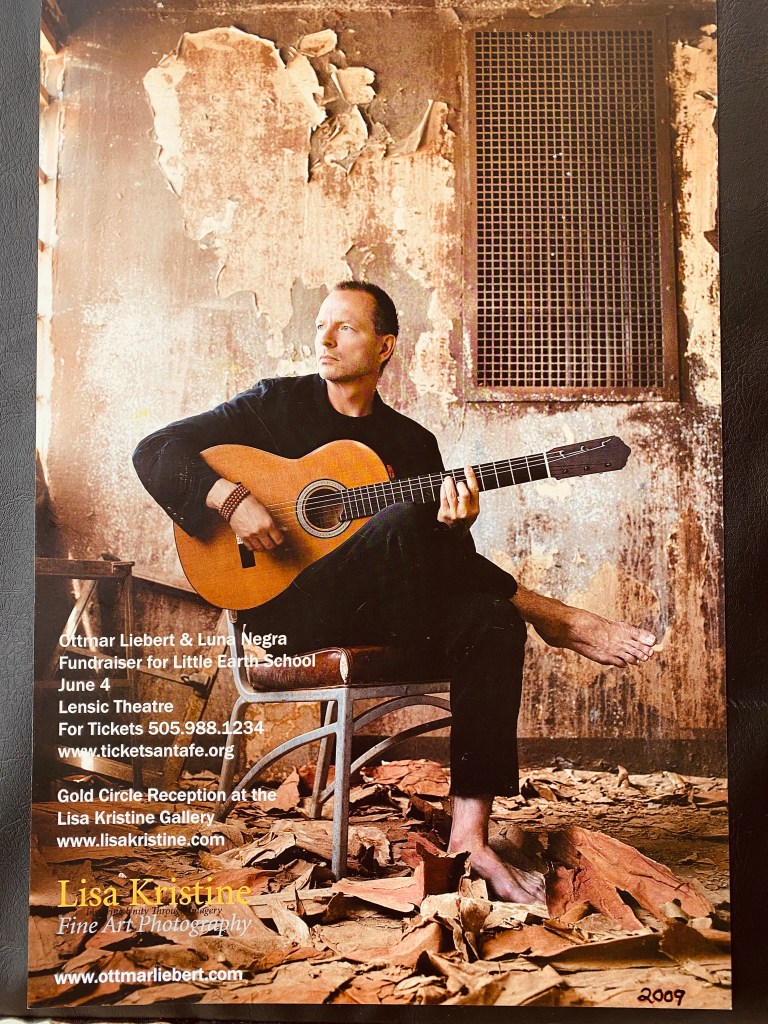
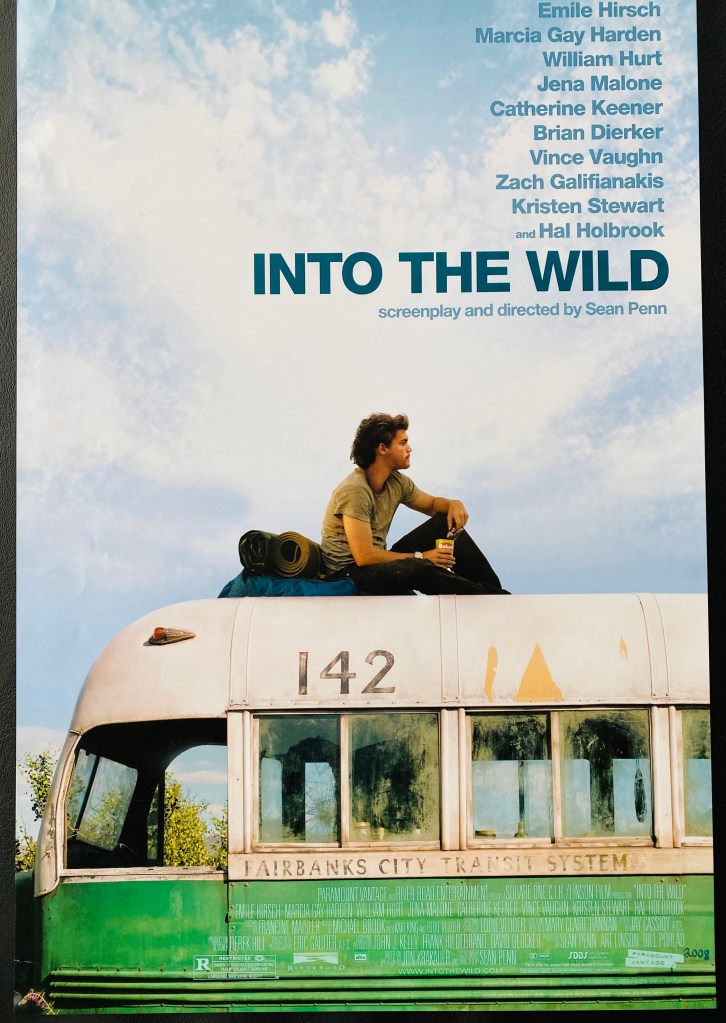
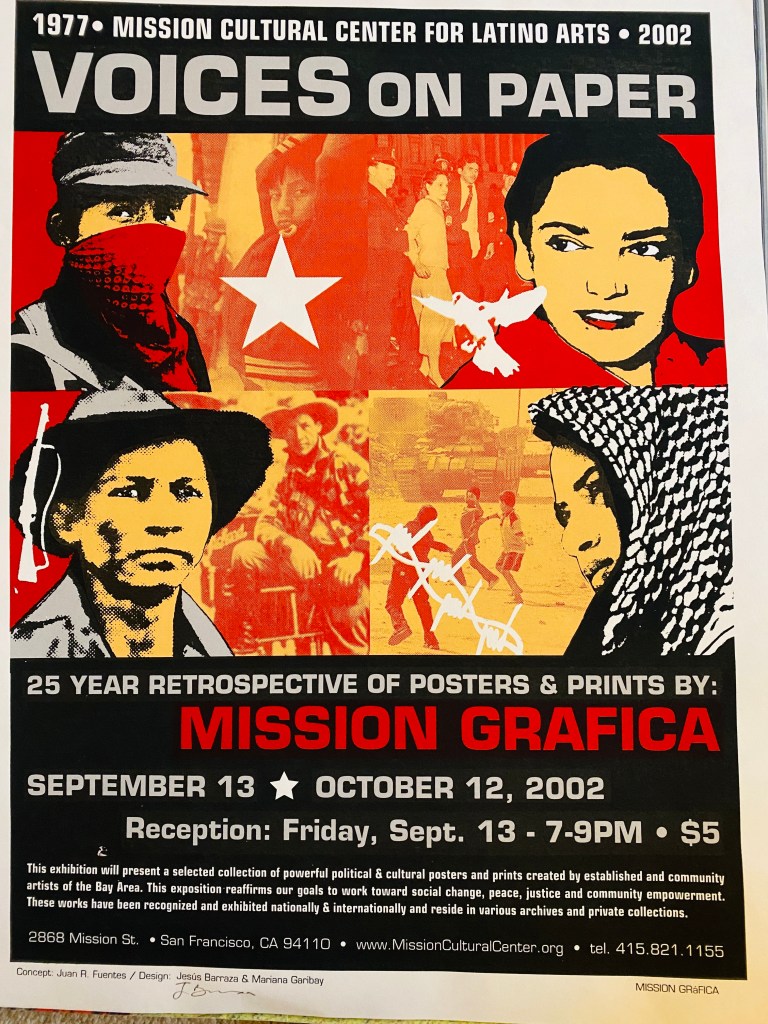
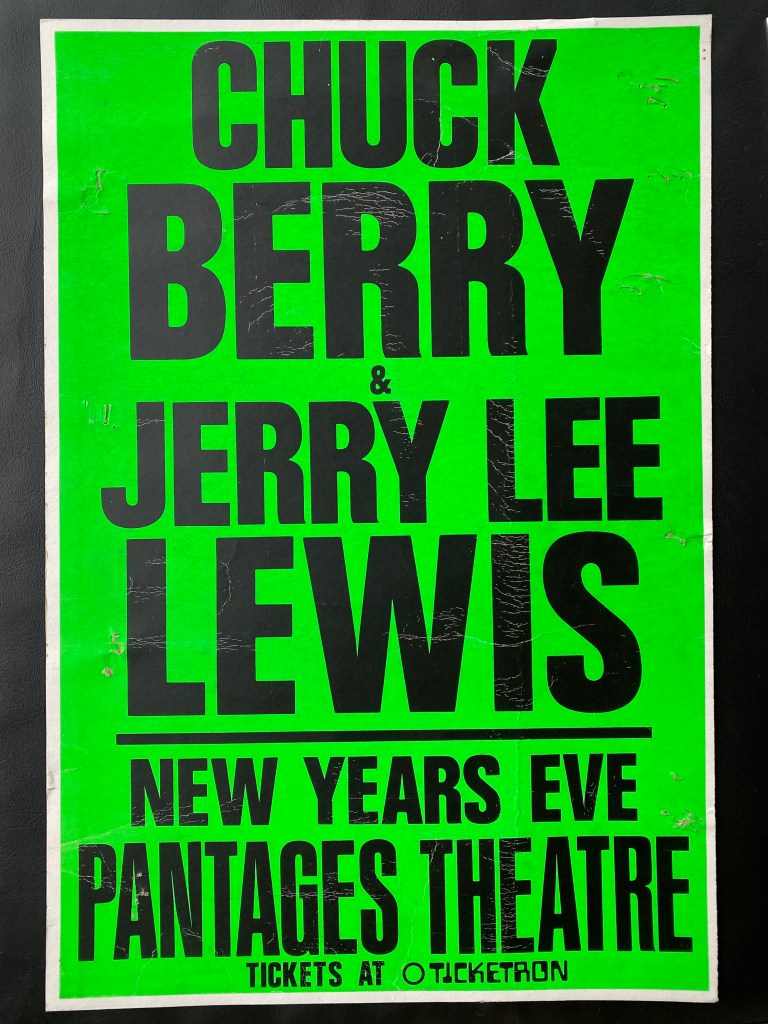
Did the creators of this 1973 protest poster considered the Transamerica Pyramid to be one of the offensive buildings? My dad was particularly interested in prison reform-related handbills since he frequently covered that subject as a journalist.Oh, to be a fly on the wall at the “Alternative Lifestyles Fair” in San Francisco in Golden Gate Park July 5, 1973A San Francisco handbill from 2013. Some of the posters hail from Santa Fe, New Mexico where my dad lived for fifteen years. This one is dated 2016. I wonder how successful this rally was. Many posters feature authors and writing-related events. Sorry to have missed this one in 2010. One of the music-related posters in the collection. Ottmar Lierbert & Luna Negra fundraiser at the Lensic Theatre in Santa Fe. There are quite a few movie posters. I read that this is not the actual bus where Christopher McCandless lived but an exact replica. Some posters are compelling due to their design and graphic impact.Poster from a 1988 New Years show at the Pantages Theatre in Los Angeles. A reviewer wrote that Berry was on stage that night for only thirty minutes.
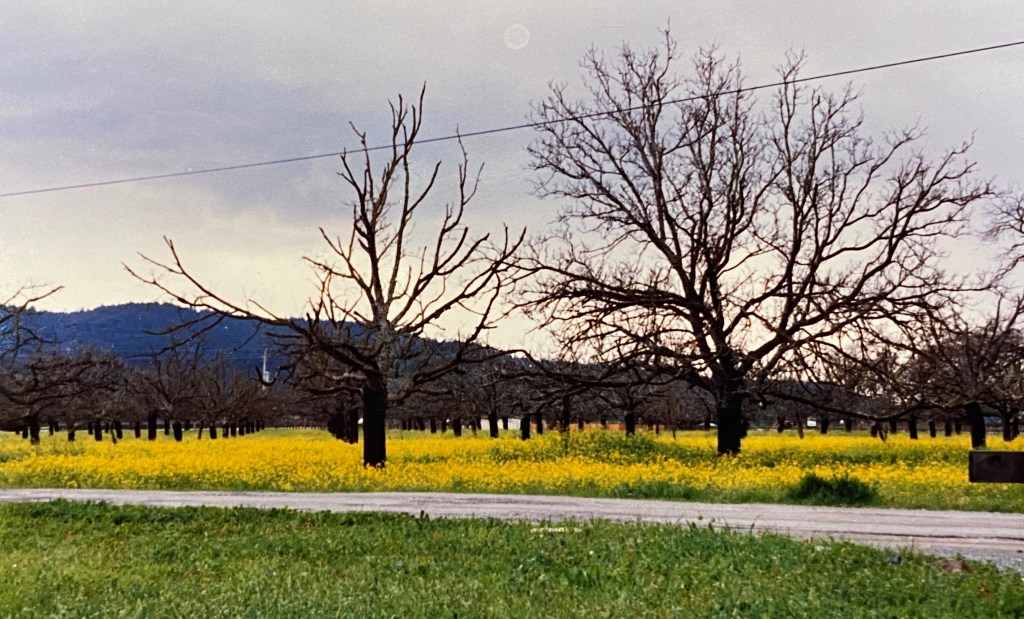
Walnut trees and mustard grass. This field is now a vineyard.
Neighbors, like so many aspects of life, can be an unpredictable business.
The people who land next door, across the hall, a few houses down, at the neighboring campsite can become acquaintances, support systems, minor annoyances, close friends, and even enemies. Lest you think this is a story about problematic neighbors…it is not. Quite the opposite. This is a tale about how fortuitous proximity can lead to a meaningful friendship.
During my formative years, our next-door neighbors were original back-to-the-landers, Bob and Evelyn. To enter our rural Northern California neighborhood, you had to turn off a busy two-lane highway and follow a dust-producing lengthy gravel road. To the left of the road was a mature walnut tree orchard under which a blanket of golden mustard grass spread in the springtime. On the right low ranch-style houses lined up sporadically, each claiming the middle spot on an acre, more or less.
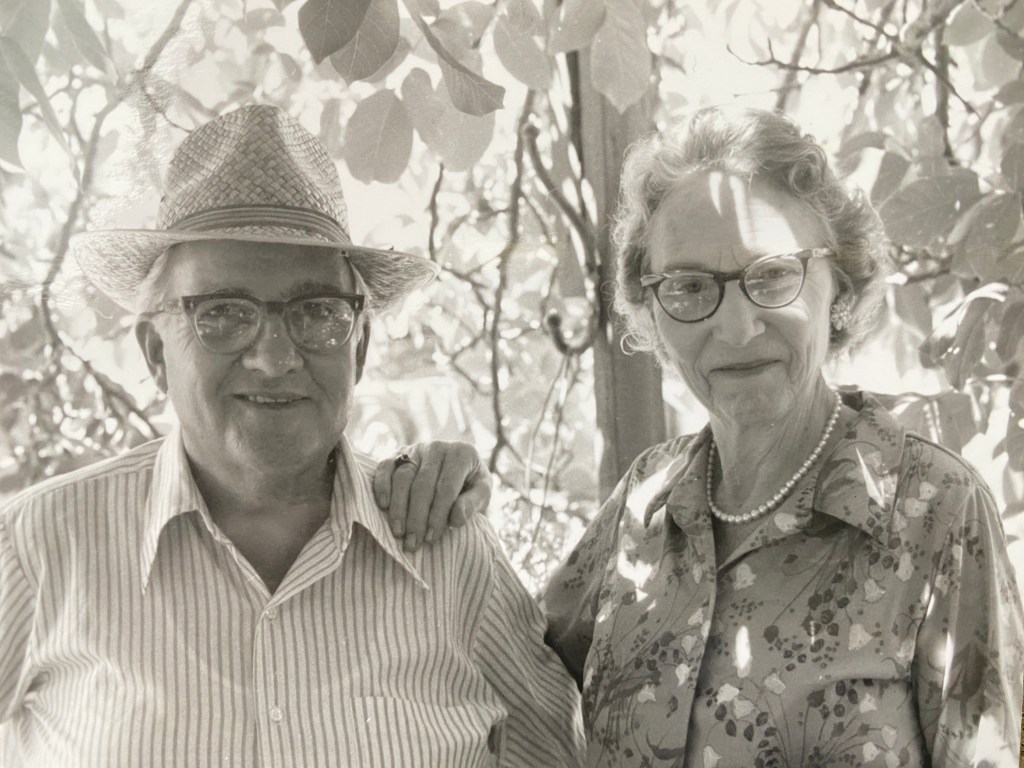
Bob and Evelyn’s plot was adjacent to ours and over the years our young family of three became close to their older twosome. Originally from the East Coast (with the accents to prove it) Bob and Evelyn had owned and operated a music shop in San Francisco for decades. Now they were a happily retired childless couple living an almost entirely self-sufficient life in the country. Raising goats, keeping chickens (and much to my chagrin–especially in my teen years–a series of roosters), and growing what seemed like every conceivable fruit and vegetable (including okra) kept them bustling around their abundantly overgrown yet organized property.
The spot where our plot of land met Bob and Evelyn’s.
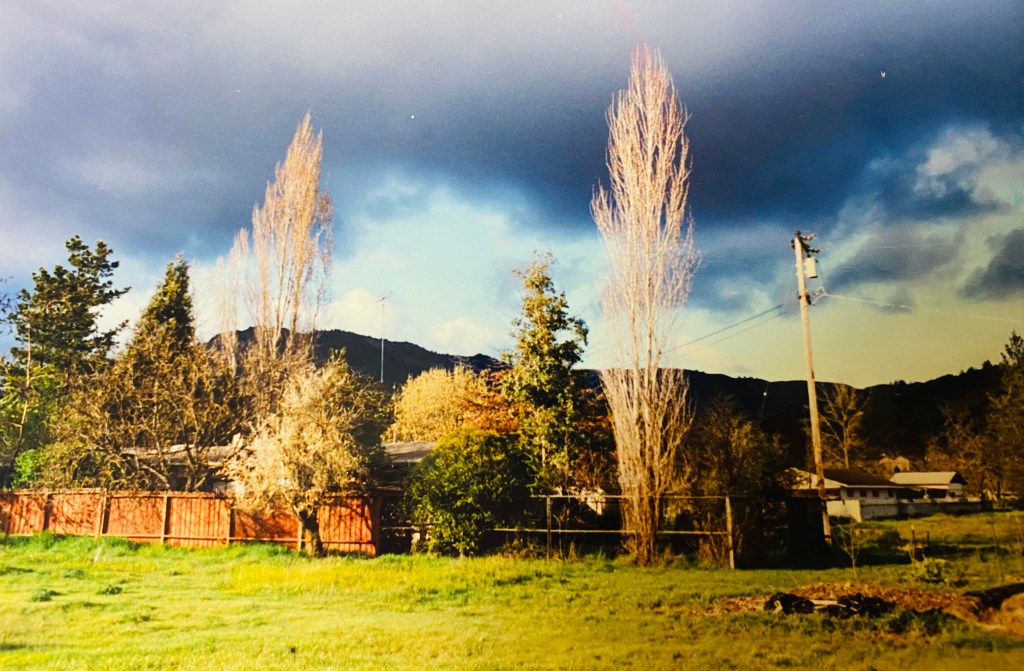
Bob was generous with land-tending advice for my citified father and Evelyn and my mother traded gardening tips, seeds and starts, and recipes. Sometimes, when I was tired of climbing my favorite trees, trailing the cat, or hunting green beans and cherry tomatoes in my mother’s extensive organic garden I would glance over at Bob and Evelyn’s house. Perched on the edge of a lot about half the size of ours, their modest abode featured a grape vine trellis that covered the entire Eastern-facing side and shielded their house from the blazing summer sun.
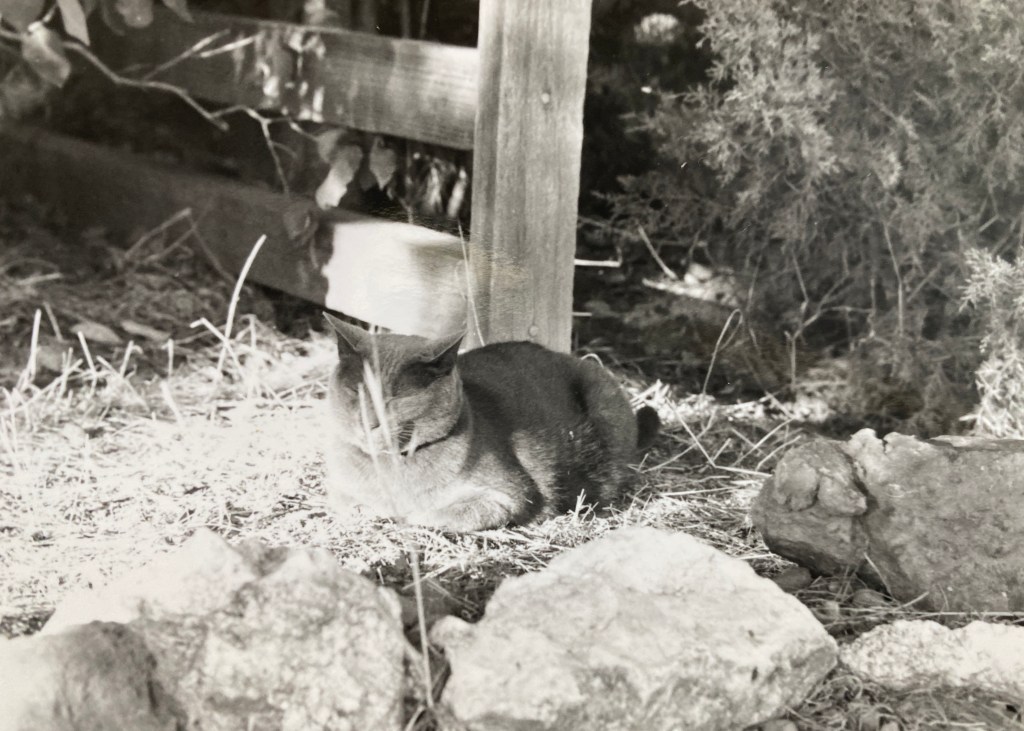
Ahh, to be a free-range country cat, napping in the mid-summer heat.
One summer day, as I gazed in their direction, a question burned in my mind. Was today a jam-making day for Evelyn? The only way to know was to ask, so I heaved myself up off our garden’s straw-covered dirt path (leaving green bean tops and cherry tomato stems strewn in my wake) and walked the 100 yards or so to the three creaky steps that led up to their front door.
Evelyn answered my knock right away, her thin frame and capable arms topped off by a welcoming red-lipstick traced smile and softly coiffed silver hair. “Hello, dear heart! You have good timing, the jam is setting, Bob just came in from feeding the girls (their prized goats) and we’re going to watch a show, would you like to come in?”
This was music to my nine-year-old ears and I gladly stepped into their cozy dark living room.
The house smelled sweetly of raspberry jam, and while Evelyn was in the kitchen, I made myself comfortable on one of their low-slung easy chairs and gazed around the room. Bob and Evelyn’s penchant for Western-style art (and clocks) was on full display and I still to this day sometimes conjure up the image of the free-standing lamp that stood to the left of their couch. This nearly miraculous fixture would, with the flip of a switch, slowly rotate in a circular motion while the horses artfully painted on its tanned-hide shade bucked and jumped against the interior bulb’s glow.
Who knew lighting fixtures could spark core memories… one person’s lamp-related childhood remembrance (“A Christmas Story” fans, I’m looking at you) includes a mannequin leg with a fringed shade on top while another features equines brought to life by electricity. What will upcoming generations recall from their childhoods? Recessed overhead lighting doesn’t hold quite the same mystery.
Once Evelyn had served up the still-warm jam, scooped into my very own child-sized lidded glass jar, she and Bob (a stout man of few words with calloused hands, a hearty laugh, and a work ethic I haven’t seen since) settled into their well-established spots on the couch and turned on the hulking TV in the corner. The Lawrence Welk Show was starting, and we were there for it. From the frothy opening segment in which large bubbles featuring the faces of the show’s singers float across the screen, to the individual skits (square-dancing, romantic ballads, boot-stomping country jingles) to the concluding strains of the orchestra fronted by the entire cast of singers and dancers from that evening’s show, we were transfixed. Bob and Evelyn knew the lyrics to an impressive number of songs and my favorite act was the Lennon Sisters, four young gals with ethereal voices who practically floated across the stage and lulled me into imagining a possible future as a lounge singer.
The Lawrence Welk Show ran from 1951 to 1982.
Too soon the show was over and it was time for Bob and Evelyn to eat supper. I carried my empty jam jar into Evelyn’s spotless kitchen and placed it on the counter, admiring her hand-knitted tea cozy in the shape of a giant strawberry. I was eternally curious about these two, so perfectly equipped to be grandparents yet operating unencumbered by kids, or any other family that I could see. Did they wish they’d had children? And why did that matter in the first place?
Our sprawling eclectic neighborhood was full of fascinating characters; a kind, hard-working Japanese couple who were survivors of United States-run Japanese internment camps in the 1940s and now owned a thriving egg farm, another couple who happened to be little people and were rumored to have been related to Munchkin actors in “The Wizard of Oz,” a reclusive family that lived in a house resembling one in “Gone With the Wind” complete with massive oak trees lining the driveway…but even among that crowd Bob and Evelyn stood out. Theirs was a life of hard work and frugality, respect for the land, and generosity toward neighbors.
Bob and Evelyn, 1981. Photo by David Holmstrom.
Once, on a return visit to my hometown, I walked down the gravel side road that ran beside our land and Bob and Evelyn’s. More than three decades had passed since I sat in their small living room and watched Mr. Welk conducting his orchestra. The goats, the gardens, and Bob and Evelyn were long gone. In their place was an overgrown mansion someone had erected—it took up almost the entire plot of land. A gleaming red Porsche was parked in front of the grand entrance. Gazing at the elegant yet soul-less landscaping around the mansion I thought of the plants and animals that once covered every inch of this same land. Entirely wiped away. I cringed to think of how quickly it must have happened.
As I stood there looking at the mansion I reminded myself that time marches on and progress (and development) usually cannot be stopped. Especially in California, some might say. There is also much to be considered about who inhabited and tended this land even before we claimed it. Still, it saddens me to think that individuals like Bob and Evelyn won’t come around again anytime soon, that other nine-year-olds won’t have the chance to sit with their elders in cramped dark living rooms softly lit by a rotating horse lamp, eating still-warm homemade raspberry jam while watching TV and singing along to the Lennon sisters.
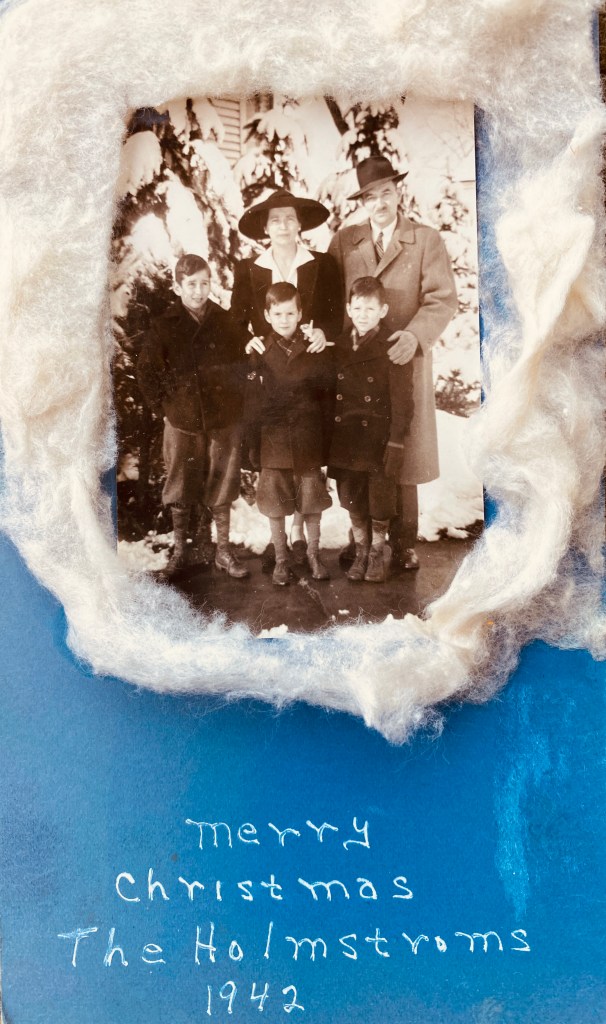
A cherished Christmas card: my father (center) with his family in 1942.
In the spirit of the holidays, I’m sharing an essay my dad first wrote in 1967. It was printed in The Christian Science Monitor newspaper in 1994.
When my father penned this piece he was newly divorced (his first marriage, which lasted a year) and living in a small apartment north of Boston, Massachusetts in the seaside town of Lynn. Far, far away from family and his beloved California.
I don’t know much about this time in my father’s life, but I always felt as if he underwent an unusual amount of self-growth because of the end of his first marriage. Given that he was a privileged white male in the culture of the late 1960s United States he could easily have drifted into convention or resentment.
I believe the experience of divorce made him a better husband to my mother (they were married thirty-four years until her passing), and a more optimistic, empathetic, expressive human. Learning what he didn’t want must have been a key takeaway, as well as gaining a better understanding of the role a dynamic, loving partnership can play in one’s life path.
On that stormy Christmas Day my dad found that he could be happy with cider and silence. His essay on a holiday spent solo reminds me of something he used to say frequently: “It’s not what happens to you, it’s what you do about it.”
Stormy seas.
A Christmas To Remember ~ First published in 1994
By David Holmstrom
It was not that I couldn’t afford a tree, but rather, that I couldn’t afford not to be innovative. Christmas trees – festive and sweet as they are – are much the same each year. And because I was 3,000 miles away from home, young as a green tomato, alone, and quite frankly glad I was alone, I made a tree of coat hangers.
It was more important to me to be innovative rather than sentimental.
In my sixth-floor apartment by a rocky coast, I bent, twisted, and shaped what I thought was an ingeniously engineered tree, about three feet tall. I hung it from a ceiling light, like a mobile, attached a dozen spoons, three dozen large dangling paper clips, many bows of red ribbons, very small Christmas tree bulbs, and one red sock half-filled with jellybeans as an anchor.
The ugliness of it assured its beauty.
My conviction then was that Christmas should be a prod. It comes to ask questions such as: During the year, have you lived spiritual precepts as fully as the bestowal of God’s goodness? Have you finally, once and for all, stopped being so serious?
Have you been innovative, or have you lived sloppily on residual power, playing out the familiar while you turn gray inside? Have you loved when everything and everyone around you seems sad and broken?
One of my answers was the Christmas tree of hangers, a symbolic defiance of the status quo.
On Christmas Day the coastline was pounded by a storm – great black waves pounding against the rocks – and swirls of light snow. I called home to thank one and all for love, for gifts, for support. Then I drove to a spit of land where the waves hit rocks and sent spray shooting into my face.
Drenched but exhilarated, I went home for hot cider and silence.
As I opened the door of my apartment, a gust of wind caught the tree of hangers and sent it spinning. The spoons clanged, the paper clips were tinny. Listen, I said to anyone and everything that might have been listening, this is the Merry Christmas of all time and place.
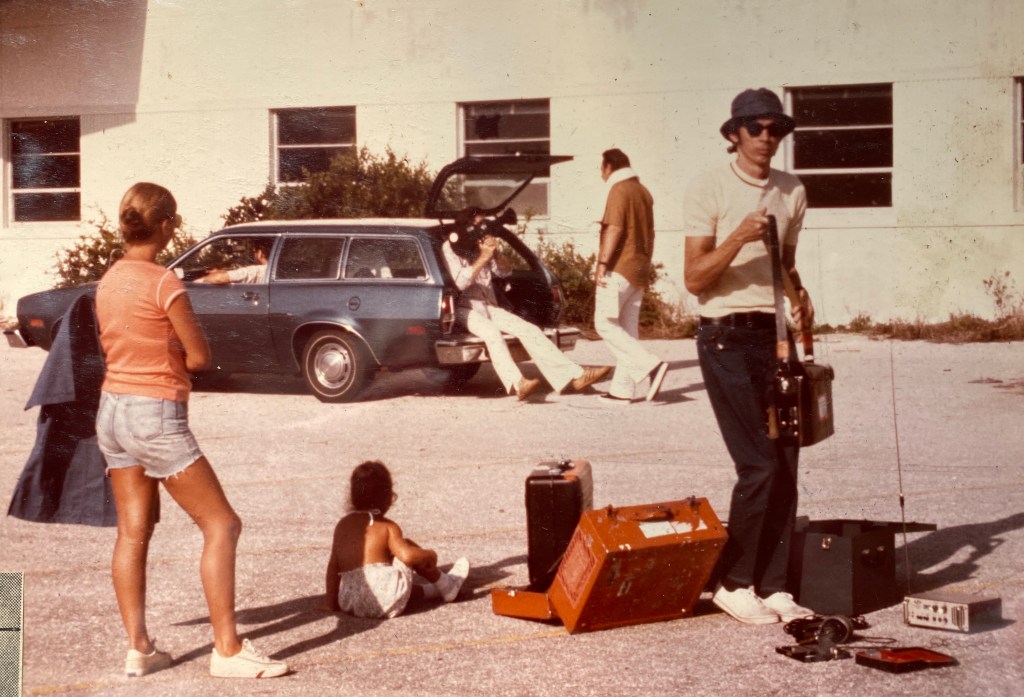
Cocoa Beach Florida, 1974. My uncle John Holmstrom films out of the back of a station wagon while my father drives and my mother and I watch.
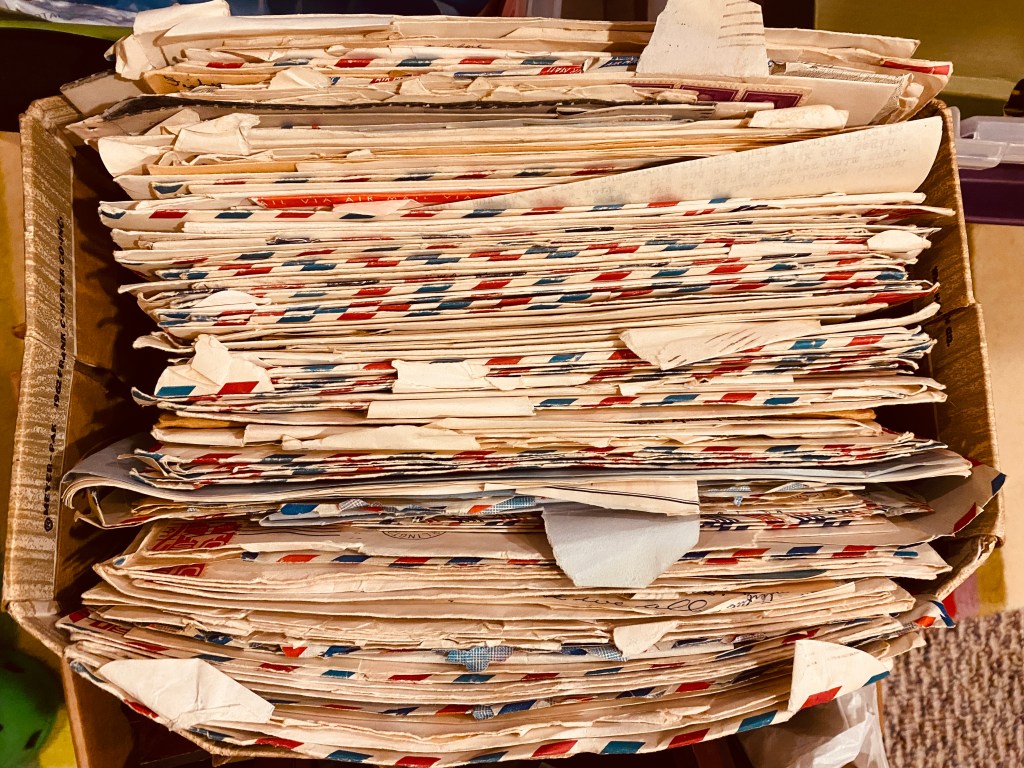
Here I am again, sitting on the floor of my office. Boxes and bins surround me, some precariously balanced on one another, others open to expose their contents. Worn shoeboxes full of letters, dusty paper bags stuffed with film reels, and framed art of all sizes leaning against the wall. There are so many photographs that they have taken over my desk area completely, filling plastic bins and manila envelopes, spilling out over the tops and sides. I’ve decided that photographs are the hardest thing to sort and store.
I’m making another attempt to categorize but rabbit holes are waiting for me at every turn. Read this article in a Sep 22nd, 1977 special issue of Rolling Stone about Elvis’s death? Sure! Flip through the entire inaugural 1968 Whole Earth Catalog? Why not! I could have sworn that photo of my parents trekking in Nepal was in the envelope marked “Mom and Dad Travel” but maybe it’s in the “Family 1990’s” one instead…and look at that, here’s a box of childhood photos I’ve never seen before.
One of many shoeboxes full of letters.
Descending further down that rabbit hole, I don’t just gaze at family photographs. I conjur up the people. The sound of my mom’s laugh, or the smell of the purple wisteria that twined around the pole that marked the entryway to my childhood home. I wonder about the young men dodging the Vietnam draft in my dad’s poster collection and the shy young African girls in my uncle photographed in the 1960s. What are their stories?
This is what happens when an only child sprouts from a family of documentarians. At least that’s what happened to this only child. As I’ve mentioned, my father David Holmstrom was a journalist and a writer, but he was also an artist, photographer, and collector of a mind-bendingly-diverse array of documents, items, publications, and books.
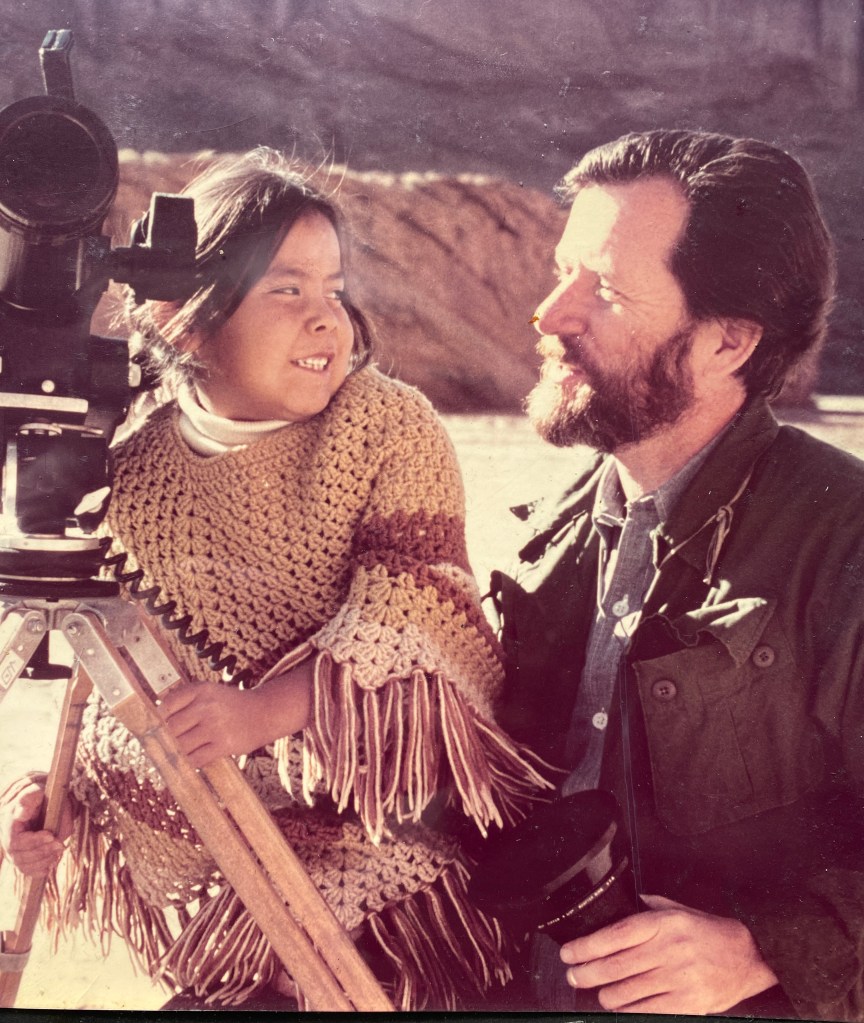
My uncle John Holmstrom (my father’s older brother who never had children) was a successful documentary filmmaker, photographer, and writer. John and I were close and shared many interests. Both John and my father are gone now, but their presence is alive through the material they left behind…material that is now in my hands.
My uncle John Holmstrom, documentarian extraordinaire.
“Get that girl a sibling!” says my dear friend Hether who sometimes helps me sort and catalog the collections. But there is no sibling to be had, so for the most part I am on my own.
In one sense I feel chosen; I am now the keeper, the steward, of these items. There is a banquet, a virtual feast of history, ideas, and words housed in these boxes and folders. The material is calling to me….” Tell these tales, share this rare worth, don’t let it dissolve into memory until no one is left to share.”
Yet, I also feel weighted down by the volume and scope of subjects too numerous to count, as well as the heft of responsibility. I worry that I can’t possibly do it all justice and won’t be able to find enough channels and means to share the stories. And once I share, will anyone be interested?
Overview of material (Part One)
Poster/Handbill Collection: Fourteen folios full of David Holmstrom’s poster assemblage. Starting in 1968 he gathered free posters and handbills on the streets of New York City and built his collection for the next fifty years. Featured cities include San Francisco, Chicago, Los Angeles, Las Vegas, and Santa Fe, New Mexico.
The handbill that started my dad’s fifty-year collection, handed to him on the streets of NYC in 1968. It’s an eclectic poster collection.
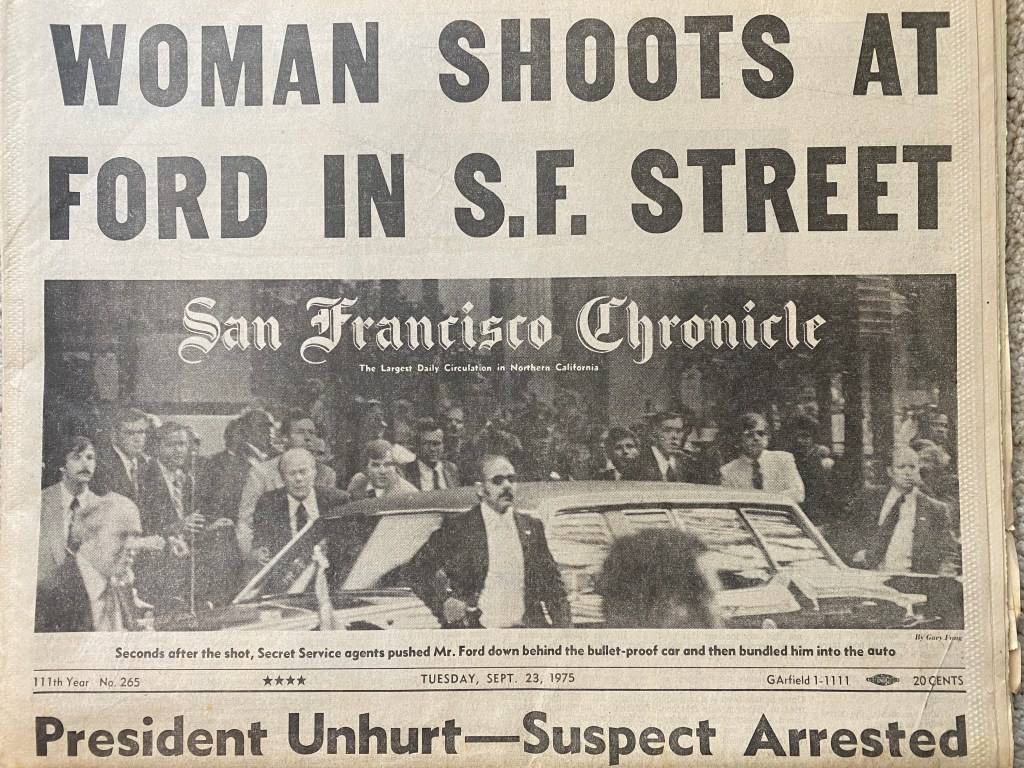
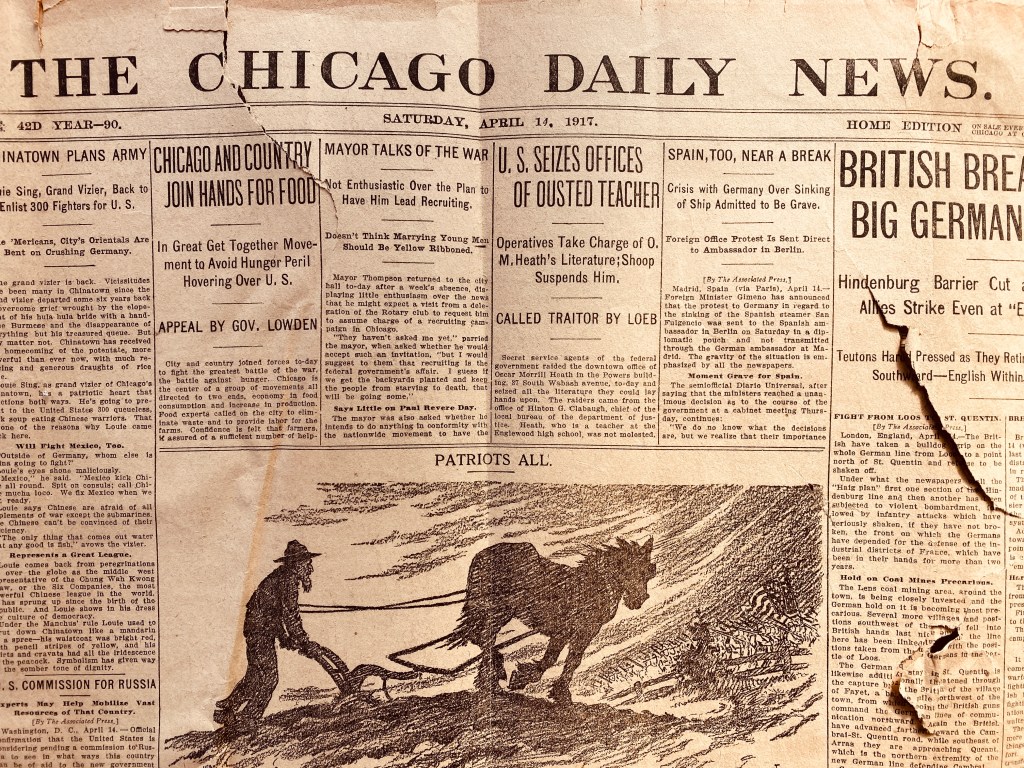
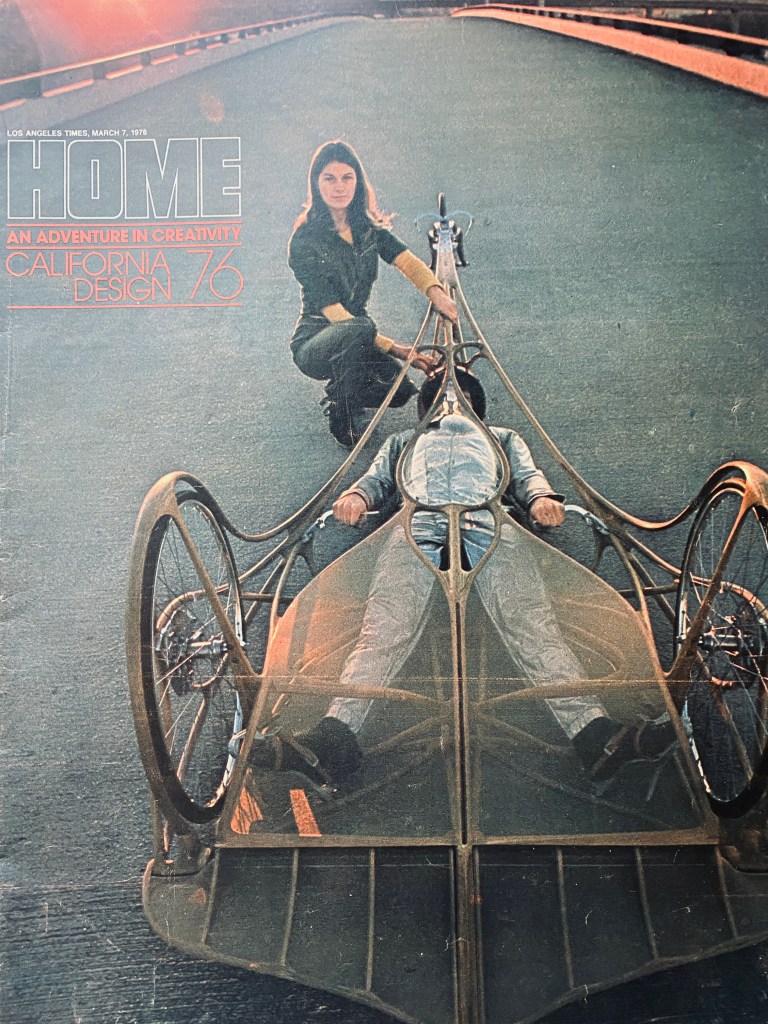
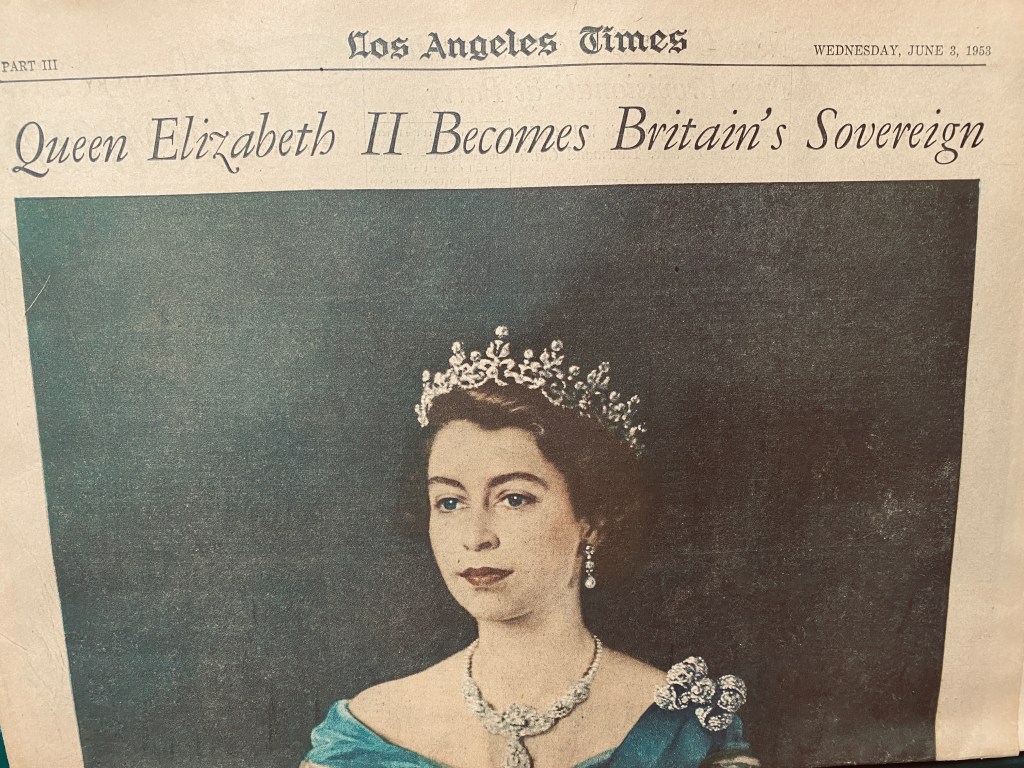
Newspaper/Magazine Collection: My dad’s tendency to buy newspapers on important news days and strategically save certain magazines might seem like hoarding if the subjects and headlines weren’t so compelling. Spanning well over a century (the earliest one I’ve found, so far, is from 1889) and featuring headlines like “Man Walks on Moon” and “Kennedy Shot!” the collection truly brings history alive.
The San Francisco Chronicle, Tues. Sept. 23, 1975The Chicago Daily News Sat. April 14, 1917Los Angeles Times California Design Supplement, March 7, 1976Los Angeles Times Wed. June 3, 1953
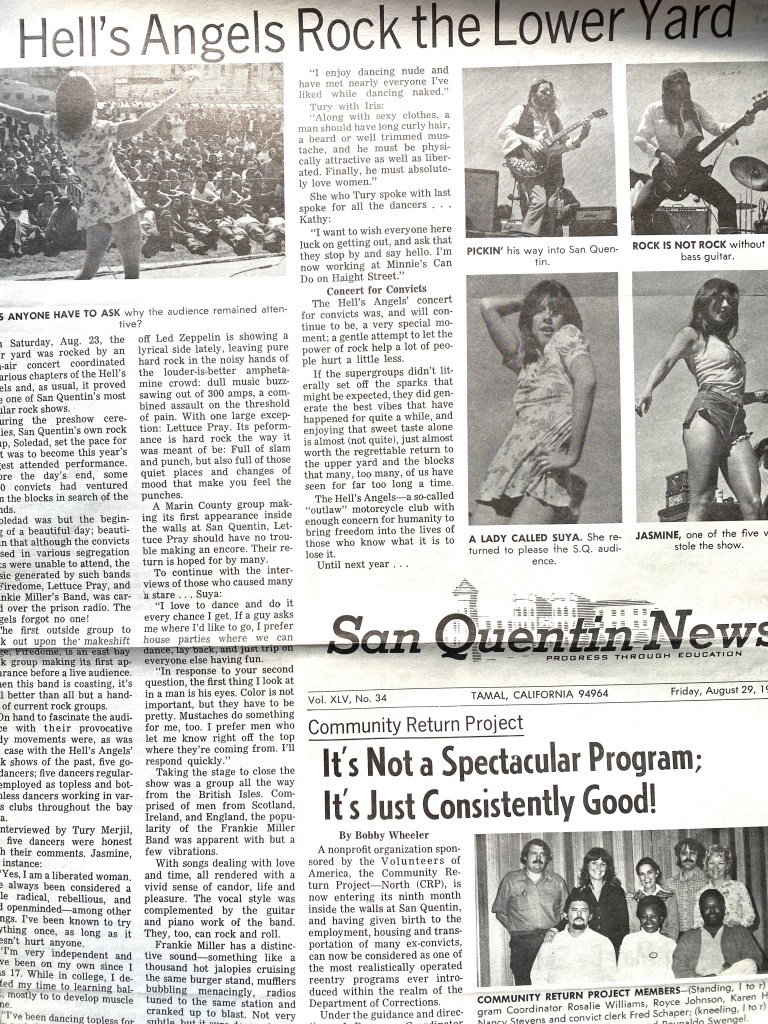
One sub-category of the newspaper/magazine collection includes three years of issues of the San Quentin News, published out of the notorious prison in the San Francisco Bay Area. David had an almost forty-year friendship with the newspaper’s editor (and inmate) Joe Morse. Joe was the longest-serving prisoner on California’s death row and once had a cell next to Charles Manson. Guess who also inherited the bulk of Joe’s lifetime correspondence with his wife and lawyers, and his three murder trial transcripts? My dad did.
San Quentin News, Friday August 29, 1975
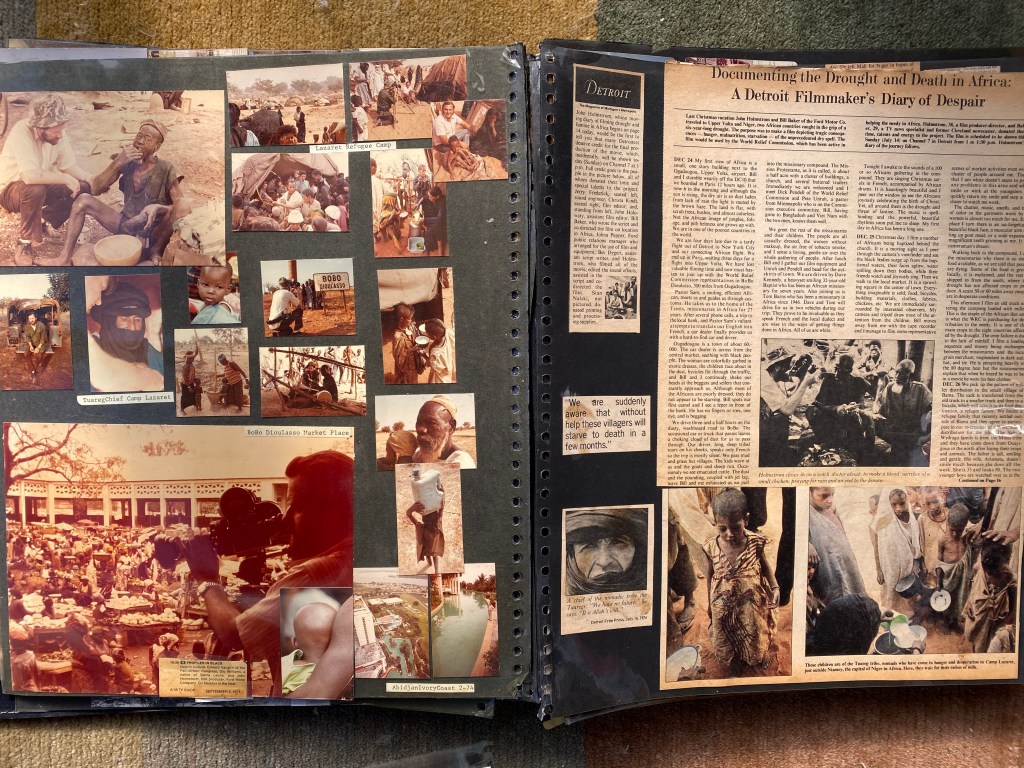
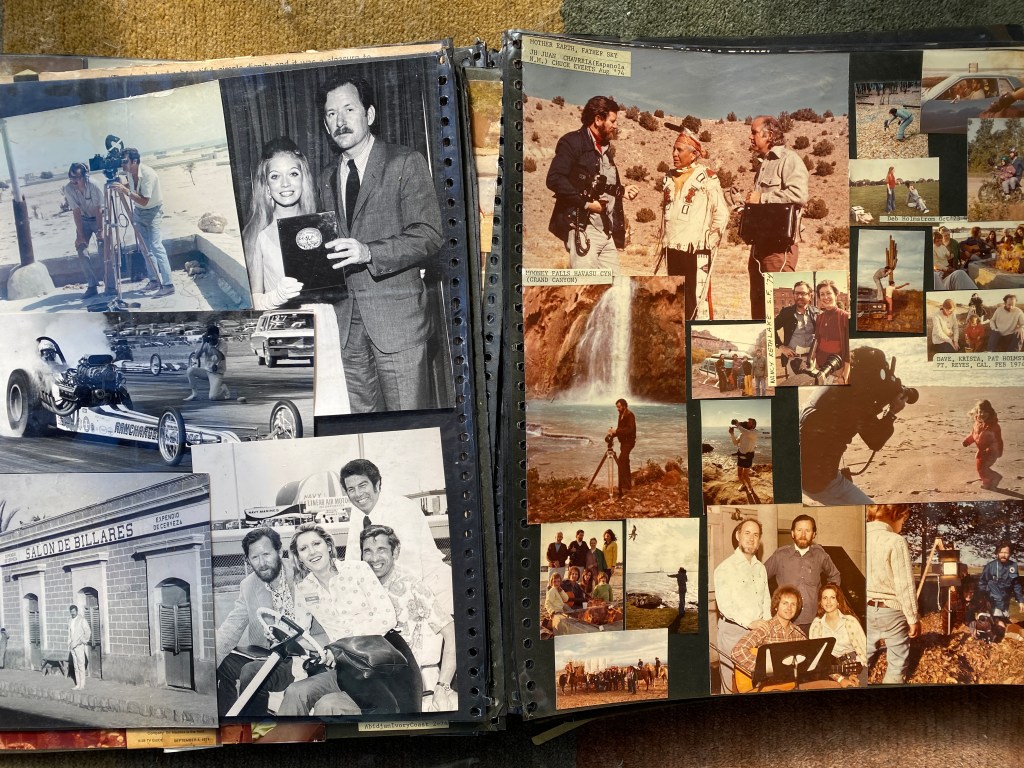
John Holmstrom’s Career Collection: My uncle John began making films for The Ford Motor Company in 1970. He traveled the world for decades, from the Middle East to Africa to Europe to Central America to New Zealand to Scandinavia telling stories through documentary filmmaking. His 1977 film Stockcar! was the first feature-length documentary released nationwide in U.S. movie theatres. I have a lot more to share about my uncle’s life and work.
Pages from John’s career scrapbooks. Photographs, published articles, awards. John was a gifted photographer.
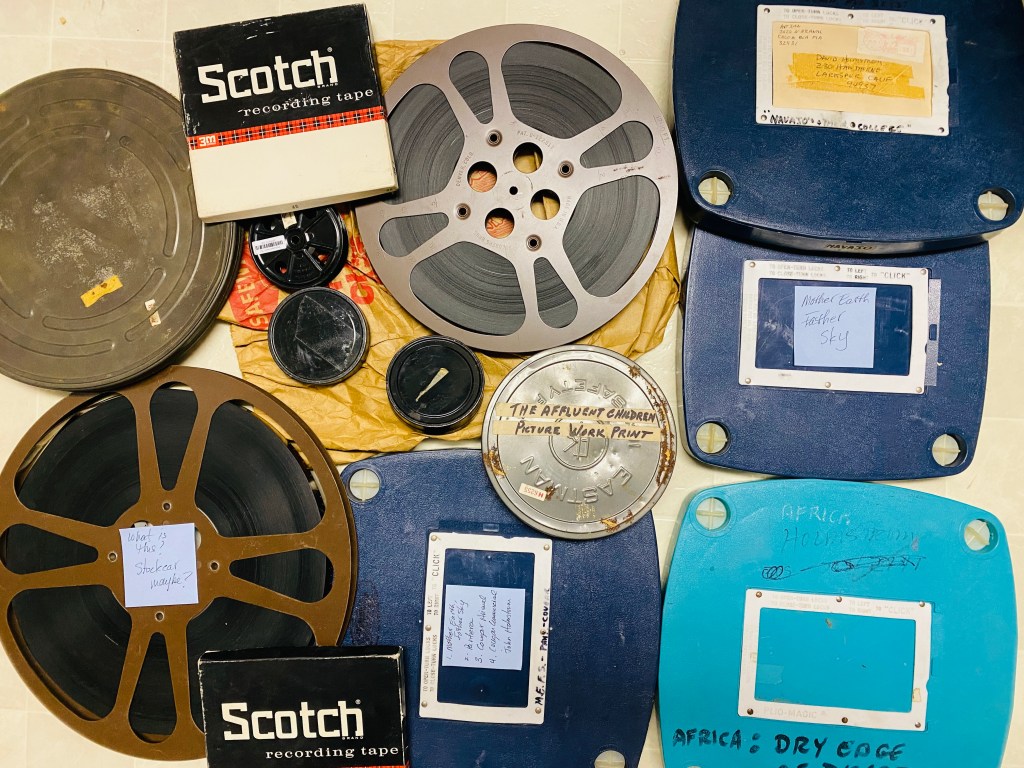
Film: John made films. David made films. John and David made films together. It’s all here. 8 mm, 16 mm, MiniDV, VHS tapes, and audio tapes. Film footage of my grandparent’s California wedding in 1932, film of my great-grandfather’s return visit to his native Sweden in the late 1920s, and footage of my great aunts in the Sahara also from the early 1930s. I’ll be sharing some of this archived film here.
I worry about storing this film in the midwest climate where I live but it seems to be holding up just fine.
Keep visiting this space because I’m going continue this tour of the archives. After all, there is a mind-bendingly diverse array of film footage, documents, items, publications, and books to tell you about.
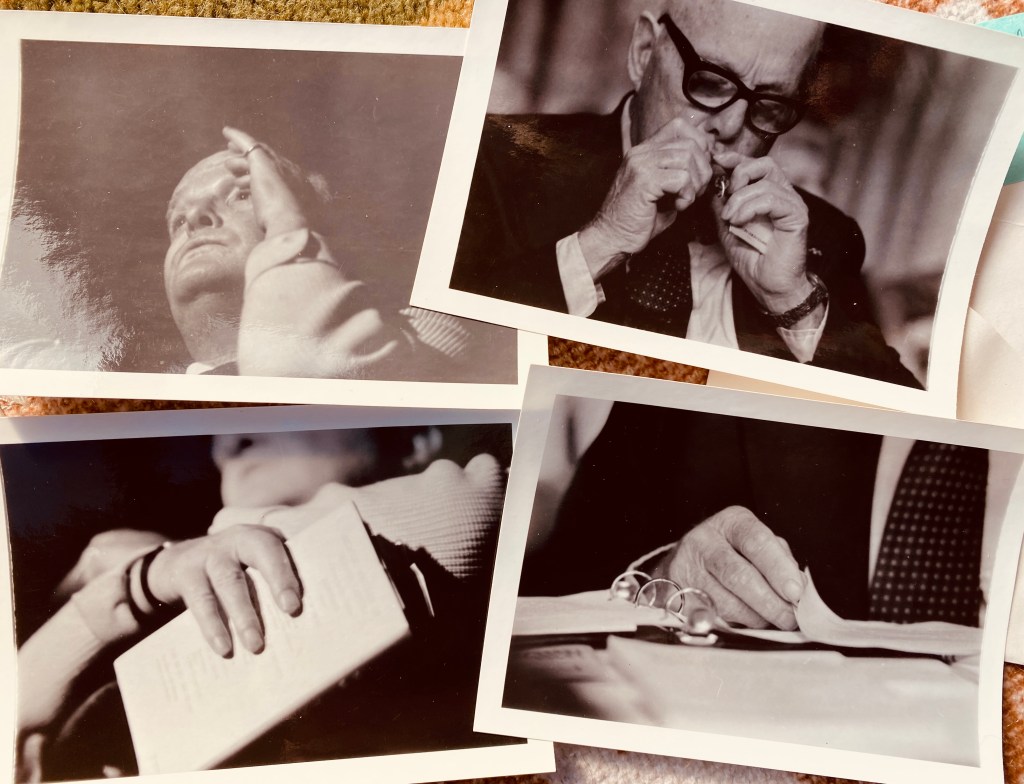
…and stay tuned for Material Abundance: Part Two which covers more of the materials collection. Projects include David Holmstrom’s photographs of Truman Capote’s hands, candid images of Angela Davis at her June 1972 trial in Berkeley, CA, and vintage Star Trek press kits.
Photographs my dad took of writer Truman Capote and his hands.
Believe me, there’s probably enough for a Part Three (or more).
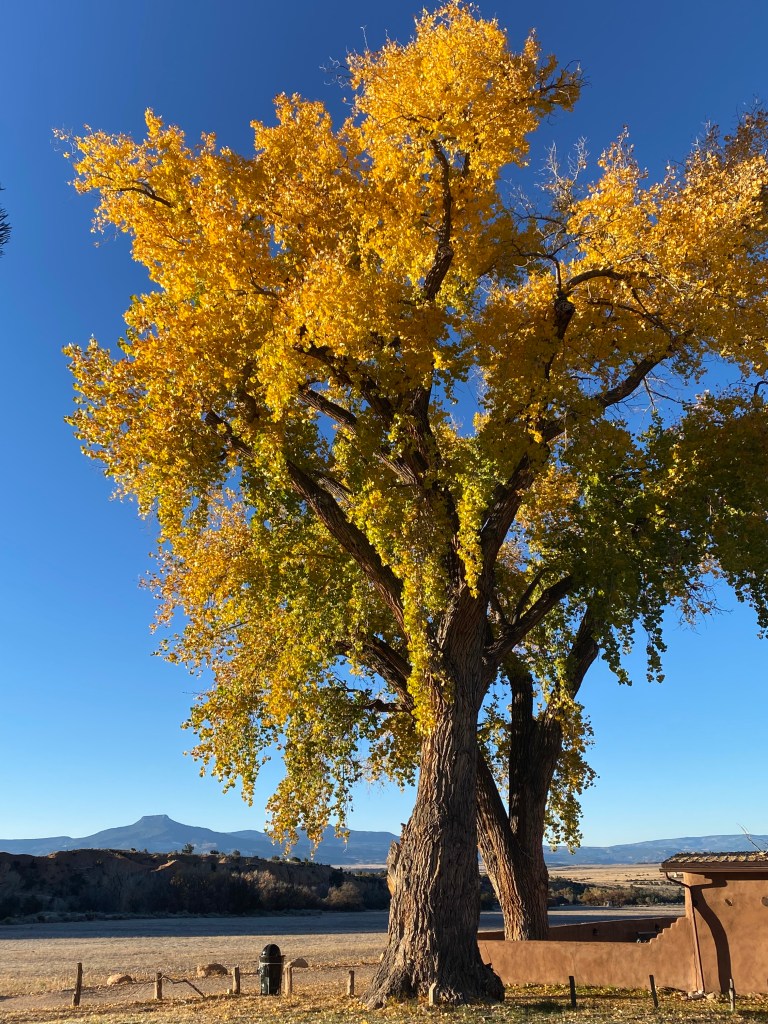
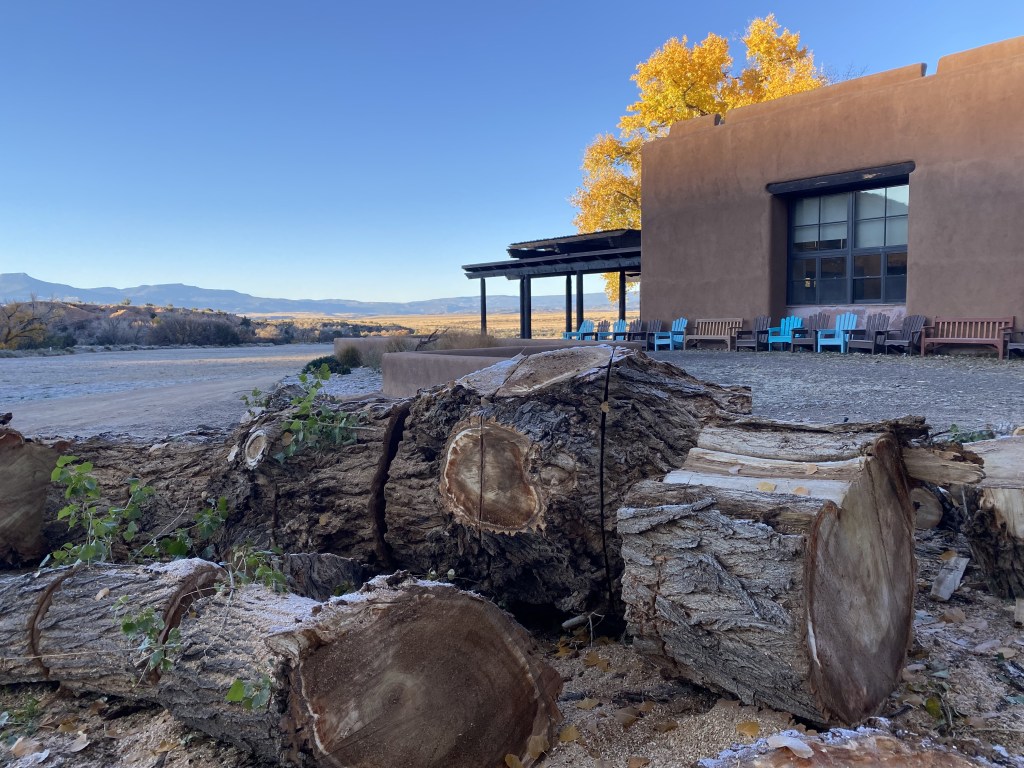
Two Cottonwoods stand sentry at Ghost Ranch with Mt. Perdernal in the background.
Shouldn’t there have been some sort of ceremony? A thoughtful circle of clasped hands or a joyful swirl of moving bodies, pouring forward gratitude for a life well lived, a job well done? If the animals had known this was coming would they have gathered at a distance and shook their heads in familiar disappointment at those ridiculous humans?
She must have been well over one-hundred hundred years old, perhaps two. I wonder if Georgia O’Keefe painted under the cover of her cottonwood branches…she was in the sight-line of Mt. Pedernal’s flattened peak, after all. How many artists have featured her in paintings and photographs? I’d like to see those works carefully laid down in a crooked line, a creative chain reaching across the open field facing her, ending at the base of the towering bluffs that reflected the sinking sun at the close of each day.
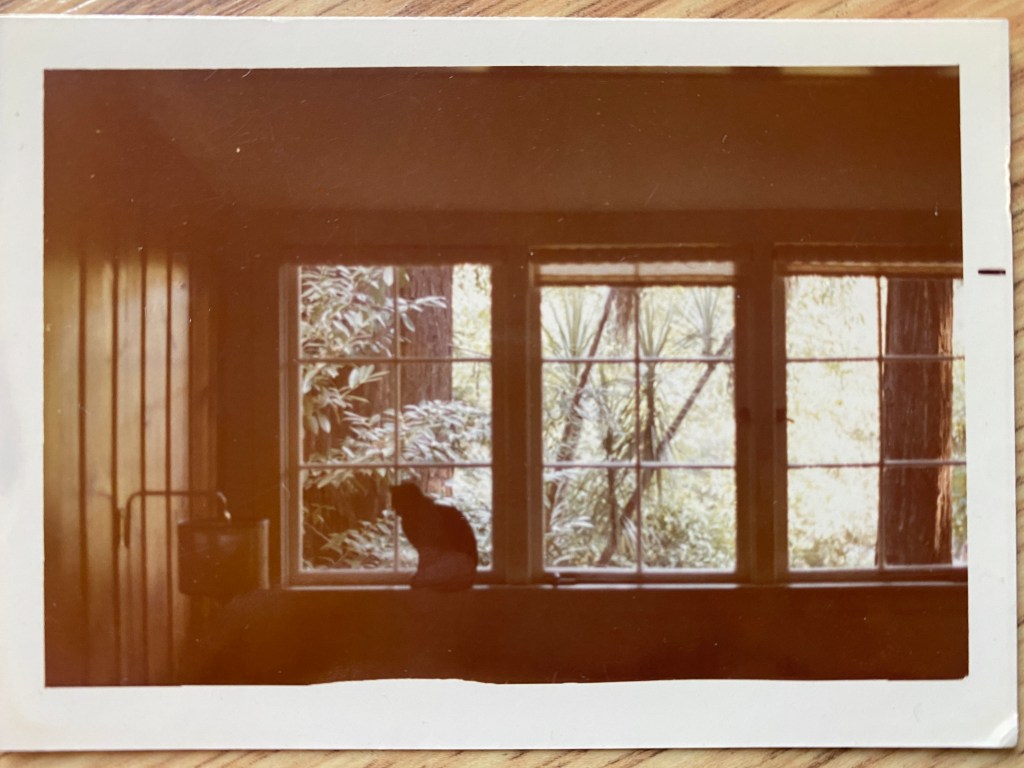
Trees have a way of following me, or maybe I follow trees. They have played supporting roles in my life from the beginning. My earliest memory is gazing up at a towering, heart-bursting green/brown column of glory reaching for the heavens as seen by my 3-year-old eyes. The tree was a redwood, silhouetted in a skylight cut into the roof of our living room which was nestled in a Marin County grove. Climbing the walnuts, oaks, and pines of my Northern California childhood was integral to my development and appreciation of the natural world.
The California Redwood grove surrounding our house in Marin Country, CA.
Instead of a conscious ceremony around her felling, there was a spontaneous eruption of clapping from a group of men gathered at a safe distance. I believe the assemblage was applauding the skill of the arborist who took great care to ensure that no one was hurt by the toppling of her gigantic trunk. But the cheering made my heart thud dully and I winced with the knowledge that this was a sacred moment, not one to be celebrated in jovial brotherhood.
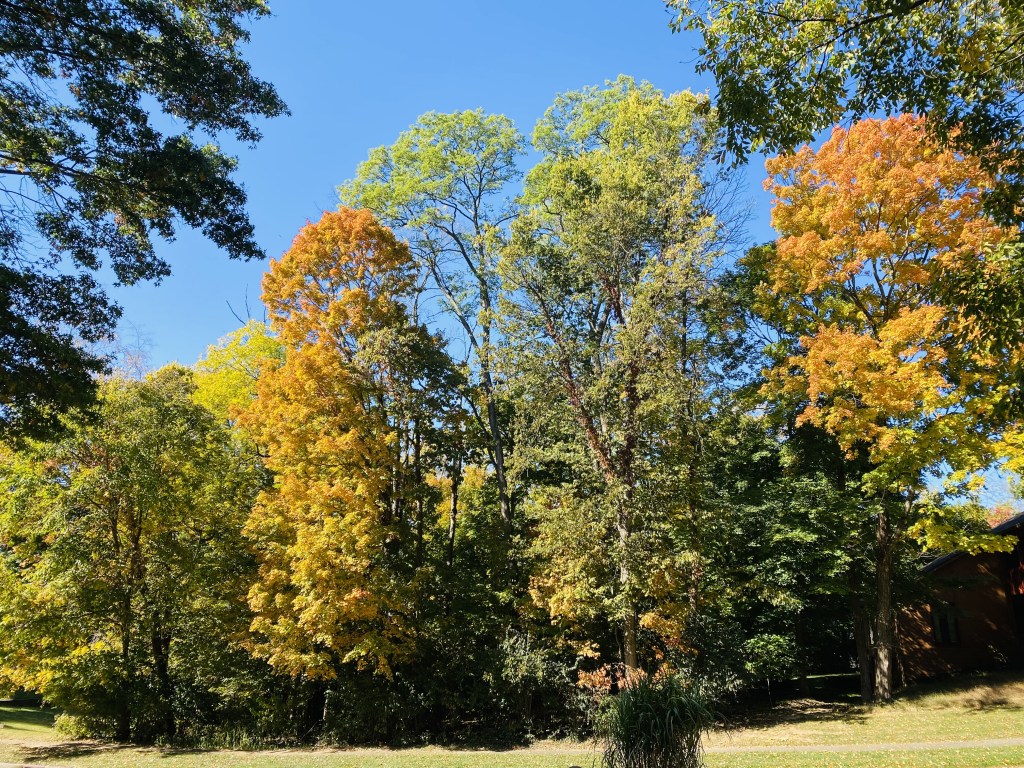
I named my first son after the enduring, stately California Cypress. Working to stay on good terms with the Pin Oaks and Sugar Maples surrounding my current home, I am well aware that the land we are borrowing for our house plot was at one point a vibrant, crowded Midwest hardwood forest. We are in debt to these life forms…humans need trees, desperately…for shelter, warmth, food, and oxygen.
Today’s across the street neighbors.
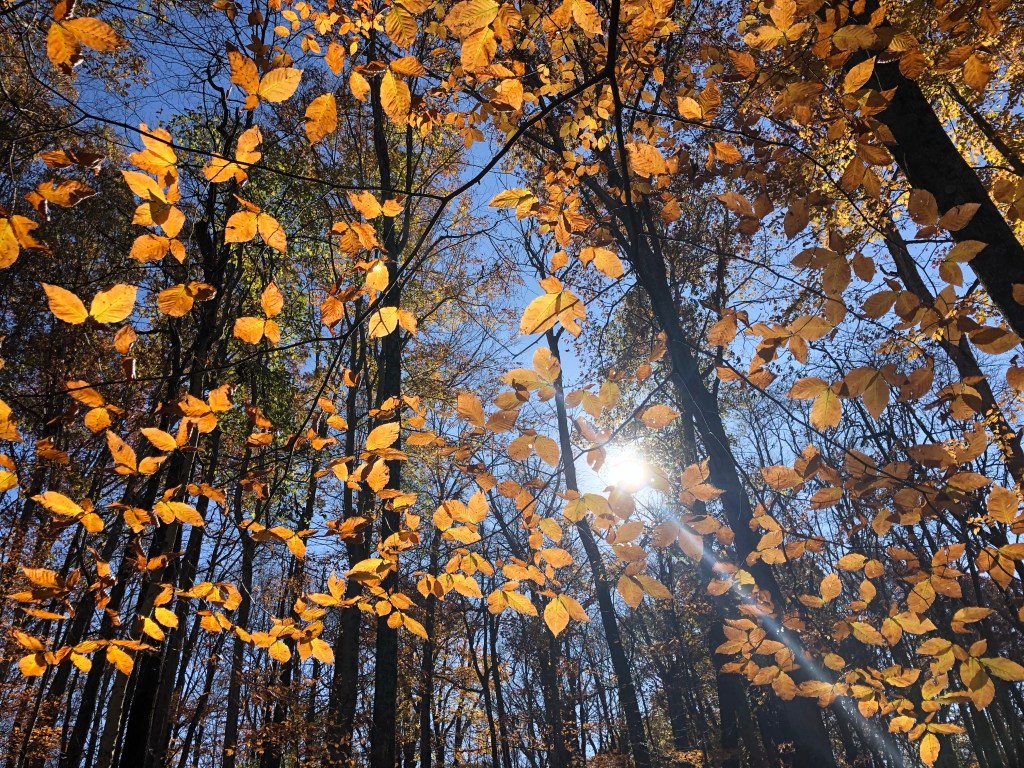
Let’s think of the thousands of seasons that passed while our Cottonwood grew and spread, seasons in which she played an integral part. The birds that needed every piece of her, the dust that was covered by her generous golden leaf snow, the countless insect lives and soil her roots held below. Children played in her shade, lovers kissed behind her trunk, and deer nibbled her bark. She survived the Ghost Ranch flood of 2015, and no doubt many other great forces of nature that have receded from present memory.
There she lays.
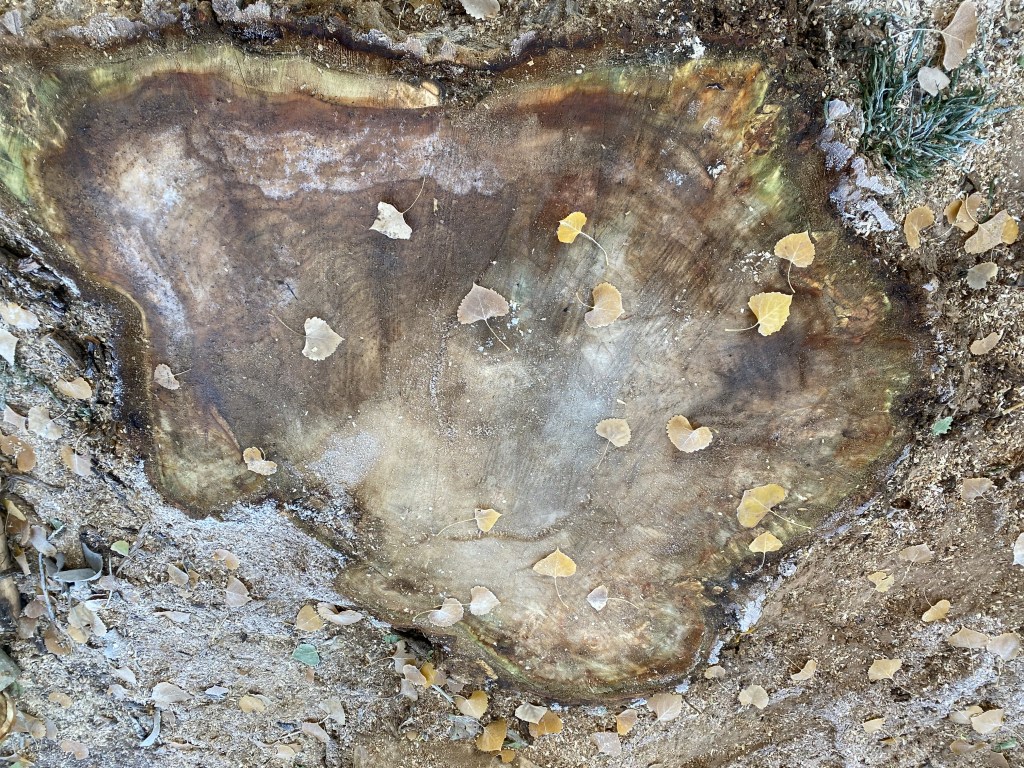
I walked to her the next morning, unconsciously drawn to her pieces lying on the ground. Formerly grand, useful, alive, now separate, scattered, stagnant. Perhaps she carried a disease, perhaps it was her time…after all every life turns on the wheel of experience and circumstance. Deadwood supports life in ways that live wood cannot. Her trunk was sliced low to the ground, creating a smooth tabletop and infinite constellations of sawdust blanketed the ground.
Infinite constellations of sawdust.
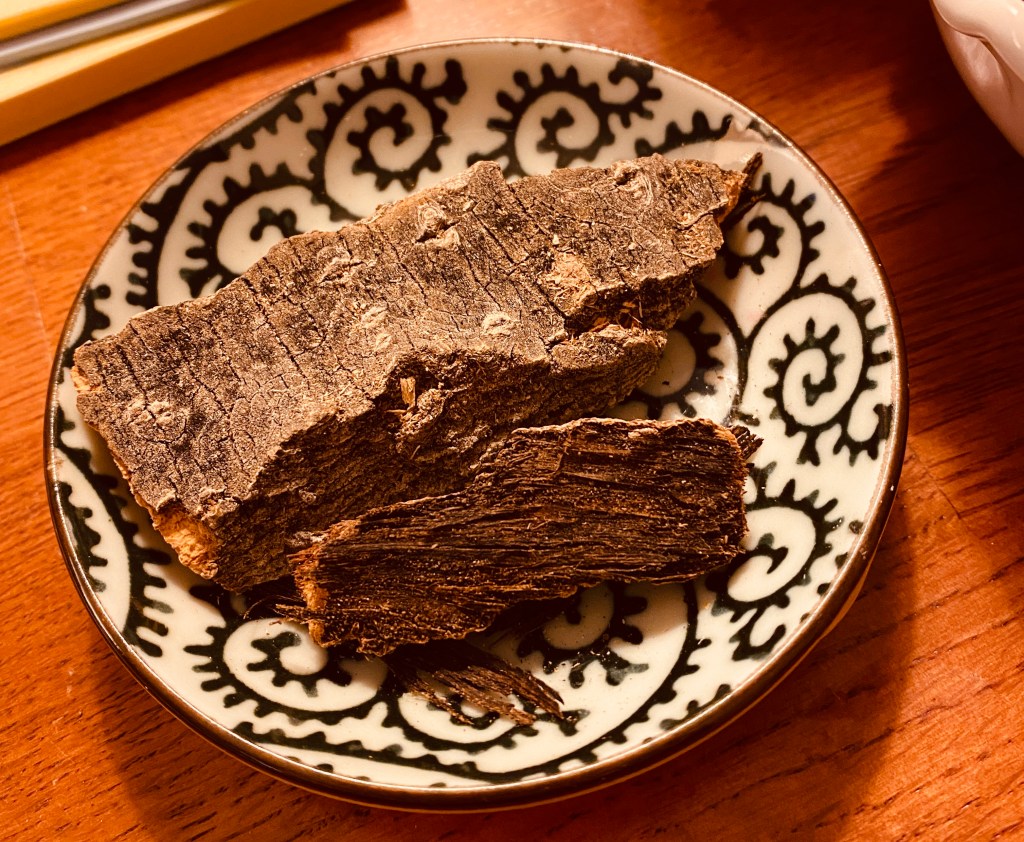
I couldn’t easily count her rings it didn’t feel right to stand on top of what was left of her. Leaning down, I took a nugget of bark and needle-sized damp splinters scattered across my open palm. I’ll carry this piece of her with me as I journey on, knowing she played her part, allowing her a ceremony in my pocket and my heart.
I’ve realized that I was born to be a writer—I practically had no choice in the matter. I wonder how many people feel that way.
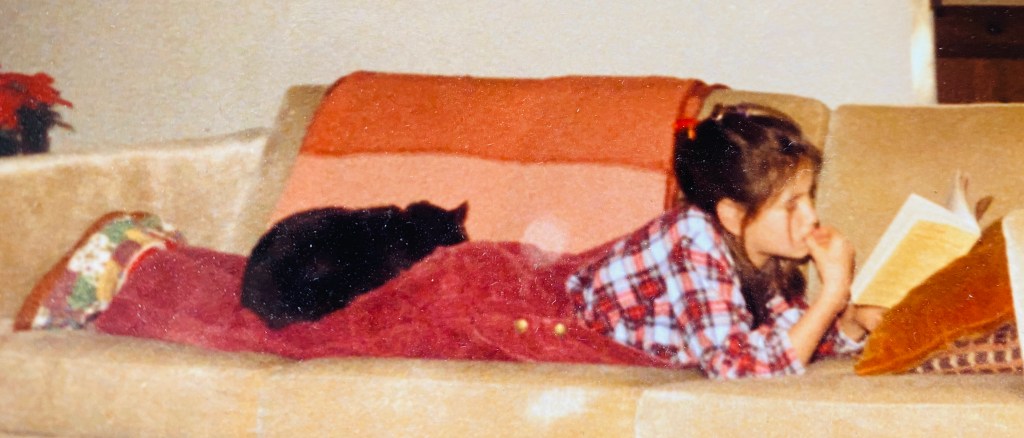
A sibling-free childhood growing up in a valley dominated by grapevines and oaks and overrun by characters almost begging to be written about. Combine this with countless solitary stretches spent reading books in trees, on couches, in self-constructed forts, and among tall swaying alfalfa grass.
After all, what was I to do with a mother who was a spiritual healer and a father who was both an artist and prolific writer? Attentive, interesting extended family and friends sent me postcards from foreign locales. I was exposed to arts and culture and all strata of privilege and lack. There was also a healthy sprinkling of danger and addiction tossed over the heap of my days.
And still, it took me forty-nine years to accept my fate and get down to my own writing.
For a long time, instead of my own singular words, I wrote for others, about others, and most of all because of others. Letters and missives, articles and marketing copy, white papers, content writing, and always, always…media alerts and press releases. Hours of collaboration on the manuscripts of friends, their resume cover letters, their scribes to agents, even lovers. I shared structural and editorial advice until I couldn’t see straight.
My years in the publishing industry sucked me dry of my own drive to write, and by the time I finally landed to work in the world of self-publishing (don’t get me started…although the latest hybrid model is interesting), I could take no more.
And still, it took me forty-nine years to accept my fate and get down to my own writing.
I climbed the tree of my life, branching in and out of joy and tragedy, hope and despair, purpose and sloth. Then, at age forty-nine, exhausted by circumstance and the muting of my own voice, I found myself at the literal deathbed of my (writer) father. I pledged to him, and myself to “write, really write.”
The unlocking was immediate, and the words and stories have been pouring forth ever since. If you’re interested in how I moved beyond writing because of others and began writing for me, and for the world, stay tuned.
After forty-nine years, I’m ready to cover a lot of ground.
You must be logged in to post a comment.