-
Two Girls at the Rose Parade, 40 Years Apart
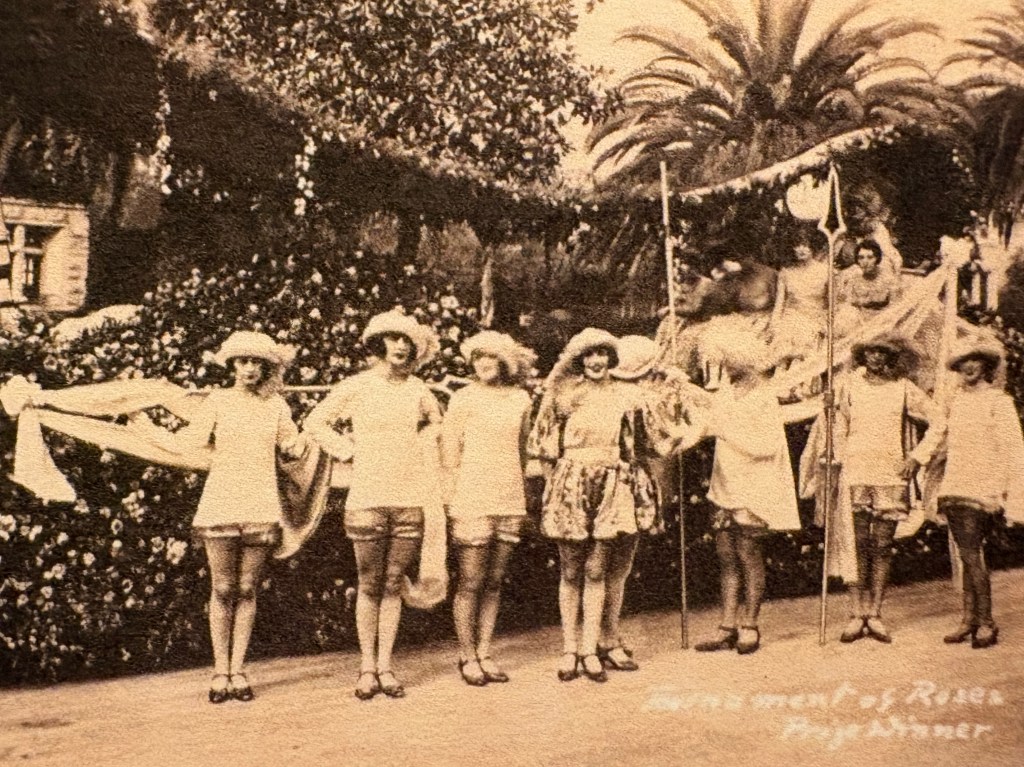
1926 Tournament of Roses “Prizewinners” pose, 50 and 100 years before our story takes place Pasadena, California, January 1, 1986, 5:15 AM:
I wake to the sound of my dad’s voice—hushed and gravely. “Kiddo, time to get up. We’ve got to get out there early so we can get seats. Melba has some cereal for you in the kitchen.”
Sleeping on the polished wood floor of my grandparents’ tidy Pasadena bungalow hasn’t exactly made for a restful night. Slowly, I roll over and open my eyes to the darkness of the living room. As I wiggle out of my sleeping bag, I remind myself that there’s a lot to look forward to. Today is the first day of 1986! I’m turning 15 in a few months! I get to watch the Rose Parade in person! And unlike my chilly, often rainy-in-the-winter hometown in Northern California, today will be sunny and warm. This is LA, after all. I head to the kitchen to eat Wheaties with my dynamic, turquoise-collecting, organ-playing step-grandmother, Melba.
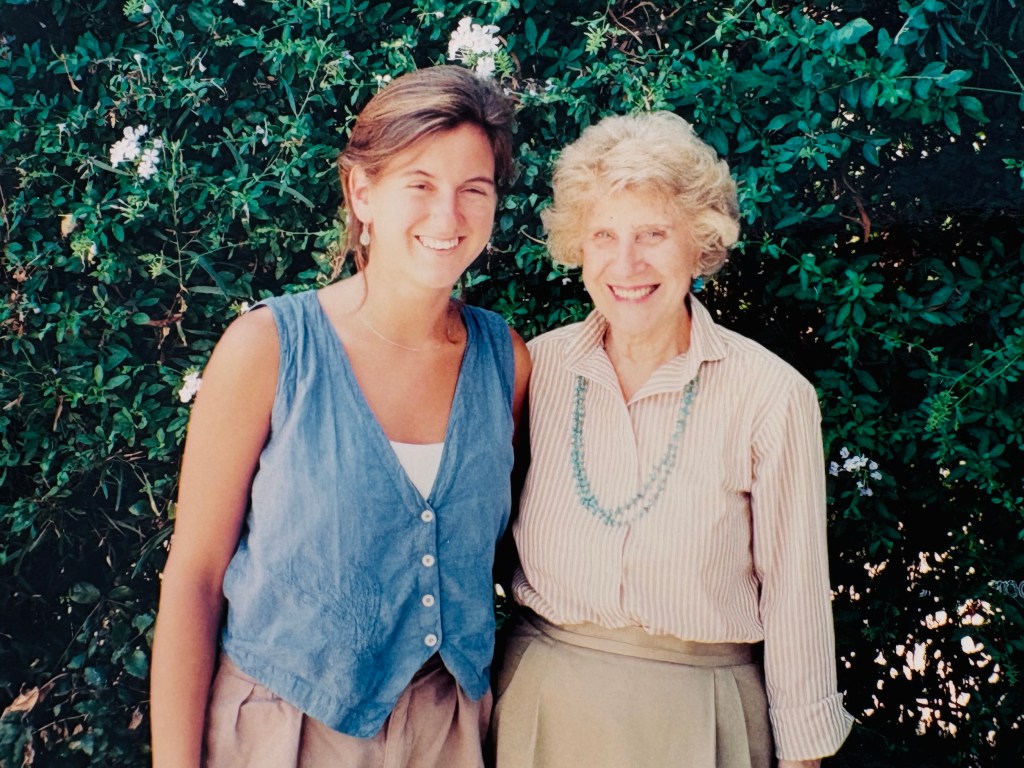
Me and Melba (a few years later, in 1995) Pasadena, California, January 1, 2026, 5:15 AM:
A few seconds after swiping the bar to silence my cell phone alarm, I roll over and gently nudge my 12-year-old daughter’s shoulder. “Time to wake up, Bunny…it’s the first day of 2026! Dad’s got a blueberry muffin for you in the kitchen.” Groaning, she shakes off my hand. She’s not easy to wake up on the best of days, but this morning I fear that the combination of the 3-hour change from our Midwest home, plus an ungodly wake-up time, might make it impossible. The driving rain outside doesn’t help either. Not fair, we’re in LA!
To claim our prepaid parking spot for the Rose Parade, we must arrive by 6 AM. The sun won’t rise for hours over the spacious modern house we are staying in—a house belonging to good friends who are out of town. And thanks to the unusually heavy rain sweeping across the Los Angeles basin, we won’t feel the sun on our skin for almost the entire day. With the promise of an early visit to Starbucks, our daughter finally rises. Blurry-eyed, mostly silent, yet eager to experience the parade. She refuses the muffin.
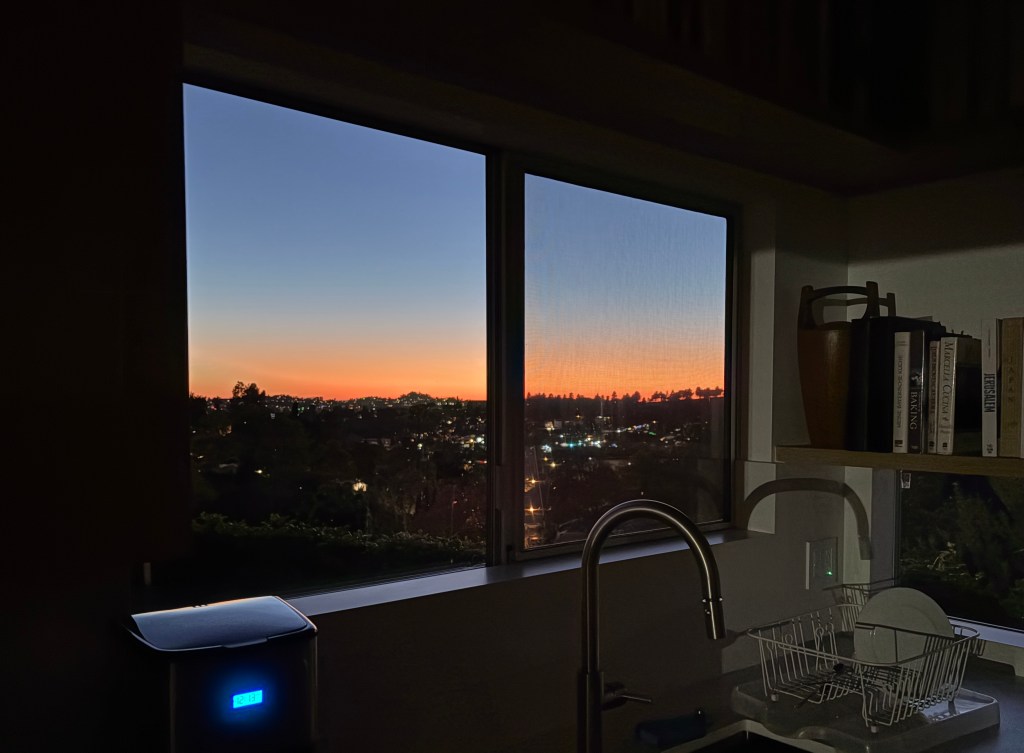
Los Angeles sunset as seen from the modern house’s kitchen 1986, 6:30 AM:
After piling into our blue Honda Accord, my dad steers the three of us (Mom, Dad, and me) the few miles from my grandparents’ house on Arden Drive to Colorado Street in downtown Pasadena. We are meeting our family friends, Kathy and Phil, at the parade. I am particularly fond of Kathy and Phil. The two of them live (child-free) in a house on a steep hillside above the Russian River, where banana slugs leave thin gossamer trails. However, they also once lived out of a school bus full of intricately handmade wooden cabinetry stocked with Mexican beads that was parked in our driveway for a month.
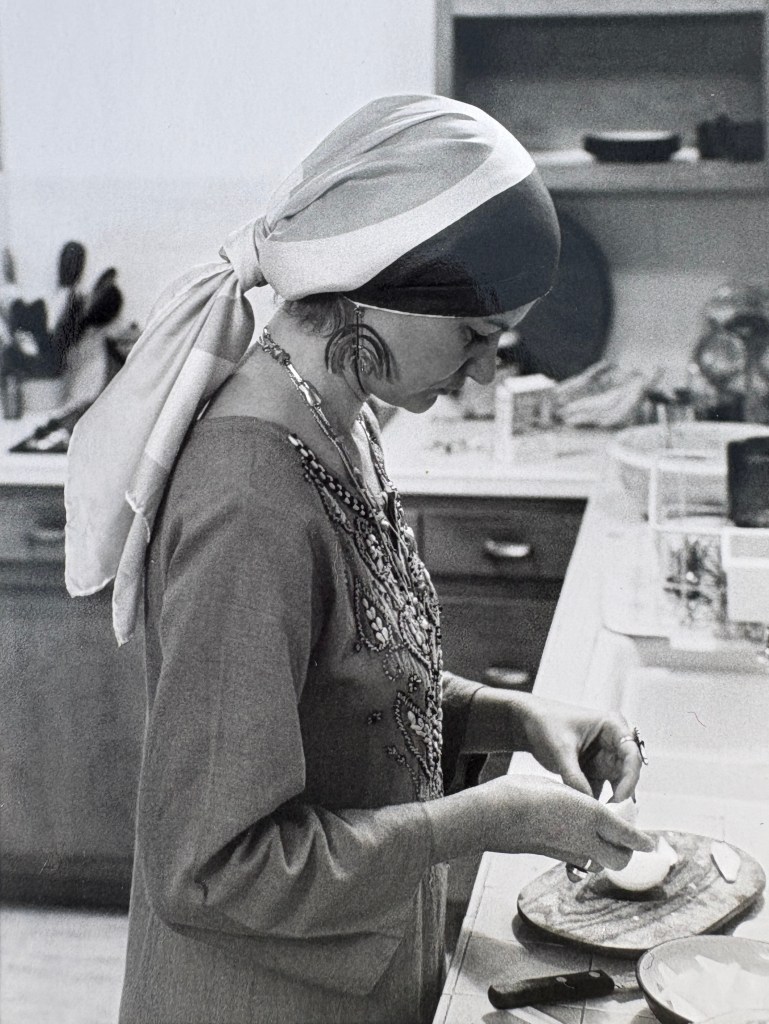
Kathy Toomire, 1982 It’s early enough that we easily find a parking space, but incredibly, many of the prime viewing spots along the parade route have already been claimed. My parents good-naturedly refuse to pay for “overpriced bleacher seats.” As our group stands on the curb discussing what to do, a truck suddenly pulls up next to us, and a burly guy leans out of the driver’s side window. “Hey, we got couches for rent,” he yells. “We’ll drop it off on the street right here and pick it up at the end of the parade. Thirty bucks!” The grownups look at each other, unsure about the offer. I quickly pipe up, “Oh please please please, that’ll be so fun!” Everyone agrees, and the five of us soon find ourselves sitting thigh-to-thigh on a fake leather couch, unexpectedly granted a rather cushy front-row seat to the 1986 Tournament of Roses Parade.
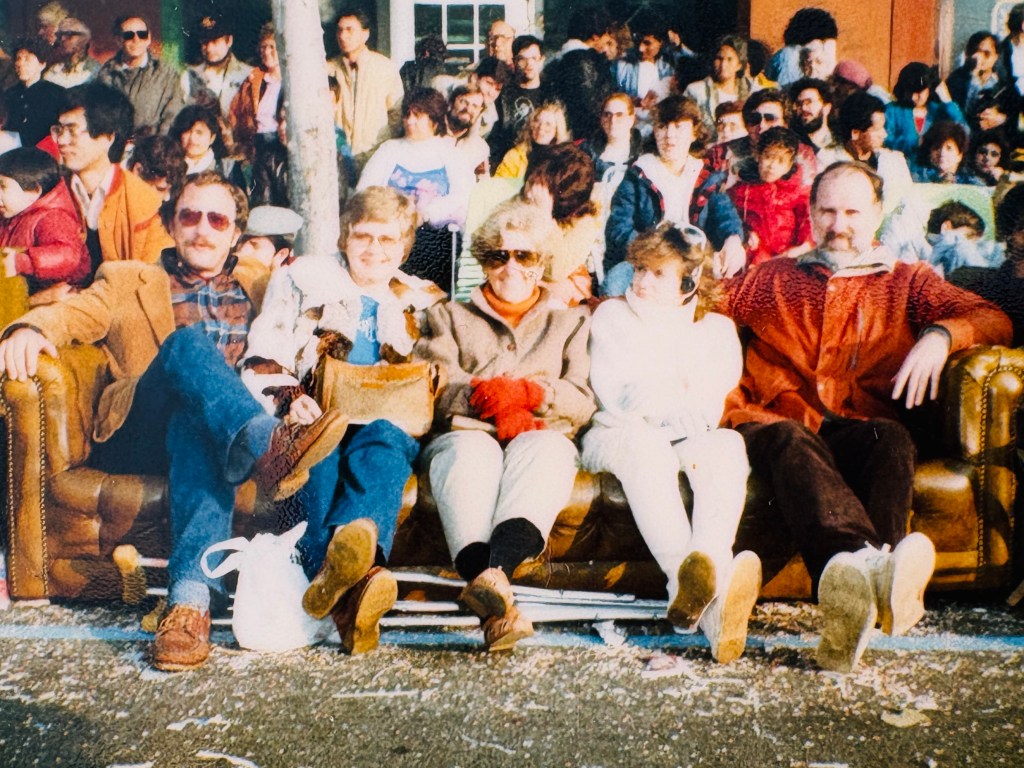
Seated on our parade-viewing couch, from left: Phil, Kathy, Mom Patricia, me, Dad David 2026, 6:30 AM:
“Two hot chai lattes with oat milk, one hot cocoa, and a croissant, please.” As one of the few cars in line, we quickly move along the Starbucks drive-through and are soon pulling into our assigned parking space, right on time. Our (uncovered) bleacher seats are only two blocks away, and the parade starts at 8. There’s only one hiccup—it’s raining. Hard.
We are prepared. The day prior, after trying four separate stores, we were finally able to purchase plastic rain ponchos (never mind that we now appear to be huge LA Rams fans). We are also equipped with plastic garbage bags to sit on, snacks, and a change of clothes. My husband, who is attending the Rose Bowl football game after the parade, has his own see-through bag packed complete with regulation-sized water bottles and a towel. We waive off the friendly lady weaving through the nearly flooded parking lot, offering Rose Parade seat cushions for $20 each.
Sitting in the dark, we listen to the rain drum on the car windows and sip our warm drinks. Our breath builds steam as we stretch out with the ease of the early hour. I’m grateful to share this cozy time with my daughter and husband. These quiet moments with our girl are fleeting—she’ll turn into a teenager this year. I can feel her consciously shaping her own identity apart from us, no longer attached to my hip or sharing every detail of her life with me the way she once did. She got her first phone for Christmas this year. Turning to ask her something, I see that she’s stretched out across the backseat, her head resting on a rolled-up sweatshirt, sleeping soundly.
1986, 8:00 AM:
The Pasadena City College band marches by, mere inches from our crossed ankles, the blaring horns and drums making my head throb. “Did I ever tell you I went to Pasadena City College before I went to Principia?” asks my Dad. I roll my eyes (a common occurrence), “Yes, Dad, many times. I know you played baseball for them, too.”
He clears his throat, then his thoughtful gaze shifts to mine. “What would you think about taking the Honda over to the Rose Bowl parking lot tomorrow? If it’s not too crowded, you could practice the stick shift a bit.” My eyes grow wide. “Really?” I ask incredulously, even though I know he wouldn’t ask if he didn’t mean it. My dad never goes back on his word.
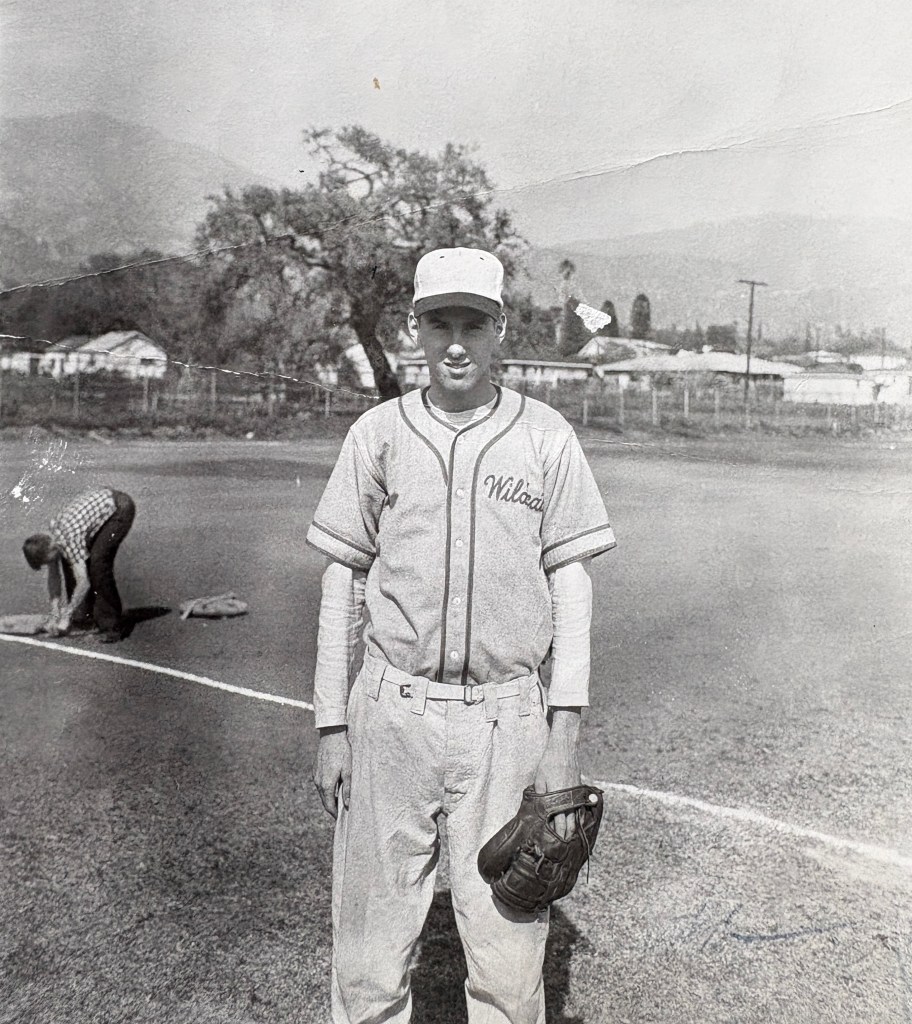
My father the pitcher, Monrovia, CA 1956. His greatest claim to fame was not his sucessful career as a journalist,
it was the time he once pitched a no-hitter.This Grand Marshal of this year’s 133rd Rose Parade is Mickey Mouse, tying in perfectly with the theme: A Celebration of Laughter. I’ve been to Disneyland once, when I was three, but not since. My dad is a freelance writer, and our vacations are almost always centered around visiting family or camping. I know better than to ask for a trip to Disney—there isn’t a budget for that.
Mom, Dad, Kathy, and Phil point out the flower-covered floats, plentiful prancing horses, and celebrities. The sun is out and beginning to warm the excited parade crowd. After a while, I lean against my mom, close my eyes, and turn up the volume on my Walkman. The parade is entertaining, but I’m tired. I’ve never been much of a morning person. Right now, I’d rather be at home, calling my friends on the phone and listening to Adam Ant.
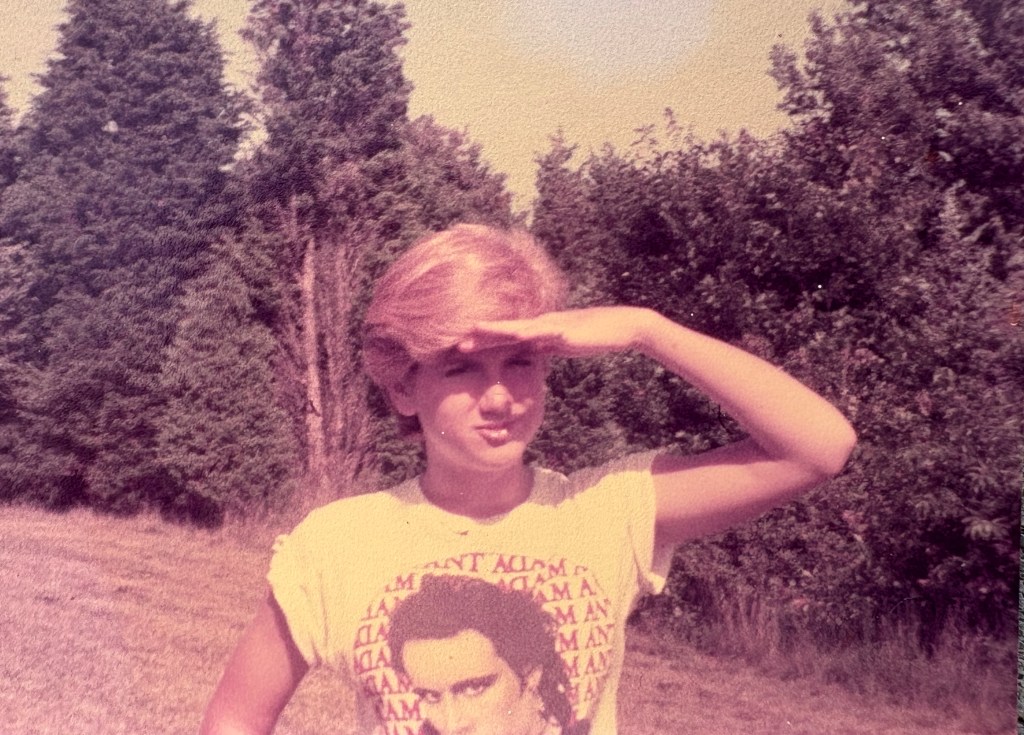
Adam Ant fan, 1984 2026, 8:00 AM:
Still in the car, we’ve been waiting for a break in the rain, but it hasn’t arrived yet. Parade start-time is approaching, so we pull on our ponchos, ready our bags, and step out into the downpour. At least it’s daylight now. Suddenly the festive atmosphere surrounds us. I get the sense that this is about as friendly a scene as you’ll find in Southern California.
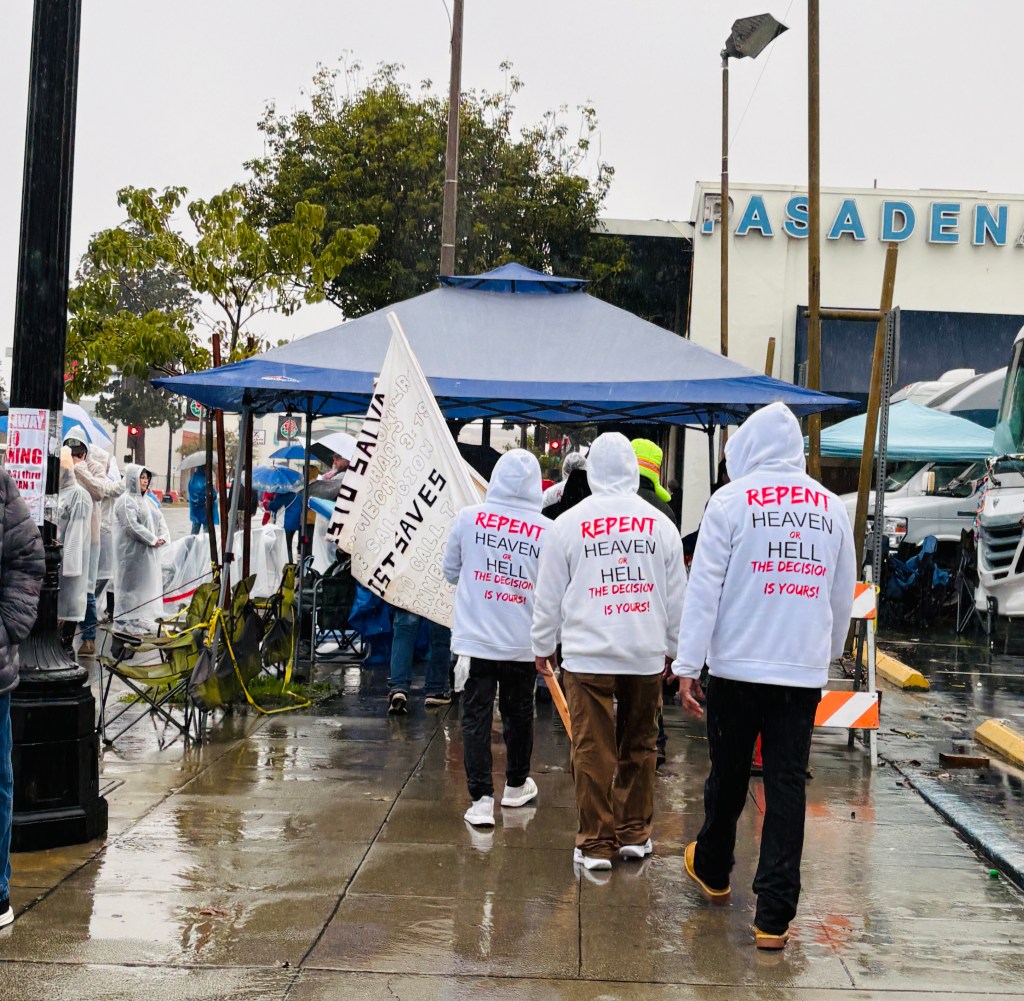
We walk the two blocks to our assigned bleacher seats, avoiding puddles and trailing behind a group of young Latino men yelling into a microphone about the importance of fearing Jesus (what would the all-loving Jesus say about that advice, I can’t help but wonder).
Above us, a large squawking flock of Pasadena parrots flies by, a welcome distraction from the rain. This flock is much higher in number than the flock that used to fly above our San Francisco cottage.

Look closely to see the parrott fly-by We’re up in the 20th row of metal bleachers ($336 for three seats, parking, and one program). The garbage bags we brought have come in handy, and we place them across the soaked seat. Behind us, a young girl is on the lookout for her dad, who plays the clarinet in one of the marching bands. Directly in front of us is a couple sharing our love for the Indiana Hoosiers, playing in the Rose Bowl football game in just a few hours for the first time since 1968. How wonderfully strange it is to travel across the country only to be surrounded by people connected to our own Midwest hometown and team.
Around us, the damp crowd stirs as the first rose-bedecked motorcycles cruise by. The 137th Rose Parade is starting! One clever, vibrant float after another sails by, horses of every breed and color (from the Budweiser Clydesdales to mini therapy horses from Calabasas) and the most impressive, inspiring marching bands we’ve ever seen in a parade.
One band, the Allen Eagle Escadrilles from Allen, TX, includes so many members (600) that they create a royal blue sea stretching down the road as far as the eye can see.
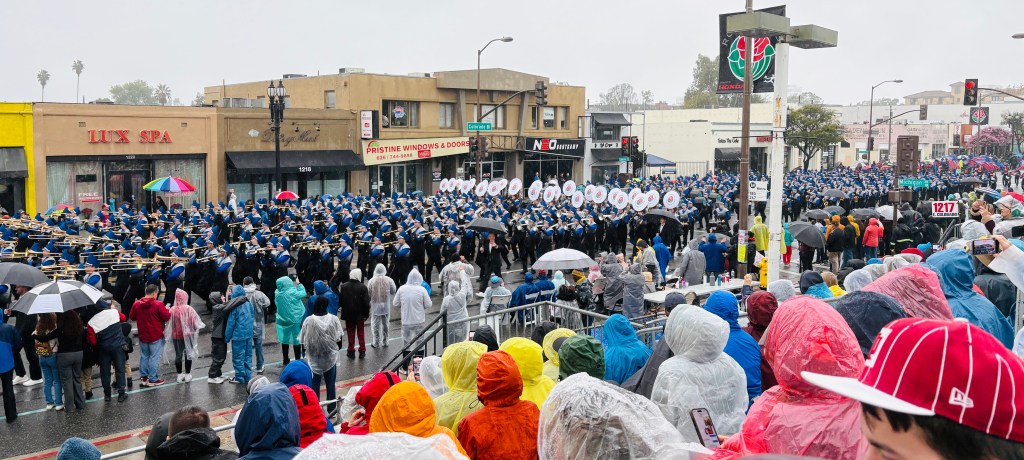
The Allan Eagle Escadrilles from Allen, TX take over Colorado Street My daughter is particularly impressed by the perpetually waving lovely 2026 Rose Court, the elephants on the San Diego Zoo Safari Park (announcing the park’s new Elephant Valley attraction), and the stack of hot syrupy pancakes featured on the City of Sierra Madre float.
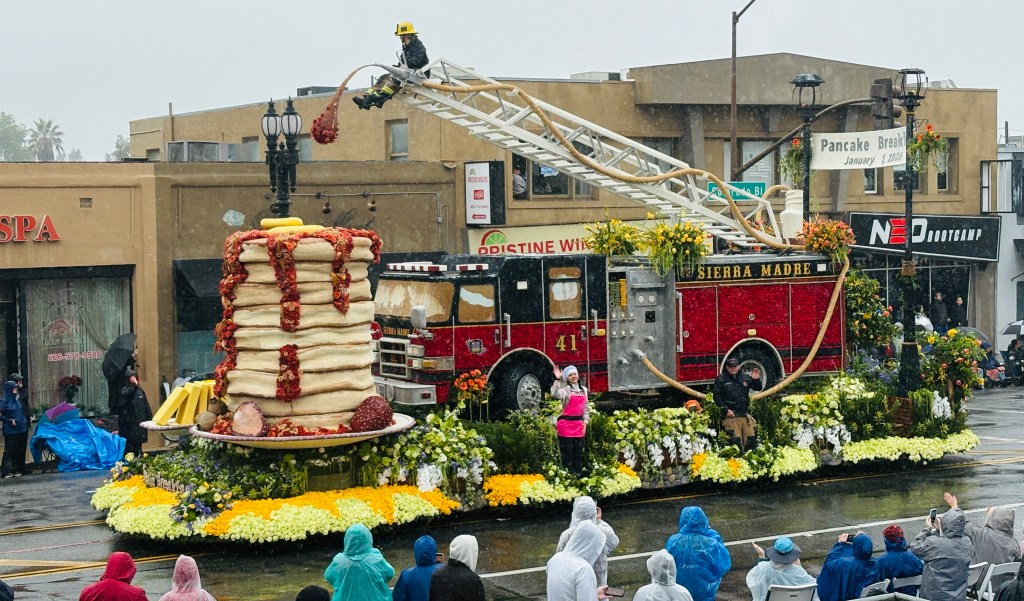
City of Sierra Madre float My husband and I enjoy the gorgeous City of San Francisco float (our former hometown), the Star Trek 60 “Space for Everybody” float featuring a grinning George Takei and Tig Notaro, Apple TV+’s Shrinking float (one of our favorite shows, shot in Pasadena—where are Harrison Ford and Jason Segal and Jessica Williams??), and a glimpse of the great Earvin “Magic” Johnson, the 2026 Pasadena Tournament of Roses Grand Marshal, still going strong at 66 years old.
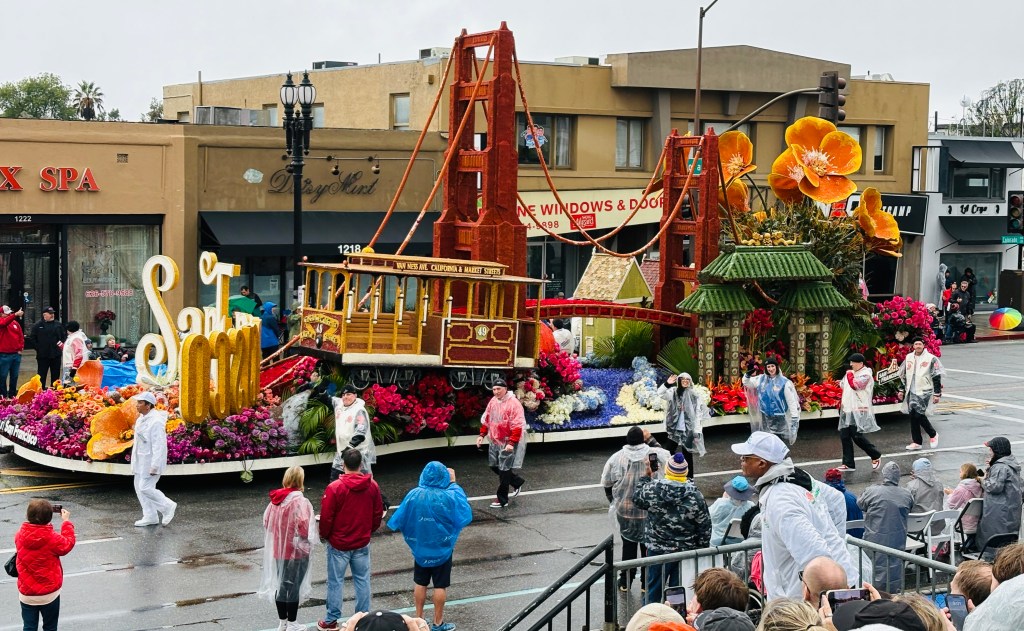
City of San Francisco float 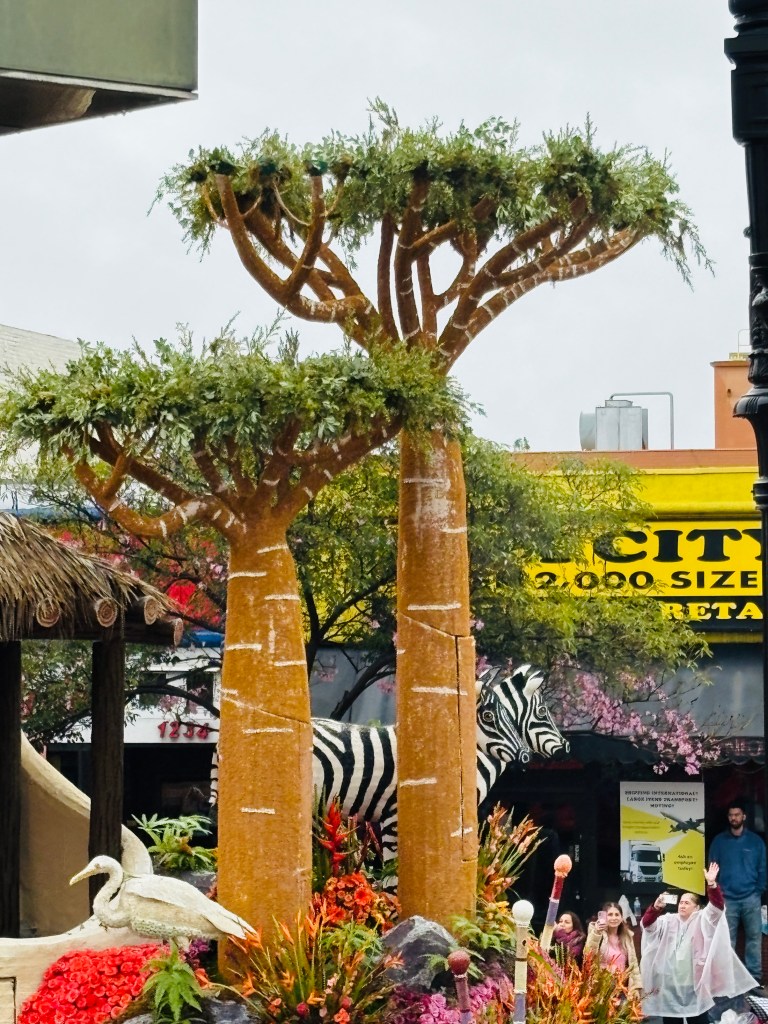
Impressive Baobab trees on the San Diego Zoo Wildlife Alliance float 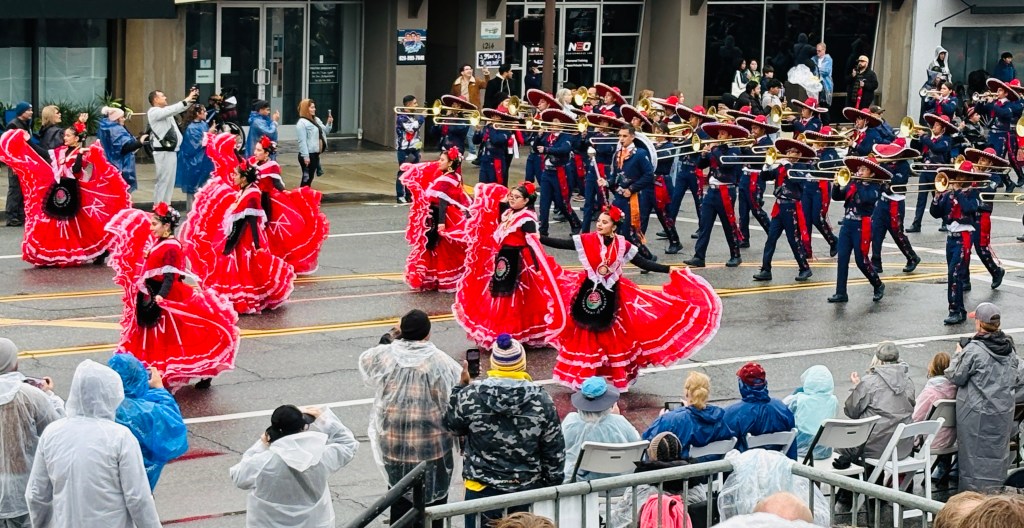
Delfines Marching Band from Xalapa, Veracruz, Mexico 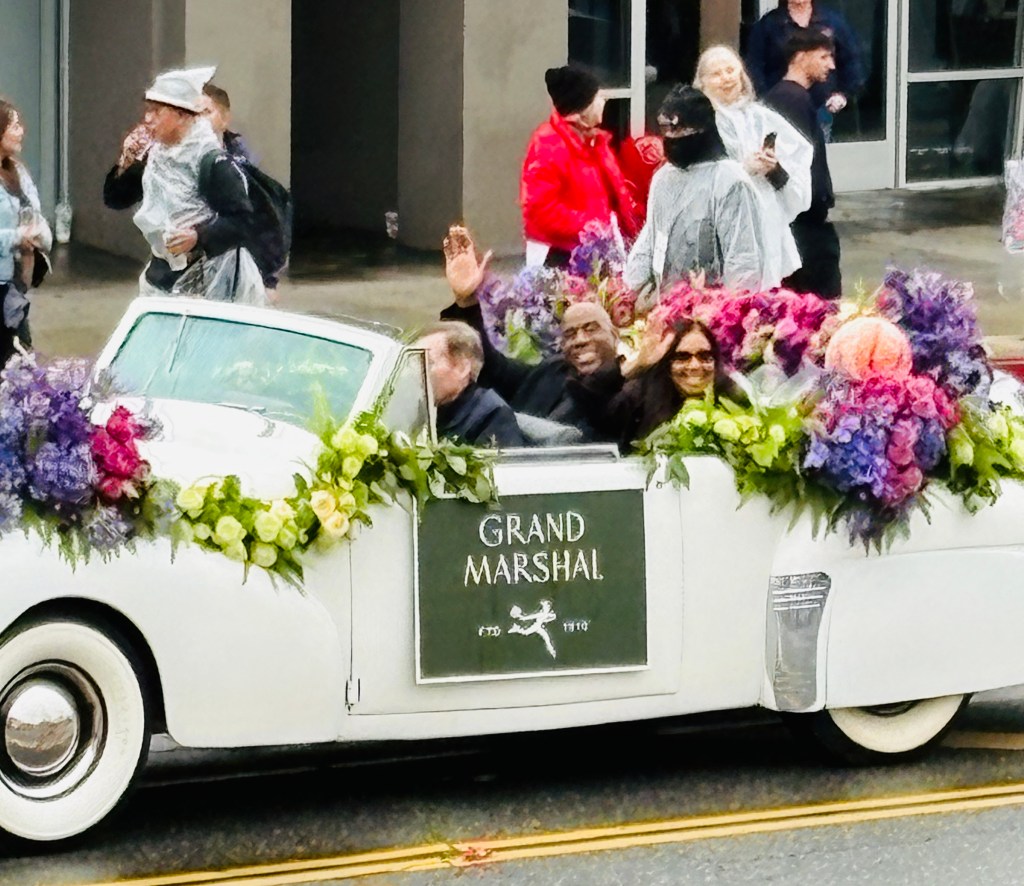
Parade Marshal Earvin “Magic” Johnson, basketball legend.
His hand is the right size for effective waving.Through the rain, the brave parade participants wave, drive, clop, and march. Under her poncho, my daughter texts her friend, “Can’t talk now, I’m at the Rose Parade.”
1986, Noon:
Walking up the low concrete steps leading into my grandparents’ home, the five of us feel hungry, tired, and overstimulated. My step-grandmother Melba has made us soup and sandwiches, and we eat together in her immaculate kitchen, bright Los Angeles sunshine reflecting off the yellow walls. Phil regales us with stories of his wayward youth in San Diego. Across the room, my towering Swedish Grandfather winks at me, his kind blue eyes crinkling at the corners.
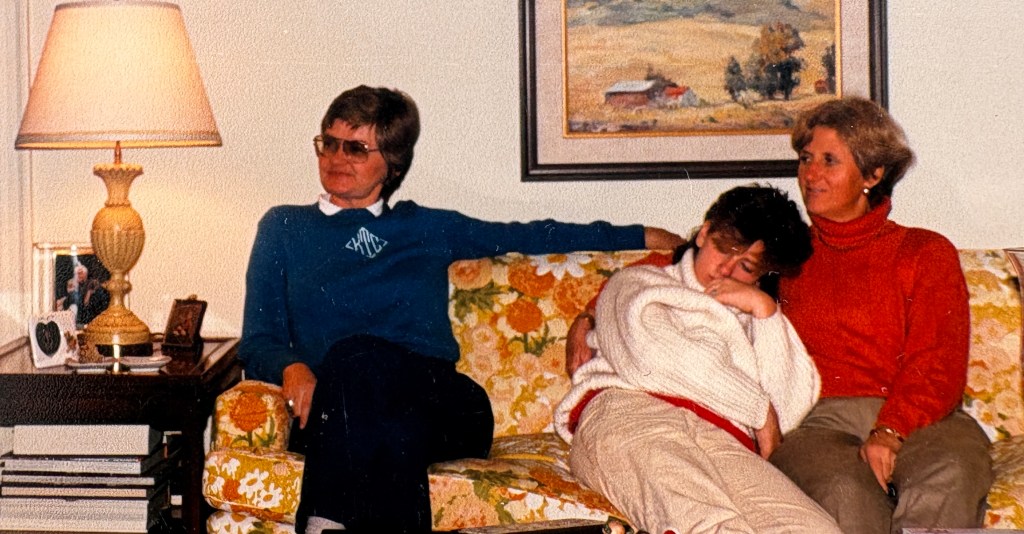
Afterward, collapsing on yet another couch, I lean heavily against my mom. I might be fourteen, but in many ways I’m still her little girl.
2026, Noon:
The parade has ended, and for the most part, so has the rain. Walking carefully down the bleachers, we make our way to the street, where we part ways with my husband. Father and daughter hug tightly, and we tell him to enjoy an experience he has been dreaming about since he was a child, his Indiana University team playing in the Rose Bowl. (Not exactly a) spoiler alert—they won.
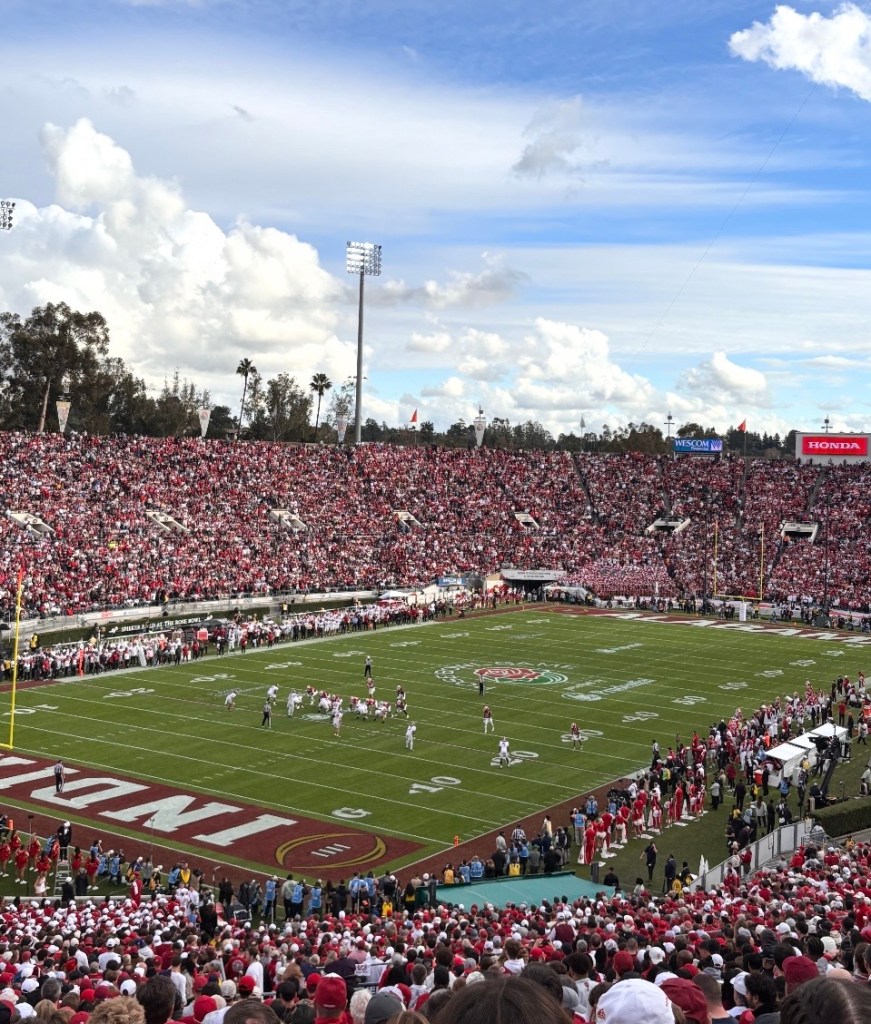
The Indiana Hoosiers’s second appearance at the Rose Bowl since 1967
Photo Credit: Tom StrykerWeaving through the parade stragglers, we head in the direction of our car. The two of us are hungry, tired, and overstimulated. While her dad walks down Colorado to catch the shuttle to the Alabama vs Indiana Rose Bowl Football game, my daughter and I head to Glendale where we have tickets to see the final episode of Stranger Things on the big screen.

A few hours later, reacting with emotion to her favorite character’s shocking demise, my daughter leans heavily against me in the dark theatre. She might be twelve, but in many ways she’s still my little girl.
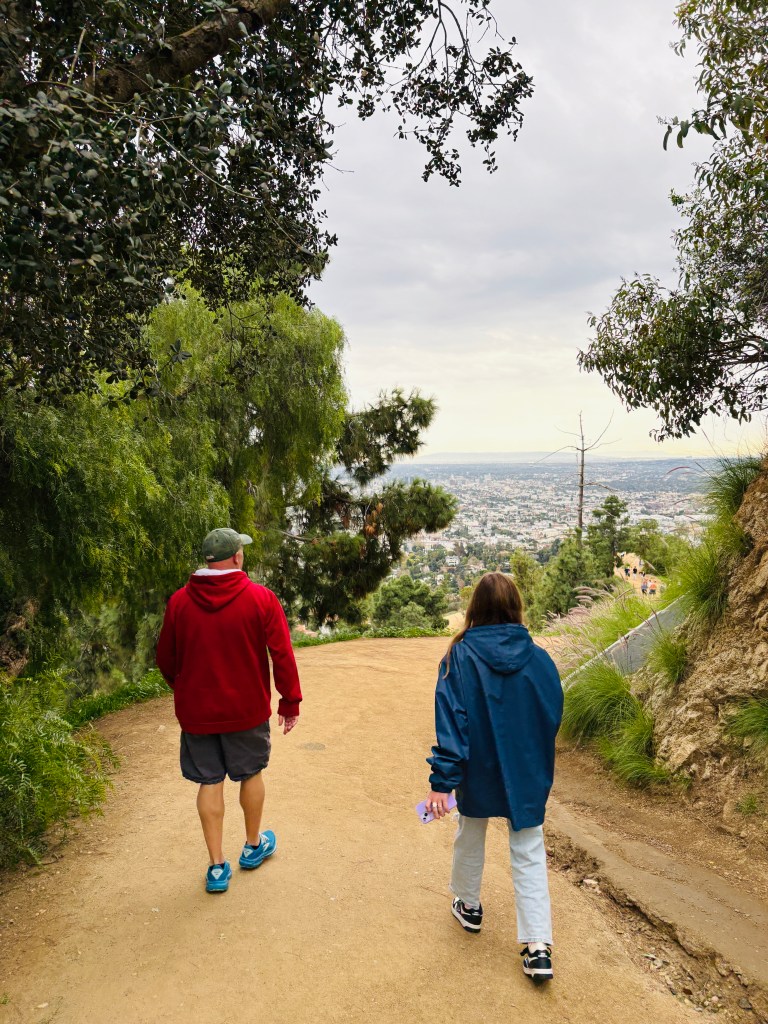
Daughter and Dad explore Griffith Park, December 30, 2025 Thanks for the memories California, you know how to throw a parade, no matter what year it is. We’ll be back soon. Hopefully the sun will be out.
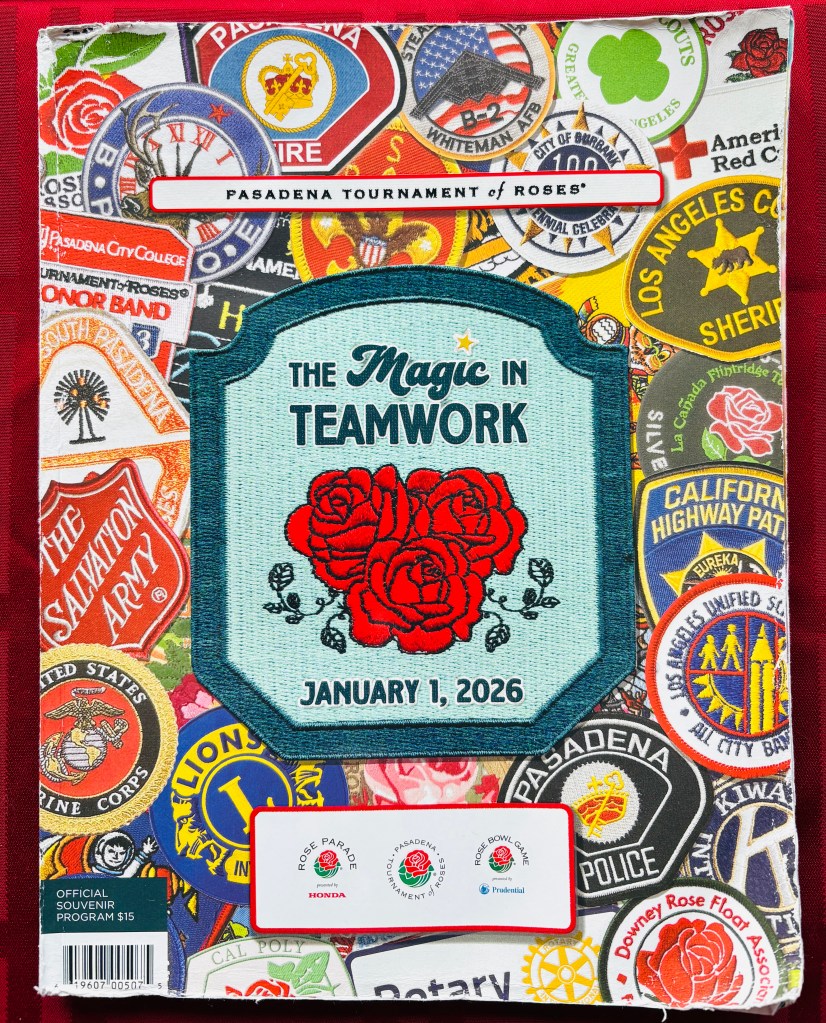
-
Art and Life in the 1980s: A San Francisco Gallery Experience
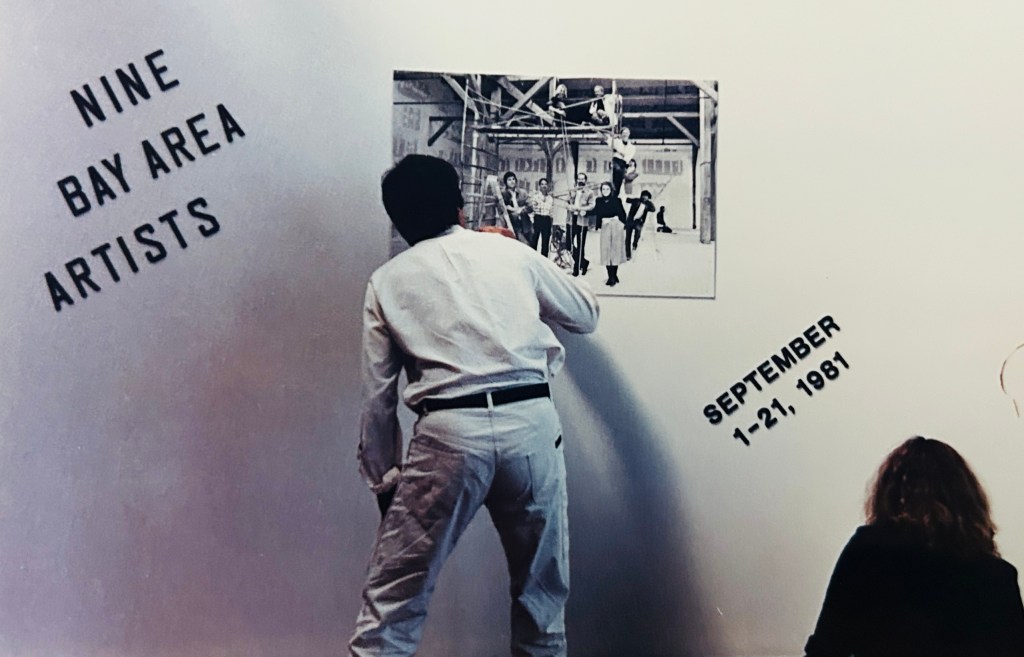
The time: Tuesday, September 1, 1981. Late afternoon.
The place: An art gallery in the South of Market neighborhood, San Francisco, California.
Some of the artists, dressed mostly in black, are huddled together, looking out a window. I can tell something is wrong. Wandering a little closer, I try to listen to their conversation while pretending I’m looking at a large blurry painting of a blue car (at least I think it’s a car).
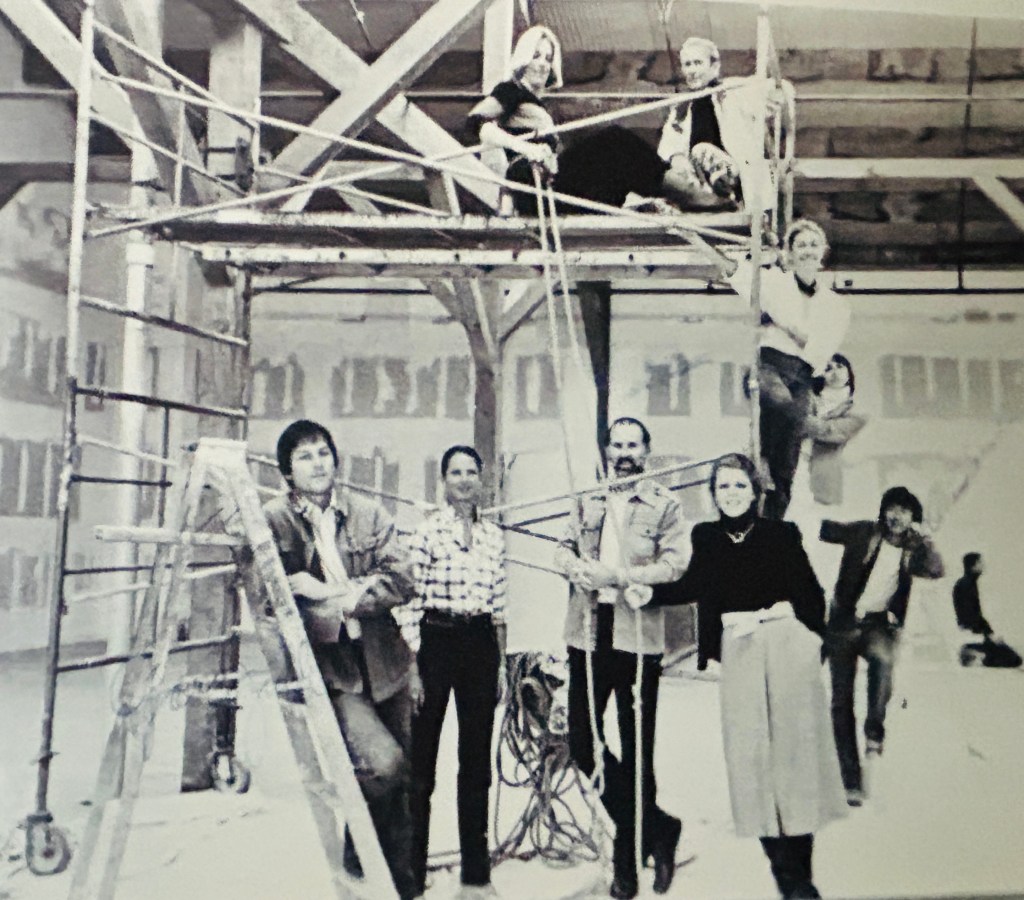
The nine artists featured in the show. “Look at him smoking pot out there on the street corner … he won’t come up here,” I hear Jill Coldiron say. “I mean, he doesn’t like his placement, but I don’t know why he’d sabotage himself this way during the reception.”
I head over to the food table to grab some more grapes and that yummy, crusty sourdough bread. I have no idea what Jill is talking about, but I do know that if anyone can solve a problem, she can.
Jill is the organizer of this art opening and a good friend of my parents. I like being around her because she’s smart, loud, and funny. Sometimes my mom and I drive south across the Golden Gate Bridge and into San Francisco to have lunch downtown with Jill—I love doing that. She and my mom laugh so hard when they’re together it makes my ears ring. When Jill invited my dad to be in this group art show he yelled to my mom from the other room “Good news Patrish … Jill wants my cars in the San Francisco show!”
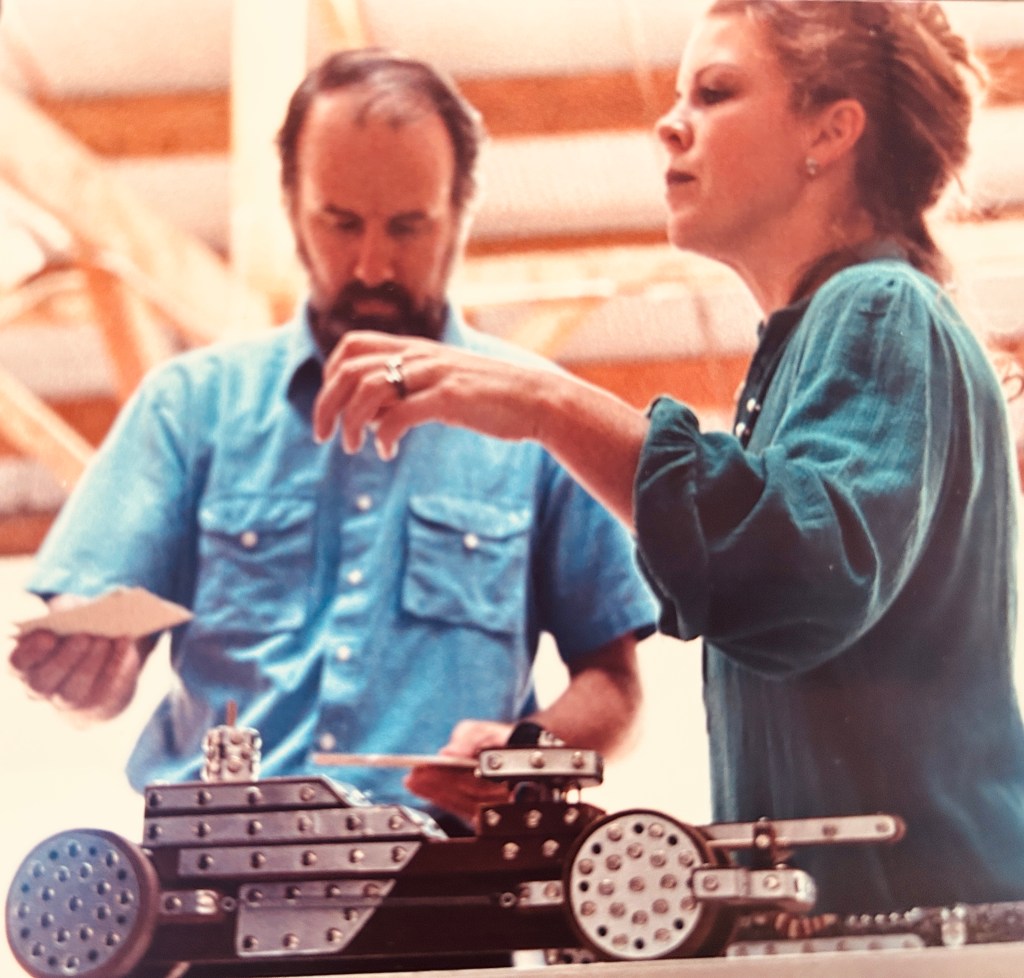
Curator Jill and my artist father discuss
arrangement of his cars in the show.The warehouse gallery is full of bright light, and the high ceiling is echoey with the sounds of clinking glass, people talking, and live music played by some nice musicians in the corner.
I’m the only ten-year-old here, something I’m pretty used to since I’m an only child. I don’t mind because I’m good at secretly spying on adults, just like Harriet the Spy.
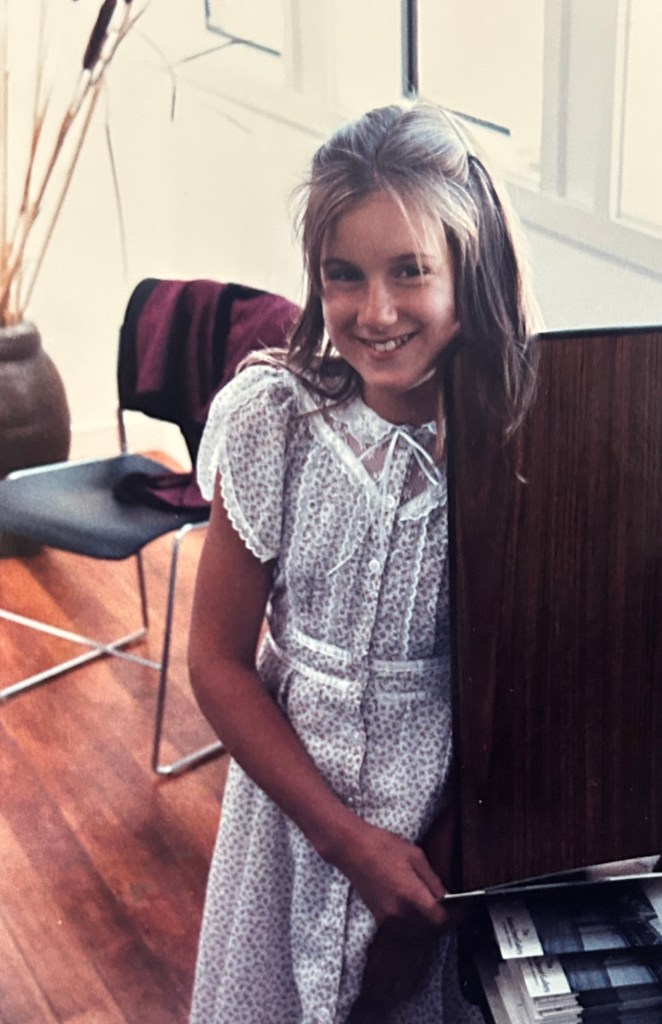
Ten year-old art critic and part-time spy. Slightly wobbly in my wavy-soled high-heeled hand-me-down Famolare shoes and flowered Gunne Sax dress, I walk around looking for my parents. Spotting them across the gallery, I see that they’re standing next to one of my dad’s art cars. They look happy. That’s how they usually look.
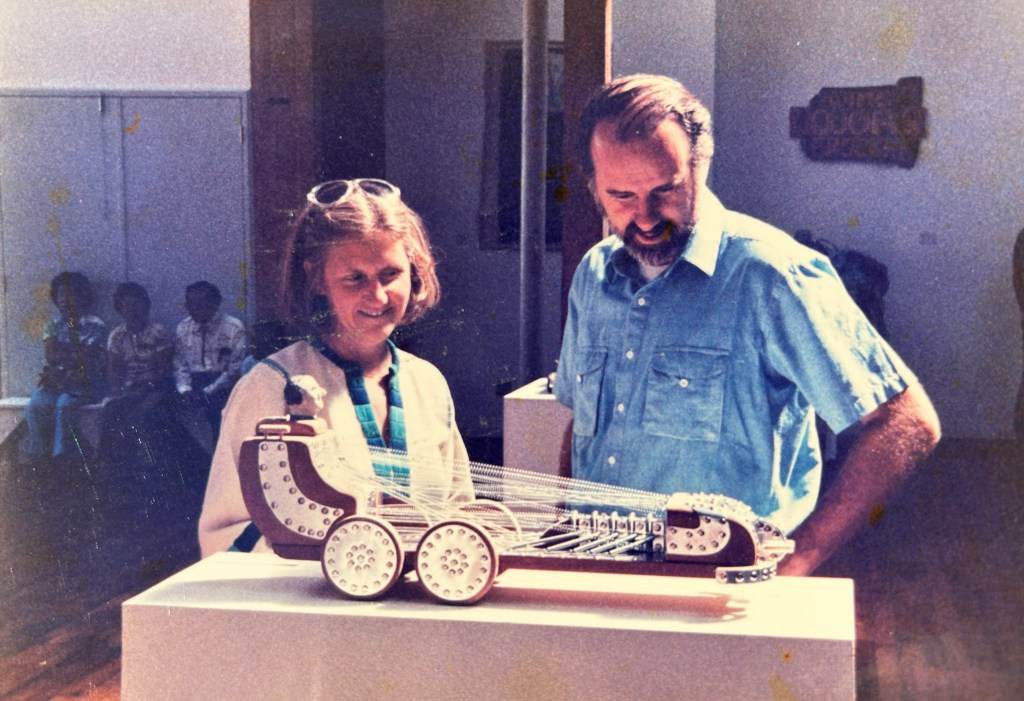
Mom and dad, artists and appreciators. Lately, when he’s not writing, my dad works on his cars. Most of his art, both the large wooden constructions, and the cars, make some sort of point about politics. I don’t understand the messages, but I like what he makes. A lot of other people seem to like his art too since there have been articles about him and his art in magazines and newspapers.
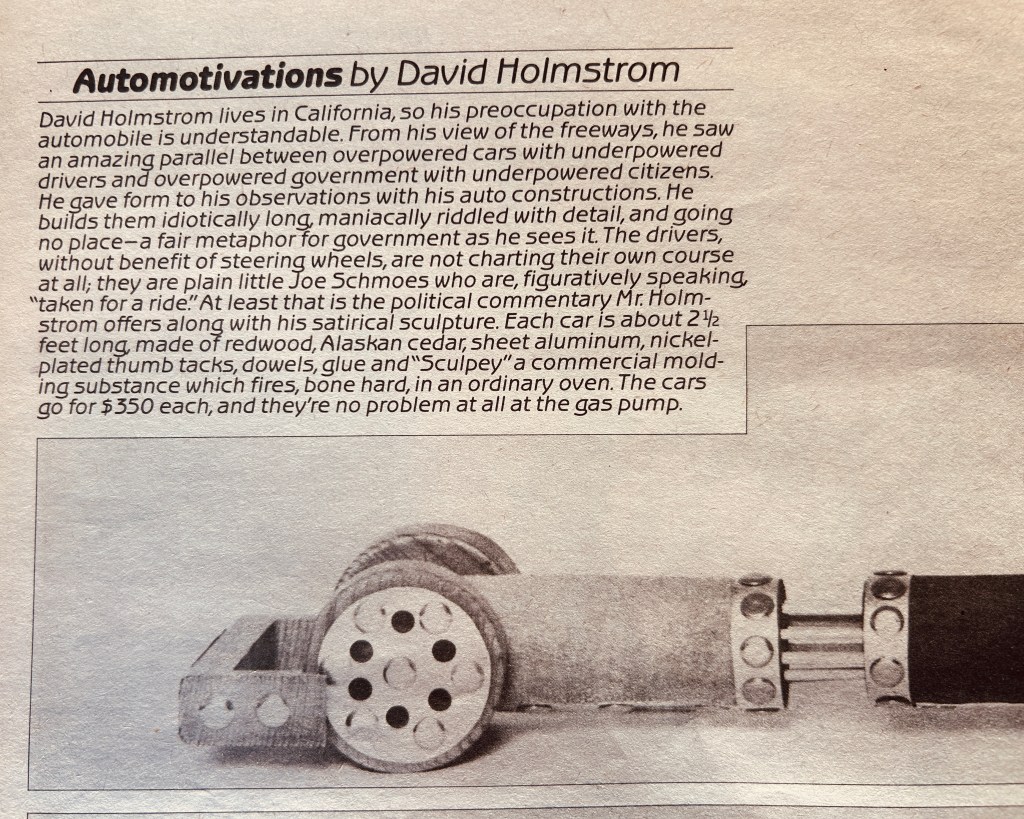
Excerpt from an article about my father’s art cars. The cars are shaped out of wood and have shiny parts made of sheets of aluminum that he hammers thumbtacks into. There are funny looking characters in the driver’s seat that he shapes out of clay. The cars have names I can’t pronounce, like Senator Kincade’s Private Secretary, Compulsory Arbitration, and The Subcommittee Investigator.
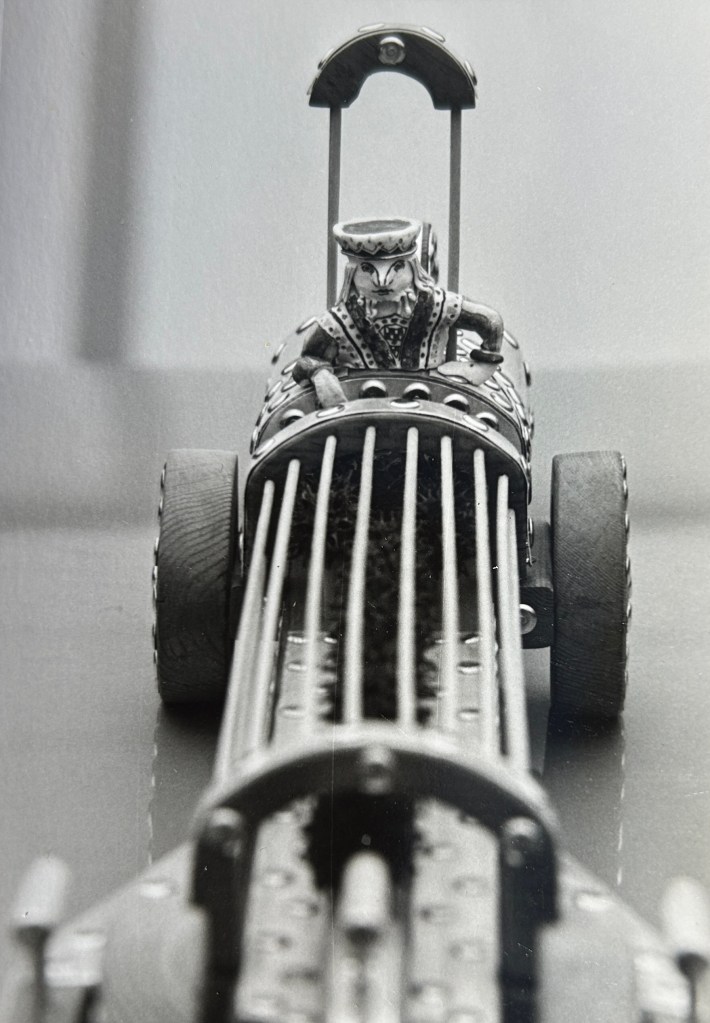
“The I.R.S.” 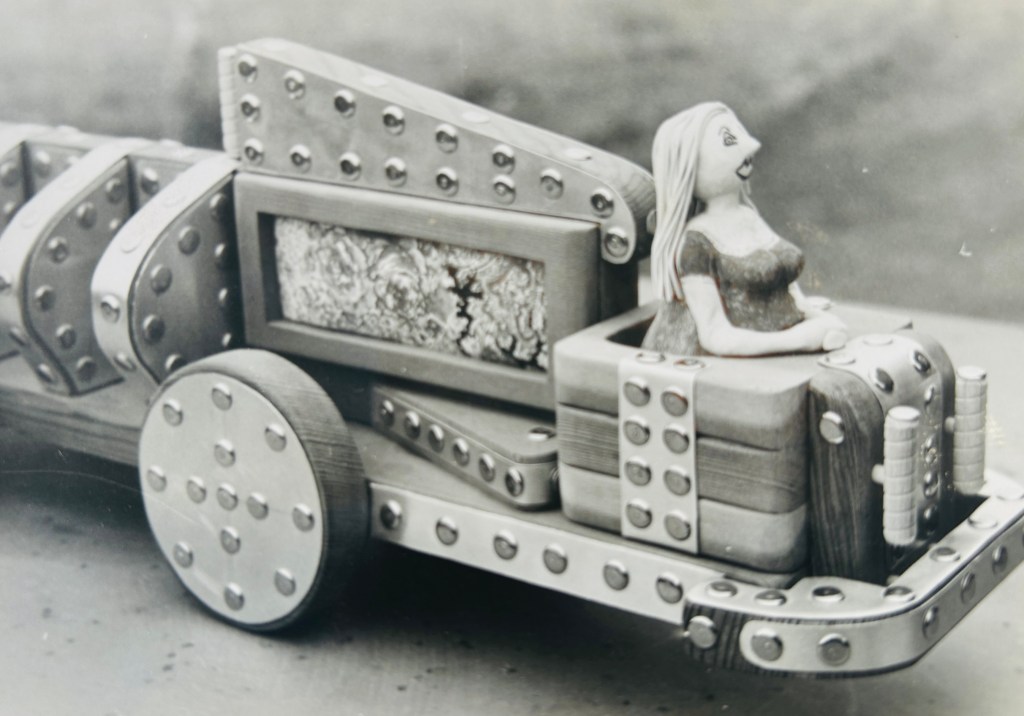
“Senator Kinkaid’s Private Secretary” 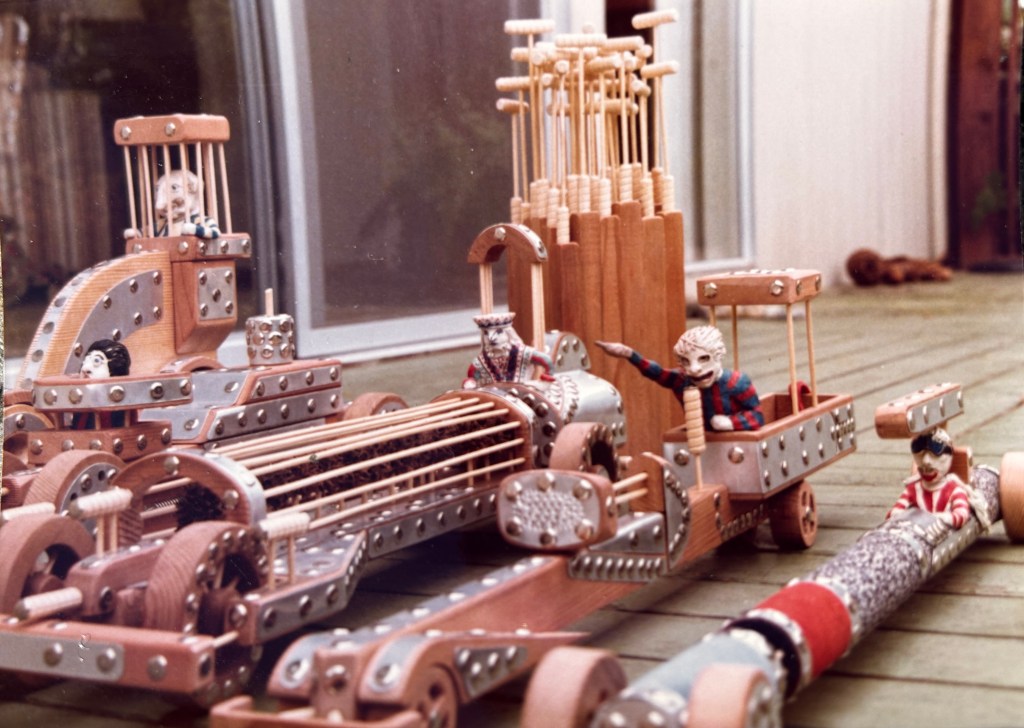
A selection of my father’s wooden art cars, circa 1983. I like it when my dad’s art is in shows, mostly because I get to spend extra time with him. Once he had his art in a street fair in Palo Alto and my cousin Laurel and I helped him set everything up. People stopped by and talked to us and bought some of his work. Normally, I’m not allowed to have sugar, but that day I got to have some cotton candy.
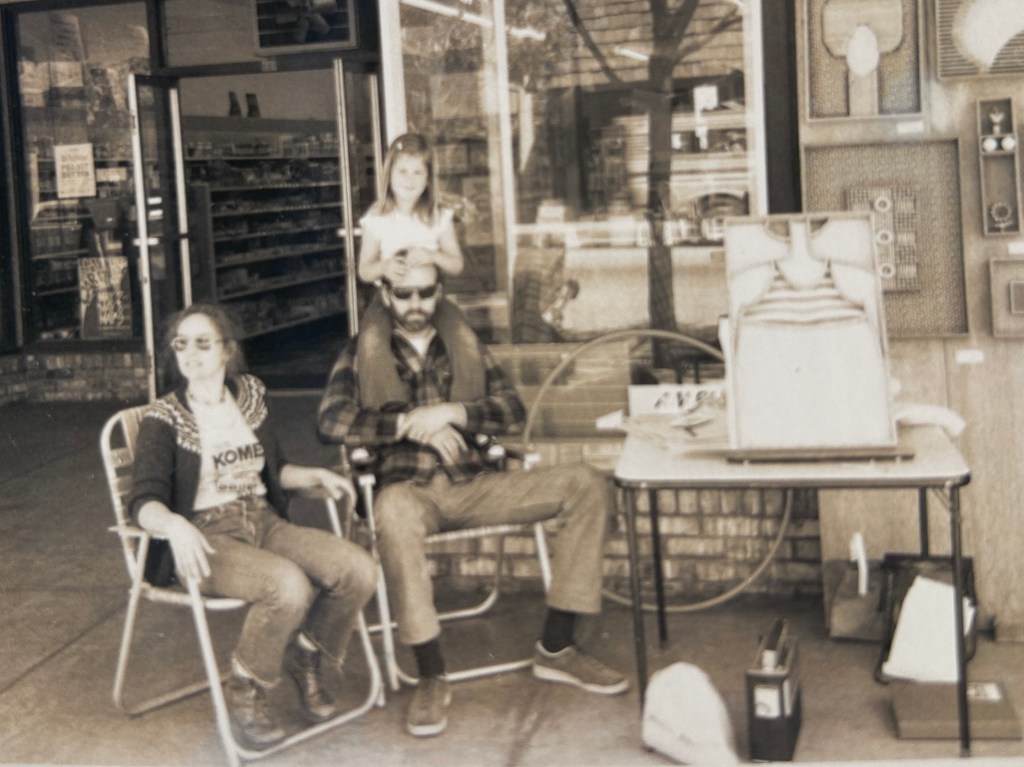
Supervising the Palo Alto street fair art booth with dad and cousin Laurel, 1978 We know a lot of artists. I like to make art too, but I don’t think I’m very good at it. My mom makes pottery on a big wheel that I can spin, and my best friend Portia’s parents are both silkscreen artists—when I sleep over at her house we sneak into their studios. We’ve seen stars through the skylights. We shake the brightly colored paint bottles and run soft paintbrushes across our cheeks. Sometimes Portia’s mom drives us to the art supply store in Santa Rosa in her tan VW bus. She lets us pick out pastels in colors we like.
When is this art opening going to end? My feet are getting tired, and my stomach hurts from eating all that fruit. The artist who was outside earlier is back inside the gallery now, talking to Jill in front of his sculpture that looks like huge melted Tinkertoys. His eyes are red and he still looks mad.
Now lots of people are gathered around my dad’s cars. A lady who is a friend of my parents commissioned (that’s a fancy word for “bought”) one of my dad’s cars for her husband. She’s giving it to him as a surprise. The musicians play a happy song while my dad announces that he made the car especially for the lady’s husband. There’s even a head that looks like his head driving the car. Everyone claps loudly. The man looks surprised and smiley, and his wife gives him a big kiss.
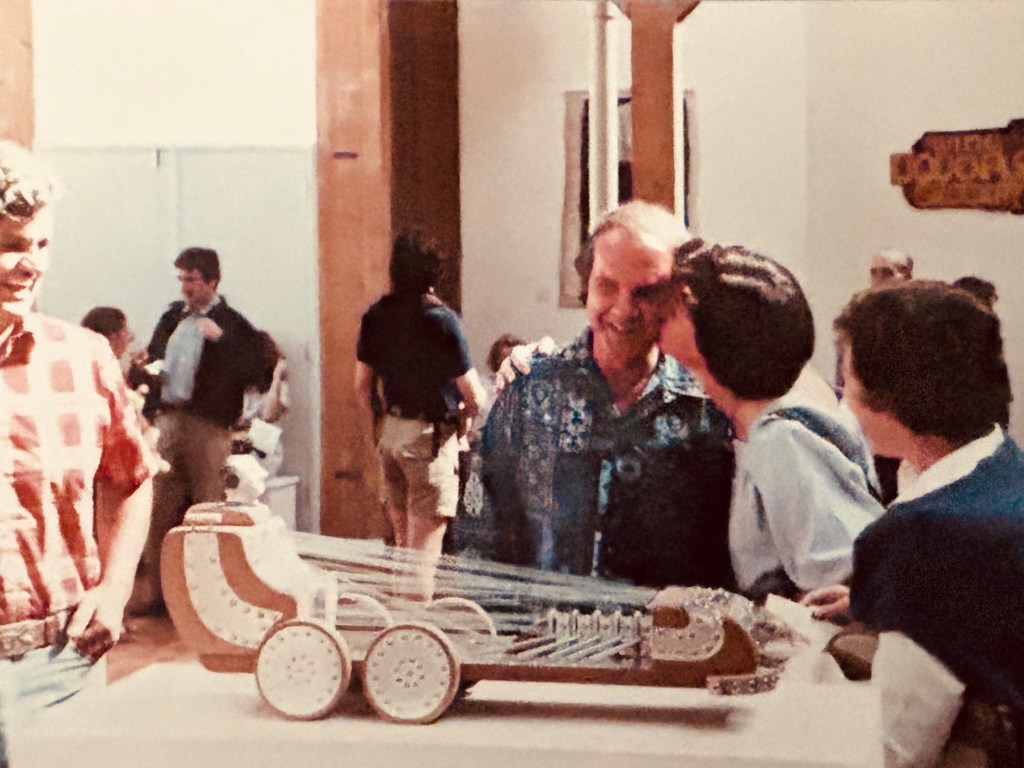
Unveiling of the art car commission. Time to ask mom and dad if we’re leaving soon. I’m too full of art and fruit.
I’m thinking about how art seems to make adults happy—when they’re making it and when they’re looking at art that other people made.
Except for that one artist, I guess.
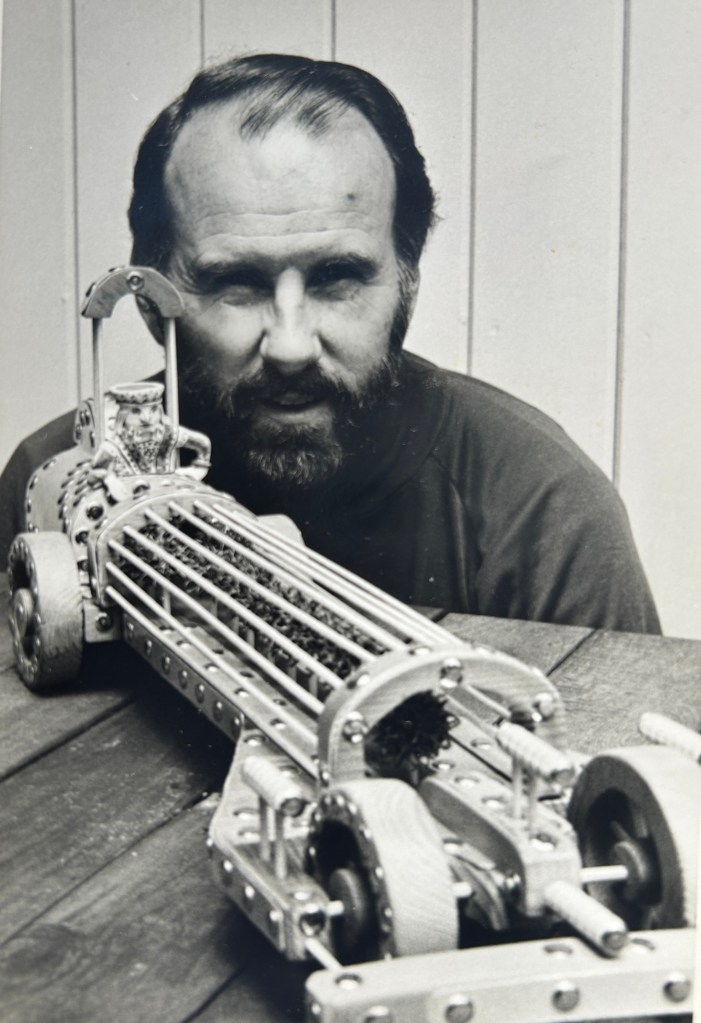
Artist David Holmstrom (aka my dad) poses
with one of his art cars. -
Catalina Dreaming
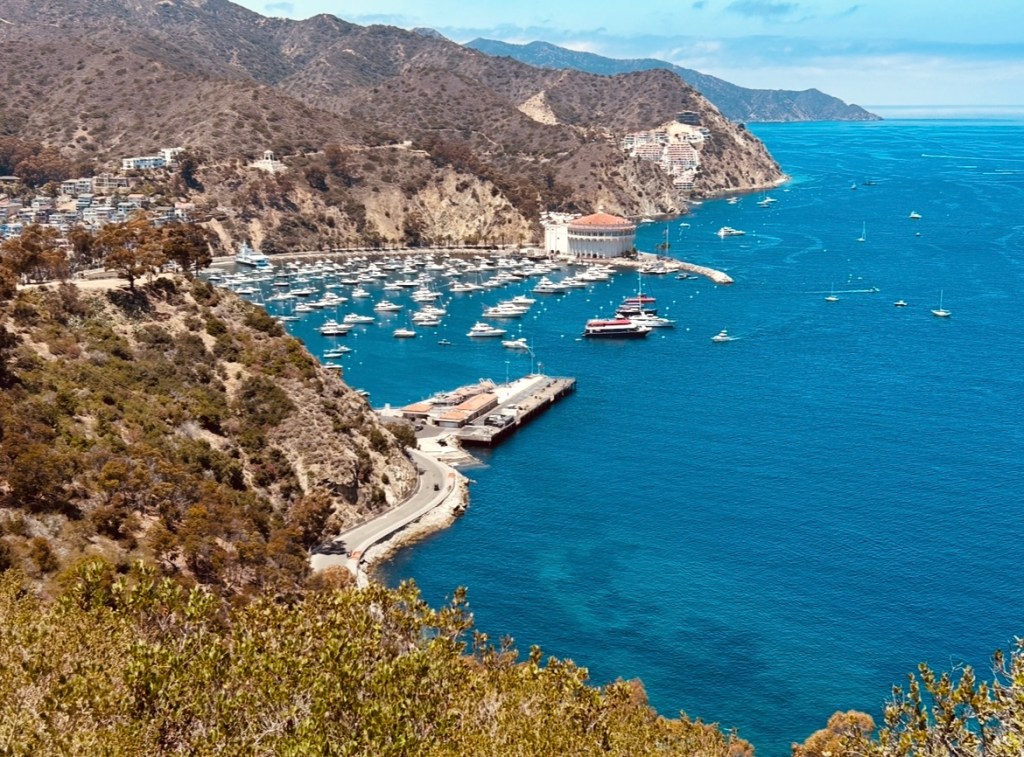
The town of Avalon as seen from Wrigley Rd. This is a story of dreams and reality colliding, in the best kind of way.
It is 7:30 AM Pacific and my husband and I are walking up a steep island road at a steady pace, breathing in the grassy scent of hillsides warming in the sun, the tropical foliage spilling into the road, and the sharply pungent Eucalyptus pods crushing beneath our feet. No one else seems to be around.
A few minutes earlier, we were tiptoeing around our dark hotel room searching for walking shoes and quietly moving stacks of clothing, damp bathing suits, and multiple pairs of Crocs. Our 11 and 12-year-old kids are still sound asleep, iPads and heads thrown to the side. Thanks to our wonky vacation schedule and a hefty time change, we have been granted an early morning reprieve from their boundless energies.
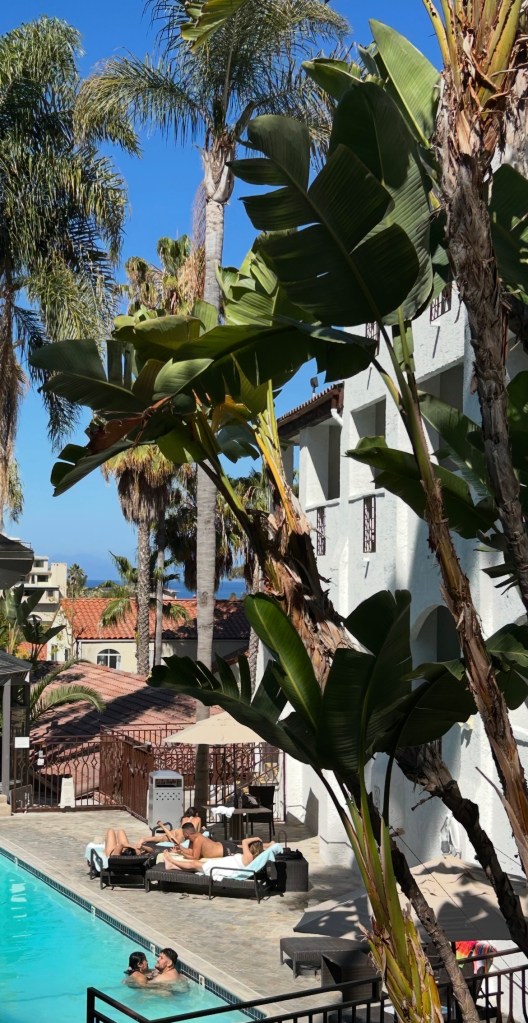
View from our Catalina hotel room patio,
Pacific Ocean in the distance.“How about walking up the road instead of down?” I suggest to Tom as we lock the hotel door behind us. He agrees, so we head right. Over the past two days of our visit to Southern California’s Santa Catalina Island, we have only exited our Spanish-style inn (on foot) and taken an immediate left. This move brings us down the steep road for the pleasing fifteen-minute walk leading to Avalon, the island’s main (and pretty much only) town. There are approximately 4,000 permanent residents on the 75-square-mile island, and almost all of them live in Avalon.
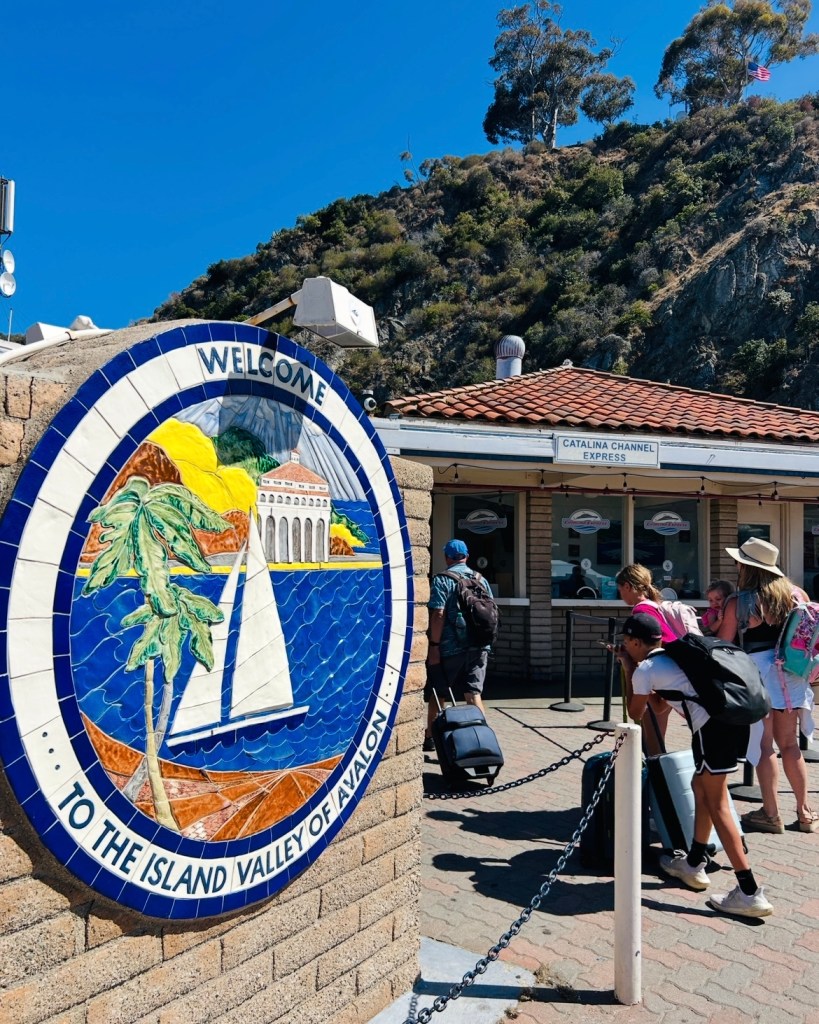
Welcome to the Island Valley of Avalon. “This place is like the best of California all rolled into one,” I marveled out loud as our ferry sailed smoothly into the Avalon harbor two days prior. The ravined mountainsides loomed in the distance, stunningly clear ocean water sparkled, and palm trees swayed. Was that the vanilla-like scent of plumeria blossoms in the air?
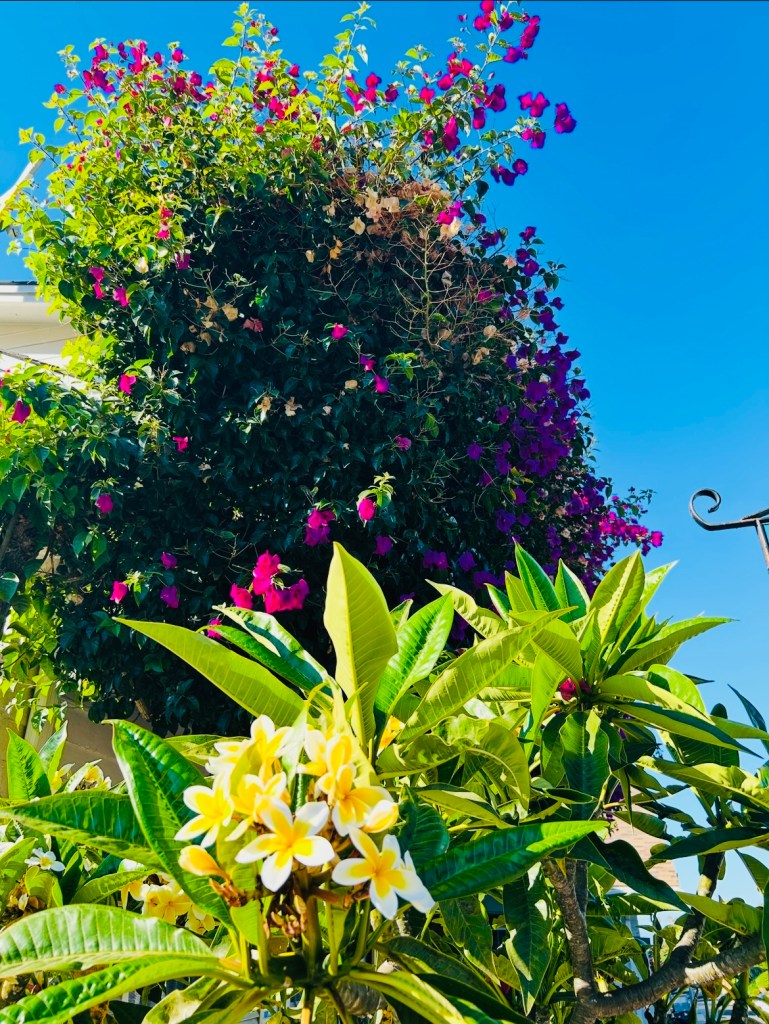
Bougainvillea and plumeria abound in Avalon. 
As does water so clear you can see the bottom,
along with California’s state fish, the bright orange garibaldi.My father grew up in Los Angeles, and my paternal grandparents enjoyed their honeymoon on Catalina in 1929. I’ve been hearing about the island all my life. This, however, is my first visit.
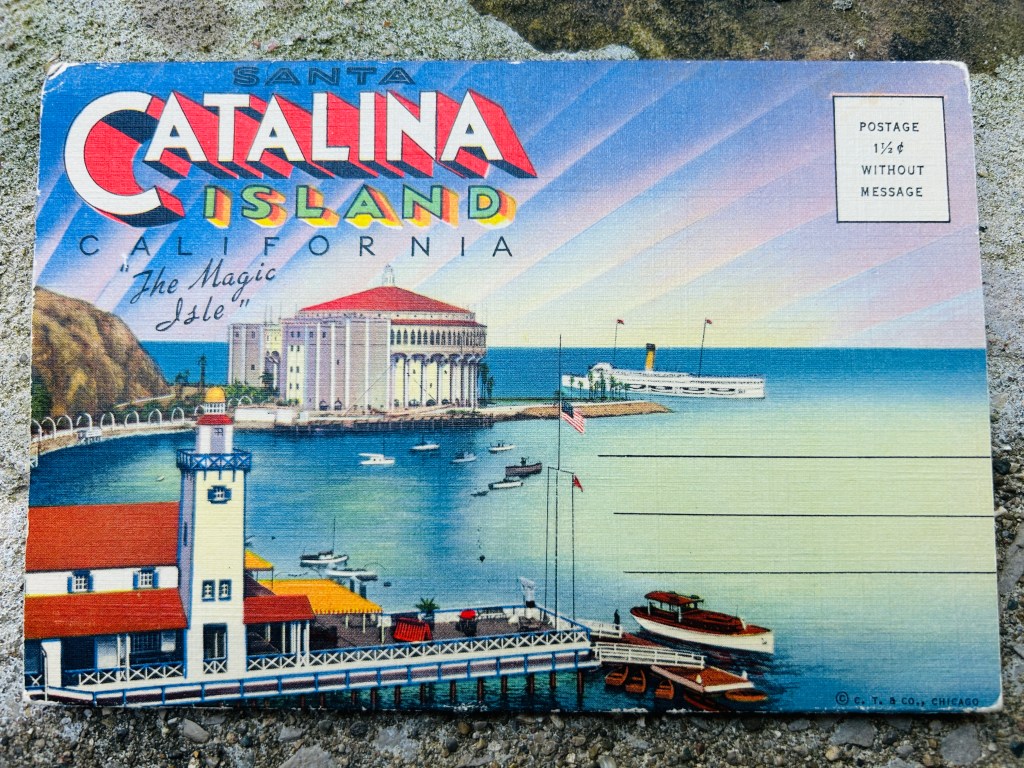
Postcard packet purchased by my paternal grandparents on Catalina Island
(never sent).So far, our family of four has investigated Catalina via golf cart, paddleboard, and foot, but we have yet to see what lies above our Spanish-style Catalina Canyon Inn, perched at the top of a steep canyon and topped off with a view of the deep blue Pacific beyond. I’ve been eyeing the Eucalyptus-lined curving road above the inn, hoping for a glimpse into the less touristy side of Catalina. As far as I can tell, there are zero hotels up there, only some quaint and funky-looking houses that I imagine are inhabited by locals.
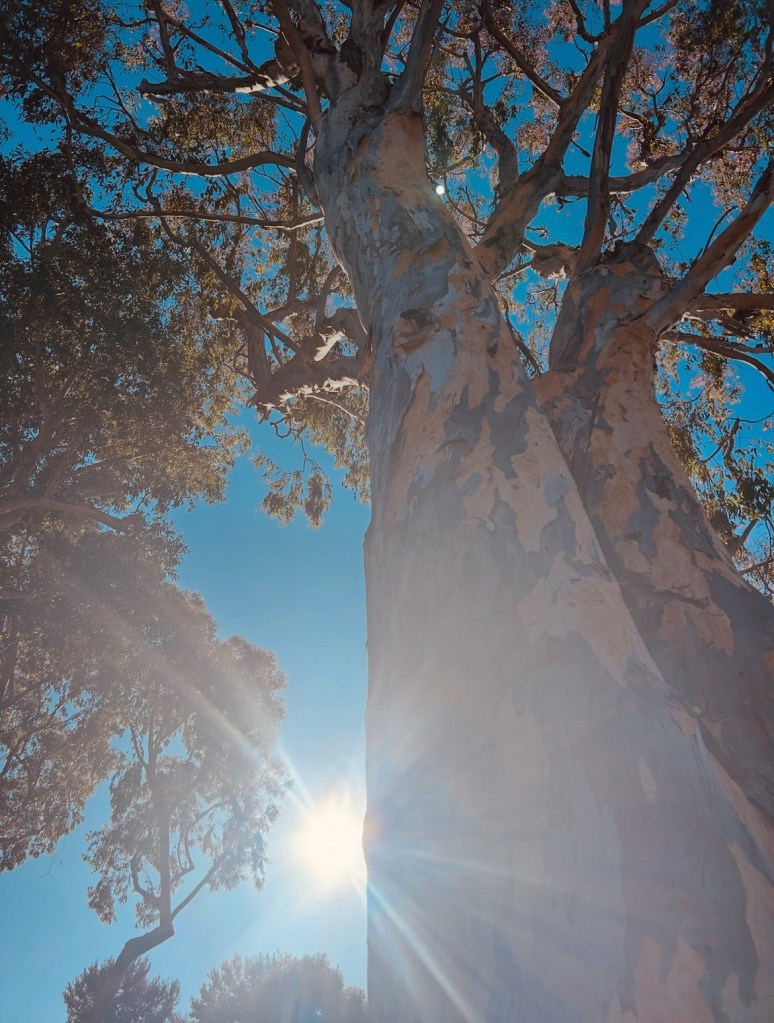
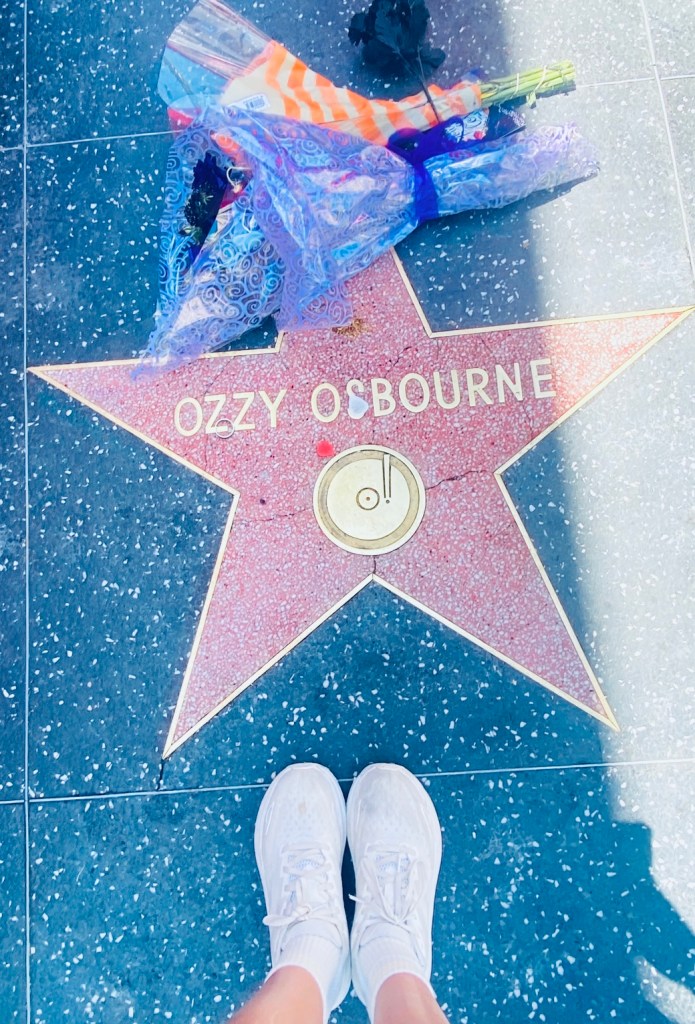
Eucalyptus trees, a favorite since childhood. Catalina has some especially gigantic specimens. For me, this morning stroll is a slice of heaven. We had already been in California for a few days before journeying to Catalina. Experiencing Los Angeles with two preteens meant the itinerary looked a lot like their TikTok feeds: strolling the Santa Monica Pier, ogling the Hollywood Walk of Fame (featuring a flower-strewn star honoring the recently deceased Ozzy Osbourne), stops at Funko and Nike and LuLulemon, and an inaugural (for the kids) meal at the Eagle Rock In-N-Out.
But while we walked the crowded LA sidewalks, I found myself thinking about what was missing from this family adventure. As a native Californian who reluctantly left for the Midwest nearly 15 years ago, I am yearning for the California of my heart. The creative, kind, eccentric Californians that peopled my upbringing. The infinite, golden possibilities that lie around every corner. The bright orange of California poppies lining dusty roadsides, the sight of a graceful lone oak perched on the top of an emerald mountain in the springtime. This California lives on in my dreams, but these days, news stories paint lurid pictures. And as I lead an entirely different life 2,250 miles away, I wonder if the soul of that California still exists.
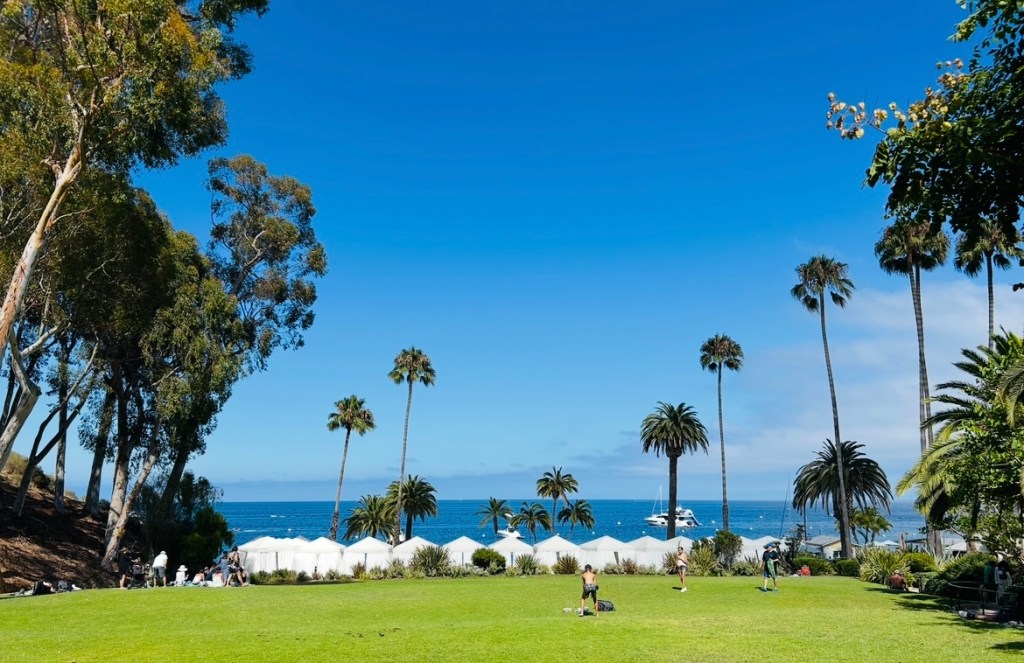
Idyllic Catalina view. Reaching the top of what I am now calling “Eucalyptus Road,” we follow a hairpin curve and find ourselves on an upper stretch lined by houses on each side. The structures remind me of parts of Northern California towns Berkeley or Mill Valley, narrow wooden constructions, close together and very, very steep.
Suddenly, a man and his dog appear in front of us. Smiling broadly, the man greets us, as does his friendly, tail-wagging pup. “Nice morning, isn’t it? Have you had your coffee yet … just put a pot on … can I offer you some … my house is just up here.”
It might have been the perceived safety of an island, or the idyllic early morning atmosphere, but there are times when you sense that a human being you are meeting for the first time is a good one. This is one of those times. Nodding in unison, we accept the stranger’s offer without hesitation.
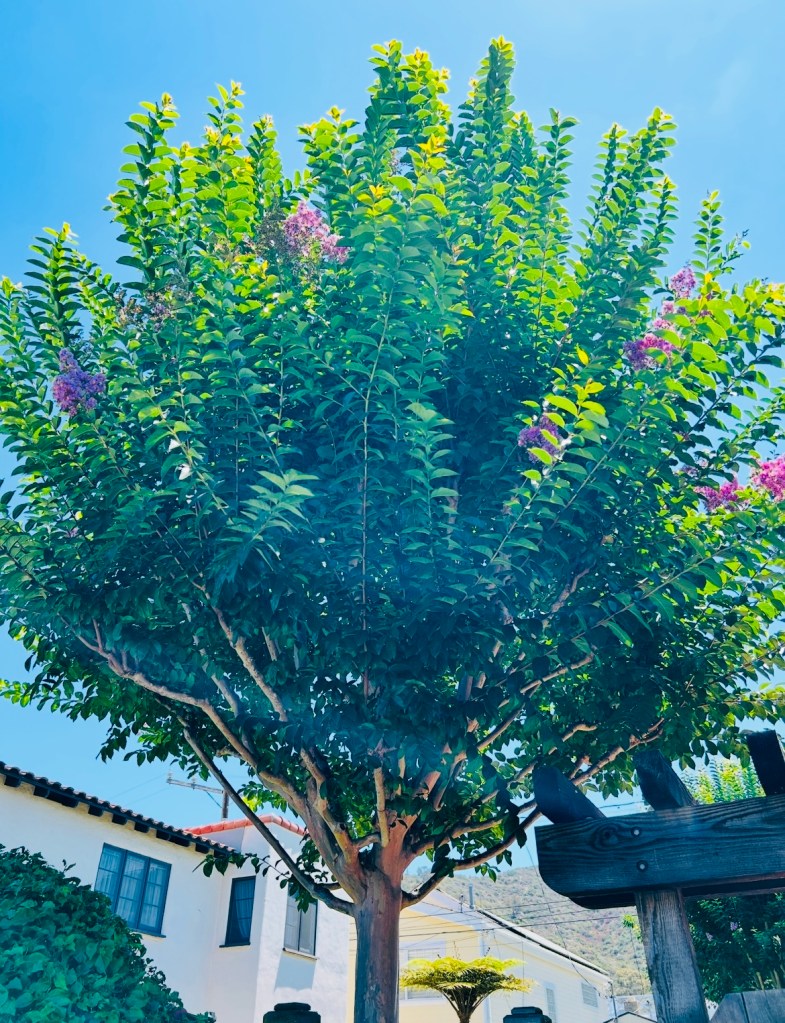
Some have maples in their front yard, others have
this glorious flowering marvel.Minutes later, we are trudging up the steep wooden stairs to the main floor of our new friend Bob’s house. There, in his elegant, sun-splashed kitchen/dining room, which smells of cinnamon and flowers, he hands us each a mug of strong coffee. We sip, admiring our surroundings, chatting about the artwork adorning the walls. Bob then proceeds to give us a tour of his lovely home, combined with a fascinating people’s history-style lesson about the island (for example, many islanders apparently believe actress Natalie Wood’s 1981 drowning in the Catalina harbor was an accident afterall, thanks to copious amounts of alcohol consumed that night).
At one point in the tour, I stand on Bob’s third-floor open-air pillow-strewn sleeping porch, looking down at the crescent moon town of Avalon, which is exquisitely framed by the blue expanse of the Pacific Ocean.
A shiver goes through me. “It’s still here,” I think to myself. The California of my dreams.
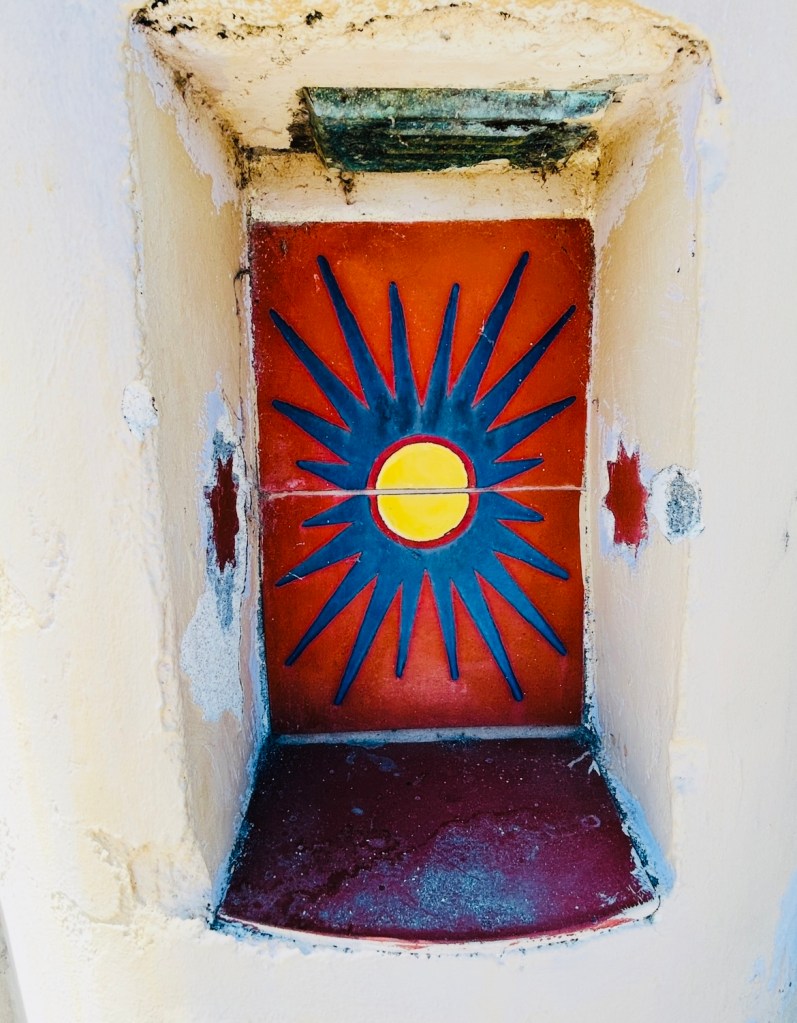
Hidden sunburst along a Catalina sidewalk. Turns out, Bob is a retired bond trader turned poet. Of course he is.
And in his creaky wood-floored, weathered office, sailing ships adorning the walls, he reads us a poem. Closing my eyes, I allow his words to wind their way through me.
To change one’s mind/To open one’s heart—/One leaves the known behind
To take a different path/Than the one well-worn,/Opens the world /And opens the soul
Excerpt from “Pilgrims,” Songs of Redemption Poems by Bob Baggott www.offtheDesk.com
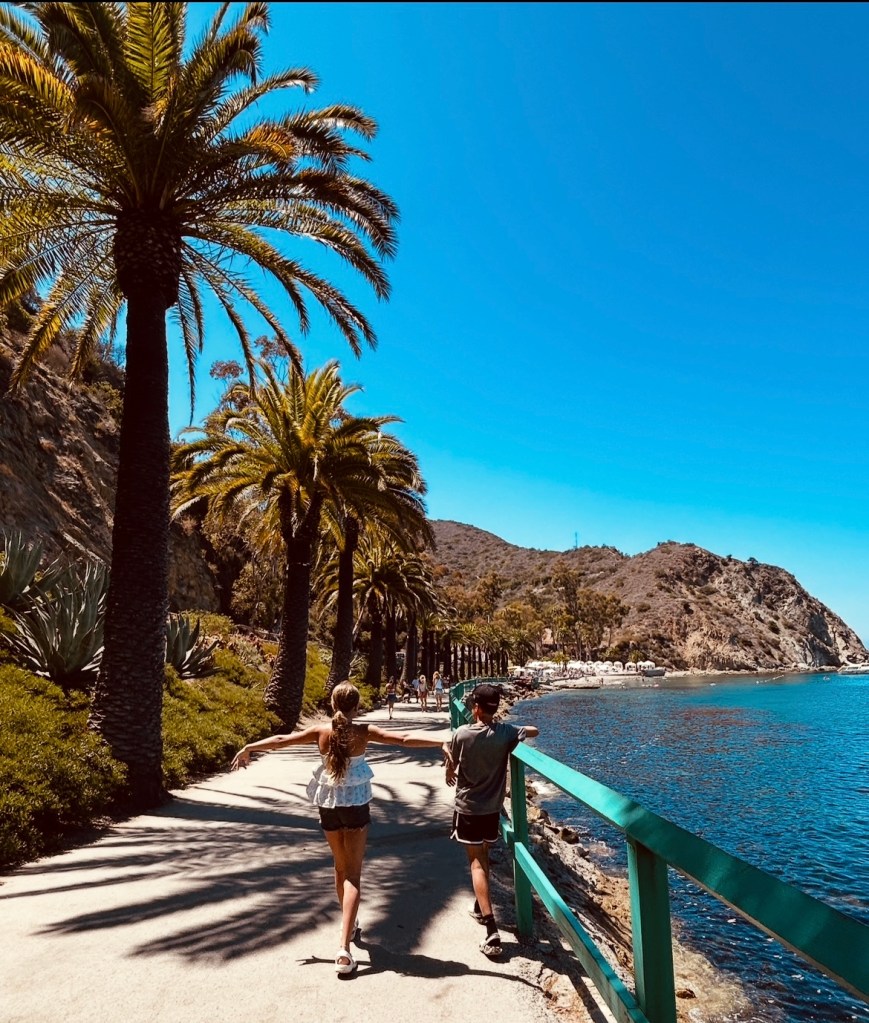
Walking California’s paths … into the future. The soul of California hasn’t gone anywhere.
And sometimes, when you least expect it, you are reminded that infinite possibilities still exist.
-
The Missing Mom Muscle
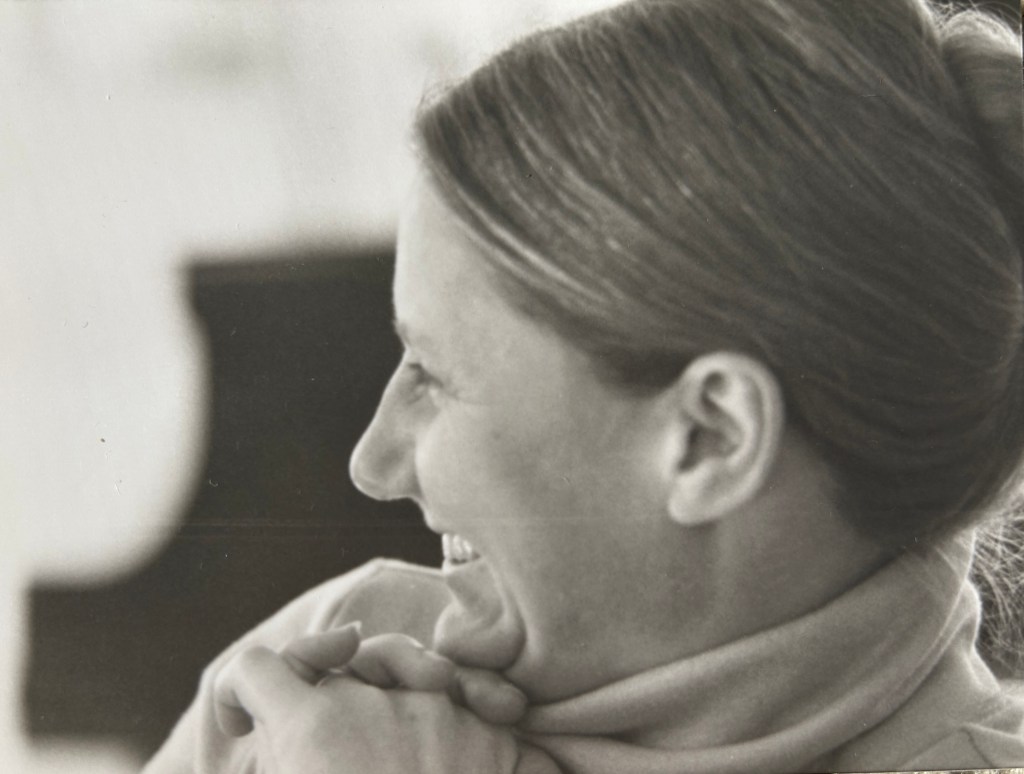
My Mom and her smile, 1975 When your mom has been gone for 23 years, you develop a muscle. This missing mom muscle strengthens each time you use it, keeping you afloat when you might otherwise drown in her absence.
You flex the muscle when you want to call her, but she’s not even in your contacts—she died before the first iPhone. When you see her favorite Constant Comment tea at the grocery store. When you find the wrinkled brown paper bag holding her gold-rimmed China plates. When you smell the bittersweet scent of marigolds, or her soft lavender-colored wool sweater you keep on the top shelf of your closet. When you hear Robert Redford died—she adored him, especially in The Way We Were.
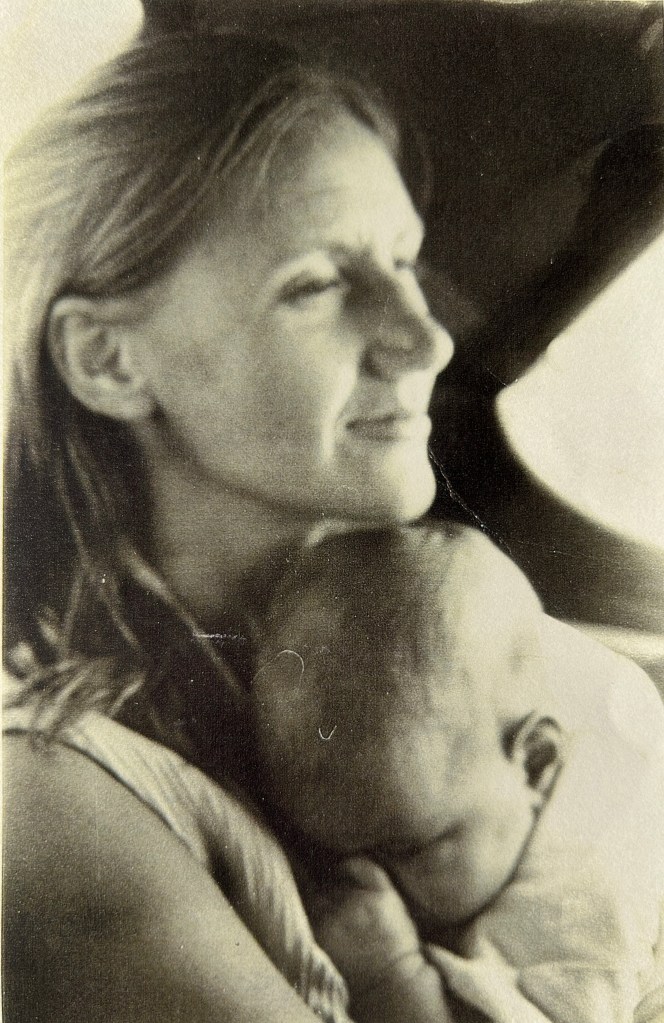
The safest place on earth (backseat of a
Volkswagon Beetle), 1971Watching your Kindergarten students love their mothers, your missing mom muscle twinges. Every morning, a little girl tells you her crayon picture is for her mama. Rainbows, crooked flowers, lopsided smileys, and dark caves—each one for mama. A lump forms in your throat, but you flex the missing mom muscle and push it down. You want to tell her you understand, that all you do is for your mom too, but you don’t think that would make sense to a five-year-old (although you might be wrong). Instead, you smile, praise her picture, and say you know her mom will love it.

Kindergarten masterpiece, for her Mama The times that are the hardest, the times when the missing mom muscle gets a serious workout, are when you feel mistreated or misunderstood. Even, maybe especially, by your own family. Those are the times when you want to collapse into her arms, to feel her cool hand on your forehead, to hear her softly singing hymns to you like she did when you were a child. Mostly, you want to be understood the way she understood you, to be known and loved the way she knew and loved you. You hate the devastating truth lurking behind your yearning—no one will ever understand, know, or love you that way again.
In those times, the missing mom muscle feels like it’s tearing.
Other times, you want her to swim in your puddle of pride. The change in careers, the longevity of your marriage, your spiritual evolution, the birth of your children, your writing, and your sobriety. Your triumphs would be that much sweeter if she knew, if she could celebrate alongside you.
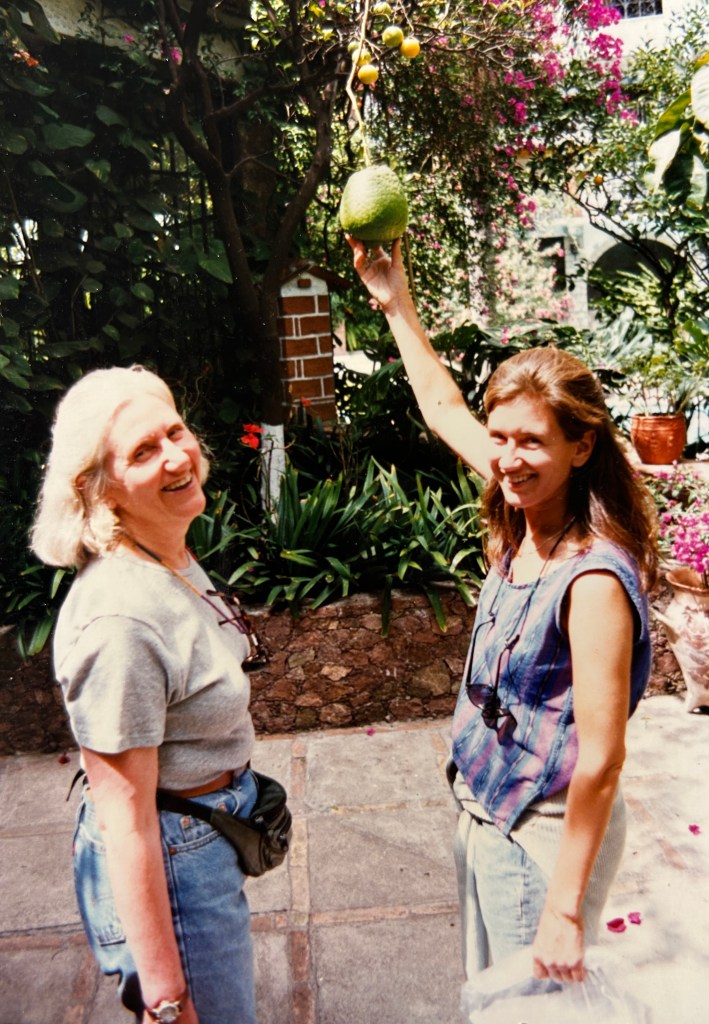
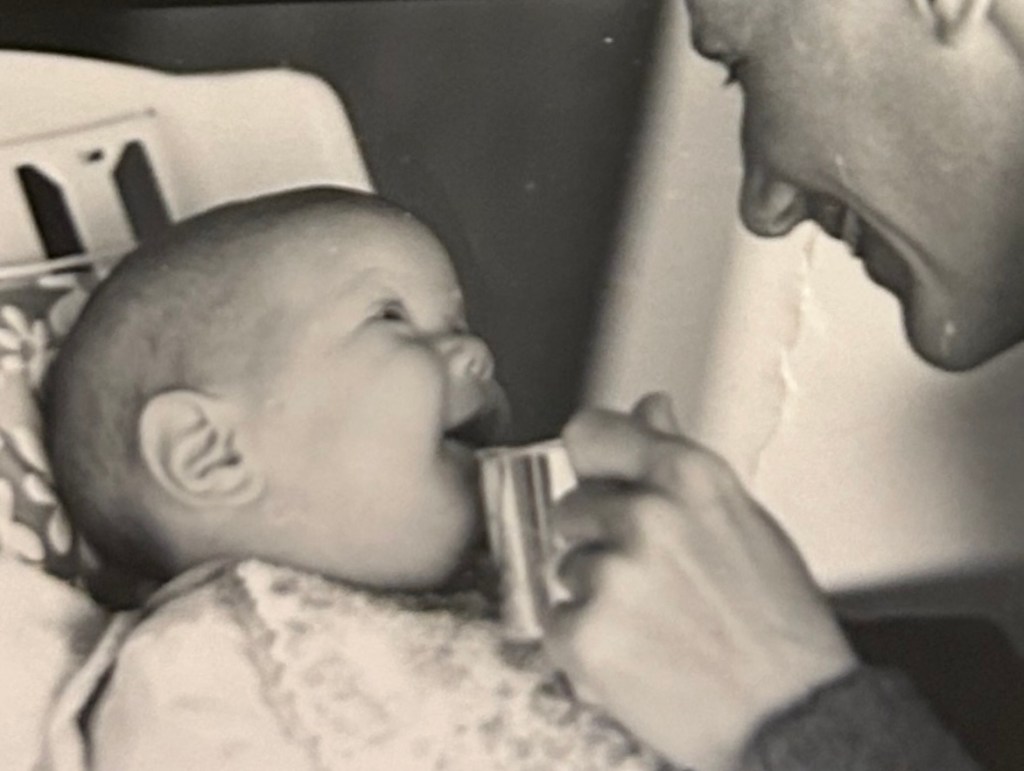
Enjoying Mexico with Mom, 1998 You sort through pictures, and you find some of her gazing at babies.
One of the babies is you.
You know she would have looked at your children, her grandchildren, the same way, and that they would have adored her. You know she would have loved them the way she loved you. You feel as if there is a gaping hole in your children’s lives, and you wonder if they feel it too.
You close your eyes and call on all she taught you about the power and the infinitude of Love. You flex the muscle harder than ever. These 23 years have taught you that you won’t, you can’t, let yourself drown without her.
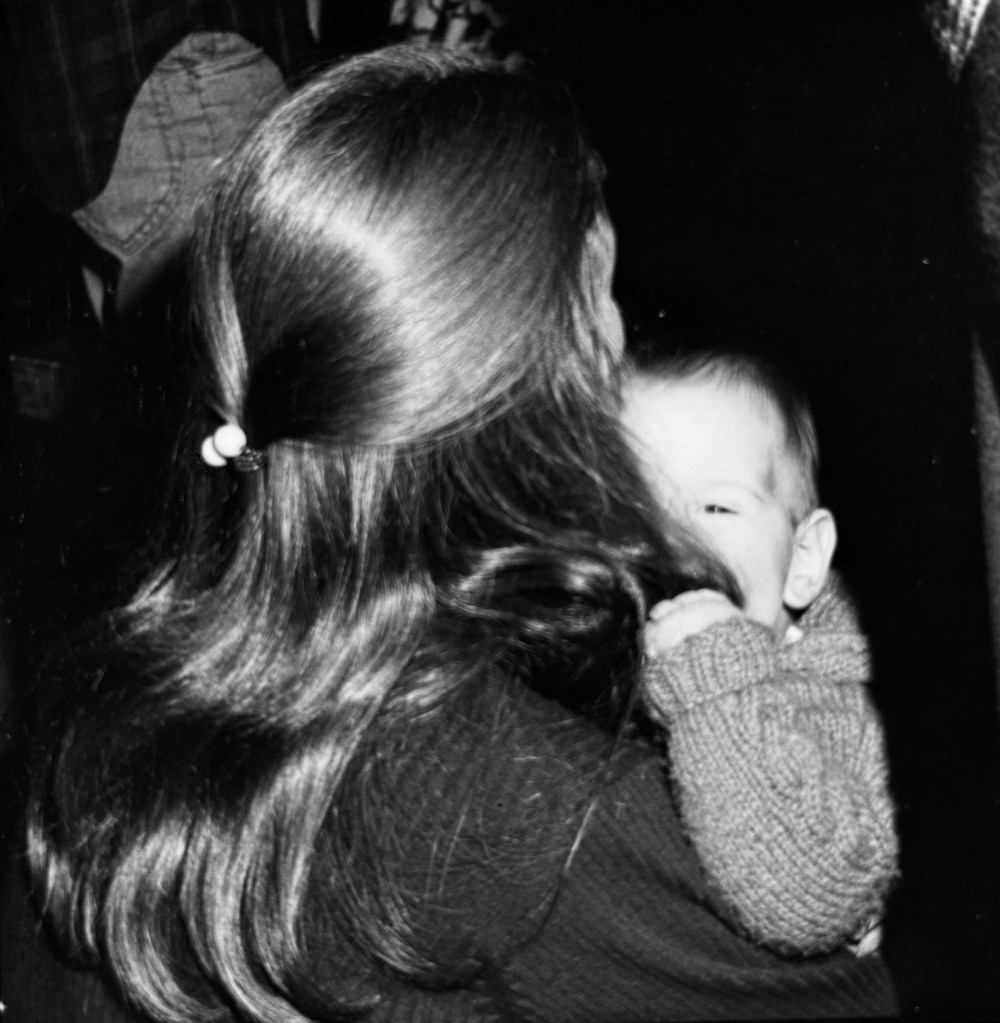
You keep going.
-
Integrity and Friendship: A Tale of Two Fathers
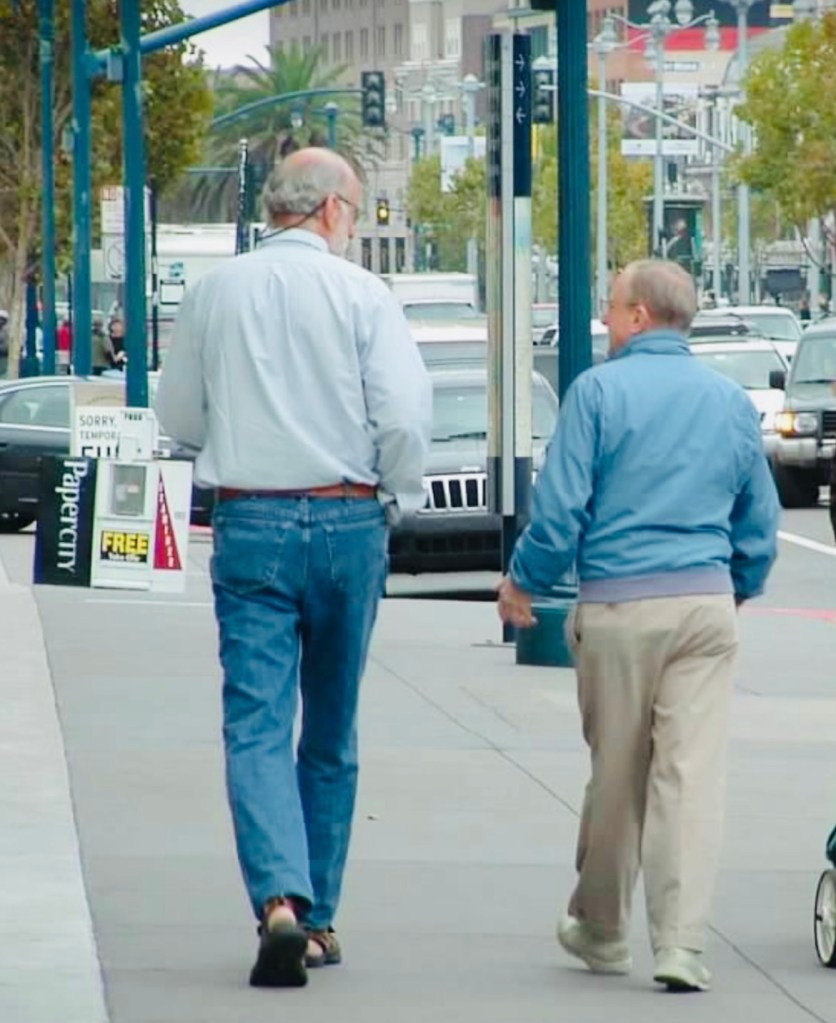
The fateful meeting, late summer 2004. Years ago, two men of integrity walked down a San Francisco sidewalk.
Heading to the Saturday Farmer’s Market in the Ferry building, they made a striking pair. One was tall and lanky with long loping strides, the other short of stature with a quick shuffling gait. The shorter man took two steps for every one the tall man took. On that chilly, foggy Saturday (it was summer in San Francisco, after all), as they strolled along they exchanged ideas about basketball and politics and UCLA (which they had both attend/and or worked for), and the state of the world in 2004.
The daughter of the tall man was dating the son of the shorter man. The men had known each other less than 24 hours, having met the night before at a table tucked into the back of a crowded seafood restaurant on Polk Street. A gigantic bottle of Veve Clicquot champagne sat chilling on the table, a surprise gift provided by one of their children’s high-powered bosses to mark the occasion – two families connecting for the first time.
The introduction of these two men was significant not only for their son and daughter (who would go on to marry and raise future grandchildren who the two men cherished) but for another important reason. The tall man and the short man were each exceptional in character, in achievement, and most of all, in their roles as world-class reliable, loving fathers.
It didn’t matter that one of the men believed in God and the other in classical music. That one preferred apple juice, the other vermouth. That one had an absent father, the other a present one. Instead, they leaned on their commonalities— a passion for books, baseball, basketball, and travel ran hot through their collective veins. Both had backpacked through Europe in their early 20s and burned through every last dollar. The two men also shared an ability to view life through a global lens, lifting up the people working toward active peace and reconciliation and calling to task those who stirred war and destruction. Successful careers had challenged and fulfilled them—the tall man as an award-winning writer/journalist and the other a respected professor/Dean at a Big Ten university.
Unlike so many men of their generation (born in the late 1930s), they viewed women not only as equals but as individuals to be championed, as co-workers to support and mentor. Both had chosen remarkable women as partners to whom they remained committed and loyal for as long as they were able (the tall man’s wife had recently died when the men first met). In fact, one of the reasons the tall man’s daughter knew the shorter man’s son was a keeper was that she noticed the son enjoyed close, easy, respectful friendships with women. She has no doubt he learned from his father’s example.
Soon after, the shorter man’s son and the taller man’s daughter eloped to San Francisco City Hall (the families managed not to hold it against their children). A year later, the son and daughter left San Francisco for the Midwest. They settled down the street from the son’s family, including the shorter man of integrity. Soon after, grandchildren joined the family, which thrilled the two fathers—now grandfathers—to no end.
At family gatherings and holidays, the short man and the tall man enjoyed each other’s company, discussing grandchildren and books, movies, and traveling. The tall man, who lived in another city, visited often. The two men adopted the Spanish noun “consuegro” (meaning in-law) to describe their relationship. “Ahoy, Consuegro!” they would say loudly as they thumped each other on the back. To them, the foreign term legitimized and solidified their familial friendship.
One tall, one short. Both impressive. Despite their stellar qualities, I do not mean to imply that these were flawless men. In fact, challenges hunted them throughout their lives. The short man was born prematurely, his tiny body cradled for weeks in a hospital without air conditioning. In his early years, the tall man was plagued by a severe stutter. In childhood, both men were taunted for their differences. Later on, there were tyrannical bosses, an early divorce, a tendency for one of them to drink too much. Yet during their formative years, neither man became bitter or angry and avoided blaming others for their problems. They remained caring and open to the world. They consciously decided to learn from their mistakes and avoid harnessing anger in destructive ways or using loved ones to deflect and/or pay for the sins of others.
In 2020, the pandemic hit, along with stormy seas for the two men of integrity. The shorter man, having been felled by a massive stroke on Christmas Eve 2019, found himself in a Midwest rehab center no longer able to walk, or even read. There were few visitors, and for the first time in decades, the subscription to his beloved New York Times (a daily fixture of his pre-stroke life) had to be canceled.
The taller man, facing dual dementia and lymphoma diagnosis, had recently been moved by his daughter to the same Midwest town where she lived with her family, just down the road from her in-laws. Incredibly, the daughter found an apartment for her tall father in the same retirement community where his shorter consuegro was undergoing rehab for his stroke. The tall man, thanks to worsening dementia, was no longer able to spend his days writing and could now be found at the small library in the retirement home reading his beloved New York Times (often the same paragraphs over and over).
Despite their failing health, the two men of integrity were able to attend a few of their grandson’s baseball games where they sat, socially distanced from each other, watching the action and shaking their heads in collective amazement at the eight-year-old’s impressive pitching skills.
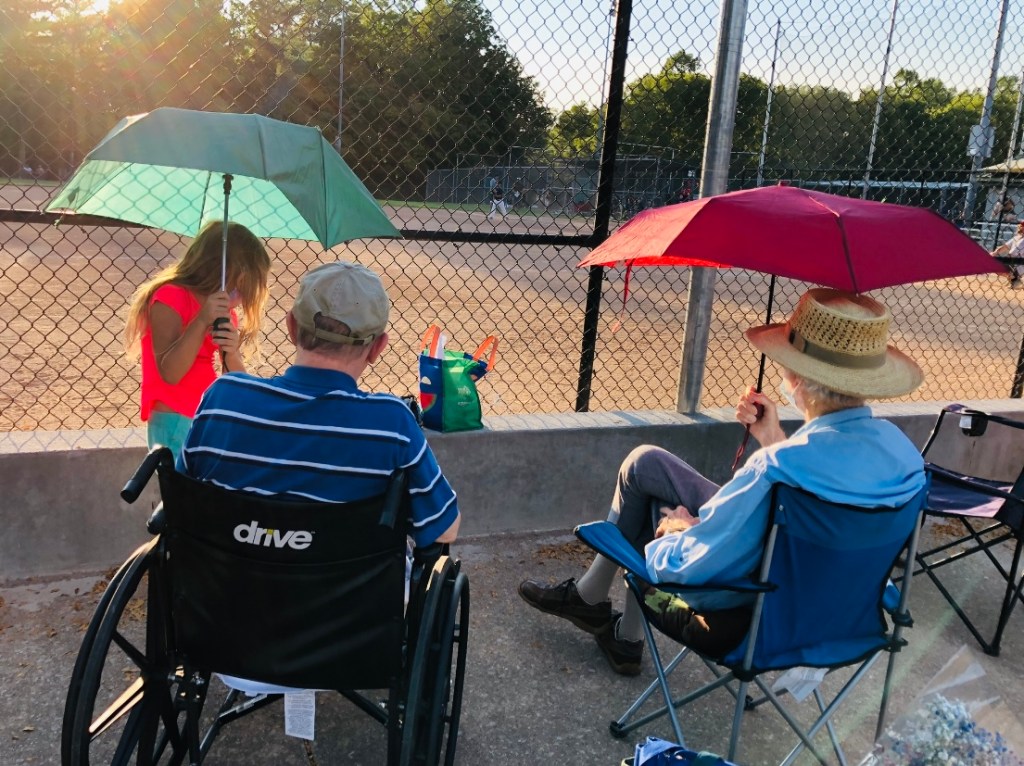
Enjoying the local ballpark with their grandkids. Back at the retirement community, the tall man discovered that he could walk to the shorter man’s room in the rehab building and began to make his way there for daily visits. Seventeen years after their first sidewalk stroll, neither man could have imagined that this is where they would end up: sharing the same retirement home, in failing health, during a pandemic. Health issues were piling up like rush hour traffic in Los Angeles and both men struggled to accept that they had entered their final chapter(s). Yet, alongside the struggle, their friendship burned bright. During those historically difficult months, while pandemic chaos raged around them, they sat, masked and happy, discussing basketball and baseball and exchanging ideas about the Midwest, politics, and the state of the world in 2020.
We live in a world desperate for men who lead with integrity, and who contribute through their intellect, not just their muscles. Men who are generous with their talents and lead with open hearts. Who can drive when required, but refuse to steer their own ego’s bus into a crowd of innocent bystanders, forever tainting lives. Men whose loyalty to their spouses and those they love is paramount. Men who champion and mentor women in the workplace, and in academia. Who refuse to look at women through the limited lens of sexuality and don’t allow what is between their legs to lead their lives. We need men who are curious about the way the world works, and who want to make this planet a better functioning place for all of us.
Sadly, both men are gone now. The tall man died in 2020. The shorter man passed a month and a half ago. In life, few things matter more than integrity and friendship and these two perfected both. May the children and grandchildren of the two men wrap their legacies across our shoulders like a warm blanket and draw from what they poured into us for the rest of our lives.
Once, at a party celebrating the shorter man’s 8oth birthday a family friend who happened to own a classic blue Thunderbird convertible nudged the two men and remarked, “You’re only going to be 80 once, why don’t you take it for a drive?” Needing no other encouragement, the two jumped in. Quickly fastening their seatbelts, they grinned at each other and then took off into the sunset, waving all the way.
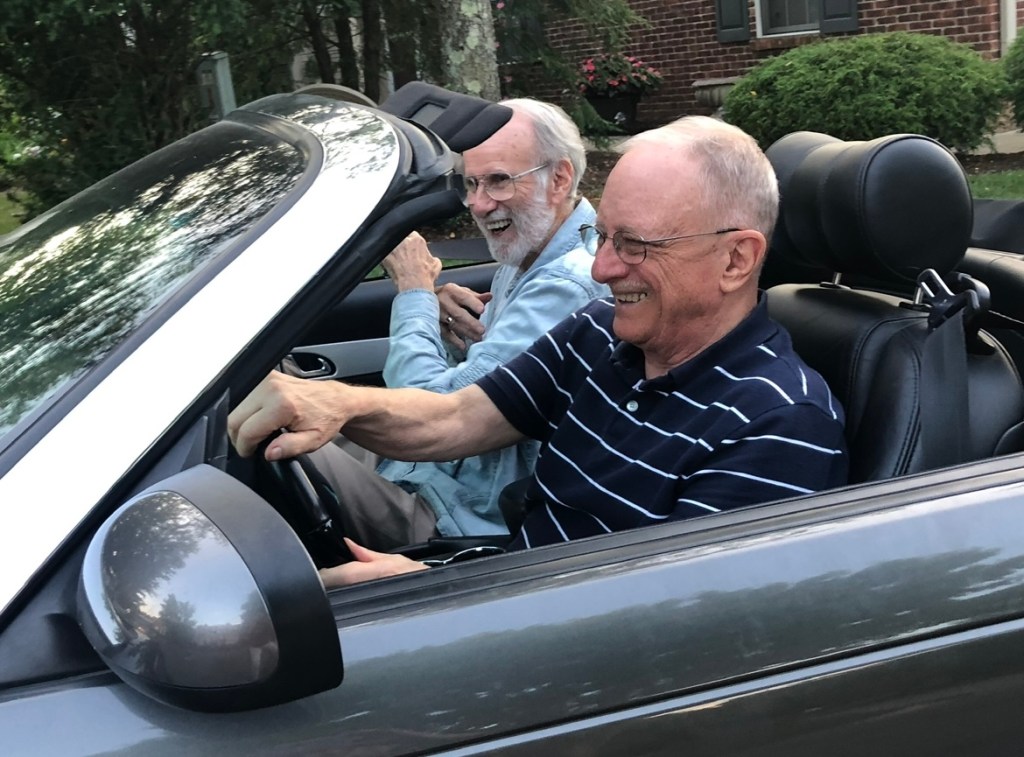
Taking the wheel of the Thunderbird. The tall man of integrity was David W. Holmstrom and the shorter man of integrity was Richard E. Stryker.
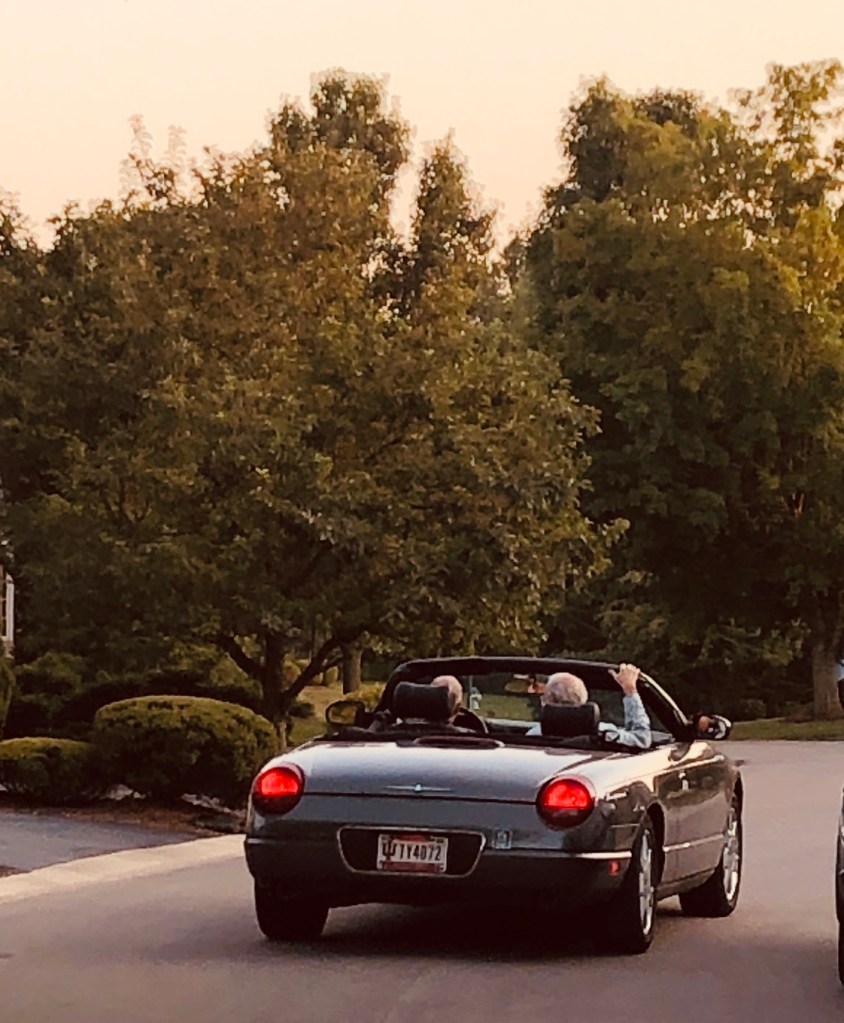
Oh, how we will miss them both.
-
Death in Bloom
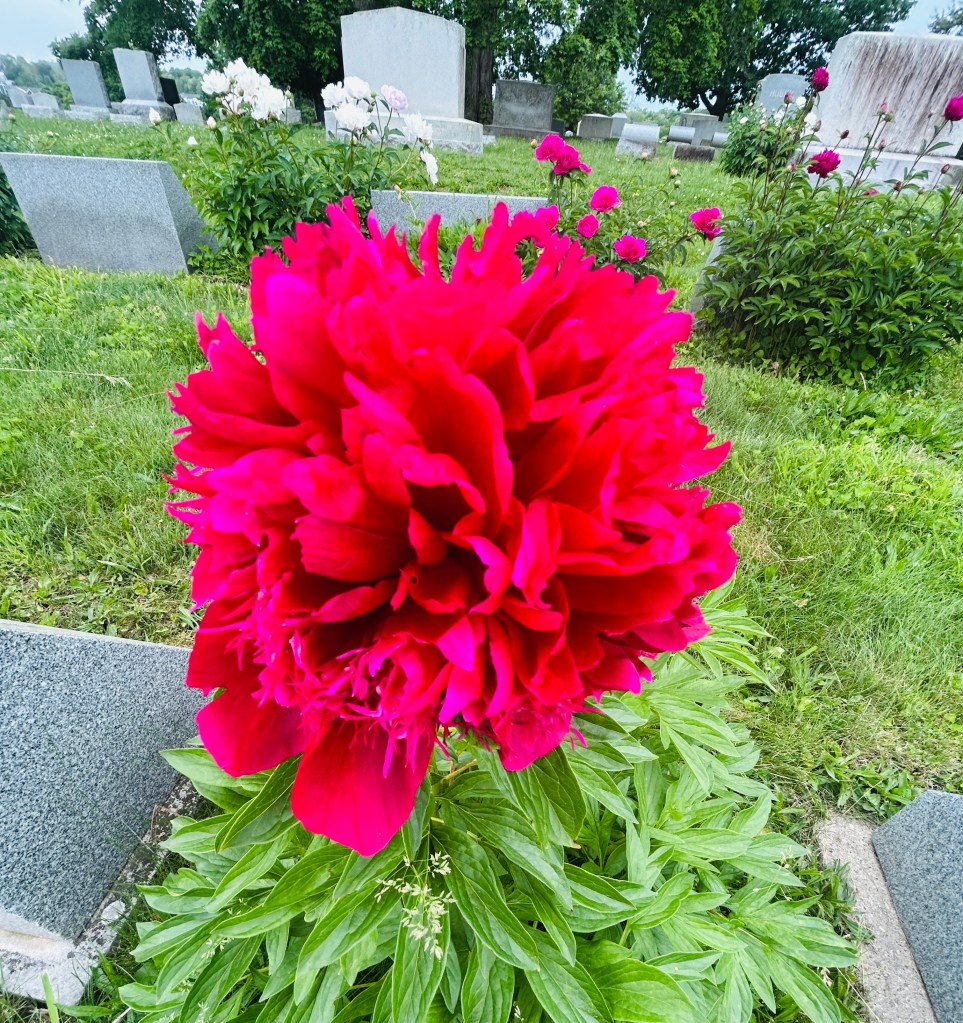
Can there be beauty in death?
The other day, as I drove around town, I was in a rush. One kid had been dropped off at gymnastics, the other needed a pickup from soccer later. There were errands to run, some calls to make. Familiar demands and busy end of the school-year times.
Then, as I sped through the West side of town, rounding a corner near the old hospital grounds, I saw it.
A dark green peony bush in someone’s front yard, stem ends bursting with deep pink blooms the color of a brilliant sunset. Somehow, in the busyness of life, I’d forgotten all about the peonies.
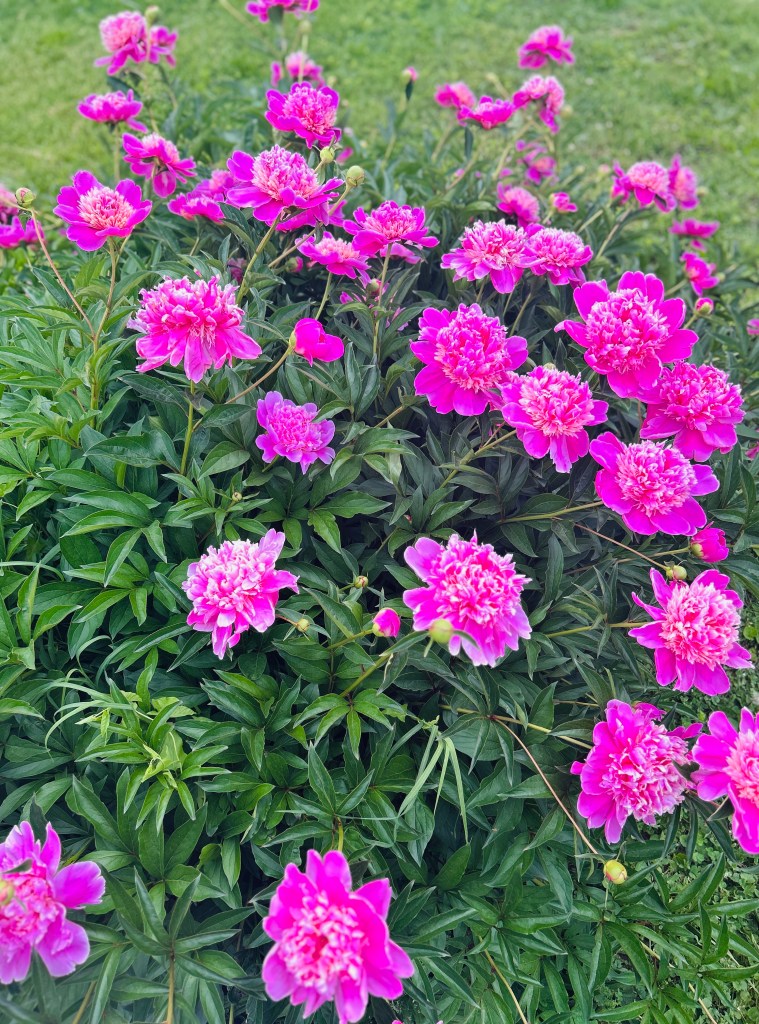
“Yes! It’s that time again,” I thought. And then, “Rose Hill must be going OFF!”
I told myself to forget the calls, put the to-dos and the worries aside for a bit—the cemetery was calling.
The first few years after my husband and I moved from California to Bloomington, Indiana (his Midwest hometown), we lived in a 90-year-old bungalow one block from the sprawling Rose Hill Cemetery. Initially unsure, I grew to adore the acres of rolling green grasses dotted with the spreading shade of centuries-old trees—maple, oak, sycamore. Meandering among the granite, limestone, and marble headstones became one of my favorite pastimes, a unique way to root myself in an unfamiliar landscape.
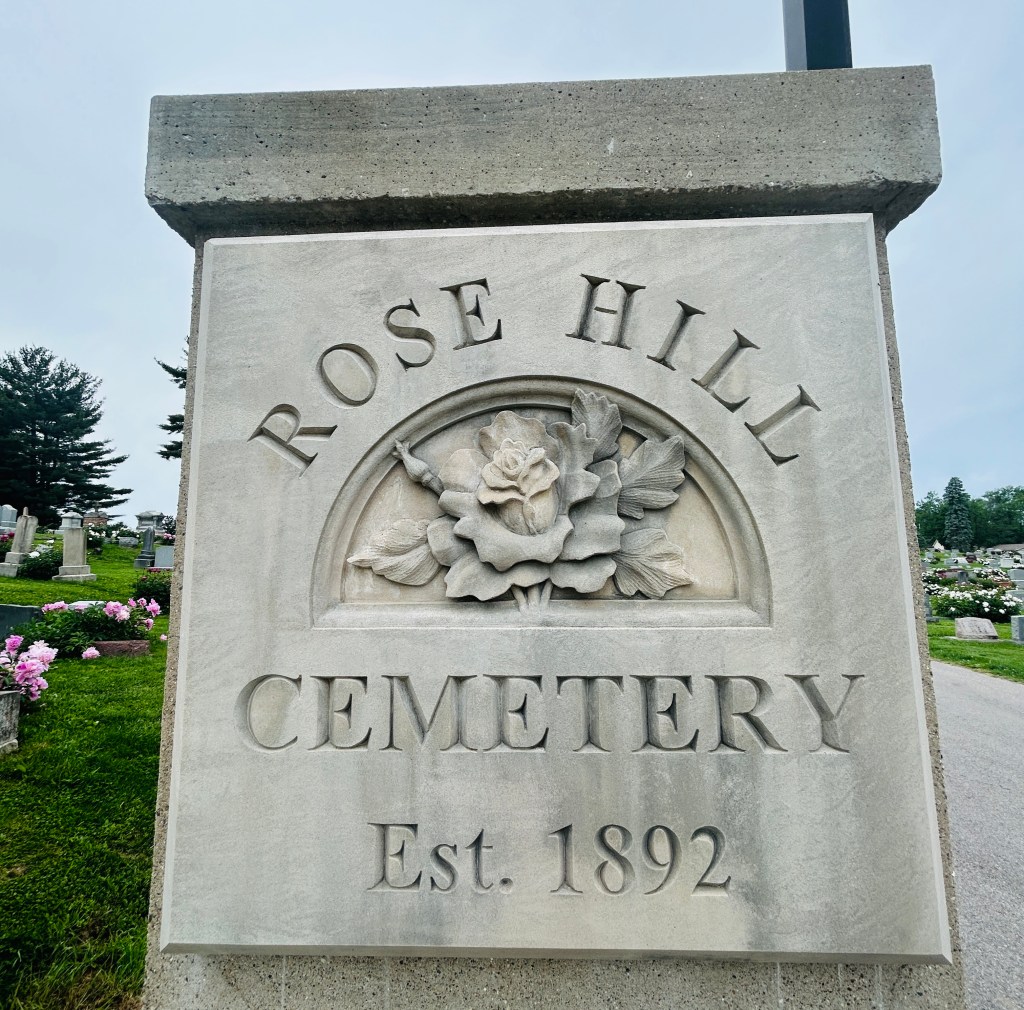
The first year, when May rolled around, my appreciation of the cemetery was taken to new heights when suddenly peonies (the flower I’d used to create my bridal bouquet, primarily because that’s what remained in the San Francisco flower shop the night before our elopement to City Hall), began blooming everywhere. And I mean everywhere.
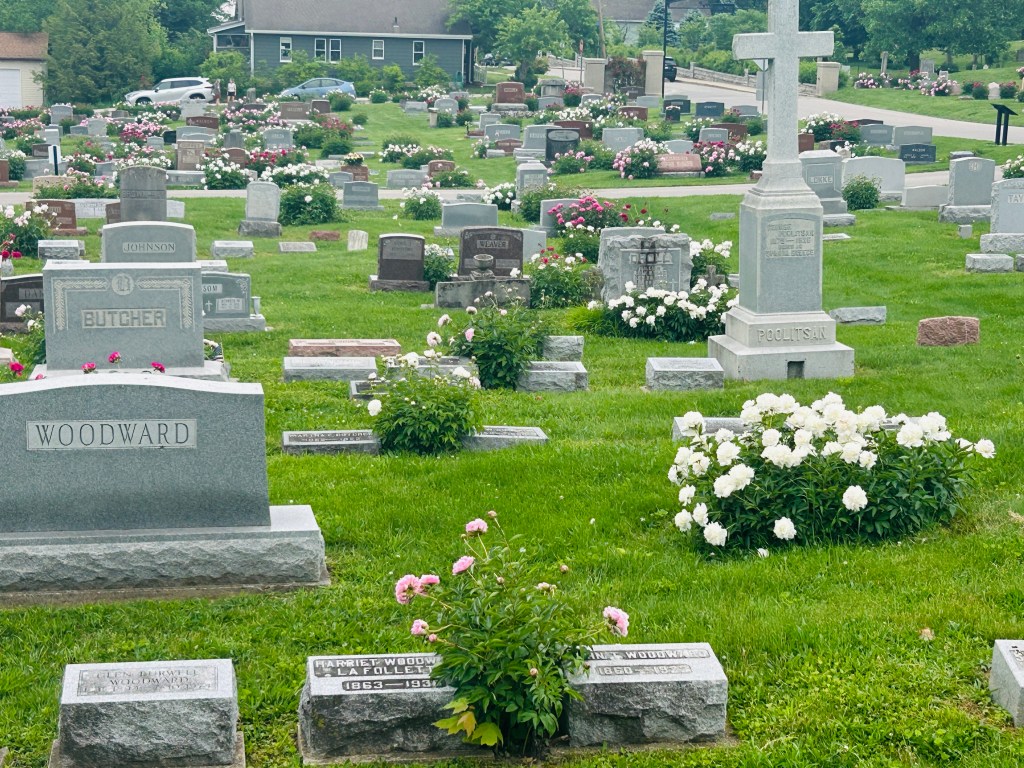
Two years later, when I faced a devastating loss, wandering through Rose Hill and reading the gravestones became a kind of grief meditation, maybe an attempt to assure myself that there was a certain cyclical beauty waiting within death, if I could accept it.
At the time, I could not. But I still loved Rose Hill.
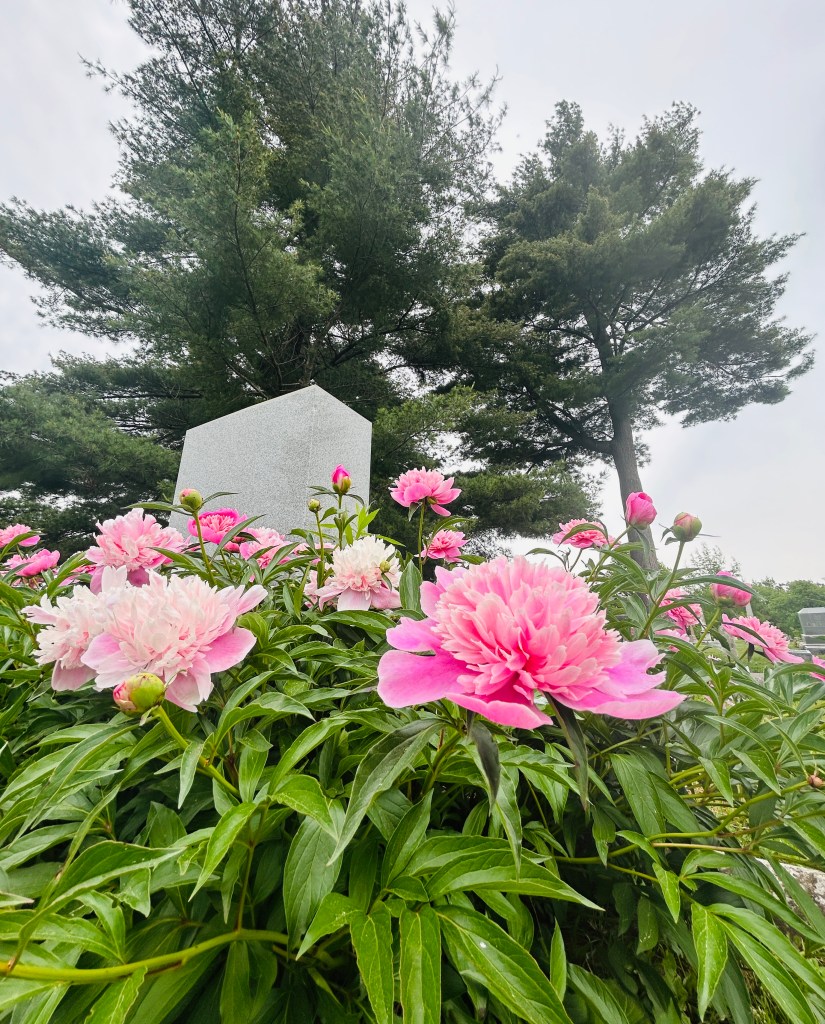
In mid-May each year Rose Hill Cemetery becomes so jam-packed with blooming peony bushes that if you stand at the highest point in the cemetery, clumps of color stretch as far as the eye can see. The honey-sweet smell of the blooms wafts through the air, and a plant nestles next to nearly every headstone.
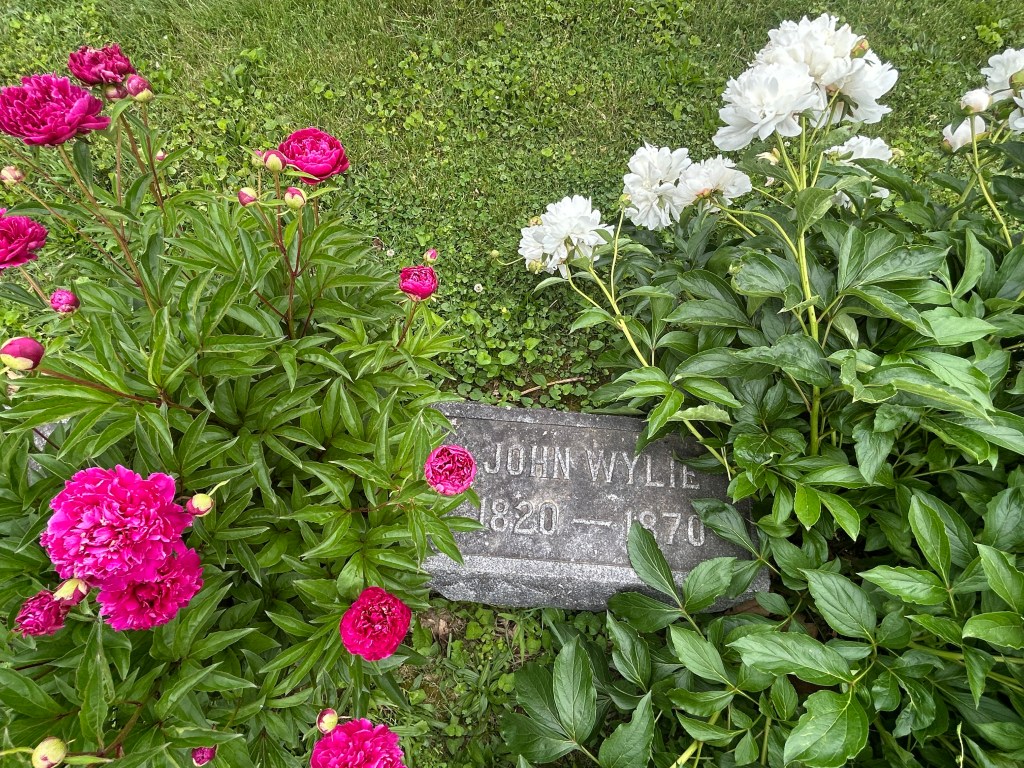
This was the case the other day, and I inhaled deeply as I walked along the road that runs through Rose Hill. A storm was brewing in the distance, and above me, a flock of smaller birds noisily chased a hawk into a tall pine. Winding my way through headstones both recent and centuries old, I thought about the losses that have circled my orbit lately—the death of my father-in-law only a week earlier, the looming May birth/death date of my first son, my best friend’s recent loss of her soul-mate doggie companion. Pensive and prayerful, I realized that without even trying, I had again landed in the perfect place to consider the loss of these close-to-my-heart souls, no longer here physically.
In truth, I think about death a lot. Over time, I have moved from abject terror and bitterness at the subject to a place of consideration, curiosity, even awe. Much has contributed to my death evolution, including prayer, cultivating humility, writing about my experiences, reading as much as I can on the subject, watching interviews about NDEs (Near Death Experiences), and simply getting older. I have learned to gather my death-related feelings and experiences like a bouquet and place them carefully on the vast table of my life.
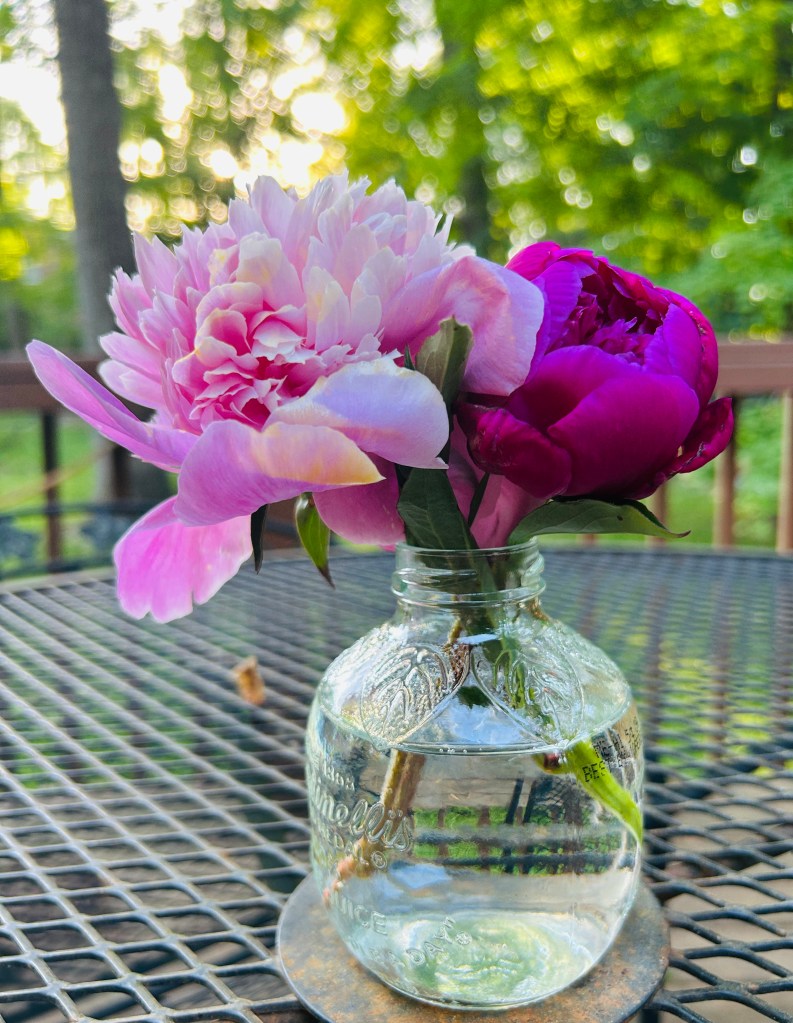
I also noticed that the surrounding rainbow of cemetery peonies mirrors a shift in my attitude toward death: amongst the gravestones, and the devastating losses, beauty blooms. Instead of hope and joy trailing behind me, dragging their feet, we are now companions, partners in my journey. I believe there is a sacred purpose around death in our lives, and that we can approach it as a path to celebrate the love and respect that we feel for those who have died. By facing the death of those we love, or the death of anyone, really, we open the door to navigating the hopes and fears around our own deaths. We cannot avoid death, but we can open our hearts to learn from it, to understand its true purpose.

As I stroll the cemetery grounds, I am awed by the vast array of peony bloom colors and shades: white, pink, scarlet, and even a red variety that I’ve never noticed before. Passing by the “New Spencer Addition” section of the cemetery, I think of the powerful storm that passed through in 2011, in which an ancient maple was felled by a wind and lightning storm. The morning after the storm, while shedding a few tears for the grand tree, I carried off a large piece of bark from the thick trunk. The bark still survives today, lining the side of a garden bed. Holding on to a piece of the former giant makes me happy.
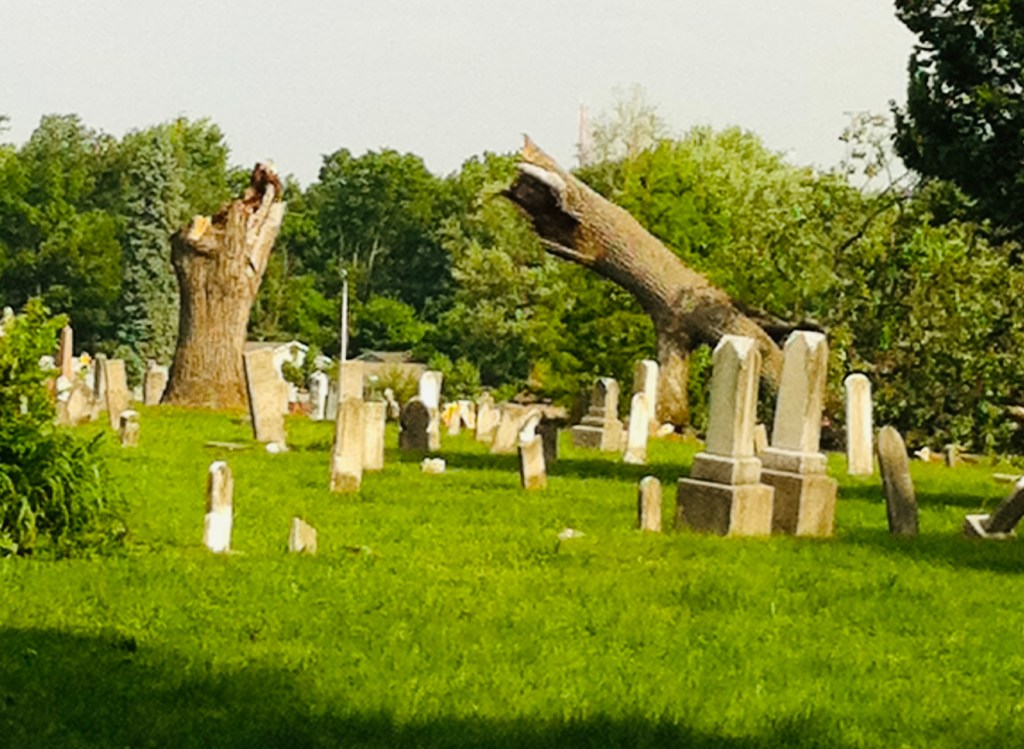
The split maple in the aftermath of the May 25, 2011 storm. 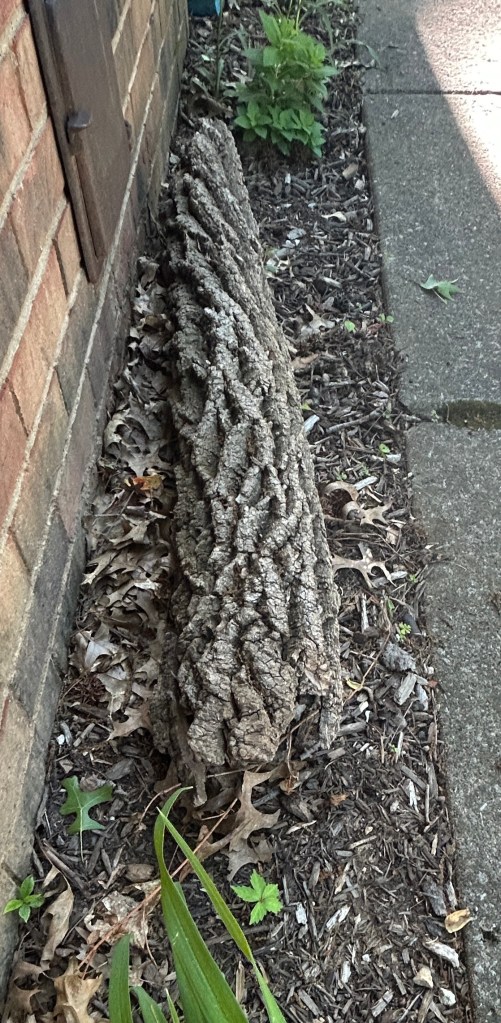
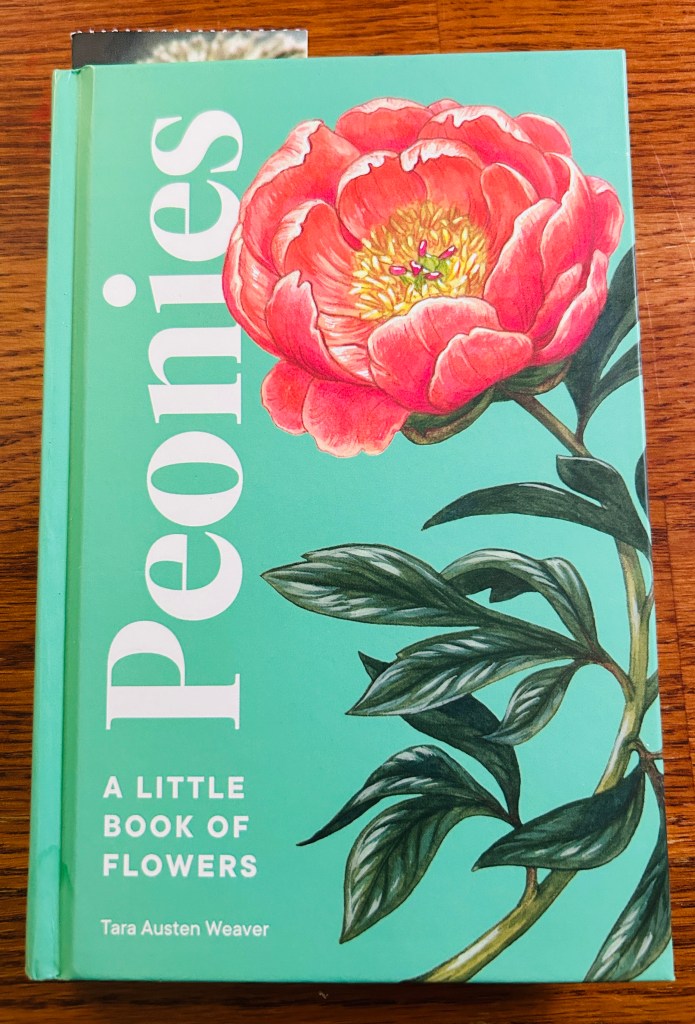
Shrunken and dried, the bark endures. Peonies, which happen to be the official Indiana state flower, are sometimes associated with the memories of loved ones. They are also hearty plants and require little ongoing maintenance. Unlike my writer/gardener friend Tara Austin Weaver, who authored a beautiful, useful book titled Peonies, A Little Book of Flowers, I know very little about the many varieties in the genus Paeonia. From Tara’s book, I learned that peonies are “thought to confer good fortune, prosperity, and a happy peaceful marriage,” so apparently, I should be glad that the shop where I purchased my bridal blooms had been cleaned out of every other flower option that evening.
Under Rose Hill Cemetery soil lie many fascinating, important souls whose lives show diversity and accomplishment. Among them are George (Anner) Shively a musician/poet/baseball player who played with the Negro Baseball League, Margaret Hemphill McCalla, the first female superintendent of schools in Indiana, Alfred Kinsey, the infamous founder of The Institute for Sex Research at Indiana University, Hoagland (Hoagy) Carmichael, the legendary Hollywood performer and musician who recorded “Stardust,” and won an Oscar and John B. Crafton, a successful Bloomington businessman who made the unfortunate decision to voyage across the Atlantic on the Titanic and lost his life when it sank. (Information taken from “A Walk Through the Rose Hill Cemetery Historic Tour Guide No. 12”).
My personal favorite, tucked far into the Southwest corner of Rose Hill, is a fascinating headstone marking two life partners who shared a passion for The Wizard of Oz.
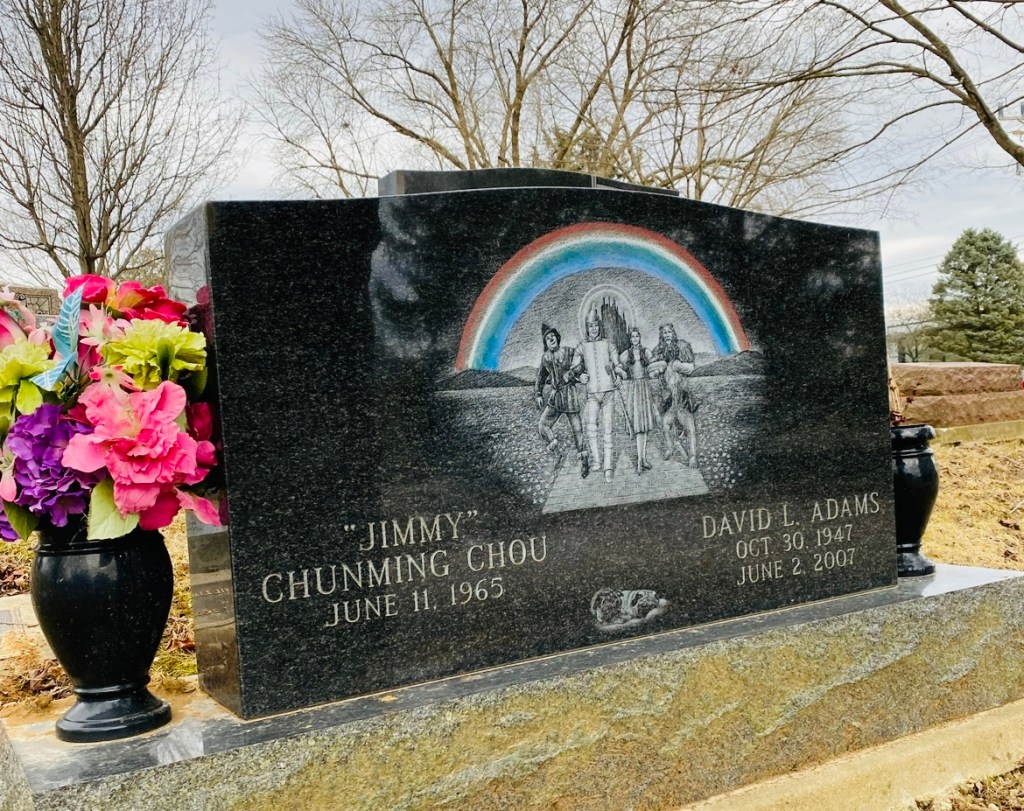
I imagine these two men had some stories to tell. Besides providing a vital service to us humans, cemeteries offer a chance to learn about the lives of individuals who may otherwise have slipped into history. From lost infants (so many lambs on grave stones) to centenarians, to everyone in between. While walking, I remember the grave of a woman my daughter and I once visited on Martha’s Vineyard Island. The lady had devoted her life to chickens, evidenced by the carved stone birds gathered around her grave. Each grave tells a story. Every person lost was grieved for by someone (or some bird).
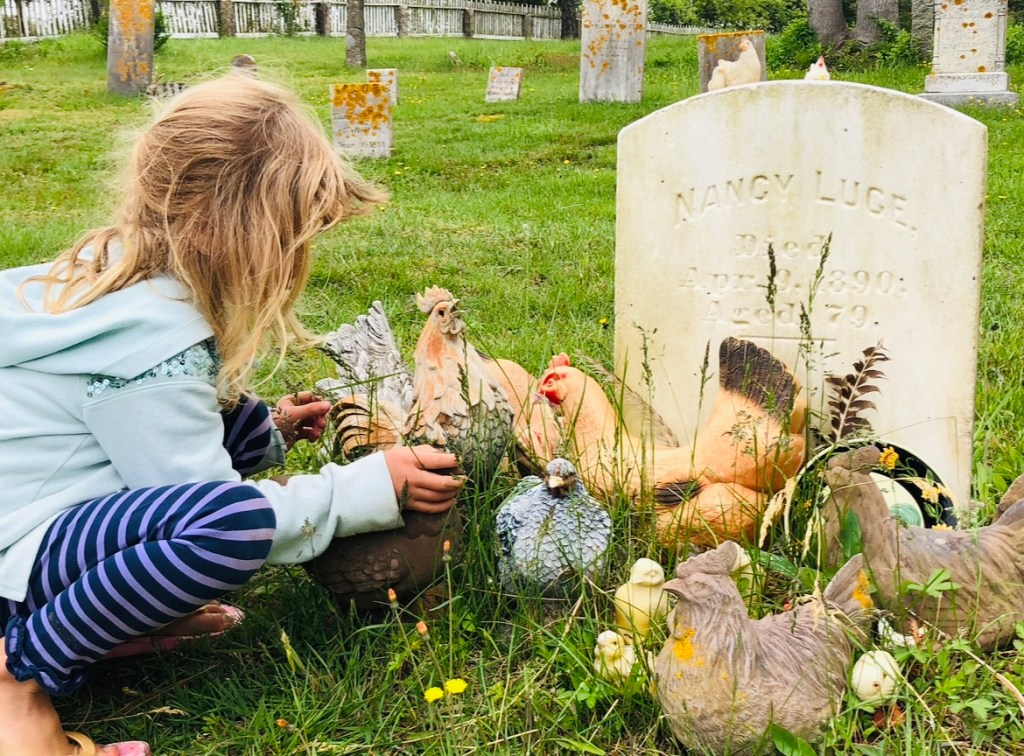
Nancy Luce loved and cared for chickens. I walked for an hour that stormy Friday, soaking in the color and assessing my losses and gains. I bumped into two friends who expressed their condolences regarding the loss of my father-in-law, one offering a warm hug in sympathy.
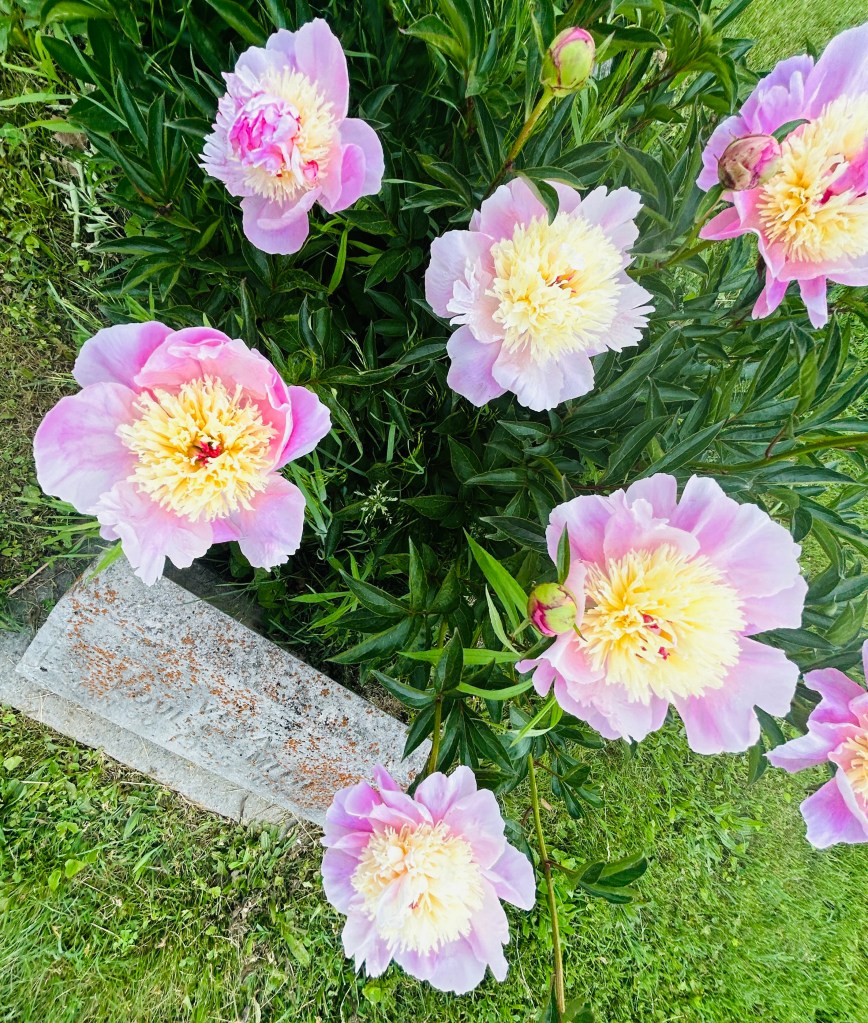
It was time to leave the grounds and return to daily life. Slipping out of a cemetery side entrance, I felt inspired. By nature, by life, and even by death.
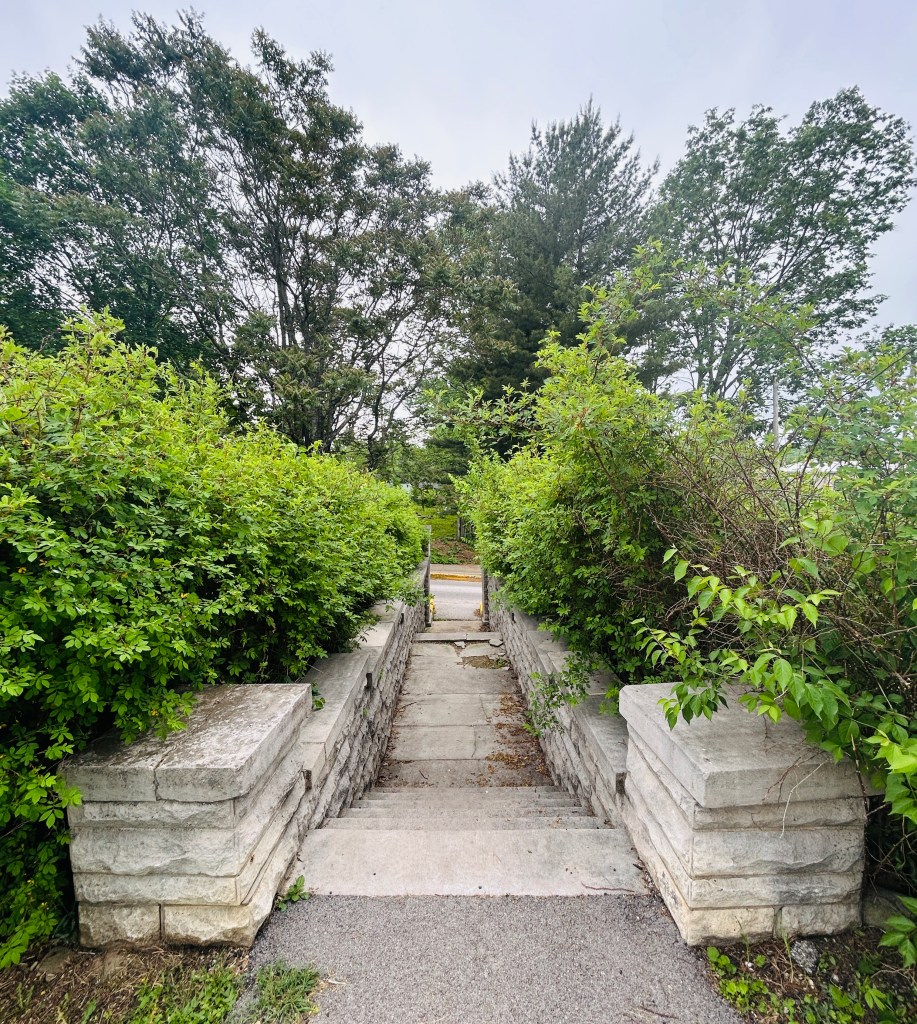
“Death is not the end of everything, but a new beginning.”
–Pope Francis

Credits and Links
Buy Peonies: A Little Book of Flowers here:
https://www.powells.com/book/peonies-a-little-book-of-flowers-9781632173621
A link to more about the meaning of lambs on gravestones from the blog gravelyspeaking.com:
About Rose Hill Cemetery:
-
Picturing Love and Laughter
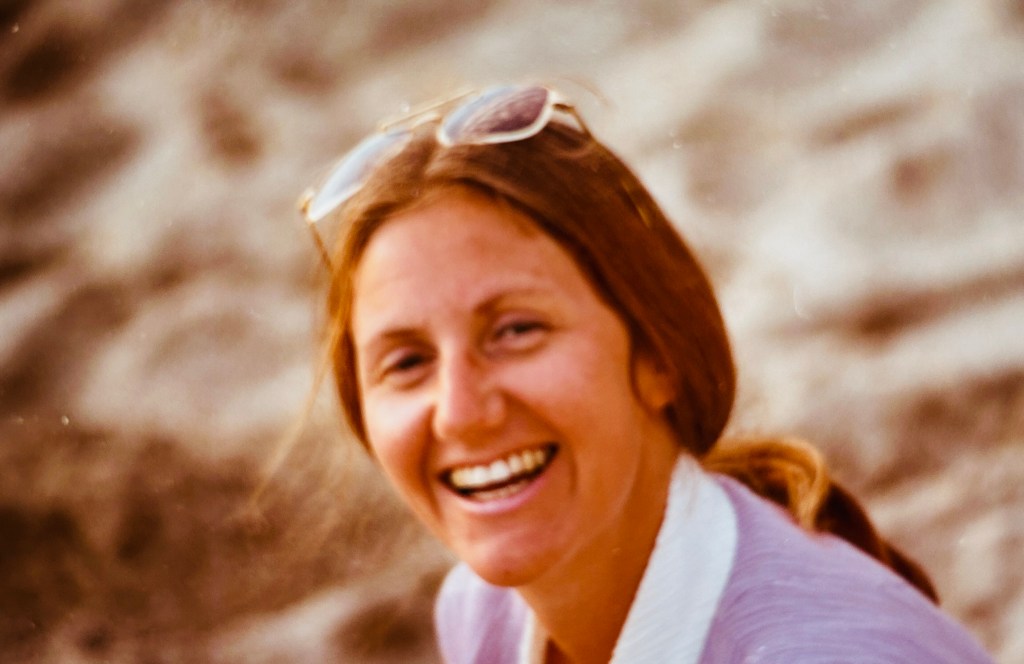
Massachusetts, 1970 Today, in honor of my mother’s birthday, I will share a hot tip: find a partner who sees and admires you enough to take pictures of you as beautiful as the ones my father took of my mother.
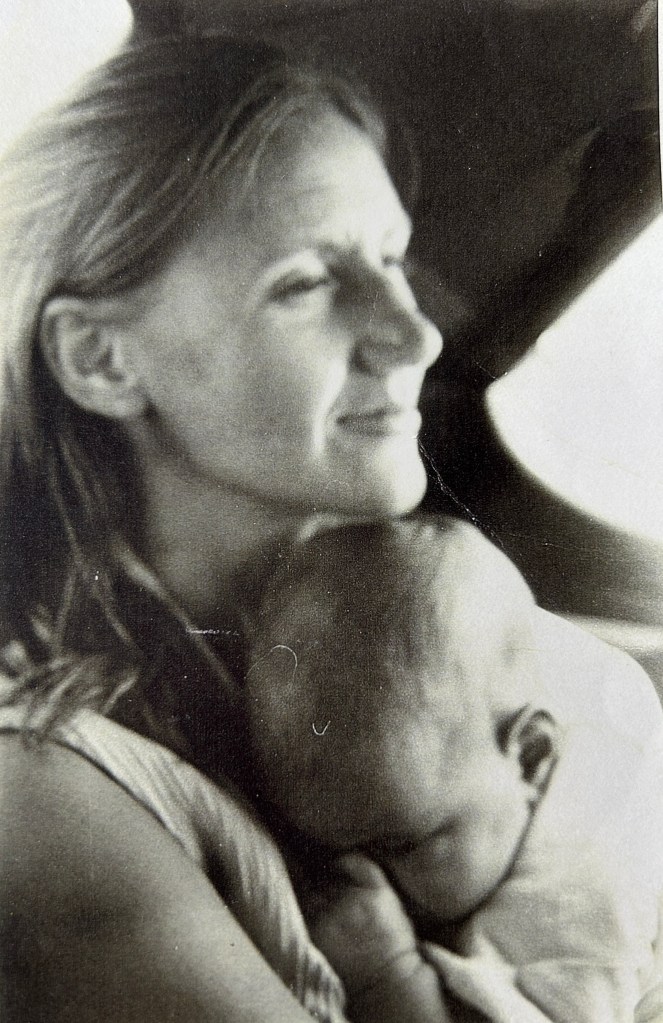
San Francisco, California, 1971 My mother, Patricia H., was an East Coast native who took to Northern California and its terrain and culture like a cat to a warm shaft of sunlight. She stayed for nearly two decades, living and loving. Besides her work as a spiritual healer, she counted caring for me and my dad and tending a large abundant organic Sonoma County garden (that fed our family of three for years) as her greatest joys.
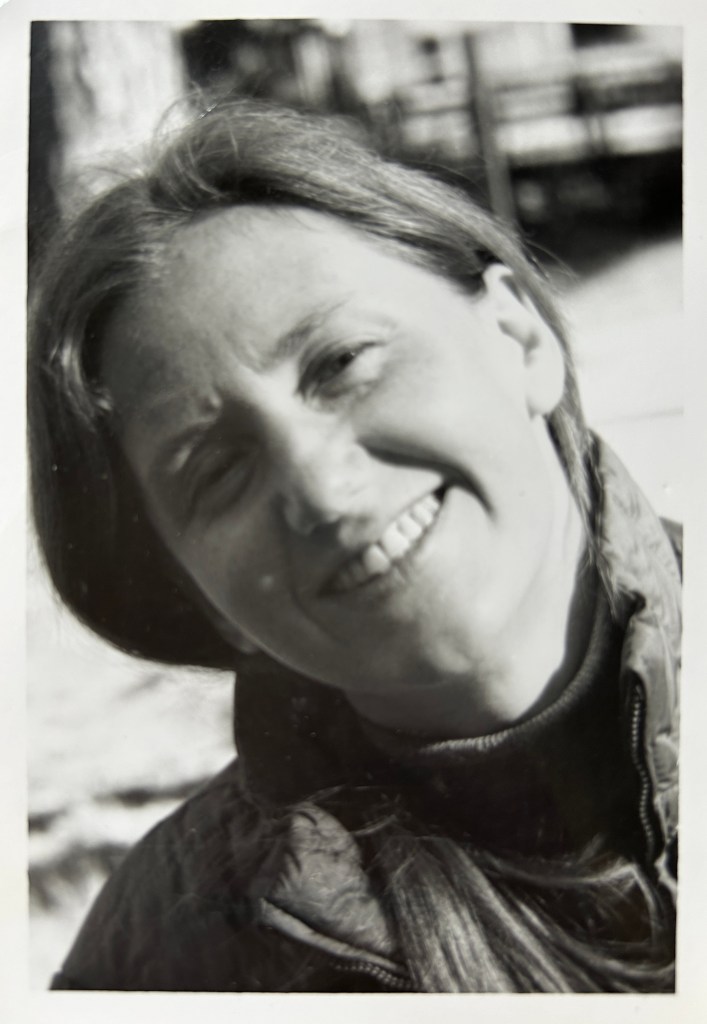
Yosemite, California 1974 A woman both vibrant and quietly confident, her boisterous grinning laugh used to take over her body while her head bobbed slightly to the infectious beat. She affectionately called me Chickadee and to me, her only child, time seemed to pause while I took in the beauty of her laugh.
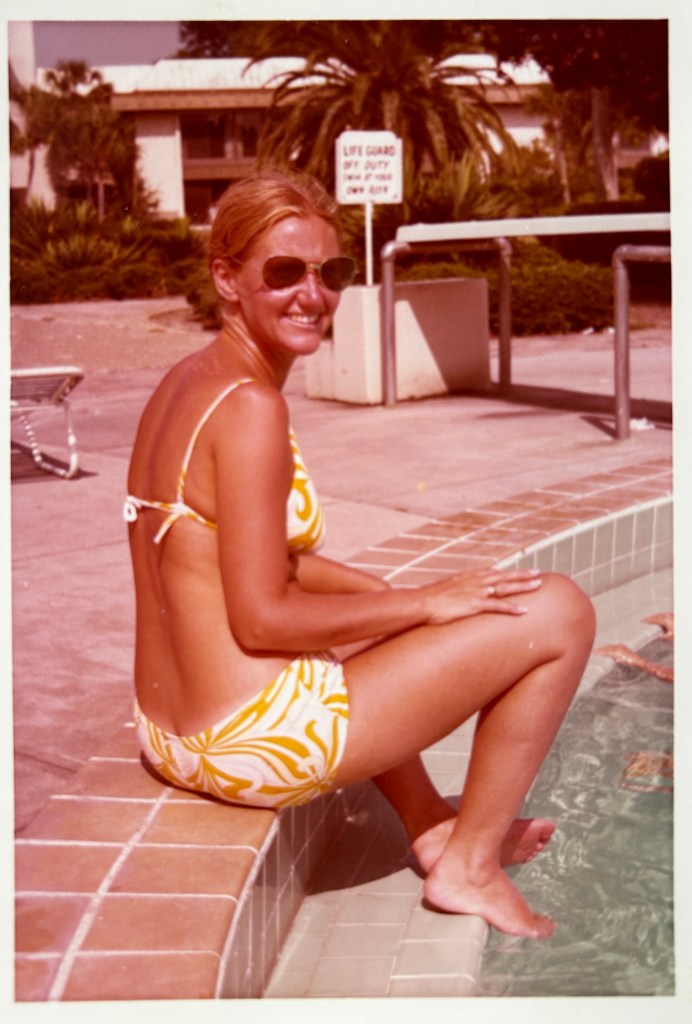
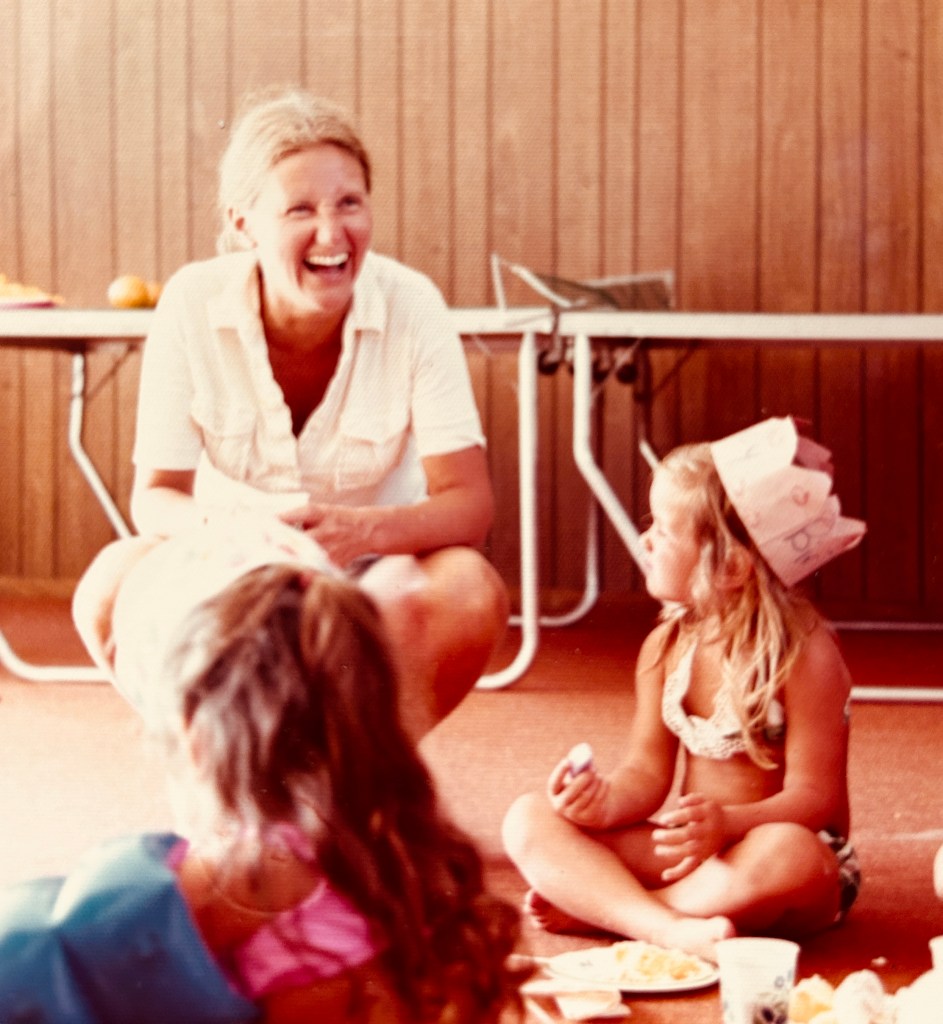
Honolulu, Hawaii, 1969 A memory of her laughing will remain forever in my mind’s eye, but I also like to keep a photo of her in the act above my writing desk. In the image, taken by my father, my mother and I enjoy a humorous moment at my fourth birthday party.
Cocoa Beach, Florida, 1975 Unbelievably, my mother has been gone for nearly twenty-one years now. Thankfully, photographs play a vital role in keeping her image alive. My children never had a chance to meet their maternal grandmother but I hope that they can gaze at her photographs (and some video) and imagine her as part of their experience.
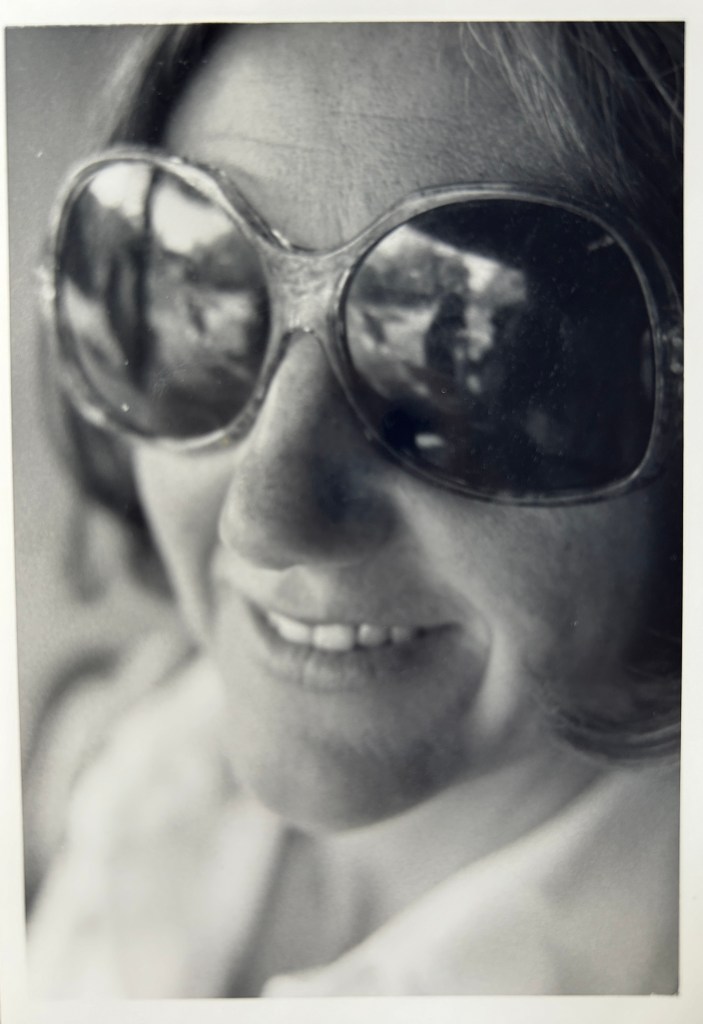
1979 Because she still is.
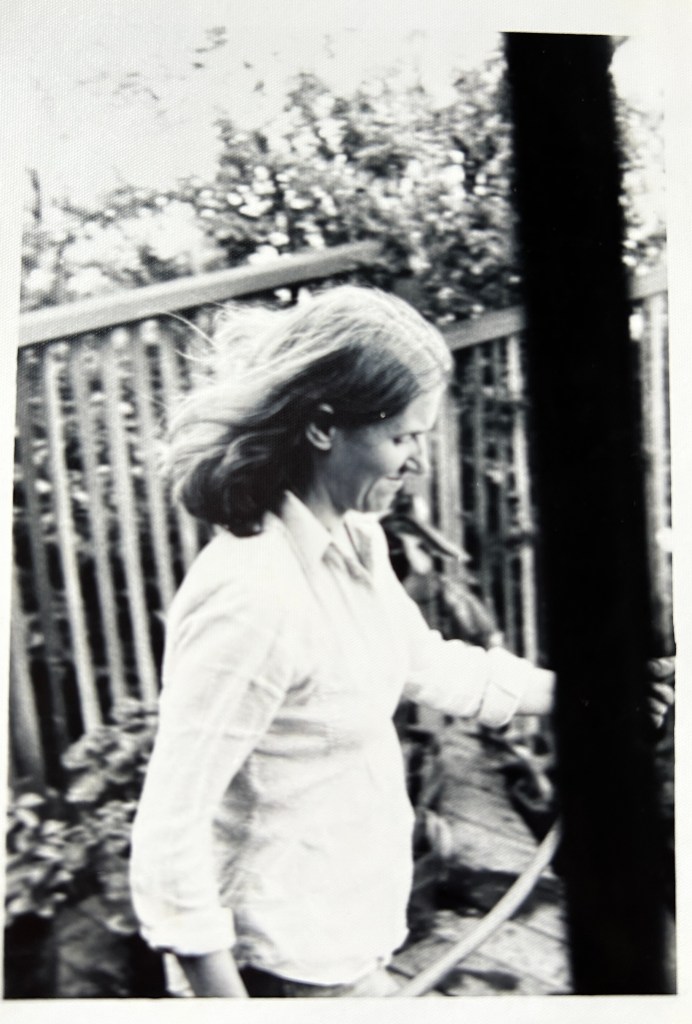
Larkspur, California 1977 My mother’s career as a spiritual healer meant she helped people learn about divine Love. She had a gift for facilitating trust and understanding that resulted in true healing. I often think about how the world could really use her prayers right about now, but I also believe she is still actively sending them our way.
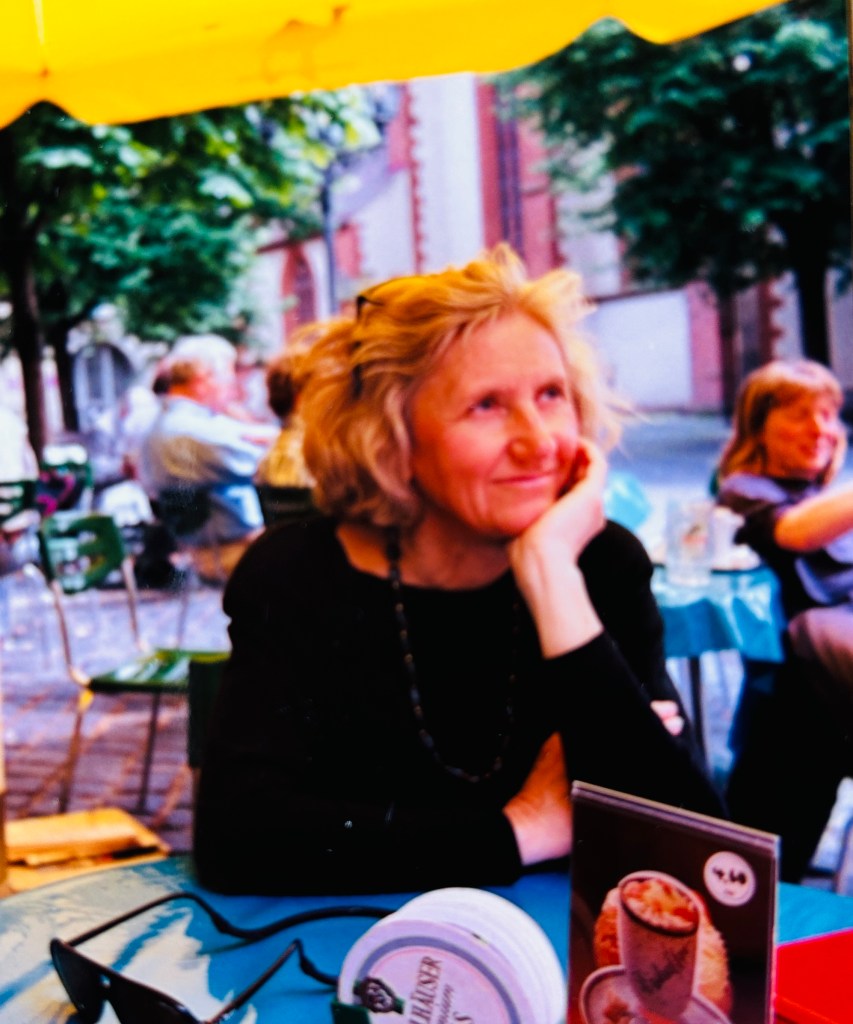
Heidelberg, Germany, 1991 Happy Birthday to you, mama. Keep laughing.
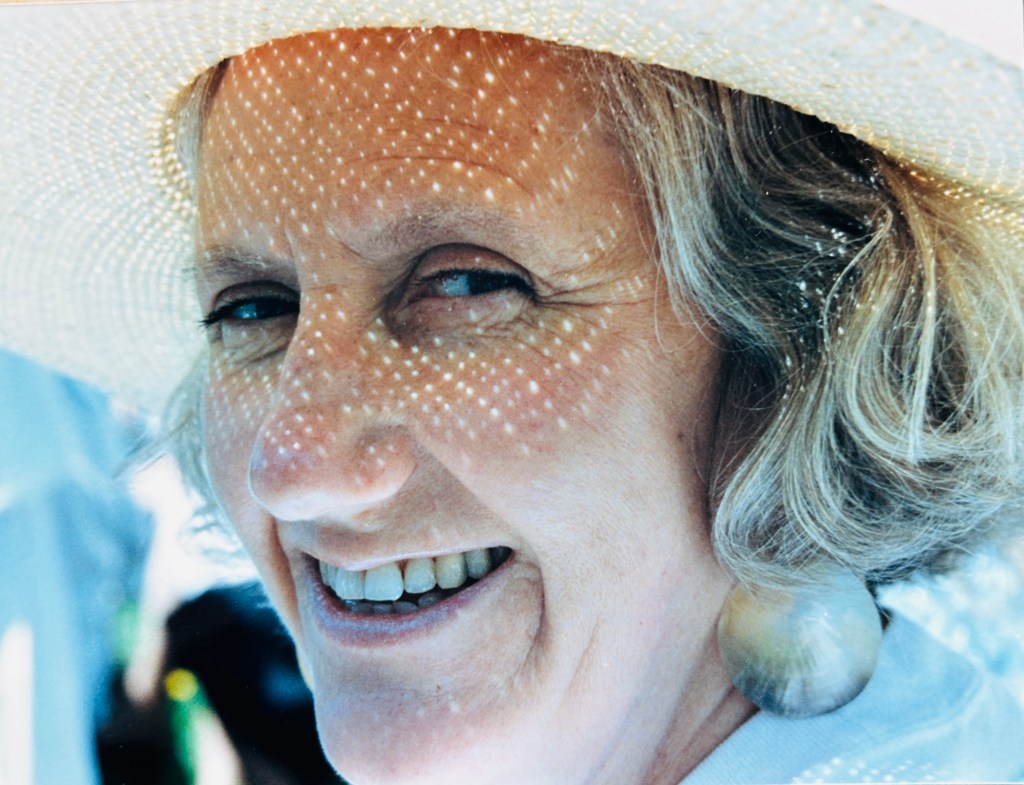
1998 -
Swimming Through Life with Phish
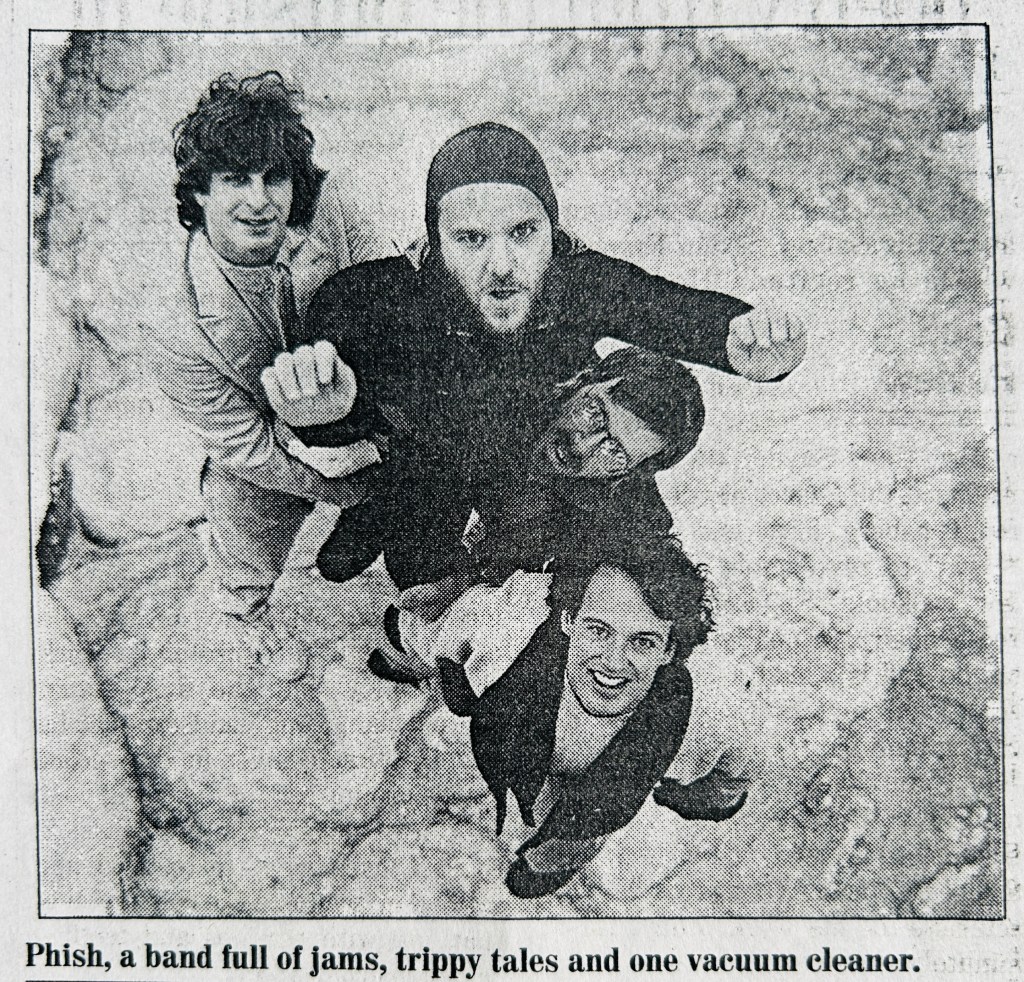
Phish, pictured in The Boston Globe, January 2, 1993 “When I jumped off, I had a bucket full of thoughts
When I first jumped off, I held that bucket in my hand
Ideas that would take me all around the world”
-Phish, Back on the Train, Farmhouse
August 3, 2024, Noblesville, Indiana. A quizzical anticipation washes over the restless amphitheater crowd as the short, bespeckled man strides across the stage, dragging a vintage vacuum behind him. The man’s light cotton dress ruffles as the familiar red (or yellow this time?) circles dotting the fabric glow in the oppressively humid evening air.
My eyes remain glued to the giant hanging screen to my left as I watch the band’s namesake, Fishman, carefully place his lips to the end of the vacuum’s hose and … blow.
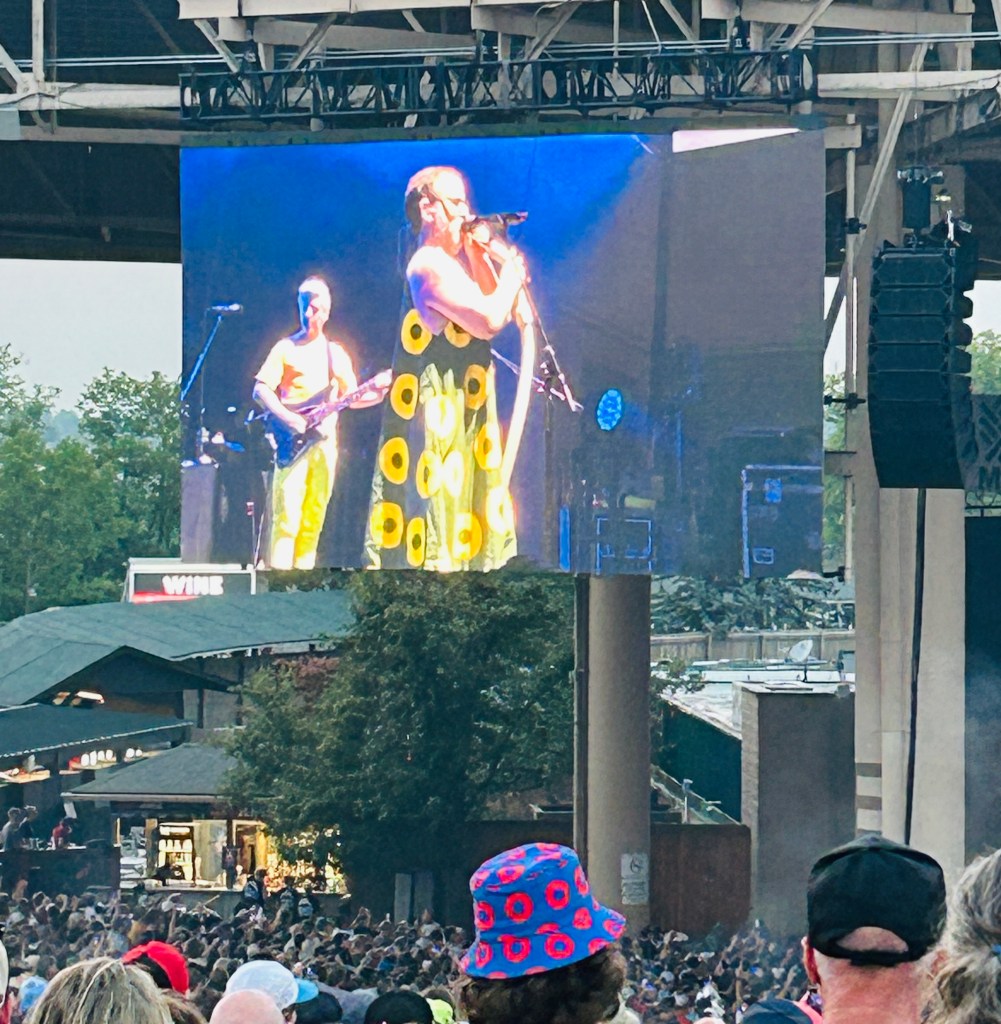
Jon Fishman makes the Hoover sing. Imagine a cross between a flatulent Kermit the Frog and a beached seal’s whistling lamentation and you might come close to the sounds that emit from the microphone. As the crowd roars in appreciation, I stand on a narrowly folded picnic blanket, stagnant air trapping me, my husband, and our two friends in a sea of drifting marijuana smoke and patchouli-scented, undulating, frequently tie-dye adorned Phish fans.
Suddenly, the darkening sky above me appears to divide between the present and the past. I’m traveling back in time. Waaay back. Thirty-five years in fact.
January 31, 1989, Boston, Massachusetts. I am nineteen years old, a recent college dropout sitting on the arm of a floral couch talking to my cousin on the phone, the receiver heavy in my hand. “We’re seeing Phish tonight,” she announces excitedly, “with a P, not an F … they’re hard to describe but I think you’d love them … this is their first New Year’s Eve show ever.” Impulsively (how else does a nineteen-year-old make a decision other than impulsively?) my high-school boyfriend and I decide to see the mysterious, aquatically-monikered band play in Boston that evening.

At that point, the future stadium-fillers only had a handful of fans. Jenny, my older by six months cousin, was first exposed to Phish’s music while attending a very alternative boarding school in Vermont (so alternative that her “roommates” at the institution consisted of her boyfriend and their pet rat—or was it a ferret—and their “dorm” a dilapidated cabin on a wooded Vermont hillside).
That final, frigid night of the 1980s found a group of us stomping along city streets, cold air winding its way under my velvet scarf and straight through my silvery tights as we searched for Boston’s World Trade Center Exhibition Hall, tucked away at the end of a pier. Once inside the wide, dark space we gripped our drinks and watched as the opening band, the popular Ululators, warmed up the festive, eclectic crowd.
Soon it was time for the main attraction to take the stage. A group of four grinning young guys walked out, not much older than us. The two guitar players wore tuxedos and top hats, and the drummer sported nothing but a G-string with tuxedo tails streaming out behind his bare rear.
As soon as the four launched into “I Didn’t Know,” I knew.
While it was clear that these guys were gifted musicians, but something else was also going on, fresh and wholly different. Lyrics were whimsical, clever, and funny. Guitar riffs melodic and transporting, with piano and drums providing both a classic and fresh accompaniment, rousing and soothing the crowd. This was rock music, but it was also a kind of entertainment, a university of the musically absurd.
I’d never seen a band enjoying themselves as much as the crowd facing them. Audience participation was encouraged, as important to the life show’s life as the performers on stage. As the four burned their way through instant classics like “Bathtub Gin,” “Split Open and Melt,” and “Fee” the energy created was reciprocal, as evidenced by the ecstatic grin splashed across the face of the man I later learned was Trey, the enthusiastic, head-bobbing red-haired guy who appeared to be leading the charge.
The notes built and crested and shattered as they rolled around in my head, sometimes all at once. But the highlight, the episode we talked about for days after, was when the red-circle-on-grey-fabric-dress-wearing Fishman (who in my opinion should receive more national credit for normalizing men wearing dresses) rolled a cylindrical vintage vacuum out on stage.
“Maybe he’s going to do a little cleaning,” I thought, “Hoover up the confetti?” Instead, he raised the hose to his willing lips and began to enjoy himself playing the vacuum like an instrument. Our mouths opened in wonderment, the crowd laughingly danced around the room and shook our heads in disbelief. That was it – I’d wager that everyone at that show became a Phish fan for life.
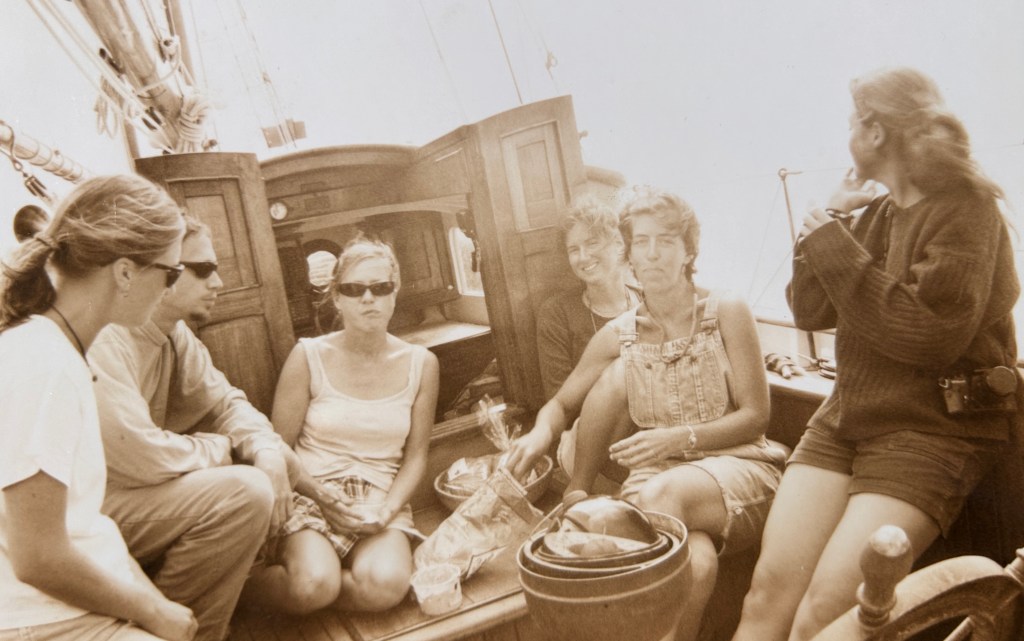
Some of the motley crew that attended the first New Year’s show in 1989 After that first magical night, Phish and their musical movement became a part of my world. Despite an obsession with David Bowie and New Wave music in High School I easily made the shift to devoted Phish fan. I was fortunate to live in Boston throughout the 1990s (which also happened to coincide with my 20s), the same decade the band was rising and growing exponentially in popularity. While Phish launched their brand and collected a gigantic fan base I launched my adulthood, experienced my first broken heart with that first Phish-loving boyfriend, and attempted to discover my place in the world. I never followed the band nationally from venue to venue like a truly dedicated Phishhead, but during those days I saw enough shows in Boston and other Northeast venues to know the words to every song and start a half-inch-thick prized collection of ticket stubs.
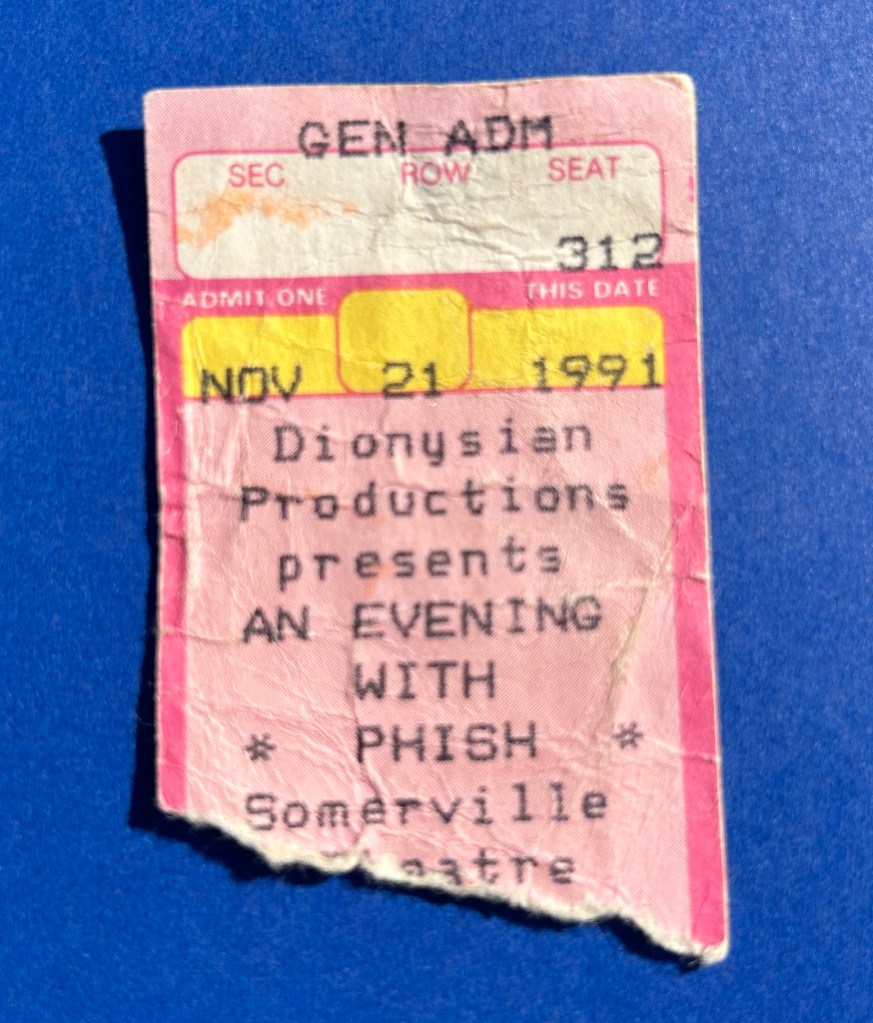
Phish ticket stub, 1991 August 3, 1991, Auburn Maine. I had added my name to Phish’s mailing list early on and one day in June 1991 a postcard arrived. It was an invitation to a concert dubbed “Amy’s Farm” because the show was held at the Maine-based farm of Phish’s first fan and friend, Amy. Given that Phish signed with Elektra Records that same year the band was offering thanks in the form of a free show to the fans that had stood by and supported the foursome from their very beginnings in Burlington, Vermont in the early 80s.
This explains how I found myself camping in a dusty field in Northern Maine one hot August day, listening to Phish play under the stars and pines pondering how I got to be so completely free and fortunate. A vague, filmy memory of the band riding out of the thick forest behind the stage, naked, atop horses bounces around my mind, however to this day I’m not certain if this image is a dream, the truth, or a mirage. The sole bummer of the day: we forgot the tent.
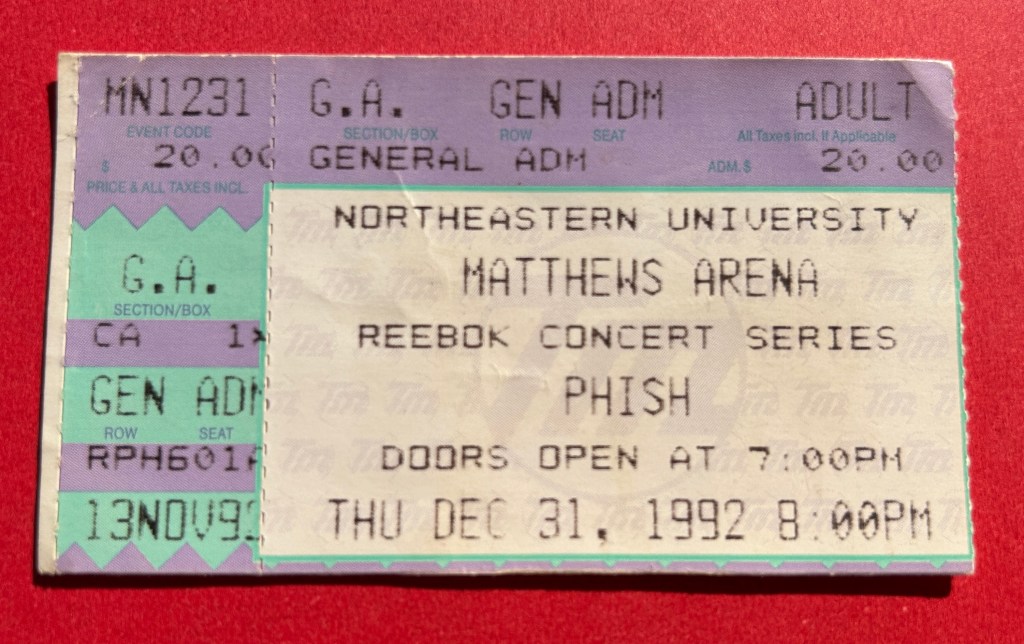
Phish ticket stub, 1992 December 31, 1992, Boston, Massachusetts. Another New Year’s show, this one at Northeastern University’s Matthews Arena. Unbelievably, the venue was walkable from the apartment I shared with my best friend in Boston’s South End –no need for tires to make contact with the road. Standouts at the show included the person suspended over the audience in a chicken costume and the mass hysteria signal Trey gave the audience (that I believe was responsible for the “mysterious tremors” mentioned in the Boston Globe the next day). This was also the night I lost track of my group entirely, only to look down from a balcony and immediately spot my friend Nat, his thick bouncing ponytail silhouetted in the immense gyrating crowd like a furry creature signaling his location.
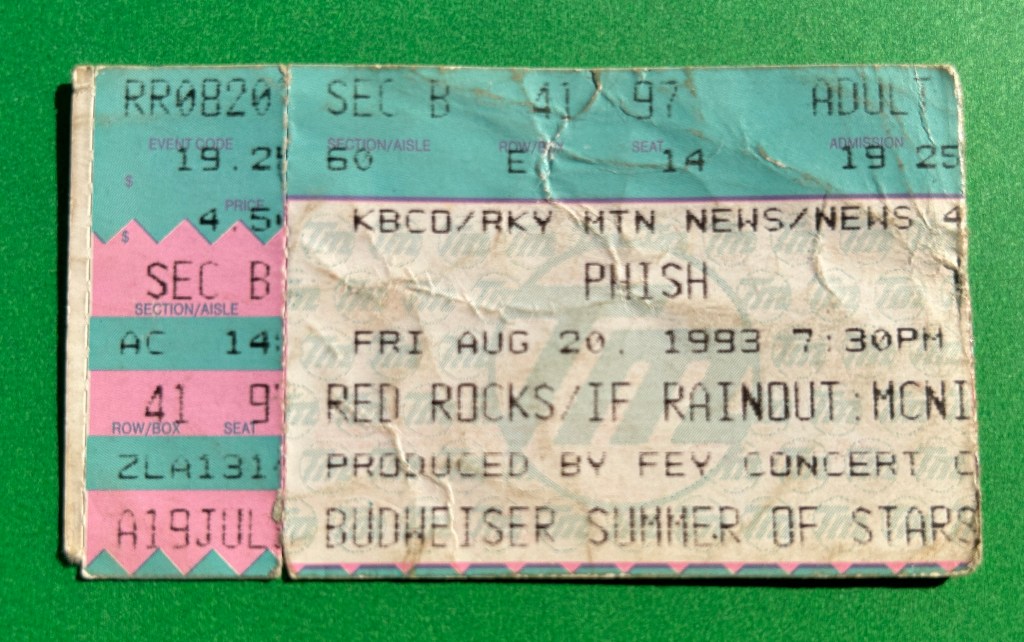
Phish ticket stub, 1993 August 20, 1993, Denver, Colorado. That summer I worked at the Colorado-based camp I’d attended since age six. Phish was playing at Red Rocks and some friends and I managed to get tickets. That evening, I watched the lithe bodies of multiple fans leaping over three benches at a time as the band played “Run Like An Antelope” and the setting sun turned the natural rock walls of the amphitheater a red so brilliant I had to look away.
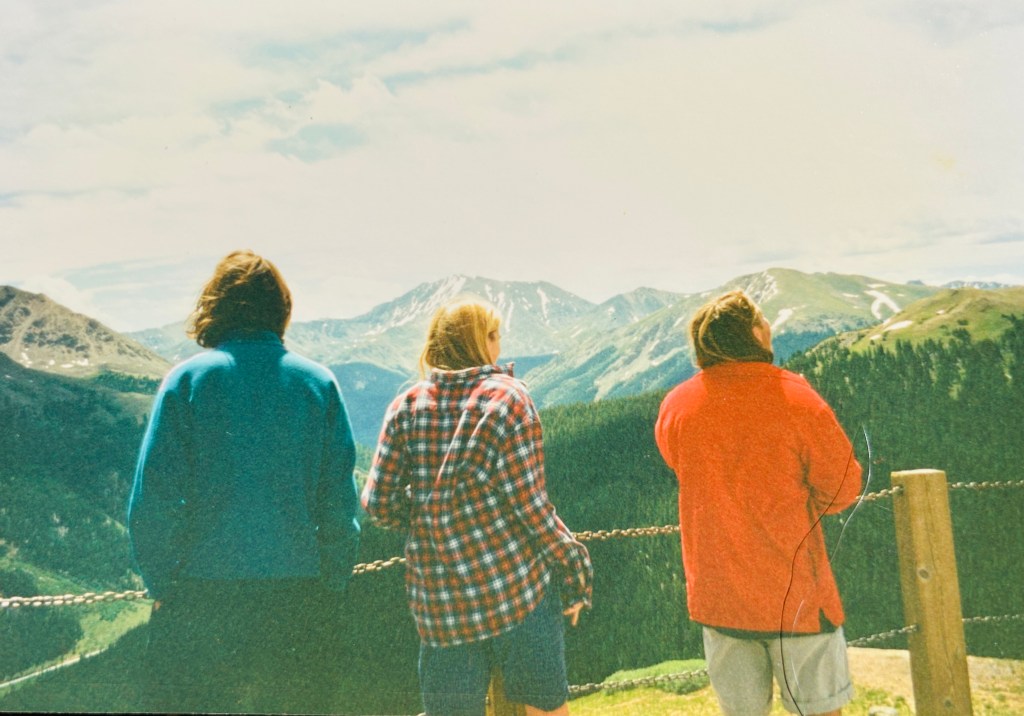
Watching “the smoke around the mountains curl,” Colorado, 1993 Alas, all was not perfect in Phishland. As much as I enjoyed the concerts, the traditions, and the fan culture I sometimes felt excluded by the masculine energy created by the four men on stage. I got tired of the same jams played by the same dudes with the same expressions and longed to see a woman up there, blending her voice with theirs, or theirs with hers. Where are the female jam bands, I wondered?
The amount of wasted, stumbling, blank-eyed fans who don’t know they are that far gone could be off-putting, even if I was sometimes one of them. Undercurrents of negativity surround certain Phish songs, and I didn’t enjoy the screeching, off-key vocals that sometimes took over. My least favorite song is “Wilson,” which invariably turns into a yell-along for the audience. I do realize, however, that music (especially Phish’s) reflects all aspects of the maze that is the human condition and neither band members, nor fans, are immune to life’s peaks, valleys, and temptations.
July 10, 2003, Shoreline Amphitheater, Mountain View California. In 1998, after ten years in Boston, I moved back to my native Northern California. Soon after, I met my Midwest-raised future husband when our work cubicles were situated next to each other. One of the first things we connected about? Our mutual love for Phish. During the early years of our relationship, right about the time Farmhouse was on permanent rotation in our car’s CD player, we caught a few Phish shows at Shoreline. The most memorable of these was the final show before the band went on a six-year hiatus. Sitting on the lawn at Shoreline, my shoulders sunburned from a day in the California sun, I gazed around at the massive, dancing crowd while the band launched into an encore of “Rift.” It was hard for me to grasp that this wacky little band I had once stood five feet from was now selling out four nights at a 22K-person capacity amphitheater.
Speaking of valleys, Phish’s founder and lead singer, Trey Anastasio struggled with a variety of addictions and was arrested in December 2006. I followed his story closely, perhaps recognizing some of my creative path, as well as addictive behaviors in his, and acknowledging that our idols can be as fallible as ourselves.
In a January 25, 2019 interview with GQ magazine about his embrace of sobriety Anastasio remarked “You know, I look to my heroes to be reminded that really good, really smart, really talented people can fall into this trap pretty easily, far down the road, if they’re not careful. The important thing is to know that there is a way out. And the life at the other end of that is a beautiful life. Everything bad turns into an incredible gift. If people can find the way out.”
Mistakenly, I thought a sober, creative life would be about as exciting as a bleached sample in a jar, but I assure you, just as Trey has, that it is even more beautiful and exciting than anything that has come before.
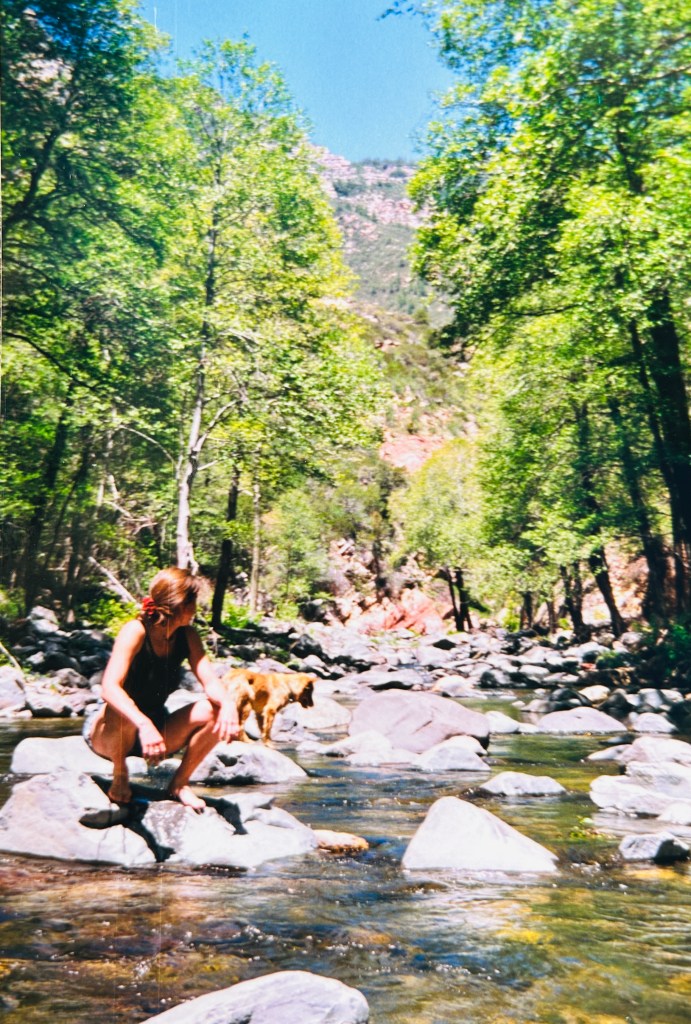
Caught between the past and the future, Arizona, 1995 August 3, 2024, Noblesville, Indiana. Back on the lawn at Deer Creek (as Hoosiers will forever insist on calling it), the glowing orb of a setting sun is held by the branches of a lone tree. I am content, the kids are safe at home and my grooving, grinning husband of eighteen years dances alongside. I have been held by Phish’s music for so long that it has become a part of me, the branches of my life growing around the always-evolving but forever-burning core.
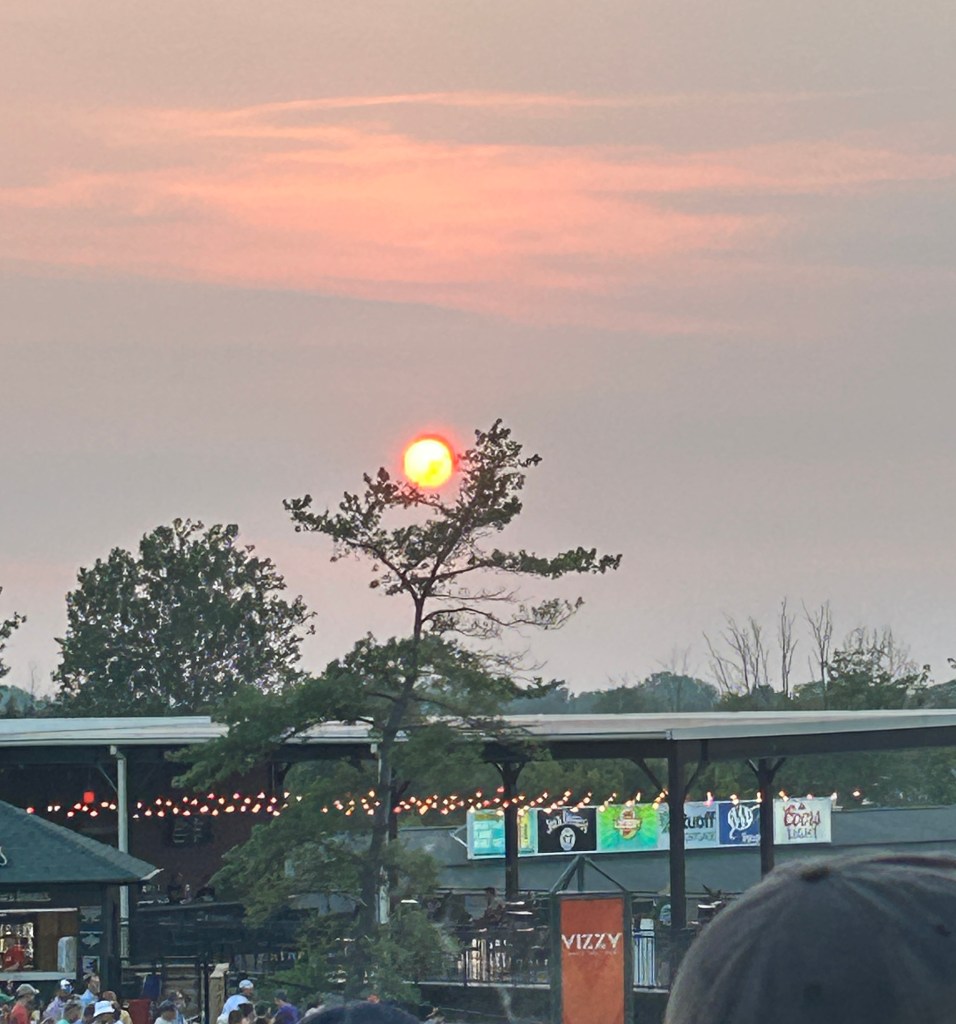
Sunset at Deer Creek, August, 2024 And miraculously, thirty-five years after first hearing the tortured sounds emitting from Fishman’s vacuum hose, I am listening to them once more.
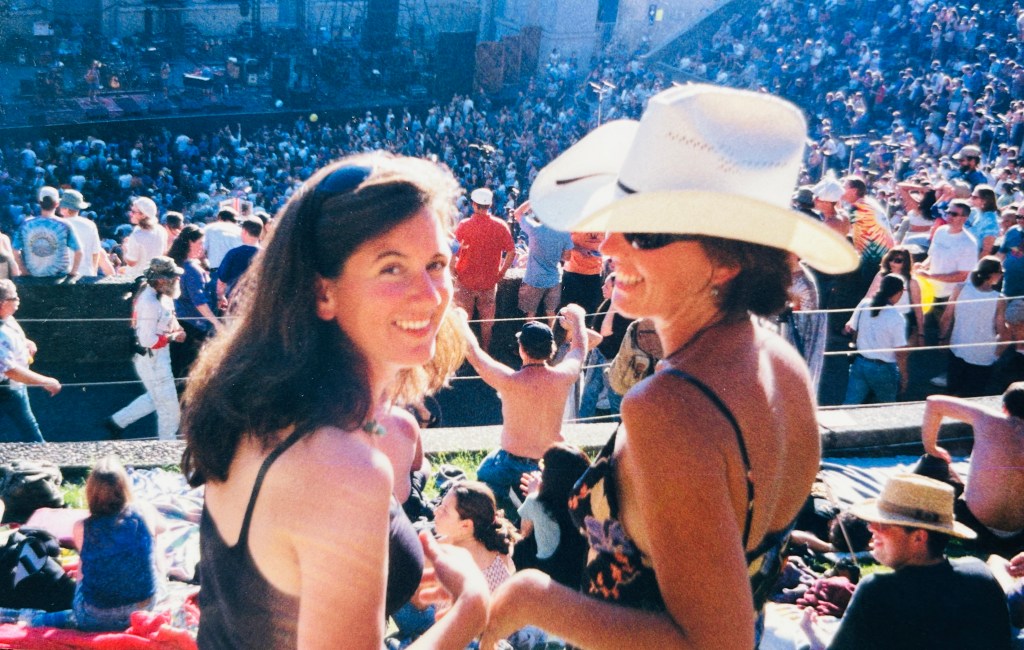
Look back but don’t stay too long. Note: Special thanks to Phish.net which provided many clarifying details to my sometimes (okay, often) hazy show recollections.
-
Remembering Cypress
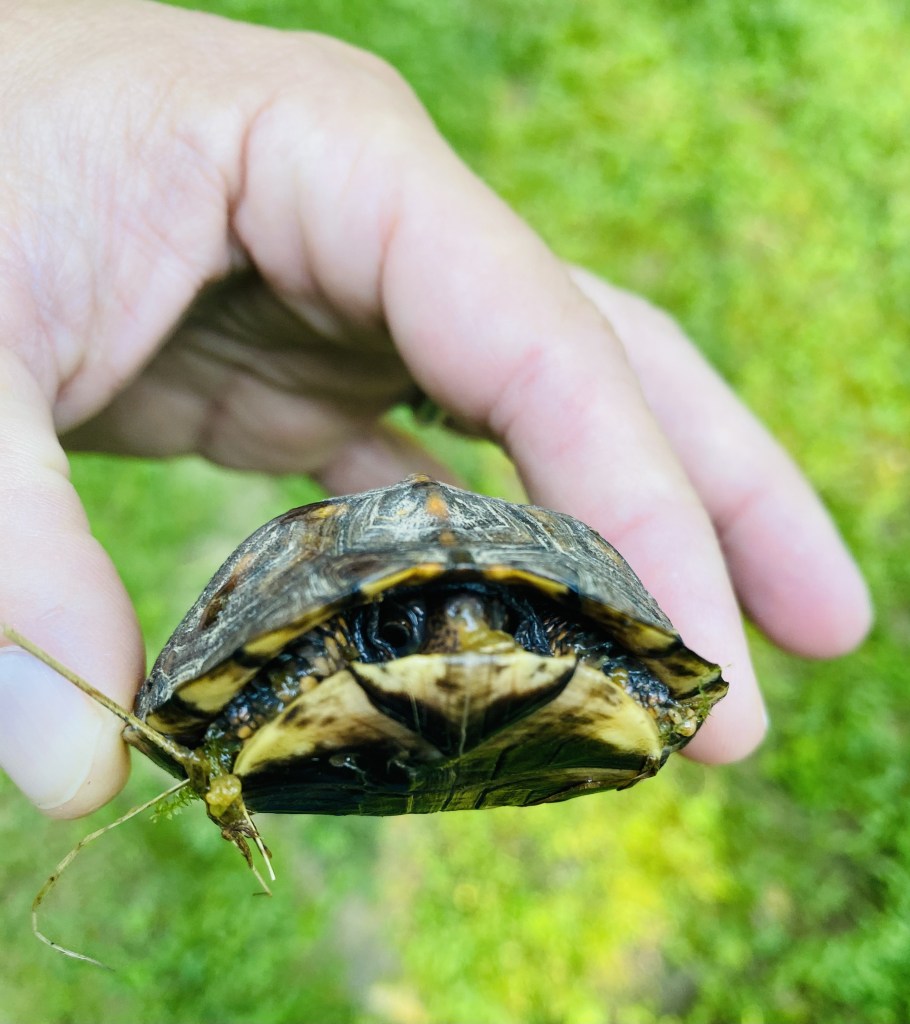
This is only the second turtle visitor we have found
on our property in 9 years.Every year something special seems to happen on this day — this morning a (rare) turtle visited my husband in the garden. In the afternoon, I took a hike with an old friend where the breeze caressed my cheek, the sunlight dappled the trail ahead and the trees seemed to reach out their limbs in comfort and praise.
Rainbows have stretched over us on this day, unexpected flowers have bloomed, and one year the first dragonfly ever glimpsed in our garden made a brief, brilliant appearance.
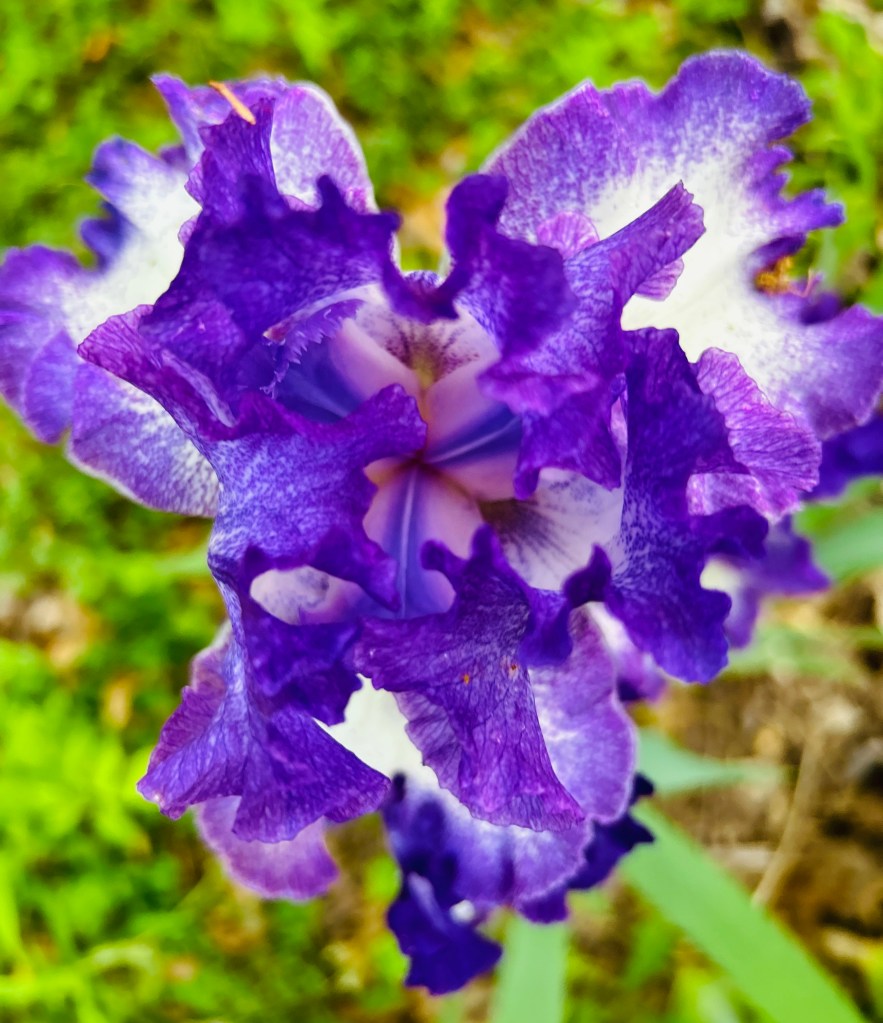
Tonight, our family will mark the day by gathering to light a candle, as we always do on May 20th.
Fourteen years ago, this day was not a celebration. My oldest son Cypress was born at full term, but he was not alive. I’m always full of conflict when the anniversary comes around. Part contemplative, other parts sad, proud, happy, and tired. Also, oddly energized.
Fourteen years ago, instead of cradling a crying, radiant newborn, we sat in a silent, cold hospital room, heavy with grief and pain. Birth most often brings gifts of joy, relevance, and new life. But Cypress did not get to live out his earthly life, and that fact can feel punishing and cruel. The truth is, on the day of his birth I was swimming in so much physical, emotional and spiritual pain that I couldn’t imagine ever feeling joy again.
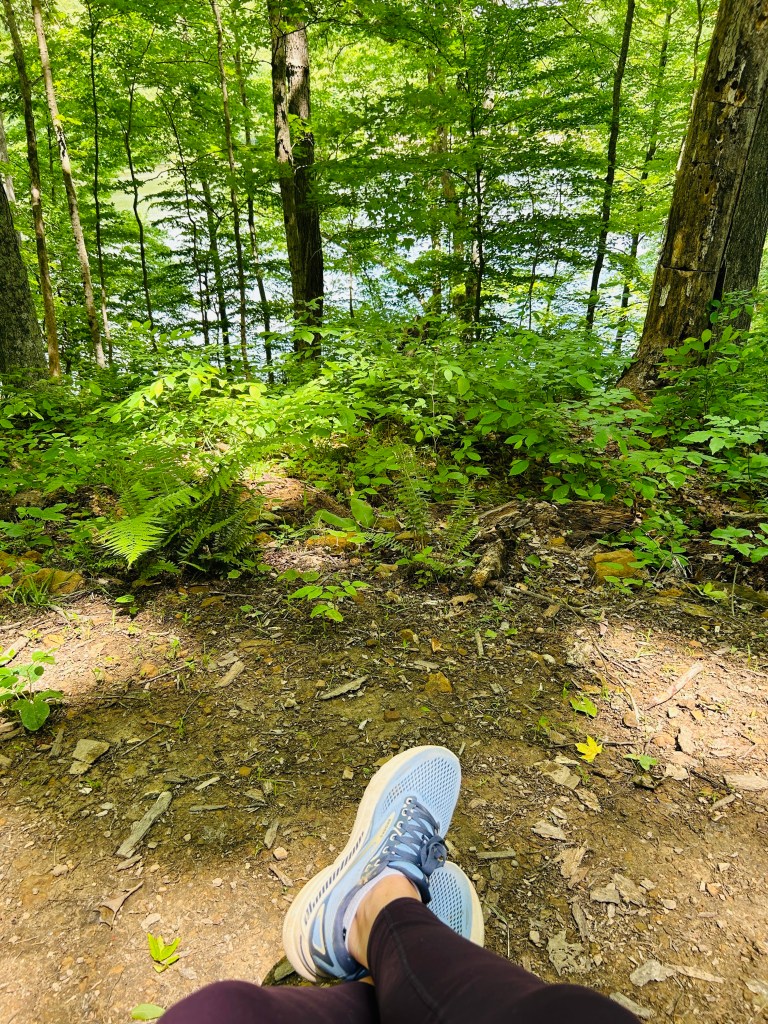
As always, the forest comforts, provides solace, and accepts me as I am. However, to my amazement, not only have I felt joy again, his birth and the nine months I cradled him close to my heart have also brought great gifts. Slowly, the value of those presents have unfurled over the years. My understanding of the meaning and truth of life has deepened and expanded. I’ve become more compassionate, patient, realistic and loving since becoming Cypress’ mother.
In the early days of my loss I hardly wanted to be around babies, pregnant people or children. Protecting myself and my heart felt necessary. Nowadays my two living kids and my work as a preschool teacher ensure that I have daily contact with children, their lives, their challenges, their growth, their joy.
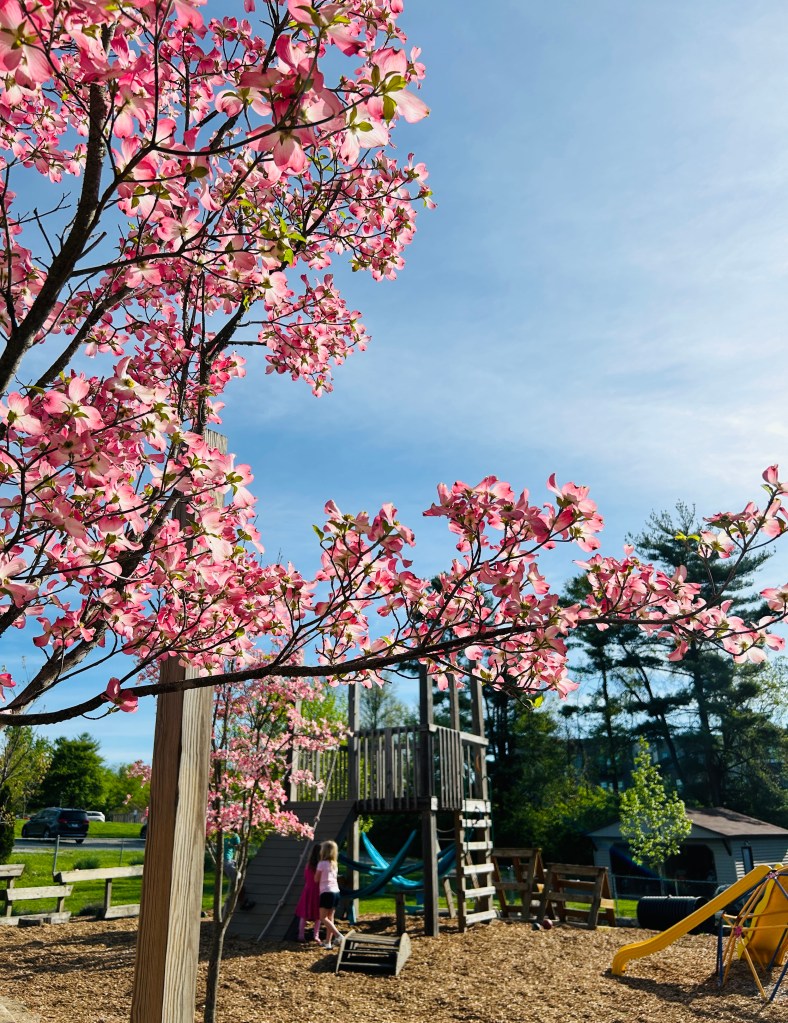
Growth and rebirth never stop, for plants and humans both. It is clear to me that we have as much, if not more, to learn from children as they do from us — if we are willing.
No longer do I neglect my talents, numb my mind/pain, ignore what requires attention. I understand our time here on this beautiful blue-green ship must not be wasted, pushed away, or taken for granted. Besides that first awful year after his loss, bitterness, self-condemnation, hate, and depression have not won. I’m determined that they never will.
Despite material appearances, we are still connected to our oldest child, he will forever be a part of our family. That’s why special things happen on this day (and other days). Cypress is close, he would like to reach and teach us if we open our hearts and recognize his presence. In turn, I can offer him the mothering he still waits on and needs from me.
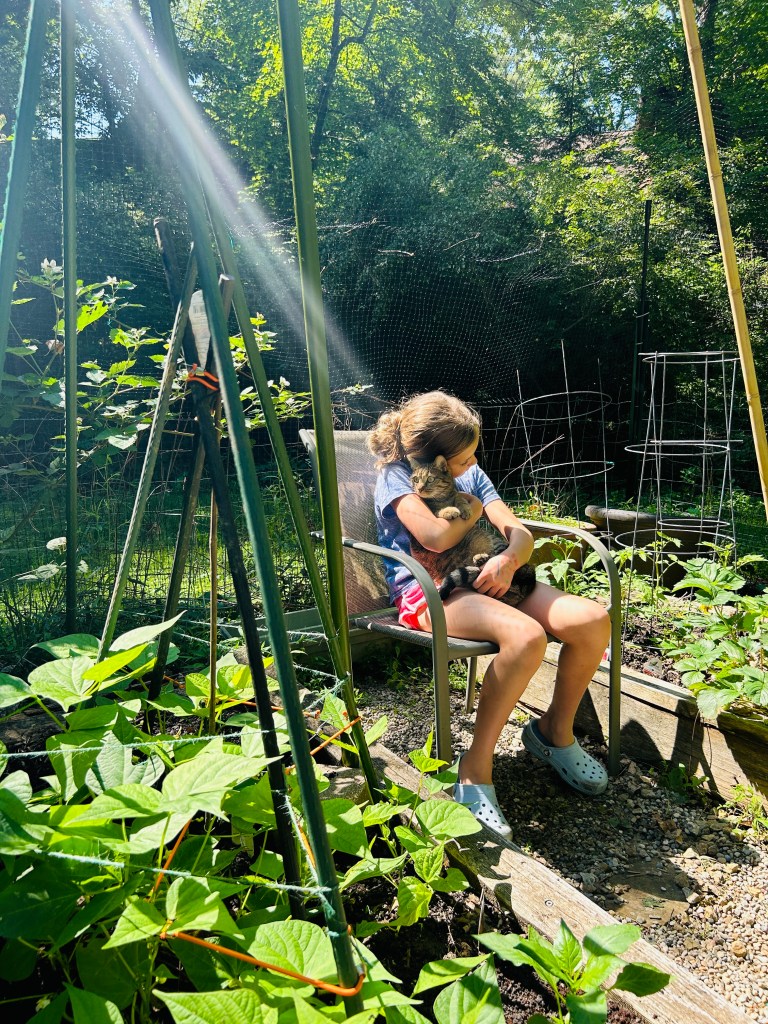
The sun ray captured yesterday in the garden made me think
there might have been a third presence (in addition to the cat).He is wise, thoughtful and funny, my oldest son.
Strengthening connections to those we love who have passed on brings rejuvenation and healing to our minds and hearts.
And there are some days we need it more than others.
-
Adventures in Church Hopping
When I was growing up in California in the 1970s and 80s, church was quiet.
At 9:55 am on Sundays, I parted ways from my parents and headed to the Christian Science Sunday School where students of all ages gathered to sing a hymn. Immediately afterward, our teacher gathered us up like chicks, pulled two heavy accordion doors shut, and sealed our class of five or so into a cramped room. There we sat around a pine table in our hard cane-backed chairs, earnestly discussing the meaning of God and Love.
Other times, when I joined my mom at Wednesday night testimony meetings at the same church, we sat thigh-to-thigh together in the half-full edifice, listening to people (most over the age of forty) as they stood and shared their accounts of spiritual healing. An organist accompanied the congregation’s soft, hushed singing voices, and my mother often shushed me as I fidgeted in the pew and shifted my restless legs.
Back then, church meant learning about God and healing, and being with my family. Sometimes, when my grandparents or extended relatives visited, we took up an entire pew (I was allowed to skip Sunday School on those days), and then piled into separate cars to drive down Hwy. 12 to the Chuck Wagon cafeteria where I had permission to eat as many marsh-mellow dotted Jello’s as I could fit on my tray.
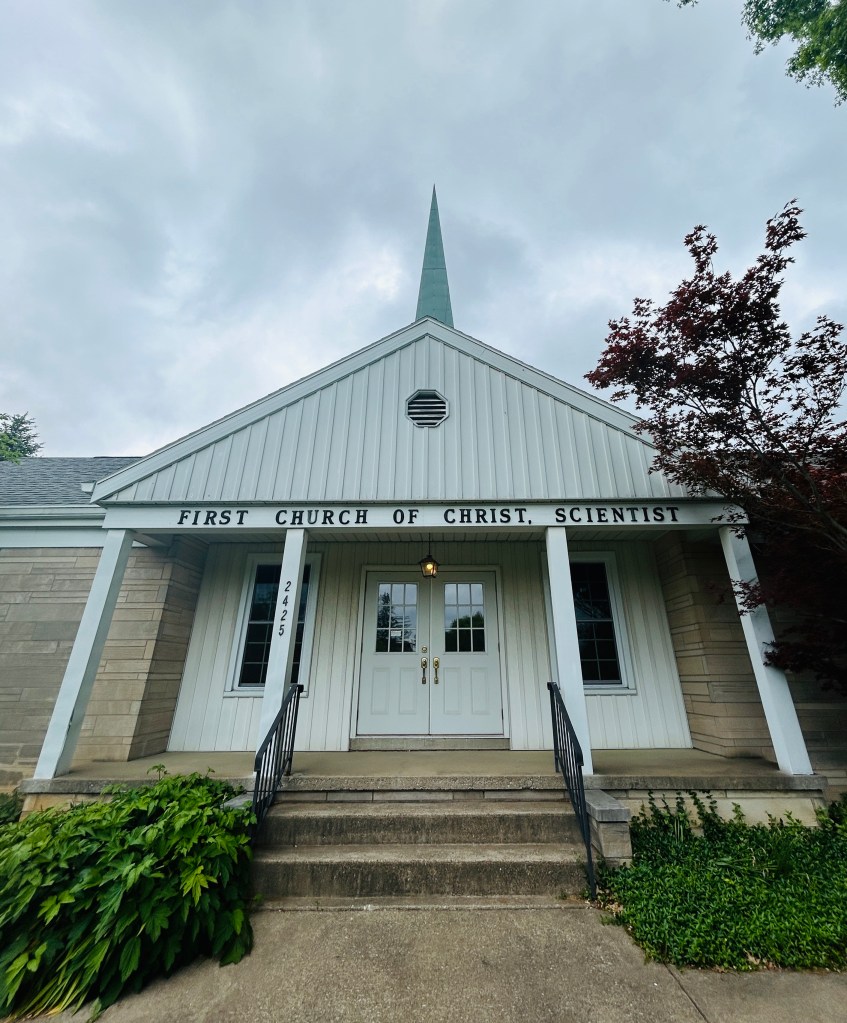
The Christian Science branch church in Bloomington, Indiana Fast forward to today, where I live in the small (but growing) city of Bloomington, Indiana in the Midwest of the United States. And for the moment, let’s put aside the decades of spiritual wandering, questioning, doubting, seeking, and finding that have passed since my early church experiences. Those details are for another post (or book – wink wink).
Over the past year or so my friend Hether (who grew up in the same church I did) and I have been practicing what we call “church hopping.” About once a month (not every Sunday thanks to baseball, soccer, and…life) we pay a visit to a different congregation. Sometimes we have a connection to the church, other times we don’t know a soul.
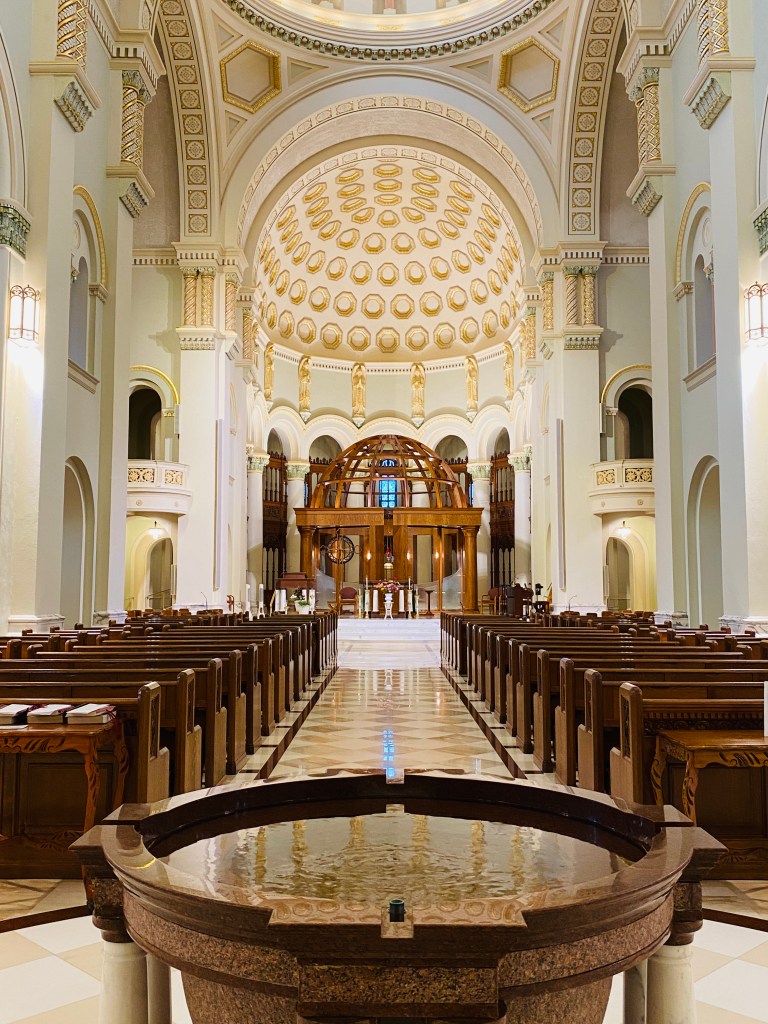
The dome at the Monastery Immaculate Conception Catholic Church, Ferdinand, Indiana We’ve only scratched the surface of the large number of churches that dot our town, let alone state (visiting fewer than ten different faiths so far), but the exercise has been thought-provoking and eye-opening. Among other things, what’s become clear to me is the vast range of religious and spiritual experiences we humans require and yearn for — so many people need regular gathering/support/community, inspiration, and yes, even entertainment.
Individual pastors have a whole lot to do with setting the tone for a church, I’ve noticed. In my church of origin, Christian Science, (not to be confused with Scientology), the “pastor” is comprised of two elected “Readers” who recite aloud to the congregation passages focused on a weekly theme. The readings come from two books: the King James version of the Bible and Science and Health with Key to the Scriptures by Mary Baker Eddy. While services are often thought-provoking and inspiring, you can pretty much anticipate what you’re going to get each time. There are very few material surprises in the Christian Science church.
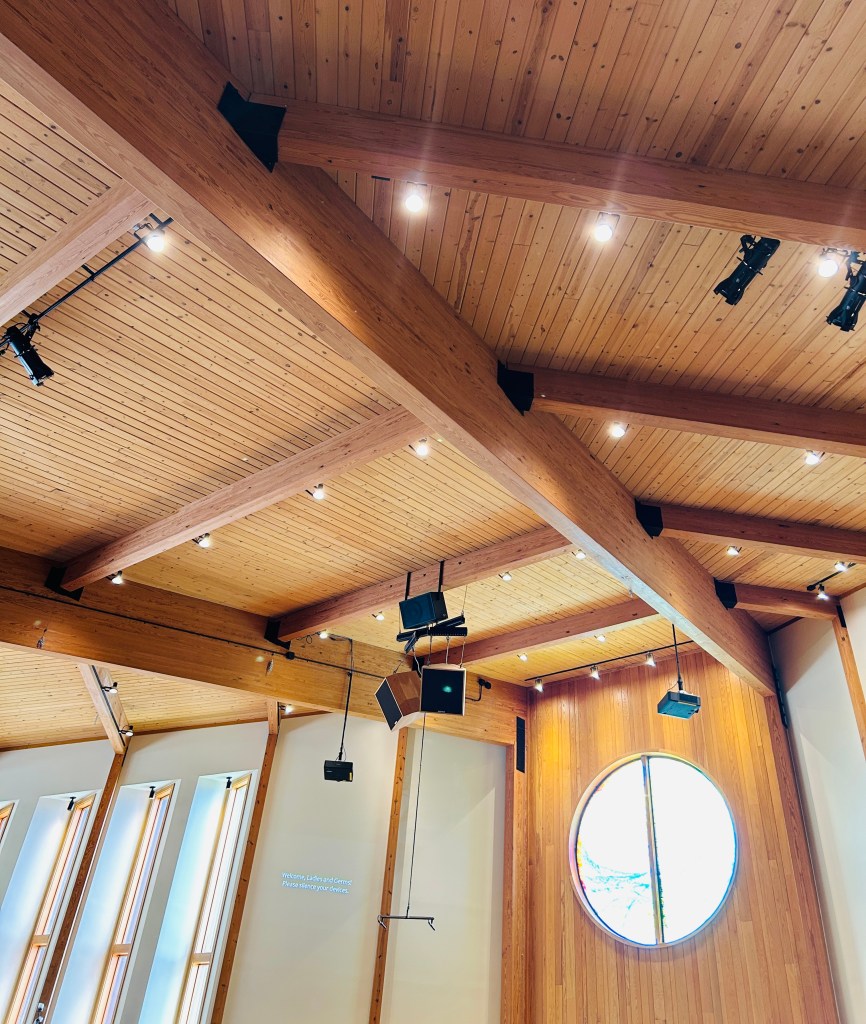
The soaring sanctuary in the Unitarian Universalist Church
of Bloomington, IndianaBut now, after experiencing a variety of different pastors preaching to their congregations, I’ve seen that each pastor brings their interpretation of scripture, God, or the world of spirit to the podium. In many cases, a pastor’s outlook becomes the lens through which their congregation views the world.
And the music! To go from generally solemn, sedate organ or piano music to an entire band rocking, soaring, and singing ear-splittingly loud “worship” music accompanied by a light show and multiple massive screens has been, to say the least, disconcerting. The first time Hether and I attended one of these “contemporary Christian” churches I was, honestly, sitting in wide-eyed shock for most of the service.
Something else has occurred to me through these visits: It’s possible that I feel more comfortable, inspired, and accepted meditating in a temple, shrine, or ashram with the scent of incense threading through the air than I do inside a church building. Or, maybe instead of getting caught in comparisons I can acknowledge that each location of inspiration offers its own unique value.
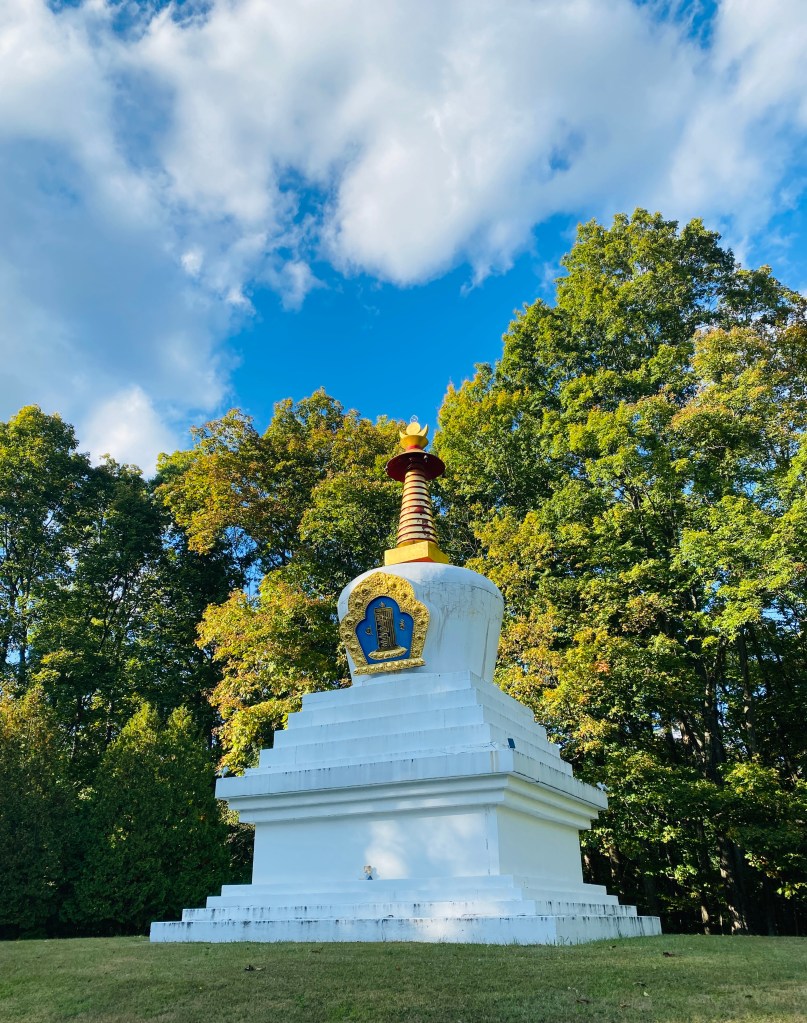
Stupa at the Tibetan Mongolian Buddhist Cultural Center
(founded by the Dalai Lama’s brother) in Bloomington, IndianaThis Sunday, Hether wasn’t available, but my ten-year-old daughter was. “Let’s visit the big church, Mom” she suggested. The “big church” is the one closest to our house, a sprawling mega-church with six entrances that holds three services each Sunday and hires a cop to direct traffic in and out of the parking lot. I think my daughter was just as curious as I was about what goes on inside the building whose grounds we have walked and played on for years.
After parking in one of at least twenty specially designated “First Time Visitor” spaces, we were enthusiastically greeted and directed to a computer to enter our contact information, then handed a welcome bag (containing pen/notepad/church logo plastic cup/stickers) and directed to the children’s wing. My daughter, however, did not want to join the youth classes and instead opted to sit with me in the main sanctuary for the service.
While helping ourselves to a quick coffee and hot cocoa from the well-stocked café space we spotted a (lovely) familiar face, our friend and former neighbor who invited us to sit with her and her husband during the service. “I can’t wait to see his face when he sees you, he’s going to be so surprised and happy,” she said about her husband. My daughter, who adores this couple and once spent Christmas Eve with them due to an emergency in our family, happily sat down in the pew next to them and basked in their love and attention. This is the first time she’s sat in church with her elders I thought to myself.
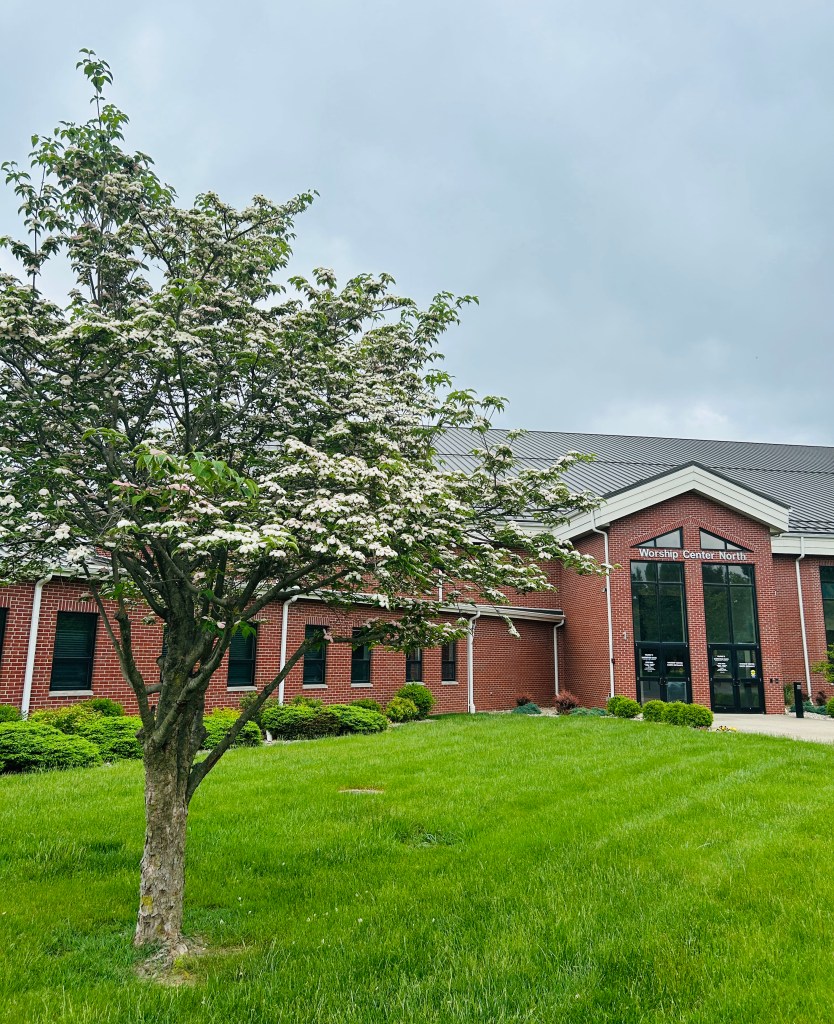
Sherwood Oaks Christian Church, Bloomington, Indiana
You know a church is big when it has a “Worship Center North”“Wow, this isn’t what I expected, it’s not very church-like,” my daughter whispered to me as the lights dimmed, the band with four vocalists stepped out on stage and the loud music began filling our ears. Given her (admittedly limited) church experiences in the ten years she has been on the planet I didn’t blame her for being taken aback.
We sat together through the service, my arm tight around her shoulders, absorbing the resounding music and listening to the sermon. The pastor’s message, centering on divine reminders to rest, and step away or remove obstacles and stressors from our lives rather than pile on more, resonated with me. In the end, I think my daughter was mostly impressed with seeing our friends, and the chance to sip on hot cocoa before noon.
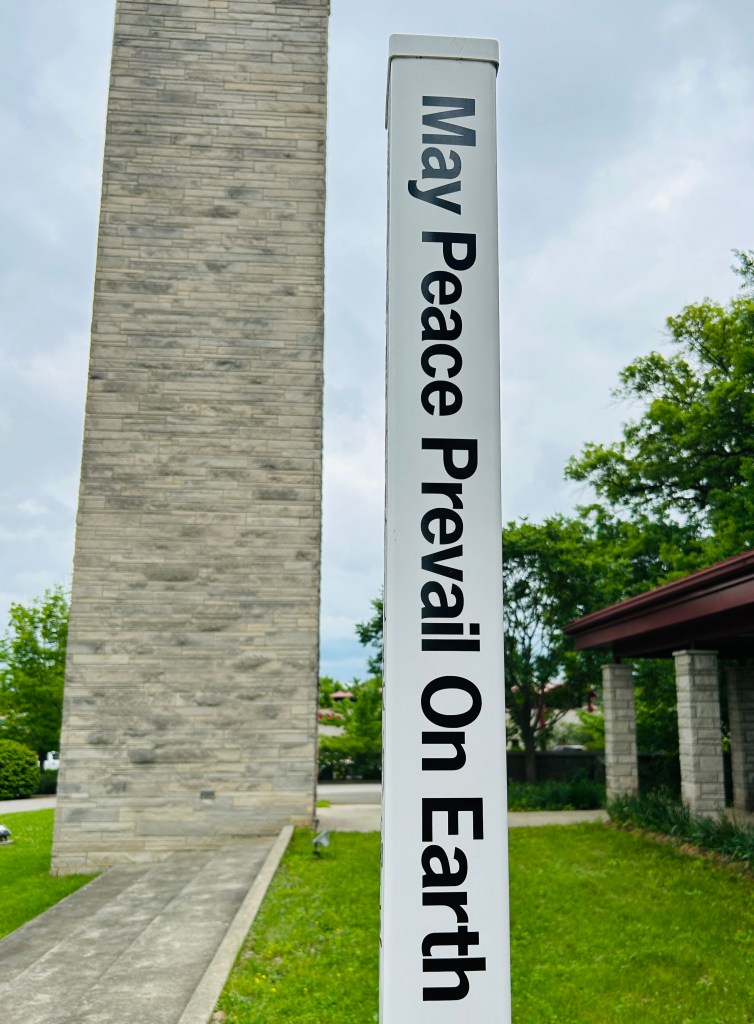
An important message outside the First United Church (combined Baptist and United Church of Christ)
Bloomington, IndianaLater that same day, after yet another church visit (this time for a beautiful and inspired blended poetry and song performance by the poet Ross Gay and our local Voces Nova choir), Hether and I sat outside in the soft spring evening air. Our discussion returned to our spiritual paths (as it so often does).
“I’m not totally sure what I’m looking for as far as church,” I told her plaintively. “I mean if I could design my own what would it look like?”
It’s actually an interesting exercise, designing one’s one church. If you’d really like to know, my ideal church would be one that accepts all colors and creeds, features time for silent prayer, an inspirational healing message, some guided meditation, rotating musicians, and a little stretching/yoga/Pilates during the service. All in an old-growth forest cathedral.
If anyone knows a church like that, let me know.
In the meantime, we’ll keep searching, listening, and hopping.
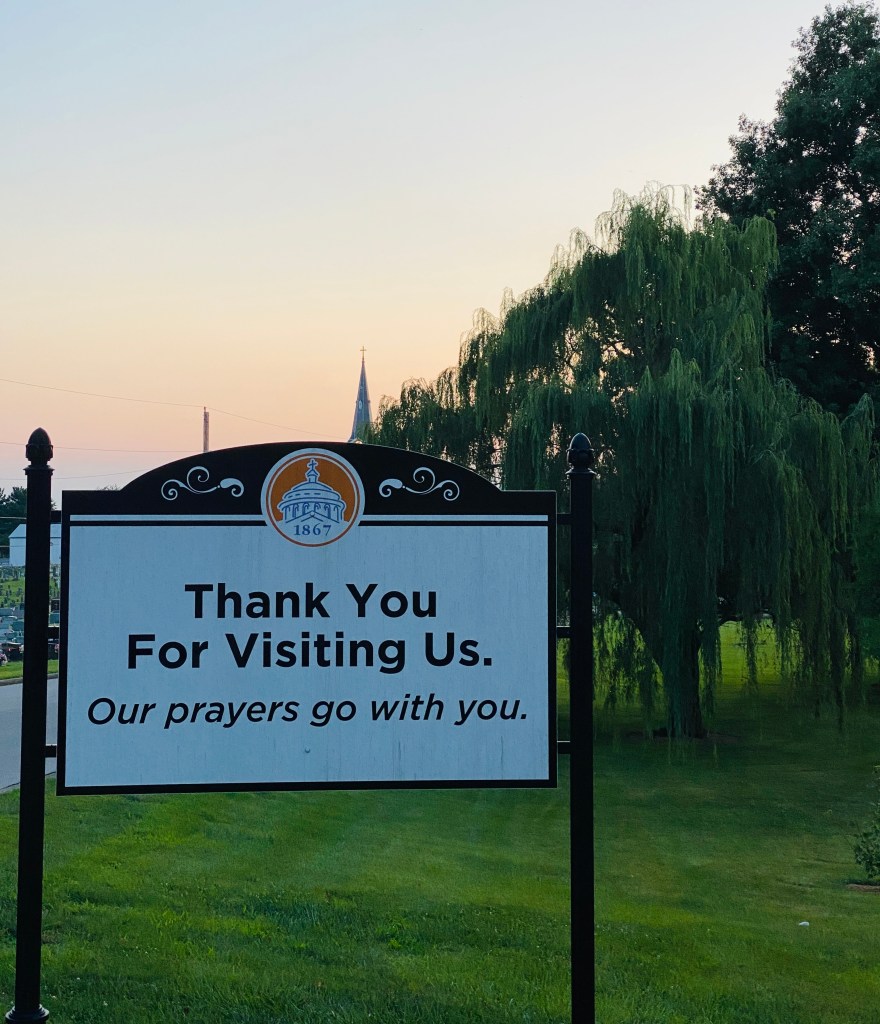
-
27 Hours and 42 Minutes in the Life of a Total Solar Eclipse
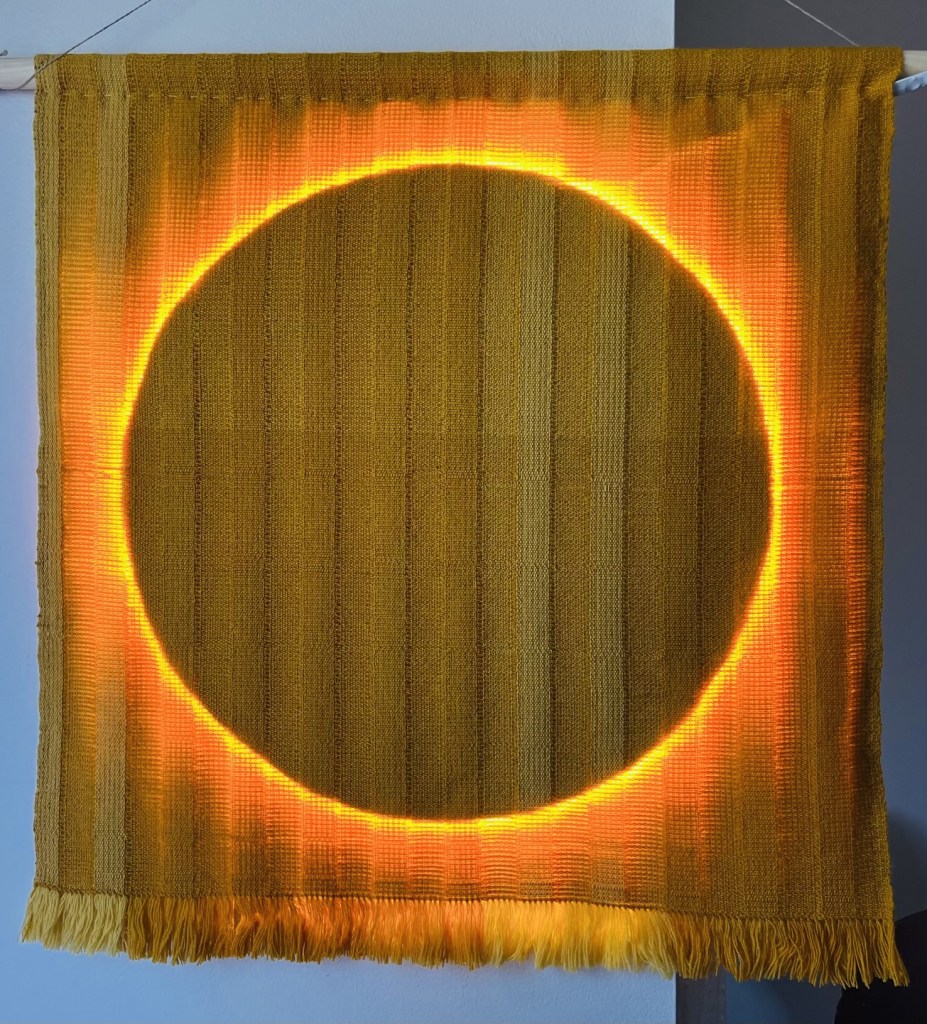
“She Swallowed the Sun” by Chelsea Holden Gurney,
currently on exhibition at I Fell Bloomington
in Bloomington, Indiana, USAApril 7, 2024
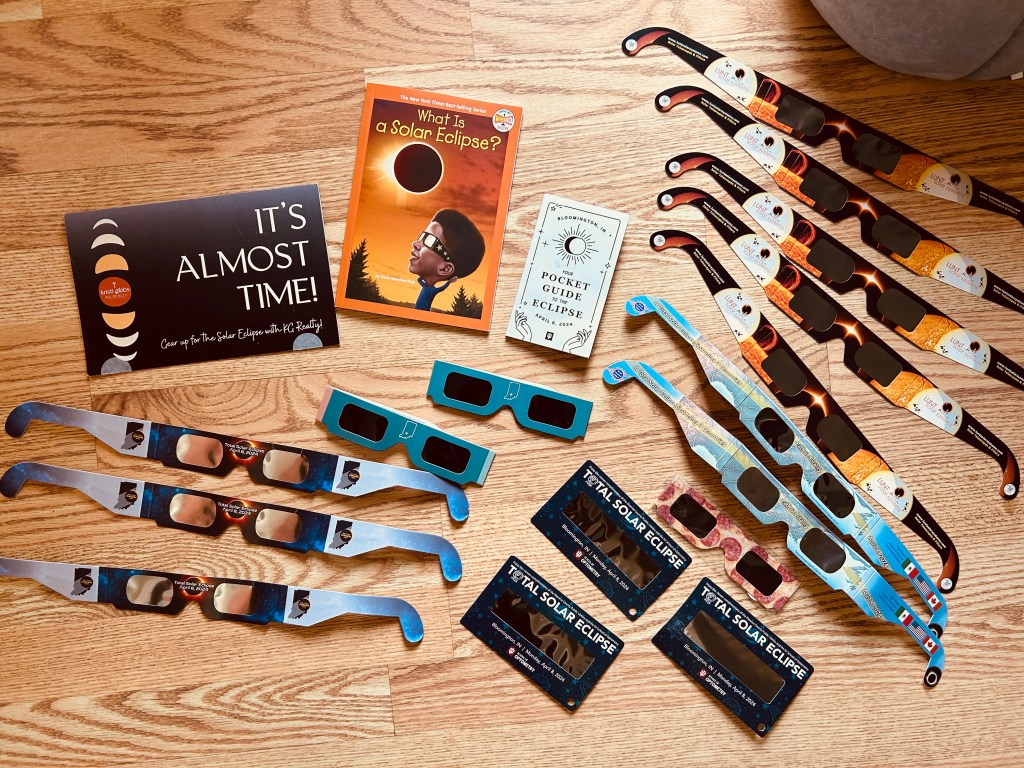
1:49 PM: With a start, I realize tomorrow is THE DAY and that we live in the ZONE OF TOTALITY. What’s going to happen, am I ready? I scramble around, pulling out hoarded eclipse paraphernalia. Counting 3 eclipse guides and 13 pairs of glasses gathered over the past year. Will we have enough?
2:42 PM: My daughter and I drive to the “There Goes the Sun” celebration at our local Bloomington, Indiana Switchyard city park and amphitheater. Traffic is light and I consider whether we have worried unnecessarily about eclipse crowds – some reports have suggested that 300 thousand people may descend on our town. A pop-up vendor is selling tie-dyes and eclipse t-shirts on the street corner. Why the tie-dyes?
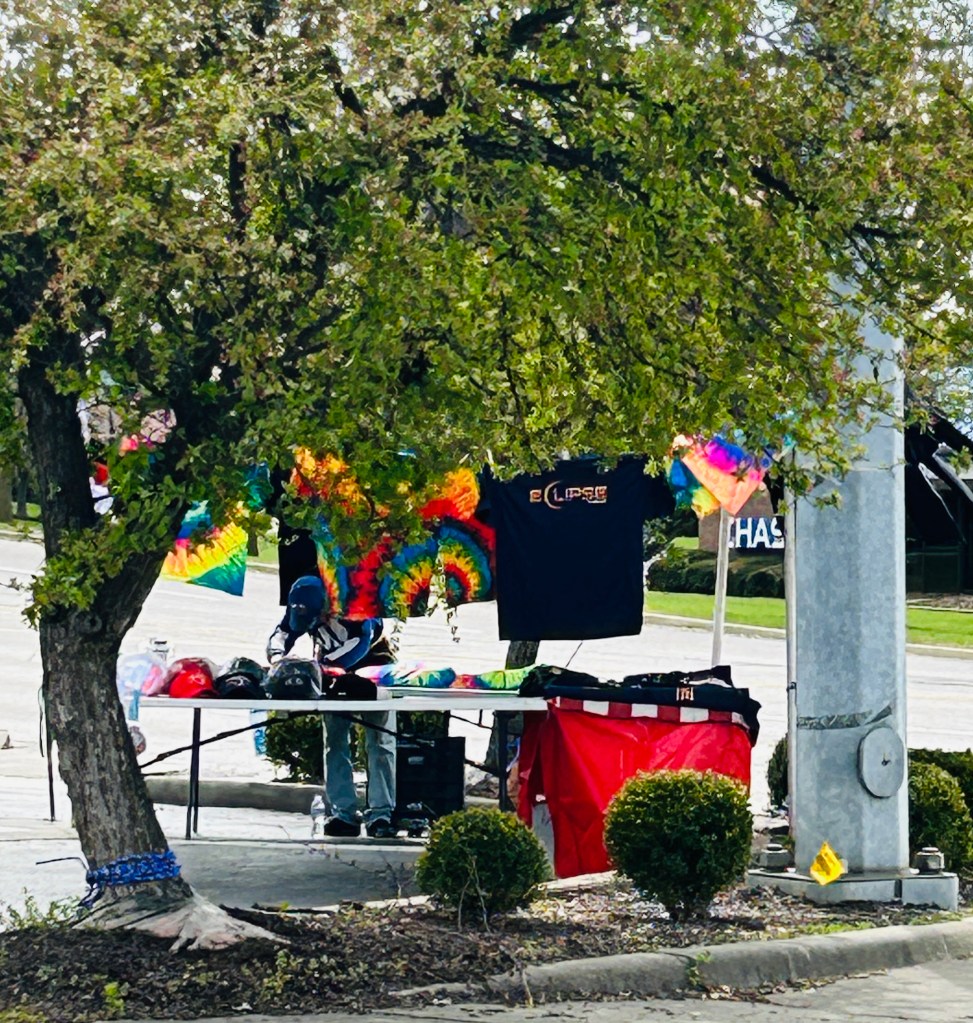
Are there vendors that follow in the path of eclipses? 3:04 PM: We enjoy the first strains of local son Hoagy Carmichael’s “Stardust” played by the talented Bloomington, Indiana Symphony Orchestra, and accompanied by the Voices Novae choir. Catching the contagious feeling of camaraderie and expectation floating around the crowd, we sit on blankets, snack on dried fruit and watch children dance.
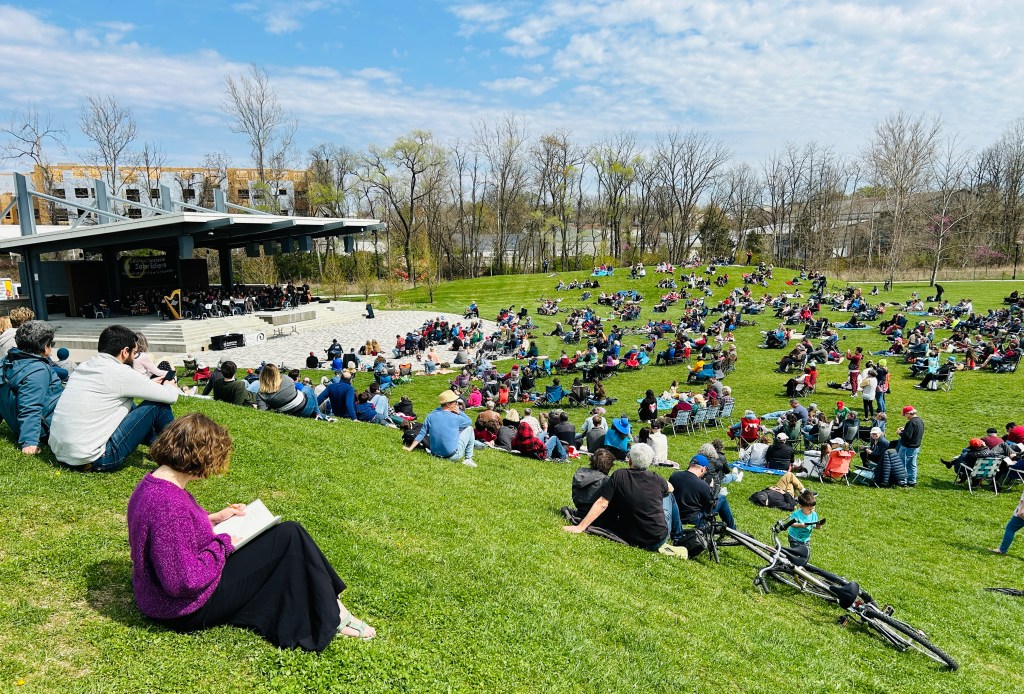
Listening to music at Switchyard Park. 3:50 PM: Audience sing-along to “Total Eclipse of the Heart” by Bonnie Tyler. The classic song was released in 1983 so most people born in the 1970’s or before appear to know the words by heart (personally, I am transported back to the fraught days of middle school dances). My daughter and her friends read the lyrics on a cell phone and the entire crowd sways in unison singing;
“Your love is like a shadow on me all of the time (All of the time)
I don’t know what to do and I’m always in the dark…forever’s gonna start tonight.”
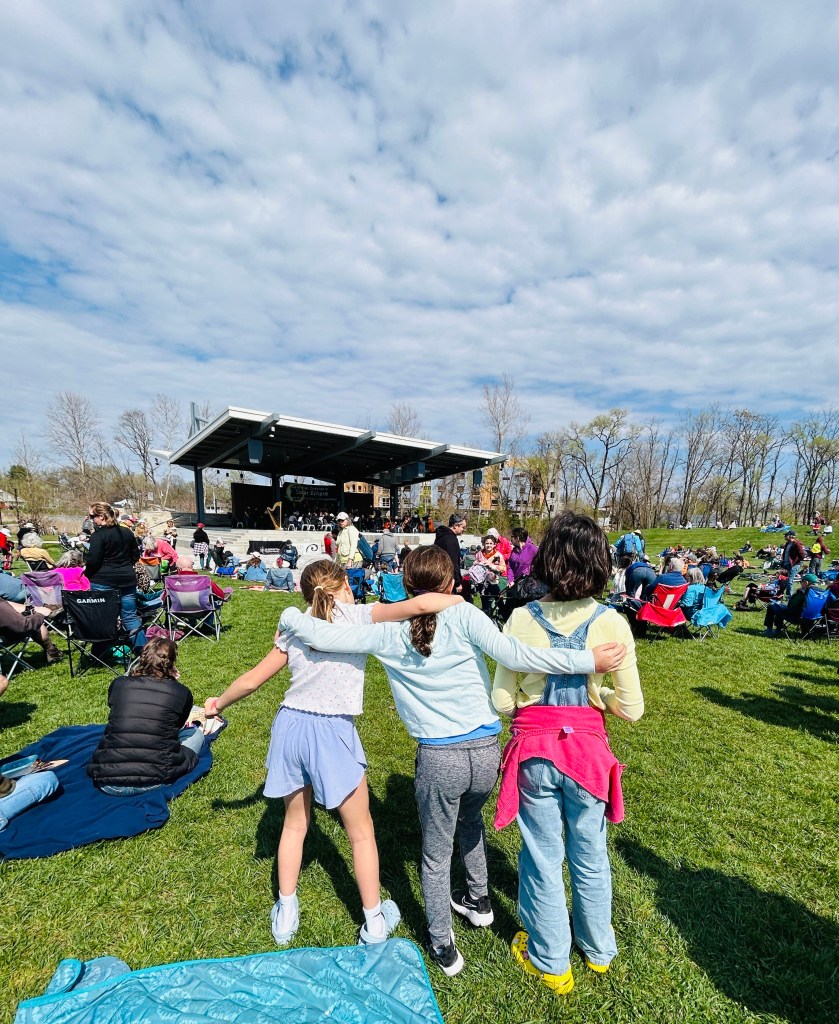
Cross-generational pop music. 6:41 PM: Odd weather. Rain and sunshine in the front yard. Rain and dark clouds in the backyard. Reports of rainbows in the vicinity.
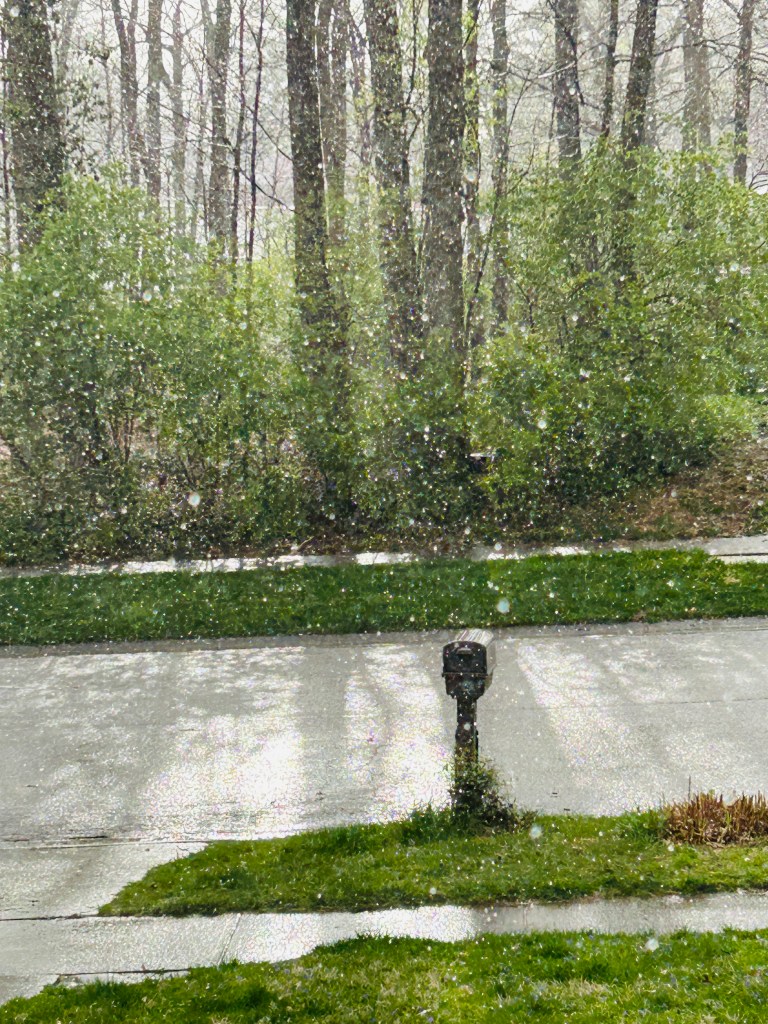
Sunshine through the raindrops. 8:00 PM: We cancel plans to attend a friend’s neighborhood eclipse glow party at a park shelter due to approaching thunderstorms and return glow stick supplies to the garage.
April 8, 2024
9:19 AM: We wake up with a feeling of anticipation, much like a birthday. My husband (infamous for retaining birthdays) informs me that today is Gary Carter (his all-time favorite baseball player)’s birthday. April 8 is also the birthday of a friend’s son, along with the birthday of the pastor of the church that houses the preschool where I work. Good signs all around.
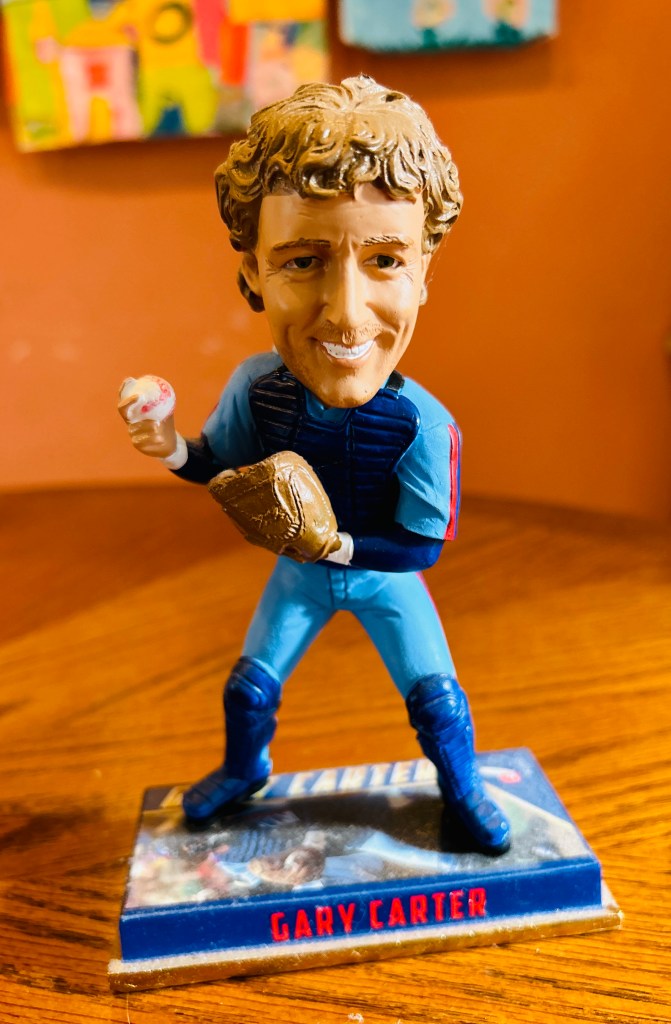
Happy Birthday to Gary Carter. 10:21 AM: Pack eclipse picnic lunch: Peanut butter & jelly sandwiches for the kids and their friends who will be joining us, leftover Chinese noodles for the grown-ups, chips and salsa, orange slices, Newman’s O’s, sparkling water, and juice.
11:34 AM: Pack wagon for the journey to the eclipse viewing party.
12:10 PM: Depart for a ten-minute walk to a friend’s back garden patio, adjacent to a wide-open green space behind a mega-church (three services each Sunday). Here is where we plan to view the eclipse, on a gently sloping green lawn practically designed for the occasion. Pulling our packed wagon behind us we see people streaming into the church entrances and stopping at welcome tables. Is the church charging people to use their lawns, we wonder, or are they just giving out water?
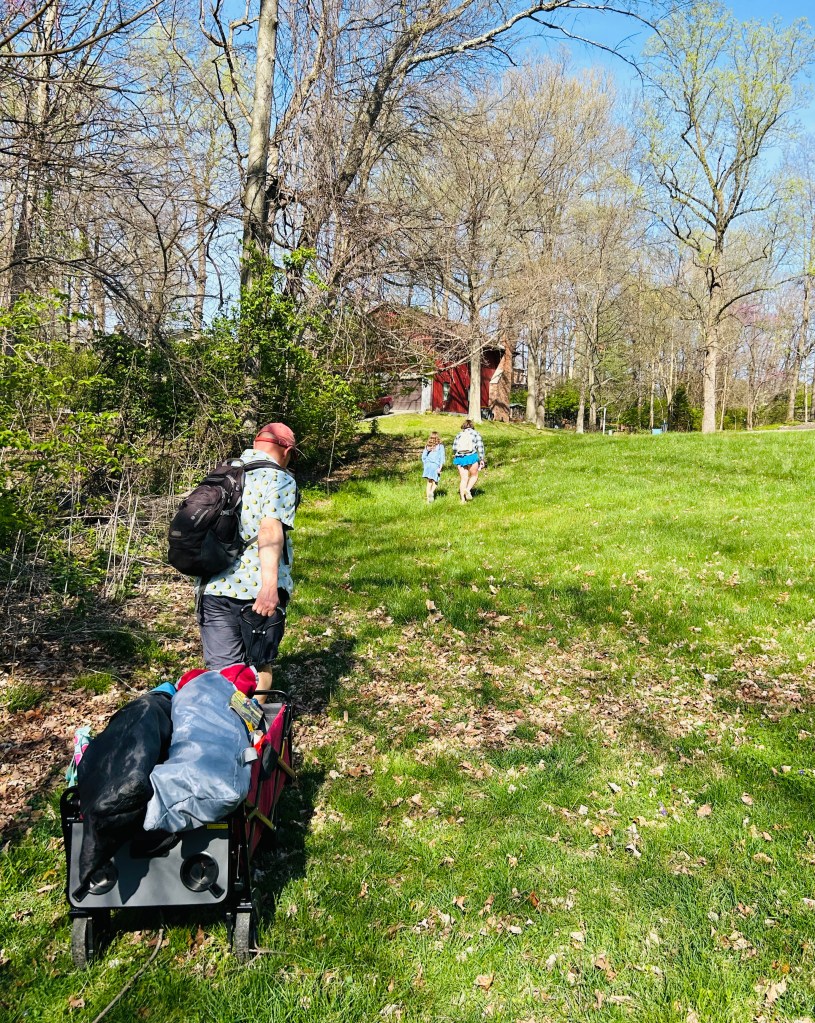
We never used the folding chairs once. 1: 22 PM: Our group of ten is assembling – my husband and our host (a close friend) our two children and their three friends. Two more friends arrive on their bikes—one is a scientist (a biologist). She knows stuff about nature! We eat lunch and excitedly chat with neighbors. The three 11-year-old boys run off to play basketball, promising to return in a half hour. The light already appears diffused, almost cinematic.
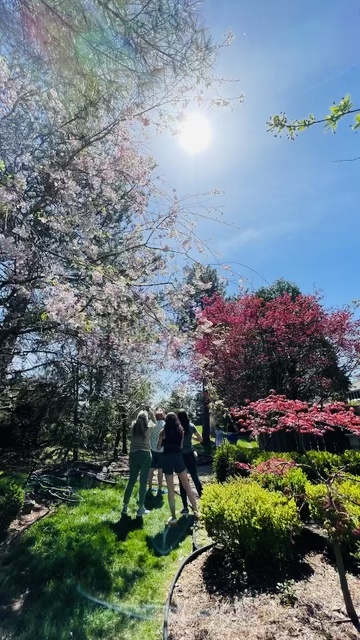
Total Solar Eclipse: Garden party style.
Photo credit: Hether Bearinger1:49 PM EST Partial Eclipse Begins. Anticipation is rising, crackling in the shiny air surrounding us. Everyone chooses glasses, noticing that some tear or bend easily, and others are uncomfortable and too large, especially for smaller heads. The type with one solid strip that looks like a viewfinder is surprisingly effective. We have more than enough glasses. Vaporous filmy clouds drift in front of the dimming sun, best viewed through a pink veil of weeping cherry blossoms.
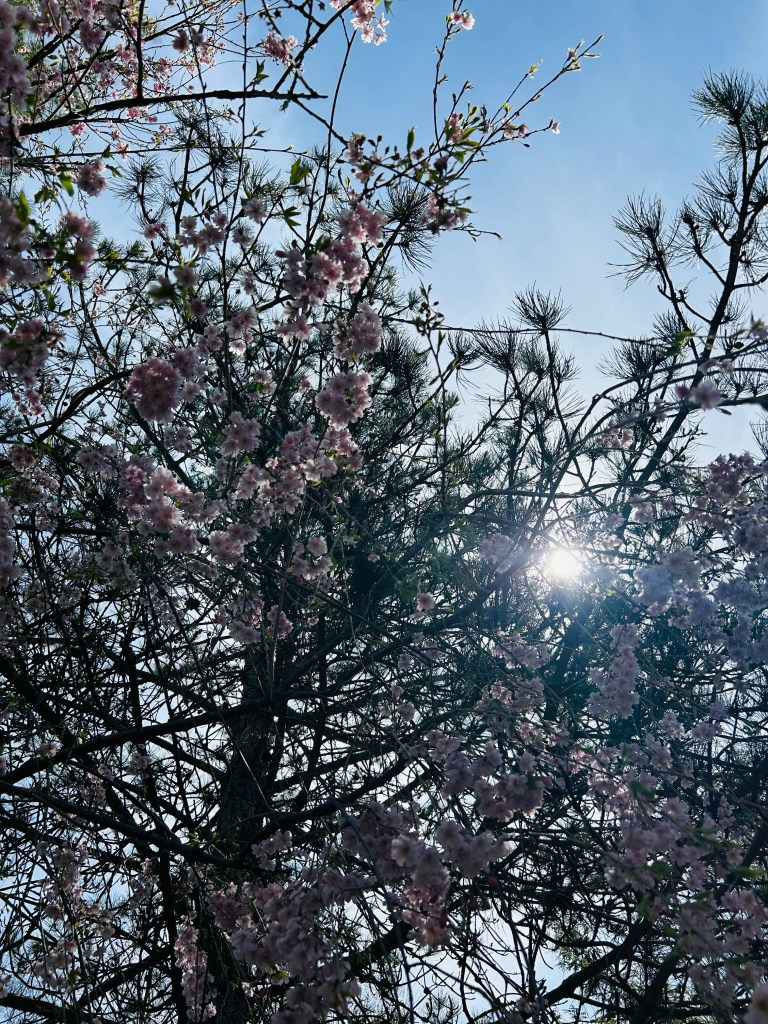
2:22 PM: “USE YOUR GLASSES WHEN YOU LOOK AT THE SUN” we remind the kids, and occasionally the adults. The sun looks like a blob of egg whites with a small bite taken out of the lower right-hand corner. Where are the boys?
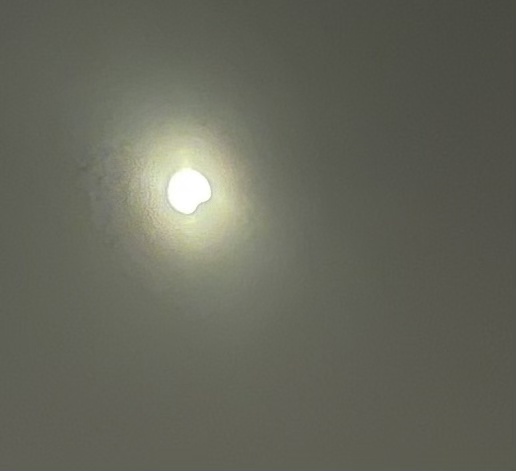
Egg white sun with bite.
Photo Credit: Hether Bearinger2:44 PM: Someone gets out a strainer and we try various surfaces, finally landing on the adjoining neighbor’s smooth patio flagstones. Numerous tiny crescent moons appear on the sandstone below. The kind and friendly neighbor, who recently turned 80 and is recovering from major back surgery, gasps in amazement.
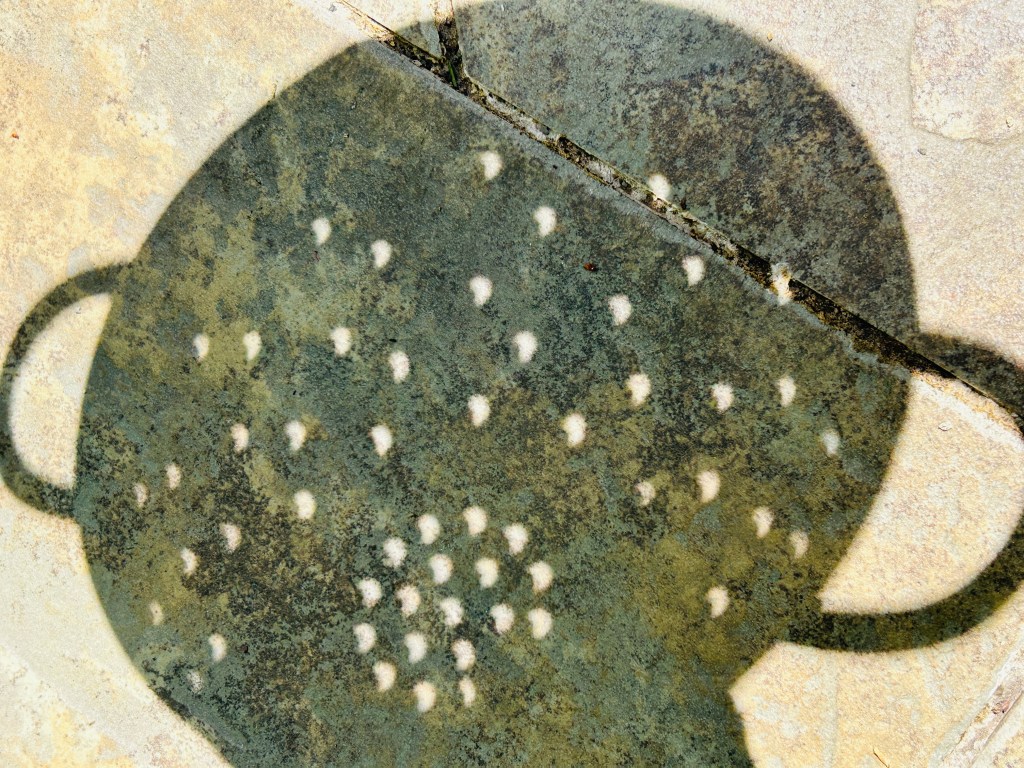
When a common kitchen strainer takes on a heroic role. 2:51 PM: We have left the patio and are now gathered on the wide-open lawn area, taking pictures, gazing at our changing surroundings, and talking in small groups. We are glued to the sun, our faces tilted up expectantly. The temperature has dropped, and the wind has picked up. It appears to be twilight and the birds are beginning to sing like they do at dusk. Energy seems to swirl around us, as palpable as electricity. Suddenly the boys run up, sweaty from basketball. “Did we miss it?” they ask breathlessly.
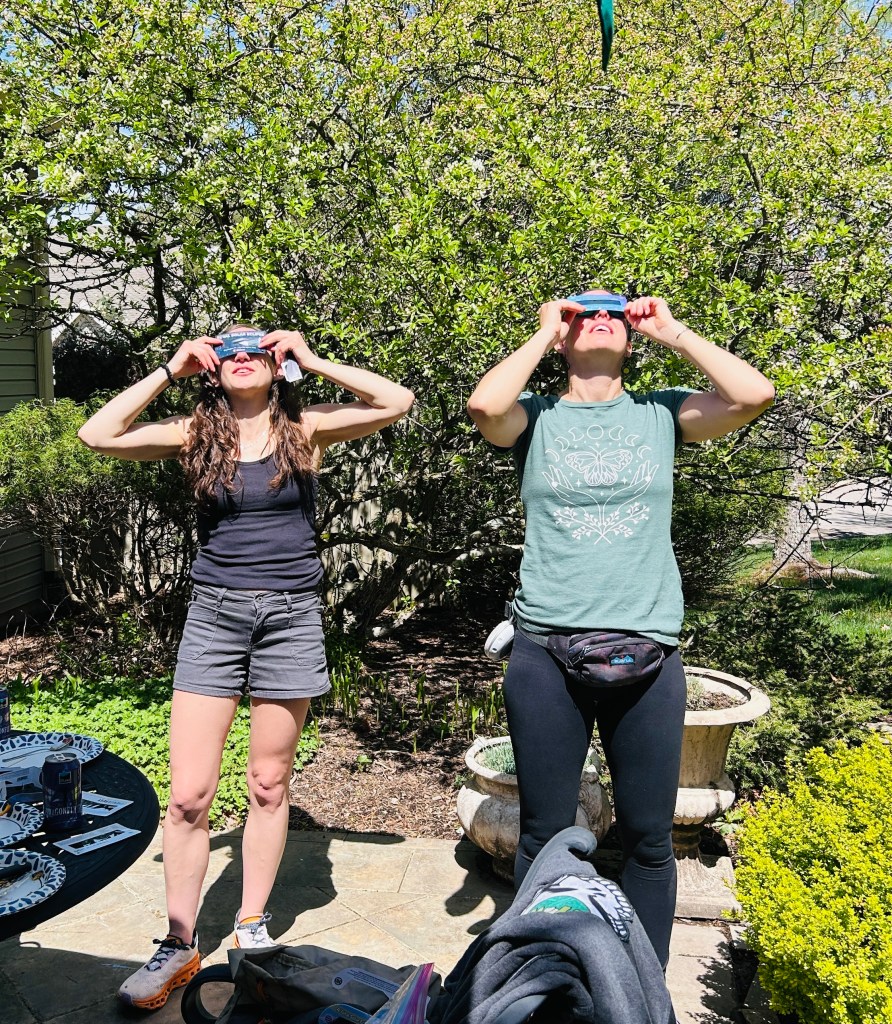
The reason our necks are sore. 3:04 PM: Totality Begins. We have watched the bite in the sun grow bigger and bigger and suddenly, like a cap fitting neatly on top of a bottle, the sun is gone. We tear our glasses off our faces and gaze directly at the sun. Nighttime has descended and it is becoming as dark as when you stumble to the bathroom at 3 AM. The horizon glows in every direction as if a sunset is encircling the earth.
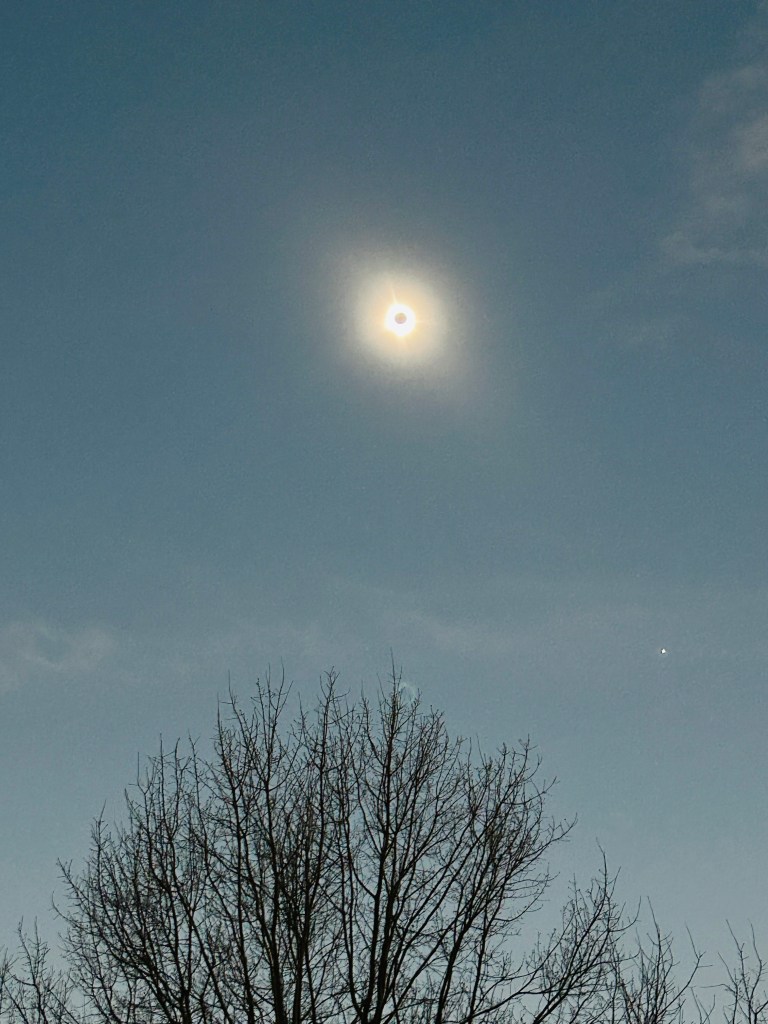
What totality looked like to the naked eye, except darker.
Notice Venus at lower right.3:06 PM: Midpoint of Maximum Totality. Awe ripples across the lawn, embracing all of us with its fierce insistence. Gasps, screeches, and exclamations reverberate in all directions. Things that take me by surprise: complete darkness, tears streaming down my cheeks, the feeling of vulnerability in the face of a vast cosmos. All this in tandem with a sense of swelling love for my fellow exquisite humans. Below the eclipse, to the lower right Venus catches my eye, winking in the black dome of sky. Reaching out, I kiss my children and my husband and hug my friends, who are also crying. In my excitement, I attempt to take a video, which later turns out to be a shaky scene of dim grass at my feet.
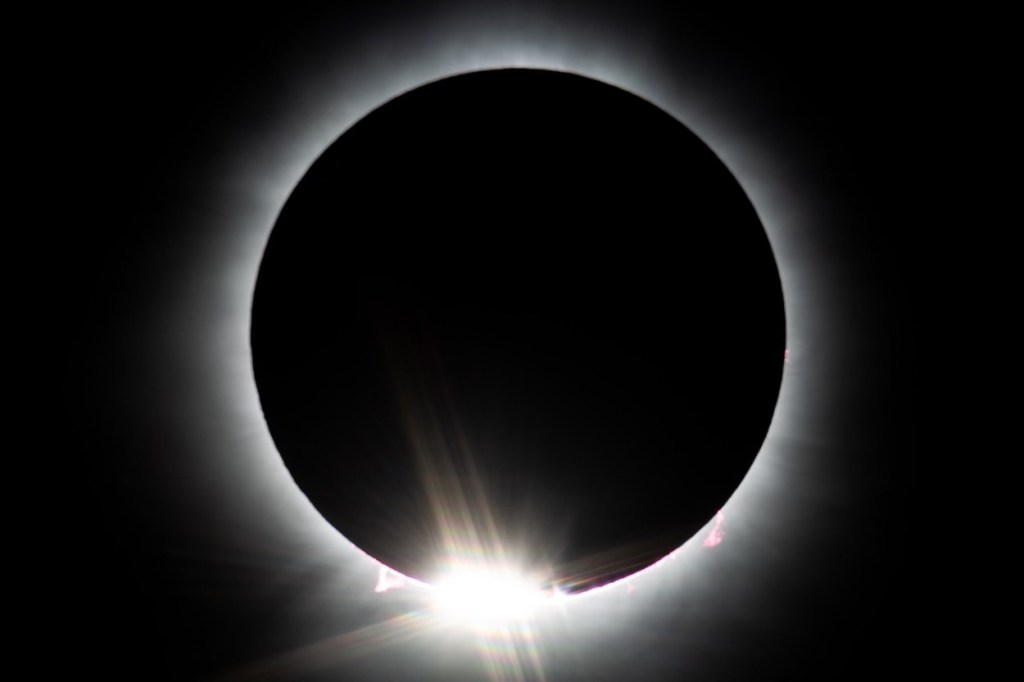
Glorious “diamond ring” totality, taken in Bloomington.
© Jason Brown http://www.jbcreative.photo3:08 PM: Totality Ends. Marveling, we gasp as the warmth of the first uncovered sun rays begins to touch our arms and faces. The immense power of the sun has never been clearer to me. Without it, life as we know it is no more. Without the sun, without light, we exist in darkness. Beautiful darkness, but darkness, nonetheless. A knot of people mumbles in the distance, stooped over searching for dandelions that have closed in the darkness. “It’s like we’re in a movie,” remarks my son.
4:22 PM: Partial Eclipse Ends. “We can use these glasses even when there’s no eclipse,” the kids remind us. Our necks are sore from stretching skyward. We are wrung out from the afternoon’s experience. Everything around us feels slightly different, transformed in some way. Humans, plants, and animals included (later my daughter coaxes a raccoon out of a tree in our neighbor’s yard — the animals were equally as discombobulated).
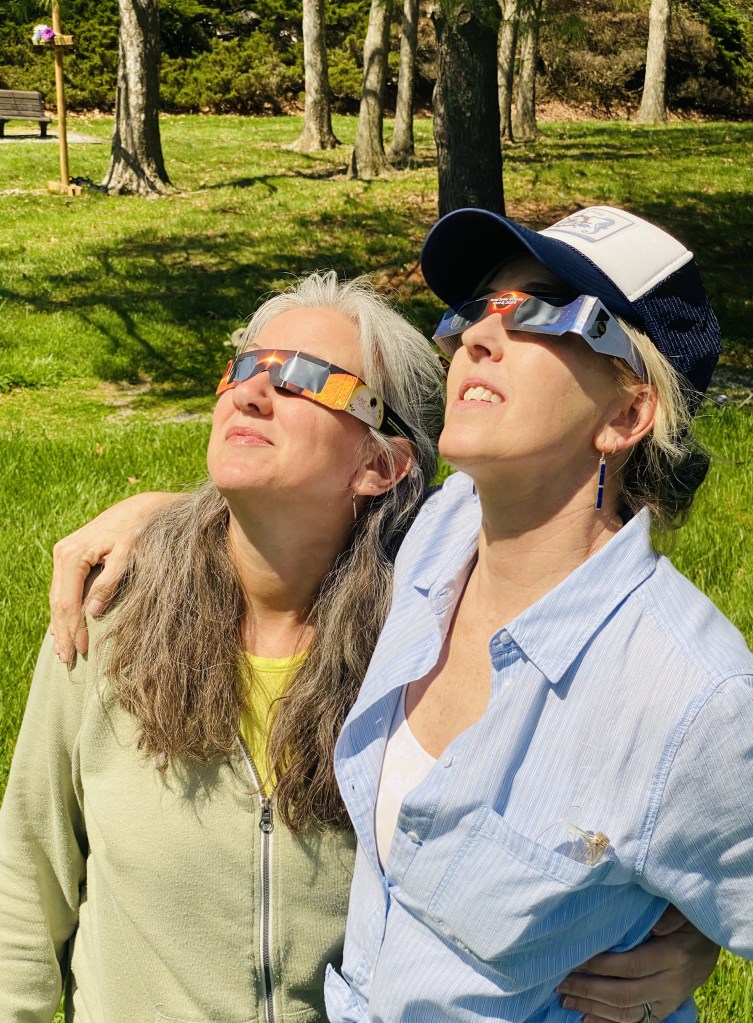
Absorbing the wonder of totality. 4:30 PM: Walking back to the patio, I try to articulate to myself the message embedded in the grand cosmic display we have just witnessed. This total eclipse occured in the middle of my life, but my children are still forming! I know they will remember this forever. How desperately this planet needed this experience at this moment in time. It is as if the universe was saying “Stick together humans, love each other in the face of the vastness of space. There are many forces you can’t control, but your survival IS within your reach. Love yourselves, love the past and the present and the NOW. Stand in awe of the universe.”
At least that’s what I got.
-
Taking Time to Talk, and Trust
When someone deeply listens to you
It is like holding out a dented cup
You’ve had since childhood
And watching it fill up with
Cold, fresh water.
-John Fox, Finding What You Didn’t Lose
I’ve had some unusually deep conversations lately, ones that touched on topics we humans are pretty adept at keeping to ourselves. Abuse, pain, addiction, failure. So often we bundle and wrap our sorrows, issues, and dreams like hoarded and expensive presents, presented infrequently and with trepidation.
A friend once described to me what her Chinese grandfather would do when she banged or bumped herself to avoid bruising: he would press his fingers into the afflicted area and knead it with great force. She loathed this and learned to run in the other direction and hide in a closet when she hurt herself around him.
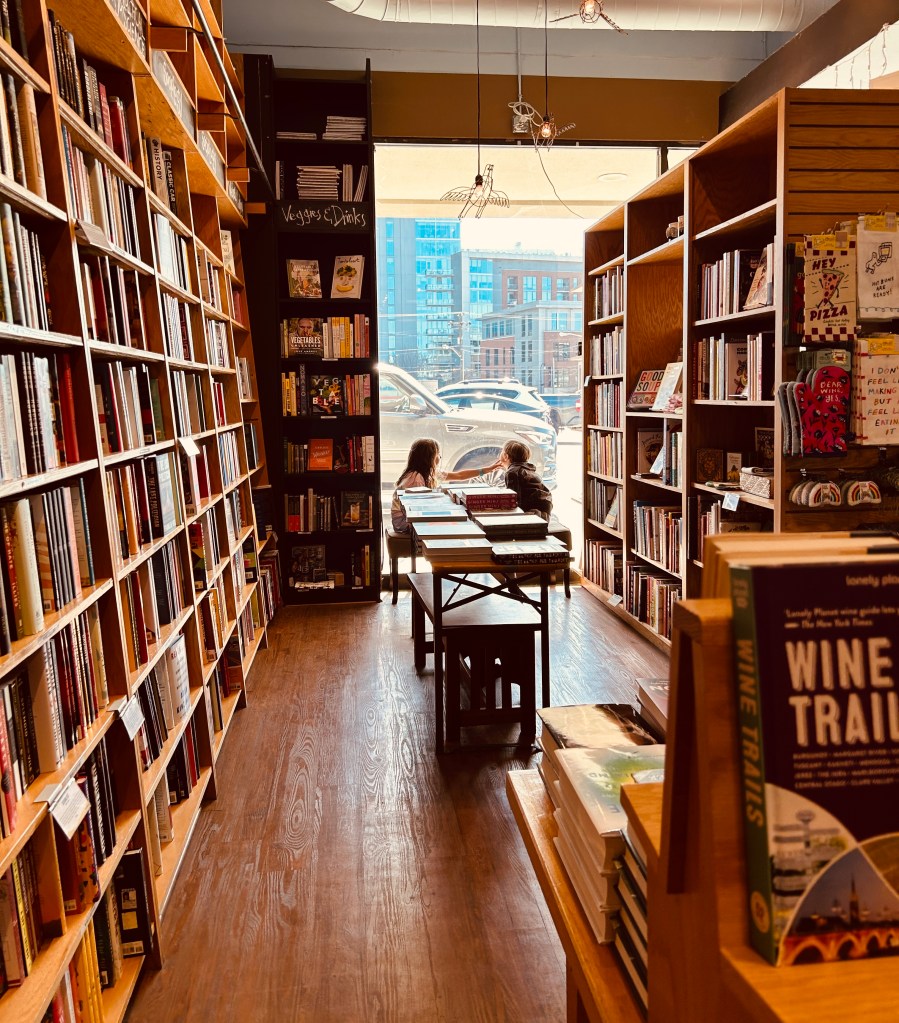
My friend’s childhood solution reminds me of the impulse so many of us have – don’t delve too deeply into the pain because you might expose yourself, and it’s going to hurt. Don’t reach out or share what happened with anyone. Instead, run away quickly and shut the door quietly.
Why do we avoid talking about difficult things, when sharing, supporting, and loving each other is perhaps the most meaningful thing we can do as humans? I see it as a two-fold issue: the first is trust and the second is time.
Establishing trust with another person is fraught with minefields. From our very beginnings, the muscle of trust is exercised. We require food and shelter, love, and learning. Sometimes, those who are tasked with our well-being fall short and we can live our lives carrying that knowledge like the heavy baggage it is. If I couldn’t trust then, why should I trust now? The tender, fragile petals that make up our seemingly impenetrable armor are easily trampled on. And even if you are fortunate enough to avoid childhood trauma, at some point in our collective lives, betrayal is a given, whether the source is family, friends, romantic partners, employers, society, or otherwise.
Heck, I’m currently writing an entire book on how I worked through feeling betrayed by God.
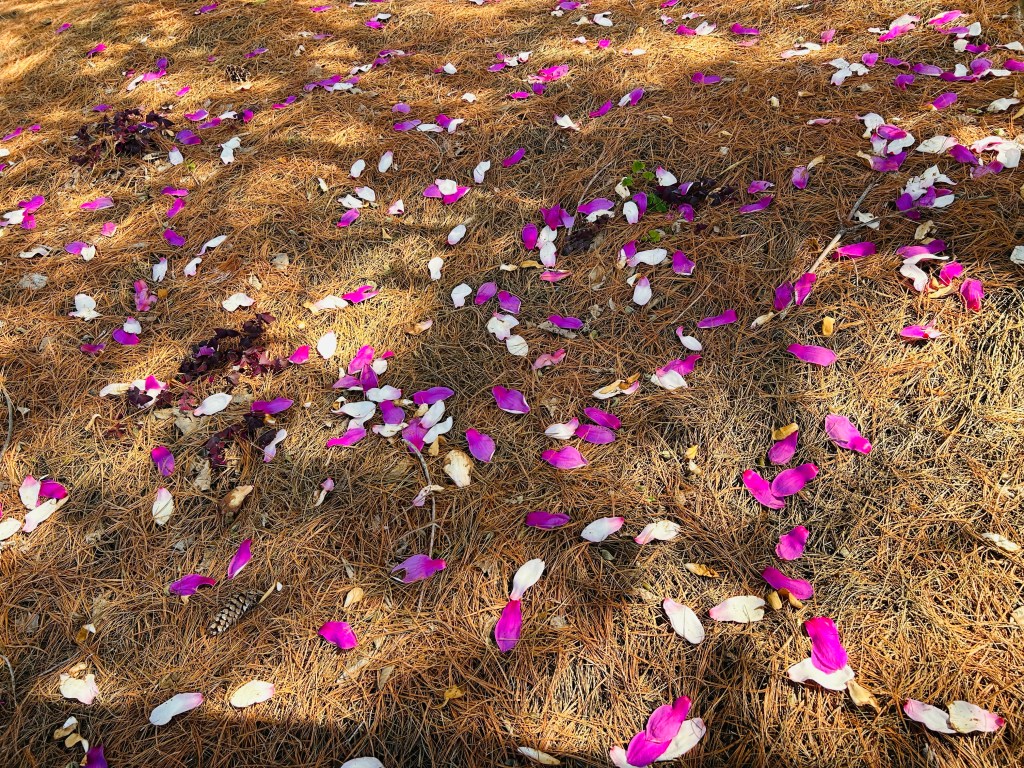
And then there’s the issue of time. Carving out the opportunity and space to share deeply can feel like the least important thing on one’s list. The conversations I referred to earlier happened in the following places: a coffee shop, a friend’s living room, and an art supply closet. Two planned, one not. All three offered me deep solace, information, and inspiration I didn’t consciously know I needed.
Our lives, packed with work, survival, and to-do lists, do not often allow room for the unfolding of leisurely, unstructured, open conversation. But when the stars align, when people reach across the table and hold a friend’s hand, or share their deepest thoughts, fears, and hopes a rare, healing alchemy bubbles up. We feel connection, relief, understanding. The tattered fabric of our hearts stitches back together. Walking forward with a lighter load, even a few solutions, is possible because we have been heard and understood, and we know someone else has laid down some baggage too.
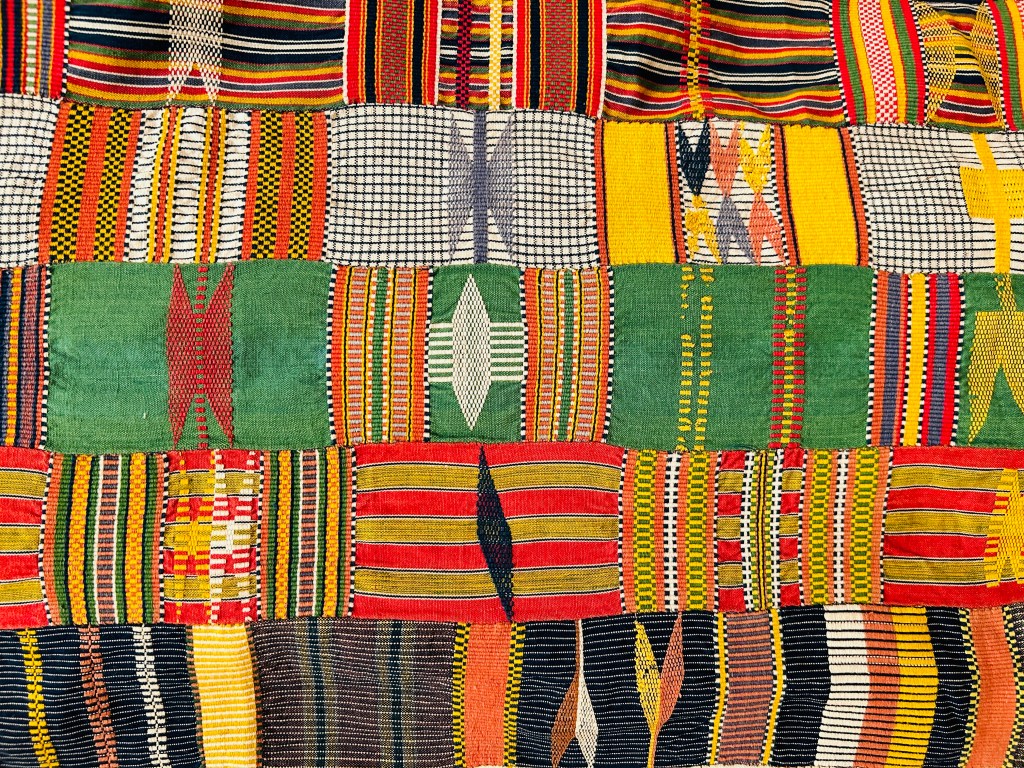
Back to my friend’s grandfather’s folk remedy: if the whole point of massaging the hurt area was to avoid bruising, that must be what we do for each other when we connect, when we listen without judgement. We help each other heal the deep bruising.
That is, as long as we make time for it and don’t hide.
-
Nepal Part One: From College to Kathmandu
It’s hard to imagine a clash of cultures more extreme.
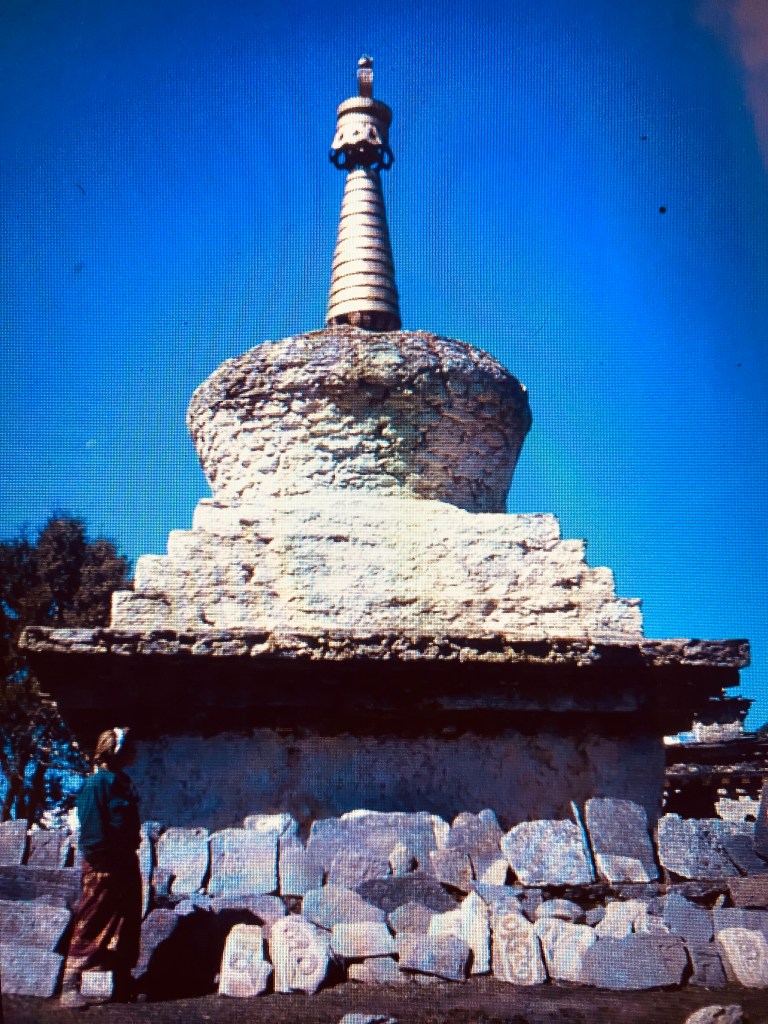
Standing in awe of a stupa, and the country of Nepal. In the final year of the 1980’s my eighteenth birthday is spent illicitly drinking beer at a Christian boarding school in St. Louis, Missouri in the flat middle of the United States.
Twelve months later I celebrate my nineteenth in complete silence at a Tibetan Buddhist monastery nestled in the steep foothills of the Himalayan Mountains in Kathmandu, Nepal.
The Royal Nepal Airlines flight touches down on the Kathmandu tarmac with a sudden, jarring bounce. My head is still spinning from the awe-inducing Himalayan landscape I’ve just seen out the window. Standing unsteadily, I move so that the mostly Indian, Pakistani, and Nepali passengers can disembark around me. I’ve been to the Sierra Nevadas, climbed a few 13ers in the Rockies, and explored quaint villages in the Swiss Alps. But now I understand that those ranges are mere foothills compared to the jagged snowy peaks streaked with dark grey that stretched for hours beneath and beyond the airplane. These mountains appear to have no end—they ripple out in every direction, nearly swallowing up the sky itself.
My first sip of the Himalayan Mountain range brew tells me all I need to know—over here, on the other side of the earth, nothing is the same.
Six months earlier I started my freshman year of college, mostly because I had no idea what else to do. After a single semester, it was clear that I wasn’t going to find the answers or direction I was looking for within the walls of an institution, so I dropped out. After twelve consecutive years of school and an ill-advised college enrollment, I found myself limply dragging my mediocre grades and minor accomplishments behind me.
Exactly when had I lost the soaring confidence I’d had when I was younger? Despite my privileged, white, upper-middle-class first-world life I was a confused, timid, mildly depressed version of myself. Entirely unclear about what I was good at in life, what I believed, and what lay ahead of me, I was sick of STUDYING the world. Instead, I wanted to EXPERIENCE it. Although everyone kept asking me what I wanted to major in (I mistakenly thought the answer to that question would determine my entire future), I could barely decide on which of my circle of friends were trustworthy and what music I actually enjoyed listening to.
My mostly sympathetic parents offered a solution: they would front the funds they would have spent on my education that spring semester provided I did some sort of program, ideally one that would offer me college credits. When I learned about a months-long “Experiential Learning” program in Nepal I knew it was for me (I also acknowledge that I was the beneficiary of unusual privilege in that I was able to both attend college and visit Asia in the first place).
A couple of months later I find myself on that Royal Nepal Airlines flight, embarking on the adventure of a lifetime.
I am eighteen years old.
On paper, the details of our Spring 1990 Nepal program are straightforward: the group of approximately fifteen of us will live together in Kathmandu while studying the Nepali culture and language. The itinerary includes a month-long homestay with a Nepalese family, an optional ten-day retreat at a Tibetan Monastery, volunteer time with a local organization, a forty-day trek to Mount Everest Base camp at 17,598 feet in the Himalayas, and a final foray into the rhinoceros-infested jungle in the flatlands of Nepal.
As if that list isn’t enough, something else is going on in Nepal that wasn’t exactly factored into the itinerary: a political revolution. A primarily student-led movement is rising in resistance to the royal monarchy that has exclusively ruled Nepal for centuries. The protesters want a constitutional monarchy (essentially a system of government that limits a King or Queen’s absolute power and includes…wait for it…a constitution). The number of Nepali demonstrators is growing by the day, and protestors are willing to stand up, be shot at, and fight for their independence. Parts of Kathmandu are in turmoil and there are rumblings that our program may be cut short.
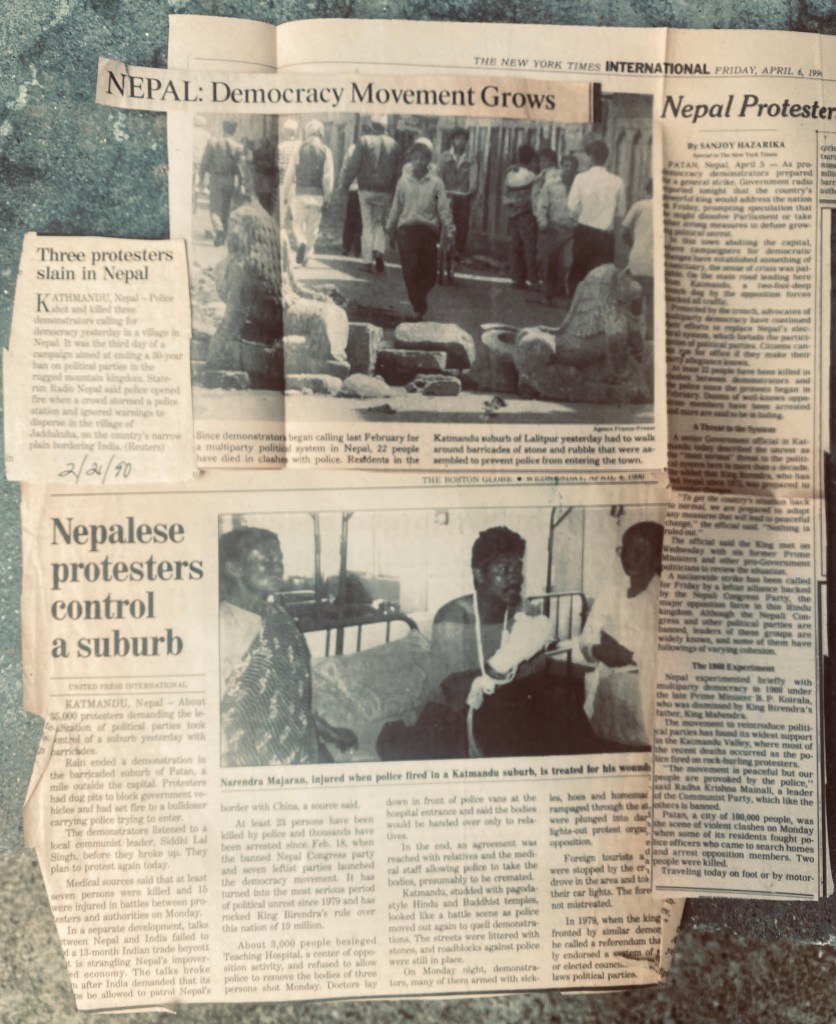
When I return from Nepal my father hands me six months of
press clippings he has carefully saved.Our bunch of students is a hodgepodge of mostly East Coast characters from the US ranging in age from eighteen to thirty-one. Many of the group are students at Ivy League universities and I quickly learn a valuable life lesson: admission into Harvard or Yale does not necessarily mean one has more street smarts, empathy, or knowledge about day-to-day survival (on the road or otherwise) than anyone NOT attending a top-tier university (or than those not attending college at all).
Because it is 1990 and the Internet is a mere twinkle in a few eyes, my journalist father is back in Boston, Massachusetts closely following the newswires and outlets covering the Nepali revolution. When I return home months later he hands me a collection of carefully cut-out press clippings tracking the progress of the contentious uprising raging along while I am on the other side of the world.
The city of Kathmandu is one of the oldest continuously inhabited places in the world, and it shows. Unlike countless other countries, Nepal has also never been colonized, so it maintains a sense of ancient identity. My first days are of a dizzying blur of speeding rickshaws, ancient temples on street corners adorned with fresh marigold flowers, unrefrigerated and unidentifiable meat displayed for sale on hooks, zero traffic lights, and bright-eyed children giggling behind their hands as they stare at our Western-style clothing and bumbling sidewalk map-checking (many Kathmandu roads, especially side ones, are nameless which makes navigating especially tricky).
There are also congregating children in rags so dirty I can’t differentiate between their clothes and skin. Small hands outstretched and shaking with hunger or disease, they plead for coins while I empty my wallet and experience multiple existential crises. I’m overwhelmed with disgust at how selfishly I’ve lived my entire life. Me, who knows the deep and unconditional love of my rare family, who was gifted a safe birth in a free country with every advantage. Who am I to complain about receiving an education, in fact to complain about ANYTHING at all?
And there’s something else: for the first time in my life, my white skin puts me decidedly in the minority. Experiencing this shift feels important and humbling.
There are hints of the revolution everywhere—khaki-clad rifle-wielding police on street corners, scrawled graffiti pleading for freedom, whispers by our Nepali language teachers about friends and family who have been arrested, and later, city-wide shoot-on-sight curfews enforced after dark. Still, the (American) leaders of our group work hard behind the scenes to keep us safe. We have all come this far and aren’t about to step out early. We meet with foreign journalists in Nepal who are covering the revolution, and they explain to us the history at play and the dangerous realities faced by the Nepali protestors. I begin to see the freedoms I enjoy in the United States in a new light—could I be taking my country’s freedom of thought and action for granted?
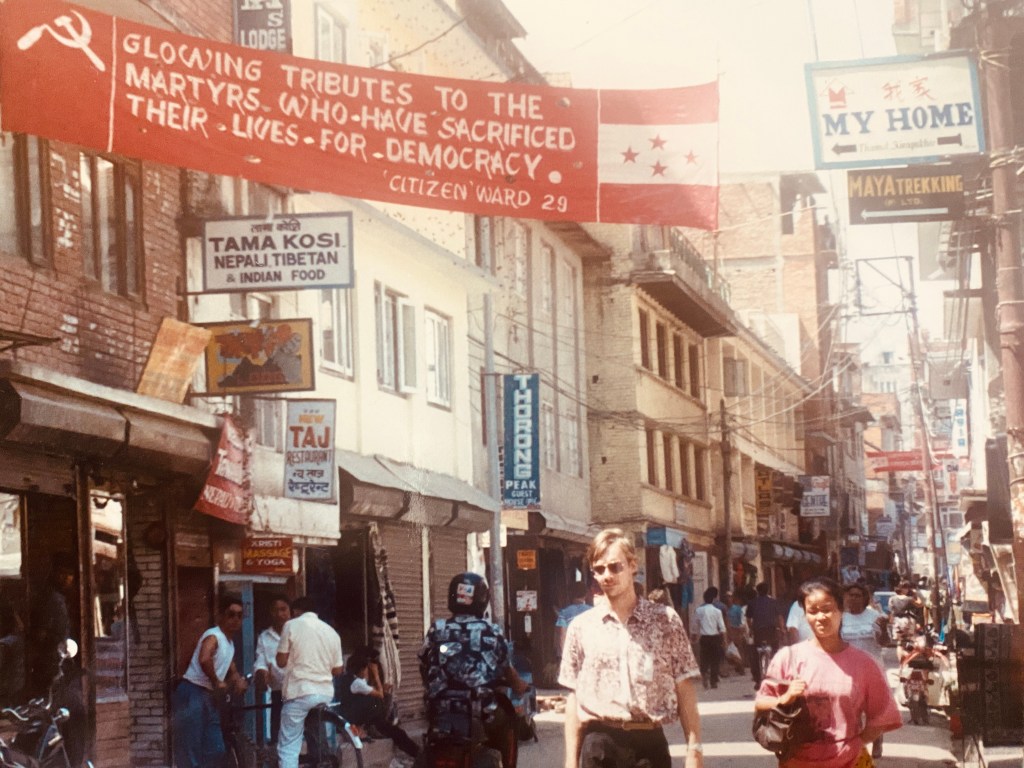
“Glowing tributes to the martyrs who have sacrificed their lives for democracy.
-Citizen Ward 29″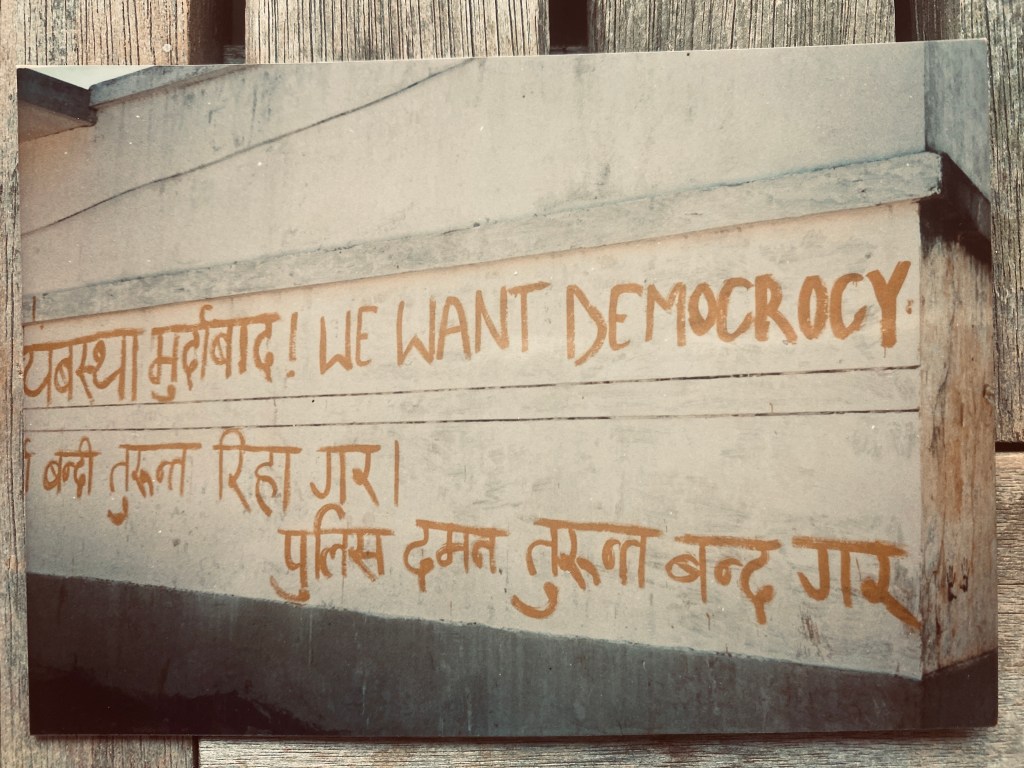
“WE WANT DEMOCROCY” The surprises keep coming: Wooden storefronts and squat concrete buildings lined dusty unpaved streets teeming with sari-wearing Nepalis, Indians, and European and Australian tourists (American tourists are less common). Dusty, radiant, smiling kids offer us gum, tug at our shirts, and ask us to play with them. Occasionally, cows so skinny their bones protrude lumber unbothered down the street. I learn that Nepal is 80% Hindu, most Hindus are vegetarians, and cows are considered sacred in the Hindu faith. Everyone leaves the cows alone. But where are those cows headed, I wonder, and how do they know how to get home?
Another unusual sight: young men around my age strolling as they clasp hands with other men. When I ask about this during my Nepali language and culture classes I am told “These men hold hands with each other as a sign of affectionate friendship.” This singular example of a common Nepali custom is a revelation to me. I try to imagine young (straight) American men strolling down the sidewalk on a sunny day holding hands with their best bro… and fail.
An important aside: Nepal has a complex history with LGBTQ+ rights. A landmark 2007 case identified the “third gender” as a legal category on their country’s census (Nepal was the FIRST COUNTRY IN THE WORLD to do this), as well as inclusion on voter rolls, and even passports. Despite this, discrimination and intimidation toward LGBTQ+ citizens in Nepal remain rampant into the present day.
Our motley group lives in Durga Bhawn, an aging palace that formerly belonged to a Nepali honorary. Nicknamed “the Durg,” we attend daily language classes there and learn useful words and phrases (although a surprising number of Nepalis know English) beginning with the ubiquitous “Namaste” greeting (meaning “I salute the God in you”) and ranging from apaal=hair to thik chaa=okay. The group slowly gets acquainted with each other and forms friendships and alliances with the Nepalis who teach and care for us. I gravitate toward another student on the program—a vibrant, independent, funny long-haired girl who walks on the balls of her feet, studies in Oregon, and is always up for adventure. Jess and I become close friends, never imagining that our friendship would still be going strong decades later.
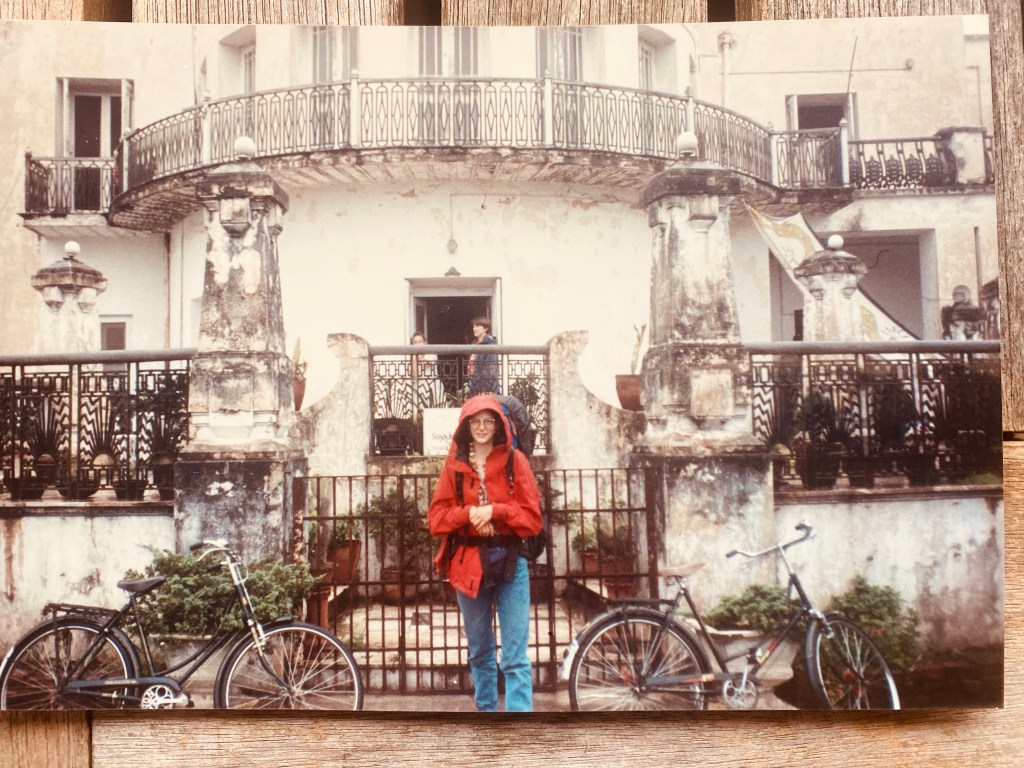
A fellow student in front of the “Durg.” Slowly, as we get to know our surroundings, the complex history Mother Nepal holds close to her heart unfolds. A Feb 16, 1990, entry in my journal records an encounter with a Tibetan woman who cleans the guesthouse where I sleep the first few nights:
“I was sitting on my bed this afternoon catching up on some letters and cleaning/organizing. I took my first warm shower today since arriving, and it was heaven. Suddenly, in came a woman. I had semi-met her before although I still don’t know her name. She cleans our room each day, and many of the other rooms, I think. She sat down on my bed. We said hello to each other and smiled. She asked my age and couldn’t believe I wasn’t married. Then she told me she has a 19-year-old son and wants me to be his sister (I hope she didn’t mean wife!). She invited me for tea at their house. I said okay. She said okay. I finally understood she was trying to tell me she was Tibetan. She showed me a necklace which I think signifies her nationality. Then she said “No husband, no father, killed, bam bam.” She made a sharp noise like a shot and a gun with her fingers. I felt awful. She must have left Tibet with her son and fled to Nepal.”
The journal that made me a writer. One Sunday a few of us decide to take an ambling walk to the Bagmati River, the central, holy river flowing through the heart of Kathmandu. We are headed toward the famous Pashupatinath temple, but l have little idea of the impact the visit will have on me.
As we set off the smattering of pedestrians surrounding us on the streets quickly swell into crowds more pressing than any I’ve experienced. By crowds, I mean thousands of humans crammed so closely together that I can feel the dampness of their clothing, smell their most recent meals, and note the fine details on women’s jewelry. An unknown scent wafts through the air, smelling of woodsmoke and something else sweetly pungent.
The crush swallows us as we walk, carrying us forward and depositing us on a wide bridge over the expansive Bagmati. Up ahead I notice people adeptly parting around a man sitting on a box in the middle of the span. Stopping short in front of him, I find myself staring at a human unlike any I’ve seen before. Wrapped in vibrant orange fabric, his skin the color of burnt copper, piercing blue eyes peer out from his painted white face. Long dreadlocks hang at his sides, extending well beyond his sweeping white beard. “He’s a Sadhu,” my friend whispers over my shoulder. “He’s renounced all worldly possessions and took a vow of poverty—they do it so others can practice their good karma.” The expression in the man’s eyes makes me shiver—it’s as if he is peering through layers of my soul.
Sadhu.
Credit: Getty ImagesI hardly have time to register this marvel before the mysterious smell I’d noticed earlier becomes too strong to ignore any longer. Turning to my right, my gaze follows the coffee-doused-with-creamer-colored river water as it flows out from underneath the bridge. Rows of temple towers cluster along the banks on either side and in front of them are what appear to be a series of large bonfires, flames licking insistently at the wood. Wizened men are stooped over tossing sticks onto the piles, creating ever higher stacks. Suddenly, it is clear to me that these are not bonfires, they are funeral pyres. At the top of each stack, a charred human body stretches out, burning in tandem with the black wood. The mysterious smell filling my nostrils is seared human flesh.
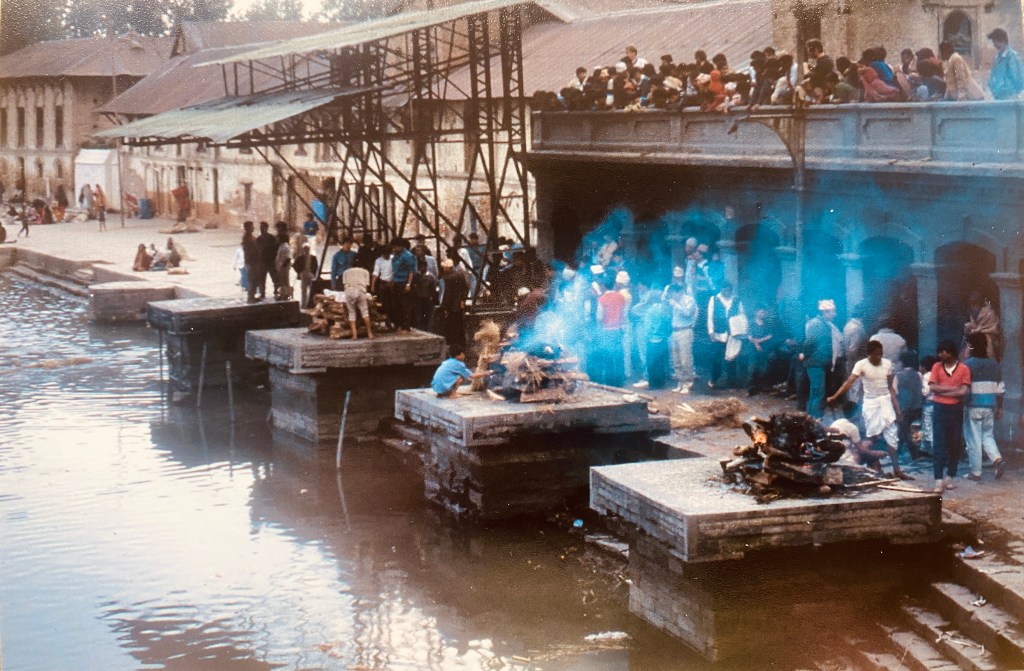
Funeral pyres at Pashupatinath. Later, I learn that the very spot where we stand is most sacred to both Hindus and Buddhists. Hindus carry their dead to this holy place, dipping the bodies three times into the Bagmati, and then carry out cremations on these pyres lining the river. Reincarnation is a tenant of Hinduism and all around people are ushering their loved ones into their next chapter in the most respectful and holy way they know.
Staggering out from the other end of the bridge I separate myself from the throngs and slump beneath a tree with my spinning head held in my hands. Witnessing this holy tradition and level of devotion leaves me feeling stunned, deeply honored, and questioning everything I know about Western faith and end-of-life practices.
And somehow, despite the smell of death and the press of humanity surrounding me, I feel perhaps more alive and inspired than ever before.
Nepal is quickly becoming my greatest teacher.
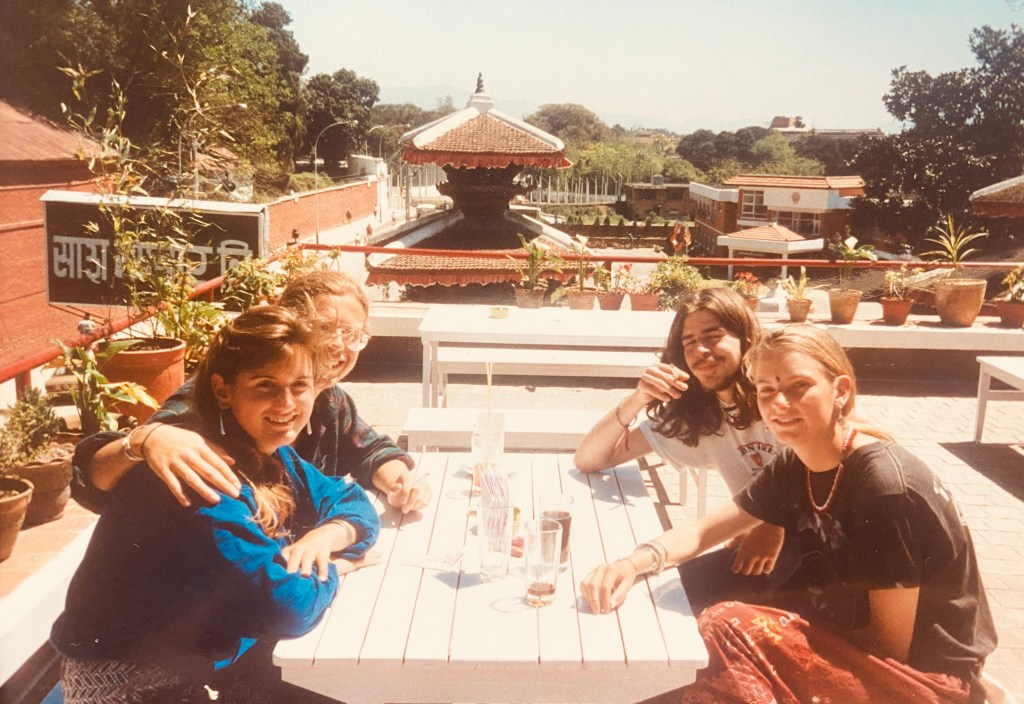
Ahh, to be young in Kathmandu in the midst of a revolution. -
A 45-Year-Old Neighborhood Tradition, Still Lighting the Way
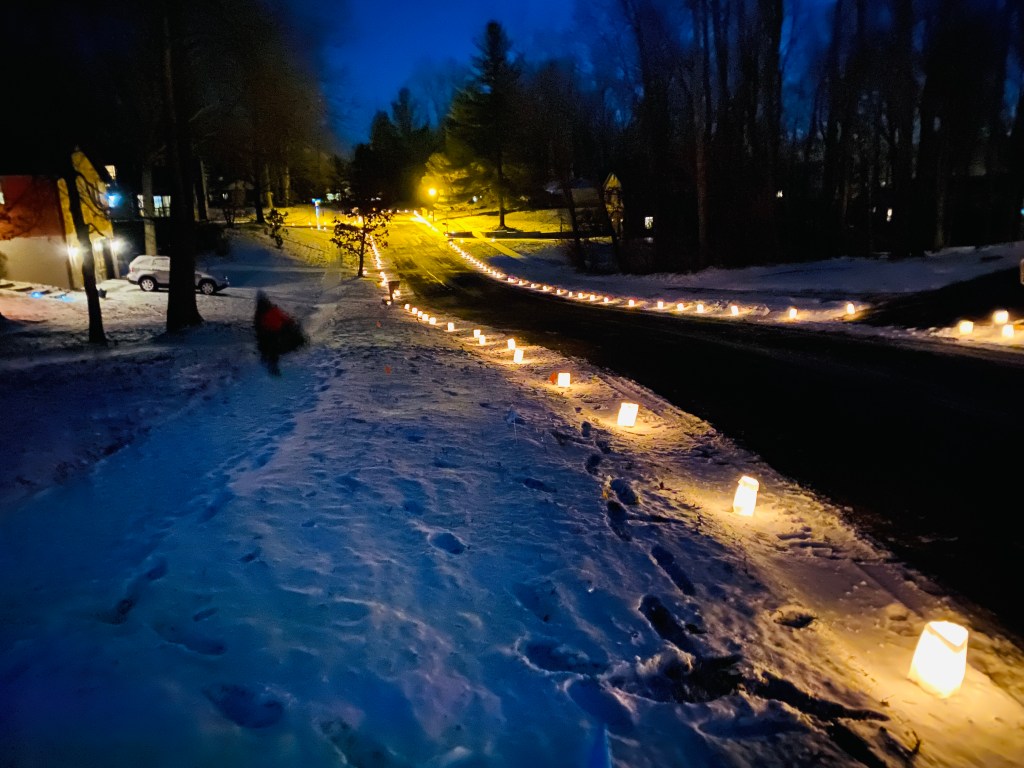
Imagine a cold, dark Christmas Eve in a hilly suburban Southern Indiana neighborhood. Bare tree branches and stout bristly pines reach toward the sky while silent snowflakes float gently down from the heavens, coming to rest in a soft pile on the curb next to the candle-lit glow of a white paper bag.
If you slow at the crest of the highest hill in the neighborhood, right at the spot where the street makes a satisfying downhill curve, your gaze will be rewarded with two parallel lines of those illuminated paper bags, appearing as widely spaced train tracks leading downhill toward something…promising. Perhaps they lead to Christmas Day, or simply a peace-filled, snowy, sacred night.
But this isn’t an imagined holiday tale, it’s a true story, one with a 45-year-long history behind it. The story of our humble neighborhood luminaria display highlights something missing from modern life, an aspect most of us hardly realize has crumbled away in the face of our perpetually busy and forward-propelled lives: shared, meaningful traditions.
When my husband and I moved to this neighborhood we weren’t looking for tradition, or even friendship necessarily. Our children were only one and two and mostly we were looking for increased living space, room for our kids to roam safely, and fewer screaming sirens.
Ours is an unpretentious gathering of about 30 houses sitting on wide streets with sprawling yards that feature some landscaping and other sections left wild. Mature oak, maple, and ash trees tower above. Two cul de sacs and a clear “No Outlet” sign keep people from using the three main streets as a cut-through and maintain a cozy, private quality.
Once we arrived in our new house it didn’t take long for us to learn about the luminarias. An envelope appeared in our mailbox soliciting a donation toward the “Neighborhood Christmas Eve Luminaries” and the frosty became crystal clear—our new landing spot took this new-to-us display seriously.
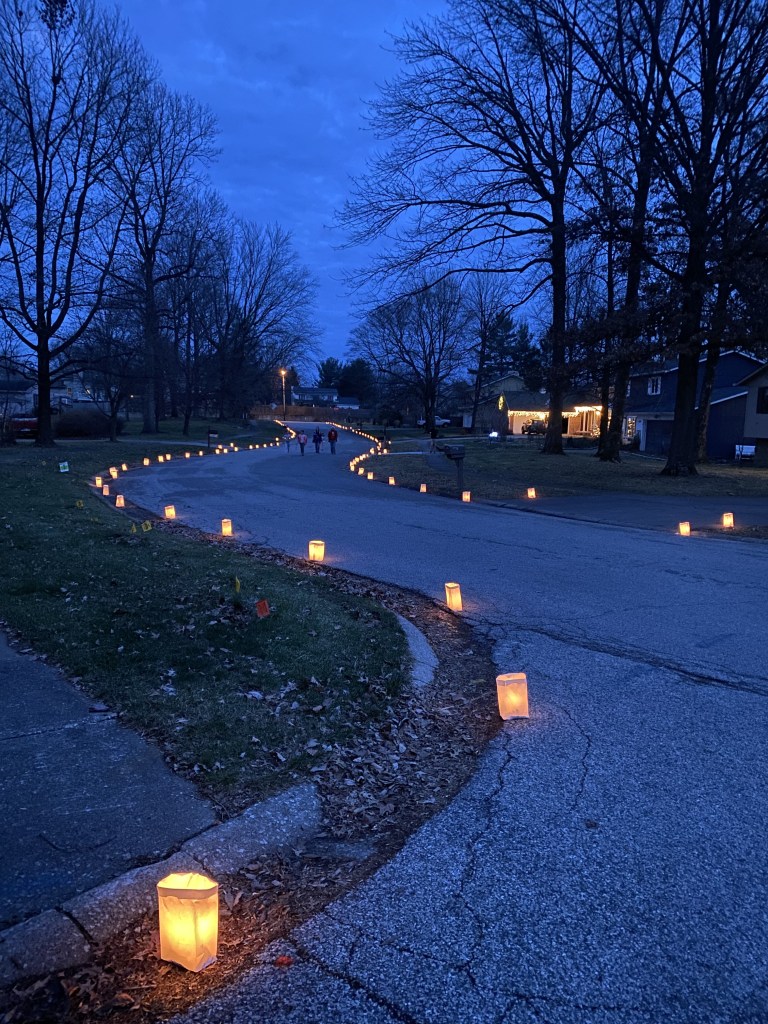
Drivers and walkers are lured in by the snaking glow.
Photo Credit: Tom StrykerThe annual tradition, once featured in our town’s local newspaper, requires many hands to accomplish. Here’s the inside scoop: at around 2 pm on Christmas Eve, volunteers begin gathering in the appointed cul de sac driveway (or inside the host’s garage if temps are low enough which has been known to happen). People graze at a side table displaying a variety of treats carried carefully over in gloved hands…homemade cookies, crock pots of chili, mulled cider, and cocoa. Kids of all ages thread excitedly through clusters of chatting grown-ups.
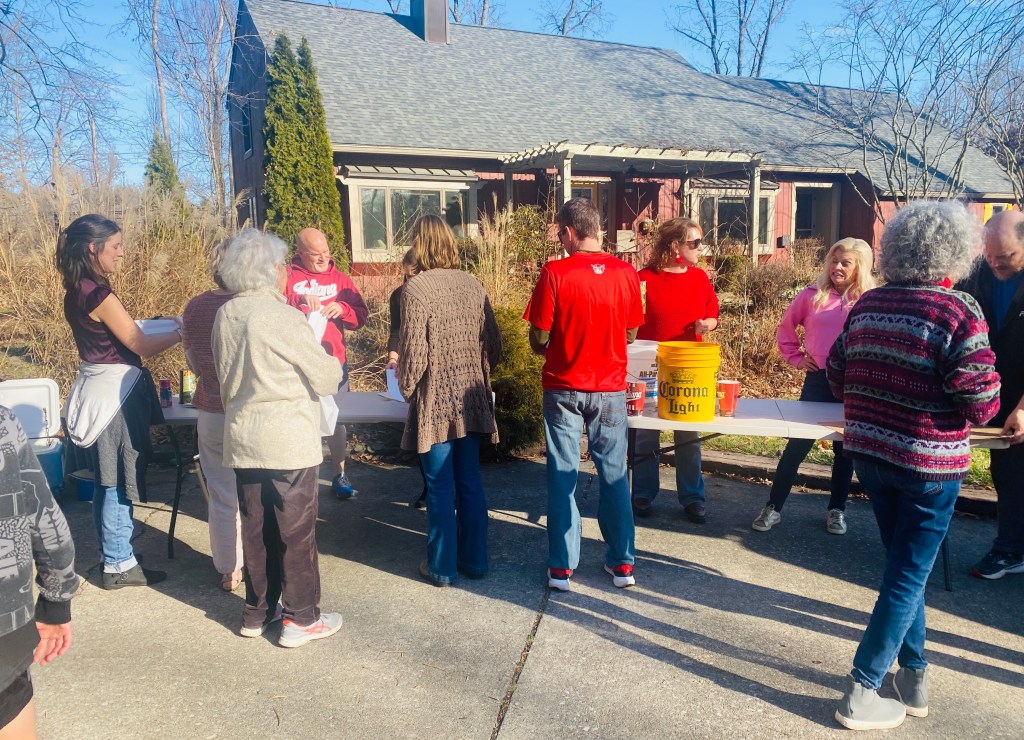
Let the luminaria assembly begin! Other long tables hold a variety of supplies, white paper bags, buckets of sand, and boxes of sturdy white candles. People line up eagerly and begin the process: open the paper bag, fold back the top, pass the bag to the left, add sand, pass to the left again, add candle. Next, the filled bag (hold it by the bottom!!) is handed to someone who shuffles it over to the back of a truck bed. Once the truck bed is chock-full of bags the loaded vehicle slowly moves throughout the neighborhood while a few hearty souls (often the kids) deposit the bags on top of pre-marked spots along each street.
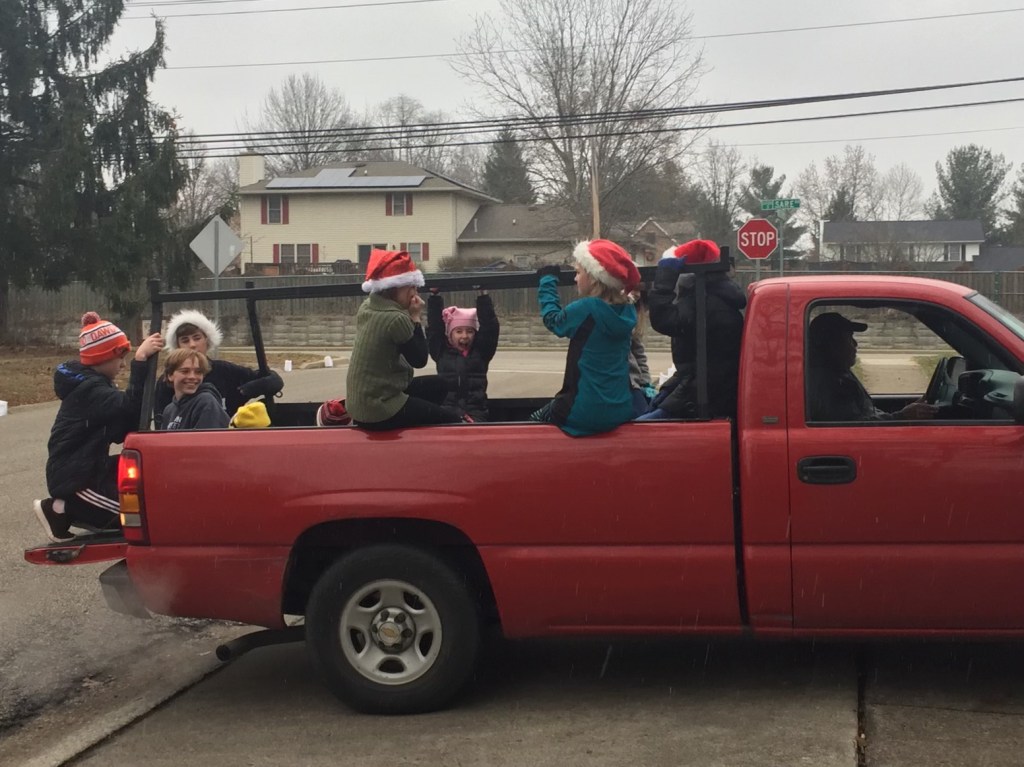
Young elves enjoying their work.
Photo credit: Shirley MegninBut what isn’t obvious at those assembly tables is the backstory behind this tradition or the preparation and planning that goes on all year to pull off a seamless appearance on one special night. Over 400 candles are ordered! Over time lessons have been learned: the cheaper the bag the more likely the bottom will tear, open the bags of sand early so wetness doesn’t ruin the container. Avoid piling bags on top of each other.
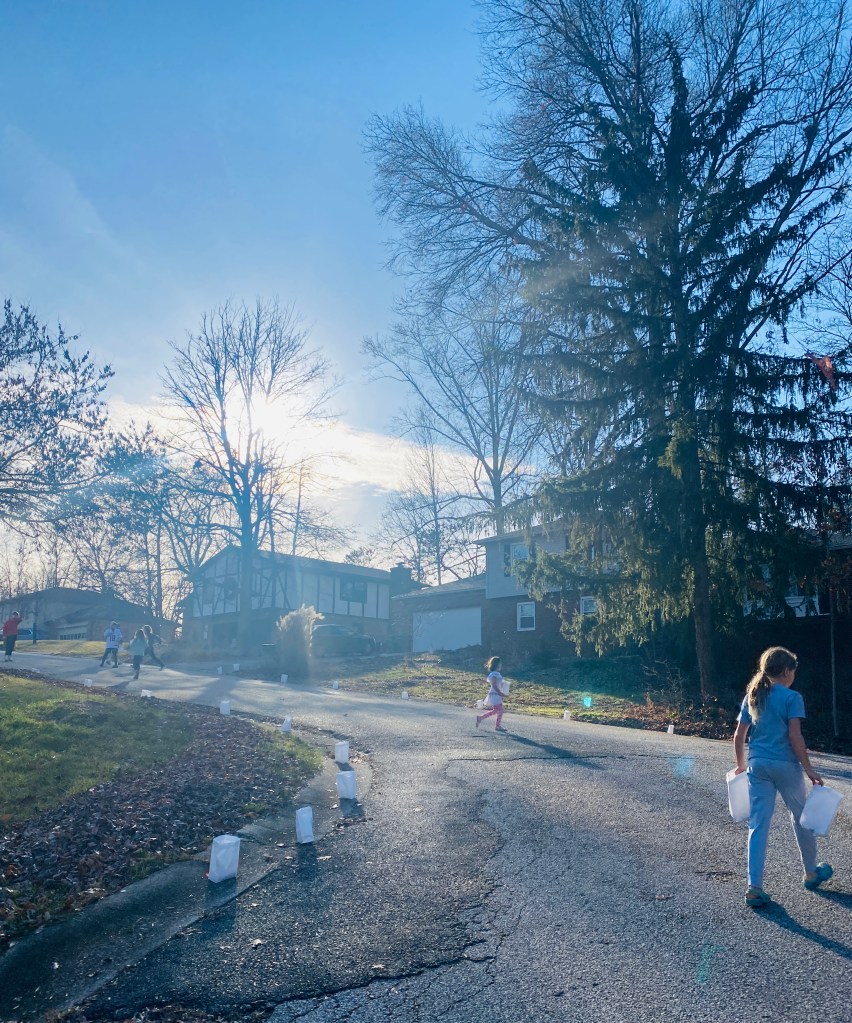
Many (small) hands make light work of setting up the bags. I recently discovered that the first neighborhood display happened in 1978 (or 1979, no one is exactly sure). Early luminaria display pioneers deserve full credit for building interest in and respect for the still-thriving tradition. Responsibility for the supplies and location of the luminaria assembly has bounced around over the decades with different individuals, landing most recently with some particularly generous and fun-loving folks (entirely in character for one of the families who regularly provide the social glue for a variety of neighborhood happenings).
My own family has participated in the luminarias for nine consecutive years but this year, as I stood at the table shoulder-to-shoulder with my neighbors/friends, filling paper bags with scoops of sand and quickly passing so that a candle could be added, I finally grasped that something beyond mere neighborliness was going on. I listened to people talk, laugh, and reminisce and watched kids, including my own, climb up onto the back of the tailgate and clutch each other with glee as the truck lurched off to make holiday magic. Could it be that adults crave shared traditions as much as children do?
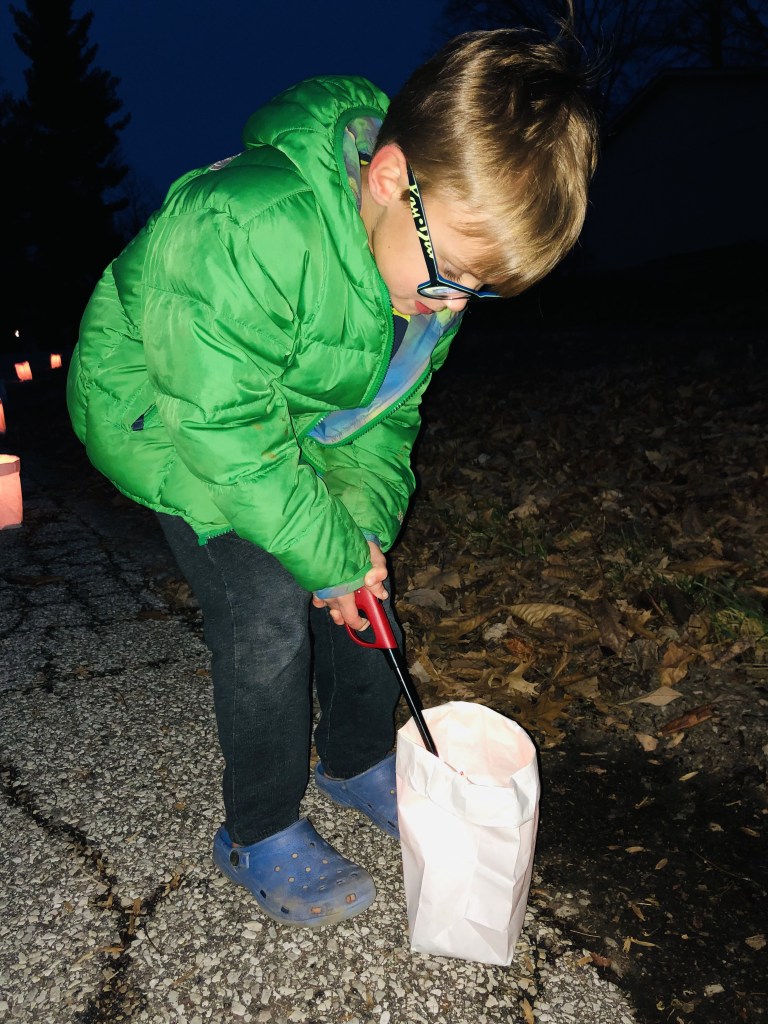
It takes a village to bring the display to life and light. It’s not as if our neighborhood is perfect, or that we haven’t collectively faced the difficulties of life: we have our human disagreements and misunderstandings, former keepers of the luminaria tradition have passed away, or moved. A fair amount of folks who live in our neighborhood pass on participating entirely (no one judges).
Around sundown on Christmas Eve residents begin to step out of their houses wielding long electric lighters, calling out to each other and visiting each bag to bring individual candles to vibrant life (last year the wind was so frigid I abandoned my responsibilities entirely and fled inside leaving others to pick up my lighting slack). A couple of hours later cars slowly begin to file into our neighborhood, some gliding by with headlights turned off, others blaring Christmas music with the windows rolled down. The drive-bys continue throughout Christmas Eve, even into the wee hours. Someone once said they counted two hundred cars, each passing through to bask in the glow of our simple yet magical neighborhood offering.
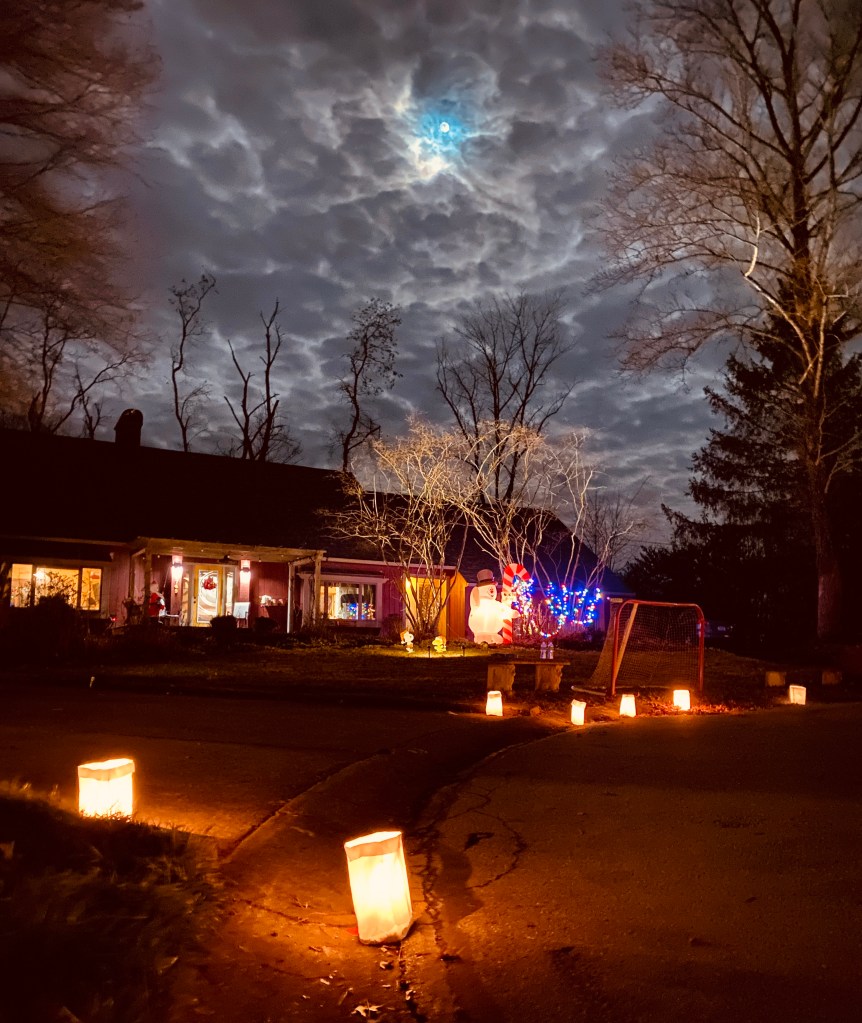
The years without snow possess their own beauty. My favorite part of the whole affair comes late on Christmas Eve, sometimes so late that it has become Christmas Day. The presents are wrapped, stockings are hung, cookies carrots and milk are appealingly arranged on the hearth. I’m the last one awake, everyone else is nestled all snug in their beds. Illuminated only by the lights of the Christmas tree I stand and peer through the front window.
Outside the line of burning candles stretches off into the darkness, each offering their light and hope to the quiet and peaceful night. It’s time for the neighborhood to rest.
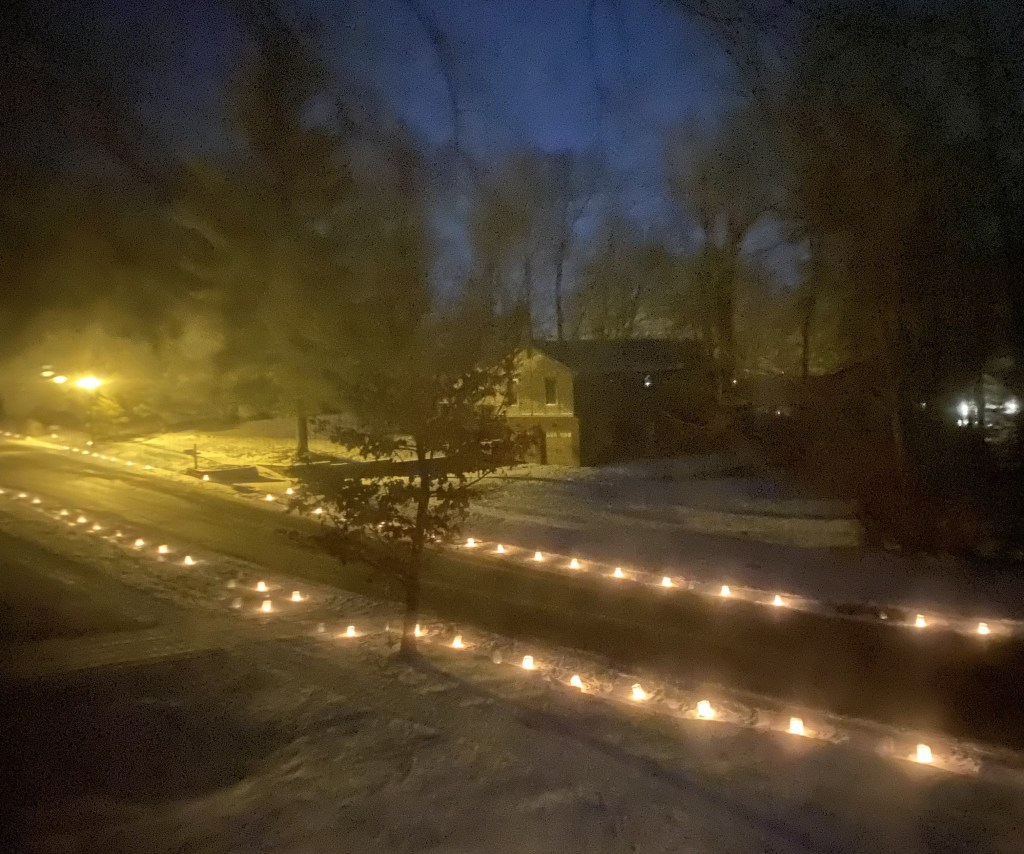
-
It All Changes So Swiftly
It’s a mid-week birthday celebration. Three hyped-up ten-year-old girls are sprawled across my dark blue living room sectional, matching white Stanley water bottles lined up on the coffee table, multi-colored lights flashing on the Christmas tree in the corner. Popcorn pours into their open mouths while they expertly jam thin red straws into chilled pouches of fruit-punch-flavored Capri Sun.
Their pattering conversation drifts upstairs to my listening ears “Name each album and your favorite songs from each one…I love her outfit, it’s so Taylor…I wish I could be a dancer for Taylor…if you come in here and you like Kanye, you’re OUT…when Taylor dies, I die.”
One of the three girls is my daughter and she’s begged to have her two most enthusiastic “Swiftie” (the term for serious Taylor Swift fans) girlfriends over tonight to watch Taylor Swift’s The Eras Tour (Extended Version) on television.
If the news somehow passed you by, I’m here to tell you that December 13th is Taylor’s 34th birthday. To mark the occasion Time Magazine’s 2023 Person of the Year has decided to release (to television) the film version of her 1.04 BILLION-dollar-generating tour.
I join the three downstairs to watch as the concert opens with a sweeping overhead view of the twinkling lights of the SoFi Stadium in Los Angeles. My girl and her friends are already on their feet, facing the television with their arms raised. They are ready to move, to scream, and feel the music wash over them.
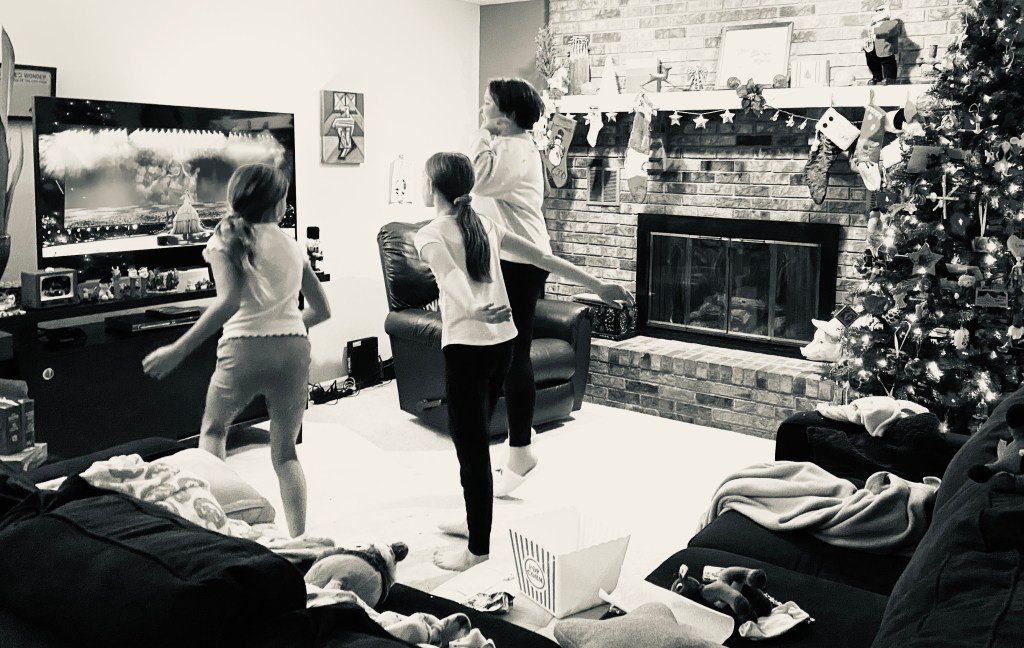
The Swifties take over the living room.
Miraculously, no glass shattered.Because I am an “older” mom (I was in my early forties when I had my kids) I am well aware of the vast chasm between how the world was during my youth and how it is now, for my daughter. The internet didn’t pick up speed until my college years, for example. For Swifties, 1989 is the year of Taylor’s birth as well as the title of her best-selling album.
For me, 1989 is the year I graduated high school.
While the girls continue their excited chatter I flashback to a couple of months ago, when I sat in the last row of a movie theatre watching the same Eras Tour film on the big screen, next to my daughter and her friend. It was a Sunday and we arrived 45 minutes early. Parts of the evening went as expected: the girls exchanged beaded Swiftie bracelets with others in line and excitedly discussed their favorite songs, then rushed into the theatre and settled into their seats clutching bags of candy and slushies as big as their heads.
The bracelet exchange (during which, in the name of fandom, my daughter traded away her favorite bracelet of all-time.) Other parts of the show caught me by surprise: from the moment Swift stepped out onto the stage to sing the first notes of “Miss Americana & the Heartbreak Prince” her lilting yet commanding voice pulled all attention her way, and it pretty much remained on her for the rest of the concert. Swift’s uncanny ability to tell a relatable story through her lyrics, her mesmerizing yet accessible booty-shaking, her diverse backup singers, and her immense talent as a musician and entertainer were all on display…for three full hours.
I, for one, couldn’t look away.
Another revelation: While sitting there in the movie theatre singing along with my daughter, I found myself reliving not only the rocky terrain of my teenage years but my 20s and early 30s as well. As a writer currently mining her own life for stories that play into universal themes I was pulled right in—things I hadn’t thought about in years flashed through my mind, synapsis connecting, my heart beating in time to the lyrics:
“Give me back my girlhood
It was mine first”
—Would’ve, Could’ve, Should’ve
“Back when we were still changin’ for the better
Wanting was enough
For me, it was enough
To live for the hope of it all”
—August
…and a newly discovered gem (look it up…this is the one that got me up out of my seat):
“I’m so sick of running as fast as I can
Wondering if I’d get there quicker if I was a man
And I’m so sick of them coming at me again
‘Cause if I was a man
Then I’d be the man”
—The Man
There in the darkened theatre I didn’t just think about those epic times, I FELT the emotions of those eras in my life. Glancing over at my joy-filled daughter and her friend, this reggae-loving Phish-head realized that even though we were singing the same lyrics their interpretation was probably entirely different. They have only ten years of experience under their belts, puberty looms on the horizon, and the world embraces them differently than it did me. Yet isn’t that the way with every generation, rolling forward together? Our situation just happens to be padded with an extra fifteen years (or more).
Amazingly, our ages cease to matter in the face of Taylor’s gift—she seems to embody the parts of us that are unabashedly female, and powerful, and entirely unapologetic. And the thing is, we are ALL made of complex parts yearning to connect…no matter our gender, our number of days on the planet, or our skin color.
As we walked out of the theatre I looked over at my glowing girl and said “Okay, I get it, I’m officially a Swiftie now.”
Why sit when you can dance? Back in our living room my 11-year-old son (who earlier jammed his hulking headphones over his ears and fled upstairs to escape the echoing shrieks) has now come back downstairs to see the show. With wide eyes he watches the girls watching Taylor before joining them to sing along to a song he recognizes. For a moment I can’t differentiate between his high-pitched vocals and theirs.
Later, despite the Midwest darkness outside and the 33 degree temps the three girls step out onto the deck and yell into the night, their strong voices rising in unison “HAPPY BIRTHDAY TAYLOR, WE LOVE YOU!!”
Their congratulations are so heartfelt that I think Taylor, wherever she is tonight, just might have heard them.

-
Caregiving: A Reality Check
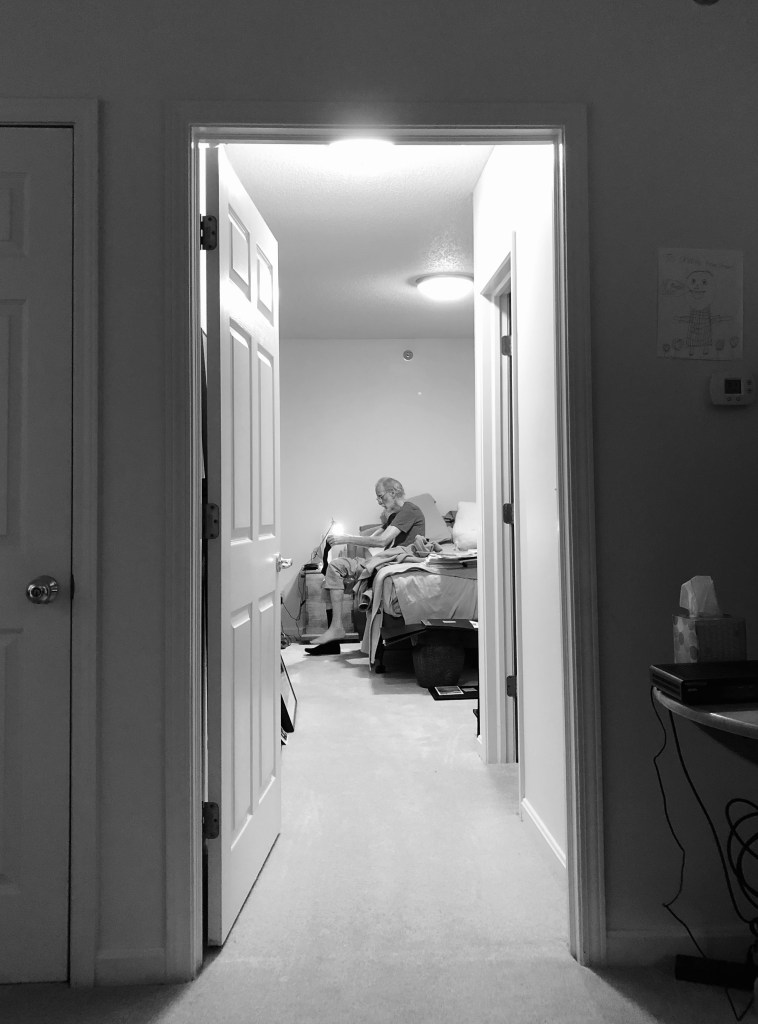
“Hi Kiddo…remember how I told you about those little people streaming up the walls, the ones getting into the light fixtures and whispering? They’re back today, I’m going to call the front desk and see if they can put in new lights. Hoping that helps.”
—Excerpt from a voicemail my father left me in late November 2020
Reading the message above, you might imagine that the person behind those words was out of their mind, paranoid, even dangerous.
What you are probably not imagining is that the person who left that message for his (horrified) daughter was also an accomplished writer, a loving, devoted, and encouraging father. Or that this hallucinating man was once serenaded by the great Maya Angelou because she so adored his interview questions. Well, it’s true.
It’s also true that even after two years of me caring for my father it took that particularly alarming voicemail for me to finally accept a hard truth: my dad and I had entered unknown territory, and we would likely never return to normal (whatever that is).
Everything that had come before, the father/daughter relationship I’d relied upon and frequently taken for granted every day of my forty-nine years, had been undergoing a seismic shift—but I’d been in thick denial for a long time. Despite taking over almost every aspect of my father’s care I had to hear his irrational call for help to truly understand how much had changed, and how screwed we both were.
The familiar, healthy reciprocal relationship between father and his daughter was no longer. In its place was a perpetually ill-fitting dynamic that neither of us was prepared for.
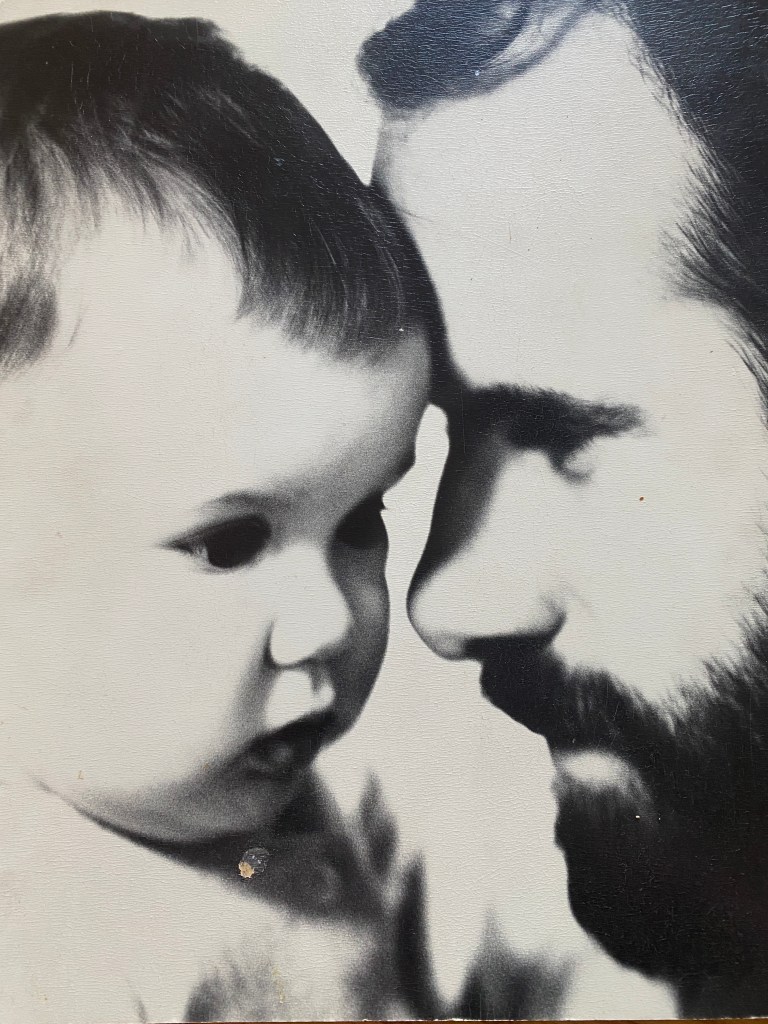
Mine was a forever loving, attentive, respectful, forgiving, encouraging father. “For a son or daughter to assume autonomy over a parent’s life and say, “I’m making the decisions now,” is a role reversal for which there is no preparation.”
-Patti Davis in the New York Times Sep 1, 2023
Many around my generation (I’m in my early fifties) are facing the decline of their parents, and the beginning of their careers as caregivers, and it isn’t pretty. Yesterday I spoke with a close friend who recently moved her mother across nine states to live with her. Her mother’s memory is in steady decline and my friend’s life changed overnight—she is now providing 24/7 care, in her own home, for her mother. When we spoke, my friend had just spent an entire hour trying to convince her mom to go for a walk with a new hourly caregiver. My friend was hoping to get a two-hour break, her first in weeks.
As we were talking my friend was watching her mom sit in the passenger seat of the caregiver’s car across the street. My friend knew her mom was uncomfortable, searching for any way to get out of the situation and away from the unknown driver and the unfamiliar car she found herself sitting in. This mother had no idea her daughter was watching her from a few yards away, the daughter’s voice trembling as she wondered how she was going to make this all work, how she could possibly keep her mother safe, run her business, maintain her sanity.
“Call me anytime to talk,” I told my friend. She thanked me and then said, “But if you haven’t heard from me could you call and check in on me?” I knew what she meant, caregivers need real, on the ground help. My friend doesn’t need people inquiring if she’s okay, she needs someone to come over, make her mom laugh, make them both nourishing soup, and relieve her for an hour so she can walk down a trail and listen to birdsong and cry.
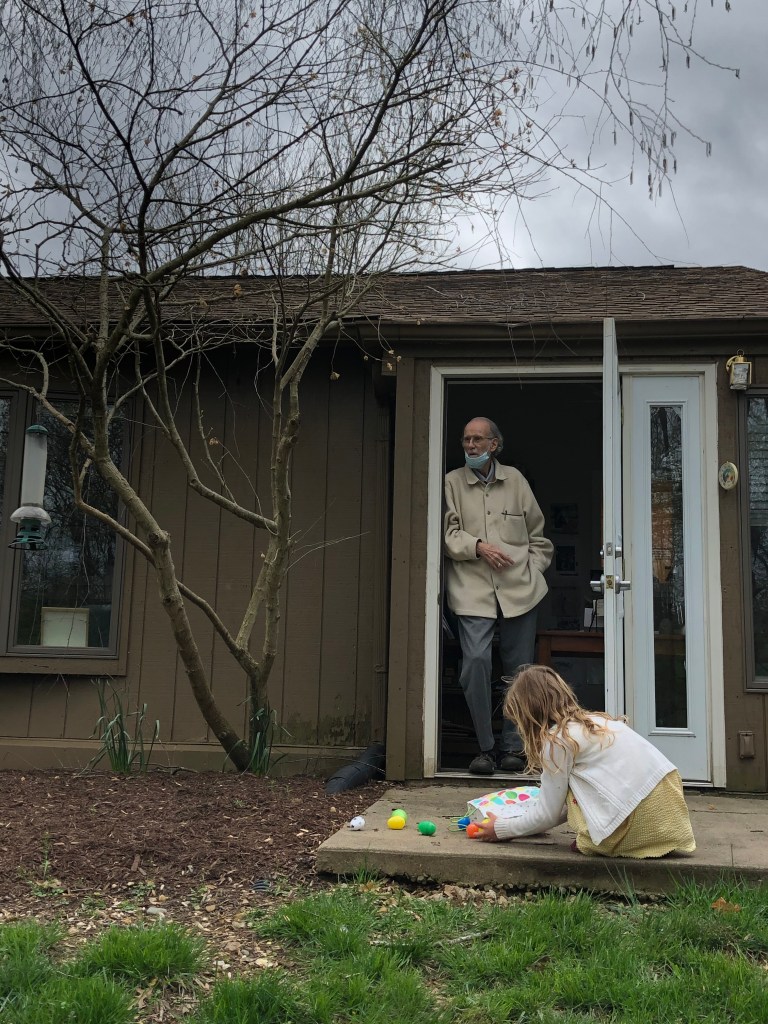
My Dad’s final Easter, mid-pandemic. Over the past two weeks I’ve connected with three friends who are embarking on the caretaking of a parent with memory issues. Three different friends, three levels of memory loss, one painfully familiar story. There are common threads: all our parents were accomplished, active people, and NONE of them are losing their memory gracefully or following along any sort of expected memory-loss timeline (spoiler—there isn’t one, every memory loss diagnosis and journey is unique).
Not only that, but here is a little-known fact: memory loss does not follow a linear timeline, it shifts and dips and peaks. One day your loved one might recall their favorite high school class and how they felt before their wedding, and another day your ailing dad might buy the New York Times at a bookstore and then return to the register to try and purchase it again two minutes later.
For many, the term “caregiver” suggests a simple scenario in which a person REQUIRING care RECEIVES that care from someone qualified to provide it. For many of us, the reality of caregiving is something else entirely. Take my father, for example. This fiercely independent world traveler and investigative journalist was LOATH to accept the help of a caregiver, or, as he insisted on calling anyone who came into his apartment, a “nurse.” “Why do I need a nurse?” he asked me repeatedly. “Why is she going to watch me shower…I don’t need her to spoon food into my mouth…why on earth do I need any of that. It’s a waste of money.”
“Okay Dad,” I’d say from the kitchen as I finished washing his dishes, or from the hallway as I stuffed his clothes into the dryer, or from the front walkway as I swept slick leaves away from the entryway.
Slowly, without either of us fully grasping what was happening, I became my father’s full-time caregiver. Fetching prescriptions, filling the pillbox, setting up medical appointments, attending medical appointments, corresponding with doctors and insurance, paying his bills, checking his voicemails, doing his grocery shopping, taking him to church, to the bookstore, to the library, on walks. I devised a system of leaving daily notes in prominent places around his apartment every morning (taped to his bathroom mirror, on the seat of his reading chair) and evening with daily reminders about what to eat and what medication to take, what was going to happen that day. It was a highly imperfect and flawed system.
I finally landed on the phrase “You know how you’re always saying you wish you could help make my life less busy, Dad? Well, YOU accepting help helps ME.”
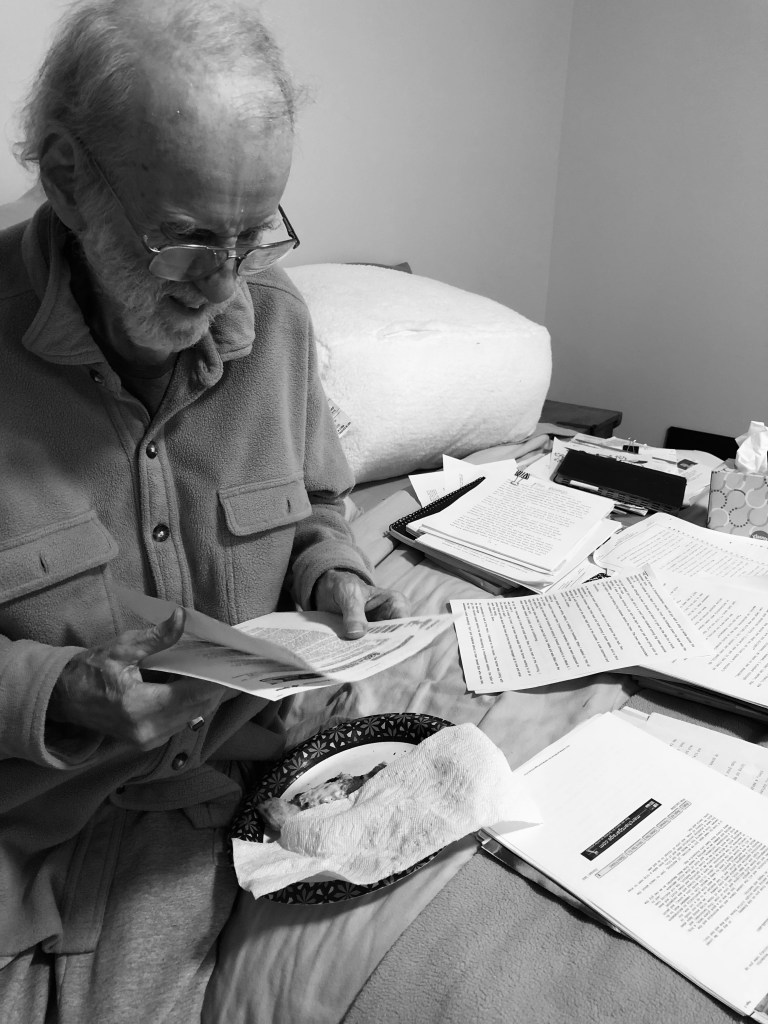
My dad spent hours reading through his decades of published writing.
“Some of this is pretty good!” he’d say, chuckling.After those words left my mouth, he’d look at me quizzically, then nod and say “Okay Kiddo, I’ll accept help, just for a few hours.”
Inevitably, the next day when the hourly caregiver showed up, he’d tell them he was all set, and send them on their way.
Somehow, my dad and I made it work, day in and day out. And we were fortunate: my father had the means to live independently, had access to good medical care, and had a caregiver (me) who was able to devote most of her time to his care (at the expense of many, many things in my life but that’s another story). Plus, we were banking off a lifetime of good feelings between us.
What I haven’t mentioned is that I’d act as my Dad’s primary caregiver all over again in a heartbeat. I loved (and love) my dad completely and with a fierceness that overwhelms me. Every single thing I did for him was done out of love. He had cared for, protected, and celebrated me throughout my entire life. He named my childhood cats after feminists! Taking my turn to care for him was a privilege. No one else could have cared for him as well as I did (maybe my mother, but honestly, I’m glad she never had to).
I wish I had hope that the landscape of caregiving in my country will change, that resources will get easier to access, that Alzheimer’s and Dementia will loosen its grip on us, but I think we all know the reality.
It’s not going to get any easier, and as I listened to my friend’s story yesterday, I felt the heavy weight of all she is facing, and will face in the coming months and years.
We can rely on one thing, though. The steady love our parents shared with us continues to flow forward, lifting us up in ways we don’t expect, and allowing us to achieve what often feels impossible. Because we caregivers have no other choice.
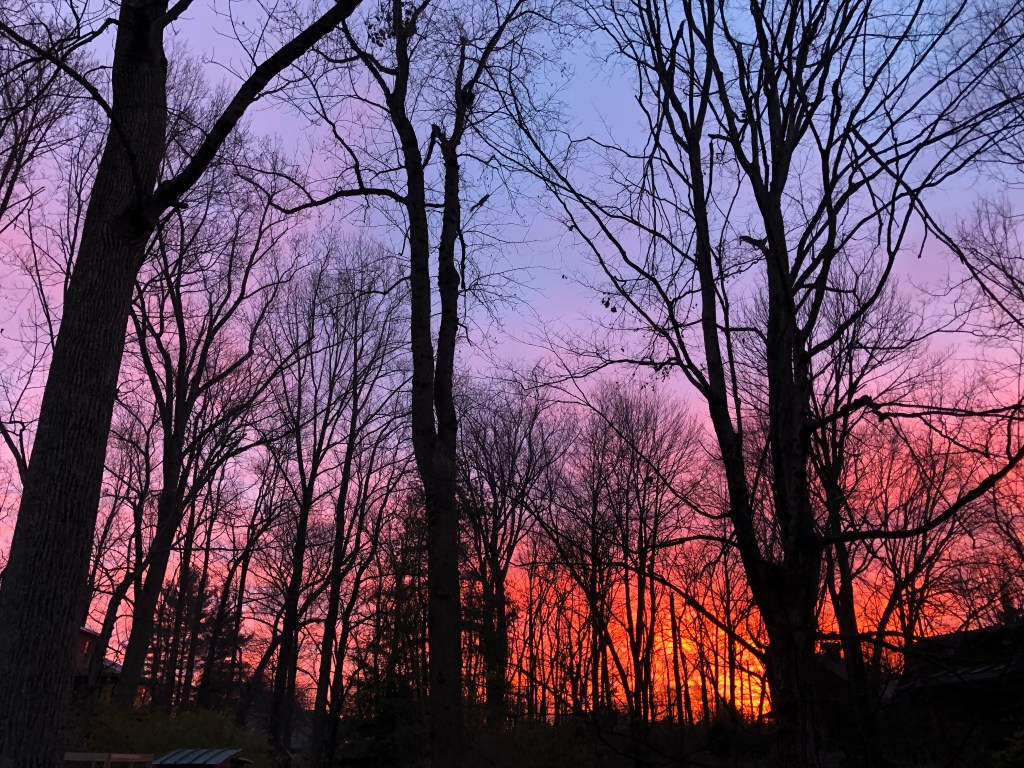
We are all going to need help and care in the sunset of our lives, whether we like it or not. -
Letter to Mama On Her Birthday
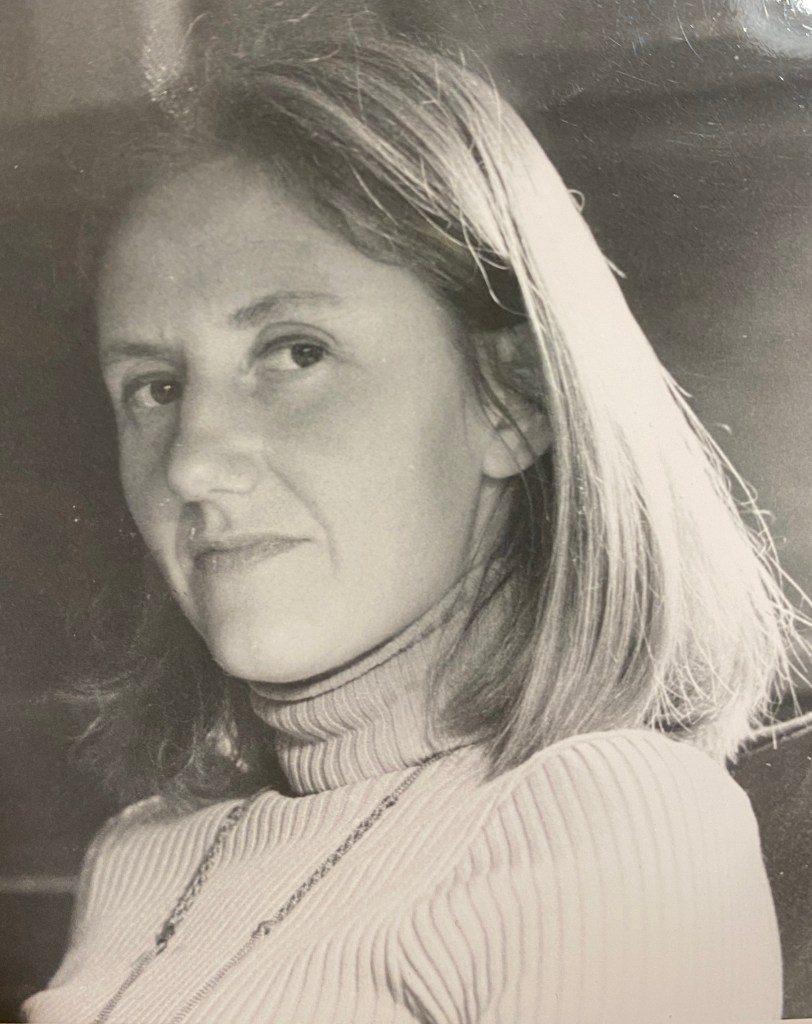
1974, Ross, California Oh Mama,
You never cared much for birthdays but today is yours. I imagine that you would rock your 85th year like no one’s business, continuing your lifelong practice and talent for helping people heal and get closer to divine Love. Your unabashedly hearty, crinkled-eyed, open mouthed laugh would still fill my ears.
As for me, I lie awake trying to grasp how it is that I haven’t spoken to you, heard your laugh, or felt your touch in TWENTY YEARS.
When you first left, I didn’t think I’d make it through a single day without you. Things got brutal toward the end, didn’t they? That horrid disease crept up and took over your insides and turned your vibrancy into dullness. Your beautiful thick hair turned thin, your healthy body skeletal and swollen.
You hardly spoke a word during the month before your death and I believe it was because you wondered if you had been betrayed by God—I think we all wondered.
I really thought we were going to save you—me, Dad, Pam, and God. That our little team would pray the right prayers, find the best doctor, take the most effective approach to fighting stage four cancer. Afterward, and for a long time, I thought we had failed. All of us.
You must have worried that because of what was happening I’d lose my own faith in Love. To be honest, for a while, I did. I doubted almost everything. Was our God truly a loving God, or had we deceived ourselves? For years after we lost you I limped along, tightly gripping a stale faith that no longer brought me peace and inspiration. Then, I lost my first child, and all bets were off. I spent an entire year without any faith at all.
Somehow, I don’t think all of this is news to you. I believe you were riding alongside me the whole time. You stayed close, you answered when I called, and you sent all manner of angels to nudge and protect me.
Well, Mama, twenty years later the world has changed, people you cherished have left, and people you would adore have arrived. Besides your two grandkids, I think the thing you would be most proud of is how I’ve evolved. I’m still the person you taught me to be but nowadays I’m so much better. I’m a writer who can’t stop writing, a present preschool teacher, and a mom who loves her children the way you loved me. I’m sober, clear, and hopeful.
I understand now that none of us failed. Cancer didn’t win. We succeeded because we knew your love, and you knew ours. The love you were, the love you are, has no end—it remains vital, effective, and alive. It was through your earthly death that I learned the single greatest lesson of my own life: love never dies. It is by its very nature, eternal.
Happy Birthday, Mama. I am celebrating you.
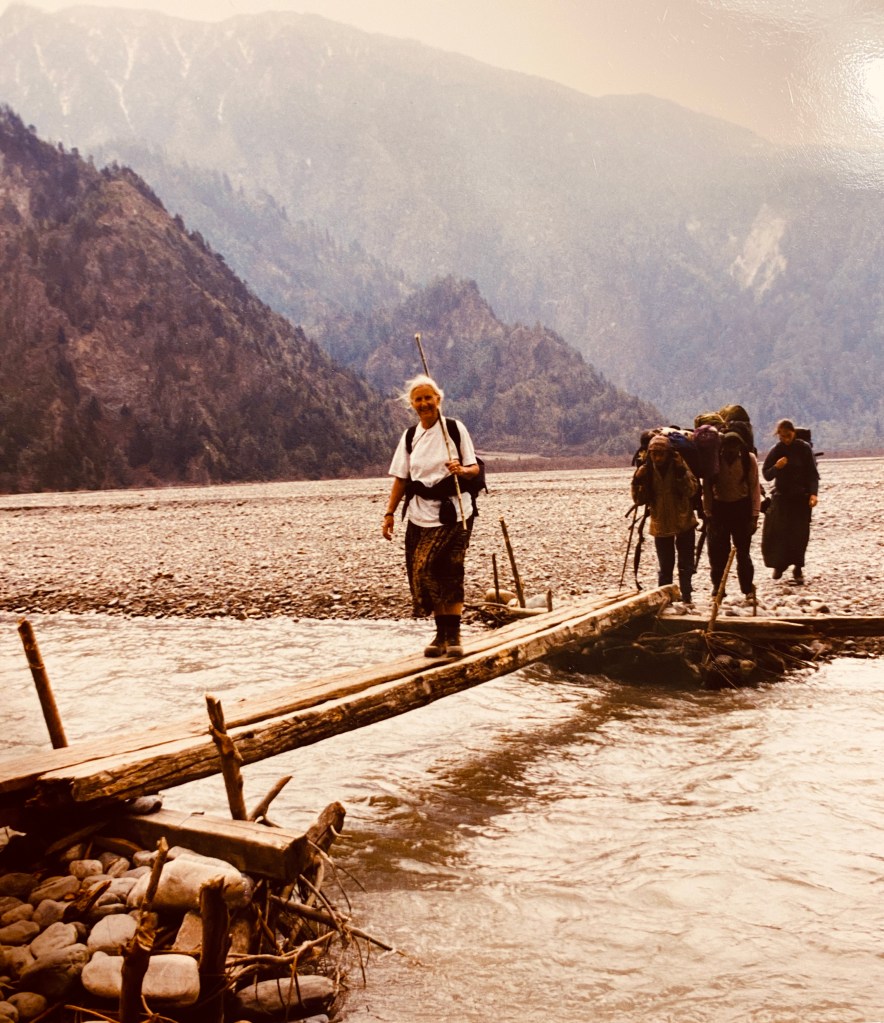
2001, Nepal -
Appreciating Where You Land
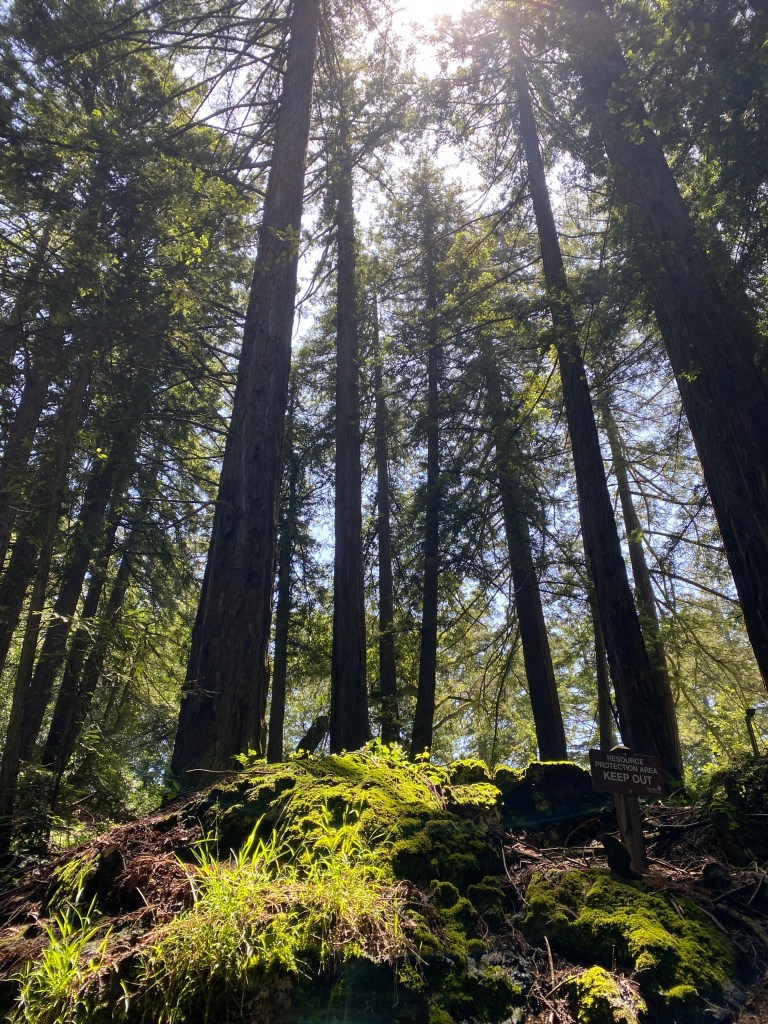
Timeless Northern California redwood grove A recent trip to California got me thinking; there is a problem with growing up in the Golden State. For the remainder of your life, no other place will compare. This is partly because no other place is like California, (at least in the US). Where else offers such grandiosity, diversity, a vast range of plants and animals, fresh produce, and glorious redwoods?
Only in California can you enjoy breakfast at the coast, lunch in the desert, and dinner in the mountains. True, legendary traffic might throw a wrench in your between-meals driving time, but the possibility still exists. In California, possibility itself somehow feels endless.
When I was sixteen my parents moved the three of us from our one-acre plot in a lush rural Northern California valley to an apartment in a twenty-two-story high-rise building in downtown Boston, Massachusetts. Brick was substituted for skylights, neatly trimmed hedges for fields of mustard and poppies.
My mom and dad had good intentions and valid reasons—my father had been offered an editor position at a Pulitzer Prize-winning newspaper, and my mother had grown up in the Boston area and welcomed the chance to live close to her aging mother and younger sister who remained there.
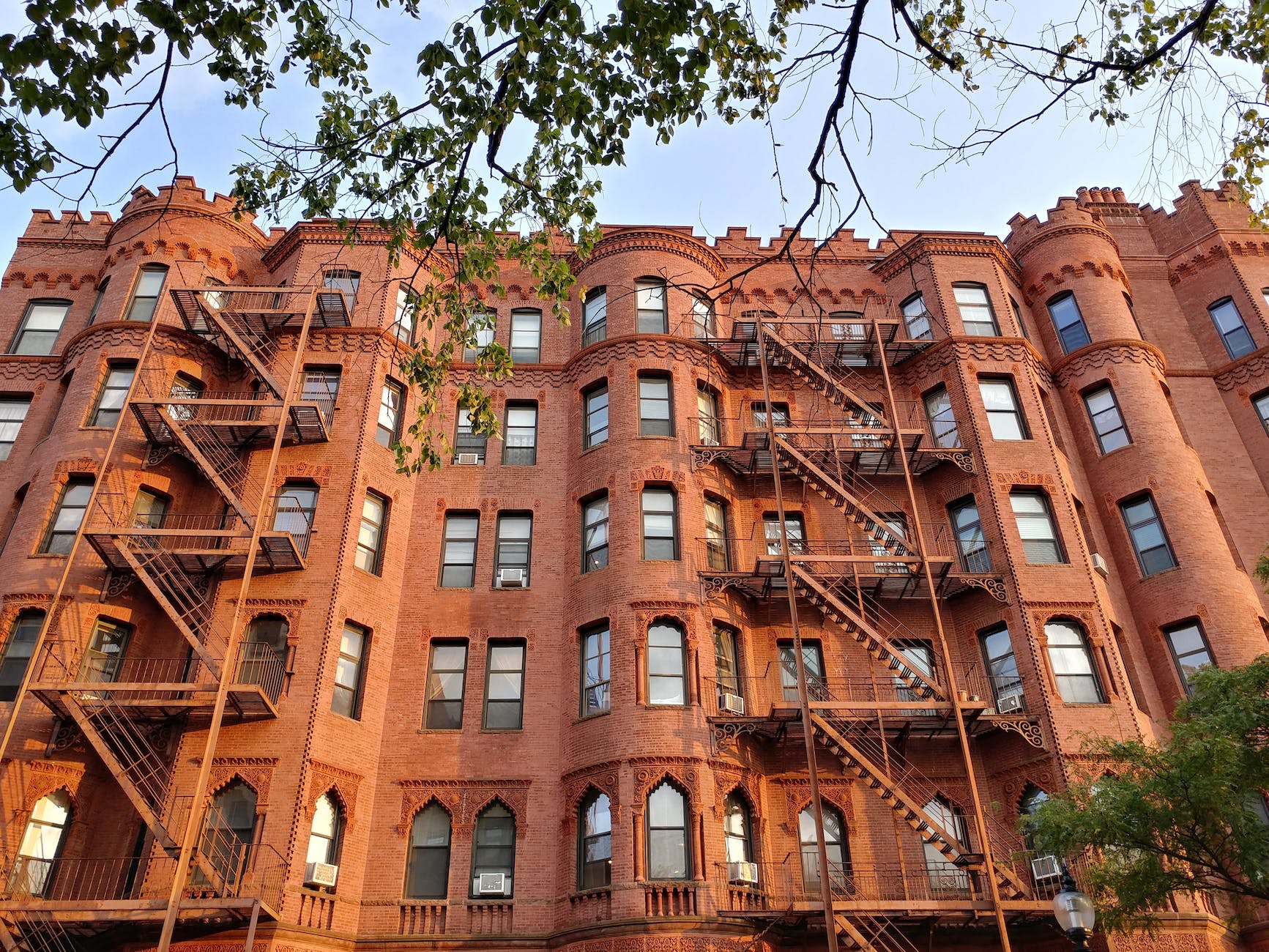
Timeless Boston brownstone
Photo credit: bau015faran on Pexels.comThe rationale behind our move was understandable, but the cross-country shift hit me hard. Once there, I often had the sensation that I’d landed in a foreign country—the flat landscape, humidity, unfamiliar food and smells, obsession with sports, prickly attitudes, and sometimes undecipherable accents/slang all combined to made me feel like an outsider who might never crack the code required to live comfortably in my adopted state.
Over time, things improved. I made friends, recognized the freedom the subway offered to non-drivers, got to know my mother’s family, found the bookstores, and took up rollerblading on the paths that lined the Charles River. Briny clam chowder and thin-crust pizza became diet staples.
Yet part of me never stopped missing the state that formed me. In fact, for a long while it felt as if I was pining for a lover, one that I’d been forced to leave behind and to whom subsequent lovers paled in comparison. When can I move back? I’d ask myself, sometimes daily. When can I settle back into the arms of my first love?
No bridge looks the same after you’ve crossed this one You might wonder how I broke the spell, cracked the code, and found happiness again. The answer is simple: I stopped comparing and started appreciating. The Charles River is not the Pacific Ocean, and it doesn’t have to be. The Boston Commons is not Golden Gate Park, nor should it be. I began to grasp that everything has its place and purpose and that I wasn’t fully living the good life I’d been given. Instead, I was keeping a foot in another world, one far away from the present. That way of living, halfway invested and forever dissatisfied, was making me miserable.
Learning to appreciate right now and right here and ceasing to compare has served me well over the years. Nowadays, instead of living on one of the coasts I live in the beautiful middle of the US, and I call often on the conclusions I came to all those years ago.
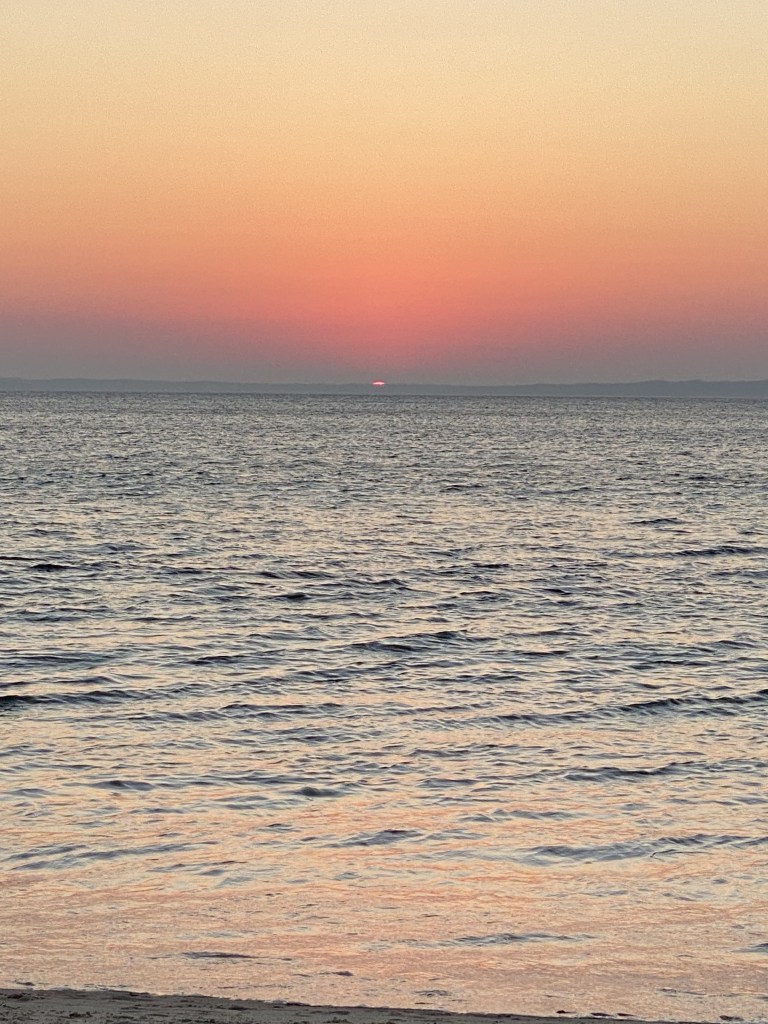
The same sun sets over the Atlantic and the Pacific oceans.
Guess which one this is?California will forever remain my first love, and rightfully so, but I’ve developed a muscle that helps me find beauty and purpose wherever I land.
If I hadn’t traded one coast for the other so many years ago I wouldn’t have that understanding—I gave myself the gift of a lifetime.
-
Anniversaries and Innocence
Amusement parks=ticket to unreality Our family of four is spending a spring afternoon at a Midwest amusement park, dashing from ride to ride and learning how to be in crowds post-pandemic (“Don’t touch that…or that…please use this hand sanitizer for the fifth time“).
Moments after we disembark the roller coaster, our two “older-parent” bodies staggering while our eight-and-nine-year-olds yelp with delight, a late-season cicada lands on my daughter’s sleeve. Delighted, she gives it a ride for the next two hours.
In an attempt to head off some gathering-force meltdowns and enjoy a celebratory lunch for my husband’s birthday, we find a brewery in a far corner of the park. Once inside the cavernous, darkened restaurant, we are offered a booth near three TVs mounted in a row overhead. We find out no beer is brewed in the brewery, and learn that no one knows what fish is in the sushi until the manager concludes that it is not fish at all.
My nine-year-old son plops down next to me on the booth’s bench, across from his dad and sister. The kids decide to share chicken wings, their first time trying the dish, and two faces are soon dripping with bar-b-que sauce. Bright-orange grease covers my daughter’s hands and spreads across her pink cheeks. She asks her dad to take a picture and laughs with delight when she sees it, enjoying her new look. None of us realize this is the first and last time she will eat chicken wings, as she declares herself a confirmed vegetarian days later.
My son and I are facing the three TVs hanging above my husband and daughter’s heads. I glance up to see sports on the second two TVs and a news conference on the first one. My son’s eyes are on the Celtics players as they leap and shoot.
I know immediately what the news conference is about–the happenings in Ulvade, TX the day before. A man is talking at a podium flanked by officers and his stark words unfurl clearly on the ticker below. As we continue eating our meal I announce, over my family’s protests, that I am no longer going to be joining in on the super fast jerky roller coaster rides–my coaster career is officially over. How can I coax my son to the other side of the table so that he doesn’t see the news conference facing us on the screen?
My daughter and husband head to the bathroom to wash their hands, cicada still firmly gripping her upper sleeve. I watch my son follow the basketball game. Beginning to gaze off into the distance, I consider the remainder of our day. Thanks to the distractions of today’s birthday celebration and amusement park entertainment I’ve been able to temporarily push away the headlines about yesterday’s shooting in Texas, although fleeting fears have snuck in at moments like the panic-inducing crest of the rollercoaster or imagined gunshots as we pass through a crowded thoroughfare at the park.
Flying, if only for a moment. My son is still watching basketball and they are almost back from the bathroom. I’ve requested the bill and plan to hustle us directly toward the exit before anyone notices the press conference–I can’t suggest we switch to the other side of the booth because my highly sensitive and inquisitive son would demand a reason why. Then I see his gaze shift squarely to the first TV.
Of course, he sees it. The TV is directly in front of him after all. I curse myself, why didn’t I move tables when we first came in? Because it was the only available booth and given a choice my kids always pick the booth.
I follow along as his eyes skim the ticker, then his mouth forms the words while he reads out loud “Eighteen-year-old man shoots seventeen 9-year-olds and their teacher.”
Am I watching the moment my son loses his innocence, his faith that his parents and his teachers are infallible and the world around him is mostly good? He blinks his eyes and I know his brain can barely register such horror. And their teacher….? He looks at me his eyes wide as quarters. I know what he is going to ask next. I better start forming an answer.
“Why, mom? Why would he do that?”
I will myself to form words with my mouth…but what words? What words can make order out of chaos, hope out of despair, and life out of death?
I say that the man wasn’t well in his head, that he needed help and love that he didn’t get. It’s up to us to change this world, up to us to create more love and less of this (I point to the screen), I tell my son. Less guns, less hate. More love. My boy is still processing the headline, mouth open in disbelief. Is he trying to imagine it might not be true? Daughter and husband return to the table.
Once they are seated back on their side my son leans slowly across the table toward his sister…drawing out her name in a mischievous tone. I know he wants to share the forbidden information, to tell her about what he just saw announced on TV. I say his name sharply and he gets quiet. “Which roller coaster we should hunt down next? I ask everyone…“It’s still Dad’s birthday!” I announce loudly.
The check is resolved and I shuffle us toward the exit–my son half runs half skips out and settles into step next to his dad. They walk up the path ahead, their moving figures silhouetted in the afternoon sun.
Walking next to me, my daughter calls out softly, “Mom, look.” I watch as the cicada hesitates, then steps off her hand and onto a leaf, both plant and insect glowing emerald green in the light. After making sure the cicada is safe, my daughter leaves it tucked into a curled sleeping bag of a leaf; unbothered, hidden, and protected.
We walk into the waning afternoon light.
-
No Endings, Only the Present
Three individual expressions of life and growth. This week of the year holds a complicated mixture of markers in our household. The last day of school happens for my two elementary school-age children, along with the many clear and poignant indicators of their growth, evolution, and hopes for the future.
And then May 20th arrives, which is the birthday of my stillborn son, born thirteen years ago at full-term, on his due date.
Over the years I’ve realized that all kinds of meaning can mesh together, that celebration can live next to tragedy, that growth can coexist with decay, that addiction can give release to freedom, that life can cohabitate with death. The interplay of all of this is what makes up our meaningful lives. We can cultivate an appreciation of the difficult as deeply as we can appreciate the joyous. In fact, one might require the other.

Focus on the journey, the destination will take care of itself. I used to think I was odd for seeing things this way, that my ability to bridge worlds was a detriment. Now, I realize it is a unique gift and I’ve embraced it as my superpower.
I’ve made great strides in opening my heart to mothering my first-born son—it has become clear to me that he still needs his mama and with each passing year I become more acquainted with his innocent yet knowing presence. All-encompassing searing grief has made room for a quiet and loving connection. I believe this practice of communication makes me a better, more conscious mother and human.
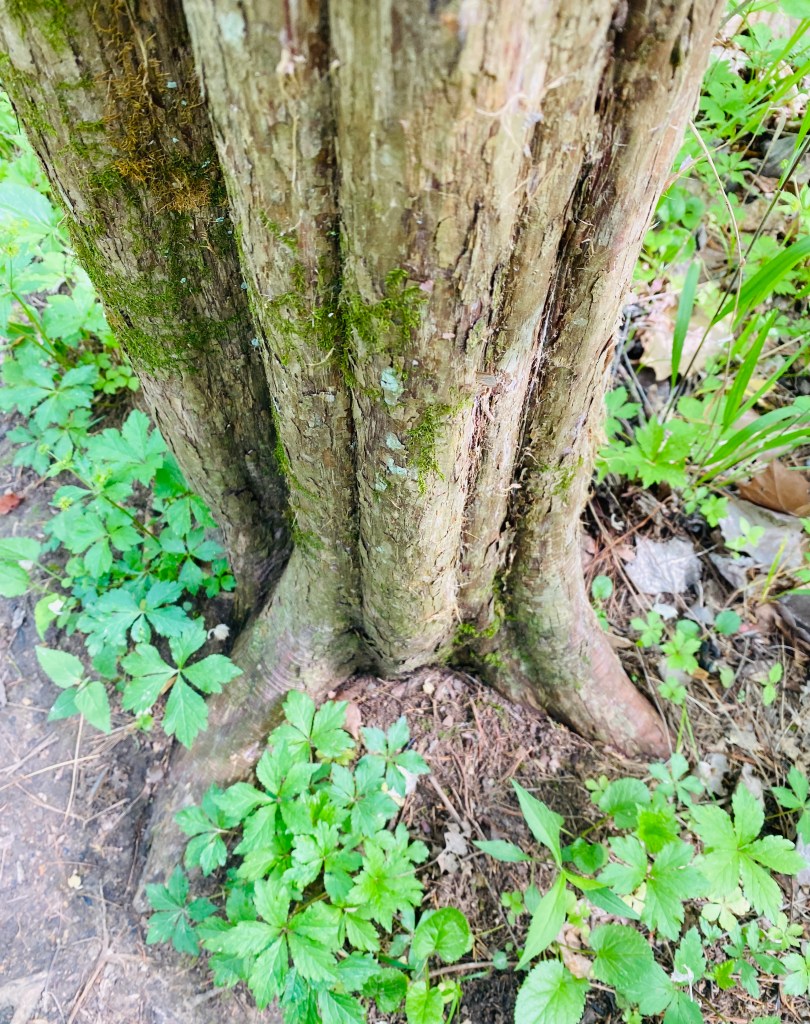
Mostly, I’m grateful to sit peacefully under a tree in a park. The same park I walked in sorrow after my son’s passing. I feel the wind around me gently moving branches above and consider the roots of the Cypress tree I sit beneath.
I know that later I can hug my living kids and I am grateful. Grateful to have an abundance of meaning in our lives and no absence of love.
I wish this for everyone.
-
Many Springtime Returns
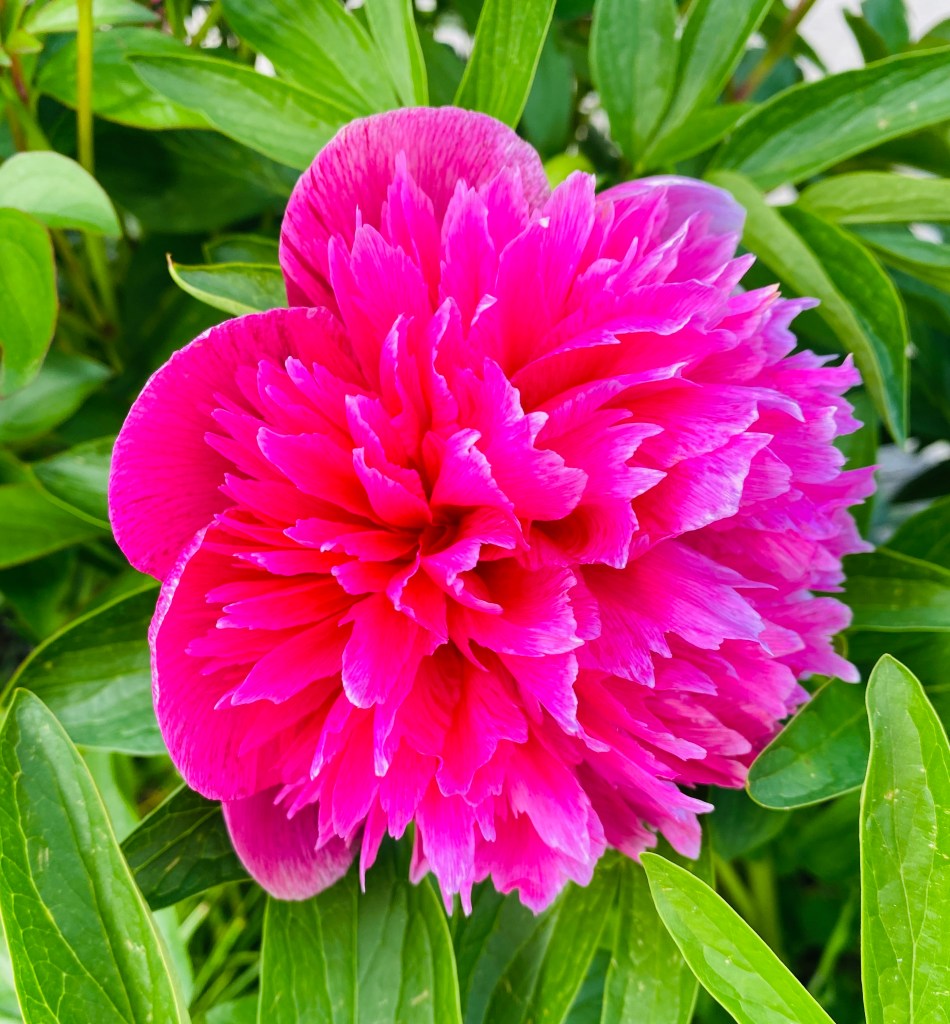
Peonies: the only flower featured in my homemade wedding bouquet. I experienced my first Midwest spring at the age of sixteen when I, a native Californian, attended boarding school in Missouri. The experience of that season was memorable and lingers even today.
Awed by scarlet redbud trees, bursting pink peonies, and carpets of purple violets, I remember feeling an odd restlessness, an overwhelmingly expectant sense that I now recognize as spring fever.

Redbuds are often the first blooms to arrive. We teenagers sat in overheated classrooms that spring, shedding unnecessary clothing layers, and gazed longingly out the window at landscapes painted with more colors of green than I knew possible. Everything felt laden with yearning and newness.
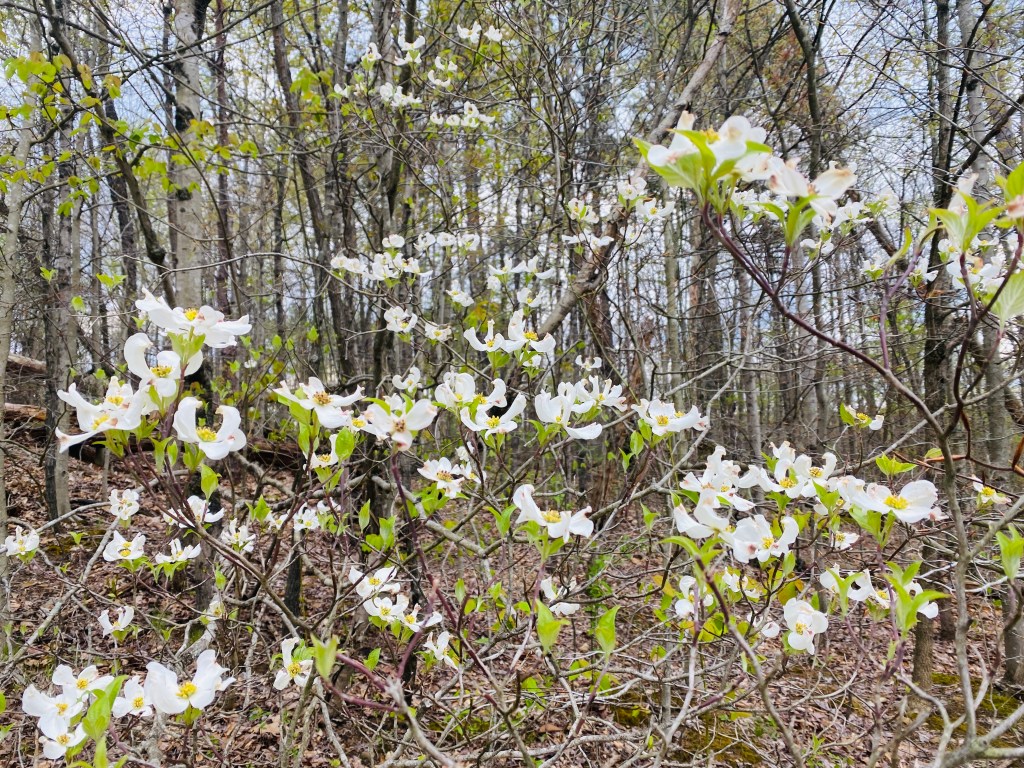
White dogwood blossoms make their forest entrance. It’s not that spring in Northern California was unwelcome or lacking color, it’s that the overall effect wasn’t quite the same, nor was the sweet season as hard-won. A few months of winter rain and chill simply can’t compete with the impact of snowfall, sleet, hail, and thunderstorms.
In California, while certain plants bloom in spring and the hillsides often reach Irish heights of green, the resident birds, for the most part, remain in the same territory (and sing) all year long, and much of the foliage stays the same.
In the Midwest you know Spring is close when the birds begin singing you awake. Each stage of Midwest spring holds beauty—beginning with bursts of welcome color against stark grey tree trunks, continuing with the elegant white and pink dogwoods that recall Japanese woodcuts, and for the finale…the trees and bushes are adorned with the kind of green that vibrates in the sun and calms the soul.
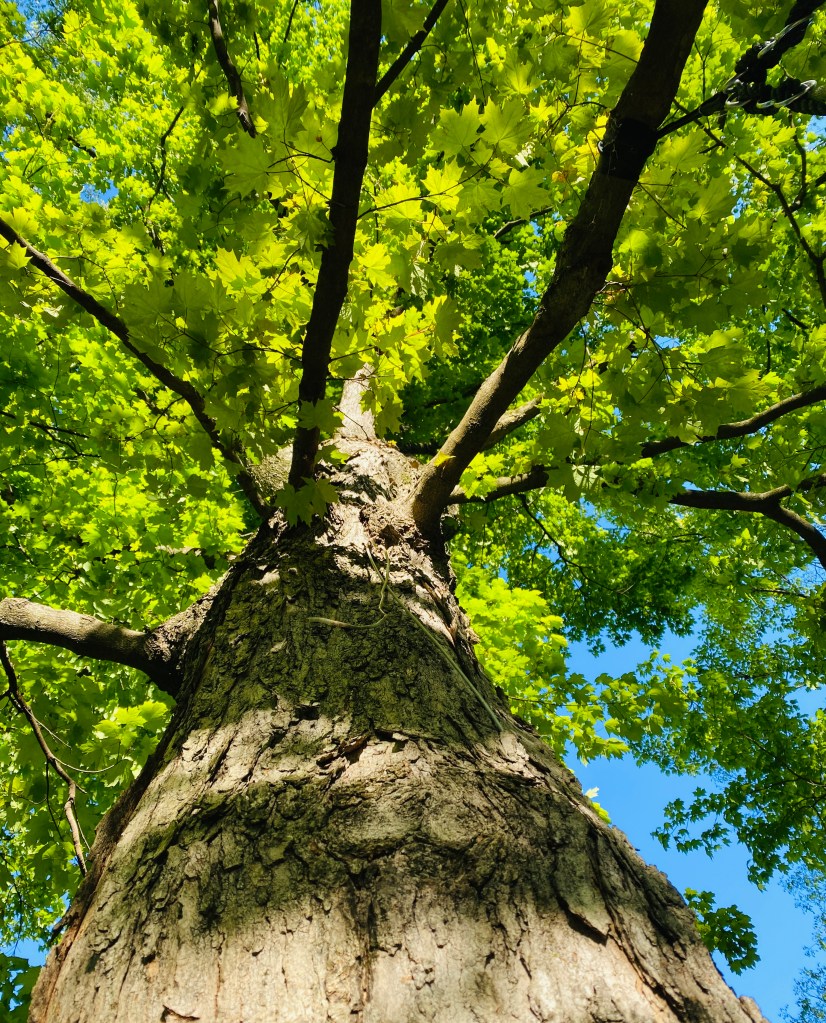
A favorite maple puts on her greenery. Back in high school I never imagined I would one day have my own Midwest landscape to tend but now I do–and here is where the two geographies connect: long ago my mother dug up some Bearded iris bulbs out of her California garden and gifted them to her dear friend Nancy who planted them in her own California garden where they bloom and thrive, even to this day.
Nancy has a gift for arranging the irises artistically in tall handmade pottery vases around her house and seeing those displays always gave me the sense that my mother was close, even though she is no longer here physically with us.
After living in California for a decade in my thirties I transplanted yet again to the Midwest and Nancy surprised me by digging up and sending me tulip bulbs from the same plants my mother had given to her all those years ago.
Bearded iris blooms. Now, springtime not only returns the green, but it also returns the gift of my mother’s presence and touch, in full bloom yet again no matter the locale.
-
A Mother/Daughter Journey
Last weekend, as I relished a day-long mother/daughter retreat at a camp in the woods with my nine-year-old daughter I kept thinking back to one spring day, right about this time, ten years ago.
My husband and I are in a cramped, chilly exam room in a sprawling Indianapolis children’s hospital, the doctor having just applied cold gel to the lower right side of my protruding belly. The physician is a young (thirty-something) dark-haired woman, and she speaks to us as she deftly moves the ultrasound wand, pointing out hands, head shape, and a tiny foot on the screen.
“I could tell you the gender if you’d like” she says, almost nonchalantly.
My husband and I glance at each other. Is it time? We could keep this a mystery until I’m further along. With a history of loss like ours we don’t assume anything, and sometimes the fewer details the better, as it helps us move forward with one singular focus: bringing home a live baby to join our six-month-old son. Whether we will achieve a family of four remains a terrifying unknown.
Springtime expectations. Oh, why not find out, I think to myself, at least I know there’s a baby in there. I’ve felt the flutters inside and I can see the form on the screen, bobbing and moving…gender feels almost beside the point. Maybe it’ll be nice to know, so I can send more focused positive energy their way. Keep breathing, I remind myself.
“Okay” I say to the doctor. “You can tell us.”
“It’s a girl!” she says, quickly.
My reaction is immediate, unexpected, and strong. Tears spring to my eyes and scenes from the future begin to spin like slides dropping into the tray of an old-school slide projector, each separate and distinct: a baby girl eating peas from a tray, her rounded fingers feeling for the next tiny green orb, a thirteen-year-old faceless teen with long hair walking down a sidewalk, a female infant wiggling in her father’s arms.
All my life, I’ve desired to have children but somehow, I had only imagined mothering sons. And now, after giving birth to two boys at two different times, with only one still living, the introduction of a daughter feels incongruous, shocking, and entirely unexpected.
Thankfully, the six or so ensuing months before her birth offer me an opportunity to become accustomed to the idea of a girl joining our family. By the time our daughter arrives, vibrantly healthy and radiating joy, we are fully ready to embrace and accept our gift.
In some ways, it wasn’t until the doctor’s exam-room proclamation that I fully grasped the impact of my own gender: to have a daughter means to know what she will contend with, and to sometimes struggle under that weighty knowledge. Mothering a daughter also means being granted another chance, an opportunity to hold the hand of someone different and wiser than yourself while she travels familiar terrain, both treacherous and beautiful. There is great healing and hope in that act.
Doing brave things at mother/daughter camp. Since that day in the exam room, something else has grown–my personal understanding of gender. It has evolved and expanded as I watch from afar while more than one friend navigates the landscape of their children’s gender transitions. I am in awe of these parents and kiddos as they face such private complexities in an unasked-for public way with little societal support or understanding.
My daughter has evolved into a capable, kind, talented, and funny person. It feels as if she has always been part of our family and by extension, part of me.
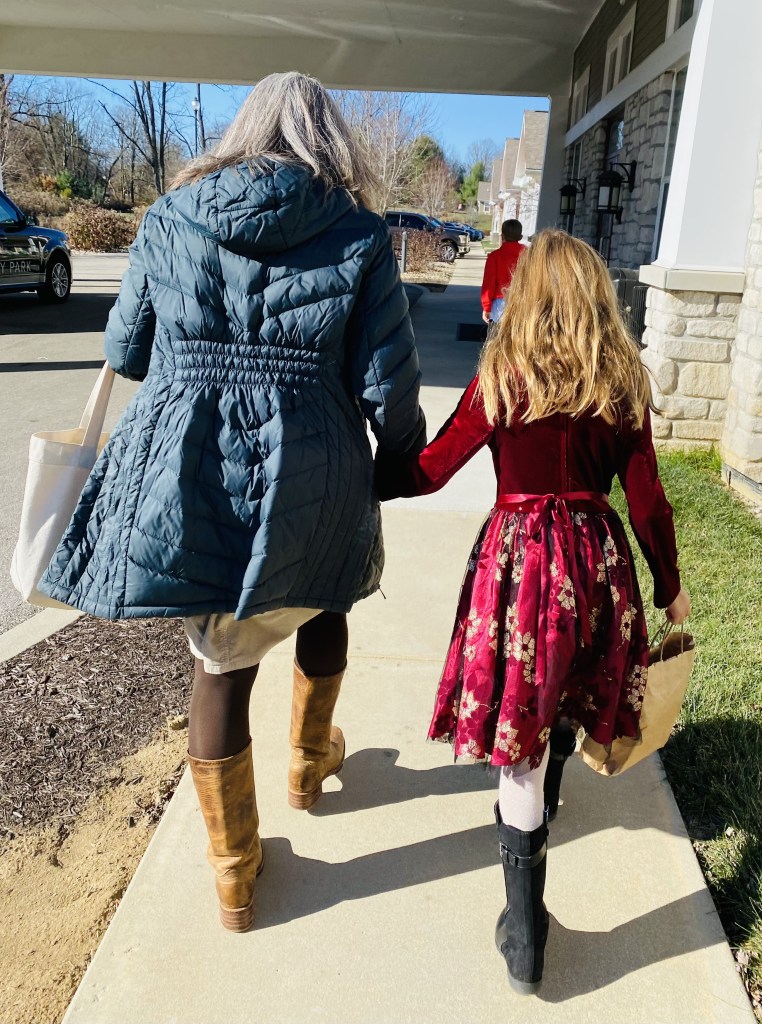
Hand-in-hand we walk. I believe this would be the case no matter her gender, but I take not a single moment for granted. It is my deep joy to journey down the mother/daughter path we are currently walking, together.
-
Still … however … maybe …
It makes me uncomfortable to say (and write) it but here goes: I value my father’s writing more now that he is gone.
I must have read my dad’s walnut essay (as I call it) when it was first published in 1984, but when I unearthed it two years ago it felt like I was reading it for the first time.
In my opinion, the essay perfectly captures his talent for noticing that which often goes unnoticed, and then translating the hidden meaning into inspiration for the rest of us.
A reader who read my dad’s original walnut essay in The Christian Science Monitor recognized his wisdom as well. She ran a small print shop in Iowa and asked permission to turn the essay into book form. The printed images included are from the small book(s) she created.
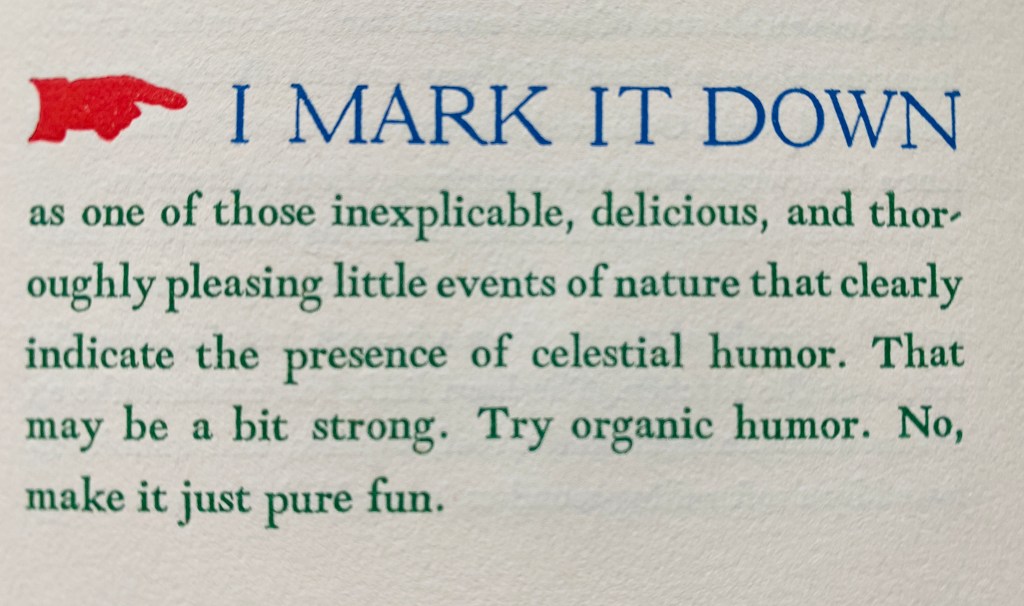
Still … however … maybe …
By David Holmstrom
I mark it down as one of those inexplicable, delicious, and thoroughly pleasing little events of nature that clearly indicate the presence of celestial humor. That may be a bit strong. Try organic humor. No, make it just pure fun.
It was a brittle, still day. (Stillness is very important here, almost an aspect of readiness). No wind stirred and there was an absence of rural sounds such as cars and trucks humming along a distant highway or the collective sounds of resourceful birds. Overhead, the sun was sweetly warm and lent a lazy wryness to the conspiracy about to happen.
I was standing in the kitchen buttering bread for a maverick sandwich when the chain of events began. The walnut fell, directly above me from a branch hanging over the roof over the kitchen. The hard little ball crashed like an abrupt announcement on the roof, a quick, dull splunk followed by a soft rolling sound as it tumbled down the sloping angle of the gravel and tar roof. I looked up, butter knife poised.
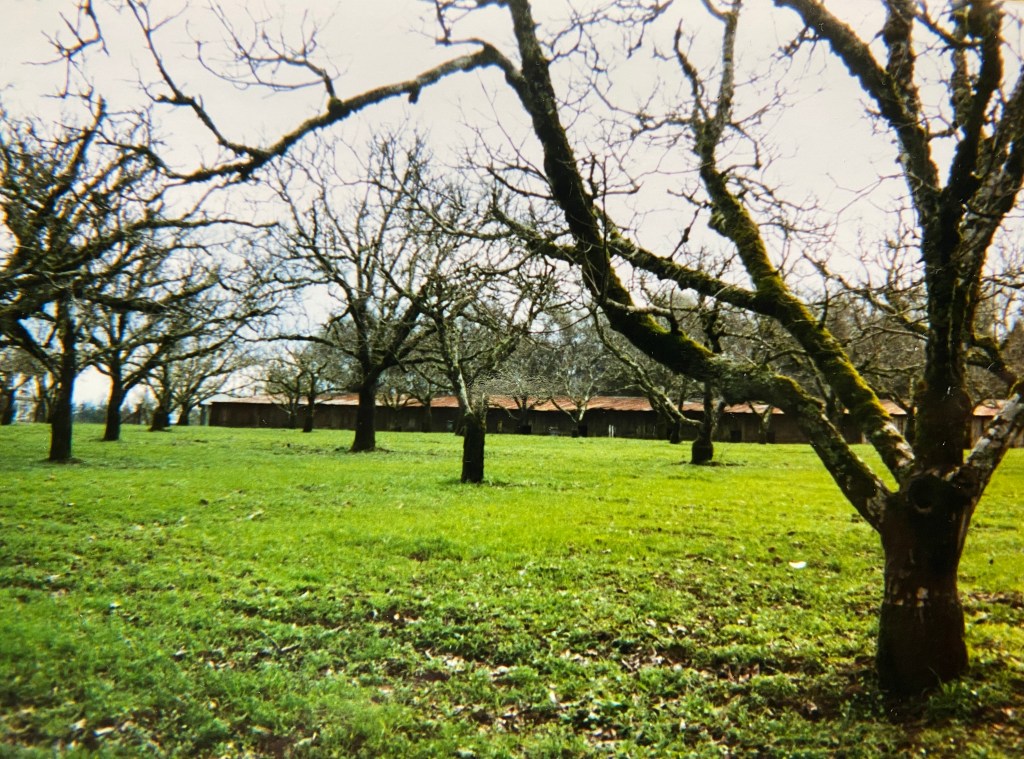
Northern California walnut grove in springtime. The walnut then entered the uncovered hole of the drainpipe (attached to the outside of the kitchen wall) and plunged about eight feet down, ricocheting and rattling in the dark chamber for perhaps a second or more. Then it bashed against the curve of the drainpipe spout and shot out in a westerly fashion like a tiny bowling ball across a Lilliputian alley.
I looked out the window above the kitchen sink just in time to see the walnut skidding across the brick patio. For reasons that only a good time-and-motion man could probably explain, the walnut rolled quickly for four feet, glanced off the edge of a slightly raised brick, and pirouetted wildly on end like a top. When it finished it stopped, slumped on its side, and was motionless. Had it not been for me it would have slipped into walnut obscurity.
I felt delight. Was this not a funny little marvel? I felt serendipity. I also felt a somewhat low-key but irritating struggle within me to be a mature adult and not wax childish over the walnut’s curious journey. A falling walnut did not amount to a hill of beans, did it? It fell on the roof, went down a drainpipe, shot out the spout, and pirouetted crazily. So what? Still … however … maybe …
I laid down my butter knife and went out to the patio and picked up this … this, this acrobatic walnut.
To cast a spell, I should entertain fantasy here by conjuring up a walnut genie or fashion some kind of walnut clue to solving an international mystery. But the walnut in my hand – alas, poor walnut – was without guile or any need of the complexity of fiction. Break it open and find what? A guidance system? A tiny engine? A worm on a fun ride? Or a simple walnut. Still … however … maybe …
I will not lie. I actually went up on the roof the following day under the pretext of removing leaves from the roof. With a dozen walnuts I tried to duplicate the flight of the previous day’s walnut. I could not do it. The first walnut I rolled missed the hole. The second, too. The third rolled over the hole and over the edge of the roof. The fourth, fifth, and sixth would not roll near the hole. The ninth went down the hole into the drainpipe but never came out the spout. The rest were completely erratic.
What I have done is to put the previous day’s walnut in a special place on the clutter of my desk. Twice, out of nothing more than impulse, I brought the walnut to my ear in the way we’ve all done a hundred times with a big seashell to hear the hum of the sea. No sound comes from a walnut. But because of what it has done shouldn’t I somehow honor the little nut?
Or is there something more here, something as mysterious in purpose as the walnut is complex in texture? No. It is a walnut.
Still … however … maybe …
There it sits on my desk, almost clear.
-
Filmmaking With My Family
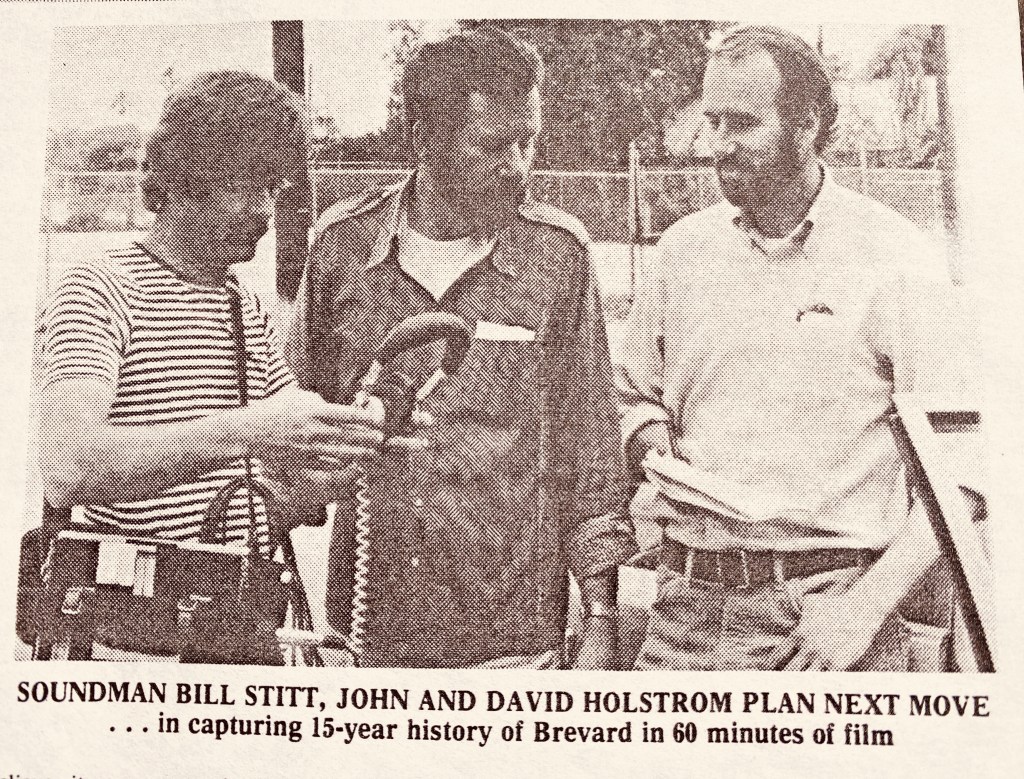
Multiple articles ran in local Florida newspapers about my uncle and dad’s film. While I’ve always been aware that my parents gifted me with a taste for creative adventure, I’ve never really considered our movie-making sojourn in Florida from my mom’s perspective.
Did my father sit her down one winter morning in 1974 at their rental house in Marin County, California, and say “Patty, we’re going to live in Florida for six months so my brother and I can make a movie”?
Knowing my parents’ relationship, I imagine that it was more of a conversation and less of a declaration since theirs was an uncommonly equitable partnership. Because I was only four at the time I didn’t have much of a say.
All I knew was that my dad flew ahead to Florida with my uncle John to “scout locations.” A few weeks later my mom packed up our red VW Beetle and settled me into the backseat (single seat belt buckled across my lap–maybe) with a stack of books and my portable cassette player. And we were off…driving across the U.S. headed to Cocoa Beach, Florida where we would live for the next six months.
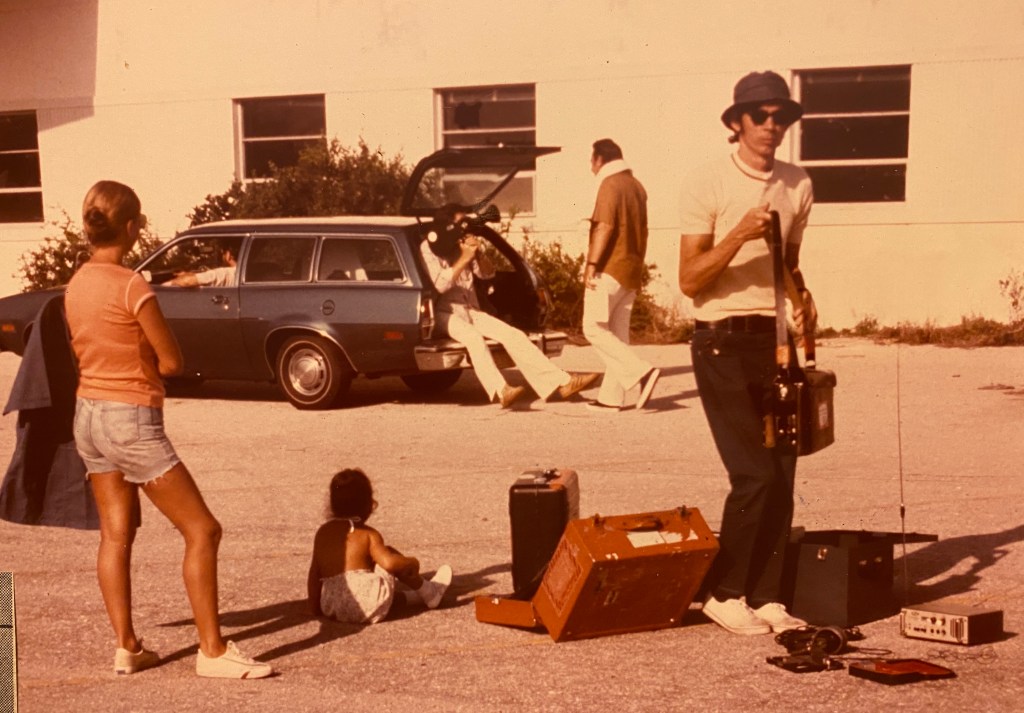
My mom does on-set wardrobe duty while my uncle films, my dad drives, and I observe. In early 1975 my uncle John Holmstrom was coming off a successful career as a globetrotting Producer/Director for Ford Motor Company in Dearborn, MI. After landing back in his native Hollywood John got to work generating new projects. One of the first to come his way was the chance to film a PBS documentary about the rapid development in Florida’s Brevard County during the “space boom.”
“In the Shadow of the Moon” was funded by an educational grant from the State of Florida (I could say something snarky here about the good old days when Florida willingly invested in education) and WMFE-TV in Orlando and John was the Producer/Director. The plan was to tell the story of how the Space Coast came to be. The area had hurtled through historic growth beginning in the 1950s and at that point (1975) was dealing with the fallout in terms of unchecked urban development, mental health issues for space workers, and (interestingly), divorce rates among the highest in the U.S. at that time.
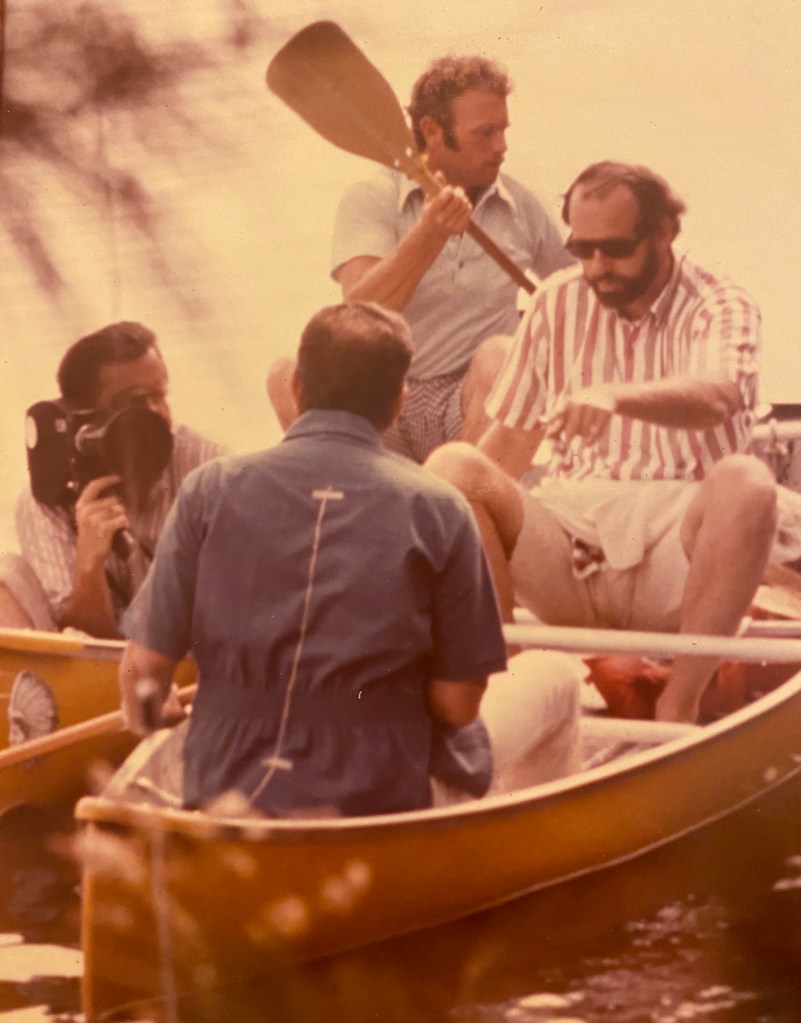
On location in Brevard County. Apparently one of the
canoes capsized that day.John had hired Dave (my dad) onto the project as Associate Producer/Writer. Close in age, interests, and creative temperament, the two brothers worked together on smaller creative projects in Los Angeles, but this was their first real shared professional gig.
Our time in Florida was the stuff of childhood dreams. My mom and I arrived just in time to move into our rented apartment in a high-rise positioned directly on the warm sands of Cocoa Beach. The waves crashed, the sun rose over the water and the pelicans soared. I celebrated my fourth birthday poolside, saw orcas at Seaworld, and my mama and I spent our days playing in the Atlantic Ocean with new friends. Meanwhile, my dad and John lived and breathed film shoots, interviews, script writing, and editing.
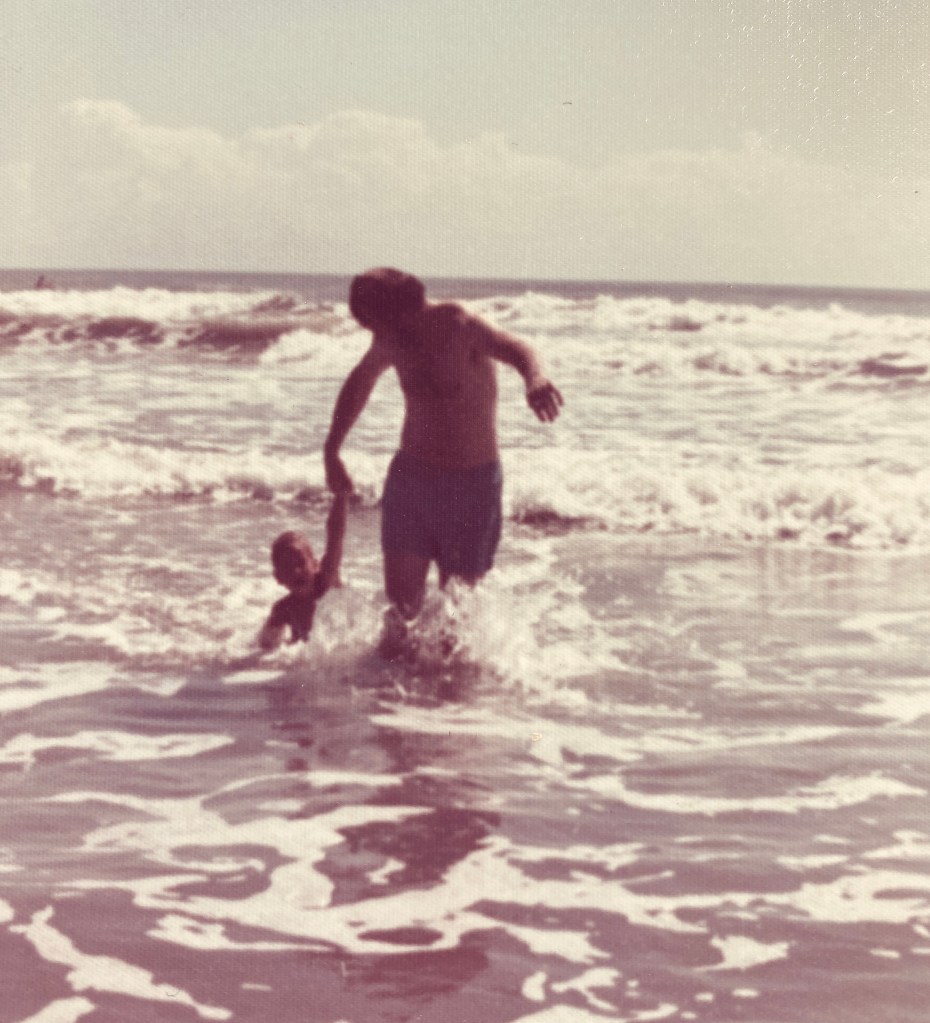
Frolicking with my dad in the Florida surf. 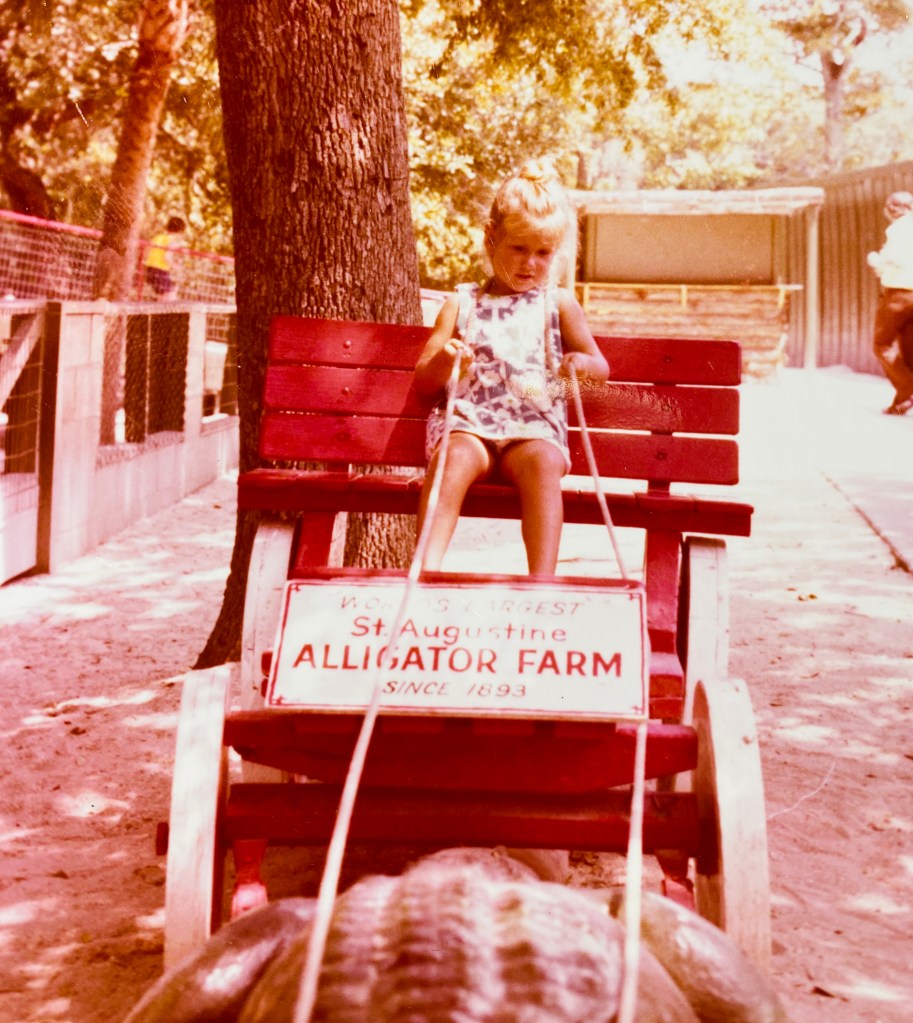
You don’t get to drive alligators every day. As often happens in documentary filmmaking, there were hiccups and setbacks. The budget (100K) was stretched, massaged, and ultimately, met. While I remember a few intense discussions around the dinner table on our oceanfront patio, and phone calls ending in frustrated tones, John and David were completely in their element, tracking down sources, connecting mysterious civil service dots, and wading through reams of research. They were never happier than when they were creating, together.
A TV executive interviewed about the brothers’ filmmaking prowess said “John and Dave are unbelievable. I’ve never worked with movie people like them, who neither smoked, drank, cursed or womanized. And it’s the first film like that that’s totally objective, done by someone with no axe to grind.”
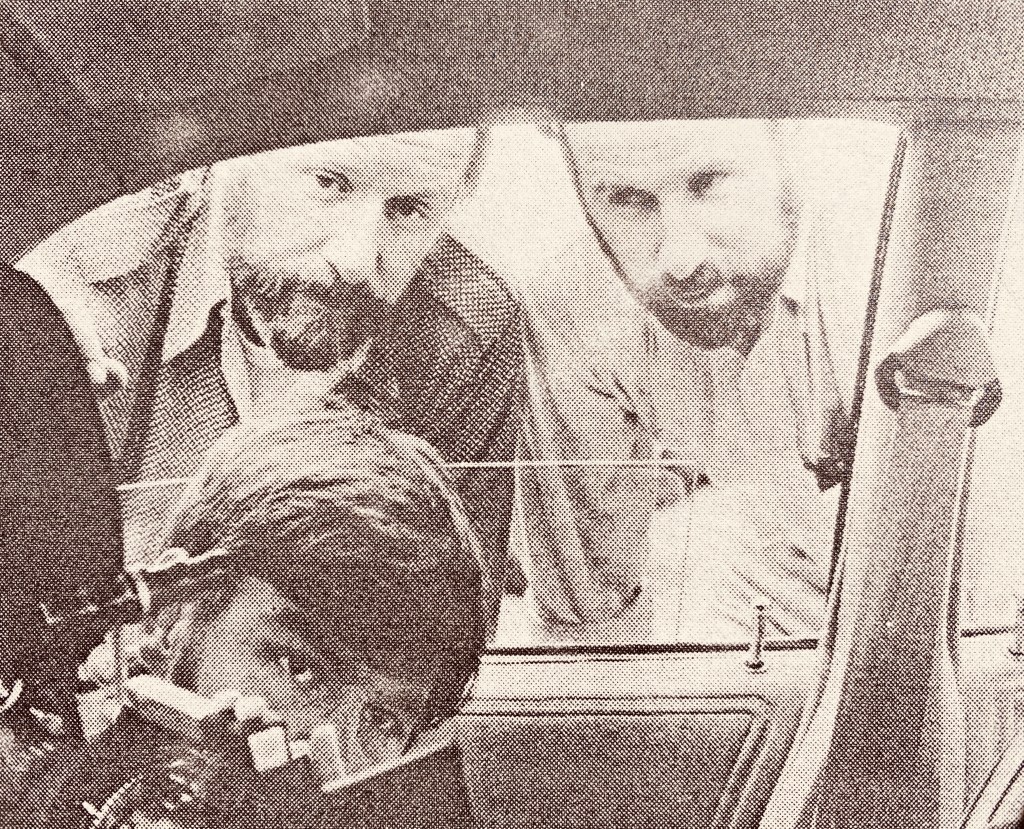
What John and Dave didn’t know at the time was that this “little” Florida film would eventually lead them to the successful co-development of a feature-length film, STOCKCAR!, which in 1978 would go on to be the first documentary released nationally into U.S. theatres. I’ll share the story of STOCKCAR! soon, and hopefully some footage as well.
Six months after our VW Beetle chugged across ten states John and Dave wrapped their film and our Florida adventure came to a close. The documentary ran widely on PBS later that year and even won awards.
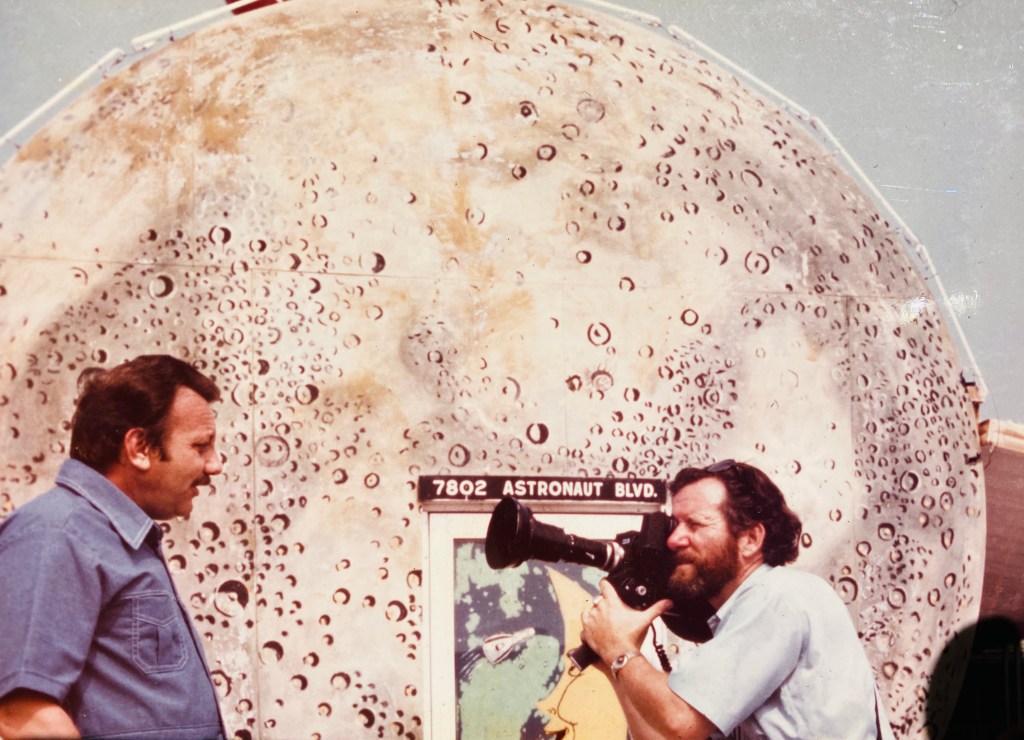
Only in retrospect has it become clear that my family’s cultivation and prioritization of creative expression was a rare and valuable gift, one that will inspire and remain with me forever.
-
A Rocky Writing Path
Write what you know, they say.
What I know is that all along I’ve observed the world through a writer’s eyes. First possessing a sensitivity to what is going on above and beneath the surface of life, then self-sequestering to sort and process, followed by an always-simmering desire to capture, record, and sometimes (but not always) share with the world my conclusions through the medium of the written word.
All this has held true for as far back as I can remember. However, for most of my life, significant roadblocks have stood in my way–namely severe self-doubt and an oppressive case of writer’s block. Also, I thought that if I wasn’t sitting down and immediately crafting a masterpiece then I’d better not sit down in the first place.
Instead of writing I circled and stalked words and writers like a hawk circles its prey. First as a voracious reader, then as an English major, followed first by a career in public relations (where I wrote about and promoted everything from real estate deals to cutting-edge technology) and then years spent in publishing where I marketed, publicized, and wrote about high-quality books and their authors. My collection of signed copies of books by family, friends, and acquaintances fills at least three bookshelves.
Yes, some writing happened, but my own ideas were rarely in the driver’s seat and I prioritized everyone else’s writing above my own.
All this was topped off by the fact that I was raised by a gifted, prolific (yet generous) writer whose dedication and passion for the craft were legendary. Being a published writer was my father’s realm, not mine.
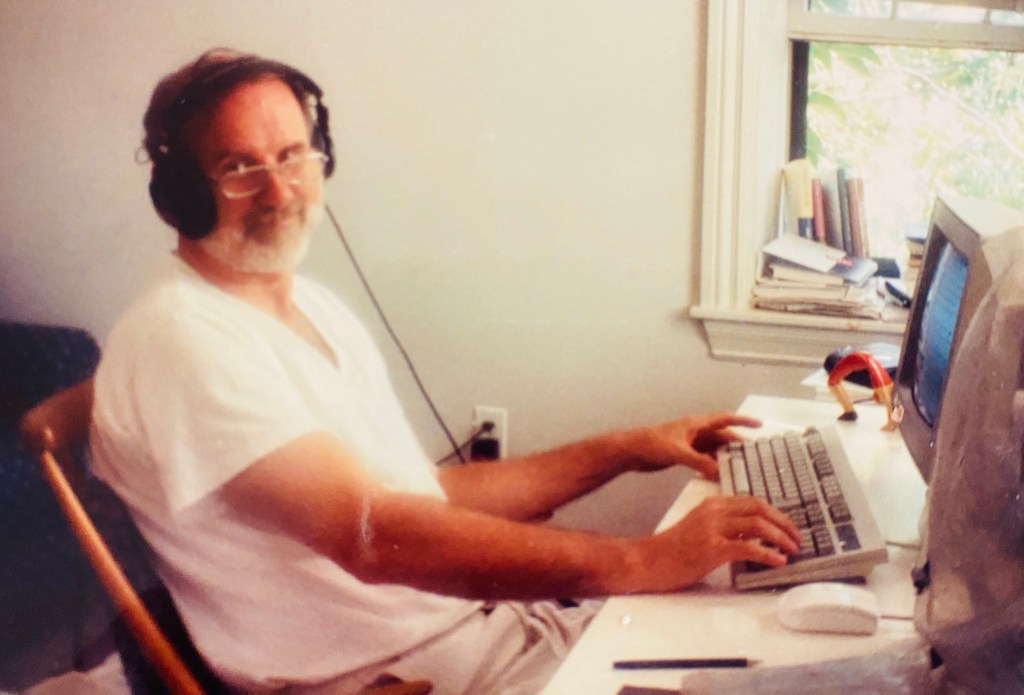
My father at his writing desk–he lived and breathed words
and never questioned his gift. .“Do you write yourself?” people would ask. “A little, mostly in my journal,” was usually my weak (but accurate) answer.
And then the day came when I became so tired of my excuses and decades of self-muting that I simply took a U-turn and stopped listening to the fear in myself. I asked myself the question: If I don’t tell my story, who will? Of course, the answer was NO ONE. Either I wilted on the vine of my dreams or I got to work. So, I started writing. Practically overnight the decades of doubt and hesitation burned off like fog in the San Francisco sunshine and I’ve hardly stopped putting pen to paper since.
Now, nothing stops me. I write through doubt, through blocks, through tiredness, while my to-do list sits next to my laptop mocking me. I get up at 3 AM to record the words and ideas floating in my mind, I pull over and write in the Notes section of my phone. I’ve even written at trampoline parks while hundreds of jumping, screaming kids surround me.
It’s true what they say, writing is a muscle. The more you write the more adept you get at saying what you really want to say, at expressing your version of the truth as clearly and beautifully as you can at that moment. And if it isn’t as clear and as beautiful as you want your writing to be, no problem. You come back to it the next day and begin again. Editing and revising become a joy because they are tools that chip away at the plaque and get you closer to the clean enamel of your truth.
Perhaps you understand my history. Maybe you have spent years watching others, people you admire (and some you don’t) express themselves to the world, create art, start businesses, make films, write poems/articles/books, do podcasts, and tell stories.
I’ve got ideas too, you’ve said to yourself, but I’m too busy/afraid/shy/tired/overwhelmed/untalented to get down to work. And as long as you believe it, it’s true. You are too busy, too tired, too shy, too overwhelmed. But all of these things are within your control. Only you determine how busy you are, how tired you are, how overwhelmed you feel, and only you can prioritize expressing yourself to the world.
You are not untalented, I promise. We all have talents. Prioritize yours.
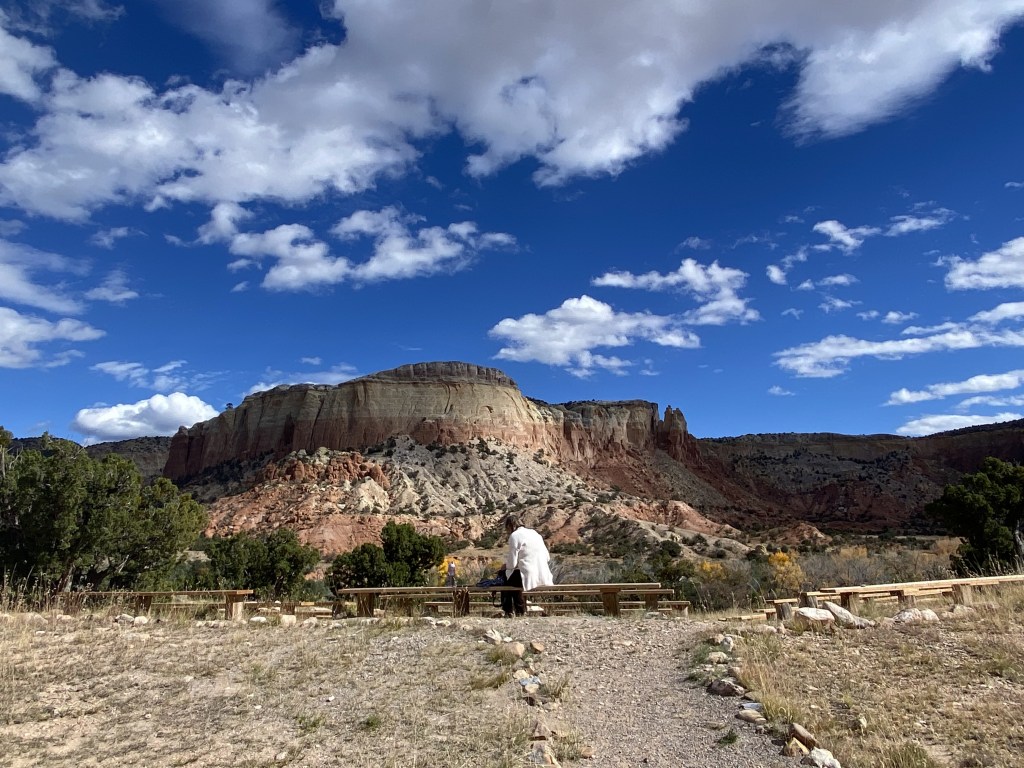
I did and it changed everything.
-
Second Chance Sisters
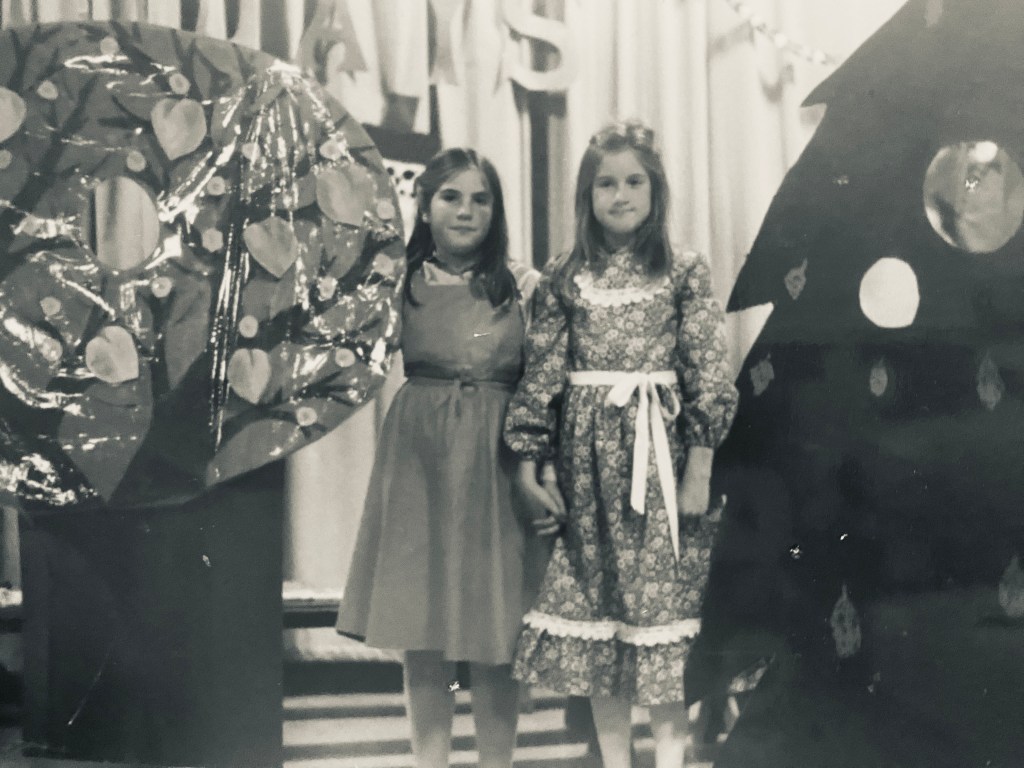
The Peach Tree (Dilly) and The Pine Tree (Leslie) The odds of it happening aren’t good. If I told you the story you might not believe me, because it sounds like the basis of a movie script.
Two girls, both only children and the best of friends, grew up together in a small Northern California town called Kenwood. Leslie and Dilly met on the first day of first grade when Dilly took Leslie’s hand in hers to give her a tour of their elementary school. The brown-haired, brown-eyed girls shared a rare closeness, forged by their common gentle natures and sibling-free status. Whether exploring the beautiful creeks and lush valleys of their hometown or enjoying frequent sleepovers on thick foam mats in front of Dilly’s parents’ crackling fireplace Leslie and Dilly discussed their unknowable futures. What careers would they choose? Would they have children? Where would they travel? Who will they love? The girls went to school together, took dance classes, played soccer, and read voraciously.
In fourth grade, they won the roles of the Peach Tree (Dilly) and the Pine Tree (Leslie) in the holiday play. The girl’s four parents– all uniquely talented and creative—assisted in the building of the tree costumes/props; Dilly’s stately peach tree featured round and luscious-looking paper fruit while Leslie’s dark-green pine with dangling ornamental cones towered over her onstage.
Eventually, the teen years settled on the girls’ tender shoulders and the two began to drift in separate directions. They fell in with different crowds, Leslie’s more social and mainstream, Dilly’s cerebral and alternative. While remaining friendly, they spread their wings separately, each young woman setting off down her own complex and glorious life path.
When she turned fifteen Leslie’s family moved to the East Coast. For a long time after the move, there was a Dilly-sized hole in Leslie’s heart. Before, she never missed having a sibling because she had Dilly, but now Dilly was gone and Leslie couldn’t imagine anyone taking her place. Leslie realized that it was likely no friend would ever know her as well, or accept her as lovingly as Dilly had, and she mourned the friendship as she might a death.
Decades passed and after traveling the world and going to school on the East Coast, Leslie landed in San Francisco. Dilly goes to college, moves to Chicago, attends graduate school in Texas, and eventually settles in Los Angeles. Occasionally the two exchange brief, somewhat formal greeting cards.
One day, when Leslie and Dilly are in their early thirties, their mothers take a hike together. The mothers are friends and have remained in touch despite living on opposite coasts. The conversation turns to their daughters and Leslie’s mother mentions that Leslie is dating a young man from Bloomington, Indiana.
Dilly’s mother is incredulous. “Dilly is dating a guy from Bloomington, Indiana too!”
For a moment, the two mothers wonder if their daughters could be dating the same guy but soon learn that the men have different names. Crisis averted.
A few days later Leslie’s mother shares this oddity with Leslie’s boyfriend Malcolm and mentions Dilly’s boyfriend’s name. Malcolm is incredulous. “Daniel!? We grew up together, our parents were good friends and taught at the University together. We played all the time when we were kids. I think I called my grandmother Grammy because Daniel called his grandmother that.”
Everyone involved is amazed. A meet-up is arranged in Los Angeles and the two young couples, made up of four old friends, get along famously. New, grown-up friendships are forged. A few years later, when Leslie and Malcolm attend Dilly and Daniel’s elegant wedding in Dilly’s parents’ Kenwood backyard Malcolm knows many of the Midwest guests and Leslie the California contingent.
But there’s more. Leslie and Malcolm leave California and settle in Malcolm’s Indiana hometown. They grow a family and create a Midwest-based life together. Daniel’s mother has remained in Bloomington and Dilly and Daniel often visit from their home in Los Angeles, where they now own a successful business and raise their son.
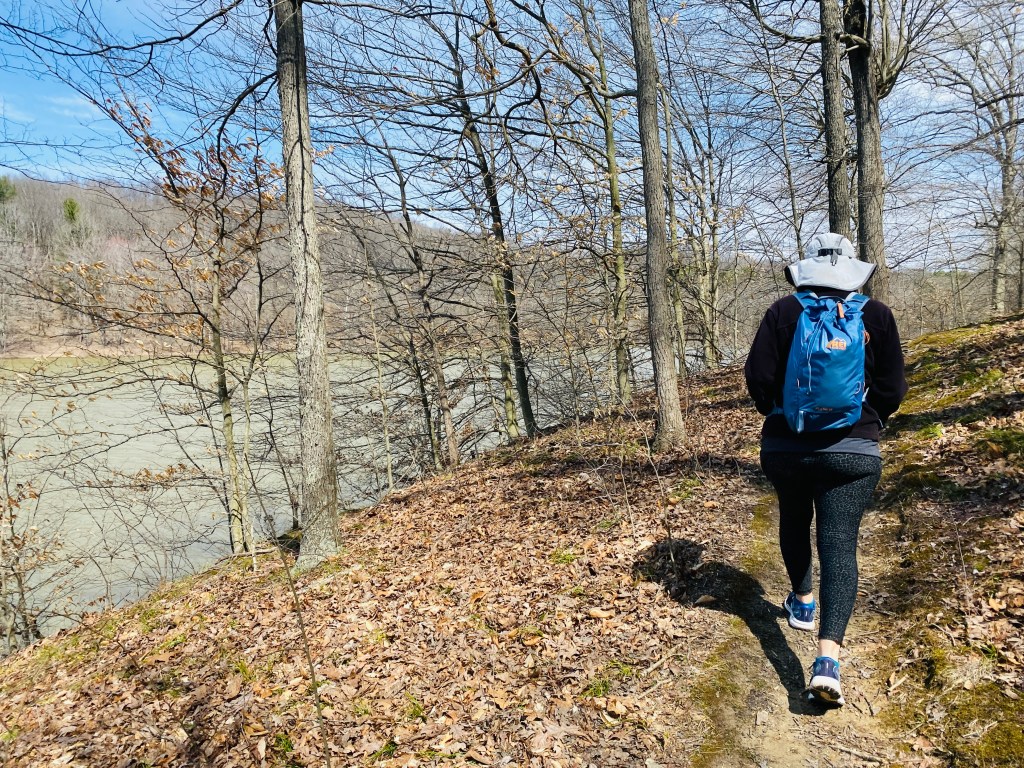
Dilly takes to the trail. This means that Leslie and Dilly get to spend time together and re-stitch the fabric of their sisterhood. In fact, just the other day they took a five-mile hike through the Indiana woods. As their footsteps echoed through the springtime forest the two reviewed their rich lives—their chosen careers (writer and artist among other trades), their loves and losses, the three children shared between them and their world travels.
When Dilly reached for Leslie’s hand back on the first day of first grade she could never have imagined that forty-six years later she would be crunching down a leaf-covered trail in Indiana with that same Leslie.
While the future forever remains unknowable, the past is complete, and the present is really all we have. Now is the time to love each other, to cherish friendship. The unlikely yet sublime story these two friends share suggests that sometimes, despite ourselves, there are greater forces at work over a lifetime than we can fully comprehend.
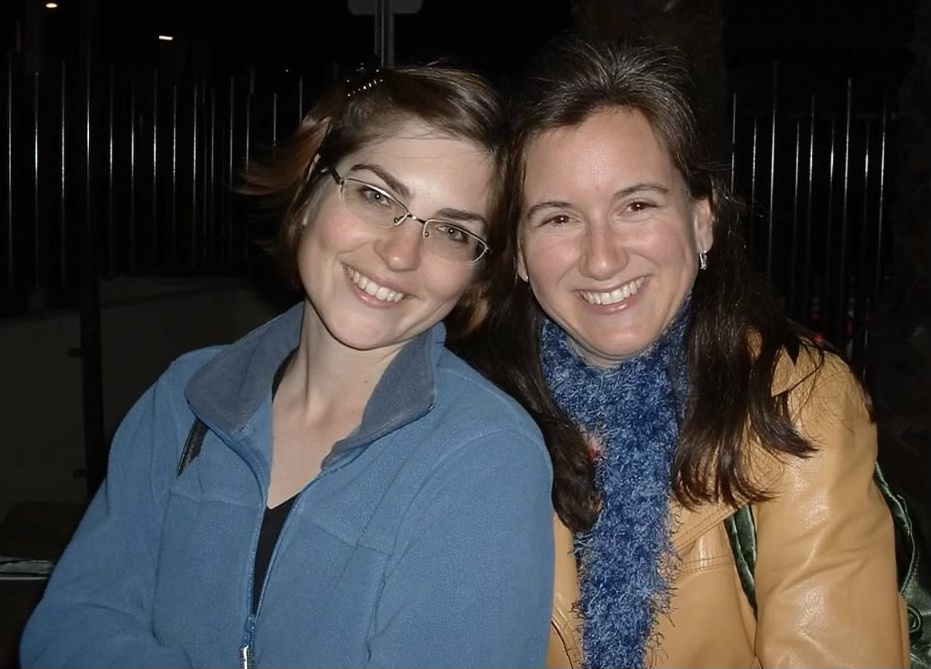
Friends for life. -
Birthday Letter Tradition
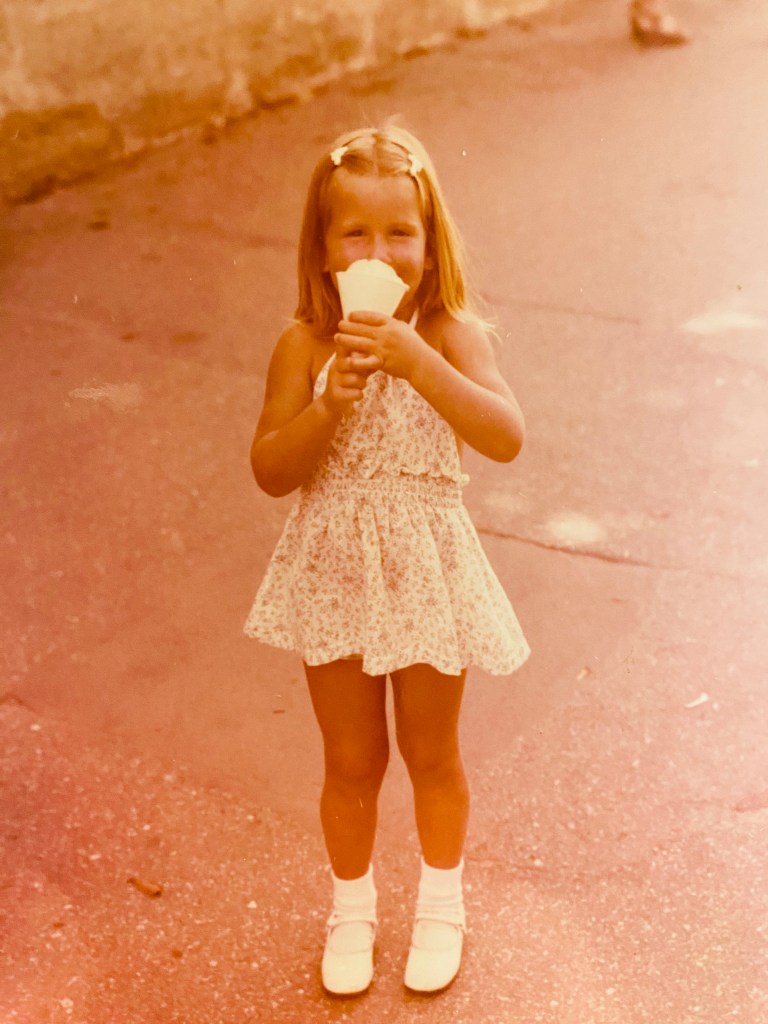
Enjoying a birthday ice cream cone in Florida, 1975 March 24, 1997
It’s my B-day. As I lay in bed this morning in the Bungalows “Maria Cristina” on Pie de la Cuesta Beach, MX I thought about how I’m four years away from being thirty. Then I thought about the negative ideas that statement implies…is thirty old? I am happier and more experienced and somehow less confused after each phase of my life. And what a beautiful life I lead-despite my small problems which of course aren’t so small to me but life-affirming in their own way. On my past birthdays I have been in California, Florida, Missouri, Arizona, Massachusetts, Bequia Island in the West Indies, a monastery in Nepal, and now I’m on a beach in Mexico. Important to realize my gratitude and happiness in my life at this moment. Lilac told me that a man from Kenya in her class doesn’t know his birthday or how old he is, and I wonder why we Americans emphasize age as a number so very much when it’s really all about experience, or lack of it, and learning. Watching these stooped-over older men selling baskets on the beach and the kind-eyed ladies who cook in the restaurant downstairs makes me think of my own dad and mom. I can’t help comparing these individual lives to my own family. I stand in awe of the opportunity and privilege I have. My parents are rare jewels. Downstairs at the open-air restaurant last night (during the full eclipse of the moon) a family of four people–mom and dad, late teens daughter and son, all drinking lots. First the daughter broke down crying to the father, then the son began sobbing into his arms on the table. The parents virtually turned away from the kids, obviously not addressing their needs. Why am I the one sitting at the next table, able to write about their sorrows in my journal? Did the eclipse draw it out of them? Where will that daughter and son be a year from now when I write my next birthday letter? Where will I be, who will I be?

Sit right down and contemplate. Above is an excerpt from the first birthday letter I remember writing to myself, while swinging in a hammock on a sizzling Mexican beach. I don’t think I’ve missed out on this annual practice since, although a few letters have been lost to the sands of time and broken laptops.
When I wrote this letter I didn’t foresee that over the next few years my life would change drastically. I would move across the country and begin anew in a new city, start a fresh career, meet my future partner, lose my mother.
The practice of writing oneself a letter is a fascinating exercise, but it isn’t until years later that the effort pays off—the words become a gift to your future self and an opportunity to understand how, and how far, you have traveled.
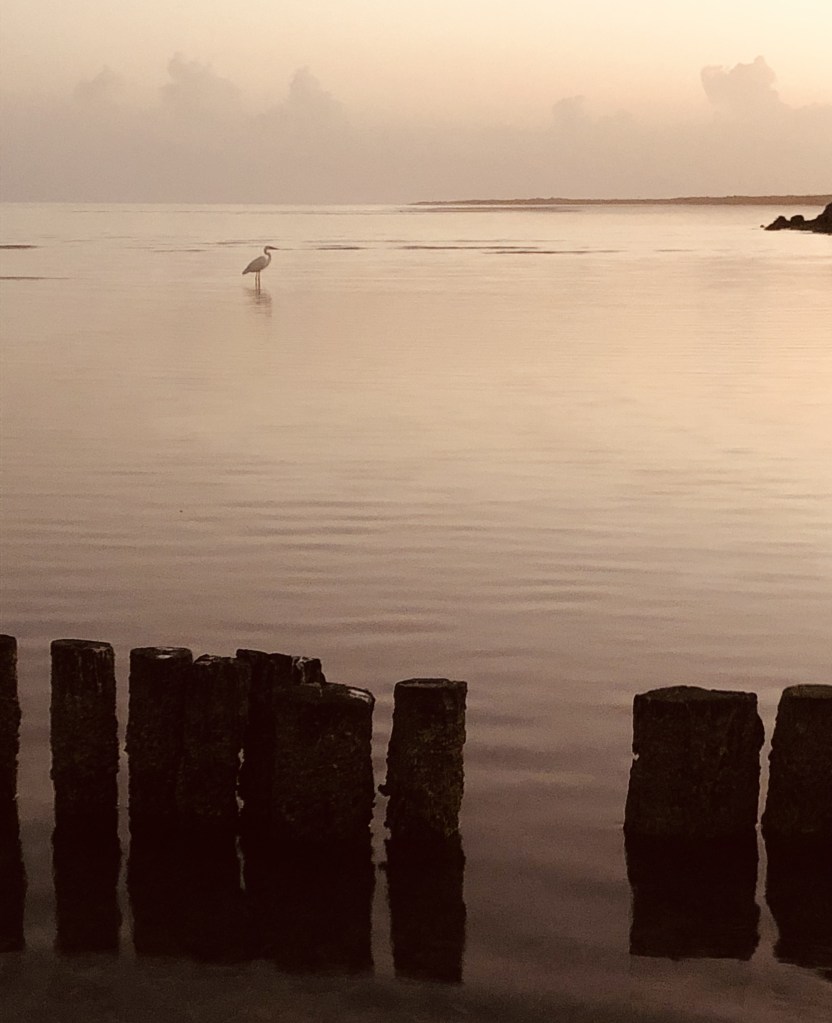
Mexican bird considers her life, and her breakfast. -
Letter To A Newly Sober Friend (Part One)
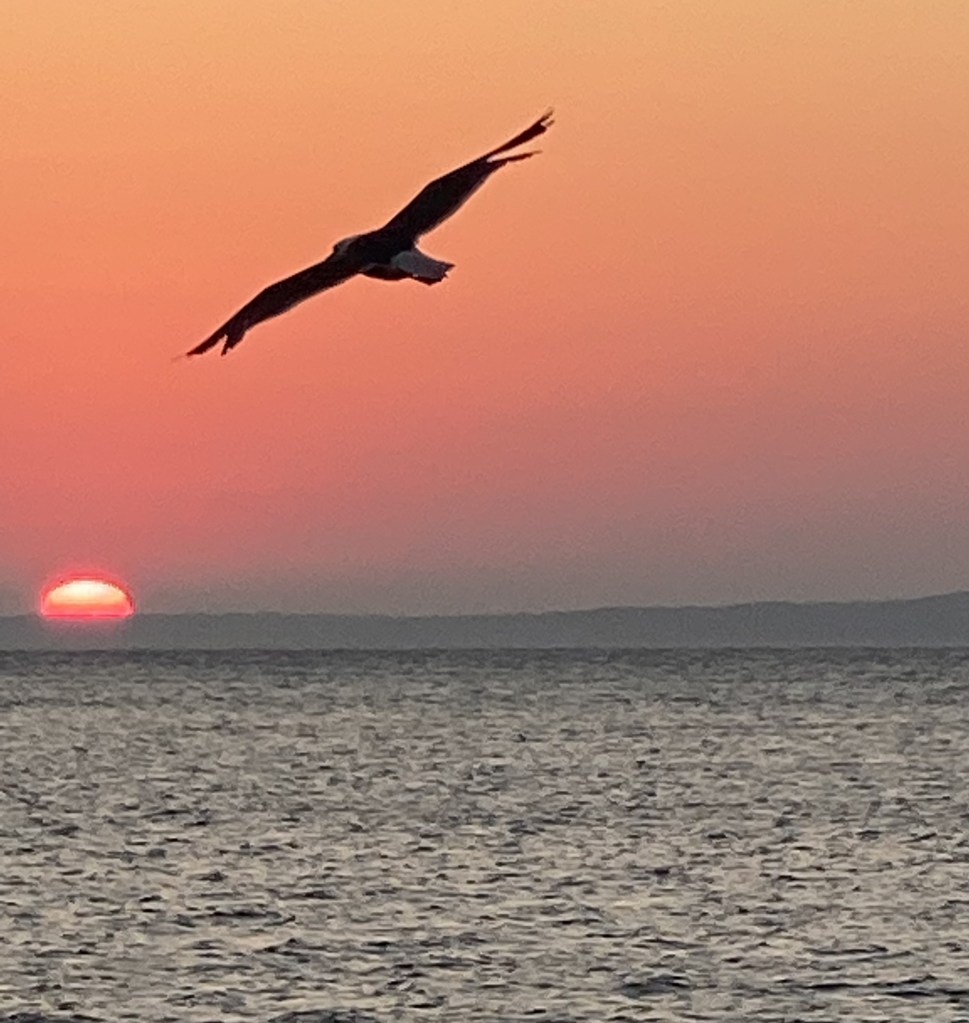
Dear Friend,
I’ve been thinking about our conversation and decided to write you a letter to share ideas about how I successfully stopped drinking and why I’ve stayed sober for four years.
I imagine you find it hard to believe that on the other side of hangovers, bitterness, and self-loathing you can be free as a bird at sunset, soaring over the shimmering ocean that is your beautiful life.
Not everybody who drinks alcohol has a problem but in my opinion if you think you have a problem with alcohol, you do. I sense that you sincerely want to be free of the depressing cycle and there is no doubt in my mind that focusing with honesty on your deep desire to be sober is the best place to begin.
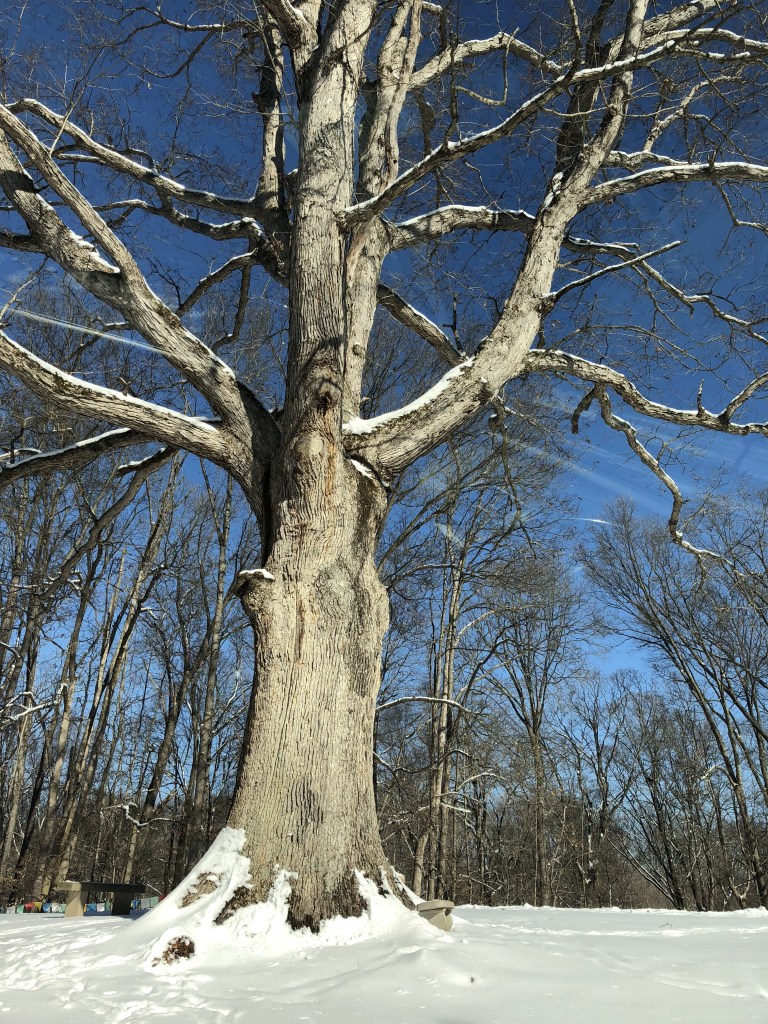
Cultivate the strength of a tree..upright, whole and free despite influence, annoyances and harsh weather. I’m thinking back to my days of early sobriety four years ago when I quit cold turkey after one particularly bad night. I started drinking in the afternoon and then later that evening, after leaving a neighborhood party, I walked home in frigid temps, tripped, and fell down an embankment, badly hurting my shoulder.
When I woke up that next morning, unsure about what happened the previous evening, deeply embarrassed, injured, hungover, and sour in body and spirit, I thought “I am treating myself terribly, I am abusing myself. What would I say to someone who was being treated this way by another? I think I would tell them to leave.”
So, consider this letter an encouragement to follow a new path and allow to yourself leave an abusive relationship.
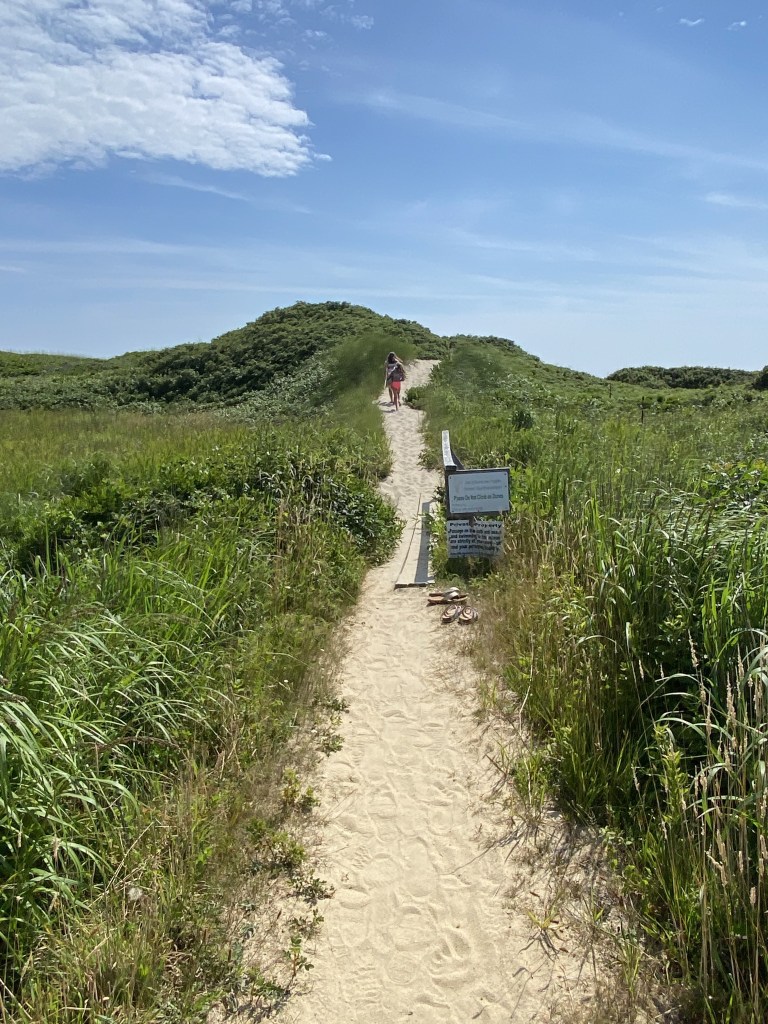
The soft sandy sober path leads to freedom
and blue skies.That cringe-inducing night turned out to be one of the most important in my life so far. My drinking career had started at age 13 and there I was at age 48, with the intervening 35 muddy middle years of (mostly, minus pregnancies and the occasional dry stretches) imbibing whenever and wherever I wished to. Even though I grasped long ago that there was a problem I continued to drink, often daily. I failed at modifying my intake, I failed at drinking only one type of alcohol, I failed at anything that had to do with ending my tendency to use something that was poisoning me from within and without.
I also did the dishes, parented, wifed, worked, and lived a life that may have appeared to many as a full, happy, connected one. But I was an expert at living a compartmentalized life, a less than truthful one–this was uncomfortably familiar ground.
I needed that final low, that rusty nail in the coffin of my lengthy drinking career, to look my glaring imperfections in the eye and to see my actions for what they were, self-defeating, injurious, and below me.
The light shines on those who lean toward it. Here is the part I wish I’d figured out years earlier: In my fresh sobriety I could treat myself as I would a cherished friend. Setting relentless judgment and failures aside, I clutched onto the glimmers of my goodness. At first, those glimmers seemed minor…I considered the way I am (generally) loving to others, the way I take care of animals, the way I make tea for myself in the morning, and the way I feel when I am hiking in the woods. I brush my teeth twice a day! I wear a bike helmet! I thought about how there were people in my life that seemed to like me…if they saw good in me there must be something loveable there.
I created a loop of these fresh and positive ideas in my thought process, I wrote good things about myself in my journal instead of paragraphs of self-doubt. For a brain accustomed to a whole lot of self-criticism and judgment, this was an unfamiliar approach but the more I flexed it the easier (and stronger) the “treat yourself as a cherished friend” muscle became.
Try creating an arsenal of good thoughts for yourself. Ask people close to you what they love about you and put their comments together in a place you can access when you need a lift. The Notes section of your phone or a piece of paper taped to the fridge or the bathroom mirror or used as a bookmark. Try a meditation where you view yourself through the eyes of someone who deeply loves you. What do you imagine they love about you? Consider those qualities in your meditation. There is never going to be another you. What will you do with the gift of you? Strengthen the muscle of your loving self-acceptance.
Take the path to self-acceptance.
Your imperfections can be your superpowers.Stay tuned, part two of my letter covers strengthening the will to be sober, ideas for what to do with all the money you’ll save not buying alcohol, asking and answering the hard questions for yourself, savoring present moments, thriving instead of wilting through stressful situations, and evolving/improving/letting go of relationships through sobriety.
Understand that there is a massive industry built on the back of your addiction. Don’t allow your well-deserved peace and happiness to be stolen by a poisonous substance used to power jets.
Cherish yourself and be your own champion–no one else can do it for you. I urge you to take this path because on the other side of sobriety you will find self-acceptance, joy, and clarity, the beauty of which you can only imagine.
Love,
Your Successfully Sober Friend -
Trails, Friends and Cheese
A few years ago I read that one of the healthiest things we can do for ourselves is to take a walk with a friend. Good for the soul, good for the body, good for the earth, and a little free therapy for everyone involved.
Each week I try to fit a walk or hike into my schedule. There are trails close to my house that have stolen my heart, and others further afield. One local favorite winds through a small island of fiercely protected land nestled so close to the local shopping mall that in the winter you can see the side entrance to Target from the creek. Park next to the dumpster, veer around the side of an apartment building and enter a hushed forest where old-growth trees tower quietly above.
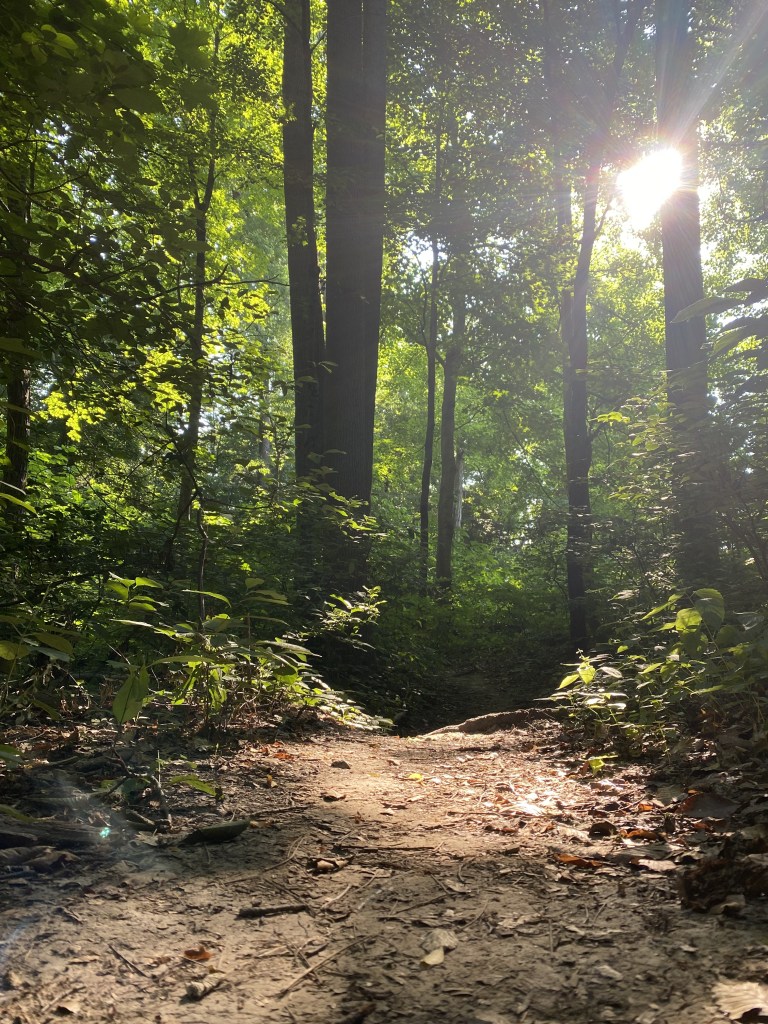
This magical trail sits just a few hundred yards from a busy mall. A few years ago, to mark a notable birthday I thought about what it was that I really wanted (besides complete peace on earth and a woman’s right to make all decisions for herself). What I yearned for was time in nature, with people I love… so I rented a cabin in some nearby woods. The first night my family joined me and the second two girlfriends extracted themselves from their busy lives so that we could laugh and stroll and soak in the hot tub. It was one of the best gifts I’ve ever given myself.
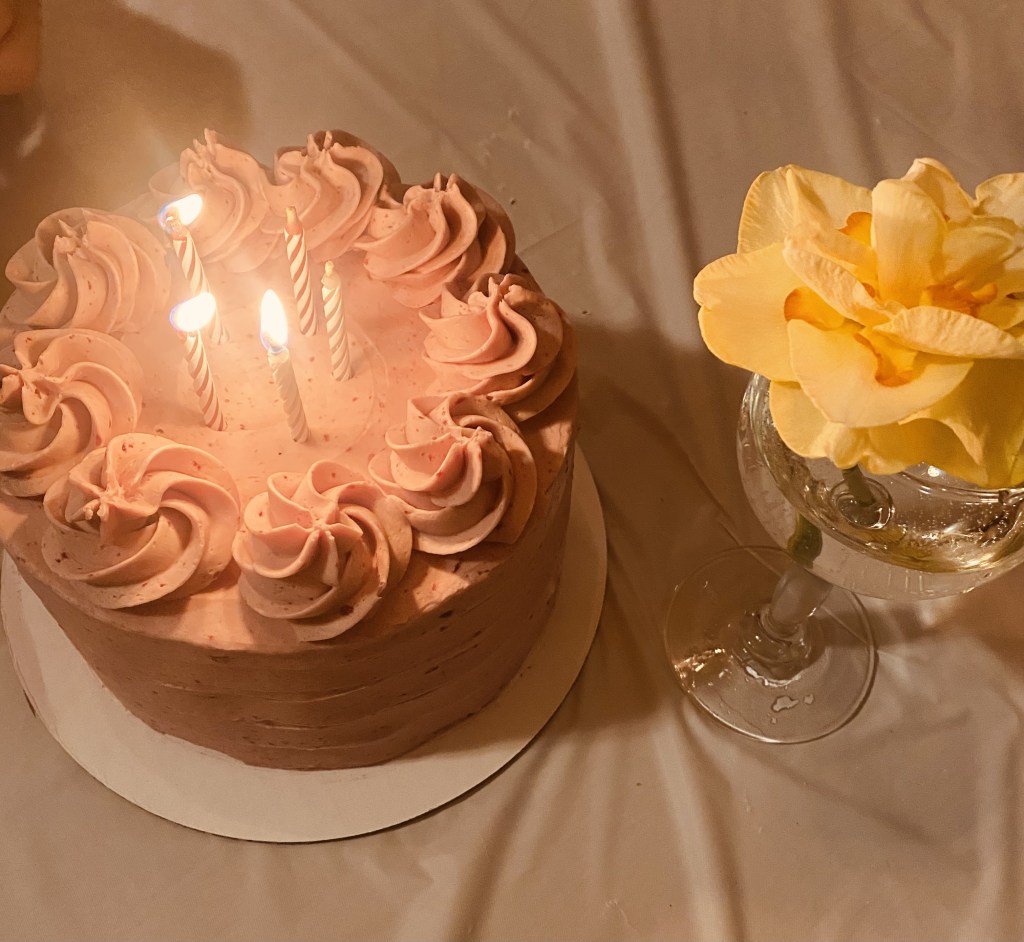
Cake and flowers enjoyed at the cabin. This year, with another birthday looming I decided to head to one of our glorious Indiana state parks and invited some friends to join me. Saturday dawned sunny and crisp, with just enough coolness in the air that clothing layers could be added and subtracted as needed.
Frequent stairways save hillsides from erosion and
add strength (and soreness) to calves.The arrival of my four friends ended up being staggered throughout the day so we took a series of hikes. Walking together along paths lined with bare trees, we noted clusters of white sycamore trunks flashing against the dark hillsides, wildflowers peeking through layers of leaf rot, and waterfalls swollen with spring rain.
Spring rains tumble over beds of limestone. 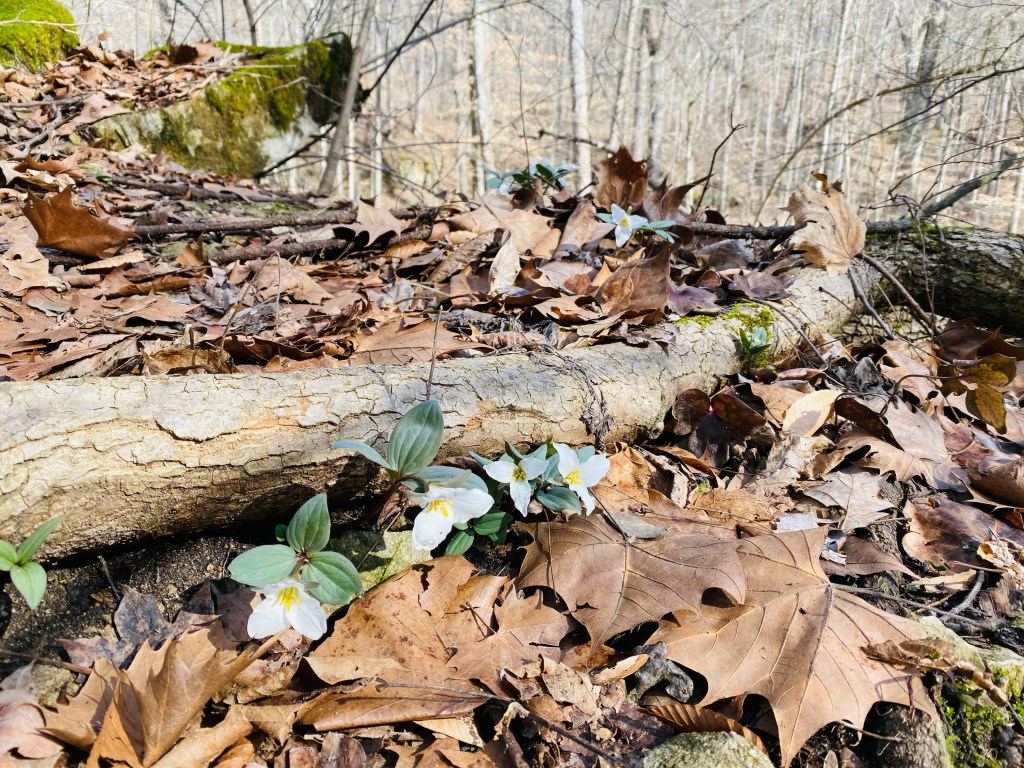
Walk too quickly and you’ll miss the flowers. 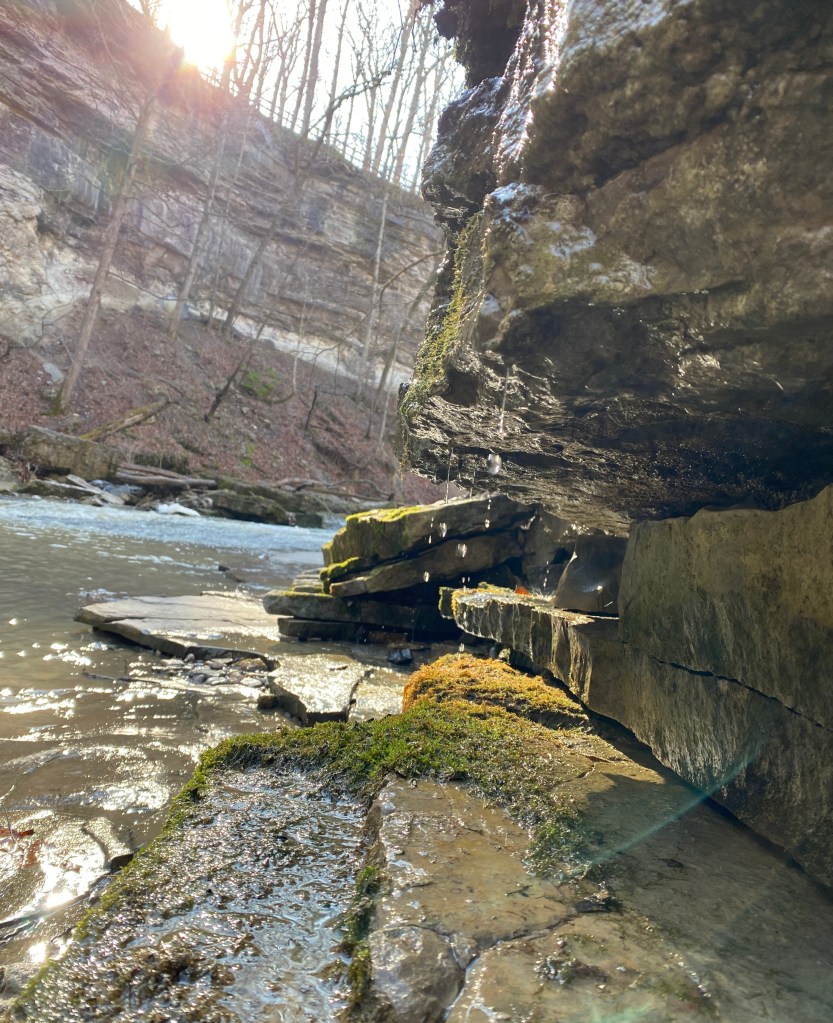
Mini waterfalls along McCormick’s Creek. 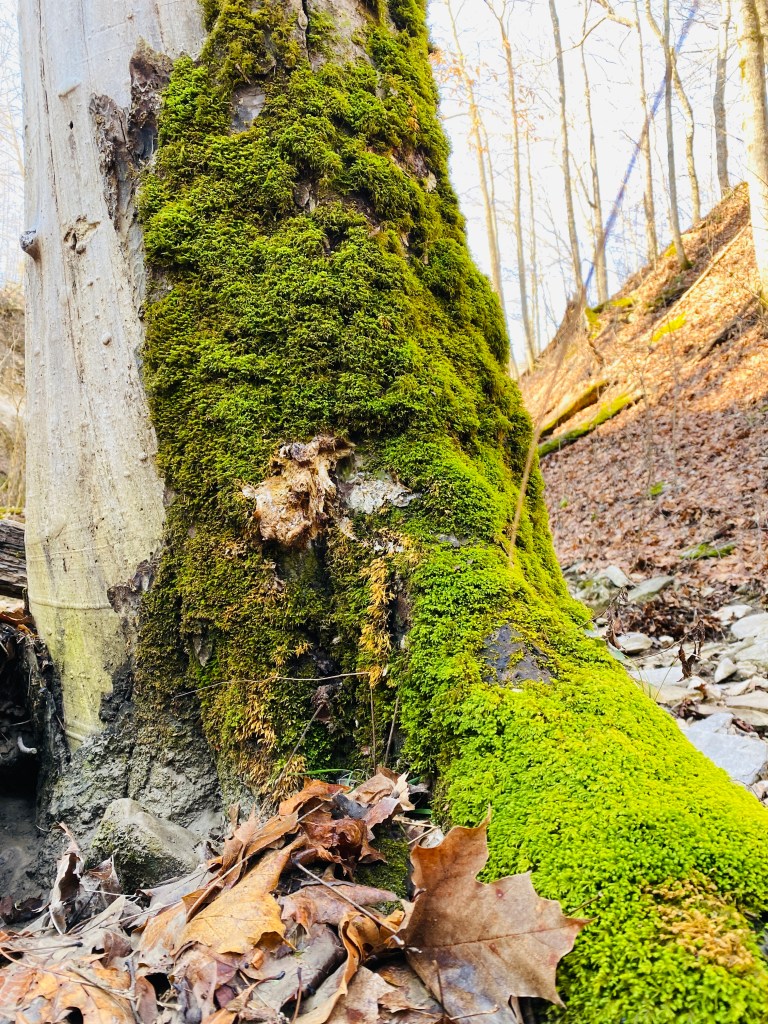
Trees and moss, the ideal companions. Later we gathered fireside at the inn (seven Indiana State Parks feature rustically designed inns, each with a common room where people gather around a glowing hearth, play games and spend time connecting). We laughed, discussed our lives, and savored the delicious mocktails with grapefruit syrup and Humboldt Fog cheese gifted to me by my friends. Sighing with contentment in my rocking chair, I reminded myself that quality friendship and time outside are the most valuable of gifts.
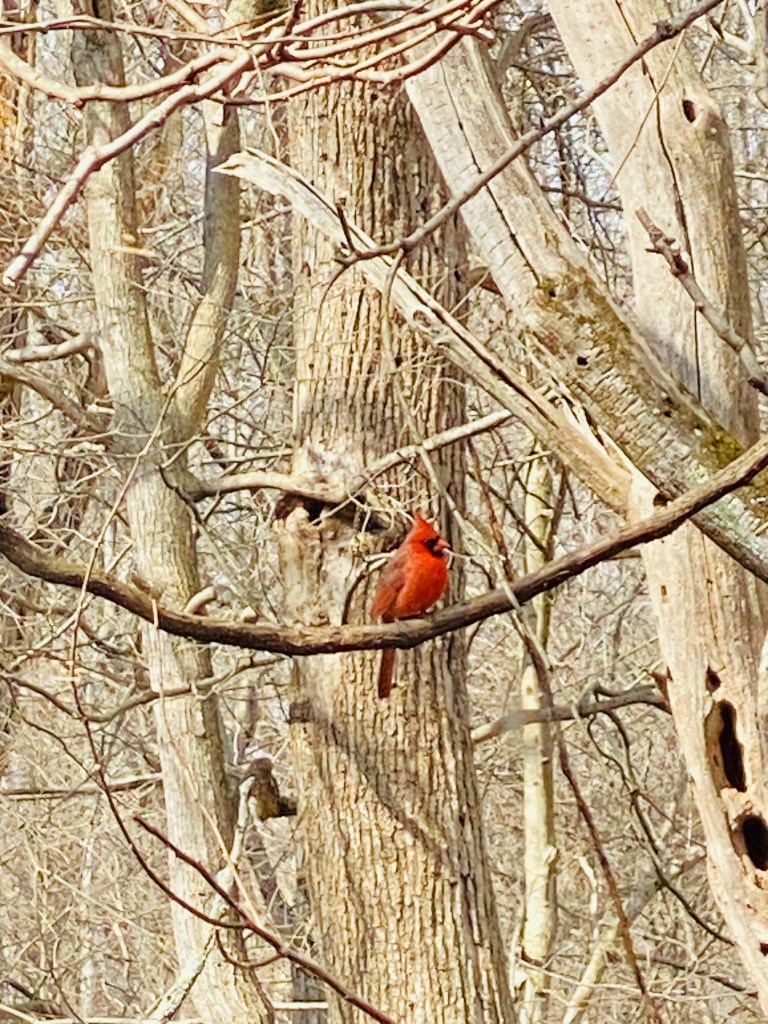
Indiana’s state bird paid us a brief visit. Oh, and cheese helps too.
-
Trees of Disney…a Photo Essay
Palms outside the Commissary. Who goes to Disney and takes pictures of trees?
Apparently, I do.
I will admit that a family trip to Disney was not at the top of my bucket list. I imagined taking the (by no means insignificant) amount of money spent on a Disney vacation and putting that toward airplane tickets. How about a European destination, or somewhere in Central America where we could experience a different culture and show our young kids unique parts of the world?
I was outvoted.
Gazing at the (artificial, yet impressive) Tree of Life
in Disney’s Animal Kingdom park.This is how, last spring I found myself trudging around Florida’s Magic Kingdom, zipping from park to park on the Skyliner, waiting in the longest lines I’ve experienced since traveling in India, and having a surprising amount of fun.
And as my family focused on reservations for rides, Star Wars and Buzz Lightyear, sweet snacks, and roller coaster speed estimations I hunted for…trees. Other flora and fauna caught my eye, as did some artificial trees. It’s Disney, after all.
I’m fascinated by how certain trees (and wildlife) survive in the middle of human traffic and chaos, and there are few places with as much human traffic and chaos as Disney.

The Liberty Tree Elm in The Magic Kingdom. The original Elm growing in this spot played a real part in history, shading pre-Revolutionary activities under its branches. 
The Swiss Family Treehouse “ride” was built in 1971
and still entertains today, concrete trunk and all.
Late afternoon view of Tomorrowland, as seen through plastic foliage. 
Keeping watch over the croquet lawn near Disney’s Boardwalk area. 
Viewing the trees and wildlife at Disney’s Animal Kingdom Lodge. 
Tree installations at Sanaa restaurant in the Animal Kingdom Lodge. 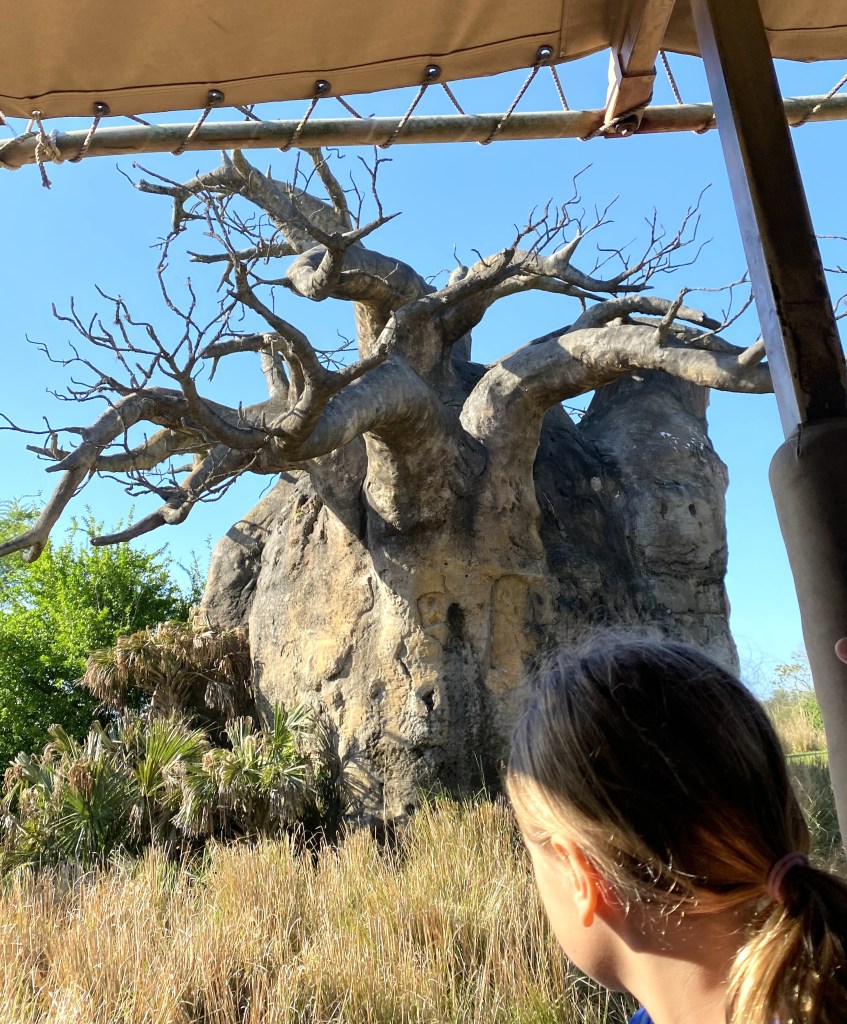
A fake Baobab tree is better than no Baobab tree. 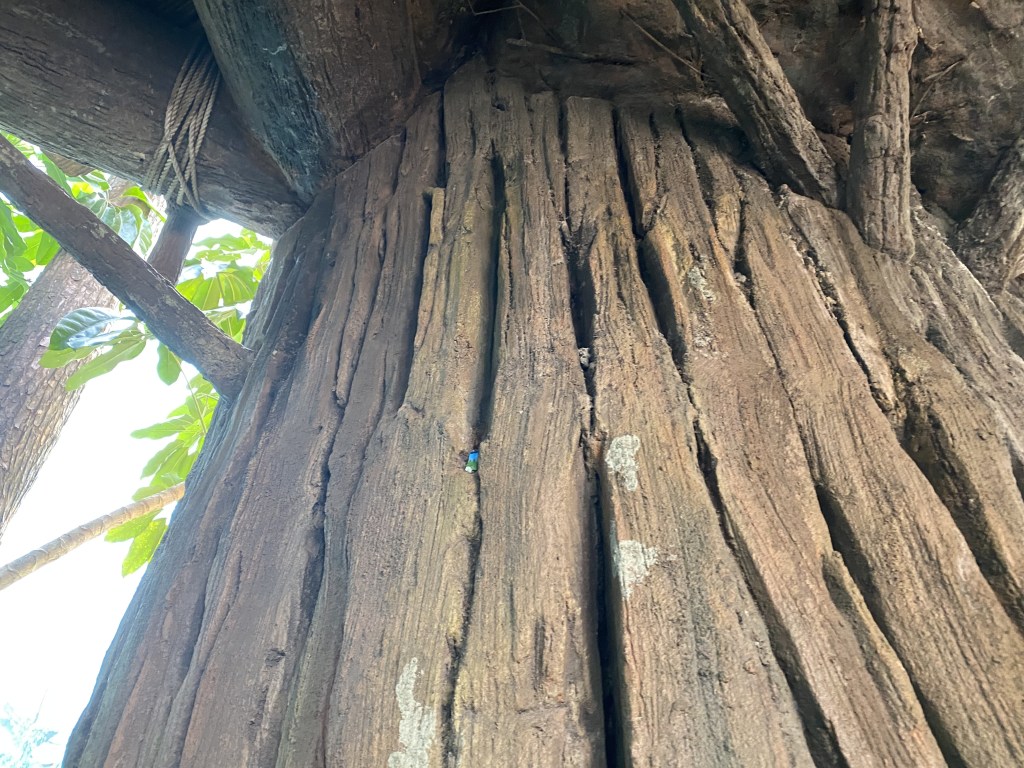
Is a fake redwood better than a real one? Not so much. 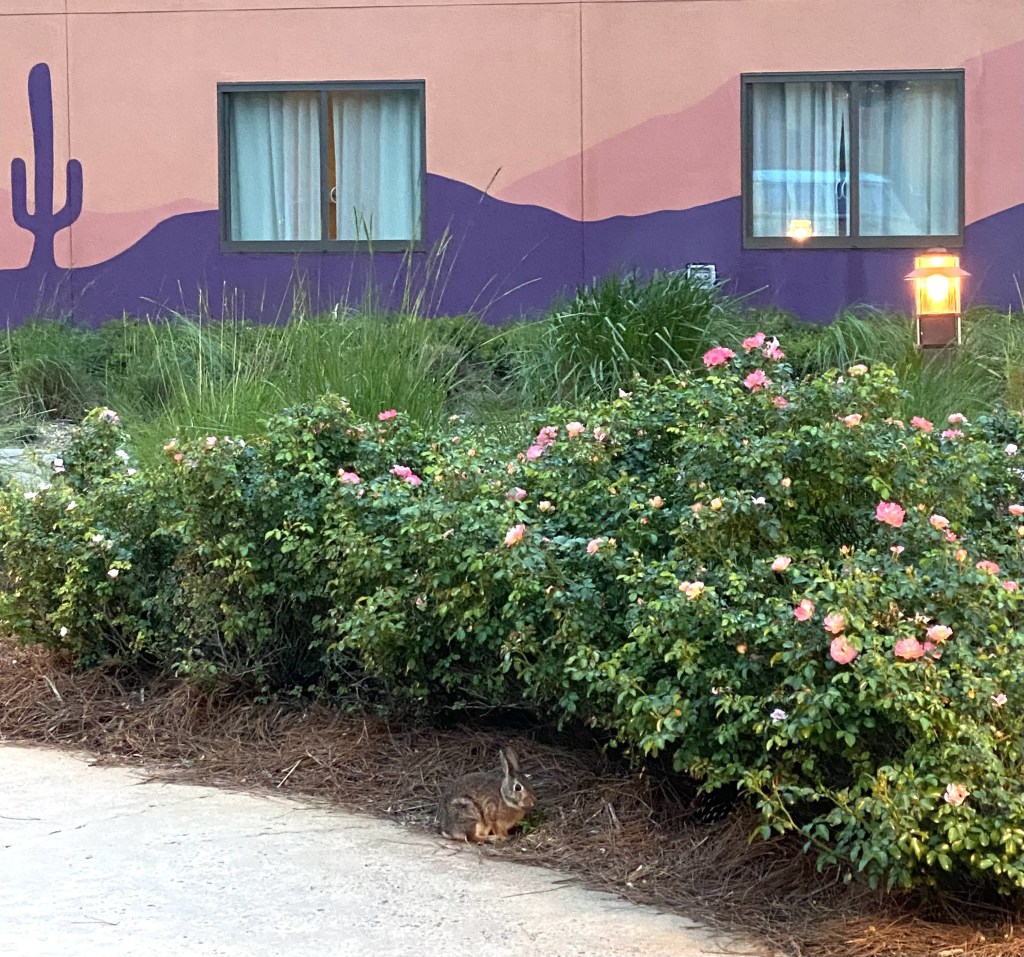
Can you spot the wildlife in “Cars” village? 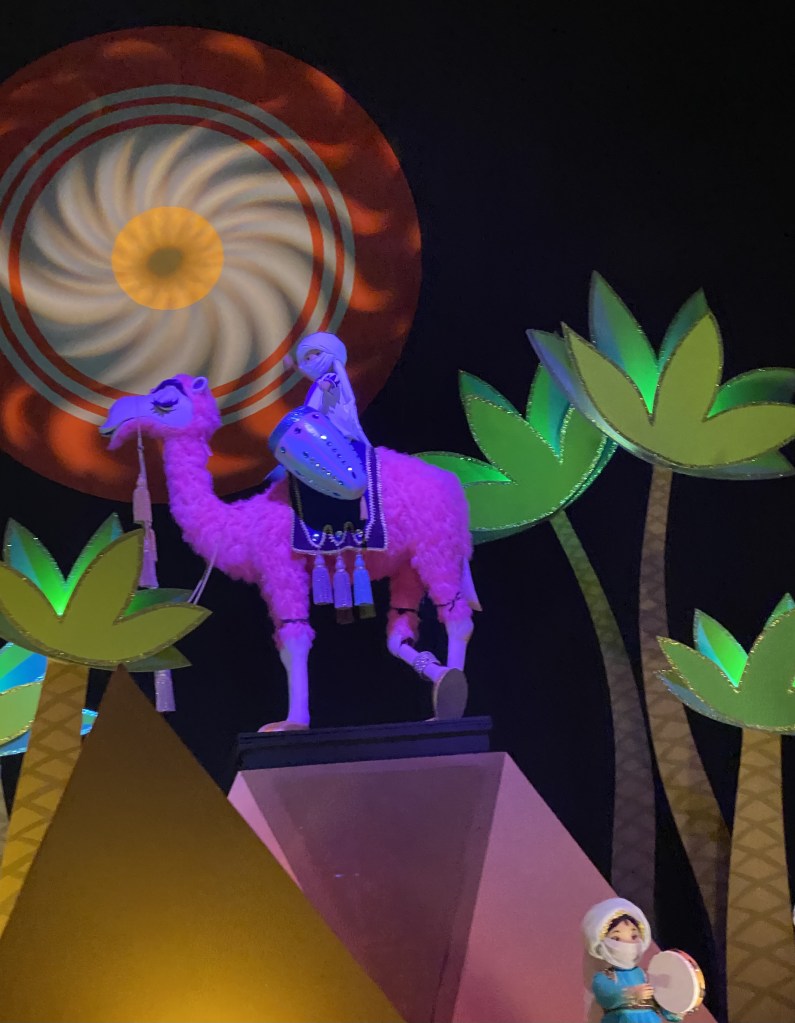
The “It’s A Small World (After All)” ride even offers trees. 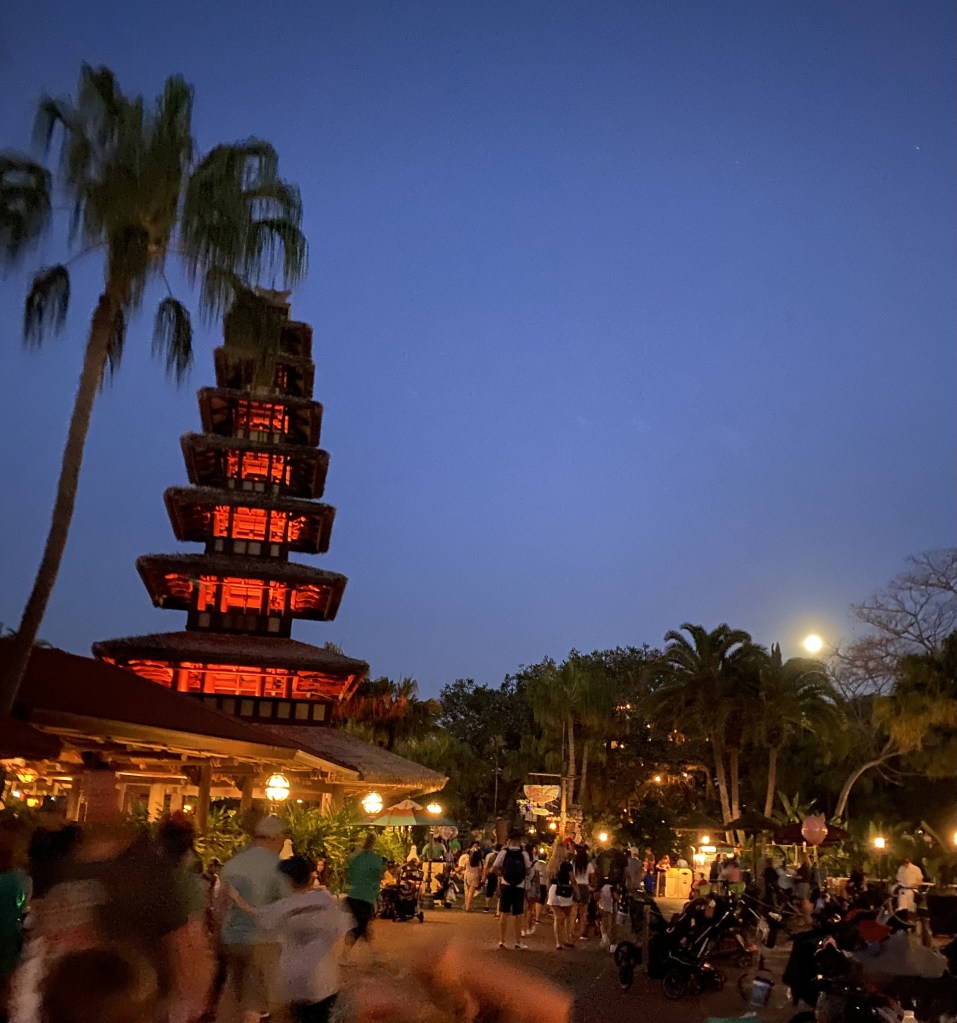
Night falls on trees, pagodas, and tired park visitors. -
A Grand and Distant Plan
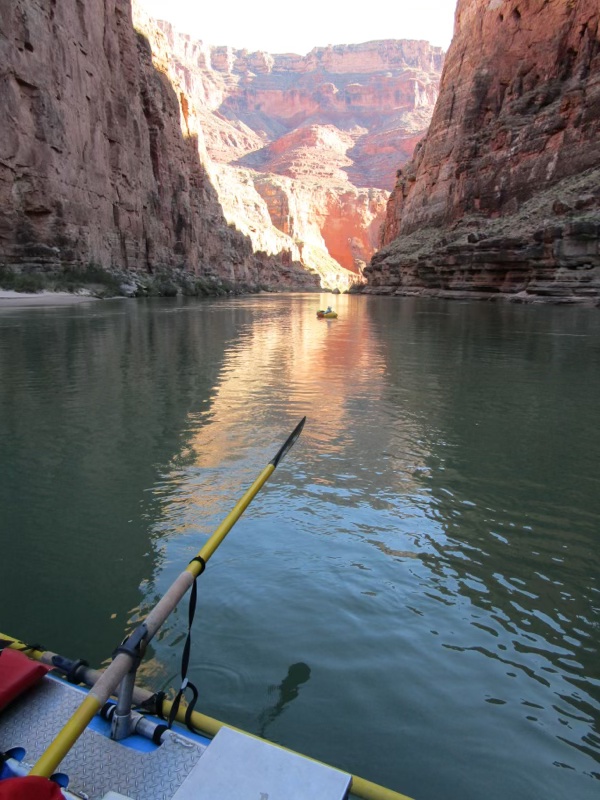
View from the boat, Grand Canyon, AZ.
Photo credit Hether BearingerIf you ask me to do something on Friday, June 4, 2027, I can’t. I’m busy.
And you’ll never imagine what I’m going to be doing.
Unless you are a highly sought after meeting or wedding planner, your 2027 calendar is likely wiiide open. Mine sure was, until just the other day when I added some dates to a post-it note and then created a manila file for said post-it note because let’s be honest, there is zero chance I’m going to keep track of a small purple post-it for four entire years.
I named the file “Grand Canyon Reservations.”
As incredible as it is to have plans four years hence it is almost equally incredible that twenty-two years ago I walked into a post office in San Francisco’s South of Market neighborhood and mailed a check to the National Park Service. That $100 check earned me a spot on an exclusive waitlist, a list of people who hope to travel down the Colorado River via boat as it winds its way through the 277-mile-long ancient geological formation that is Arizona’s Grand Canyon.
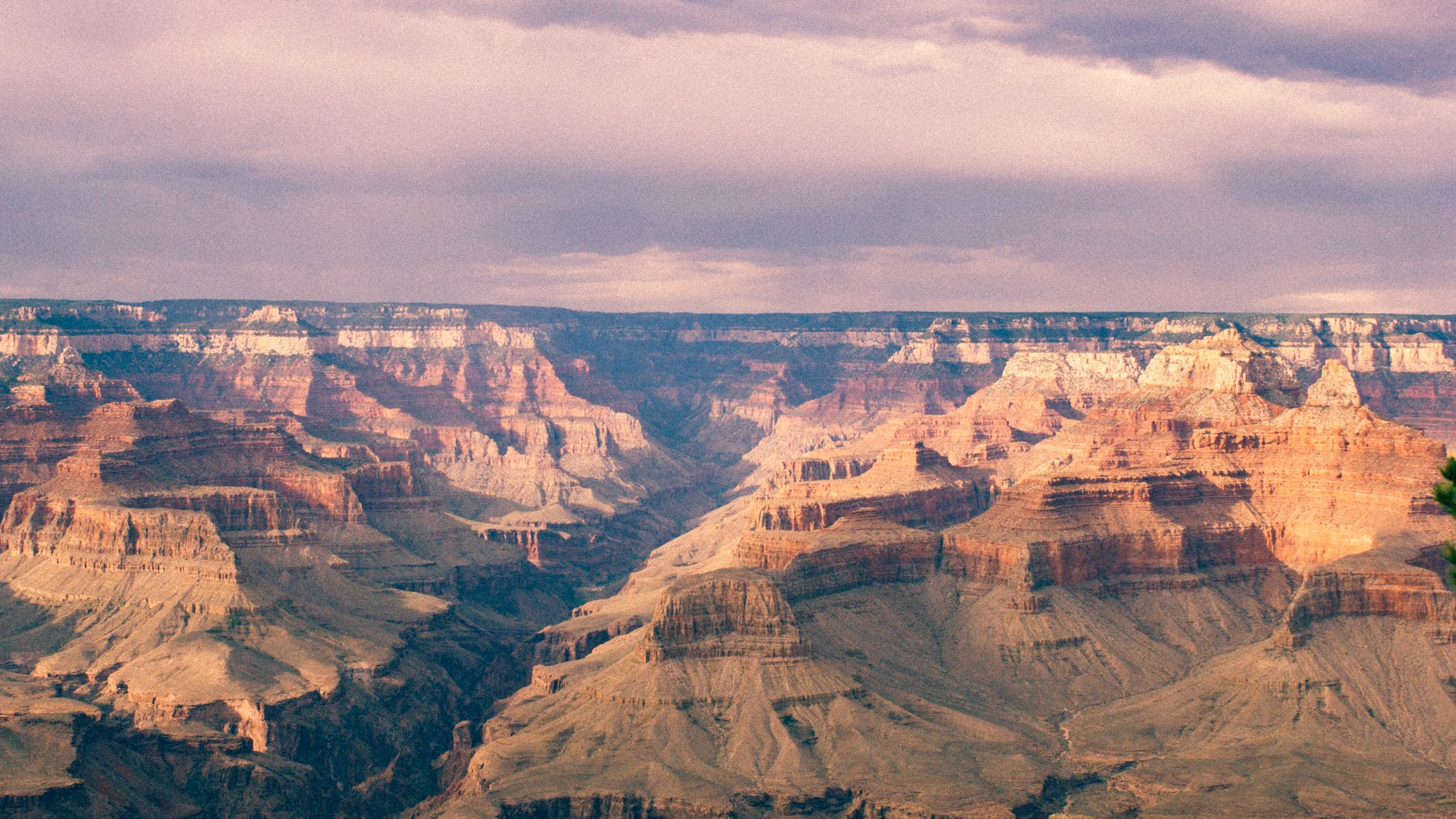
Photo by Josh Sorenson on Pexels.com I first saw the Grand Canyon at age five in the 1970s as my mom and I drove across the US in our red VW Beetle but somehow, I hardly remember it. The next time I visited the Canyon I was in my early twenties and the experience was unforgettable. After a long day of driving my friend Hether pulled our 1984 white Jetta up to a rest stop on the South Rim. Stepping out, I couldn’t see much other than a few people congregating at a low stone wall and a vast expanse of concrete for parking. Suddenly, I had the impulse to be alone, so I walked toward one end of the rest area. Approaching slowly, I realized the barrier was positioned exactly on the rim of the Canyon.
I waited until reaching the wall to lift my eyes, and there it was. A vast, shimmering painting in reds and pinks and browns and blues unfurled before me, a space so great my brain had trouble registering the size at first. What to take in, the rim across from me, so far away I wasn’t sure I could make it out, or the immense curvature of the canyon, cutting to my left and right, wisps of clouds visible at the far ends? Or were those even ends at all? And waaay down, difficult to make out, a glint of what looked like a thin strip of silver, ahh, the Colorado River. In those first few seconds, I began to understand the power of water, able to carve a canyon so deep, so beautiful, so mind-blowingly gigantic. Overcome, I allowed the tears to stream down my cheeks.
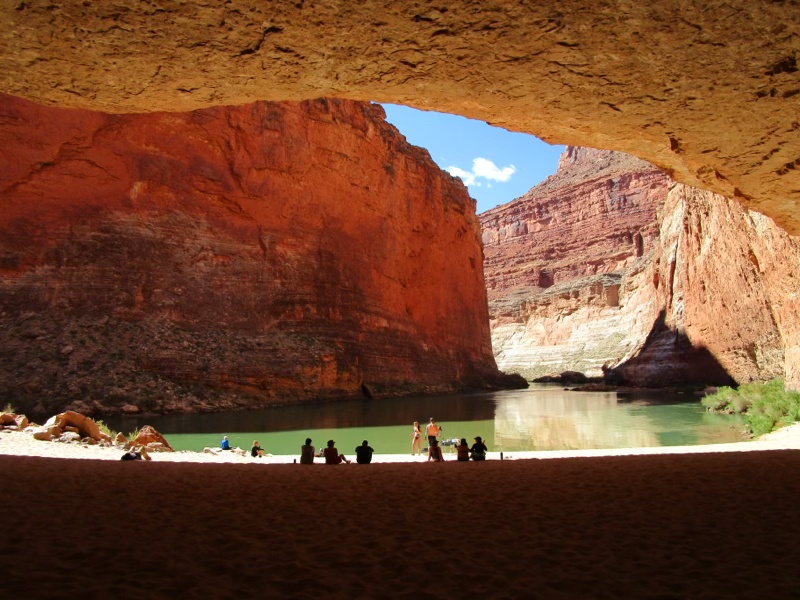
There’s a reason they call it Grand. Photo credit Hether Bearinger. Remembering that sacred moment helped me maintain my spot on the Grand Canyon waitlist for the next twenty or so years, informing the Park Service of address changes, dutifully responding to their periodic inquiries…did I still want a river trip, did I want to keep my spot? Yes, I did. Always keeping in mind a space on my nebulous future trip for that same friend, Hether, now an experienced river guide with multiple trips through the Grand Canyon under her belt.
And then, this January I received an email from the Park Service offering me, as one who has been on the list for a predetermined amount of time, a chance to enter a one-time lottery for a launch date. They asked for my top twenty launch dates, and $400. I complied.
A few days later, an email. “You WON!” Incredibly, I got my first requested launch date (probably helped that it was four years from now), and a guaranteed life-changing river trip.
Will it be worth the twenty-six-year wait? There’s no doubt in my mind.
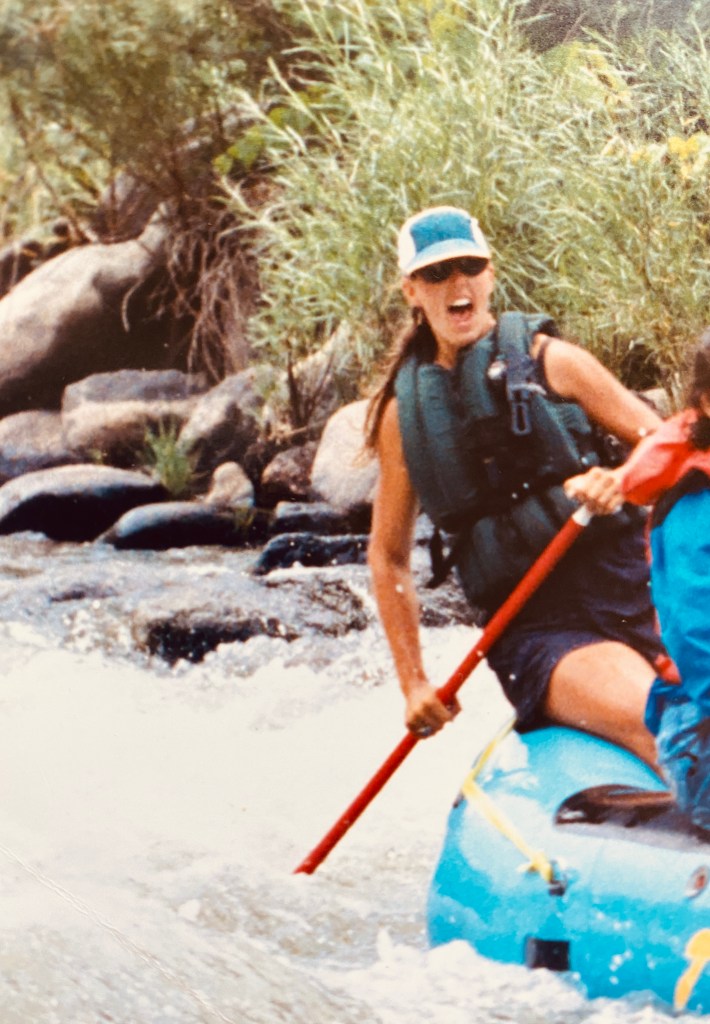
Hether has honed her skills on many rivers. -
Love Lesson
Nature knows love. Photo credit: drunkghostadventures (IG) A friend who was facing cancer once spoke of her gratitude for a dirty gas station toilet to throw up in. I’ve never forgotten that image because it is a stark reminder of how easy it is to focus on what is not going right in your life rather than the simple gifts hiding in plain sight. Incredibly, needs are being met, even in the middle of chaos and challenge. A chair to sit in, the roof over your head, a pen between your fingers, a tree providing shade, the soothing purr of a cat.
A few years ago, as I was in the throes of parenting young kids through a pandemic and caregiving for my ailing father, I began to wonder if I was running out of love. My patience had grown razor-thin, and I felt like I was failing at parenting AND caregiving. Oh, and I was also thrashing through early sobriety. Panic attacks and hot flashes became daily occurrences, yet I hardly recognized the symptoms. I thought I was somehow immune to those lows, too strong to fail at such deceptively simple life demands. Every morning I would tell myself I wasn’t going to raise my voice at my kids that day, get frustrated with my father’s memory loss, or become short with my husband.
Mostly, I failed. Day after day after day.
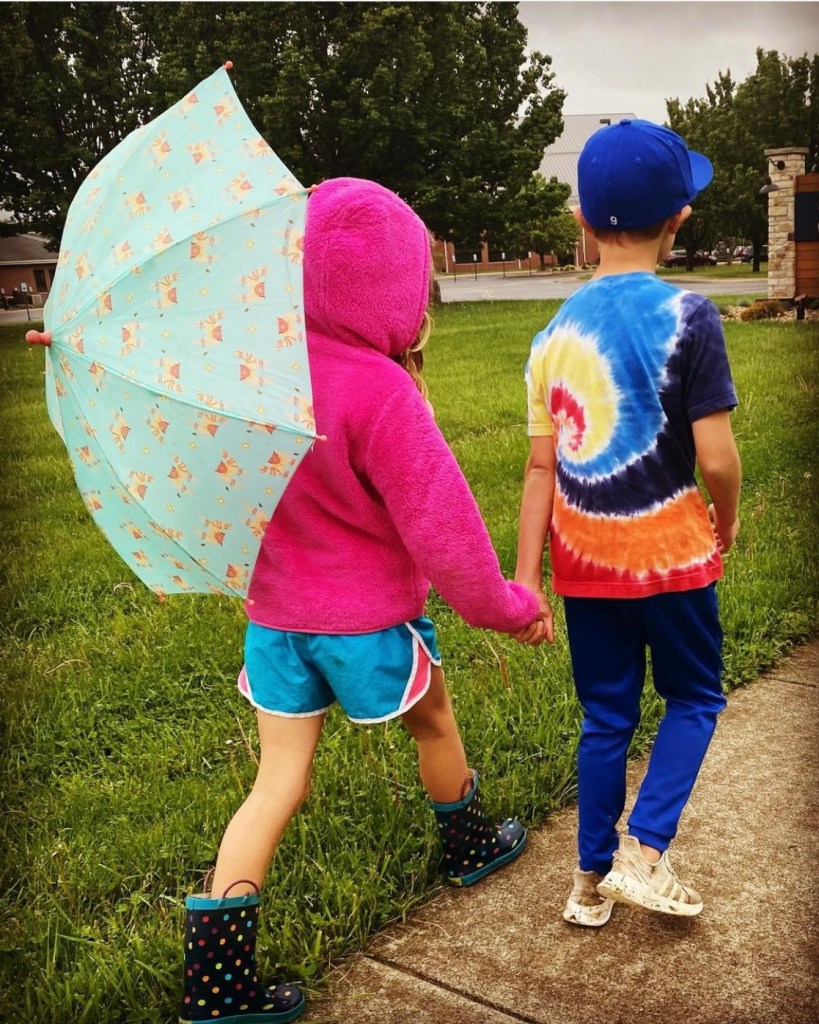
Love comes naturally and easily to kids. Out of desperation, I started pondering love, my favorite subject. Love has been a constant in my life, showered unconditionally on me since I was a child. Keenly aware of the rare gift I’ve been given, I have long practiced conscious gratitude. But love itself was beginning to feel less tangible, and I wondered if my capacity to love had been capped since it had gotten harder to give and receive.
Also, the larger world and many around me seemed to be in a constant state of panic, fear, and anger. Was the world’s love somehow running out? Could there be an end to love?
It’s not as if there is a central LOVE checking account, I reasoned, out of which we all draw funds, the balance getting lower and lower until, nope…sorry, all gone, the account is overdrawn and no more love available to you, over spender.
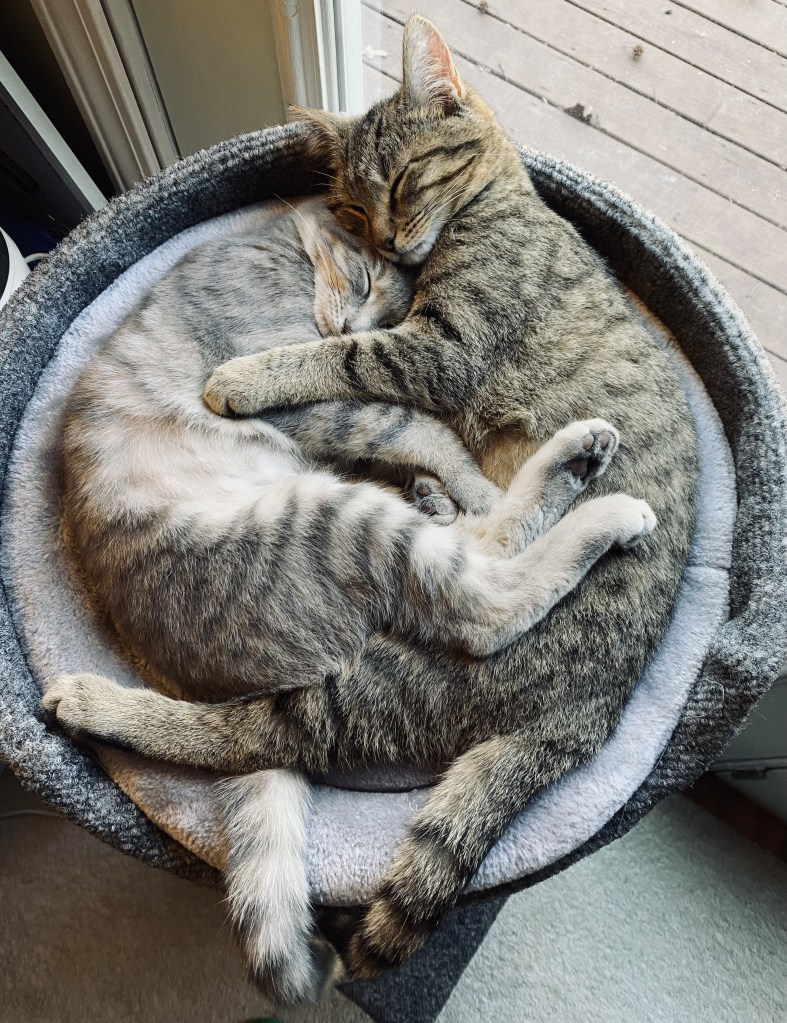
Love also comes easily to most animals. If love is without end, eternal (and I believe it is), and life-giving, I didn’t need to manufacture it, to force my will on it. Instead, I needed to stop turning away from a source of goodness and holding fiercely to what was clearly not working. I softened my expectations, my reactions, and most of all my judgment of myself and my loved ones. Instead of trying to prove that I was capable! I could handle this! I tested love and allowed it to seep into the broken places, the cracks I was trying so hard to fill with plans, answers, discipline, daily caretaking, and schedules. Trusting that love was true and powerful, I handed over the controls.
My new approach didn’t work immediately (and in all honesty, I continue to be a work in progress), but gradually I stopped feeling panicked and judgmental, and alone. I began to reach out to friends and the sober community, to take more walks and hikes, and to allow my children to be themselves instead of constantly directing them. My sense of humor returned, even to the point of gently joking with my dad about the hallucinations he was having because of a reaction to medication. Holy cow, I can elevate the dialog with my family rather than drag it into the mud of conflict! There was no getting out of bed in the morning unless I’d thought of five things to be grateful for, even as simple as having a bed in the first place (I highly recommend this practice; it sets a great tone for the coming day).
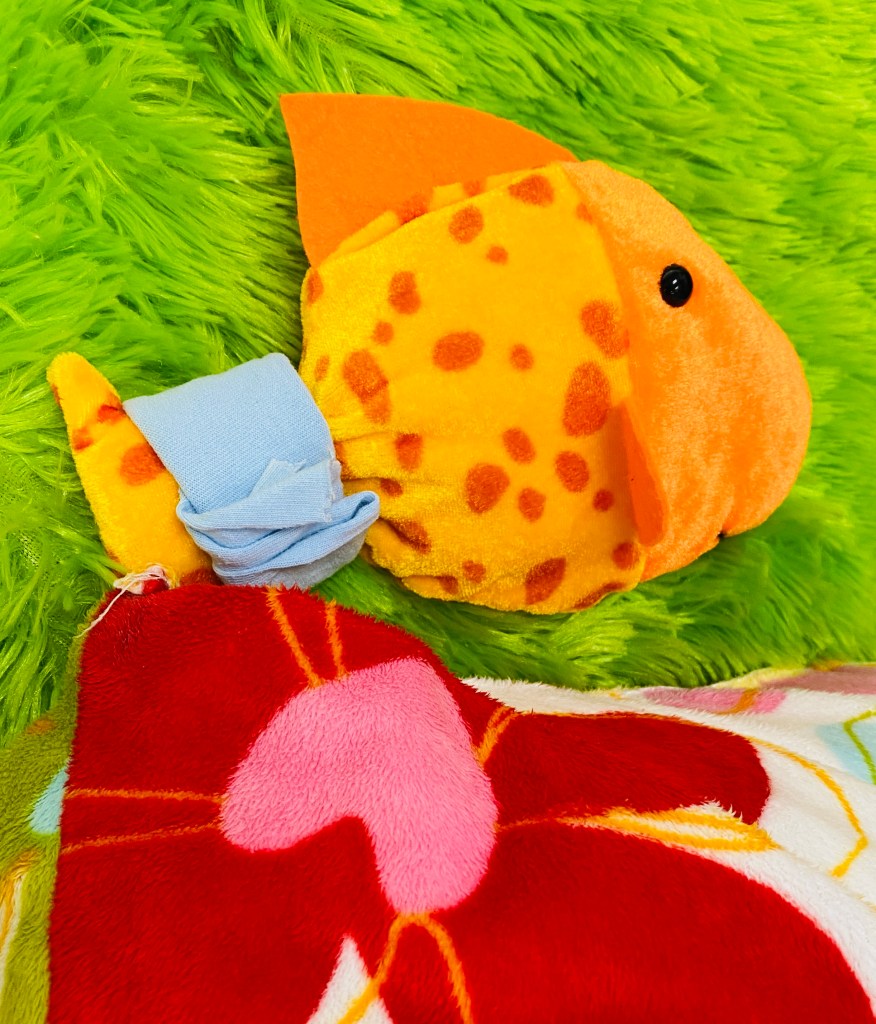
Goldfish’s hurt tail bandaged by preschool nursing team. Perhaps it comes down to simply realizing you are worthy of love, even with all your imperfections and failures and daily yelling (OK, I’ll admit it was daily screaming for a little while there). And if you are worthy, isn’t everyone else? Loving yourself does not have to be tied to ego, or forced, it’s more of a willingness, an opening. Allowing love takes strength, but so do rejection and judgment, and which of those two paths is more fun, anyway?
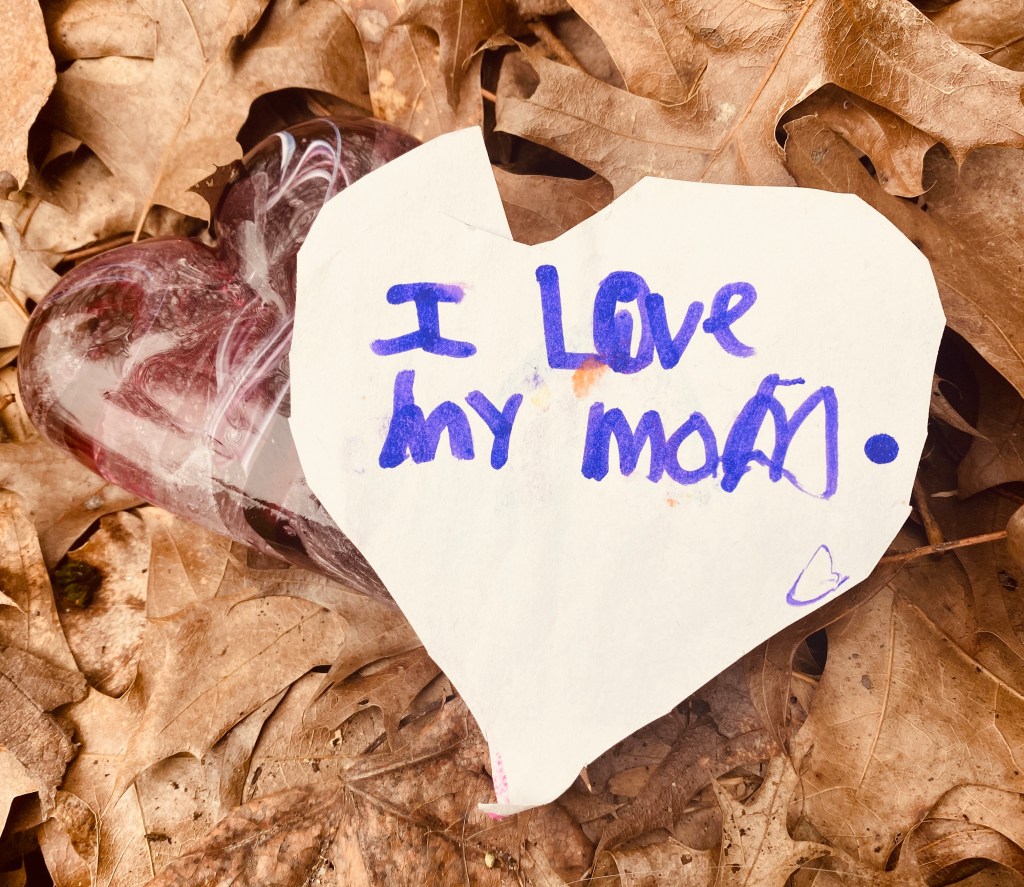
Love can slip in, even when we feel undeserving. “…you are not beyond love.”~ David Whyte
-
Where Do The Children Play?
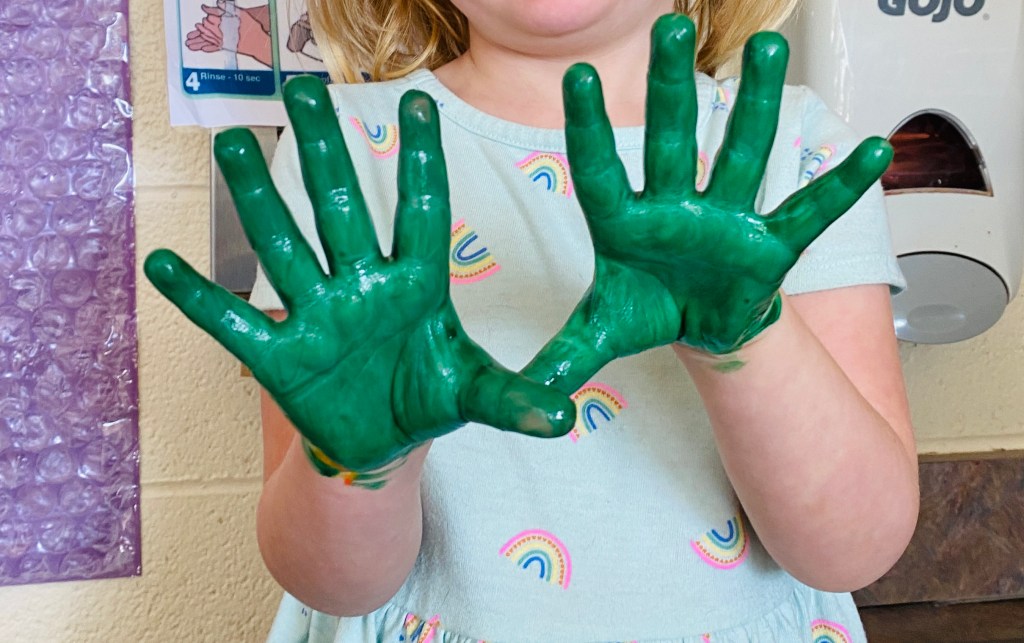
Nine years ago, I was touring a local preschool when the Director told me something I’d heard before: “Kids learn through play.”
Standing in a bright hallway wallpapered with swaths of white construction paper dancing with small purple and blue handprints, I thought of my sixteen-month-old at home and another baby growing in my belly.
The words were no longer hollow, heard in passing, academic. This time, I listened.
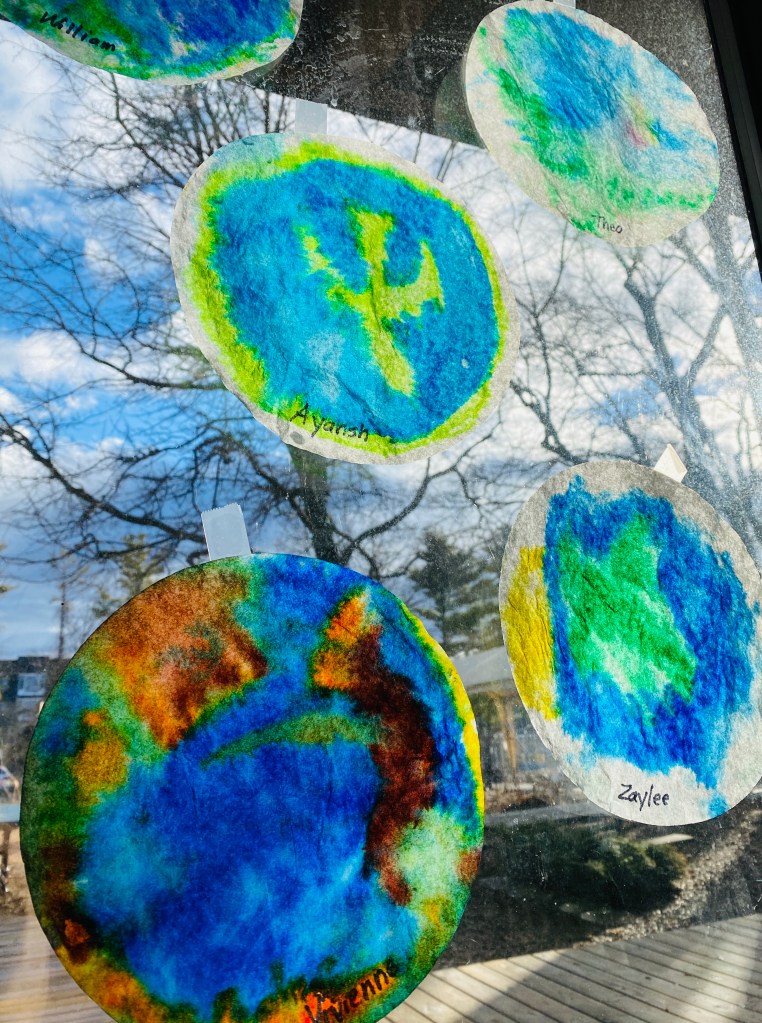
I wanted my child to learn, and I also wanted him to play. Could one really lead to the other? Or should I seek out a school that would offer a “leg up” and ready my offspring for an imaginary future, a foundation that would ensure they avoided the pitfalls and difficulties I faced in my own (at times not-so-illustrious) academic career?
Welcome to parenting, mama.
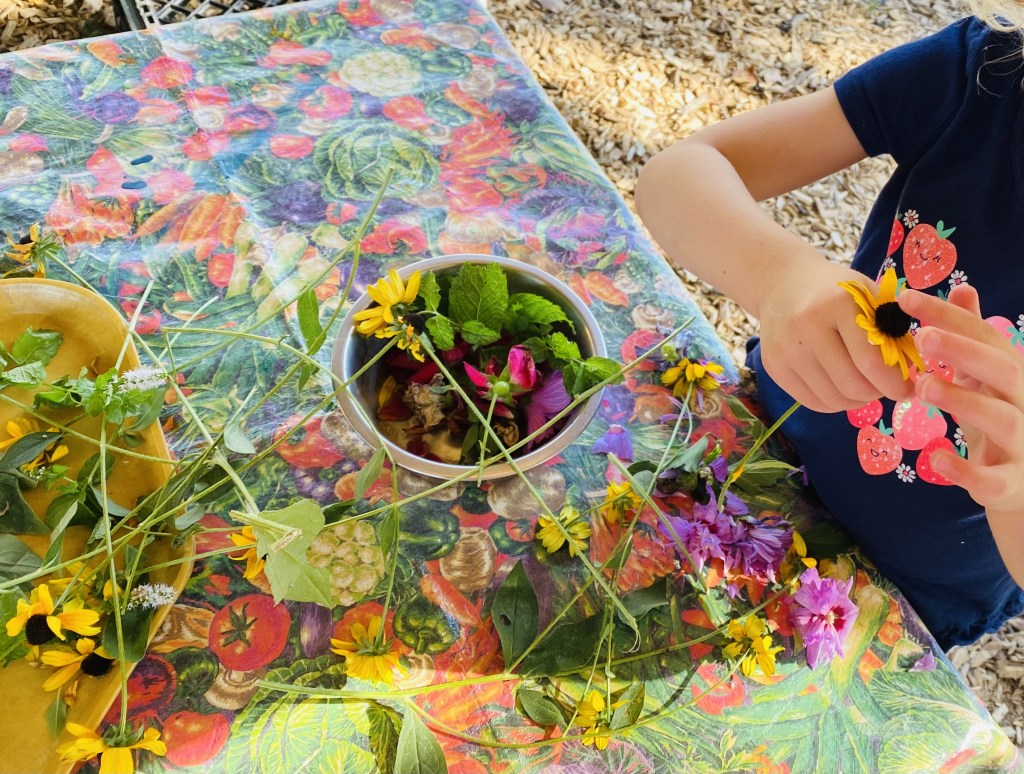
Yesterday, I assisted in a Kindergarten classroom at that very same preschool I toured all those years ago. The preschool both my children attended and thrived in. The same preschool where I now teach.
It’s pretty simple, kids DO learn through play, they just need an environment that ENCOURAGES and makes space for play. Oh, and children also need to be listened to, respected, and slathered in unconditional love and acceptance.
Around the world, children are having their childhoods and their right to play ripped from them due to all manner of conflicts, natural disasters, and economic hardships. Adults are failing those kids. We, the adults in charge, should be doing everything we can to protect every child and their sacred right to something so simple and so easily taken for granted.
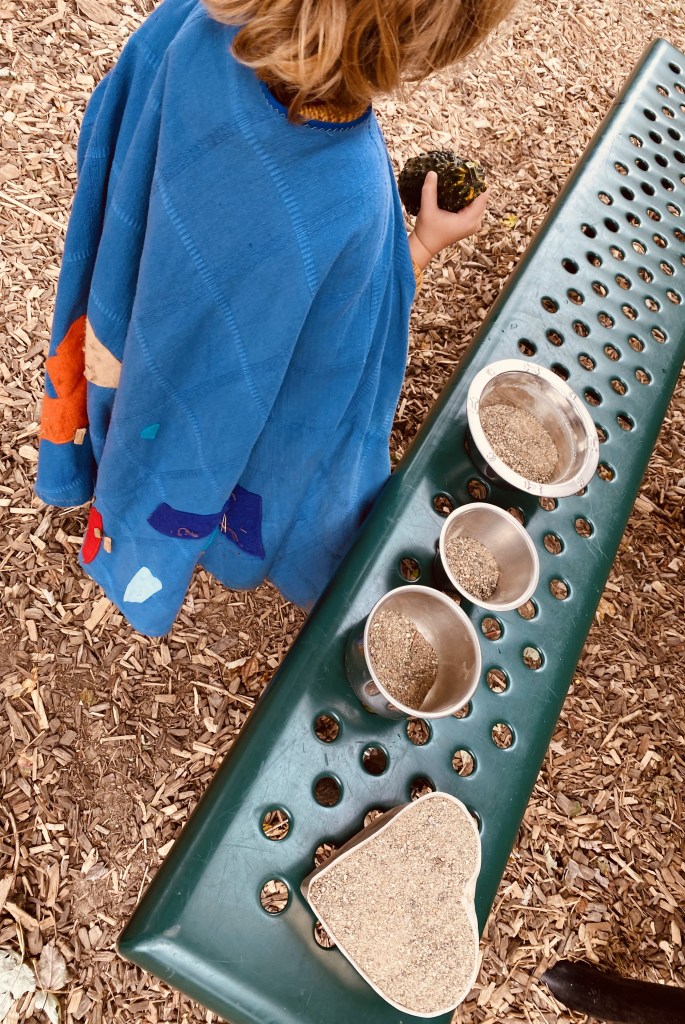
With a few brief years of teaching under my belt I’ve concluded that if we can get our adult selves, full of our own burdens and shortcomings and dashed expectations out of the way, the children themselves will guide us and show us how we can best help them grow, learn and play.
The teachers at the elementary school my kids attend now have told me they can spot the students who came from our preschool. “They know how to navigate conflict, they have life skills, and they truly listen to their friends and teachers.”
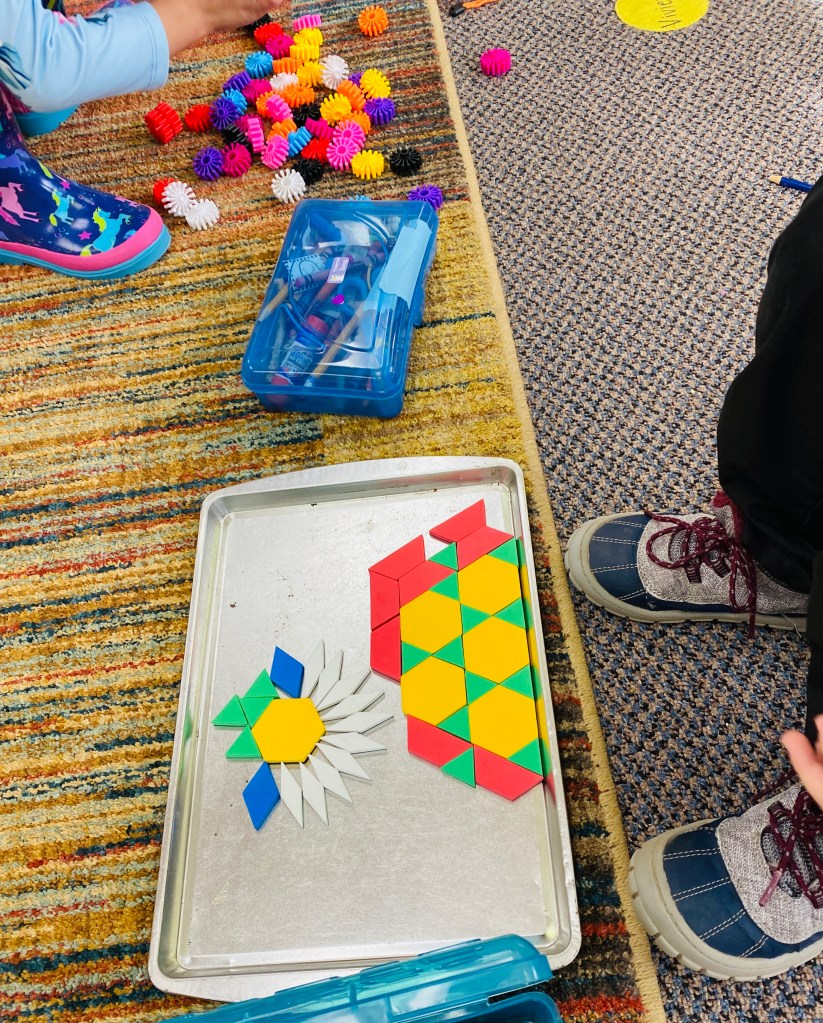
Did the kids learn all that because they were simply given the space and encouragement to play? It appears to be true.
…and can you really call it “work” when you get to hang on a playground with kiddos while they splash in puddles and listen to the strums of an acoustic guitar?
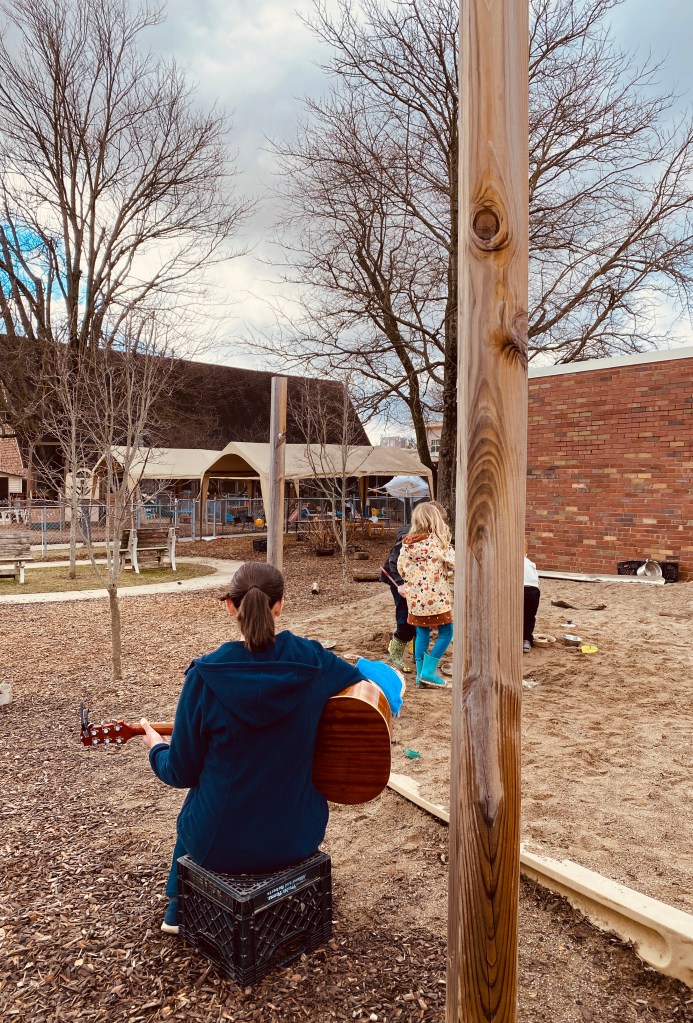
-
Little Free Libraries: Tiny Structures for Big Ideas
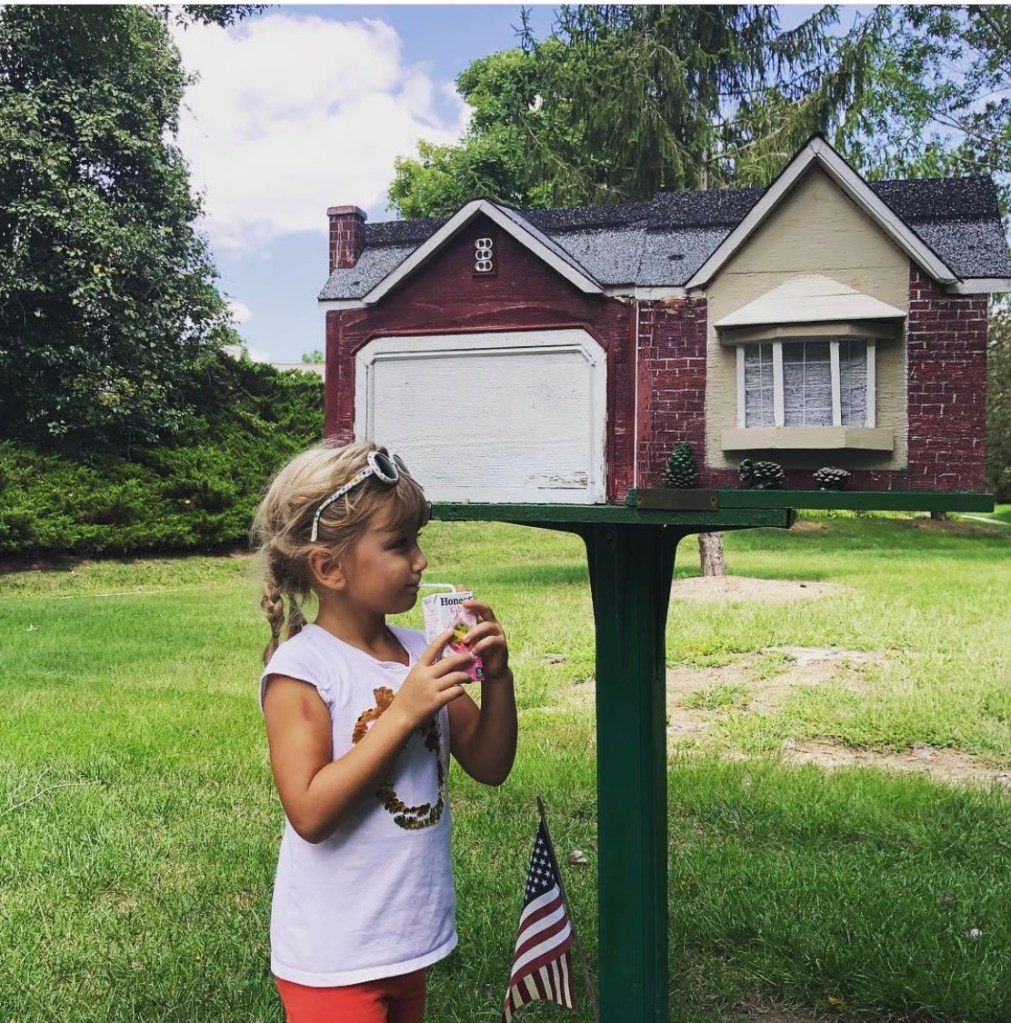
In the six or so years before my children were in school full-time, we visited local parks on a daily basis. My active kids needed to move their little bodies and yell their little (and big) yells and I needed sanity-saving space and fresh air.
One of our favorite spots featured a well-stocked Little Free Library (LFL) that housed books for kids and adults and everyone in between. Because of that LFL I rediscovered Ramona Quimby and Judy Blume and my children learned about talking chickens and Fly Guy and added even more Dr. Seuss to their already overflowing collection. Fresh discoveries awaited us every time we unhooked the pleasing latch on the library’s little front door.
If you’ve never seen a LFL before you might stop short–at first glance it appears to be a small house balanced on a pole. And in some respects, it is a house, except that no tiny people are living tiny lives inside. Instead, there are books. Free books, nestled on a shelf or two. Patiently waiting for a future reader to stroll by, open the door, and make a new friend (or a new reader…and aren’t they almost the same thing?).
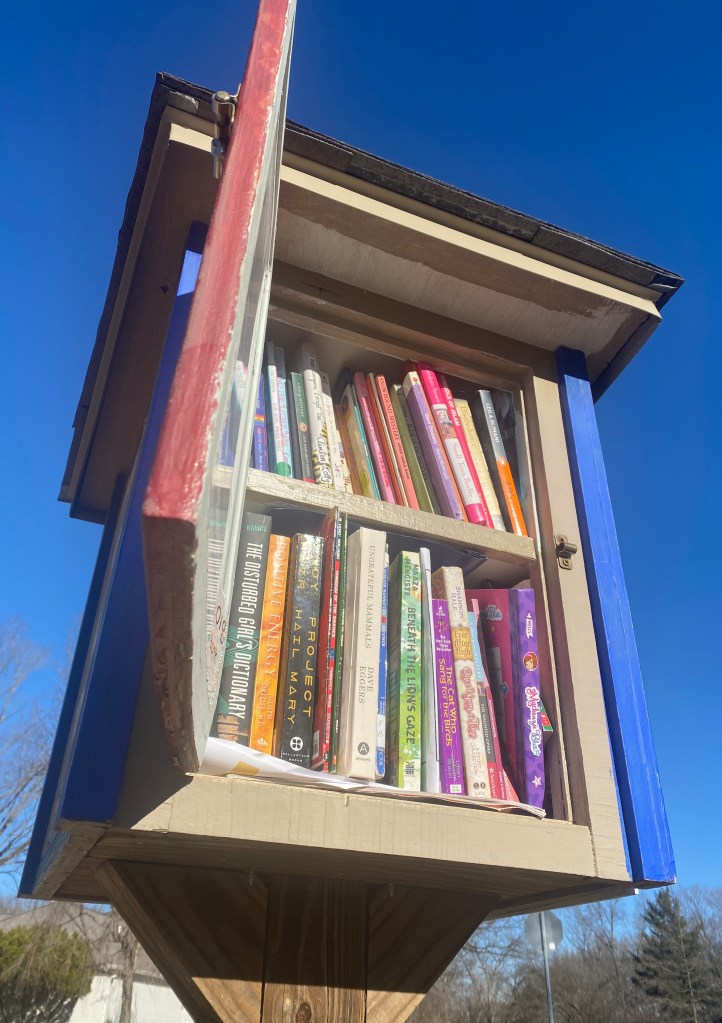
A few years ago, it seemed as if a new LFL was cropping up on practically every street corner in my midsized Midwest city. Local LFL builders were part of a national (and now global) movement that began in Wisconsin when the son of a teacher built a small house in his front yard, mounted it on a post, and filled it with books as a tribute to his late and much admired book-loving mother. I would argue that the mere sight of a LFL can cause a surge of happiness and a decrease in blood pressure.
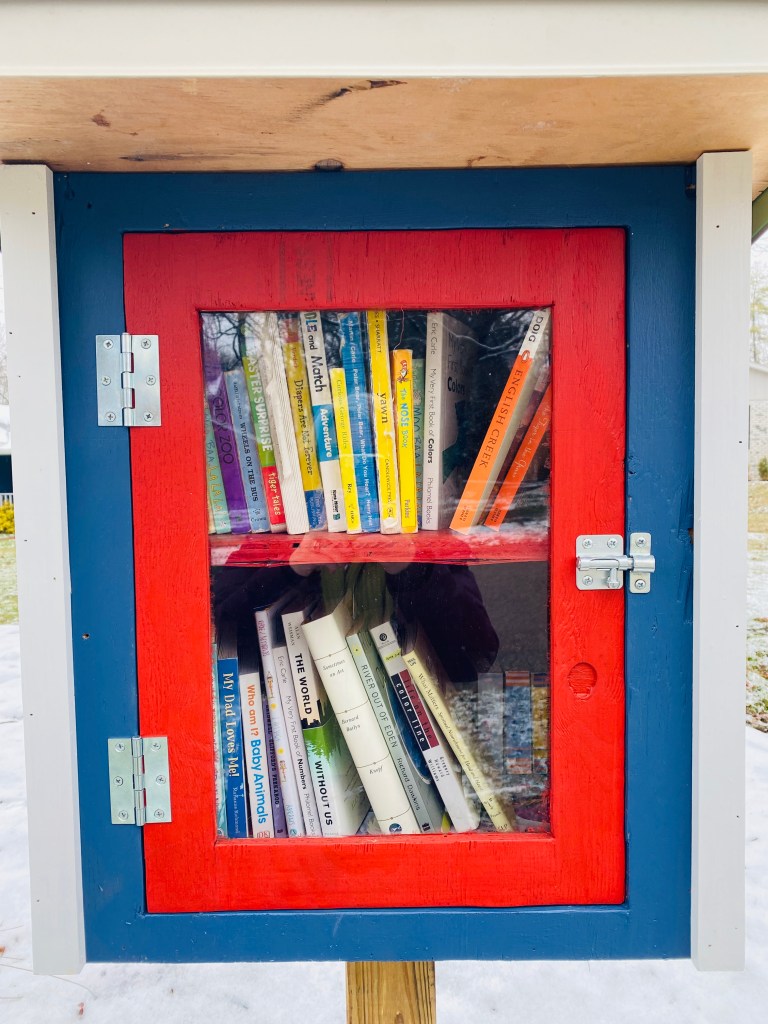
Recently, an exciting development! A LFL appeared in our very own neighborhood, close to the main entrance, easily spotted by anyone driving or walking by.
It turns out the structure was built by a neighbor friend who saw a LFL in another neighborhood close by and decided ours needed one too.
In his words:
“We thought it might help bring a stronger sense of community…and would be seen by everyone driving through. It was a family project [my kids] helped with a tape measure, clipboard, paper and pencil and made a diagram of another LFL, taking measurements and writing them down, with emphasis on measure twice, write once. After that, I did the building, but my kids both helped paint and chose the outside artwork. [In the future] I would like to see a mix of adult and children’s books, but then also announcements of neighborhood events and/or maybe even a celebrations page of achievements in the neighborhood, birthdays coming up, lemonade stands, flyers for lawn mowing. It would also be fun to re-paint the sides of the library every year and have different families add their own artwork.”
-Chaz Sinn, LFL Builder and Owner of Guys and Dollies and Stir Cold Brew Coffee (sold at Bloomingfoods & Bloomington Bagel Company)
Construction (and artwork) by Chaz Sinn and family. Recently, I asked my kids to gather up some books they have outgrown so that we can stock our new hyper-local LFL with titles. I promised I’d add some of my own (a minor solution to major book-hoarding tendencies, bonus!). After all, donating books is the least we can do after years of benefiting from the literary generosity of others.
Who would expect that behind such a small front door would live the big power of new ideas, industrious neighbors, and books?
Spotted in another neighborhood not far away. -
A (Partial) List of Things That Offer Joy and Hope
Elementary school library books about the climate crisis. The Library at My Kid’s Elementary School
I volunteer here most weeks when my two children’s classes are visiting during their library times. Sure, the groups can be loud and boisterous (they’re KIDS after all), and listening skills are ever-developing… but oh the joy of watching them discovering books, reading on benches, searching for titles on the computer, and bemoaning the fact that the graphic novel they so desperately want has already been checked out.
There is also an entire shelf devoted to books on climate change and how to cope with it which is alternately hopeful and heartbreaking. My volunteer time allows me to hug my kids during their school day, listen to their classmate’s entertaining and enlightening chatter, shelve books, and admire the librarian’s patience.

The Graphic Novel section is a hotbed of activity. Tea and a Healthy Breakfast
Full disclosure: there were times, especially during my citified corporate days, when TWO Venti-sized coffees would fuel my sunrise to sunset. This approach worked for a long time, but that excess of caffeine also fueled anxiety, a racing heart rate, digestive issues, and a restless sleep cycle. The food complement to this ill-advised start to my day was usually a croissant or pastry.
These days, my mornings begin with tea. Specifically, a Chai variety or, more recently, a lavender tea. The soothing yet invigorating liquid invites contemplation and encourages vigor, and the tea tags are usually surprisingly prescient.
Food-wise, a bowl with oatmeal or yogurt is piled with berries and other fruit, chopped nuts, and granola, and topped off by foamed oat milk.
What starts well tends to end well and a day is no exception.
A handful of blueberries a day helps keep memory loss at bay. 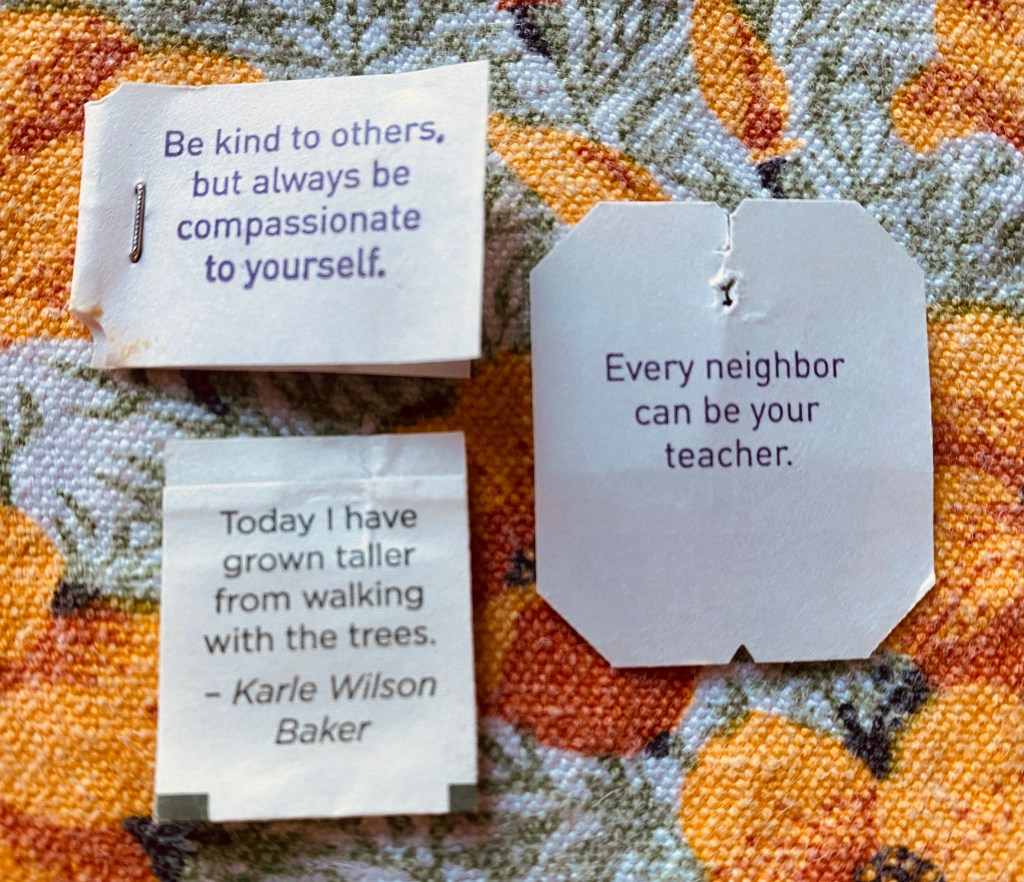
Tea tags of note. Sunsets and Sunrises
In all honesty, I catch sunsets more frequently than sunrises. Our house faces West and often, as the day comes to a close, I’ll notice a faint pink glow lighting up the walls opposite the front bay window. That’s when I know the sunset is particularly brilliant and that it’s time to drop everything and savor the view. It’s tempting to talk oneself out of going outside (oh just a few more dishes and you’ll be done…it’s so hot/cold out there..but I can see it from the couch!).
This is when I remind myself of three close friends my age who died far too young (Shubana Zwicker, Amy Wagner, and Chris Van Bebber). I consider how each of these friends lived and embraced every moment of their lives and how (I assume) they are no longer able to see the sun offering its glory each day, but I sure am.
I walk outside to accept the artistry in the sky.
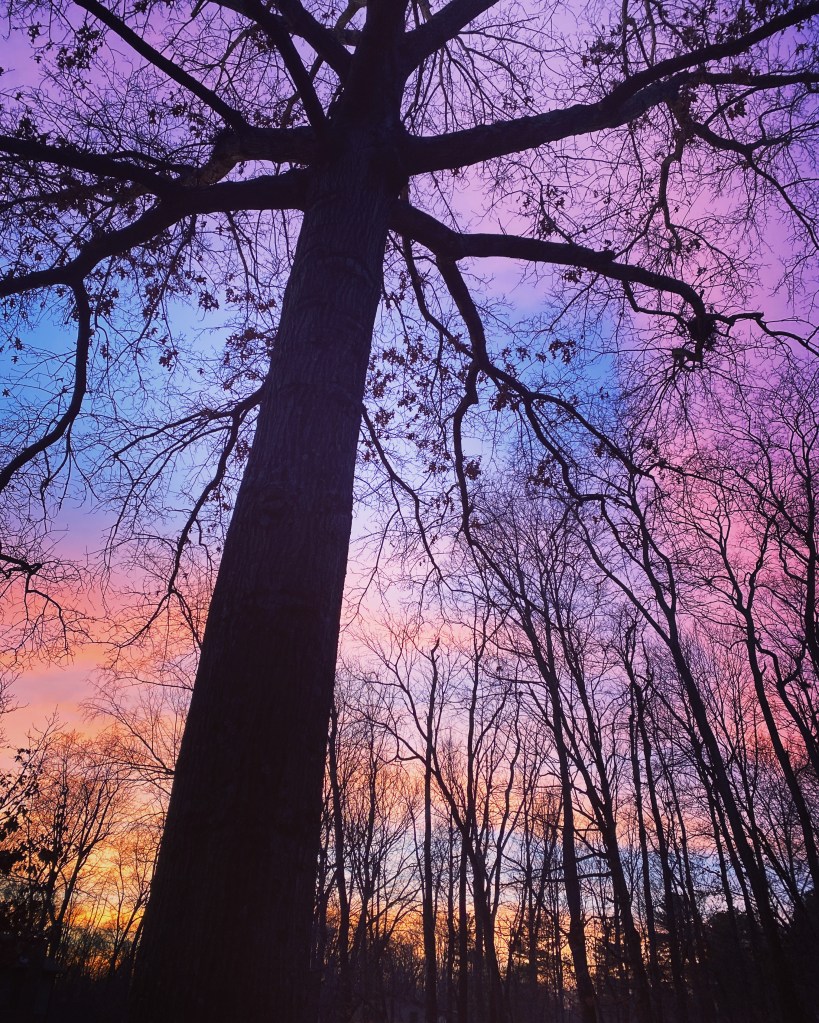
Trees and sky, collaborating on the sunset. 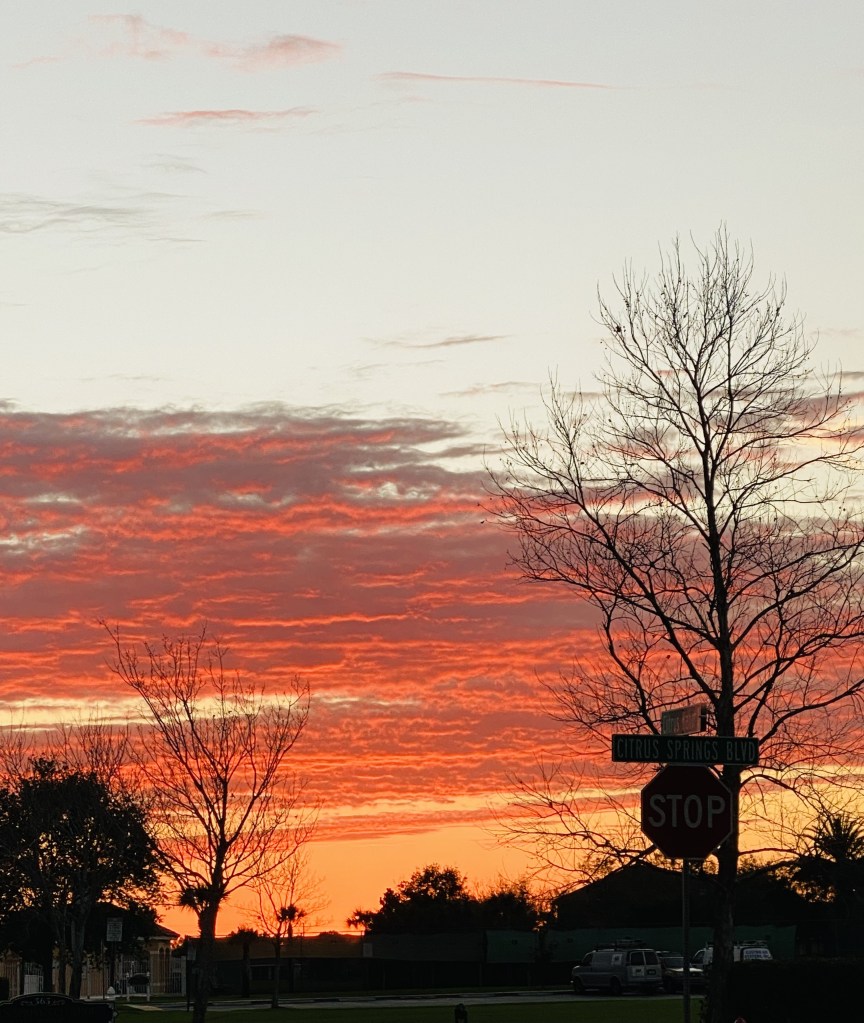
A stop sign with a view. 
Backyard sunrise. A Pair of Green Crocs
Sometimes, it’s as simple as a good pair of shoes. I’ve endured some teasing about them through the years, but my indoor shoes are nothing but comfortable. I adore their bright green shade and the pie charm is an homage to my pie-making grandmother.
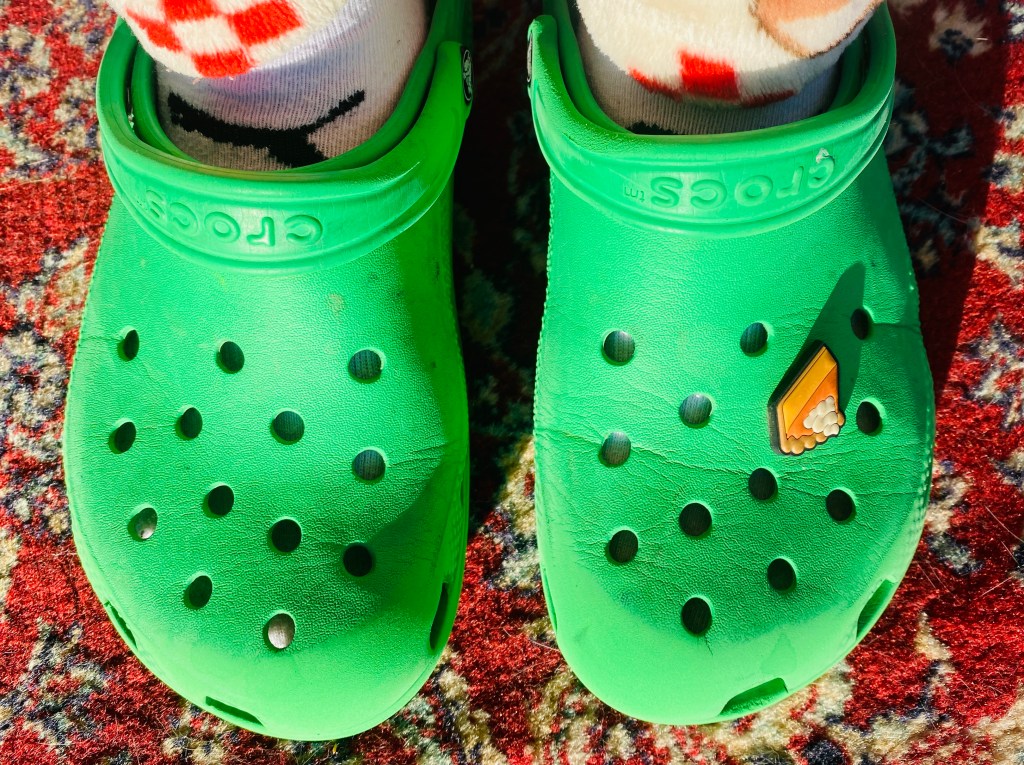
What’s on your list of things that offer hope and joy?
-
Cynicism and Wonder
It was in March 2022 that I realized how much the United States had changed.
Our family of four is taking our first airplane flight in three and a half years. The pandemic and financial considerations have conspired to keep us close to home. Oh, who am I kidding, we weren’t just “close” to home, we were at home, for an entire year.
Online school, work, life, and three daily meals, all conducted under the same roof with the same four people, day in and day out. We have stayed healthy (a different story for many, including other family members and friends). We are grateful for our solid, safe house but it has been a long, trying stretch. Now that spring has arrived, we are more than ready for a change of scenery.
The pandemic, however, cares not that we are going stir-crazy and continues to rage. Traveling by air feels unfamiliar and somewhat dangerous. From the vantage point of my insulated daily life in a mid-sized midwestern city, it is hard to imagine the transformations the United States has undergone in the approximately two years since I last crossed state lines.
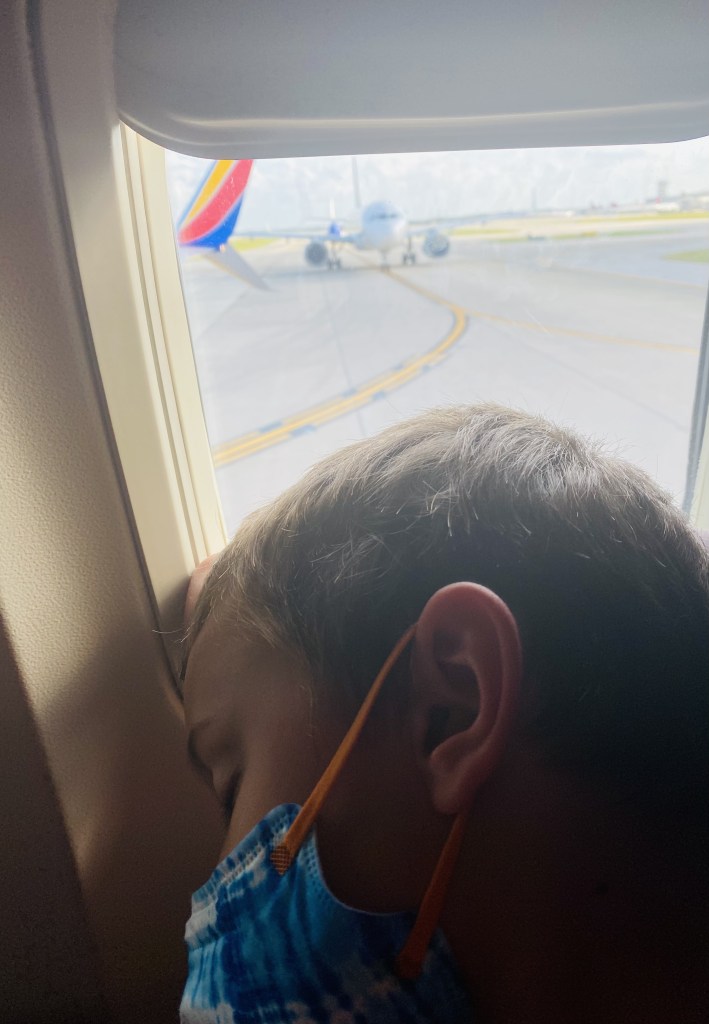
Any moment a child rests on an airplane is a win. My eight and nine-year-olds are giddy with excitement as we board the plane, chattering throughout the process, asking frequent questions, and pointing in every direction “Is that the pilot? How many helpers (stewards and stewardesses) are there? “It’s cold in here! (the jetway). “Can I have my snack yet? (umm, we just sat down). Son and husband sit together, and my daughter and I settle in across the aisle.
Despite decades of flying under my belt I too feel excitement about take-off, as well as a renewed appreciation for the ability to travel at all. The months spent at home have helped me realize how much I took for granted the familiarity of airports, the invigorating bustle of humanity, and the thrill of jetting off to new places.
As we get comfortable, I become aware of a commotion a few rows ahead. Glancing over the seat backs I spot a man in his forties gesturing in a frustrated way. The attendants have asked him to put his oversized bag into an overhead compartment and he does not agree with their request. He feels inconvenienced and lets everyone around him know “Those son-of-a bitches in Washington” he says, loud enough for all of us in surrounding rows to hear, “They were supposed to lift the mask mandate but now they aren’t.” He thumps down out of view, but his mutterings are still audible.
A stewardess happens by on her way down the aisle and requests politely “Please put your mask on, sir.” A few minutes pass and another flight attendant delivers the same appeal. Both pleas go unheeded.
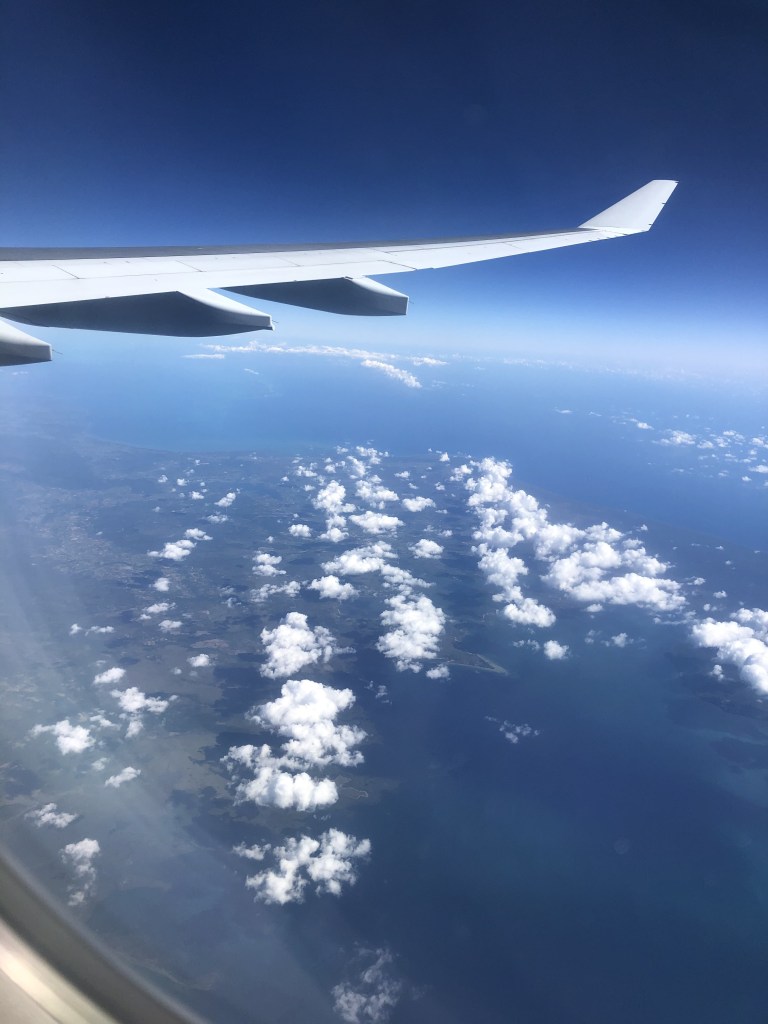
By now we have pushed off from the jetway and passengers all around are intent on their screens, books, phones, and laps. My daughter and I investigate seat-back screens and unpack water bottles and treats. I notice that no one offers opinions or gets involved with the uppity passenger in the way they might have three years ago. More time passes and we are now sitting on the runway. Didn’t the pilot just say we were about to get in line for take-off? Cabin lights dim and my daughter asks for the eighth time if we are in the air yet. She was so young when the pandemic began that she doesn’t remember the sequence of events involved in flying or what a full-body experience it can be when a flight takes off.
The voice of the man three rows ahead rises again, and I feel a tightening in my chest. It sounds as if his voice is being forced out of his throat, the stream of discontented words floating above our seats. I know man, I want to say. We’re all tired of this. This destruction, this frustration, this upending of our lives. Why not wear an uncomfortable mask for a few hours to offer help to your fellow humans–to avoid someone carrying something home to their kids/elders, into their weak immune system, or worse?
I check myself and decide to refuse anger. I take the example of the patient flight attendants tending to this man. They treat him with firm respect. The first was a tall willowy Black stewardess with a kind, direct gaze. Minutes tick forward, the plane continues to idle in place. My daughter doesn’t mind, she realizes the screen in the seat back is hers and hers alone! She can choose a movie for herself!
Suddenly, the pilot’s disembodied voice rings out through the cabin “Ladies and gentlemen, to let you know the reason for our delay, we had a passenger who was unwilling to comply with our mask rule, and we were planning to return to the runway. The passenger has now decided to comply. We want you to know that we don’t necessarily enjoy these rules either but we have them in place for our passenger’s safety.”
Mid-flight, somewhere over the state of Tennessee, I wonder at the foundations of our democracy and whether the current political climate in the United States will ever allow for a thoughtful discussion of the roots of inequality and true injustice. My daughter watches “Encanto” (the fifth time she has seen it).
Outside our tin capsule, the sun has risen. My daughter points out a constellation of tiny reflections glinting off the pink ruby in my wedding ring. “The sun did it just for us!” she says.

A small marvel at 35,000 feet. “We apologize for being late but we are making up as much time as we can” announces the pilot as we begin to descend to the Atlanta airport. A few passengers will miss their connections due to our late take-off, an entirely avoidable inconvenience. Is it too late for my country, I wonder, can we make up for all the time we spend judging, disagreeing, and complaining?
Maybe the fact that no one got outwardly angry at this man, that he eventually complied with the airline’s request, that the flight took off at all, is a win. Life (and flights) move forward whether or not we agree with the messy details.
A week later, on the plane ride home, one of my preschool students happens to be in the seat one row in front of me. The excited four-year-old is in awe that his teacher is there, on the same plane as him! He can see me through the crack between the two seats ahead of my son and me. “I want to tell you a secret,” he says, and I lean my head forward so that his voice is funneled directly into my waiting ear “Do you know…do you know” he splutters sweetly “this plane is going to fly in the air!”
His pure excitement is a reminder that astonishment can exist next door to cynicism. One human leans toward bitterness and contempt and another is innocent and enchanted. Wonder can be a seatmate to dissolution and they are both here, crammed into one cabin and one country, together.
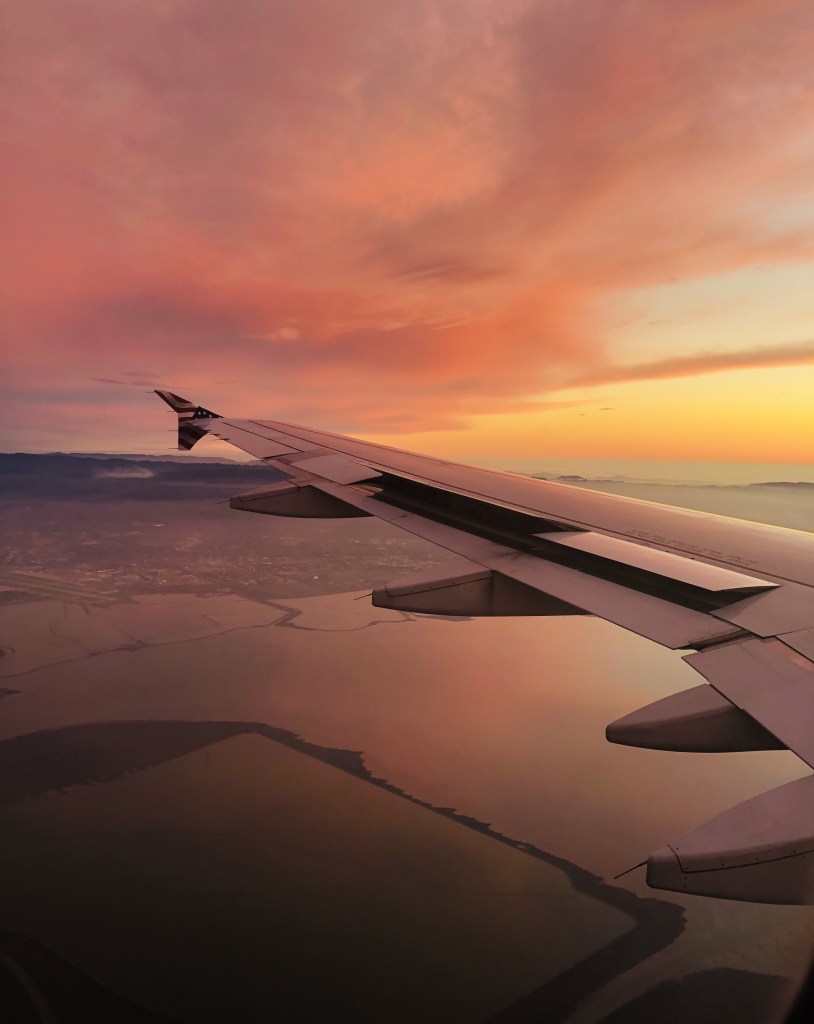
-
Material Abundance: From the Archives
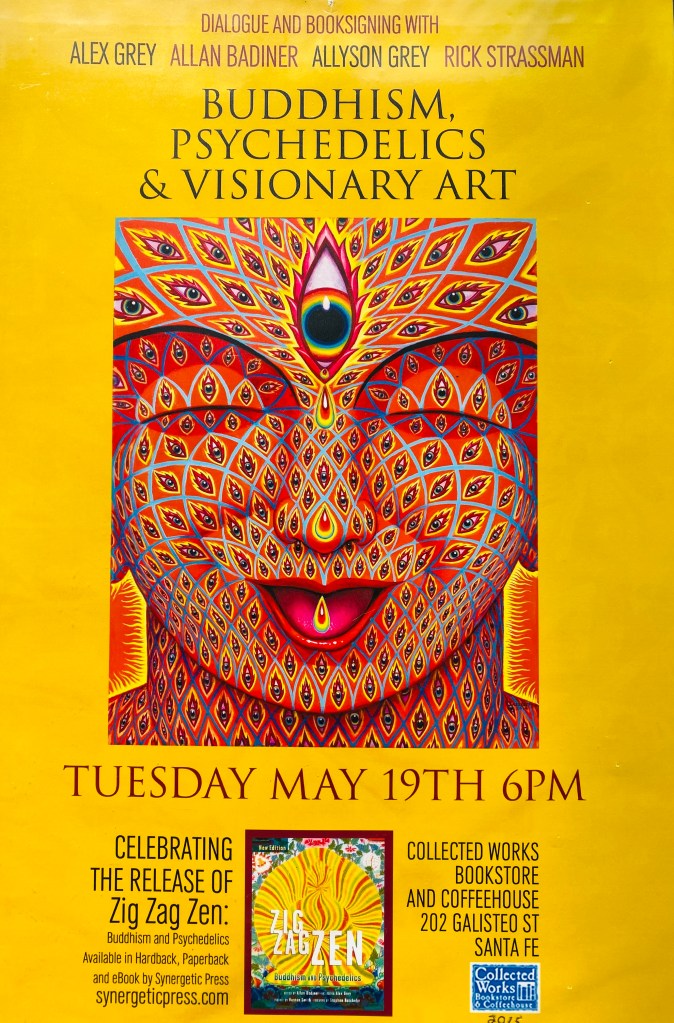
Many posters in my dad’s collection are begging to be framed. Through the years I’ve wondered about my tendency to gather books, magazines, flyers, and brochures. Why do I feel drawn to them?
During the decades I lived in two big cities (Boston and San Francisco) my daily routine often included an end-of-the-day emptying out of my bag (never a purse—too small—always a bag). This usually meant stacking 2-3 books on the kitchen table and sorting through a cache of papers. I could generally trace the source of the books to my day jobs in publishing. As for the papers, they were an eclectic assortment of postcards and handouts gathered in restaurants and bars, newspapers and flyers that found their way into my hands, or small posters carefully removed from the sides of buildings, telephone poles, and bathroom walls.
Some see a city street, some see a poster collection waiting to happen.
Photo by Itzyphoto on Pexels.comSometimes it was the words and ideas that caused me to stuff the paper into my bag, other times it was the visual impact of the item. Dreams of creating art out of these found objects flickered in my mind, but really what I enjoyed most was reading the ideas and words of others, often unfiltered and full of meaning.
After a thorough review of my father’s extensive poster and handbill collection (fourteen folios worth), I can definitively say that I now understand where I inherited this tendency to collect all manner of words printed on the fiber of trees. My father began collecting posters on the streets of New York City in 1968 and continued for the next fifty years. An equal-opportunity compiler, the posters he gathered cross ideological and political lines and the subject matter ranges from political protests to movie posters to meditation retreats to flyers for lost pets. If it caught his eye, he picked it up (or rolled it up).
It’s a good thing that I no longer live in a big city where I am tempted all day long to stuff anything interesting I come across into my bag (nowadays that bag is full of Kleenex for my preschool students, water to keep hydrated and snacks for my kids). Neither is there any physical room left for expanding anyone’s paper collection, either my father’s or my own–the time has come to appreciate what has already been gathered.
In that spirit, here are some highlights from my father’s collection. I’ll continue to share images here periodically. Please let me know in the comments if you would like me to feature any subject in particular (art, music, writers, politics, Native American issues, prison issues, spiritual events);
Did the creators of this 1973 protest poster considered the Transamerica Pyramid to be one of the offensive buildings? 
My dad was particularly interested in prison reform-related handbills since he frequently covered that subject as a journalist. 
Oh, to be a fly on the wall at the “Alternative Lifestyles Fair”
in San Francisco in Golden Gate Park July 5, 1973
A San Francisco handbill from 2013. 
Some of the posters hail from Santa Fe, New Mexico
where my dad lived for fifteen years. This one is dated 2016.
I wonder how successful this rally was. 
Many posters feature authors and writing-related events.
Sorry to have missed this one in 2010.
One of the music-related posters in the collection. 
Ottmar Lierbert & Luna Negra fundraiser at
the Lensic Theatre in Santa Fe.
There are quite a few movie posters. I read that this is not the actual bus where Christopher McCandless lived but an exact replica. 
Some posters are compelling due to their design and graphic impact. 
Poster from a 1988 New Years show at the Pantages Theatre in Los Angeles.
A reviewer wrote that Berry was on stage that night for only thirty minutes. -
Good Neighbors, Raspberry Jam and Lawrence Welk
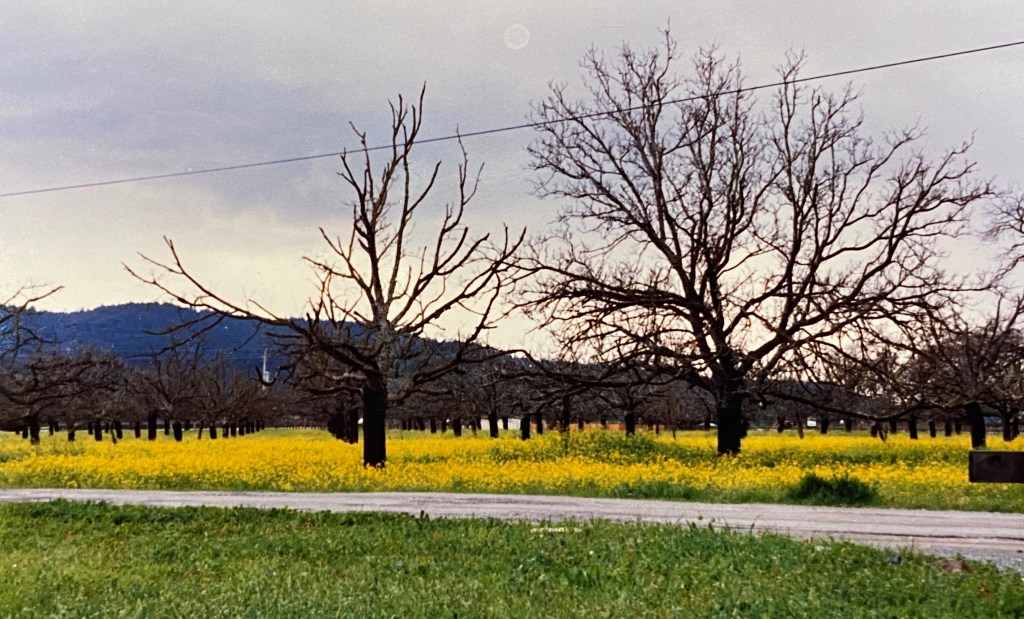
Walnut trees and mustard grass. This field is now a vineyard. Neighbors, like so many aspects of life, can be an unpredictable business.
The people who land next door, across the hall, a few houses down, at the neighboring campsite can become acquaintances, support systems, minor annoyances, close friends, and even enemies. Lest you think this is a story about problematic neighbors…it is not. Quite the opposite. This is a tale about how fortuitous proximity can lead to a meaningful friendship.
During my formative years, our next-door neighbors were original back-to-the-landers, Bob and Evelyn. To enter our rural Northern California neighborhood, you had to turn off a busy two-lane highway and follow a dust-producing lengthy gravel road. To the left of the road was a mature walnut tree orchard under which a blanket of golden mustard grass spread in the springtime. On the right low ranch-style houses lined up sporadically, each claiming the middle spot on an acre, more or less.
Bob and Evelyn’s plot was adjacent to ours and over the years our young family of three became close to their older twosome. Originally from the East Coast (with the accents to prove it) Bob and Evelyn had owned and operated a music shop in San Francisco for decades. Now they were a happily retired childless couple living an almost entirely self-sufficient life in the country. Raising goats, keeping chickens (and much to my chagrin–especially in my teen years–a series of roosters), and growing what seemed like every conceivable fruit and vegetable (including okra) kept them bustling around their abundantly overgrown yet organized property.
The spot where our plot of land met Bob and Evelyn’s. Bob was generous with land-tending advice for my citified father and Evelyn and my mother traded gardening tips, seeds and starts, and recipes. Sometimes, when I was tired of climbing my favorite trees, trailing the cat, or hunting green beans and cherry tomatoes in my mother’s extensive organic garden I would glance over at Bob and Evelyn’s house. Perched on the edge of a lot about half the size of ours, their modest abode featured a grape vine trellis that covered the entire Eastern-facing side and shielded their house from the blazing summer sun.
Ahh, to be a free-range country cat, napping in the mid-summer heat. One summer day, as I gazed in their direction, a question burned in my mind. Was today a jam-making day for Evelyn? The only way to know was to ask, so I heaved myself up off our garden’s straw-covered dirt path (leaving green bean tops and cherry tomato stems strewn in my wake) and walked the 100 yards or so to the three creaky steps that led up to their front door.
Evelyn answered my knock right away, her thin frame and capable arms topped off by a welcoming red-lipstick traced smile and softly coiffed silver hair. “Hello, dear heart! You have good timing, the jam is setting, Bob just came in from feeding the girls (their prized goats) and we’re going to watch a show, would you like to come in?”
This was music to my nine-year-old ears and I gladly stepped into their cozy dark living room.
The house smelled sweetly of raspberry jam, and while Evelyn was in the kitchen, I made myself comfortable on one of their low-slung easy chairs and gazed around the room. Bob and Evelyn’s penchant for Western-style art (and clocks) was on full display and I still to this day sometimes conjure up the image of the free-standing lamp that stood to the left of their couch. This nearly miraculous fixture would, with the flip of a switch, slowly rotate in a circular motion while the horses artfully painted on its tanned-hide shade bucked and jumped against the interior bulb’s glow.
Who knew lighting fixtures could spark core memories… one person’s lamp-related childhood remembrance (“A Christmas Story” fans, I’m looking at you) includes a mannequin leg with a fringed shade on top while another features equines brought to life by electricity. What will upcoming generations recall from their childhoods? Recessed overhead lighting doesn’t hold quite the same mystery.
Once Evelyn had served up the still-warm jam, scooped into my very own child-sized lidded glass jar, she and Bob (a stout man of few words with calloused hands, a hearty laugh, and a work ethic I haven’t seen since) settled into their well-established spots on the couch and turned on the hulking TV in the corner. The Lawrence Welk Show was starting, and we were there for it. From the frothy opening segment in which large bubbles featuring the faces of the show’s singers float across the screen, to the individual skits (square-dancing, romantic ballads, boot-stomping country jingles) to the concluding strains of the orchestra fronted by the entire cast of singers and dancers from that evening’s show, we were transfixed. Bob and Evelyn knew the lyrics to an impressive number of songs and my favorite act was the Lennon Sisters, four young gals with ethereal voices who practically floated across the stage and lulled me into imagining a possible future as a lounge singer.

The Lawrence Welk Show ran from 1951 to 1982. Too soon the show was over and it was time for Bob and Evelyn to eat supper. I carried my empty jam jar into Evelyn’s spotless kitchen and placed it on the counter, admiring her hand-knitted tea cozy in the shape of a giant strawberry. I was eternally curious about these two, so perfectly equipped to be grandparents yet operating unencumbered by kids, or any other family that I could see. Did they wish they’d had children? And why did that matter in the first place?
Our sprawling eclectic neighborhood was full of fascinating characters; a kind, hard-working Japanese couple who were survivors of United States-run Japanese internment camps in the 1940s and now owned a thriving egg farm, another couple who happened to be little people and were rumored to have been related to Munchkin actors in “The Wizard of Oz,” a reclusive family that lived in a house resembling one in “Gone With the Wind” complete with massive oak trees lining the driveway…but even among that crowd Bob and Evelyn stood out. Theirs was a life of hard work and frugality, respect for the land, and generosity toward neighbors.
Bob and Evelyn, 1981. Photo by David Holmstrom. Once, on a return visit to my hometown, I walked down the gravel side road that ran beside our land and Bob and Evelyn’s. More than three decades had passed since I sat in their small living room and watched Mr. Welk conducting his orchestra. The goats, the gardens, and Bob and Evelyn were long gone. In their place was an overgrown mansion someone had erected—it took up almost the entire plot of land. A gleaming red Porsche was parked in front of the grand entrance. Gazing at the elegant yet soul-less landscaping around the mansion I thought of the plants and animals that once covered every inch of this same land. Entirely wiped away. I cringed to think of how quickly it must have happened.
As I stood there looking at the mansion I reminded myself that time marches on and progress (and development) usually cannot be stopped. Especially in California, some might say. There is also much to be considered about who inhabited and tended this land even before we claimed it. Still, it saddens me to think that individuals like Bob and Evelyn won’t come around again anytime soon, that other nine-year-olds won’t have the chance to sit with their elders in cramped dark living rooms softly lit by a rotating horse lamp, eating still-warm homemade raspberry jam while watching TV and singing along to the Lennon sisters.
-
Family, Friendship and Nathalie
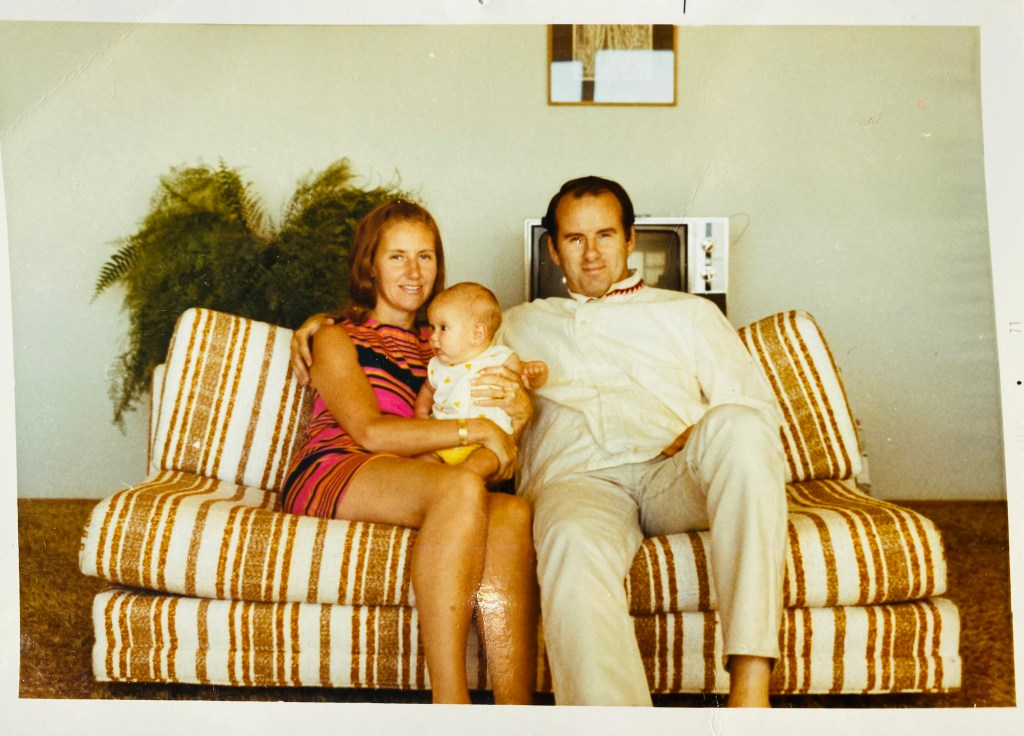
The family Nathalie helped create
1971 Tiburon, California.As we enter a new year, and a season of new chapters, I’m going to share the story of someone who played an auspicious role in my own beginnings.
Nathalie Dupree once told me she was responsible for my existence, and she makes a valid point.
In the late summer of 1969, Nathalie was working as a newly hired secretary for the New York City bureau of The Christian Science Monitor newspaper. Far from the three times James Beard-award-winning chef, author, and cooking-show host that she is today, Nathalie’s primary tasks at the Monitor bureau included typing up correspondence and opening copious amounts of mail.
My father, David Holmstrom, was a reporter in the same small news bureau, covering politics and the widespread political upheaval that had overtaken New York during those tumultuous times. David and Nathalie soon struck up a friendship “We would sit while I sorted and opened the huge piles of mail, and talk, just the two of us” says Nathalie. “We became instant friends.”
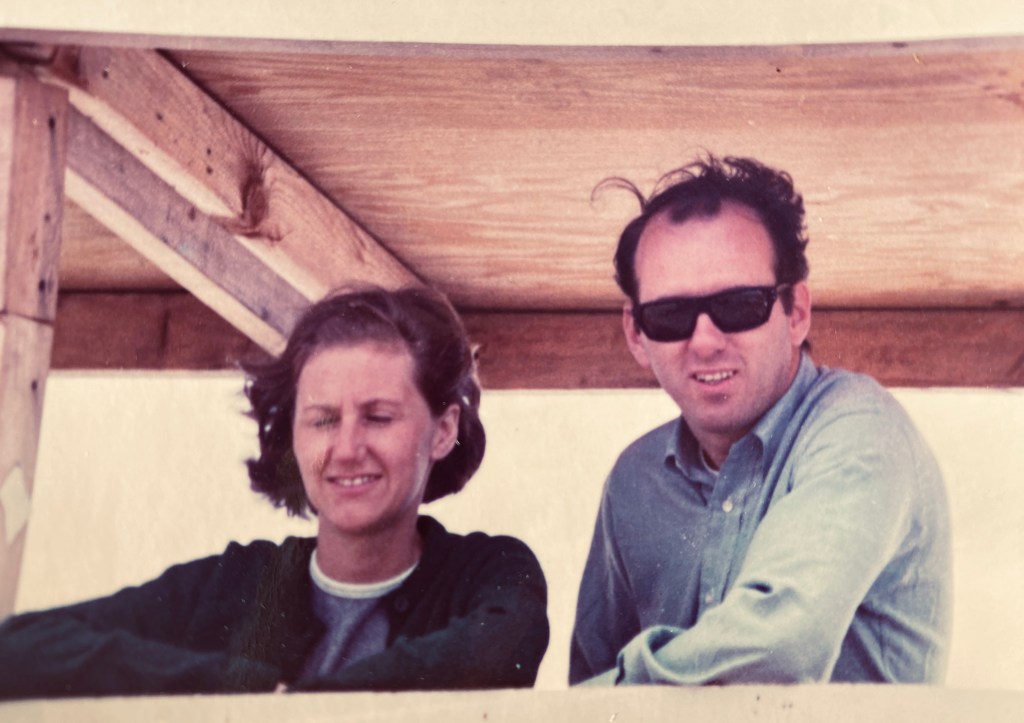
Pat and Dave (aka my parents) around the time Nathalie introduced them. As the two colleagues and confidants discussed all aspects of life and love and spirituality it began to occur to Nathalie that David might enjoy her friend, Patricia, also living in New York City. Nathalie felt so certain that David and Patricia would get along that she told David she “knew the woman he was going to marry.”
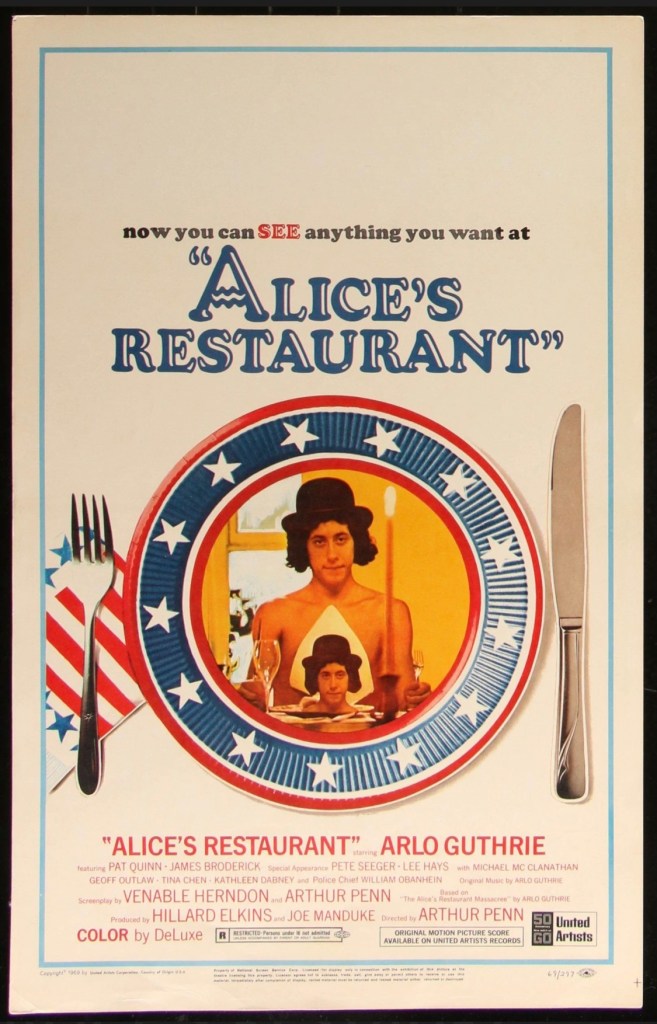
Movie poster for Alice’s Restaurant, a 1969 American comedy film
based on a song written and sung by Arlo GuthrieMy parents had their first (blind) date that September, orchestrated by the prescient Nathalie. They saw the film Alice’s Restaurant in a movie theatre on the Lower East Side and, in David’s words;
“I was intrigued right away. Mini skirt and short blonde hair. And she had a great smile. Throughout the movie, Pat’s laugh was the best one in the theatre. When the credits rolled at the end, and the lights went up, we went outside and simply started talking and walking, not idle, first-date chit chat, but a kind of frank easy testing and sharing of attitudes, spiritual convictions, and impossible cosmic questions, all sprinkled with laughter and humor.”
I’d like to say the rest is history, but really, the rest is the start of a thirty-four-year partnership, and as a by-product, my own life.
Incredibly, orchestrating my parent’s meeting was not the only role Nathalie played in my family’s formations…my aunt (my mother’s sister) and uncle celebrated their marriage at her apartment in London, and Nathalie and my uncle John Holmstrom (my father’s brother) were also good friends who supported each other’s careers in the media and publishing worlds.
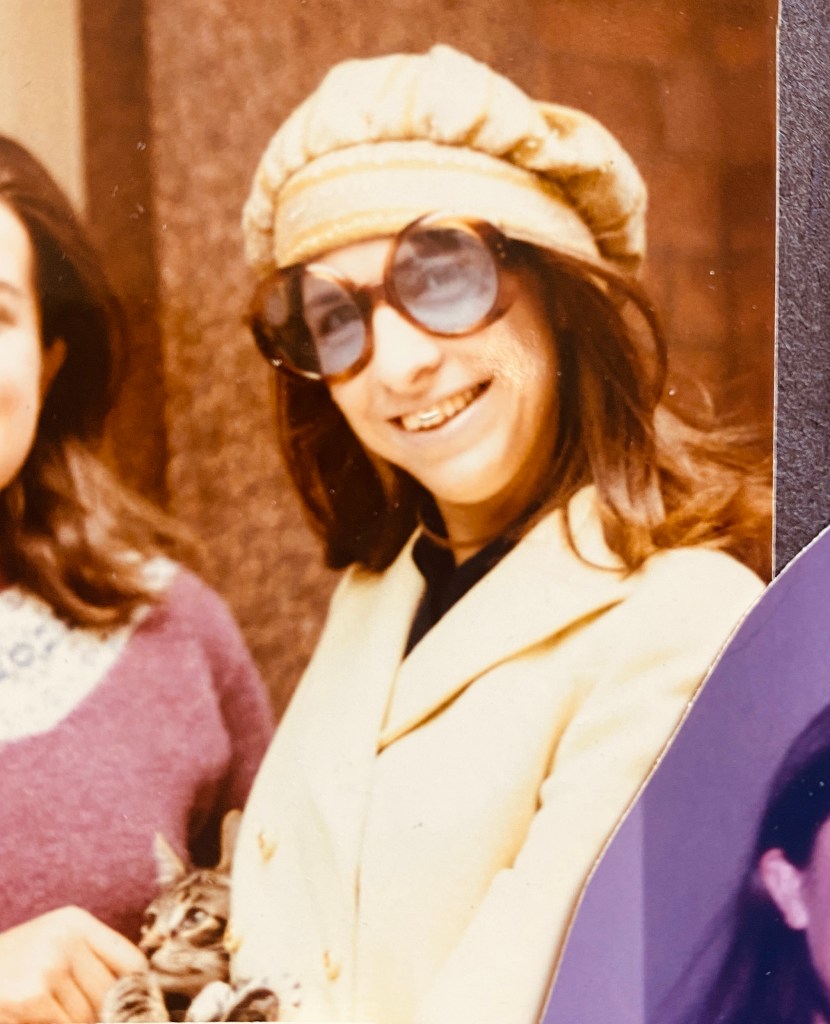
Nathalie’s style in the early 1970s was on point. 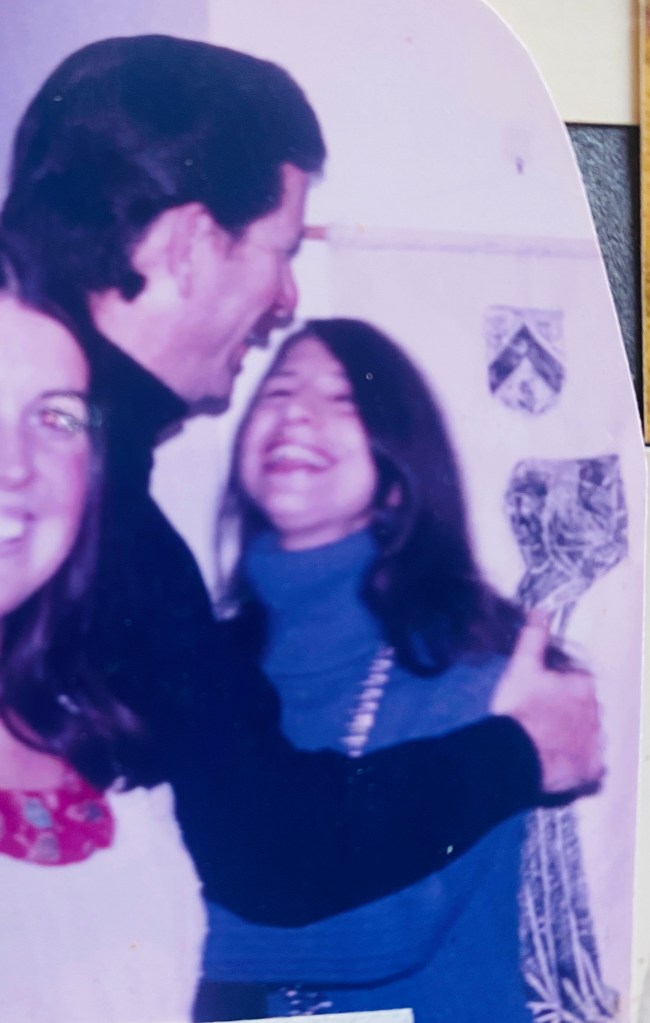
Nathalie and my uncle John at a party in London, 1971.
That must have been quite a party.Soon after their Boston wedding in June 1970 my parents succumbed to the call of the West and moved to Northern California. Throughout subsequent decades Nathalie and my folks maintained their friendship, despite her home base in the Southern U.S. and theirs in the West. Nathalie and my mother shared the closest of long-distance friendships–when they were on the phone together my mother’s hearty laugh reverberated around the house.
I relished Nathalie’s visits to our abode in rural Sonoma County as she swept in with her glamorous scarves and tales of television appearances, humorous celebrity encounters, and delectable dishes savored in Paris and London. Entertaining stories of the trials and triumphs of writing her cookbooks and dealing with agents offered me insight into the literary world and showed me how a highly successful woman operated. I wouldn’t be surprised if she helped plant one of the seeds that sprouted years later when I embarked on a career in publishing.
Nathalie’s many cookbooks graced our shelves year after year. 
On one of her visits (I must have been around eleven years old), Nathalie handed me a sleek grey box which I opened only to find a delicate strand of freshwater pearls nestled expectantly inside. I still have the pearls, a cherished possession that always recalls her historical importance to my family. A few years ago, as my young daughter and I made the “Home-Style Peach Cake” (Pg. 553 in Mastering the Art of Southern Cooking) together I told her the story of Nathalie’s significance in my life and American life. “Can we make a cake with her sometime?” my daughter asked.
Nathalie’s James Beard Book award-winning cookbook.
Pat Conroy wrote the Foreword.Through the years when I have, say, read a profile in People Magazine about Nathalie, learned of her award of “Grande Dame” for Les Dames d’Escoffier (which she considers her highest honor as it comes from women who have excelled in the food industry), or watched her gracefully sharing her expertise while making an appearance on Top Chef (Season 3 Episode 2) I feel a tinge of pride. Not only because Nathalie’s vast achievements as a renowned chef were being celebrated but because the larger world was recognizing something my family had known for years–that Nathalie has a rare talent for marrying ingredients together and cooking up delicious love and acceptance for all of us.
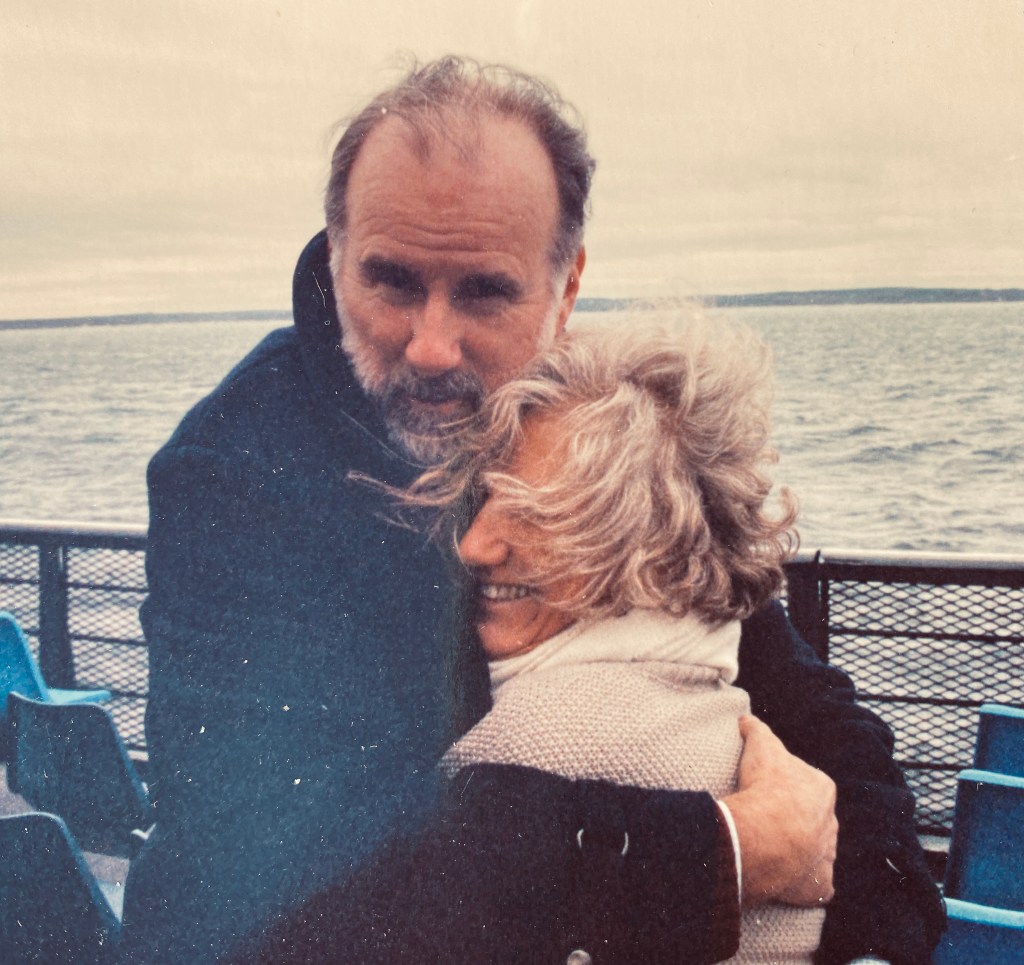
My parents in 1999…decades of love shared. I hope that Nathalie and my daughter and myself make that cake together someday and that she knows how grateful I am to her, for noticing and responding to the spark of true love.
-
A Christmas to Remember
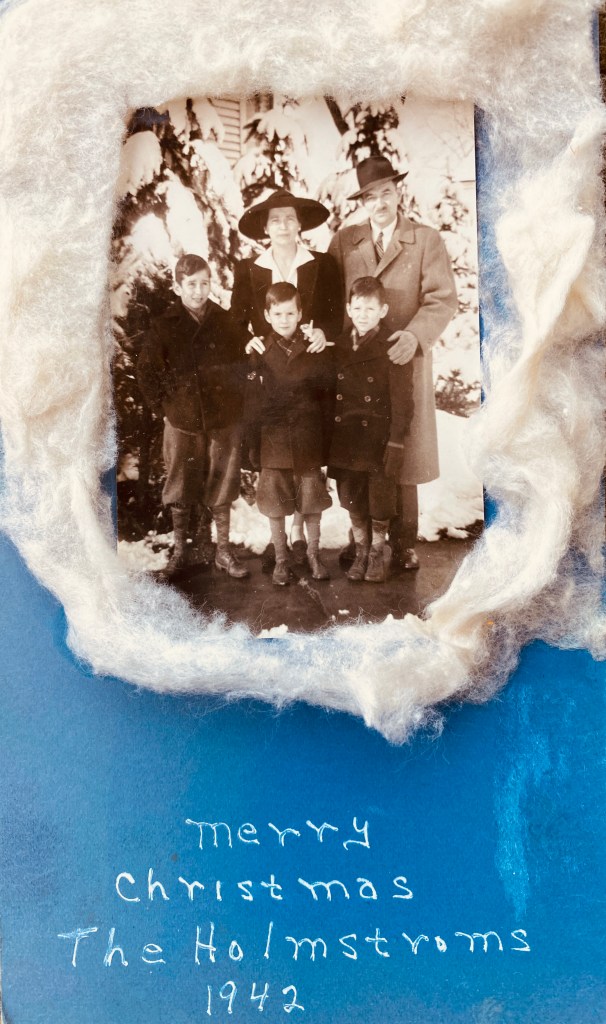
A cherished Christmas card: my father (center)
with his family in 1942.In the spirit of the holidays, I’m sharing an essay my dad first wrote in 1967. It was printed in The Christian Science Monitor newspaper in 1994.
When my father penned this piece he was newly divorced (his first marriage, which lasted a year) and living in a small apartment north of Boston, Massachusetts in the seaside town of Lynn. Far, far away from family and his beloved California.
I don’t know much about this time in my father’s life, but I always felt as if he underwent an unusual amount of self-growth because of the end of his first marriage. Given that he was a privileged white male in the culture of the late 1960s United States he could easily have drifted into convention or resentment.
I believe the experience of divorce made him a better husband to my mother (they were married thirty-four years until her passing), and a more optimistic, empathetic, expressive human. Learning what he didn’t want must have been a key takeaway, as well as gaining a better understanding of the role a dynamic, loving partnership can play in one’s life path.
On that stormy Christmas Day my dad found that he could be happy with cider and silence. His essay on a holiday spent solo reminds me of something he used to say frequently: “It’s not what happens to you, it’s what you do about it.”

Stormy seas. A Christmas To Remember ~ First published in 1994
By David Holmstrom
It was not that I couldn’t afford a tree, but rather, that I couldn’t afford not to be innovative. Christmas trees – festive and sweet as they are – are much the same each year. And because I was 3,000 miles away from home, young as a green tomato, alone, and quite frankly glad I was alone, I made a tree of coat hangers.
It was more important to me to be innovative rather than sentimental.
In my sixth-floor apartment by a rocky coast, I bent, twisted, and shaped what I thought was an ingeniously engineered tree, about three feet tall. I hung it from a ceiling light, like a mobile, attached a dozen spoons, three dozen large dangling paper clips, many bows of red ribbons, very small Christmas tree bulbs, and one red sock half-filled with jellybeans as an anchor.
The ugliness of it assured its beauty.
My conviction then was that Christmas should be a prod. It comes to ask questions such as: During the year, have you lived spiritual precepts as fully as the bestowal of God’s goodness? Have you finally, once and for all, stopped being so serious?
Have you been innovative, or have you lived sloppily on residual power, playing out the familiar while you turn gray inside? Have you loved when everything and everyone around you seems sad and broken?
One of my answers was the Christmas tree of hangers, a symbolic defiance of the status quo.
On Christmas Day the coastline was pounded by a storm – great black waves pounding against the rocks – and swirls of light snow. I called home to thank one and all for love, for gifts, for support. Then I drove to a spit of land where the waves hit rocks and sent spray shooting into my face.
Drenched but exhilarated, I went home for hot cider and silence.
As I opened the door of my apartment, a gust of wind caught the tree of hangers and sent it spinning. The spoons clanged, the paper clips were tinny. Listen, I said to anyone and everything that might have been listening, this is the Merry Christmas of all time and place.
Would you care for a jellybean or a spoon?
-
Material Abundance: Part Two
The Project That Started It All
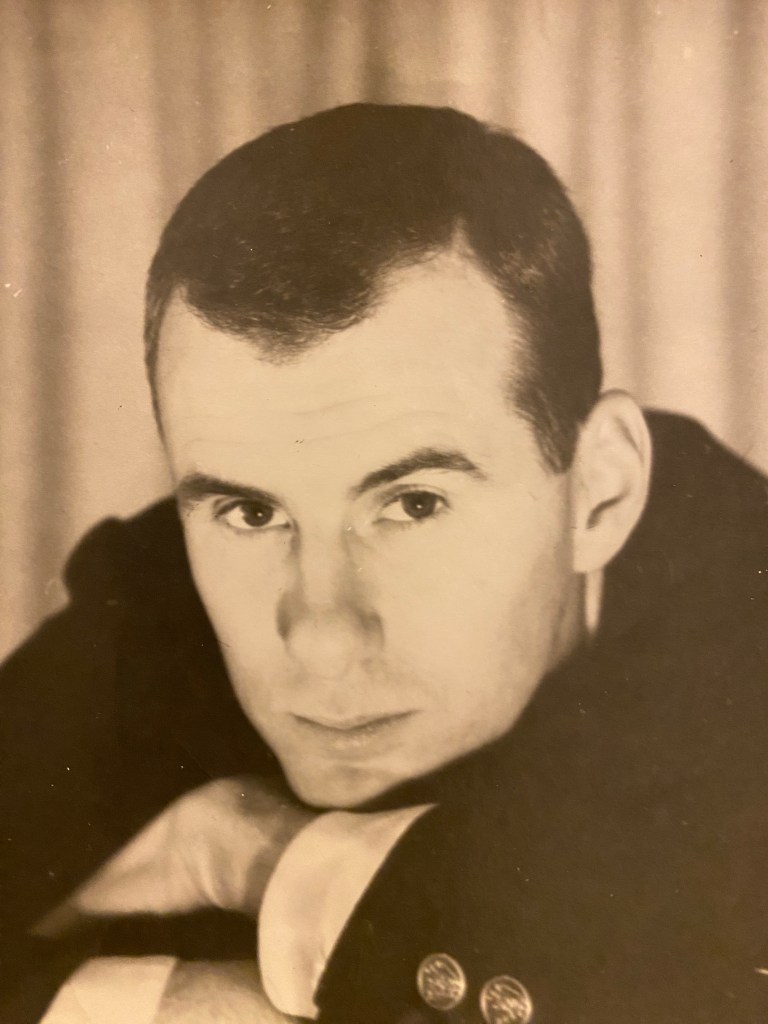
My father David Holmstrom in 1965 Projects and ideas tracked my dad like rainbows following the ideal combination of light and showers. Sometimes he was introduced through his work as a journalist, other times he welcomed friendships that led to serendipitous adventures, or to his visions of art installations, manuscripts, photo series, or performances. He gathered information and objects into his life and unwittingly grew collections…there was no end to the number of interesting items that attracted his attention.
My father also cultivated adventure and possibility. It was not unusual to hear him say something like the following at my childhood dinner table:
“Would you like to stay overnight at a lighthouse in San Francisco Bay this weekend? I’m going to write about some people who are lighthouse keepers and they invited me to sleep on their island.”
Now that I’ve had some time to consider the trajectory of his life, I have a feeling I know where my dad’s original drive toward putting big ideas into motion as well as his collecting tendencies might have sprouted from.
Winning the Autograph Lottery: As a sports-loving boy growing up in Los Angeles, California David’s nickname was Pee Wee. One bright day in 1949 found David writing two letters: one to an idol who shared the same nickname, Loren “Pee Wee” Day, the star halfback on the Northwestern University football team, and the other to the head coach of the (then) Los Angeles Rams. Both letters were a twelve-year-old’s best attempt at thoughtful and persuasive requests for autographs.
Weeks passed and he felt hope slowly ebbing away. Then, to quote David:
“A small package arrived from Pee Wee Day. I tore it open. To my utter, wordless, gossamer astonishment I unwrapped a blue, leatherbound autograph book filled with signatures from the entire Northwestern football team, plus all the coaches. Even Pee Wee’s mother and father had signed it. Then, a week or so later a letter arrived from the Los Angeles Rams. On a single sheet of paper addressed to me with their best wishes, all the players and coaches of the Rams had signed their names. I was absolutely delirious.”
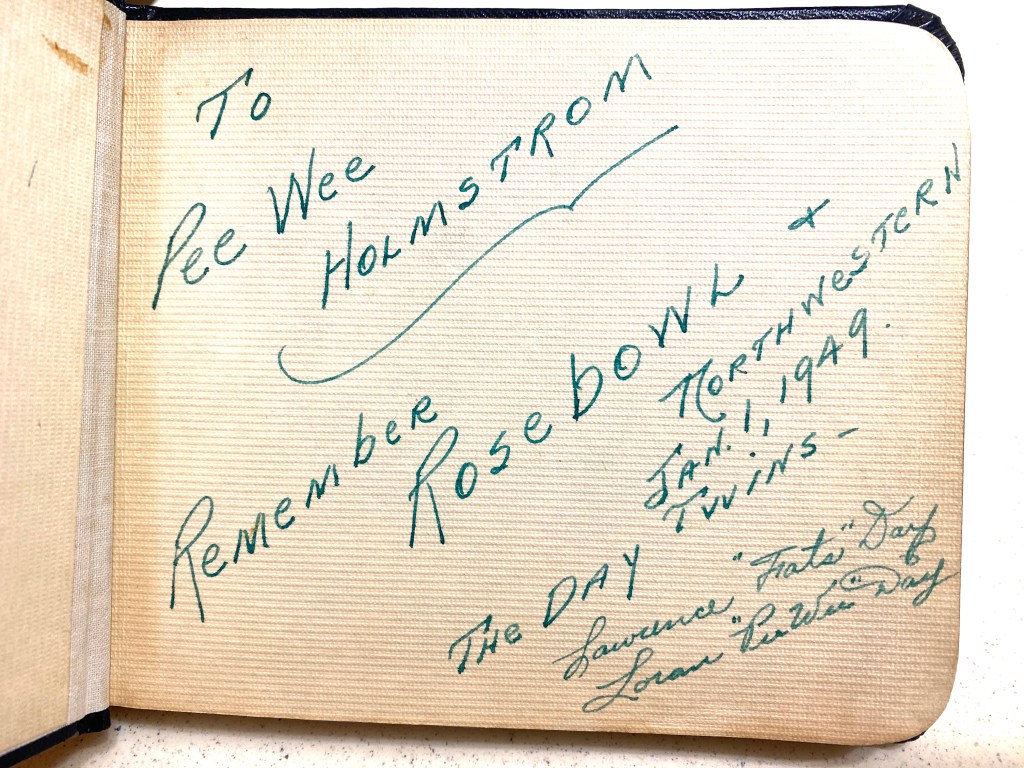
Front page of David’s treasured Autograph book 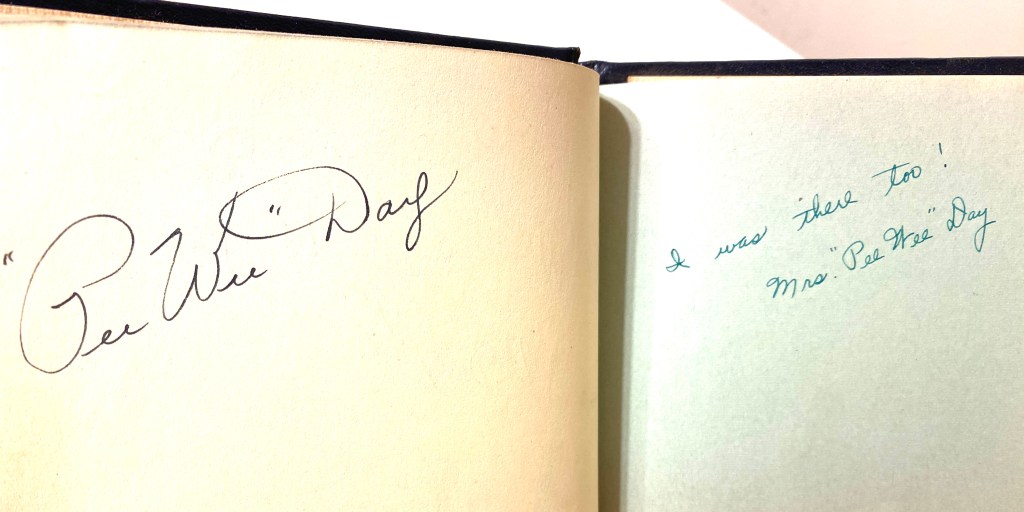
“I was there too!” wrote Pee Wee’s mother. 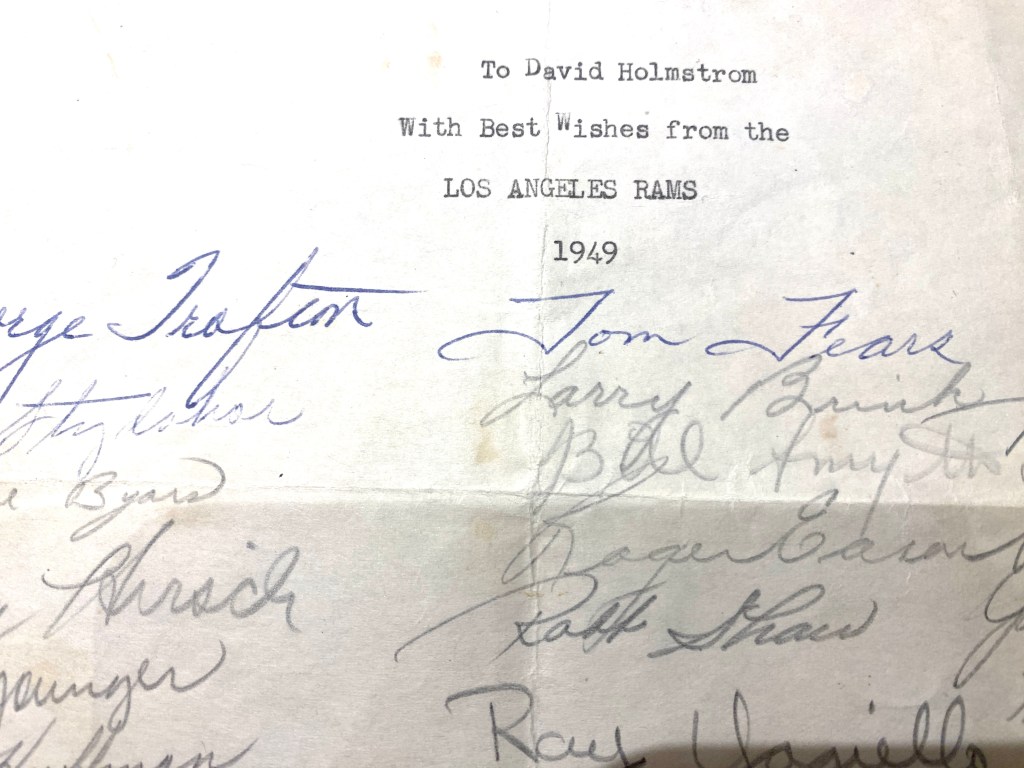
The entire Los Angeles Rams team signed their autographs
on a singe page, just for David.I couldn’t possibly begin to describe every project or collection of my dad’s as that would take up all the real estate on this blog. For now, I will share a few of my favorites.
Capturing Bobby: One day in March 1968 my father, who was a reporter at the time, took candid photographs of Bobby Kennedy campaigning on the streets of New York City. Bobby was killed in Los Angeles three months later. I was astounded when I found these images in my father’s boxes.
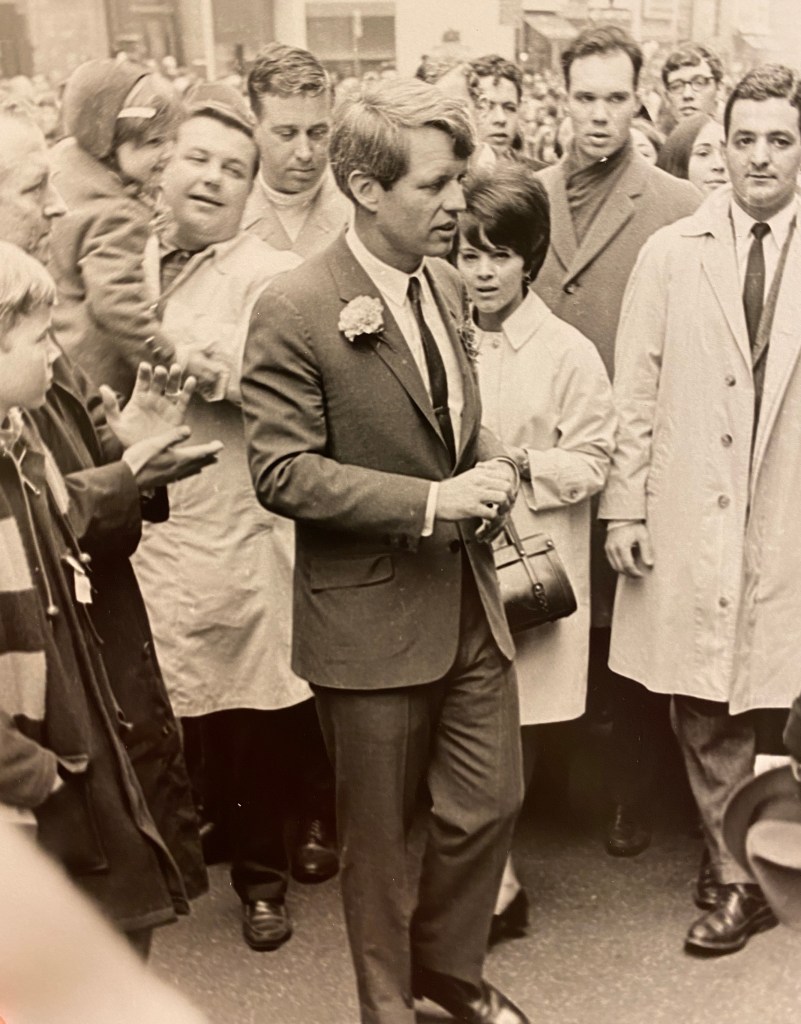
Bobby Kennedy, New York City, March 16, 1968 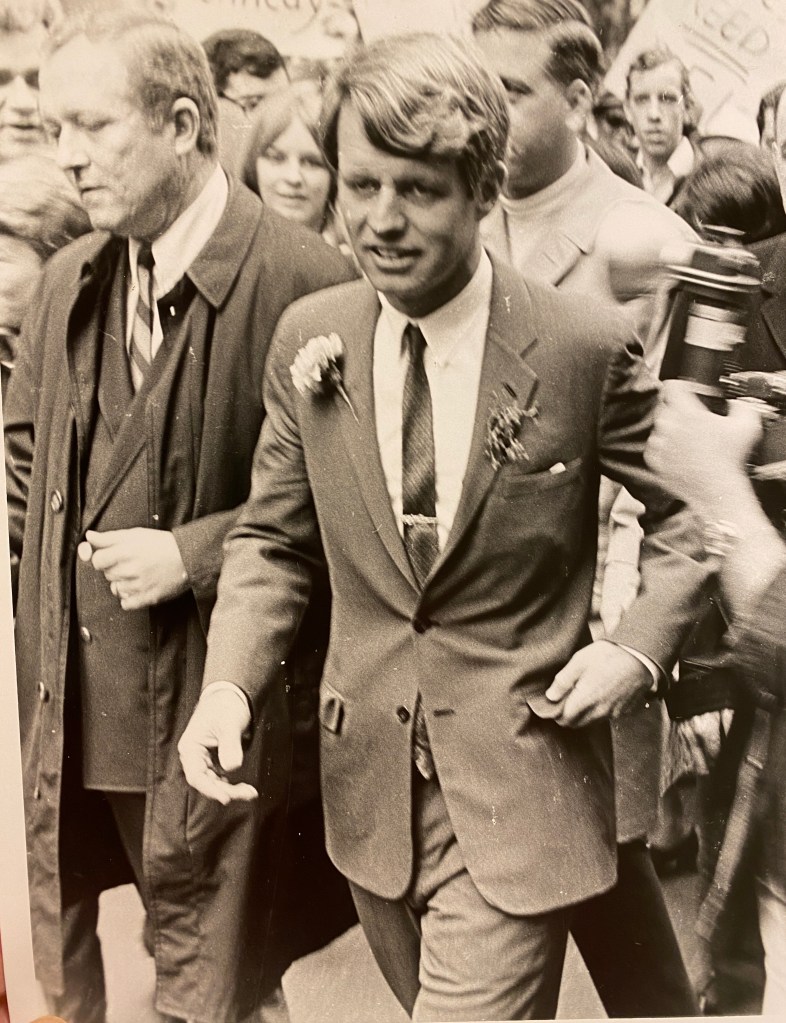
What would be different today if this man had become President? The Garbage War: It is a little-known fact that in May of 1970 there was a nine-day-long strike held by the garbagemen of New York City, (ignited by a conflict between the Mayor at that time, John Lindsay, and the Governor of New York, Nelson Rockefeller). Refuse began to accumulate in great piles on the streets. My dad had the idea to turn this fetid event into a play…” imagine the action and dialog happening on stage while piles of garbage slowly surround the actors and grow in size” he would say.
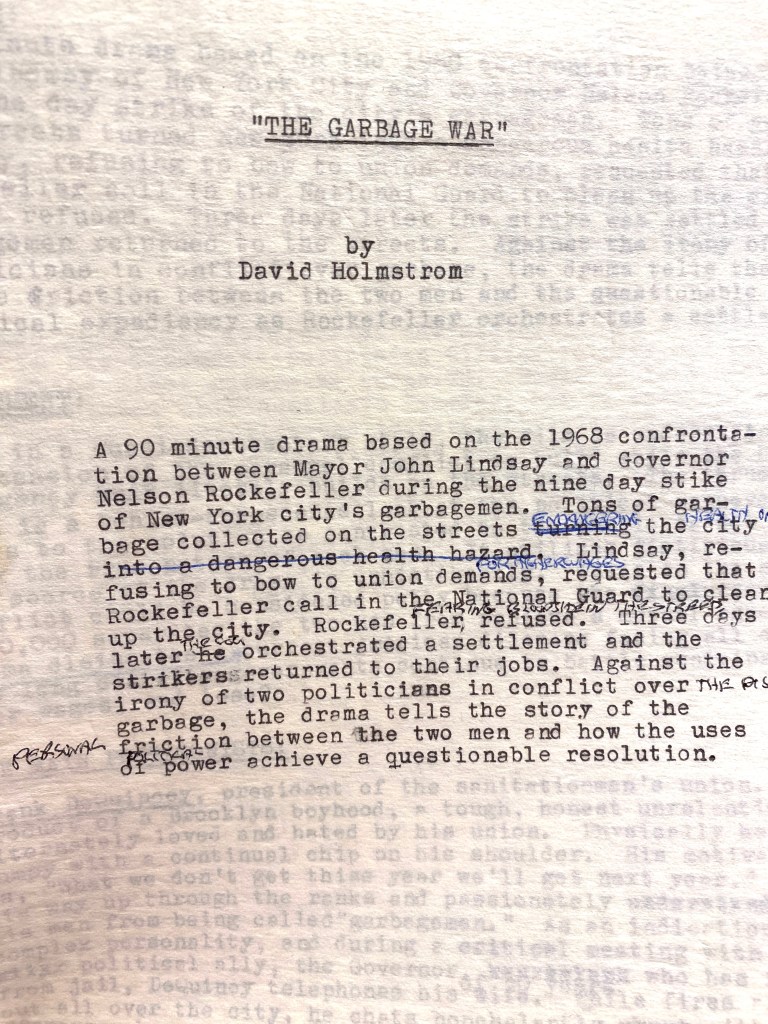
Front page of David’s “The Garbage War” script. 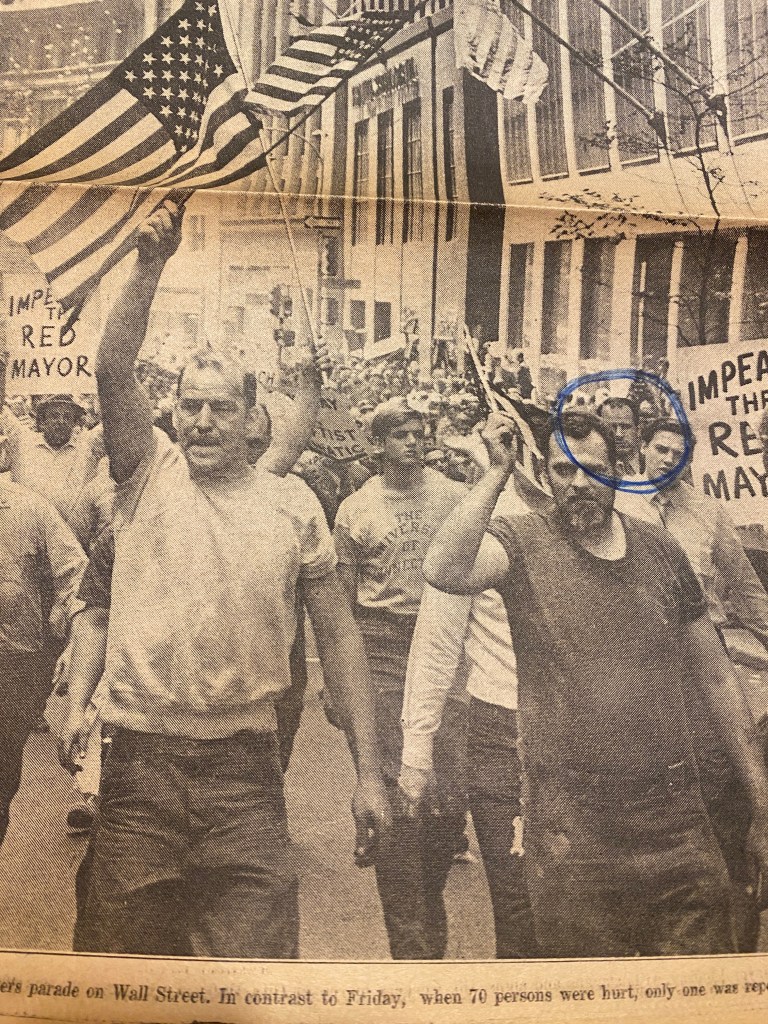
Garbage War coverage from the New York Daily News, May 12, 1970. Look closely and you may recognize the person circled. Angela Davis Outside: In 1972 African American author, civil rights activist, and scholar Angela Davis was accused of supplying weapons that were used in a San Rafael, California courtroom shoot-out that resulted in the death of three people including a Superior Court Judge. Davis’s accusal, as well as the entire case in general, was dripping with racism and misogyny. In June 1972 Davis was acquitted of all charges and my dad was there as she exited the courtroom and spoke to people outside. In my opinion, there is much to admire about Angela Davis, including her hair.
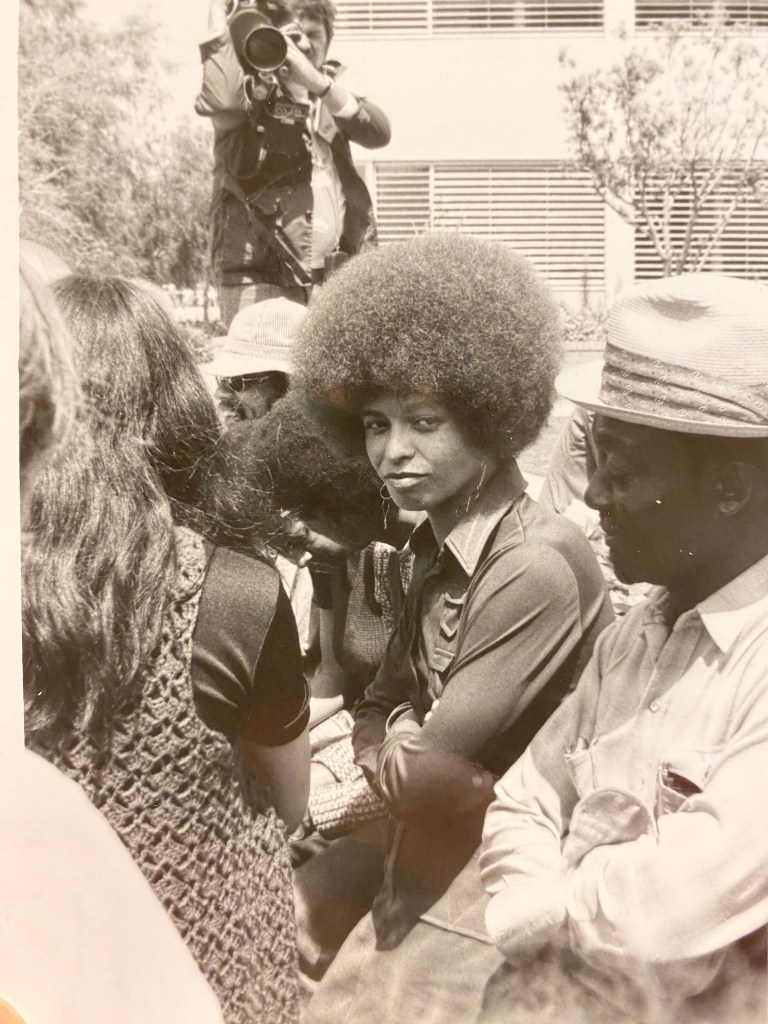
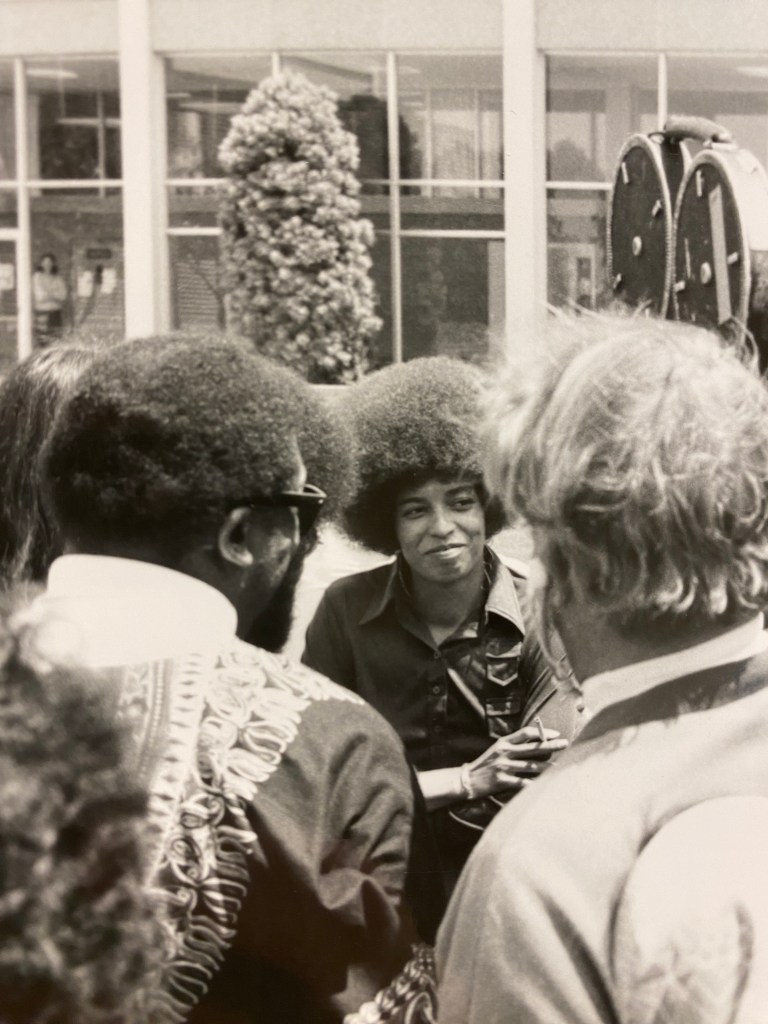
Many would say Davis deserved that cigarette. The Saga of Tokyo Rose: As a journalist, my father covered quite a few trials but there was one in particular that he followed for decades. Iva Toguri (aka Tokyo Rose) was a U.S. citizen (born in Los Angeles in 1914) who was stranded in Japan during the attack on Pearl Harbor. Iva was forced to renounce her U.S. citizenship and found herself stuck in Japan. She got a job as a radio announcer, broadcasting to U.S. troops stationed in Japan. She was returned to the U.S. after the war and was convicted of treason and spent six years in jail. You, like me, might be thinking WTAF? So did my father which is exactly why he wanted to write a film script about Iva’s story. President Gerald Ford finally pardoned her in 1976.
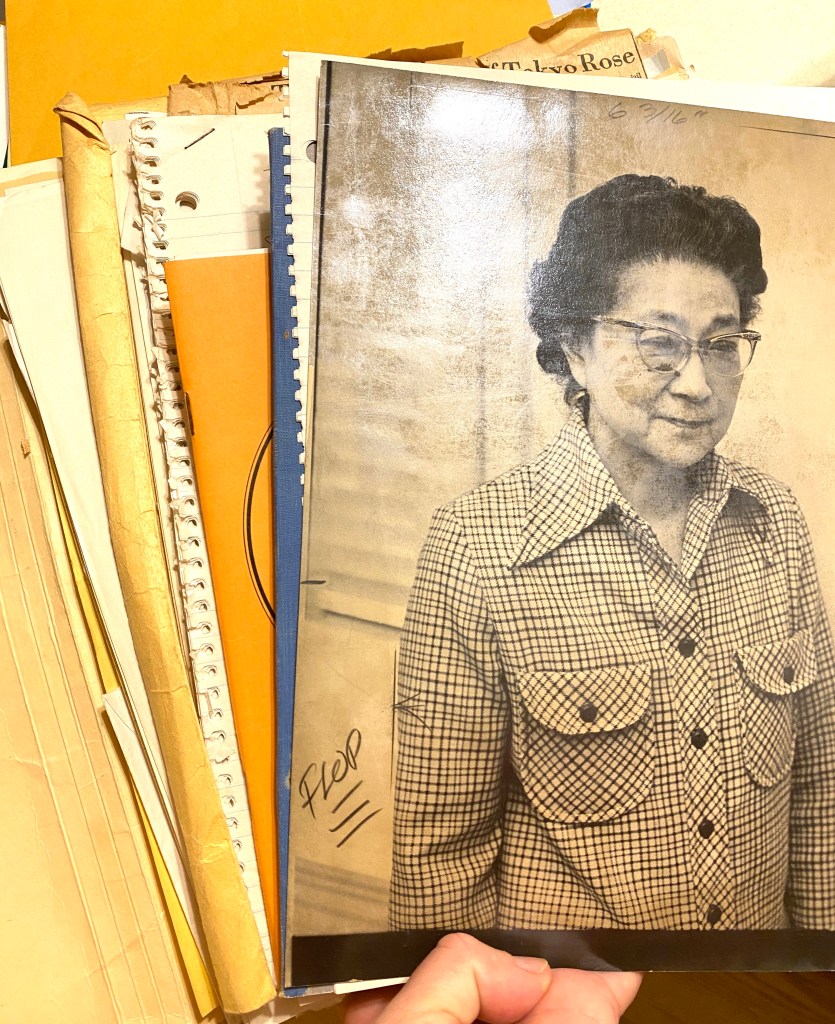
Iva Toguri. 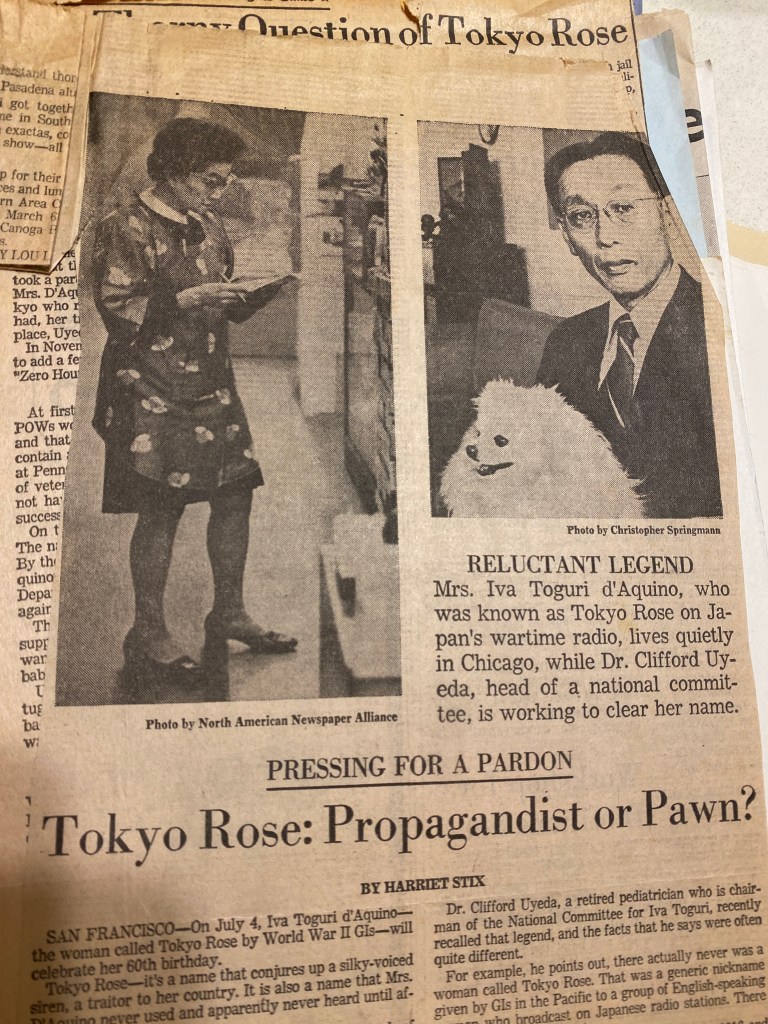
Two folders full of clippings, court transcripts, letters
and information about Tokyo Rose.Perhaps you are getting a sense of why I am making a film about my dad. What was initially a slideshow for his memorial service has evolved into a five-chapter film about his life. One of the chapters focuses on…you guessed it…his projects (including his art, collections, and photography).

Script from the film I am working on about my dad and his life. I will share more about the film as it comes together. Bringing my dad’s story to life on a screen feels like the best way to do justice to what was an endlessly fascinating career and life.
All of this documentation is indeed compelling, but at the end of the day, two truths remain:
His creativity knew no bounds and he was simply the best father a girl could have.
-
Celebration and Sobriety
Originally, I had a different post in mind. I will share more about my collection of materials soon, but there is something else I want to write about this week.
I recently found myself at a table with three girlfriends enjoying a celebratory dinner. Shadows were getting long on that chilly December day as we gathered at an upscale eatery in the charming Indianapolis, Indiana suburb of Carmel. Blocks crowded with quaint shops stretched out around us; boughs of fragrant greenery decorated our cozy booth and holiday lights twinkled on the ceiling above.
The four of us were there to celebrate an anniversary. Not a birthday, a career milestone, or a relationship. Instead, we were celebrating a sobriety anniversary. One friend had invited us to gather with her to mark and acknowledge two years of living successfully alcohol-free. The remaining three of us were sober as well, two of us closing in on three years and our fourth friend with an impressive thirteen years under her belt.
Attractive displays at Loren’s AF Beverages
in Carmel, Indiana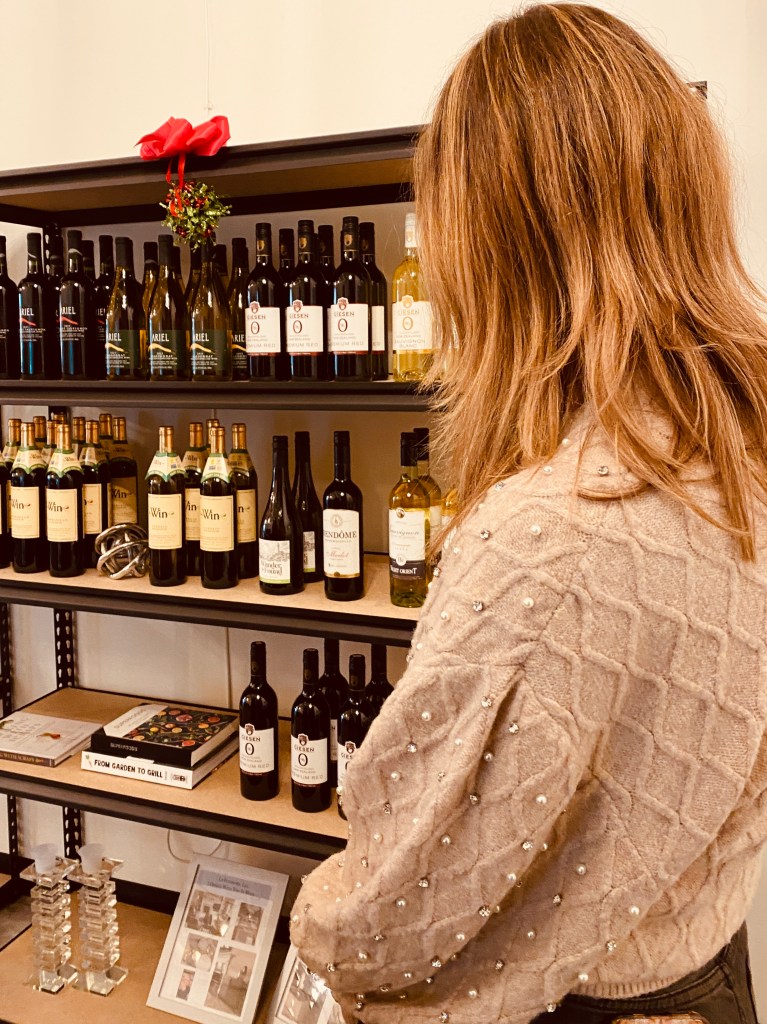
Alcohol-free Tequila?! Is the world ending? Before the restaurant, we visited a sleek alcohol-free beverage store (I know, what a concept) where we sampled a distilled botanical “gin alternative” and did warming shots of spirit-less cinnamon “schnapps” out of tiny plastic cups. It was heartening to learn that the shop is thriving and that non-alcoholic beer sales grew by 23 percent in the U.S. in 2019. There is a sense of camaraderie and enjoyment that comes from cradling a refreshment in your hand as well as browsing in a shop with friends and we welcomed the chance to do both.
When I was drinking, I saw the world differently. I imagined that all of us imbibers belonged at one long festive table, laughing, telling stories, and planning trips. We were the interesting ones, the adventurous ones, and the entertaining ones. In my view, the non-drinkers belonged at a separate slab entirely, far off in the corner keeping themselves company with their boring conversations, their vanilla clothing/hairstyles, and their staid and mostly uneventful lives (apparently alcohol fueled my judgmental side as well).
I did form many lasting friendships and connections over my decades as a drinker, and I acknowledge without judgement that there are many adults in the world for whom alcohol is not a problem. However, I’ve also come to understand that much of what I thought was deep and meaningful while drinking was in reality often fleeting and circumstantial. One of the greatest gifts of being free of alcohol is that I settle entirely into each moment of my life, I am truly present in a way I haven’t been since I was a child. I want nothing more than where I am, nothing more than who I am with–especially when I am around people I enjoy and love. There is a sense of savoring that infuses my days and…bonus!…I remember every single detail. No more mental fast-forwarding, gritting my teeth until I can relax later with a drink in my hand in a space momentarily free of life’s bothersome minutiae.
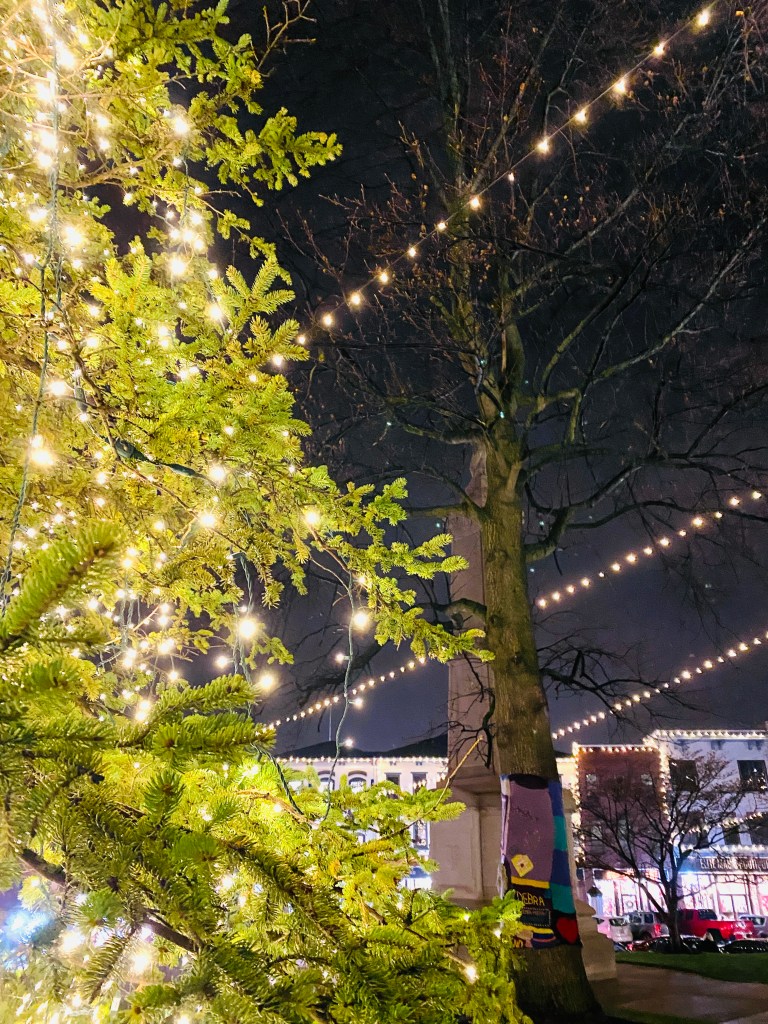
Absorbing the unexpected beauty of a cold winter evening. The four of us covered a lot of subjects in our booth that afternoon. The evolution of our personal histories, friendships, relationships. The joy and pain and freedom we have in our sober lives. The pride we feel in ourselves and each other, and the shame we are still working to shed and/or embrace. Adventures we have embarked on since we got sober, ambitious plans we have for the future (sober social pop-up events, anyone?). I felt the tears well up as I described the poignant sweetness and waves of gratitude I experience daily with my family, my health, my writing, my clarity.
I shared a recently-discovered quote with my friends;
“Not drinking has lifted a veil on every part of my life including the bonkers me, the energetic me, the creative me, the poetic me, the loving me, the joyful me, the angry me, the what-the-f*ck me, the connector me, the boundaries-me, the open me, the closed me — essentially all the me’s of me.”
~Susan Christina, Hola Sober
Across the restaurant I spotted a group of friends in their twenties, drinks crowding the tabletop, laughing, and looking at their phones. If they glanced over at us, I wondered what they would see. A table of four middle-aged-ish women sharing a meal, engaged in serious conversation, sipping tea and sparkling water (side note: why are so many restaurants missing out on the potentially lucrative “mocktail” market? No, we do not want tonic water with lime thankyouverymuch, we want something designed to stand alone and taste great sans alcohol).
Do we appear boring and colorless over here in the corner booth, living out our uneventful, dull lives?
Now I know nothing could be further from the truth.
-
Material Abundance: Part One
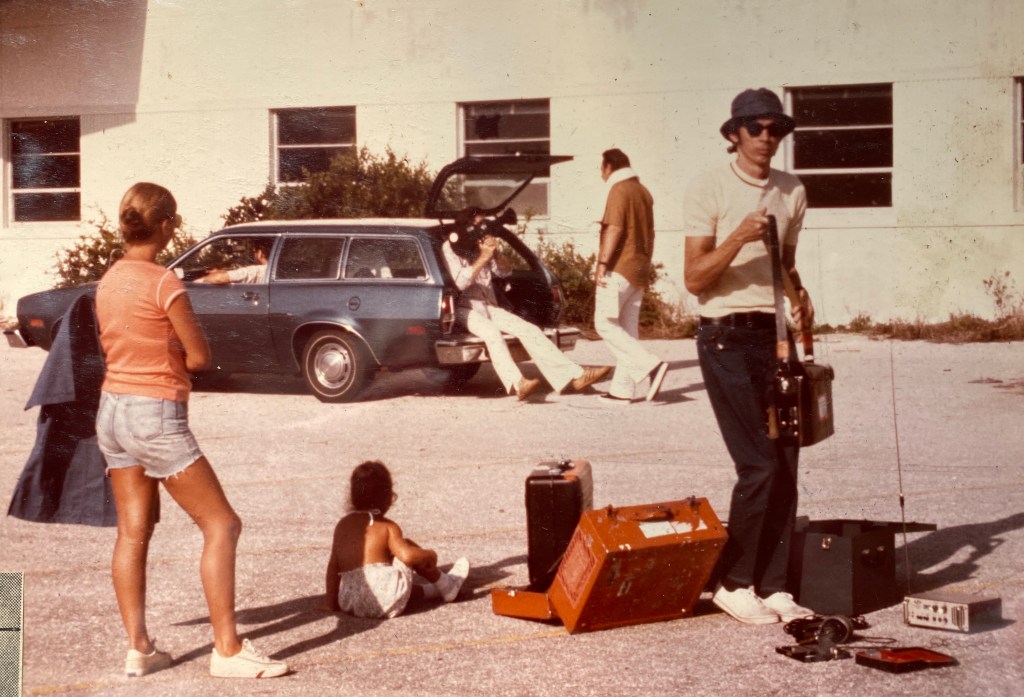
Cocoa Beach Florida, 1974. My uncle John Holmstrom films out of the back of a station wagon
while my father drives and my mother and I watch.Here I am again, sitting on the floor of my office. Boxes and bins surround me, some precariously balanced on one another, others open to expose their contents. Worn shoeboxes full of letters, dusty paper bags stuffed with film reels, and framed art of all sizes leaning against the wall. There are so many photographs that they have taken over my desk area completely, filling plastic bins and manila envelopes, spilling out over the tops and sides. I’ve decided that photographs are the hardest thing to sort and store.
I’m making another attempt to categorize but rabbit holes are waiting for me at every turn. Read this article in a Sep 22nd, 1977 special issue of Rolling Stone about Elvis’s death? Sure! Flip through the entire inaugural 1968 Whole Earth Catalog? Why not! I could have sworn that photo of my parents trekking in Nepal was in the envelope marked “Mom and Dad Travel” but maybe it’s in the “Family 1990’s” one instead…and look at that, here’s a box of childhood photos I’ve never seen before.
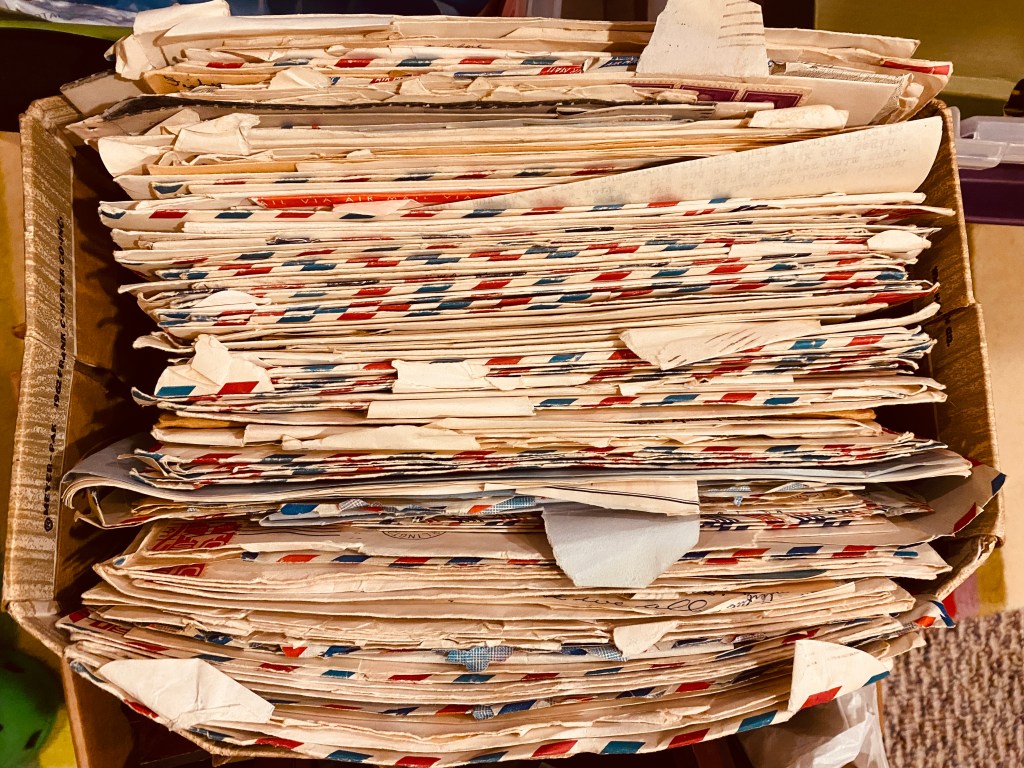
One of many shoeboxes full of letters. Descending further down that rabbit hole, I don’t just gaze at family photographs. I conjur up the people. The sound of my mom’s laugh, or the smell of the purple wisteria that twined around the pole that marked the entryway to my childhood home. I wonder about the young men dodging the Vietnam draft in my dad’s poster collection and the shy young African girls in my uncle photographed in the 1960s. What are their stories?
This is what happens when an only child sprouts from a family of documentarians. At least that’s what happened to this only child. As I’ve mentioned, my father David Holmstrom was a journalist and a writer, but he was also an artist, photographer, and collector of a mind-bendingly-diverse array of documents, items, publications, and books.
My uncle John Holmstrom (my father’s older brother who never had children) was a successful documentary filmmaker, photographer, and writer. John and I were close and shared many interests. Both John and my father are gone now, but their presence is alive through the material they left behind…material that is now in my hands.
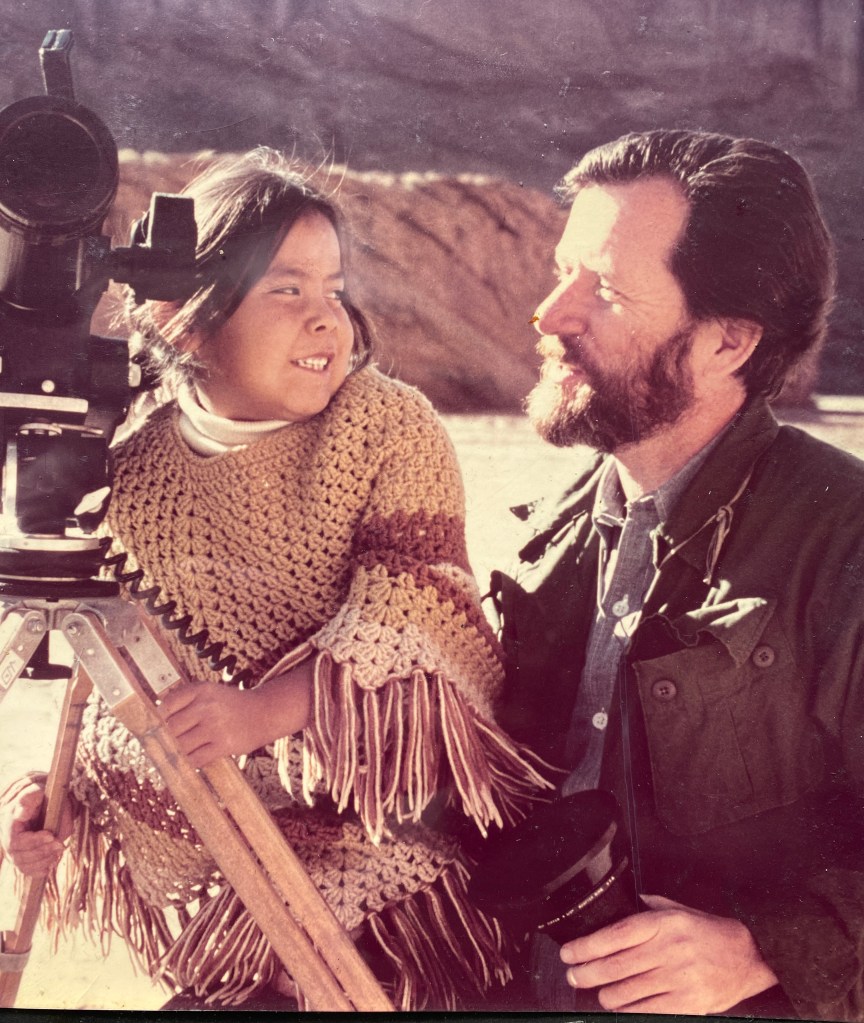
My uncle John Holmstrom, documentarian extraordinaire. “Get that girl a sibling!” says my dear friend Hether who sometimes helps me sort and catalog the collections. But there is no sibling to be had, so for the most part I am on my own.
In one sense I feel chosen; I am now the keeper, the steward, of these items. There is a banquet, a virtual feast of history, ideas, and words housed in these boxes and folders. The material is calling to me….” Tell these tales, share this rare worth, don’t let it dissolve into memory until no one is left to share.”
Yet, I also feel weighted down by the volume and scope of subjects too numerous to count, as well as the heft of responsibility. I worry that I can’t possibly do it all justice and won’t be able to find enough channels and means to share the stories. And once I share, will anyone be interested?
Overview of material (Part One)
Poster/Handbill Collection: Fourteen folios full of David Holmstrom’s poster assemblage. Starting in 1968 he gathered free posters and handbills on the streets of New York City and built his collection for the next fifty years. Featured cities include San Francisco, Chicago, Los Angeles, Las Vegas, and Santa Fe, New Mexico.
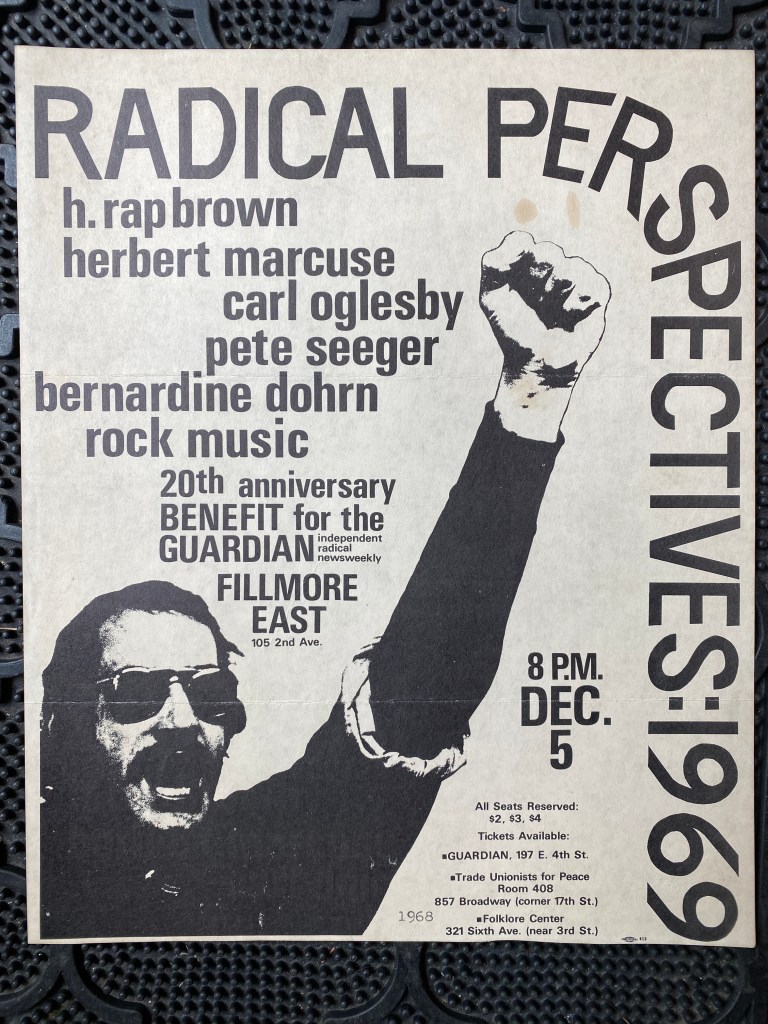
The handbill that started my dad’s fifty-year collection, handed to him on the streets of NYC in 1968. 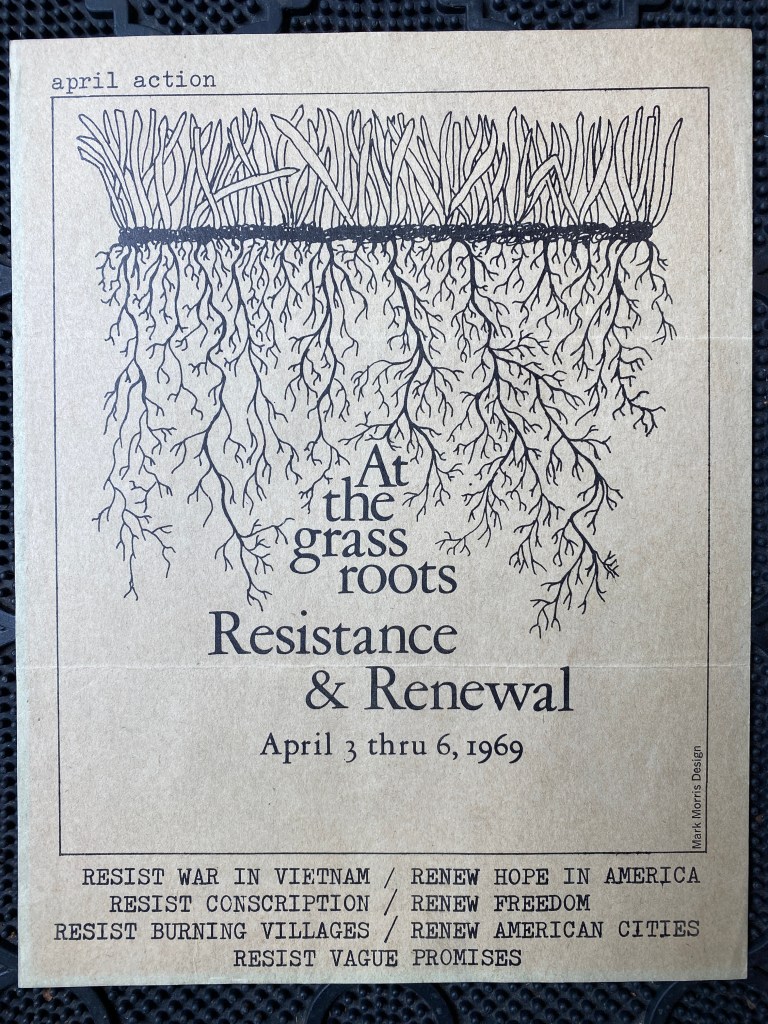
It’s an eclectic poster collection. Newspaper/Magazine Collection: My dad’s tendency to buy newspapers on important news days and strategically save certain magazines might seem like hoarding if the subjects and headlines weren’t so compelling. Spanning well over a century (the earliest one I’ve found, so far, is from 1889) and featuring headlines like “Man Walks on Moon” and “Kennedy Shot!” the collection truly brings history alive.
The San Francisco Chronicle, Tues. Sept. 23, 1975 
The Chicago Daily News Sat. April 14, 1917 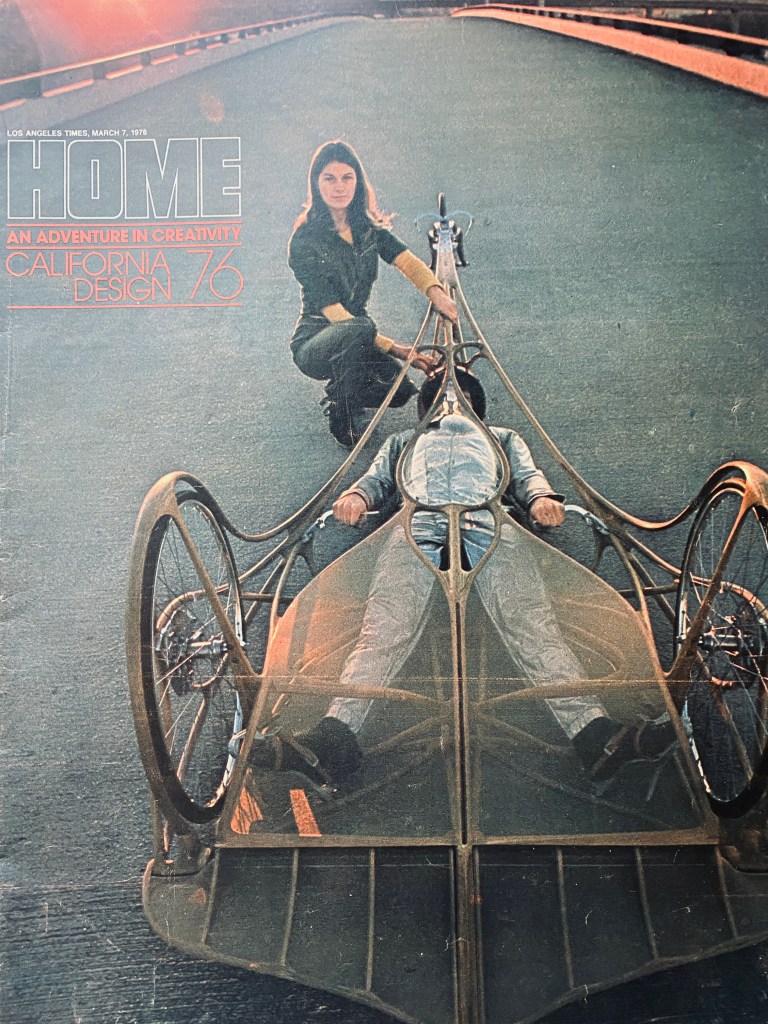
Los Angeles Times California Design Supplement, March 7, 1976 
Los Angeles Times Wed. June 3, 1953 One sub-category of the newspaper/magazine collection includes three years of issues of the San Quentin News, published out of the notorious prison in the San Francisco Bay Area. David had an almost forty-year friendship with the newspaper’s editor (and inmate) Joe Morse. Joe was the longest-serving prisoner on California’s death row and once had a cell next to Charles Manson. Guess who also inherited the bulk of Joe’s lifetime correspondence with his wife and lawyers, and his three murder trial transcripts? My dad did.
San Quentin News, Friday August 29, 1975 John Holmstrom’s Career Collection: My uncle John began making films for The Ford Motor Company in 1970. He traveled the world for decades, from the Middle East to Africa to Europe to Central America to New Zealand to Scandinavia telling stories through documentary filmmaking. His 1977 film Stockcar! was the first feature-length documentary released nationwide in U.S. movie theatres. I have a lot more to share about my uncle’s life and work.
Pages from John’s career scrapbooks. Photographs, published articles, awards. 
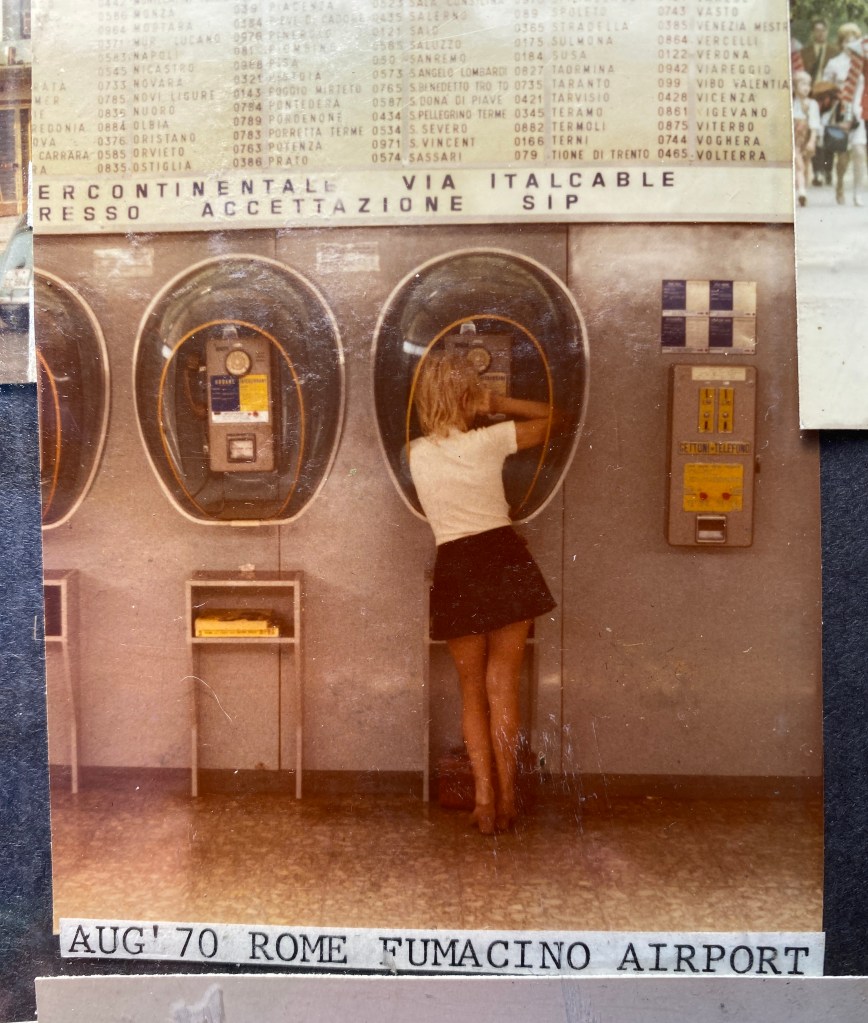
John was a gifted photographer. Film: John made films. David made films. John and David made films together. It’s all here. 8 mm, 16 mm, MiniDV, VHS tapes, and audio tapes. Film footage of my grandparent’s California wedding in 1932, film of my great-grandfather’s return visit to his native Sweden in the late 1920s, and footage of my great aunts in the Sahara also from the early 1930s. I’ll be sharing some of this archived film here.
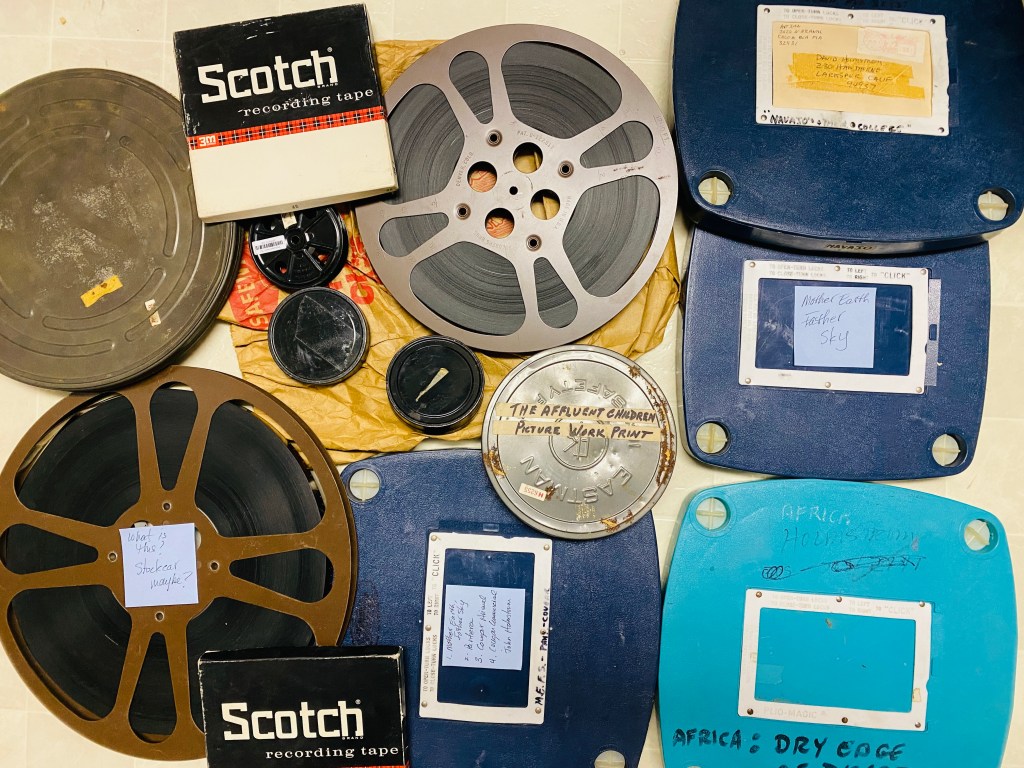
I worry about storing this film in the midwest climate where I live
but it seems to be holding up just fine.Keep visiting this space because I’m going continue this tour of the archives. After all, there is a mind-bendingly diverse array of film footage, documents, items, publications, and books to tell you about.
…and stay tuned for Material Abundance: Part Two which covers more of the materials collection. Projects include David Holmstrom’s photographs of Truman Capote’s hands, candid images of Angela Davis at her June 1972 trial in Berkeley, CA, and vintage Star Trek press kits.
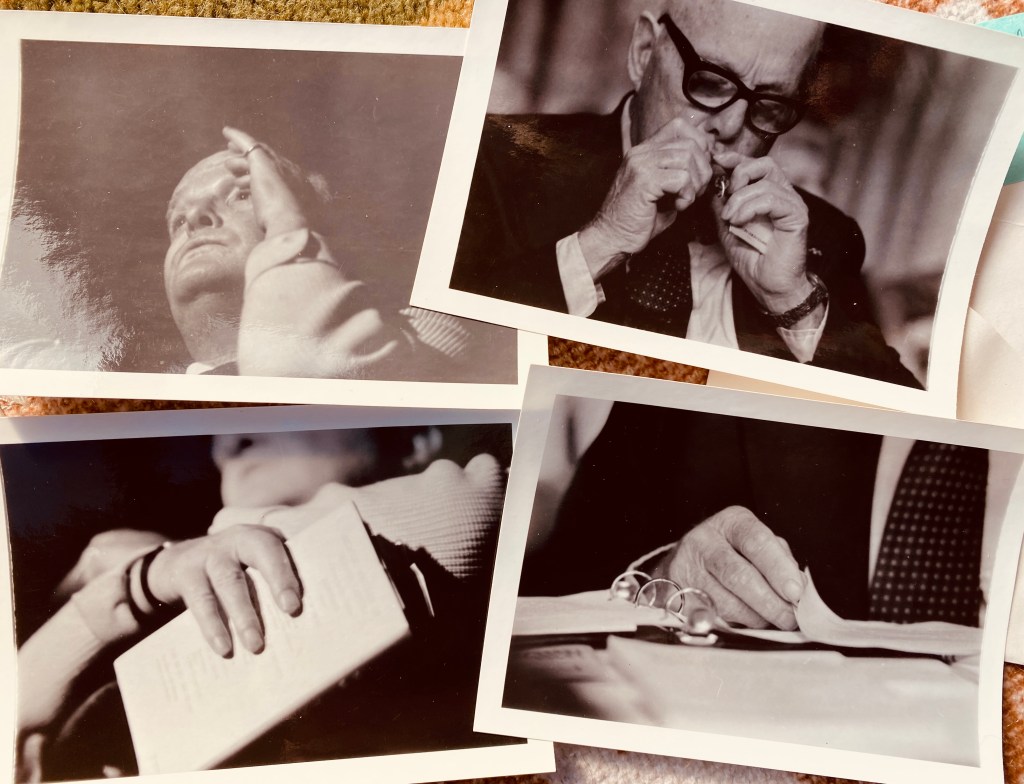
Photographs my dad took of writer Truman Capote and his hands. Believe me, there’s probably enough for a Part Three (or more).
-
Ode to a Ghost Ranch Cottonwood
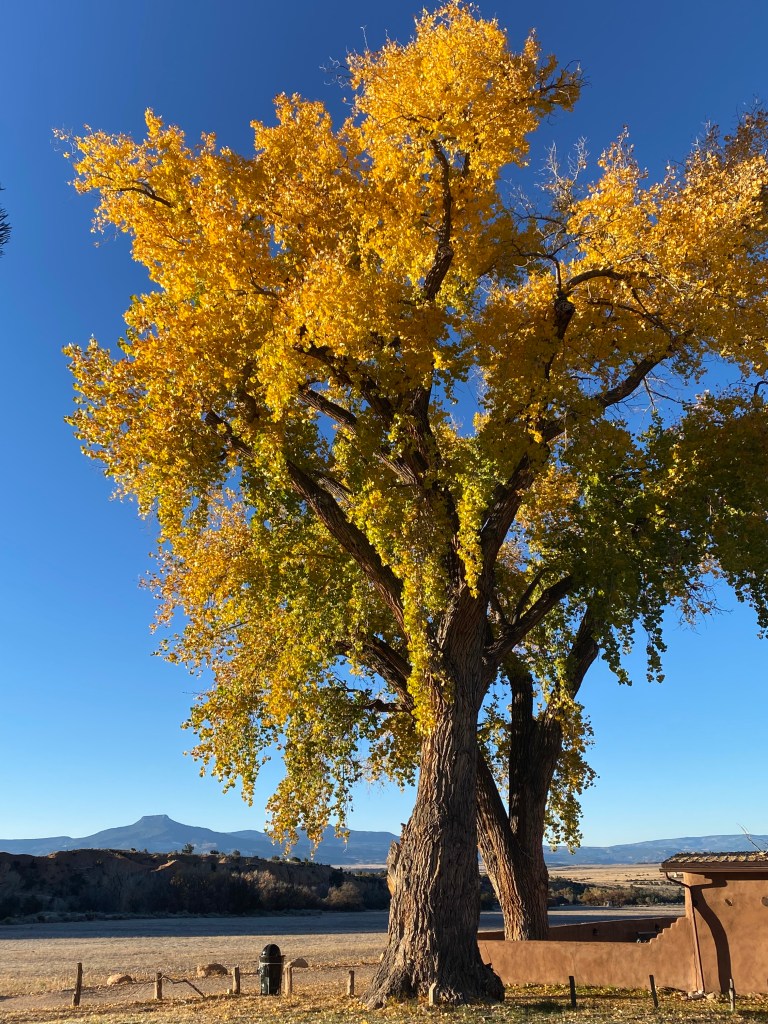
Two Cottonwoods stand sentry at Ghost Ranch with Mt. Perdernal in the background. Shouldn’t there have been some sort of ceremony? A thoughtful circle of clasped hands or a joyful swirl of moving bodies, pouring forward gratitude for a life well lived, a job well done? If the animals had known this was coming would they have gathered at a distance and shook their heads in familiar disappointment at those ridiculous humans?
She must have been well over one-hundred hundred years old, perhaps two. I wonder if Georgia O’Keefe painted under the cover of her cottonwood branches…she was in the sight-line of Mt. Pedernal’s flattened peak, after all. How many artists have featured her in paintings and photographs? I’d like to see those works carefully laid down in a crooked line, a creative chain reaching across the open field facing her, ending at the base of the towering bluffs that reflected the sinking sun at the close of each day.
Trees have a way of following me, or maybe I follow trees. They have played supporting roles in my life from the beginning. My earliest memory is gazing up at a towering, heart-bursting green/brown column of glory reaching for the heavens as seen by my 3-year-old eyes. The tree was a redwood, silhouetted in a skylight cut into the roof of our living room which was nestled in a Marin County grove. Climbing the walnuts, oaks, and pines of my Northern California childhood was integral to my development and appreciation of the natural world.
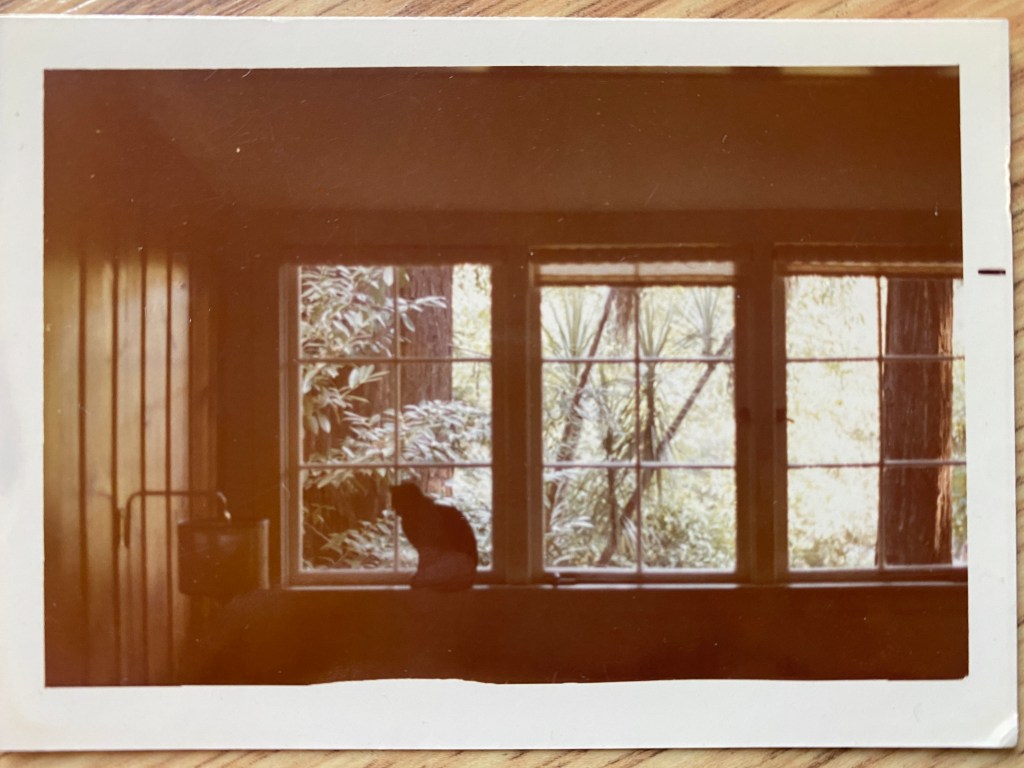
The California Redwood grove surrounding our house in Marin Country, CA. Instead of a conscious ceremony around her felling, there was a spontaneous eruption of clapping from a group of men gathered at a safe distance. I believe the assemblage was applauding the skill of the arborist who took great care to ensure that no one was hurt by the toppling of her gigantic trunk. But the cheering made my heart thud dully and I winced with the knowledge that this was a sacred moment, not one to be celebrated in jovial brotherhood.
I named my first son after the enduring, stately California Cypress. Working to stay on good terms with the Pin Oaks and Sugar Maples surrounding my current home, I am well aware that the land we are borrowing for our house plot was at one point a vibrant, crowded Midwest hardwood forest. We are in debt to these life forms…humans need trees, desperately…for shelter, warmth, food, and oxygen.
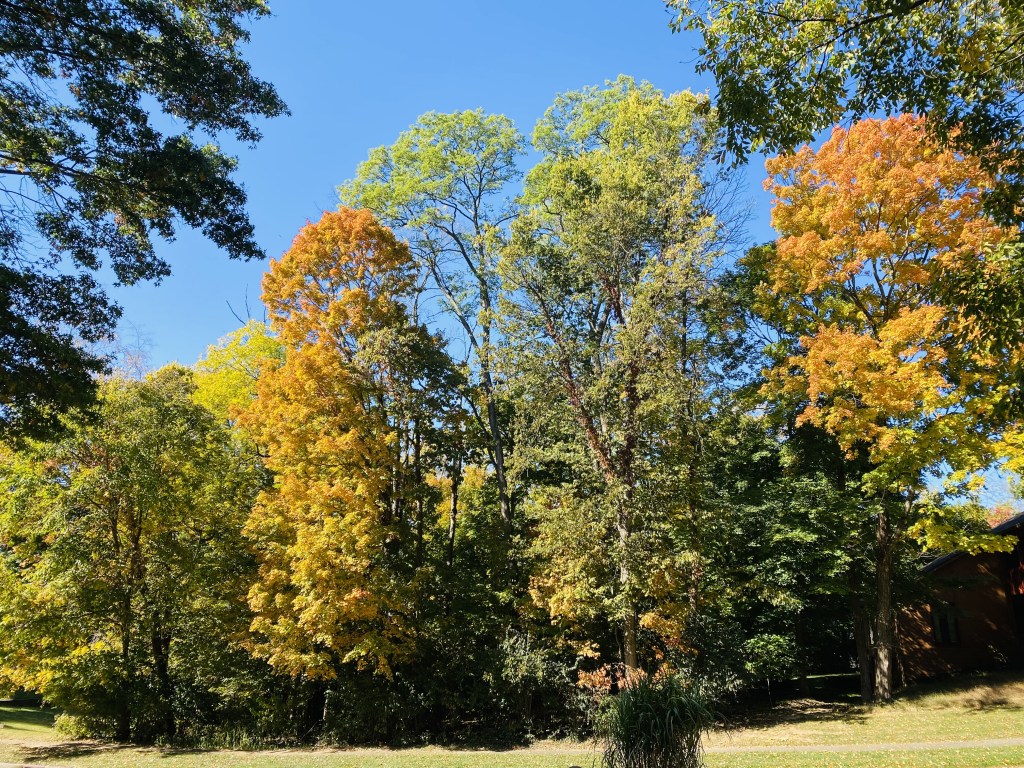
Today’s across the street neighbors. Let’s think of the thousands of seasons that passed while our Cottonwood grew and spread, seasons in which she played an integral part. The birds that needed every piece of her, the dust that was covered by her generous golden leaf snow, the countless insect lives and soil her roots held below. Children played in her shade, lovers kissed behind her trunk, and deer nibbled her bark. She survived the Ghost Ranch flood of 2015, and no doubt many other great forces of nature that have receded from present memory.
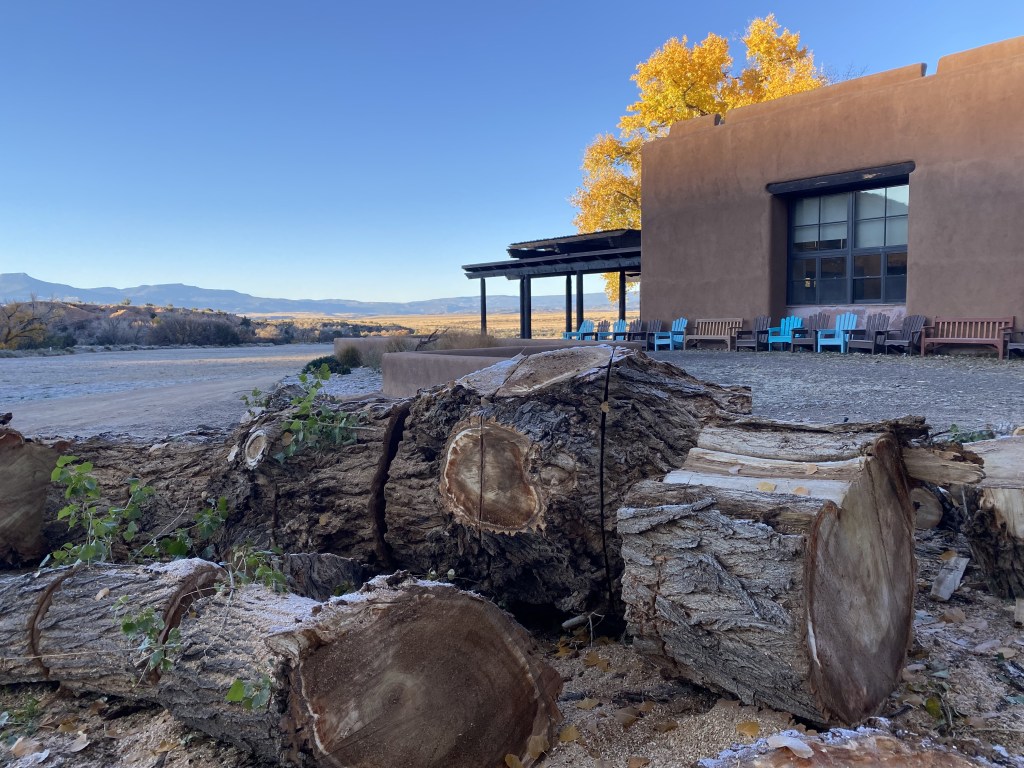
There she lays. I walked to her the next morning, unconsciously drawn to her pieces lying on the ground. Formerly grand, useful, alive, now separate, scattered, stagnant. Perhaps she carried a disease, perhaps it was her time…after all every life turns on the wheel of experience and circumstance. Deadwood supports life in ways that live wood cannot. Her trunk was sliced low to the ground, creating a smooth tabletop and infinite constellations of sawdust blanketed the ground.
Infinite constellations of sawdust. I couldn’t easily count her rings it didn’t feel right to stand on top of what was left of her. Leaning down, I took a nugget of bark and needle-sized damp splinters scattered across my open palm. I’ll carry this piece of her with me as I journey on, knowing she played her part, allowing her a ceremony in my pocket and my heart.
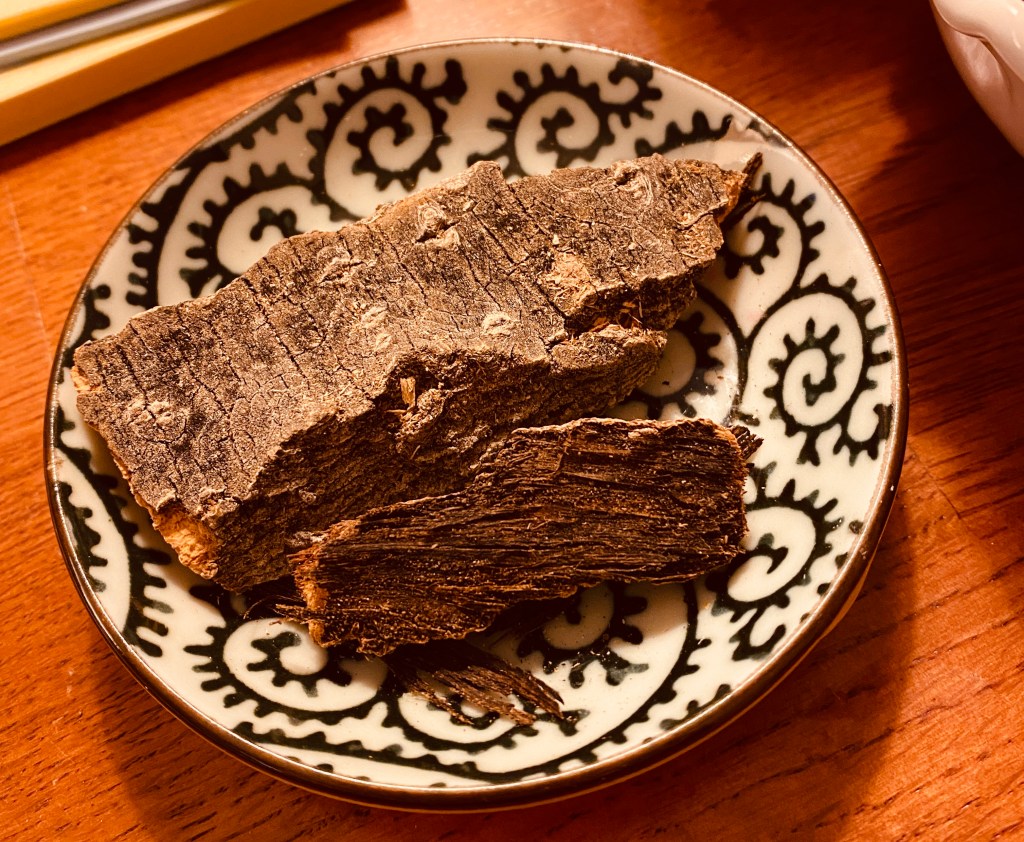
One of her new resting places…on my writing desk. -
A Veteran’s Awakening
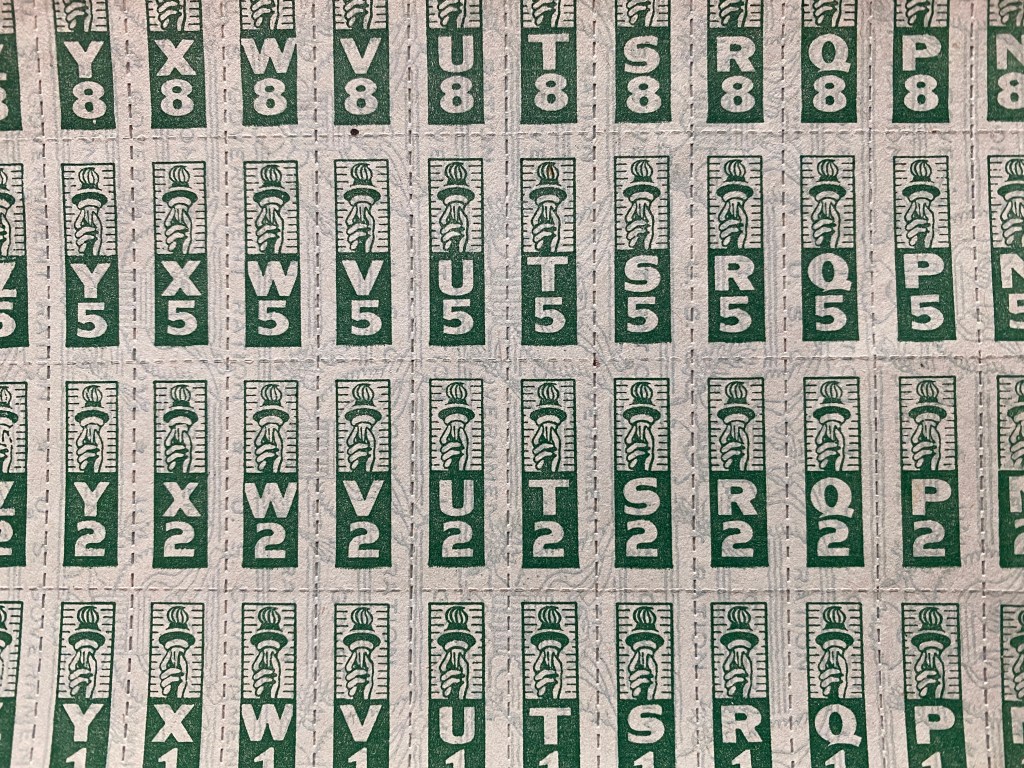
War bonds from the 1940’s saved by my paternal grandparents. In 1993 I took a college course titled “Literature of the Vietnam War” at The University of Massachusetts at Boston. The class was taught by a youthful and eager Assistant Professor of English who made admirable attempts to guide frequently heated class discussions. Nearly every segment of Boston society was represented in the class, which is part of why I remember it so vividly. Young men and women from South Boston (a traditionally blue-color community that often leaned Democratic), three or four ROTC folks, a handful of both young and non-traditional aged students from Boston proper and other surrounding communities like the South Shore, one actual Vietnam Vet, and me (a restless California transplant doing her best to achieve grades that would allow a speedy transfer to the higher-profile UMass Amherst).
Because Bostonians are often opinionated talkers and because I am not, I hardly dared to say a word in that class. I believe the only time I spoke was to mention that my father had served in the Navy and was also vehemently against the idea of war in general. Everyone looked at me quizzically and then continued debating the true toll of PTSD and the legitimacy of draft dodgers and protestors.
Thinking back to that class, I wish I had done things differently and said more (truthfully, there are countless things I wish I’d done differently in my twenties but let’s stay with this one for now)… I should have shared more of my father’s story, because I now see that his tale of service is an interesting one, an important one, and most of all, a rare one.
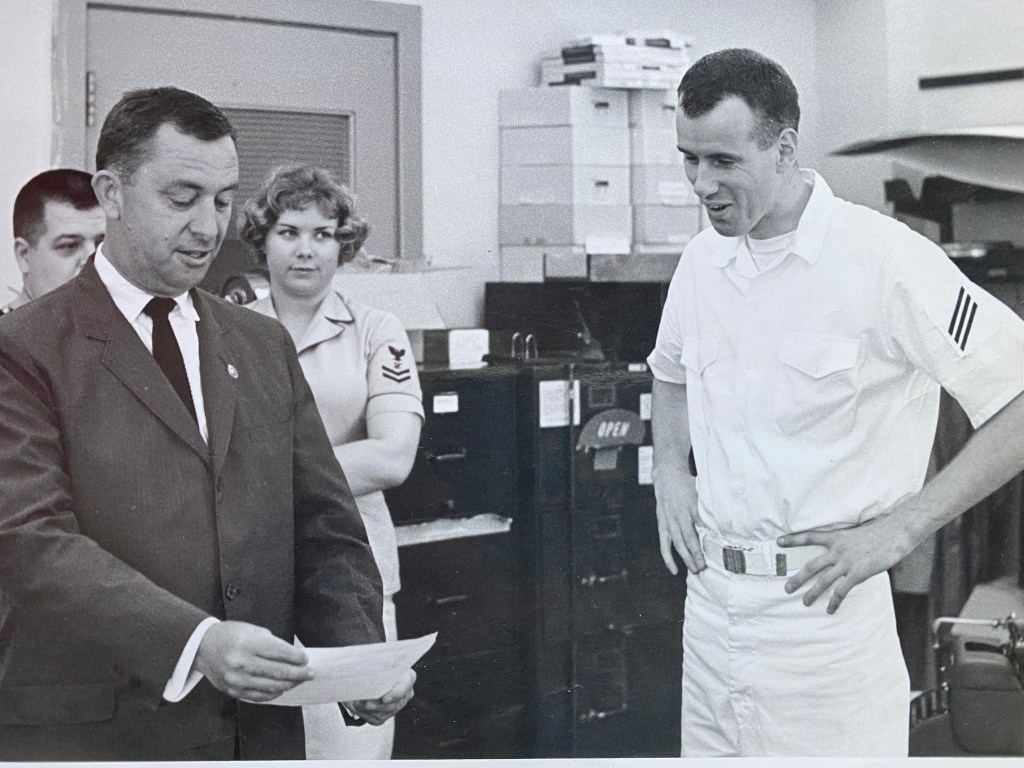
David Holmstrom is promoted to “Third Class Journalist” in the Office of the Chief of Naval Information
in a ceremony at the Pentagon in 1963.In 1961 my father David Holmstrom was drafted out of what had been an academically rigorous yet comfortable midwest college experience and into the Navy. His letters to his parents back home in Los Angeles glossed over the gory details of Basic Training but did mention that he “flunked the Officer Aptitude Rating (OAR) test because I kept setting the warships on a collision course.” Somehow, the Naval brass must have figured out that David could write because upon graduation he was assigned to the Pentagon in Arlington, VA.
Prior to being drafted, David’s opinions about war, bloodshed, and politics were budding and mild, not yet fully formed. Growing up in Los Angeles in the 1950’s, his high school classes were some of the first to be integrated, and his parents voted more conservatively than he did. He made a black and white film about racial disparity in East St. Louis in 1959 and the experience gave him a glimpse of a world outside of his own substantial privilege. His writing from that time shows his evolving moral compass and a desire to learn about injustice and entrenched politics.
David was no doubt shocked to find himself working in the headquarters building of the United States Department of Defense, rubbing shoulders with the top brass of the military. He remained for three full years (1961-1964), serving as a Third Class Journalist in the Office of the Chief of Naval Information. His main task was gathering the top news stories each day. He compiled the coverage, creating a kind of mini-headline newspaper for the heads of every branch of the military to review. Relying on the AP wires and copies of national and local newspapers, he made daily judgement calls about which articles to highlight. He was like Google’s Top News Stories military-style….in human form.
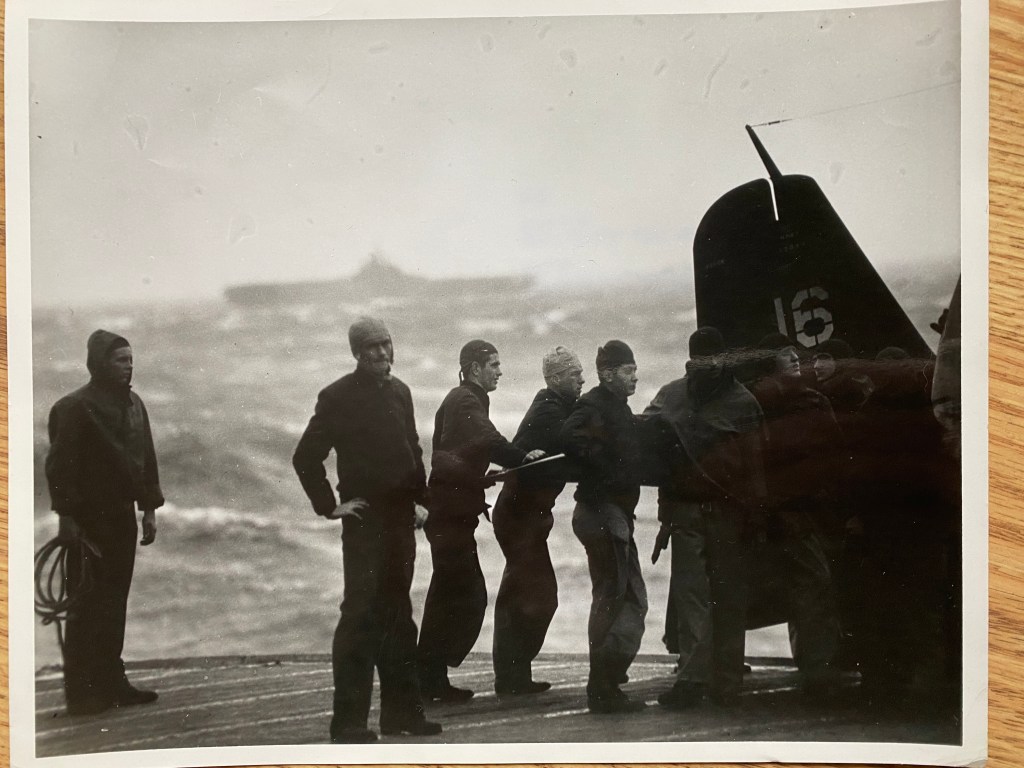
An original Navy photograph that *might* have left the Pentagon with David. The caption says “12/17/44 Crewman on the flight deck of the USS Enterprise (6V-6) during typhoon in the South China Sea off Luzon.”
The back of the photograph also says “No objection to publication or reproducing this photograph provided this credit line is used: Official US Navy Photo.”The early 1960’s were fraught days for the Pentagon as the US Military danced around involvement in the Vietnam War and a number of other communist-tinged conflicts (the U.S. officially entered the war with the Gulf of Tonkin Resolution in August 1964). In October of 1962 the Cuban Missile Crisis erupted, and David was smack in the middle of the action as military bosses strode in and out of offices and took phone calls from the White House. He wrote about that time:
“I was a young college graduate in the Navy in the Pentagon when the Cuban Missile Crisis happened. It was chilling to hear the officers around me lusting to bomb Cuba into oblivion. I was so glad to be there, to see and hear military thinking firsthand. And when Kennedy gave Khrushchev (then-head of the Communist Party) a way out of the mess, thus avoiding unthinkable disaster, I was appalled to hear disappointment from some of those officers. This experience changed me radically. If you take a hard look at the ugly details that have evolved from sustained belief in military might, it changes you. The totality of our effort in Vietnam, Iraq, Afghanistan were enormously deadly and expensive failures and costly to millions of people and their families.”
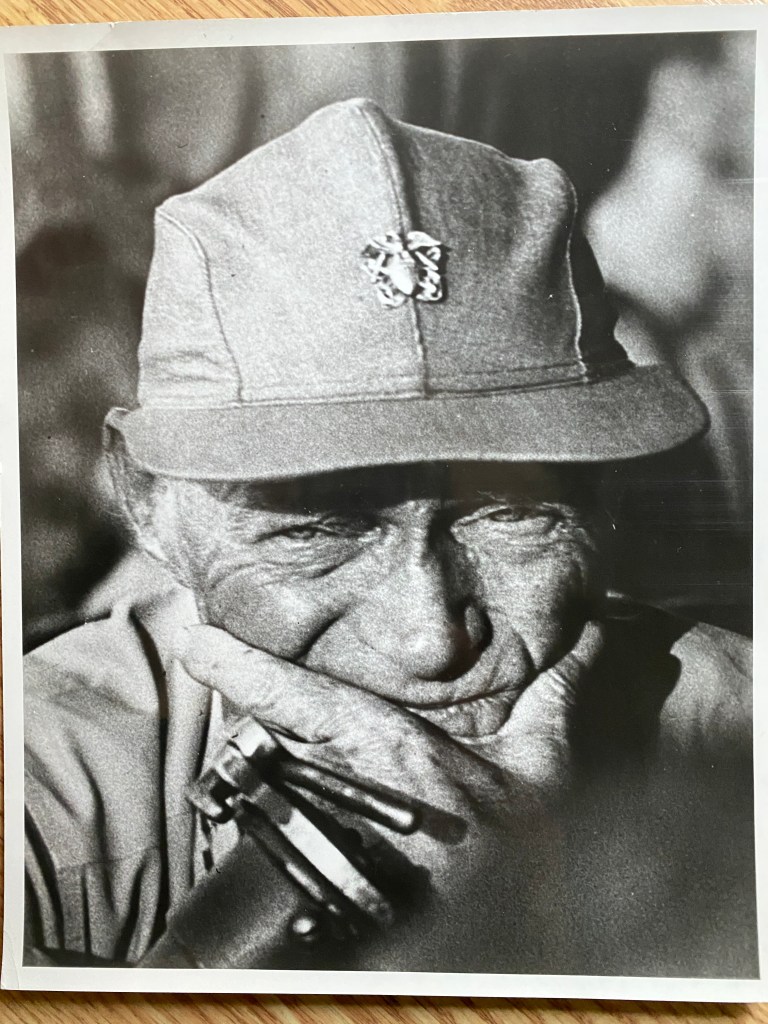
Another photo from the Naval archives. “19 June 1944 VADM M.A. Mitscherr aboard The USS Lexington off Saipan” No objection to publication or reproducing this photograph provided
this credit line is used: Official U.S. Navy PhotoDavid went on to be a lifetime journalist, and wrote countless articles about how and why individuals and organizations were working for peace, or against it, in the world. Instead of fighting in Vietnam, he wrote eloquently about the conflicts on US soil between those protesting the validity of war and those who believed in military force. He also wrote about everyone else, caught in the middle of conflict both at home and abroad (or recovering from their service) and the many brave enlisted individuals so often faced with few opportunities other than military enlistment, working to provide a livelihood for themselves and their families. He helped readers to understand the why’s and the costs of war.
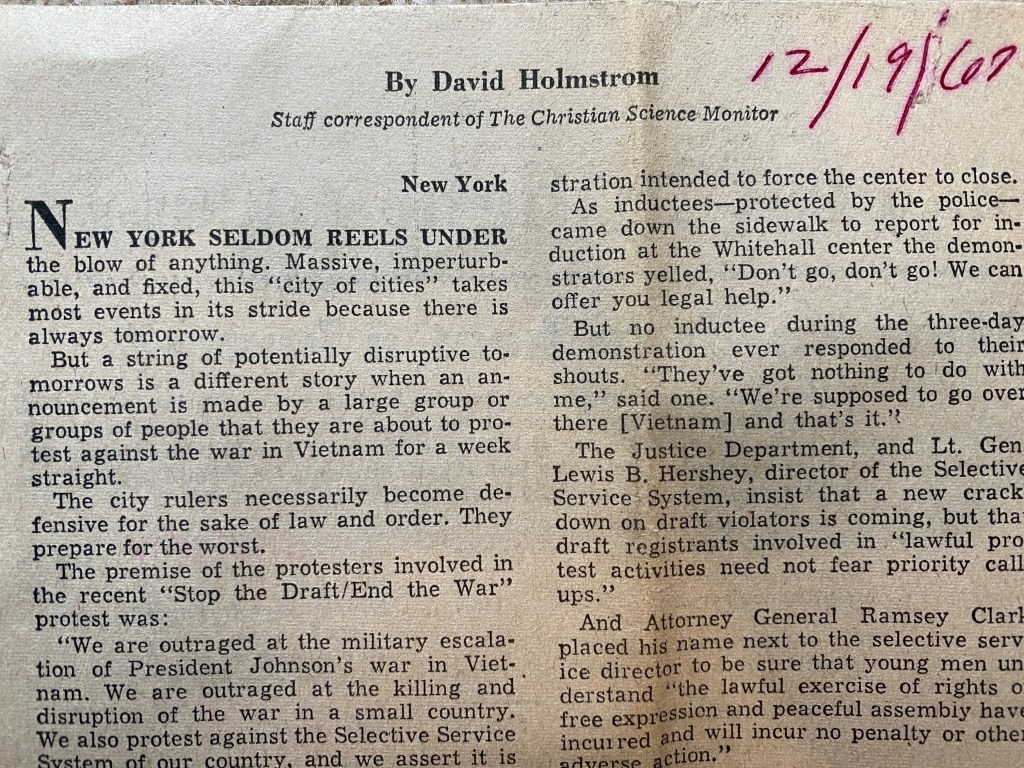
One of David’s articles about protests in New York City against the Vietnam War.
From The Christian Science Monitor 12/19/1967.In 1964, during his exit interview from the Navy, when asked why he wasn’t reenlisting, David said “I’ve learned I want to live for my country, not die for it.” It’s worth noting that the US became involved in the Vietnam War that same year and had my father remained in the military his story, and as a result, my own, might have gone differently. David went on to write numerous articles about how and why individuals were working for peace in the world, in my opinion the best and most valuable use of his talents.
David was given a bunk in some barracks close to the Pentagon but soon realized no one was checking on his whereabouts so he moved in with some college buddies living in DC. Here he is during those days.. hard at work. -
Surprising and Inevitable
I’ve realized that I was born to be a writer—I practically had no choice in the matter. I wonder how many people feel that way.
A sibling-free childhood growing up in a valley dominated by grapevines and oaks and overrun by characters almost begging to be written about. Combine this with countless solitary stretches spent reading books in trees, on couches, in self-constructed forts, and among tall swaying alfalfa grass.
After all, what was I to do with a mother who was a spiritual healer and a father who was both an artist and prolific writer? Attentive, interesting extended family and friends sent me postcards from foreign locales. I was exposed to arts and culture and all strata of privilege and lack. There was also a healthy sprinkling of danger and addiction tossed over the heap of my days.
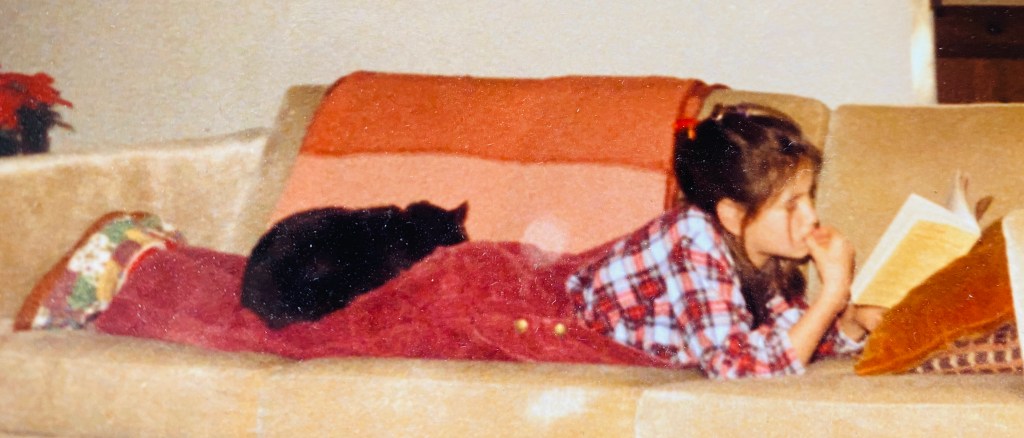
And still, it took me forty-nine years to accept my fate and get down to my own writing.
For a long time, instead of my own singular words, I wrote for others, about others, and most of all because of others. Letters and missives, articles and marketing copy, white papers, content writing, and always, always…media alerts and press releases. Hours of collaboration on the manuscripts of friends, their resume cover letters, their scribes to agents, even lovers. I shared structural and editorial advice until I couldn’t see straight.
My years in the publishing industry sucked me dry of my own drive to write, and by the time I finally landed to work in the world of self-publishing (don’t get me started…although the latest hybrid model is interesting), I could take no more.
And still, it took me forty-nine years to accept my fate and get down to my own writing.
I climbed the tree of my life, branching in and out of joy and tragedy, hope and despair, purpose and sloth. Then, at age forty-nine, exhausted by circumstance and the muting of my own voice, I found myself at the literal deathbed of my (writer) father. I pledged to him, and myself to “write, really write.”
The unlocking was immediate, and the words and stories have been pouring forth ever since. If you’re interested in how I moved beyond writing because of others and began writing for me, and for the world, stay tuned.
After forty-nine years, I’m ready to cover a lot of ground.
-
Subscribe
Subscribed
Already have a WordPress.com account? Log in now.
 Still...however...maybe...
You must be logged in to post a comment.